If you are new to Wanchain and need a quickstart guide for the ecosystem, start here!
Welcome to Wanchain
What is Wanchain?
Wanchain’s mission is to drive blockchain adoption through interoperability. We do so by building cross-chain infrastructure that connects the world’s many siloed blockchain networks. The purpose of this infrastructure is to empower developers to build decentralised cross-chain applications that power the future of Web3.
Wanchain’s cross-chain infrastructure comprises both a sustainable Layer 1 proof-of-stake (PoS) blockchain and a decentralised wide area network of blockchains. The Wanchain Layer 1 PoS blockchain is a full Ethereum-like environment that works with industry-standard Ethereum tools, DAPPs, and protocols. Wanchain uses a Proof of Stake consensus algorithm called Galaxy Consensus that leverages a variety of cryptographic schemes including distributed secret sharing and threshold signatures to improve random number generation and block production mechanisms. Galaxy Consensus, developed by world-class researchers and academics, is a continuation of Cardano’s Ouroboros. Wanchain’s wide area network of blockchains is a decentralised system of direct, non-custodial cross-chain bridges that connect both EVM and non-EVM networks without requiring any centralised intermediaries. These bridges use a combination of Secure Multiparty Computation (sMPC) and Shamir’s Secret Sharing to secure crosschain assets. Currently, more than 18 Layer 1 and Layer 2 networks are connected by Wanchain’s wide area network of blockchains.
What problem is Wanchain solving?
Today’s blockchains are trying to create something new, but too many are simply repeating the mistakes of the past. Each blockchain — or in some cases, a cluster of blockchains — exists as a siloed, isolated network that doesn’t feel connected to Web3 or the future. Wanchain believes that the point of Web3 is to make peer-to-peer interactions the essence of a networked society. And we believe that the point of a networked society is to enable the trustless and permissionless exchange of information.
So, the problem we are trying to solve is: How do we create something that unifies everyone and everything?
The answer? By creating something truly decentralised and interoperable. A wide area network of blockchains.
How is Wanchain secured?
Wanchain’s PoS Validator Nodes reach consensus using a proprietary Proof of Stake consensus algorithm called Galaxy Consensus. It is a continuation of Cardano’s Ouroboros. Nodes need to stake $WAN tokens before they can validate transactions on the network. For detailed information about the Galaxy Consensus, please read the whitepaper.
What blockchains are supported?
Wanchain has been building its crosschain infrastructure since 2017. In early 2021, it launched the world’s 1st decentralised Bitcoin — Ethereum direct bridge. Wanchain offers decentralised, non-custodial bridges connecting:
All of Wanchain’s decentralised crosschain bridges are supported by unified decentralised collateral pools, maintained by Wanchain’s Bridge Nodes.
Note:More networks are always being added to our wide area network of blockchains. Please visithttps://www.wanchain.org/for an up-to-date list.
What are Wanchain bridge nodes?
In addition to regular PoS Validator Nodes, Wanchain features Bridge Nodes, sometimes called Storeman nodes. Bridge Nodes are responsible for performing and verifying crosschain transactions.
Bridge Nodes must all stake WAN tokens as collateral. All of Wanchain’s different crosschain bridges are supported by this unified decentralised collateral pool.
At any given time, there are 25 active Bridge Nodes. Together, they form the Bridge or Storeman Group. The Bridge Group is re-elected on a monthly cycle.
Since Bridge nodes are permissionless, anyone can set up a Bridge Node. More details on this process can be found in the setup guide.
How do Wanchain’s bridges work?
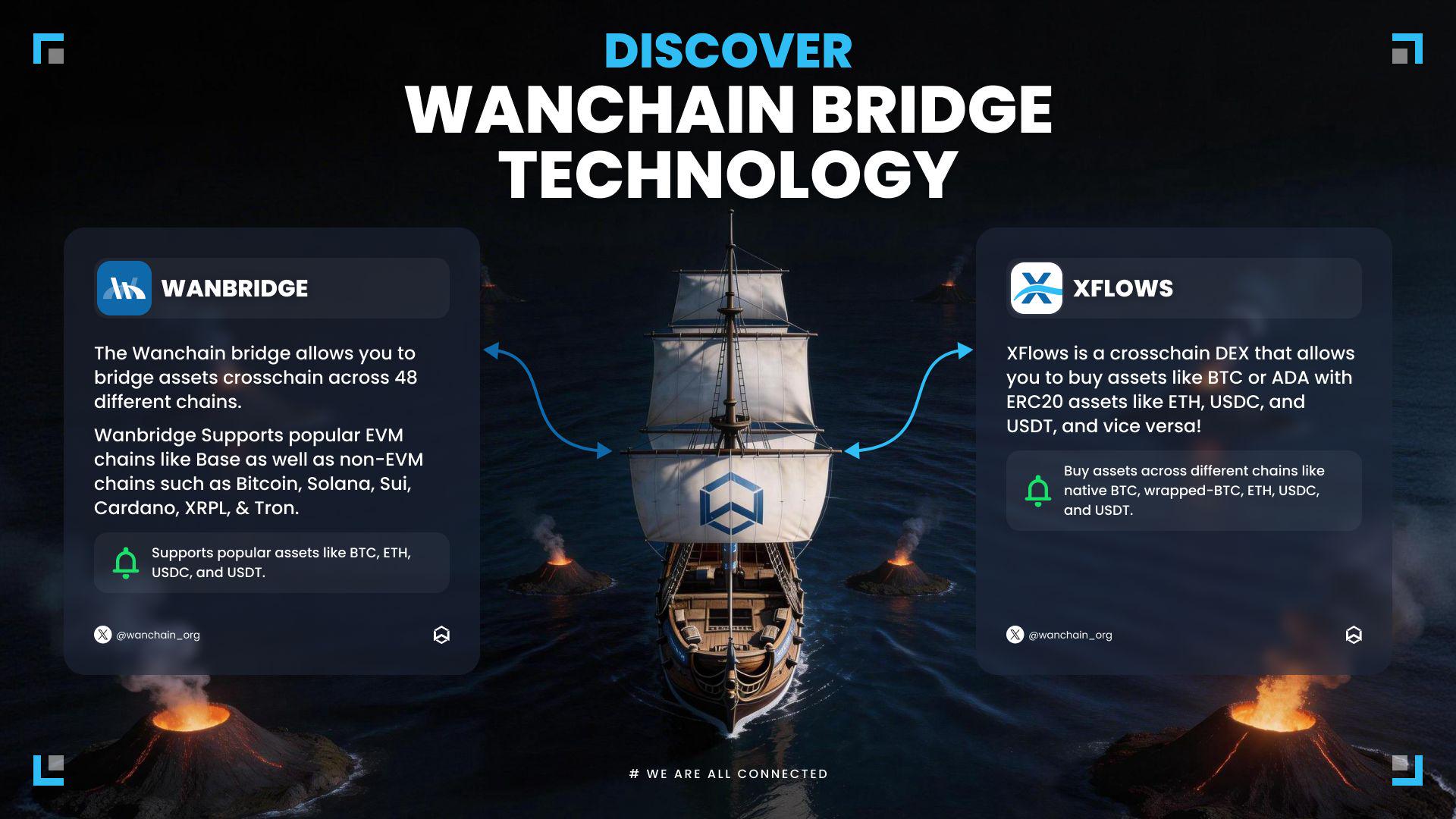
Wanchain offers multiple different kinds of crosschain bridges: Direct Bridges, Layer 2 Bridges and NFT Bridges.
Most of Wanchain’s Direct Bridges use the lock-mint-burn-unlock method. When a user initiates a crosschain transaction, the Bridge Group locks the original asset on the source blockchain before minting a wrapped token on the destination blockchain. At any time, the user can burn the wrapped token to retrieve the original asset.
For example, if a user wants to move 1 ETH from Ethereum to Wanchain, 1 ETH is first locked on Ethereum before a new token — let’s call it wanETH — is minted on Wanchain. At any time, 1 wanETH can also be burned to retrieve 1 ETH.
Layer 2 Bridges use decentralised liquidity pools to bridge assets. With this method, both the source and destination blockchains have a pre-existing pool of assets locked in an account controlled by the Bridge Group. When a user initiates a crosschain transaction, they deposit assets into the pool on the source blockchain before the same number of assets is released on the destination blockchain.
For example, if a user wants to move 1 USDT from Polygon to Arbitrum, 1 USDT is deposited into the pool on Polygon before 1 USDT is released to the user on Arbitrum. The mechanism is the same when moving from Arbitrum to Polygon.
NFT bridges are customised to each project, though they more closely resemble the lock-mint-burn-unlock method to bridging. All NFT IDs and attributes are transferred from one blockchain to another.
How can I initiate a crosschain transaction?
There are two primary channels to initiate crosschain transactions:
Wanchain’s native asset is called WAN. It has a max supply of 210,000,000 coins. WAN coins enable several functions including regular transactions, smart contract interactions, crosschain transactions and private transactions. WAN coins also serve as collateral to secure both the Wanchain PoS Layer 1 blockchain and the wide area network of blockchains.
WAN coins can be staked to deploy Wanchain’s PoS Validator Nodes to secure and run the Wanchain network. Follow this guide to deploy your own PoS Validator Node (advanced), or this guide to delegate your $WAN to someone else’s PoS Validator Node (simple).
WAN coins can also be staked as collateral for Wanchain’s Bridge Nodes. Bridge Nodes perform and verify crosschain transactions to ensure the smooth and secure transfer of value between different blockchains. Follow this guide to deploy your own Bridge Node (advanced) or this guide to delegate your $WAN to someone else’s Bridge Node (simple).
Many applications also use WAN coins. For example, WanSwap, a crosschain AMM DEX, uses WAN for yield farming. WanLend, an incentivised decentralised lending platform, allows users to stake WAN as collateral for loan. WAN coins can also be used in ZooKeeper, a gamified NFT-boosted yield farming platform. A more comprehensive list of applications can be found below.
Finally, a small amount of $WAN coins (fewer than 0.0001 $WAN) is needed to execute each transaction on Wanchain.
Where can I store my WAN?
Several wallets support WAN and other Wanchain assets:
The Wanchain Foundation has published its 2027 project update. The headline point: everything needed to maintain and continue building the project will be released as open source by March 31, 2027, and donated to the community.
The update also covers the products being retired as early as Dec 31, 2026 (WanBridge, XFlows and XPort), and what that means for users, including how to unwrap WanBridge-minted assets before the dedicated portal closes on June 30, 2027.
Wanchain is entering a major new chapter, with a transition that puts the future of the project in the hands of its community.
A Community-Owned Future
The current development team will support a smooth transition until at least March 31, 2027, after which the community will take the lead.
All code required to maintain and continue developing the Wanchain project will be released as open source and donated to the community by March 31, 2027.
Community members will also take over the maintenance of important platforms, including XStake and the Governance Platform. The Community Treasury will remain under community control, with WAN holders deciding how funds are allocated and what direction the ecosystem takes.
What Continues?
Several core components of the Wanchain ecosystem will continue operating:
- The Wanchain L1 will continue operating with its existing Proof of Stake consensus mechanism. - PoS Node operators will continue validating and securing the network. - Existing staking and delegation mechanisms remain unchanged. - WAN remains central to the ecosystem, powering network security and governance. - Governance platform will still be used for proposing and voting on changes to the ecosystem. - XStake can be used to deploy PoS Nodes, delegate and to wrap and unwrap xWAN.
What Is Being Retired?
As part of the transition, several cross-chain products will be retired:
- WanBridge: Expected to cease functioning as early as December 31, 2026. - XFlows: The cross-chain DEX will also be retired as early as December 31, 2026. - XPort: The cross-chain data transfer protocol will be retired as early as December 31, 2026. - Bridge Nodes: Operations will end on January 9, 2027.
Users holding WanBridge-minted assets should unwrap them as soon as possible. A dedicated portal will remain available until June 30, 2027, after which those assets will no longer be redeemable.
Here is a more detailed article breaking down exactly what to expect and what users need to do next.
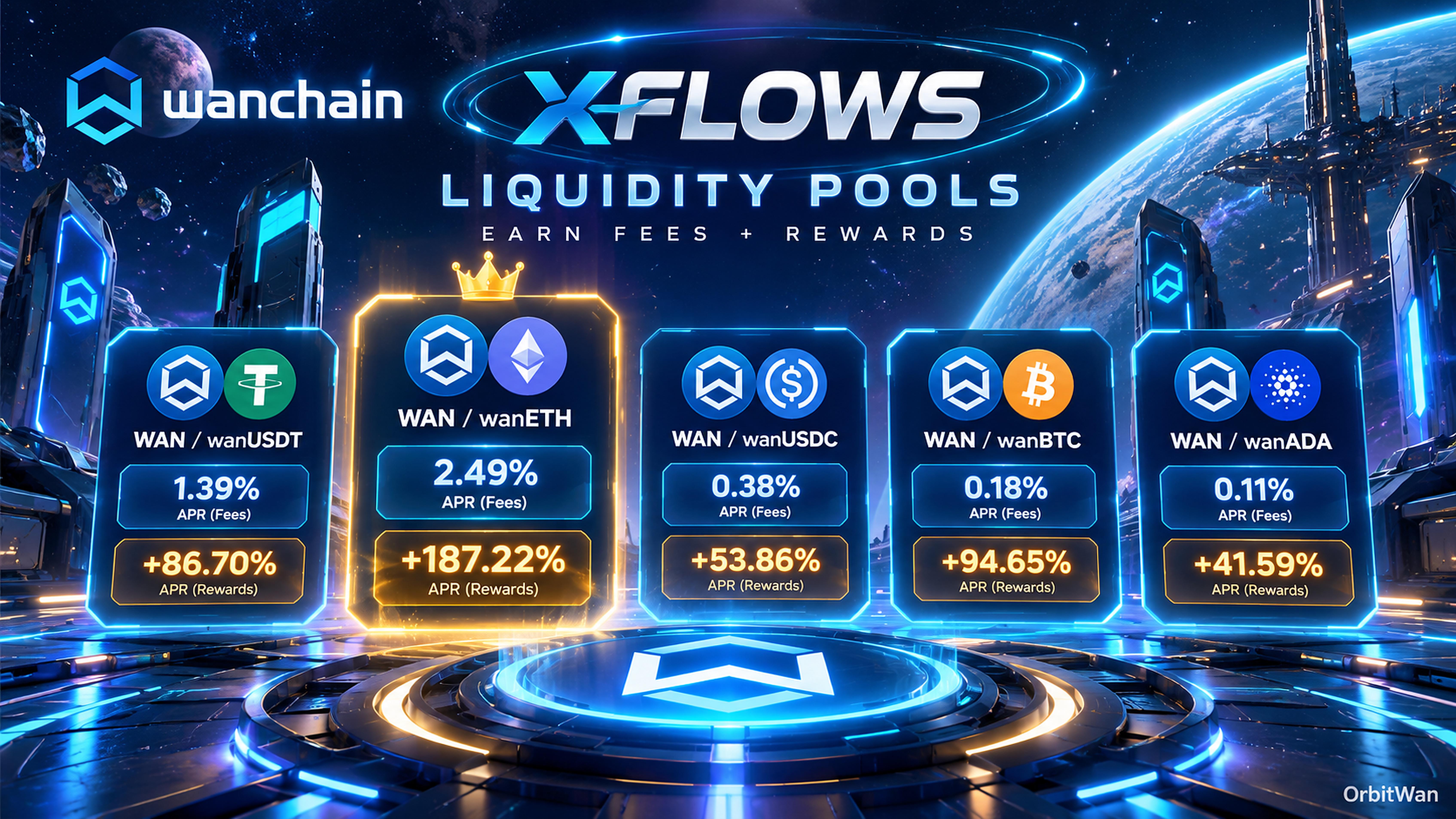
With XFlows, you can swap supported altcoins across 10 connected EVM blockchains directly into your preferred destination asset, whether that's $ETH, $USDC, or $USDT, all in a single transaction.
Supported chains include Arbitrum, Base, BNB Chain, Polygon and Ethereum. Just choose your assets, approve the transaction and let XFlows handle the rest.
Wanchains governance platform has its second ever proposal moved to the voting stage with 69,000 positive votes so far!
Want to see the liquidity for WAN on Ethereum improve? Leave your vote on the proposal requesting 592,160 WAN from the community treasury to increase liquidity on the WAN/ETH trading pair on Uniswap.
This proposal aims to make it easier for users to trade WAN with reduced slippage by increasing liquidity from $65,000 to $98,650 on Uniswap.
Quick summary of Wanchain’s October newsletter. Disclosure: I’m part of the Wanchain community. Not financial advice.
Burn upgrade: Since Oct 2, 20% of collected bridge fees go to burning WAN (up from 10%). The split is now 20% burn, 20% Community Treasury, 30% operations, and 10% each for Bridge Nodes, PoS Nodes and xWAN staking.
Projection: About 1.1M WAN burned per year vs. about 1.044M WAN in PoS emissions, a small net decrease. Actual burns depend on bridge usage.
Governance: Proposal #2 aims to deepen WAN/ETH liquidity on Uniswap. It had reached about 87% of its sponsorship target as of Oct 30.
Bridge-2-Earn: 12+ new tasks announced Oct 23. Terms can change, so check the live page first.
NOW Wallet: Users can store, swap and buy WAN with fiat.
Events: The team attended TOKEN2049 Singapore and co-hosted the Pulsar Coffee Meetup on Oct 9, the biggest in that series so far.
Wanchain has been working towards a more connected Web3 since 2018, constantly pushing the boundaries of what's possible with blockchain interoperability.
Over the years, we've seen Wanchain focus on some important areas:
Introducing users to cross-chain connectivity.
Expanding interoperability between EVM and Non-EVM networks.
Giving users opportunity to earn from cross-chain activity.
Taking away the complexity of moving across chains. (Coming Soon)
Blockchain ecosystems shouldn't operate in isolation. The more connected they become, the more opportunities they can create for everyone.
Wanchain continues to build towards that vision, and there's still plenty more to come. We're only just getting started!
I've been looking into how it works, and there are a few different ways to earn XP through the ecosystem.
From what I've seen, activity includes cross-chain swaps, participating in the Telegram community, and referring new users.
There are also weekly and seasonal leaderboard rewards. The weekly raffle selects one participant to receive 500 xWAN, while seasonal campaigns reward top contributors.
XP is also tied to governance participation and Bridge-to-Earn activities.
I'm curious how many people here are taking part and what their experience has been so far.
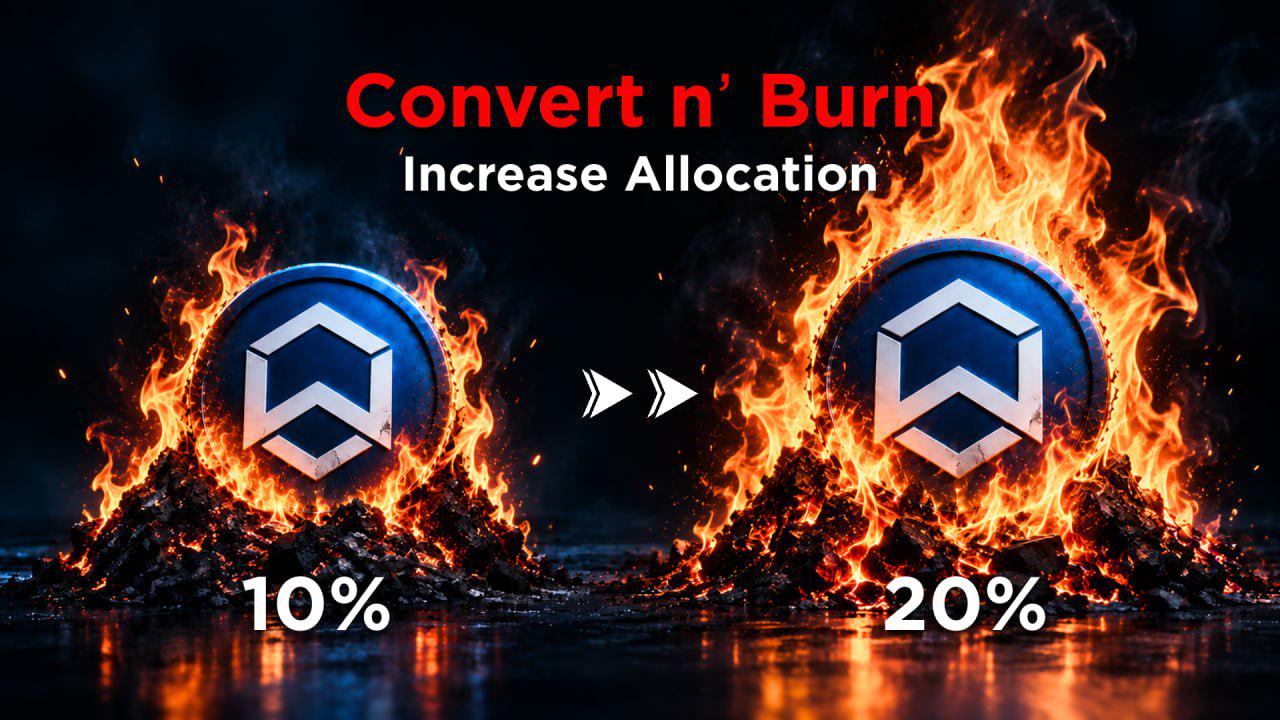
With the increase in Wanchain’s Convert n’ Burn rate from 10% to 20%, more of the WAN allocated through this mechanism will now be burned.
So, what does this mean for the ecosystem?
As bridge activity grows, more fees can be generated, leading to more WAN being burned. This creates a direct link between cross-chain activity and WAN becoming deflationary.
Want to see how Wanchain Bridge fees are adding up? You can track the numbers yourself on the official Dashboard
A new proposal on Wanchain’s governance platform aims to strengthen WAN liquidity on Ethereum by adding approximately 592,160 WAN ($33,650), equivalent to 10% of the current Community Treasury balance to the WAN/ETH trading pool on Uniswap.
Here’s how it would work:
296,080 WAN would be bridged to Ethereum, while the other 296,080 WAN would be converted into ETH. Both assets would then be deposited into the WAN/ETH Uniswap pool.
Why does this matter?
The existing WAN/ETH pool has approximately $65,000 in liquidity. Adding another $33,650 could bring the total to around $98,650, helping deepen liquidity and potentially reduce slippage and price impact for users trading larger amounts of WAN.
It’s another example of how Wanchain’s governance platform can give the community a say in how treasury funds are used to support the ecosystem.
For anyone who hasn’t come across it, Token 2049 is one of the biggest gatherings in the crypto and Web3 industry, bringing together builders, founders, investors, developers and projects from around the world.
This year’s Singapore edition takes place on the 7–8th of October at Marina Bay Sands with 25,000+ attendees expected.
Wanchain will be attending and connecting with projects and teams from across the industry.
If you’re building a DApp, Project or Blockchain and want to expand your interoperability or connect with more networks, this is a great opportunity to connect with the Wanchain team and make it happen.
The first Wanchain governance proposal has officially wrapped up, and the community has decided to turn up the heat on Convert n’ Burn
Starting in October, the amount of WAN allocated to the burn will increase from 10% to 20%.
It’s a pretty interesting milestone for Wanchain because this is the first proposal to go through the new governance platform, meaning the community has now had a direct say in how part of the protocol’s mechanics will operate going forward.
With the higher burn allocation coming into effect, more WAN will be removed from circulation through Convert n’ Burn, making WAN deflationary.
Wanchain’s Governance Platform currently has a proposal to increase the Convert n' Burn allocation from 10% → 20%.
This change would redirect 10% from the Community Treasury to the Burn Wallet, while Ongoing Operations, Bridge Nodes, PoS Nodes, and xWAN Staking remain unaffected.
At current bridge volumes, this could take WAN from approximately 489,994 annual inflation to ~64,389 annual deflation.
Current votes:514,895 / 1,050,000
Time remaining: 2 days 21 hours
If you hold $WAN and want to make it deflationary, head over to governance.wanchain.org and have your say.
Wanchain’s XStake has some interesting staking opportunities worth checking out.
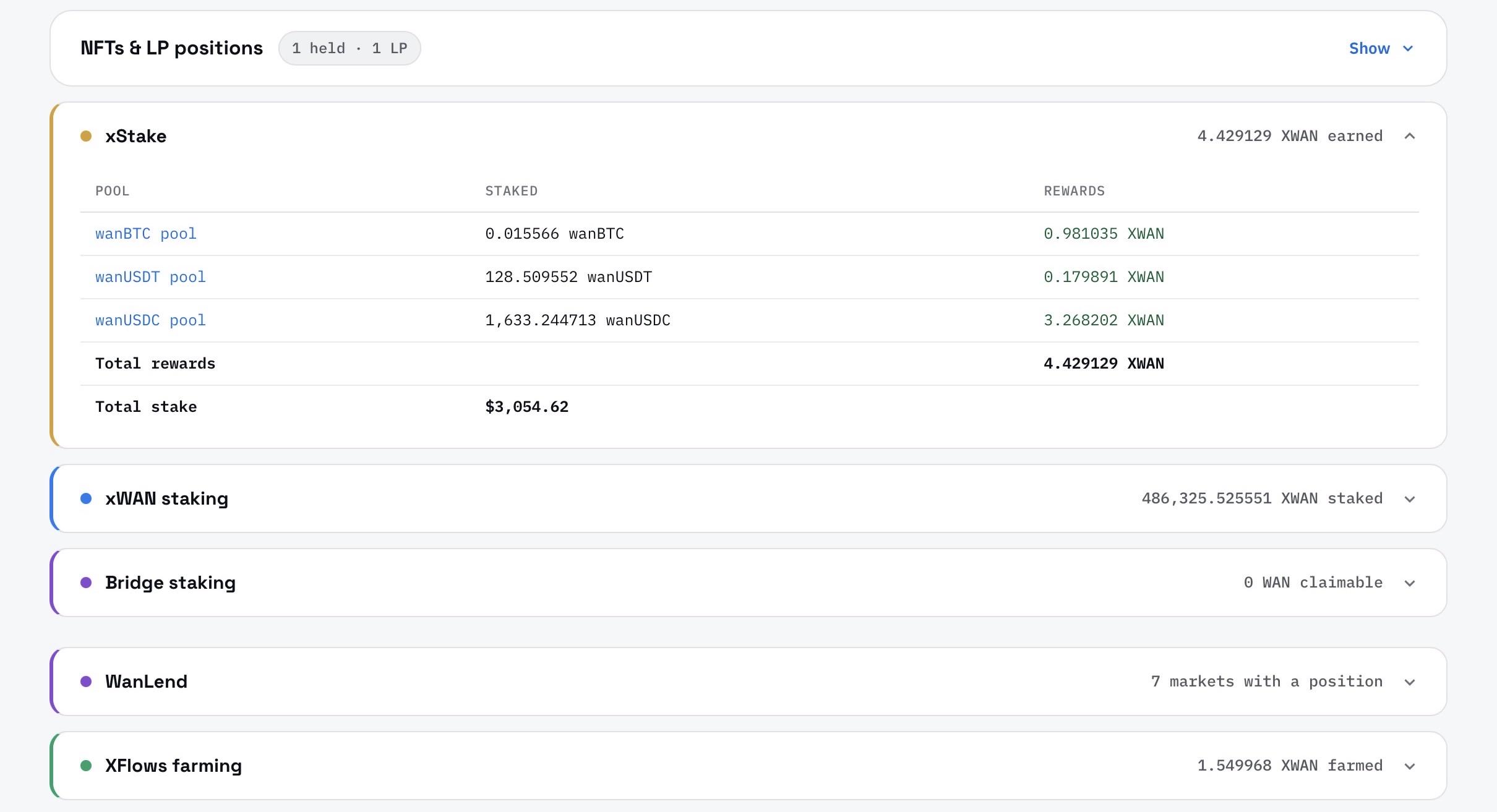
Choose to stake either BTC, ETH, USDC or USDT and earn rewards in xWAN. This goes both ways, stake xWAN and earn rewards in any of these 4 blue-chip assets. Users are able to unstake at any moment without any need to lock up funds.
It’s a pretty unique way of putting both blue-chip assets and stablecoins to work while staying within the Wanchain ecosystem.
The Wanchain community now has a direct way to propose, discuss, and vote on ideas that can help shape the future of the ecosystem.
Community members can submit proposals across two different proposal types, giving everyone the opportunity to put forward ideas focused on making positive changes, improvements and additions to Wanchain.
The goal is simple: build together, improve together and give the community a greater voice in Wanchain’s future.
Hey everyone! I used wanchain to bridge 20 ADA (9.5 net after fees) to ethereum. However, the token doesn't even show up in my metamask wallet. It's just there in the transaction history.
I tried manually adding it but the metamask prompts me that it doesn't exist (token id: 0x474999877e40db4a7e3211b0889b76131e35ea04). Tried using dexes to swap it in to USDC, the token was recognized but there is no liquidity? I'm new to all of this so if anyone can help me out that'd great.
Wanbridge provides the wrapping of xrp from 1 network to another. Example from ripple to ethereum. However the process is simple but error prone. Why instead of having the user send the xrp to the ripple address with the TAG which is needed you instead send a send requesrt to the ledger if the user is using a ledger. This makes it WAY less error prone and will give users comfort that they will not make an error. Cause one error in the send and its gone for good.
heres a safe example of sending a request to a ledger:
<script type="module">
import TransportWebUSB from "https://cdn.jsdelivr.net/npm/@ledgerhq/hw-transport-webusb@6.28.1/+esm";
import AppXrp from "https://cdn.jsdelivr.net/npm/@ledgerhq/hw-app-xrp@6.28.1/+esm";
import xrpl from "https://cdn.jsdelivr.net/npm/xrpl@2.10.0/+esm";
const destinationAddress = "rPT1Sjq2YGrBMTttX4GZHjKu9dyfzbpAYe"; // Replace with recipient
const destinationTag = 12345; // This is the tag you want to include (can be a message ID, user ID, etc.)
const sendAmountXRP = "10";
const derivationPath = "44'/144'/0'/0/0"; // Standard XRP derivation path