r/wealthfront • • 17h ago

Question on 500 direct index

5 Upvotes

I know direct indexing gets discussed here a lot, but every tax situation is a little different and I’d value some outside perspectives on whether Wealthfront is the right fit for me.

My situation:

- Tax bracket: ~35% marginal bracket

- Initial funding: ~$600k in cash

- Ongoing contributions: $150k–$200k/year from selling vesting RSUs to diversify out of a concentrated single-stock position

- Current setup: I currently invest in VTI in my taxable brokerage account, so S&P 500 direct indexing appeals to me for similar market exposure with added tax-loss harvesting (TLH) benefits.

Why I’m leaning toward Wealthfront:

Wealthfront’s S&P 500 Direct expense ratio is only 0.09%, compared to ~0.35% at other providers. Because the ongoing fee drag is so low, my exit wouldn't feel rushed 10–15 years from now when I stop adding fresh cash and TLH opportunities taper off.

My main concern:

Is there any real advantage to going with a traditional brokerage’s direct indexing service (Schwab, Fidelity, Vanguard Personalized Indexing, etc.), or is Wealthfront just as good at a much lower cost? In other words—is the 0.09% pricing too good to be true?

Given my numbers, am I the right candidate for Wealthfront, or should I pay $2,000+/year more to go with a traditional firm? What am I missing? Does wealthfront provide cost basis for all lots if I move?


r/wealthfront • • 16h ago

End of year tax-planning strategies: Roth Conversions & Taxable Withdrawals

1 Upvotes

With the end of the year approaching, we wanted to remind you of two actions you might want to consider taking in your Wealthfront accounts before year end to count for the 2026 tax year. 

Complete a Roth Conversion 

What this is: When you complete a Roth conversion, you move funds from a tax-deferred Traditional or SEP IRA into an after-tax Roth IRA. In doing so, you owe ordinary income taxes on the pre-tax amount being converted. After the conversion, the funds may continue to grow tax-free and can be distributed from a Roth IRA tax-free in retirement. If you left these funds in a Traditional or SEP IRA, your withdrawals in retirement would be taxed as ordinary income. 

On the surface, owing taxes in the current tax year may instinctively feel like a bad thing. After all, Wealthfront focuses on tax efficiency when rebalancing, tax-loss harvesting, and placing trades to fulfill withdrawal requests. 

However, it's important to note, you can't leave funds in a Traditional or SEP IRA indefinitely. Eventually, you will have to take Required Minimum Distributions (RMDs)—when you have to withdraw a certain amount of money each year––and incur ordinary income taxes from those distributions as a result. The current RMD start age is 73.

It could be more tax-efficient in the long term to request a Roth conversion ahead of RMD age if you expect the taxes due from the conversion to be less than the taxes due from taking RMDs in retirement. 

Deadline: Just like IRA distributions are always coded for the tax year in which they occur, Roth conversions are as well. This means that if you want to convert a pre-tax Traditional or SEP IRA into an after-tax Roth IRA for the 2026 tax year, the conversion must be completed before year-end. The same is true for backdoor Roth IRAs. That is, if you make a non-deductible contribution to a Traditional IRA and then convert it to a Roth IRA, the conversion must be completed before year-end to receive a 2026 Tax Form 1099-R detailing the conversion.

Roth conversions generally take two to three business days to complete because we sell any investments in your Traditional or SEP IRA and transfer the proceeds to your Roth IRA. We typically sell any investments in your Traditional or SEP IRA within one business day of your request. 

At this time we only support “full conversions,” meaning we convert all of the funds in your Traditional or SEP IRA to your Roth. You cannot convert just a portion of your Traditional or SEP IRA. As such, your Traditional or SEP IRA will automatically be closed after your conversion is complete. If you receive dividends in your Traditional or SEP IRA after this conversion, we’ll automatically convert those dividends to your Roth before closing your Traditional or SEP IRA. You can always open a new Traditional or SEP IRA.

Who it's for: Low income years and low IRA balance years provide opportunities for Roth conversions. Low income years could be from going back to school, taking a sabbatical to travel, or from being out of work for an extended period of time. If you’re in a lower-than-usual tax bracket this year, now could be a good time to pay taxes on the conversion and then benefit from the potential tax-free growth and withdrawals you get with a Roth IRA in the future. Similarly, low IRA balance years from volatile markets can also provide an opportunity to pay less in taxes from converting your IRA while it's down. 

Keep in mind, after you convert to a Roth IRA, you have to wait at least five years to withdraw earnings from a Roth IRA with no penalty, even if you are 59 ½ years old (the typical age at which you can start taking withdrawals with no penalties). So you should typically only convert if you do not anticipate needing the funds within five years. 

Additionally, you should only convert if you have cash to cover the taxes due for the conversion. Taxes could be significant if you have a lot of pre-tax money in a Traditional IRA. You can estimate the taxes due by multiplying the amount of pre-tax money in your Traditional IRA by whatever you expect your marginal tax rate (including Federal and state income tax if applicable) to be. A larger conversion can also increase your taxable income and may push part of your income into a higher tax bracket, which could affect eligibility for certain tax credits or financial aid.

Make a Taxable Withdrawal

What this is: Sales of securities in taxable investing accounts where the cash sale proceeds are distributed to you rather than reinvested in your portfolio. 

With taxable investing accounts, you'll owe taxes on the net capital gains being realized. Short-term capital gains are taxed at ordinary income rates, while long-term capital gains (from sales of securities that have been held more than one year) are taxed at preferential rates. And as a reminder, realized gains can be offset by harvested losses. 

Deadline: Just like IRA distributions are always coded for the tax year in which they occur, sales of securities in taxable investing accounts are as well. This means that if you want to realize a gain/loss for the current year, the sale must be completed before year-end. Unlike IRAs, it's okay if the taxable sale proceeds are distributed the following year as the taxable event occurs on the date of the sale in the taxable investing account.  

Who it's for: Anyone making a withdrawal from a taxable investing account, particularly a large one, in the near future. 

For instance, if you plan to buy a home next year, you should typically have the funds needed for your down payment and closing costs in cash so that you're ready to purchase. If you were planning on funding your purchase with funds from your taxable investing account, then you should keep in mind the taxes that will be owed from selling the securities to raise the cash. 

If you need to withdraw a large amount from your taxable investing account (or IRA for that matter), it could make sense to break up the withdrawal across multiple years to break up the tax hit. Withdrawing a portion before year-end will mean you owe taxes when you go to file in April 2027 (potentially earlier if it triggers quarterly estimated tax payments). Waiting until January to withdraw the remainder needed will push the taxes due for those withdrawals to April 2028 (or again, potentially earlier if it triggers quarterly estimated tax payments). Making withdrawals across multiple tax years could keep you in lower tax brackets than if you withdrew the full amount in one transaction. If you do complete a taxable withdrawal, we suggest keeping a portion of the sale proceeds set aside in cash to cover any estimated taxes due for the sale.  

We hope these strategies will help you and your families as you have end-of-year tax planning conversations. To learn how these strategies could affect your taxes based on your personal situation (including state and local taxes), consult a tax advisor. Wealthfront is not a tax advisor, so this content is for informational purposes only and should not be considered advice.

Feel free to reply to this thread if you have any questions. For specific questions about your account, please email us at support@wealthfront.com.

-----------------

Disclosure: Wealthfront Advisers and affiliates do not provide legal or tax advice and are not liable for tax consequences of client transactions. Please consult a personal tax advisor. Nothing in this post should be construed as investment, financial, or tax advice. Links to other sites are provided for convenience only. Wealthfront Advisers or its affiliates don't endorse, sponsor, promote, or are affiliated with these sites, their owners, or their content, unless expressly stated. 

Roth IRA conversions require a 5-year holding period before earnings can be withdrawn tax-free and subsequent conversions will require their own 5-year holding period. In addition, earnings distributions prior to age 59½ are subject to an early withdrawal penalty. Tax-Loss Harvesting benefits depend on your tax and investment profile. New securities may perform better or worse than those sold, and tracking errors could cause slight divergence from benchmarks. Unintended tax effects may occur. 

Investing involves risk, including loss of principal. Past performance is not a guarantee of future results. Investment advisory services are provided by Wealthfront Advisers LLC, an SEC-registered investment adviser. Brokerage services are provided by Wealthfront Brokerage LLC, Member FINRA/SIPC. © 2026 Wealthfront Corporation.


r/wealthfront • • 2d ago

Categories (Set Amount that can't be Spent)

1 Upvotes

So you've got categories that can be used as HYSAs. I'd like to see a function where you can set it so X amount cannot be touched or used for any stock purchases. If you've got $2000 in a category and want to set it so only $$$ beyond $2000 can be used, that'd be nice.


r/wealthfront • • 2d ago

General question If I sign up with someone’s referral link. Do they see any of my info?

1 Upvotes

Curios if they see any of my personal information. Any recent confirmed referrals that can clarify here?


r/wealthfront • • 2d ago

Old 401k - To Keep or Direct Rollover into Wealthfront?

1 Upvotes

I am changing jobs soon from my current employer that has Fidelity 401k plan to the new employer that also has a Fidelity retirement plan. Did people in similar situations keep both 401ks (only contributing actively to the latter), or transfer the previous one directly to a Wealthfront IRA? In early 2023 when I changed employer I did a Wealthfront Direct Rollover but at that time I didn't have the same plan provider.


r/wealthfront • • 4d ago

Home Lending New Features: Fast-track Closing and Rate Tracker

11 Upvotes

We recently shipped two new features designed to help clients who use Wealthfront Home Lending better compare mortgage rate offers and make stronger offers. Wealthfront Home Lending is available in CA, CO, TX and WA with expansion to more states coming soon. 

Fast-track Closing

What it is: Home buyers in competitive markets who use Wealthfront Home Lending can now opt into Fast-track Closing to increase the likelihood that their offer is accepted. Opting in allows buyers to make standout offers with a verified pre-approval letter and close in as little as 21 days.

How it works: Once you're pre-approved, we'll ask for the documents we wouldn’t typically need until after you get into contract, like pay stubs, W-2s, and bank statements (the exact list depends on your application). After we review them, you'll get a verified pre-approval letter that shows sellers your finances have already been checked, which can help your offer stand out.

When your offer is accepted, we'll help you prioritize any last remaining tasks, so you can close in as little as 21 days. We'll cover any extra cost to rush your appraisal and inform your real estate agent that we're rushing the closing. We also help your real estate agent by setting clear expectations of any time-sensitive tasks we need them to complete in order to keep your loan on the fast track. We ask that you upload your purchase contract the day it's signed and finish any new tasks within 12 hours.

Opting in is free and doesn't commit you to anything.

Rate Tracker

What it is: Prospective home buyers and refinancers who are waiting for rates to drop can use our rate tracker to get notified when rates reach a particular level. Add a target mortgage rate along with the maximum points you'd be willing to pay for that rate and get automatically notified via email and/or push notification when that rate becomes available. Think of it like the Google Flights "Track Prices" feature for mortgage rates.

How it works: To start automatically tracking your target rate with Wealthfront Home Lending, configure the rate calculator to match your desired scenario, then click Set target rate. Once you start tracking, you can see where rates currently stand in comparison to your desired rate within our website or app. 

We hope you enjoy these product improvements. Feel free to reply to this thread if you have any general questions. For specific questions regarding Wealthfront Home Lending, please email us at homelending@wealthfront.com.

-----------------

Disclosure:

Wealthfront Home Lending, LLC NMLS 2358115 NMLS Consumer Access 833-523-3673 90 New Montgomery Street, Suite 1450, San Francisco, CA 94105. Loans made or arranged pursuant to a California Finance Lenders Law License.

Fast-track availability depends on loan type, property type, and borrower qualification. The 21-day closing timeline is not guaranteed; actual closing times vary and depend on factors including the completeness and timing of borrower-provided documentation, property location, appraisal, title, and other third-party turn times.
Wealthfront Home Lending, LLC is a correspondent lender. "Verified" means we reviewed and verified the income, asset, and credit documentation you provided. "AUS approved" means an automated underwriting system returned an eligible recommendation based on the information submitted. This is not a final underwriting decision.

*Rate comparison based on Freddie Mac Primary Mortgage Market Survey® average for 30-year fixed-rate mortgages as of [November 19, 2026]. Rate available to qualified borrowers meeting the following criteria: 780+ FICO score, $750,000 purchase price, primary single-family residence in Austin, TX, 20% down payment, and payment of 1 discount point. Actual rates may vary. APR and additional terms apply. Not all borrowers will qualify.

Checking your rate or getting pre-approved will not impact your credit score. A hard credit inquiry will be required if you choose to proceed with a full loan application.

Home loan availability is subject to credit approval and applicable state and federal licensing requirements. Rates vary based on credit profile, loan terms and market conditions. Not all applicants will qualify for the lowest advertised rates. This communication is for informational purposes only. It is not a commitment to lend or an offer to extend credit. Equal Housing Opportunity. (NOTE: Include Equal Housing Logo image must be included) Disclosures and Licenses.

Wealthfront Home Lending, LLC is an affiliate of Wealthfront Advisers LLC, an SEC-registered investment adviser, Wealthfront Brokerage LLC, Member FINRA/SIPC, Wealthfront Software LLC, Wealthfront Strategies LLC, and the Wealthfront Corporation.

Loans made or arranged pursuant to a California Finance Lenders Law License.


r/wealthfront • • 5d ago

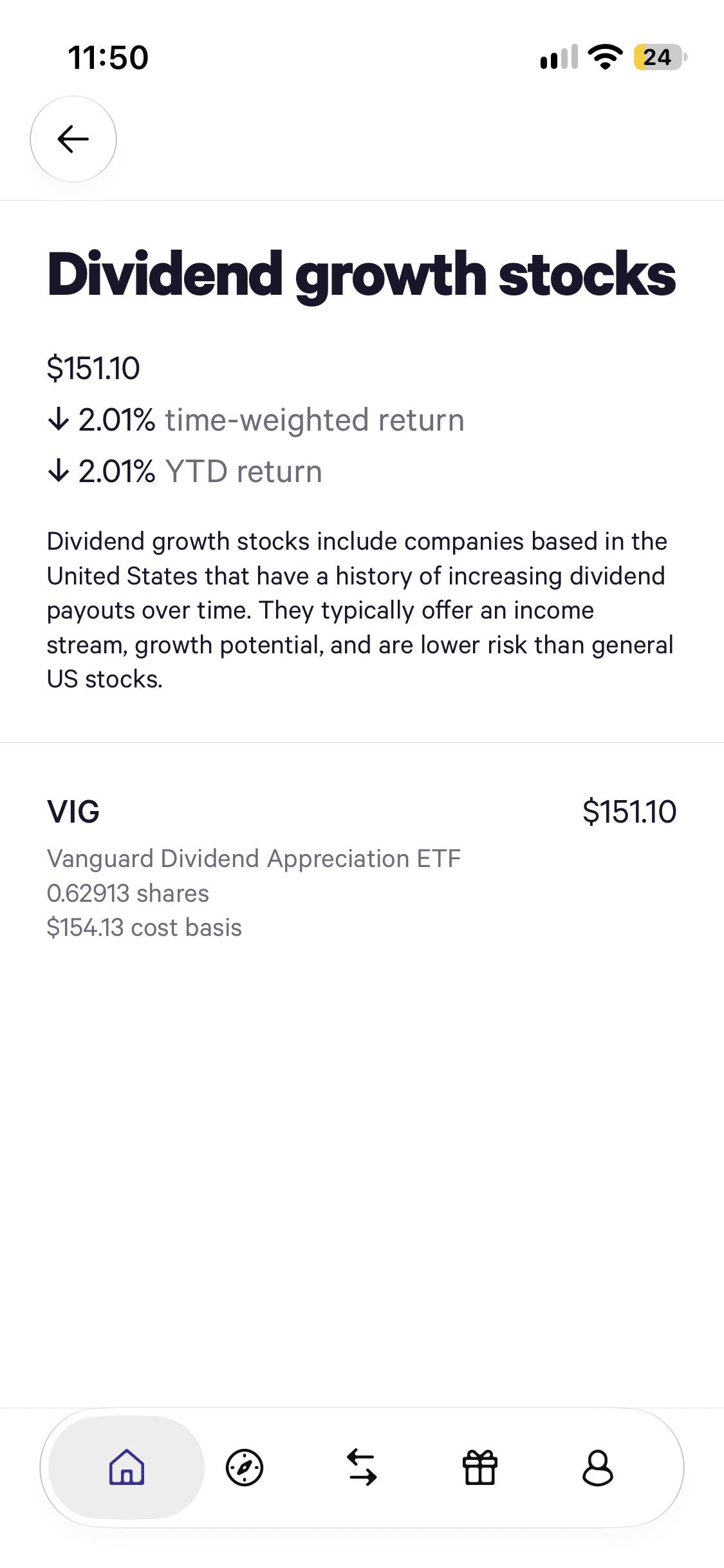
Bug Isn’t there supposed to be tax loss harvesting for VIG? I just started over and want TLH for the dividend growth stocks

Post image
3 Upvotes

r/wealthfront • • 7d ago

What happened to opening multiple brokages account?

7 Upvotes

What happened to wealthfront? Back then if I wanted to create another individual account for individual investments I could create another one. Now I can't. Why?


r/wealthfront • • 7d ago

Not receiving verification text

1 Upvotes

Anyone else not receiving verification texts for login?


r/wealthfront • • 8d ago

How to buy or exclude Anthropic stock in my Wealthfront portfolio

39 Upvotes

We previously discussed how upcoming IPOs (including SpaceX) may impact your Wealthfront portfolio. Our advice then and now is to still not let headlines change your investing strategy. 

That being said, we understand some of you may wish to buy or exclude Anthropic in your Wealthfront investment accounts. Steps on how to do that are outlined below. 

When can I buy Anthropic with Wealthfront?

You should be able to purchase Anthropic in your Brokerage Account on the IPO date once it begins trading on the open market. You can also purchase ETFs that may eventually include Anthropic in your Brokerage Account. 

Anthropic does not have an official, confirmed IPO date yet. However, they are expected to debut on the Nasdaq under the ticker ANT before Thanksgiving in November 2026. 

When will Anthropic be in my managed investing accounts?

The speed at which Anthropic will be included in managed investing accounts depends on the type of investing account you have with Wealthfront and the indices it follows. Here's a reminder of the three major US stock market indices in our managed investing accounts:

  • Morningstar US Total Market Index (previously known as the CRSP US Total Market Index): 

    • What is it?: This index contains large, medium, small, and micro US stocks covering the entire US equity market.
    • Where is it included?: Tracked by VTI - the primary recommended US Stock ETF used in Wealthfront Portfolios. We also track VTI in our US Direct Indexing (USDI) strategy available in Wealthfront Portfolios with balances over $100,000. 
    • When will ANT be added?: If it meets eligibility requirements, then Anthropic will be added to the Morningstar US Total Market Index five trading days after the IPO. 
  • Nasdaq-100® Index: 

    • What is it?: This index contains about 100 of the largest non-financial companies listed on the Nasdaq exchange.
    • Where is it included?: Tracked by QQQM - an ETF that's available to add as a customization in Wealthfront Portfolios. The index is also tracked by ETFs like QQQ, QNDX and IQQ, which are available for purchase in Brokerage Accounts, and used in our Nasdaq-100 Direct Account.
    • When will ANT be added?: If it meets eligibility requirements, Anthropic will be added to the Nasdaq-100® Index approximately 15 trading days after going public. 
  • S&P 500® Index:

    • What is it?: This index contains about 500 of the largest US companies and covers about 80% of the total US market.
    • Where is it included?: Tracked by VOO - a completion ETF used in our US Direct Indexing (USDI) strategy available in Wealthfront Portfolios with balances over $100,000. The index is also tracked by ETFs like SPY, IVV, and SPYM which are available for purchase in Brokerage Accounts, and used in our S&P 500 Direct Account.
    • When will ANT be added?: The S&P 500® Index still requires newly public companies to be listed for at least 12 months, so Anthropic won't be eligible until late next year. 

Note: Getting added to an index doesn't mean a stock gets a big weight just because its valuation is huge. For instance, SpaceX (SPCX) was the largest IPO in history. However, it only accounted for ~0.15% of the Morningstar US Total Market Index and ~1.34% of the Nasdaq-100® when it was initially added to those indices. 
  
This is because most major indices rank and weigh companies based on float-adjusted market cap (also called free-float market cap) which accounts for shares actually available to public investors and not insider-held shares. This prevents companies with massive insider ownership from having artificially inflated weights in the indices. Free-float market cap reflects the actual shares available for investors to buy and sell on the open market, ensuring an index can be realistically tracked by investment fund managers. SpaceX had ~95% insider ownership at IPO, so its float, and its weight, started small.

As lockups expire and insiders are able to sell their shares to the public, float grows, as does index weight, all else equal. With SpaceX's accelerated lockup schedule, its weight has since changed to ~0.11% of the Morningstar US Total Market Index and ~2.71% of the Nasdaq-100®. It's still not in the S&P 500, which requires 12 months of trading history (and consistently positive earnings).

The exact number of Anthropic free-float shares and the final offer price remain unknown and will not be finalized until the roadshow and official pricing conclude ahead of its IPO. Please see this blog post we wrote ahead of the SpaceX IPO for more information on stock weighting within indices.

How can I exclude Anthropic individual stock from being traded in my managed direct indexing accounts?

  1. Navigate to your profile by selecting the person icon in the bottom right of our app, or your name in the top right corner of our website
  2. Select Investing
  3. Select Restrictions
  4. Enter ANT to be restricted

Important note: Wealthfront won’t buy or sell restricted stock. Adding a stock to your restricted list after it’s already in your portfolio means our software won’t buy more, but it won’t sell what you already hold.

Can I exclude Anthropic from the ETFs in my managed investing accounts?

Although you can restrict individual stocks, you cannot restrict a company stock from being included in an ETF. 

However, you can customize your portfolio to not include certain ETFs. To customize your portfolio, navigate to your account page and click Edit portfolio. Please note that we do use alternative ETFs if you are participating in tax-loss harvesting. 

Should I change my investing strategy because of the Anthropic IPO? 

For investors worried about the impact of a large IPO on their ETF portfolio, the Anthropic IPO should not change the long-term benefits of index funds. If it is added to the indices, your portfolio will remain diversified across a large number of stocks in the index. Additionally, if/when it is added, there are rules that determine the proportion of the index fund they represent. Meaning, just because it's a large IPO, that doesn't necessarily mean it will have the largest weight. 

For investors planning to directly purchase stock in the expected Anthropic IPO (or any other IPO), it’s important to remember that the stocks of recently public companies are often volatile. We believe single stock bets should be one small part of a broader diversified portfolio, and that investors are better off investing in a diversified portfolio of index funds than trying to predict the future trajectory of one (or any) large, buzzy IPOs. 

Let us know if you have additional questions on this topic and we’ll do our best to answer.

-----------------

Disclosure: Nothing in this post should be construed as investment, financial, or tax advice. Links to other sites are provided for convenience only. Wealthfront Advisers or its affiliates don't endorse, sponsor, promote, or are affiliated with these sites, their owners, or their content, unless expressly stated. Investing involves risk, including loss of principal. Past performance is not a guarantee of future results.

Initial public offerings (IPOs) can be risky and speculative investments, and may not be appropriate for every investor. Investing in IPOs involves significant risks that may lead to substantial loss of your original investment. Investors should carefully review the offering prospectus to determine if investing in an IPO is appropriate for their situation.

Nasdaq®, Nasdaq-100 Index®, NDX®, and Nasdaq-100® are registered trademarks of Nasdaq, Inc. (which with its affiliates is referred to as the “Corporations”) and are licensed for use by Wealthfront Advisers LLC. The Product(s) (“Wealthfront Nasdaq-100 Direct Index”, “Wealthfront Nasdaq-100 Direct”, “Nasdaq-100 Direct”) have not been passed on by the Corporations as to their legality or suitability. The Product(s) are not issued, endorsed, sold, or promoted by the Corporations. THE CORPORATIONS MAKE NO WARRANTIES AND BEAR NO LIABILITY WITH RESPECT TO THE PRODUCT(S).

The S&P 500® index is a product of S&P Dow Jones Indices LLC (“SPDJI”) and has been licensed for use by Wealthfront Advisers LLC. Standard & Poor’s®, S&P®, S&P 500®, US 500 and The 500 are trademarks of Standard & Poor’s Financial Services LLC and these trademarks have been licensed for use by SPDJI and sublicensed for certain purposes by Wealthfront Advisers LLC. Wealthfront’s S&P 500 Direct Portfolio is not sponsored, endorsed, sold or promoted by SPDJI or its affiliates and none of such parties make any representation regarding the advisability of investing in such product nor do they have any liability for any errors, omissions, or interruptions of the S&P 500®.

Performance for our direct indexing and managed investing accounts may deviate from its associated index due to tracking error, market conditions, and limitations of Tax-Loss Harvesting. Account size and customization options, such as excluding individual stocks, may affect your portfolio’s ability to track its underlying index. Indices are not available for direct investment; therefore, their performance does not reflect the expenses associated with the management of an actual portfolio.

Wealthfront Advisers and affiliates do not provide legal or tax advice and are not liable for tax consequences of client transactions. Please consult a personal tax advisor. You are responsible for reporting transactions to the IRS or other taxing authorities.

All investing involves risk, including the possible loss of principal, and past performance does not guarantee future results. Please see our Full Disclosure for important details.

Investment management and advisory services are provided by Wealthfront Advisers LLC (“Wealthfront Advisers”), an SEC-registered investment adviser. The Brokerage Account is a self-directed brokerage account offered by Wealthfront Brokerage LLC ("Wealthfront Brokerage"), Member of FINRA/SIPC. Clients are responsible for evaluating their investment opportunities and risks and making investment decisions.

Wealthfront Advisers and Wealthfront Brokerage are wholly-owned subsidiaries of Wealthfront Corporation. © 2026 Wealthfront Corporation. All rights reserved.
r/wealthfront • • 7d ago

Portfolio Line of Credit - available balance?

1 Upvotes

I had $7K available from my PLOC. I withdrew $7K. Since then, I have partially paid the loan. The PLOC balance is now $4,300.

You would think the available amount of credit would be $2,700. However, the available amount from the PLOC is still zero. Any idea why? FYI my portfolio balance is $29K +/-


r/wealthfront • • 8d ago

Updates

14 Upvotes

Nice subtle update this weekend to include the new Liquid Glass UI. Nothing too crazy, but a clean aesthetic.

Now just waiting for joint brokerage account and updates to the homepage graph, as mentioned here!! 😁


r/wealthfront • • 10d ago

Wealthfront Forced Account Closure with Forced Liquidation, A Warning to Others

38 Upvotes

After 10 years with WF, lots of referrals, I was given 10 days to move out or forced liquidation of all of my holdings and custodial accounts there with an email.

Not great, and I will no longer recommend WF to people, especially if you are high earning/NW since you can get better products/level of service elsewhere.

Sharing this writeup so others can see this as a warning.

Background: Been using WF cash as my primary checking and had a decent chunk invested with them including a custodial account. They requested account review when I ramped up personal spend, completed the review, and said everything was fine. Then followed up a few month later and closed everything.

"After review of your accounts, we have determined that it is appropriate for our business relationship to come to an end and for your Wealthfront accounts to close. [...] If we do not receive a transfer request by you or another custodian within 10 calendar days of this email, we will liquidate the holdings in your accounts"

Full timeline:

  • 10 years ago: Opened WF accounts, added products over time, largely no issue, except with tiny check deposit rates. Used WF Cash as my primary checking account for DD, and bill/credit card payments.
  • June: hit ~$100k+/month credit card spend, auto-paid from WF cash account, funded by DD paychecks and selling tax-efficient money market funds (VUSXX etc.) and transferring into cash account
  • July: WF request review, I verified 7-figure 1040 income and source of funds; WF said fine if personal spend, but don't spend immediately deposited funds (I had assumed they mean within days? because otherwise, what is a cash account for? I can't spend my paycheck?)
  • July to November: Added more money to the cash account so it effectively has a 1 month buffer to my next months spend.
  • November: WF emailed client agreement termination; cash account will close and all investment accounts must move out within 10 days

My setup for cash is primarily in VUSXX and similar tax efficient funds, since the effective after-tax yield is almost .7% higher for my income compared to boosted WF cash account yields. I had considered WTLXX, but it was just an inferior product compared to any of the other major tax efficient funds.

Functionally, I need my checking/cma account to be able to meet my spend. I may have misaligned expectations of what it was able to do compared to a traditional CMA / banks.

I'll be moving over to Fidelity as I have a sizable amount of investment there, and will use their CMA with minimal SPAXX sweep + auto liquidating FDLXX + USFR for medium term cash holdings. (2.1-2.3%+ net yield after tax vs WF cash boosted at ~1.7% net yield). This was probably always the better play, but I had just been lazy since I've been with Wealthfront for so long, and moving my primary checking is annoying.

Now I just have to deal with the unexpected work of urgently filing ACATs and hoping the tax impact is minimal from anything that needs to be sold.

TLDR to others, if you like your investments at Wealthfront, don't use their cash account. It seems to trigger whole account closures.


r/wealthfront • • 10d ago

General question Sweep Bank Account - FDIC

Thumbnail reddit.com
2 Upvotes

r/wealthfront • • 11d ago

Don't transfer stock with unrealized gains into Wealthfront custodial accounts. It will be managed contrary to the account's goals.

12 Upvotes

TL;DR: Don't transfer appreciated stock into a Wealthfront custodial account. It will be managed against the account's goals and likely cost you in taxes.

Follow-up to my earlier post (https://www.reddit.com/r/wealthfront/comments/1xst9lm/custodial_accounts_arent_ready_for_primetime_yet/). After more back-and-forth with support (including a manager), I have a clearer picture. It's worse than I thought, and everything is working as intended. But that's no

Transferred stock is managed with goals that contradict the account’s. A custodial account's stated goal is automated tax-gain harvesting up to the child’s tax-free limit each year. You can choose in the account settings whether you want TGH, TLH, or both.

But stock you transfer in doesn’t consider the account’s settings. It follows Wealthfront’s generic migration logic for all of its accounts. It sells only at a loss or once shares turn long-term. That means:

  • No gain harvesting on transferred shares with short-term gains, even though the child’s first $1,350 of gains is tax-free whether short- or long-term. You lose the year’s allowance if it doesn't turn long-term before January.
  • Transferred shares look to be sold at a loss even if you’ve turned tax-loss harvesting off. (Tax loss harvesting is not usually desirable on custodial accounts.)
  • When the shares turn long-term, the migration sale isn’t capped at your gain-harvesting limit. A large appreciated position could realize gains far above the limit in a single year.

If you’re transferring in appreciated stock, which is exactly when gain harvesting matters most, the account won’t do what it’s marketed to do.

Fees count the assets, but investing doesn’t. Transferred stock counts toward the 0.25% management fee, but it doesn’t count toward the $500 account total needed to invest cash. Cash below that threshold sits in a money market fund and is also charged the fee. Either these funds are under Wealthfront’s management or they aren’t. If they are, they should be managed toward the account’s stated goals.

None of this is documented. Two support reps acknowledged in writing that it isn’t in the account agreement or help center. Everything appears to be working as intended on Wealthfront's side. These issues really need to be highlighted before the accounts are opened and funds are transerred in.

Wealthfront is an SEC-registered adviser with fiduciary duties of care and loyalty. Managing assets against a client’s explicit settings and the account’s advertised purpose, while charging a fee on them, doesn’t seem consistent with those duties

I’ve transferred both accounts back to my own brokerage and will harvest gains manually. Wealthfront declined to refund any fees. A bit of a waste of time and money, but I'm grateful I started digging before things got worse.


r/wealthfront • • 12d ago

Personal evidence of effectiveness of direct indexing: Diminishing TLH for years spikes and remains higher after converting to Direct Indexing

Post image
27 Upvotes

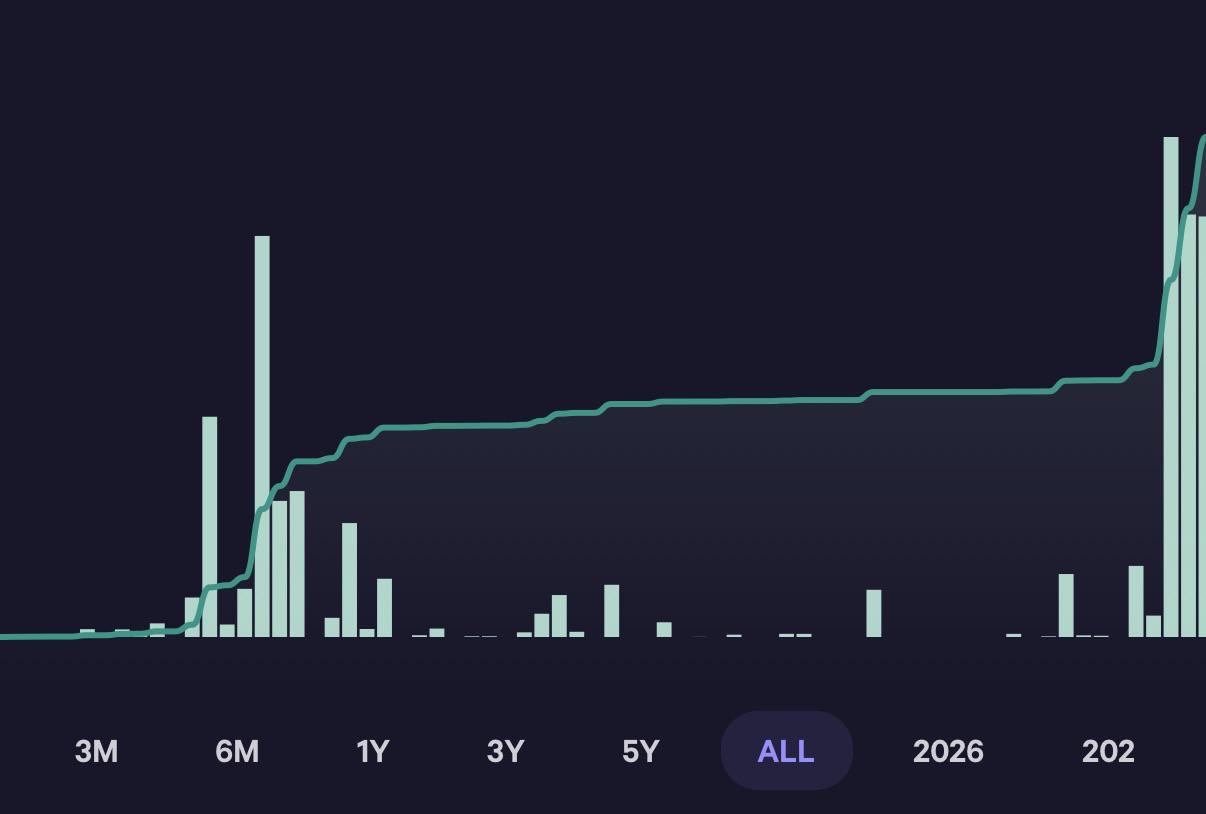
If anyone is interested in just a personal case study on direct indexing, I converted this year to direct indexing out of curiosity. A known feature of index fund based TLH is the tax losses harvested diminishes over time as your funds appreciate in value relative to cost basis. For years since 2022 I’d maybe get $10 or $50 in TLH in nothing more.

Since converting to direct indexing, I have seen recurring spikes in TLH up to $1k and if not $1k, in the hundreds of dollars on recurring occasions at a much greater frequency than I had prior.

I acknowledge there are still downsides to DI such as unwinding all of your individual stocks eventually but thus far I am very pleasantly surprised by how it’s turned out!


r/wealthfront • • 12d ago

Seeking community insights roboadvisor value

0 Upvotes

can someone put ur robo advisor stock account data into Claude or whatever and calculate whether the advisory fee and tax lost harvesting is actually worth it over blindly dumping in s&p500

forgive me but do we have an actual answer otherwise as to whether the "robo" is worth it?


r/wealthfront • • 14d ago

Custodial accounts aren't ready for primetime yet

6 Upvotes

TL;DR: 

- Cash isn't reinvested unless it's over $500,

- Can't do partial conversions/sales of securities transferred in,

- Unclear if they harvest any gains if they're only short term,

-None of this is disclosed.

I’ve used Wealthfront for years across several accounts and have generally liked it. My experience with their custodial accounts has been very different.

No Partial Conversions:

I opened custodial accounts for my kids and transferred in VT shares in-kind. The shares have gains above the tax-free limit for unearned income ($1350) so I expected Wealthfront would sell part of the shares each year and start managing the proceeds.

Instead, after I transferred in, I learn that there's no option to sell/"convert" part of transferred securities. This clearly needs to be disclosed before the account is opened.

Converting everything at once would push the gains over that limit, so spreading the sales across several years is the whole point. If you don’t harvest by 12/31, that year’s allowance is gone.

Fine, I'll wait until they do the tax harvesting. Surely at tax gain harvesting time, they'll sell part of the shares up to the $1350 gain limit. (Spoiler: nope.)

Cash is not managed until its balance reaches $500?:

Meanwhile, some cash came along in the transfer and the shares are generating dividends, so the accounts have accumulating cash. For some reason that cash just sits. Amusingly, because the transferred stock doesn't fit in the investment categories, the cash allocation reads "0% Target 100% Current"

This is when I contacted customer service about these issues.

What I learned from support:

  1. No partial conversions. You can’t convert only some of your transferred-in securities into the managed portfolio. It’s all or nothing. Converting all of mine at once would blow past the tax-free limit. Their suggested workaround is to transfer the shares you don’t want converted back out to your old brokerage**,** then convert the rest. That’s unacceptable. Moving money between firms just to get around a missing feature isn’t a workaround. (Also you need to get a special exception to do a partial transfer out of Wealthfront. Why they can't make an exception to sell some shares of an ETF is beyond me.
  2. Contradictory answers on gain harvesting. I was told gain harvesting for custodial accounts “takes place at the end of the year, in December.” I was also told transferred shares with short-term gains won’t be sold until they turn long-term in January 2027. Those can’t both apply to my shares. For a kid’s account where short-term and long-term gains are both tax-free up to the limit, waiting until January means losing this year’s allowance entirely.
  3. Cash univested, still charged a management fee. At first, support said cash wouldn’t be invested until it reached $500, the account’s minimum investment. Later they said $500 is only the minimum to open an account. So why is the cash still sitting in a money market fund? Either way, I’m paying a management fee on money that isn’t being managed. (That management fee is also being charged on the unmanaged stock, of course.
  4. None of this is documented. I couldn’t find any of these rules in the account agreement or help articles. Support acknowledged that these details “aren’t easy to find” and said some aren’t always explicitly stated. If an account has limitations this significant, they need to be disclosed up front.

I’ve asked for a refund of the management fees and haven’t heard back yet.

My takeaway: These accounts aren’t ready for primetime. I’m moving the VT back to my regular brokerage and will harvest gains manually each year. What a frustrating waste of time and money.

Has anyone else run into this?


r/wealthfront • • 17d ago

General question Is anyone else not able to log in right now?

0 Upvotes

The website loads, but once I put in my credentials it just shows the loading logo forever. Wondering if the same is happening for others


r/wealthfront • • 18d ago

General question Why do I keep getting Action Required messages?

2 Upvotes

Why do I keep getting messages from Wealthfront telling me to that my account number needs to be updated even after doing so? I have have updated in many places with the new account number and can clearly see it i the last four numbers on the account I linked to Wealthfront. Yet, I keep getting these messages. I get exclamation marks after the newly updated ones. Has anyone else had this issue?


r/wealthfront • • 20d ago

General question Wealthfront vs Marcus

Thumbnail reddit.com
3 Upvotes

r/wealthfront • • 21d ago

Categories Feature

Post image
7 Upvotes

Hello! I’m new to Wealthfront and am currently playing around the app to familiarize myself with it. I’ve discovered the categories feature and while it’s my favorite thing about Wealthfront, I can’t help but wish that we had the capability to have our bills come out from a specific category. I understand that we need to transfer that portion back into the main cash account, but as someone who’s finding ways to automate and “set and forget”, having something like that in Wealthfront would make my life easier. What do you all think? Does anyone have a workaround for this?


r/wealthfront • • 20d ago

Feedback “You’ll need to wait until tomorrow to sell from this portfolio again”

Post image
0 Upvotes

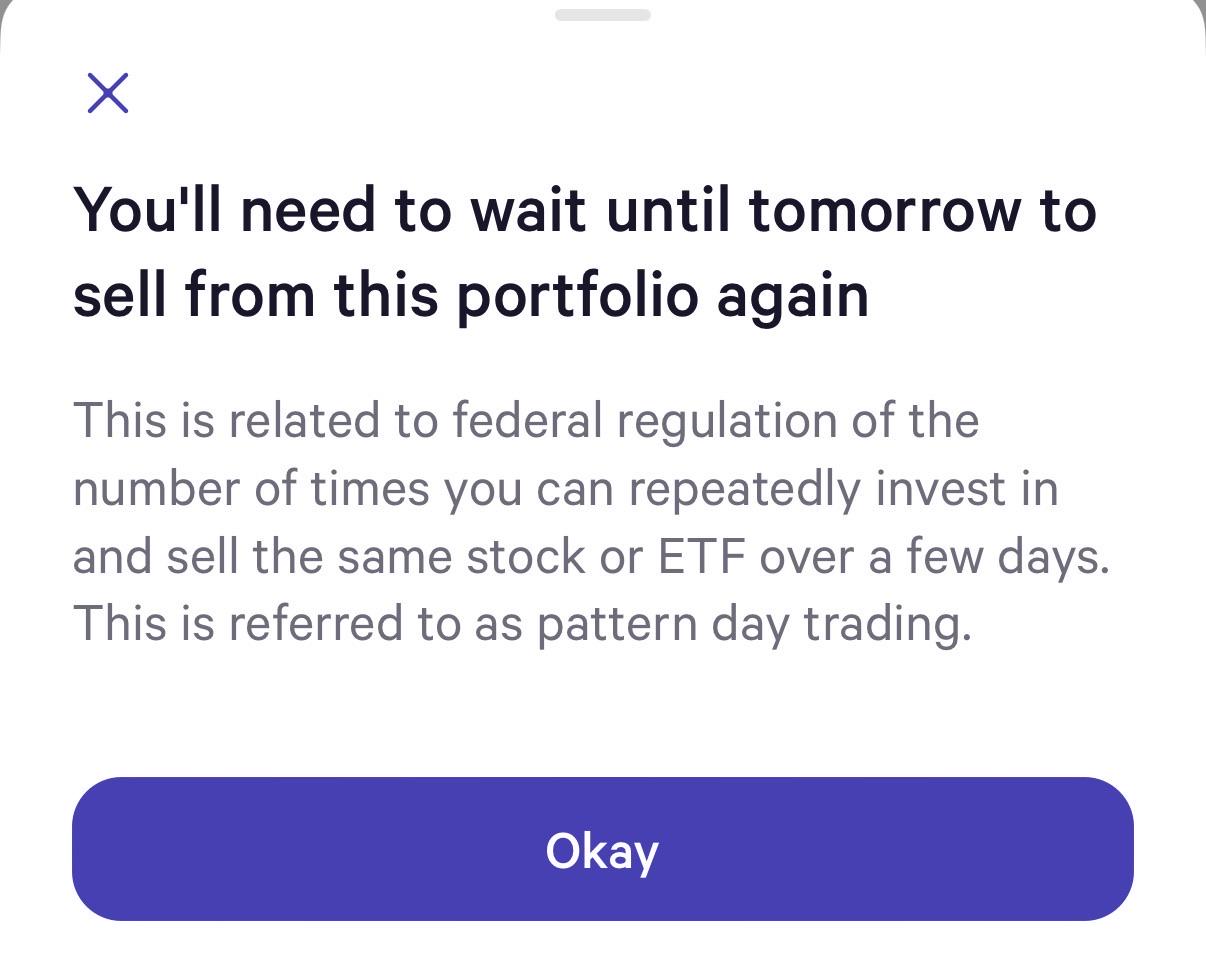
I am feeling really annoyed. Last Friday, as stocks plummeted, I watched a lot of money leave my account, because this stupid fucking app wouldn’t let me have autonomy over my own money and sell my stocks, because of this message.

Why should I use this app if I can’t have autonomy over my own money?