r/ww1 • u/waffen123 • 14h ago
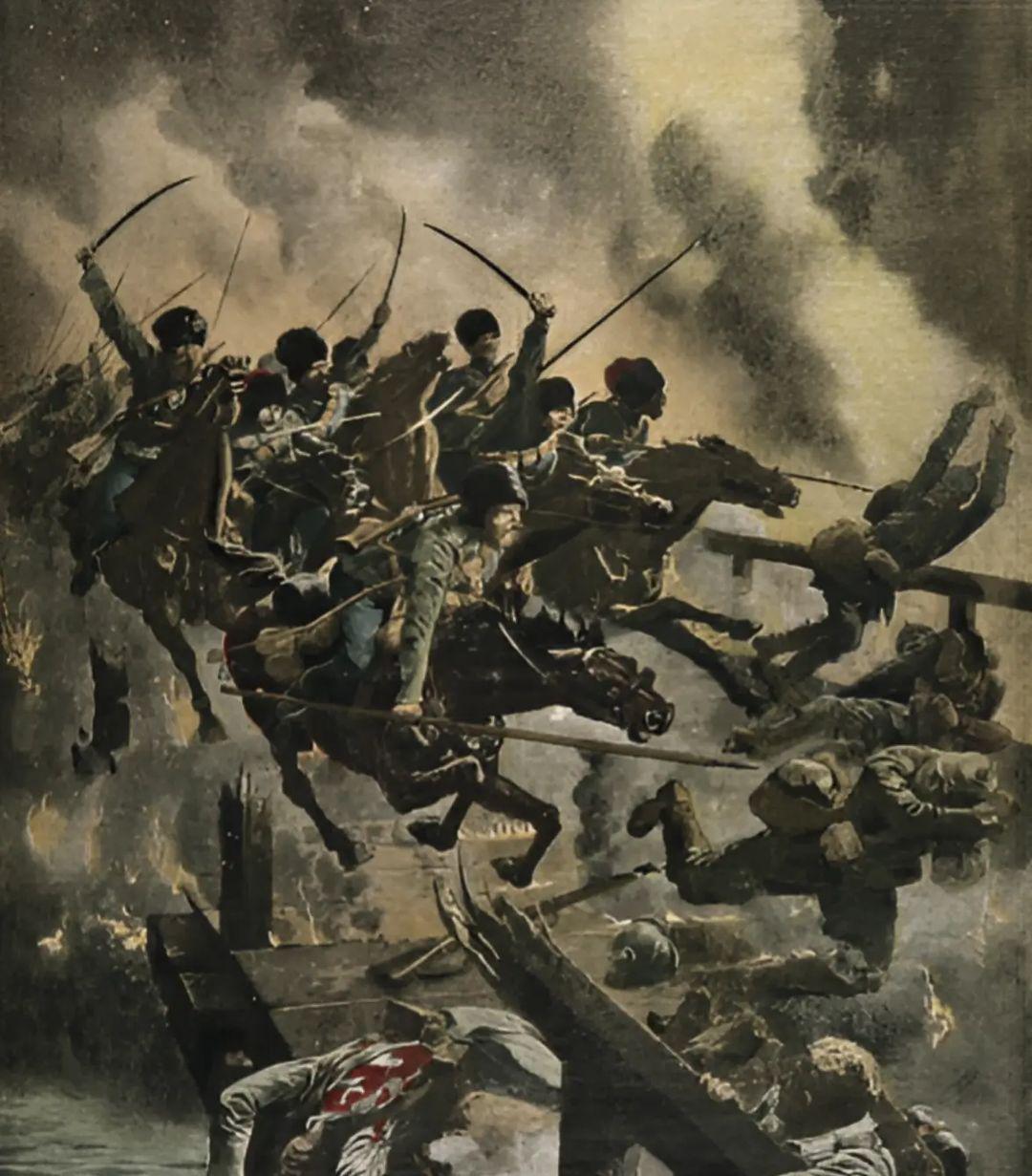
Captured Italian Soldiers Are Escorted to the Rear by German Soldiers During the Battle of Caporetto, 1917

274
Upvotes
r/ww1 • u/waffen123 • 14h ago
r/ww1 • u/the_giank • 13h ago
r/ww1 • u/waffen123 • 8h ago

r/ww1 • u/ReeeGBV-29-07 • 2h ago
r/ww1 • u/NoRice5620 • 1d ago

Personally, France without a doubt.
r/ww1 • u/FatPhrogNibs • 19h ago

Good morning everyone, I'm very much so happy today, So, I have the 3rd division 30th infantry lieutenants grouping (top shelf display) I got on eBay a few weeks ago, I got in contact with his family and they're sending me the rest of the stuff from his belongings (letters, photos, his bible, etc) , one of the belongings is a letter with a piece of fabric that came with it, I couldn't read it at first, but now that I'm looking over it, please correct me if I'm wrong but I'm about 80/20 positive that it's a chunk of fabric from the German Zeppelin L49
r/ww1 • u/Huge_Influence2451 • 14h ago
Dice really cooked. The weapons may be experimental, but no matter what, the graphics take the cake on this. The flashes, subtle details, everything is perfect to a T. But I can give other games their credit.
r/ww1 • u/Ted_Cashew • 15h ago
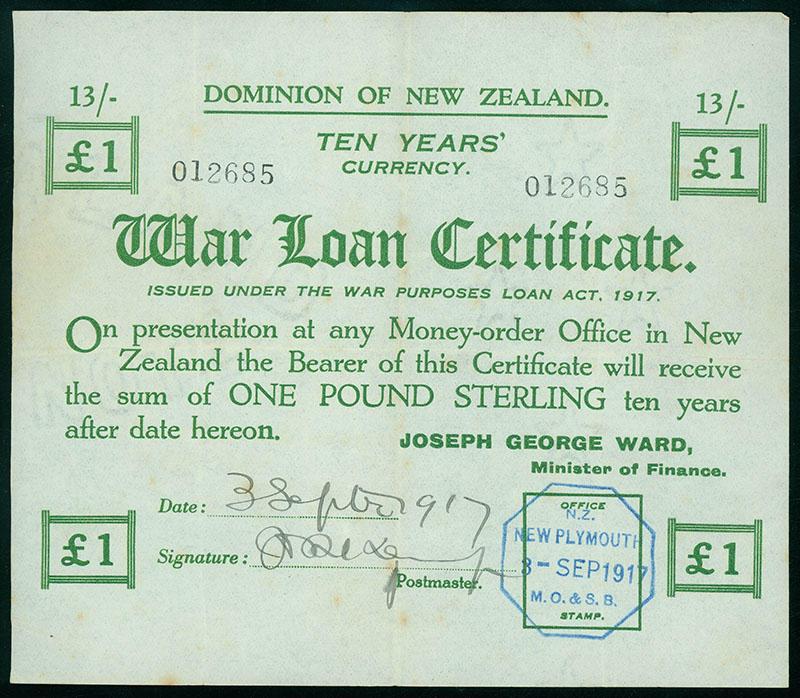
r/ww1 • u/Get_Em_Puppy • 1d ago

"We got into the scrap between two regiments of marines and fought against overwhelming odds, our opponents being Prussian Guards. The 246 men in our company had been reduced to 72 and our ammunition was nearly exhausted when orders came to fall back into the first lines of trenches near by. When we rolled into these we fought with those shotguns, which were stacked up in bunches of eight, with extra ones lying on the first parapet in the near wall of the trenches with plenty of shells handy. Each gun had a shell in its chamber and 5 in the magazine, each loaded with nine big buckshot and 28 grains of 'ballistite' powder. They nearly kicked us down every time we fired, but we didn't mind that when we saw the execution done to the Germans. The way those squirrel-hunting Americans used the weapon was thoroughly effective. Our Colonel had ordered that no one should fire until he gave the command, and it looked to me that he waited until they were almost on top of us. But when the word came those guns opened up in earnest. The Germans were advancing very confidently, for they knew that we were in desperate straits. But that shotgun volley was new to them. They were advancing well bunched, and every time a gun fired three of four Germans would go down. The more the surprise gripped them, the closer they would huddle and the deadlier was the fire. When they could stand it no longer they began to fall back, bunched in closer than ever, with corresponding destruction from the guns. Not a German reached our lines after we began using those shotguns, and I'll tell the world that on June 6th the Kaiser had won himself a war, had he only pressed the advantage and had it not been for those shotguns!"
- Testimony of Captain J. H. Hoskins, Nashville Banner, 6th February 1919
"From prisoners captured during a skirmish between patrols on July 27 a repeating shotgun was taken. The prisoners, who belonged to American infantry regiment 307 of the 77th division, stated their patrol possessed three such guns, each loaded with six cartridges containing nine shots of size 00. Another shotgun was captured on Sept. 11 from the 3d infantry regiment of the 5th American division. The use of such weapons is forbidden by The Hague convention as causing unnecessary suffering. The German government protests energetically and expects from the United States government that steps will be taken immediately to discontinue the employment of shotguns.
It is pointed out to the government of the United States that a prisoner on whom a shotgun or shotgun ammunition is found forfeits his life."
- Communique from the German government to the US government via the Swiss legation, 29th September 1918
"Local patrols were sent out on the next few nights, and on the night of November 8 a raiding party of four officers and ninety men from the Third Battalion, under Lieutenant William O. Holmes, was organized to raid the Bois des Cerfs. Litter-bearers were attached from the Second Battalion and a sanitary detachment of six men, under Captain Royal H. McCutcheon, of the Medical Detachment, accompanied the party. The raid started at about 5:30 o'clock on the morning of November 9, with Colonel Winship personally in command, carrying a trench shotgun. A barrage preceded the raid, but when the party reached the Hindenburg line it was found to be held in force and a spirited engagement resulted in the loss of one killed, eleven wounded and thirty-one missing. Two prisoners were brought back."
- The 110th Infantry in the World War (28th Division)
"Without a halt the advance was continued until the final objective was reached and then while the barrage was held and allowed to play steadily on the areas beyond for thirty minutes the infantrymen with picks and shovels dug places of shelter along the captured line and prepared to defend it against possible counter attacks. But none was to develop. As the assault reached its final objective a German messenger dashed out of the entrance to a dugout and attempted to escape in the direction of Rilly. Quickly a member of the intelligence section leveled a shotgun and brought down the fleeing Hun. The German was not wounded seriously and declared that although he had been in the fighting throughout the war it was the first time he had been wounded."
- The Story of the 36th
"On the morning of July 30th a fighting patrol of 26 men armed with shotguns under Lieutenant Knight went out to the Boche third line without encountering the enemy, producing the intelligence that the Boche withdrew during the night to avoid just such patrols as these and raiding parties such as he had favored us with June 24th."
- History of Company D, 308th U.S. Infantry, 77th Division
"After a month's training, the division, less the artillery brigade and the ammunition train, proceeded to the St. Dié sector (Vosges), arriving on September 19, and occupied the same until the 19th of October. It formed a part of the 33d Corps (French), and later, the 10th Corps (French).
During this month of service in the sector, the division was engaged in and repulsed raids. One of the latter, preceded by a long and severe artillery preparation by the Germans, was followed by an attack of about one hundred shock troops, who were repulsed with ten killed, one captured and probably several wounded. Shotguns and automatic rifles were successfully used by our troops, one of our men killing three Germans with an automatic."
- The History of the 321st Infantry (81st Division)
"The divisional front was far from quiet. Every opportunity to harass the Germans was seized. Almost nightly patrols, often in strength, went out from each regimental front with the mission of penetrating as far as possible into the enemy lines, securing information about their defenses, and capturing prisoners. (...) Patrols using the short shotguns also succeeded in inflicting casualties on German outposts. The majority of prisoners were taken by surrounding outposts in front of Preny and along the Ravin Moulon, which flowed into the Moselle south of Pagny-sur-Moselle."
- A History of the 90th Division
"SEIBERT, LLOYD M., SERGEANT, CO. F, 364TH INFANTRY.
For conspicuous gallantry and intrepidity above and beyond the call of duty, in action with the enemy, near Epinonville, France, September 26, 1918.
Suffering from illness, Sergeant Seibert remained with his platoon and led his men with the highest courage and leadership under heavy shell and machine gun fire. With two other soldiers, Sergeant Seibert charged a machine gun emplacement in advance of his company, he himself killing one of the enemy with a shotgun and capturing two others. In this encounter he was wounded, but he nevertheless continued in action and when a withdrawal was ordered, he returned with the last unit, assisting a wounded comrade. Later in the evening he volunteered and carried in wounded until he fainted from exhaustion"
- Medal of Honor citation for Lloyd Seibert, The Story of the 91st Division
"Mr. BLAND: How many of those sawed-off shotguns did you have over there?
Gen. CONNER: We asked originally for 10,000. I do not know just the quantity we received.
Mr. BLAND: Were they put into use?
Gen. CONNER: A certain number of them were; yes, sir.
Mr. BLAND: In the active campaign around Chateau-Thierry were they used there by the marines?
Gen. CONNER: I do not think so; no, sir. They were not intended for use on the battle front. They were intended for use more in trench raid work, and in trenches.
Mr. BLAND: For defenses?
Gen CONNER: For defenses or in small raids against enemy trenches.
(...)
Mr. BLAND: Did you ever have issued to your troops sawed-off shotguns?
Mr. SHERBURNE: Not in the Artillery. We never got any of those. We could have gotten them if we had wanted them, but they were just nuisances. You see the Artillery, ordinarily, does not get down into the front-line trenches.
Mr. BLAND: Do you know whether they were used in the Ninety-second Division?
Mr. SHERBURNE: I do not recall ever having seen any."
- Testimonies of Major General Fox Conner (AEF General Staff) and Brigadier General John H. Sherburne (92nd Division) before the Select Committee on Expenditures in the War Department, 1920
r/ww1 • u/KingoPalRupert17 • 1d ago

Hello!
I am in the beginnings of starting a reenactment and living history group based on the 17th - 20th Battalions of the Liverpool King's Regiment, ie the Liverpool Pals Battalions of the Great War
If anyone is interested in this, please get in touch!
But i have a question for anyone who may know:
The Liverpool Pals famously wore the 'Sans Changer - Eagle and Child' cap badges, as opposed to the White Horse of Hannover badges of the wider Liverpool King's Regiment. My question is, would anyone know if Officers of the Liverpool Pals wore Eagle and Child collar badges, or whether they wore the King's Hannover horse badges on their collars?
Just want to make an accurate impression!
Cheers
r/ww1 • u/The_Remaster • 1d ago
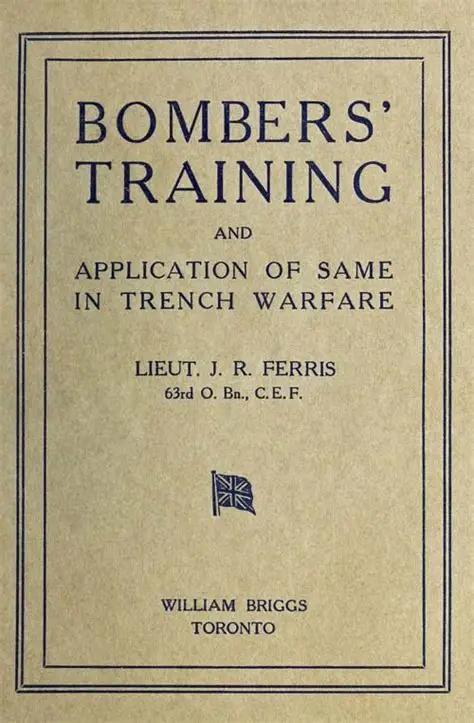
I try to do one book per day but this (to me) is to cool not to share
Written in 1916 for the 63rd Ontario Battalion, Canadian Expeditionary Force, the work addresses the shift in Western Front tactics toward widespread use of bombs and grenades by infantry, not just engineers. Ferris emphasizes that soldiers must learn handling, shipping, storage, and the physical properties of explosives to avoid accidents and maximize effectiveness
Bombers' training and application of same in trench warfare
If you want to support a website that is being made full of WW1 books and media from the time period you can here Buy Sean Warner Productions a Coffee
r/ww1 • u/The_Remaster • 1d ago
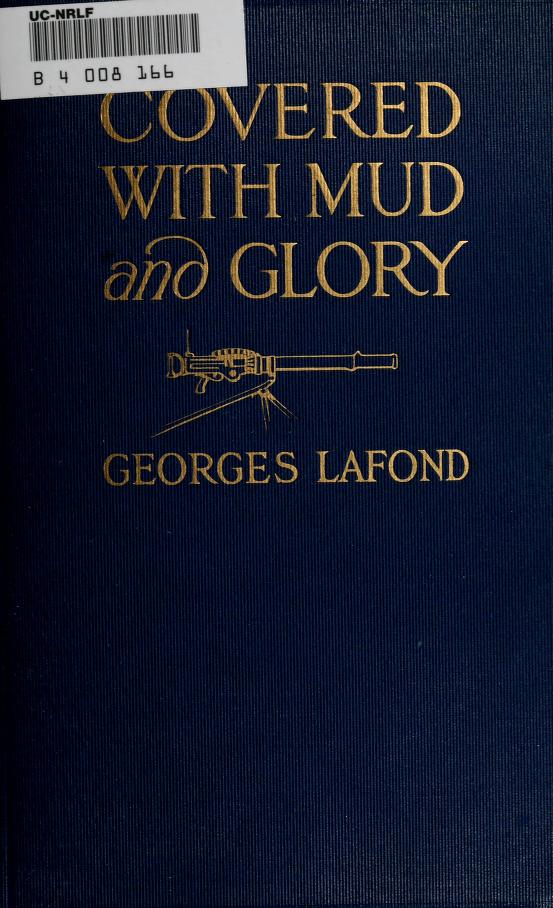
Lafond served in the Territorial Hussars and as an intelligence officer with the machine‑gun sections of the First Regiment of French Colonial Infantry. He took part in major 1916–1917 battles in Champagne, on the Somme, at Lihons, Dompierre, Herbécourt, and Maisonnette, including the intense days of 1–5 July when his regiment earned a second citation and the fourragère. He was discharged after Maisonnette and wrote the memoir in hospital at Abbeville and Montpellier
If you want to support a website that is being made full of WW1 books and media from the time period you can here Buy Sean Warner Productions a Coffee
r/ww1 • u/AllAboutHistoryBooks • 1d ago
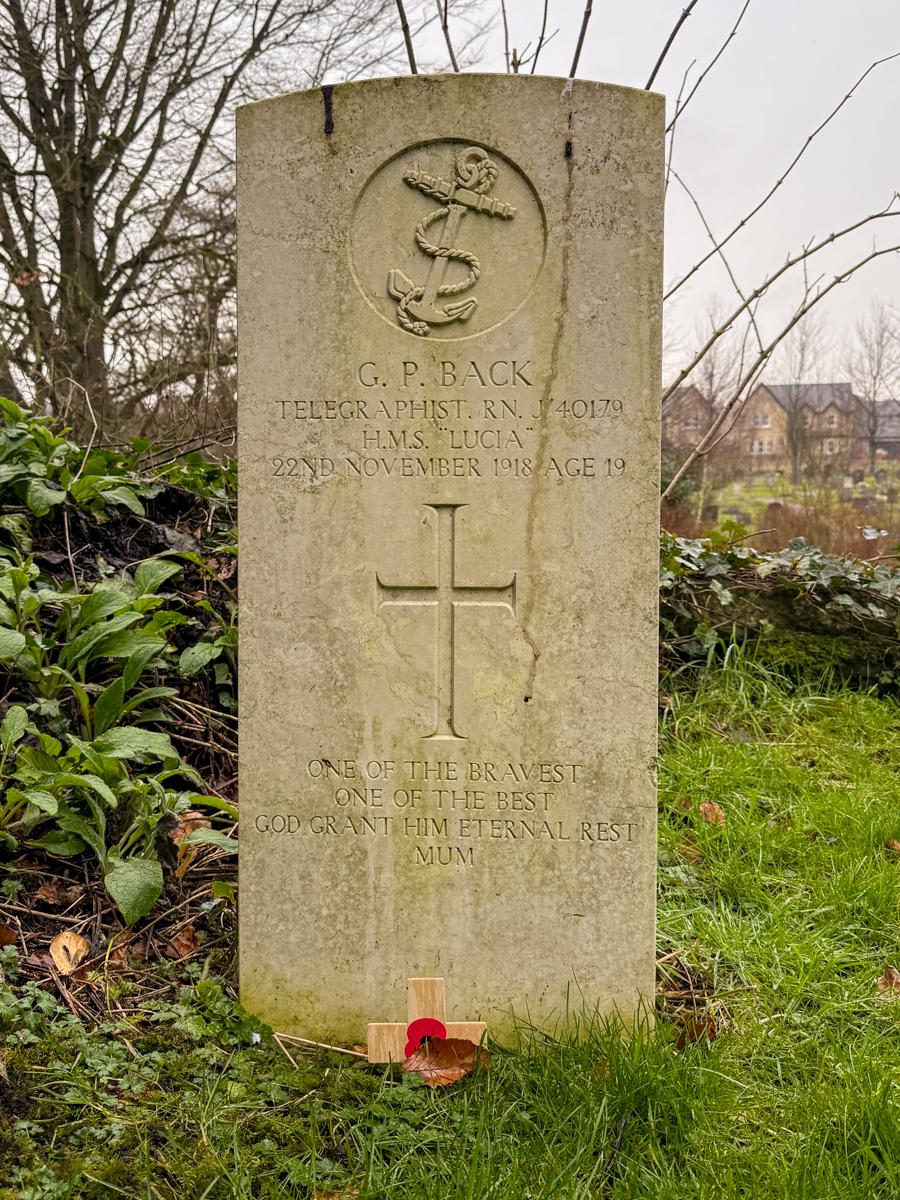
St Peter and St Paul's Church, Longhoughton, Northumberland. Grave of G.P. Back, Telegraphist. RN.J/40179, H.M.S. Lucia, 22nd November 1918 age 19, eleven days after the armistice
George Philip was born on 21 June 1899 and baptised at Holy Trinity Church, Upper Chelsea, London on 9 July 1899. He was the son of Charles William, a milk carrier and Emily Back of 104 Block C, Guinness Building, Chelsea. Prior to enlisting he worked as a newsboy. He joined his first ship Ganges as a Boy Class II on 23 April 1915, serving until his transfer on 14 July 1915. He was on-board H.M. Submarine G11 when he died.
The following report detailed the incident:
On 22 November 1918, whilst under the temporary command of Lieutenant Commander George Fagan Bradshaw D.S.O., G11 was returning to her base at Blyth, Northumberland from Dogger Bank patrol, following the Armistice. Sailing through dense fog, she overshot Blyth and ran aground on rocks below cliffs near Howick, some 30 miles north. The boat's log1 had been disabled earlier and Bradshaw, unfamiliar with the larger G class boats, underestimated the speed in the inclement weather, with the result that the boat had travelled substantially further than he had reckoned. The impact tore the keel off and the boat was abandoned; two of her crew, George Philip Back and Pliny Foster were both drowned. Back's body was recovered, but Foster's was never found. The regular captain, Lieutenant Richard Douglas Sandford V.C. (of Zeebrugge Raid fame) had not sailed on her last mission due to typhoid fever. He died at Eston hospital the day after learning his ship had been lost. Remains of G11 can still be seen at low tide.
Note 1. The log an instrument used to determine a boat's speed, originally a log with a knotted line attached.
r/ww1 • u/Huge_Influence2451 • 15h ago
Edit of battlefield 1, the most realistic, up to date, and amazing ww1 game produced by dice, somehow being an FPS shooter and a ww1 game at the same time with PvP and campaign.
r/ww1 • u/OldYoung1973 • 2d ago

r/ww1 • u/Supermiky95 • 1d ago

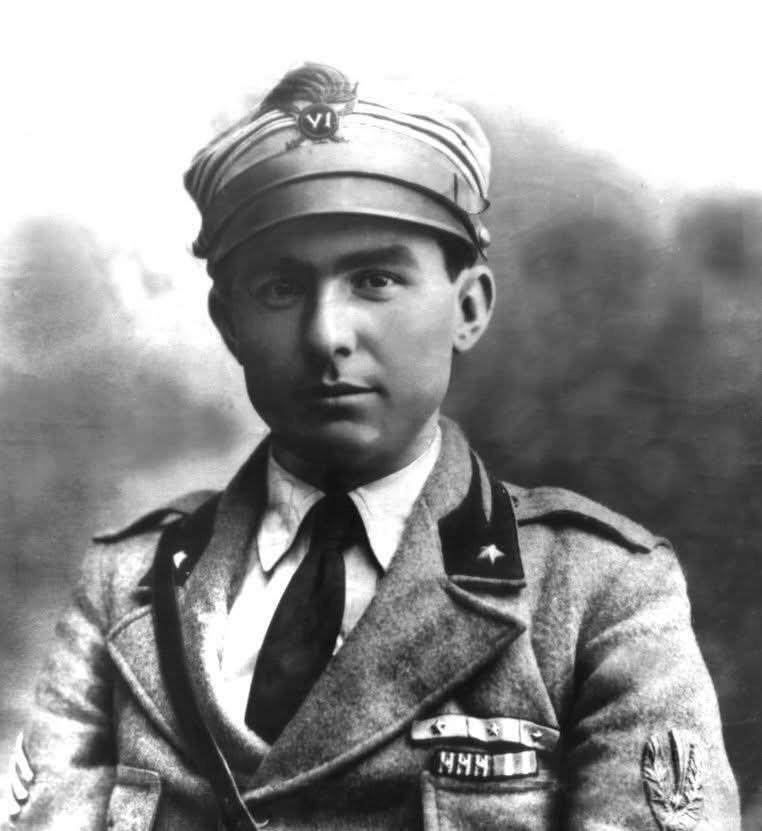
With high passion for sport, became a footballer in Genoa Club at the beginning of the XX cent.
When WWI started, entered in the aeronautic division, becoming a dirigible pilot.
For an heroic action, he earned a golden Medal of Military Valor as still living (quite rare decoration for a living person).
Here's the official reason for the medal:
"As officer aboard an airship that had carried out a nighttime bombing mission against the enemy—seeing that the craft, struck at the stern and tilted at a 45-degree angle, was plunging rapidly while drifting—realized that shifting weight toward the bow might make it possible to regain control of the airship. With a calm and conscious spirit of self-sacrifice, and risking his life to save his comrades and the vessel, he climbed a slender metal ladder—amidst absolute darkness—from the gondola to the airship’s envelope, cutting an opening through its underside. He then crawled on hands and knees across the thin fabric toward the bow, braving the constant danger that the material might tear, which would have sent him plummeting to his death. By adding his own weight, he improved the airship’s balance; remaining in this grueling and highly perilous position throughout a rapid, hour-long descent, he enabled the commander to navigate the craft into national territory and bring it to a safe landing."
\- Skies of Prosecco, 22 settembre 1917
After WW1, he became a diplomatic agent, including consul in Chicago and then at Salonicco.
During WW2, taking advantage of his position, he was able to falsify the nationality of many Greek Jews—passing them off as Italian Jews or simply as Italians—thereby allowing them to be transferred to Athens, which was occupied by the Italian army, and sparing them from deportation to Nazi extermination camps.
According to calculations by Captain Lucillo Merci, who was stationed in Thessaloniki as an interpreter, he managed to save 113 Jews and 323 Italians (or individuals granted Italian status), including several people who were being sought by the Gestapo.
r/ww1 • u/OldYoung1973 • 2d ago