What if Japan had stayed a close western ally in the Pacific, never fell to a military takeover, and ended up helping its neighbours build their own states and parliaments while keeping what it could inside one kingdom? This is a worldbuilding project that follows that idea through to the present day.
The premise
- Japan becomes an important western ally in the Pacific. It keeps strong ties with the western powers in their common fight against the spread of fascist or communist regimes in Asia, and in limiting the influence a reunited China could gain.
- Those ties favour the growth of democratic principles. In time they block a military takeover of the state and lead to Japan becoming a constitutional democracy.
- Thanks to this democratic attitude, Japan works with the Koreans to set up their own state, the Kingdom of Korea. It also works with the Taiwanese, Ryukyuans and Pacific peoples to create their own parliaments, keeping its territories wherever that could be achieved.
- Japan never starts a war against China and never intervenes directly in the Chinese Civil War. It limits itself to backing the self-determination of the peoples who rise up against the Beijing authority, in line with its western alliance and its aim of limiting what a reunited China could gain.
- Earlier history is unchanged. The Meiji Restoration is on 3 January 1868, the Ryukyu Kingdom is annexed in 1879, Taiwan is ceded in 1895, Sakhalin in 1905, and the South Seas Mandate begins in 1920.
- On 2 July 1955 the United Kingdom of Japan is proclaimed. It joins the home islands, Okinawa, Taiwan, Sakhalin and the South Seas islands under one crown and one Diet. The current constitution dates from 15 September 1980.
- The Taipei Accords tie the kingdom to the Cantonese Republic and the Kingdom of Korea in a defensive alliance.
The state at a glance
- Government: a unitary parliamentary constitutional monarchy. The monarch is Naruhito, and the Prime Minister is Junya Ogawa.
- The Diet is bicameral. The House of Councillors has 300 seats: 146 for the prefectures of Japan proper, 54 guaranteed to the territories (Taiwan 34, South Seas 8, Okinawa 6, Sakhalin 6) and 100 elected nationwide.
- The House of Representatives has 560 seats: 348 from single member constituencies and 212 by proportional representation. Members serve four years unless the House is dissolved.
- The last election was on 8 February 2026, with 72.55% turnout for the House of Representatives. The government is a grand coalition of the Centrist Reform Alliance and the Liberal Democratic Party. The next election is due by February 2030.
- Capital and largest city: Tokyo. Area 488,470 km² and a population of 147.84 million in 2026. About 79% are Japanese and about 16% Taiwanese, and there is no official language.
- Currency: the yen. Internet domain: .jp. Demonym: Japanese.
- Only Roman letters appear on the banknotes, with macrons where needed.
What I have made so far
- Flag: five peoples in one design, with five smaller discs around a central disc.
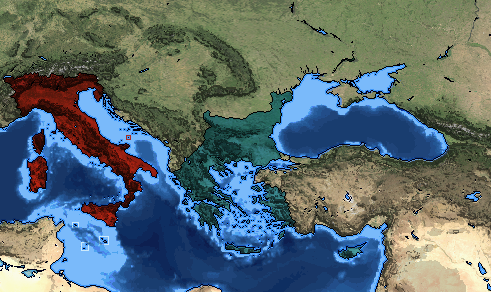
- Map: an outline map of the kingdom, with an inset for the South Seas islands.
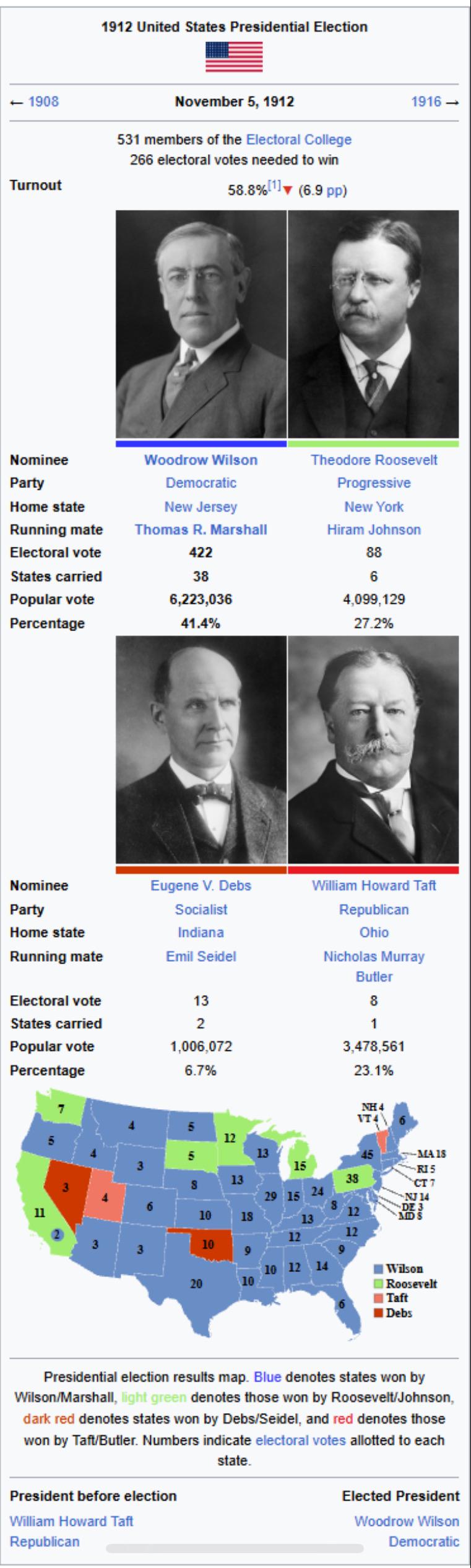
- Article and wikibox: a Wikipedia style lead and infobox with the same entries as the Cantonese Republic box, text on the left and the box on the right.
- Parliament: seating plans for both houses and the 2026 result. A separate Kokkai article has the constituency map, with the borders of the 46 prefectures of Japan proper drawn in dark lines.
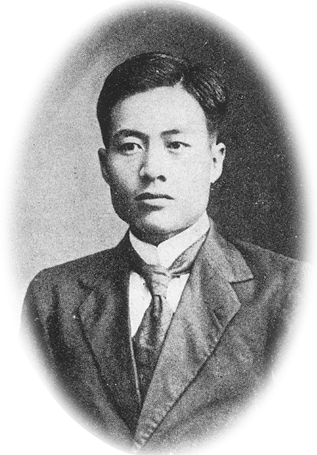
- Banknotes: nine denominations, 1,000 to 500,000 (1,000, 2,500, 5,000, 10,000, 25,000, 50,000, 100,000, 250,000 and 500,000). Each front shows an engraved portrait with the person's name, among them Takahashi Korekiyo, Ozaki Yukio, Tsai Pei huo, Shibusawa Eiichi, Shō Tai, Chiri Yukie, Mamiya Rinzō, Chiang Wei shui and Atsushi Nakajima. Each reverse shows an engraved landscape or landmark from one of the five peoples' lands. Every image is a line engraving made from a Wikimedia Commons photograph.
Credits and a note
All photographs come from Wikimedia Commons, and the credit lines (author, licence, link and what was changed) are listed per note. The office holders and parties, such as the Prime Minister and the Diet officers, are real people placed in a fictional government.
DIET
Board image, Diet board: “Diet of Japan Kokkai 2009.jpg” (National Diet Building of Japan, Nagatachō, Chiyoda, Tokyo) by Wiiii, 2009, own work, from Wikimedia Commons (https://commons.wikimedia.org/wiki/File:Diet_of_Japan_Kokkai_2009.jpg), licensed under CC BY-SA 3.0 (https://creativecommons.org/licenses/by-sa/3.0/).
BANKNOTES
1,000 yen note, front: “Mamiya Rinzo.jpg” (portrait of Mamiya Rinzō) by Matsuoka Eikyū, end of the Meiji era, source Mamiya Rinzo Memorial Museum, from Wikimedia Commons (https://commons.wikimedia.org/wiki/File:Mamiya_Rinzo.jpg), public domain (PD-Japan). Background removed and converted to a line engraving.
1,000 yen note, reverse: “Karafuto Shrine.JPG” (Karafuto Shrine) by unknown author, 1930s, from the book “Photograph collection of Karafuto” published by Karafuto Prefecture, scanned and edited by Abasaa, from Wikimedia Commons (https://commons.wikimedia.org/wiki/File:Karafuto_Shrine.JPG), public domain (PD-Japan-oldphoto). Cropped, tinted blue and blended into the note background.
2,500 yen note, front: “Yukie Chiri.jpg” (portrait of Yukie Chiri) by unknown author, circa 1920, source Facebook (https://www.facebook.com/editorialduino/posts/1002358720168656/), from Wikimedia Commons (https://commons.wikimedia.org/wiki/File:Yukie_Chiri.jpg), public domain (PD-Japan-oldphoto). Background removed and converted to a line engraving.
2,500 yen note, reverse: “Grus japonensis -Hokkaido, Japan -several-8 (1).jpg” (red-crowned cranes in Hokkaido) by Alastair Rae from London, United Kingdom, 25 February 2011, originally posted on Flickr, from Wikimedia Commons (https://commons.wikimedia.org/wiki/File:Grus_japonensis_-Hokkaido,_Japan_-several-8_(1).jpg), licensed under CC BY-SA 2.0 (https://creativecommons.org/licenses/by-sa/2.0/). Cropped, tinted gold and blended into the note background.
5,000 yen note, front: “Atsushi Nakajima.jpg” (portrait of Atsushi Nakajima) by Hayakawa Photo Studio (Yokohama), March 1936, from the Yokohama Girls’ High School 35th graduation album (March 1936), scan provided by the Nakajima Atsushi Society, from Wikimedia Commons (https://commons.wikimedia.org/wiki/File:Atsushi_Nakajima.jpg), public domain (PD-Japan-oldphoto). Background removed and converted to a line engraving.
5,000 yen note, reverse: “Rock-Islands-Palau-1-2016-aerial-view-Luka-Peternel.jpg” (aerial view of the Rock Islands of Palau) by Luka Peternel, 2 April 2016, own work, from Wikimedia Commons (https://commons.wikimedia.org/wiki/File:Rock-Islands-Palau-1-2016-aerial-view-Luka-Peternel.jpg), licensed under CC BY-SA 4.0 (https://creativecommons.org/licenses/by-sa/4.0/). Cropped, tinted teal and blended into the note background.
10,000 yen note, front: “King Sho Tai.jpg” (portrait of King Shō Tai) by unknown author, 19th century, from the book “History and Culture of Okinawa” (Okinawa Prefectural Board of Education, 2000), from Wikimedia Commons (https://commons.wikimedia.org/wiki/File:King_Sho_Tai.jpg), public domain (PD-Japan-oldphoto). Background removed and converted to a line engraving.
10,000 yen note, reverse: “Naha Shuri Castle32bs5s4592.jpg” (Shureimon of Shuri Castle in Naha, Okinawa) by 663highland, 31 May 2011, own work, from Wikimedia Commons (https://commons.wikimedia.org/wiki/File:Naha_Shuri_Castle32bs5s4592.jpg), licensed under CC BY 2.5 (https://creativecommons.org/licenses/by/2.5/). Cropped, tinted brown and blended into the note background.
25,000 yen note, front: “Chiang Wei-shui.jpg” (portrait of Chiang Wei-shui) by unknown author, before 1930, source pic.pimg.tw (https://pic.pimg.tw/impossibletimes/d24e2029c72bdf0b38e709666bf0d93d.gif), from Wikimedia Commons (https://commons.wikimedia.org/wiki/File:Chiang_Wei-shui.jpg), public domain (PD-Japan-oldphoto). Background removed and converted to a line engraving.
25,000 yen note, reverse: “Yu Shan National Park +Jason Fly TW.jpg” (Yushan, the highest peak in Taiwan, with snow) by Jason fly tw, 31 January 2020, own work, from Wikimedia Commons (https://commons.wikimedia.org/wiki/File:Yu_Shan_National_Park_%2BJason_Fly_TW.jpg), licensed under CC BY-SA 4.0 (https://creativecommons.org/licenses/by-sa/4.0/). Cropped, tinted green and blended into the note background.
50,000 yen note, front: “Korekiyo Takahashi 5 cropped.jpg” (portrait of Takahashi Korekiyo) by unknown author, January 1934, source gendai.ismedia.jp (http://gendai.ismedia.jp/articles/premium01/48078), from Wikimedia Commons (https://commons.wikimedia.org/wiki/File:Korekiyo_Takahashi_5_cropped.jpg), public domain (PD-Japan-oldphoto). Background removed, straightened by about 8 degrees, mirrored and converted to a line engraving.
50,000 yen note, reverse: “Himeji castle in may 2015.jpg” (Himeji Castle in May 2015, after the five year renovation) by Nikos Kitsakis, 10 May 2015, own work, from Wikimedia Commons (https://commons.wikimedia.org/wiki/File:Himeji_castle_in_may_2015.jpg), licensed under CC BY-SA 4.0 (https://creativecommons.org/licenses/by-sa/4.0/). Cropped, tinted purple and blended into the note background.
100,000 yen note, front: “Yukio Ozaki.jpg” (Portrait of Ozaki Yukio, 1858 to 1954) by unknown author, published 1934 to 1935, originally posted on the National Diet Library portrait site (http://www.ndl.go.jp/portrait/datas/47.html), from Wikimedia Commons (https://commons.wikimedia.org/wiki/File:Yukio_Ozaki.jpg), in the public domain in Japan (PD-Japan-oldphoto) and in the United States. Converted to an engraved line style, cropped and placed on the note.
100,000 yen note, reverse: “Sakuraintokyo.jpg” (Cherry blossom in Tokyo) by Ichtrinken, 2007, own work, from Wikimedia Commons (https://commons.wikimedia.org/wiki/File:Sakuraintokyo.jpg), licensed under CC BY-SA 3.0 (https://creativecommons.org/licenses/by-sa/3.0/). Cropped, tinted and blended into the note background.
250,000 yen note, front: “Tshuà Puê-Hué 0.jpg” (Portrait of Tsai Pei-huo, 蔡培火) by unknown author, before 1945, from Wikimedia Commons (https://commons.wikimedia.org/wiki/File:Tshuà_Puê-Hué_0.jpg), in the public domain in Japan (PD-Art, PD-Japan-oldphoto) and in the United States. Mirrored, converted to an engraved line style, cropped and placed on the note.
250,000 yen note, reverse: “Government-general of Taiwan.jpg” (Taiwan Government-General Building, Taipei, postcard view) by unknown author, originally uploaded by GB to Chinese Wikipedia on 19 February 2009, from Wikimedia Commons (https://commons.wikimedia.org/wiki/File:Government-general_of_Taiwan.jpg), in the public domain in Taiwan (PD-Taiwan), in Japan (PD-Japan-oldphoto) and in the United States. Painted out the printed caption at the top, cropped, converted to greyscale, tinted blue and blended into the note background.
500,000 yen note, front: “Portrait of Shibusawa Eiichi.jpg” (Portrait of Eiichi Shibusawa) by unknown photographer, no later than 1922, originally published in the book The Days of a Man (1922), from Wikimedia Commons (https://commons.wikimedia.org/wiki/File:Portrait_of_Shibusawa_Eiichi.jpg), in the public domain in the United States (PD-US). Removed the seal, converted to an engraved line style, cropped and placed on the note.
500,000 yen note, reverse: “Fuji, assorted - FujiAssorted6854.jpg” (Mount Fuji viewed through Japanese maple trees in autumn foliage) by lumoplank, 11 November 2025, originally posted on Flickr (https://www.flickr.com/photos/199350666@N08/55090384653), from Wikimedia Commons (https://commons.wikimedia.org/wiki/File:Fuji,_assorted_-_FujiAssorted6854.jpg), released under CC0 1.0 (https://creativecommons.org/publicdomain/zero/1.0/). Cropped, converted to greyscale, tinted magenta and blended into the note background.