r/AmericanHistory • • Feb 21 '20

Please submit all strictly U.S. history posts to r/USHistory

42 Upvotes

For the second time within a year I am stressing that while this subreddit is called "American history" IT DOES NOT DEAL SOLELY WITH THE UNITED STATES as there is the already larger /r/USHistory for that. Therefore, any submission that deals ONLY OR INTERNALLY with the United States of America will be REMOVED.

This means the US presidential election of 1876 belongs in r/USHistory whereas the admiration of Rutherford B. Hayes in Paraguay, see below, is welcomed here -- including pre-Columbian America, colonial America and US expansion throughout the Western Hemisphere and Pacific. Please, please do not downvote meaningful contributions because they don't fit your perception of the word "American," thank you.

And, if you've read this far, please flair your posts!

https://www.npr.org/sections/parallels/2014/10/30/360126710/the-place-where-rutherford-b-hayes-is-a-really-big-deal


r/AmericanHistory • • 1h ago

Selk'nam natives of Tierra del Fuego are interned in Puerto Harris, Dawson Island, in 1896, during the Selk'nam genocide committed by Chile and Argentina.

Post image
1 Upvotes

The genocide was masterminded by Romanian-born conquistador Julio Popper, and reduced the Selk'nam population from at least 3,000 in 1850 to just 100 by 1930.

In 1895, Judge Waldo Seguel launched an inquiry into the genocide, but the farmworkers who perpetrated it were released a few months after the trial.


r/AmericanHistory • • 15h ago

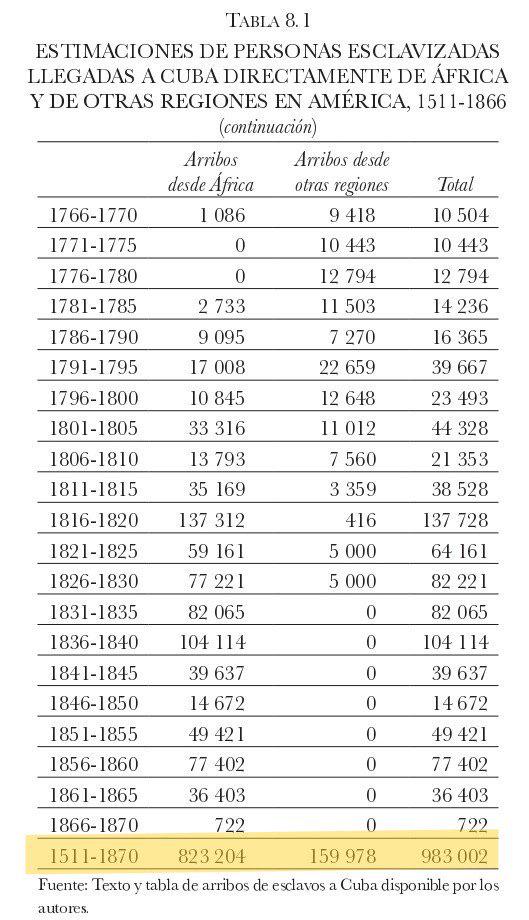
A chronological table of the number of enslaved Africans who arrived in Cuba reveals a total of 983,002 women, men, girls, and boys—792,775 of whom arrived during the 19th century. This is more than double the number that arrived in the United States throughout its entire history.

Post image
11 Upvotes

r/AmericanHistory • • 1d ago

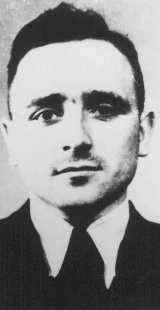
South In 1951, Nazi war criminal Klaus Barbie – nicknamed the "Butcher of Lyon" – fled to Bolivia, where the CIA and the West German Intelligence Service recruited him and he cooperated with various South American dictators and drug lords, including Pablo Escobar.

Post image
42 Upvotes

Barbie used the alias "Klaus Altmann", but an investigator eventually identified him through his fingerprints. The government of Bolivia initially refused to extradite him, claiming the statute of limitations for his crimes had lapsed.

Barbie played a major role in the 1980 "Cocaine Coup" that brought Luiz Garcia Meza to power in Bolivia. Three years later, Bolivia's new democratic government arrested Barbie and extradited him to France for trial.


r/AmericanHistory • • 17h ago

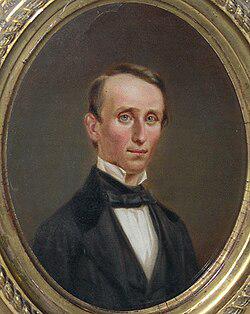
Silvério Gomes Pimenta (1840–1922) was the first Metropolitan Archbishop of Mariana, in Brazil.

Thumbnail gallery
9 Upvotes

r/AmericanHistory • • 15h ago

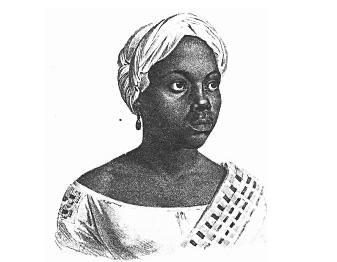
María Chiquinquirá Díaz was an enslaved woman and litigant for manumission in late colonial Guayaquil (in today’s Ecuador).

Post image
3 Upvotes

r/AmericanHistory • • 17h ago

Mexican historian and tenured researcher Martín Federico Ríos Saloma, of the UNAM’s Institute for Historical Research, discusses the incorporation of the Kingdoms of the Indies into the Catholic Monarchy (the Spanish Empire) on the basis of legal equality.

4 Upvotes

r/AmericanHistory • • 13h ago

The History of New York and Thanksgiving

Thumbnail
youtu.be
2 Upvotes

r/AmericanHistory • • 1d ago

South The Presence of Black and Mulatto Individuals in the elite of the Empire of Brazil

Thumbnail
gallery
60 Upvotes

The Empire of Brazil included numerous Black and Mestiço individuals who held titles of nobility—such as the Baron of Guaraciaba (founder of the Banco de Crédito Real de Minas Gerais)—as well as several Black government ministers. Notable figures included the Viscount of Jequitinhonha (Minister of Justice in 1837), the Viscount of Inhomirim (President of the Bank of Brazil in 1865), the Baron of Cotegipe (who later served as President of the Council of Ministers in 1885), and Dr. Joaquim Cândido Soares de Meireles (1797–1868)—the founder, visionary, and first president of the Imperial Academy of Medicine (now the National Academy of Medicine) and patron of the Brazilian Navy’s Health Service. Other prominent figures who attained the highest echelons of society included Conselheiro (Councilor) Crispiniano; the engineer André Rebouças (an intellectual leader of the Abolitionist movement); and Conselheiro Francisco Otaviano de Almeida Rosa (who represented Brazil in the signing of the Triple Alliance against Paraguay).

Individuals such as Teodoro Sampaio, Juliano Moreira, Tobias Barreto, Antônio Pereira Rebouças, Francisco de Paula Brito, Conselheiro Zacarias de Góes e Vasconcelos, Machado de Assis, Carlos Gomes, Ernesto Carneiro Ribeiro, Antônio Ferreira Cesarino, Graciliano Fontino Lordão, Hemetério José dos Santos, Antônio Gonçalves Teixeira e Sousa, Cruz e Sousa, Bernardino de Campos, Domício da Gama, Francisco Glicério, Dom Silvério Gomes Pimenta, Dom Luís Raimundo da Silva Brito, José do Patrocínio, Estevão da Silva, the composer Henrique Alves de Mesquita, José Ferreira de Menezes, Natividade Saldanha, and Luís Gama all held prominent positions within the arts, sciences, or politics in Brazil.

Many of these men were the sons and grandchildren of enslaved people who had escaped captivity, rose socially, and held positions in fields ranging from medicine to journalism and politics.

Foreign observers, such as the Count d'Eu and Count Gobineau, noted in their initial impressions the "ease of social advancement among men of color."

By 1850, free Black and mixed-race (mulatto) individuals accounted for 42.7% of the population. At that time, three out of every four Black people were free. Many distinguished themselves in educational institutions, the arts, and, above all, the press.

Social advancement was consistently easier for Mulatto individuals than for Black people. The lighter one’s skin—and the less one was stigmatized by racial characteristics—the easier it was to ascend socially. Urban development, the expansion of bureaucratic and administrative services following Independence, the growth of commerce, the gradual phasing out of slave labor in urban centers (with its subsequent concentration in rural areas), and the new opportunities that emerged for free laborers throughout the 19th century all created greater possibilities for social mobility among free Black and Mulatto people.

In his 1855 article "The Brazilians," the American abolitionist leader Frederick Douglass noted that Black and mixed-race individuals held high-ranking positions within the Imperial government:

"Of the seven million that make up the total population of Brazil, it is estimated that three million are enslaved Black people, two and a half million are Indigenous people and free Black people, and the remainder—one and a half million—are white. The social structure of the Brazilian population is not defined by distinctions of color—a factor so critical in other nations for the creation of social classes. In Brazil, the only meaningful distinction is that between freedom and servitude.

Black people have access to everything; they hold many positions of honor and trust, and are engaged in every sector of business." The white and Black races meet on terms of perfect equality in social intercourse, and marry one another without any qualms... a writer for the North American Review... encountered “the wife of an admiral, whose skin was the darkest among the daughters of Africa,” and mentions “the dismay of an American diplomatic agent upon the entry of a Black colonel into the court—a man to whom he was then introduced. We have similar reports that, not long ago, the Brazilian ambassador to England (the Viscount of Jequitinhonha) was a mulatto, and at present, a large majority of the members of the army—including the officers—are of African descent.”

1) André Pinto Rebouças

The engineer, banker, and journalist André Pinto Rebouças (1838–1898) designed what was, at the time, the most complex engineering project in Brazil: the Curitiba–Paranaguá Railway. Constructed between 1880 and 1885 by Antônio Ferrucci and João Teixeira Soares, the line spans 110 kilometers of track.

Beyond the field of engineering, André Rebouças dedicated himself to political and economic initiatives aimed at modernizing the nation’s infrastructure. In his 1883 book, Agricultura Nacional: Propaganda Abolicionista e Democrática ("National Agriculture: Abolitionist and Democratic Propaganda"), he advocated for the abolition of slavery, the provision of education, and agrarian reform for formerly enslaved people.

Rebouças’s trajectory as an abolitionist reveals not only his intellectual contributions to the ideology of abolition but also his active, hands-on involvement in the movement from its very inception.

2) Joaquim Cândido Soares de Meireles

Dr. Joaquim Cândido Soares de Meireles (1797–1868) — founder, visionary, and first president of the Imperial Academy of Medicine (now the National Academy of Medicine) — and Patron of the Brazilian Navy Health Service.

3) Francisco Gomes Brandão

Francisco Gomes Brandão (1794–1870), the Viscount of Jequitinhonha, was a prominent politician and lawyer from Bahia. He was one of the leaders of the movement for Brazil’s independence, a pioneer in advocating for the emancipation of enslaved people within the Imperial Senate, one of the founders of the Brazilian Bar Association (1843), and served as Minister of Justice in 1837.

4) Francisco Paulo de Almeida

Francisco Paulo de Almeida (1826–1901), the first and only Baron of Guaraciaba, distinguished himself as the most financially successful Black man in monarchical Brazil. He owned several plantations and possessed a fortune estimated at the time to be 700,000 contos de réis. He was the owner of the iconic Yellow Palace (Palácio Amarelo) in the city of Petrópolis and served as a founding partner of both the Banco Territorial de Minas Gerais and the Banco de Crédito Real de Minas Gerais.

5) Francisco de Sales Torres Homem

Francisco de Sales Torres Homem (1812–1876), Viscount of Inhomirim (who served as president of the Bank of Brazil in 1865), earned his title of Viscount following his work in the Imperial Senate during the debates over the "Free Womb Law" (Lei do Ventre Livre).

He was the son of a priest with a dissolute lifestyle, Apolinário Torres Homem, and a market vendor named Maria Patrícia—a formerly enslaved Black woman. In 1840, he served as the primary writer for O Maiorista, a newspaper dedicated to advocating for the definitive coronation of Pedro II. This goal was ultimately achieved as planned, with the new Emperor subsequently appointing a liberal cabinet.

Sources:

.- Um rio chamado Atlântico: A África no Brasil e o Brasil na África, by Alberto da Costa e Silva.

.- O Brasil por Frederick Douglass: impressões sobre escravidão e relações raciais no Império.


r/AmericanHistory • • 17h ago

Who was Zumbi? The true story of the Quilombo dos Palmares — Prof. Daniel Jorge Filho

Thumbnail youtube.com
2 Upvotes

r/AmericanHistory • • 16h ago

On September 29, 1513, the Spanish conquistador Vasco Núñez de Balboa and his men became the first Europeans to sight the "Mar del Sur" (South Sea) —a name given by Balboa because it lay to the south of the isthmus of what is now Panama.

1 Upvotes

r/AmericanHistory • • 18h ago

American Revolutionary War in 8 minutes (part 1)

Thumbnail
youtu.be
0 Upvotes

An 8-minute animated look at the early miscalculations and escalations that set the stage for the American Revolutionary War—covering Leif Erikson's earlier voyage, Christopher Columbus's miscalculation of Earth's size, the harsh realities and tobacco boom of Jamestown, a young George Washington's clash in the Ohio Valley, and the buildup through the Boston Tea Party and Intolerable Acts.

I put this together as Part 1 of a history series (Historia Voyage) focusing on how overlooked mistakes and shifting incentives shaped major turning points. Curious what other early triggers or overlooked details people think mattered most before 1775.


r/AmericanHistory • • 16h ago

The Secret History of Prince Hall Freemasonry - [ 7 minute summary will BLOW YOUR MIND]

Thumbnail
youtube.com
0 Upvotes

r/AmericanHistory • • 1d ago

North Little Bighorn, 1876: Custer split his men in three against the largest gathering of Plains nations ever, and I mapped how it went

5 Upvotes

Custer expected a village that would scatter. Instead he found thousands of Lakota, Cheyenne and Arapaho warriors led by Sitting Bull and Crazy Horse. He divided his regiment, lost contact with the other columns, and in about an hour he and his 200+ men were gone.

I'm a history fan and made a free interactive map where you can see Little Bighorn and 200+ other battles in context: https://banzaki.github.io/great-battles/?utm_source=reddit&utm_campaign=americanhistory

No sign-up, no ads. Hope you enjoy it!


r/AmericanHistory • • 2d ago

Central William Walker (1824–1860) was an American filibuster who launched a series of expeditions in Mexico and Central America during the mid-19th century in order to establish slave states.

Post image
33 Upvotes

In July 1856, Walker conquered Nicaragua after a civil war in the country, and proclaimed himself President. He restored slavery and antagonized Britain and shipping tycoon Cornelius Vanderbilt, resulting in his overthrow the following year.

Four years later, Walker attempted to return to power with support from slavery supporters in the southern United States, but the government of Honduras executed him on 12 September 1860.


r/AmericanHistory • • 1d ago

North Wartime mystery solved as divers find wreck of ship torpedoed by German U-boat

Thumbnail
globalnews.ca
3 Upvotes

r/AmericanHistory • • 2d ago

North A Black Canadian soldier from Captain Runchey’s company (known as the Coloured Corps), a militia unit formed in Upper Canada during the War of 1812. Work attributed to illustrator G. Dittrick for Parks Canada.

Post image
11 Upvotes

r/AmericanHistory • • 3d ago

South The Federalist Revolution was a civil war fought in Southern Brazil from 1893 to 1895, between the military dictatorship of Floriano Peixoto and rebels known as Maragatos.

Post image
82 Upvotes

Led by Joca Tavares, the Federalists sought greater autonomy and decentralisation.

By August 1895, the Brazilian government had defeated the revolution after killing almost 10,000 people. The city of Desterro in Santa Catarina was renamed to Florianópolis as a result of Floriano's victory.


r/AmericanHistory • • 2d ago

South In 1631, Father Juan Pérez de Bocanegra included the hymn "Hanaq Pachap Kusikuynin" (Joy of Heaven) in his work "Ritual Formulario"; it is considered by experts to be the first polyphonic composition printed in the Americas.

Thumbnail gallery
2 Upvotes

r/AmericanHistory • • 2d ago

Hemisphere Jesus of Nazareth, the Mesoamerican Messiah

Thumbnail gallery
6 Upvotes

r/AmericanHistory • • 2d ago

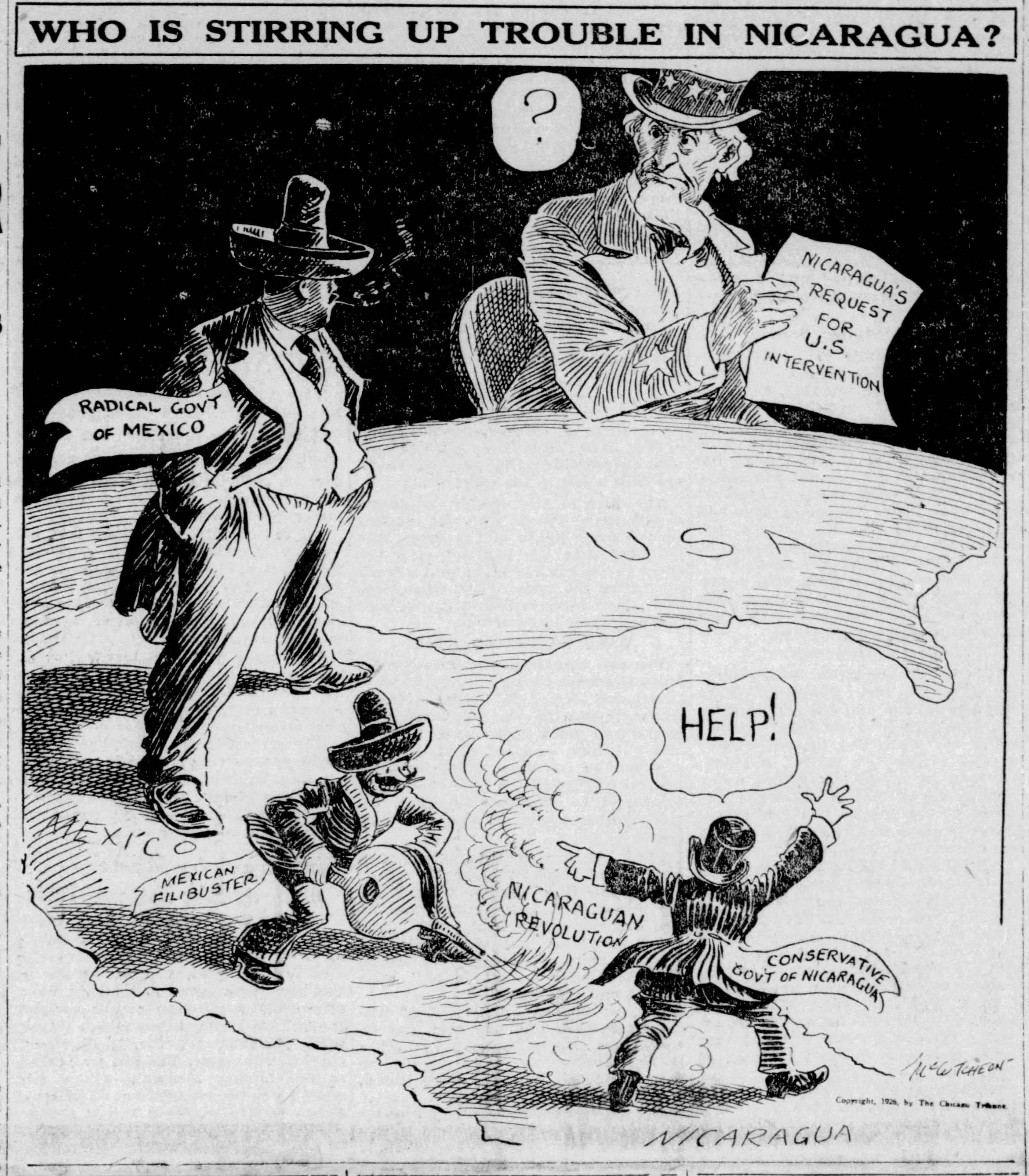
Central [November 20th, 1926] "Who Is Stirring Up Trouble In Nicaragua?" (Chicago Tribune cartoon)

Post image
3 Upvotes

r/AmericanHistory • • 2d ago

North "Death of Lieut. Col. Henry Clay Jr.," Battle of Buena Vista, Feb. 23, 1847 (Mexican-American War)

Thumbnail gallery
4 Upvotes

r/AmericanHistory • • 3d ago

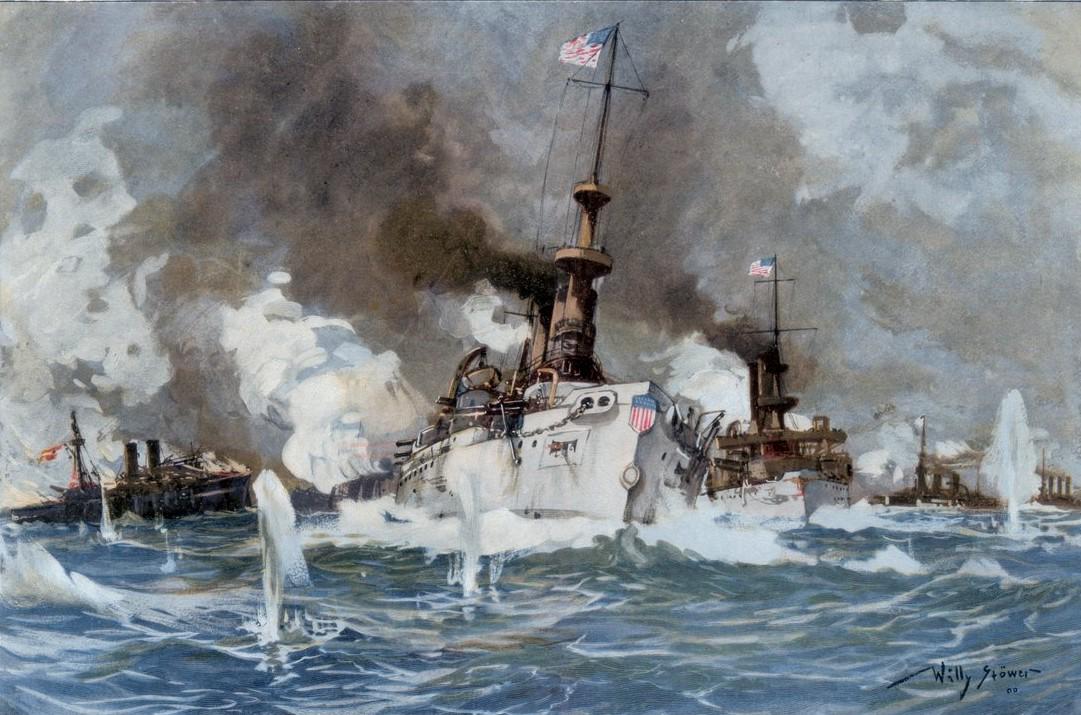
Caribbean "Battle of Santiago de Cuba July 3, 1898" (Spanish-American War)

Post image
9 Upvotes

r/AmericanHistory • • 3d ago

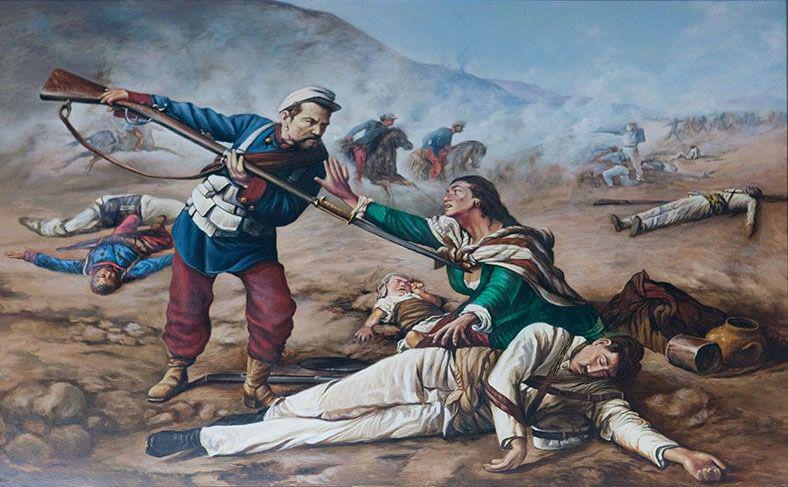
South El repase (1881), a Peruvian rabona begs the Chilean soldier to spare her wounded husband's life during the War of the Pacific — work by Ramón Muñiz.

Post image
9 Upvotes

r/AmericanHistory • • 4d ago

South The Montoneros were a Peronist militant group active in Argentina from 1970 to 1983.

Post image
56 Upvotes

Led by Mario Firmenich, the Montoneros advocated for the return of Juan Perón to Argentina and the establishment of "Christian national socialism" in the country, but they were also influenced by Falangism, a fascist ideology.

When Perón returned to power in 1973, right-wing Peronists began targeting left-wing Peronists, and eventually formed the Argentine Anticommunist Alliance death squad. The last Argentine military dictatorship eventually joined this crackdown, and fully crushed the Montoneros by 1981.