r/AmericanHistory • u/Dazzling-Resolve7249 • 6h ago
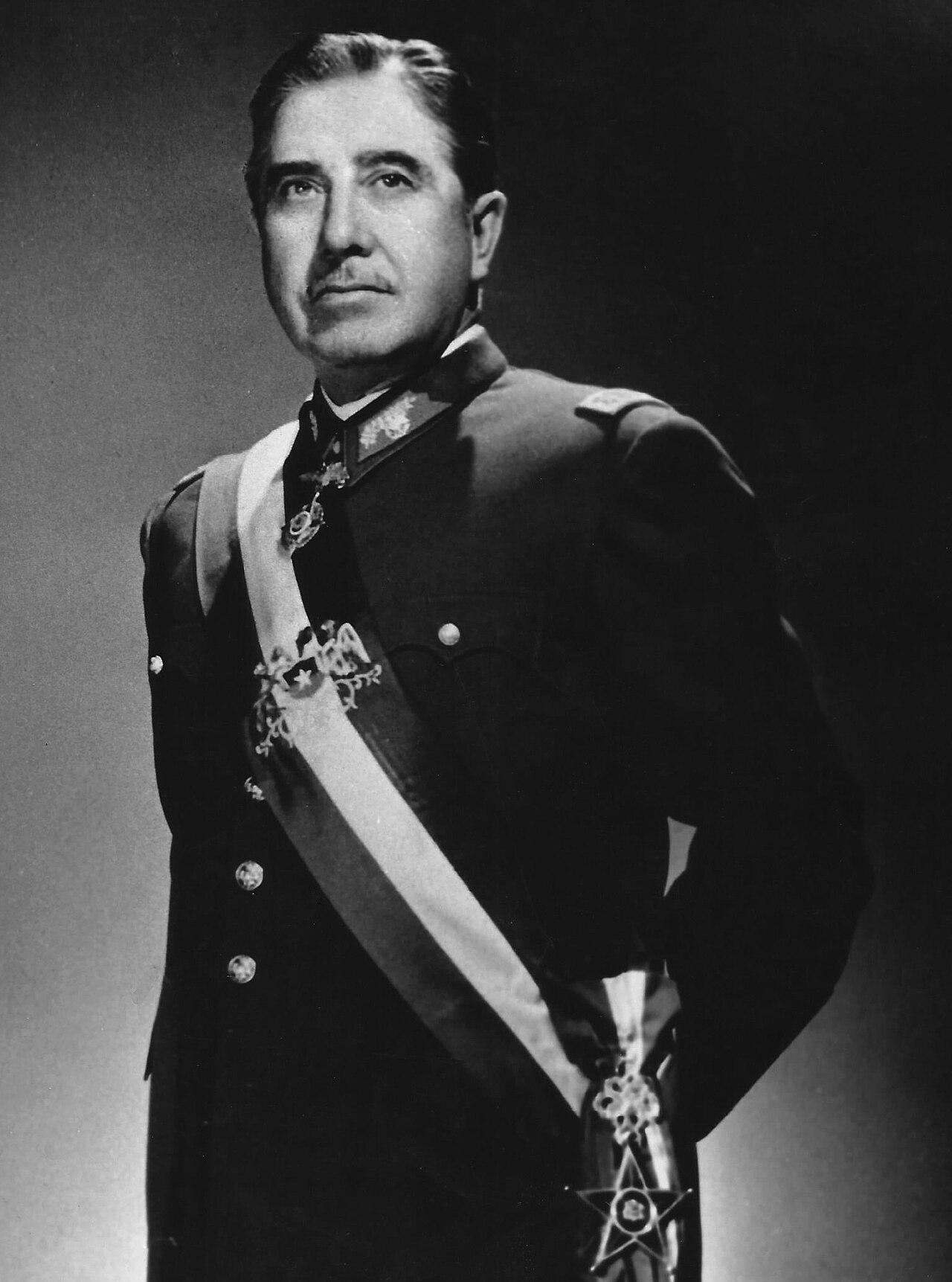
Most famous dictator from each Latin American country (Only who are dead)

29
Upvotes
r/AmericanHistory • u/Dazzling-Resolve7249 • 6h ago
r/AmericanHistory • u/Over-Willingness-933 • 1h ago
r/AmericanHistory • u/elnovorealista2000 • 5h ago

The history of the republican press in Brazil has its origins in the period following Independence, emerging alongside the dissatisfaction of liberal Freemasons with the reign of Emperor Dom Pedro I—a discontent that ultimately led to his ousting in 1831.
It was Typhis Pernambucano, however, that laid the groundwork for a style of journalism dedicated to defending republican ideals in Brazil. Edited by Frei Caneca, Typhis served as the mouthpiece for a separatist movement—the Confederation of the Equator—which took place in the provinces of Pernambuco, Paraíba, Rio Grande do Norte, and Ceará, and was swiftly suppressed by Dom Pedro I.
The political forces of the time were divided into three groups: the conservative right, the liberal right, and the liberal left (known as the exaltados, or "radicals").
The conservative right published through the "court press"—outlets such as Diário Fluminense, Jornal do Commercio, and O Analista. The liberal right used its own newspapers, including Aurora Fluminense and Astrea, to counter both government excesses and the inflammatory rhetoric of the liberal-left press. The liberal left, meanwhile, was responsible for producing pasquins (scandal sheets or polemical pamphlets) that spared none of their adversaries.
Periodicals attracted readers through folhetins (serialized content), which featured contributions from prominent writers of the era. During this time, the abolitionist press began to grow, and the first newspapers advocating for republican ideas started to emerge.
This development was driven by young people from affluent families who, having studied in Europe, returned to Brazil bearing new, liberal, and republican ideas. Furthermore, the challenges associated with transportation and the postal service hindered the distribution of newspapers from the Imperial Court to the provinces, which spurred the creation of more local periodicals throughout the interior. Republican ideals took hold within the press; newspapers began to champion the Republic and the liberation of the slaves. The Abolitionist Movement was growing ever stronger. Quintino Bocaiúva, a republican journalist, turned the Rio de Janeiro-based newspaper O Paiz into a platform for the destruction of the monarchical regime. In 1875, A Província de São Paulo—which would later be renamed O Estado de S. Paulo—was founded. By then, the republican press already comprised 74 newspapers: 20 in the North and 54 in the South.
In a manifesto issued on December 9, 1889—just days after his ouster—the Viscount of Ouro Preto, the final minister of the Brazilian Empire, accused the press that had opposed him in the capital of inciting the armed forces against him, thereby setting the stage for the military coup d'état of November 15.
He placed the blame primarily on Diário de Notícias and O Paiz. In the former, Rui Barbosa, and in the latter, Quintino Bocaiúva, had tirelessly "taken upon themselves the thankless task of promoting a military sedition." They had "stoked the pride of the Army and the Navy by exaggerating and distorting mundane aspects of public administration, fabricating other claims, and attributing imaginary slights—regarding both the government’s sound and fair decisions and its future plans—to these two branches of the armed forces." This accusation is entirely accurate. Indeed, the press that opposed him in the capital played a significant role in his downfall by creating an irreconcilable rift between him and the armed forces—effectively nullifying, from the outset, any attempt he might have made to win their favor or inspire even the slightest degree of trust.
Writing on the subject of the military’s involvement in politics, Jordão Emerenciano has the courage—as he himself puts it—to acknowledge that civilians are the ones "most responsible" for this: "It is we—civilians, intellectuals, and politicians—who go to the barracks to fetch the troops and drag officers into our own adventures.
We frequently speak very ill of the military’s participation in partisan political debates, yet we quickly forget that we are constantly soliciting the endorsement of generals, admirals, and brigadiers for all manner of public statements."
This echoes the observations of Oliveira Viana, who refers to the "inciting influence of civilian politicians," adding that "at heart, they have always been the primary culprits behind military unrest in our homeland. Indeed, regarding the upheavals that preceded and ultimately brought about the fall of the Empire, one could argue that they played the leading role in this act of betrayal against the nation."
As everyone in Brazil knows, a revolution cannot be carried out—nor has it ever been—without the participation of the military. It has never happened without them, and it likely never will—at least not until the people ("the masses," in Marxist terminology) become fully conscious of their own duties and rights, and cease to be led astray by those who merely exploit them. In other words, it will remain this way until we possess a public opinion truly capable of expressing the genuine sentiment of the nation.
And if what we call "the people" have never carried out a revolution in Brazil—a true revolution—then the so-called civilian elites—the intellectuals, the liberal classes, and the conservative establishment—have done so even less. Politicians engage in demagoguery. Journalists, as the saying goes, "stir the pot," poisoning public opinion against the constituted authorities. And the people—those of the past just as those of today—do indeed take to the streets, shout, make a commotion, stir up disorder and tumult, smash windows, and attack modes of transport, in a sense disrupting city life.
At times, they confront the police. But none of this is enough to topple governments. In Brazil, governments are only brought down by armed, uniformed individuals—that is to say, soldiers—even if only through a mere threat, without a single shot being fired. And since neither politicians, nor journalists, nor the man on the street—nor, one might add, students ("but who pays any mind to students?" the Emperor once asked)—wear uniforms or care to take up firearms to overthrow a government, the only remaining recourse is the very one employed by Rui Barbosa and his fellow journalists who opposed the Ouro-Preto Ministry: namely, to go to the barracks and bring out the military—with their uniforms and their weapons—to oust those in power.
This is known as "putting the troops on the street." Sometimes, all it takes is a bit of military theater, a mere show of force, or perhaps just a parade—or even less: a simple formation, and nothing more. That is how it happened on April 7th. That is how it would happen on November 15th. And so it would happen again, on more than one occasion, in the years that followed under the republican regime.
In general, for over 60 years (1822–1889), Brazil enjoyed a level of freedom of the press never seen before. Joaquim Nabuco recalled the characteristics of the monarchical regime, orchestrated by Dom Pedro II:
“During his reign, freedom of the press was never once attacked. Its primary beneficiary was always the opposition—and it made full use of this; it insisted that every mistake be made public and debated in opposition to his ministers. He believed in the rotation of political parties and ensured it took place. His palace remained open to the people; anyone could speak to him.”
Never was there greater freedom of the press than during the years of Dom Pedro II’s rule. The press was free both to advocate for republican ideals and to disparage the Emperor. “European diplomats and other observers were taken aback by the freedom enjoyed by Brazilian newspapers”—and it was these very newspapers that supported his downfall in 1889.
“There was one thing that made
aristocracies tremble even more than
popular movements: journalism.”
(Machado de Assis).
Source:
- História da Queda do Brasil Império, by Heitor Lyra
r/AmericanHistory • u/StygianDryad • 8h ago

r/AmericanHistory • u/CuentameLoNuevo • 1h ago
Is there a good resource that discusses LatAmerican history during the Victorian era and beyond through the lens of white settler colonial societies like Usa Australia and Canada? Im just tired of finding no resources that equate it to european settler societies particularly South Africa Usa and Canada >.>
All im saying is that como un hispano es que estoy harto que Sudafrica reciba toda la culpa por el apartheid cuando LatAm tiene su propio equivalente asqueroso >.> que tambien merece su repudio <.<
r/AmericanHistory • u/elnovorealista2000 • 4h ago

r/AmericanHistory • u/elnovorealista2000 • 4h ago
r/AmericanHistory • u/GustavoistSoldier • 14h ago

The genocide was masterminded by Romanian-born conquistador Julio Popper, and reduced the Selk'nam population from at least 3,000 in 1850 to just 100 by 1930.
In 1895, Judge Waldo Seguel launched an inquiry into the genocide, but the farmworkers who perpetrated it were released a few months after the trial.
r/AmericanHistory • u/RoyalLemon4057 • 9h ago
Our main research question is: To what extent did the Cuban Missile Crisis (1962) influence NATO's military strategy in Western Europe between 1962 and 1967? can you guys plss help us
r/AmericanHistory • u/elnovorealista2000 • 1d ago
r/AmericanHistory • u/GustavoistSoldier • 1d ago
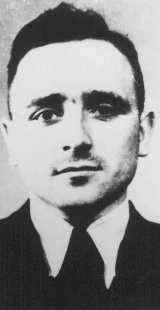
Barbie used the alias "Klaus Altmann", but an investigator eventually identified him through his fingerprints. The government of Bolivia initially refused to extradite him, claiming the statute of limitations for his crimes had lapsed.
Barbie played a major role in the 1980 "Cocaine Coup" that brought Luiz Garcia Meza to power in Bolivia. Three years later, Bolivia's new democratic government arrested Barbie and extradited him to France for trial.
r/AmericanHistory • u/elnovorealista2000 • 1d ago
r/AmericanHistory • u/elnovorealista2000 • 1d ago
r/AmericanHistory • u/elnovorealista2000 • 1d ago
r/AmericanHistory • u/elnovorealista2000 • 1d ago
r/AmericanHistory • u/elnovorealista2000 • 2d ago

The Empire of Brazil included numerous Black and Mestiço individuals who held titles of nobility—such as the Baron of Guaraciaba (founder of the Banco de Crédito Real de Minas Gerais)—as well as several Black government ministers. Notable figures included the Viscount of Jequitinhonha (Minister of Justice in 1837), the Viscount of Inhomirim (President of the Bank of Brazil in 1865), the Baron of Cotegipe (who later served as President of the Council of Ministers in 1885), and Dr. Joaquim Cândido Soares de Meireles (1797–1868)—the founder, visionary, and first president of the Imperial Academy of Medicine (now the National Academy of Medicine) and patron of the Brazilian Navy’s Health Service. Other prominent figures who attained the highest echelons of society included Conselheiro (Councilor) Crispiniano; the engineer André Rebouças (an intellectual leader of the Abolitionist movement); and Conselheiro Francisco Otaviano de Almeida Rosa (who represented Brazil in the signing of the Triple Alliance against Paraguay).
Individuals such as Teodoro Sampaio, Juliano Moreira, Tobias Barreto, Antônio Pereira Rebouças, Francisco de Paula Brito, Conselheiro Zacarias de Góes e Vasconcelos, Machado de Assis, Carlos Gomes, Ernesto Carneiro Ribeiro, Antônio Ferreira Cesarino, Graciliano Fontino Lordão, Hemetério José dos Santos, Antônio Gonçalves Teixeira e Sousa, Cruz e Sousa, Bernardino de Campos, Domício da Gama, Francisco Glicério, Dom Silvério Gomes Pimenta, Dom Luís Raimundo da Silva Brito, José do Patrocínio, Estevão da Silva, the composer Henrique Alves de Mesquita, José Ferreira de Menezes, Natividade Saldanha, and Luís Gama all held prominent positions within the arts, sciences, or politics in Brazil.
Many of these men were the sons and grandchildren of enslaved people who had escaped captivity, rose socially, and held positions in fields ranging from medicine to journalism and politics.
Foreign observers, such as the Count d'Eu and Count Gobineau, noted in their initial impressions the "ease of social advancement among men of color."
By 1850, free Black and mixed-race (mulatto) individuals accounted for 42.7% of the population. At that time, three out of every four Black people were free. Many distinguished themselves in educational institutions, the arts, and, above all, the press.
Social advancement was consistently easier for Mulatto individuals than for Black people. The lighter one’s skin—and the less one was stigmatized by racial characteristics—the easier it was to ascend socially. Urban development, the expansion of bureaucratic and administrative services following Independence, the growth of commerce, the gradual phasing out of slave labor in urban centers (with its subsequent concentration in rural areas), and the new opportunities that emerged for free laborers throughout the 19th century all created greater possibilities for social mobility among free Black and Mulatto people.
In his 1855 article "The Brazilians," the American abolitionist leader Frederick Douglass noted that Black and mixed-race individuals held high-ranking positions within the Imperial government:
"Of the seven million that make up the total population of Brazil, it is estimated that three million are enslaved Black people, two and a half million are Indigenous people and free Black people, and the remainder—one and a half million—are white. The social structure of the Brazilian population is not defined by distinctions of color—a factor so critical in other nations for the creation of social classes. In Brazil, the only meaningful distinction is that between freedom and servitude.
Black people have access to everything; they hold many positions of honor and trust, and are engaged in every sector of business." The white and Black races meet on terms of perfect equality in social intercourse, and marry one another without any qualms... a writer for the North American Review... encountered “the wife of an admiral, whose skin was the darkest among the daughters of Africa,” and mentions “the dismay of an American diplomatic agent upon the entry of a Black colonel into the court—a man to whom he was then introduced. We have similar reports that, not long ago, the Brazilian ambassador to England (the Viscount of Jequitinhonha) was a mulatto, and at present, a large majority of the members of the army—including the officers—are of African descent.”
1) André Pinto Rebouças
The engineer, banker, and journalist André Pinto Rebouças (1838–1898) designed what was, at the time, the most complex engineering project in Brazil: the Curitiba–Paranaguá Railway. Constructed between 1880 and 1885 by Antônio Ferrucci and João Teixeira Soares, the line spans 110 kilometers of track.
Beyond the field of engineering, André Rebouças dedicated himself to political and economic initiatives aimed at modernizing the nation’s infrastructure. In his 1883 book, Agricultura Nacional: Propaganda Abolicionista e Democrática ("National Agriculture: Abolitionist and Democratic Propaganda"), he advocated for the abolition of slavery, the provision of education, and agrarian reform for formerly enslaved people.
Rebouças’s trajectory as an abolitionist reveals not only his intellectual contributions to the ideology of abolition but also his active, hands-on involvement in the movement from its very inception.
2) Joaquim Cândido Soares de Meireles
Dr. Joaquim Cândido Soares de Meireles (1797–1868) — founder, visionary, and first president of the Imperial Academy of Medicine (now the National Academy of Medicine) — and Patron of the Brazilian Navy Health Service.
3) Francisco Gomes Brandão
Francisco Gomes Brandão (1794–1870), the Viscount of Jequitinhonha, was a prominent politician and lawyer from Bahia. He was one of the leaders of the movement for Brazil’s independence, a pioneer in advocating for the emancipation of enslaved people within the Imperial Senate, one of the founders of the Brazilian Bar Association (1843), and served as Minister of Justice in 1837.
4) Francisco Paulo de Almeida
Francisco Paulo de Almeida (1826–1901), the first and only Baron of Guaraciaba, distinguished himself as the most financially successful Black man in monarchical Brazil. He owned several plantations and possessed a fortune estimated at the time to be 700,000 contos de réis. He was the owner of the iconic Yellow Palace (Palácio Amarelo) in the city of Petrópolis and served as a founding partner of both the Banco Territorial de Minas Gerais and the Banco de Crédito Real de Minas Gerais.
5) Francisco de Sales Torres Homem
Francisco de Sales Torres Homem (1812–1876), Viscount of Inhomirim (who served as president of the Bank of Brazil in 1865), earned his title of Viscount following his work in the Imperial Senate during the debates over the "Free Womb Law" (Lei do Ventre Livre).
He was the son of a priest with a dissolute lifestyle, Apolinário Torres Homem, and a market vendor named Maria Patrícia—a formerly enslaved Black woman. In 1840, he served as the primary writer for O Maiorista, a newspaper dedicated to advocating for the definitive coronation of Pedro II. This goal was ultimately achieved as planned, with the new Emperor subsequently appointing a liberal cabinet.
Sources:
.- Um rio chamado Atlântico: A África no Brasil e o Brasil na África, by Alberto da Costa e Silva.
.- O Brasil por Frederick Douglass: impressões sobre escravidão e relações raciais no Império.
r/AmericanHistory • u/elnovorealista2000 • 1d ago
r/AmericanHistory • u/Suspicious_Can9554 • 1d ago

An 8-minute animated look at the early miscalculations and escalations that set the stage for the American Revolutionary War—covering Leif Erikson's earlier voyage, Christopher Columbus's miscalculation of Earth's size, the harsh realities and tobacco boom of Jamestown, a young George Washington's clash in the Ohio Valley, and the buildup through the Boston Tea Party and Intolerable Acts.
I put this together as Part 1 of a history series (Historia Voyage) focusing on how overlooked mistakes and shifting incentives shaped major turning points. Curious what other early triggers or overlooked details people think mattered most before 1775.
r/AmericanHistory • u/donlucky8 • 1d ago
Custer expected a village that would scatter. Instead he found thousands of Lakota, Cheyenne and Arapaho warriors led by Sitting Bull and Crazy Horse. He divided his regiment, lost contact with the other columns, and in about an hour he and his 200+ men were gone.
I'm a history fan and made a free interactive map where you can see Little Bighorn and 200+ other battles in context: https://banzaki.github.io/great-battles/?utm_source=reddit&utm_campaign=americanhistory
No sign-up, no ads. Hope you enjoy it!
r/AmericanHistory • u/GustavoistSoldier • 2d ago
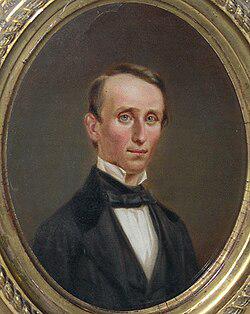
In July 1856, Walker conquered Nicaragua after a civil war in the country, and proclaimed himself President. He restored slavery and antagonized Britain and shipping tycoon Cornelius Vanderbilt, resulting in his overthrow the following year.
Four years later, Walker attempted to return to power with support from slavery supporters in the southern United States, but the government of Honduras executed him on 12 September 1860.
r/AmericanHistory • u/Aboveground_Plush • 2d ago

r/AmericanHistory • u/elnovorealista2000 • 3d ago

r/AmericanHistory • u/GustavoistSoldier • 3d ago

Led by Joca Tavares, the Federalists sought greater autonomy and decentralisation.
By August 1895, the Brazilian government had defeated the revolution after killing almost 10,000 people. The city of Desterro in Santa Catarina was renamed to Florianópolis as a result of Floriano's victory.
r/AmericanHistory • u/elnovorealista2000 • 2d ago
r/AmericanHistory • u/elnovorealista2000 • 3d ago