r/ancientrome • u/dctroll_ • 9h ago
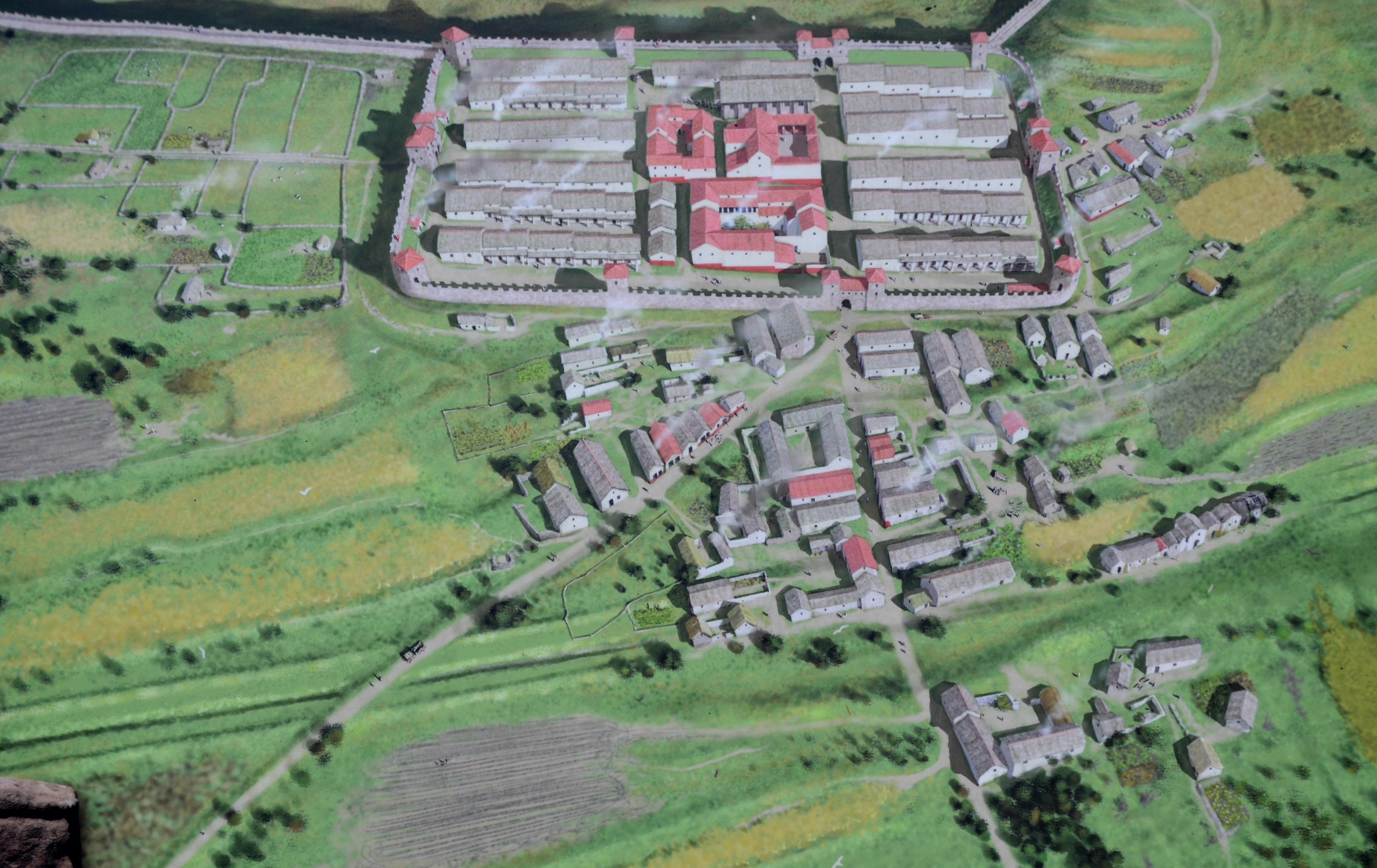
Reconstruction of Housesteads Roman Fort (England) in the early 3rd century
67
Upvotes
Author: Peter Urmston. Source
r/ancientrome • u/Potential-Road-5322 • Jul 11 '26
We’ve made a new flair that we encourage users to make use of. Comments on posts that are tagged with “Sources only” must include a source in their comments. This is to help keep our discussion informative and accurate. It is not mandatory to use but we encourage anyone with a question about Roman history to please use it.
Discussed on this post
r/ancientrome • u/AltitudinousOne • Jul 12 '24
[edit] many thanks for the insight of u/SirKorgor which has resulted in a refinement of the wording of the rule. ("21st Century politics or culture wars").
Ive noticed recently a bit of an uptick of posts wanting to talk about this and that these posts tend to be downvoted, indicating people are less keen on them.
I feel like the sub is a place where we do not have to deal with modern culture, in the context that we do actually have to deal with it just about everywhere else.
For people that like those sort of discussions there are other subs that offer opportunities.
If you feel this is an egregious misstep feel free to air your concerns below. I wont promise to change anything but at least you will have had a chance to vent :)
r/ancientrome • u/dctroll_ • 9h ago
Author: Peter Urmston. Source
r/ancientrome • u/Balrog-2602 • 10h ago
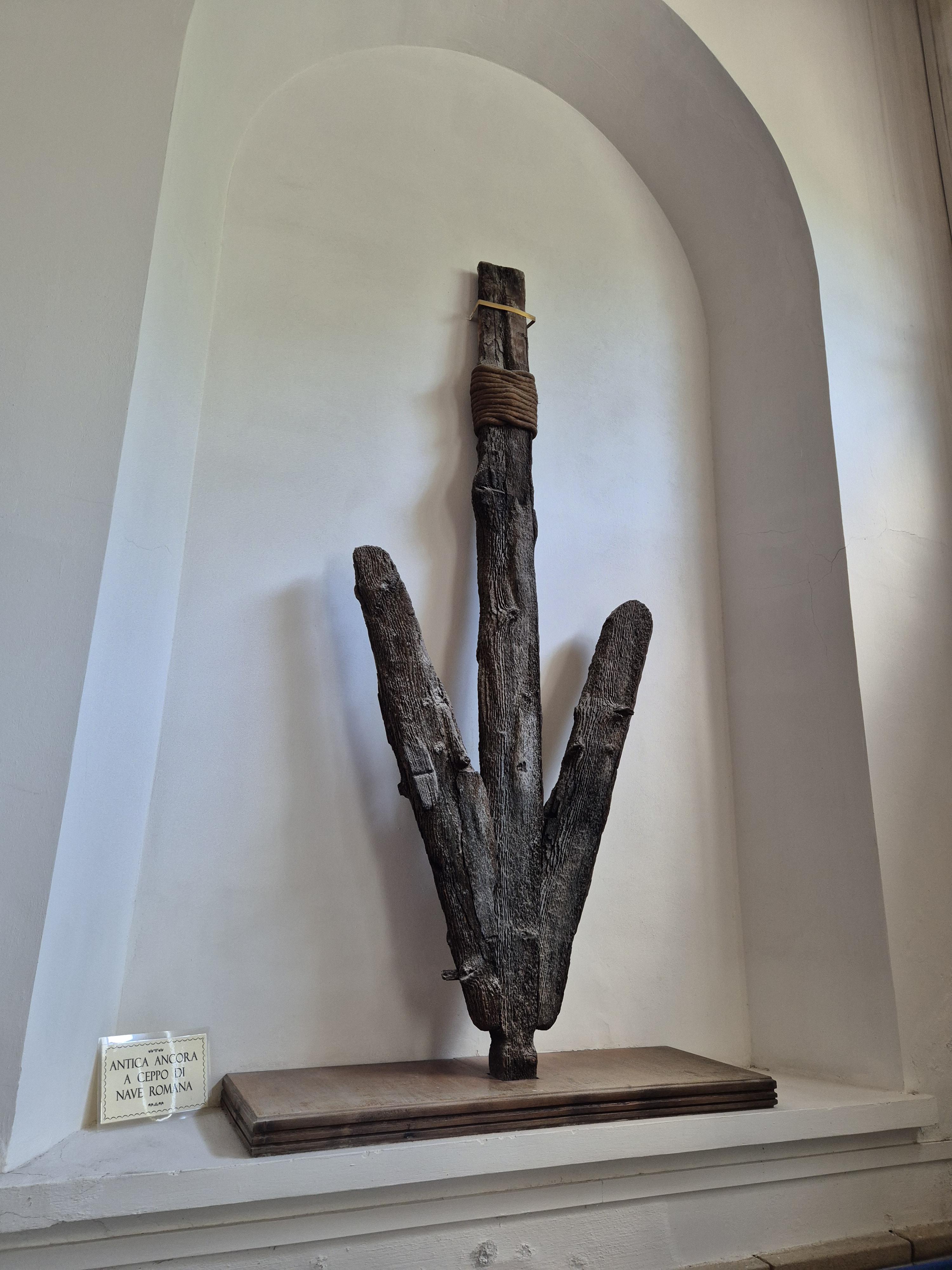
Saw this in a museum in Southern Italy.
r/ancientrome • u/burn55566 • 7h ago
As we know, the crisis of the 3rd century was a pretty rough time for the residents of the empire, so given the broad appeal that Christianity would have had to the struggling and poor masses, is it consensus that the crisis is what allowed Christianity to take root in such a massive way in the 4th century? Would Christianity have become the force it did without the crisis or would it just have been another competing ideology?
I suppose a similar question could be asked about Islam, without the upheaval in the near East in the early 7th century, would Islam’s apocalyptic messaging have had the same impact it did?
r/ancientrome • u/Fragrant_Sympathy170 • 22h ago
r/ancientrome • u/WadingInTheReeds • 6h ago
Howdy; I am writing a book set in 220s Rome, but my Hollywood understanding of Rome is butting up against the things I am learning about later third-century/on Rome.
Before their first tussle with the new Sasanid Persia, would Rome have been more like the old legionaries- only with scale or chain instead of segmentata, or more like their later counterparts with spatha, plumbata, and hasta?
r/ancientrome • u/DecimusClaudius • 1d ago

Taking a look through a portion of a Roman bath house in the Lucentum archaeological park in Alicante, Spain.
“Here are two of the rooms of the bath house. The first is the tepidarium, was heated by braziers rather than hypocaustum. The hot bath was at the back of the caldarium and it drained directly onto the brick floor of the room. The labrum was located in the apse of the caldarium. This concave stone basin on a pedestal contained cold water to refresh the bathers in this hot stuffy room. Hot air was circulated from the furnace towards air vents in the walls, by the hypocaustum. The building's main drain was connected to the public sewer by a small channel.” Per an on site sign.
r/ancientrome • u/DecimusClaudius • 2d ago

A Roman canteen found on the bottom of the Rhone river at Grigny-sur-Rhône. It was made of copper alloy and iron in the 1st century AD and is on display in the Museum of Fine Arts in Vienne, France.
r/ancientrome • u/Boring_Estimate9308 • 2d ago

49 Hun-period burials in the Carpathian Basin
The four strongly eastern individuals (ASZK-1, PTL013, VZ-12673 and HUN001) carry between 73 and 84 percent Northeast Asian ancestry, as much as the late Xiongnu themselves (median 82 percent)
2 samples of Huns carrying 76-79% Northeast Asian dated back until the end of Hunnic empire in 450 AD, and 450 AD was the time when Attila the Hun empire was the largest extend.
Based on the 49 Huns samples and if the Huns were 100,000 population.
All together Huns with evidence of admixture is 46.70% of the Huns have East Asian admixture, or you could say roughly 46,700 out of 100,000 have East Asian admixture.
HOWEVER.......when you break it into percentages.
4 out 49 were 73 - 84% Northeast Asian
8.16% out of 100,000 = 8,160 Huns were Northeast Asian very dominant
(in another burial, of course in the 371 Huns study they showed Huns elite with 82-98% East Asian but only 6% had significant East Asian admixture in that Hun study with the majority having either low degree to none)
----------------------------------------------
Now these ones are basically Northeast Asian+ Sarmatians+ Germanic+ Local Carpathians in various degrees/fractions
Most of them show roughly equal components from 1/3 each to 1/4 each
1 out of 49 was 34% Northeast Asian
2.04% out of 100,000 = 2,040 were 1/3 Northeast Asian (largest component in the mix)
1 out of 49 was 20% Northeast Asian = 2,040
2.04% out of 100,00 = 2,040 were 1/5 Northeast Asian (smallest component in the mix)
Now these ones show mostly local Carpathians, or germanic, or Samartians with small/low degree less 5% to 14%
East Asian/Northeast Asian (11-14%)
4.08%,
East Asian/Northeast Asian (8-9%)
6.12%
East Asian/Northeast (Less than 5%)
24.26%
-------------------
Sarmatian Steppe DNA is more than 5% to up to 86%. The Sarmatians invaders had established in the Carpathian Basin approximately hundreds of years before the Huns arrived.
Germanic DNA from 2% to 95%. These were Gepids, Ostrogoths, Rugians, Heruli
Local Carpathian DNA 2% to 100%. Basically indigenous ancient Hungarian European DNA,
we have DNA of these groups clearly made clear to everyone
NOW THE ONLY PROBLEM IS THE NARRATIVE OF HISTORIANS.
Should Huns be considered North East Asian invaders from Mongolia that descent from the Xiongnu, who simply conquered/subjugated other groups or were they a alliance of mutli-ethnic invaders. There is a strong narrative that true Huns were the core/originally Northeast Asian despite genetic shows they were multi-ethnic of different groups.
As of October 2026, there is no general consensus on the issue of a Hun–Xiongnu connection.[20]Recent supporters of a connection between the Huns and Xiongnu include Hyun Jin Kim and Etienne de la Vaissière.
Historians will says: Huns were a very diverse multi-ethnic people of many ethnicities, but than also said is because the Huns (original ones) allied/Incorporated European locals as soon as they migrated west (by conquest or not).
" Historically and archaeologically, the Huns absorbed many local group",
"Marriage and unions occurred with different groups",
" The Huns greatly expanded and later included many different groups".
" The Huns conquest, subjugation, alliance with other ethnic groups"
" The Sarmatians were partly subjugated, absorbed and displaced by the Huns during the 4th and 5th centuries AD.
" The Huns conquered or formed alliances with numerous peoples, including the Goths, Gepids, Alans, Ostrogoths, and other Germanic and Eurasian groups, bringing a diverse range of peoples under their influence."
"Kim argues that the composition of the Huns became progressively more "Caucasian" during their time in Europe; he notes that by the Battle of Chalons (451), "the vast majority" of Attila's entourage and troops appears to have been of European origin, while Attila himself seems to have had East Asian features." He also claims original core Huns were mostly East Asian at least partially, but began declining and diluting, dissolving with Europeans but also considers the Huns as multi-ethnic ethnicities rather than one East Asian related-racial group.
r/ancientrome • u/G_Marius_the_jabroni • 2d ago
I have always struggled with understanding why senatorial opposition was so strong to redistributing PUBLIC lands to Rome’s poorer citizens and military veterans. Overcrowding was an issue that had been plaguing the Republic for many years, it stands that the Senate would be for any measures that would help alleviate this overcrowding.
And with it being public land that was going to be used, what was with the Senate being so unbelievably butt-hurt about Caesar’s proposal? It wasn’t like Caesar was forcing the Senators to give up huge parcels of their own land, he was using public land. Were the Senators just being wankers in that they were terrified of the pleb families being able to generate independent wealth through their newfound land? Would love to hear the experts chime in on this.
r/ancientrome • u/karag0r • 2d ago

Years ago I rented a bike in the centre of Rome and rode the Appia Antica the day after heavy rain, weaving between puddles on the basalt, wheels catching between the stones. Pines and cypresses on both sides, tombs along the edges. It felt ancient. Most of what I was looking at wasn't.
Outside the walls, by the early 19th century the road had almost disappeared as a road. Dry-stone walls cut across it, landowners used it to reach their fields, and you could follow its line mainly by the sequence of tombs.
Between 1850 and 1853, under Pius IX, Luigi Canina dug out the paving, expropriated a strip of about ten metres on each side, consolidated the tombs and turned the stretch from Caecilia Metella outwards into an open-air museum. It didn't last long.
The photographs of the second half of the 19th century (first image, Altobelli & Molins, 1857–1865) show a dirt road between ruined tombs: isolated cypresses, the odd pine, no rows. According to the archaeological park, the rows of pines and cypresses were planted between 1909 and 1913 by Antonio Muñoz. When Respighi wrote The Pines of Rome in 1924, the Appia pines were at most fifteen years old.
So the image everyone has of the Appian Way, tombs, fragments and pines, is largely a 19th and 20th century construction around an ancient road.
My question: what was actually growing along it in Roman times? Were the edges kept clear between the tombs, were there trees planted on purpose, gardens attached to the tombs, or just open countryside?
r/ancientrome • u/Medization • 2d ago

In a centrally located home in ancient Pompeii’s Via dell’Abbondanza (translated as Street of Abundance), one woman curated a cozy—and intimate—dressing room, obscured by a façade. The identity of the woman is itself now obscured and lost to time, but the eruption of Mount Vesuvius in 79 C.E. froze her personal habits and routines in ash. 2,000 years later, archaeologists found it exactly as it was.
The house in question likely belonged to Cornelius Maximus, based on inscriptions no longer visible but seen during a 1912 excavation. Archaeologists recently ventured behind the home’s façade, and in doing so, opened a wardrobe last opened in 79 C.E.
r/ancientrome • u/elf0curo • 2d ago

r/ancientrome • u/AtticaMiniatures • 2d ago

I recently finished painting this historical diorama depicting Queen Zenobia of Palmyra and her struggle against the Roman Empire in the 3rd century AD.
Zenobia was one of the most remarkable women of the ancient world, challenging the power of Rome and establishing an empire that stretched across much of the Roman East.
I wanted to capture the drama and spirit of her resistance through miniature art.
What do you think of this depiction of Zenobia?
r/ancientrome • u/felixmkz • 2d ago

We visited the Guildhall Art Gallery in London last week and saw the Roman Amphitheater in the basement. It was impressive considering that it was hidden for ~2,000 years. It is free to visit and the paintings are nice if you like British art, not crowded on a Sunday, unlike the other London galleries and tourist sites.
r/ancientrome • u/Electrical_Row1468 • 2d ago
Ovid frequently depicted gods engaging in adultery, deception and sexual misconduct, despite Emperor Augustus introducing strict anti-adultery laws.
Was Ovid simply retelling existing mythology, satirizing Roman morality, or indirectly criticizing Augustus and the hypocrisy of the Roman ruling elite?
Were there any real-life scandals or political events that inspired these stories? What was the actual historical context behind his writings?
r/ancientrome • u/DecimusClaudius • 3d ago
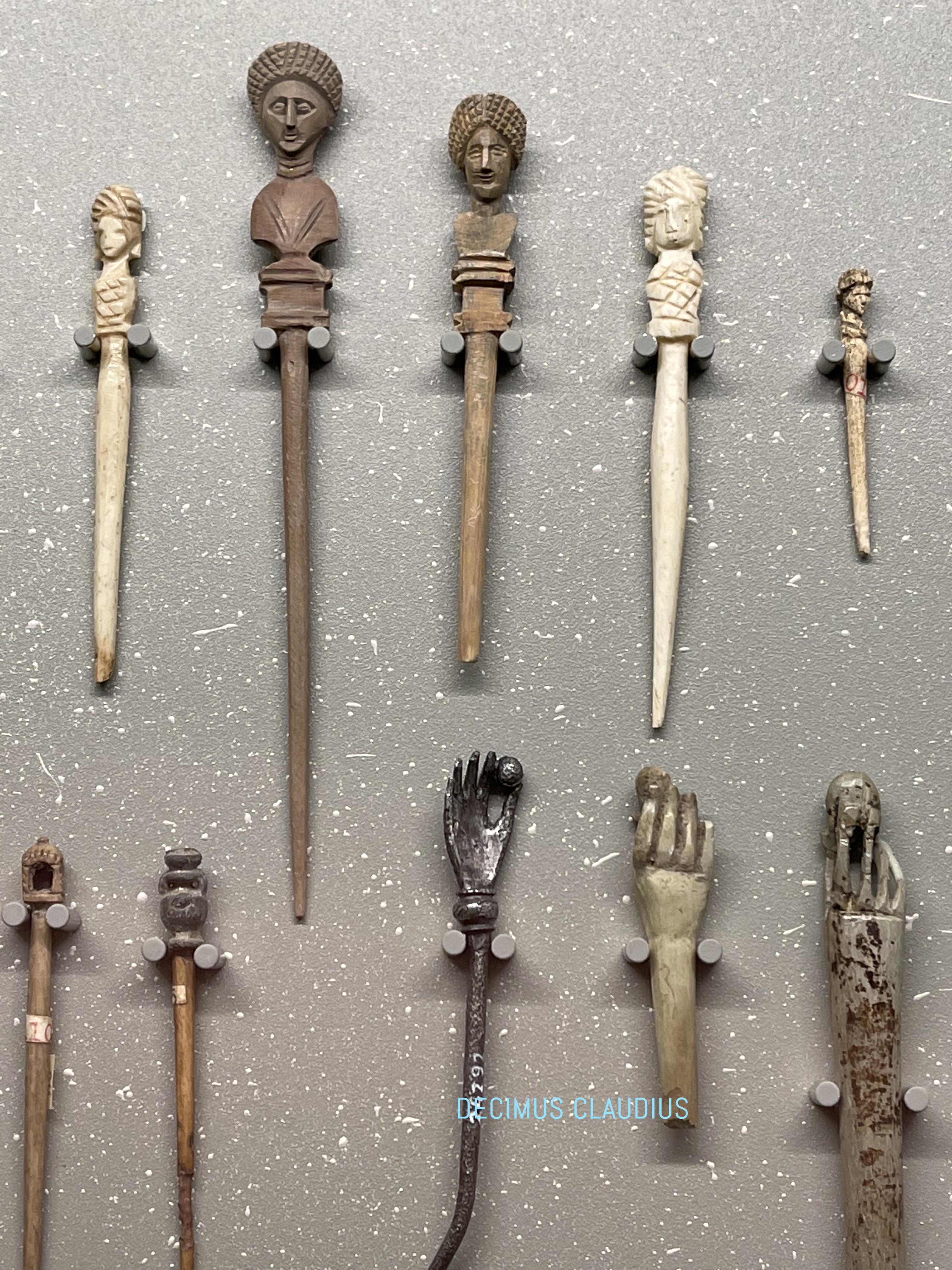
Roman hair pins for women displayed in the National Archaeological Museum of Aquileia, Italy. They were often made of bone and ranged from a very simple piece to impressive miniature carvings.
r/ancientrome • u/BudgetLaw2352 • 3d ago
Rome obviously placed a very high premium on your gens and the accomplishments and magistracies of the ancestors within your gens.
Even though there were some opportunities for those without firmly established families (like Cicero and Marius) to make a name for themselves in politics, the impression I get is that it was much harder to climb up the social ladder during the Republic. Even excluding the fact that the Senate hadn’t been expanded to Gaul or Hispania during the Republic, before the emperors, there wasn’t really entrenched patronage system for wealthy elites who weren’t from prominent families to gain access to any of the coveted offices. The transition to a singular imperial ruler essentially allowed a kind of pay for play, as wealthy provincials could fund construction projects and public works to garner favors from the emperor.
There still was certainly a large amount of emphasis on family ties and ancestry in the early 1st century CE, as Claudius faced immense resistance when he wanted to expand the Senate to Gaul.
That being said, following the collapse of the Julio-Claudian Dynasty, Vespasian (from relatively humble beginnings and no family history of consulships or praetorships) rose to greatness at a level surpassing all of his predecessors other than Octavian; the same can be said of Diocletian. Their success would evidently fly in the face of any Cato-esque bloviating about the founding stock from the time of Romulus.
Given the broad successes of emperors from undistinguished families, did this prompt any cultural shift in the populace (and the Senate) away from prioritizing those with entrenched families?
r/ancientrome • u/ch0colatebabka • 3d ago
Per the title. Thank you in advance!
r/ancientrome • u/PastelDeFacto • 4d ago
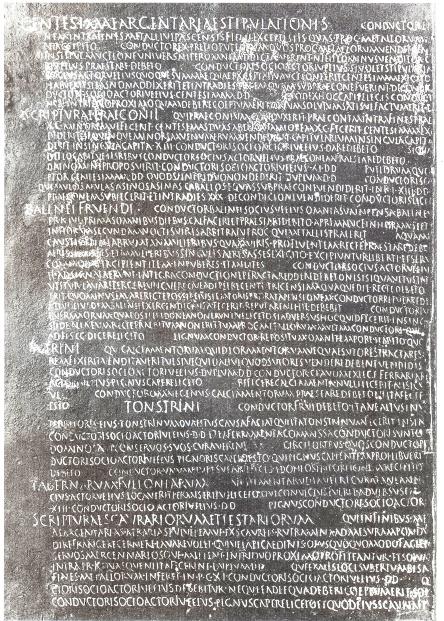
In the late 1st century AD, the mining settlement of Vipasca (today Aljustrel, in Alentejo) had its rules engraved on bronze tablets. One section covers the public baths. Women had the baths in the morning, until the seventh hour (around noon). Men bathed from the eighth hour of the day until the second hour of the night. A man paid half an as, a woman a full as. Children, soldiers and imperial slaves got in free.
One explanation: the women's hours came first, when the furnaces had to be fired up from cold, so the leaseholder charged more to cover it. The leaseholder was obliged to heat the baths every day and keep the bronze boilers full.
The same tablets give the town a single licensed barber (wandering barbers were banned, though owners could cut their own slaves' hair) and exempt schoolteachers from taxes. They were found in old mine slag in 1876 and 1906. One is in the Geological Museum in Lisbon, the other in the National Archaeology Museum. The mine at Aljustrel is still working.
Photo: from Lisbon Museu, Vipasca bronze tablet
Are there other known Roman fees that differed between men and women?
r/ancientrome • u/TryNice304 • 5d ago
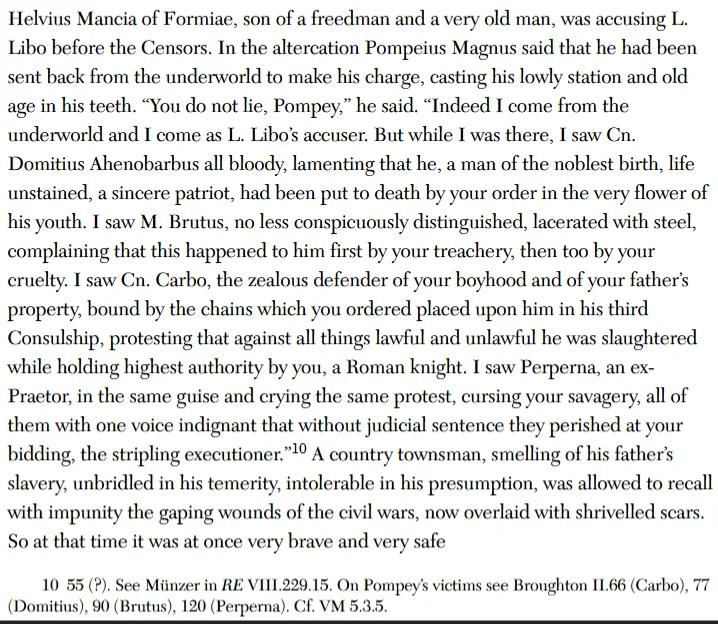
Pompey tried to insult Helvius Mancia (a freedman) by saying he was so old he must have come back from the dead. Mancia’s response is one of the greatest comeback stories in Roman history:
"You are right, Pompey. I come from the underworld. And while I was there, I saw the bloody ghost of Domitius Ahenobarbus, the lacerated Brutus, the chained Carbo, and Perperna. They all complained that you had them killed without a trial."
He basically turned Pompey's insult into a supernatural indictment of Pompey's political murders. Because he was old and a freedman, he had nothing to lose, making him "very brave and very safe."
Source: Valerius Maximus 6.2.8
r/ancientrome • u/Hotdog_McEskimo • 5d ago
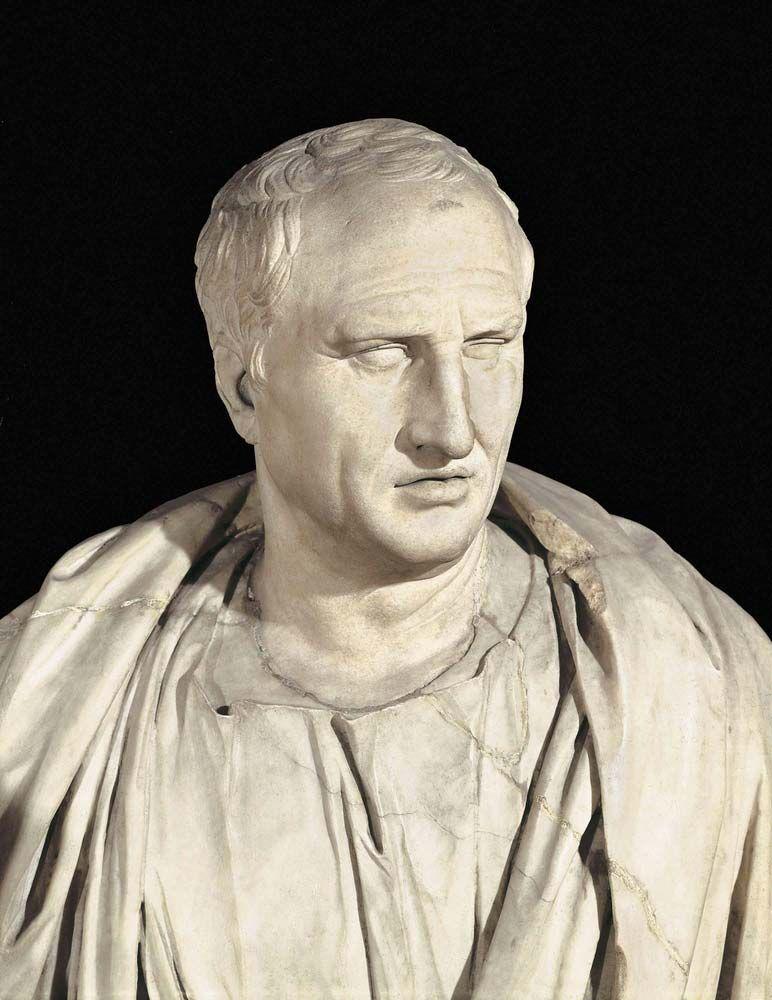
He has come from Jan 1 43 BC. So immediate concerns about his death are not present. You speak Latin and can easily communicate. He also understands and speaks English or your local language
When he returns he will remember nothing and history cannot be changed.
Just a chance to show an ancient person what became of the world he lived in
r/ancientrome • u/followinghadrian • 4d ago

r/ancientrome • u/No-Prize-3166 • 5d ago

Hi people, I have been in Belgium for several days and had a mostly free day, so naturally I went to Tongeren to see the sights, in particular the Gallo-Roman museum. I also went to the Teseum which has an archeological exhibit under the cathedral. I am an American so I basically had my jaw on the floor the entire time. Some American museums have decent ancient Roman stuff, but obviously being in Europe seeing this sort of thing hits different. Not to mention the just unfathomable quantities of certain hyper-precious objects like pottery, glass, tools, etc. I was last in Italy over a decade ago so this was my first up-close in-situ Roman stuff exposure for some time. What really hit me most was that Tongeren is just so, so, far from Rome, well over a thousand kilometers as the crow flies. The museum did an excellent job of presenting the economic and social integration of the empire through objects, people, etc; so much from so far ended up here, in a place that was significant in its own right. I strongly recommend any enthusiast passing through Belgium to make the day trip. I spent about 5 hours doing everything but could have done 8 hours if I had more time. I have a car rented for business reasons so I drove to the city and found easy free parking in a park; Tongeren is a pleasant place to walk and the museum cafe was quite nice as well.
Some random photos and highlights:
