r/ancientrome • • 5h ago

Women in Roman Culture In a Roman mining town in Portugal, women paid twice as much as men to use the baths
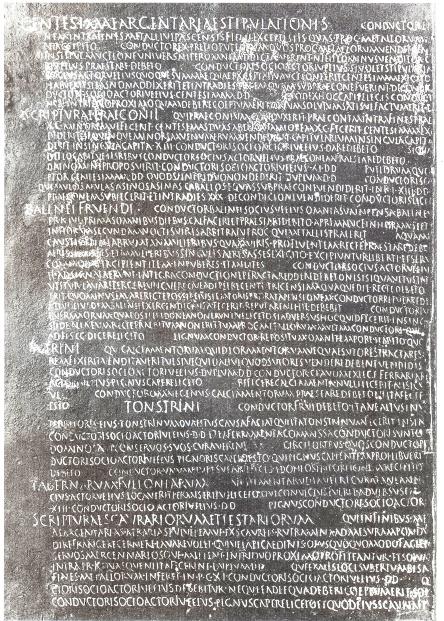
Post image
443 Upvotes

In the late 1st century AD, the mining settlement of Vipasca (today Aljustrel, in Alentejo) had its rules engraved on bronze tablets. One section covers the public baths. Women had the baths in the morning, until the seventh hour (around noon). Men bathed from the eighth hour of the day until the second hour of the night. A man paid half an as, a woman a full as. Children, soldiers and imperial slaves got in free.

One explanation: the women's hours came first, when the furnaces had to be fired up from cold, so the leaseholder charged more to cover it. The leaseholder was obliged to heat the baths every day and keep the bronze boilers full.

The same tablets give the town a single licensed barber (wandering barbers were banned, though owners could cut their own slaves' hair) and exempt schoolteachers from taxes. They were found in old mine slag in 1876 and 1906. One is in the Geological Museum in Lisbon, the other in the National Archaeology Museum. The mine at Aljustrel is still working.

Photo: from Lisbon Museu, Vipasca bronze tablet

Are there other known Roman fees that differed between men and women?


r/ancientrome • • 6h ago

Roman Amphitheatres

Thumbnail
followinghadrianphotography.com
9 Upvotes

r/ancientrome • • 17h ago

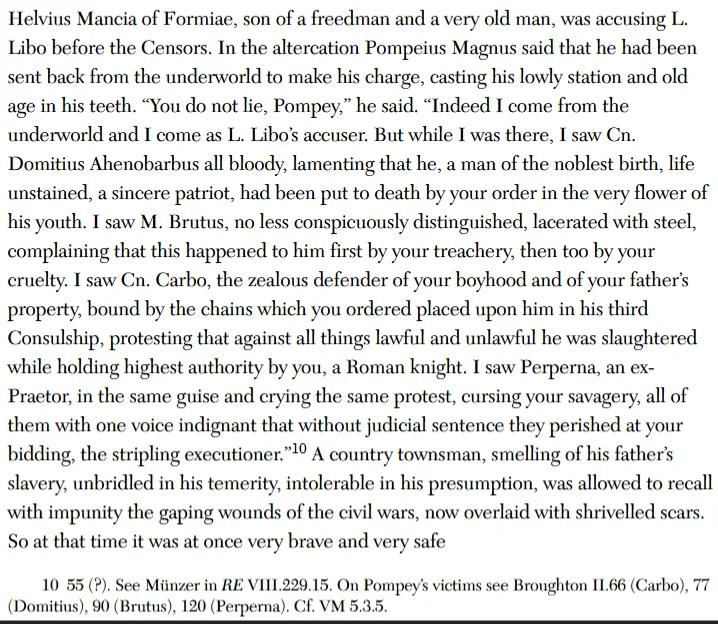
In 55 BC, Pompey the Great mocked an old ex-slave in court. The ex-slave's comeback is legendary.

Post image
671 Upvotes

Pompey tried to insult Helvius Mancia (a freedman) by saying he was so old he must have come back from the dead. Mancia’s response is one of the greatest comeback stories in Roman history:

"You are right, Pompey. I come from the underworld. And while I was there, I saw the bloody ghost of Domitius Ahenobarbus, the lacerated Brutus, the chained Carbo, and Perperna. They all complained that you had them killed without a trial."

He basically turned Pompey's insult into a supernatural indictment of Pompey's political murders. Because he was old and a freedman, he had nothing to lose, making him "very brave and very safe."

Source: Valerius Maximus 6.2.8


r/ancientrome • • 18h ago

I made a free interactive map where you can learn about the great battles of history

Thumbnail banzaki.github.io
64 Upvotes

I've always loved history, and I never really knew where the big battles happened or what was going on around them. So I made this map to learn about them in a more visual way. You click a battle and read its story, in context.

👉 https://banzaki.github.io/great-battles/

It's completely free, no sign-up, no ads. I just had a lot of fun making it and wanted to share. Hope you enjoy it!


r/ancientrome • • 19h ago

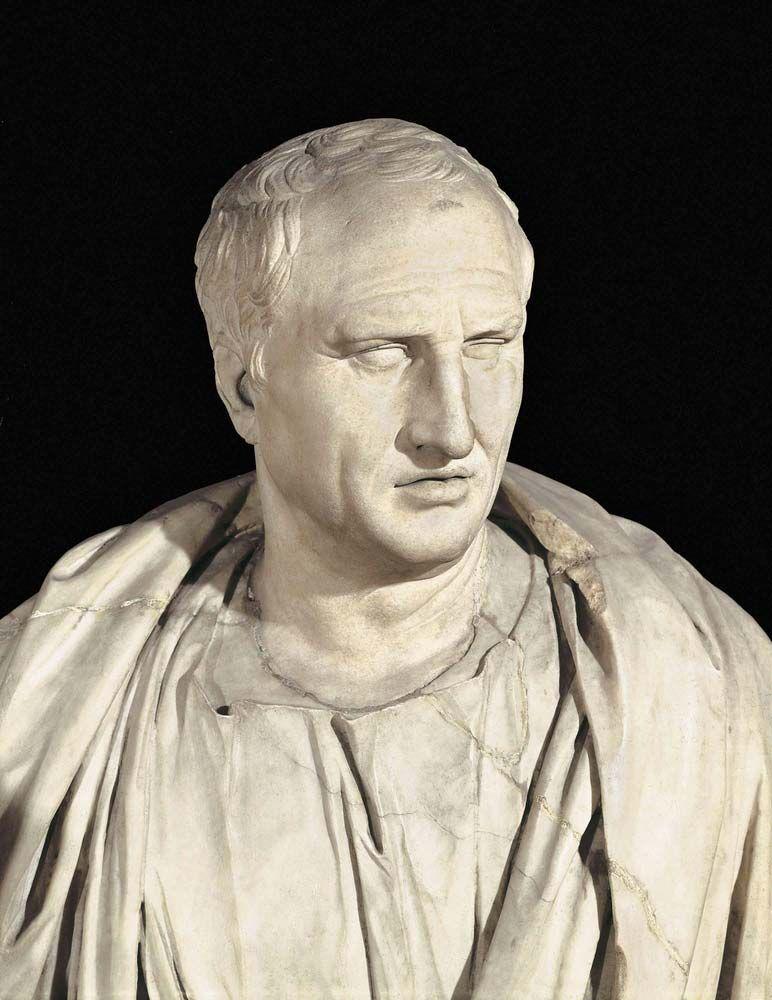
By Magical means Cicero has been resurrected for 6 hours and has popped into existence next to you. What do you tell him or show him about the modern world?

Post image
311 Upvotes

He has come from Jan 1 43 BC. So immediate concerns about his death are not present. You speak Latin and can easily communicate. He also understands and speaks English or your local language

When he returns he will remember nothing and history cannot be changed.

Just a chance to show an ancient person what became of the world he lived in


r/ancientrome • • 21h ago

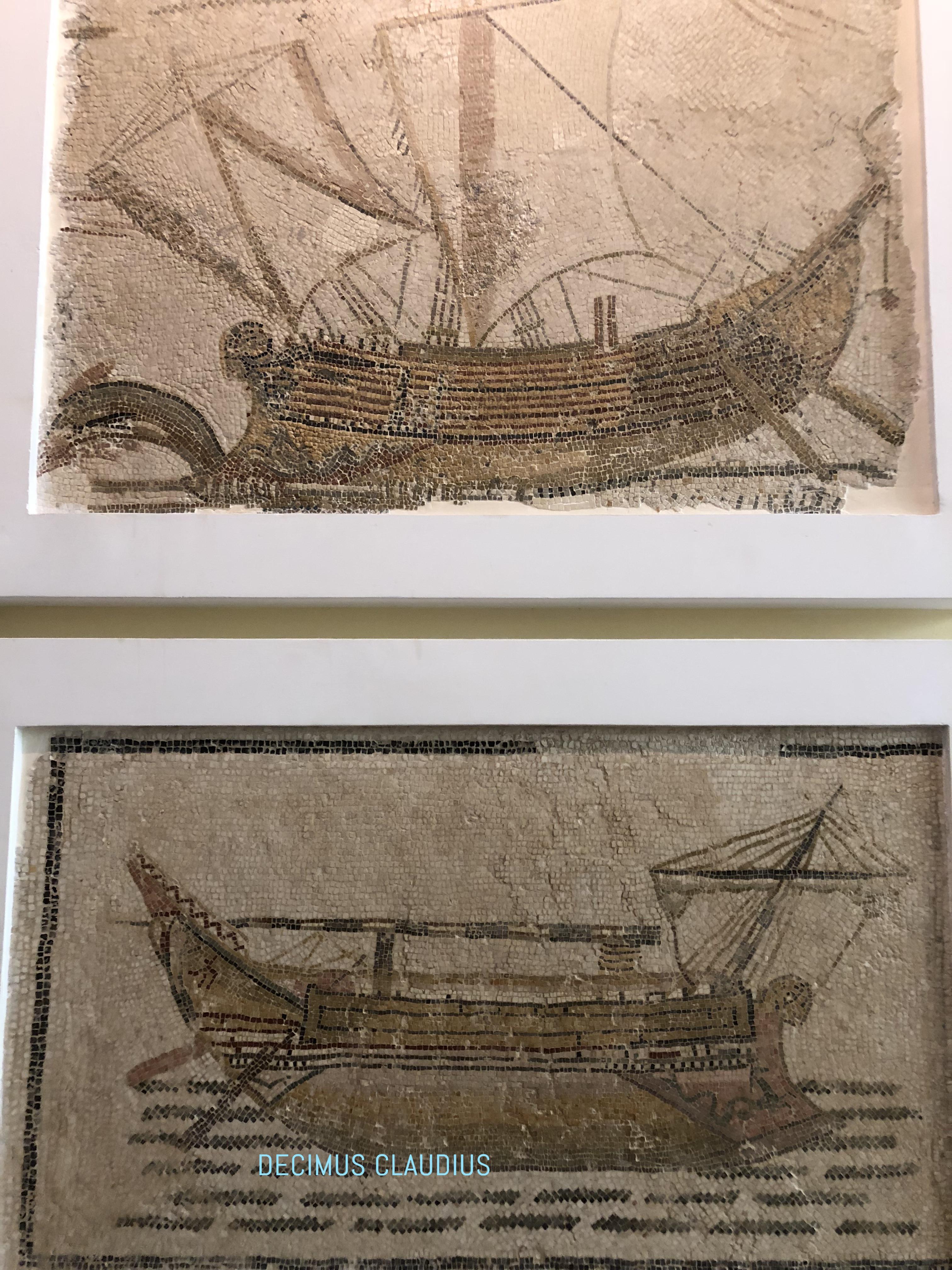
2 Roman mosaics of ships in Sousse, Tunisia

Post image
55 Upvotes

2 Roman mosaics depicting merchant ships from the Baths of Themetra, dating to the 3rd century AD. They are on display in the archaeological museum in Sousse, Tunisia.


r/ancientrome • • 21h ago

Highlights from Tongeren/Tongrorum, Belgium

Thumbnail
gallery
151 Upvotes

Hi people, I have been in Belgium for several days and had a mostly free day, so naturally I went to Tongeren to see the sights, in particular the Gallo-Roman museum. I also went to the Teseum which has an archeological exhibit under the cathedral. I am an American so I basically had my jaw on the floor the entire time. Some American museums have decent ancient Roman stuff, but obviously being in Europe seeing this sort of thing hits different. Not to mention the just unfathomable quantities of certain hyper-precious objects like pottery, glass, tools, etc. I was last in Italy over a decade ago so this was my first up-close in-situ Roman stuff exposure for some time. What really hit me most was that Tongeren is just so, so, far from Rome, well over a thousand kilometers as the crow flies. The museum did an excellent job of presenting the economic and social integration of the empire through objects, people, etc; so much from so far ended up here, in a place that was significant in its own right. I strongly recommend any enthusiast passing through Belgium to make the day trip. I spent about 5 hours doing everything but could have done 8 hours if I had more time. I have a car rented for business reasons so I drove to the city and found easy free parking in a park; Tongeren is a pleasant place to walk and the museum cafe was quite nice as well.

Some random photos and highlights:

  1. the Gallo-Roman museum's dodecahedron (the audio guide said one idea was it was used to measure pipe diameters, I take no position on the use of the objects)
  2. A fully intact iron chair, this one knocked my socks off. Described as "a luxurious folding chair" and it was from 200-230AD.
  3. Pieces of writing tablets, some of which had decipherable scratches on the wood from use.
  4. A bronze 'balsamarium' (scented oil container) in the shape of a boot (150-225AD ish)
  5. At the Teseum, under the cathedral, I was totally blown away by the fragmentary wall fresco pieces that have been put back together. I had no idea anything like this existed here.
  6. Another jaw-drop moment: in the Teseum, the archeologists uncovered evidence of the fire in the city around 275AD, and you could see charred wood (middle of photo, above the decorative bricks) that still remains from a house fire.
  7. The city walls! What a joy that these are still here, and still a living, visible part of the city.

r/ancientrome • • 1d ago

The "Marian reforms" never happened. Discussed in "Tactical reform in the late Roman Republic: the view from Italy" by Michael Taylor

Thumbnail jstor.org
56 Upvotes

Historian Michael Taylor explores the changes in the Roman army from the Manipular to the Cohort legion by emphasizing the role of Italian allies before and after the Social war. In this article he discusses the ancient evidence that modern (19th century and onward) scholars have used to justify Marius' so called reforms, the structure and deployment of Italian cohorts, how the cohort legion was structured in battle, and even comments on the traditional view that some kind of demographic collapse happened in Italy (often said to be due to the growth of Latifundia) which necessitated the enlistment of proletarii, a view which is largely abandoned with two new contrasting views put forward by Nathan Rosenstein and Luuk De Ligt and the status of landholding being looked at by Saskia Roselaar in her book about the Ager Publicus.


r/ancientrome • • 1d ago

Was Caligula really as bad as history paints him?

55 Upvotes

I may have or not watched a lot of Caligula themed movies in my lifetime. But was he really the hedonistic failure of an Emperor?


r/ancientrome • • 1d ago

Bret Devereaux's ACOUP: On the Sullan republic

Thumbnail
acoup.blog
35 Upvotes

Bret Devereaux, hereinafter D, a historian of ancient Rome probably best known for his running of the blog A Collection of Unmitigated Pedantry, late yesterday finished a blog post on the dictator Sulla, if you are interested.

D takes a negative view of Sulla's institutional legacy, branding Sulla's constitutional reforms to be a failure unjustified by the violence by which they were imposed. D also views the Sullan reforms as constructing a new style of republic rather than being some kind of reversion to middle republican norms (the previously widely-held view from Mommsen). Neither of these are uncommon positions: beyond Flower Roman Republics (Princeton, 2010), cited close to the top of his post, I would also point to the uncited Steel End of the Roman Republic (Edinburgh, 2013) and Rosenblitt Rome After Sulla (Bloombury, 2019).

I read D's post as a partial reaction to some quarters online who for frankly unsavoury reasons really quite like Sulla for, in my reading, largely aspirational purposes driven by modern politics. In this, it is a good thing for public discourse: Sulla's reign of terror did very little to solve the problems facing the republic in the 80s and did not put the res publica on a new foundation. Cf Tac Hist 1.16.1 (Galba saying "dignus eram a quo res publica inciperet").

I don't agree with D in all matters, however, since I am more sanguine about the republic: I largely agree with Gruen's analysis in Last Generation of the Roman Republic (1995) that the republic prior to the civil war in 49 was doing largely fine, fell due to that civil war, and that the analysis about republican decline is overly coloured by the fact that the republic did fall. Separately, pace D, there are material continuities on provincial practice, Rafferty Provincial Allocations in Rome (Oxford, 2019), and I think the claims about consular consignment to the city are overblown, Drogula Commanders and Command (2015) pp 314ff. The tribunician and anti-urban character of the "Sullan republic" was largely swept away by 70; the period after 70 is not the "Sullan republic" of Sulla. Santangelo "Roman politics in the 70s" JRS 104 (2014) pp 1–27.

Regardless, D's post is well worth reading and should be of interest to students of the late republic. Certainly it is an accessible introduction to the extremely important and not-so-particularly-well-documented period before the age of Cicero, Caesar, and Pompey.


r/ancientrome • • 1d ago

Decentralization of the late Western Empire

10 Upvotes

In 5th century the Western Empire began to gradually lose control over its territories. First Britain, later, north-west Spain, and so on. We know also that throughout that time direct control over provinces by imperial bureaucracy loosened over time. I have read that Honorius already removed imperial governors from part of Gallic provinces, giving more autonomy to local inhabitants. In the last decades of the Western Empire we see that certain parts of what remained from the Empire, where governed actually independently, only officially recognizing the Emperor. Dalmatia and norther Gaul where actually autonomous from Italy and ruled by Marcellus and Aegidius as free rulers.

My question is, did old imperial administration, with its aparatus and hierarchy operated in practice in the west, or rather to which point of time? Did local aristocracy and military leaders start to work similarly to medieval feudal lords, being responsible for defending and managing their local land?


r/ancientrome • • 2d ago Bravo

Iberian Celtic Chieftain, 1st Century BC

Thumbnail
gallery
270 Upvotes

Among the warrior traditions of ancient Hispania was devotio, a solemn bond of loyalty in which warriors pledged their lives to their commander, even unto death.

The Greek historian Plutarch describes how, during the wars of the 1st century BC, Iberian warriors who had sworn such loyalty to the Roman general Sertorius carried him to safety after a defeat, refusing to abandon him even as the enemy closed in.

This remarkable tradition reveals a world in which the bond between a warrior and his leader could carry an almost sacred significance, extending far beyond ordinary military duty.


r/ancientrome • • 2d ago

Does the « Pileus » of Ancient Rome time has anything to do with what Albanians still use today called « Plis »/« Qeleshe » ?

7 Upvotes

I’m born in an Albanian family and we always talked to me about our traditions and everything and one of them is a white round hat that we claim being in our tradition for a very long time called « plis » (or qeleshe depends on the dialect).

But recently i heard about the pileus, which is almot if not exactly the same thing, and even the name « Pileus/Plis » is quite similar, so I was wondering, did Albanian (Illyrians knowing they used to wear the pileus) kept that and made it part of the tradition ?

(It would be interesting to have sources)


r/ancientrome • • 2d ago Bravo

My Roman Lego exhibit at the National Museum of Scotland last night

Thumbnail
gallery
1.7k Upvotes

The National Museum of Scotland are running a new exhibition called "Roman Scotland: life on the edge of empire" and last night ran a fantastic late night event. After a member of museum staff happened to see some of this build at a local charity show they reached out and asked if I wanted to be part of the event. The main special exerbition is pretty interesting and worth a pop into if you are in Edinburgh over the next couple of months.

(Mod team this isn't self promotion, the event is done and dusted - but understand if you want it removed)


r/ancientrome • • 2d ago

Gladiator II is on Netflix. How annoyed am I going to be if I watch it?

149 Upvotes

Apparently, Lucius Verus is still alive in the 210s, Macrinus is a slave trader, and Lucilla somehow escaped execution. Just how bad is it?


r/ancientrome • • 2d ago

Roman army Pre and post Marian reforms 1st Cohort and Trairii comparison?

13 Upvotes

Both of them are elites of the Roman army, but with different battlefield roles but how would you compare their elite status and their battlefield roles? i understand more about Triarii being the 3rd in line and final reserves should the front lines breach and the last one to make sure the battle won

What about the 1st cohort? i'm still not quite familiar with their battlefield role sure they have the same standard gear of the rest of the Legion, but their the most elite among the legions

Does Trairii still used post Marian Reform?

Sorry for my English


r/ancientrome • • 2d ago

What are your favorite examples of Roman historical fiction (shows, movies, books, video games)?

46 Upvotes

I love learning the facts about Rome but Ludere non nocet (it doesn’t hurt to play!)

I’d appreciate your Roman historical fiction recommendations in the broadest sense. Shows, movies, fiction books, video games and anything else you’ve enjoyed.

I really appreciate the recommendations! Gratias!


r/ancientrome • • 2d ago

Brixia Roman Archaeological Area (Brescia, Italy) painted walls of the Republican Sanctuary (1st century BCE)—which sits beneath the Flavian Capitolium. The ruins of the Capitolium contain the famous Winged Victory masterpiece.

Thumbnail
gallery
417 Upvotes

r/ancientrome • • 3d ago

Lost Roman Cities You Can Still Visit (300+ on the Map)

Thumbnail
ancient-history-sites.com
56 Upvotes

Map showing 385 city entries from across the Roman world, with photos, historical descriptions and locations.

Italy has the most entries on the map, with 73, followed closely by Turkey with 72. Greece has 43 and Spain has 40.

Some examples:

  • Sagalassos, Turkey. Among other monuments, a mountainside theatre and two storeys of the Roman baths survive. One of the city’s monumental fountains has been reconstructed.
  • Alba Fucens, Italy. A paved street with a pedestrian crossing runs past excavated shops. A sunken amphitheatre survives on the hillside.
  • Baelo Claudia, Spain. The town’s forum is well preserved, and workshops by the sea still have basins used to salt tuna and make garum.
  • Thuburbo Majus, Tunisia. Four re-erected Corinthian columns mark the temple at the forum. The site also has the remains of separate summer and winter baths.

Available filters:

Use Country to explore one region and Condition to filter by how much survives. Rating and Popularity can help find highly rated places with fewer reviews. There is also a grid view for browsing photos and site descriptions.


r/ancientrome • • 3d ago

Help me decide my next book

4 Upvotes

Recently read Caesar, Augustus by Adrian Goldsworthy, Cicero by Anthony Everitt and in Fiction: Augustus by John Williams.

All excellent. I really like Historical Nonfiction and my favorite author is Hampton Sides. Need something new to read. What have you read recently that you would recommend?


r/ancientrome • • 3d ago

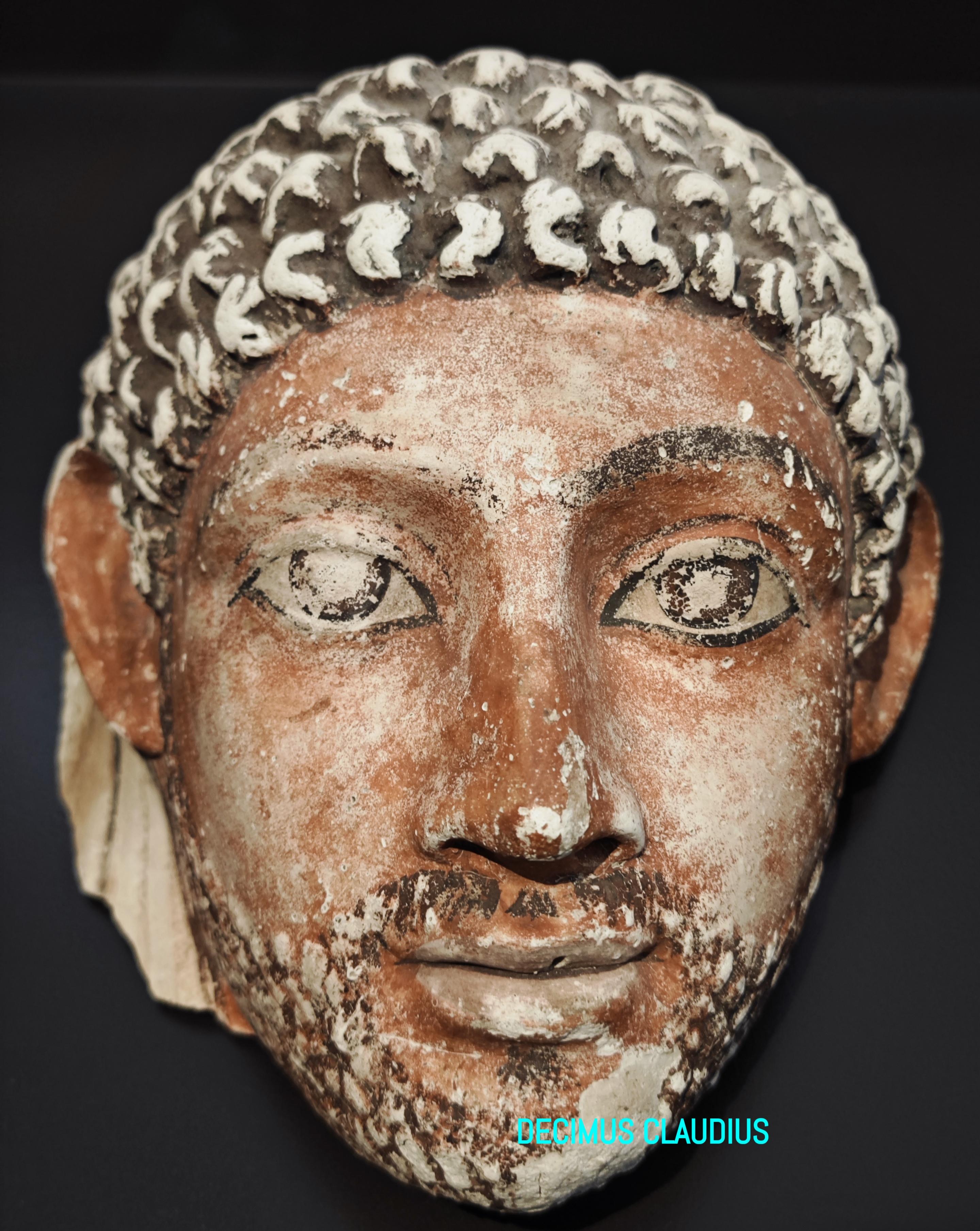
A Roman-Egyptian mummy mask fragment

Post image
174 Upvotes

A Roman-Egyptian mummy mask fragment of a man with a beard and curly hair. It dates to 117-128 AD, was purchased in Cairo, Egypt in 1896, and is on display in the Zwinger in Dresden, Germany.


r/ancientrome • • 3d ago

Locusta of Gaul: The Professional Poisoner Behind the Deaths of Claudius and Britannicus

Thumbnail
weirditaly.com
26 Upvotes

r/ancientrome • • 4d ago

The Ghosts of Vergil: Lost Epics of the 600s

18 Upvotes

I published my latest essay about late antiquity today. Here are some snippets:

From the Introduction

There are four places in that century where you might expect a secular epic poem in Latin to be written: France, Italy, England, and Spain. But, apparently, no such poem survives. In this essay, I want to explore each country separately, because on a first perusal, it seems unlikely that any single one of these regions produced a secular epic poem in this century, but, if you take them together, I think it’s probable that at least one of them did.

From the France section

According to the scholar Hildegar of Meaux, who lived in the 800s, the Merovingians did produce a poem of the kind I’m seeking: The Farolied. ... I’ve versified the surviving lines in English. They go like this:

This song is of Clothar, the King of the Franks,
Who battled the fierce Saxon race.
How grievously would it have gone for their envoys,
If Faro had not shown them grace!
For envoys of Saxony, passing through France,
When Faro was noble of rank,
By heaven’s assistance departed the city,
Unharmed by the king of the Franks.

From the Italy section

Italy’s Lombard and Byzantine leaders also commissioned some poetry. One example is...a poem written for display on the sepulcher of a Byzantine general named Drocton. That poem will be discussed shortly and given in full.

From the England section

One might wonder if a suitable poem was written in England and was just lost, but sadly, unlike in France and Italy, we have a definitive reason to infer that, in England, there are no lost ones of the right kind. Here’s why.

From the Spain section

Count Bulgar of Septimania was a secular figure who once wrote to a bishop about a financial dispute and used a Vergilian simile to demand restitution: “Just as a debtor might cast aside all human shame, and, out of sheer impudence, attack his lender with arrogant objections, while the timid lender, who has truth on his side, overlooks what the false accuser ought to blush deeply for saying, even so there remains to…King Gundemar…no small claim, for you must repay a great sum of money.” (Letters to a Frankish Bishop – Epistola 3)

Here is the full text, I hope you enjoy it!

https://venatoverba.xyz/2026/11/19/the-ghosts-of-vergil.html


r/ancientrome • • 4d ago

Further evidence of the Romans’ advanced supra-regional mapping — Discrete distances between the known camps in Germania Magna in the last phase prior to Tiberius' withdrawal following Augustus’ death

Post image
52 Upvotes

This map shows all known Roman camps east of the Rhine from the final phase of the occupation prior to the defeat in 9 CE and the final withdrawal in 16 CE.

The Roman transport hub at Vervins (Verbinum) and the camp on the Kops Plateau in Nijmegen (Noviomagus Batavorum) also date from this phase.

In Bonn (Bonna), also on the left bank of the Rhine, a detachment of exploratores is thought to have been stationed during the Augustan period, before a legionary camp was later established there following the consolidation of the Rhine frontier.

As it fits within the chronological context, the battlefield at Kalkriese ("Teutoburg forest") is also included.

---

Anyone who would like to contribute to this fascinating topic is very welcome here:

https://forum.archaeologie.online/t/neue-belege-fuer-fortgeschrittene-roemische-vermessungstechniken-um-die-zeitenwende/17785/56?u=geognost


r/ancientrome • • 4d ago

Did Emperor Augustus allow criticism, disagrement or making fun of him in public during his rule?

83 Upvotes