r/Astronomy • u/pirosow • 18h ago
Astrophotography (OC) The Orion nebula
Captured from the city, with a 6" newtonian telescope!
About 2 hours worth of exposures.
r/Astronomy • u/pirosow • 18h ago
Captured from the city, with a 6" newtonian telescope!
About 2 hours worth of exposures.
r/Astronomy • u/Carso107 • 5h ago
I was incredibly lucky to witness two lunar eclipses while living in New Zealand; the first in 2025 and the second in March this year. For this second eclipse, I wanted to get a different shot than just the moon: I wanted to show what the moon revealed.
During the full moon, the brightness of Earth's only natural satellite outshines almost everything in the sky- the stars, milky way, and Magellenic Clouds which are obvious under dark skies are washed out into oblivion. Normally you have to wait a week for the darkness to return, however sometimes the full moon falls into the shadow of the earth and the brilliant light from the sun is blocked out: a lunar eclipse. During the eclipse this year, I watched the sky as the moons glow reddened, seeing more and more stars come out as the eclipse neared totality.
Eventually the moon was fully in the Earth's shadow and the sky reached full darkness. I captured this panorama from the iconic Mt. John, showing the milky way revealed by the eclipse, along with the Orion constellation and some beautiful chromatic airglow. This image was a real struggle to edit together but I'm super pleased by the result!
You can find more images on my Instagram page u/astro.by.oscar
📷 Nikon Z6a
🔭 Sigma 20mm f/1.8 DG DN Art
⛰️ MSM Nomad
Sky: 7-panels panorama, each 60", ISO 1250, f/1.8
FG: 4-panel panorama, each 60", ISO 1250, f/1.8
r/Astronomy • u/AstroAlysa • 22h ago
I made this several years back, but thought folks here might find it interesting (if you haven't seen it before).
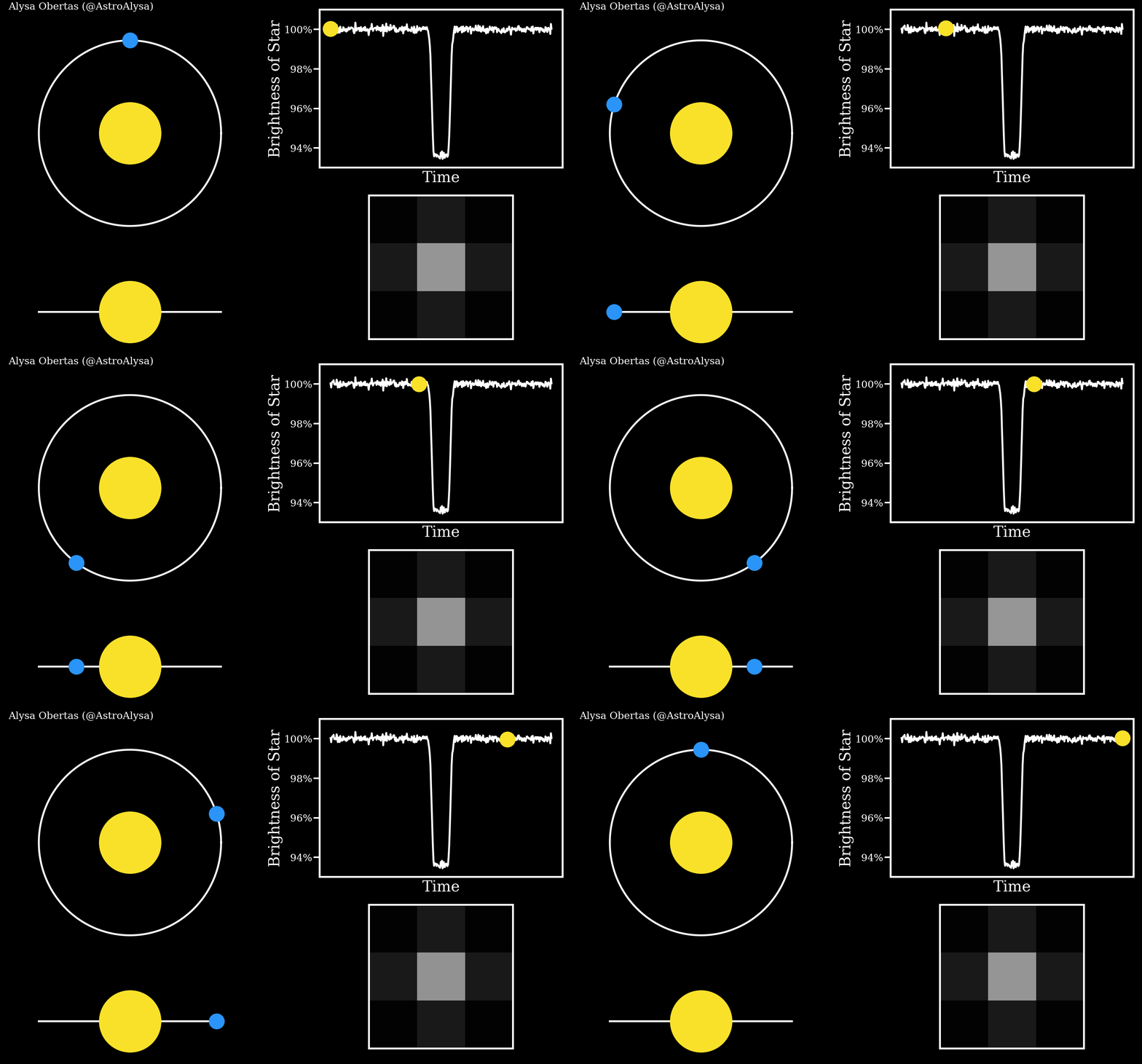
A planet orbiting its star (top left). When viewed edge-on (bottom left), the planet passes in front of the star once per orbit and blocks some of the star's light. The star's brightness can be measured throughout the orbit (top right). This can be done using a CCD and collecting the star's light on the CCD pixels (bottom right).
Lol sorry I didn't know how to tag this. I made it... It's python art?
Note that this is simplified. I didn't include, e.g. the secondary eclipse (the total brightness is the combination of the light from the star + planet; there can be a tiny dip when the planet passes behind the star).
Also, the light curve (top right) is made up. What causes the shape of real light curves is really interesting, though! When the planet is fully in front of the disk of the star, the depth is (mostly) just a straightforward measure of the ratio of their areas (like, A=pi*r^2). But towards the "edge" of the star, things like limb darkening (https://en.wikipedia.org/wiki/Limb_darkening) are important.
The CCD view (bottom right) is made up as well. Even though we see stars as point sources of light, their light gets "smeared out" because of the physics of how light interacts with the shape of the telescope and other components of the optical system (we call this the point spread function). This will happen even in the most "idealised" system (https://en.wikipedia.org/wiki/Airy_disk).
Also, the file is on wikimedia commons (with a creative commons license) so folks can use it :) https://commons.wikimedia.org/wiki/File:Exoplanet_transit_method_dark.gif
r/Astronomy • u/FTGAstro • 16h ago
Finally got a shot at Orion, almost full moon out but i decided to try anyways.
Im pretty happy how it turned out. It was nice to image something after too many months of uncooperating weather.
148x30sec @iso3200
Sharpstar 76Edph @348mm
Cg5 asgt unguided
Canon 600d unmodded
Stacked, stretched and star mask in siril and starnet
Post processing in pixlr editor, lots of multilayer denoising, lots of multilayer recombination and HDR layering
r/Astronomy • u/Kyouma118 • 6h ago
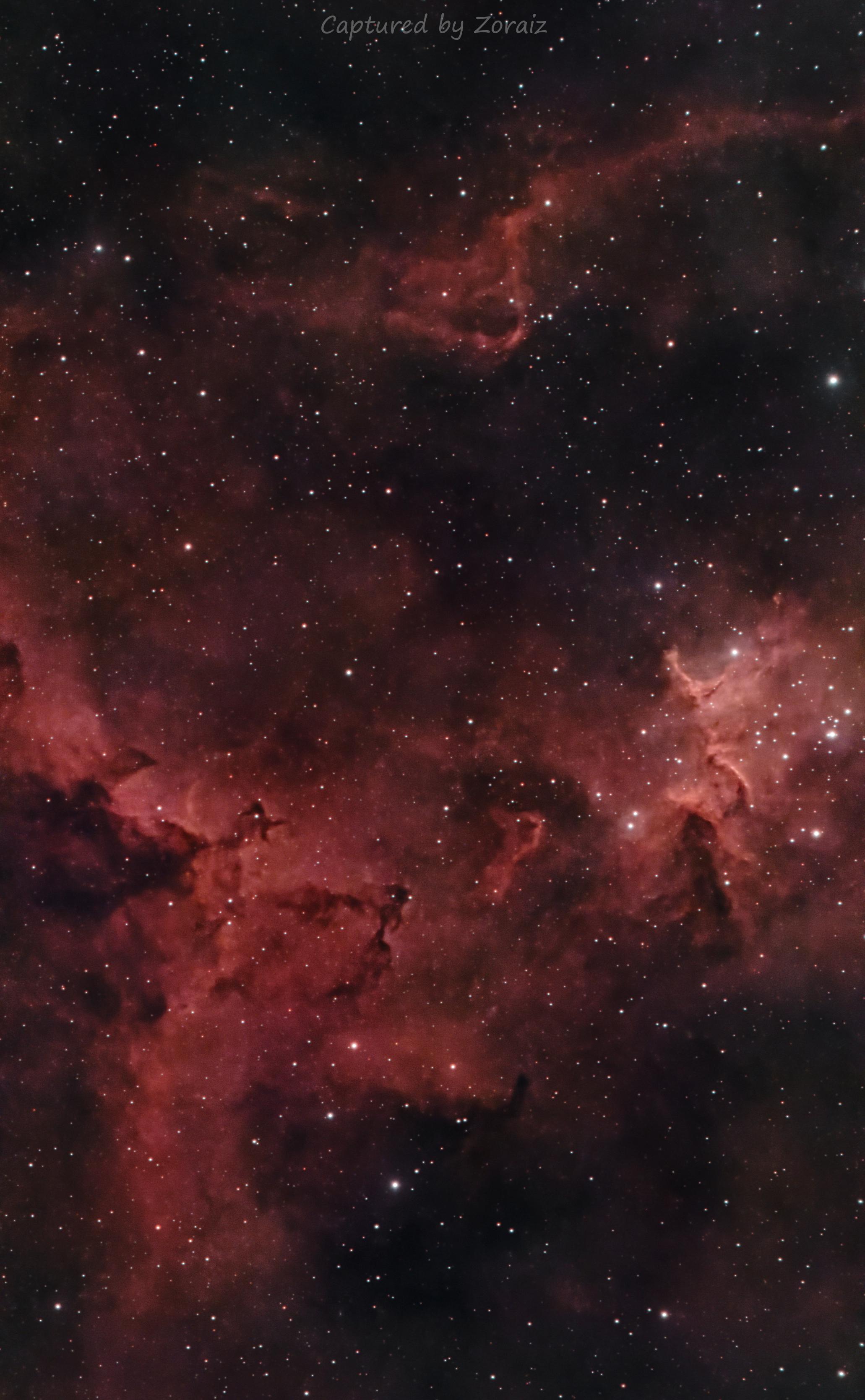
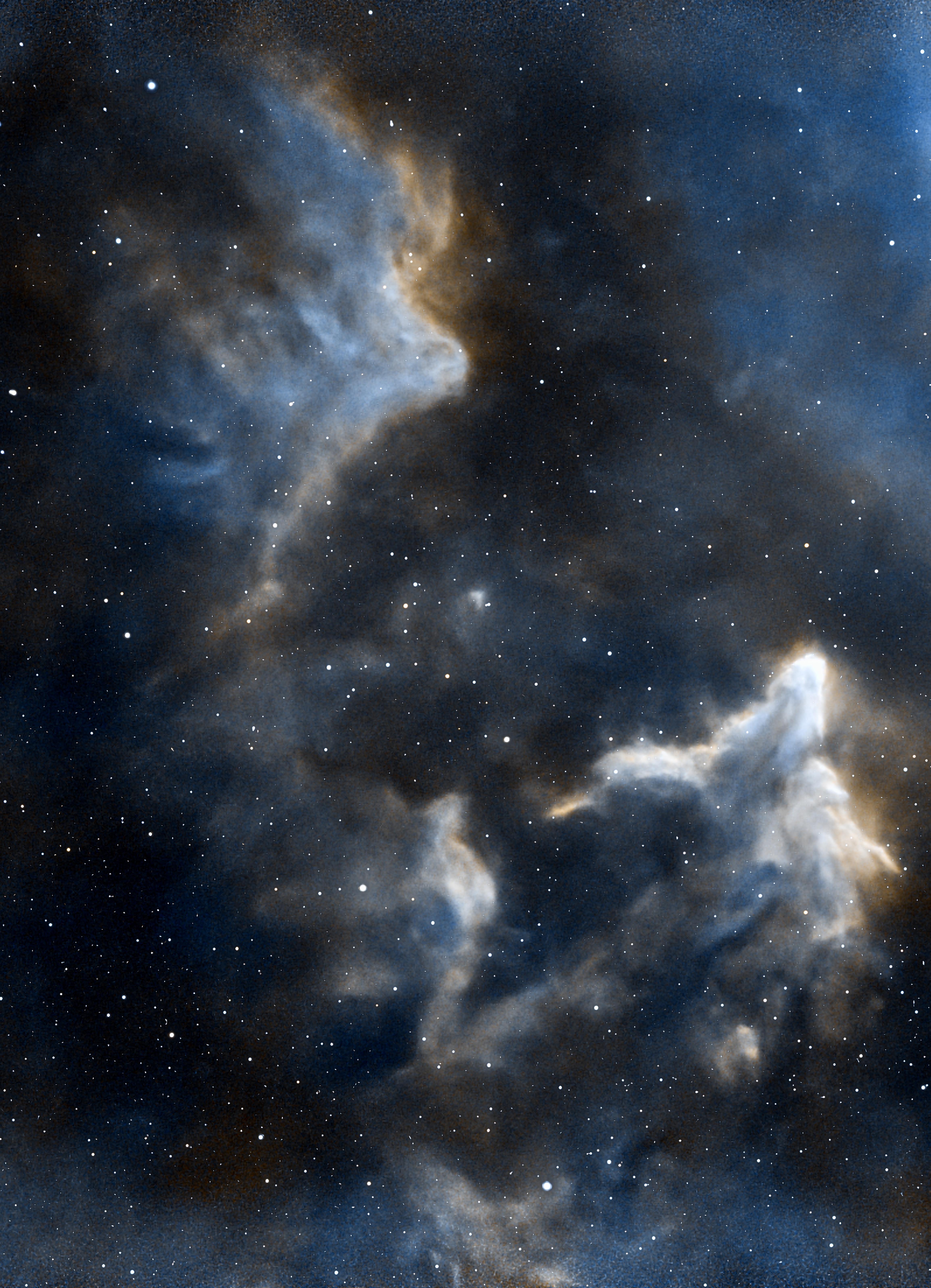
Captured the left side of the Heart Nebula! This is an emission nebula around 7500 light-years away. Although the complete nebula takes the shape of a heart, my telescope's field of view only allowed me to capture the left portion which I felt was more interesting. 🙂
The distinctive structure to the right of this image is actually the center of the Heart Nebula, and is shaped largely by the star cluster Melotte 15 also located there.
Telescope: Seestar S50
Integration time: 8.5 hours
Tools used: Siril, GraXpert, GIMP
Script mentions: CosmicClarity Sharpen, DeepSNR, VeraLux (Revela & Curves), HDR_multiscale
Bortle 8-9
r/Astronomy • u/Chemical-Time2183 • 7h ago
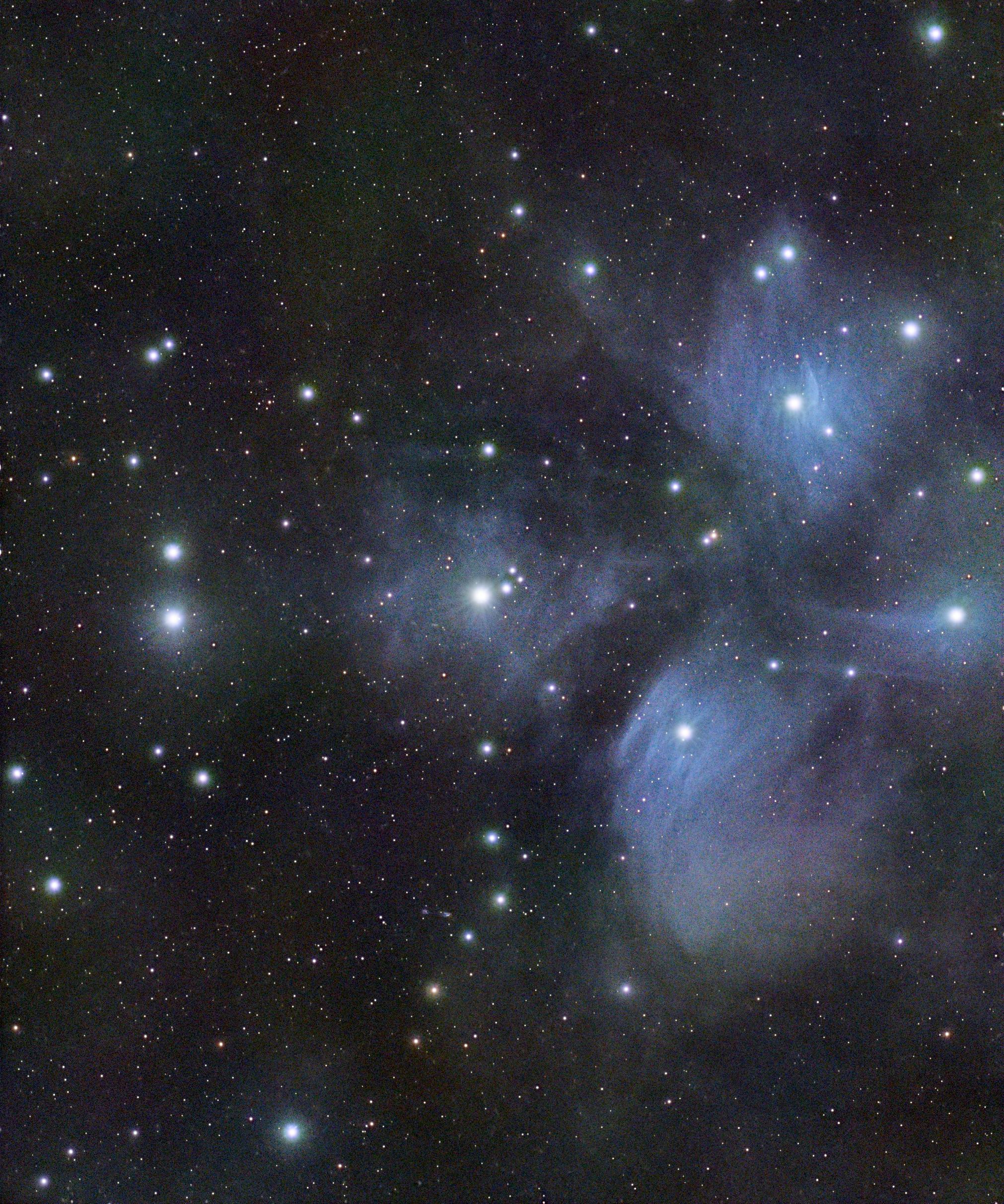
This image of the Pleiades Star Cluster M45 was developed from 221x20s subs (= 73 m 40 s of total exposure time).
Date & Location: 17-18 November 2026. Washington D.C..
Scope: Seestar S50 Pro used in EQ mode. Relative to S50, the 0.3 kg increased weight of the S50 Pro, when used in EQ mode created a slow slippage over the acquisition time period as evidenced by star trails at both 10s and 20s exposure times. This issue was resolved by more firmly securing the quick release plate to the scope using seal tape and by placing a suitably trimmed nonslip gripping sheet between the base of the scope and the plate and by firmly tightening the clamp of the TH-10 fluid head to securely hold the scope and plate combination.
Software: Pixinsight
Preprocessing steps: Preprocessed the 221x20s subs in Pixinsight to get an integrated image using the following process steps: Cosmetic Correction > Debayer > Subframe Selector > Star Alignment > Local Normalization > Image Integration. All 221 subs were registered and integrated.
Linear Postprocessing: Dynamic Crop > GraXpert (to remove unwanted background gradients) > BlurXterminator > Image Solver > Spectrophotometric Color Calibration > BlurXterminator.
Nonlinear Postprocessing and additional steps: Applied a Histogram Transformation to delinearize the preprocessed image. Used Range Selection to create a mask. Masked the background and applied Local Histogram Equalization and Curves Transformation (for chroma, saturation and intensity) to the target image. Inverted the mask to protect the target image and applied NoiseXterminator and Histogram Transformation to adjust shadows and midtones on the background. A second pass was made with Curves Transformation on the target image and a Histogram Transformation on the background.
Background information on Pleiades:
"The Pleiades also known as Seven Sisters and Messier 45 (M45), is an asterism of an open star cluster containing young B-type stars in the northwest of the constellation Taurus. At a distance of about 444 light-years, it is among the nearest star clusters to Earth and the nearest Messier object to Earth, being the most obvious star cluster to the naked eye in the night sky. ... The cluster is dominated by hot blue luminous stars that have formed within the last 100 million years." https://en.wikipedia.org/wiki/Pleiades
r/Astronomy • u/Newhorizons1975 • 13h ago
Tomada con dwarf mini,total tomas 240 , obturador 30, ganancia 60, filtro astro, apilado y procesado con stelar studio y snapseed.
r/Astronomy • u/Slow_Contribution114 • 12h ago
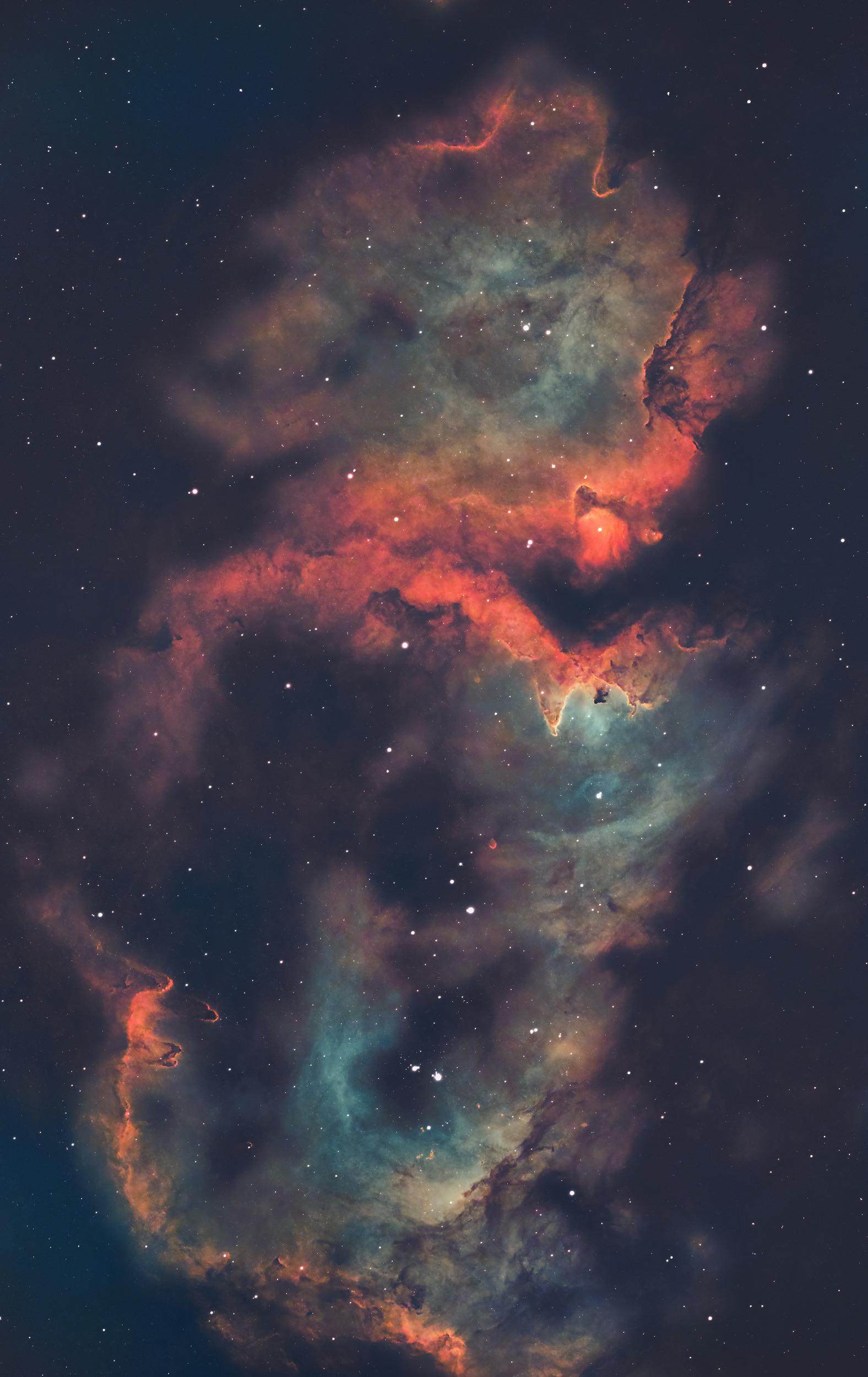
Captured using my Seestar S50 in EQ mode.
2000 x 20 second exposures in LP
1950 x 10 second exposures in IR Cut
Multiple nights and around 16 hours of integration total, throughout October to date.
Stacked in APP allowing the algorithm to detect IR Cut and Dual Narrowband subs, creating two separate stacks then blending them together.
I wanted to capture both the emission and reflection aspects of this region.
BGE, deconvolution and de-noise in Graxpert.
Star removal using StarNet through Siril.
GHS using human weighted luminance.
Curves adjustment using VeraLux Curves.
HDR Multiscale.
Conversion to SHO palette using Siril Dual Narrowband OSC to Hubble Palette.
Recombination of stars.
Slight saturation and contrast increase.
Thanks for looking
r/Astronomy • u/OkInstruction6024 • 17h ago
Telescope : Dwarf mini + HO filter
Total of 4 panels combined(10 hours of data)
Stacked and processed in StackingWizerd & AstroWizerd
r/Astronomy • u/Unusual-Arbitrator42 • 3h ago
r/Astronomy • u/noob_astro • 16h ago
Shot on 22.11.2026
UTC: 3:15 a.m
1000 frames at 21.5 FPS
Exposure: 12.192 ms
Gain: 826
Camera: Touptek 678 mono
Scope: Acuter 40
Mount: Skywatcher Solar Quest
Stacked in Astrosurface
Impgg: inversion and convolution
PI: solar tools - color and contrast
PS: color and level
Solar features and measurements : https://stardustastronomy.com/solar-lab
r/Astronomy • u/BallisticCapture • 14h ago
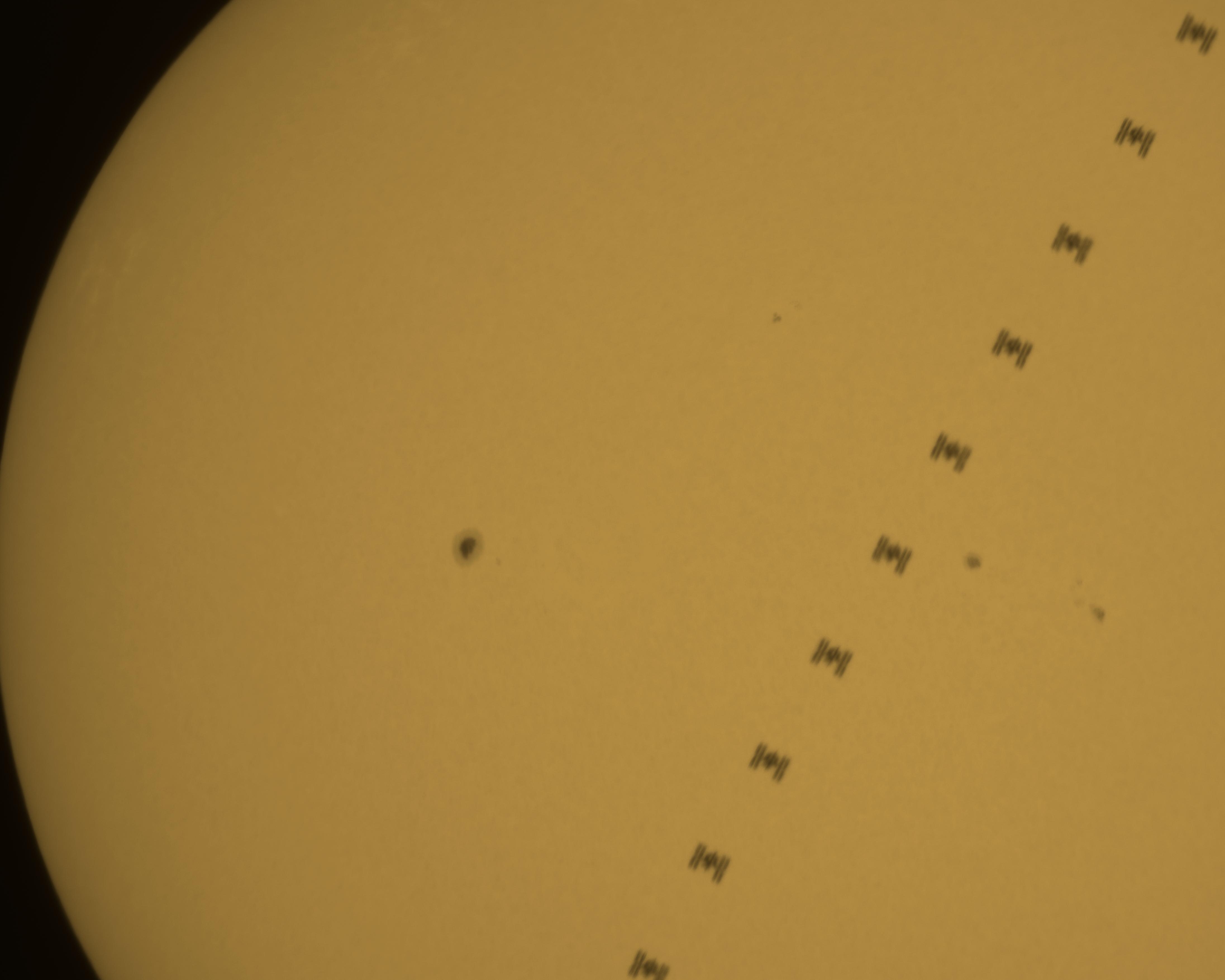
Equipment:
Telescope: Celestron NexStar 6SE
Camera: ZWO ASI183MC
Data:
1 minutes long video and I picked out the useful frames. The composition was made with GIMP.
The ISS is more detailed than in my previous capture. This time, its angular size was larger, plus this camera has smaller pixels.
r/Astronomy • u/Westcoastcosmos • 7h ago
r/Astronomy • u/GaryCPhoto • 6h ago
Taken from bortle 9 skies in Toronto, Canada. A beautiful target, relatively bright and easy to frame. I definitely need to give it more time but overall pleased with the results. Imagining a few blocks from the CN tower comes with it’s challenges but being so close to Lake Ontario with the light dome falling off does give some relief.
Integration:
55x300s subs. 4.5hrs.
Gain 100
Cooled to -5deg
Svbony 122mm f7 apo with 0.8 reducer.
Zwo 2600mc pro
Proxisky Ragdoll 17Pro
Optolong L-Ultimate
Zwo Asiair
Zwo eaf
Stacked in Astro pixel processor. Process yin Pixinsight. Dynamic crop, background ext, blur x, noise x, stat stretch, star x, narrowband norm, range mask, curves trans. Further processing in photoshop and added stars back.
r/Astronomy • u/mp__photo • 13h ago
First lights of narrowband imaging and I can't help but smile when the first subexposure is finished and I can see in on the laptop screen.
Acquisition:
ZWO ASI2600MC-P25
Askar SQA55
MLastro SAL-33
ZWO Mini Guide Scope
ZWO ASI120MM
SVbony SV220 Ha/Oiii
NINA/PHD2
30 x 180s subs
Bortle 4 sky
PixInsight:
WBPP, Background extraction, SPCC, BlurX, StarX, NoiseX, GHS for starless image, SetiAstro Star Stretch
Photoshop: sliders, curves, recomposition.
r/Astronomy • u/alch_emy2 • 16h ago
Shot on Vivo x300 ultra phone, 200mm Zeiss teleconverter with l-eXtreme. Tracked by MSM rotator and iOptron skyguider pro. 15 hours @ 7 nights.
r/Astronomy • u/yamadoo2 • 22h ago
Caught on a fixed east-facing camera in my side yard. No tracking, just a 1080p security (Unifi G3) cam running all night. I wrote a script to scan the overnight footage for anything moving, and this was the best one.
Slow and bright, with a clear brightness peak partway along the path. It’s a bit late and well below Leo for a Leonid.
The figure shows the path, a few frames, and the brightness curve. Video in the comments.
The footage is untouched, straight from the Protect app.
r/Astronomy • u/HS_illustrator • 9h ago
Hello everyone! I have already posted here from time to time. For those of you who don't know me, it suffices to say that I'm obsessed with wooden astrolabes.
I'm still on my quest to develop the best possible wooden astrolabe, given the limitations of the material and those imposed by my current workshop tools.
I want to share with you my latest improvements, I hope you will find my journey interesting as well! Feel free to leave your opinions and suggestions.
Thank you for your attention.
Sincerely, Biondi.
r/Astronomy • u/SubstantialFlan8329 • 13h ago
Cygnus X-1 is a black hole of about 21 Suns, 7,200 light years away, pulling gas off its giant blue companion star HDE 226868 (the big curve on the left). The gas swirls into a disc at about 4 million degrees, so it shines in X-rays, not visible light.
This is a frame from a 3D map I am building. The light paths are computed from general relativity using the measured mass (Miller-Jones et al. 2021, Science). The disc glow is a model from measured temperatures, not a photograph. The thin circle marks where light can orbit the black hole (the photon ring).
How it was made: every pixel is a light ray traced through the black hole's bent space in a WebGL shader, live in the browser. At full 4K that took about 6 minutes per frame on a cloud machine with no graphics card, about 25 minutes in all.
Happy to hear what I got wrong.
r/Astronomy • u/buddha2490 • 1h ago
This isn't finished yet, I'm only 8 hours into it, but it is such a striking nebula, I thought it would be fun to share with the channel. My favorite part of this nebula is the "Fox Fur Nebula" just above the reflection nebula. I can't think of many names of astronomy objects that fit so well, it looks furry :)
This image was taken with a 5" refractor, mostly LRGB with a bit of HA/S2 for some contrast. My eventual goal is to max out the LRGB and just use the narrowband as some highlights.
For those of you that are interested in imaging this, it looks fantastic with any aperture. 5"/1000FL is a medium size scope, but this target shows a lot more target with smaller scopes. A friend of mine has a 16" SCT and focused on just the Fox Fur Nebula. I wish he would post it here so you could see it. This is a target that just keeps giving.
I'm going to keep adding to this over the next month and I'll probably post an update when it is done. But even at this point, I think this is gorgeous and I wanted too share..
r/Astronomy • u/Stunning-Heron-8432 • 3h ago
مساء الخير لهواة الفلك والمهتمين برصد السماء، أود مشاركتكم تجربة رصد استثنائية حدثت معي بالصدفة: • المكان: الواحات الداخلة، محافظة الوادي الجديد، مصر. • التاريخ والتوقيت: يوم 19 نوفمبر، الساعة 11:00 مساءً تقريبًا. • تفاصيل المشاهدة: كنت فوق سطح المنزل في أجواء هادئة وسماء صافية تمامًا، وفجأة ظهر أمامي سهم ضوئي شديد السطوع (كرة نارية) فوق رأسي مباشرة، والغريب والمدهش أنني سمعت صوت فرقعة حادة في نفس جزء الثانية الذي ظهر فيه الضوء تمامًا (ظاهرة الصوت الكهروصوتي للشهب - Electrophonic Meteor). يبدو أن هذا الشهاب السريع يتزامن مع فترة نشاط زخة شهب الأسديات (Leonids)، وقد ساعد هدوء الواحة وجفاف الهواء الصحراوي على سماع الصوت الكهروصوتي بوضوح تام. هل صادف أحد من الهواة أو الراصدين في مصر هذا الوميض في نفس الليلة والتوقت