r/CNC • • 7d ago

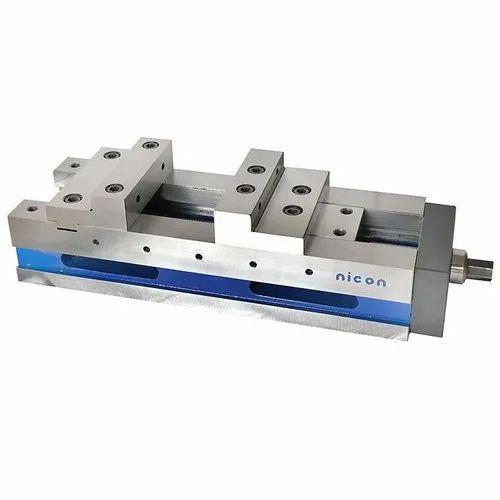
MILL Centric Vice vs Normal Vice

1st question is We changed the jaw ms to aluminium then milling a round profile (we don't use jaw) then center pitch will be changed if that round diameter is plus side or minus side that's why we are planning to buy a centric Vice where once you set then pitch can't get variation because both side moves when we are load a little big diameter. Is that problem will sort out or not ?

2nd question is when we are doing second operation minimum it'll get .08 taper for 2nd side facing operation but I think force comes from one side that's why get taper

But if we use centric Vice forse will comes from both side so can we expect less than 0.02 taper ?

I'm a fresher Kindly help me to get my point

12 Upvotes

12 comments sorted by

5

u/[deleted] 7d ago

Neither of those are centric vices.

2

u/Aravinth_R 7d ago

I don't know but my question is if both side comes tapper avoid and center point will come centre that issue will solve or not

1

u/[deleted] 7d ago

Your taper comes from your vice not being adjusted properly. The centre hole in the moving jaw has a screw to adjust that. The second picture that you posted LOOKS like a self-centreing vise, but you can see that it's engaged in a slot in the fixed jaw. If you got an actual centering vise, yes, it would help with material discrepancies.

5

u/Unklecid 7d ago

Adjust the float on your vice and beat it down on the parallels or whatever with a dead blow

1

u/Aravinth_R 7d ago

Can't understand sir

2

u/Unklecid 7d ago

Beat the part down into the parallels

1

u/Aravinth_R 7d ago

I did but always taper comes like sometimes .04 something 0.4

1

u/Impossible_Brief5600 7d ago

A self-centering vise answers the first question and not the second. With one fixed jaw the centre moves by half the diameter variation, so 0.1 mm of difference in the round stock shifts the pitch 0.05 mm; a true centric vise moves both jaws and holds the centreline. That part of the plan works, provided the jaws are adjusted to move equally.

Taper on the second op is in Z, not X, and centering does nothing for it. At 0.08 mm the usual cause is the part not seated: a chip or burr under it, the moving jaw lifting it off the parallels, or a jaw that is not parallel to the table. A centric vise has two moving jaws and can lift at both ends, so it will not cure that by itself. Stone the jaws and the part face, clamp a known square block with a consistent force, tap it down on the parallels, and indicate along the top of the fixed jaw. Then face a test block in the vise and an identical block clamped straight to the table: if the table block is flat and the vise block tapers, the vise or the seating is the cause, and if both taper the head is out of tram. Over 100 mm, 0.08 mm is 0.8 mrad, which the seating and the machine explain more easily than the vise does, and the taper should come under 0.02 mm once those are fixed.

1

u/Aravinth_R 5d ago

We do exact profile on a vice so it fits perfectly. So all side good surface then how can we get a taper ?

1

u/Impossible_Brief5600 5d ago

The profile jaw is the datum now, so any angle in it goes straight into the second-op face. Jaws cut in a different vise or a different clamping position sit slightly off square to the table, and 0.08 mm across a 40 mm face is only 0.11 degrees - small enough to pass a visual check and large enough to lose the tolerance. Cut the profile jaws in place, in the same vise and at the same jaw positions used for the run, and face the pair so the pocket floor is parallel to the table by construction.

Then separate machine from vise: face a scrap block, sweep the cut with a dial indicator on a magnetic base, and the reading is spindle-to-table squareness. A head out of tram repeats the same taper on every part and no vise change removes it. A full profile pocket also clamps the finished walls all round, so leave 0.1-0.2 mm clearance on the non-locating side or the part springs as the jaws close.