r/DeepStateCentrism • • 9h ago

Discussion Thread Daily Intelligence Brief

2 Upvotes

New to the subreddit? Start here.

This is the Brief. Post whatever here.

You can post and comment outside of the Brief as well.

You can subscribe to ping groups and use them inside and outside of the Brief over a range of topics. Click here to set up your preferred PING groups.

Are you having issues with pings, or do you want to learn more about the PING system? Check out our user-pinger wiki for a bunch of helpful info!

The Brief has some fun tricks you can use in it. Curious how other users are doing them? Check out their secret ways here.

We have an internal currency system called briefbucks that automatically credit your account for doing things like making posts. You can trade in briefbucks for various rewards. You can find out more about briefbucks, including how to earn them, how you can lose them, and what you can do with them, on our wiki.

Every day, the user with the most down voted post wins the Nobel Brief Prize.


r/DeepStateCentrism • • Oct 08 '25

Briefbucks Request Thread

6 Upvotes

Make all briefbucks-related requests to the moderators within this post.


r/DeepStateCentrism • • 1h ago

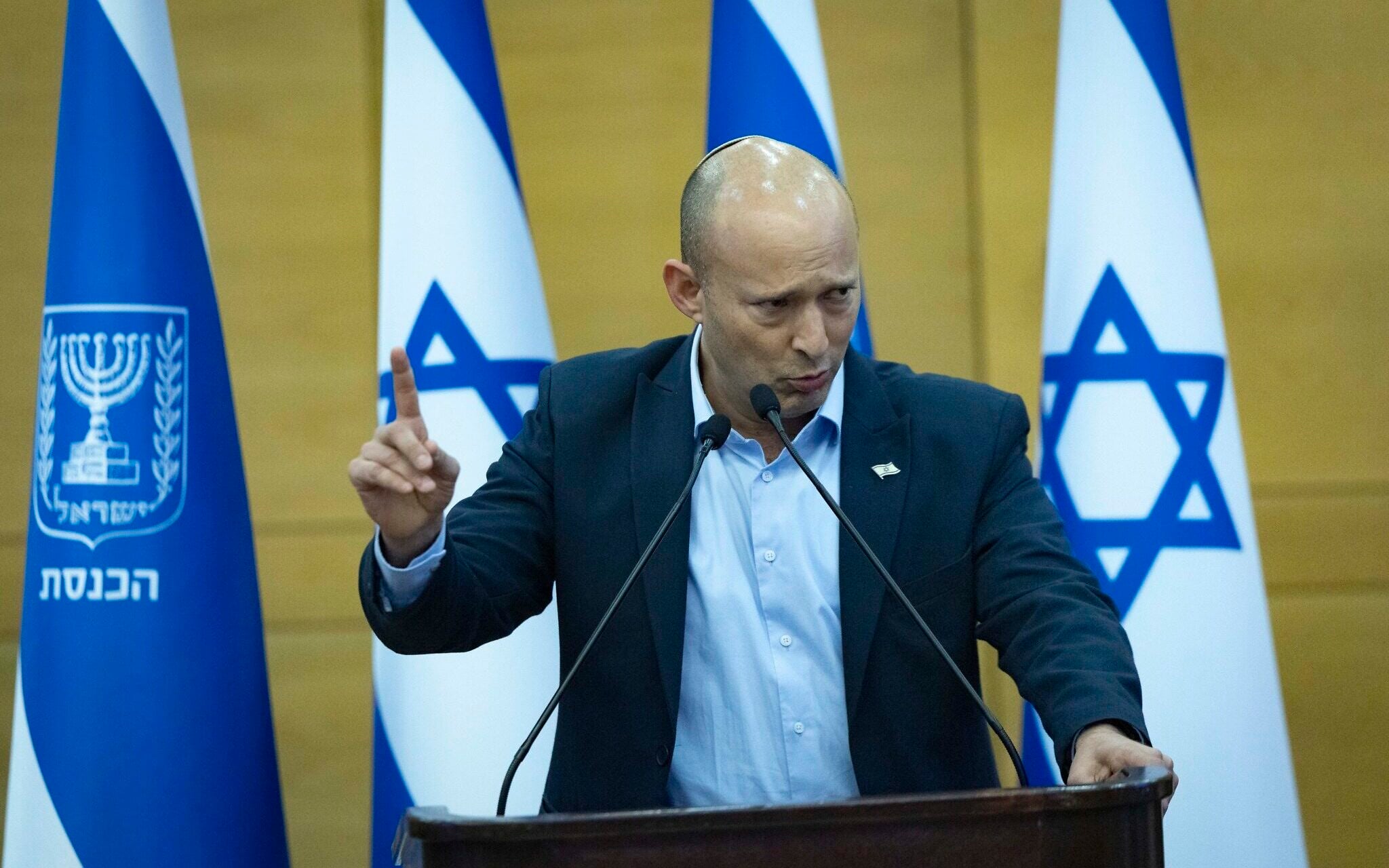
Global News 🌎 Herzog says settler violence ‘an assault on God himself’; Bennett blasts ‘Jewish terror’ (Times of Israel)

Thumbnail
timesofisrael.com
44 Upvotes

President Isaac Herzog on Monday condemned Jewish extremist attacks on Palestinians in the West Bank as “despicable” and an assault “on God himself,” while former prime minister Naftali Bennett accused the government of turning a blind eye to “Jewish terrorism” following a wave of settler violence over the weekend.

“There is no room for ambiguity here – violence by Jewish extremists against innocent people and communities in the West Bank — Judea and Samaria — or anywhere else, is despicable and deserves strong condemnation,” Herzog told the ELNET Jerusalem conference.

He called it “an assault not only on human beings, created in the divine image, but on the ethical way we carry [ourselves], on our history as a people, and on God himself. It most certainly does not represent Israel.”

The remarks came after extremist settlers were accused of setting fire to a dozen vehicles and several homes in Palestinian villages near Ramallah on Saturday night.

Israel faces growing international pressure over settlement expansion and surging settler violence against Palestinians, with Britain and other European countries demanding accountability and Australia imposing sanctions targeting, among others, those supporting violent settlers.

US House Democratic leader Hakeem Jeffries on Sunday called for sanctions against violent settlers in the West Bank.

At home, Bennett and other opposition leaders have accused Prime Minister Benjamin Netanyahu’s government of failing to act.

Palestinian men inspect torched vehicles following a reported rampage by Israeli settlers in the West Bank village of Kufr Malek, east of Ramallah, November 22, 2026. (AP Photo/Mahmoud Illean)

The president told the audience of foreign diplomats and lawmakers that “our law enforcement agencies are working diligently to scour this terrible moral stain and arrest, investigate, and prosecute any perpetrators of violence to the fullest extent of the law, in line with our values as Jews, as Israelis, and as human beings.”

Herzog had previously warned Netanyahu and senior officials about the consequences of unchecked settler violence. In a letter he wrote last month, Herzog cited shortages of manpower and enforcement tools and called for stronger measures, including widespread arrests and administrative detention, warning that “without visible enforcement and real deterrence, we will arrive at a disaster.”

Bennett and Eisenkot slam government response

Bennett, chair of the B’Yachad party, condemned what he called “despicable Jewish terrorism,” saying the attacks were contrary to Jewish moral values and posed a threat to the future of Israeli settlements in the West Bank.

He also called the violence “yet another resounding failure of the outgoing government,” accusing its leaders of turning a blind eye to the attacks and canceling administrative detention orders against Jews “for a few votes in party primaries.”

Former prime minister Naftali Bennett speaks during a celebratory toast marking MK Matan Kahana’s election as speaker of the 26th Knesset, in Jerusalem, November 17, 2026. (Chaim Goldberg/Flash90)

Suspects can be held in administrative detention for months on end with no trial, with the tool typically used against Palestinians when there is not enough evidence for a regular arrest warrant. Its use against Jewish suspects has been rare, and Defense Minister Israel Katz ended the practice entirely upon taking office in November 2024, amid a sharp rise in settler violence against Palestinians.

“We will put an end to this anarchy,” Bennett said, pledging to “restore Israel’s standing in the world, support IDF soldiers and ensure that a violent fringe does not endanger the many good citizens.”

On Saturday, he reaffirmed his support for a unity government led by Yashar chair Gadi Eisenkot that would include Likud, while insisting that Netanyahu must not remain prime minister. His declaration followed a meeting with Netanyahu on Wednesday that had fueled speculation he might break with Eisenkot’s bloc.

MK Gadi Eisenkot, head of the Yashar party, speaks at the Knesset in Jerusalem on November 17, 2026. (Chaim Goldberg/Flash90)

Eisenkot, who has been tasked with forming a government following last month’s elections, described the latest arson attacks as “Jewish terrorism in every sense of the word” and accused National Security Minister Itamar Ben Gvir, who oversees the police, and Finance Minister Bezalel Smotrich, who also oversees settlement affairs in the Defense Ministry, of bringing the West Bank to the brink of anarchy.

He called on authorities to use all available measures, including administrative detention and targeted Shin Bet operations, to stop the perpetrators.

Katz insists police must handle settler violence

Katz, meanwhile, continued to insist that all aspects of settler violence in the West Bank must be handled by the Israel Police rather than the army.

In his first comments more than a day after the latest attacks, Katz said the “ongoing violence by a handful of rioters” in the West Bank was “grave in every respect.”

However, he asserted that “The IDF does not need to, nor is it capable of, enforcing civil law on the Jewish population in Judea and Samaria (West Bank), which is growing every year.”

Defense Minister Israel Katz walks at the Knesset in Jerusalem on the opening day of the 26th Knesset, November 10, 2026. (Chaim Goldberg/Flash90)

“Therefore, in accordance with my directive, the IDF has formulated a plan to transfer responsibility for criminal civil law enforcement in Judea and Samaria to the Israel Police, which will be reinforced and make the necessary preparations,” he said, referring to an order he issued in August that was widely seen as impractical, because Israel has never formally annexed the West Bank.

Katz claimed that “police have the appropriate tools to handle prevention, investigations, arrests, and criminal prosecution of those who break the law,” even though police forces are stretched thin in the West Bank.

The defense minister for the caretaker government added that the army “should be engaged in defending the borders, operations against Palestinian terrorism and protecting Israeli communities.”

Separately, an unnamed senior Israel Defense Forces officer sharply condemned the settler violence in remarks to Channel 13 on Monday.

“This is an army of terror that could have consequences for the entire Middle East,” the officer told the network.

Settler attacks during olive harvest up 74% in two years

According to an Army Radio report Monday, data held by security forces indicates this year’s olive harvest saw 181 reports of attacks by Israeli settlers on Palestinians, compared to 145 in 2025 and 104 in 2024.

Officials cited by the radio station said the incidents had also grown more severe.

Last week, the IDF said that “areas of friction” — meaning attacks by Israelis on Palestinians — accounted for only “a few percent of the olive-harvesting areas,” insisting that the vast majority of coordinated harvesting at sites under army protection proceeded without incident.

The Yesh Din NGO reported that more than 1,100 incidents of settler violence had taken place since the start of the harvest, including 483 directly related to the harvest.


r/DeepStateCentrism • • 1h ago

Opinion Piece 🗣️ Why does Britain tolerate Islamist groups allied to Iran’s murderous regime? (The Jewish Chronicle, Stephen Pollard)

Thumbnail thejc.com
22 Upvotes

If you have a spare few hours on December 13, you might want to pop along to the Islamic Human Rights Commission's (IHRC) conference on Artificial Intelligence and Islamophobia. It sounds great: “Gaza has been described as the world’s first AI-assisted genocide. Allegations abound that Israeli authorities have used Artificial intelligence to collect data, locations and to target Gaza for maximised infliction of casualties, including on women, children and other innocent Palestinians. It is further speculated that western countries have been deferential to Israel’s Gaza campaign to learn how to use AI effectively in their own projects of violence, both within their own respective countries and elsewhere, even beyond efforts currently underway.”

Then again, as Peter Cook used to say: I’m sorry I won’t be able to make it as I’ll be watching TV.

The problem is it’s no joke. The Islamic Human Rights Commission – an example of whatever is the opposite of nominative determinism – is one of those organisations which exists in the West (specifically, here in the UK) to destroy the West, and which we allow to go about its business as if it was entirely normal. Until it was banned this year by the Home Secretary, the IHRC organised an annual “Al Quds Day March” in support of the Tehran regime. The Met asked for a ban given the record of arrests for supporting terrorist organisations and for antisemitic hate crime at previous marches. A static rally went ahead on March 15 with twelve arrests.

According to Sir William Shawcross’s review of Prevent in 2023, the IHRC, which is based in Wembley, is "an Islamist group ideologically aligned with the Iranian regime". The very same paragraph in the report records that the trust which funds it received £10,000 of public money during the pandemic and according to the Telegraph, the trust has to date received taxpayer-funded Gift Aid donations of at least £450,000 since 2020.

The Islamic Human Rights Commission (IHRC) Trust is recognised by HMRC for Gift Aid and can claim an extra 25p from the Government for every ÂŁ1 it receives in donations. The IHRC Trust is one of four such charities recognised by HMRC which are identified in a report on Iranian influence in the UK by Lord Walney, the former independent adviser to the government on political violence.

Of its ÂŁ642,254 income in the year to June 2025, it handed over nearly ÂŁ520,000 to IHRC Ltd.

The IHRC is open about at least one side of its activities, saying it believes “Israel is a racist, colonialist, apartheid enterprise that needs to be dismantled and replaced with a single state that represents Muslims, Christians and Jews”.

It will surprise no one that one of the keynote speakers at its December conference will be Saied Reza Ameli, the former Islamic Revolutionary Guard Corps (IRGC) commander behind a strict enforcement of rules over women's clothing and the wearing of the hijab that led to widespread protests and hundreds of deaths. Ameli was secretary of Iran's Supreme Council of Cultural Revolution from 2019 to 2023. In that time, Iran’s morality police were ordered to crack down on women who failed to wear their hijab properly, which led to the death in police custody in September 2022 of Mahsa Amini, 22. Her death led to demonstrations in which at least 476 protestors were killed by security forces. Ameli remains a member of the Supreme Council of the Cultural Revolution.

The Charity Commission is currently investigating the IHRC Trust over its links with the non-charitable Islamic Human Rights Commission. Ameli was the founder of the IHRC in 1997 and was director of its Board of Trustees between 2006 and 2022, having studied at Royal Holloway University of London. In 2001 he received a doctorate from the university.

He was sanctioned in Canada – but not in Britain – for “gross and systematic human rights violations in Iran, including through the lethal suppression of demonstrations across Kurdish areas of Western Iran”.

According to Kasra Aarabi, Director of IRGC Research at United Against Nuclear Iran and a regular in these pages, Ameli has been a key member of the Supreme Council for Cultural Revolution, which “facilitated and oversaw a strategic agreement with the IRGC, granting it maximum access to academic relationships between Iranian and Western universities. This created a mechanism through which the IRGC exploits partnerships between Iranian and Western universities to procure sensitive and dual-use research for its military programmes. The IRGC has used such arrangements to procure sensitive research for the development of its lethal drone programme, including from British universities. These are the same drones now being deployed in conflicts across the Middle East and Ukraine.

“Crucially, the strategic agreement, in which Ameli was involved through his senior role on the Council, explicitly identifies the IRGC’s procurement priorities, including artificial intelligence. Someone with Ameli’s background and connections should never have been allowed to enter Britain, let alone establish organisations here.”

I’ve focused on Ameli and the IRGC, but they are merely one example of our failure to deal properly with the threat to the West posed by many other organisations which were founded in and operate in the UK. A JC investigation in 2023 identified eight IRGC figures who have addressed UK student audiences since early 2020, hosted by the Islamic Students Association of Britain. One of them, Saeed Ghasemi, denied the Holocaust and urged listeners to join an end-times war on Jews. Successive governments have talked a good game about security but the presence of the IHRC and its fellow travellers are real time proof of how hollow those words are. The Muslim Brotherhood, for example, remain unproscribed and free to operate.

According to the IHRC: “Professor Ameli is a brilliant and sincere academic who has consistently taken an inclusive approach to his work. He has championed multiculturalism and sought to foster understanding between different worldviews, a position that has even led to accusations of being pro-Western in his own country. He has also been critical of the retreat of multiculturalism in the West.”


r/DeepStateCentrism • • 3h ago

Opinion Piece 🗣️ Nvidia and Trump’s State Capitalism (WSJ Editorial Board)

Thumbnail wsj.com
17 Upvotes

r/DeepStateCentrism • • 1h ago

Research/ Policy 🔬 California raised minimum wages for fast-food workers

Thumbnail
finance.yahoo.com
11 Upvotes

Even before the 2026 midterm elections delivered a clear message about cost-of-living concerns, many states had been raising their minimum wage on their own as one way to increase workers' purchasing power. And some have taken a more targeted approach, setting wage floors for specific industries.

As the example of California shows, however, these initiatives can produce mixed results.

In April 2024, California began requiring fast-food chains with at least 60 locations nationwide to pay a minimum wage of US$20 an hour, $4 above the statewide minimum at the time. The governor's office estimated that more than 500,000 workers would be covered by this mandate.

As a researcher of health and labor markets, I joined with economists David Neumark, Gary Wagner and Vitor Melo to run a study measuring the impact on California's fast-food industry – specifically, whether restaurants employed fewer workers because of the ensuing higher labor costs.

We found that the answer depends on which establishments you look at.

For the state as a whole, the law didn't affect employment in any statistically detectable way, we concluded. But smaller chains did take a hit, with employment falling by roughly 20%, while the number of locations dropped by about 10%. New openings fell by 17%-20%, and closures rose by 9%-21%.

This employment decline comes almost entirely from fast-food chains ceasing to operate in California, rather than from staffing cuts at the locations that remain.

The impact of minimum wage hikes holds importance far beyond the fast-food sector. Their proponents point to the fact that the federal minimum wage of $7.25 an hour has stayed unchanged since 2009 and argue that states and municipalities need to take action on their own.

Los Angeles is phasing in a $30 wage for hotel and airport workers, while California's healthcare workers just received another scheduled increase. Vermont lawmakers have proposed a $20 fast-food wage of their own.

In addition, a total of 16 states will raise their minimum wages across the board on Jan. 1, 2027.

The question of whether and how minimum wages affect employment still provokes a vigorous debate among economists.

In California's case, some researchers have found that lifting the minimum wage caused small declines in employment compared with other states; others contend that the effect on jobs is essentially zero.

More broadly, some researchers have found that minimum wage hikes cost jobs. But the time horizon matters, and effects tend to get larger in the long run.

Our study didn't try to settle that disagreement. Instead, we wanted to find out how employers did adjust, and whether large and small chains responded differently. What happens when higher minimum wages raise one sector's costs and prices while its closest substitutes – such as sit-down restaurants – keep paying the lower statewide minimum wage?

We relied on a database that recorded every business location in the country by name, along with the number of employed workers, each year. That let us directly identify the chains that were subject to California's law, count each chains' national footprint to apply the 60-location rule, and track outcomes from 2019 through 2025: total employment, employment at locations that stayed open, the number of locations, and openings and closures.

We also compared California with other states and separately compared each chain's California restaurants with the same chain's restaurants elsewhere. Finally, we divided the covered chains into two groups: The 20 largest, which account for about 60% of covered jobs, and the 261 smaller ones.

For the state as a whole, we found that employment at covered restaurants was basically unchanged, and employment at restaurants that stayed open didn't change. Among the 20 largest chains, there was no detectable effect at all for any of the measures we tracked over this period.

But the smaller chains tell a different story, recording substantial declines in employment, locations and openings, while closures rose.

How to reconcile the flat statewide numbers with the sharp effects on smaller chains? The largest chains employ most of the workers affected by the new minimum wage rule, so the statewide total is dominated by them. And the reduced entry and higher exit among smaller chains may have eased competitive pressure on the largest ones.

A final point: The biggest chains tend to be the most automated, relying more on equipment such as self-serve kiosks that can reduce the number of workers needed. That may help explain the muted employment response among these larger businesses.

First, we caution that the absence of a clear short-run effect on total employment doesn't prove that the policy won't cause bigger job losses over time as companies adapt to the new law. We also can't answer what happened to the workers at the most affected restaurants or what happened to prices at those establishments, although other research suggests they rose by 3% to 4%.

That said, the law was implemented barely 2½ years ago, and some of the larger effects that economists might expect – such as the closure of labor-intensive restaurants or fewer openings – are already apparent among smaller chains.

Second, it's important to remember that California's fast-food minimum wage applies only to chains with 60 or more locations. So the smaller chains in that range likely lack the scale, automation and pricing power of the national brands and are most sensitive to the new wage floor. Indeed, the law appears to have shifted California's fast-food market toward its largest chains, a pattern that other researchers documented in a similar study that looked at Germany's national minimum wage.

For the cities and states now weighing wage floors of their own, the California evidence isn't a slam dunk either way. It shows that the costs, broadly speaking, fall first on the smaller chains covered by the law – but whether it meaningfully impacts the largest chains is unclear.


r/DeepStateCentrism • • 1h ago

Opinion Piece 🗣️ The Welfare State and Britain’s Idle Youth (WSJ)

Thumbnail wsj.com
11 Upvotes

Britain has a crisis of unemployed young people caused by welfare-state failures, and the government finances are in disarray. So the obvious solution is . . . more entitlements for the young? Behold Europe’s social-welfare meltdown in a nutshell.

Nearly a million young adults in Britain aren’t working, pursuing higher education or in job training. To his credit, former Prime Minister Keir Starmer was alarmed enough about this that he commissioned Alan Milburn, a respected Labour expert on social welfare, to investigate. Mr. Milburn published his report last week, and the main conclusion is that youth joblessness has risen as government policies made hiring young people more expensive and generous disability benefits made not working easier.

Mr. Milburn describes a “new phenomenon of youth detachment,” which is British understatement at its best. One in eight Britons younger than 25 are idle. Most have never held a job and aren’t looking for one. Many support themselves with disability-linked welfare benefits, primarily for vaguely defined or overdiagnosed behavioral or mental-health conditions such as anxiety, depression, ADHD or autism. The number of young people claiming a disability benefit is expected to quadruple by 2037 relative to its 2012 level.

Aggressive increases to the minimum wage in recent years are another major culprit, and a central fact in this report is that wage costs for an 18- to 20-year-old employee have risen 65% in the past five years. Increases in the payroll tax (called “national insurance”), split between employees and employers, have hit industries such as hospitality and retail that have thin profit margins and employ young people.

The Milburn report highlights the human and economic costs of this. Spending for working-age disability and incapacity benefits rose 46% in real terms from the 2018-2019 fiscal year, to £55 billion (nearly $72.5 billion) in 2024-2025—and it’s on track to rise to £68 billion in the next four years.

Worse, young people who don’t work lose the opportunity to develop skills, and the economy loses productivity. Dependency weighs on these young welfare beneficiaries, fostering frustration over “lost opportunities, lost earnings, lost confidence and lost purpose,” Mr. Milburn writes. His report exposes a troubling hopelessness among the country’s unemployed youth.

Alas, the Milburn report also exposes how hard it is to fix any of this. Mr. Starmer in 2025 tried to reform the disability-welfare system. But that failed amid a revolt from Mr. Starmer’s (and Mr. Milburn’s) own Labour Party.

Mr. Milburn oddly doesn’t recommend immediately cutting payroll taxes, which he estimates would require the government to forgo £5 billion in revenue per year. He instead proposes spending even more, such as £5.8 billion ($7.6 billion) in annual government “investment” in youth productivity by fiscal 2036-37. He calls for some £1.1 billion a year for hiring, wage and retention subsidies for employers. There’s no evidence these programs will work, since nothing like them ever has.

In other words, to make up for the harm from subsidies and mandates that punish work, Mr. Milburn wants more subsidies and mandates to coax the young to work. That’s Europe’s welfare crisis in technicolor, and young Europeans will continue to be its victims.


r/DeepStateCentrism • • 9h ago

Research/ Policy 🔬 Shapiro/Emanuel 2028 would be a Democratic dream ticket. Far fetched, but worth dreaming about.

Post image
31 Upvotes

r/DeepStateCentrism • • 1h ago

Research/ Policy 🔬 Which justices favor the Trump administration the most (and least) on the emergency docket? (ScotusBlog, Adam Feldman)

Thumbnail
scotusblog.com
5 Upvotes

When the Supreme Court rejected President Donald Trump’s attempt to remove Federal Reserve Governor Lisa Cook in June, the justices divided in a manner that would have been difficult to predict from some perceptions of the court. Chief Justice John Roberts and Justice Brett Kavanaugh joined Justices Sonia Sotomayor, Elena Kagan, and Ketanji Brown Jackson to leave Cook in office while the case proceeded. Justices Clarence Thomas, Samuel Alito, Neil Gorsuch, and Amy Coney Barrett dissented. The administration lost, but the court’s disagreement did not reflect the familiar ideological split.

Four months later, the administration lost another emergency application, this time in a dispute over medical care for transgender federal prisoners. In Trump v. Kingdom, Thomas and Alito indicated that they would have granted the requested stay, but no other justice publicly held that position. Unlike Trump v. Cook, which produced a signed opinion after oral argument, the Kingdom order disclosed nothing about the reasoning or votes behind the court’s denial.

The contrast points to a recurring theme of the Supreme Court’s emergency decisions: Although the conservative justices are often lumped together as “pro-Trump,” their rulings can depend on whether the dispute concerns immigration, presidential removal authority, federal spending, or the scope of emergency relief. And whereas some justices have supported federal executive positions at broadly similar rates across presidencies, others appear far more likely to do so depending on whether the president is a Republican or Democrat.

The prior article in this series examined how frequently the Trump and Biden administrations prevailed. In turning to the individual justices, I reviewed federal executive-action decisions from 2017 through November 12, 2026, consolidated into 106 distinct substantive decisions. The three administrations account for 32, 36, and 38 decisions, respectively.

There is a very important qualification throughout: the court often publishes emergency orders without identifying each justice’s vote. The analysis thus assigned a justice to the court’s majority ruling when they were silent, absent an express position or other evidence indicating otherwise.

So what can we say about the different justices’ support for the Trump administration on the emergency docket?

Different presidents, different justices

The most consistent record belongs to Roberts. He aligned with federal executive positions in 23 of 31 eligible decisions during Trump’s first administration, 26 of 36 under Biden, and 28 of 38 during Trump’s second administration. Those figures amount to 74%, 72%, and 74%. The disputes changed markedly, but Roberts’ aggregate willingness to leave the federal government’s position intact – or grant it relief – barely moved. In other words, Roberts has typically supported executive power on the emergency docket regardless of who is president.

The next most consistent justice, Barrett (though with a much lower sample size), aligned with Biden in 69% of her eligible decisions and Trump II in 78%. Third was Kavanaugh, with rates of 78%, 67%, and 79%. Then came Gorsuch, with rates of 83%, 54%, and 84%.

Thomas and Alito present a very different picture. Thomas supported the executive in 83% of eligible Trump I decisions, 39% under Biden, and 92% under Trump II. Alito’s corresponding figures were 83%, 47%, and 92%.

The liberal justices show the opposite movement, although their individual records differ. Kagan supported executive positions in 43% of eligible Trump I decisions, 94% under Biden, and 24% under Trump II. Sotomayor’s rates were 27%, 94%, and 16%. Jackson, who joined the court during Biden’s presidency, supported its executive position in 21 of 24 eligible decisions (88%), compared with three of 38 (8%) under Trump II.

The figure above makes these distinctions particularly clear. Roberts remains between 72% and 74% across the three periods, while Thomas’ support moves from 83% under Trump I to 39% under Biden and 92% under Trump II. The middle group of Barrett, Kavanaugh, and Gorsuch is more varied, but each supported Biden’s executive position more frequently than a simple Republican-versus-Democratic framing might suggest.

These numbers are telling, but they do not establish the reasons for why the justices decided as they did. For example, a president defending an environmental rule presents a very different legal issue from one seeking permission to remove an independent agency official. To determine how much of the observed variation is associated with presidential identity, the next step is to examine the kinds of cases that produced it.

The issues that unite and divide the justices

Immigration provides a useful point of comparison because it generated substantial emergency litigation under all three administrations. Roberts supported the executive in 10 of 11 immigration decisions under Trump I, three of six under Biden, and 11 of 13 under Trump II. Thomas supported the government in 10 of 10 eligible Trump I immigration decisions, two of six under Biden, and 12 of 13 under Trump II. Kagan’s comparable figures were six of eleven, six of six, and five of 13.

This is revealing. Roberts and Thomas both supported Trump’s immigration positions at high rates but not as much when Biden defended his administration’s policies. Kagan and Sotomayor supported Biden in all six coded immigration decisions, then opposed most of Trump II positions. But there is, of course, a key caveat: This category covers different immigration rules, as opposed to simple support for one president over another.

Public-health and related health litigation under Biden revealed a sharper division within the conservative majority. In 10 eligible health-coded decisions, Roberts and Kavanaugh each supported the federal executive in seven, compared with one each for Thomas and Alito. Barrett supported it in five; Gorsuch in two. Kagan and Sotomayor each supported the government in nine such cases. (Jackson’s two favorable positions came from only three eligible decisions in this category, making her figure much less informative.)

The court’s January 2022 vaccination decisions supply a concrete example. Roberts and Kavanaugh joined the liberals in allowing the administration to enforce a vaccination requirement for workers at healthcare facilities receiving Medicare or Medicaid funding, while Thomas, Alito, Gorsuch, and Barrett dissented. On the same day, Roberts and Kavanaugh joined the conservatives in blocking OSHA’s broader vaccination-or-testing standard. To Roberts and Kavanaugh, health litigation was clearly treated issue-by-issue.

Let’s move on to personnel decisions, or the president’s control over the executive branch. In the nine Trump II personnel and removal decisions, Thomas, Alito, Gorsuch, and Barrett supported the executive in eight, while Roberts and Kavanaugh did so in seven. In four foreign-affairs and national-security decisions, Thomas, Alito, and Gorsuch aligned with the government in all of these, compared with two for Roberts and Barrett.

Subject matter therefore helps explain how things break down. The same conservative justice may support emergency intervention in a dispute over immigration enforcement while resisting it in a case involving agency regulation. The legal authority being asserted, the posture of the case, and the requested remedy all shape the decision.

The coalitions inside the conservative majority

So which justices most frequently aligned? At the front of the pack are Thomas and Alito, who agreed in all 38 coded Trump II decisions. Their alignment is particularly visible when the administration lost. In seven events, both of their positions favored more relief for the administration than the majority granted or would otherwise provide.

Other pairings are almost as cohesive. Roberts and Barrett agreed in 35 of 36 Trump II decisions (97%). Roberts and Kavanaugh agreed in 36 of 38 of these (95%), as did Gorsuch and Kavanaugh. The next figure displays those pairings alongside the liberal and cross-ideological relationships. The high agreement rates show how often the conservatives arrive at the same apparent disposition, but the exceptions reveal competing views about the scope of emergency judicial intervention.

The foreign-assistance dispute in Department of State v. AIDS Vaccine Advocacy Coalition, for instance, separated Roberts and Barrett from Thomas, Alito, Gorsuch, and Kavanaugh. The four dissenters would have granted the administration relief from an order requiring payment for foreign-aid work already completed. Roberts and Barrett did not join that position. Their disagreement concerned what a district court could require of the government while the underlying funding litigation continued.

A different alignment emerged in NIH v. American Public Health Association. There, the court granted partial relief in litigation over terminated research grants. Thomas, Alito, Gorsuch, and Kavanaugh would have granted the administration’s request in full, while Roberts joined Sotomayor, Kagan, and Jackson in seeking to deny it altogether. Barrett supported an intermediate outcome.

In Cook, the division shifted again. Roberts and Kavanaugh joined the liberals in rejecting the administration’s attempt to immediately remove a Federal Reserve governor, while Thomas, Alito, Gorsuch, and Barrett dissented. In Trump v. Illinois, concerning the Trump administration’s deployment of National Guard forces, Thomas, Alito, and Gorsuch disagreed with the court’s denial of relief to Trump, while Kavanaugh concurred in the judgment on narrower grounds.

The evidence points toward distinctive approaches to removal authority, spending, the judicial supervision of agencies, and emergency remedies. Justices who agree in one field can diverge in another, and partial orders sometimes put a justice between two groups seeking opposing forms of relief.

The liberal justices and the unusual alliances across ideological lines

The three liberal justices also exhibited some meaningful disagreements. Under Trump II, Jackson aligned with the executive in only three of 38 emergency decisions (8%), compared with six for Sotomayor (16%) and nine for Kagan (24%). Kagan and Sotomayor agreed in 35 of 38 such decisions; Kagan and Jackson in 32. The differences are not as dramatic as those dividing the conservatives, but they complicate the assumption that the liberal trio behaves as a single bloc in every emergency dispute.

Their publicly registered dissents differ as well. Jackson expressly opposed a Trump II executive position in 26 decisions, Sotomayor in 23, and Kagan in 20. In FCC v. Brown, for example, Sotomayor and Jackson publicly indicated that they would deny the agency’s stay application, while Kagan registered no public disagreement.

Trump’s second term has produced more than one identifiable cross-ideological alignment. The five-justice majority in Cook included Roberts, Kavanaugh, and the three liberals, while the NIH grants dispute placed Roberts and the liberals together against complete relief. Barrett also joined certain portions of Sotomayor’s dissent in Trump v. J.G.G., a dispute involving the Alien Enemies Act, although her partial join should not necessarily be counted as agreement with the liberals on the case.

These examples again highlight why the distinction between shared results and shared legal reasoning is important. A justice can favor the same outcome as an ideological opponent while arriving there for entirely different reasons (we see this with concurrences in merits cases all the time). Separate opinions can also reveal agreement on a particular procedural or statutory question even when the justices disagree on the ultimate relief. At the same time, the emergency docket makes these relationships especially difficult to measure comprehensively because many orders contain no individual vote information at all.

Where this leaves us

My analysis of the emergency docket shows a chief most reluctant to favor one administration over another, with Barrett and Kavanaugh following closely behind; Gorsuch acting more favorably towards the Trump administration, although not overwhelmingly so; Thomas and Alito disproportionately favoring Trump over Biden; and the three liberal justices acting as a near mirror image of Thomas and Alito – although to varied degrees.

We thus see a conservative majority whose members separate over particular exercises of federal power, a liberal bloc with distinguishable voting and dissent records, and occasional alliances that cross ideological lines.


r/DeepStateCentrism • • 20h ago

American News 🇺🇸 Nvidia Board Reinstated CEO Without Consulting Management (gift link)

Thumbnail
bloomberg.com
28 Upvotes

r/DeepStateCentrism • • 1d ago

Opinion Piece 🗣️ New York’s Problem Is Not Too Much Capitalism, But Too Little (City Journal, Adam Lehodey)

Thumbnail
city-journal.org
57 Upvotes

Site of the Waldorf Astoria and the Seagram Building, domicile of the mighty, both real and imagined—from J. P. Morgan to Tom Wolfe’s fictional Sherman McCoy—Park Avenue boasts some of the steepest urban land values in the world. Soon the avenue will welcome another high-profile addition: New York’s flagship government-owned grocery, the first step in fulfilling one of Zohran Mamdani’s most prominent campaign pledges.

Mayor Mamdani has touted the $30 million store—funded at taxpayer expense, it will pay no rent—as a remedy to rising food prices. A private operator will handle day-to-day management and be required to pass savings on to customers. But New Yorkers will still end up paying in other ways, including by being deprived of the better uses of land that could have supported apartments, offices, or other stores and that might have employed thousands.

A politics that sees land use decoupled from potential value imposes harsh costs—not only on the majority of renters, now paying over 30 percent of their income for housing, but also on small businesses. Mamdani isn’t alone in New York government in this misguided approach, however. New York State lawmakers, such as Julia Salazar, want to reintroduce a bill that would enact commercial rent stabilization across the city. Cea Weaver, whom Mamdani appointed to head the Mayor’s Office to Protect Tenants, previously led an organization that seeks to preclude housing from market forces entirely.

Whether applied to rents or food prices, these policies work the same way: they transfer resources to favored constituencies while ignoring the conditions that made those goods expensive in the first place. Worse, they suppress the price signals that would draw land, capital, and labor toward more productive uses. Mamdani actually has the diagnosis backward: New York’s problem is not too much capitalism, but too little.

New York City’s success has always depended on growth. Its density fosters commerce, helps workers find jobs and employers find talent, and spurs both cooperation and competition. But agglomeration requires room to expand. Throughout its history, the city has grown beyond the bounds of New Amsterdam—into Brooklyn, Queens, the Bronx, and Staten Island—and reinvented itself along the way, turning Manhattan’s sweatshops into skyscrapers and Fifth Avenue’s mansions into museums.

Political realities have made this process harder to sustain. Just 42 percent of New York City sits on privately owned land subject to market forces, according to my analysis of the city’s Primary Land Use Tax Lot Output (PLUTO) database, which details lot sizes and land-use categories. Another 24 percent is allocated to streets and rights-of-way, and 16 percent is devoted to parks, uses that contribute heavily to the city’s desirability and functionality. Seven percent is held by tax-exempt institutions such as hospitals and universities, and another 10 percent comprises other public property, including housing operated by the New York City Housing Authority (NYCHA) and facilities occupied by state and federal agencies. These figures reflect a two-dimensional view of the city—mapping ownership at the level of whole buildings.

A three-dimensional view, assessing the status of every unit on a given lot, provides a fuller picture: 38 percent of New York’s total housing stock is shielded from market exposure (See page 90, bottom chart). Analysis of PLUTO and of records from New York City’s Department of Finance and NYU’s Furman Center reveals 1,430,374 units subject to some form of rent stabilization, receiving taxpayer subsidies, or designated as public housing. In other words, New York lacks a free market for a significant minority of its housing stock; nonmarket mechanisms determine its allocation.

When people can trade freely, land uses are continually put to a competitive test. Guided by price signals, those who can put a parcel to better use will usually outbid lower-value uses, directing resources to their most productive ends. The baker outbids the shoemaker, seeing greater demand for bread and his own advantage in supplying it; the developer buys out a single-family owner, judging that apartments would deliver more value to more residents than a single home.

More than half of New York’s land is now effectively removed from this beneficial calculus. Regulations make transfers difficult or impossible; even when they occur, strictures prevent prices from adjusting to new uses. Without a mechanism to discover and allocate land to higher-value purposes, a city ceases to function.

Land markets perform well because they reward the most effective deployment of a scarce resource within legal limits like zoning. In New York City, private owners use permitted capacity more fully: my analysis of PLUTO data finds them about 6 percent more likely to build to the maximum allowed. In other words, if the law permits six stories, private developers are more likely to build all six.

Graphs by Alberto Mena

From this perspective, trying to curb high rents and food prices by removing ever more land from market forces is counterproductive. The alternative to using taxpayer funds to acquire land is to tackle the underlying cost drivers directly.

Consider food. Over the last decade, food prices in New York have risen 34 percent. Nationwide, they have gone up 32.5 percent, suggesting that many cost factors—such as tariffs and higher gas prices—lie beyond local control. Other factors, however, do not lie beyond local control: land policy is one. In manufacturing districts, where large supermarket sites are typically located, the city requires a special permit for stores of over 10,000 square feet, a costly proposition that invites politicians to extract concessions from developers. If the city instead allowed larger retail spaces across more districts, land would be cheaper to acquire. Greater competition and economies of scale would follow, and prices could fall.

Other factors also need attention. Union opposition and political pressure forced Walmart to abandon plans to open stores in the city in 2012, depriving consumers of a less expensive grocery alternative. Retail theft, meanwhile, remains above pre-pandemic levels, despite a decline in the first quarter of 2026—increasing security costs and deterring new entrants. Addressing these underlying drivers, too, would help make food cheaper. Mamdani’s approach merely shifts who pays and how, pushing costs elsewhere.

This reality is even more evident in housing, where so much of the city’s stock is fully or partially exempt from market pressures. At its most extreme, de-commodification would look something like what New York State Assembly member Claire Valdez, who is running for Congress, has called for: universal rent stabilization—an entire rental market effectively under public control.

That policy might superficially “improve” affordability but does so by making New York a less desirable place in which to live. It’s like taking aspirin for a wound: the pain might dull, but the injury will worsen until it’s treated. Who is best placed to make the most of a unit? In market-rate housing, landlords tend to rent to the highest bidder, and those tenants often put units to the most productive use. Prices are not arbitrary: workers pay more to live near their jobs; businesses pay more for locations that enhance what they offer—hence, for example, Cartier outbidding an Amazon data center on Fifth Avenue.

Rent stabilization shuts this process down: housing goes to whoever arrived first, and that tenant keeps it at a price increasingly detached from demand. In a typical market, an owner getting an offer well above a property’s value would likely sell, benefiting both parties; in New York, tenants often cannot be outbid, preventing owners and would-be occupants who value the unit more from transacting. The result is to lock in incumbent tenants on land that they do not own while pushing costs onto everyone else. The city’s most recent Housing and Vacancy Survey, conducted in 2023, found that where the median stabilized rent was $1,500, a market renter paid $2,000—meaning that the 62 percent in market units effectively subsidize the 38 percent in regulated units.

If operating costs don’t match revenue, landlords will either remove units from the market when they go vacant or declare bankruptcy. Even if the city acquired these buildings, moreover, the mathematical problem remains: rents would need to rise at least enough to match operating expenses if the building is to break even without subsidy. That has not been the reality in New York: the city has seen a decade of below-CPI rent increases, likely to continue this year. No surprise, then, that the city now counts some 50,000 vacant apartments, a growing number of rent-stabilized buildings are financially distressed, and maintenance is increasingly deferred.

Nowhere is this dynamic more evident than in the New York City Housing Authority’s portfolio. Here, rents are detached from market pressures, set at 30 percent of tenants’ income. NYCHA faces even weaker market discipline than other forms of regulated housing, producing striking inefficiencies. On some of the most valuable land in America, some 30 percent of NYCHA residents inhabit units with spare bedrooms; and only 63 percent of tenants pay on time, contributing to further shortfalls.

The agency thus struggles to keep up with maintenance and performs worse than any private landlord on would-be violations. Some $80 billion is now needed to maintain and restore the agency’s existing units, a figure likely inflated by lack of accountability to tenants and shareholders (NYCHA executives are accountable only indirectly, through political considerations), as well as corruption.

The same land dynamics apply here. Along with capital costs, subsidized at public expense, taxpayers bear the cost of land that could be developed more densely standing idle. The property, as City Journal contributing editor Howard Husock has long argued, is effectively “frozen”; time has stopped there. Things might be starting to change, however. At NYCHA’s Fulton & Elliott-Chelsea Houses, sitting on land worth $245 million, efforts are under way to redevelop the site more densely and add private units. Progress has been slow and impeded by legal battles, but recent trends suggest some recognition of the importance of markets and price signals.

The agency could go further—by expanding such developments or adopting a “right to buy” policy, as the United Kingdom did in 1980. That reform allowed residents to purchase their homes from local councils, restoring market allocation while attracting private investment for upkeep. Residents benefited, too, as they could realize gains when their homes appreciated.

Beyond NYCHA, a new paradigm has taken hold among young voters, political staffers, and even elected officials, who nominally support new housing. Last November, voters approved measures to ease the construction of new affordable housing across the city. Affordable housing is, of course, better than no housing, if one considers only aggregate units. But a more effective approach would be to develop land to its highest-value use and allocate it accordingly. Affordable housing, which depends on subsidies, is not truly “affordable”; its costs are simply shifted onto others.

New York City neither needs nor can sustain more socialism. Already, large swaths of its land are exempt from market forces. Policies such as commercial rent stabilization, rent freezes, universal rent control, and government-run grocery stores may carry electoral appeal, especially among younger voters, but they are counterproductive, worsening the very problems they aim to solve. By embracing market forces, especially in land use, New York can ensure a thriving future.  


r/DeepStateCentrism • • 17h ago

American News 🇺🇸 Emanuel suggests Schumer shouldn’t run for majority leader next cycle

Thumbnail
thehill.com
8 Upvotes

Former U.S. Ambassador to Japan Rahm Emanuel on Sunday suggested that Senate Minority Leader Chuck Schumer (D-N.Y.) should make it clear that he intends to serve only two years as majority leader.

“If I was Chuck Schumer, what I would say is, ‘I’m going to secure the majority, I am not going to run for majority leader next cycle, and I’m going to make sure other — the young voices and faces of this party — grow. That would take the tension out of this,” Emanuel told ABC News‘s Jonathan Karl on “This Week.”

Karl asked Emanuel if Schumer, who is facing a challenge from the left to lead the new Democratic majority, should serve as leader for the next two years.

“Yeah, just get it over with. Chuck Schumer is a friend, as is Chris Van Hollen, but this is not what people voted for,” the former Chicago mayor replied, referring to the Maryland senator seeking to replace Schumer as Democratic leader.

“They voted to get their lives better, not yours,” Emanuel added.

Emanuel, a potential 2028 Democratic presidential contender, has called for the age limit to serve in Congress to be 75. Schumer, who has led the Senate Democratic Caucus since 2017, turned 76 on Monday, while Van Hollen is 67 years old.

Emanuel also spoke highly of House Minority Leader Hakeem Jeffries (D-N.Y.), who is positioned to become the first Black Speaker in U.S. history. He said Jeffries’s ascension “is a statement about America that we should take pride in” and told progressive critics calling for different leadership to give “me a break.”

“We’re a coalition,” Emanuel said. “You’re going to tell the most loyal coalition partner, the African American community, that the moment in history –– you’re not going to get it? The Black vote is the most significant, most loyal, most dedicated part of the coalition. … It tells me when you vote against him, you don’t understand the politics of the Democratic Party.”

Schumer and Jeffries have both faced opposition from some incumbent and incoming Democratic lawmakers who have called for new leadership after the massive blue wave in this month’s elections.

Van Hollen told NBC News’s Kristen Welker on “Meet the Press” that his support among Democratic senators is “north of 15, and momentum is in our direction.”

Seven incoming House Democrats voted against Jeffries to become the next Speaker in an internal caucus vote last Wednesday. A coalition of progressive activists have petitioned to make Rep. Ayanna Pressley (D-Mass.) the next Speaker, garnering more than 167,000 signatures.

A Pressley spokesperson told Boston-based outlet WGBH that she “is aware of and appreciates the groundswell of support from people in her district and across the country lifting up her leadership.”


r/DeepStateCentrism • • 1d ago

American News 🇺🇸 Nvidia Board Reinstates Jensen Huang as CEO (gift article)

Thumbnail wsj.com
53 Upvotes

r/DeepStateCentrism • • 1d ago

Opinion Piece 🗣️ America’s Nuclear Renaissance (City Journal, Shawn Regan)

Thumbnail
city-journal.org
17 Upvotes

Four years ago, the operators of Michigan’s Palisades nuclear plant took its reactor offline for what they assumed would be the last time. The plant had generated electricity for more than half a century, but its long-term contract to sell the power was expiring, and its operator, Entergy, was leaving the merchant nuclear business. In May 2022, the company announced that it had permanently shut the plant down. Workers removed the fuel, and a new owner, Holtec International, took over to decommission the facility.

Today, workers are reversing the process. On August 30, Holtec began loading fuel back into the reactor, preparing to restore more than 800 megawatts of generating capacity—enough to power hundreds of thousands of homes. The plant is expected to return to service later this year or early 2027. If successful, it would be the first time a U.S. nuclear plant has been restarted after being retired and decommissioned.

For much of the past decade, the decline of atomic energy seemed inexorable. Plants were closing around the country. Indian Point, which supplied about a quarter of the electricity to New York City and Westchester County, was shuttered in 2021. Three Mile Island in Pennsylvania, the site of America’s worst commercial nuclear accident, closed its last reactor in 2019. California’s largest utility announced plans in 2016 to close Diablo Canyon, the state’s last nuclear plant.

Broad forces drove the decline. Cheap natural gas made nuclear less competitive, while renewable-energy mandates and subsidies drove investment toward wind and solar power. Electricity consumption in America had been essentially flat for nearly two decades. As the nation’s fleet of large reactors aged, it became harder to justify further investment. The decline was apparent enough for James B. Meigs to ask in these pages in 2019: “Have we reached the beginning of the end of the atomic era?”

The answer, it’s now clear, is no. After years of uncertainty, nuclear power is undergoing a genuine revival in the United States. Shuttered plants like Palisades are preparing to restart, while California has reversed course to keep Diablo Canyon running. Developers are working on new fuels, safety systems, and reactor designs, including small modular reactors (SMRs) and microreactors intended for settings beyond the traditional utility power plant.

Investment is powered by renewed electricity demand, driven largely by artificial intelligence and data centers. Microsoft is helping finance the restart of a reactor at Three Mile Island. Amazon has invested in developing small reactors. Google has contracted for nuclear power extending decades into the future. These companies need enormous quantities of electricity to train and run AI models. Nuclear’s ability to produce round-the-clock power on a small footprint and without emissions makes it well suited to meet those needs.

Federal policy has shifted as well, with support spanning both parties and several administrations. Congress passed nuclear-licensing reforms signed by Donald Trump in 2019 and Joe Biden in 2024. Trump’s first administration launched a program to help private companies demonstrate advanced reactors; the Biden administration subsequently provided financing for projects. Trump has since made expanding nuclear power a major energy-policy priority, moving to accelerate reactor testing and overhaul licensing rules at the Nuclear Regulatory Commission.

“The NRC is in the most comprehensive period of reform since the 1970s,” says Chairman Ho K. Nieh. The changes reflect how dramatically nuclear power’s fortunes have shifted—from an energy source that, not long ago, seemed politically, economically, and even technologically unviable to one now poised for a renaissance. That shift is due primarily to nuclear power’s ability to provide what America’s economy increasingly requires: a vast supply of steady, clean electricity delivered reliably to a grid experiencing rapidly growing demand.

Construction on a small modular reactor (SMR) site near Idaho Falls, Idaho (Josh Edelson/AFP/Getty Images)

Earlier hopes of a nuclear renaissance did not come to fruition. In the mid-2000s, developers proposed dozens of new reactors, but almost none was built. Only two, both at Plant Vogtle in Georgia, emerged from that wave.

Nieh attributes the failed revival to what he calls “the three Fs”: the financial crisis, fracking, and Fukushima. After the financial crisis, new plants became harder to finance. Developers had to commit enormous sums up front long before earning any return, and persistent delays and cost overruns bedeviled the industry. Meantime, the advent of hydraulic fracturing made natural gas cheap and abundant, which in turn made nuclear a less attractive long-term investment. Then, in 2011, a tsunami disabled backup power and cooling at Japan’s Fukushima plant, causing core meltdowns in three reactors. “Once Fukushima happened, that was a straw that broke the camel’s back,” he says. “All the interest in new builds just evaporated.”

Advances in reactor design and operations have made plants much safer, but by the 2010s, the industry had largely lost its ability to build new ones. The projects that did proceed were costly and slow. Plant Vogtle’s two new reactors were supposed to enter service in 2016 and 2017, for a combined price tag of $14 billion. When they finally came online in 2023 and 2024, it was at more than twice the expected cost. Today, America’s commercial fleet has fewer than 100 reactors, with an average age of about 44 years.

Even during the peak climate-hawk years of the mid-2010s, nuclear remained sidelined. Shutting down nuclear plants became a rallying cry for Green New Deal–era climate activists. States adopted renewable-energy mandates and subsidies that tilted the market toward wind and solar while generally excluding nuclear. Meigs described a “widespread belief that nuclear power simply isn’t necessary.” If wind and solar were about to take over, why keep a reactor open, let alone build more?

In New York, Governor Andrew Cuomo spent years trying to close Indian Point, portraying it as a danger to the New York metropolitan area. When its last reactor was about to shut down in 2021, his office issued a celebratory announcement. The closure, Cuomo said, moved New York “a big step closer to reaching our aggressive clean energy goals.” Yet, within a few years, natural gas had largely replaced the plant’s carbon-free output.

The reality is that wind and solar could not, on their own, replace Indian Point’s 24/7 generation. The grid still required a firm power supply when the wind stalled or the sun went down. By the time Indian Point closed, three new gas-fired plants had entered service in the region. Fossil-fuel generation has since replaced roughly 92 percent of the electricity lost from Indian Point.

Cuomo’s successor is now trying to reverse course. In a July interview, Governor Kathy Hochul called closing Indian Point “one of the biggest mistakes in the state’s history.” She is pursuing an “all-of-the-above” strategy that includes adding 5 gigawatts of new nuclear capacity—more than twice what Indian Point supplied.

The renewed appetite for nuclear power, however, does not by itself make a new plant financially viable. Investors must still account for licensing delays and changing requirements. “Regulatory predictability attracts investment,” says Nieh. “Capital will leave if the risks are too high.”

For advanced-reactor developers, that uncertainty includes how to satisfy requirements written for an earlier generation of nuclear technology. The NRC’s licensing framework was designed for the massive, water-cooled plants of the past. Today’s reactors, however, may use different coolants, fuels, or safety systems and don’t fit that mold. These companies have had to petition the NRC for exemptions from rules written for those older models, a process that can add years and additional layers of uncertainty.

“We’ve had our regulations in place for decades, and they’re not wine. They don’t get better with age,” Nieh says. “We’ve been trying to force-fit new technologies into these old frameworks that aren’t fit for [the] purpose.”

At 12:20 am on July 4, as the nation prepared to mark its 250th anniversary, engineers at Idaho National Laboratory had yet another reason to celebrate. A test reactor built by Aalo Atomics achieved criticality, meaning that it sustained a controlled nuclear chain reaction. The company reached the milestone less than eight months after construction of the reactor began. The experiment used a full-size core operating at essentially zero power to test the nuclear components and controls for Aalo’s planned 10-megawatt reactors.

Aalo’s test was authorized under a new Department of Energy pilot program that President Trump created by executive order in May 2025. The order set what seemed a lofty goal: at least three new privately built advanced reactors reaching criticality by Independence Day 2026. At the time, Kathryn Huff, a nuclear-engineering professor who had led the DOE’s Office of Nuclear Energy under President Biden, told NPR that calling the schedule aggressive was “a pretty big understatement.” Research reactors typically took at least two years to build after construction began, she said.

The goal was not just met but exceeded. Antares Nuclear achieved criticality on June 4, followed by Valar Atomics and Deployable Energy later that month, while Aalo’s July 4 test brought the total to four.

The deadline was part of a series of executive orders Trump signed to accelerate the expansion of nuclear power. One directed an overhaul of NRC regulations and operations to speed up new reactor deployments. Another accelerated testing under the DOE’s authority and directed the department to create the pilot program that set the July 4 deadline. A third sought to “reinvigorate the nuclear industrial base” by strengthening the nation’s domestic fuel cycle. The fourth promoted reactors for national-security uses, including military installations and certain AI infrastructure. The orders also set a goal of quadrupling American nuclear capacity from roughly 100 gigawatts to 400 gigawatts by 2050.

The DOE has since cut its reactor-authorization process from 17 steps to 11 and eliminated more than 900 pages of guidance. It used its authority over research reactors to enable companies such as Aalo to build and test prototypes under DOE supervision without first securing an NRC license for commercial operation. The NRC has finalized licensing rules for advanced reactors. Developers can use this framework to meet safety standards without seeking exemptions from requirements for older, light-water plants. Trump’s order also directs the NRC to set firm deadlines of 18 months for new reactor applications and one year for license renewals.

For Nieh, the reforms involve how the NRC views its mission. Trump’s orders direct the commission to revise its mission statement expressly to include enabling the safe use and deployment of civilian nuclear technologies. Nieh views the changes, along with the bipartisan ADVANCE Act signed by Biden in 2024, as critical for an agency whose decisions affect whether developers can attract investment and move forward with construction. “We’re not here just to move paperwork from one inbox to another,” he says. “We want to make it safe, but we also want to make it possible.”

NASA executives tour Idaho National Laboratory. Nuclear power is returning because America has rediscovered the value of abundant, dependable electricity, just as building reactors has begun to seem possible again. (Natalie Behring/Getty Images)

With these regulatory changes underway, private capital is flowing into nuclear technology at record levels. According to PitchBook, global venture funding for nuclear startups reached a record $6.2 billion in 2025; by July 2026, investors had committed another $4.5 billion. Most of it is going to American firms.

Much of that money is aimed at small modular reactors, or SMRs: factory-built reactors, generally 300 megawatts or less, that can be shipped in pieces and assembled onsite. These smaller reactors reduce the need for the custom engineering and extensive field labor that make one-off projects like Plant Vogtle so costly and slow. Dozens of small modular and other advanced reactor designs are now under development nationally, though none yet holds a commercial operating license.

Engineers have also been working to address the safety issues that events like Fukushima exposed—in particular, the possibility that a loss of cooling could cause reactor fuel to overheat and melt. Many SMR designs rely on gravity, convection, and natural circulation to cool the reactor without the need for powered pumps or an operator at the switch. Some new large reactors work this way, too. Westinghouse’s AP1000, the design used at Vogtle, can maintain core cooling for 72 hours without AC power or operator action.

Microreactors take the smaller-scale approach even further. These designs typically produce less than 10 megawatts and are small enough to move by truck to power military bases, mines, and communities far from a large electrical grid. Several units can also be grouped together to serve larger customers. Aalo, for example, plans to combine its reactors into pods to power data centers.

Some newer designs combine nuclear generation with energy storage that can supply extra electricity when customers need it. In Kemmerer, Wyoming, TerraPower is developing a molten-salt heat-storage system that will enable the plant to maintain a steady output of 345 megawatts, then tap stored heat to generate up to 500 megawatts during periods of peak demand. The NRC issued a construction permit in March, and the project is expected to be completed by 2031.

Federal support is also helping offset some of the initial risk of new projects. The Department of Energy backed the Palisades restart with a $1.52 billion loan and recently selected the Tennessee Valley Authority and Holtec for cost-shared funding for small-reactor projects in Tennessee and Michigan. In June, the DOE’s Office of Energy Dominance Financing announced a conditional commitment of $17.5 billion in loans for components for ten new AP1000 reactors. The financing will help developers purchase reactor vessels, steam generators, and other long-lead-time components while they complete licensing and site preparation, which could slice up to three years off the project timeline.

The most important new customers for nuclear power may be the companies building AI data centers. Lawrence Berkeley National Laboratory estimates that data centers could account for as much as 12 percent of U.S. electricity consumption by 2030, up from roughly 4 percent in 2023. The companies building them have strong incentives to finance vast new supplies of reliable power.

Restarting retired nuclear plants is one way to do so. Microsoft is backing a 20-year agreement to restart a reactor at Three Mile Island. Google has signed a 25-year agreement supporting the restart of Iowa’s Duane Arnold plant. Tech firms are bankrolling new reactor designs as well. In 2024, Amazon led an investment of roughly $500 million in X-energy, a developer of SMRs. The funding supports reactor licensing, fuel production, and early development of a 320-megawatt project in Washington State. The firms aim to bring more than 5 gigawatts of nuclear power online by 2039 to fuel Amazon’s operations. “The US cannot win the AI race against China without nuclear power,” X-energy chief executive Clay Sell told the Financial Times earlier this year.

None of this guarantees a nuclear renaissance. The United States still operates fewer reactors than it did a decade ago, and no commercial SMR is yet producing electricity. But regulatory changes, along with advances in nuclear technology, have made building reactors faster and cheaper a more credible prospect. Safety is now more of a political obstacle than a technical one. (Nuclear’s safety record, measured by deaths per unit of electricity, is comparable with that of wind and solar.) Meanwhile, new financing models are drawing more private capital into nuclear projects, shifting the risk of construction delays and cost overruns from utility ratepayers to investors. A proposed deal from Brookfield illustrates the approach: to complete the abandoned V.C. Summer reactors in South Carolina, private investors would bear most of the construction risk rather than recover the project’s capital costs through customers’ utility bills.

The case for a nuclear renaissance is stronger than ever. Licensing is getting faster and more predictable, while greater access to capital is making new projects easier to finance. Electricity demand is surging in the age of AI, and companies are willing to sign decades-long contracts to secure reliable power. Nuclear is returning, in short, because America has rediscovered the value of abundant, dependable electricity, just as building reactors has begun to seem possible again.


r/DeepStateCentrism • • 1d ago

Opinion Piece 🗣️ Iran Doubles Down on Its Nuclear Ambitions (WSJ, Reuel March Gerecht and Ray Takeyh)

Thumbnail wsj.com
13 Upvotes

The U.S. has seen only one major stalemated foreign conflict, in Korea. The ugly reverberations from losing against Iran today would easily be as large as what Washington would have confronted in East Asia had the communists conquered the peninsula.

If America is defeated, the Islamic Republic would control the Persian Gulf. It would have the power to enforce tolls and intrude deeply into the Arab Gulf countries’ economies and politics. Not one of these kingdoms or emirates is a strong state. And China and Russia have already seen America flustered, fearful and retrenching, unable to build sufficient interceptors to handle a Third World country. An Iranian victory would confirm for them that Washington is too politically divided and impatient to defend what once was a bipartisan strategic priority.

After rebuffing Washington and Jerusalem, Tehran appears to have come away from this war with renewed determination to acquire nuclear weapons. If Iran realizes these ambitions, America might as well close the book on its post-World War II nonproliferation mission.

A new Iranian narrative is developing: The late Supreme Leader Ali Khamenei ruled for too long. An aging revolutionary, he remained antagonistic toward America but had too much respect for its power. His doctrine of “no war, no peace” meant that he would build up the atomic program but not assemble a weapon—at least not soon enough.

After Hamas’s Oct. 7, 2023, attacks, Khamenei didn’t meet the moment. Younger militants, mostly from the Islamic Revolutionary Guard Corps, warned him that caution could prove Iran’s undoing. When an Israeli strike in February killed the 86-year-old cleric, they concluded that being a threshold state offers insufficient protection.

Mojtaba Khamenei, who succeeded his father, has a scant public record. He hasn’t been seen in public since the February attack, which reportedly left him badly wounded. But pronouncements issued under his name have ushered in momentous changes in Iran’s strategic outlook. President Masoud Pezeshkian announced this month: “The supreme leader ordered us to end the no war, no peace situation.” In another statement, Mojtaba Khamenei declared that given all the hostilities it was time for “maximum deterrence.”

The young Mr. Khamenei’s statements may be laced with ambiguity, but the chorus advocating the bomb isn’t. Mohsen Rezaei, secretary to Iran’s Supreme National Security Council, observed: “If a country possesses a nuclear weapon, it can be cheaper and more effective than having hundreds of F-35s and spending enormous amounts of money on other military capabilities.” The theme of deterrence was pressed by Iran’s parliamentarians. Ali Bagherzadeh claimed that “peace is achieved through strength, and the time has come to change the nuclear doctrine.” His colleague Ebrahim Rezaei similarly noted: “According to the enemy’s own admission, if we had gone nuclear . . . we would not have been attacked, and they would have dealt with us differently.”

The Assembly of Experts, which oversees the office of the supreme leader, has called for “examining the issue of withdrawing from the Treaty on the Non-Proliferation of Nuclear Weapons, reviewing the country’s defense doctrine, and creating the necessary deterrence.” It says these steps have “become an inevitable necessity and . . . a public and national demand.”

Ali Khamenei had worried that a direct confrontation with the U.S. could threaten the theocracy. Those fears conditioned his nuclear posture. His minions who survived the February attack are more confident in the regime’s resilience and are willing to cross lines that he didn’t. They have obstructed the Persian Gulf. They have paid little attention to the sensibilities of their Chinese ally, which depends on Middle Eastern oil. And they have abandoned the message discipline that Ali Khamenei imposed: They openly acclaim the virtues of nuclear arms.

Amid the debris of the U.S. midterms, the Iranian regime senses opportunities. The American people are against the Iran war. Most Democrats oppose it. And President Trump has essentially given up on it, ceasing major military operations and relying on economic coercion, which has seriously worried but so far hasn’t incapacitated Tehran. If the new Democratic Congress starves the U.S. Navy of cash for its Iran blockade and ship escorts through the Strait of Hormuz, Tehran would triumph quickly.

According to the Javan newspaper, an IRGC mouthpiece, “it is natural that America will be busy with its own domestic challenges in the next two years, and this is an opportunity for the Islamic Republic of Iran.”

Yet physics, not politics, will determine the pace of the Islamic Republic’s nuclear program. The atomic infrastructure built up over decades has been badly damaged. It will take a long time to rehabilitate. Still, a nation with a decent scientific bench and an elite united behind an atomic cause can overcome these obstacles, if unchecked by America. Tehran has always known that Washington, not Jerusalem, is the decisive enemy of its nuclear aspirations.

Ali Khamenei tried to project power by seeding the region with proxies. He and his minions regarded terrorism as both statecraft and soulcraft. His successors, who survived a massive domestic insurrection last winter as well as foreigners’ missiles and bombs, know now that proxies are no substitute for nuclear weapons. In the new Middle East, everyone’s calculations have become existential.

Mr. Gerecht is a resident scholar at the Foundation for Defense of Democracies. Mr. Takeyh is a senior fellow at the Council on Foreign Relations.


r/DeepStateCentrism • • 1d ago

European News 🇪🇺 Danish PM says assimilation of immigrants from Islamic countries has failed, resulting in tougher immigration policies.

Thumbnail
jpost.com
306 Upvotes

Danish Prime Minister Mette Frederiksen said that Hamas supporters are “an enemy growing within our midst,” and called for tougher immigration policies to combat an influx of “non-democratic values.”

Frederiksen made the comments during an interview with Borgerlig Tabloid’s podcast host Joachim B. Olsen in the studio last week.

"There are supporters of Hamas. There are people who support laws that place the Quran above our democracy," Frederiksen said.

Frederiksen made the comments during an interview with Borgerlig Tabloid’s podcast host Joachim B. Olsen in the studio last week.

Olsen questioned Frederiksen on her previous comments about “an enemy growing within our midst,” to which she responded: “There clearly is. There are supporters of Hamas. There are people who support laws that place the Quran above our democracy.”

“The list [of enemies] is very long, because all of this contributes to undermining an open, free, democratic country,” she said.

Frederiksen explained that this has pushed her to be more hard-nosed when it comes to immigration policy.

“I’m quite tough on both security policy and immigration policy, and whether it’s an enemy within or an enemy from outside, you have to fight against it if you want a society that’s good to live in,” she told Olsen.

Frederiksen also criticized past attitudes toward immigration, saying Denmark had mistakenly assumed newcomers from Islamic countries would be grateful for its welfare system, democratic freedoms, and relative safety.

“We were wrong,” she said. “We thought they would live in eternal gratitude ... That simply didn’t happen.”

“Many who come don’t like us. They don’t like homosexuals, don’t agree with equality for women, believe that their own religion, Islam, should stand above democracy, [and] use violence as a legitimate tool, both in raising their children, against women, and against others in the street [sic],” she noted.

“And that culture of dominance is dangerous. I say that as a Social Democrat, I say it as a woman, I say it as a Dane.

“But I also say it as prime minister of a country where that culture of dominance is incompatible with the way we have built our society.”


r/DeepStateCentrism • • 1d ago

Opinion Piece 🗣️ Britain’s role as a tech gateway between East and West is vanishing (The Times, Nathan Picarsic)

Thumbnail thetimes.com
9 Upvotes

On November 4, Sequoia Capital — one of the world’s top venture capital funds — announced the closure of its London office. The fund was hardly halfway through its ten-year lease in Marylebone, but the lease termination was worth it to create “the Sequoia of tomorrow”.

The Sequoia departure is drawing attention as a warning sign for London’s tech scene and that of Europe more broadly. The venture capital fund no longer sees enough value in the UK’s start-up ecosystem to merit a physical footprint. The fund announced that it would still hunt for British unicorns — privately held start-ups valued at $1bn or more — just from a consolidated base in America’s Silicon Valley.

This explanation has done little to settle unease. One fewer mega-fund operating from London will make it more difficult for founders across the UK and Europe to access risk capital, to keep pace with global tech advance and to fuel their national economies.

This concern is well-founded; but Sequoia’s departure points to a strategic challenge. The UK has long benefited from its role as a gateway between East and West. This role is losing value. So is the strategic benefit of the balanced relations with each of the United States and China that have enabled it. The UK must recognise as much and abandon the middle ground — to find new opportunities for its tech ecosystem, sure, and more importantly to secure a role in the shifting global order.

Sequoia established its London presence in 2020. At the time, Chinese sources projected that a UK beachhead would be a boon for the fund’s booming China operations. Sequoia’s China funds would be better able to raise UK-based capital. From a purely practical perspective, the relative ease of the time difference with Beijing, compared with that between China and the United States, would allow the fund’s China operations to co-ordinate better with its global footprint. In short, Sequoia’s London office would serve the role that the UK has long had: as a bridge to China.

That was a different time. US and Chinese tech and financial ecosystems were still integrated and there was corresponding profit to be had. But relations had frayed such that a middleman — in this case in London — was necessary. The importance of bridging the two worlds was at its peak.

Less so now; what was a frayed relationship has snapped. While this reality is still under-recognised, US and Chinese tech and financial worlds are firmly at odds. The middleman has lost value.

In 2024 Sequoia severed its China operations. This came despite almost two decades of home-run investments in the country. That move was instigated by geopolitics; it was necessitated by Washington’s scrutiny of ties between China’s emerging technology ecosystem — and its funders — and the Chinese Communist Party’s nefarious ambitions for applying tech to military and surveillance missions. Sequoia’s turn away from China underscored that technology and geopolitics cannot be separated and that the result today is a trend toward deglobalisation.

Tech-fuelled advance still matters. The world will remain networked, and networked populations will still need new technological applications to deliver economic growth. But sovereignty is reasserting its importance. And the East and West are fragmenting. Moving forward, fewer companies, funds and even countries will be positioning simultaneously to satisfy the demands of both Washington and Beijing. Sequoia is a canary in the coalmine.

This creates a challenge for the UK, but also an opportunity. Britain’s best and brightest are still generating breakthroughs. They still have advantageous access to meaningful markets and pools of human capital across Europe. Sequoia has dubbed its restructured layout “the Sequoia of tomorrow”. At present, tomorrow does not include the UK. London’s political and financial elite should register disagreement with that notion by embracing a renewed alignment with the western world.


r/DeepStateCentrism • • 1d ago

American News 🇺🇸 NVIDIA Board Reinstates Jensen Huang as President, CEO and Board Director

Thumbnail
nvidianews.nvidia.com
15 Upvotes

r/DeepStateCentrism • • 1d ago

American News 🇺🇸 Senate Democrats clash over filibuster as progressives eye big agenda

Thumbnail
thehill.com
12 Upvotes

Senate Democrats are clashing over the Senate filibuster, as progressives seek ways to move big, bold reforms next year while more centrist Democrats are warning that could lead to disaster.

Several progressives say that when Democrats take control of the Senate next year they should force Republicans to hold the chamber floor with days of continuous debate — something known as the talking filibuster — if they try to block Democratic priorities.

As soon as Republican stamina fades and GOP lawmakers stop talking on the floor, Democrats would be able to pass priorities, such as legislation to revive expanded health insurance premium subsidies, with 51 votes. The filibuster requires 60 votes to pass most legislation.

“What I’ve argued for is reforming the filibuster so that if you’re going to have a minority that says they want more debate, they actually have to debate. That debate has to be sustained day and night through the weekend, through the recess,” said Sen. Jeff Merkley (D-Ore.), a leading proponent of scrapping the filibuster in its current form.

“The current version is an incentive for paralysis. It’s simply a silent tool that doesn’t even include more debate,” he said.

Democrats will control 56 seats in the Senate next year. 

Other Senate Democrats are rallying to end the filibuster in its current form.

“I am [a] supporter of the Merkley proposal to restore the filibuster to what it was from the start of the Senate to 1995. I very much support that — the talking filibuster,” Sen. Tim Kaine (D-Va.) said.  

“I think it serves a purpose if you do it the way it was originally used,” he said.

That means requiring members of the minority party, who would be Republicans over the next two years, to actively hold the floor by speaking for hours, days or even weeks to stop legislation on the floor.

Centrist Democrats are pushing back on calls to change the rules to allow major bills to pass with 51 votes — warning that they could regret it when Republicans win back control of the Senate.

I think it would be a mistake, and we just learned over the last two years why,” said Sen. Angus King (Maine), an Independent who caucuses with Democrats. He was referring to Republican proposals that Senate Democrats were able to block since President Trump retook office in January last year.

Democrats were able to defeat Trump’s top priority, the Safeguard American Voter Eligibility (SAVE America) Act, which would have required people to show proof of citizenship when registering to vote and voters to show photo identification, among other reforms.

Democratic critics of the proposal said the bill could have allowed the Trump administration to disenfranchise millions of Americans.

“Carl Levin once told me, ‘Today’s obnoxious obstructionist, tomorrow’s priceless shield,’” King said, referring to former Sen. Carl Levin’s (D-Mich.) advice that the 60-vote hurdle for passing legislation is essential to preserving the rights of the minority.  

The arguments among Senate Democrats over what to do about the filibuster have grown sharper because of Sen. Chris Van Hollen’s (D-Md.) insurgent bid to topple Sen. Chuck Schumer (N.Y.) as Senate Democratic leader.

Van Hollen is making it clear in his bid to succeed Schumer that he personally favors getting rid of the Senate’s 60-vote threshold for passing legislation.

“My personal view has been that the filibuster is anti-democratic because you can only end a filibuster — currently you need 60 votes — so that allows 41 senators to block the will of the majority. So yes, I’m in favor of filibuster reform,” he said.

But Van Hollen says “how and when” the filibuster is changed needs to be discussed by the broader Democratic caucus.

He has tried not to alienate Democrats who favor preserving the filibuster by promising that he would not “impose” his view on the caucus.

Van Hollen told The Hill on Friday, “We should begin the conversation early about what kind of obstruction would lead us to consider as a caucus reforming the filibuster.”

“My point is we’ve not had a caucus discussion on the filibuster, and I think it’s an important conversation because there are a lot of things that candidates promised to deliver, especially when it comes to going after political corruption, that will be difficult to deliver without some reform,” he said.

Schumer has largely sidestepped questions in the past about whether he would support overhauling the Senate’s filibuster rule to allow legislation to pass with simple-majority support, though he has favored creating exceptions for what the filibuster applies to, such as voting reform and abortion-rights legislation.

Schumer declined to answer a question immediately after Election Day about whether he would support overhauling the Senate filibuster.

He said in September 2024 that Democrats would discuss creating a “carve-out” in the filibuster rule to pass abortion-rights legislation if they kept the Senate majority in 2025. They wound up losing control of the upper chamber that year, making it a moot issue.

Earlier this year, a group of conservative Republicans led by Sen. Mike Lee (Utah) called on Senate GOP leaders to reinterpret the Senate’s filibuster rule to require continuous debate to stop legislation as part of an effort to pass the SAVE America Act.

“The talking filibuster is the filibuster. I think that is the proper way of understanding what the filibuster is. It’s supposed to involve speaking,” he told The Hill.

Lee says reforming the filibuster rule wouldn’t necessarily require a vote of the Senate.
“You don’t vote for it. It’s a matter of floor management,” he said.

Sen. Mark Warner (Va.) is one of several Democratic centrists warning their liberal colleagues that eliminating the filibuster in its current form would be a big mistake.

“The filibuster saved our country’s bacon over the last couple years a number of times,” Warner told CNBC’s “Squawk Box” in an interview. “I don’t think we ought to get rid of the filibuster.”
Warner told The Hill that the SAVE America Act would have become law without the 60-vote requirement to end a filibuster.

“I still think it’s critically important,” he said of the 60-vote hurdle for passing legislation. “The House will operate under different rules, but the Senate’s always supposed to be the place to temper House legislation.”

But progressives, who are tired of repeated failures to pass bills with majority support through the Senate, say it’s time to change the rules.
Sen. Bernie Sanders (I-Vt.), a leading progressive voice, said he likes what Merkley is proposing though he declined to discuss it in detail.

“I think Sen. Merkley has some pretty good ideas,” he said referring to the call for a “talking filibuster” among other proposals.

A Senate Democratic aide said Sen. Elizabeth Warren (D-Mass.) in private meetings has signaled support for getting rid of the 60-vote threshold for passing bills after Democrats take control of Congress next year.

The reason for doing so is that it would allow Democrats to circumvent Republican opposition in the Senate to get popular bills, such as proposals to restore generous subsidies under the Affordable Care Act and reversing cuts to Medicaid, to Trump’s desk.  

Warren declined to speak to reporters in the Capitol this past week.  

Sen. Ed Markey (D-Mass.), another leading progressive, told Fox News Digital that “the filibuster is something that has to be on the table.”


r/DeepStateCentrism • • 1d ago

Research/ Policy 🔬 Is feminist theory the key to understanding new antisemitism? A scholar lays out her case

Thumbnail
timesofisrael.com
77 Upvotes

I haven't read the book yet, but I have read similar theories over the years, as I watched how feminist movements descended into antisemitic movements that shaped global politics. This article spells out a lot of the reasons why intersectional spaces became breeding grounds for antisemitic rhetoric, and the normalization of hate and tolerance of terrorism.


r/DeepStateCentrism • • 1d ago

Opinion Piece 🗣️ Climate Conference Collapses. The Consensus Already Had (WSJ, Howard Lutnick)

Thumbnail wsj.com
0 Upvotes

Sunday’s collapse of the United Nations climate conference known as COP31 reflects a breakdown of the scientific consensus that has underpinned the world’s regulatory climate regime. The international scientific community has rejected and withdrawn its most extreme assumptions and projections.

For nearly two decades, American federal policy, corporate disclosure, insurance underwriting, endangered-species regulation, infrastructure siting and allegations in a growing body of climate litigation have relied on a set of emissions scenarios that have now been dismissed by the same international scientific committees that released them. These scenarios, which include RCP8.5, SSP5-8.5, and SSP3-7.0, were based on unrealistic assumptions about energy use, population growth and technology. Continued reliance on falsified hypotheses violates President Trump’s Restoring Gold Standard Science executive order, and it violates the fundamental basis of science. The cornerstone of the scientific method is the continuous re-evaluation of data, rigorous questioning of assumptions, and willingness to revise or abandon hypotheses when observations or emerging scientific evidence contradicts them.

The elimination of these scenarios isn’t a small technical adjustment. It is the largest shift in international and U.S. science on climate in over a generation, and it corrects the assumptions on which most of the world was relying for investment decisions and policymaking, which weren’t scientifically defensible. This change is a consequential development for federal agencies and programs that incorporated these scenarios directly or indirectly into their scientific assessments, policies, regulatory actions, economic analyses or planning.

These projections, which formed the foundation of tens of thousands of academic papers and government reports, were sold to the public as “settled science” even though they were based on completely unrealistic assumptions. Emissions scenarios relied on a theory that global coal consumption would expand to roughly eight times its current level by 2100. Real-world data show that coal, as a proportion of global energy, has been declining for nearly 15 years. The models incorrectly assumed that coal liquefaction to manufacture synthetic fuels would replace petroleum, and its consumption would increase exponentially beginning in the early 2000s. That didn’t happen. The flawed assumptions don’t stop there. Scenarios were based on a global population of 12 billion to 13 billion people. No projection comes remotely close to this number. The U.N. predicts the world population will peak at 10.3 billion in the 2080s and decline thereafter, while the Institute for Health Metrics and Evaluation limits the peak to 9.7 billion with a decrease to 8.8 billion by 2100.

These scenarios became the foundation of the global climate-policy enterprise. They underpinned catastrophe models used by the insurance industry, appeared in expert reports filed in climate-liability litigation, and were the basis of countless panicked reports from institutions such as the National Academy of Sciences.

The implications for litigation in federal and state courts deserve particular attention. In the past decade, plaintiffs have filed a series of cases alleging energy companies are liable for climate change. Many of these cases rely on the now-eliminated scenarios. When observed events can’t be statistically distinguished from their natural range, the causal chain required for damages—this storm, this loss, this defendant—can’t be established. The Intergovernmental Panel on Climate Change’s Sixth Assessment Report says there is “low confidence” in any observed trends in almost all types of extreme events and that “the usefulness or applicability of available extreme event attribution methods for assessing climate-related risks remains subject to debate.”

The maximalist edifice of climate policy took the direst scenarios as “settled science” and projected catastrophic damages against those scenarios, demanding regulatory and legal responses proportionate to the catastrophe. It was built on false assumptions that the scientific community has formally repudiated.

The European Union has moved to implement regulations affecting trans-Atlantic trade, backed by studies that were supported by these same high-risk scenarios. The Carbon Border Adjustment Mechanism and the EU Methane Regulation are the two most consequential. With the fundamental scientific basis supporting those rules removed, the EU should withdraw them. Doing so would improve trade, EU energy availability and prices. There are real consequences for U.S. consumers as well. State policymakers used these projections to justify eliminating power plants. New York relied on RCP8.5-informed rules that contributed to the retirement of about 36% of the state’s electricity generation.

We have been warned repeatedly that climate change is an existential threat, and the resulting climate anxiety has affected the emotional well-being of multiple generations. The hyperbole that fed the panic has been shown to have been based on unscientific assumptions that were never compatible with basic energy economics and demography. The scientific process worked. International and U.S. scientific bodies have made the long-overdue correction. American policy, regulation, and law must follow the science.

Mr. Lutnick is U.S. secretary of commerce.


r/DeepStateCentrism • • 1d ago

Discussion Thread Daily Intelligence Brief

4 Upvotes

New to the subreddit? Start here.

This is the Brief. Post whatever here.

You can post and comment outside of the Brief as well.

You can subscribe to ping groups and use them inside and outside of the Brief over a range of topics. Click here to set up your preferred PING groups.

Are you having issues with pings, or do you want to learn more about the PING system? Check out our user-pinger wiki for a bunch of helpful info!

The Brief has some fun tricks you can use in it. Curious how other users are doing them? Check out their secret ways here.

We have an internal currency system called briefbucks that automatically credit your account for doing things like making posts. You can trade in briefbucks for various rewards. You can find out more about briefbucks, including how to earn them, how you can lose them, and what you can do with them, on our wiki.

Every day, the user with the most down voted post wins the Nobel Brief Prize.


r/DeepStateCentrism • • 2d ago

American News 🇺🇸 The AI boom is fueling demand for skilled trades

Thumbnail
finance.yahoo.com
28 Upvotes

On weekdays from 5 a.m. to 1 p.m., Marty Tougher clocks in at the construction site of a new building at UPMC Presbyterian, a 900-bed hospital in downtown Pittsburgh.

Depending on the day, he might work on framing — building the skeletons of walls and ceilings — or drywalling to cover that frame with gypsum panels to create finished surfaces.

"It's fun," Tougher, 21, told Yahoo Finance. "I like working with my hands."

Two years ago, Tougher decided to pursue a career as a carpenter, and he's now in his third year in a carpentry apprentice program at the Keystone Mountain Lakes Regional Council of Carpenters in Pittsburgh. The program is tuition-free, combining paid on-the-job training with classroom instruction.

In western Pennsylvania, nonresidential construction is booming with no sign of abating, said Jeff Nobers, executive director of the Builders Guild of Western Pennsylvania.

In high demand are operating engineers, boilermakers, steam fitters, carpenters, plumbers, and electricians. Even some of the trades that weren't necessarily hot a few years back, such as bricklayers, cement masons, roofers, and insulators, are needed again.

"These big billion-dollar data center and natural gas plant projects, for example, require all of them," he said.

Trade jobs are getting renewed traction, driven by infrastructure demand across the country for massive projects like AI data centers, natural gas plants, and power grid expansion.

More than 18 million Americans work in skilled trades, and an expected 1.7 million skilled trade jobs will open each year in the next decade, according to a recent report.

Employment of plumbers, pipefitters, and steamfitters, for example, is projected to grow 7% from 2025 to 2035, much faster than the average for all occupations, according to the Bureau of Labor Statistics. That adds up to roughly 42,000 openings each year. Plus, retiring workers in these fields are rapidly opening up positions for younger workers.

Apprenticeship programs like the one Tougher is part of generally run from three to five years. Students spend 10% of their time in the classroom, or 200 hours a year, learning specific trade skills along with local building codes, blueprint reading, mathematics, and more. The bulk of their time, 1,800 hours, is on the job, Nobers said.

"What I like about working on construction projects is you can see the progress, how it all comes together, and the work is always changing," said Tougher. "You're not just doing the same thing over and over."

Plus, there are annual raises, healthcare, and pension benefits, he added.

The rising need for trade professionals is in sharp contrast to the overall job market, which is steady but challenging for workers trying to break in. Nearly 2 million people have been unemployed for at least 27 weeks. And the unemployment rate for college graduates ages 22 to 27 soared to 5.2% in September, according to an analysis from the Federal Reserve Bank of New York.

Still, college remains the most popular path, with more than half of teens considering higher education, while only about 1 in 9 plan to go into the trades after high school.

College graduates generally command higher salaries. The average starting salary for Class of 2025 graduates earning bachelor's degrees was $67,983, according to one recent survey.

The annual median wage for carpenters, for instance, is $60,580. For boilermakers, it jumps to $76,410.

Don't forget, too, that the average student borrows more than $35,000 to pursue a bachelor's degree, according to a recent analysis by the Education Data Initiative, and it often takes two decades to pay off the debt.

The yearly cost of attendance at more than a dozen colleges is now six figures, after accounting for tuition, fees, room and board, books, transportation, and other incidentals.

That's where trade jobs have an advantage.

"We have to reverse a stigma that has been in place probably a couple decades, driven by a kind of a college-for-all mentality," said Maria Flynn, CEO of Jobs for the Future.

"These are good jobs that pay well, and the shortage that we are looking at as a nation is really significant," she said. "We have a real pipeline problem. For every 100 openings, we're only training 55 workers — a significant gap."

It's not just high school kids coming in.

"It's younger adults, some who have gone to college or some college and did something else as a potential career out of high school and it didn't pan out, or they realized they were only going to progress so far in that particular field," said Nobers.

There's also the fear of AI coming for jobs, and trades seem somewhat buffered from that concern. While AI will play a role in the construction industry, it's not going to replace the people who physically do the work.

"I don't think we're anywhere near close to the point where AI is going to run an army of robots who build a road," he said. "You still need people to get the work done."

"Both the people going into apprenticeship, but more importantly, their parents … seem to be understanding that these are not, with all due respect to Mike Rowe, dirty jobs."

You have to be technologically savvy, a troubleshooter and a critical thinker, he added. "This is not just, hey, you go out there and hammer nails."


r/DeepStateCentrism • • 1d ago

Opinion Piece 🗣️ The Costs of a Kinetic Counternarcotics Strategy

Thumbnail usni.org
6 Upvotes

The author discusses some of the potential downsides to the strike campaign conducted against alleged drug traffickers in the Caribbean and Pacific, outside of the domestic and international legality concerns which have been raised elsewhere. The author raises concerns surrounding the possibility that drug routes simply shift ashore, bringing with it increased instability due to the influx of violence and illicit cash in countries and communities which face chronic resourcing constraints, as well as the potential loss of trust, manifesting as reduced intelligence sharing, which would otherwise be critical to putting criminal leadership behind bars


r/DeepStateCentrism • • 2d ago

Global News 🌎 Alice Huang’s links to the chip underworld

Thumbnail
ft.com
22 Upvotes