r/DeepStateCentrism • • 1h ago

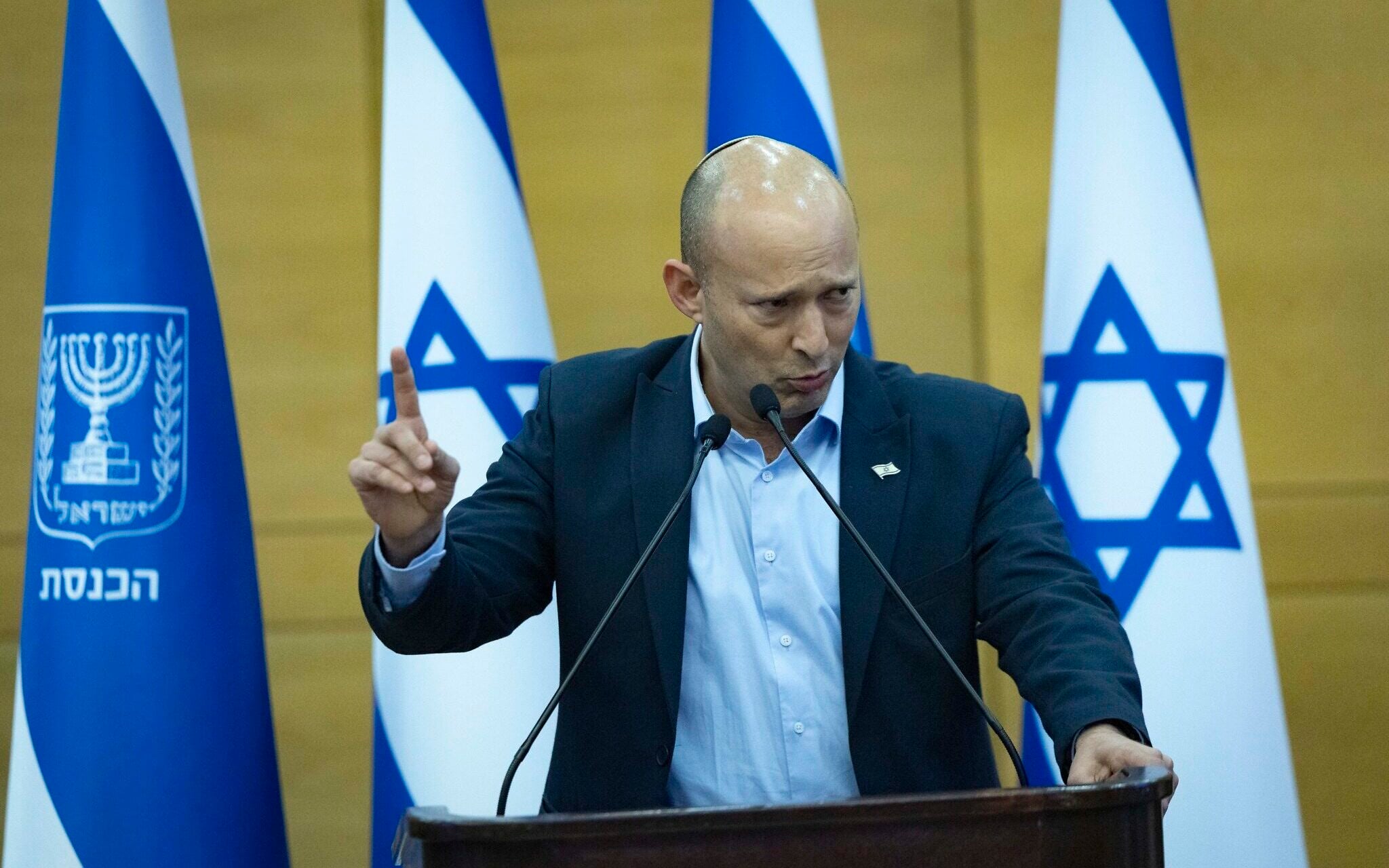
Global News 🌎 Herzog says settler violence ‘an assault on God himself’; Bennett blasts ‘Jewish terror’ (Times of Israel)

Thumbnail
timesofisrael.com
44 Upvotes

President Isaac Herzog on Monday condemned Jewish extremist attacks on Palestinians in the West Bank as “despicable” and an assault “on God himself,” while former prime minister Naftali Bennett accused the government of turning a blind eye to “Jewish terrorism” following a wave of settler violence over the weekend.

“There is no room for ambiguity here – violence by Jewish extremists against innocent people and communities in the West Bank — Judea and Samaria — or anywhere else, is despicable and deserves strong condemnation,” Herzog told the ELNET Jerusalem conference.

He called it “an assault not only on human beings, created in the divine image, but on the ethical way we carry [ourselves], on our history as a people, and on God himself. It most certainly does not represent Israel.”

The remarks came after extremist settlers were accused of setting fire to a dozen vehicles and several homes in Palestinian villages near Ramallah on Saturday night.

Israel faces growing international pressure over settlement expansion and surging settler violence against Palestinians, with Britain and other European countries demanding accountability and Australia imposing sanctions targeting, among others, those supporting violent settlers.

US House Democratic leader Hakeem Jeffries on Sunday called for sanctions against violent settlers in the West Bank.

At home, Bennett and other opposition leaders have accused Prime Minister Benjamin Netanyahu’s government of failing to act.

Palestinian men inspect torched vehicles following a reported rampage by Israeli settlers in the West Bank village of Kufr Malek, east of Ramallah, November 22, 2026. (AP Photo/Mahmoud Illean)

The president told the audience of foreign diplomats and lawmakers that “our law enforcement agencies are working diligently to scour this terrible moral stain and arrest, investigate, and prosecute any perpetrators of violence to the fullest extent of the law, in line with our values as Jews, as Israelis, and as human beings.”

Herzog had previously warned Netanyahu and senior officials about the consequences of unchecked settler violence. In a letter he wrote last month, Herzog cited shortages of manpower and enforcement tools and called for stronger measures, including widespread arrests and administrative detention, warning that “without visible enforcement and real deterrence, we will arrive at a disaster.”

Bennett and Eisenkot slam government response

Bennett, chair of the B’Yachad party, condemned what he called “despicable Jewish terrorism,” saying the attacks were contrary to Jewish moral values and posed a threat to the future of Israeli settlements in the West Bank.

He also called the violence “yet another resounding failure of the outgoing government,” accusing its leaders of turning a blind eye to the attacks and canceling administrative detention orders against Jews “for a few votes in party primaries.”

Former prime minister Naftali Bennett speaks during a celebratory toast marking MK Matan Kahana’s election as speaker of the 26th Knesset, in Jerusalem, November 17, 2026. (Chaim Goldberg/Flash90)

Suspects can be held in administrative detention for months on end with no trial, with the tool typically used against Palestinians when there is not enough evidence for a regular arrest warrant. Its use against Jewish suspects has been rare, and Defense Minister Israel Katz ended the practice entirely upon taking office in November 2024, amid a sharp rise in settler violence against Palestinians.

“We will put an end to this anarchy,” Bennett said, pledging to “restore Israel’s standing in the world, support IDF soldiers and ensure that a violent fringe does not endanger the many good citizens.”

On Saturday, he reaffirmed his support for a unity government led by Yashar chair Gadi Eisenkot that would include Likud, while insisting that Netanyahu must not remain prime minister. His declaration followed a meeting with Netanyahu on Wednesday that had fueled speculation he might break with Eisenkot’s bloc.

MK Gadi Eisenkot, head of the Yashar party, speaks at the Knesset in Jerusalem on November 17, 2026. (Chaim Goldberg/Flash90)

Eisenkot, who has been tasked with forming a government following last month’s elections, described the latest arson attacks as “Jewish terrorism in every sense of the word” and accused National Security Minister Itamar Ben Gvir, who oversees the police, and Finance Minister Bezalel Smotrich, who also oversees settlement affairs in the Defense Ministry, of bringing the West Bank to the brink of anarchy.

He called on authorities to use all available measures, including administrative detention and targeted Shin Bet operations, to stop the perpetrators.

Katz insists police must handle settler violence

Katz, meanwhile, continued to insist that all aspects of settler violence in the West Bank must be handled by the Israel Police rather than the army.

In his first comments more than a day after the latest attacks, Katz said the “ongoing violence by a handful of rioters” in the West Bank was “grave in every respect.”

However, he asserted that “The IDF does not need to, nor is it capable of, enforcing civil law on the Jewish population in Judea and Samaria (West Bank), which is growing every year.”

Defense Minister Israel Katz walks at the Knesset in Jerusalem on the opening day of the 26th Knesset, November 10, 2026. (Chaim Goldberg/Flash90)

“Therefore, in accordance with my directive, the IDF has formulated a plan to transfer responsibility for criminal civil law enforcement in Judea and Samaria to the Israel Police, which will be reinforced and make the necessary preparations,” he said, referring to an order he issued in August that was widely seen as impractical, because Israel has never formally annexed the West Bank.

Katz claimed that “police have the appropriate tools to handle prevention, investigations, arrests, and criminal prosecution of those who break the law,” even though police forces are stretched thin in the West Bank.

The defense minister for the caretaker government added that the army “should be engaged in defending the borders, operations against Palestinian terrorism and protecting Israeli communities.”

Separately, an unnamed senior Israel Defense Forces officer sharply condemned the settler violence in remarks to Channel 13 on Monday.

“This is an army of terror that could have consequences for the entire Middle East,” the officer told the network.

Settler attacks during olive harvest up 74% in two years

According to an Army Radio report Monday, data held by security forces indicates this year’s olive harvest saw 181 reports of attacks by Israeli settlers on Palestinians, compared to 145 in 2025 and 104 in 2024.

Officials cited by the radio station said the incidents had also grown more severe.

Last week, the IDF said that “areas of friction” — meaning attacks by Israelis on Palestinians — accounted for only “a few percent of the olive-harvesting areas,” insisting that the vast majority of coordinated harvesting at sites under army protection proceeded without incident.

The Yesh Din NGO reported that more than 1,100 incidents of settler violence had taken place since the start of the harvest, including 483 directly related to the harvest.


r/DeepStateCentrism • • 9h ago

Research/ Policy 🔬 Shapiro/Emanuel 2028 would be a Democratic dream ticket. Far fetched, but worth dreaming about.

Post image
31 Upvotes

r/DeepStateCentrism • • 20h ago

American News 🇺🇸 Nvidia Board Reinstated CEO Without Consulting Management (gift link)

Thumbnail
bloomberg.com
28 Upvotes

r/DeepStateCentrism • • 1h ago

Opinion Piece 🗣️ Why does Britain tolerate Islamist groups allied to Iran’s murderous regime? (The Jewish Chronicle, Stephen Pollard)

Thumbnail thejc.com
22 Upvotes

If you have a spare few hours on December 13, you might want to pop along to the Islamic Human Rights Commission's (IHRC) conference on Artificial Intelligence and Islamophobia. It sounds great: “Gaza has been described as the world’s first AI-assisted genocide. Allegations abound that Israeli authorities have used Artificial intelligence to collect data, locations and to target Gaza for maximised infliction of casualties, including on women, children and other innocent Palestinians. It is further speculated that western countries have been deferential to Israel’s Gaza campaign to learn how to use AI effectively in their own projects of violence, both within their own respective countries and elsewhere, even beyond efforts currently underway.”

Then again, as Peter Cook used to say: I’m sorry I won’t be able to make it as I’ll be watching TV.

The problem is it’s no joke. The Islamic Human Rights Commission – an example of whatever is the opposite of nominative determinism – is one of those organisations which exists in the West (specifically, here in the UK) to destroy the West, and which we allow to go about its business as if it was entirely normal. Until it was banned this year by the Home Secretary, the IHRC organised an annual “Al Quds Day March” in support of the Tehran regime. The Met asked for a ban given the record of arrests for supporting terrorist organisations and for antisemitic hate crime at previous marches. A static rally went ahead on March 15 with twelve arrests.

According to Sir William Shawcross’s review of Prevent in 2023, the IHRC, which is based in Wembley, is "an Islamist group ideologically aligned with the Iranian regime". The very same paragraph in the report records that the trust which funds it received £10,000 of public money during the pandemic and according to the Telegraph, the trust has to date received taxpayer-funded Gift Aid donations of at least £450,000 since 2020.

The Islamic Human Rights Commission (IHRC) Trust is recognised by HMRC for Gift Aid and can claim an extra 25p from the Government for every ÂŁ1 it receives in donations. The IHRC Trust is one of four such charities recognised by HMRC which are identified in a report on Iranian influence in the UK by Lord Walney, the former independent adviser to the government on political violence.

Of its ÂŁ642,254 income in the year to June 2025, it handed over nearly ÂŁ520,000 to IHRC Ltd.

The IHRC is open about at least one side of its activities, saying it believes “Israel is a racist, colonialist, apartheid enterprise that needs to be dismantled and replaced with a single state that represents Muslims, Christians and Jews”.

It will surprise no one that one of the keynote speakers at its December conference will be Saied Reza Ameli, the former Islamic Revolutionary Guard Corps (IRGC) commander behind a strict enforcement of rules over women's clothing and the wearing of the hijab that led to widespread protests and hundreds of deaths. Ameli was secretary of Iran's Supreme Council of Cultural Revolution from 2019 to 2023. In that time, Iran’s morality police were ordered to crack down on women who failed to wear their hijab properly, which led to the death in police custody in September 2022 of Mahsa Amini, 22. Her death led to demonstrations in which at least 476 protestors were killed by security forces. Ameli remains a member of the Supreme Council of the Cultural Revolution.

The Charity Commission is currently investigating the IHRC Trust over its links with the non-charitable Islamic Human Rights Commission. Ameli was the founder of the IHRC in 1997 and was director of its Board of Trustees between 2006 and 2022, having studied at Royal Holloway University of London. In 2001 he received a doctorate from the university.

He was sanctioned in Canada – but not in Britain – for “gross and systematic human rights violations in Iran, including through the lethal suppression of demonstrations across Kurdish areas of Western Iran”.

According to Kasra Aarabi, Director of IRGC Research at United Against Nuclear Iran and a regular in these pages, Ameli has been a key member of the Supreme Council for Cultural Revolution, which “facilitated and oversaw a strategic agreement with the IRGC, granting it maximum access to academic relationships between Iranian and Western universities. This created a mechanism through which the IRGC exploits partnerships between Iranian and Western universities to procure sensitive and dual-use research for its military programmes. The IRGC has used such arrangements to procure sensitive research for the development of its lethal drone programme, including from British universities. These are the same drones now being deployed in conflicts across the Middle East and Ukraine.

“Crucially, the strategic agreement, in which Ameli was involved through his senior role on the Council, explicitly identifies the IRGC’s procurement priorities, including artificial intelligence. Someone with Ameli’s background and connections should never have been allowed to enter Britain, let alone establish organisations here.”

I’ve focused on Ameli and the IRGC, but they are merely one example of our failure to deal properly with the threat to the West posed by many other organisations which were founded in and operate in the UK. A JC investigation in 2023 identified eight IRGC figures who have addressed UK student audiences since early 2020, hosted by the Islamic Students Association of Britain. One of them, Saeed Ghasemi, denied the Holocaust and urged listeners to join an end-times war on Jews. Successive governments have talked a good game about security but the presence of the IHRC and its fellow travellers are real time proof of how hollow those words are. The Muslim Brotherhood, for example, remain unproscribed and free to operate.

According to the IHRC: “Professor Ameli is a brilliant and sincere academic who has consistently taken an inclusive approach to his work. He has championed multiculturalism and sought to foster understanding between different worldviews, a position that has even led to accusations of being pro-Western in his own country. He has also been critical of the retreat of multiculturalism in the West.”


r/DeepStateCentrism • • 3h ago

Opinion Piece 🗣️ Nvidia and Trump’s State Capitalism (WSJ Editorial Board)

Thumbnail wsj.com
17 Upvotes

r/DeepStateCentrism • • 1h ago

Research/ Policy 🔬 California raised minimum wages for fast-food workers

Thumbnail
finance.yahoo.com
11 Upvotes

Even before the 2026 midterm elections delivered a clear message about cost-of-living concerns, many states had been raising their minimum wage on their own as one way to increase workers' purchasing power. And some have taken a more targeted approach, setting wage floors for specific industries.

As the example of California shows, however, these initiatives can produce mixed results.

In April 2024, California began requiring fast-food chains with at least 60 locations nationwide to pay a minimum wage of US$20 an hour, $4 above the statewide minimum at the time. The governor's office estimated that more than 500,000 workers would be covered by this mandate.

As a researcher of health and labor markets, I joined with economists David Neumark, Gary Wagner and Vitor Melo to run a study measuring the impact on California's fast-food industry – specifically, whether restaurants employed fewer workers because of the ensuing higher labor costs.

We found that the answer depends on which establishments you look at.

For the state as a whole, the law didn't affect employment in any statistically detectable way, we concluded. But smaller chains did take a hit, with employment falling by roughly 20%, while the number of locations dropped by about 10%. New openings fell by 17%-20%, and closures rose by 9%-21%.

This employment decline comes almost entirely from fast-food chains ceasing to operate in California, rather than from staffing cuts at the locations that remain.

The impact of minimum wage hikes holds importance far beyond the fast-food sector. Their proponents point to the fact that the federal minimum wage of $7.25 an hour has stayed unchanged since 2009 and argue that states and municipalities need to take action on their own.

Los Angeles is phasing in a $30 wage for hotel and airport workers, while California's healthcare workers just received another scheduled increase. Vermont lawmakers have proposed a $20 fast-food wage of their own.

In addition, a total of 16 states will raise their minimum wages across the board on Jan. 1, 2027.

The question of whether and how minimum wages affect employment still provokes a vigorous debate among economists.

In California's case, some researchers have found that lifting the minimum wage caused small declines in employment compared with other states; others contend that the effect on jobs is essentially zero.

More broadly, some researchers have found that minimum wage hikes cost jobs. But the time horizon matters, and effects tend to get larger in the long run.

Our study didn't try to settle that disagreement. Instead, we wanted to find out how employers did adjust, and whether large and small chains responded differently. What happens when higher minimum wages raise one sector's costs and prices while its closest substitutes – such as sit-down restaurants – keep paying the lower statewide minimum wage?

We relied on a database that recorded every business location in the country by name, along with the number of employed workers, each year. That let us directly identify the chains that were subject to California's law, count each chains' national footprint to apply the 60-location rule, and track outcomes from 2019 through 2025: total employment, employment at locations that stayed open, the number of locations, and openings and closures.

We also compared California with other states and separately compared each chain's California restaurants with the same chain's restaurants elsewhere. Finally, we divided the covered chains into two groups: The 20 largest, which account for about 60% of covered jobs, and the 261 smaller ones.

For the state as a whole, we found that employment at covered restaurants was basically unchanged, and employment at restaurants that stayed open didn't change. Among the 20 largest chains, there was no detectable effect at all for any of the measures we tracked over this period.

But the smaller chains tell a different story, recording substantial declines in employment, locations and openings, while closures rose.

How to reconcile the flat statewide numbers with the sharp effects on smaller chains? The largest chains employ most of the workers affected by the new minimum wage rule, so the statewide total is dominated by them. And the reduced entry and higher exit among smaller chains may have eased competitive pressure on the largest ones.

A final point: The biggest chains tend to be the most automated, relying more on equipment such as self-serve kiosks that can reduce the number of workers needed. That may help explain the muted employment response among these larger businesses.

First, we caution that the absence of a clear short-run effect on total employment doesn't prove that the policy won't cause bigger job losses over time as companies adapt to the new law. We also can't answer what happened to the workers at the most affected restaurants or what happened to prices at those establishments, although other research suggests they rose by 3% to 4%.

That said, the law was implemented barely 2½ years ago, and some of the larger effects that economists might expect – such as the closure of labor-intensive restaurants or fewer openings – are already apparent among smaller chains.

Second, it's important to remember that California's fast-food minimum wage applies only to chains with 60 or more locations. So the smaller chains in that range likely lack the scale, automation and pricing power of the national brands and are most sensitive to the new wage floor. Indeed, the law appears to have shifted California's fast-food market toward its largest chains, a pattern that other researchers documented in a similar study that looked at Germany's national minimum wage.

For the cities and states now weighing wage floors of their own, the California evidence isn't a slam dunk either way. It shows that the costs, broadly speaking, fall first on the smaller chains covered by the law – but whether it meaningfully impacts the largest chains is unclear.


r/DeepStateCentrism • • 1h ago

Opinion Piece 🗣️ The Welfare State and Britain’s Idle Youth (WSJ)

Thumbnail wsj.com
11 Upvotes

Britain has a crisis of unemployed young people caused by welfare-state failures, and the government finances are in disarray. So the obvious solution is . . . more entitlements for the young? Behold Europe’s social-welfare meltdown in a nutshell.

Nearly a million young adults in Britain aren’t working, pursuing higher education or in job training. To his credit, former Prime Minister Keir Starmer was alarmed enough about this that he commissioned Alan Milburn, a respected Labour expert on social welfare, to investigate. Mr. Milburn published his report last week, and the main conclusion is that youth joblessness has risen as government policies made hiring young people more expensive and generous disability benefits made not working easier.

Mr. Milburn describes a “new phenomenon of youth detachment,” which is British understatement at its best. One in eight Britons younger than 25 are idle. Most have never held a job and aren’t looking for one. Many support themselves with disability-linked welfare benefits, primarily for vaguely defined or overdiagnosed behavioral or mental-health conditions such as anxiety, depression, ADHD or autism. The number of young people claiming a disability benefit is expected to quadruple by 2037 relative to its 2012 level.

Aggressive increases to the minimum wage in recent years are another major culprit, and a central fact in this report is that wage costs for an 18- to 20-year-old employee have risen 65% in the past five years. Increases in the payroll tax (called “national insurance”), split between employees and employers, have hit industries such as hospitality and retail that have thin profit margins and employ young people.

The Milburn report highlights the human and economic costs of this. Spending for working-age disability and incapacity benefits rose 46% in real terms from the 2018-2019 fiscal year, to £55 billion (nearly $72.5 billion) in 2024-2025—and it’s on track to rise to £68 billion in the next four years.

Worse, young people who don’t work lose the opportunity to develop skills, and the economy loses productivity. Dependency weighs on these young welfare beneficiaries, fostering frustration over “lost opportunities, lost earnings, lost confidence and lost purpose,” Mr. Milburn writes. His report exposes a troubling hopelessness among the country’s unemployed youth.

Alas, the Milburn report also exposes how hard it is to fix any of this. Mr. Starmer in 2025 tried to reform the disability-welfare system. But that failed amid a revolt from Mr. Starmer’s (and Mr. Milburn’s) own Labour Party.

Mr. Milburn oddly doesn’t recommend immediately cutting payroll taxes, which he estimates would require the government to forgo £5 billion in revenue per year. He instead proposes spending even more, such as £5.8 billion ($7.6 billion) in annual government “investment” in youth productivity by fiscal 2036-37. He calls for some £1.1 billion a year for hiring, wage and retention subsidies for employers. There’s no evidence these programs will work, since nothing like them ever has.

In other words, to make up for the harm from subsidies and mandates that punish work, Mr. Milburn wants more subsidies and mandates to coax the young to work. That’s Europe’s welfare crisis in technicolor, and young Europeans will continue to be its victims.


r/DeepStateCentrism • • 17h ago

American News 🇺🇸 Emanuel suggests Schumer shouldn’t run for majority leader next cycle

Thumbnail
thehill.com
8 Upvotes

Former U.S. Ambassador to Japan Rahm Emanuel on Sunday suggested that Senate Minority Leader Chuck Schumer (D-N.Y.) should make it clear that he intends to serve only two years as majority leader.

“If I was Chuck Schumer, what I would say is, ‘I’m going to secure the majority, I am not going to run for majority leader next cycle, and I’m going to make sure other — the young voices and faces of this party — grow. That would take the tension out of this,” Emanuel told ABC News‘s Jonathan Karl on “This Week.”

Karl asked Emanuel if Schumer, who is facing a challenge from the left to lead the new Democratic majority, should serve as leader for the next two years.

“Yeah, just get it over with. Chuck Schumer is a friend, as is Chris Van Hollen, but this is not what people voted for,” the former Chicago mayor replied, referring to the Maryland senator seeking to replace Schumer as Democratic leader.

“They voted to get their lives better, not yours,” Emanuel added.

Emanuel, a potential 2028 Democratic presidential contender, has called for the age limit to serve in Congress to be 75. Schumer, who has led the Senate Democratic Caucus since 2017, turned 76 on Monday, while Van Hollen is 67 years old.

Emanuel also spoke highly of House Minority Leader Hakeem Jeffries (D-N.Y.), who is positioned to become the first Black Speaker in U.S. history. He said Jeffries’s ascension “is a statement about America that we should take pride in” and told progressive critics calling for different leadership to give “me a break.”

“We’re a coalition,” Emanuel said. “You’re going to tell the most loyal coalition partner, the African American community, that the moment in history –– you’re not going to get it? The Black vote is the most significant, most loyal, most dedicated part of the coalition. … It tells me when you vote against him, you don’t understand the politics of the Democratic Party.”

Schumer and Jeffries have both faced opposition from some incumbent and incoming Democratic lawmakers who have called for new leadership after the massive blue wave in this month’s elections.

Van Hollen told NBC News’s Kristen Welker on “Meet the Press” that his support among Democratic senators is “north of 15, and momentum is in our direction.”

Seven incoming House Democrats voted against Jeffries to become the next Speaker in an internal caucus vote last Wednesday. A coalition of progressive activists have petitioned to make Rep. Ayanna Pressley (D-Mass.) the next Speaker, garnering more than 167,000 signatures.

A Pressley spokesperson told Boston-based outlet WGBH that she “is aware of and appreciates the groundswell of support from people in her district and across the country lifting up her leadership.”


r/DeepStateCentrism • • 1h ago

Research/ Policy 🔬 Which justices favor the Trump administration the most (and least) on the emergency docket? (ScotusBlog, Adam Feldman)

Thumbnail
scotusblog.com
5 Upvotes

When the Supreme Court rejected President Donald Trump’s attempt to remove Federal Reserve Governor Lisa Cook in June, the justices divided in a manner that would have been difficult to predict from some perceptions of the court. Chief Justice John Roberts and Justice Brett Kavanaugh joined Justices Sonia Sotomayor, Elena Kagan, and Ketanji Brown Jackson to leave Cook in office while the case proceeded. Justices Clarence Thomas, Samuel Alito, Neil Gorsuch, and Amy Coney Barrett dissented. The administration lost, but the court’s disagreement did not reflect the familiar ideological split.

Four months later, the administration lost another emergency application, this time in a dispute over medical care for transgender federal prisoners. In Trump v. Kingdom, Thomas and Alito indicated that they would have granted the requested stay, but no other justice publicly held that position. Unlike Trump v. Cook, which produced a signed opinion after oral argument, the Kingdom order disclosed nothing about the reasoning or votes behind the court’s denial.

The contrast points to a recurring theme of the Supreme Court’s emergency decisions: Although the conservative justices are often lumped together as “pro-Trump,” their rulings can depend on whether the dispute concerns immigration, presidential removal authority, federal spending, or the scope of emergency relief. And whereas some justices have supported federal executive positions at broadly similar rates across presidencies, others appear far more likely to do so depending on whether the president is a Republican or Democrat.

The prior article in this series examined how frequently the Trump and Biden administrations prevailed. In turning to the individual justices, I reviewed federal executive-action decisions from 2017 through November 12, 2026, consolidated into 106 distinct substantive decisions. The three administrations account for 32, 36, and 38 decisions, respectively.

There is a very important qualification throughout: the court often publishes emergency orders without identifying each justice’s vote. The analysis thus assigned a justice to the court’s majority ruling when they were silent, absent an express position or other evidence indicating otherwise.

So what can we say about the different justices’ support for the Trump administration on the emergency docket?

Different presidents, different justices

The most consistent record belongs to Roberts. He aligned with federal executive positions in 23 of 31 eligible decisions during Trump’s first administration, 26 of 36 under Biden, and 28 of 38 during Trump’s second administration. Those figures amount to 74%, 72%, and 74%. The disputes changed markedly, but Roberts’ aggregate willingness to leave the federal government’s position intact – or grant it relief – barely moved. In other words, Roberts has typically supported executive power on the emergency docket regardless of who is president.

The next most consistent justice, Barrett (though with a much lower sample size), aligned with Biden in 69% of her eligible decisions and Trump II in 78%. Third was Kavanaugh, with rates of 78%, 67%, and 79%. Then came Gorsuch, with rates of 83%, 54%, and 84%.

Thomas and Alito present a very different picture. Thomas supported the executive in 83% of eligible Trump I decisions, 39% under Biden, and 92% under Trump II. Alito’s corresponding figures were 83%, 47%, and 92%.

The liberal justices show the opposite movement, although their individual records differ. Kagan supported executive positions in 43% of eligible Trump I decisions, 94% under Biden, and 24% under Trump II. Sotomayor’s rates were 27%, 94%, and 16%. Jackson, who joined the court during Biden’s presidency, supported its executive position in 21 of 24 eligible decisions (88%), compared with three of 38 (8%) under Trump II.

The figure above makes these distinctions particularly clear. Roberts remains between 72% and 74% across the three periods, while Thomas’ support moves from 83% under Trump I to 39% under Biden and 92% under Trump II. The middle group of Barrett, Kavanaugh, and Gorsuch is more varied, but each supported Biden’s executive position more frequently than a simple Republican-versus-Democratic framing might suggest.

These numbers are telling, but they do not establish the reasons for why the justices decided as they did. For example, a president defending an environmental rule presents a very different legal issue from one seeking permission to remove an independent agency official. To determine how much of the observed variation is associated with presidential identity, the next step is to examine the kinds of cases that produced it.

The issues that unite and divide the justices

Immigration provides a useful point of comparison because it generated substantial emergency litigation under all three administrations. Roberts supported the executive in 10 of 11 immigration decisions under Trump I, three of six under Biden, and 11 of 13 under Trump II. Thomas supported the government in 10 of 10 eligible Trump I immigration decisions, two of six under Biden, and 12 of 13 under Trump II. Kagan’s comparable figures were six of eleven, six of six, and five of 13.

This is revealing. Roberts and Thomas both supported Trump’s immigration positions at high rates but not as much when Biden defended his administration’s policies. Kagan and Sotomayor supported Biden in all six coded immigration decisions, then opposed most of Trump II positions. But there is, of course, a key caveat: This category covers different immigration rules, as opposed to simple support for one president over another.

Public-health and related health litigation under Biden revealed a sharper division within the conservative majority. In 10 eligible health-coded decisions, Roberts and Kavanaugh each supported the federal executive in seven, compared with one each for Thomas and Alito. Barrett supported it in five; Gorsuch in two. Kagan and Sotomayor each supported the government in nine such cases. (Jackson’s two favorable positions came from only three eligible decisions in this category, making her figure much less informative.)

The court’s January 2022 vaccination decisions supply a concrete example. Roberts and Kavanaugh joined the liberals in allowing the administration to enforce a vaccination requirement for workers at healthcare facilities receiving Medicare or Medicaid funding, while Thomas, Alito, Gorsuch, and Barrett dissented. On the same day, Roberts and Kavanaugh joined the conservatives in blocking OSHA’s broader vaccination-or-testing standard. To Roberts and Kavanaugh, health litigation was clearly treated issue-by-issue.

Let’s move on to personnel decisions, or the president’s control over the executive branch. In the nine Trump II personnel and removal decisions, Thomas, Alito, Gorsuch, and Barrett supported the executive in eight, while Roberts and Kavanaugh did so in seven. In four foreign-affairs and national-security decisions, Thomas, Alito, and Gorsuch aligned with the government in all of these, compared with two for Roberts and Barrett.

Subject matter therefore helps explain how things break down. The same conservative justice may support emergency intervention in a dispute over immigration enforcement while resisting it in a case involving agency regulation. The legal authority being asserted, the posture of the case, and the requested remedy all shape the decision.

The coalitions inside the conservative majority

So which justices most frequently aligned? At the front of the pack are Thomas and Alito, who agreed in all 38 coded Trump II decisions. Their alignment is particularly visible when the administration lost. In seven events, both of their positions favored more relief for the administration than the majority granted or would otherwise provide.

Other pairings are almost as cohesive. Roberts and Barrett agreed in 35 of 36 Trump II decisions (97%). Roberts and Kavanaugh agreed in 36 of 38 of these (95%), as did Gorsuch and Kavanaugh. The next figure displays those pairings alongside the liberal and cross-ideological relationships. The high agreement rates show how often the conservatives arrive at the same apparent disposition, but the exceptions reveal competing views about the scope of emergency judicial intervention.

The foreign-assistance dispute in Department of State v. AIDS Vaccine Advocacy Coalition, for instance, separated Roberts and Barrett from Thomas, Alito, Gorsuch, and Kavanaugh. The four dissenters would have granted the administration relief from an order requiring payment for foreign-aid work already completed. Roberts and Barrett did not join that position. Their disagreement concerned what a district court could require of the government while the underlying funding litigation continued.

A different alignment emerged in NIH v. American Public Health Association. There, the court granted partial relief in litigation over terminated research grants. Thomas, Alito, Gorsuch, and Kavanaugh would have granted the administration’s request in full, while Roberts joined Sotomayor, Kagan, and Jackson in seeking to deny it altogether. Barrett supported an intermediate outcome.

In Cook, the division shifted again. Roberts and Kavanaugh joined the liberals in rejecting the administration’s attempt to immediately remove a Federal Reserve governor, while Thomas, Alito, Gorsuch, and Barrett dissented. In Trump v. Illinois, concerning the Trump administration’s deployment of National Guard forces, Thomas, Alito, and Gorsuch disagreed with the court’s denial of relief to Trump, while Kavanaugh concurred in the judgment on narrower grounds.

The evidence points toward distinctive approaches to removal authority, spending, the judicial supervision of agencies, and emergency remedies. Justices who agree in one field can diverge in another, and partial orders sometimes put a justice between two groups seeking opposing forms of relief.

The liberal justices and the unusual alliances across ideological lines

The three liberal justices also exhibited some meaningful disagreements. Under Trump II, Jackson aligned with the executive in only three of 38 emergency decisions (8%), compared with six for Sotomayor (16%) and nine for Kagan (24%). Kagan and Sotomayor agreed in 35 of 38 such decisions; Kagan and Jackson in 32. The differences are not as dramatic as those dividing the conservatives, but they complicate the assumption that the liberal trio behaves as a single bloc in every emergency dispute.

Their publicly registered dissents differ as well. Jackson expressly opposed a Trump II executive position in 26 decisions, Sotomayor in 23, and Kagan in 20. In FCC v. Brown, for example, Sotomayor and Jackson publicly indicated that they would deny the agency’s stay application, while Kagan registered no public disagreement.

Trump’s second term has produced more than one identifiable cross-ideological alignment. The five-justice majority in Cook included Roberts, Kavanaugh, and the three liberals, while the NIH grants dispute placed Roberts and the liberals together against complete relief. Barrett also joined certain portions of Sotomayor’s dissent in Trump v. J.G.G., a dispute involving the Alien Enemies Act, although her partial join should not necessarily be counted as agreement with the liberals on the case.

These examples again highlight why the distinction between shared results and shared legal reasoning is important. A justice can favor the same outcome as an ideological opponent while arriving there for entirely different reasons (we see this with concurrences in merits cases all the time). Separate opinions can also reveal agreement on a particular procedural or statutory question even when the justices disagree on the ultimate relief. At the same time, the emergency docket makes these relationships especially difficult to measure comprehensively because many orders contain no individual vote information at all.

Where this leaves us

My analysis of the emergency docket shows a chief most reluctant to favor one administration over another, with Barrett and Kavanaugh following closely behind; Gorsuch acting more favorably towards the Trump administration, although not overwhelmingly so; Thomas and Alito disproportionately favoring Trump over Biden; and the three liberal justices acting as a near mirror image of Thomas and Alito – although to varied degrees.

We thus see a conservative majority whose members separate over particular exercises of federal power, a liberal bloc with distinguishable voting and dissent records, and occasional alliances that cross ideological lines.


r/DeepStateCentrism • • 9h ago

Discussion Thread Daily Intelligence Brief

2 Upvotes

New to the subreddit? Start here.

This is the Brief. Post whatever here.

You can post and comment outside of the Brief as well.

You can subscribe to ping groups and use them inside and outside of the Brief over a range of topics. Click here to set up your preferred PING groups.

Are you having issues with pings, or do you want to learn more about the PING system? Check out our user-pinger wiki for a bunch of helpful info!

The Brief has some fun tricks you can use in it. Curious how other users are doing them? Check out their secret ways here.

We have an internal currency system called briefbucks that automatically credit your account for doing things like making posts. You can trade in briefbucks for various rewards. You can find out more about briefbucks, including how to earn them, how you can lose them, and what you can do with them, on our wiki.

Every day, the user with the most down voted post wins the Nobel Brief Prize.