Disclaimers:
- This ranking is based on WotC-era official lore (including 3e, 4e, and 5e), as well as designers' Sage Advice.
- This ranking is not based on TSR-era official lore, as TSR-era power scaling clearly differs from WotC-era power scaling. For example, in the TSR era, the Lady of Pain was not in a league of her own (since the supreme being of the TSR era was Asgorath/Io, not the Lady of Pain). In Pages of Pain, the Lady of Pain is either Poseidon's daughter or an entity whose memories Poseidon could easily alter; in On Hallowed Ground, she is merely classified as a "Near-Power," alongside Demon Lords and Archdevils.
Below is the Lady of Pain's own monologue from the TSR-era novel Pages of Pain:
Thus does rapacious Poseidon hope to bring Sigil low: by stirring me to such a state that I destroy the city myself, so that he might stroll among the ruins and make a slave of me with nary a fight. Perhaps, had I been fool enough to pull the stopper, the plan would have worked. The memories would have rushed from the jar and seized me one after another. In the fervor of the moment, I might have believed that I had jumped into the River Lethe after my heart, that I had drunk of its dark waters to escape Set my betrothed and Poseidon my father.
However, in the WotC era, the Lady of Pain is depicted as terrifyingly powerful. Die Vecna Die! was a WotC-era product, and in it, the Lady of Pain directly transformed the D&D multiverse from 2e into 3e.
Below is the ranking strictly based on WotC-era official lore.
Tier 0: Narrative-Level Entities
1. The Lady of Pain
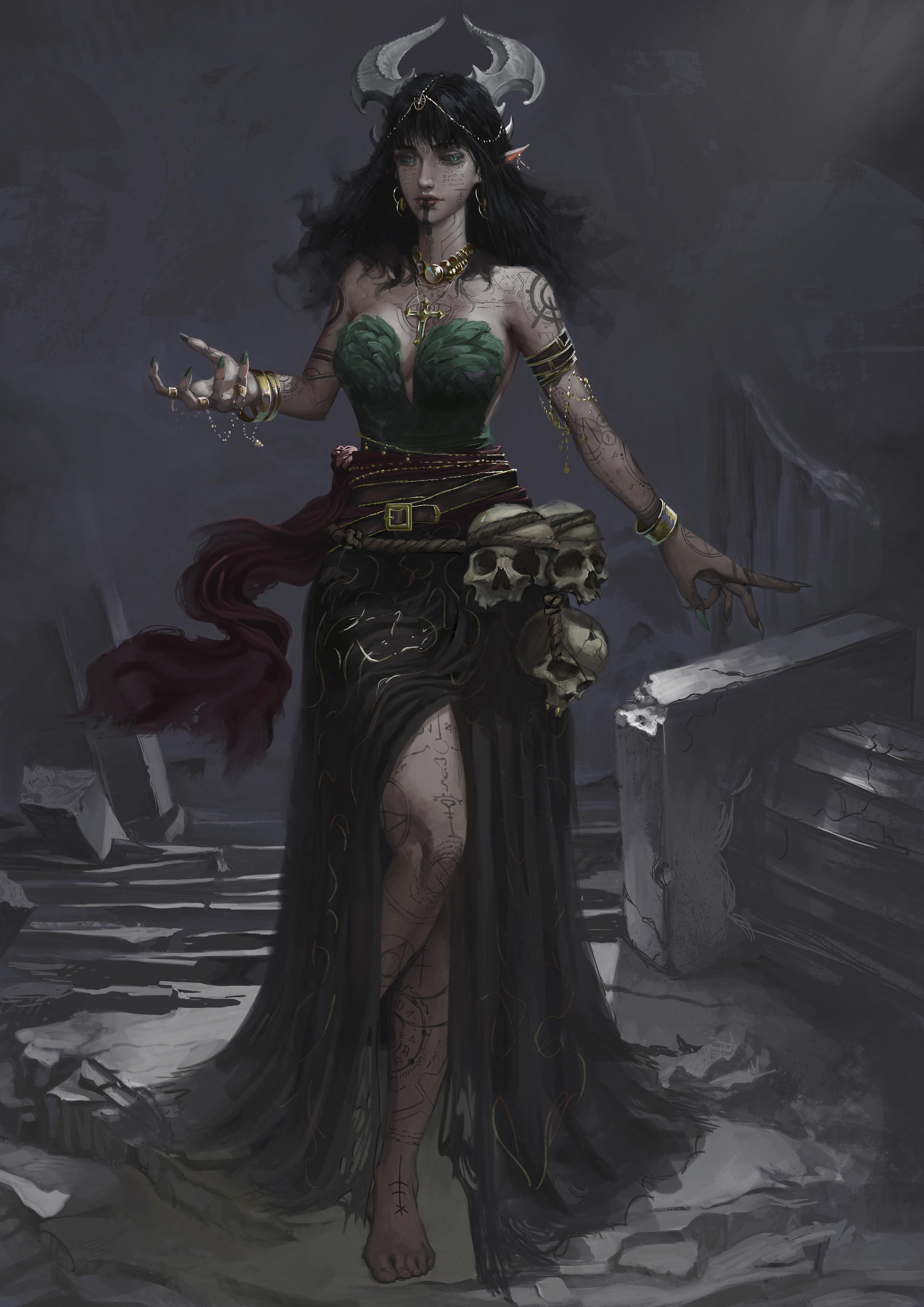
Without a doubt, the WotC-era Lady of Pain is the embodiment of the D&D multiverse. Her true being is the entire D&D multiverse, which grants her omnipresence. Essentially, every tabletop campaign we run takes place inside the Lady of Pain's true form (the D&D multiverse) or within her dreams.
As Chris Perkins stated in Dragon Talk: LYSK The Lady of Pain (3:14):
"I will define her as the multiverse embodied hmm that she is essentially a figment of or a vestige of the all of the elements that make up the multiverse, sort of gathered into one force, mmm. Because as far as we know she's been around since the formation of the multiverse and may have to some extent even had a hand in it. And even though you know were the multiverse to be destroyed, it's likely that she might be the last one left behind. Could she then reimage the multiverse? Perhaps that is yes. And is well everything that we experience in the D&D multiverse is it all, it's just her dreams."
Sigil and the Outlands, p20:
The Lady of Pain is omnipresent, unknowable, and invincible.
Furthermore, the Lady of Pain possesses omnipotence, omniscience, and omnipresence—essentially making her the Eru Ilúvatar of D&D.
Dragon Talk: LYSK The Lady of Pain (6:58):
"She's not a god, just some sort of omnipotent, omniscient, and omnipresent entity."
Moreover, in the latest 5.5e lore, the Lady of Pain is powerful enough to veto a player's Wish to undo the multiverse.
2024 Player's Handbook, Wish spell description:
If your wish would undo the multiverse itself, threaten the City of Sigil, or affect the Lady of Pain in any way, you see an image of her in your mind for a moment; she shakes her head, and your wish fails.
So, if the Luminous Being represents the DM, then the Lady of Pain undoubtedly represents the WotC-era D&D brand itself.
2. The Luminous Being
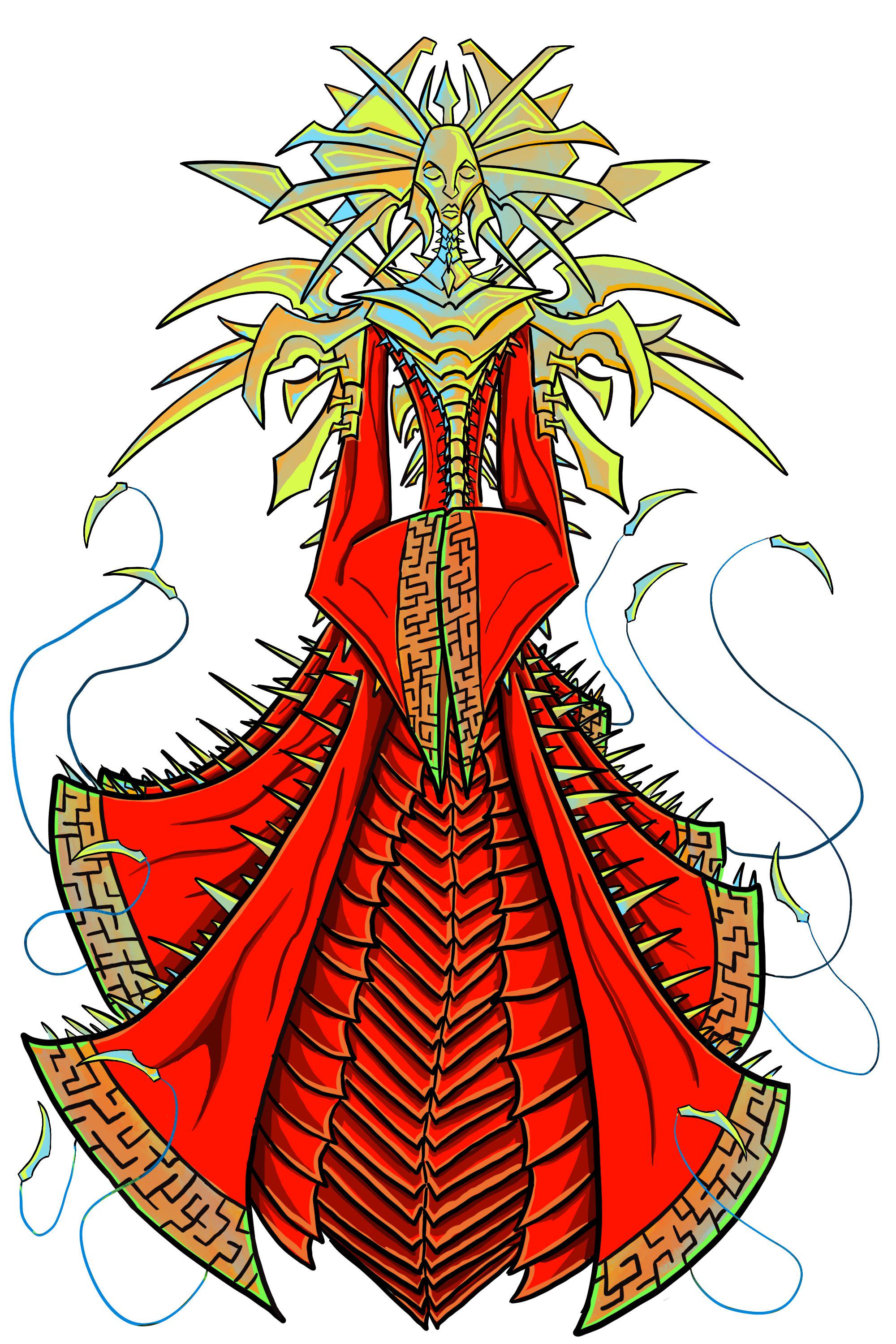
Although there is currently no lore stating that the Luminous Being controls or created the entire D&D multiverse, it genuinely oversees countless overgods—even Ao is merely a servant of the Luminous Being.
Waterdeep, p341:
Ao closed his eyes and blanked his mind. Soon, he fell within himself and entered the place before time, the time at the edge of the universe, where millions and millions of assignments like his began and ended.
A luminous presence greeted him, enveloping his energies within its own. It was both a warm and a cold entity, forgiving and harsh. “And how does your cosmos fare, Ao?” The voice was at once both gentle and admonishing.
“They have restored the Balance, Master. The Realms are once again secure.”
Unfortunately, WotC completely retconned the Luminous Being out of existence during 4e.
Forgotten Realms Campaign Guide, p. 74:
Ao exists beyond the concept of alignment or worship. He serves no one, and no one serves him. Instead he watches all, sees all, and judges all.
That said, I fully expect WotC to bring the Luminous Being back in 5.5e/6e, so I'm keeping it in this spot.
Tier 1: Overgods (Ao, the High God, etc.)
Overgods are powerful enough to elevate mortals to godhood or strip deities down to mortality at will, placing them far beyond the tier of ordinary gods. Although 2e Planescape lore limited overgods to controlling a single crystal sphere within the Great Wheel cosmology, 3e and 4e gave each setting its own separate cosmology, meaning an overgod is powerful enough to rule over an entire cosmology.
Forgotten Realms Campaign Setting, p258:
Ao (ay-oh) stands outside of the power struggles of deities in Faerûn. A quiet and distant being, Ao is the overgod of Toril. He is responsible for the creation of the first deities of Toril and for maintaining the cosmic balance. Ao was completely unknown to mortals before the Time of Troubles. His presence was made known when he single-handedly banished all the deities to walk Faerûn in mortal forms as punishment because many of them had abdicated their responsibilities. Ao has supreme power over all the deities of Toril, is capable of demoting, banishing, or destroying any of them, and can elevate mortals to any level of divinity if they accept the responsibilities and duties of the divine state. No being can be promoted to divinity without his approval. He is impervious to all attacks, even by a concerted effort of all the divine powers, and has no known realm among the planes. Ao is essentially the god of the deities of Faerûn. He answers no mortal's prayer, grants no spells to mortals, and has not been heard from since the end of the Godswar. It is unknown if he established the foundation of the cosmology of Toril or if that structure is something that evolved over time from the interaction of the deities.
Tier 2: Greater Deities
According to Chris Perkins, greater deities are so powerful that they don't even have stat blocks—players simply cannot challenge or kill any greater deity: https://www.sageadvice.eu/what-makes-a-god-greater-or-lesser/
Greater deities can affect an entire cosmology. For example, Mystra's death in 4e altered the entire Forgotten Realms cosmology.
4e Forgotten Realms Campaign Guide, pp. 4–5:
2. The Spellplague has drastically altered the cosmos. The Spellplague broke out in 1385 DR (the Year of Blue Fire), the result of unfettered wild magic on the death of the goddess Mystra. Whole countries are gone, especially in regions south of the Sea of Fallen Stars. Even familiar lands have become magical and fantastic in appearance. Islands of rock called earth-motes drift through the sky. Weird towers and spires of stone jut from the landscape. Spectacular chasms and waterfalls abound.
All things were sustenance for the Spellplague's insatiable hunger—it assailed and transformed flesh, stone, magic, space, and dimensional walls. Even the cosmos beyond Toril was affected. Some ancient realms returned that had been thought gone forever (such as the Feywild), and entire planes (such as the Abyss) shifted to a new cosmic structure.
Greater deities can also reshape planes, such as when Shar remade the Plane of Shadow into the Shadowfell.
4e Forgotten Realms Campaign Guide, p. 69:
A gloomy echo of Toril, the Shadowfell is at once ancient and new. The dark goddess Shar reshaped what was then known as the Plane of Shadow during the years of chaos following the Spellplague. In her craft, she folded in the energy of death that didn’t make the transition to the Elemental Chaos. She renamed her creation the Shadowfell, which became its common name among mortals, though some still refer to it simply as “Shadow.”
Greater deities can even move planes, as when Asmodeus shoved the Abyss into the Elemental Chaos, ending the Blood War.
4e Forgotten Realms Campaign Guide, p. 73:
ASMODEUS
Supreme Master of the Nine Hells
Evil Greater God
An ancient deity turned arch-devil, the Lord of Nessus longed for untold millennia to reclaim his godhood. The destruction of Dweomerheart sent the dying Azuth (a patron deity of mages) into Asmodeus's fiery domain. The archdevil killed him and consumed his divine essence. He then ended the Blood War by pushing the Abyss to the bottom of the Elemental Chaos.
Tier 3: Intermediate/Lesser Deities, Primordials, and Great Entities of the Far Realm
According to 4e lore, the power of a god = a primordial = a great entity of the Far Realm = several demon lords = several archdevils = a party of the mightiest mortals.
4e Divine Power, p. 40:
Few beings have the power to kill a god: primordials, rival gods, and great entities of the Far Realm, several demon lords or archdevils working in concert—and sometimes a group of the mightiest mortals.
Of course, being in this tier does not guarantee a 100% victory against demigods, archdevils, or demon lords. Tiamat is the prime example: in 5e, her true form in Avernus is only a lesser deity.
2014 Monster Manual, p. 86:
Tiamat the Dragon Queen is the chief deity of evil dragonkind. She dwells on Avernus, the first layer of the Nine Hells. As a lesser god, Tiamat has the power to grant spells to her worshipers, though she is loath to share her power.
Yet she still doesn't dare challenge Zariel directly, as she cannot be certain she would defeat the archdevil.
Baldur's Gate: Descent Into Avernus, p. 148:
Challenging an archdevil directly is risky, and Tiamat stands to lose a great deal if Zariel prevails.
Tier 4: Demigods, Archdevils, Demon Lords, and Greatwyrms
These are god-like entities—some powerful enough to challenge lesser deities—but since they are ultimately not true gods, they sit at the bottom of the ranking.