r/FemaleMonarchs • • Aug 18 '25

Meta Happy 7,000 members!

9 Upvotes

r/FemaleMonarchs • • Jul 18 '25

Meta Friendly reminder: While criticizing anybody's, including a female monarch's, actions is allowed, personally insulting them is banned by Rule 1.

12 Upvotes

Any comments insulting someone else will be removed and if the user persists, they will be banned.


r/FemaleMonarchs • • 3h ago

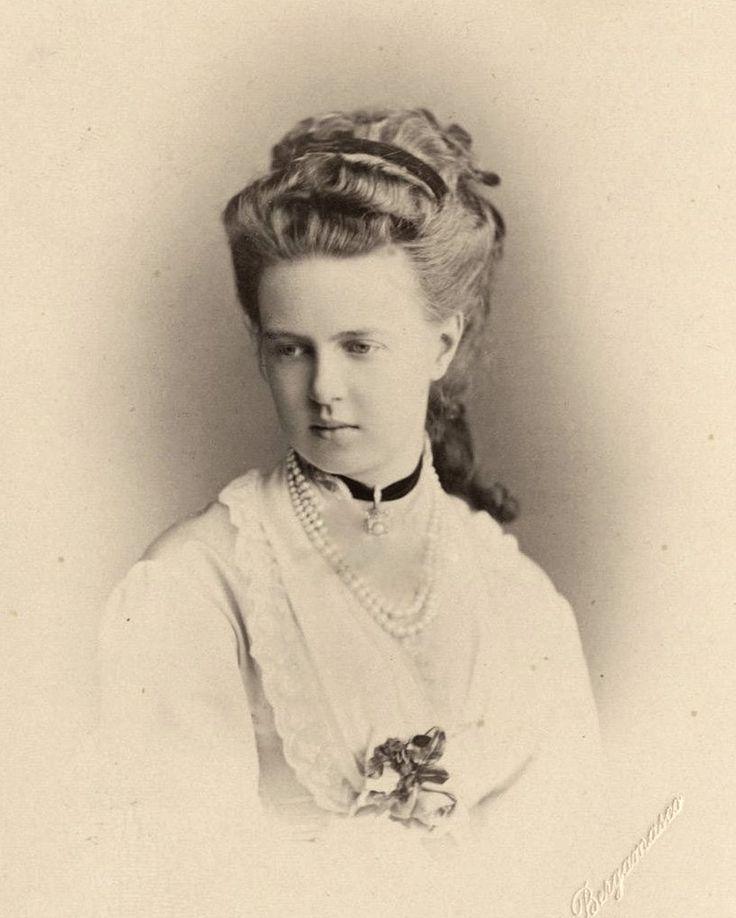
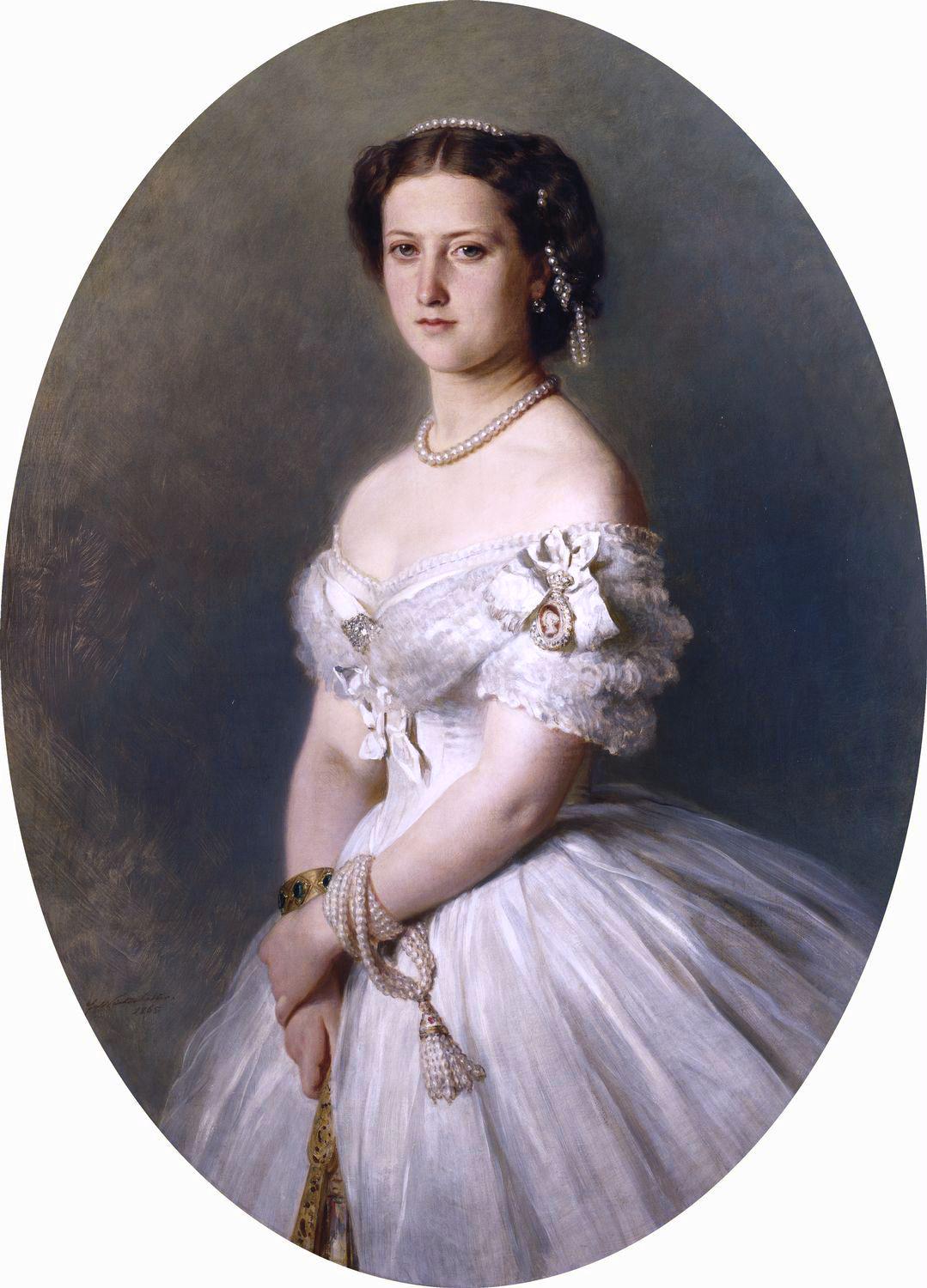
Historical figure Helena of Great Britain (1846 - 1923): Overlooked by others
Post image
34 Upvotes

It's hard being the middle middle child of the family. You would never get the responsiblities and sense of leadership like an older sibling, or even be spoiled and given intense tendercare as much as the younger one. And this may be a reason why Princess Helena was often ignored when it comes to the history of Queen Victoria and her family. Yet, it is always a good thing to give others a chance to present themselves, which is what this story will do.

Born on 25th of May 1846 in Buckingham Palace, Princess Helena was the fifth child and third daughter of Queen Victoria and Prince Albert of Saxe-Coburg and Gotha.

Known as Lenchen by her family, the pruncess already showed signs of a prodigy, with her interests being that of science, similar to her father.

When Prince Albert died in 1861, the queen entered into a status of grief. This was felt into her younger children as well, like Helena. This period of sadness made the queen closer to her younger daughters, and after Alice's marriage and move to Hesse, the household needed a new secretary.

Helena was the one given the role, becoming an important person for hee mother as she was traversing her early years of widowhood. As her secretary, Helena was responsible with writing letters for members of household or other ministers.

By 1863, Helena was about to turn 17, which means, it was time for her to find a suitable prince to be her husband. This was made difficult by several factors: first was that Helena was considered the least attractive among the Queen's daughters, and second was a condition the queen put. As she was now emotionally reliant on her daughters, she hoped that they would not depart outside of Britain following their marriages, as was the case for Vicky and Alice.

In the end, she became engaged in 1865 to Prince Christian von Schleswig-Holstein. He was an extended member of the Danish rulling dynasty. However, this match was met with a lot of concern.

First of all, and the most obvious concern, was the age gap. He was fifteen years older that his bethroted. He was pretty much closer to her mother by age, which you might imagine is a bit gross.

But the most concerning thing about their engagement was the dynastic crisis in Denmark.

Christian's older brother, Friedrich, was claiming the rights to the danish throne based on his seniority within the wider rulling dynasty. But his claim was disputed by that of his distant relative, Christian of Glücksburg, who was married to the king's cousin. And since Denmark proper and the duchies of Schleswig and Holstein used different forms succesion, the crisis transformed into a dispute between Denmark and the German Confederation over the duchies.

If you are confused, don't worry, it is precisely why only 3 people were insightful about it. But the important thing to take it from this dispute was that it caused arguments within the British Royal Family, as Alexandra, the princess of Wales, Christian of Glücksburg's daughter, while Queen Victoria's two older daughters were married into german royalty.

But despite the tensions, Queen Victoria allowed for the marriage to continue. And on the 5th of July 1866, their wedding took place at Windsor Castle. The ceremony was not as grand compared to the previous ones, since the Queen was still in the mourning period.

Following the marriage, Helena became formally known as Princess Christian of Schleswig-Holstein, in accordance with the custom by which married royal women were often identified through their husbands' titles.

The couple initially resided at Frogmore House, near Windsor Castle, before establishing their principal residence at Cumberland Lodge in Windsor Great Park.

Unlike many of her sisters, Helena would spend virtually her entire married life in Britain. This was more by design, as Queen Victoria wanted her remaining daughters to remain by her side as she was emotionally reliant on them.

But Helena did not object to this idea. In fact, out of all the daughters, she seemed to be the most loyal to her mother. So for the rest of Queen Victoria's life, she would remain a personal secretary of hers, a duty shared by her younger sister Beatrice. But this was not to be an easy life.

This was due to the fact that Helena's marriage to Christian would produce six children, with only four surviving into adulthoood. The first was Christian Victor, who was born in 1867. The second was Albert, born in 1869. In 1870, Princess Helena Victoria was born, and two years later, her younger sister named Marie Louise.

Though becoming a mother was seen as a good thing for our princess, she now had to balance her duty as a mother and that of being the Queen's trusted daughter. But it seemed she managed to find a good balance.

Her adult life was pretty much quiet and rather uneventful, in comparison to her sisters. This pretty much is the reason why she is not as well known as the others. But that did not mean she was inactive in British Society.

During the 1870s, Helena increasingly became involved in charitable activities, particularly those associated with nursing and the welfare of women. The period witnessed major developments in the professionalization of nursing, influenced by the work of Florence Nightingale and the establishment of organized nursing education. Helena supported these efforts, as well as rights for the women in the Empire, despite her mother's objection to such an idea. From the start, the Princess participated in charitable initiatives connected with the care of wounded soldiers and the improvement of medical services.

In 1872, Helena became associated with the School of Art Needlework, later known as the Royal School of Needlework. The institution aimed to preserve traditional embroidery techniques while providing women with vocational training and opportunities for employment. As its first president, Helena supported the development of an organization that combined artistic education with economic opportunities for women. Her patronage helped establish the school as a respected institution within British society.

Her most important contribution to nursing came in 1887, when she became the first president of the British Nurses' Association. The organization sought to improve professional standards, promote nursing education, and establish a system of registration for qualified nurses. Helena's royal status provided the association with considerable prestige and helped attract public attention to its objectives. In 1893, the organization received a Royal Charter, marking an important achievement in its development. Although disagreements existed within the nursing profession regarding registration, Helena remained committed to promoting professional recognition and improving the status of nurses.

During the final decades of Queen Victoria's reign, Helena remained one of her mother's closest companions and most dependable daughters. Her marriage had allowed her to establish a household of her own, but she continued to assist the Queen with correspondence, social obligations, and domestic responsibilities, something that did not bother her.

Her children also began establishing their own lives around this time. Christian Victor pursued a military career in the british army. However, his career would be short-lived as in 1900, he passed away in South Africa from entretic fever while fighting in the Second Boer War.

As for her daughters, they became increasingly involved in charitable activities. In 1891, Marie Louise married Prince Aribert of Anhalt, although the marriage proved notoriously unhappy and was annulled in 1900. Helena Victoria, on the other hand, remained unmarried and devoted much of her life to philanthropy.

The death of her mother in 1901 and the coronation of her brother as King marked a new era for Helena. Although she continued to participate in royal ceremonies and charitable activities, she was no longer one of the principal companions of the reigning monarch. Nevertheless, she retained her royal status and remained an important figure within the extended royal family, albeit not as visible as the rest of King Edward's inner circle.

This routine remained for the rest of Edward's reign, with Helena being supported by her daughters. Together, they supported the professional development of nurses and the improvement of medical services, contributing to a movement that was gradually transforming nursing into a recognized profession during the reign of Edward and his succesor George V.

The outbreak of the First World War in August 1914 created a difficult situation for the British royal family because of its extensive connections with German dynasties. Helena's husband, Prince Christian, belonged to a German princely family, and their children maintained connections with German aristocratic circles. However, Helena had spent virtually her entire life in Britain and remained closely identified with the British monarchy.

Yet even so, George decided to rebrand his extended family into removing any german-sounding surnames and titles and indentify themselves more as British, as the public became increasingly anti-german. And so, in 1917, George renamed his family's surname into the House of Windsor, and included that to all of his close relatives that were fighting on the Entente side. This did not extend to Helena's last surviving son, Albert, who was by that point serving in the german army, thus being seen as a traitor to the United Kingdom.

On 28 October 1917, Prince Christian died at Schomberg House in London, aged eighty-six. His death was very painful to Helena. The two had maintained a peaceful and happy marriage for over 50 years, maintaining a quiet domestic life.

By the time the war ended, Helena had entered in her final period of her life. The most noteworthy thing about this time was arguing with Commissioners, who tried to turn her out of Schomberg House and Cumberland Lodge because of how expensive it became running her households. But she was able to keep hold of her residence. Her last public appearance was in April of 1923, when she attended the wedding of her great-nephew, Albert the Duke of York (future King George VI) and Lady Elizabeth Bowes-Lyon.

Over a month later, on the 6th of June 1923, Princess Helena of Great Britain died from a heart attack in her residence at Schomberg House. She was 77 years old and had witnesssed three separate reigns. Her funeral was quite a elaborate affair, despite Helena's somewhat private status. She was initially buried in the St George's Chapel alongside the remains of her husband, but five years later, their remains were transfered to the Royal Burial Ground in Frogmore.

Princess Helena, while being not as famous as her sisters, she nevertheless remained active in the victorian society as a social worker for the people, all while remaining devoted to her mother. While she gained a reputation among her contemporaries as being unquestionably loyal to the Queen and not deviating from her, it is unfair to say she had no independent view of her own. Like I said, she was supportive for the rights of women and campaigned for them.

But besides nursing, her other hobby was writing. For years, she would write and translate several works and helped her mother publish letters she wrote to her other daughters. Her first work was a biography about her father, which was noted to treat the subject with a lot of consideration

I guess the conclusion is that Helena remains an important example of how a Victorian princess could use her position to contribute to society while navigating the limitations imposed by royal tradition, an ultimate example of how royals should serve the nation.

r/FemaleMonarchs • • 1d ago

History I'm fascinated by the similarities between Roxelana and Theodora.

Thumbnail
gallery
113 Upvotes

Both went from sex slaves to some of the most powerful women in the world, and they ruled alongside their husbands in Constantinople.


r/FemaleMonarchs • • 16d ago

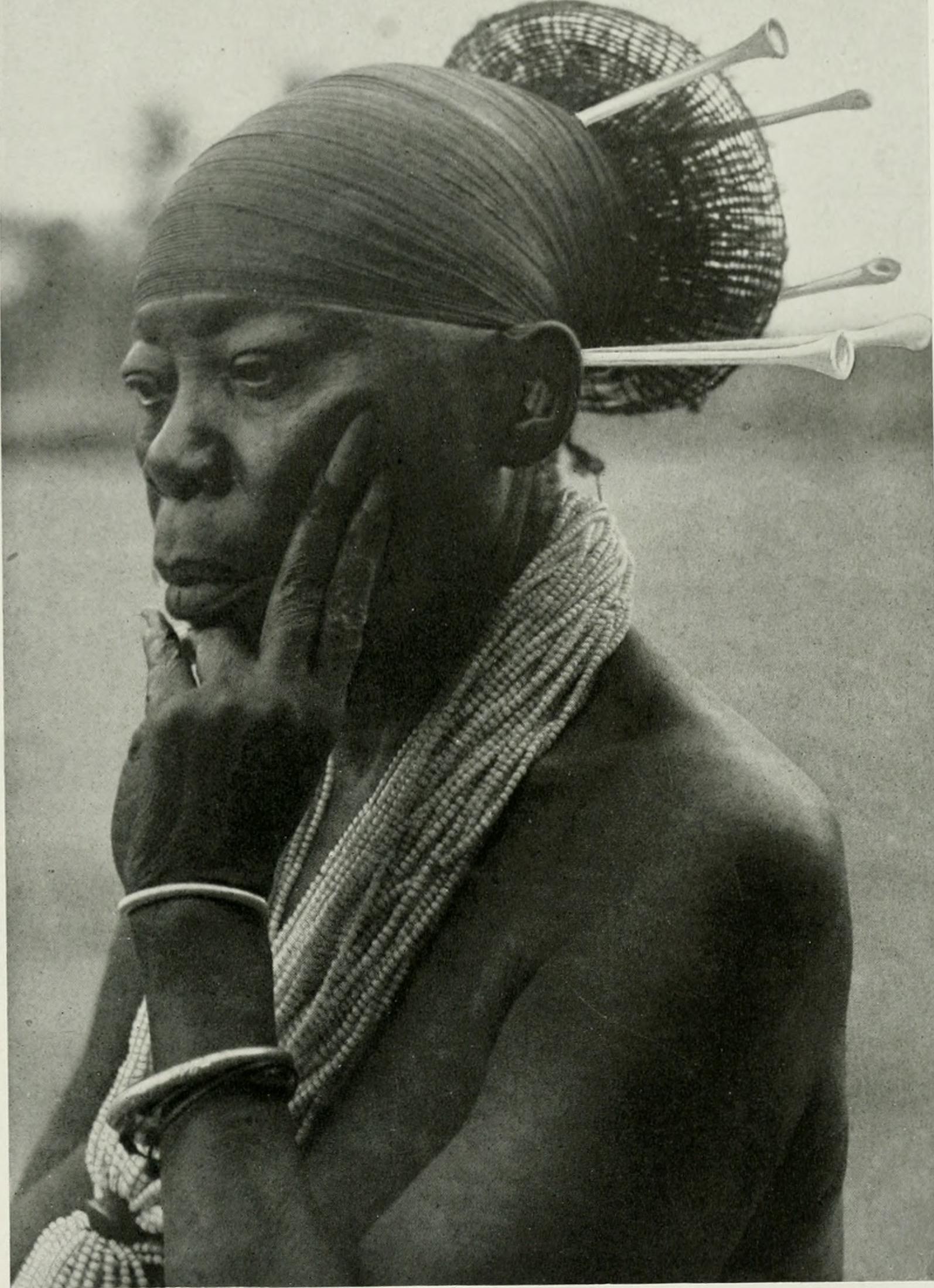
Historical figure Queen Nenzima of the Mangbetu people living in what is now the Democratic Republic of the Congo. 1913 photograph by Herbert Lang.

Post image
140 Upvotes

*Queen Nenzima of Mangbetuland. Nenzima was the formost of King Okondo's one hundred and eighty wives, and is more than sixty years of age. She has been queen during four reigns, and is the beloved mother of her tribe. The abrupt changes from glory to nothingness that follow wars and revolutions have failed to dim her fame. Endowed with great wisdom, she is renowned as a debater in court; the righteousness of her motives lends her sufficient daring to oppose rudeness and cruelty, and her charming simplicity places her beyond reproach. When it is announced that she will speak, great numbers flock to court. She rendered important service to her people at the period of the Belgian occupation."


r/FemaleMonarchs • • 21d ago

Meta Should the Ranavalona I flair be deleted, because Ranavalona was responsible for the deaths of half of Madagascar's population during the 1830s?

12 Upvotes

https://en.wikipedia.org/wiki/Ranavalona_I

I don't have full mod powers, so I can't change flairs; to do so, I have to enable two factor authentication (which I always forget to do) and request this subreddit on r/Redditrequest. But I will delete that user flair if the majority of users vote Yes.


r/FemaleMonarchs • • 23d ago

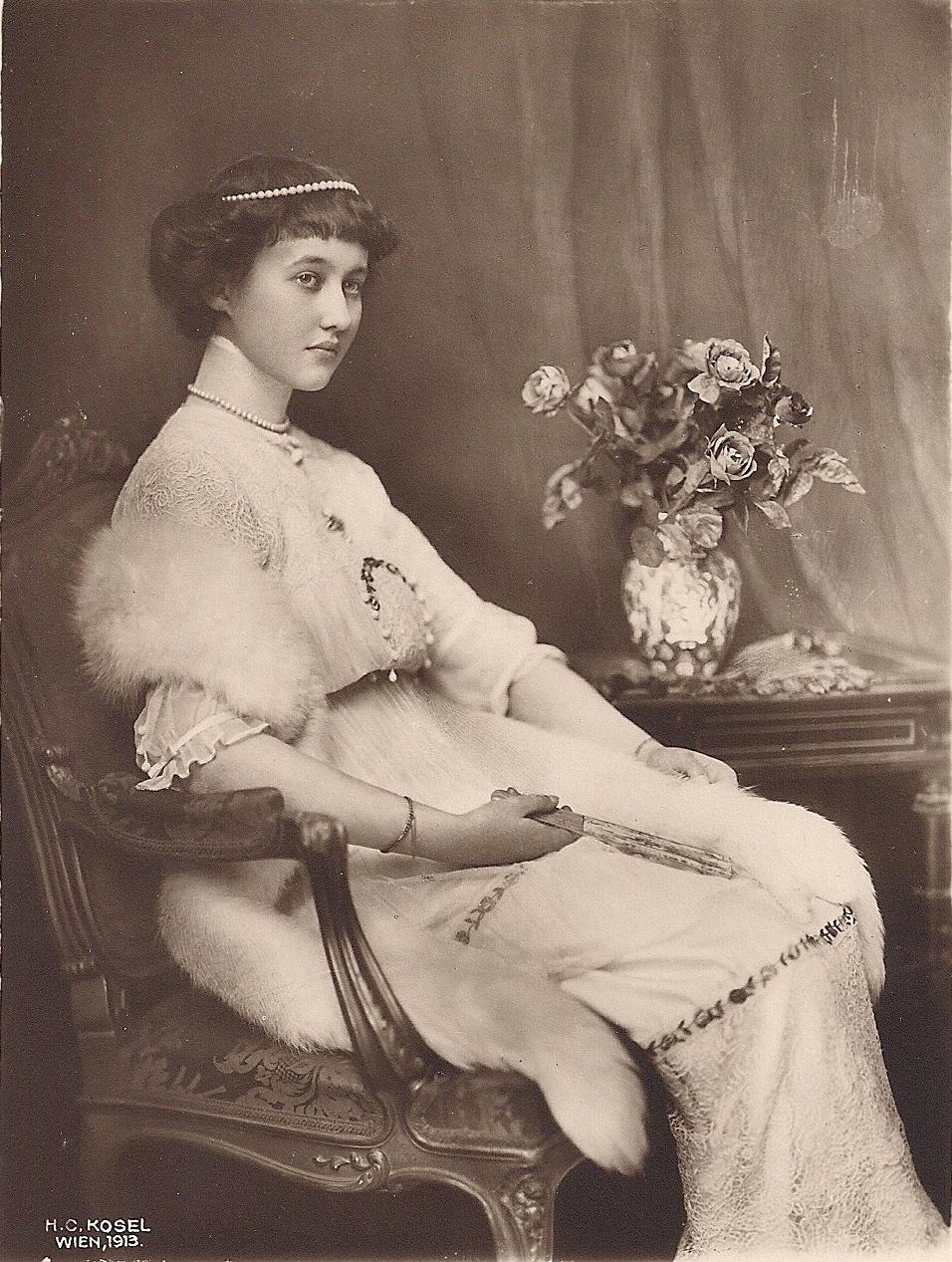
Marie-Adélaïde, Grand Duchess of Luxembourg (1894-1924). She reigned from 1912 until her forced abdication in 1919, amid controversy over her conduct during the German occupation in the Great War. Afterwards, she entered a Carmelite convent but left the religious life due to fragile health.

Post image
75 Upvotes

r/FemaleMonarchs • • 29d ago Heartwarming

Art, Regalia & Culture Let’s enjoy in some most iconic portraits of Queen Margrethe II

Thumbnail
gallery
340 Upvotes

Which one is your favourite?


r/FemaleMonarchs • • 29d ago

who the coolest princess in history?

Thumbnail reddit.com
2 Upvotes

r/FemaleMonarchs • • Oct 23 '26

History Princess Charlotte and Queen Anne might have the saddest pregnancy history...

Thumbnail gallery
36 Upvotes

r/FemaleMonarchs • • Oct 22 '26

Discussion Historically, multiple female monarchs have been blamed for the fall of their respective empires.

49 Upvotes

- Rusudan of Georgia was blamed for the Mongol conquest of Georgia in the 1230s. This is unfair because there's no way Georgia would resist the Mongols.

- Hurrem Sultan/Roxelana was blamed for the fall of the Ottoman Empire because of her role in the killing of her stepson Mustafa, but the theory that his death started the empire's decline is outdated and has been questioned by more recent scholarship.

- Also in Georgia, but in the 19th century, people said Queen consort Darejan Dadiani was at fault for Russia conquering Georgia because of her role in a succession dispute between her sons and her stepson George XII.

- Supayalat, the last Queen consort of Burma before the British conquest, inspired the proverb "a woman can bring ruin to a kingdom".


r/FemaleMonarchs • • Oct 22 '26

Question Which Monarch you think you could have a conversation? These are mine..

Thumbnail gallery
6 Upvotes

r/FemaleMonarchs • • Oct 21 '26

Historical figure Maria Aleksandrovna of Russia (1853 - 1920): too russian to bear

Post image
207 Upvotes

In the world of royalty, marriages were usually arranged to forge alliances between nations or as a means of ensuring peace. Rarely were they about love. But one rarely mentioned consequence of these matrimonial alliances was that they could introduce new cultural norms and traditions to different societies, sometimes resulting in culture shock and clashes of faith.

So, what happens when an individual refuses to adapt to the standards of their new home? This is exactly what Maria Aleksandrovna, Grand Duchess of Russia by birth and Duchess of Edinburgh by marriage, would discover.

Our story begins on the 17th of October 1853, at the Alexander Palace in the Tsarskoye Selo complex, near Saint Petersburg. It was on that day that Maria Aleksandrovna was born to Tsarevich Aleksandr and his wife, Marie of Hesse-Darmstadt. Her parents were overjoyed at her birth, as they had long wished for another daughter following the death of their firstborn, Aleksandra Aleksandrovna, in 1849. Because Maria was born four years after her sister's death, she grew up knowing only her brothers: the four older ones (Nikolai, Aleksandr, Vladimir, and Aleksei) and the two younger ones (Sergei and Pavel).

In March 1855, when Maria was less than two years old, her grandfather, the autocratic and conservative Tsar Nikolai I, died, making her father the new Tsar and Autocrat of the Russian Empire as Aleksandr II. In addition, he also became King of Poland and Grand Duke of Finland, as these two territories had been under Russian rule since the Napoleonic Wars.

Now the daughter of an emperor, Maria held the title of Grand Duchess, a title she would continue to use for the rest of her life. As a child, she lived in a world where hardship and deprivation seemed almost nonexistent. Her family, the Romanovs, was among the wealthiest royal dynasties in the world, owning numerous residences and country estates, staffed by hundreds of servants and filled with priceless works of art and expensive furniture.

At Tsarskoye Selo, near the pond in the gardens of the Alexander Palace, Maria had her own playhouse, where she could spend time with her brothers. Her parents even had a small farm built for her entertainment. From the very beginning, they adored their daughter and rarely made a habit of denying her anything. Of all his children, Maria was reportedly the Tsar's favourite.

It was said that whenever she became bored, the little Grand Duchess would wander into her father's office to spend time with him, even when he was in the middle of an important meeting. This was not nearly as annoying as you might imagine, as Aleksandr once told a member of his staff that spending time with his little girl made him forget everything unpleasant. Her mother was similarly affectionate. She would take her daughter on trips outside Russia, and the two continued to correspond regularly for many years.

So yes, Maria was a spoiled child. Although I wouldn't say she was quite on the same level as Veruca Salt, considering her behaviour later in life, she certainly came close to fitting that pattern.

Maria also got along well with her brothers, being especially close to her two younger siblings, Sergei and Pavel. As the only surviving daughter of the imperial couple, she adopted some of her brothers' habits, developing a more tomboyish personality and an iron will.

By 1868, Maria had met Alfred, Duke of Edinburgh, for the first time. He was the second son of Queen Victoria and her fourth child overall. By that point, he was serving in the Royal Navy, a career that greatly appealed to him. That year, he travelled to Hesse to visit his sister, Alice. Since Alice's husband was Maria's cousin, the Grand Duchess happened to be there as well.

The two met again in 1871, once more in Hesse, and this time they began to see each other differently. A romantic connection was developing between the lively young Grand Duchess and the shy yet handsome sailor prince. And, as is common with many young lovebirds, they wanted to tie the knot. Unfortunately, they encountered opposition from their parents.

Queen Victoria did not want one of her children to marry a member of the Russian imperial family. At the time, Britain and Russia were engaged in something known as the Great Game, which was essentially a nineteenth-century version of the Cold War. Additionally, Victoria regarded Russians as unfriendly and stubborn.

Maria's parents were also opposed to the match, still remembering Britain's role in Russia's defeat during the Crimean War. Maria's mother, who held strong Pan-Slavist sympathies, did not regard the British particularly highly, believing them to be rather rude.

Consequently, both mothers were eager to marry their children off to other members of the European nobility. However, neither Alfred nor Maria was willing to accept another match. Maria showed no interest whatsoever in the two other suitors recommended by the Tsarina. Realising that she could not reason with her daughter, the Empress eventually agreed to allow her to meet Alfred in Italy as part of the marriage negotiations.

Although the meeting ended abruptly because Maria fell ill, negotiations continued. Eventually, Queen Victoria relented and gave her approval to the match. Her ministers had helped persuade her, believing that the marriage might ease tensions between Russia and Britain.

And so, on the 23rd of January 1874, the twenty-year-old Maria Aleksandrovna married the twenty-nine-year-old Prince Alfred. The wedding took place in Saint Petersburg and was attended by Maria's father and brothers, as well as Alfred's elder brother Bertie, his wife Alexandra, and Alexandra's sister Dagmar, who was also Maria's sister-in-law.

The wedding began with an Orthodox ceremony, followed by a service conducted according to Anglican rites. Throughout the celebrations, Maria's father reportedly felt saddened by the prospect of seeing his favourite child married and soon departing from his household.

The newlyweds spent their wedding night at Tsarskoye Selo, where they also enjoyed a honeymoon lasting approximately a month. Afterwards, they travelled to Britain to settle into their new household. They arrived in England in March of that year, with the Queen herself meeting them at the railway station.

Once they reached London, the Duke of Edinburgh and his new Duchess settled into their principal residence, Clarence House. The building had previously been the home of King William IV and, in more recent times, served as the London residence of Charles III and Camilla before his accession. They also acquired a country estate called Eastwell Park, located near Ashford in Kent.

Although Maria enjoyed considerable wealth and possessed an impressive collection of jewellery, befitting her rank as a member of the royal family, her new surroundings did not entirely satisfy her expectations. The contrast between the Russian imperial court and the British monarchy was particularly striking.

Maria considered British court life comparatively restrained, and she sometimes struggled to adapt to the customs and social expectations of her adopted country.

It was especially difficult for her to adjust to her new position as Duchess of Edinburgh. She believed that her previous title of Grand Duchess of Russia should take precedence, as it technically outranked that of duchess. The Queen, however, was not amused. In her view, Maria was now a member of the British royal family and should therefore be addressed accordingly.

Apart from this disagreement over titles, the relationship between Maria and the Queen was strained by their clashing personalities. Victoria was accustomed to exercising considerable influence over her children and their spouses. Maria, however, had been raised and thoroughly spoiled as the daughter of an autocratic emperor and possessed a strong sense of personal independence. So, as you can imagine, the two women frequently disagreed over seemingly trivial matters because of their differing points of view.

Maria also struggled to get along with her sister-in-law, Princess Alexandra, for similar reasons. She considered it improper that she should rank below the Princess of Wales, because remember, she had been born a Grand Duchess.

Despite their frequent disagreements, Maria maintained the formal courtesies expected of royal relatives in her dealings with her mother-in-law. Their correspondence suggests a relationship far more complicated than a simple personal feud. As her eldest daughter once remarked: "I do not think my mother always found it easy being Queen Victoria's daughter-in-law, though they had great respect for each other."

Speaking of her eldest daughter, during this period, Maria and Alfred were beginning to establish a family of their own, eventually having five children together. Their first child, and only son, was born in late 1874 and named Alfred after his father. He was followed the next year by their first daughter, Marie. Then, in 1876, while Alfred and his wife were stationed in Malta as part of his naval career, they welcomed another daughter, Victoria Melita, better known within the family as Ducky. In 1878, their third daughter, Alexandra, was born.

From the moment Maria became a mother, she decided that she wanted to play an important role in her children's upbringing. In fact, unlike her mother-in-law, the Duchess thoroughly enjoyed motherhood, describing the birth of a child as a "heavenly moment" that "cannot be compared to anything else".

This attitude was further demonstrated by her decision to nurse her children herself. If you remember my post about Alice, you will know that Queen Victoria considered this practice unacceptable among royal women. Naturally, Maria's decision only created further friction between the sovereign and her daughters-in-law.

In 1877, war broke out between Russia and the Ottoman Empire, largely as a result of the political crisis and uprisings in the Balkans. Maria was, of course, supportive of her native country, while Queen Victoria was deeply concerned about a Russian victory and the consequences it might have for British interests. The Queen's opposition to Russian policy, along with the harsh letters she sent condemning Maria's father, came as a considerable shock to the Grand Duchess.

By 1880, Maria was growing increasingly tired of her life in Britain. Apart from her frequent bickering with the Queen, she did not find London particularly appealing. In letters to her mother, Maria complained that British royal residences lacked the opulence of their Russian counterparts and that the people were unpleasant and possessed little sense of elegance.

That year, she had the opportunity to return to Russia for a while to attend her father's silver jubilee. It was one of the few opportunities she had enjoyed in recent years to spend time with her beloved parents. In June, however, Maria's mother, who had been seriously ill for some time, finally passed away. The Empress had suffered from tuberculosis for years, frequently travelling abroad in the hope that a change of climate might improve her health. Eventually, on the 3rd of June 1880, the illness claimed her life at the age of fifty-five.

Less than a year later, in March 1881, Maria's father was mortally wounded when revolutionaries attacked his carriage with bombs as he travelled through Saint Petersburg. He died later that day. Maria was not in the capital at the time and therefore had no opportunity to say goodbye to her beloved father.

She returned to Russia in 1883, this time to attend the coronation of her brother, the new Tsar Aleksandr III. She and Alfred represented the British royal family at the ceremony.

The following year, Maria attended the wedding of her beloved younger brother, Grand Duke Sergei, to Princess Ella of Hesse-Darmstadt, the daughter of Grand Duchess Alice. That same year, Maria gave birth to her youngest child, Beatrice, named after Alfred's youngest sister, with whom Maria enjoyed a good relationship.

Fast-forward to 1886, when Alfred was appointed Commander-in-Chief of the Mediterranean Fleet. As a result, he and his family once again moved to Malta.

By this point, however, Maria's marriage to Alfred had become increasingly strained. He was constantly occupied with his naval career, leaving him with relatively little time to participate in family affairs. Moreover, as he grew older, his drinking became a serious problem, gradually changing his personality for the worse. Maria became increasingly frustrated with her husband's behaviour and often felt more comfortable whenever Alfred was away. Despite this, she continued to maintain the appearance of a stable marriage, partly to avoid causing distress to their children.

In 1887, the family moved once again, this time to the German town of Coburg. You see, Alfred's uncle was Duke Ernst II of Saxe-Coburg and Gotha. He had ruled the duchy since 1844 but had no legitimate children to succeed him. This meant that the duchy would eventually have to be inherited by one of Queen Victoria's sons.

Since Bertie had renounced his succession rights, Alfred was now next in line. Initially, Alfred was somewhat bitter about the prospect, as it meant eventually giving up his beloved naval career. However, he gradually came to accept his future inheritance.

By 1887, as Ernst's health was deteriorating, Alfred and his family decided to establish themselves in Coburg to make the eventual succession smoother. Maria found the duchy to be the perfect retreat. Its extensive woodlands provided excellent opportunities for hunting, while the picturesque landscape greatly appealed to the Grand Duchess.

She wanted her children to become fully integrated into the duchy's society. Since she played the dominant role in their education, Maria encouraged them to learn German and adopt the customs of their future homeland. She even considered having them converted to Lutheranism. However, this proved difficult, as her daughters had inherited much of their mother's independent spirit and were not always willing to accept her plans.

Maria soon began thinking about marrying them off to suitable princes as quickly as possible, believing that they would become increasingly difficult to persuade as they grew older. This was the case with her eldest daughter, Marie, who became engaged to Crown Prince Ferdinand of Romania in 1892. The couple married in January 1893, when Marie was seventeen.

Later that year, Duke Ernst II passed away, making Alfred the new Duke of Saxe-Coburg and Gotha. Despite his initially awkward relationship with the duchy and his English background, Alfred eventually became a popular ruler among the people of Coburg.

As the new Duchess Consort, Maria devoted much of her time to decorating and redesigning the interiors of the numerous residences she and Alfred had inherited. One residence to which she felt particularly attached was a small, three-storey building known as Edinburgh Palace, which had belonged to Alfred since 1865. There, Maria kept her extensive collection of personal possessions and mementoes brought from Russia.

In 1894, her second daughter, Ducky, married Ernst Ludwig, Grand Duke of Hesse and by Rhine, who had succeeded his father, Ludwig IV, in 1892. Their wedding brought together one of the largest gatherings of Queen Victoria's descendants from across Europe.

Later that same year, Maria and Alfred travelled once again to Russia to visit her brother Aleksandr, whose health was rapidly deteriorating. He died in November from kidney disease. The couple remained in Russia to attend the wedding of Maria's nephew, the newly crowned Tsar Nikolai II, to his fiancée, Alix of Hesse, who was also Alfred's niece. Incidentally, it was during Ducky's wedding celebrations that Nikolai and Alix became formally engaged, although their acquaintance and romance had begun years earlier.

In April 1896, Maria's third daughter, Sandra, married Prince Ernst of Hohenlohe-Langenburg. This match was not viewed favourably by Alfred, as the groom was considerably older than Sandra and did not belong to a reigning sovereign house. Maria, however, supported the marriage regardless. Ernst was a grandson of Queen Victoria's half-sister, Feodora, making him and Sandra distant cousins.

Now that her older daughters were married and had moved away from Coburg, Maria's principal concern was her son, Prince Alfred. Known affectionately as Alfie within the family, he had reached adulthood by 1897 but remained unmarried. One possible explanation was that he had developed a rather questionable reputation for a prince, particularly because of his fondness for gambling and his relationships with women.

By this time, however, his health was deteriorating. He had reportedly contracted syphilis, possibly as a result of these relationships. Then, in early 1899, around the time his parents were celebrating their twenty-fifth wedding anniversary, Alfie's condition became critical. On the 6th of February 1899, the young prince was dead.

Although illness may have contributed to his death, the second edition of The Complete Peerage, a major reference work documenting the history of the British aristocracy, suggests that Alfie may actually have committed suicide. The precise circumstances remain uncertain. One popular version of the story claims that Alfie was devastated when his parents refused to allow him to marry the granddaughter of a British nobleman. However, there is little reliable evidence supporting this romantic explanation. But, as we all know, people do seem to enjoy a tragic love story.

What is certain is that his parents were devastated by the loss of their only son. His death also created a succession problem, as Alfred no longer had a surviving son to inherit the duchy. Consequently, another male relative had to be designated as his successor.

In the end, the next heir to Saxe-Coburg and Gotha was Alfred's young nephew, Charles Edward, Duke of Albany. And it was fortunate that the succession had been settled, because Alfred himself was already seriously ill.

By this time, the Duke was suffering from throat cancer, which eventually made speaking and swallowing extremely difficult. He died on the 30th of July 1900, at the age of fifty-five.Maria was at his bedside during his final moments, as was their daughter Sandra.

Now a widow at forty-six, Maria relinquished Clarence House and Eastwell Park and began dividing her time between residences in Germany and Nice. As Dowager Duchess of Saxe-Coburg and Gotha, she continued to take a keen interest in the lives of her daughters.

Sometimes, she was supportive of their personal struggles, as was the case when Ducky divorced her husband in 1901. On other occasions, however, she could be considerably more judgemental about their decisions.

By 1914, with the outbreak of the First World War, Maria found herself in an extraordinarily difficult position. She had recently returned from a visit to King George V of Britain, but now she faced an uncomfortable question: which side should she support, her native Russia or her adopted homeland of Germany? After what must have been a difficult decision, she chose to support Germany.

This placed her on the opposite side of the conflict from two of her daughters: Marie, who became Queen of Romania later that year, and Ducky, who had married into the Russian imperial family. Relations between Maria and these two daughters became increasingly strained. For much of the war, she largely ceased corresponding with them, something that caused both women considerable distress.

But life in wartime Germany proved difficult for Maria herself, particularly as anti-Russian sentiment continued to grow. In 1917, while travelling through Coburg with Sandra and Beatrice, her car was reportedly stopped by an angry crowd, whose members harassed the Dowager Duchess because of her Russian ancestry. Concerned for her safety, her nephew, Duke Karl Eduard, arranged for her to live away from Coburg.

Meanwhile, Maria learned of the tragedies that had befallen her family during the Russian Revolution. Numerous members of the Romanov dynasty were imprisoned or murdered by the Bolsheviks. One of the most heartbreaking losses was that of her younger brother, Grand Duke Pavel, to whom she had always been particularly close. He was executed in January 1919.

Furthermore, much of the personal fortune she had kept in Russia was confiscated by the revolutionary authorities, leaving her in serious financial difficulties.

By the end of the war, Maria Aleksandrovna, once a strong-willed duchess who had lived surrounded by unimaginable luxury, had lost much of her wealth and security. What remained of her fortune consisted largely of personal possessions and jewellery that she had not yet been forced to sell. She was also heartbroken by the collapse of the monarchies in Russia and Germany, two countries that had played such important roles in her life.

Nevertheless, there was one bittersweet consolation: she was able to see Marie and Ducky once more. It was not exactly a complete reconciliation, but after so much death and destruction, simply knowing that her daughters were still alive and well must have brought her some comfort.

On the 24th of October 1920, just seven days after celebrating her sixty-seventh birthday, Maria Aleksandrovna, the last surviving legitimate child of Tsar Aleksandr II, died in her sleep in Zürich, Switzerland. Her health had been declining for some time, and she had reportedly suffered from recurring heart problems. She was buried in the ducal mausoleum in Coburg, beside her husband. Her daughters, who had admired and adored her despite their occasional disagreements, mourned her passing.

Maria's life had certainly been an interesting one. Having lived in three very different worlds, while navigating family drama, dynastic rivalries, personal tragedies, and war, her story was one of both splendour and suffering. But whatever else one might say about Maria Aleksandrovna, her life was certainly never a boring one.


r/FemaleMonarchs • • Oct 21 '26

Historical figure Valide Gülnuş Sultan being personally involved in the design process of the cradle ordered for her granddaughter Fatma Sultan and Fatma’s mother Emetullah Baskadin

Post image
24 Upvotes

r/FemaleMonarchs • • Oct 20 '26

Question The Provence sisters must have been the most fortunate and luckiest noblewomens ever!!

Thumbnail gallery
54 Upvotes

r/FemaleMonarchs • • Oct 18 '26

Olga of Kiev (c. 890-925 — 969). She was a regent of Kievan Rus' for her son, after the assassination of her husband, Igor I. She later converted to Christianity and is venerated as a saint, "Equal to the Apostles," in the Orthodox Church.

Post image
152 Upvotes

r/FemaleMonarchs • • Oct 14 '26

Historical figure Alice of Great Britain (1843 - 1878): Just being ahead of her time

Post image
196 Upvotes

Alice was born on 25 April 1843 at Buckingham Palace as the third child of Queen Victoria and Prince Albert. Her birth was not exactly met with the same jubilation as that of her brother, Bertie. Nevertheless, Albert was happy to have another healthy child.

Despite Alice being born at Buckingham Palace, the royal couple decided to establish another family residence at Osborne House, believing it would better accommodate their growing family. Like her older sister, Vicky, Alice received an education overseen by her father, who wanted to instil in his children the values of personal liberty, modesty, and compassion for the common people.

As a result of their upbringing, the two sisters would remain close for the rest of their lives. From a very young age, Alice showed an intense curiosity about the world around her. It was not uncommon for her to wander beyond her designated surroundings or chat with the staff working at the royal residences.

During the Crimean War, in which Britain fought against Russia, Alice accompanied her mother on visits to hospitals where wounded soldiers were being treated. The experience revealed her compassionate nature and would have a profound impact on the princess's worldview.

Her compassion was demonstrated again in 1861, when her grandmother, the Duchess of Kent, died. Despite the Duchess's role in the Queen's strict upbringing, Victoria deeply mourned her mother. Alice was there to comfort her, which earned her even greater affection from the Queen.

But our young princess was not going to remain by her mother's side for much longer.

Since 1860, her parents had been searching for a suitable prince to become her husband. What made this difficult was their insistence that Alice should consent to the marriage. The royal couple wanted their children to develop genuine romantic feelings for their spouses rather than simply marrying them off to some random royals, as had been the custom for centuries.

After some short-lived courtship prospects involving the eldest son of the Dutch King and a relative of Vicky's husband, another candidate was suggested: Prince Ludwig of Hesse-Darmstadt.

He was the nephew of Grand Duke Ludwig III of Hesse and by Rhine and of Empress Maria Alexandrovna of Russia. He was recommended as a suitable match by Vicky, who had personally visited Darmstadt to assess him.

Then, in 1860, Ludwig and his younger brother were invited to Windsor Castle to spend a few days with the royal family, providing the perfect opportunity for Ludwig and Alice to get to know each other.

Ludwig made a good impression on the Queen, and he got along well with Alice. Indeed, Alice made it clear that she was attracted to the Hessian prince.

And so, in April 1861, Alice and Ludwig became engaged, with the blessing of her parents.

However, before they could marry, Alice's father died, casting a shadow over the wedding as the royal family entered an extended period of mourning.

When Alice's wedding finally took place on 1 July 1862, her mother had to be shielded from the other guests to preserve her privacy during the ceremony.

This made the wedding seem, in the Queen's own words, "more like a funeral than a wedding."

Despite Alice's enthusiasm about getting married, she had to conceal her happiness. Once the ceremony was over, she changed out of her simple wedding dress and into a black mourning dress.

Now newlyweds, Alice and Ludwig arrived in Hesse in July of that year. When they reached Darmstadt, the people celebrated their arrival. Alice wrote to her mother that the warm reception had left her overjoyed. Despite this, maintaining her popularity among the Hessians would remain a challenge for our princess. For starters, the people opposed spending money on the construction of a new residence for the couple, as Queen Victoria had wished. Secondly, Alice experienced homesickness during her first months in the Grand Duchy, particularly because she remained concerned about her mother's mental state following Albert's death.

In 1863, she travelled to England for the wedding of her older brother, Bertie, to Princess Alexandra of Denmark. That same year, she gave birth to her first child, Victoria, at Windsor Castle. Afterwards, Alice returned to Darmstadt with her daughter and began making a greater effort to integrate herself into the Hessian court.

This period also saw a deterioration in Alice's relationship with her mother. Her infrequent visits to England frustrated the widowed Queen. Not only that, but Alice's apparent happiness in her marriage sometimes made Queen Victoria jealous, as it reminded her of her own married life with the now-deceased Albert.

The relationship between the two women would remain complicated for the rest of Alice's life, although they continued to share moments of genuine affection.

In 1864, at her and Ludwig's private residence in Kranichstein, Alice gave birth to another daughter, Elisabeth, nicknamed Ella by her family. Queen Victoria was appalled to learn that Alice had decided to breastfeed her daughter, as the Queen strongly disapproved of the practice among women of their social standing.

In 1866 came one of the most difficult periods of Alice's life, as war broke out between Austria and Prussia in the summer of that year. Since Hesse joined Austria's side, Alice found herself on the opposing side from Prussia, where her older sister was Crown Princess.

Despite this uncomfortable situation, Alice took on the responsibility of caring for wounded soldiers.

In doing so, she was inspired by her correspondent, the famous nursing reformer Florence Nightingale, whose work had revolutionised nursing during the Crimean War. Drawing on Nightingale's example, Alice began working to improve sanitation in military hospitals and was able to obtain support and funds from England.

In July, Prussian forces approached Darmstadt, leaving the city vulnerable to occupation. In the end, Grand Duke Ludwig III had little choice but to accept Prussia's victory. Fortunately, the Grand Duchy was spared complete annexation, partly because, if you remember, the Grand Duke's sister was married to the Emperor of Russia, and the Prussian court was unwilling to antagonise the Russians.

Unfortunately, however, the peace terms imposed upon Hesse were harsh, at least in Alice's view.

Prussia annexed some Hessian territory, including areas of strategic importance for transport and communications, while also forcing the small state to pay a substantial indemnity to Berlin.

But at least the war was over, and Alice was finally able to reunite with her husband, who had been serving at the front.

During the war, Alice had also given birth to another daughter, Irene. Four more children would follow: Ernst Ludwig in 1868, Friedrich in 1870, Alix in 1872, and Marie in 1874.

Following the conflict, Alice, now more confident in her abilities, continued to support humanitarian causes. For starters, she helped establish the nursing organisation that would lead to the creation of the Alice Hospital in Darmstadt, where patients could receive treatment using modern medical methods. The institution would continue operating into the present day.

Other organisations she supported, such as the Alice Society for Women's Training and Industry, were established to provide women with education and professional opportunities, allowing them to become more independent and economically productive members of society. As these organisations began to bear fruit, Alice became increasingly involved in their administration.

It is safe to say that Alice held views that would have been considered progressive, if not radical, at the time. For instance, she believed that women should be able to make decisions for themselves and that a woman's life should not revolve entirely around marriage and household responsibilities.

This stood in stark contrast to her mother, who held strongly anti-suffragist views.

Additionally, Alice was deeply sympathetic to the hardships faced by the lower classes. Whenever she could, she would travel incognito through the poorest areas of Darmstadt to observe the living and working conditions of ordinary people.

Around this time, Alice also developed a friendship with David Friedrich Strauss. He was a liberal theologian who had stirred considerable controversy during his lifetime thanks to his book The Life of Jesus Critically Examined. In it, Strauss argued that many of the miracles attributed to Jesus were myths and imaginative expressions of his teachings developed by his followers. As you can imagine, these arguments were fiercely criticised by many theologians of the time.

But Alice was sympathetic to some of his views and became increasingly interested in questioning conventional religious ideas. She also believed that certain values associated with Victorian society would have been unrecognisable to early Christians.

However, criticising contemporary social and religious standards would soon become the least of Alice's concerns.

In May 1873, her youngest son, Friedrich, affectionately called Frittie by his family, fell from a window while playing with his brother. The fall caused injuries that might not have been fatal to an otherwise healthy child.

But the problem was that Frittie suffered from haemophilia.

This disease prevents the blood from clotting properly, meaning that even relatively minor injuries can result in prolonged bleeding. In Frittie's case, the fall caused a fatal internal haemorrhage. The disease was also hereditary and appeared among several descendants of Queen Victoria, earning it the nickname "the Royal Disease."

Although Victoria and Alice did not suffer from haemophilia themselves, they were carriers of the condition, meaning that they could pass it on to their children.

And because of this, the two-year-old prince died a few hours after his fall, on 29 May 1873.

Alice was devastated by his death, and the tragedy brought her closer to her remaining children, especially Marie, who was born the following year.

On 20 March 1877, Ludwig's father died at the age of 67. Ludwig was already heir presumptive to the Grand Ducal throne, and the death of his father brought another loss to the family. Then, on 13 June, Grand Duke Ludwig III also died. This made Alice's husband the new Grand Duke of Hesse and by Rhine, reigning as Ludwig IV.

For Alice, however, becoming the new Grand Duchess gave her little reason to celebrate.

By this point, her marriage to Ludwig had cooled somewhat. Although she still loved her husband, Alice felt that he did not always meet her intellectual expectations. She considered him less intellectually curious than herself and believed that he struggled to express himself in the complex ways she desired.

For a woman who was intellectually curious and open-minded, Ludwig's personality sometimes left her longing for deeper conversation. She complained of his lack of "opinions, observations and remarks" and craved someone who could understand her on an equal intellectual footing. This helps explain why she valued friendships with people such as Strauss.

Besides her marital difficulties, Alice's popularity in Darmstadt remained unstable.

Some people criticised her refusal to conform to the expectations of court society, particularly her rejection of strict protocols and traditions that conflicted with her personal beliefs.

Eventually, these criticisms developed into rumours portraying her as petty and self-absorbed.

Alice soon began to feel increasingly depressed by the hostility directed towards her.

But Ludwig, surprisingly, managed to lift her spirits, telling her that "the bitterness of the salt water will drive away the bitterness that you still feel against Darmstadt."

Alice found his words touching and became increasingly appreciative of his emotional support.

Although he was not always the intellectual companion she desired, Ludwig was still someone who could brighten her day. Another moment of happiness came during Christmas 1877, when Alice spent the holidays with her husband and their surviving children.

But moments like these were soon to come to an abrupt end for our poor princess. In November 1878, the family was struck by a diphtheria epidemic.

Most members of the household became infected, with the exception of Ella, who had been sent away and was staying with her paternal grandmother.

On 16 November, the youngest child, Marie, died from the disease at the age of four. Alice initially kept her daughter's death a secret from her other children, hoping to spare them further distress while they were still recovering.

But her worries were far from over.

Because she had personally tended to her sick children rather than leaving their care entirely to the household staff, Alice had exposed herself to the disease. In early December, she began showing symptoms of diphtheria, and her condition rapidly deteriorated.

On 14 December 1878, exactly seventeen years after her father's death, the 35-year-old Grand Duchess Alice of Hesse and by Rhine passed away at the Neues Palais in Darmstadt.

She became the first of Queen Victoria's nine children to die. She was buried in the Grand Ducal Mausoleum at Rosenhöhe Park.

News of her death brought a wave of sadness throughout both Hesse and the United Kingdom.

Her relatives were equally heartbroken, with her brother Bertie reportedly exclaiming to his mother, "I wish I had died instead of her."

Even Queen Victoria, despite her occasionally tense relationship with her daughter, was devastated by her passing. She remarked that Alice's death on the same date as that of her late husband was "almost incredible and most mysterious."

As for Vicky, the sibling to whom Alice had been closest, it is safe to say that she did not take the news well. She even went so far as to write a 39-page letter to her mother expressing her profound sorrow.

These reactions demonstrate just how deeply Alice was loved by those who knew her. She truly was a woman whom her relatives were grateful to have as part of their family.

Speaking of her family, Alice's surviving children would go on to play important roles in European royal circles. Her eldest daughter, Victoria, would marry her cousin, Prince Ludwig of Battenberg. Their descendants would become part of the Mountbatten family, which included Alice's great-grandson, Prince Philip, Duke of Edinburgh, consort of Queen Elizabeth II.

Her youngest surviving daughter, Alix, would marry Tsar Nicholas II of Russia and become Empress Alexandra Feodorovna. Her fate, as you may know, was not a happy one. She and her family were murdered in the aftermath of the Russian Revolution, as was her older sister, Ella.

But their stories are for another time.


r/FemaleMonarchs • • Oct 13 '26

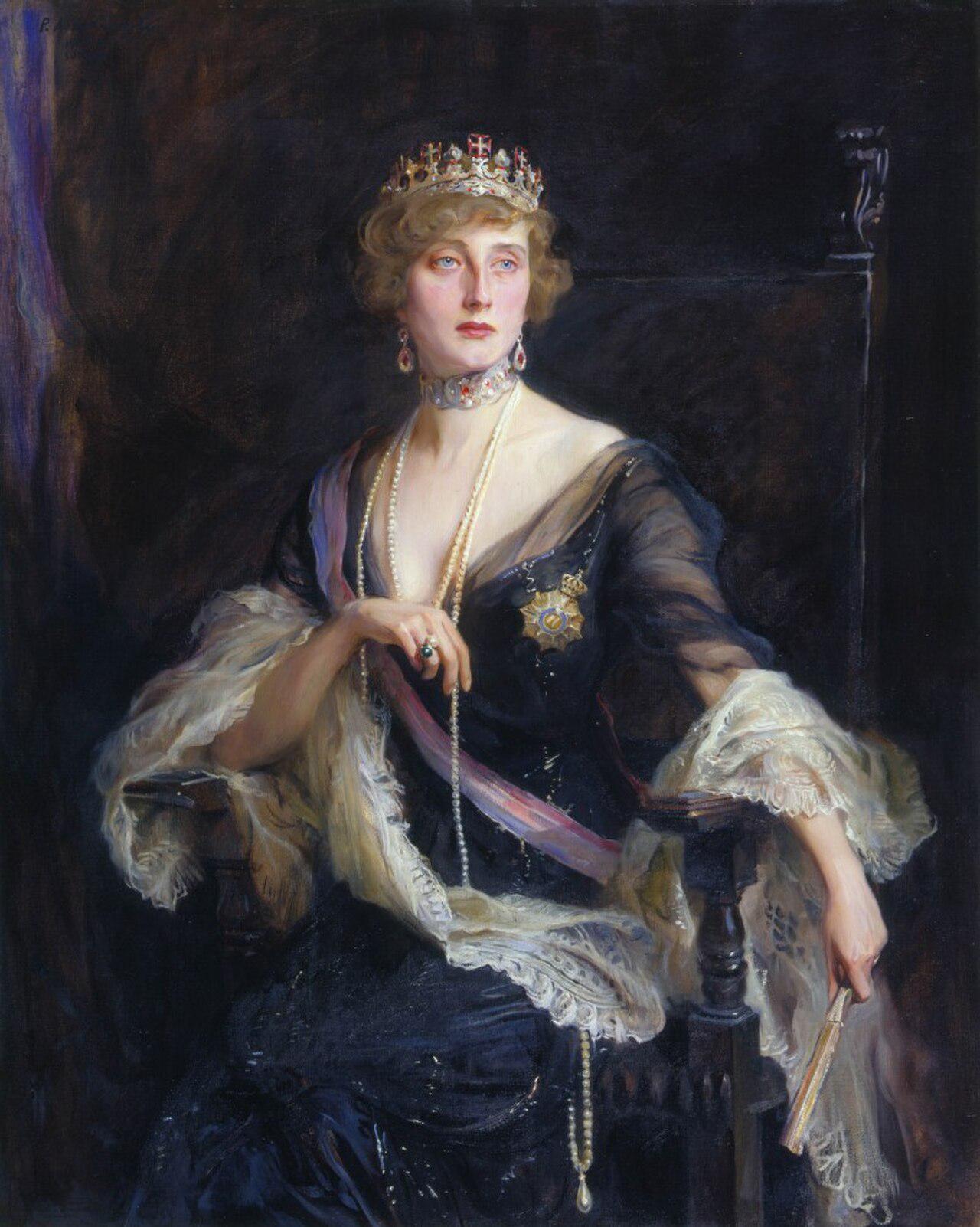
Augusta Victoria of Hohenzollern-Sigmaringen (1890–1966). She married the deposed King Manuel II of Portugal in 1913 and was titular Queen consort until his death in 1932.

Post image
143 Upvotes

r/FemaleMonarchs • • Oct 11 '26

Grand Duchess Tatiana Nikolaevna of Russia (1897–1918). Second daughter of Nicholas II and Alexandra Feodorovna, she was considered the most beautiful of the four Grand Duchesses. She trained as a nurse during World War I before being murdered along with her family in 1918.

Post image
260 Upvotes

r/FemaleMonarchs • • Oct 09 '26

TIL Olga, eldest child of Tsar Nicholas II and Alexandra, suffered depression while nursing wounded World War I soldiers. In 1915, she received arsenic injections, then considered a treatment for depression and nervous disorders.

Thumbnail
en.wikipedia.org
27 Upvotes

r/FemaleMonarchs • • Oct 09 '26

Princess Victoria Louise of Prussia (1892–1980). Only daughter of Wilhelm II, German Emperor, and Augusta Victoria of Schleswig-Holstein, she married Prince Ernest Augustus of Hanover in 1913, becoming Duchess of Brunswick.

Post image
176 Upvotes

r/FemaleMonarchs • • Oct 03 '26

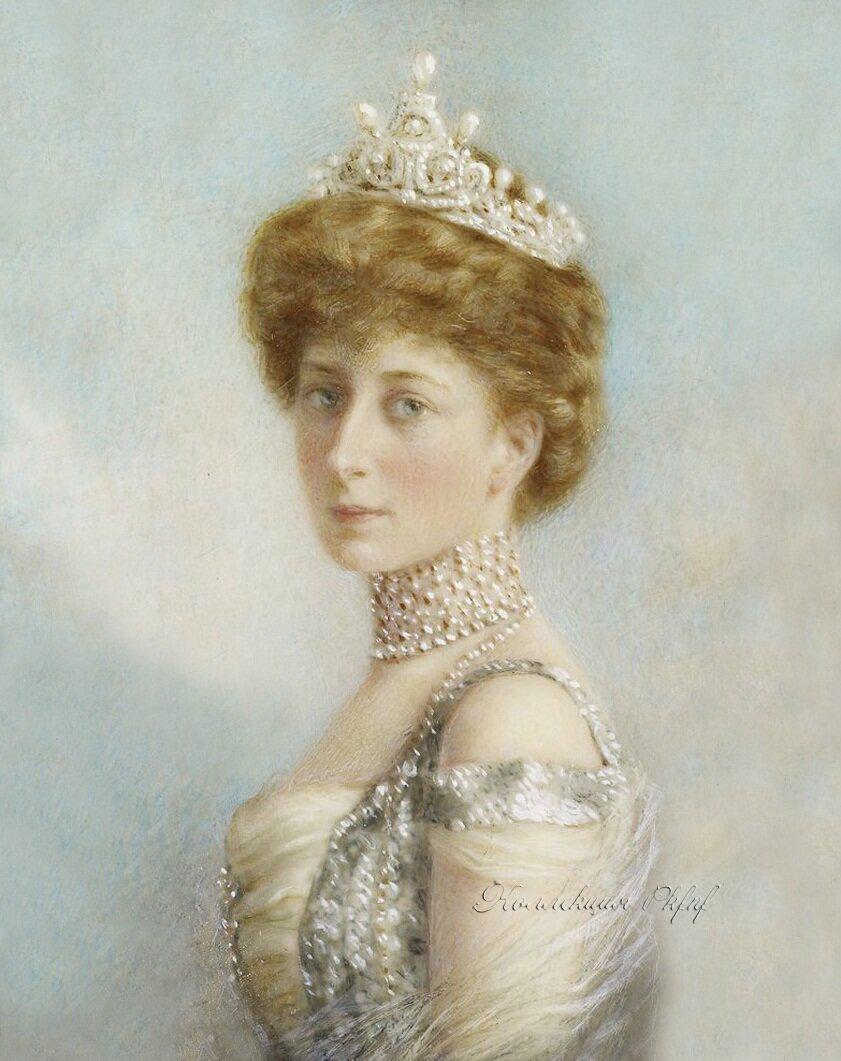
Maud, Queen of Norway (1869–1938). Born Princess Maud of Wales, daughter of Edward VII of the United Kingdom, she married Prince Carl of Denmark in 1896. Following the dissolution of the union between Sweden and Norway in 1905, Carl was elected King of Norway as Haakon VII, making her Queen consort.

Post image
134 Upvotes

By W. & D. Downey, c. 1905 — Royal Collection Trust


r/FemaleMonarchs • • Oct 03 '26

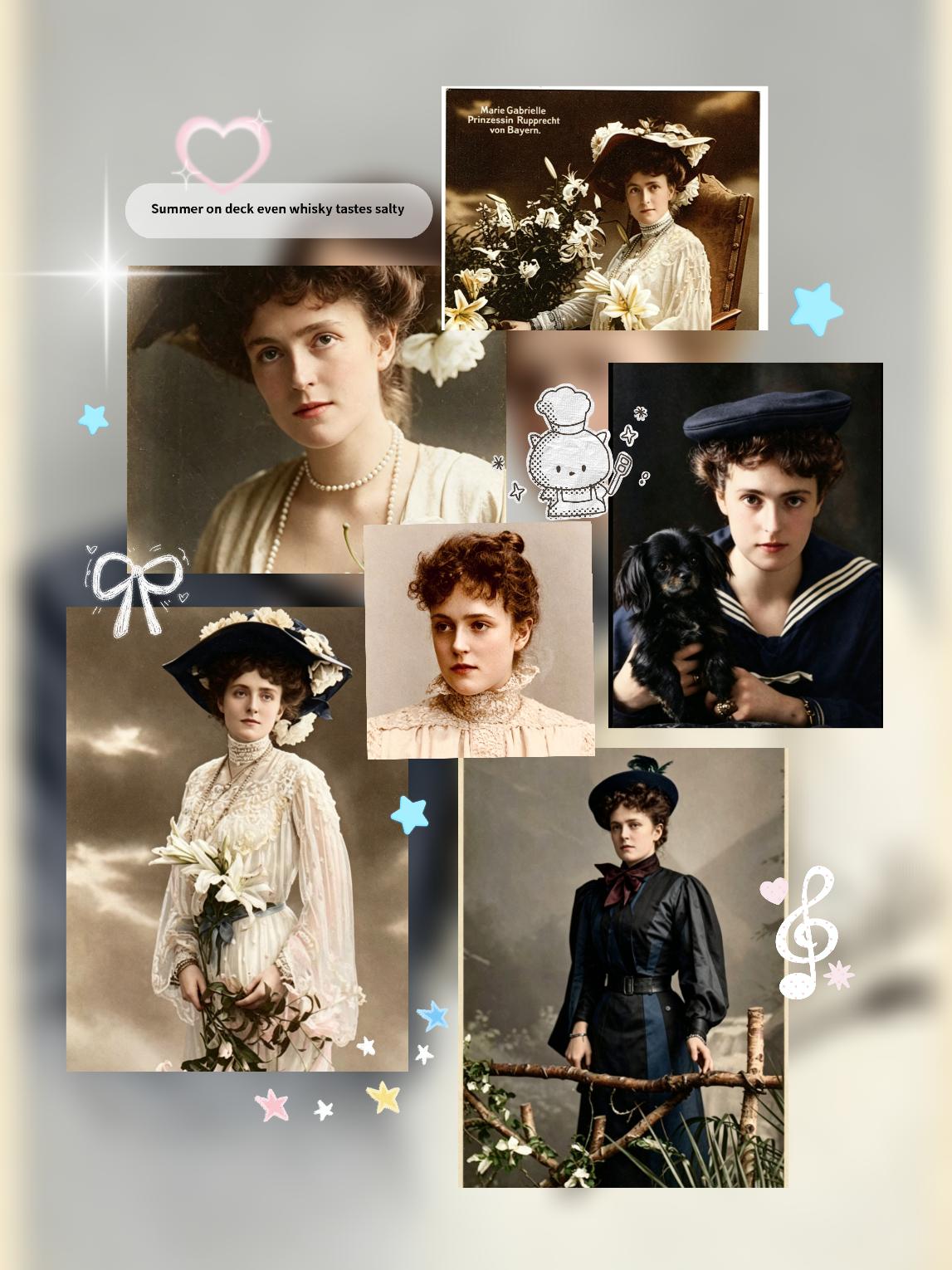
Gabrielle’s Yearning for the Orient

Post image
16 Upvotes

​On quiet winter evenings, they began a rigorous course of study in preparation for a journey around the world—a plan conceived during their early days of marriage. The history of Oriental art, a field in which the Prince was thoroughly well-versed, along with travel literature, was incorporated into their readings to introduce the Princess to this entirely new world. Under the tutelage of such an erudite guide, she not only adapted with astonishing ease but also developed a profound, heartfelt love for the Orient—a fairytale realm where, in her own words, "reality dissolves into dreams, and dreams become reality."

This longing for the Orient, which originated during her earlier stay in North Africa, grew all the deeper through Prince Rupprecht’s devotion to Oriental art and philosophy, as well as the vivid accounts of his travels across Eastern lands. It remained a passion that accompanied her throughout her life.

Whenever the Orient was mentioned in her presence, she listened with keen interest; to her, it consistently possessed the allure of an enchanted world. She was utterly captivated by reports from Professor Musil of Vienna detailing his travels through Arabia Petraea and his discovery of the Umayyad desert castle Quseir Amra. Professor Delitzsch’s vibrant portrayals of the past splendor of ancient Near Eastern civilization seized her imagination just as strongly, directing her passion and curiosity toward an ancient world buried beneath millennia of ruins.

Among my own final memories of the Princess is her total absorption in the beauty of the East. As sights she had witnessed firsthand reemerged in her mind, alongside echoes of stories long heard and read, she expressed, with deep emotion, an earnest longing to return to Egypt soon for an extended stay.

——《Prinzessin Marie Gabrielle von Bayern》