r/FemaleMonarchs • u/Adept-One-4632 • 8h ago
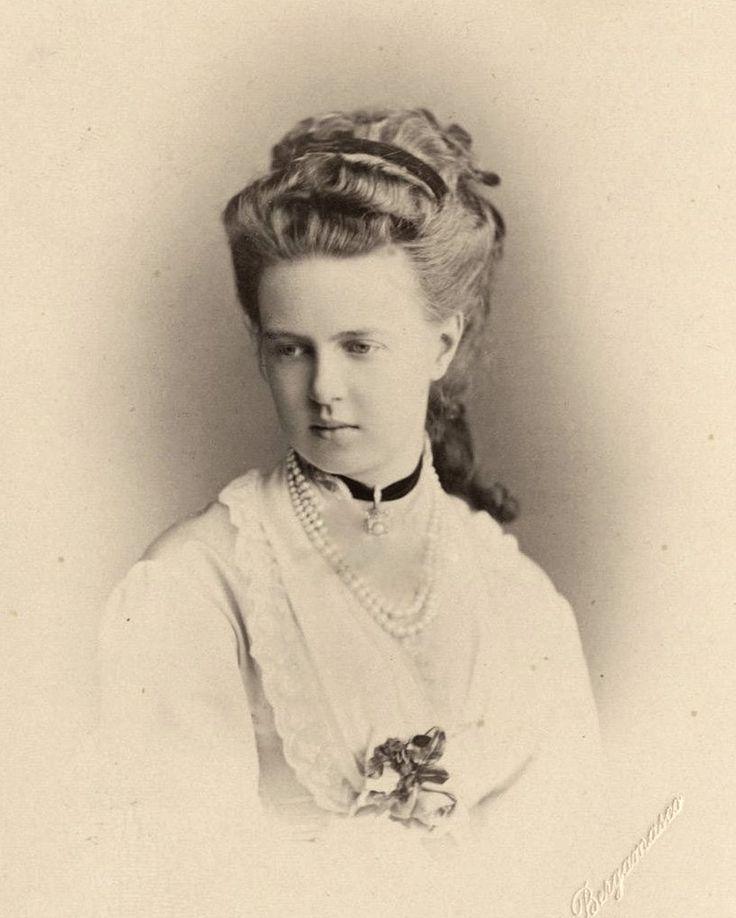
Historical figure Helena of Great Britain (1846 - 1923): Overlooked by others
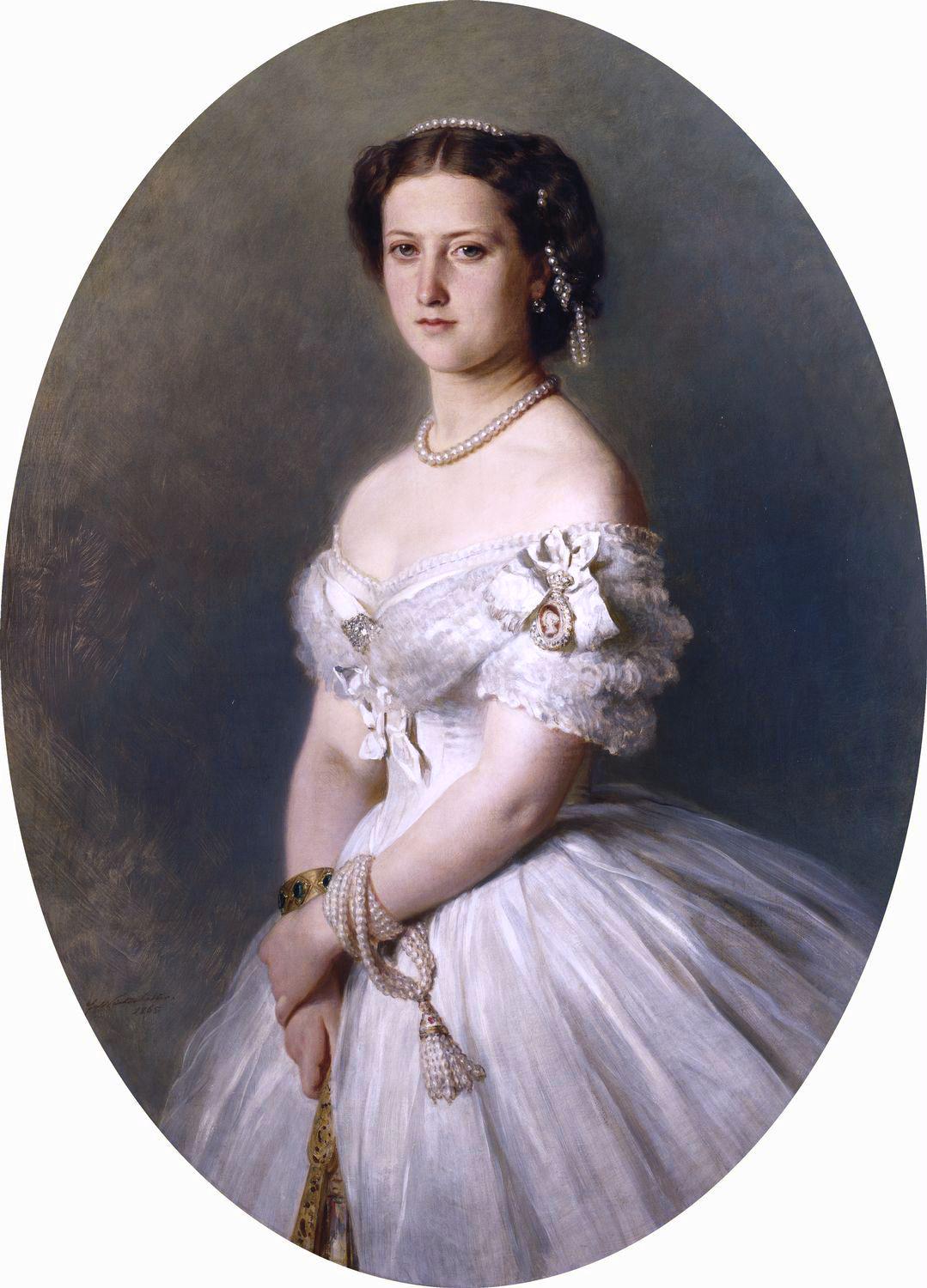
It's hard being the middle middle child of the family. You would never get the responsiblities and sense of leadership like an older sibling, or even be spoiled and given intense tendercare as much as the younger one. And this may be a reason why Princess Helena was often ignored when it comes to the history of Queen Victoria and her family. Yet, it is always a good thing to give others a chance to present themselves, which is what this story will do.
Born on 25th of May 1846 in Buckingham Palace, Princess Helena was the fifth child and third daughter of Queen Victoria and Prince Albert of Saxe-Coburg and Gotha.
Known as Lenchen by her family, the pruncess already showed signs of a prodigy, with her interests being that of science, similar to her father.
When Prince Albert died in 1861, the queen entered into a status of grief. This was felt into her younger children as well, like Helena. This period of sadness made the queen closer to her younger daughters, and after Alice's marriage and move to Hesse, the household needed a new secretary.
Helena was the one given the role, becoming an important person for hee mother as she was traversing her early years of widowhood. As her secretary, Helena was responsible with writing letters for members of household or other ministers.
By 1863, Helena was about to turn 17, which means, it was time for her to find a suitable prince to be her husband. This was made difficult by several factors: first was that Helena was considered the least attractive among the Queen's daughters, and second was a condition the queen put. As she was now emotionally reliant on her daughters, she hoped that they would not depart outside of Britain following their marriages, as was the case for Vicky and Alice.
In the end, she became engaged in 1865 to Prince Christian von Schleswig-Holstein. He was an extended member of the Danish rulling dynasty. However, this match was met with a lot of concern.
First of all, and the most obvious concern, was the age gap. He was fifteen years older that his bethroted. He was pretty much closer to her mother by age, which you might imagine is a bit gross.
But the most concerning thing about their engagement was the dynastic crisis in Denmark.
Christian's older brother, Friedrich, was claiming the rights to the danish throne based on his seniority within the wider rulling dynasty. But his claim was disputed by that of his distant relative, Christian of Glücksburg, who was married to the king's cousin. And since Denmark proper and the duchies of Schleswig and Holstein used different forms succesion, the crisis transformed into a dispute between Denmark and the German Confederation over the duchies.
If you are confused, don't worry, it is precisely why only 3 people were insightful about it. But the important thing to take it from this dispute was that it caused arguments within the British Royal Family, as Alexandra, the princess of Wales, Christian of Glücksburg's daughter, while Queen Victoria's two older daughters were married into german royalty.
But despite the tensions, Queen Victoria allowed for the marriage to continue. And on the 5th of July 1866, their wedding took place at Windsor Castle. The ceremony was not as grand compared to the previous ones, since the Queen was still in the mourning period.
Following the marriage, Helena became formally known as Princess Christian of Schleswig-Holstein, in accordance with the custom by which married royal women were often identified through their husbands' titles.
The couple initially resided at Frogmore House, near Windsor Castle, before establishing their principal residence at Cumberland Lodge in Windsor Great Park.
Unlike many of her sisters, Helena would spend virtually her entire married life in Britain. This was more by design, as Queen Victoria wanted her remaining daughters to remain by her side as she was emotionally reliant on them.
But Helena did not object to this idea. In fact, out of all the daughters, she seemed to be the most loyal to her mother. So for the rest of Queen Victoria's life, she would remain a personal secretary of hers, a duty shared by her younger sister Beatrice. But this was not to be an easy life.
This was due to the fact that Helena's marriage to Christian would produce six children, with only four surviving into adulthoood. The first was Christian Victor, who was born in 1867. The second was Albert, born in 1869. In 1870, Princess Helena Victoria was born, and two years later, her younger sister named Marie Louise.
Though becoming a mother was seen as a good thing for our princess, she now had to balance her duty as a mother and that of being the Queen's trusted daughter. But it seemed she managed to find a good balance.
Her adult life was pretty much quiet and rather uneventful, in comparison to her sisters. This pretty much is the reason why she is not as well known as the others. But that did not mean she was inactive in British Society.
During the 1870s, Helena increasingly became involved in charitable activities, particularly those associated with nursing and the welfare of women. The period witnessed major developments in the professionalization of nursing, influenced by the work of Florence Nightingale and the establishment of organized nursing education. Helena supported these efforts, as well as rights for the women in the Empire, despite her mother's objection to such an idea. From the start, the Princess participated in charitable initiatives connected with the care of wounded soldiers and the improvement of medical services.
In 1872, Helena became associated with the School of Art Needlework, later known as the Royal School of Needlework. The institution aimed to preserve traditional embroidery techniques while providing women with vocational training and opportunities for employment. As its first president, Helena supported the development of an organization that combined artistic education with economic opportunities for women. Her patronage helped establish the school as a respected institution within British society.
Her most important contribution to nursing came in 1887, when she became the first president of the British Nurses' Association. The organization sought to improve professional standards, promote nursing education, and establish a system of registration for qualified nurses. Helena's royal status provided the association with considerable prestige and helped attract public attention to its objectives. In 1893, the organization received a Royal Charter, marking an important achievement in its development. Although disagreements existed within the nursing profession regarding registration, Helena remained committed to promoting professional recognition and improving the status of nurses.
During the final decades of Queen Victoria's reign, Helena remained one of her mother's closest companions and most dependable daughters. Her marriage had allowed her to establish a household of her own, but she continued to assist the Queen with correspondence, social obligations, and domestic responsibilities, something that did not bother her.
Her children also began establishing their own lives around this time. Christian Victor pursued a military career in the british army. However, his career would be short-lived as in 1900, he passed away in South Africa from entretic fever while fighting in the Second Boer War.
As for her daughters, they became increasingly involved in charitable activities. In 1891, Marie Louise married Prince Aribert of Anhalt, although the marriage proved notoriously unhappy and was annulled in 1900. Helena Victoria, on the other hand, remained unmarried and devoted much of her life to philanthropy.
The death of her mother in 1901 and the coronation of her brother as King marked a new era for Helena. Although she continued to participate in royal ceremonies and charitable activities, she was no longer one of the principal companions of the reigning monarch. Nevertheless, she retained her royal status and remained an important figure within the extended royal family, albeit not as visible as the rest of King Edward's inner circle.
This routine remained for the rest of Edward's reign, with Helena being supported by her daughters. Together, they supported the professional development of nurses and the improvement of medical services, contributing to a movement that was gradually transforming nursing into a recognized profession during the reign of Edward and his succesor George V.
The outbreak of the First World War in August 1914 created a difficult situation for the British royal family because of its extensive connections with German dynasties. Helena's husband, Prince Christian, belonged to a German princely family, and their children maintained connections with German aristocratic circles. However, Helena had spent virtually her entire life in Britain and remained closely identified with the British monarchy.
Yet even so, George decided to rebrand his extended family into removing any german-sounding surnames and titles and indentify themselves more as British, as the public became increasingly anti-german. And so, in 1917, George renamed his family's surname into the House of Windsor, and included that to all of his close relatives that were fighting on the Entente side. This did not extend to Helena's last surviving son, Albert, who was by that point serving in the german army, thus being seen as a traitor to the United Kingdom.
On 28 October 1917, Prince Christian died at Schomberg House in London, aged eighty-six. His death was very painful to Helena. The two had maintained a peaceful and happy marriage for over 50 years, maintaining a quiet domestic life.
By the time the war ended, Helena had entered in her final period of her life. The most noteworthy thing about this time was arguing with Commissioners, who tried to turn her out of Schomberg House and Cumberland Lodge because of how expensive it became running her households. But she was able to keep hold of her residence. Her last public appearance was in April of 1923, when she attended the wedding of her great-nephew, Albert the Duke of York (future King George VI) and Lady Elizabeth Bowes-Lyon.
Over a month later, on the 6th of June 1923, Princess Helena of Great Britain died from a heart attack in her residence at Schomberg House. She was 77 years old and had witnesssed three separate reigns. Her funeral was quite a elaborate affair, despite Helena's somewhat private status. She was initially buried in the St George's Chapel alongside the remains of her husband, but five years later, their remains were transfered to the Royal Burial Ground in Frogmore.
Princess Helena, while being not as famous as her sisters, she nevertheless remained active in the victorian society as a social worker for the people, all while remaining devoted to her mother. While she gained a reputation among her contemporaries as being unquestionably loyal to the Queen and not deviating from her, it is unfair to say she had no independent view of her own. Like I said, she was supportive for the rights of women and campaigned for them.
But besides nursing, her other hobby was writing. For years, she would write and translate several works and helped her mother publish letters she wrote to her other daughters. Her first work was a biography about her father, which was noted to treat the subject with a lot of consideration
I guess the conclusion is that Helena remains an important example of how a Victorian princess could use her position to contribute to society while navigating the limitations imposed by royal tradition, an ultimate example of how royals should serve the nation.