r/FolkloreAndMythology • • Sep 05 '26

Mod Announcement. We don’t currently have an AI rule. What does the community prefer?

81 Upvotes

POLL IS CLOSED: The people have spoken, this subreddit will no longer tolerate AI of any kind in posts. We will get this implemented into the written community rules, but it is effective immediately.

Further edit: whoever tried to report this post as “no politics” - you clearly have no clue.

Feel free to voice your opinion but it’s the votes that will count, so please vote!


r/FolkloreAndMythology • • Jul 20 '25

Blogs, Podcasts, Music, Art, etc - promote your projects here!

14 Upvotes

PLEASE NOTE: Posting blog entries that are about mythology and folklore are fine in the general subreddit, as long as they also follow all other rules. Some of these are very scholarly entries and we don't want to discourage that. HOWEVER, if all you want to do in a post is promote your blog / artwork site / social media, then that goes in this thread. We want to keep the main focused on the subject matter.

Self-promotion thread! Go wild, tell us all about your folklore and mythology youtube channels, blogs, apps and accomplishments. Reminder that this community does not tolerate AI, so please take any AI created videos, “art”, text or other media to other subreddits.


r/FolkloreAndMythology • • 5h ago

Canaanite Cosmology Map and Canaanite Gods Genaology

Thumbnail
gallery
8 Upvotes

Continuing with my project on Canaanite Mythology, I mapped out the Cosmology as seen in the picture above. I have included the original illustration and a labelled one. I have included descriptions of each key on the map in this description. I have also included an updated version of the Genaology that I previously posted here.

  • Cosmic Egg Upper Firmament: In the Cosmology, the universe was born from a Cosmic Egg, possibly called Mud. The upper part of the cracked shell formed and contained the sky.
  • Cosmic Egg Lower Firmament: Same as the Upper Firmament, except this part was used to form and contain the world and ocean below.
  • Shamayim's Realm: The skies, where Shamayim reigned until his defeat by El.
  • Targhizizi: One of the twin mountains that holds up the skies, sun, moon and the Upper Firmament of the shattered Cosmic Egg shell.
  • Tharumagi: The second twin mountain.
  • Open Maw of Mot: A gap between Targhizizi and Tharumagi that leads straight to the underworld. It is referred to as the Open Maw of Mot due to how Mot devours souls.
  • Mirey: The kingdom of the dead, ruled over by Mot.
  • Baau: The eternal darkness that existed before the universe itself. Baau created the Cosmic Egg along with Kolpias.

r/FolkloreAndMythology • • 14h ago

If you have “cat whiskers,” you're super lucky. 🐱✨

15 Upvotes

In Vietnam, these little cheek lines are sometimes called “cat whiskers” (râu mèo). They're short, slightly angled, crease-like lines on the cheeks, often appearing near the cheekbones or corners of the mouth when someone smiles.

According to a Vietnamese folk belief, people who have them are said to be deeply loved and doted on by their future partners.


r/FolkloreAndMythology • • 16h ago

What is the symbolic meaning for why some folklore creatures compelled to count things?

3 Upvotes

In some vampire, fairy, and devil stories the creatures cannot help but count seeds, salt, or similar things when presented with them.

This seems arbitrary at first, but usually I find that means there is a deeper symbolism being overlooked. What are your thoughts?


r/FolkloreAndMythology • • 7h ago

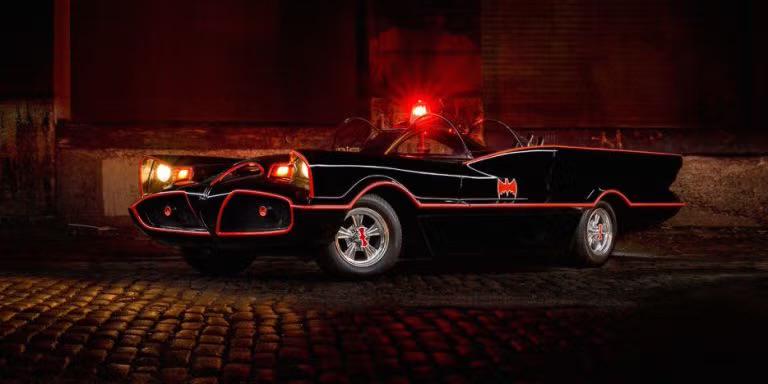
The Living Batmobile of New England, a replica of the 1966 Batmobile supposedly constructed out of organic material and runs on bodily fluids instead of gasoline or oil. Most notably, it has been spotted on Route 1A in Rhode Island.

Post image
0 Upvotes

The Rumor on Route 1A: The "Living" Batmobile of New England

In the coastal towns between Rhode Island and southern Maine, late-night drivers and classic car enthusiasts whisper about a phantom vehicle known simply as "The Barris Wraith" or "The Organic 66."

According to local lore, it is a screen-accurate replica of George Barris’s 1966 Lincoln Futura Batmobile—complete with the scalloped bat-fins, twin bubble canopies, and fluorescent red-orange pinstripes. However, those who claim to have seen it up close insist it wasn't built in a garage out of steel and fiberglass. It was grown.

The Origin Story

The legend traces back to the late 1970s in a forgotten coastal salvage yard near Narragansett Bay. A reclusive former Hollywood prop fabricator, rumored to have been fired from a major studio after experimenting with forbidden bio-resins and experimental polymers, allegedly tried to build a tribute car using a stolen 1955 Lincoln chassis.

Local folklore claims that during a massive nor'easter, lightning struck the yard's power grid, surging thousands of volts into a vat of experimental, petroleum-based resin he was pouring over the frame. The builder vanished the next morning, leaving behind a scorched concrete slab and tire tracks that smelled not of burnt rubber, but of ozone, copper, and rotting kelp.

Anatomy of the "Organic" Replica

Witnesses who claim to have spotted the car parked at deserted scenic overlooks or idling at rural four-way stops describe unsettling, biological details:

  • The Paint and Body: Instead of glossy black automotive lacquer, the body is said to resemble the wet, iridescent carapace of a deep-sea beetle or a wet seal. Up close, the surface appears to ripple slightly, as if breathing, and small scratches allegedly seal themselves within minutes.
  • The Red Pinstripes: The iconic fluorescent red-orange trim does not reflect headlights; it glows faintly from within, pulsing in a slow, rhythmic cadence—roughly 60 beats per minute—like a resting heart.
  • The Exhaust and Engine: There is no rumble of a Ford FE V8 engine. Instead, the car emits a low, wet purr like a sleeping predator. The rear rocket exhaust tube doesn't shoot flames; it exhales warm, rhythmic plumes of white vapor that smell faintly of salt brine and iron.
  • The Interior: Those brave enough to peer through the acrylic bubble canopies report that the red-trimmed seats look like dark, veined muscle tissue, and the Batphone on the center console occasionally emits a muffled, underwater clicking sound.
  • The Fluids and Hood: The fluids of the car are not traditional automotive fluids like oil and gas, this car has blood vessels, spinal fluid, bone marrow, and has the ability to dispense solid and organic waste. The hood is the vehicle’s “mouth,” with rows of tiny, razor sharp teeth that can cut through metal and flesh hidden behind the grille.

Sightings and Warnings

The car is most frequently reported on foggy autumn nights along winding, tree-lined stretches like Route 1A in Rhode Island, the Kancamagus Highway in New Hampshire, or the coastal roads near Ogunquit, Maine.

Local gearheads treat it as an omen rather than a monster. The legend says the car never chases anyone, nor does it cause crashes. Instead, it appears silently behind lost or stranded motorists during thick coastal fog, using its glowing red trim to guide them back to main roads before vanishing into a side street too narrow for a 19-foot car to fit.

However, the one strict rule of the legend is simple: Never try to open the canopy. Those who claim to have touched the door handle say the car’s skin turned ice-cold, and the dual canopies hissed shut like a snapping clam, leaving the witness with a lingering metallic taste in their mouth for weeks.


r/FolkloreAndMythology • • 7h ago

Selkie Story. The Sea In My Skin

Thumbnail
youtu.be
0 Upvotes

I've written a Selkie story... I don't know if this is the right place to share it. Apologies if not.


r/FolkloreAndMythology • • 16h ago

In Marvel Comics, Robin Hood was an Asgardian

Thumbnail
gallery
0 Upvotes

r/FolkloreAndMythology • • 2d ago Mindblown

Books best described as “esoteric folklore”

Thumbnail gallery
745 Upvotes

r/FolkloreAndMythology • • 2d ago

Anyone interested in local folk legends from my local region in central Germany?

145 Upvotes

Hi everyone!

I grew up near Grünberg, a small town in central Hesse, Germany, near the Vogelsberg hills.

Recently I've started collecting old legends from the forests and villages around my hometown. Stories about wild women, the Wild Hunt and haunted castles, often connected to real places I know since childhood.

I've already started a German website with an interactive map.

Now I'm thinking about translating some stories into English.

Would anyone here be interested?


r/FolkloreAndMythology • • 1d ago

🫈

1 Upvotes

What's an obscure piece of folklore from your hometown that deserves more attention?


r/FolkloreAndMythology • • 2d ago

What does the Buffalo symbolize to you?

Post image
21 Upvotes

For thousands of years, Buffalo have been a cherished animal in native American religion. From the appearance of the white Buffalo woman to the glowing white Buffalo, this animal has been honored in lore and in life.

Native Americans have honored this animal. They turned its skin into drums 🥁 and kept its spirit alive. They used its bones for weapons to humanely hunt other animals. It's meat, organs, hooves, and horns. All of it used. The animal was shown great respect.

In the 1800s, Eastern Europeans nearly hunted this animal to extinction as a way to defeat the natives. From almost 60 million strong to near extinction. Today, they are making a comeback and are back at a growing and healthy population. What does the Buffalo symbolize to you? Perseverance? Fate? Luck? The will of the sacred?


r/FolkloreAndMythology • • 2d ago

What creature is most symbolic from your country/culture folklore.

147 Upvotes

Basically title.

I'll start. I have family from Iceland, Scandinavia and Philippines. In Iceland it's for sure elves and hidden people, roads are curved to avoid elf homes and there are many stories of these creatures, trolls are a strong second.

In Scandinavia it's probably trolls, large forest dwelling dumb giant creatures often adversaries in fairy tales, and turn to stone from the sun in some versions.

In Philippines probably Aswang, their local vampires. Each culture within Philippines basically has their own version I'm told and some have other names. Terrifying creatures of the night who prey on lone Wanderers and pregnant women in some versions.

What are yours?


r/FolkloreAndMythology • • 2d ago

Which is your favourite type of dragon from any culture, folklore or mythology?

Post image
31 Upvotes

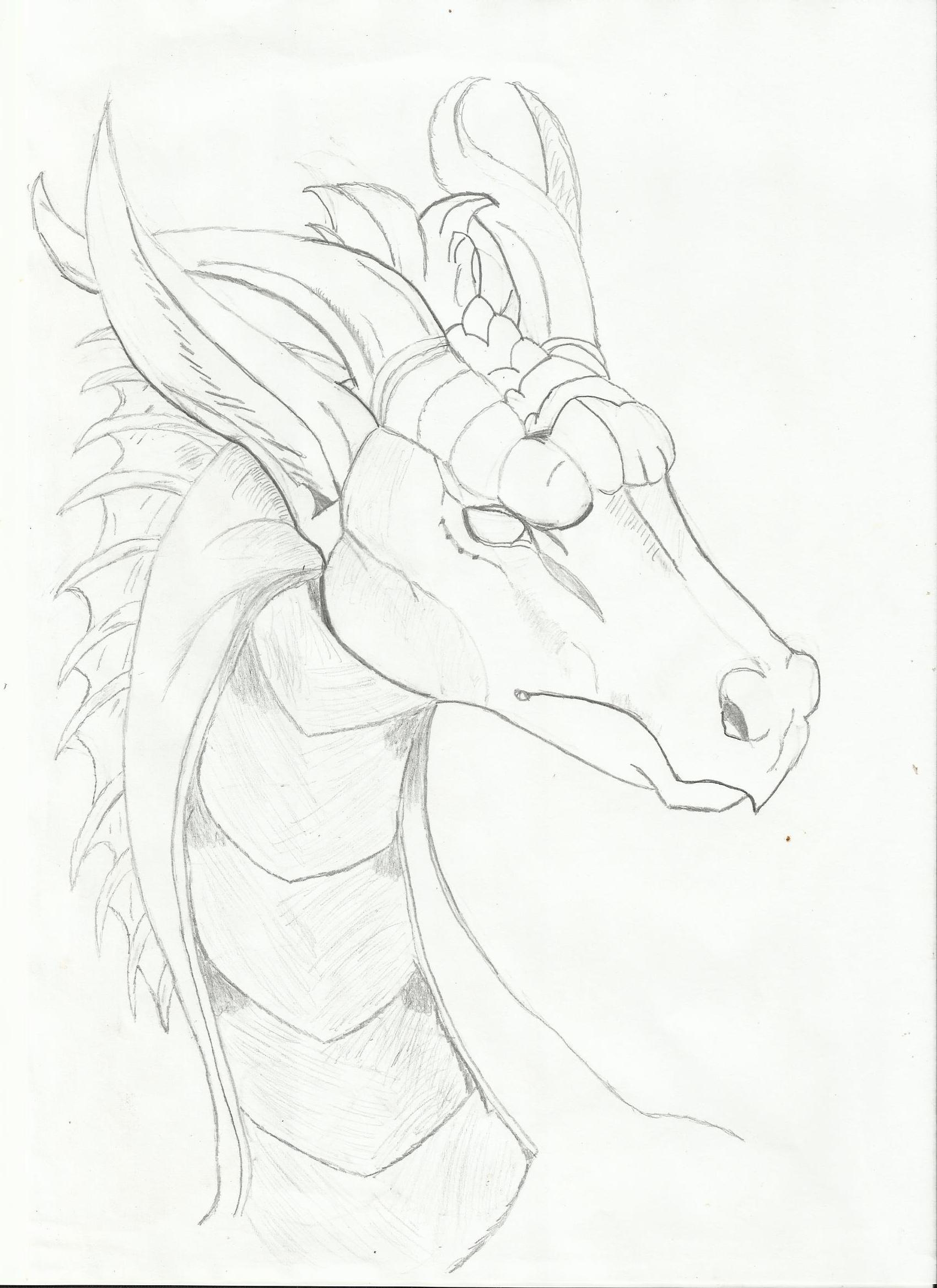
This is my first attempt at drawing a dragon, which I tried to make look like a sea serpent. I've always loved dragons since I was a child and I was curious what types of dragons people particularly like the best.


r/FolkloreAndMythology • • 2d ago

THE LEGEND OF "EL CUEGLE" THE EATER OF TOMORROW A FOLK TALE

Thumbnail
youtube.com
2 Upvotes

The legend of El Cuegle explores a dark moral dilemma. Learn if sacrificing the present is worth preventing a future evil.

This video examines the haunting story of El Cuegle, the Eater of Tomorrow, and its roots as a terrifying folk tale.

By comparing these ancient myths to the man at the crossroads, you will gain a new perspective on consequence and decision-making. These stories serve as a warning about the cost of our actions.


r/FolkloreAndMythology • • 2d ago

I made a documentary on why so many cultures feared the "evil eye" [OC]

Thumbnail
youtube.com
8 Upvotes

Hi everyone! I'm a small creator and I just finished a documentary on the evil eye. I wanted to share it here because it seemed like people might be intrested :)

In the video I explained the belief behind the evil eye, why it appeared and what it means :) I also cover Babylon, the jettatore of Naples and buda of Ethiopia.

I'd love to hear if your family had any evil eye customs. And if I got anything wrong, please tell me, I'm still learning.


r/FolkloreAndMythology • • 3d ago

This little fella should get his own movie, what do you think?

Thumbnail
gallery
48 Upvotes

For context, this is the Tokoloshe of Zulu mythology. It's a goblin-like creature, usually created from corpses and graveyard soil by a practitioner of dark magic to do their biddings. It is a mischievous little bugger and causes all sorts of havoc from harmless (if meanspirited) tricks to far more serious offenses like assault or death. Thing is? It's still widely believed to exist South f Africa and is commonly blamed for anything bad.

I could personally see it being the antagonist of a Gremlins or Ghoulies type of film and can be lended really well to dark humor given its whole shtick to cause varying levels of mayhem. There already is a movie, I believe, but it looks/sounds like a pretty generic horror flick. In fact, the titular monster looked like your bog standard creepypasta rake thing!


r/FolkloreAndMythology • • 2d ago

Building the pilot for a Balkan folk-horror 2D animated anthology. What are the creepiest local myths or unexplained encounters from your region?

5 Upvotes

Hey everyone!

I’m a 2D animator currently in pre-production on a horror anthology mini-series (self-contained \~5-minute episodes) rooted in Balkan folklore, urban legends, and regional myths. Right now, I’m developing the pilot episode and putting together the project bible with the goal of pitching the series to studios and producers.

Because the best folk horror comes from oral traditions rather than textbook summaries, I’d love to hear from people across the peninsula as part of my research:

What are the creepiest or most fascinating Balkan myths, creatures, or local legends from your country/region?

Do you or someone in your family have an "unexplained" experience or eerie encounter tied to any of these creatures or old superstitions?

My goal is to capture the authentic atmosphere, cultural nuances, and psychological dread of these stories so the series stands out from generic monster tropes. Your stories, regional variations, and family anecdotes will be a huge help in shaping the tone and direction of the pilot and future episode concepts!

Thanks in advance I’d love to read whatever you’re willing to share!


r/FolkloreAndMythology • • 3d ago

The Fly and the Cat

9 Upvotes

Eecha was a young fly. She never stayed in one place, and to her the world was magical wherever she looked. Black with silver-grey wings, she sparkled like a black pearl set in silver. She flew about, curious, exploring everything she came upon.

One day, near Devi Amma's temple courtyard, she noticed a tuft of gold coiled up in the sun. She went closer — and saw the most beautiful thing she had ever seen. It was Chami, the tomcat.

At first she only watched from the wall. His golden coat with its darker stripes, his white chin, his moist pink nose. His ears were large, a little too large for his head, and they turned at every sound. Most of all she was lost in his amber eyes, always half-closed, as if nothing in the world was worth opening them for. When his tail, ringed in cream and gold, waved, she could watch for hours and hardly notice the time going by. Every blink, every twitch of his lip — she noticed them all.

But she loved him more when he was awake. Then he was the adventurer, the explorer, and she followed him wherever he went. She followed him on his patrol around the temple, when he jumped across the hedge, and when he sat watching by the steps of the temple pond. But Chami loved to nap, and wherever he got comfortable, he drifted off to sleep.

Eecha grew impatient waiting for him to wake. One morning she dashed down from the wall, made a small circle at his ear, and dashed back, her wings trembling. He did not stir. The next day she went again, and the next. Then one day his ear flicked, and he rose and stretched. Eecha was delighted.

Unable to nap in peace, Chami grew tired. He often slipped away to some quieter corner. This bothered Eecha. She had been near him for so long now; he was the closest thing to her in this world. She looked at him for a long while from the wall. Then she landed on him.

The tummy first. Then the ears. If he still did not stir, she landed on his nose. That always worked.

Chami would wake with a start, only to see a black fly dash off. That was how he began to notice the flies around him. From then on he waved his paw to shoo Eecha away. Eecha enjoyed the closeness. She spent most of her time on him now, often playing hide and seek — though Chami did not know any game was being played.

Chami had had enough. The flies gave him no rest. Eecha, for her part, was having the best days of her life. There was a reason she was silver and he was gold, she thought.

One day she sat beside him, looking at his face deep in a nap, admiring the long whiskers as they stirred in the breeze.

Chami's paw came down.

Her tiny body was carried away by the breeze.

Many seasons passed.

One day Chami woke to the familiar tickling at his nose. He sat up to find the fly. There was none. Instead he saw a young cat — black and grey — walking past.

He rose, tail held high, and followed her.


r/FolkloreAndMythology • • 3d ago

Canaanite Mythology - God Genaology - Complete

Thumbnail
gallery
26 Upvotes

As some of you might have seen on this subreddit, I have been attempting to retell Canaanite Mythology. During my attempts to piece the entire Cosmology together into one cohesive and concise canon, I have pieced together a Genaology of the deities and early humanity, as mentioned in Sanchuniathon's account, along with details from the Ugaritic sources and other miscellaneous sources. I have decided to post the full Genaological tree to hopefully cast a better light on the Mythology and help people understand it more with less difficulty.

I have created a colour-coded graph in order to help separate the Primordial Deities, from El's Council and from the early humans. If you're not a fan of the colour-coding, I have added a black and white version. I have also included separate images for each Genaology to help separate them better.

If you have not seen my previous posts, you can see my reconstruction of the Canaanite Creation Myth here: https://www.reddit.com/r/FolkloreAndMythology/comments/1s93q9w/my_own_reconstruction_of_the_canaanite_creation/

You can see my first part of my recreation of the Baal Cycle here: https://www.reddit.com/r/FolkloreAndMythology/comments/1xyyskf/my_retelling_and_reconstruction_of_the_baal_cycle/


r/FolkloreAndMythology • • 3d ago

What is your experience with Folklore, a story passed down by a relative to a well known community legend?

Thumbnail reddit.com
3 Upvotes

please share a story of mystery and intrigue. Weather it's a well known phenomena or entirely new!


r/FolkloreAndMythology • • 3d ago

Looking for sources on non-western magical traditions

Thumbnail reddit.com
1 Upvotes

r/FolkloreAndMythology • • 4d ago Bravo

How Humanity Has Seen the Bull Through the Ages

Post image
283 Upvotes

Throughout history, few animals have carried as many different meanings as the bull. Its strength, size and powerful horns made it a symbol of power long before it became a familiar part of human life. Across different cultures, people have seen it as a sacred animal, a sign of fertility, a creature that inspires awe, a symbol of courage, but also an opponent in contests organised for human entertainment. Its image has travelled from ancient temples and myths to literature, fairy tales, cartoons, video games, sports arenas and world-famous brands.

The story of the bull is therefore not just the story of an animal. It is also a story of how people, throughout different periods, have understood strength, nature and their own relationship with the world around them.

In ancient Egypt, the bull was more than a symbol of physical strength. One of the best-known examples was Apis, a sacred bull worshipped in Memphis and closely associated with the god Ptah. He was chosen according to special markings on his body and regarded as a living embodiment of divine power. When an Apis bull died, its body was embalmed and buried with great honours, after which a new bull was chosen to take its place. The cult of Apis was associated with fertility, renewal and divine strength.

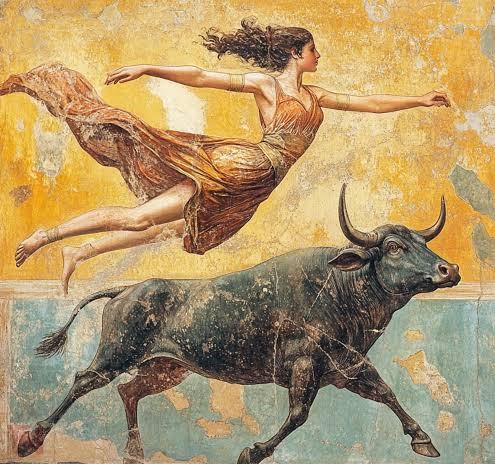
The bull also held an important place on Minoan Crete. It appears frequently in Minoan art, including the famous fresco from the palace at Knossos showing people performing acrobatic leaps over a bull. Although the exact nature and purpose of these events remain a subject of debate, it is clear that the bull had an important place in Minoan culture. It was associated with strength and fertility, while its presence in palace art also points to religious and political significance.

For ancient peoples, the bull could represent much more than an animal: life, fertility, authority and a force that people respected but could never fully control.

One of the best-known stories involving a bull comes from Greek mythology. Zeus fell in love with Europa, a Phoenician princess, and approached her in the form of a beautiful, gentle white bull. Europa climbed onto his back, and Zeus carried her across the sea to Crete. There she became the mother of Minos, who would later become king of the island.

The bull appears again in the story of Minos. According to the myth, Poseidon sent him a magnificent white bull, expecting the king to sacrifice it in his honour. Minos, however, decided to keep the animal. Poseidon punished him by making his wife, Pasiphaë, fall in love with the bull. With the help of the skilled craftsman Daedalus, Pasiphaë managed to approach it, and from this unusual union Minotaur was born — a creature with the body of a man and the head of a bull.

Minos ordered Daedalus to build the Labyrinth, where the creature would be imprisoned. The Minotaur was eventually killed by Theseus, who entered the Labyrinth with the help of Ariadne and her thread, which allowed him to find his way back.

The Minotaur became one of the most enduring figures in Greek mythology. People feared him as a monster, but his story was also the result of the actions and arrogance of those around him. The bull, originally a divine gift, became the reason for the creation of a creature imprisoned because of a king's broken promise.

The image of the bull and the Minotaur did not remain confined to ancient mythology. It continued to appear in European fairy tales and stories from other parts of the world. In the Scottish fairy tale The Black Bull of Norroway, a girl sets out on a journey with a mysterious black bull, who is eventually revealed to be an enchanted prince. Here, the animal is not simply a beast to be feared, but a character connected with love, loyalty and magic.

In Irish mythology, the bull takes on an even greater role in the epic Táin Bó Cúailnge, also known as The Cattle Raid of Cooley. The story tells of a conflict between the kingdoms of Ulster and Connacht, sparked by Queen Medb's desire to claim the Brown Bull of Cooley, Donn Cúailnge. His rival was Finnbennach, the White-Horned Bull. Their story traces back to two supernatural swineherds who went through a series of transformations before being reborn as two bulls. Their final clash becomes the dramatic conclusion of a much larger war. In this story, the bull is not merely a symbol of wealth or strength: an entire war is fought because of him.

Another well-known figure from American folklore is Babe the Blue Ox, the gigantic companion of the legendary lumberjack Paul Bunyan. According to the stories, Babe possessed incredible strength and helped Paul with enormous undertakings. Some legends even claim that the hollows left by his hoofprints created lakes throughout Minnesota and Wisconsin. Like many figures from folklore, Babe belongs to a world where natural landscapes are explained through exaggerated feats of strength and imagination.

Modern stories have not abandoned creatures with the heads of bulls. Instead, they have given them new qualities and meanings. The Minotaur is no longer always a mindless monster waiting for a hero to defeat him. Sometimes he is a tragic creature, a warrior or even a protector.

In Berserk, the legendary warrior Nosferatu Zodd can take on a monstrous, winged form with bull-like features. He lives for battle and seeks opponents strong enough to give him a real challenge, but he gradually comes to respect Guts, the main character, for his strength and determination.

In the Fate series, Asterios is portrayed as a lonely and tragic version of the Minotaur, a creature shaped by isolation and suffering rather than simply being a symbol of evil. In League of Legends, Alistar offers another interpretation. He is a minotaur warrior captured by Noxus and forced to fight in its arenas. With the help of a kind servant girl named Ayelia, he manages to escape and later becomes a defender of the oppressed. In this way, the image of an imprisoned monster becomes the image of a protector.

The Minotaur has also appeared in films inspired by Greek mythology. In the film adaptations of The Chronicles of Narnia, several Minotaurs appear: some fight on the side of the White Witch, while others stand with Aslan's army. In Percy Jackson & the Olympians: The Lightning Thief, the Minotaur attacks Percy and his mother. The film Immortals offers a different interpretation: one of the enemies wears armour resembling a Minotaur, using the ancient image of the creature without directly retelling the original myth.

Anime and manga have also made room for bull-like creatures. In One Piece, Minotaurus is one of the monstrous Jailer Beasts guarding the prison of Impel Down. In Black Clover, the Black Bulls are not actual bulls or Minotaurs, but the name of a squad of magic knights that has become one of the series' most recognisable groups.

Animated stories have also offered a much gentler image of the bull. Ferdinand, a character created by Munro Leaf in 1936 and brought to the screen by Disney in 1938, is a bull who would rather sit under a tree and smell flowers than fight in an arena. His strength is never in question; what matters is that he does not want to use it for violence.

A more light-hearted example comes from the 1953 short cartoon Bully for Bugs, in which Bugs Bunny accidentally ends up in a bullfighting arena and has to face a strong and aggressive bull named Toro. The traditional bullfight becomes a comedy full of tricks and mishaps, with Bugs relying on cleverness rather than strength.

Appa from Avatar: The Last Airbender is not a bull, but a flying bison. Still, his enormous size, horns, strength and gentle nature make him a memorable example of how a powerful, cattle-like creature can be portrayed as loyal and kind rather than frightening.

In all these stories, the old image of a dangerous horned beast becomes more complex. Strength does not always mean aggression, and a creature that looks frightening can also possess compassion, loyalty and a desire for freedom.

Behind the myths and fictional creatures stands the real animal. Bulls are powerful members of the cattle family, and their physical strength has influenced the way people perceive them for centuries. Their muscular bodies, strong necks and horns can seem intimidating, but their behaviour is far more complex than the image of an unstoppable attacker.

Cattle have an extremely wide field of vision, estimated at around 330 degrees, because their eyes are positioned on the sides of their heads. This allows them to notice movement across much of the space around them, although their depth perception is more limited than that of animals with forward-facing eyes. They can distinguish colours, so the widespread belief that bulls charge because they see a red cape is incorrect. In bullfighting, the movement of the cloth matters much more than its colour.

Cattle are also social animals. Research has shown that they can develop preferences for certain members of their herd, as well as recognise and remember individual people. Previous mistreatment can influence how they later react to a person. These findings remind us that cattle are more than muscles and instinct: they observe, learn and respond to their surroundings.

One of the most unusual members of the cattle family was the aurochs, a wild bovine known by its Latin name, Bos primigenius. It once lived across large parts of Europe, Asia and North Africa. It was considerably larger than many modern domestic cattle, with the largest individuals reaching around 160 to 180 centimetres at the shoulder. It also had enormous horns. Aurochs were depicted in prehistoric cave art, including the famous paintings at Lascaux. They survived in the wild until the seventeenth century; the last recorded individual died in Poland in 1627. The aurochs was the wild ancestor of domestic cattle, although cattle domestication was a complex process involving several populations and regions.

The animal that inspired ancient images of the enormous strength of cattle eventually disappeared from the wild, while its descendants became part of human agriculture and everyday life.

People have not always viewed bulls as sacred creatures to be admired from a distance. Their strength has also been turned into entertainment, competition and spectacle. In some traditions, bulls have been forced to fight one another, while in others they have been pitted against different animals or people.

Spanish bullfighting, or corrida, is one of the best-known examples. It is a specially organised contest in which a bull faces a matador and other participants through several stages. In its traditional form, the fight ends with the bull being killed in front of the audience. Supporters regard corrida as a cultural tradition and a performance with its own history and rules, while critics see it as unnecessary suffering inflicted on an animal. Whatever the cultural interpretations, the animal itself has very little choice in what happens to it.

Other customs take a different form. The Running of the Bulls in Pamplona, associated with the San Fermín festival, involves releasing bulls through the city's streets towards the arena. This is not the same as a corrida, although the same animals have traditionally been used in bullfights afterwards. In some Balkan traditions, such as the Grmeč bullfighting event, bulls compete against one another. These customs are different and should not be confused with Spanish corrida.

The bull has also become a powerful literary symbol. In the short story Jablan by Petar Kočić, a boy named Lujo is deeply attached to his ox, Jablan. The animal is set to compete against Rudonja, an ox belonging to the authorities. Their contest becomes much more than a test of strength: Jablan's victory carries symbolic meaning, representing the pride and defiance of ordinary people living under foreign rule. Through the boy's attachment to the animal, the story also portrays the personal bond that can exist between humans and cattle.

These customs and stories reveal different sides of humanity's relationship with the bull. It can be a companion, a symbol of resistance, a participant in a village contest or an animal confined to an arena for public entertainment. The meaning people give to these events changes, but the animal remains the one that bears their consequences.

In the modern world, the bull has become one of the most recognisable symbols of strength and energy. It appears on sports emblems, in company names and on racing machines, often representing qualities people admire: power, determination, speed and the desire to win.

The Chicago Bulls basketball team, founded in 1966, got its name partly because of Chicago's history as one of America's most important meatpacking centres. The team's first owner, Richard Klein, considered names such as the Matadors and the Toreadors before settling on the Bulls. The name became famous around the world thanks to the team's success, especially during the Michael Jordan era.

Red Bull gave the animal a different global identity. The energy drink was launched in Austria in 1987, and its founder, Dietrich Mateschitz, found inspiration in functional drinks from East Asia. Two red bulls facing each other became one of the most recognisable logos in the world. The company later became deeply involved in sports, from football and Formula 1 to motorcycle racing.

The bull also found a place in the world of cars. The Italian manufacturer Lamborghini, founded in 1963, chose a golden bull for its emblem, inspired by the zodiac sign of its founder, Ferruccio Lamborghini, and the symbolism of strength. Several models were named after famous fighting bulls, including the Miura, Islero and Murciélago. In this way, an animal that had represented strength and fighting spirit for centuries became a symbol of speed, luxury and prestige.

The connection between the bull and motorsport can also be seen at the Red Bull Ring in Austria, whose landmark is a huge steel bull sculpture standing in the centre of the racing complex. Red Bull is also associated with KTM's MotoGP project, where the bull emblem appears on motorcycles built for speed and competition.

In modern music, the bull has also found its place in songs from the Balkans. In Šurim bika, rapper Fox uses an unusual play on words based on a colloquial expression, while the line comparing difficult days to a bullfight brings the image of the arena directly into the song. Interestingly, in 2026, the energy drink brand Guarana used a similar play on words in its advertising campaign, connecting its brand with urban music and humour.

A different example can be found in Pedro by the group Duck. It tells a humorous story about a girl who has lost her Pedro, a bullfighter, and mentions Ferdinand, the powerful bull who defeated him in the arena. Here, the bull is not simply a symbol of strength, but part of a musical story that turns the traditional image of a matador and a bull into an unusual love song.

Here, an interesting contrast emerges. In ancient stories, the bull's strength could be divine or terrifying. In modern marketing and popular culture, the same image is used to represent energy, ambition, humour and victory. The animal has not changed; what has changed is the meaning people give to it.

r/FolkloreAndMythology • • 3d ago

I’m Turning an English Folktale Into a Short Film — Would Love Your Thoughts on the Trailer

Thumbnail
youtu.be
0 Upvotes

I’ve always loved old folktales, and recently I came across one called “The Small-Tooth Dog” in Folktales of England. I adapted it into a short screenplay and turned it into a short animated film.

Trailer: https://youtu.be/RrXwK-qnr6Y

I wrote the screenplay myself, adapting the original story. The video clips were created using Artlist / Seedance 2.5 Mini. Editing, color correction, and sound design were done in DaVinci Resolve Studio. Music was created with Suno AI, and I used ChatGPT for English and visual assistance.

The screenplay and lyrics are copyrighted by me.

It’s been about two months of work so far, and this is the first in a series where I want to adapt folktales from different countries into short films.

The full film is planned for Thanksgiving weekend.

I’d really appreciate honest feedback on the trailer:

Does it make you want to see the full film?
Is anything confusing, unclear, or distracting?

Happy to answer questions about the process too.


r/FolkloreAndMythology • • 5d ago Heartwarming

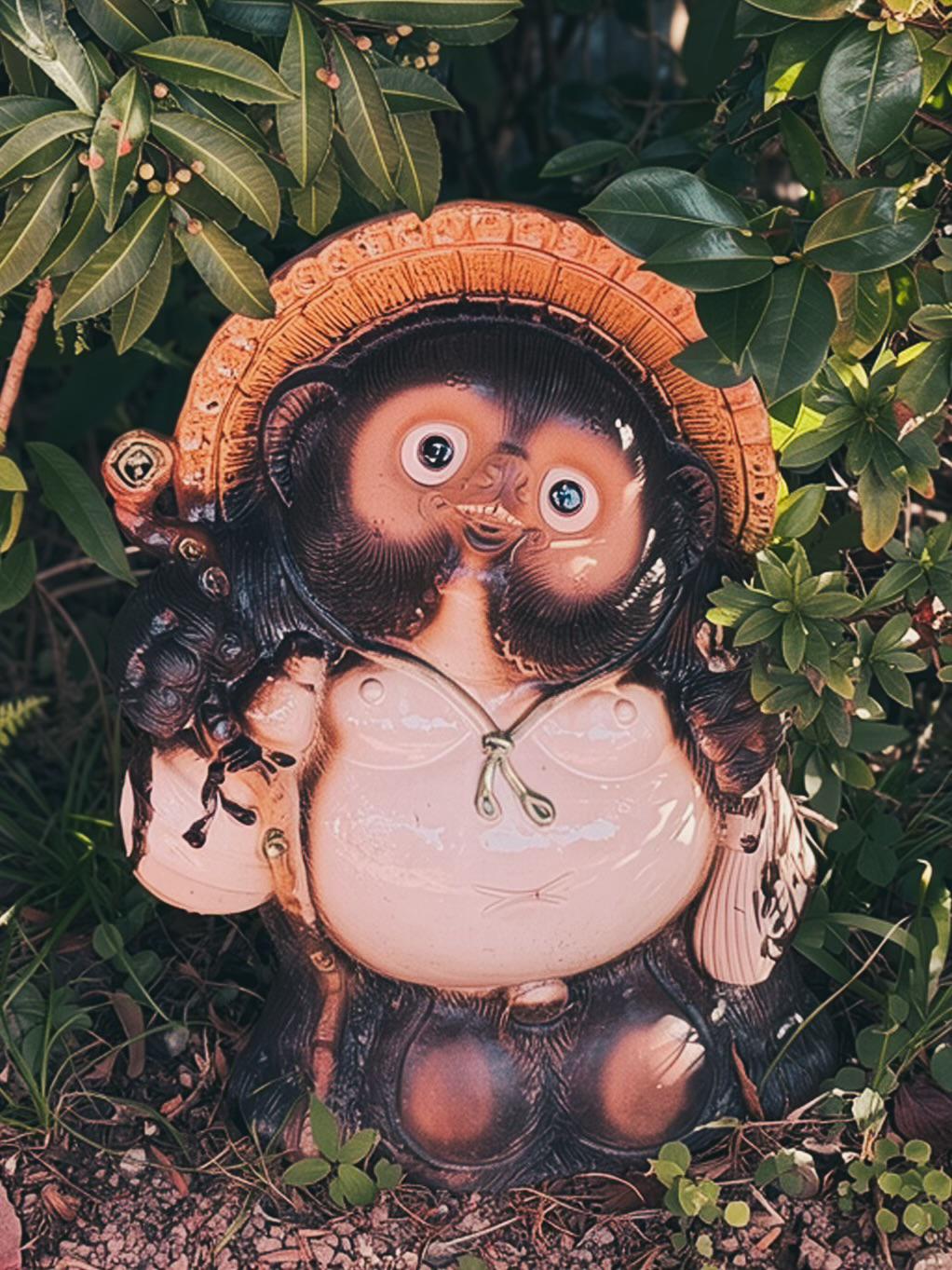
Tanuki statue, Katsuura, Japan

Post image
47 Upvotes