r/IndicKnowledgeSystems • u/Manoj_Mishra • 18h ago
architecture/engineering Leaning temples at Huma and Manikarnika ghat have more inclination than the leaning tower at Pisa
gallery
10
Upvotes
r/IndicKnowledgeSystems • u/Positive_Hat_5414 • May 28 '26
Disclaimer: Though most of this has been talked about in individual posts, this is being posted as the denial of education in india to this day is used to justify dehumanization of our people by our own people and justify colonial rule as well as side line their crimes. This has created an ecosystem where just quoting verses from sacred texts of certain religions is considered bigotary and has given rise to false historic literature which can better be passed off as fantasy at best
A particular narrative about education in premodern India has achieved remarkable persistence in both popular and academic discourse: that knowledge was the guarded inheritance of a single priestly caste, transmitted through institutions deliberately designed to exclude the majority of the population, and that this exclusion was so total as to render alternative intellectual cultures either marginal or nonexistent. The thesis carries a genuine moral charge, and it responds to real historical injustices — the denial of Vedic recitation to Śūdras, the restriction of Sanskrit literacy, the ideological architecture of the Manusmṛti — that should not be minimised or explained away. Yet as a description of the actual educational landscape of the Indian subcontinent across two and a half millennia, it is not merely incomplete but positively misleading. The history of Indian education, examined without ideological precondition, reveals not a monopoly but a palimpsest: dozens of overlapping, competing, and frequently combative knowledge traditions, each with its own institutional forms, its own epistemological commitments, its own canonical texts, its own definition of who qualified as a teacher and who as a student. Brahminical Sanskrit education was one powerful strand among many; it was never the whole cloth.
This essay attempts a systematic survey of that plurality, examining the major non-Brahminical and non-Vedic educational institutions and traditions of premodern India, noting the significant reformist currents within the Vedic tradition itself, and paying particular attention to the manuscript cultures, pedagogical lineages, and knowledge-transmission systems of communities that the gatekeeping thesis renders invisible. The scope is necessarily selective — the full story would require many volumes — but the cumulative weight of the evidence is unambiguous: education in premodern India was produced and reproduced through a multiplicity of institutions and social arrangements whose diversity confounds any single-cause explanation.
The Buddhist educational achievement in India was, at its height, without parallel in the ancient world. The great mahaviharas — Nālandā, Vikramaśīlā, Odantapurī, Jagaddalā, Valabhī, and Somapura — constituted between roughly the fifth and twelfth centuries CE an integrated network of residential universities whose intellectual ambitions and international reach have few analogues before the modern period. Nālandā at its apogee accommodated upward of ten thousand students and fifteen hundred faculty, drawn not only from across the subcontinent but from Central Asia, Tibet, China, Korea, Japan, and Southeast Asia. The pilgrim-scholars Xuanzang (seventh century) and Yijing (late seventh century) left detailed accounts of an institution whose curriculum encompassed Buddhist philosophy across Hīnayāna and Mahāyāna schools, the Vedas, Sāṃkhya, Nyāya, medicine, mathematics, astronomy, grammar, prosody, and logic — a syllabus that would not embarrass a medieval European university.
Admission to Nālandā was by public oral examination at the gate, conducted by a scholar-gatekeeper who tested philosophical competence. No caste certificate was required. The founding ideology was explicitly rooted in the Buddhist principle that the Dhamma was the inheritance of all beings capable of rational inquiry, and this principle had practical institutional expression from the Buddha's own time: the Pāli Vinaya records the admission of Upāli, a barber, to the sangha with explicit priority over high-caste monks in matters of seniority. At the mahaviharas, this foundational egalitarianism was embedded in institutional structure. The student body was economically supported through royal patronage and land grants — the Pāla dynasty was the primary benefactor of Nālandā and Vikramaśīlā — removing financial barriers to participation.
Vikramaśīlā, founded by Dharmapāla (r. c. 775–812), specialised in Vajrayāna, logic, and grammar, and maintained international reputation through the eleventh century. Its most celebrated alumnus, Atiśa Dīpaṃkara (980–1054), synthesised the full breadth of Indian Buddhist philosophical learning before carrying it to Tibet, where it catalysed a transformation of an entire civilisation's intellectual and institutional life. Somapura in Bengal — its ruins at Paharpur representing the largest Buddhist monastic complex south of the Himalayas — was a planned educational city whose architectural ambition bespoke the Pāla state's investment in treating learning as a public good rather than a private inheritance. Odantapurī served as the probable model for the early Tibetan monastery-university system. The destruction of these institutions by Bakhtiyar Khilji's Ghurid forces between 1193 and 1203 was a civilisational catastrophe of the first order, and its magnitude is itself testimony to how much had been concentrated in institutions that were categorically not the property of any single caste.
If the Buddhist mahaviharas were spectacular but ultimately transient, the Jain educational infrastructure was characterised by a durability that carries it intact into the modern period. The basic organisational unit of Jain monastic education was the gaccha — a lineage-based community of monks and nuns whose collective identity was constituted precisely around the transmission of textual knowledge. The major Śvetāmbara gacchas — the Tapāgaccha, the Kharataragaccha, the Añcalagaccha — were not merely devotional brotherhoods but living educational institutions that maintained their own manuscript traditions, produced continuous commentarial output across centuries, and sustained networks of lay supporters whose patronage funded scribal work, manuscript illumination, and the maintenance of learned monks in conditions that permitted sustained scholarly production.
The bhaṇḍāra, the Jain manuscript library, deserves extended attention as an educational institution in its own right. Jain communities across Rajasthan, Gujarat, Madhya Pradesh, and Karnataka amassed manuscript collections of extraordinary scale: the Jaisalmer bhaṇḍāras, the Patan Hemacandra Repository, the Mūḍabidri collections of Digambara Karnataka, the Śravanabelagola repositories. These libraries preserved not only Jain canonical and philosophical texts but grammar, poetics, mathematics, medicine, lexicography, narrative literature, and astronomical tables — an encyclopaedic intellectual archive whose scope far exceeded the needs of Jain religious instruction. The driving motivation was the Jain concept of knowledge-preservation as jñāna-sevā — service to knowledge itself — rooted in the philosophical principle that every loss of a text represents an irreversible diminishment of human understanding. This ideological commitment to preservation produced one of the most sustained manuscript culture programmes in world intellectual history.
The Jain contribution to Indian mathematics deserves special notice because it represents intellectual production at the highest level by a tradition entirely outside the Brahminical framework. Mahāvīrācārya's ninth-century Gaṇitasārasaṃgraha — composed under the Rāṣṭrakūṭa king Amoghavarṣa — is the most comprehensive mathematical treatise of its period in the Indian corpus, covering arithmetic, algebra, geometry, and combinatorics with systematic rigour. The earlier Jain canonical texts had already developed sophisticated treatments of infinity, set theory in embryonic form, and astronomical computation. This is not folk mathematics; it is advanced technical scholarship produced within a tradition the gatekeeping thesis would render educationally marginal.
The lay Jain paṭhaśālā system, particularly developed in the mercantile communities of western India, provided basic literacy and numeracy alongside ethical formation rooted in Jain values. The mercantile Jain communities — Osvāl, Śrīmālī, Porvāl — produced an educated laity whose commercial correspondence, legal documentation, insurance contracts, and account-keeping practices sustained a practical literary culture entirely independent of Sanskrit Brahminical learning. Hemacandra's twelfth-century compositions — grammars of Sanskrit and Apabhraṃśa, encyclopaedia of narrative, works on yoga and logic, a Jain universal history — were produced under Caulukya patronage but within an educational framework that owed nothing to Brahminical institutional structures. The great polymath composed, in essence, a complete curriculum for a tradition that had its own answer to every subject the Brahminical aṣṭādaśavidyā addressed.
The twelfth-century emergence of the Vīraśaiva or Liṅgāyat tradition in the Karnataka Deccan under Basavaṇṇa (c. 1106–1167) represented perhaps the most radical educational experiment of premodern India — a deliberate, organised, and philosophically articulate challenge to the entire social architecture of knowledge restriction. The Anubhava Maṇṭapa, the Hall of Experience established at Kalyāṇi under the patronage of the Kalachuri king Bijjala II, was not a conventional educational institution but something unprecedented: a philosophical assembly in which the criterion of participation was experiential realisation rather than birth, caste, gender, or textual credential.
The Anubhava Maṇṭapa brought together, on terms of explicit equality, figures whose social origins spanned the full range of the Karnataka caste hierarchy: Basavaṇṇa himself was a Brahmin who rejected Brahminical privilege; Allama Prabhu, the assembly's presiding philosophical genius, came from a drumming community; Madivāḷa Machideva was a washerman; Āydakki Mārayya and Āydakki Lakkamma were a couple who gleaned fallen grain for subsistence; Ambigara Chowdayya was a ferryman. And Akkamahadevi — the tradition's supreme woman philosopher — was not merely included but celebrated as one of its deepest thinkers, her vacanas engaging questions of the relationship between the body, the self, and the divine with a philosophical acuity that survives comparison with any contemporary Brahminical or Buddhist philosophical writing.
The vacana literature produced by this community was composed in Kannada prose-poetry, not Sanskrit, and its accessibility was entirely deliberate. The Śūnya Saṃpādane — the canonical record of the Anubhava Maṇṭapa's dialogues — is a work of systematic philosophical theology conducted entirely in the vernacular. Its transmission through Liṅgāyat maṭhas and gurū lineages reached communities the Sanskrit academy had never touched. The later philosopher Śrīpati Paṇḍitācārya (fourteenth century) carried the Vīraśaiva challenge into Sanskrit itself, composing a Śrīkara-Bhāṣya commentary on the Brahmasūtras that systematically argued against Śaṃkara's Advaita on the explicit grounds that varna was irrelevant to spiritual qualification — taking the tradition's egalitarian premise and deploying it within the Brahminical philosophical genre it had originally bypassed.
Tamil Śaiva Siddhānta constituted an educational world of extraordinary depth and internal complexity, organised around the twenty-eight Śaiva Āgamas and their enormous subsidiary literature of padhati, kriyā, and jñāna texts, and transmitted through the great ādhīnam institutions — the Dharmapuram, Tiruvāvaḍutuṟai, Kundrakudi, and Thiruppanandal ādhīnams among others — that functioned as full educational establishments with their own curricula, their own students, their own lands and economies, and their own philosophical traditions.
The Nāyaṉmār canon — the sixty-three Śaiva saint-poets of Tamil Nadu whose compositions constitute the Tēvāram and Tiruvācakam — was both the devotional and intellectual foundation of this tradition. These poets came from across the social spectrum, and the tradition's own hagiographical literature, the Periya Purāṇam of Cēkkiḻār (twelfth century), was organised explicitly to celebrate this diversity: Tirunāvukkarasar (Appar) was a Vēḷāḷa who had converted to Jainism before returning to Śaivism; Cuntarar was of Brahmin Ādi Śaiva origin; Māṇikkavācakar served as minister to the Pāṇḍya court; Tirupāṇāḻvār, on the Vaiṣṇava side of the tradition, is venerated as having been of Paṇar caste, among the most marginalised communities of Tamil Nadu. Nandanār, the saint whose devotion overcame the most explicit forms of caste exclusion — including being barred from the Cidambaram temple until the divine overrode the human prohibition — became one of the most widely celebrated figures in the Tamil tradition, and his story became a paradigmatic teaching about the illegitimacy of caste-based knowledge and devotional restriction.
The Śrī Vaiṣṇava tradition developed in parallel, creating in the Nālāyira Divya Prabandham — the four thousand verses of the Āḻvārs — an alternative scriptural corpus that asserted its co-equality with the Sanskrit Veda. The tradition called itself Ubhaya Vedānta, the dual Vedānta, and its educational institutions — the numerous Śrī Vaiṣṇava maṭhas spread across Tamil Nadu and Andhra — taught both the Sanskrit Pañcarātra Āgama and the Tamil Prabandham as equally authoritative. Nammāḻvār, the tradition's supreme theological poet, is identified with the Śūdra varṇa; Tirupāṇāḻvār, as noted, with a still lower designation. The educational implications were drawn explicitly: if these figures constituted the supreme scriptural authorities of the tradition, the tradition's students were obligated to their wisdom regardless of birth.
Kashmiri Śaivism — the family of philosophical-tantric traditions comprising Trika, Pratyabhijñā, and Krama — produced between the ninth and twelfth centuries one of the most technically demanding and philosophically sophisticated bodies of literature in the history of South Asian thought. Abhinavagupta's Tantrāloka alone — thirty-seven chapters of intricate philosophical, ritual, and aesthetic theology — presupposes mastery of Sāṃkhya, Buddhist epistemology, Mīmāṃsā, Pāṇinian linguistics, and multiple Tantric corpora. Yet the institutional framework that transmitted this learning was the guru-paramparā, not the Brahminical paṭhaśālā, and the Kaula lineages feeding into the tradition included women teachers (yoginīs) whose social marginality was treated as a marker of spiritual authority rather than a disqualification. Abhinavagupta's teacher in the Kaula transmission was Śambhunātha, who had received it from a woman practitioner — a fact Abhinavagupta records with celebration rather than embarrassment. The Krama school's transmission was specifically associated with yoginī lineages originating outside the Brahminical mainstream.
The Bhakti movement, spanning from the seventh-century Tamil origins of the Āḻvārs and Nāyaṉmārs through the fifteenth-to-seventeenth-century explosion of Sant poetry in north India, constituted among its other dimensions a vast programme of vernacular education whose social reach extended precisely to those communities the Brahminical system had most systematically excluded. The movement did not merely produce devotional poetry; it produced new literary languages, new genres of philosophical discourse, new institutional forms for knowledge transmission, and new authorities whose legitimacy derived from experiential realisation rather than textual inheritance.
Kabīr (c. 1440–1518), the weaver of Vārāṇasī, is the paradigmatic case. Born into a community of Muslim weavers (Julahas), a disciple reportedly of the Brahmin Vaiṣṇava Rāmānanda, he composed in the spoken Hindī of the Gangetic plain a body of verse whose literary reach and philosophical content were matched only by the radicalism of its social implications. His dohas — the two-line verses — circulated in communities across north India through oral transmission that required no textual mediation, no Sanskrit literacy, no institutional affiliation. The transmission was communal and mnemonic, and it carried a philosophical content — critiques of ritual formalism in both Hindu and Muslim practice, insistence on the identity of Rāma and Allāh, the primacy of interior realisation — that represented a serious intellectual programme, not merely popular sentiment.
Ravidas (c. 1450–1520), the cobbler-saint of Vārāṇasī, composed verses now preserved in the Ādi Granth that engaged the philosophical questions of caste, consciousness, and liberation with a precision that Brahminical commentators found difficult to dismiss. His maṭha tradition became a centre of learning for Chamār communities across north India. The figure of the cobbler-philosopher — drawing on the embodied knowledge of leather-work and social exclusion to construct a universalist theology — was itself a pedagogical statement about the sources and locations of valid knowledge. Nāmdev (c. 1270–1350), the calico-printer of Maharashtra, and Tukārām (1608–1649), the Kunbī farmer and grain merchant, similarly grounded their intellectual authority in experiential realisation — but the Vārkarī tradition they helped constitute was in practice a people's university of Marāṭhī spiritual literature, transmitted through the annual Āṣāḍhī and Kārtikī pilgrimages to Paṇḍharpūr that brought hundreds of thousands of participants into sustained contact with a corpus of philosophical devotional poetry.
Eknāth (1533–1599) in Maharashtra represents a distinct moment: a scholar trained in Sanskrit who deployed that training in the service of vernacular accessibility. His Marāṭhī commentary on the Bhāgavata Purāṇa opened one of Brahminical culture's most prized texts to readers with no Sanskrit literacy. More dramatically, he shared meals with and received spiritual instruction from Mahār communities — explicitly performing the crossing of the pollution boundary that Brahminical educational ideology had constructed — and wrote about this practice in terms that made its theological implications unambiguous. The Mahānubhāva tradition of Maharashtra, founded by Cakradhar (thirteenth century), similarly produced its literature in Marāṭhī, rejected Sanskrit exclusivity, and admitted members across the caste spectrum into a community that preserved its own manuscript tradition in a deliberately obscure cipher script — a kind of counter-institutional secrecy that inverted the Brahminical model of selective textual access.
Caitanya Mahāprabhu's Gauḍīya Vaiṣṇava tradition (early sixteenth century, Bengal) produced in the Vṛndāvana Gosvāmīs — Rūpa, Sanātana, Jīva, Gopāla Bhaṭṭa, Raghunātha Dāsa — a body of systematic Sanskrit philosophy and aesthetics of the highest scholarly order, while simultaneously insisting on the participation of communities the orthodox system excluded. Haridāsa Ṭhākura — born Muslim, never permitted to enter Brahminical sacred space, yet celebrated by Caitanya as the nāmācārya, the supreme authority on the divine Name — embodied the tradition's refusal to accept the Brahminical construction of spiritual qualification. Sanātana Gosvāmī had served the Muslim Nawab of Bengal before his renunciation; his brother Rūpa was similarly from an administrative background; their nephew Jīva Gosvāmī produced the Ṣaṭ Sandarbhas, a systematic philosophical treatise of extraordinary technical sophistication — all within a tradition whose founder had demonstrated the institutional irrelevance of birth-based exclusion.
The Sikh tradition from Gurū Nānak's earliest formation was constituted around institutions in which the devotional, communal, and educational were structurally inseparable. The dera — the residential community around a spiritual teacher — was the primal Sikh educational unit, creating a setting in which disciples from across the caste spectrum shared teaching, discipline, and practical service. The sangat and pangat — the devotional community and the shared meal — were simultaneously spiritual and social practices whose educational implications were radical: you could not sit in the same row to eat with someone you had never acknowledged as an equal interlocutor.
The Gurmukhī script, attributed to Gurū Aṅgad Dev in the sixteenth century, was developed specifically to make the Gurū's teaching textually accessible in a medium not monopolised by existing literate elites. The subsequent compilation of the Ādi Granth by Gurū Arjan Dev (1604) — including compositions by Kabīr, Nāmdev, Ravidas, Farid, Trilochan, Sain, Sadhana, Dhanna, and Pipa alongside the Gurūs' own banis — was a deliberate curatorial act that constructed a multi-caste, multi-religious anthology as the foundational educational text of a community. To be a Sikh in good standing required the ability to engage this text; and this requirement generated, across the following centuries, a demand for Punjabi literacy that the gurdwara system met through its own educational provision.
The Gurū Granth Sāhib's canonical status as the living Gurū after 1708 institutionalised this demand permanently. The gurdwara as educational space — teaching Punjabi, Gurmukhī script, kirtan, and theological commentary — reached rural and artisan communities across Punjab to whom the Brahminical paṭhaśālā had offered nothing. The Nirmala tradition, emerging from Gobind Singh's scholars, developed sophisticated Sanskrit learning alongside the Gurmukhī tradition; the Udāsī tradition maintained a broader ecumenical educational reach. Bhāī Gurdās's Vārs — forty of them, constituting the first systematic theological commentary on Gurū Nānak's thought — represent a scholarly achievement in Braj Bhāṣā that engaged both the internal Sikh tradition and the full range of Indian philosophical discourse.
The Brahminical Vedāntic tradition was not monolithic in its attitude toward exclusion, and some of its most significant philosophical figures were simultaneously its most consequential reformers. Rāmānujācārya (1017–1137) presents the clearest and most philosophically integrated case. His Viśiṣṭādvaita Vedānta challenged Śaṃkara's Advaita on philosophical grounds, but his educational legacy extended well beyond metaphysics. The tradition records — with the event elevated to paradigmatic status in Śrī Vaiṣṇava hagiography — his ascent of the tower of the Raṅganātha temple at Śrīraṅgam and his public proclamation of the Aṣṭākṣara mantra, the initiation formula traditionally reserved for qualified recipients after private transmission. By making it public, Rāmānuja effectively abolished the esoteric-transmission barrier that had been one mechanism of access restriction.
More concretely, Rāmānuja's acceptance of Tirukkōṭṭiyūr Nambi's teaching involved complex negotiations with the restriction of esoteric knowledge, and his subsequent public transmission was explicitly a rejection of that restriction. His acceptance of Piḷḷai Tirumali Āḻvār — a teacher of Śūdra varṇa — as a source of spiritual instruction, publicly honoured, was a direct practical challenge to the Brahminical educational hierarchy. His integration of the Tamil Prabandham — specifically the Nālāyira Divya Prabandham composed substantially by poets of non-Brahmin origin — as co-equal scripture alongside the Sanskrit Veda was an institutional as much as a theological decision: it redefined the curriculum of Śrī Vaiṣṇava maṭhas in a way that permanently embedded non-Brahmin intellectual authority within the tradition's highest canonical register.
The Madhva tradition, through its Uḍupī maṭha system with its eight branches (aṣṭa maṭhas), created educational institutions for the Tuḷu coast that served as the primary vehicles of philosophical and scriptural learning for communities well beyond the Brahmin population. The Nātha tradition — Gorakhnāth's vast lineage of siddhas — created a body of Haṭha Yoga instruction and subtle body philosophy in vernacular languages that positioned itself deliberately outside both Brahminical and Buddhist institutional authority. The Nātha teachers came from artisan, farming, and pastoral backgrounds; their technical corpus in old Hindī, old Marāṭhī, and Bengali addressed anatomy, breath physiology, mercury-based alchemy, and internal yogic cartography — a curriculum demanding expertise of a kind quite different from, and in some respects more practically demanding than, the Brahminical syllabus. Transmission was through gurū-disciple chains that cut across every received social boundary.
The most systematically undervalued dimension of Indian educational history is the manuscript culture, apprenticeship system, and technical knowledge tradition of artisan and craftsperson communities. These communities were not the passive recipients of knowledge dispensed from above; they were active producers and custodians of specialised technical understanding — some of it textualised in formal manuscripts, the bulk of it transmitted through intensive supervised apprenticeship that constituted, by any rigorous definition, a demanding educational programme.
The Viśvabrahmin communities — the Pañcāla artisan castes of blacksmiths, carpenters, bronze-casters, goldsmiths, and stonemasons — possessed their own texts and disputed with considerable sophistication their right to Brahminical ritual status. The Mānasāra and Mayamata, the great Sanskrit treatises on architecture and iconography, were claimed by and substantially produced within the tradition of the sthapati — the master architect-sculptor — whose training combined practical mastery of stone-cutting, proportion systems, and materials science with ritual competence and the ability to work from Āgamic iconometric specifications. The stone-cutting communities of Rajasthan, Karnataka, and Tamil Nadu transmitted this knowledge through gurū lineages within the community: it was a curriculum requiring mastery of geometry (the Āgamic tālamāna proportional systems for divine images), iconography, the properties of different stone types, and the ritual sequencing of image installation. This was sophisticated technical education, not Brahminical, though it interfaced with Brahminical learning at the level of Āgamic Sanskrit text.
The weaving communities — the Dēvaṅga and Sāli/Paṭṭusāli of Andhra and Karnataka, the Kāśī weavers of Vārāṇasī, the Paṭola weavers of Patan in Gujarat, the Tant weavers of Bengal — maintained technical manuscript traditions of considerable depth. The Patan Paṭola tradition requires mastery of a complex combinatorial mathematics embedded in double ikat design: the simultaneous pre-dyeing of warp and weft threads such that their intersection produces a precise pattern requires calculations that are genuinely algebraic in character, worked out through a design grammar transmitted entirely within community practice across generations. The Dēvaṅga community produced Sanskrit manuscripts asserting Brahmic genealogy — a political act within the discourse of caste — but the community's more practically significant transmissions were technical: knowledge of mordants, dye formulae, thread counts, loom mechanics, and pattern grammars held as community intellectual property.
The Kāyastha communities of Bengal and north India maintained a literary culture that was secular, multilingual, and functionally independent of the Brahminical curriculum. Kāyastha education centred on Persian, accounting, legal documentation, and administrative correspondence — the practical literacy of the Sultanate and Mughal administrative apparatus. The community's bilingual (Persian and Hindī/Bengali) educational culture produced administrators, poets, historians, and eventually, in the nineteenth century, central figures of the Bengal Renaissance: Bankim Chandra Chattopadhyay, Dinabandhu Mitra, and Michael Madhusudan Dutt all came from Kāyastha backgrounds whose educational heritage was explicitly non-Brahminical. The community had been educating itself for centuries in traditions the gatekeeping thesis renders invisible.
The bardic and genealogical communities — the Cāraṇas and Bhāṭs of Rajasthan, the Māganiyārs, the Lāṅgas — maintained oral and manuscript traditions of historical record, genealogical documentation, and poetic composition that were the primary vehicles of dynastic history across large parts of the subcontinent. Their knowledge was their professional capital; they educated their own children rigorously in the technical requirements of genealogical memory, metrical composition, historical narrative, and the cultivation of patron relationships. These communities were not illiterate dependants of Brahminical culture; they were specialised intellectuals with their own canons and standards of professional excellence.
The systematic exclusion of women from Brahminical education is among the most thoroughly documented features of the orthodox tradition. Yet this exclusion was never universal, was frequently contested, and was in practice circumvented — and in many traditions actively reversed — through alternative educational structures that produced women of genuine and widely recognised intellectual authority.
The Bhakti and Tantric traditions were primary sites of women's philosophical participation. Lallā (Lalleshwarī) of Kashmir, the fourteenth-century Śaiva mystic and poet, composed vakhs in Kashmiri that engaged the Pratyabhijñā and Nātha philosophical frameworks with a precision that placed her squarely within the intellectual lineage of Abhinavagupta — and she did so as a householder woman who had abandoned social convention without abandoning philosophical rigour. Akkamahadevi's vacanas in the Vīraśaiva tradition have been discussed above; Mīrābāī's Braj Bhāṣā compositions constituted a primary vehicle of Vaiṣṇava devotional theology in Rajasthan; Janābāī, the servant-woman of the Vārkarī tradition, composed abhaṅgas of genuine literary quality. Bahinābāī in seventeenth-century Maharashtra wrote autobiography and theological reflection in Marāṭhī verse that documented both her intellectual formation and her negotiation of the restrictions placed on women within the tradition.
The Devadāsī system in its premodern institutional form — whatever its later and deeply problematic social evolutions under colonial economic conditions — was an educational institution of considerable rigour. The melam system of Tamil Nadu, the communities attached to the great temples at Cidambaram, Śrīraṅgam, Tirupati, and Madurai, trained their practitioners from early childhood in a curriculum encompassing music theory (the Saṅgīta Ratnākara framework and its Tamil equivalents), dance grammar (the Bharata Nāṭyaśāstra tradition as refracted through regional practice), Sanskrit and Tamil literary texts, and the full repertoire of devotional performance literature. This was not casual or unsystematic training; it was intensive, technically demanding, and produced practitioners who were regarded — and who regarded themselves — as custodians of a high cultural tradition. Some of these women became significant literary figures in their own right: the compositions of accomplished devadāsīs entered the Telugu, Tamil, and Kannada literary canons.
The Jain Sādhvī tradition, which has never been institutionally interrupted, maintained women's continuous participation in the transmission of Jain textual learning from the tradition's earliest period. The Theravāda Bhikkhunī sangha, though subject to complex historical suppressions and revivals, provided in principle women's access to the full monastic educational curriculum. The Śākta Tantra traditions, centred on goddess worship and ritual transgression of social boundaries, produced texts — the Durgā Saptaśatī, the Lalitā Sahasranāma, the various Devīmāhātmya compilations — transmitted in part through lineages in which women were primary teachers. The Śāktā āgamas include women among their authority figures in ways that the Vedic smārta tradition systematically refused.
No comprehensive history of Indian education can omit the maktab and madrasa system that developed under Sultanate and Mughal rule, or the Sufi khanqāh tradition that created educational environments of a distinct and frequently more socially porous character. The maktab attached to the mosque provided basic Quranic literacy and elementary Persian to Muslim communities including artisan and low-status groups for whom other forms of literate education were practically inaccessible. The madrasa system at its most developed — at institutions like the Firangi Mahal in Lucknow or the earlier establishments at Delhi and Bidar — produced scholars of philosophy, logic, medicine, mathematics, and jurisprudence within a curriculum that drew extensively on the Greek philosophical tradition through Arabic and Persian translation, and that maintained active engagement with Indian intellectual traditions including Āyurvedic medicine and astronomical mathematics.
The Chishtī Sufi khanqāhs were educational institutions of a fundamentally different character: open, musically centred, hospitable to visitors regardless of formal religious affiliation, and oriented around a relationship between teacher and student that was not institutionally mediated in the manner of the madrasa. Niẓām ud-Dīn Awliyāʾ's khanqāh in Delhi attracted scholars, musicians, poets, and seekers from across the Hindu-Muslim spectrum; the practice of samāʿ (sacred audition of music) created a space in which knowledge was transmitted through aesthetic and spiritual experience rather than textual instruction alone. Amīr Khusrau — poet, musician, and intellectual polymath of the first order — was formed in this environment, and his bilingual (Persian and Hindī) literary production embodied the hybrid intellectual culture the Sufi tradition made possible. The Dādūpanthi-Sufi interactions in Rajasthan, the Sikh-Sufi conversations that shaped the Gurū Granth Sāhib's compilation, the Kabīr-Rāmānanda connections: all represent intellectual education happening precisely in the interstices between formal institutional traditions.
What emerges from this survey — and it has been necessarily selective; the Oḍiyā paṭachitra painter communities with their manuscript traditions, the Kerala Kathakali gurukula system, the Ayurvedic vaidya lineages, the Buddhist Vajrayāna sādhaka traditions of Nepal, the Tibeto-Indian border communities' educational exchanges, the manuscript traditions of Kerala's temple-associated families, and dozens of other traditions have been mentioned only in passing or not at all — is not a picture of uniform access to education in premodern India. Genuine exclusions operated, were ideologically constructed and institutionally maintained, and caused real intellectual deprivation. But the picture is equally not one of a single caste controlling the entire educational landscape.
The Brahminical Sanskrit educational tradition was one thread — a brilliant, technically demanding, extraordinarily productive thread — in a much larger and more complex intellectual fabric. It was never the only thread, and its claim to be so was always contested: by Buddhist monks at Nālandā, by Jain philosophers composing mathematics under Rāṣṭrakūṭa patronage, by Vīraśaiva weavers and ferrymen composing philosophy in Kannada, by Tamil poets of Śūdra origin whose verses were declared co-equal with the Sanskrit Veda, by Sikh gurūs compiling anthologies in which Muslim weavers and low-caste cobblers held equal canonical status with Brahmin saints, by artisan communities preserving in manuscript and apprenticeship the technical knowledge on which every material achievement of Indian civilisation depended.
The pedagogical forms were as varied as the communities: the residential vihāra and its public admission examination; the gaccha and its bhaṇḍāra; the khanqāh and its samāʿ; the dera and its langar; the vacana assembly of the Anubhava Maṇṭapa; the Vārkarī pilgrimage circuit; the devadāsī's decades of intensive technical training; the weaver's apprenticeship in pattern mathematics; the stone-cutter's transmission of iconometric proportion; the bardic community's cultivation of genealogical memory; the Nātha siddha's vernacular transmission of physiological philosophy. Each was a distinct educational institution with its own logic, its own standards of excellence, its own social location, and its own understanding of what constituted valid knowledge and who was qualified to transmit it.
The history of Indian education properly told is not the history of a monopoly but the history of a contested, plural, enormously generative intellectual ecology in which the Brahminical tradition was powerful, influential, and frequently dominant — but in which it was never alone, and in which the challenge to its pretensions to exclusivity was mounted, in every century and every region, by traditions whose intellectual achievements stand comparison with any in the world.
r/IndicKnowledgeSystems • u/Positive_Hat_5414 • Jun 19 '26

Disclaimer: Quote doesn't target people of any beliefs, just those who glorify invaders who to this day intend on destroying it
r/IndicKnowledgeSystems • u/Manoj_Mishra • 18h ago
r/IndicKnowledgeSystems • u/Manjeet_S_T • 18h ago
छठ पर्व का इतिहास : आस्था, शास्त्र और ऐतिहासिक तथ्यों की पड़ताल
पिछले दिनों सोशल मीडिया पर एक पोस्ट देखने को मिली, जिसमें छठ पर्व को बौद्ध परंपरा से जुड़ा हुआ बताया गया था। इस पोस्ट के बाद सोशल मीडिया पर एक नई बहस छिड़ गई। एक ओर बौद्ध धर्म को मानने वाले लोग अपने तर्क रख रहे थे, तो दूसरी ओर हिंदू धर्म को मानने वाले लोग अपनी धार्मिक मान्यताओं के आधार पर जवाब दे रहे थे।
दोनों पक्षों के बीच बहस और दावों-प्रतिदावों को देखकर मेरे मन में एक सवाल आया कि आखिर ऐतिहासिक सच्चाई क्या है?
क्या छठ पर्व की जड़ें वैदिक परंपरा में हैं? क्या इसका संबंध प्राचीन बौद्ध संस्कृति से है? क्या यह किसी एक धार्मिक परंपरा की देन है, या सदियों से विकसित होती आई लोकपरंपराओं का समन्वित स्वरूप है?
इसी जिज्ञासा के चलते मैंने इस विषय पर अध्ययन करने का निर्णय लिया। उपलब्ध धार्मिक ग्रंथों, पुराणों, वैदिक संदर्भों, ऐतिहासिक अध्ययनों और शोधकर्ताओं के विचारों को समझने का प्रयास किया।
इस अध्ययन में ऋग्वेद में सूर्योपासना, महाभारत में सूर्य से जुड़ी कथाओं, देवी भागवत पुराण में षष्ठी देवी के उल्लेख, भविष्य पुराण और भविष्य पुराणोत्तर परंपरा और छठ की क्षेत्रीय लोकपरंपराओं का अध्ययन किया।
छठ पर्व को समझने के लिए तीन अलग-अलग प्रश्नों पर विचार करना जरूरी है:
छठ पर्व भारतीय उपमहाद्वीप की अत्यंत प्राचीन सूर्योपासना परंपराओं में से एक है। इसकी विशेषता यह है कि इसमें केवल उगते सूर्य ही नहीं, बल्कि अस्त होते सूर्य को भी अर्घ्य दिया जाता है। इसमें सूर्य के साथ षष्ठी देवी (छठी मैया), प्रकृति, जल और जीवन के प्रति कृतज्ञता का भाव भी जुड़ा हुआ है।
छठ पर्व के पीछे मुख्य रूप से चार धार्मिक और सांस्कृतिक मान्यताएँ हैं।
\* सूर्य के प्रति कृतज्ञता: सूर्य को ऊर्जा, प्रकाश, कृषि और जीवन का आधार माना जाता है।
\* स्वास्थ्य और समृद्धि: सूर्य की उपासना से परिवार के स्वास्थ्य, संतान की सुख-समृद्धि और दीर्घायु की कामना की जाती है।
\* प्रकृति की पूजा: जल, सूर्य, पृथ्वी, वनस्पति और मौसमी फलों को पूजा का हिस्सा बनाया जाता है।
\* लोककल्याण और परिवार: परिवार की सुख-शांति, संतान की उन्नति और समाज के कल्याण के लिए व्रत किया जाता है।
इसका वर्तमान स्वरूप चार दिनों का होता है:
पहला - नहाय-खाय
दूसरा - खरना
तीसरा - संध्या अर्घ्य
चौथा - उषा अर्घ्य
2. प्राचीन शास्त्रों में छठ से संबंधित उल्लेख
यहाँ एक जरूरी अंतर समझना होगा। प्राचीन ग्रंथों में सूर्य की पूजा, षष्ठी देवी की पूजा और आज के छठ पर्व की पूरी चार दिवसीय विधि — ये तीनों एक ही बात नहीं हैं।
(क) ऋग्वेद — सूर्योपासना
ऋग्वेद में सूर्य, सविता और उषा की उपासना के अनेक मंत्र मिलते हैं।
कुछ प्रमुख संदर्भ:
\* ऋग्वेद 1.50 — सूर्य की स्तुति।
\* ऋग्वेद 1.113 — उषा अर्थात भोर की देवी की स्तुति।
\* ऋग्वेद 3.62.10 — प्रसिद्ध गायत्री मंत्र, जिसमें सविता देवता की उपासना है।
\* ऋग्वेद 10.90 — पुरुष सूक्त में सूर्य का उल्लेख।
इससे यह स्पष्ट होता है कि सूर्योपासना की परंपरा अत्यंत प्राचीन है।
लेकिन ऋग्वेद में आज के नहाय-खाय, खरना, सूप, ठेकुआ और दो अर्घ्यों वाले छठ पर्व का स्पष्ट वर्णन नहीं मिलता।
(ख) महाभारत — सूर्य की उपासना
महाभारत में सूर्य की उपासना से जुड़ी दो लोकप्रिय कथाएँ हैं।
1 कर्ण: कर्ण को सूर्यपुत्र माना गया है। महाभारत में सूर्य के प्रति उसकी भक्ति का उल्लेख मिलता है।
2. द्रौपदी: वनवास के दौरान द्रौपदी द्वारा सूर्य की आराधना और सूर्य से अक्षय पात्र प्राप्त करने की कथा प्रचलित है।
इन कथाओं को छठ पर्व से जोड़ा जाता है, लेकिन यह कहना सही नहीं होगा कि महाभारत में आज के छठ पर्व की संपूर्ण विधि वर्णित है।
(ग) देवी भागवत पुराण — षष्ठी देवी
यह छठी मैया की धार्मिक अवधारणा को समझने के लिए महत्वपूर्ण ग्रंथ है।
संदर्भ: देवी भागवत पुराण, स्कंध 9, अध्याय 46।
इसमें षष्ठी देवी का वर्णन मिलता है।
मुख्य बातें:
\* षष्ठी को प्रकृति का छठा अंश बताया गया है।
\* उन्हें बच्चों की रक्षा करने वाली देवी माना गया है।
\* उन्हें संतान प्रदान करने वाली देवी के रूप में वर्णित किया गया है।
\* जन्म के छठे दिन उनकी पूजा का विधान बताया गया है।
यहाँ ध्यान देने योग्य बात है कि जन्म के छठे दिन होने वाली षष्ठी पूजा और कार्तिक शुक्ल षष्ठी का छठ महापर्व अपने आप में अलग-अलग अनुष्ठान हैं।
(घ) भविष्य पुराण और भविष्य पुराणोत्तर परंपरा
सूर्योपासना और षष्ठी तिथि के व्रत-विधान के लिए भविष्य पुराण की परंपरा का उल्लेख मिलता है।
इसके अतिरिक्त हेमाद्रि की व्रतखंड परंपरा और निर्णयसिंधु में भी छठ के वर्तमान स्वरूप से मिलते-जुलते सूर्य-व्रत के विधान का उल्लेख मिलता है।
साथ ही भविष्यपुराणोत्तर परंपरा से जुड़े संदर्भों के साथ छठ के अनुष्ठानों की तुलना की गई है।
इसलिए यह कहना गलत होगा कि छठ का कोई शास्त्रीय आधार ही नहीं है।
3. क्या छठ पर्व का संबंध बौद्ध परंपरा से है?
यह सबसे दिलचस्प ऐतिहासिक प्रश्न है।
मेरा निष्कर्ष है कि छठ पर्व को सीधे बौद्ध परंपरा से उत्पन्न हुआ बताने के लिए अभी पर्याप्त ऐतिहासिक प्रमाण उपलब्ध नहीं हैं। लेकिन इसके कुछ पहलुओं की तुलना प्राचीन लोक और गैर-ब्राह्मणीय परंपराओं से जरूर की जा सकती है।
इसके पीछे कुछ महत्वपूर्ण तर्क हैं।
पहला तर्क: बिहार का प्राचीन धार्मिक परिवेश
बिहार बौद्ध धर्म की जन्मभूमि और विकासभूमि रहा है। गया, बोधगया, नालंदा और राजगीर जैसे स्थानों पर बौद्ध परंपरा का गहरा ऐतिहासिक प्रभाव रहा है।
इसी क्षेत्र में सूर्योपासना और प्रकृति से जुड़ी अनेक लोकपरंपराएँ भी विकसित हुईं।
इसलिए बिहार की धार्मिक परंपराओं को केवल एक धार्मिक धारा से समझना उचित नहीं है।
दूसरा तर्क: ब्राह्मण पुरोहित की अनिवार्यता नहीं
\* छठ पूजा में परंपरागत रूप से ब्राह्मण पुरोहित की अनिवार्यता नहीं रही।
\* परिवार की बुजुर्ग महिला पूजा का संचालन कर सकती है।
\* लोकगीतों और मौखिक परंपराओं का इसमें विशेष महत्व है।
\* इसमें प्रकृति और सूर्य की उपासना का विशेष स्थान है।
इसकी कुछ जड़ों का प्राचीन स्थानीय और प्रकृति-आधारित धार्मिक परंपराओं से जुड़े होने की संभावना हैं।
तीसरा तर्क: लोकपरंपरा और शास्त्रीय परंपरा का समन्वय
छठ की स्थानीय सूर्योपासना परंपरा और बच्चों की रक्षा करने वाली षष्ठी देवी की धार्मिक अवधारणा समय के साथ एक-दूसरे से जुड़ीं।
यह एक महत्वपूर्ण ऐतिहासिक संभावना है।
इससे यह समझ आता है कि कोई धार्मिक पर्व केवल एक ग्रंथ या एक धार्मिक समुदाय से नहीं, बल्कि सदियों के सांस्कृतिक आदान-प्रदान से भी विकसित हो सकता है।
चौथा तर्क: क्या बौद्ध धर्म में सूर्य पूजा थी?
बौद्ध धर्म में सूर्य और अन्य प्राकृतिक शक्तियों का उल्लेख मिलता है। बौद्ध कला में सूर्य से संबंधित प्रतीक भी मिलते हैं।
लेकिन किसी बौद्ध क्षेत्र में सूर्य के प्रति सम्मान होना और वहां प्रचलित छठ पर्व का बौद्ध मूल का होना दो अलग-अलग बातें हैं।
अभी ऐसा कोई ठोस प्रमाण सामने नहीं है जिससे कहा जा सके कि भगवान बुद्ध ने छठ पूजा का विधान दिया था या बौद्ध संघ ने इस पर्व की शुरुआत की थी।
इसलिए इसे बौद्ध मूल का पर्व घोषित करना ऐतिहासिक रूप से जल्दबाजी होगी।
मेरी स्पष्ट राय:
छठ पर्व को न तो केवल वैदिक परंपरा का उत्सव कहना उचित है और न ही बिना प्रमाण इसे बौद्ध परंपरा का पर्व घोषित करना।
इसे बिहार और पूर्वी भारत की प्राचीन सूर्योपासना, प्रकृति पूजा, स्थानीय लोकविश्वासों और बाद में विकसित शास्त्रीय धार्मिक परंपराओं के समन्वय से विकसित हुआ पर्व समझना अधिक ऐतिहासिक और निष्पक्ष दृष्टिकोण है।
धर्म और इतिहास के अध्ययन में किसी परंपरा की प्राचीनता सिद्ध करने के लिए उसके प्रति श्रद्धा पर्याप्त नहीं होती; ग्रंथ, पुरातात्विक साक्ष्य, अभिलेख और ऐतिहासिक निरंतरता भी देखनी पड़ती है।
मेरा उद्देश्य किसी धर्म, संप्रदाय या समुदाय की मान्यता को छोटा दिखाना अथवा किसी की धार्मिक आस्था पर सवाल उठाना नहीं है।
मेरा मानना है कि इतिहास किसी की व्यक्तिगत आस्था या धार्मिक पहचान के आधार पर नहीं, बल्कि उपलब्ध प्रमाणों, अभिलेखों, ग्रंथों और निष्पक्ष शोध के आधार पर समझा जाना चाहिए।
बौद्ध हों, हिंदू हों या किसी अन्य विचारधारा को मानने वाले हों, किसी भी परंपरा की ऐतिहासिक पड़ताल करना विवाद खड़ा करना नहीं, बल्कि ज्ञान को समृद्ध करना है।
आइए, धार्मिक पहचान के आधार पर एक-दूसरे से लड़ने के बजाय तथ्यों को समझें, सवाल पूछें और स्वस्थ वैचारिक संवाद को आगे बढ़ाएं।
क्योंकि आस्था व्यक्तिगत हो सकती है, लेकिन इतिहास और उसके प्रमाण किसी एक समुदाय की निजी संपत्ति नहीं होते।
यह मेरा प्रारंभिक अध्ययन है। यदि किसी के पास इस विषय से संबंधित प्रामाणिक ऐतिहासिक दस्तावेज, शिलालेख, ग्रंथ-संदर्भ या शोध उपलब्ध हों, तो उनका स्वागत है। सत्य की खोज में नए प्रमाणों और बेहतर तर्कों के लिए हमेशा जगह होनी चाहिए।
\#ChhathPuja
\#HistoricalResearch
\#BuddhistHeritage
\#IndianCulture
\#factsoverfaith
r/IndicKnowledgeSystems • u/Manoj_Mishra • 2d ago
r/IndicKnowledgeSystems • u/Manoj_Mishra • 2d ago

The costumes of some of the Primarily Vulnerable Tribal Groups (abbreviated as PVTG) speak a volume about the man's fascination for textiles that dates back to prehistoric days. Personal adornments may include textiles and jewellery as well….but here I am going to discuss some of the peculiar textiles being worn by some of the most sought-after tribal communities living in different nooks and corners of Odisha.
https://lunarsecstacy.com/2021/05/08/few-typical-tribal-textiles-of-odisha/
r/IndicKnowledgeSystems • u/nammaroadtrip • 5d ago
r/IndicKnowledgeSystems • u/Manoj_Mishra • 5d ago
r/IndicKnowledgeSystems • u/itiha29 • 5d ago

r/IndicKnowledgeSystems • u/ApexPredator1109 • 5d ago
Was there a particular historical period when Hindu scriptural authority became increasingly decentralised, with different sampradayas, philosophical schools and regional traditions developing their own authoritative texts?
The Vedas, Brahmanas, Aranyakas, and principal Upanishads form the foundational Vedic corpus, while the Puranas and Itihasas also hold major importance. However, I am curious about when and how the boundaries of scriptural authority shifted in Indian history.
For instance, the concept of a Panchama Veda (fifth Veda) was applied to works like the Mahabharata and Natya Shastra. Later, the Upanishadic corpus expanded far beyond the early principal texts to compilations recognizing 108 Upanishads. Alongside this, Puranic literature, Agamas/Tantras, and vernacular Bhakti canons (such as the Tamil Divya Prabandham or Tirumurai) gained independent authority.
Looking at this historical evolution:
Timeline of Shift: Was there a particular period, such as the Gupta/post-Gupta era or the rise of regional Bhakti movements, when new religious works stopped being framed as extensions of the Vedic corpus, allowing different sampradayas and regional traditions to establish their own canons?
Shruti vs Smriti: How did the distinction between Shruti and Smriti evolve during this process, and what historical or philosophical criteria allowed a newer text to acquire scriptural authority?
TL;DR: When in Indian history did Hindu traditions stop framing new texts as extensions of the Vedas and begin establishing independent sectarian and regional canons? How did the distinction between Shruti and Smriti evolve to grant authority to Puranas, Agamas, and vernacular Bhakti works?
r/IndicKnowledgeSystems • u/Cute_Sort_1008 • 5d ago
r/IndicKnowledgeSystems • u/Nervous-Magician-223 • 6d ago
r/IndicKnowledgeSystems • u/Mobile-Wrangler-4829 • 6d ago
This is my grandad and unfortunately I nver got to meet him as a passed before I was born. Through my mom I’ve had stories about how he was a well regarded scientist but I never knew the significance of his work. I wanted to come here to ask if anyone has information on him and could give me some insight I’d appreciate it a lot.
r/IndicKnowledgeSystems • u/jimliang2026 • 8d ago

Most attempts to explain caste's durability reach for the Brahmanical ideology — the Purusha myth, karma, the cosmic legitimation of rank (as I covered in a previous post). But ideology explains why people accept the system, not why the system reproduces itself regardless
of what people believe. The institutional layer deserves its own analysis.
The jati lattice. The four varnas are a skeleton;
the flesh is thousands of jatis — birth-groups, each tied to an occupation, a
diet, and a marriage circle. Endogamy is enforced not by police but by
outcasting: cross the line and your own group stops marrying you, feeding you,
burying you. The punishment for violating the caste order is administered by
the caste order itself. No guards required; the system self-installs at birth.
Pollution as infrastructure. Untouchability operated as a
protocol of distances — wells, roads, kitchens, shadows. It survived
industrialization because it was never "just belief": it was embedded
in marriage, food, residence, and labor. You can stop believing in karma; you
still marry within the circle. Modern corollary: manual scavenging persists
despite its statutory prohibition (2013); per activist organizations (SKA),
hundreds have died in sewers in recent decades. Machines replaced the hoe, not
the assignment of whose body goes underground.
The colonial hardening. From 1871, British censuses
enumerated and ranked jatis (Risley's 1901 "civilization" grading is
the notorious case), converting fluid local identities into fixed official
categories. The 1931 census was the last to record caste — abandoned amid
nationalist pressure, and after Gandhi's 1932 fast forced the Poona Pact's
compromise over separate electorates. The damage: caste moved from custom into
paperwork, from living relation into file.
The 1950 settlement. Article 17 criminalized
untouchability; the state renamed the "untouchables" Scheduled
Castes, reserved quotas (SC/ST ≈ 22.5%; the Mandal Commission added OBC 27% in
1990). B.R. Ambedkar — a Dalit — chaired the drafting committee. The law repealed
clauses; the structure persisted: over 90% of marriages remain intra-caste;
villages keep two wells. Caste didn't die — it changed professions, from
religious identity to electoral arithmetic.
Discussion: Comparative question: China's
Nine-Rank system was dismantled by the examination channel (Sui–Tang onward);
India's parallel closure held. Was the difference theology, state capacity, or
the exam channel itself?
r/IndicKnowledgeSystems • u/itiha29 • 9d ago

r/IndicKnowledgeSystems • • 9d ago
r/IndicKnowledgeSystems • u/Other_Pick8787 • 11d ago

r/IndicKnowledgeSystems • u/ved_1802 • 12d ago

r/IndicKnowledgeSystems • u/Important-Raise7846 • 12d ago
r/IndicKnowledgeSystems • u/itiha29 • 12d ago

r/IndicKnowledgeSystems • u/KullanSuryaV1000 • 13d ago

Premākhyān literature (प्रेमाख्यान साहित्य), literally meaning “narratives of love,” represents one of the most remarkable traditions of medieval Indian literature. Flourishing particularly between the fourteenth and eighteenth centuries, it developed through the contributions of numerous poets, storytellers, religious scholars, and regional literary communities. Its compositions transformed stories of human love into elaborate narratives exploring longing, separation, devotion, courage, sacrifice, morality, and spiritual fulfilment.
Although Premākhyān literature is frequently associated with Sufi poetry, the tradition was considerably broader. Its antecedents existed in Sanskrit, Prakrit, Apabhraṃśa, Jain narrative literature, and regional storytelling. Medieval Sufi authors developed a particularly influential branch of this larger literary inheritance by combining Indian narrative conventions with Persianate literary and mystical ideas.
The resulting literature was neither uniform nor exclusively religious. Some compositions were elaborate allegories of the soul's search for God; others celebrated romantic attachment, marital fidelity, heroic adventure, or the emotional experiences of ordinary human beings.
The tradition reached extraordinary sophistication in works such as Cāndāyan by Maulānā Dāūd, Mṛgāvatī by Qutban, Padmāvat by Malik Muhammad Jāyasī, and Madhumālatī by Mañjhan. Yet these celebrated compositions represent only one part of a much larger body of literature.
Premākhyān works also developed in Rajasthani, Gujarati, Brajbhāṣā, and other regional languages, often incorporating storytelling techniques inherited from earlier Indian literary cultures.
Their importance lies not merely in their romantic narratives but in the extraordinary literary world they created: a world where princes became wandering ascetics, lovers crossed oceans, heroines exercised extraordinary agency, supernatural beings intervened in human affairs, and longing became a means of philosophical reflection.
The foundations of Premākhyān literature extend well beyond the appearance of Sufi romance in medieval northern India.
Indian literature had possessed sophisticated traditions of romantic storytelling for many centuries. The narratives of Nala and Damayantī, Duṣyanta and Śakuntalā, Purūravas and Urvaśī, and Uṣā and Aniruddha established influential models of love, separation, recognition, reunion, and supernatural intervention.
The Mahābhārata contains the celebrated story of Nala and Damayantī, whose relationship survives displacement, suffering, and prolonged separation. Kālidāsa's Abhijñānaśākuntalam transformed the relationship between Duṣyanta and Śakuntalā into one of classical Sanskrit literature's most accomplished dramatic romances.
Subandhu's Vāsavadattā, Bāṇa's Kādambarī, and Śrīharṣa's Naiṣadhīyacarita further demonstrated the possibilities of elaborate romantic narration.
These works established techniques that would remain influential throughout the Premākhyān tradition: descriptions of extraordinary beauty, dreams, messengers, journeys, mistaken identities, obstacles, and emotionally intense reunions.
Prakrit and Apabhraṃśa literature provided additional foundations. Jain authors composed extensive narrative poems involving princes, merchants, queens, travellers, ascetics, and morally complicated relationships.
Their compositions frequently combined romance with ethical teaching, adventure, and descriptions of society.
Importantly, these literary traditions developed techniques of continuous narrative poetry that later reappeared in vernacular romances.
The medieval Premākhyān therefore emerged from a substantial indigenous inheritance while also incorporating forms, themes, and interpretive methods associated with Persian literature.
Between the thirteenth and sixteenth centuries, regional languages increasingly became major vehicles of literary production.
Avadhī, Brajbhāṣā, Rajasthani, Gujarati, and other vernacular languages acquired extensive bodies of narrative poetry.
These developments coincided with the expansion of regional courts, religious institutions, manuscript production, and the circulation of professional storytellers.
The Sufi orders operating in northern India participated in these developments. Their poets increasingly adopted local languages to compose works understandable to audiences beyond the Persian-educated elite.
The Persian masnavī, a form of extended narrative poetry, provided an influential model. Nevertheless, Indian Premākhyān compositions generally employed local metres and inherited storytelling conventions rather than simply reproducing Persian poems.
A characteristic feature was the combination of caupāī verses with concluding dohās. This arrangement enabled poets to sustain extended descriptions while providing rhythmic closure to narrative passages.
The distinction between religious and secular literature was often fluid. A poem could describe the experiences of human lovers while inviting readers to contemplate devotion, self-discipline, or metaphysical truth.
This versatility contributed significantly to the popularity of Premākhyān literature.
Among the early compositions associated with the vernacular romance tradition is Haṃsāvalī, attributed to the poet Asāita.
Its dating and precise relationship to the later Hindi Sufi corpus require care, but it is frequently discussed as an important early romance, belonging to the fourteenth-century western Indian literary environment.
The narrative concerns a princess named Haṃsāvalī and a prince whose attraction develops through extraordinary circumstances, including dream imagery.
The prince undertakes an adventurous quest, enduring danger and uncertainty before reaching his beloved.
Such narrative features became familiar throughout later Premākhyān literature.
The work also demonstrates the importance of western Indian narrative traditions in the development of vernacular romantic poetry.
The invocation of Hindu deities and the use of inherited regional literary conventions distinguish it from the later, explicitly Islamic Sufi romances.
Consequently, Haṃsāvalī is especially valuable for understanding why Premākhyān should not be identified exclusively with one religious community.
Maulānā Dāūd's Cāndāyan, composed around 1379, occupies a foundational position in the history of Hindavī Sufi romance.
Associated with Dalmau in present-day Uttar Pradesh, Dāūd drew upon the widespread northern Indian folklore surrounding Lorik and Chandā.
The narrative centres on the warrior Lorik, his existing marriage to Mainā, and his relationship with Chandā.
Rather than producing an entirely foreign romance, Dāūd adapted a story deeply embedded in the oral culture of northern India.
The poem contains descriptions of domestic life, marital relationships, conflict, journeys, separation, beauty, and longing.
Its presentation of love is emotionally complex because the relationships involve competing obligations and desires.
In Sufi interpretations, the lover's difficulties may signify the struggles of a spiritual seeker attempting to overcome worldly attachments.
However, the narrative also retains its distinct character as a vernacular love story.
Its importance extends to manuscript history. Illustrated copies of Cāndāyan testify to the interaction between literature and painting.
The poem helped establish Hindavī as a sophisticated language for extended poetic narration and provided an influential model for subsequent authors.
Another important contribution came from the poet Dāmodara, associated with Lakhanasena-Padmāvatī Kathā, generally dated to the fifteenth century.
This romance concerns King Lakhanasena and Princess Padmāvatī.
The narrative explores romantic attraction, emotional attachment, and the difficulties encountered by lovers.
Its literary importance lies partly in its use of Rajasthani and related western Hindi narrative conventions.
The poem demonstrates that Premākhyān writing developed through multiple regional centres rather than through a single uninterrupted succession of Sufi authors.
Dāmodara employed familiar metrical structures and descriptions associated with traditional Indian love poetry.
His composition belongs to a substantial body of romantic narratives connecting courtly culture with vernacular literary creativity.
Īśvaradāsa's Satyavatī Kathā, composed around 1501, provides another important example of non-Sufi Premākhyān literature.
Īśvaradāsa belonged to a devotional literary environment shaped by Hindu religious and cultural traditions.
His narrative employs romance to explore beauty, separation, fidelity, emotional suffering, and moral conduct.
The significance of Satyavatī Kathā lies in its demonstration that romantic narrative poetry remained attractive to authors whose religious orientations differed from those of the Sufi poets.
Love could be represented as a personal experience, a moral obligation, or a means of expressing devotion.
The work also participates in the development of vernacular literary expression by presenting intricate emotions through accessible language.
Its existence challenges the simplified classification of all medieval Hindi romantic poetry as Sufi allegory.
Qutban's Mṛgāvatī, completed around 1503, represents one of the major achievements of early Hindavī Sufi literature.
Its protagonist is a prince who becomes fascinated by the extraordinary princess Mṛgāvatī.
The princess possesses supernatural abilities, including the power of flight.
Their relationship develops through encounters, separation, and repeated searches.
At one point, the prince adopts the appearance of a wandering yogi and undertakes a demanding journey to recover his beloved.
The work incorporates magical transformations, unfamiliar landscapes, supernatural dangers, and encounters with other women.
These adventures can be interpreted as the spiritual trials of a seeker.
The yogi's wandering is particularly significant because it places Indian ascetic imagery within a Sufi narrative framework.
Yet Mṛgāvatī is not merely a passive object of desire. Her supernatural powers and independent actions influence the development of the entire story.
The poem illustrates how Indian folklore, yogic imagery, and mystical interpretations of love could coexist within a single composition.
The greatest international recognition within the Premākhyān tradition belongs to Malik Muhammad Jāyasī's Padmāvat, composed around 1540.
Jāyasī was associated with Jais in the Awadh region and wrote in a sophisticated form of Avadhī.
His poem narrates the romance between Ratnasena, ruler of Chittor, and Padmāvatī, the beautiful princess of Siṃhala.
After hearing of Padmāvatī's extraordinary beauty through the parrot Hīrāman, Ratnasena becomes determined to find her.
He undertakes a dangerous journey and eventually succeeds in marrying her.
The narrative subsequently develops into a tragedy involving political ambition, deception, warfare, separation, and death.
One of the poem's greatest artistic achievements is its portrayal of Nāgmatī, Ratnasena's first wife.
Her suffering during her husband's absence constitutes an exceptionally moving example of viraha, the emotional experience of separation.
The poem also incorporates extensive descriptions of royal households, markets, architecture, rituals, natural landscapes, and political life.
Its symbolic interpretation is equally important.
Jāyasī famously provides an allegorical framework in which the characters and locations can represent elements of spiritual experience.
Nevertheless, the poem should not be reduced to a rigid allegory. Its literary power arises from the interaction between human emotion, political narrative, and spiritual interpretation.
Furthermore, Padmāvat must be distinguished from straightforward historical documentation. Although it incorporates recognizable rulers and places, the romance involving Padmāvatī cannot be treated as established evidence for the events of the 1303 siege of Chittor.
Jāyasī's achievement was the transformation of inherited narrative material into a remarkably sophisticated literary composition.
Mañjhan, commonly identified as Mīr Sayyid Mañjhan Rājgīrī, composed Madhumālatī around 1545.
The poem stands among the most accomplished examples of medieval Indian romantic narrative poetry.
Its principal lovers are Prince Manohar and Princess Madhumālatī.
Their relationship begins through a supernatural encounter involving celestial beings.
After experiencing love, the two are separated, forcing Manohar to undertake an arduous journey.
The narrative includes storms, forests, frightening creatures, magical interventions, and emotionally complicated relationships.
Unlike some simpler romances, Madhumālatī develops several interconnected stories and introduces secondary characters whose experiences illuminate different aspects of love.
Its elaborate descriptions of nature heighten the emotional atmosphere.
Forests, gardens, birds, rivers, moonlight, and seasonal changes become expressions of the lovers' inner experiences.
Mañjhan's mastery of emotional description distinguishes his poetry.
His treatment of longing suggests that separation is not merely suffering but also a process through which love becomes purified and intensified.
The work circulated widely enough to be known among readers outside specifically Sufi circles.
The Jain writer Banārasīdās, in his autobiography Ardhakathānaka, recalled reading romances including Mṛgāvatī and Madhumālatī.
This provides valuable evidence for the wider literary appeal of such works.
The sixteenth century also witnessed important contributions from authors working outside the principal Sufi romance tradition.
Nanddāsa, associated with Krishna devotional poetry, composed Rūpamañjarī, which has been discussed within the larger history of romantic narrative literature.
The poem explores love, longing, and emotional attachment through a devotional environment.
Its use of romance connects it to broader literary conventions even though its religious orientation differs from that of Sufi compositions.
The Gujarati poet Ganapati contributed significantly through Mādhavānala-Kāmakandalā Prabandha, generally dated to 1518.
This extensive composition describes the love between Mādhava and Kāmakandalā.
Its literary world includes music, dance, courtly society, separation, royal intervention, and supernatural developments.
The story existed in several Sanskrit and vernacular versions, demonstrating its extraordinary popularity.
Kushalalābha, Ālam, Dāmodara, and other poets also composed adaptations of the Mādhavānala-Kāmakandalā narrative.
The repeated rewriting of this romance shows how Indian authors treated inherited stories as material for fresh literary creativity.
The popularity of such compositions reveals the strength of non-Sufi narrative poetry alongside the celebrated Avadhī tradition.
The poet Usmān of Ghazipur composed Citrāvalī in 1613.
His work follows the established tradition of romantic quest narratives while introducing imaginative situations and elaborate descriptions.
The principal characters include Prince Sujān and Citrāvalī.
Their relationship develops through an encounter with an image, a narrative device frequently employed in Indian romantic literature.
The sight of an exceptionally beautiful portrait creates desire and sets the hero's journey in motion.
The subsequent narrative incorporates supernatural incidents, travel, separation, and attempts to overcome obstacles.
Usmān was influenced by Jāyasī's literary achievement, particularly in his treatment of extended description and romantic longing.
His poem also reflects the continuing vitality of Premākhyān composition during the Mughal period.
It demonstrates that the genre did not disappear after the great sixteenth-century romances but continued to develop through later authors.
Several seventeenth-century poets expanded the literary possibilities of Premākhyān.
Puhkara's Rasaratana, composed around 1618, is particularly important for its treatment of romantic emotion and elaborate poetic description.
Its literary technique reflects the growing importance of aesthetic refinement and the depiction of different emotional states.
Sheikh Nabī composed Jñānadīpa around 1619, continuing the Sufi romance tradition through a narrative that brings together love and spiritual reflection.
Another major contributor was Jān Kavi, who flourished during the seventeenth century.
He composed numerous narrative poems, traditionally credited with approximately twenty-nine Premākhyān works.
His literary production included stories concerned with love, honour, loyalty, kinship, and ideal social conduct.
His poems are especially valuable because they reveal how romance literature could express the political and ethical concerns of Mughal-period society.
The work of these authors demonstrates the diversity of the tradition.
Premākhyān was no longer simply a literary vehicle for mystical longing; it could also explore courtly values, social obligations, moral conduct, and aesthetic pleasure.
The Premākhyān tradition continued into the eighteenth century.
Qāsim Shāh composed Haṃsa-Javāhir around 1731.
The work belongs to the later development of the romantic narrative tradition and continues its emphasis on love, separation, and emotional endurance.
Nūr Muhammad was another important eighteenth-century contributor.
His Indrāvatī, dated around 1744, and Anurāga-Bāṃsurī demonstrate the persistence of romantic and mystical literary composition.
Nūr Muhammad's poetry reflects the continuing relevance of love as a subject capable of communicating both human emotion and spiritual experience.
These later works belong to a changing literary environment, but they preserve many of the conventions established by earlier authors.
Their survival demonstrates that Premākhyān literature remained productive over several centuries.
Although Avadhī became the principal language of the best-known Sufi Premākhyāns, romantic narrative poetry flourished elsewhere.
Rajasthan possessed a particularly rich tradition of heroic and romantic storytelling.
The story of Ḍholā and Mārū, preserved in Rajasthani literary and oral traditions, explores separation, remembrance, journeys, and reunion.
Gujarati literature developed substantial romances involving Mādhavānala and Kāmakandalā, alongside other narratives transmitted through Jain and regional literary communities.
Brajbhāṣā contributed devotional and courtly romance poems.
Related traditions appeared in Dakhni literature, where writers combined Persianate storytelling with the linguistic and cultural environment of the Deccan.
Nuṣratī's Gulshan-i ʿIshq, composed in the seventeenth century, belongs to this wider world of Indo-Persianate romance and draws upon narrative material associated with the Madhumālatī tradition.
Punjabi qissā literature, including later versions of Hīr-Rāñjhā and Sassī-Punnū, similarly demonstrates the enduring popularity of tragic and heroic love narratives.
These regional traditions should not all be classified as members of the narrowly defined Avadhī Sufi Premākhyān genre.
Nevertheless, they share important narrative patterns and demonstrate the extensive geographical reach of Indian romantic storytelling.
Premākhyān literature is remarkable for its integration of multiple literary techniques.
The poets employed śṛṅgāra rasa to represent attraction, beauty, intimacy, and emotional fulfilment.
The experience of viraha, or separation, became one of the most important means of exploring the intensity of love.
Poets frequently described the heroine's suffering through the bārahamāsā convention, in which the twelve months of the year correspond to changing emotional experiences.
The arrival of the monsoon, for example, might intensify longing because the natural world appears full of union while the lover remains absent.
Nature was therefore an active participant in the emotional narrative.
Premākhyān authors also used elaborate comparisons, metaphors, exaggeration, and symbolic imagery.
A heroine's beauty could illuminate an entire landscape, while a lover's grief might disturb the natural order.
Birds, portraits, dreams, and messengers frequently initiated romantic relationships.
The hero's journey often became the structural foundation of the poem.
Such journeys provided opportunities for describing distant countries, unfamiliar societies, religious ascetics, fabulous creatures, and extraordinary adventures.
The result was a literary tradition combining emotional intensity with remarkable narrative imagination.
The philosophical importance of Sufi Premākhyān literature lies in its treatment of love as a possible path toward spiritual understanding.
In Sufi thought, ʿishq-i majāzī refers to metaphorical or worldly love, while ʿishq-i ḥaqīqī signifies true or divine love.
Romantic experience could therefore become a means of contemplating the relationship between the human soul and God.
The hero's departure from ordinary life, his abandonment of possessions, and his willingness to endure suffering could symbolize spiritual discipline.
The beloved might represent transcendent beauty or the ultimate object of devotion.
Yet not every Premākhyān is a mystical allegory, and even the Sufi poems cannot always be explained through one fixed symbolic interpretation.
Their authors were also artists concerned with storytelling, emotional experience, and literary fame.
The genre's richness lies precisely in its ability to accommodate more than one level of meaning.
Premākhyān compositions preserve valuable information about medieval Indian society.
Their descriptions include clothing, ornaments, marriage ceremonies, festivals, markets, palaces, gardens, food, music, and artistic performance.
They also illuminate contemporary ideals of kingship, marital loyalty, social honour, and personal sacrifice.
Women occupy prominent positions within these narratives, although their portrayal is often shaped by patriarchal conventions.
Some heroines exercise considerable independence, while others are celebrated primarily for beauty, fidelity, or suffering.
The treatment of marriage, polygyny, and sati in certain works must therefore be understood historically rather than uncritically admired.
One of the tradition's greatest achievements was its ability to circulate across religious and linguistic communities.
Sufi poets drew upon Hindu mythology, yogic imagery, and regional customs. Non-Sufi authors adopted literary techniques associated with Persianate romance.
Such exchanges do not mean that religious distinctions disappeared. Rather, they demonstrate how different communities participated in shared literary environments while retaining distinctive beliefs.
Modern scholars, including Aditya Behl and Madhu Trivedi, have emphasized the importance of these romances for understanding the interaction between literary form, religion, society, and cultural expression.
Premākhyān literature occupies an exceptional place in the history of Indian literary civilization.
Its origins reach into ancient Sanskrit storytelling and the narrative traditions of Prakrit, Apabhraṃśa, Jain literature, and regional folklore.
Its medieval development brought together the creativity of Hindu, Muslim, Jain, and other literary communities.
Maulānā Dāūd established a major model of Hindavī Sufi romance through Cāndāyan. Qutban expanded its imaginative possibilities through Mṛgāvatī. Jāyasī raised the genre to extraordinary artistic sophistication in Padmāvat, while Mañjhan demonstrated its emotional and narrative depth in Madhumālatī.
Other poets, including Asāita, Dāmodara, Īśvaradāsa, Ganapati, Nanddāsa, Usmān, Puhkara, Sheikh Nabī, Jān Kavi, Qāsim Shāh, and Nūr Muhammad, contributed to the diversity and longevity of this literary inheritance.
The tradition's significance cannot be reduced either to religious instruction or romantic entertainment.
It created a distinctive literary space in which love could represent desire, loyalty, sacrifice, freedom, moral struggle, or the search for ultimate truth.
Its achievement was also linguistic. By composing sophisticated extended narratives in regional languages, its authors demonstrated that vernacular Indian speech possessed the expressive resources required for ambitious literary composition.
Above all, Premākhyān literature illustrates the creative continuity of Indian storytelling.
Its authors inherited centuries of narrative experimentation, transformed those resources through new encounters and experiences, and produced works that remain indispensable for understanding medieval India's literary imagination.
r/IndicKnowledgeSystems • u/Fantastic-Tea-7161 • 13d ago

r/IndicKnowledgeSystems • u/glasstank1 • 13d ago
r/IndicKnowledgeSystems • u/KullanSuryaV1000 • 13d ago
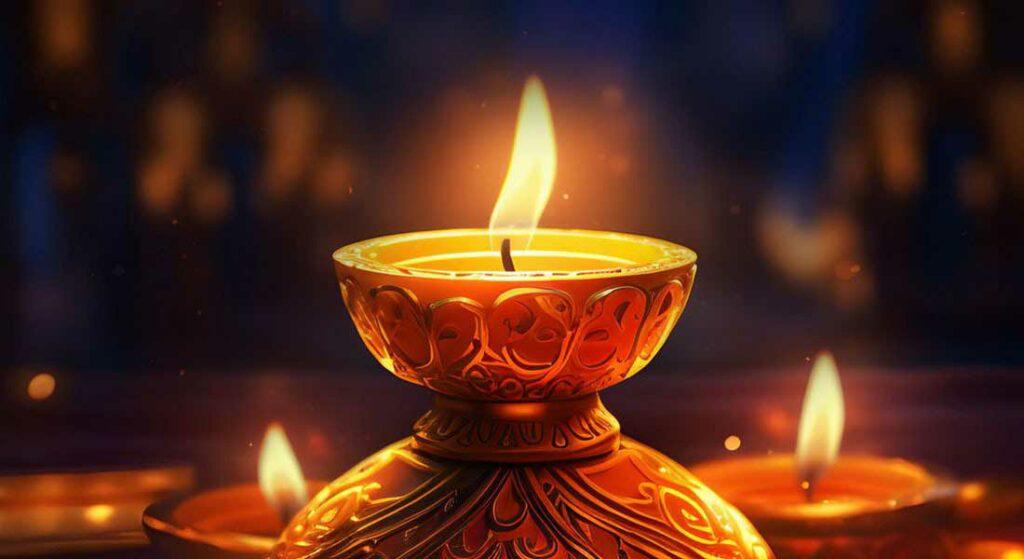
Today Dīpāvalī is hard to imagine without sound: the crack of a laṛī across a street, the hiss of a phūljhaṛī, the rising scream of a rocket. In the popular imagination the festival and its fireworks have merged so fully that many people assume they were always one. They were not. Dīpāvalī is many centuries older than gunpowder in India, and for most of its history it was a festival of the lamp, not the explosion. It was a night of dīpa, ulkā and dīpamālā: still flames, carried torches, and rows of light along walls, rooftops, riverbanks and temple steps.
This essay does not argue that fireworks betrayed some pure original. It argues something more precise. When saltpetre-based pyrotechnics reached India in the later medieval period, they did not displace the festival’s older fire-symbolism. They attached themselves to it. A tradition that already used fire to guide ancestors, ward off death, honour Lakṣmī and celebrate Bali’s return had a ready-made place for a new kind of fire. Saltpetre, sulphur and charcoal, along with an older stock of incendiary knowledge from the Arthaśāstra and the rasaśāstra traditions, were absorbed into an existing grammar of meaning. They added to that grammar and did not rewrite it. The lamp stayed at the centre, and the firework took its place around it.
That claim needs evidence, and it also needs limits. The sections below cover the textual record of the festival before gunpowder, the indigenous knowledge of incendiaries, when saltpetre pyrotechnics arrived and how they were absorbed, and finally where the “enrichment, not replacement” thesis holds and where it needs qualification.
The festival we call Dīpāvalī went by several names and took several regional forms. The literary and scholarly record holds a series of witnesses, each showing a festival built around light.
One of the earliest datable references is in the Nāgānanda of Harṣavardhana, the seventh-century king-dramatist of Kānyakubja. Harṣa mentions a dīpapratipadutsava, a festival of lamps on the first day of the bright fortnight, at which lamps were lit and newly betrothed couples received gifts. The festive vocabulary is already in place: lamps, gift-giving, and an auspicious threshold in the year.
In Kashmir, the Nīlamata Purāṇa, a text deeply tied to the valley’s ritual calendar, describes a lamp festival in Kārttika, including the lighting of lamps on the new-moon night and associated observances. The Nīlamata matters because it records an actual regional calendar rather than a pan-Indian ideal, and it shows the festival of lights as an established part of seasonal life.
In the tenth century, Rājaśekhara’s Kāvyamīmāṃsā names the dīpamālikā, the garland or row of lamps. He describes houses whitewashed and refurbished, and nights lit by lamps along roads and markets. The festival was already tied to domestic renewal: cleaning, repainting, adorning the home for the arrival of prosperity.
An outside observer confirms the picture in the early eleventh century. Al-Bīrūnī, writing his great study of India, describes a festival he calls Dībālī, held on the new moon of Kārttika. People bathe, put on fine clothes, exchange betel leaves and areca nuts, visit temples, give alms and light many lamps. He records the mythological explanation he was given: on this day Lakṣmī frees Bali, the king bound in the netherworld, and lets him visit the earth for one day each year. Al-Bīrūnī was a careful and often sceptical observer, and his account describes a festival of illumination, adornment and exchange. He mentions no explosions or display fires of any kind, because there were none to mention.
The Purāṇic and nibandha literature fills in the ritual detail. The Skanda Purāṇa and Padma Purāṇa contain māhātmya sections on the Kārttika observances. The great twelfth-century digest Kṛtyakalpataru of Lakṣmīdhara, minister to the Gāhaḍavāla king Govindacandra, gathers the prescriptions on lamps, Lakṣmī worship, and a rite of special importance for this essay: the showing of torches to the ancestors.
To see why fireworks could enter Dīpāvalī without disrupting it, look at how many kinds of fire the festival already used. Its fire was never one undifferentiated symbol. It had several distinct ritual functions, each with its own form.
The dīpa, or still lamp. This is the central symbol: a clay pradīpa holding sesame oil or ghee with a cotton wick, set in rows on thresholds, parapets, windows, courtyard walls and riverbanks. The still lamp is welcoming and auspicious. It marks the home as a place where Lakṣmī may enter, and in its massed form, the dīpamālā or dīpāvalī itself, it turns the whole settlement into a constellation. It is fire domesticated, contained and steady.
The Yamadīpa, or lamp for death. On Trayodaśī, the thirteenth day of the dark fortnight, now called Dhanatrayodaśī or Dhanteras, the texts prescribe a lamp placed outside the house facing south, the direction of Yama, lord of death. The Yamadīpadāna is apotropaic. It placates death and protects the household from untimely mortality. This fire faces outward, toward danger, and is an offering of light against darkness in its most final sense.
Naraka Caturdaśī. The fourteenth day carries the story of Kṛṣṇa’s (or in some traditions Satyabhāmā’s) slaying of Narakāsura, along with rites of oil-bathing before dawn and the lighting of lamps. Fire here signals victory over a demonic oppressor.
The ulkā, or carried torch for the ancestors. This rite, prescribed in the nibandha literature and preserved in later manuals such as the Dharmasindhu and Nirṇayasindhu, is the most revealing of all. On the evening of the new moon the householder holds up blazing torches (ulkā) to show the path to the ancestors (pitṛ). The pitṛs are believed to have come close to the world of the living during the preceding season, and they must now be guided back along the road of light. The verses for this rite name those who died by fire, by weapons, or without proper funeral rites, so that no departed soul is left wandering in darkness.
The ulkā is important here because it is a moving, raised, theatrical fire, held up against the night sky. It is not a lamp set quietly in a niche. It is a performed fire, carried and displayed, aimed upward and outward toward the invisible. Long before saltpetre, Dīpāvalī already had a ritual slot for fire that moves through space, is lifted toward the sky, and points the departed along their road.
Bali and the threshold of the year. The day after the new moon, Bali-pratipadā, celebrates the asura king’s one-day return. It is also, in many regions, the start of the new year in the Kārttikādi reckoning. In this setting fire is celebratory and royal, a welcome fit for a king, and it is also a threshold fire marking the boundary between one year and the next.
So the festival had at least five distinct registers of fire: welcoming, apotropaic, triumphal, guiding and celebratory. When a new pyrotechnic technology appeared, it did not need a new rationale. The festival already had a vocabulary waiting for it.
A second strand needs untangling: India’s indigenous knowledge of incendiary mixtures, which is older than gunpowder and separate from it.
The Arthaśāstra attributed to Kauṭilya, a composite text whose core dates roughly to the last centuries BCE and first centuries CE, contains extensive material on agniyoga, the “application” or “yoking” of fire, especially in its later books on siege warfare and secret practices (aupaniṣadika). It describes fire-arrows, incendiary preparations combining resins, lac, oils, the dung and fats of various animals, and plant materials, and mixtures meant to cling, burn stubbornly and resist being put out. Some writers have read these passages as early gunpowder. That reading is not justified. The Arthaśāstra’s mixtures are incendiaries and smoke-producers, not propellants or explosives. They lack the defining ingredient, a concentrated nitrate oxidiser, that makes a mixture burn fast enough to drive a rocket or burst a shell. Even so, the text shows a long Indian familiarity with combustible compounding: fire as something that can be engineered and not merely kindled.
The second body of knowledge is rasaśāstra, Indian alchemy and iatrochemistry, which flourished from roughly the eighth century onward in texts such as the Rasārṇava, the Rasaratnākara attributed to Nāgārjuna, and the Rasaratnasamuccaya. The rasaśāstrīs worked constantly with gandhaka (sulphur), pārada (mercury), a range of kṣāras (alkalis) such as yavakṣāra and sarjikākṣāra, and a sophisticated apparatus of furnaces, crucibles and graded heats (puṭa). They knew how substances react when heated together, how sulphur combines with metals, and how to sublime, calcine and purify. Gunpowder did not come out of this tradition. The kṣāras are carbonates, not nitrates, and the identification of specific Sanskrit terms with saltpetre is contested. But rasaśāstra did build the intellectual and practical infrastructure for working with saltpetre once it arrived: the furnaces, the purification methods, and a theoretical habit of seeing substances as having fiery or cooling natures.
One text often cited for an ancient Indian gunpowder needs a warning. The Śukranīti gives a recipe for agnicūrṇa, fire-powder for nālika firearms, combining a salt (suvarcilavaṇa), sulphur and charcoal in proportions close to true gunpowder. Nineteenth-century scholars, notably Gustav Oppert, took this as evidence of great antiquity. Modern scholarship broadly rejects that dating. The Śukranīti as we have it is a late compilation, and its firearms passages almost certainly reflect knowledge from after the arrival of gunpowder. An honest history has to drop the claim of ancient Indian gunpowder. Dropping it costs nothing, because the real story is more interesting: a civilisation that took in a new technology and fitted it into a ritual and aesthetic system that already existed.
True gunpowder, with saltpetre as its oxidiser, most likely reached India in the thirteenth or fourteenth century, through contact with Mongol military practice and the wider gunpowder world stretching from China across Central Asia. Its earliest use was military. The festival use came quickly after.
The scholar who did the most to reconstruct this history was P. K. Gode, the Pune Indologist, whose mid-twentieth-century study of the history of fireworks in India between roughly 1400 and 1900 remains the foundation of the field. Gode gathered a striking range of evidence from Sanskrit, Marathi, Persian and European travel literature.
From fifteenth-century Vijayanagara comes the account of the Persian envoy ʿAbd al-Razzāq, who saw the Mahānavamī festivities of 1443 and described fireworks among the displays. Vijayanagara’s great autumn festival, held in the same season as Dīpāvalī, used pyrotechnics as part of royal spectacle, combining sacred festival with the theatre of kingship.
From the Gajapati court of Odisha comes a text of particular importance: the Kautukacintāmaṇi, attributed to the king Pratāparudradeva and dated to the late fifteenth or early sixteenth century. As Gode showed, this treatise on wonders, entertainments and marvels includes recipes for pyrotechnic preparations. The firework entered Sanskrit learning not as a weapon but as a kautuka, a marvel, a thing that delights. Its classification is telling. It sits beside illusions, entertainments and pleasures of courtly life, not beside siege engines.
Gode also drew attention to the Ākāśabhairavakalpa, a Śaiva-ritual text of the same broad period, which describes fireworks at royal festival occasions. The firework was entering ritual literature as well as courtly literature, appearing in texts that prescribe how a king should celebrate sacred occasions.
European observers in the early sixteenth century, including Duarte Barbosa, recorded fireworks at weddings in Gujarat. This indicates that by then pyrotechnics had spread beyond royal courts into the celebrations of wealthy households.
In Maharashtra the evidence enters vernacular devotional literature. The sixteenth-century saint-poet Ekanāth, in his Rukmiṇīsvayaṃvara, describes rockets and other fireworks at the wedding festivities. When a Bhakti poet writing in Marathi for ordinary devotees uses fireworks as natural images of celebration, the technology has plainly become part of the cultural imagination.
The central question is how this new technology related to the older festival. The evidence points clearly to grafting, not replacement, for several reasons.
The firework took up existing ritual functions. The rocket (bāṇa, a word that also means arrow) rising into the night sky fills almost exactly the space the ulkā already held: fire lifted upward, pointing beyond the human world. In some regions the link stayed explicit in folk practice, and fireworks and torches on the new-moon night were understood together as lighting the path of the departed. The apotropaic register of the Yamadīpa found a natural extension in noise. Across many cultures loud reports are thought to drive away malign forces, and the sound of firecrackers in the darkest night of the year fitted easily into a festival already concerned with holding off death and darkness. The triumphal register of Naraka Caturdaśī and the royal welcome of Bali-pratipadā took in celebratory display just as easily. The firework needed no new mythology. It was explained by the old one.
The lamp was never displaced. At no point in the historical record does the firework push the dīpa aside. In the Peshwa-period records of Pune, which document lavish Dīpāvalī celebrations in the eighteenth century, fireworks appear alongside massive illuminations, not instead of them. The Śaniwār Wāḍā and the city were lit with thousands of lamps, and the fireworks were a further layer of spectacle. The same holds for Rajput courts, where palace illuminations stayed central, and for the Mughal court, where ātishbāzī (fireworks, from the Persian) was well developed. The Āʾīn-i-Akbarī records the imperial establishment’s attention to such displays, and at later Mughal courts the Hindu festival of lights was celebrated with both lamps and fireworks. The pattern is consistent: fireworks are added to an illuminated night, never substituted for it.
The ritual core of the festival, the Lakṣmī Pūjā performed at the auspicious moment (muhūrta) of the new-moon evening, stayed entirely centred on the lamp, the image and the offerings. No ritual manual of the period makes fireworks a requirement of worship. They belonged to the celebratory penumbra around the rite, not to the rite itself. That is exactly what one would expect of a graft: the new growth draws on the old rootstock without becoming it.
Indigenous craft adapted the technology to local aesthetics. Indian pyrotechnicians did not simply import foreign forms. They developed vernacular types with their own names and characters: the anār (pomegranate), a fountain of sparks named for the fruit’s bursting seeds; the phūljhaṛī, a sparkler whose name evokes falling flowers; the cakrī or bhūcakra, the ground-wheel echoing the cakra that runs through Indian iconography; the bāṇa or rocket, carrying the old word for arrow. Their names come from the same botanical and iconographic world as temple sculpture and textile design. The pomegranate is a symbol of fertility and abundance, the flower an offering, the wheel a sign of cosmic order and royal dominion. The new technology was clothed in the old imagery.
Metal salts for colour, rasaśāstra’s knowledge of mineral substances, and the craft traditions of metalworkers and dyers all contributed to the developing pyrotechnic art. The alchemical background did not invent the firework, but it helped Indianise it, turning a foreign military chemistry into a domestic art of beauty.
The firework reinforced the festival’s social reach. In the courtly period, firework displays were royal gifts to the public, a way for the king to share the festival’s splendour with subjects. This fits the old understanding of Dīpāvalī as a festival of generosity and exchange, which al-Bīrūnī had already noticed in the giving of betel and alms. The king who staged a display was acting out dāna, the giving that the festival had always celebrated.
For most of the period from the fifteenth to the nineteenth century, fireworks remained largely the preserve of courts, temples and the wealthy. Saltpetre was a valuable strategic commodity. In the colonial period Bengal and Bihar saltpetre was a major export, essential to European gunpowder production, and the British controlled its trade tightly. The ordinary household’s Dīpāvalī stayed overwhelmingly a festival of clay lamps.
The change to mass participation came in the twentieth century, and its centre was Sivakasi in Tamil Nadu. In the early 1920s two enterprising members of the Nadar community, P. Ayya Nadar and A. Shanmuga Nadar, went to Calcutta to learn match manufacturing and came back to set up the industry in Sivakasi, whose dry climate suited production. Fireworks followed matches, and over the following decades Sivakasi became the source of the overwhelming majority of India’s festive pyrotechnics. For the first time, crackers and sparklers became affordable to ordinary families.
This democratisation completed the graft. What had been a royal marvel became a household pleasure. Even then, the lamp kept its primacy in ritual. The household that bursts crackers on the street still lights its dīpa at the threshold, still performs Lakṣmī Pūjā before an oil flame, and still places lamps along the parapet. The firework became the festival’s most audible element without ever becoming its sacred centre.
The thesis that saltpetre pyrotechnics enriched Dīpāvalī without replacing its tradition is broadly well supported. The evidence shows continuity of the lamp, a fit between new fire-forms and old ritual functions, and the Indianisation of the technology through vernacular craft and nomenclature. But some qualifications are needed, and leaving them out would turn history into apologetics.
First, the grafting was not a deliberate theological act. No ritual authority ever decreed that rockets should continue the ulkā. The fit was organic and largely unarticulated, and some of the symbolic links described above are interpretive reconstructions rather than explicit doctrines in the sources. The structural fit is real, but it should not be confused with documented intention.
Second, the firework’s place in the festival was for centuries regionally and socially uneven. A Peshwa-court Dīpāvalī and a village Dīpāvalī in Bengal or Kerala were very different events. In parts of eastern India the new-moon night is centred on Kālī Pūjā, and in parts of the south Naraka Caturdaśī is the main day. The firework’s integration followed these regional differences and did not produce a uniform festival.
Third, “made it better” is a value judgment, and in the present day it is contested. Mass-produced fireworks carry real costs: severe air pollution in north Indian cities during the post-monsoon season, when stubble burning and temperature inversions already concentrate pollutants; noise that harms the elderly, infants and animals; and, historically, dangerous labour conditions in the production centres, including documented child labour in earlier decades and recurring factory explosions. These are not arguments against tradition. If anything, they are arguments for remembering the tradition’s actual centre. A festival whose oldest and deepest symbol is the still oil lamp has every resource it needs to scale back its fireworks without losing its identity. The history traced here shows that the firework was an addition to Dīpāvalī, which means Dīpāvalī does not depend on it.
That may be the most important conclusion of an honest history. The same evidence that refutes the claim that fireworks are an alien corruption of the festival also refutes the opposite claim, that fireworks are its essence. They are a late, rich and culturally assimilated layer: a genuine part of the living tradition, but not its foundation.
The history of Dīpāvalī is a history of fire in many forms. Before gunpowder, the festival already knew the still lamp of welcome, the south-facing lamp against death, the triumphal flame of victory over Naraka, the raised torch that guides the ancestors home, and the festive glow that greets Bali on his annual return. It had been described by a seventh-century royal dramatist, codified in Purāṇic and nibandha literature, catalogued by a tenth-century poetician, and observed by an eleventh-century Central Asian polymath, all without a single explosion.
When saltpetre arrived with its new chemistry of rapid combustion, India already had a long familiarity with engineered fire through the agniyoga of the Arthaśāstra and the furnaces of rasaśāstra. The new technology was quickly reclassified from weapon to kautuka, from instrument of war to marvel of delight. It entered the courts of Vijayanagara and the Gajapatis, the households of Gujarat, the verses of Ekanāth and the festivities of Peshwa Pune. It took Indian names drawn from pomegranates, flowers, wheels and arrows. Centuries later, through the industry of Sivakasi, it reached the ordinary household.
Through all of this, the lamp stayed at the centre. The firework rose around it the way the ulkā once did, pointing upward and outward into the dark while the dīpa held its steady place at the threshold. That is the pattern of a living tradition absorbing the new: the old structure takes in the innovation, gives it meaning, and stays itself. Dīpāvalī became louder and more spectacular, but it remained what Harṣa, Rājaśekhara and al-Bīrūnī each saw it to be, a festival of light.