r/IndicKnowledgeSystems • u/Manoj_Mishra • 18h ago
architecture/engineering Leaning temples at Huma and Manikarnika ghat have more inclination than the leaning tower at Pisa
gallery
10
Upvotes
r/IndicKnowledgeSystems • u/Manjeet_S_T • 18h ago
छठ पर्व का इतिहास : आस्था, शास्त्र और ऐतिहासिक तथ्यों की पड़ताल
पिछले दिनों सोशल मीडिया पर एक पोस्ट देखने को मिली, जिसमें छठ पर्व को बौद्ध परंपरा से जुड़ा हुआ बताया गया था। इस पोस्ट के बाद सोशल मीडिया पर एक नई बहस छिड़ गई। एक ओर बौद्ध धर्म को मानने वाले लोग अपने तर्क रख रहे थे, तो दूसरी ओर हिंदू धर्म को मानने वाले लोग अपनी धार्मिक मान्यताओं के आधार पर जवाब दे रहे थे।
दोनों पक्षों के बीच बहस और दावों-प्रतिदावों को देखकर मेरे मन में एक सवाल आया कि आखिर ऐतिहासिक सच्चाई क्या है?
क्या छठ पर्व की जड़ें वैदिक परंपरा में हैं? क्या इसका संबंध प्राचीन बौद्ध संस्कृति से है? क्या यह किसी एक धार्मिक परंपरा की देन है, या सदियों से विकसित होती आई लोकपरंपराओं का समन्वित स्वरूप है?
इसी जिज्ञासा के चलते मैंने इस विषय पर अध्ययन करने का निर्णय लिया। उपलब्ध धार्मिक ग्रंथों, पुराणों, वैदिक संदर्भों, ऐतिहासिक अध्ययनों और शोधकर्ताओं के विचारों को समझने का प्रयास किया।
इस अध्ययन में ऋग्वेद में सूर्योपासना, महाभारत में सूर्य से जुड़ी कथाओं, देवी भागवत पुराण में षष्ठी देवी के उल्लेख, भविष्य पुराण और भविष्य पुराणोत्तर परंपरा और छठ की क्षेत्रीय लोकपरंपराओं का अध्ययन किया।
छठ पर्व को समझने के लिए तीन अलग-अलग प्रश्नों पर विचार करना जरूरी है:
छठ पर्व भारतीय उपमहाद्वीप की अत्यंत प्राचीन सूर्योपासना परंपराओं में से एक है। इसकी विशेषता यह है कि इसमें केवल उगते सूर्य ही नहीं, बल्कि अस्त होते सूर्य को भी अर्घ्य दिया जाता है। इसमें सूर्य के साथ षष्ठी देवी (छठी मैया), प्रकृति, जल और जीवन के प्रति कृतज्ञता का भाव भी जुड़ा हुआ है।
छठ पर्व के पीछे मुख्य रूप से चार धार्मिक और सांस्कृतिक मान्यताएँ हैं।
\* सूर्य के प्रति कृतज्ञता: सूर्य को ऊर्जा, प्रकाश, कृषि और जीवन का आधार माना जाता है।
\* स्वास्थ्य और समृद्धि: सूर्य की उपासना से परिवार के स्वास्थ्य, संतान की सुख-समृद्धि और दीर्घायु की कामना की जाती है।
\* प्रकृति की पूजा: जल, सूर्य, पृथ्वी, वनस्पति और मौसमी फलों को पूजा का हिस्सा बनाया जाता है।
\* लोककल्याण और परिवार: परिवार की सुख-शांति, संतान की उन्नति और समाज के कल्याण के लिए व्रत किया जाता है।
इसका वर्तमान स्वरूप चार दिनों का होता है:
पहला - नहाय-खाय
दूसरा - खरना
तीसरा - संध्या अर्घ्य
चौथा - उषा अर्घ्य
2. प्राचीन शास्त्रों में छठ से संबंधित उल्लेख
यहाँ एक जरूरी अंतर समझना होगा। प्राचीन ग्रंथों में सूर्य की पूजा, षष्ठी देवी की पूजा और आज के छठ पर्व की पूरी चार दिवसीय विधि — ये तीनों एक ही बात नहीं हैं।
(क) ऋग्वेद — सूर्योपासना
ऋग्वेद में सूर्य, सविता और उषा की उपासना के अनेक मंत्र मिलते हैं।
कुछ प्रमुख संदर्भ:
\* ऋग्वेद 1.50 — सूर्य की स्तुति।
\* ऋग्वेद 1.113 — उषा अर्थात भोर की देवी की स्तुति।
\* ऋग्वेद 3.62.10 — प्रसिद्ध गायत्री मंत्र, जिसमें सविता देवता की उपासना है।
\* ऋग्वेद 10.90 — पुरुष सूक्त में सूर्य का उल्लेख।
इससे यह स्पष्ट होता है कि सूर्योपासना की परंपरा अत्यंत प्राचीन है।
लेकिन ऋग्वेद में आज के नहाय-खाय, खरना, सूप, ठेकुआ और दो अर्घ्यों वाले छठ पर्व का स्पष्ट वर्णन नहीं मिलता।
(ख) महाभारत — सूर्य की उपासना
महाभारत में सूर्य की उपासना से जुड़ी दो लोकप्रिय कथाएँ हैं।
1 कर्ण: कर्ण को सूर्यपुत्र माना गया है। महाभारत में सूर्य के प्रति उसकी भक्ति का उल्लेख मिलता है।
2. द्रौपदी: वनवास के दौरान द्रौपदी द्वारा सूर्य की आराधना और सूर्य से अक्षय पात्र प्राप्त करने की कथा प्रचलित है।
इन कथाओं को छठ पर्व से जोड़ा जाता है, लेकिन यह कहना सही नहीं होगा कि महाभारत में आज के छठ पर्व की संपूर्ण विधि वर्णित है।
(ग) देवी भागवत पुराण — षष्ठी देवी
यह छठी मैया की धार्मिक अवधारणा को समझने के लिए महत्वपूर्ण ग्रंथ है।
संदर्भ: देवी भागवत पुराण, स्कंध 9, अध्याय 46।
इसमें षष्ठी देवी का वर्णन मिलता है।
मुख्य बातें:
\* षष्ठी को प्रकृति का छठा अंश बताया गया है।
\* उन्हें बच्चों की रक्षा करने वाली देवी माना गया है।
\* उन्हें संतान प्रदान करने वाली देवी के रूप में वर्णित किया गया है।
\* जन्म के छठे दिन उनकी पूजा का विधान बताया गया है।
यहाँ ध्यान देने योग्य बात है कि जन्म के छठे दिन होने वाली षष्ठी पूजा और कार्तिक शुक्ल षष्ठी का छठ महापर्व अपने आप में अलग-अलग अनुष्ठान हैं।
(घ) भविष्य पुराण और भविष्य पुराणोत्तर परंपरा
सूर्योपासना और षष्ठी तिथि के व्रत-विधान के लिए भविष्य पुराण की परंपरा का उल्लेख मिलता है।
इसके अतिरिक्त हेमाद्रि की व्रतखंड परंपरा और निर्णयसिंधु में भी छठ के वर्तमान स्वरूप से मिलते-जुलते सूर्य-व्रत के विधान का उल्लेख मिलता है।
साथ ही भविष्यपुराणोत्तर परंपरा से जुड़े संदर्भों के साथ छठ के अनुष्ठानों की तुलना की गई है।
इसलिए यह कहना गलत होगा कि छठ का कोई शास्त्रीय आधार ही नहीं है।
3. क्या छठ पर्व का संबंध बौद्ध परंपरा से है?
यह सबसे दिलचस्प ऐतिहासिक प्रश्न है।
मेरा निष्कर्ष है कि छठ पर्व को सीधे बौद्ध परंपरा से उत्पन्न हुआ बताने के लिए अभी पर्याप्त ऐतिहासिक प्रमाण उपलब्ध नहीं हैं। लेकिन इसके कुछ पहलुओं की तुलना प्राचीन लोक और गैर-ब्राह्मणीय परंपराओं से जरूर की जा सकती है।
इसके पीछे कुछ महत्वपूर्ण तर्क हैं।
पहला तर्क: बिहार का प्राचीन धार्मिक परिवेश
बिहार बौद्ध धर्म की जन्मभूमि और विकासभूमि रहा है। गया, बोधगया, नालंदा और राजगीर जैसे स्थानों पर बौद्ध परंपरा का गहरा ऐतिहासिक प्रभाव रहा है।
इसी क्षेत्र में सूर्योपासना और प्रकृति से जुड़ी अनेक लोकपरंपराएँ भी विकसित हुईं।
इसलिए बिहार की धार्मिक परंपराओं को केवल एक धार्मिक धारा से समझना उचित नहीं है।
दूसरा तर्क: ब्राह्मण पुरोहित की अनिवार्यता नहीं
\* छठ पूजा में परंपरागत रूप से ब्राह्मण पुरोहित की अनिवार्यता नहीं रही।
\* परिवार की बुजुर्ग महिला पूजा का संचालन कर सकती है।
\* लोकगीतों और मौखिक परंपराओं का इसमें विशेष महत्व है।
\* इसमें प्रकृति और सूर्य की उपासना का विशेष स्थान है।
इसकी कुछ जड़ों का प्राचीन स्थानीय और प्रकृति-आधारित धार्मिक परंपराओं से जुड़े होने की संभावना हैं।
तीसरा तर्क: लोकपरंपरा और शास्त्रीय परंपरा का समन्वय
छठ की स्थानीय सूर्योपासना परंपरा और बच्चों की रक्षा करने वाली षष्ठी देवी की धार्मिक अवधारणा समय के साथ एक-दूसरे से जुड़ीं।
यह एक महत्वपूर्ण ऐतिहासिक संभावना है।
इससे यह समझ आता है कि कोई धार्मिक पर्व केवल एक ग्रंथ या एक धार्मिक समुदाय से नहीं, बल्कि सदियों के सांस्कृतिक आदान-प्रदान से भी विकसित हो सकता है।
चौथा तर्क: क्या बौद्ध धर्म में सूर्य पूजा थी?
बौद्ध धर्म में सूर्य और अन्य प्राकृतिक शक्तियों का उल्लेख मिलता है। बौद्ध कला में सूर्य से संबंधित प्रतीक भी मिलते हैं।
लेकिन किसी बौद्ध क्षेत्र में सूर्य के प्रति सम्मान होना और वहां प्रचलित छठ पर्व का बौद्ध मूल का होना दो अलग-अलग बातें हैं।
अभी ऐसा कोई ठोस प्रमाण सामने नहीं है जिससे कहा जा सके कि भगवान बुद्ध ने छठ पूजा का विधान दिया था या बौद्ध संघ ने इस पर्व की शुरुआत की थी।
इसलिए इसे बौद्ध मूल का पर्व घोषित करना ऐतिहासिक रूप से जल्दबाजी होगी।
मेरी स्पष्ट राय:
छठ पर्व को न तो केवल वैदिक परंपरा का उत्सव कहना उचित है और न ही बिना प्रमाण इसे बौद्ध परंपरा का पर्व घोषित करना।
इसे बिहार और पूर्वी भारत की प्राचीन सूर्योपासना, प्रकृति पूजा, स्थानीय लोकविश्वासों और बाद में विकसित शास्त्रीय धार्मिक परंपराओं के समन्वय से विकसित हुआ पर्व समझना अधिक ऐतिहासिक और निष्पक्ष दृष्टिकोण है।
धर्म और इतिहास के अध्ययन में किसी परंपरा की प्राचीनता सिद्ध करने के लिए उसके प्रति श्रद्धा पर्याप्त नहीं होती; ग्रंथ, पुरातात्विक साक्ष्य, अभिलेख और ऐतिहासिक निरंतरता भी देखनी पड़ती है।
मेरा उद्देश्य किसी धर्म, संप्रदाय या समुदाय की मान्यता को छोटा दिखाना अथवा किसी की धार्मिक आस्था पर सवाल उठाना नहीं है।
मेरा मानना है कि इतिहास किसी की व्यक्तिगत आस्था या धार्मिक पहचान के आधार पर नहीं, बल्कि उपलब्ध प्रमाणों, अभिलेखों, ग्रंथों और निष्पक्ष शोध के आधार पर समझा जाना चाहिए।
बौद्ध हों, हिंदू हों या किसी अन्य विचारधारा को मानने वाले हों, किसी भी परंपरा की ऐतिहासिक पड़ताल करना विवाद खड़ा करना नहीं, बल्कि ज्ञान को समृद्ध करना है।
आइए, धार्मिक पहचान के आधार पर एक-दूसरे से लड़ने के बजाय तथ्यों को समझें, सवाल पूछें और स्वस्थ वैचारिक संवाद को आगे बढ़ाएं।
क्योंकि आस्था व्यक्तिगत हो सकती है, लेकिन इतिहास और उसके प्रमाण किसी एक समुदाय की निजी संपत्ति नहीं होते।
यह मेरा प्रारंभिक अध्ययन है। यदि किसी के पास इस विषय से संबंधित प्रामाणिक ऐतिहासिक दस्तावेज, शिलालेख, ग्रंथ-संदर्भ या शोध उपलब्ध हों, तो उनका स्वागत है। सत्य की खोज में नए प्रमाणों और बेहतर तर्कों के लिए हमेशा जगह होनी चाहिए।
\#ChhathPuja
\#HistoricalResearch
\#BuddhistHeritage
\#IndianCulture
\#factsoverfaith
r/IndicKnowledgeSystems • u/Manoj_Mishra • 2d ago
r/IndicKnowledgeSystems • u/Manoj_Mishra • 2d ago

The costumes of some of the Primarily Vulnerable Tribal Groups (abbreviated as PVTG) speak a volume about the man's fascination for textiles that dates back to prehistoric days. Personal adornments may include textiles and jewellery as well….but here I am going to discuss some of the peculiar textiles being worn by some of the most sought-after tribal communities living in different nooks and corners of Odisha.
https://lunarsecstacy.com/2021/05/08/few-typical-tribal-textiles-of-odisha/
r/IndicKnowledgeSystems • u/nammaroadtrip • 5d ago
r/IndicKnowledgeSystems • u/Manoj_Mishra • 5d ago
r/IndicKnowledgeSystems • u/itiha29 • 5d ago

r/IndicKnowledgeSystems • u/ApexPredator1109 • 5d ago
Was there a particular historical period when Hindu scriptural authority became increasingly decentralised, with different sampradayas, philosophical schools and regional traditions developing their own authoritative texts?
The Vedas, Brahmanas, Aranyakas, and principal Upanishads form the foundational Vedic corpus, while the Puranas and Itihasas also hold major importance. However, I am curious about when and how the boundaries of scriptural authority shifted in Indian history.
For instance, the concept of a Panchama Veda (fifth Veda) was applied to works like the Mahabharata and Natya Shastra. Later, the Upanishadic corpus expanded far beyond the early principal texts to compilations recognizing 108 Upanishads. Alongside this, Puranic literature, Agamas/Tantras, and vernacular Bhakti canons (such as the Tamil Divya Prabandham or Tirumurai) gained independent authority.
Looking at this historical evolution:
Timeline of Shift: Was there a particular period, such as the Gupta/post-Gupta era or the rise of regional Bhakti movements, when new religious works stopped being framed as extensions of the Vedic corpus, allowing different sampradayas and regional traditions to establish their own canons?
Shruti vs Smriti: How did the distinction between Shruti and Smriti evolve during this process, and what historical or philosophical criteria allowed a newer text to acquire scriptural authority?
TL;DR: When in Indian history did Hindu traditions stop framing new texts as extensions of the Vedas and begin establishing independent sectarian and regional canons? How did the distinction between Shruti and Smriti evolve to grant authority to Puranas, Agamas, and vernacular Bhakti works?
r/IndicKnowledgeSystems • u/Cute_Sort_1008 • 5d ago
r/IndicKnowledgeSystems • u/Nervous-Magician-223 • 6d ago
r/IndicKnowledgeSystems • u/Mobile-Wrangler-4829 • 6d ago
This is my grandad and unfortunately I nver got to meet him as a passed before I was born. Through my mom I’ve had stories about how he was a well regarded scientist but I never knew the significance of his work. I wanted to come here to ask if anyone has information on him and could give me some insight I’d appreciate it a lot.
r/IndicKnowledgeSystems • u/jimliang2026 • 8d ago

Most attempts to explain caste's durability reach for the Brahmanical ideology — the Purusha myth, karma, the cosmic legitimation of rank (as I covered in a previous post). But ideology explains why people accept the system, not why the system reproduces itself regardless
of what people believe. The institutional layer deserves its own analysis.
The jati lattice. The four varnas are a skeleton;
the flesh is thousands of jatis — birth-groups, each tied to an occupation, a
diet, and a marriage circle. Endogamy is enforced not by police but by
outcasting: cross the line and your own group stops marrying you, feeding you,
burying you. The punishment for violating the caste order is administered by
the caste order itself. No guards required; the system self-installs at birth.
Pollution as infrastructure. Untouchability operated as a
protocol of distances — wells, roads, kitchens, shadows. It survived
industrialization because it was never "just belief": it was embedded
in marriage, food, residence, and labor. You can stop believing in karma; you
still marry within the circle. Modern corollary: manual scavenging persists
despite its statutory prohibition (2013); per activist organizations (SKA),
hundreds have died in sewers in recent decades. Machines replaced the hoe, not
the assignment of whose body goes underground.
The colonial hardening. From 1871, British censuses
enumerated and ranked jatis (Risley's 1901 "civilization" grading is
the notorious case), converting fluid local identities into fixed official
categories. The 1931 census was the last to record caste — abandoned amid
nationalist pressure, and after Gandhi's 1932 fast forced the Poona Pact's
compromise over separate electorates. The damage: caste moved from custom into
paperwork, from living relation into file.
The 1950 settlement. Article 17 criminalized
untouchability; the state renamed the "untouchables" Scheduled
Castes, reserved quotas (SC/ST ≈ 22.5%; the Mandal Commission added OBC 27% in
1990). B.R. Ambedkar — a Dalit — chaired the drafting committee. The law repealed
clauses; the structure persisted: over 90% of marriages remain intra-caste;
villages keep two wells. Caste didn't die — it changed professions, from
religious identity to electoral arithmetic.
Discussion: Comparative question: China's
Nine-Rank system was dismantled by the examination channel (Sui–Tang onward);
India's parallel closure held. Was the difference theology, state capacity, or
the exam channel itself?
r/IndicKnowledgeSystems • u/itiha29 • 9d ago

r/IndicKnowledgeSystems • • 9d ago
r/IndicKnowledgeSystems • u/Other_Pick8787 • 11d ago

r/IndicKnowledgeSystems • u/ved_1802 • 12d ago

r/IndicKnowledgeSystems • u/Important-Raise7846 • 12d ago
r/IndicKnowledgeSystems • u/itiha29 • 12d ago

r/IndicKnowledgeSystems • u/KullanSuryaV1000 • 13d ago

Premākhyān literature (प्रेमाख्यान साहित्य), literally meaning “narratives of love,” represents one of the most remarkable traditions of medieval Indian literature. Flourishing particularly between the fourteenth and eighteenth centuries, it developed through the contributions of numerous poets, storytellers, religious scholars, and regional literary communities. Its compositions transformed stories of human love into elaborate narratives exploring longing, separation, devotion, courage, sacrifice, morality, and spiritual fulfilment.
Although Premākhyān literature is frequently associated with Sufi poetry, the tradition was considerably broader. Its antecedents existed in Sanskrit, Prakrit, Apabhraṃśa, Jain narrative literature, and regional storytelling. Medieval Sufi authors developed a particularly influential branch of this larger literary inheritance by combining Indian narrative conventions with Persianate literary and mystical ideas.
The resulting literature was neither uniform nor exclusively religious. Some compositions were elaborate allegories of the soul's search for God; others celebrated romantic attachment, marital fidelity, heroic adventure, or the emotional experiences of ordinary human beings.
The tradition reached extraordinary sophistication in works such as Cāndāyan by Maulānā Dāūd, Mṛgāvatī by Qutban, Padmāvat by Malik Muhammad Jāyasī, and Madhumālatī by Mañjhan. Yet these celebrated compositions represent only one part of a much larger body of literature.
Premākhyān works also developed in Rajasthani, Gujarati, Brajbhāṣā, and other regional languages, often incorporating storytelling techniques inherited from earlier Indian literary cultures.
Their importance lies not merely in their romantic narratives but in the extraordinary literary world they created: a world where princes became wandering ascetics, lovers crossed oceans, heroines exercised extraordinary agency, supernatural beings intervened in human affairs, and longing became a means of philosophical reflection.
The foundations of Premākhyān literature extend well beyond the appearance of Sufi romance in medieval northern India.
Indian literature had possessed sophisticated traditions of romantic storytelling for many centuries. The narratives of Nala and Damayantī, Duṣyanta and Śakuntalā, Purūravas and Urvaśī, and Uṣā and Aniruddha established influential models of love, separation, recognition, reunion, and supernatural intervention.
The Mahābhārata contains the celebrated story of Nala and Damayantī, whose relationship survives displacement, suffering, and prolonged separation. Kālidāsa's Abhijñānaśākuntalam transformed the relationship between Duṣyanta and Śakuntalā into one of classical Sanskrit literature's most accomplished dramatic romances.
Subandhu's Vāsavadattā, Bāṇa's Kādambarī, and Śrīharṣa's Naiṣadhīyacarita further demonstrated the possibilities of elaborate romantic narration.
These works established techniques that would remain influential throughout the Premākhyān tradition: descriptions of extraordinary beauty, dreams, messengers, journeys, mistaken identities, obstacles, and emotionally intense reunions.
Prakrit and Apabhraṃśa literature provided additional foundations. Jain authors composed extensive narrative poems involving princes, merchants, queens, travellers, ascetics, and morally complicated relationships.
Their compositions frequently combined romance with ethical teaching, adventure, and descriptions of society.
Importantly, these literary traditions developed techniques of continuous narrative poetry that later reappeared in vernacular romances.
The medieval Premākhyān therefore emerged from a substantial indigenous inheritance while also incorporating forms, themes, and interpretive methods associated with Persian literature.
Between the thirteenth and sixteenth centuries, regional languages increasingly became major vehicles of literary production.
Avadhī, Brajbhāṣā, Rajasthani, Gujarati, and other vernacular languages acquired extensive bodies of narrative poetry.
These developments coincided with the expansion of regional courts, religious institutions, manuscript production, and the circulation of professional storytellers.
The Sufi orders operating in northern India participated in these developments. Their poets increasingly adopted local languages to compose works understandable to audiences beyond the Persian-educated elite.
The Persian masnavī, a form of extended narrative poetry, provided an influential model. Nevertheless, Indian Premākhyān compositions generally employed local metres and inherited storytelling conventions rather than simply reproducing Persian poems.
A characteristic feature was the combination of caupāī verses with concluding dohās. This arrangement enabled poets to sustain extended descriptions while providing rhythmic closure to narrative passages.
The distinction between religious and secular literature was often fluid. A poem could describe the experiences of human lovers while inviting readers to contemplate devotion, self-discipline, or metaphysical truth.
This versatility contributed significantly to the popularity of Premākhyān literature.
Among the early compositions associated with the vernacular romance tradition is Haṃsāvalī, attributed to the poet Asāita.
Its dating and precise relationship to the later Hindi Sufi corpus require care, but it is frequently discussed as an important early romance, belonging to the fourteenth-century western Indian literary environment.
The narrative concerns a princess named Haṃsāvalī and a prince whose attraction develops through extraordinary circumstances, including dream imagery.
The prince undertakes an adventurous quest, enduring danger and uncertainty before reaching his beloved.
Such narrative features became familiar throughout later Premākhyān literature.
The work also demonstrates the importance of western Indian narrative traditions in the development of vernacular romantic poetry.
The invocation of Hindu deities and the use of inherited regional literary conventions distinguish it from the later, explicitly Islamic Sufi romances.
Consequently, Haṃsāvalī is especially valuable for understanding why Premākhyān should not be identified exclusively with one religious community.
Maulānā Dāūd's Cāndāyan, composed around 1379, occupies a foundational position in the history of Hindavī Sufi romance.
Associated with Dalmau in present-day Uttar Pradesh, Dāūd drew upon the widespread northern Indian folklore surrounding Lorik and Chandā.
The narrative centres on the warrior Lorik, his existing marriage to Mainā, and his relationship with Chandā.
Rather than producing an entirely foreign romance, Dāūd adapted a story deeply embedded in the oral culture of northern India.
The poem contains descriptions of domestic life, marital relationships, conflict, journeys, separation, beauty, and longing.
Its presentation of love is emotionally complex because the relationships involve competing obligations and desires.
In Sufi interpretations, the lover's difficulties may signify the struggles of a spiritual seeker attempting to overcome worldly attachments.
However, the narrative also retains its distinct character as a vernacular love story.
Its importance extends to manuscript history. Illustrated copies of Cāndāyan testify to the interaction between literature and painting.
The poem helped establish Hindavī as a sophisticated language for extended poetic narration and provided an influential model for subsequent authors.
Another important contribution came from the poet Dāmodara, associated with Lakhanasena-Padmāvatī Kathā, generally dated to the fifteenth century.
This romance concerns King Lakhanasena and Princess Padmāvatī.
The narrative explores romantic attraction, emotional attachment, and the difficulties encountered by lovers.
Its literary importance lies partly in its use of Rajasthani and related western Hindi narrative conventions.
The poem demonstrates that Premākhyān writing developed through multiple regional centres rather than through a single uninterrupted succession of Sufi authors.
Dāmodara employed familiar metrical structures and descriptions associated with traditional Indian love poetry.
His composition belongs to a substantial body of romantic narratives connecting courtly culture with vernacular literary creativity.
Īśvaradāsa's Satyavatī Kathā, composed around 1501, provides another important example of non-Sufi Premākhyān literature.
Īśvaradāsa belonged to a devotional literary environment shaped by Hindu religious and cultural traditions.
His narrative employs romance to explore beauty, separation, fidelity, emotional suffering, and moral conduct.
The significance of Satyavatī Kathā lies in its demonstration that romantic narrative poetry remained attractive to authors whose religious orientations differed from those of the Sufi poets.
Love could be represented as a personal experience, a moral obligation, or a means of expressing devotion.
The work also participates in the development of vernacular literary expression by presenting intricate emotions through accessible language.
Its existence challenges the simplified classification of all medieval Hindi romantic poetry as Sufi allegory.
Qutban's Mṛgāvatī, completed around 1503, represents one of the major achievements of early Hindavī Sufi literature.
Its protagonist is a prince who becomes fascinated by the extraordinary princess Mṛgāvatī.
The princess possesses supernatural abilities, including the power of flight.
Their relationship develops through encounters, separation, and repeated searches.
At one point, the prince adopts the appearance of a wandering yogi and undertakes a demanding journey to recover his beloved.
The work incorporates magical transformations, unfamiliar landscapes, supernatural dangers, and encounters with other women.
These adventures can be interpreted as the spiritual trials of a seeker.
The yogi's wandering is particularly significant because it places Indian ascetic imagery within a Sufi narrative framework.
Yet Mṛgāvatī is not merely a passive object of desire. Her supernatural powers and independent actions influence the development of the entire story.
The poem illustrates how Indian folklore, yogic imagery, and mystical interpretations of love could coexist within a single composition.
The greatest international recognition within the Premākhyān tradition belongs to Malik Muhammad Jāyasī's Padmāvat, composed around 1540.
Jāyasī was associated with Jais in the Awadh region and wrote in a sophisticated form of Avadhī.
His poem narrates the romance between Ratnasena, ruler of Chittor, and Padmāvatī, the beautiful princess of Siṃhala.
After hearing of Padmāvatī's extraordinary beauty through the parrot Hīrāman, Ratnasena becomes determined to find her.
He undertakes a dangerous journey and eventually succeeds in marrying her.
The narrative subsequently develops into a tragedy involving political ambition, deception, warfare, separation, and death.
One of the poem's greatest artistic achievements is its portrayal of Nāgmatī, Ratnasena's first wife.
Her suffering during her husband's absence constitutes an exceptionally moving example of viraha, the emotional experience of separation.
The poem also incorporates extensive descriptions of royal households, markets, architecture, rituals, natural landscapes, and political life.
Its symbolic interpretation is equally important.
Jāyasī famously provides an allegorical framework in which the characters and locations can represent elements of spiritual experience.
Nevertheless, the poem should not be reduced to a rigid allegory. Its literary power arises from the interaction between human emotion, political narrative, and spiritual interpretation.
Furthermore, Padmāvat must be distinguished from straightforward historical documentation. Although it incorporates recognizable rulers and places, the romance involving Padmāvatī cannot be treated as established evidence for the events of the 1303 siege of Chittor.
Jāyasī's achievement was the transformation of inherited narrative material into a remarkably sophisticated literary composition.
Mañjhan, commonly identified as Mīr Sayyid Mañjhan Rājgīrī, composed Madhumālatī around 1545.
The poem stands among the most accomplished examples of medieval Indian romantic narrative poetry.
Its principal lovers are Prince Manohar and Princess Madhumālatī.
Their relationship begins through a supernatural encounter involving celestial beings.
After experiencing love, the two are separated, forcing Manohar to undertake an arduous journey.
The narrative includes storms, forests, frightening creatures, magical interventions, and emotionally complicated relationships.
Unlike some simpler romances, Madhumālatī develops several interconnected stories and introduces secondary characters whose experiences illuminate different aspects of love.
Its elaborate descriptions of nature heighten the emotional atmosphere.
Forests, gardens, birds, rivers, moonlight, and seasonal changes become expressions of the lovers' inner experiences.
Mañjhan's mastery of emotional description distinguishes his poetry.
His treatment of longing suggests that separation is not merely suffering but also a process through which love becomes purified and intensified.
The work circulated widely enough to be known among readers outside specifically Sufi circles.
The Jain writer Banārasīdās, in his autobiography Ardhakathānaka, recalled reading romances including Mṛgāvatī and Madhumālatī.
This provides valuable evidence for the wider literary appeal of such works.
The sixteenth century also witnessed important contributions from authors working outside the principal Sufi romance tradition.
Nanddāsa, associated with Krishna devotional poetry, composed Rūpamañjarī, which has been discussed within the larger history of romantic narrative literature.
The poem explores love, longing, and emotional attachment through a devotional environment.
Its use of romance connects it to broader literary conventions even though its religious orientation differs from that of Sufi compositions.
The Gujarati poet Ganapati contributed significantly through Mādhavānala-Kāmakandalā Prabandha, generally dated to 1518.
This extensive composition describes the love between Mādhava and Kāmakandalā.
Its literary world includes music, dance, courtly society, separation, royal intervention, and supernatural developments.
The story existed in several Sanskrit and vernacular versions, demonstrating its extraordinary popularity.
Kushalalābha, Ālam, Dāmodara, and other poets also composed adaptations of the Mādhavānala-Kāmakandalā narrative.
The repeated rewriting of this romance shows how Indian authors treated inherited stories as material for fresh literary creativity.
The popularity of such compositions reveals the strength of non-Sufi narrative poetry alongside the celebrated Avadhī tradition.
The poet Usmān of Ghazipur composed Citrāvalī in 1613.
His work follows the established tradition of romantic quest narratives while introducing imaginative situations and elaborate descriptions.
The principal characters include Prince Sujān and Citrāvalī.
Their relationship develops through an encounter with an image, a narrative device frequently employed in Indian romantic literature.
The sight of an exceptionally beautiful portrait creates desire and sets the hero's journey in motion.
The subsequent narrative incorporates supernatural incidents, travel, separation, and attempts to overcome obstacles.
Usmān was influenced by Jāyasī's literary achievement, particularly in his treatment of extended description and romantic longing.
His poem also reflects the continuing vitality of Premākhyān composition during the Mughal period.
It demonstrates that the genre did not disappear after the great sixteenth-century romances but continued to develop through later authors.
Several seventeenth-century poets expanded the literary possibilities of Premākhyān.
Puhkara's Rasaratana, composed around 1618, is particularly important for its treatment of romantic emotion and elaborate poetic description.
Its literary technique reflects the growing importance of aesthetic refinement and the depiction of different emotional states.
Sheikh Nabī composed Jñānadīpa around 1619, continuing the Sufi romance tradition through a narrative that brings together love and spiritual reflection.
Another major contributor was Jān Kavi, who flourished during the seventeenth century.
He composed numerous narrative poems, traditionally credited with approximately twenty-nine Premākhyān works.
His literary production included stories concerned with love, honour, loyalty, kinship, and ideal social conduct.
His poems are especially valuable because they reveal how romance literature could express the political and ethical concerns of Mughal-period society.
The work of these authors demonstrates the diversity of the tradition.
Premākhyān was no longer simply a literary vehicle for mystical longing; it could also explore courtly values, social obligations, moral conduct, and aesthetic pleasure.
The Premākhyān tradition continued into the eighteenth century.
Qāsim Shāh composed Haṃsa-Javāhir around 1731.
The work belongs to the later development of the romantic narrative tradition and continues its emphasis on love, separation, and emotional endurance.
Nūr Muhammad was another important eighteenth-century contributor.
His Indrāvatī, dated around 1744, and Anurāga-Bāṃsurī demonstrate the persistence of romantic and mystical literary composition.
Nūr Muhammad's poetry reflects the continuing relevance of love as a subject capable of communicating both human emotion and spiritual experience.
These later works belong to a changing literary environment, but they preserve many of the conventions established by earlier authors.
Their survival demonstrates that Premākhyān literature remained productive over several centuries.
Although Avadhī became the principal language of the best-known Sufi Premākhyāns, romantic narrative poetry flourished elsewhere.
Rajasthan possessed a particularly rich tradition of heroic and romantic storytelling.
The story of Ḍholā and Mārū, preserved in Rajasthani literary and oral traditions, explores separation, remembrance, journeys, and reunion.
Gujarati literature developed substantial romances involving Mādhavānala and Kāmakandalā, alongside other narratives transmitted through Jain and regional literary communities.
Brajbhāṣā contributed devotional and courtly romance poems.
Related traditions appeared in Dakhni literature, where writers combined Persianate storytelling with the linguistic and cultural environment of the Deccan.
Nuṣratī's Gulshan-i ʿIshq, composed in the seventeenth century, belongs to this wider world of Indo-Persianate romance and draws upon narrative material associated with the Madhumālatī tradition.
Punjabi qissā literature, including later versions of Hīr-Rāñjhā and Sassī-Punnū, similarly demonstrates the enduring popularity of tragic and heroic love narratives.
These regional traditions should not all be classified as members of the narrowly defined Avadhī Sufi Premākhyān genre.
Nevertheless, they share important narrative patterns and demonstrate the extensive geographical reach of Indian romantic storytelling.
Premākhyān literature is remarkable for its integration of multiple literary techniques.
The poets employed śṛṅgāra rasa to represent attraction, beauty, intimacy, and emotional fulfilment.
The experience of viraha, or separation, became one of the most important means of exploring the intensity of love.
Poets frequently described the heroine's suffering through the bārahamāsā convention, in which the twelve months of the year correspond to changing emotional experiences.
The arrival of the monsoon, for example, might intensify longing because the natural world appears full of union while the lover remains absent.
Nature was therefore an active participant in the emotional narrative.
Premākhyān authors also used elaborate comparisons, metaphors, exaggeration, and symbolic imagery.
A heroine's beauty could illuminate an entire landscape, while a lover's grief might disturb the natural order.
Birds, portraits, dreams, and messengers frequently initiated romantic relationships.
The hero's journey often became the structural foundation of the poem.
Such journeys provided opportunities for describing distant countries, unfamiliar societies, religious ascetics, fabulous creatures, and extraordinary adventures.
The result was a literary tradition combining emotional intensity with remarkable narrative imagination.
The philosophical importance of Sufi Premākhyān literature lies in its treatment of love as a possible path toward spiritual understanding.
In Sufi thought, ʿishq-i majāzī refers to metaphorical or worldly love, while ʿishq-i ḥaqīqī signifies true or divine love.
Romantic experience could therefore become a means of contemplating the relationship between the human soul and God.
The hero's departure from ordinary life, his abandonment of possessions, and his willingness to endure suffering could symbolize spiritual discipline.
The beloved might represent transcendent beauty or the ultimate object of devotion.
Yet not every Premākhyān is a mystical allegory, and even the Sufi poems cannot always be explained through one fixed symbolic interpretation.
Their authors were also artists concerned with storytelling, emotional experience, and literary fame.
The genre's richness lies precisely in its ability to accommodate more than one level of meaning.
Premākhyān compositions preserve valuable information about medieval Indian society.
Their descriptions include clothing, ornaments, marriage ceremonies, festivals, markets, palaces, gardens, food, music, and artistic performance.
They also illuminate contemporary ideals of kingship, marital loyalty, social honour, and personal sacrifice.
Women occupy prominent positions within these narratives, although their portrayal is often shaped by patriarchal conventions.
Some heroines exercise considerable independence, while others are celebrated primarily for beauty, fidelity, or suffering.
The treatment of marriage, polygyny, and sati in certain works must therefore be understood historically rather than uncritically admired.
One of the tradition's greatest achievements was its ability to circulate across religious and linguistic communities.
Sufi poets drew upon Hindu mythology, yogic imagery, and regional customs. Non-Sufi authors adopted literary techniques associated with Persianate romance.
Such exchanges do not mean that religious distinctions disappeared. Rather, they demonstrate how different communities participated in shared literary environments while retaining distinctive beliefs.
Modern scholars, including Aditya Behl and Madhu Trivedi, have emphasized the importance of these romances for understanding the interaction between literary form, religion, society, and cultural expression.
Premākhyān literature occupies an exceptional place in the history of Indian literary civilization.
Its origins reach into ancient Sanskrit storytelling and the narrative traditions of Prakrit, Apabhraṃśa, Jain literature, and regional folklore.
Its medieval development brought together the creativity of Hindu, Muslim, Jain, and other literary communities.
Maulānā Dāūd established a major model of Hindavī Sufi romance through Cāndāyan. Qutban expanded its imaginative possibilities through Mṛgāvatī. Jāyasī raised the genre to extraordinary artistic sophistication in Padmāvat, while Mañjhan demonstrated its emotional and narrative depth in Madhumālatī.
Other poets, including Asāita, Dāmodara, Īśvaradāsa, Ganapati, Nanddāsa, Usmān, Puhkara, Sheikh Nabī, Jān Kavi, Qāsim Shāh, and Nūr Muhammad, contributed to the diversity and longevity of this literary inheritance.
The tradition's significance cannot be reduced either to religious instruction or romantic entertainment.
It created a distinctive literary space in which love could represent desire, loyalty, sacrifice, freedom, moral struggle, or the search for ultimate truth.
Its achievement was also linguistic. By composing sophisticated extended narratives in regional languages, its authors demonstrated that vernacular Indian speech possessed the expressive resources required for ambitious literary composition.
Above all, Premākhyān literature illustrates the creative continuity of Indian storytelling.
Its authors inherited centuries of narrative experimentation, transformed those resources through new encounters and experiences, and produced works that remain indispensable for understanding medieval India's literary imagination.
r/IndicKnowledgeSystems • u/Fantastic-Tea-7161 • 13d ago

r/IndicKnowledgeSystems • u/glasstank1 • 13d ago
r/IndicKnowledgeSystems • u/KullanSuryaV1000 • 13d ago
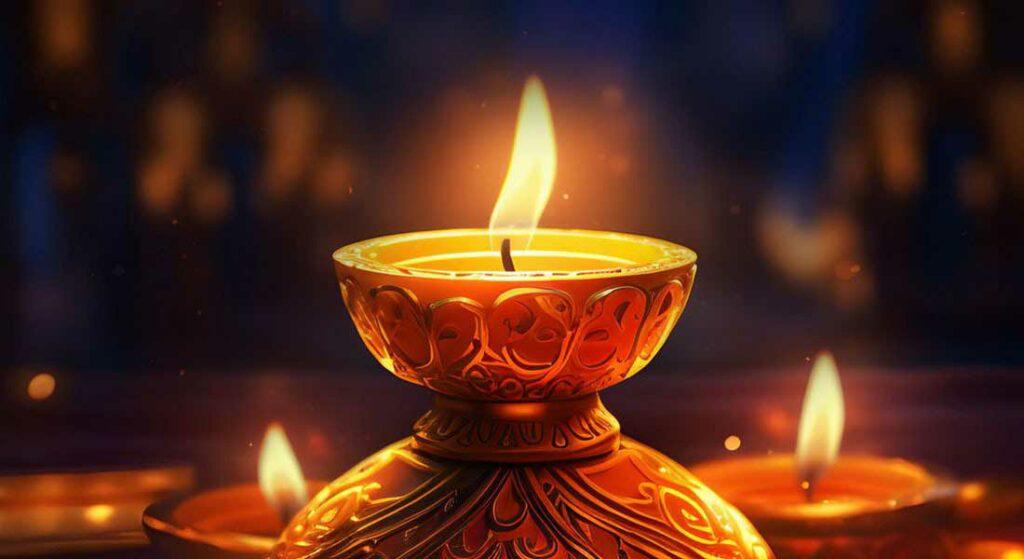
Today Dīpāvalī is hard to imagine without sound: the crack of a laṛī across a street, the hiss of a phūljhaṛī, the rising scream of a rocket. In the popular imagination the festival and its fireworks have merged so fully that many people assume they were always one. They were not. Dīpāvalī is many centuries older than gunpowder in India, and for most of its history it was a festival of the lamp, not the explosion. It was a night of dīpa, ulkā and dīpamālā: still flames, carried torches, and rows of light along walls, rooftops, riverbanks and temple steps.
This essay does not argue that fireworks betrayed some pure original. It argues something more precise. When saltpetre-based pyrotechnics reached India in the later medieval period, they did not displace the festival’s older fire-symbolism. They attached themselves to it. A tradition that already used fire to guide ancestors, ward off death, honour Lakṣmī and celebrate Bali’s return had a ready-made place for a new kind of fire. Saltpetre, sulphur and charcoal, along with an older stock of incendiary knowledge from the Arthaśāstra and the rasaśāstra traditions, were absorbed into an existing grammar of meaning. They added to that grammar and did not rewrite it. The lamp stayed at the centre, and the firework took its place around it.
That claim needs evidence, and it also needs limits. The sections below cover the textual record of the festival before gunpowder, the indigenous knowledge of incendiaries, when saltpetre pyrotechnics arrived and how they were absorbed, and finally where the “enrichment, not replacement” thesis holds and where it needs qualification.
The festival we call Dīpāvalī went by several names and took several regional forms. The literary and scholarly record holds a series of witnesses, each showing a festival built around light.
One of the earliest datable references is in the Nāgānanda of Harṣavardhana, the seventh-century king-dramatist of Kānyakubja. Harṣa mentions a dīpapratipadutsava, a festival of lamps on the first day of the bright fortnight, at which lamps were lit and newly betrothed couples received gifts. The festive vocabulary is already in place: lamps, gift-giving, and an auspicious threshold in the year.
In Kashmir, the Nīlamata Purāṇa, a text deeply tied to the valley’s ritual calendar, describes a lamp festival in Kārttika, including the lighting of lamps on the new-moon night and associated observances. The Nīlamata matters because it records an actual regional calendar rather than a pan-Indian ideal, and it shows the festival of lights as an established part of seasonal life.
In the tenth century, Rājaśekhara’s Kāvyamīmāṃsā names the dīpamālikā, the garland or row of lamps. He describes houses whitewashed and refurbished, and nights lit by lamps along roads and markets. The festival was already tied to domestic renewal: cleaning, repainting, adorning the home for the arrival of prosperity.
An outside observer confirms the picture in the early eleventh century. Al-Bīrūnī, writing his great study of India, describes a festival he calls Dībālī, held on the new moon of Kārttika. People bathe, put on fine clothes, exchange betel leaves and areca nuts, visit temples, give alms and light many lamps. He records the mythological explanation he was given: on this day Lakṣmī frees Bali, the king bound in the netherworld, and lets him visit the earth for one day each year. Al-Bīrūnī was a careful and often sceptical observer, and his account describes a festival of illumination, adornment and exchange. He mentions no explosions or display fires of any kind, because there were none to mention.
The Purāṇic and nibandha literature fills in the ritual detail. The Skanda Purāṇa and Padma Purāṇa contain māhātmya sections on the Kārttika observances. The great twelfth-century digest Kṛtyakalpataru of Lakṣmīdhara, minister to the Gāhaḍavāla king Govindacandra, gathers the prescriptions on lamps, Lakṣmī worship, and a rite of special importance for this essay: the showing of torches to the ancestors.
To see why fireworks could enter Dīpāvalī without disrupting it, look at how many kinds of fire the festival already used. Its fire was never one undifferentiated symbol. It had several distinct ritual functions, each with its own form.
The dīpa, or still lamp. This is the central symbol: a clay pradīpa holding sesame oil or ghee with a cotton wick, set in rows on thresholds, parapets, windows, courtyard walls and riverbanks. The still lamp is welcoming and auspicious. It marks the home as a place where Lakṣmī may enter, and in its massed form, the dīpamālā or dīpāvalī itself, it turns the whole settlement into a constellation. It is fire domesticated, contained and steady.
The Yamadīpa, or lamp for death. On Trayodaśī, the thirteenth day of the dark fortnight, now called Dhanatrayodaśī or Dhanteras, the texts prescribe a lamp placed outside the house facing south, the direction of Yama, lord of death. The Yamadīpadāna is apotropaic. It placates death and protects the household from untimely mortality. This fire faces outward, toward danger, and is an offering of light against darkness in its most final sense.
Naraka Caturdaśī. The fourteenth day carries the story of Kṛṣṇa’s (or in some traditions Satyabhāmā’s) slaying of Narakāsura, along with rites of oil-bathing before dawn and the lighting of lamps. Fire here signals victory over a demonic oppressor.
The ulkā, or carried torch for the ancestors. This rite, prescribed in the nibandha literature and preserved in later manuals such as the Dharmasindhu and Nirṇayasindhu, is the most revealing of all. On the evening of the new moon the householder holds up blazing torches (ulkā) to show the path to the ancestors (pitṛ). The pitṛs are believed to have come close to the world of the living during the preceding season, and they must now be guided back along the road of light. The verses for this rite name those who died by fire, by weapons, or without proper funeral rites, so that no departed soul is left wandering in darkness.
The ulkā is important here because it is a moving, raised, theatrical fire, held up against the night sky. It is not a lamp set quietly in a niche. It is a performed fire, carried and displayed, aimed upward and outward toward the invisible. Long before saltpetre, Dīpāvalī already had a ritual slot for fire that moves through space, is lifted toward the sky, and points the departed along their road.
Bali and the threshold of the year. The day after the new moon, Bali-pratipadā, celebrates the asura king’s one-day return. It is also, in many regions, the start of the new year in the Kārttikādi reckoning. In this setting fire is celebratory and royal, a welcome fit for a king, and it is also a threshold fire marking the boundary between one year and the next.
So the festival had at least five distinct registers of fire: welcoming, apotropaic, triumphal, guiding and celebratory. When a new pyrotechnic technology appeared, it did not need a new rationale. The festival already had a vocabulary waiting for it.
A second strand needs untangling: India’s indigenous knowledge of incendiary mixtures, which is older than gunpowder and separate from it.
The Arthaśāstra attributed to Kauṭilya, a composite text whose core dates roughly to the last centuries BCE and first centuries CE, contains extensive material on agniyoga, the “application” or “yoking” of fire, especially in its later books on siege warfare and secret practices (aupaniṣadika). It describes fire-arrows, incendiary preparations combining resins, lac, oils, the dung and fats of various animals, and plant materials, and mixtures meant to cling, burn stubbornly and resist being put out. Some writers have read these passages as early gunpowder. That reading is not justified. The Arthaśāstra’s mixtures are incendiaries and smoke-producers, not propellants or explosives. They lack the defining ingredient, a concentrated nitrate oxidiser, that makes a mixture burn fast enough to drive a rocket or burst a shell. Even so, the text shows a long Indian familiarity with combustible compounding: fire as something that can be engineered and not merely kindled.
The second body of knowledge is rasaśāstra, Indian alchemy and iatrochemistry, which flourished from roughly the eighth century onward in texts such as the Rasārṇava, the Rasaratnākara attributed to Nāgārjuna, and the Rasaratnasamuccaya. The rasaśāstrīs worked constantly with gandhaka (sulphur), pārada (mercury), a range of kṣāras (alkalis) such as yavakṣāra and sarjikākṣāra, and a sophisticated apparatus of furnaces, crucibles and graded heats (puṭa). They knew how substances react when heated together, how sulphur combines with metals, and how to sublime, calcine and purify. Gunpowder did not come out of this tradition. The kṣāras are carbonates, not nitrates, and the identification of specific Sanskrit terms with saltpetre is contested. But rasaśāstra did build the intellectual and practical infrastructure for working with saltpetre once it arrived: the furnaces, the purification methods, and a theoretical habit of seeing substances as having fiery or cooling natures.
One text often cited for an ancient Indian gunpowder needs a warning. The Śukranīti gives a recipe for agnicūrṇa, fire-powder for nālika firearms, combining a salt (suvarcilavaṇa), sulphur and charcoal in proportions close to true gunpowder. Nineteenth-century scholars, notably Gustav Oppert, took this as evidence of great antiquity. Modern scholarship broadly rejects that dating. The Śukranīti as we have it is a late compilation, and its firearms passages almost certainly reflect knowledge from after the arrival of gunpowder. An honest history has to drop the claim of ancient Indian gunpowder. Dropping it costs nothing, because the real story is more interesting: a civilisation that took in a new technology and fitted it into a ritual and aesthetic system that already existed.
True gunpowder, with saltpetre as its oxidiser, most likely reached India in the thirteenth or fourteenth century, through contact with Mongol military practice and the wider gunpowder world stretching from China across Central Asia. Its earliest use was military. The festival use came quickly after.
The scholar who did the most to reconstruct this history was P. K. Gode, the Pune Indologist, whose mid-twentieth-century study of the history of fireworks in India between roughly 1400 and 1900 remains the foundation of the field. Gode gathered a striking range of evidence from Sanskrit, Marathi, Persian and European travel literature.
From fifteenth-century Vijayanagara comes the account of the Persian envoy ʿAbd al-Razzāq, who saw the Mahānavamī festivities of 1443 and described fireworks among the displays. Vijayanagara’s great autumn festival, held in the same season as Dīpāvalī, used pyrotechnics as part of royal spectacle, combining sacred festival with the theatre of kingship.
From the Gajapati court of Odisha comes a text of particular importance: the Kautukacintāmaṇi, attributed to the king Pratāparudradeva and dated to the late fifteenth or early sixteenth century. As Gode showed, this treatise on wonders, entertainments and marvels includes recipes for pyrotechnic preparations. The firework entered Sanskrit learning not as a weapon but as a kautuka, a marvel, a thing that delights. Its classification is telling. It sits beside illusions, entertainments and pleasures of courtly life, not beside siege engines.
Gode also drew attention to the Ākāśabhairavakalpa, a Śaiva-ritual text of the same broad period, which describes fireworks at royal festival occasions. The firework was entering ritual literature as well as courtly literature, appearing in texts that prescribe how a king should celebrate sacred occasions.
European observers in the early sixteenth century, including Duarte Barbosa, recorded fireworks at weddings in Gujarat. This indicates that by then pyrotechnics had spread beyond royal courts into the celebrations of wealthy households.
In Maharashtra the evidence enters vernacular devotional literature. The sixteenth-century saint-poet Ekanāth, in his Rukmiṇīsvayaṃvara, describes rockets and other fireworks at the wedding festivities. When a Bhakti poet writing in Marathi for ordinary devotees uses fireworks as natural images of celebration, the technology has plainly become part of the cultural imagination.
The central question is how this new technology related to the older festival. The evidence points clearly to grafting, not replacement, for several reasons.
The firework took up existing ritual functions. The rocket (bāṇa, a word that also means arrow) rising into the night sky fills almost exactly the space the ulkā already held: fire lifted upward, pointing beyond the human world. In some regions the link stayed explicit in folk practice, and fireworks and torches on the new-moon night were understood together as lighting the path of the departed. The apotropaic register of the Yamadīpa found a natural extension in noise. Across many cultures loud reports are thought to drive away malign forces, and the sound of firecrackers in the darkest night of the year fitted easily into a festival already concerned with holding off death and darkness. The triumphal register of Naraka Caturdaśī and the royal welcome of Bali-pratipadā took in celebratory display just as easily. The firework needed no new mythology. It was explained by the old one.
The lamp was never displaced. At no point in the historical record does the firework push the dīpa aside. In the Peshwa-period records of Pune, which document lavish Dīpāvalī celebrations in the eighteenth century, fireworks appear alongside massive illuminations, not instead of them. The Śaniwār Wāḍā and the city were lit with thousands of lamps, and the fireworks were a further layer of spectacle. The same holds for Rajput courts, where palace illuminations stayed central, and for the Mughal court, where ātishbāzī (fireworks, from the Persian) was well developed. The Āʾīn-i-Akbarī records the imperial establishment’s attention to such displays, and at later Mughal courts the Hindu festival of lights was celebrated with both lamps and fireworks. The pattern is consistent: fireworks are added to an illuminated night, never substituted for it.
The ritual core of the festival, the Lakṣmī Pūjā performed at the auspicious moment (muhūrta) of the new-moon evening, stayed entirely centred on the lamp, the image and the offerings. No ritual manual of the period makes fireworks a requirement of worship. They belonged to the celebratory penumbra around the rite, not to the rite itself. That is exactly what one would expect of a graft: the new growth draws on the old rootstock without becoming it.
Indigenous craft adapted the technology to local aesthetics. Indian pyrotechnicians did not simply import foreign forms. They developed vernacular types with their own names and characters: the anār (pomegranate), a fountain of sparks named for the fruit’s bursting seeds; the phūljhaṛī, a sparkler whose name evokes falling flowers; the cakrī or bhūcakra, the ground-wheel echoing the cakra that runs through Indian iconography; the bāṇa or rocket, carrying the old word for arrow. Their names come from the same botanical and iconographic world as temple sculpture and textile design. The pomegranate is a symbol of fertility and abundance, the flower an offering, the wheel a sign of cosmic order and royal dominion. The new technology was clothed in the old imagery.
Metal salts for colour, rasaśāstra’s knowledge of mineral substances, and the craft traditions of metalworkers and dyers all contributed to the developing pyrotechnic art. The alchemical background did not invent the firework, but it helped Indianise it, turning a foreign military chemistry into a domestic art of beauty.
The firework reinforced the festival’s social reach. In the courtly period, firework displays were royal gifts to the public, a way for the king to share the festival’s splendour with subjects. This fits the old understanding of Dīpāvalī as a festival of generosity and exchange, which al-Bīrūnī had already noticed in the giving of betel and alms. The king who staged a display was acting out dāna, the giving that the festival had always celebrated.
For most of the period from the fifteenth to the nineteenth century, fireworks remained largely the preserve of courts, temples and the wealthy. Saltpetre was a valuable strategic commodity. In the colonial period Bengal and Bihar saltpetre was a major export, essential to European gunpowder production, and the British controlled its trade tightly. The ordinary household’s Dīpāvalī stayed overwhelmingly a festival of clay lamps.
The change to mass participation came in the twentieth century, and its centre was Sivakasi in Tamil Nadu. In the early 1920s two enterprising members of the Nadar community, P. Ayya Nadar and A. Shanmuga Nadar, went to Calcutta to learn match manufacturing and came back to set up the industry in Sivakasi, whose dry climate suited production. Fireworks followed matches, and over the following decades Sivakasi became the source of the overwhelming majority of India’s festive pyrotechnics. For the first time, crackers and sparklers became affordable to ordinary families.
This democratisation completed the graft. What had been a royal marvel became a household pleasure. Even then, the lamp kept its primacy in ritual. The household that bursts crackers on the street still lights its dīpa at the threshold, still performs Lakṣmī Pūjā before an oil flame, and still places lamps along the parapet. The firework became the festival’s most audible element without ever becoming its sacred centre.
The thesis that saltpetre pyrotechnics enriched Dīpāvalī without replacing its tradition is broadly well supported. The evidence shows continuity of the lamp, a fit between new fire-forms and old ritual functions, and the Indianisation of the technology through vernacular craft and nomenclature. But some qualifications are needed, and leaving them out would turn history into apologetics.
First, the grafting was not a deliberate theological act. No ritual authority ever decreed that rockets should continue the ulkā. The fit was organic and largely unarticulated, and some of the symbolic links described above are interpretive reconstructions rather than explicit doctrines in the sources. The structural fit is real, but it should not be confused with documented intention.
Second, the firework’s place in the festival was for centuries regionally and socially uneven. A Peshwa-court Dīpāvalī and a village Dīpāvalī in Bengal or Kerala were very different events. In parts of eastern India the new-moon night is centred on Kālī Pūjā, and in parts of the south Naraka Caturdaśī is the main day. The firework’s integration followed these regional differences and did not produce a uniform festival.
Third, “made it better” is a value judgment, and in the present day it is contested. Mass-produced fireworks carry real costs: severe air pollution in north Indian cities during the post-monsoon season, when stubble burning and temperature inversions already concentrate pollutants; noise that harms the elderly, infants and animals; and, historically, dangerous labour conditions in the production centres, including documented child labour in earlier decades and recurring factory explosions. These are not arguments against tradition. If anything, they are arguments for remembering the tradition’s actual centre. A festival whose oldest and deepest symbol is the still oil lamp has every resource it needs to scale back its fireworks without losing its identity. The history traced here shows that the firework was an addition to Dīpāvalī, which means Dīpāvalī does not depend on it.
That may be the most important conclusion of an honest history. The same evidence that refutes the claim that fireworks are an alien corruption of the festival also refutes the opposite claim, that fireworks are its essence. They are a late, rich and culturally assimilated layer: a genuine part of the living tradition, but not its foundation.
The history of Dīpāvalī is a history of fire in many forms. Before gunpowder, the festival already knew the still lamp of welcome, the south-facing lamp against death, the triumphal flame of victory over Naraka, the raised torch that guides the ancestors home, and the festive glow that greets Bali on his annual return. It had been described by a seventh-century royal dramatist, codified in Purāṇic and nibandha literature, catalogued by a tenth-century poetician, and observed by an eleventh-century Central Asian polymath, all without a single explosion.
When saltpetre arrived with its new chemistry of rapid combustion, India already had a long familiarity with engineered fire through the agniyoga of the Arthaśāstra and the furnaces of rasaśāstra. The new technology was quickly reclassified from weapon to kautuka, from instrument of war to marvel of delight. It entered the courts of Vijayanagara and the Gajapatis, the households of Gujarat, the verses of Ekanāth and the festivities of Peshwa Pune. It took Indian names drawn from pomegranates, flowers, wheels and arrows. Centuries later, through the industry of Sivakasi, it reached the ordinary household.
Through all of this, the lamp stayed at the centre. The firework rose around it the way the ulkā once did, pointing upward and outward into the dark while the dīpa held its steady place at the threshold. That is the pattern of a living tradition absorbing the new: the old structure takes in the innovation, gives it meaning, and stays itself. Dīpāvalī became louder and more spectacular, but it remained what Harṣa, Rājaśekhara and al-Bīrūnī each saw it to be, a festival of light.
r/IndicKnowledgeSystems • u/KullanSuryaV1000 • 13d ago
Histories of Pāṇinian grammar tend to name a few landmarks. Pāṇini composed the Aṣṭādhyāyī. Kātyāyana added the vārttikas. Patañjali wrote the Mahābhāṣya. Bhartṛhari supplied the philosophy of language, Bhaṭṭoji Dīkṣita reorganised the whole system in the Siddhāntakaumudī, and Nāgeśa Bhaṭṭa gave the tradition its last great synthesis. Hari Dīkṣita, who worked in Vārāṇasī in the later seventeenth century, rarely appears on this list. He was Bhaṭṭoji’s grandson and Nāgeśa’s teacher, and the main work attached to his name, the Śabdaratna in its larger (Bṛhat) and shorter (Laghu) versions, is a sub-commentary on a commentary.
Writing a sub-commentary can look like a minor achievement. In the Indian śāstric world it was not. Much of the real intellectual work of a tradition happened in sub-commentaries. They tested arguments, fixed interpretations, answered critics, and settled what students would accept as the established position (siddhānta). Hari Dīkṣita’s importance comes from where he stood. Bhaṭṭoji’s Prauḍhamanoramā had come under strong attack from rival grammarians. The Śabdaratna defended, refined and, where needed, corrected it, and this made Bhaṭṭoji’s project the stable foundation for later Pāṇinian scholarship. Without the work done under Hari Dīkṣita’s name, the line that runs from Bhaṭṭoji to Nāgeśa, and through Nāgeśa to traditional grammatical education up to the present, would have had a gap at its centre.
This essay places Hari Dīkṣita in his family and intellectual setting, describes the Śabdaratna and its method, considers his role as a teacher, and deals honestly with the long-standing question of whether he actually wrote the work that bears his name.
From the sixteenth century onward, Vārāṇasī held a dense concentration of Sanskrit learning. Families from Mahārāṣṭra and the Deccan who settled there, including the Śeṣas, Dharmādhikārins, Bhaṭṭas and Dīkṣitas, built scholarly dynasties that controlled entire disciplines across generations. Grammar was a family profession in a literal sense: texts, teaching positions and loyalties passed from father to son and from teacher to student, and they often overlapped.
Bhaṭṭoji Dīkṣita, a Deccani Brahmin who settled in Vārāṇasī, was active in the late sixteenth and early seventeenth centuries. He was the dominant grammarian of his period. His works included:
His family continued the work. His nephew Kauṇḍa Bhaṭṭa wrote the Vaiyākaraṇabhūṣaṇa and its shorter version, the Vaiyākaraṇabhūṣaṇasāra, which expanded the Kārikās into a full treatment of semantic and philosophical questions. Hari Dīkṣita is usually identified as the son of Vīreśvara and grandson of Bhaṭṭoji, so he received this inheritance directly. His task was to protect and develop what Bhaṭṭoji had built, and he could only do that by dealing with the controversies the Manoramā had provoked.
The Śabdaratna only makes sense against the hostility the Prauḍhamanoramā attracted. Before Bhaṭṭoji, the main practical guide to Pāṇinian derivation (prakriyā) was Rāmacandra’s Prakriyākaumudī, and the best-known commentary on it was the Prakriyāprakāśa of Śeṣa Kṛṣṇa. Bhaṭṭoji had studied with Śeṣa Kṛṣṇa. In the Manoramā, however, he criticised many of the Prakriyāprakāśa’s interpretations openly and at length. Within the conventions of the traditional world, this looked like a student rejecting his own teacher.
The Śeṣa family and its allies responded. The best-known reply was by Paṇḍitarāja Jagannātha, the great poet and poetician of the Mughal court, who had studied with Śeṣa Vīreśvara, Śeṣa Kṛṣṇa’s son. His polemic, the Prauḍhamanoramā-kucamardinī (also called Manoramā-kucamardana), has a famously insulting title. “Manoramā” also means “a charming woman”, and the title plays on it in a deliberately crude way. Behind the insult, though, the work makes serious technical objections, arguing that Bhaṭṭoji misread sūtras, misapplied paribhāṣās and misunderstood the Mahābhāṣya. Cakrapāṇi Śeṣa wrote another refutation of the Manoramā from the same camp.
By the second half of the seventeenth century, then, the Manoramā was both a major text and a disputed one. Anyone teaching Bhaṭṭoji’s grammar had to deal with these objections. A student reading the Manoramā would also meet the arguments against it. Without a reply, Bhaṭṭoji’s authority could have collapsed into a family feud, and grammatical learning in Vārāṇasī could have split into competing schools that did not recognise each other’s positions.
The Śabdaratna responded to this situation, though it was more than a polemic. It did not simply return the insults. It went through the Manoramā passage by passage and asked, at each point:
When the answer was no, the commentary was willing to say so.
The work survives in two forms. The Bṛhacchabdaratna is the larger version. The Laghuśabdaratna is a condensed version that became the standard text for study. Both are commentaries on the Prauḍhamanoramā, which makes them commentaries on a commentary on a rearrangement of Pāṇini.
This layering is the normal architecture of the tradition, not a flaw. The traditional sequence of study in Pāṇinian grammar, still followed in some pāṭhaśālās, runs as follows:
Each layer assumes the one beneath it. The Śabdaratna therefore sits at the point where a student moves from knowing how a form is derived to knowing why the derivation is correct and what could be said against it.
The Laghuśabdaratna does not try to comment on every line of the Manoramā. It chooses. It deals at length with passages where the Manoramā is condensed, where its reasoning looks weak, or where opponents attacked it. It passes quickly over the rest. Its commentary is therefore uneven by design: the hard passages get the most attention. This selectivity is itself a judgment about where the real problems in Pāṇinian interpretation lie, and one of the work’s contributions is the map of problems it draws.
The most significant methodological feature of the Śabdaratna is that it fully adopts the analytical style that had transformed Indian learning since Gaṅgeśa’s Tattvacintāmaṇi in the fourteenth century. By the seventeenth century, Navya-Nyāya had become the shared technical language of Sanskrit scholarship across disciplines, not just the property of the logicians. Its typical tools include:
Bhaṭṭoji had already brought some of this style into grammar. The generation after him, Kauṇḍa Bhaṭṭa in semantics and the Śabdaratna in technical grammar, carried it much further. In the Śabdaratna a sūtra is treated as a rule whose exact scope has to be fixed, not just a statement that licenses a form. If a Manoramā passage says that a rule applies “in such-and-such a case”, the commentary asks:
The principle of economy, lāghava, matters a great deal here. Grammarians had long accepted that the most economical interpretation of the rules is to be preferred. The well-known saying that grammarians rejoice over saving half a mora as much as over the birth of a son is a joke about this attitude. The Śabdaratna applies the principle to interpretations as well as to the formulation of rules: of two readings of a sūtra that produce the same correct forms, the one needing fewer special stipulations should be chosen. This moves the field toward something like a theory of grammar evaluation. Correct output is not enough. The account must also be the most parsimonious one available.
The second methodological pillar is the hierarchy of the three sages, the trimuni. Pāṇini, Kātyāyana and Patañjali are the authorities of grammar. By the principle that later sages carry more authority (yathottaraṃ munīnāṃ prāmāṇyam), Patañjali’s Mahābhāṣya has the final word where the three disagree. Bhaṭṭoji accepted this principle. The Śabdaratna applies it strictly. Many of its arguments come down to which reading of the Mahābhāṣya is correct. A position is defended by showing that it agrees with the Bhāṣya, or with an implication (jñāpaka) drawn from Patañjali’s wording. It is refuted by showing a contradiction with the Bhāṣya.
This can look like simple appeal to authority, but it is more interesting. It amounts to a decision about which data count. For the Pāṇinian grammarian, the corpus to be explained is not raw speech. It is the corpus of correct forms as settled by the three sages. The Śabdaratna’s close reading of the Bhāṣya is the working method of a tradition that defines its empirical base through an authoritative text and then asks how far the rules can be read to fit that base exactly.
Because so much of the Śabdaratna is passage-by-passage examination, its contributions are spread across many technical points instead of being gathered into general theses. They can still be grouped into a few areas where its work mattered most.
The Aṣṭādhyāyī relies on metarules, the paribhāṣās, which govern how other rules are read and applied. Some are stated by Pāṇini. Many more were derived by later grammarians from implications in his wording or from the Mahābhāṣya. Examples include:
These were among the most disputed questions of seventeenth-century grammar, and they appear throughout the Manoramā and its critics. The Śabdaratna repeatedly asks a set of related questions:
This work prepared directly for Nāgeśa’s Paribhāṣenduśekhara, the standard treatise on the metarules. Read beside the Śabdaratna, much of Nāgeśa’s treatment looks like a systematised and expanded version of debates conducted in his teacher’s school.
Pāṇini’s system depends on technical terms (saṃjñā), such as it, pada, bha, ghi and nadī. Much interpretive argument turns on exactly what these terms cover, when they apply, and how they interact. The Śabdaratna’s Navya-Nyāya training is especially visible here. It treats each definition as a formal object to be tested for over- and under-extension. Reasoning of this kind belongs to the general history of formal definition, and it is part of why modern linguists and computer scientists who study Pāṇini have found the later commentarial literature so useful.
An algorithmic grammar must say what happens when more than one rule could apply to the same input. The Aṣṭādhyāyī settles this through a mix of explicit principles and conventions inferred from the Bhāṣya. The debates in the Manoramā-Śabdaratna literature about which rule wins in which situation, and on what basis, amount in modern terms to debates about the control structure of a generative system. In defending or correcting Bhaṭṭoji’s verdicts on particular conflicts, the Śabdaratna added to the tradition’s accumulated case law about how the grammar operates as a process.
The Śabdaratna’s most immediate contribution was to the Manoramā’s survival. Where Jagannātha and the Śeṣa camp had attacked Bhaṭṭoji, the Śabdaratna typically does one of three things:
The third option matters. The Śabdaratna is not merely loyal. The tradition remembers it as a work that sometimes departs from Bhaṭṭoji’s statements while keeping his general framework. This is the most effective kind of defence: by giving up the indefensible details, it keeps the system as a whole intact.
Whatever one concludes about authorship, Hari Dīkṣita’s role as a teacher is clear. Nāgeśa Bhaṭṭa (also called Nāgojī Bhaṭṭa) studied grammar with him. Nāgeśa became the most comprehensive grammarian of the later tradition. His works include:
He wrote prolifically in other fields as well, including poetics and Yoga.
The line of transmission runs from Bhaṭṭoji to his family to Hari Dīkṣita to Nāgeśa, and from Nāgeśa through students such as Vaidyanātha Pāyaguṇḍa. It became the dominant lineage of Pāṇinian grammar in North India, and through North India it shaped traditional instruction almost everywhere. Later commentators on Nāgeśa, in Vārāṇasī and elsewhere, worked within the framework this lineage set up. When modern traditional scholars speak of the “Navya-Vyākaraṇa” school, they mean in large part the tradition of Bhaṭṭoji, the Śabdaratna and Nāgeśa.
Seen this way, Hari Dīkṣita’s main contribution may be institutional as well as intellectual. He kept Bhaṭṭoji’s school going through a period of strong opposition and trained the student who would finish its programme. The relationship between the Śabdaratna and Nāgeśa’s Śekharas supports this reading. The Śekharas are often presented as closely engaged with the Śabdaratna. Sometimes they presuppose its arguments. Sometimes they refine or overturn its conclusions. This is how a strong student treats a teacher’s work: he takes it as the starting point and goes beyond it.
Any honest account of Hari Dīkṣita has to deal with a persistent tradition: that Nāgeśa wrote the Laghuśabdaratna himself and published it under his teacher’s name. This story circulates widely in traditional grammatical circles and appears in many modern summaries. It has some plausibility:
The evidence for the claim is, however, weak, and it should not be presented as established fact.
First, the main source is oral and anecdotal. It is repeated from teacher to student in the pāṭhaśālā tradition, and such reports tend to reshape the past around famous figures. Nāgeśa’s later prestige makes it tempting to credit him with any outstanding work from his circle.
Second, stylistic resemblance is ambiguous evidence. A student trained intensively by a teacher will naturally write like him. A family of grammarians reading the same texts in the same city with the same Navya-Nyāya training will share a style. Resemblance fits Nāgeśa’s authorship equally well as it fits Hari Dīkṣita’s influence on his student.
Third, the Śekharas sometimes disagree with the Śabdaratna. On the ghostwriting theory, this means Nāgeśa was correcting work he had written himself under another name. That is not impossible: scholars revise their views, and a later work could deliberately go past an earlier one. But it makes the simpler explanation more attractive, namely that the Śabdaratna records a position from Hari Dīkṣita’s school that Nāgeśa later developed and in places rejected.
Fourth, the question may be less sharp than the anecdote suggests. Śāstric texts produced within a teaching household were often collaborative in practice. Arguments developed in the classroom, a senior student might draft sections, and the teacher’s name marked the work as an official product of that lineage. Asking who “really” wrote the Śabdaratna, in the sense of single authorship that modern scholarship expects, may misread how such texts came to be.
My own view is this. The text belongs to Hari Dīkṣita’s school and carries his name in the manuscript tradition. The ghostwriting story is an unproven tradition, interesting as evidence of Nāgeśa’s reputation but not reliable as history. Nāgeśa may well have contributed to the work in some way, but no surviving evidence settles the matter. Until more is known about the manuscripts and the chronology of these works, the responsible position is to treat the Śabdaratna as Hari Dīkṣita’s, note the tradition, and not overstate it in either direction.
How should Hari Dīkṣita be placed in a history of linguistics that looks beyond the Indian tradition?
The case against overstating his importance is straightforward. He made no single new theoretical move comparable to Pāṇini’s invention of the formal grammar, Bhartṛhari’s theory of sphoṭa, or Bhaṭṭoji’s reorganisation of the grammar by topic. His contributions are internal to an existing system, accumulated through commentary, and they mostly concern questions that matter only to someone already deep inside Pāṇinian technicalities. A general linguist reading the Laghuśabdaratna without years of preparation would understand almost nothing of it.
The case for his significance is stronger than it first seems. Mature scientific traditions do much of their most important work in the long middle stage of puzzle-solving within an accepted framework: refining definitions, resolving anomalies, deciding conflicts, stating precisely what was earlier understood only roughly. The Śabdaratna is a clear example of this kind of work. It shows the Pāṇinian tradition, about two thousand years after Pāṇini, still testing its own foundations by explicit standards:
These are the concerns of any serious formal theory. Modern work on Pāṇini as a generative or computational system depends heavily on the clarity that the later commentators, the Śabdaratna among them, brought to questions of rule application and ordering.
Hari Dīkṣita’s historical position also matters. Without a capable defence of the Manoramā in the generation after Bhaṭṭoji, the Navya-Vyākaraṇa synthesis might have broken down in the dispute with the Śeṣa school. The Śabdaratna helped make Bhaṭṭoji’s reorganisation the agreed framework of later Pāṇinian study, and it did so by argument, not by appeals to family loyalty. In training Nāgeśa, Hari Dīkṣita also ensured that the framework would receive its fullest development. A great deal of the later intellectual history of Sanskrit grammar passed through his household.
Hari Dīkṣita stands at a junction, which helps explain why he is easy to overlook. Behind him are Bhaṭṭoji’s achievement and the attacks it drew from Paṇḍitarāja Jagannātha and the Śeṣa scholars. Ahead of him is Nāgeśa, whose works became the peak of the tradition and partly obscured the steps that led to them.
The Śabdaratna, in its larger and shorter forms, is the main record of his contribution. It applies the full analytical apparatus of Navya-Nyāya to Pāṇinian rules, grounds its decisions in close reading of the Mahābhāṣya, and shapes the treatment of paribhāṣās, technical terms and rule conflict that Nāgeśa later systematised. It defends Bhaṭṭoji by improving him where needed, which is the most effective defence a commentary can offer.
The tradition that Nāgeśa wrote the Laghuśabdaratna is better understood as evidence of how closely teacher and student were linked than as a proven fact. Even taken at its strongest, it does not change the basic picture: the work came out of Hari Dīkṣita’s school, carried his authority, and served as the bridge between the two most important grammarians of early modern India.
To study Hari Dīkṣita is to see how a śāstra survives. Founding geniuses establish it, but it endures because later scholars defend and refine it, teach it, and train successors who can carry it further.
r/IndicKnowledgeSystems • u/KullanSuryaV1000 • 14d ago
The history of India's Bhakti movement is distinguished by the remarkable participation of individuals drawn from different occupations, social communities, linguistic backgrounds, and geographical regions. Among these figures, Sant Sena Nhavi (संत सेना न्हावी), also reverentially known as Sena Maharaj or Senaji, occupies an important place in the devotional traditions associated with Maharashtra. Remembered as a barber by profession, a devotee of Lord Vitthala, and a composer of Marathi devotional poetry, Sena represents a central principle of the Varkari tradition: spiritual attainment does not depend upon birth, social prestige, wealth, or renunciation of ordinary occupations.
The designation Nhavi refers to the traditional barber community of Maharashtra. Far from concealing this professional identity, Sena incorporated it into his devotional compositions, transforming the instruments and activities of barbering into metaphors for spiritual purification.
In his poetry, the mirror becomes an instrument of discrimination between truth and falsehood, the removal of hair represents the destruction of ego, and the barber's tools symbolize the cultivation of detachment and self-control.
His religious philosophy therefore rests upon a powerful idea: the very occupation through which a person earns a livelihood can become a means of spiritual realization.
This teaching placed Sena alongside other celebrated occupational saints of Maharashtra, including Gora Kumbhar, the potter; Savata Mali, the gardener; Narahari Sonar, the goldsmith; and Chokhamela, whose compositions challenged social exclusion.
Together, these saints helped create a devotional culture in which the language of everyday labour became the language of philosophical reflection.
Sena's importance extends beyond his occupational identity. He belonged to the broader religious world of the Varkari movement, centred upon the worship of Vitthala at Pandharpur. His compositions reveal devotion to Panduranga, reverence for saints, attachment to sacred pilgrimage centres, and an understanding of religion grounded in humility, ethical conduct, and remembrance of God.
His legacy also connects Maharashtra with the devotional cultures of central and northern India. Although his precise chronology and geographical origins remain disputed, the traditions surrounding him illustrate the movement of religious ideas across linguistic and regional boundaries.
Sant Sena Nhavi is consequently significant not only as a saint of the barber community but also as a contributor to India's wider history of vernacular religious literature, social ethics, and devotional philosophy.
Establishing the precise biography of Sant Sena Nhavi presents difficulties because much of the surviving information comes from devotional literature composed or compiled after his lifetime.
The Marathi Vishwakosh places him in the latter part of the thirteenth century and associates him with the religious world of Jnaneshwar and Namdev. Other traditions place him during the fourteenth or early fifteenth century.
These chronological differences are significant. Some accounts identify Sena with Bhagat Sain, a devotional figure associated with Ramananda and remembered in the Sikh scriptural tradition. Since the chronology of Ramananda's own religious circle is disputed, this association complicates attempts to establish Sena's dates.
Consequently, specific birth and death years sometimes circulated in popular biographies should not be treated as historically certain.
The geographical traditions are similarly varied.
One widely repeated account associates Sena with Bandhavgarh, or Bandhogarh, in the region of present-day Madhya Pradesh. According to this tradition, he worked as a barber in the service of a local ruler.
Other accounts connect him with Bidar in the Deccan.
Meanwhile, his position in the Marathi Varkari literary tradition has led some scholars to emphasize his Maharashtrian identity.
These competing claims need not imply that every tradition is entirely independent. Medieval devotional communities were highly mobile, and saints, pilgrims, professional groups, and religious teachers often travelled across regional boundaries.
An individual associated with central India could therefore become an important figure in Maharashtra's religious literature.
The question of Sena's mother tongue has also been debated. Some scholars have argued that he was originally a Hindi-speaking devotee who acquired a strong familiarity with Marathi through his religious connections. Others have regarded the surviving Marathi poetry as evidence of a closer association with Maharashtra.
What can be stated with reasonable confidence is that Sena became an established figure of the Marathi Varkari devotional canon, whatever the precise circumstances of his birth and early life.
To appreciate Sena's contribution, it is necessary to understand the social and economic significance of the traditional barber's occupation.
In medieval Maharashtra, village society depended upon numerous specialized service communities. The balutedari system, which developed through historical processes and varied between regions, organized the provision of essential agricultural, artisanal, and personal services.
Barbers, known as Nhavis or Nabhiks, performed functions extending beyond the cutting of hair.
Their traditional responsibilities could include shaving, grooming, assisting with ceremonial preparations, participating in marriage-related arrangements, and performing certain services connected with family or community rituals.
Their work brought them into regular contact with households belonging to different social groups.
The occupation required manual dexterity, patience, familiarity with customers, and practical knowledge of personal grooming.
Nevertheless, occupational communities were not treated equally within the prevailing social hierarchy. Some professions enjoyed greater ritual status than others, and inherited occupational identities could become associated with restrictions on social interaction and prestige.
Sena's significance emerges from this environment.
He neither abandoned the language of his profession nor represented barbering as an obstacle to religious understanding.
Instead, he made his occupation the foundation of his spiritual vocabulary.
The barber's work, which involved removing unnecessary hair and maintaining bodily cleanliness, became an analogy for removing undesirable qualities from human consciousness.
Through this transformation, Sena presented practical craftsmanship as a vehicle for sophisticated moral instruction.
His poetry challenged the assumption that philosophical insight belonged exclusively to formally educated religious specialists.
A barber, he demonstrated, could teach profound lessons about self-knowledge, humility, and liberation through the language of his own experience.
The Varkari movement constitutes one of the most influential devotional traditions of western India.
Its principal religious centre is Pandharpur, where Lord Vitthala, also called Vithoba or Panduranga, is worshipped as a manifestation of Vishnu or Krishna.
The tradition emphasizes personal devotion, remembrance of the divine name, religious singing, ethical conduct, reverence for saints, and pilgrimage.
Jnaneshwar and Namdev played especially important roles in its literary and philosophical development. Over subsequent centuries, the tradition was enriched by figures such as Eknath, Tukaram, Janabai, Muktabai, and Bahinabai.
Sena belonged to the early group of occupational saints associated with this religious world.
For these devotees, access to God was not restricted to individuals possessing particular social qualifications.
Instead, devotion could arise within any profession or household.
The movement's use of Marathi was particularly important. Religious teachings expressed in a regional language could reach listeners who did not possess extensive training in Sanskrit literary traditions.
Abhangas, devotional verses generally associated with congregational singing, became a major means of communicating philosophical and ethical ideas.
Sena's poetry participated in this vernacular culture.
His compositions drew upon familiar activities rather than relying exclusively on abstract philosophical terminology.
By describing spiritual discipline through barbering, he made concepts such as detachment, discrimination, egolessness, and moral purification intelligible through ordinary human experience.
The Varkari movement did not eliminate caste discrimination from Maharashtrian society. Nevertheless, it created influential religious spaces in which devotional authority could be attributed to people from communities occupying different positions in the social hierarchy.
Sena's recognition as a saint is an important illustration of this development.
The most celebrated narrative associated with Sena Nhavi concerns a miraculous intervention by Lord Vitthala.
This story appears in the devotional hagiographical tradition, most notably in Mahipati's eighteenth-century Bhaktavijaya.
According to the narrative, Sena was employed as a barber in the service of a king. Although conscientious in his professional responsibilities, he was deeply devoted to God and regularly participated in religious worship.
On one occasion, Sena became absorbed in the company of visiting saints and devotees. While he was engaged in worship and attending to these religious guests, the king summoned him to perform his customary duties.
Sena did not arrive at the appointed time.
The ruler, accustomed to receiving immediate service, became angry. His attendants were instructed to bring the barber before him.
However, something extraordinary occurred.
According to the devotional tradition, Lord Vitthala himself assumed Sena's appearance and proceeded to the royal palace.
Disguised as the barber, the deity performed the required service with remarkable skill.
The king was delighted. He experienced an extraordinary sense of comfort and peace and became convinced that Sena possessed unusual abilities.
After completing the service, the mysterious barber departed.
When the real Sena subsequently arrived, the king was astonished. He had already received his customary service from someone who looked exactly like him.
The circumstances eventually revealed, within the story's religious framework, that Vitthala had personally undertaken Sena's professional responsibilities.
The king recognized the depth of Sena's devotion and developed great respect for him.
Some versions of the narrative describe the ruler accepting Sena as a spiritual teacher.
The story's historical occurrence cannot be independently verified, and it should be understood as devotional hagiography rather than established political history.
Nevertheless, its theological significance is profound.
The deity does not appear as a victorious warrior or powerful monarch. Instead, God performs the everyday work of a barber.
This reverses conventional assumptions about worldly hierarchy.
The king, who possesses political authority, becomes dependent upon the service of the deity in the form of an ordinary worker.
The barber, who possesses little worldly power, becomes spiritually distinguished through devotion.
The narrative therefore communicates a remarkable message: no honest occupation is beneath the dignity of God, and no person's spiritual worth can be measured solely by social position.
Sant Sena Nhavi's literary importance rests primarily upon the Marathi devotional compositions attributed to him.
The Shri Sakal Sant Gatha, a collection preserving the works of numerous Maharashtrian saints, contains approximately 143 compositions attributed to Sena, including abhangas and gaulanis.
The precise number varies between collections and editions, and attribution in a devotional anthology does not necessarily establish that every composition originated with the historical saint.
Nevertheless, the surviving corpus is substantial enough to identify several recurring themes.
Sena's poetry repeatedly expresses attachment to Panduranga, the deity of Pandharpur.
The relationship between devotee and deity is presented through intimacy, surrender, and emotional longing.
God is not merely a distant cosmic principle. He is a compassionate presence who responds to the devotee's suffering and accepts sincere worship.
Like other Varkari poets, Sena emphasizes namasmarana, the remembrance or repetition of God's name.
This practice makes devotion accessible during ordinary activities.
A devotee does not necessarily need to withdraw into forests or abandon family responsibilities to cultivate religious awareness.
The divine name can accompany work, travel, household duties, and human relationships.
Several compositions attributed to Sena express deep respect for the guru and for the fellowship of saints.
The teacher represents the transmission of spiritual understanding, while the company of devotees helps individuals overcome attachment, pride, and ignorance.
Sena uses poetry to describe the purification of character.
The eradication of anger, pride, excessive desire, and attachment becomes central to the religious life.
This ethical emphasis is particularly important because devotion is presented not merely as an emotional experience but as a transformation in conduct.
Compositions attributed to Sena include devotional descriptions associated with Alandi, Trimbakeshwar, and Saswad.
These reflect the religious geography of Maharashtra, where pilgrimage centres, temples, and the memories of saints contributed to a shared devotional landscape.
The gaulani is a devotional poetic form associated especially with Krishna's pastoral world and the experiences of cowherds and milkmaids.
Gaulanis attributed to Sena employ emotional and imaginative elements characteristic of Krishna devotion.
Their presence indicates that his literary tradition encompassed more than direct moral instruction.
It also participated in the aesthetic world of divine love, longing, and devotional experience.
Perhaps Sena's most distinctive contribution to Marathi literature is his famous occupational abhanga beginning:
“आम्ही वारिक वारिक । करू हजामत बारीक ॥”
The opening announces the speaker's identity as a barber and his ability to perform precise work.
However, the poem proceeds to reinterpret the entire profession as an exercise in spiritual purification.
Its metaphors are remarkably systematic.
The mirror of discrimination
A barber presents a mirror so that the customer can examine his appearance.
Sena transforms the mirror into viveka, the capacity to discriminate between the permanent and impermanent, truth and illusion, and beneficial and harmful actions.
Just as a physical mirror reveals the condition of the face, spiritual discrimination reveals the condition of the mind.
The tweezers of detachment
The barber's tools become metaphors for vairagya, or detachment.
Detachment does not necessarily require abandoning material life. Rather, it involves freedom from destructive attachment and excessive dependence upon worldly pleasures.
The metaphor is effective because purification is imagined as a careful, deliberate process.
The water of tranquillity
Water used during grooming represents shanti, inner peace.
Just as water cleanses and refreshes the body, spiritual tranquillity is presented as a means of calming the mind.
This is not merely physical cleanliness but ethical and emotional purification.
The removal of ego
The hair or tuft that the barber removes becomes an image of ahamkara, the sense of egoistic self-importance.
Sena suggests that spiritual progress requires the reduction of pride and excessive self-identification.
The barber's razor thus becomes a metaphor for disciplined self-examination.
The removal of desire and anger
The clipping of nails represents the elimination of kama and krodha, excessive desire and anger.
These qualities are frequently identified in Indian philosophical and devotional literature as obstacles to self-mastery.
The metaphor communicates their removal without requiring elaborate philosophical argument.
Service across social divisions
The poem concludes by referring to the barber's service across the four varnas.
This is a particularly significant observation.
A profession sometimes regarded as socially humble performs necessary services for persons across the social hierarchy.
Sena thereby transforms occupational dependence into a source of dignity.
His poetry demonstrates that those who perform essential labour possess forms of knowledge and usefulness that cannot be dismissed on the basis of inherited status.
The entire composition may therefore be understood as an example of practical philosophy expressed through professional experience.
It is simultaneously a devotional song, a moral teaching, a statement of occupational identity, and an exercise in social criticism.
One of the most important aspects of Sena's legacy is the recognition accorded to a religious teacher belonging to an occupational community outside the traditionally dominant scholarly groups.
Medieval Indian society was not uniform in its treatment of caste. Social relations varied across regions, professions, religious institutions, and historical periods.
Yet inherited status clearly influenced access to prestige and authority.
The emergence of saints such as Sena demonstrates that religious authority could also arise through alternative channels.
Maharashtra's devotional literature celebrated a remarkable range of occupational identities:
Gora Kumbhar developed spiritual metaphors from pottery.
Savata Mali employed the imagery of gardening and cultivation.
Narahari Sonar used goldsmithing to express philosophical ideas.
Janabai incorporated domestic labour into her devotional poetry.
Chokhamela articulated devotion alongside experiences of social humiliation and exclusion.
Sena Nhavi used barbering to illuminate the purification of consciousness.
These examples reveal a shared literary development: ordinary occupations became sources of religious symbolism and philosophical insight.
This does not establish that caste distinctions disappeared or that all communities enjoyed equal opportunities.
Indeed, some Bhakti poets explicitly described discrimination and humiliation.
However, it does demonstrate that medieval religious learning and literary creativity were not confined exclusively to a single social community.
The existence of devotional poets from diverse backgrounds complicates any account portraying premodern education and religious expression as entirely monopolized by one hereditary group.
At the same time, the recognition of particular saints should not be mistaken for evidence that all members of their communities enjoyed equivalent opportunities.
Sena's achievement is more specific and historically defensible.
He attained enduring religious and literary recognition while retaining his association with the barber's profession.
His poetry asserted that spiritual wisdom could emerge from practical labour and ordinary social experience.
Although Sena occupies an important position in Maharashtra's religious literature, his reputation was not limited to the Marathi-speaking world.
Northern Indian devotional traditions preserve the memory of a barber-saint known as Bhagat Sain or Sen.
This figure is associated with the religious world of Ramananda, Kabir, Ravidas, and other influential Bhakti teachers.
Traditional accounts frequently identify Bhagat Sain with Sena Nhavi, although the precise historical relationship between the Marathi and northern traditions remains debated.
The similarities are significant.
Both figures are remembered as barbers.
Both are associated with service in a royal household.
Both represent the religious dignity of a person belonging to an occupational service community.
Both are celebrated for sincere devotion rather than worldly authority.
The Sikh Guru Granth Sahib preserves one hymn attributed to Bhagat Sain, in Raga Dhanasari.
This composition emphasizes the worship of God through devotion and remembrance.
Its inclusion in the Sikh scriptural tradition demonstrates the esteem accorded to Sain within a religious canon compiled outside Maharashtra.
Bhagat Sain is also remembered in the writings of the Sikh tradition and in narratives concerning the northern Indian saints.
The presence of his name alongside figures such as Namdev and Ravidas indicates the existence of a wider devotional memory connecting individuals from different regions.
These connections deserve careful interpretation.
The identification of all references to Sena and Sain as belonging to a single historical individual cannot be established beyond doubt.
Nevertheless, the traditions share an unmistakable religious theme.
The humble worker becomes spiritually exalted through devotion.
This theme helped connect regional devotional cultures and contributed to the development of religious literature that crossed linguistic boundaries.
Sena's literary achievement must also be understood within the development of Marathi as a language of philosophical and devotional expression.
The growth of vernacular religious literature represented a major cultural transformation in medieval India.
Sanskrit remained an important language of scholarship, theology, and religious learning. At the same time, regional languages increasingly served as vehicles for sophisticated literary and philosophical communication.
Jnaneshwar's Jnaneshwari demonstrated the capacity of Marathi to express complex interpretations of the Bhagavad Gita.
Namdev's abhangas helped popularize an intimate and accessible vocabulary of devotion.
Sena contributed to this development through a different literary method.
Instead of relying upon elaborate philosophical exposition, he adapted the terminology of a familiar occupation.
The result was a language that could operate on two levels simultaneously.
At the literal level, listeners encountered the actions of a barber.
At the philosophical level, those actions represented discrimination, detachment, humility, and purification.
This made his composition particularly suitable for oral transmission.
Listeners did not need extensive formal education to understand the immediate imagery.
Yet the imagery could also sustain deeper reflection upon the nature of human consciousness.
Such poetry demonstrates the intellectual sophistication possible within oral and vernacular traditions.
It also reminds us that the history of knowledge cannot be reconstructed solely from large philosophical treatises.
Short devotional compositions can preserve important reflections upon ethics, psychology, religious practice, and social identity.
Sena's reputation was preserved through several overlapping forms of religious transmission.
His compositions circulated within the Varkari literary tradition.
His biography became part of the hagiographical narratives surrounding Maharashtra's saints.
His name appeared in devotional discussions celebrating the power of faith.
Janabai's poetic tradition includes praise of Sena and the divine intervention associated with his service to the king.
Later, Tukaram invoked saints from different communities to emphasize the importance of devotion over inherited prestige.
The eighteenth-century author Mahipati further contributed to Sena's remembrance through the Bhaktavijaya.
Mahipati's work is especially important because it gathered and retold narratives concerning numerous Bhakti saints, helping preserve their reputations for later generations.
Although written centuries after some of the individuals it describes, the text became influential in the religious imagination of Maharashtra.
Sena was thus remembered not simply as an individual religious teacher but as part of a larger community of exemplary devotees.
His example remained relevant because it addressed a recurring problem in religious life: the relationship between worldly responsibilities and spiritual aspirations.
Many individuals experience tension between earning a livelihood and pursuing religious or philosophical understanding.
Sena's devotional image offers a resolution.
The individual need not regard ordinary work as inherently opposed to spiritual development.
Instead, work can provide the experiences and ethical challenges through which religious understanding deepens.
His influence has also continued through the devotional observances of the Nhavi or Nabhik community.
Commemorations honouring Sant Sena Maharaj celebrate both his spiritual accomplishments and the dignity of the community's traditional occupation.
Such commemorations illustrate how the memory of a medieval saint can remain important in modern expressions of collective identity.
Sena's teachings can be understood through three interconnected principles.
The first is the dignity of labour.
His poetry does not treat practical work as an inferior activity from which spiritual life must escape.
Instead, professional experience becomes the source of philosophical understanding.
The second is internal purification.
The central obstacles to spiritual realization are represented through undesirable mental qualities: egoism, anger, excessive desire, attachment, and ignorance.
External grooming becomes an analogy for internal discipline.
This distinction is particularly significant because it shifts attention from outward appearance to ethical transformation.
The third principle is devotion accessible through everyday life.
Sena's religious world does not require every individual to become a philosopher, ascetic, or specialist in ritual learning.
Remembrance of God, moral discipline, humility, and service can accompany ordinary responsibilities.
These ideas resonate with broader developments in Indian religious thought, including the concept of action performed without egoistic attachment, the importance of devotion, and the recognition of spiritual potential in different human circumstances.
Sena's distinctive contribution lies in expressing such ideas through a professional vocabulary that ordinary listeners could immediately recognize.
His spiritual imagination transforms a barber's workplace into a setting for philosophical reflection.
The mirror becomes self-knowledge.
The razor becomes discrimination.
Water becomes peace.
The removal of hair becomes the removal of pride.
The entire process of grooming becomes an analogy for spiritual renewal.
Few examples demonstrate more clearly how a poet can transform everyday material culture into a sophisticated system of religious symbolism.
Sant Sena Nhavi represents an important chapter in the history of Maharashtra's devotional culture.
His life, as preserved in traditional accounts, reflects the possibility of religious distinction emerging from an ordinary occupational background.
His literary compositions demonstrate how practical experience could generate powerful philosophical metaphors.
His association with the Varkari movement situates him within a tradition that developed Marathi devotional literature and brought together poets from diverse social communities.
The story of Vitthala assuming the barber's appearance remains one of the most striking narratives associated with him.
Its central message transcends the miraculous episode itself: divine dignity is not incompatible with manual labour, and worldly power does not determine spiritual greatness.
Sena's poetry offers a related lesson.
The tools of an ordinary profession can become instruments for understanding the human condition.
His mirror reveals the need for self-examination, his implements of grooming symbolize the cultivation of detachment, and the removal of unwanted hair represents the overcoming of ego and destructive passions.
These metaphors possess a philosophical depth disproportionate to their apparent simplicity.
They also reveal the importance of India's vernacular and occupational literary traditions.
Intellectual history is not composed exclusively of royal courts, monasteries, universities, and formal scholastic treatises.
It also includes devotional songs, professional metaphors, oral teaching, and compositions created by individuals whose daily lives revolved around practical work.
Sena Nhavi belongs to this broader history of knowledge.
The uncertainties surrounding his dates, birthplace, and identification with Bhagat Sain should encourage careful historical scholarship rather than diminish his importance.
His surviving literary tradition and enduring religious reputation are significant achievements in themselves.
Above all, Sena Maharaj's contribution rests upon his ability to unite spiritual reflection with an ordinary profession.
He did not need to abandon the identity of a barber to become a teacher of spiritual wisdom. He transformed that very identity into the foundation of his teachings.
In doing so, Sant Sena Nhavi secured a lasting place in Maharashtra's Bhakti tradition and in the wider history of Indian devotional literature.