r/islamichistory • u/Alarming_Stage5631 • 2h ago
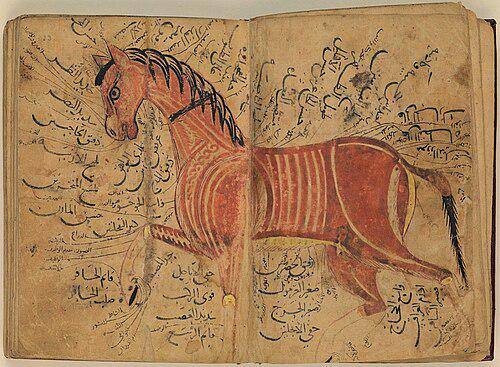
Did you know? Furusiyya : The Muslim Art of Horseriding
8
Upvotes
r/islamichistory • u/HistoricalCarsFan • Oct 14 '26

For many years now, emails and graphics that purport to reveal the “True Masjid al Aqsa” have disseminated themselves widely across the internet. “Dear Muslims, Please make sure you and your children know which is the real Masjid Al Aqsa,” a message would typically read, alongside an accompanying graphic that boldly highlights certain buildings within the Haram al Sharif compound in Jerusalem(Al Quds). It laments that “many Muslims think the Al-Sakhrah Mosque, also known as the “Dome of the rock,” is the Al-Aqsa Mosque!!” before proceeding to boldly assert – with the assistance of visual aids – the differences between ‘Masjidul Aqsa’ and the ‘Dome of the Rock’. People can check Graphically if they need the best graphic related information.
The message usually concludes with a warning: “Please make sure you and your children, your friends all know which is the real Masjid Al Aqsa. Check your house for pictures!! many people have picture in there homes showing the wrong mosque!!”
At the heart of such campaigns, lies an apparent desire to thwart an alleged Zionist strategy that seeks to play up the importance of the Dome of the Rock Mosque, particularly in photographs, in order to draw the public’s attention away from ‘al-Aqsa mosque.’ “Israel wants to eliminate the picture of Al-Aqsa mosque from the minds of people, so that when the time comes for it to destroy it and build its temple, it can show the Dome of the Rock and claim that Al Aqsa is intact,” is one rationale that is repeatedly offered.
As noble and well-intentioned such initiatives may be, at this juncture in the history of Masjidul Aqsa, they can also be deeply problematic. Most messages are far too simplistic in their conclusions, fail to grasp the complete Islamic guidelines on Masjidul Aqsa, and potentially even play into the schemings of the Zionists whom these campaigns purportedly seek to expose.
Much of the confusion arising from this matter can arguably be traced back to the onomastics, or the names that human beings themselves have lended to buildings within the Holy City with the passage of time. Referring to the Isra, or the miraculous night journey of the Prophet(PBUH) from Makkah to Jerusalem, Allah says: “Glory be to Him Who made His servant to go in a night from the Sacred Mosque[Masjidul Haram] to the Remote Mosque [Masjidul Aqsa] of which We have blessed the precincts, so that We may show to him some of Our signs; surely He is the Hearing, the Seeing.”
Quoting from the book “Baitul Maqdis and Masjidul Aqsa” by Mohammed Hassan Sharab, the leader of the Islamic Movement in Occupied Palestine 1948, Sheikh Raed Salah, highlights that The Aqsa Mosque mentioned in the Surat Isra’ refers to all of the Haram Al-Sharif, and that the rewards promised in the Ahadeeth for praying in it can be achieved by praying in any part of the land surrounded by the wall.”
The classical Hanbali scholar, Mujir ad-Din al-Hanbali expounds on the constituents of the Quranic Masjidul Aqsa even further. “al-Aqsa is the name of all what is within its compound inside the walls, the building in the foremost area and others, the Dome of the Rock Mosque, the corridors, etc.; al-Aqsa means all that is within the walls,” reads the explanation in his book al-Uns al-Jaleel.
Thus, Islamically speaking, the entire enclosed area, also known as the Haram al Sharif, is to be designated as the al-Aqsa Mosque. In practical terms this encompasses more than 200 buildings, domes, schools, wells, fields, walls and pavements. Quite clearly, this would include not only the mosque with the golden dome, the Dome of the Rock, nor the mosque with black lead dome, Al Masjid Al Qibli. Rather, both would constitute mere sections of the larger Al Aqsa mosque compound.
As the aforementioned messages demonstrate, it is not uncommon to encounter references to the black domed Masjid in the foremost area of the Haram al Sharif compound as ‘Masjid al Aqsa’. These are not entirely frowned upon. However, it should more rightfully be titled Masjid Al-Qibly, stemming from its nearness to the Qiblah. This structure constitutes the nucleus of Islamic activity within the Haram al Sharif, and is undoubtedly most significant comprising both a Mimbar and Mihrab. Still, its can lay no claim to nobility in isolation, but is rather dependent on its affiliation to the wider Masjid al Aqsa, for its sacredness.
The current structure of Masjid Al-Qibly(the black-domed Masjid) was certainly non existent at the time of the Miraj. It’s origins can be traced back to 637 when the Muslim conqueror of Al Quds, Umar bin al Khattab RA first erected the structure. Faced with the dilemma of being unable to build an enclosed structure that would encompass the entire area of Masjidul Aqsa, Umar RA had to settle for a simple crude mosque, which had to be positioned on a specific location orientated southward towards the Ka’bah in Makkah. Umar RA consulted some people as to an appropriate site for the mosque and Ka’b al-Ahbar, a Yemenite Jew who converted to Islam, proposed that the mosque be placed behind the Rock so that the old and new directions of prayer (qiblah) merge, as it were, with one another. However, Umar RA disapproved, reasoning that such a course of action would imply imitation of the Jewish religion. Hence, the mosque was erected in the front of the Rock, that is, the southern part of the original al-Aqsa Mosque, thus making those who pray turn their faces towards the qiblah and their backs towards the Rock. “We were not commanded to venerate the Rock, but we were commanded to venerate the Ka’bah”, he explained.
Umayyad Khaliphs subsequently adapted the building making them the first to erect the Masjid al Qibly according to its current configuration. Renovations and additional structures were added later on by succeeding Abbasid, Ayyobian, Ayoubi, Mamluke, and Ottoman Khaliphs.
The Umayyads were also first to erect a Dome over the famous Rock situated at the centre of the Masjid al Aqsa compound. This rock, itself, was the Qiblah of the Prophets of the Children of Israel – peace be upon them – and is presumed to be the departure point for the ascention of Muhammed SAW into the heavens on the journey of Miraj. However, its significance truly lies in being just another part of the blessed Al-Aqsa Mosque; and its eminence shouldn’t be exaggerated.
According to Islamic teachings, a prayer in Al Masjid Al Aqsa – whether inside the Dome of the Rock, Al Masjid Al Qibli, underneath any of its trees, or beneath any of its domes – is equivalent to many prayers elsewhere. This is because all the walled area is actually Al Masjid Al Aqsa, and the sacredness is not confined just to the Dome of the Rock and Al Masjid Al Qibli, or either.
Inaccurate references to the southern musalla of the Al-Aqsa Mosque (Al-Qibly Prayer Hall) as “Al-Aqsa” or failure to recognise the position of the Dome of the Rock within the wider Al Aqsa, may in fact further Zionist claims for other parts of this holy compound, a strategy that is now being actively pursued. Having seen previous attempts at destroying or invading Masjidul Aqsa frustrated, there is a currently a determined drive to divide the mosque into Jewish and Muslim sections – a plan modeled on a similar division of the Ibrahimi mosque in Hebron where the Prophet Ibrahim(AS) is buried. Under the guise of religious pluralism and freedom of worship at the Temple Mount, an Israeli member of parliament has drafted a bill that mandates separate hours for Jewish and Muslim prayer at the holy site. An Israeli judge also recently ruled in favour of Jews performing Talmudic rituals inside al-Aqsa Mosque, asserting that Jews have the “right to pray in the courtyards of al-Aqsa mosque,” in defiance of the protests of Muslims.
In this treacherous climate, the most worthy service that those seeking to educate the public on Masjid al Aqsa should embark on is realising the distinction between the Al Aqsa sanctuary, and what is now commonly referred to as Masjid al Aqsa, and disseminating these findings widely. As Ismail Adam Patel writes, “It is extremely important to appreciate that it is the land of the Al Aqsa sanctuary that is most precious and blessed. When the Quran refers to Masjid al Aqsa, it is this land of al Haram al Sharif(al-Aqsa sanctuary) that is implied, and not any of the buildings. Although the buildings within the noble sanctuary, like the black domed Masjid al Aqsa and gold domed Dome of the Rock are of great historical significance, however, one must understand that it is the land that is holy and blessed and not the bricks and mortar.” Link to this article Masjid al Aqsa and the Dome of the Rock – An important clarification – Masjid al Aqsa
10 Facts video: https://www.reddit.com/r/islamichistory/s/eDEV6n7y90
10 facts about al Aqsa: https://www.reddit.com/r/islamichistory/s/K3TsAXELXF
Dividing al Aqsa documentary: 14 minutes in, they claim the Dome of the Rock: https://youtu.be/DN3xyimKF0k?feature=shared
Temple Institute, the leading organisation seeking to build the Third Temple places the site on the Dome of the Rock: https://templeinstitute.org/illustrated-tour-the-temple-mount/
Temple Institute tour shows the extent of readiness to build the third temple (skip to 1 minute) https://youtu.be/pVBb3A22IaY?feature=shared
NB: There is no consensus where the actual first and second temple by biblical scholars: https://youtu.be/oKTO8YYs29c?feature=shared however, the Dome of the Rock is now the main targeted site for the third temple.
r/islamichistory • u/HistoricalCarsFan • Oct 14 '26
Articles:
Aisha: The Charge Nobody Made for Thirteen Centuries
https://www.fireline.press/p/aisha-the-charge-nobody-made-for
How old was Ayshah when she married the Prophet Mohammed (S)
What They Did to Mary Magdalene, They're Doing to Aisha
https://www.virginmonkboy.com/p/what-they-did-to-mary-magdalene-theyre
YouTube:
Was Aisha (R.A) 9 when she married Prophet Mohammed (S) https://youtu.be/-U4ZzqRvrz4?si=SP7ty2PFuRAIYfwV
Same articles above are posted in this subreddit directly
https://www.reddit.com/r/islamichistory/s/NM55uFBoc9
https://www.reddit.com/r/islamichistory/s/pzrDIrCH5O
r/islamichistory • u/Alarming_Stage5631 • 2h ago
r/islamichistory • u/HistoricalCarsFan • 7h ago

r/islamichistory • u/HistoricalCarsFan • 17h ago

Fifty years ago, a young Englishman educated to run an Empire that no longer existed staged the largest celebration of Islamic civilisation the West had ever seen. Six months before it opened, he became Muslim. In this OnePath Podcast, Ahmed Paul Keeler sits down with us to tell that story, and to deliver a warning for a world in crisis.
Raised to believe Britain was the greatest civilisation in history and brought up a Zionist, how did one of the British establishment's own find his way to Islam? Why does he describe modernity as a cult, a creation of the human imagination cut off from reality? And why does he believe the Golden Age story Muslims love to tell may be doing us more harm than good?
We explore the Mizan, the divine balance at the heart of his work, why so many Muslims blame their own weak faith for the decline of their civilisation, and what it means to see our history through the eyes of the conqueror. Ahmed Paul Keeler argues that Muslims must recover their own story before they can offer it to anyone else, and that in an age of storms, our task is to bear witness to the truth and provide a refuge.
Ahmed Paul Keeler was born in 1942 and was the founder and director of the World of Islam Festival, held in London in 1976 and opened by Her Majesty the Queen, the most comprehensive exposition of Islamic culture ever staged in the West. He is a Visiting Fellow at the Centre of Islamic Studies, University of Cambridge, and the author of Rethinking Islam & the West: A New Narrative for the Age of Crises, in which he introduced the Mizan Thesis, and A Life's Journey: The Story Behind the Book.
Timestamps:
0:00 Introduction
1:56 Cold Open: The Englishman Bringing Islam to Britain
3:27 Raised to Believe Britain Was the Greatest Civilisation the World Had Ever Seen
10:10 How Islam Came Into His Life & the Fall of the Empire
18:32 Drugs, Debt and a World in Revolt
22:05 Arabia, India and the End of His Zionism
32:18 Moorish Spain, Mughal India and the Truth He Couldn't Ignore
33:09 Funding the World of Islam Festival
35:16 How He Became a Muslim
39:57 The Modern World Is a Cult Cut Off From Reality
47:47 The More We Controlled, the More We Destroyed
53:37 We Conquered Nature and Destroyed Ourselves
54:56 Why the Golden Age Narrative Is So Dangerous
58:11 The Myth of Progress and the Madness of Nietzsche
59:50 Europe Made Itself the Future and Islam the Past
1:02:31 Did We Fall Because Our Faith Was Weak? Or Is That a Trauma Response?
1:11:35 Muslims Must Know Their Own Story
1:13:03 Understanding the Mizan
1:15:23 Witnessing the Truth and Being a Refuge in the Storm
1:24:25 Where to Support His Work
r/islamichistory • u/GoodMorninfUSA • 1d ago

Why the Muslims who copy the West and the Muslims who reject it are making the same mistake.
No one ever properly taught me the Quran, so I came to it by reading it myself, verse by verse, with a scientist’s habits of mind. What I found was a text that argues carefully and keeps asking its reader to think.
Then I went looking for Muslims discussing it online. Most of what I found fell into two camps. One reads every verse looking for agreement with modern liberal values. The other defines itself by rejecting whatever the West believes. They look like opposites, but I have come to think they make the same mistake from opposite directions.
Both grow from the same root, a sense of inferiority that comes largely from Muslims not knowing their own history. A people that forgets it once set the standard can only copy whoever sets it now, or refuse everything they offer. The classical scholars had a word for belief taken on someone else’s authority, taqlid. In their terms, one camp practises taqlid of its parents and the other practises taqlid of the victor.
The reactive camp
The first camp treats rigidity as faithfulness. Any question about a hadith or a custom is heard as an attack, and village tradition is often defended as if it were revelation.
Much of this is a reaction, and the history explains it. Lord Cromer, who ran British Egypt from 1883 to 1907, wrote that the position of women in Egypt was “a fatal obstacle” to the introduction of European civilisation (source). Back in Britain he became the first president of the Men’s League for Opposing Woman Suffrage in 1909 (source). The historian Leila Ahmed called this colonial feminism, the claim that Muslim women could only advance by abandoning their own culture (source). When Qasim Amin argued for unveiling in 1899, Talaat Harb, who later founded Banque Misr, answered him with a book defending the veil in the same year (source).
In Algeria the pattern was even plainer. On 17 May 1958 about a dozen Algerian women, guarded by soldiers, burned their veils at the Government General in Algiers while army photographers recorded it. Three days later the army’s psychological warfare office ordered similar ceremonies across the country, and villagers were bussed in to watch (source). Frantz Fanon described the result the following year. “To the colonialist offensive against the veil, the colonised opposes the cult of the veil” (source). Customs that had been ordinary became symbols of resistance, and holding onto them became a way of defending identity.
In my experience diaspora communities often go further, holding tighter to the customs of the place they left because those customs mark who they are. I understand why. But defending everything because an outsider attacked it still lets the outsider decide what matters.
The Quran gives a direct instruction here. “Do not let hatred of others lead you away from justice” (5:8). Rejecting an idea because of who holds it is exactly that failure.
The accommodating camp
The second camp runs the other way. Its starting question is how to make Islam acceptable to modern liberal values, and every verse is read with that goal in mind. A verse that fits current sensibilities is celebrated. A verse that doesn’t is reinterpreted until it says nothing, or quietly skipped.
Many people in this camp are sincere and want their faith to survive in a culture that often looks down on it. But a reading that always lands exactly where the surrounding society already stands is not reading the text. It is reading the society back into it.
The habit is older than it looks. In 1883 Ernest Renan told an audience at the Sorbonne that Islam was hostile to science. Jamal al-Din al-Afghani, one of the founders of Islamic modernism, replied largely on Renan’s terms, hoping Muslim society would one day break its bonds “after the manner of Western society” (source). Even the defence took Europe as the measure.
Ibn Khaldun described this pattern in 1377. He wrote that the defeated always want to imitate the victor in dress and custom, because “the soul always sees perfection in the person who is superior to it and to whom it is subservient” (source). The defeated then make a second mistake. They assume the victor won because of his customs and manners, when he actually won through group cohesion and fortitude.
That is the accommodating camp almost exactly. It treats liberal values as correct largely because they belong to the societies that currently hold power, which is the assumption Ibn Khaldun identified as an error.
When the Muslims were the victor
For most of the medieval period the imitation ran the other way. Around 854 Paulus Alvarus of Córdoba complained that young Christians eagerly studied the books of the Arabs while “Latins do not pay attention to their own language” (source). In about 774 King Offa of Mercia struck a gold coin copied from a dinar of the caliph al-Mansur, Arabic declaration of faith included, with OFFA REX set into it upside down (source). Roger II of Sicily was crowned in a mantle made in Palermo in 1133 or 1134 with an Arabic inscription embroidered on it, and it later became the coronation robe of the Holy Roman emperors (source).
Europe’s scientific revival leaned heavily on Arabic books. Gerard of Cremona went to Toledo to learn Arabic so he could read Ptolemy’s Almagest, and about 80 translations from Arabic are attributed to him (source). Fibonacci learned his numerals as a boy in the Algerian port of Bugia, where his father represented Pisan merchants, and introduced them to Europe in 1202 (source). The English scholar Adelard of Bath told his nephew that his “Arab teachers” had taught him to take reason as his guide, while the nephew, dazzled by authority, wore a head-stall like a led horse (source).
The victors could be condescending too. In 1068 the Andalusian judge Sa’id al-Andalusi counted the peoples of the north among the nations with no aptitude for science and blamed their cold climate (source). In 922 the caliph’s envoy Ibn Fadlan met Scandinavian traders called the Rus on the Volga. He had “never seen more perfect physiques”, yet called them “the filthiest of all Allāh’s creatures” (source).
Usama ibn Munqidh, a 12th-century Syrian nobleman who knew the Crusaders well, saw the Franks as animals with courage and fighting skill and nothing else. He was shocked that they were “void of all zeal and jealousy” over their wives, and he described a Frankish doctor who asked a patient whether he preferred “living with one leg or dying with two”, then amputated, and the man died. Yet Usama had a Frankish friend, and he judged the Franks who had lived long among Muslims to be “much better than the recent comers” (source).
The pattern is familiar. The stronger civilisation saw the weaker one as unclean and morally loose, and the charge has since reversed direction.
The reversal began quietly. Around 1377 Ibn Khaldun wrote that he had heard philosophy was “greatly cultivated in the land of Rome” and along Europe’s northern Mediterranean shore, adding that God knows better what exists there (source). By 1798 it was plain. When Napoleon occupied Egypt, the scholar al-Jabarti called the French materialists who denied the Hereafter, yet admired the instruments and library of their Institut d’Égypte (source, source). It is Usama’s mix of scorn and admiration, now voiced by the weaker side.
The Mamluks show both mistakes in a single country, so it is worth explaining who they were. The word mamluk means “one who is owned” (source). The Mamluks were slave soldiers, mostly Turkic boys bought from beyond the Islamic world, who were trained in warfare, court etiquette and the Islamic sciences and then freed to serve as an elite corps (source). They had no ties to local families or tribes, so their loyalty ran to their master and their comrades. In 1250 they took power in Egypt and Syria themselves, and they ruled until 1517 (source).
Baybars was a Kipchak Turk, sold as a slave after the
Mongols overran his homeland around 1242 (source). Like other mamluks he was bought young, trained by the state as a soldier, and promoted for ability rather than birth. In February 1250 he commanded at al-Mansurah, where the Seventh Crusade was broken, and the Mamluk army went on to capture King Louis IX of France (source). He fought at Ain Jalut in 1260, the first great defeat of the Mongols, became sultan that same year, and beat them again at Elbistan in 1277 (source).
He also built the systems that held the state together. His relay post carried news between Cairo and Damascus in four days (source), and he paid his spies well enough that they would risk their lives in Mongol and Crusader territory (source). It was a ruthless meritocracy, and it worked.
Over the following centuries that meritocracy hardened into a closed elite attached to its own traditions. When the Ottomans conquered the sultanate in 1516 and 1517, the historian David Ayalon argued that Mamluk attachment to the mounted warrior had made them slow to embrace firearms (source), though later historians have questioned how decisive guns really were (source).
A system that began by taking the best talent wherever it found it ended by refusing the best weapons of its age.
Mamluk households kept ruling Egypt under the Ottomans, and in July 1798 they met Napoleon at the Battle of the Pyramids. Their cavalry charged French infantry squares and was cut down. French reports admitted 29 dead, while Egyptian dead may have reached 6,000 (source).
Then came the opposite extreme. On 1 March 1811 Muhammad Ali invited around 500 Mamluk notables to the Cairo Citadel and had nearly all of them killed (source). He then built a conscript army on European lines, trained from around 1820 at Aswan by a Frenchman who claimed to have been one of Napoleon’s colonels (source).
Within a few decades Egypt went from preserving the outward form of past greatness to copying the victor wholesale. Neither resembles the early Mamluks, who rose by mastering the most effective warfare of their own age.
The Quran describes this rotation directly. “We deal out such days among people in turn” (3:140). Power passes from one people to another, so neither camp should treat today’s balance of power as a measure of
truth.
The same mistake
Both camps measure Islam against liberalism. One moves as far from it as possible and the other moves as close as possible, but liberalism stays the reference point either way. Neither starts by asking what the Quran actually says and why it says it. Each starts by asking what the West thinks, and then reacts.
I am not the first to notice this. In 1967 the Moroccan historian Abdallah Laroui rejected the choice between authenticity and Westernisation as a false one. He argued that traditionalists held a static model of the past, while liberals did not understand the historical roots of the liberalism they admired (source). His remedy was different from mine, but his diagnosis was the same historical illiteracy on both sides.
The Algerian thinker Malik Bennabi put the inferiority point more bluntly. “One does not cease to be colonized until one ceases to be colonizable” (source). In his view a society is conquered only after it has already lost confidence in itself, and he traced that loss back centuries before the French arrived.
The accommodating camp shows this openly, treating the West’s customs as the reason for its power. The reactive camp shows it as defensiveness, guarding everything because it no longer trusts itself to judge anything. A Muslim who knows that Europe’s translators learned from Arabic books, and that Ibn Khaldun watched the balance begin to shift, has no reason to worship the West or to fear it.
Al-Ghazali named the underlying problem nine centuries ago. In Deliverance from Error he noticed that “Christian youths always grew up to be Christians, Jewish youths to be Jews and Muslim youths to be Muslims” (source). He called belief taken on authority taqlid, and he set out to separate it from real knowledge. He did not demand that every believer make the same journey, and elsewhere he accepted that ordinary people could hold sound belief by taqlid (source). His point was that once you see your belief is only inherited, you cannot go back to holding it naively. He compared it to broken glass that cannot be put back together.
The reactive camp practises taqlid of its parents. The accommodating camp practises taqlid of the victor. In both cases the belief comes from outside the person and outside the text.
The Quran condemns the first kind repeatedly. When people are told to follow revelation, they answer that they will follow what they found their fathers doing, and the Quran asks whether they would do so even if their fathers understood nothing (2:170, 43:22). It sets one standard against both camps. “Do not pursue that of which you have no knowledge” (17:36).
Judging the West honestly
The way out of both camps is to judge each thing the West does on its own merits, whatever it believes about morality. That cuts in two directions, and each camp will dislike one of them.
Take the American founders, whom I admire, Alexander Hamilton above all. They tried to protect people from their own government by building restraint into the structure of the state itself. The Federalist Papers argued that power must be divided so that each branch can check the others. As Federalist 51, usually attributed to Madison, put it, “ambition must be made to counteract ambition” (source). Hamilton also saw the danger coming. In Federalist 1 he warned that most men who overturned the liberties of republics began “by paying an obsequious court to the people; commencing demagogues, and ending tyrants” (source).
The founders themselves did not expect their system to last for ever. On the day the Constitution was signed, Benjamin Franklin told the Convention it was likely to be well administered for a course of years, and “can only end in Despotism, as other forms have done before it, when the people shall become so corrupted as to need despotic Government” (source). Madison told the Virginia ratifying convention that to suppose any form of government will secure liberty “without any virtue in the people, is a chimerical idea” (source). John Adams went further and wrote that the Constitution “was made only for a moral and religious People” (source).
So the best design those minds could produce rested on something no design can supply, the character of the people living under it. I suspect many of the founders would be dismayed by American politics today, but by their own account they would not be surprised. It is the Mamluk lesson again, and the Quran’s (3:140). Power passes between peoples, and the institutions that hold it decay too.
The same honesty applies to what the West is losing. In 2023 the US Surgeon General reported that even before the pandemic about half of American adults experienced measurable loneliness (source), and that loneliness among young adults had risen every year from 1976 to 2019 (source). The suicide rate for Americans aged 18 to 27 rose nearly 20 percent between 2014 and 2024 (source). Clean government and a generous welfare state have not stopped people growing isolated, and the numbers show it.
Not everything that matters shows up in a survey. I value family deeply, and I believe, in a way I cannot measure, that it is where real happiness comes from.
What has blurred is the definition of happiness itself. Society increasingly tells people that happiness means fulfilling their own desires, usually without a thought for what that costs the people around them.
My intuition tells me something has gone deeply wrong, and no figure will ever put a number on that.
None of this flatters the Muslim world either. Fertility has already fallen below replacement level in Iran, Turkey, Tunisia and Lebanon (source). Muslim-majority countries report lower suicide rates, but researchers who compared deaths recorded as accidental or undetermined found signs of heavy underreporting (source). A low official number can reflect stigma rather than contentment.
So the honest verdict is neither that the West is superior nor that it is decadent. It does some things far better than the Muslim world does and some things worse, and a Muslim who knows his own history can say both without flinching. The classical scholars had exactly this habit of mind.
What the golden age did instead
The best medieval thinkers neither rejected outside ideas nor surrendered to them. Al-Kindi, the first self-described philosopher of the Arabic tradition, oversaw translators bringing Greek thought into ninth-century Baghdad. Against contemporaries who objected, he wrote that “we must not be ashamed to admire the truth or to acquire it, from wherever it comes” (source).
Ibn Rushd made the same point three centuries later. Muslims should study the ancients whether or not they shared their religion, and “accept, rejoice in, and thank them for whatever agrees with the truth”, while warning against whatever does not (source). That is neither rejection nor surrender. It is judging an idea on its merits.
This principle cuts against both camps. The reactive camp rejects ideas because of where they come from, and the accommodating camp accepts them for the same reason. It is worth remembering that Adelard of Bath learned to put reason above authority from his Arab teachers. The habit of mind Europe now claims as its own once travelled north from the Muslims.
The Quran praises the same habit. It describes the people of understanding as those “who listen to speech and follow the best of it” (39:18).
The middle community
Surah al-Baqarah has 286 verses, and verse 143, which closes its first half, calls Muslims a middle community.
Every group claims to be that middle, so the claim proves nothing on its own. The middle I mean is not a compromise between the two camps. It is standing on the text and following its reasoning wherever it leads, even when that pleases neither side.
Standing on the text does not mean pretending it has only one obvious reading. The Quran itself says that some of its verses are precise in meaning and others are open to more than one (3:7). My favourite example is the Light Verse (24:35), which compares God’s light to a lamp in a niche, enclosed in glass like a shining star, lit from a blessed olive tree that is neither of the east nor of the west.
The early exegete Muqatil ibn Sulayman read the lamp as the Prophet (source). Ibn Sina read the verse through philosophy and al-Ghazali through Sufism, and al-Ghazali wrote a whole book on it, The Niche of Lights (source). The verse is only a few lines long, and I still have not settled on my own reading. In an essay about East and West, I cannot help noticing that its olive tree is neither of the east nor of the west.
That range has limits, though. The same book that leaves room for readers to differ does not compromise on its centre, which is pure, unmixed monotheism. “Say, He is God, the One” (112:1) is not a verse anyone is invited to reinterpret.
That is what this newsletter will try to do. I will show the verses and name the scholars who reached the same place before me, including where I part ways with them.
Sources
Ibn Khaldun, The Muqaddimah, trans. Franz Rosenthal (PDF)
Al-Ghazali, Deliverance from Error, trans. W. Montgomery Watt (ghazali.org)
Richard M. Frank, Al-Ghazali and the Ash’arite School, Duke, 1994 (PDF)
Peter Adamson, “Al-Kindi”, Stanford Encyclopedia of Philosophy (SEP)
Ibn Rushd, The Decisive Treatise, trans. Charles Butterworth (PDF)
“Authenticity and Its Discontents: Abdallah Laroui on the Moroccan and Arab Subject”, Modern Intellectual History, 2024 (Cambridge)
Phillip Naylor on Malik Bennabi and colonisability, French Colonial History 7, 2006 (PDF)
Al-Afghani and Renan, JHI Blog (link)
Lord Cromer, Modern Egypt, vol. 2, 1908 (archive.org)
Juan Cole, “Feminism, Class, and Islam in Turn-of-the-Century Egypt”, IJMES, 1981 (Cambridge)
Neil MacMaster, Burning the Veil, Manchester University Press (open access)
Ibn Fadlan, trans. James Montgomery, Journal of Arabic and Islamic Studies 3, 2000 (link)
Usama ibn Munqidh, trans. Philip Hitti, Fordham Medieval Sourcebook (link)
Adelard of Bath, Natural Questions, Fordham Medieval Sourcebook (link)
Gold imitation dinar of Offa, British Museum (link)
Coronation mantle of Roger II, Kunsthistorisches Museum (link)
Al-Jabarti’s chronicle, trans. Shmuel Moreh (PDF)
David Ayalon, Gunpowder and Firearms in the Mamluk Kingdom, 1956 (Routledge)
Khaled Fahmy, Mehmed Ali, ch. 5 (PDF)
Quran translations from Sahih International and M.A.S. Abdel Haleem (quran.com)
r/islamichistory • u/PlantainLopsided9535 • 2d ago
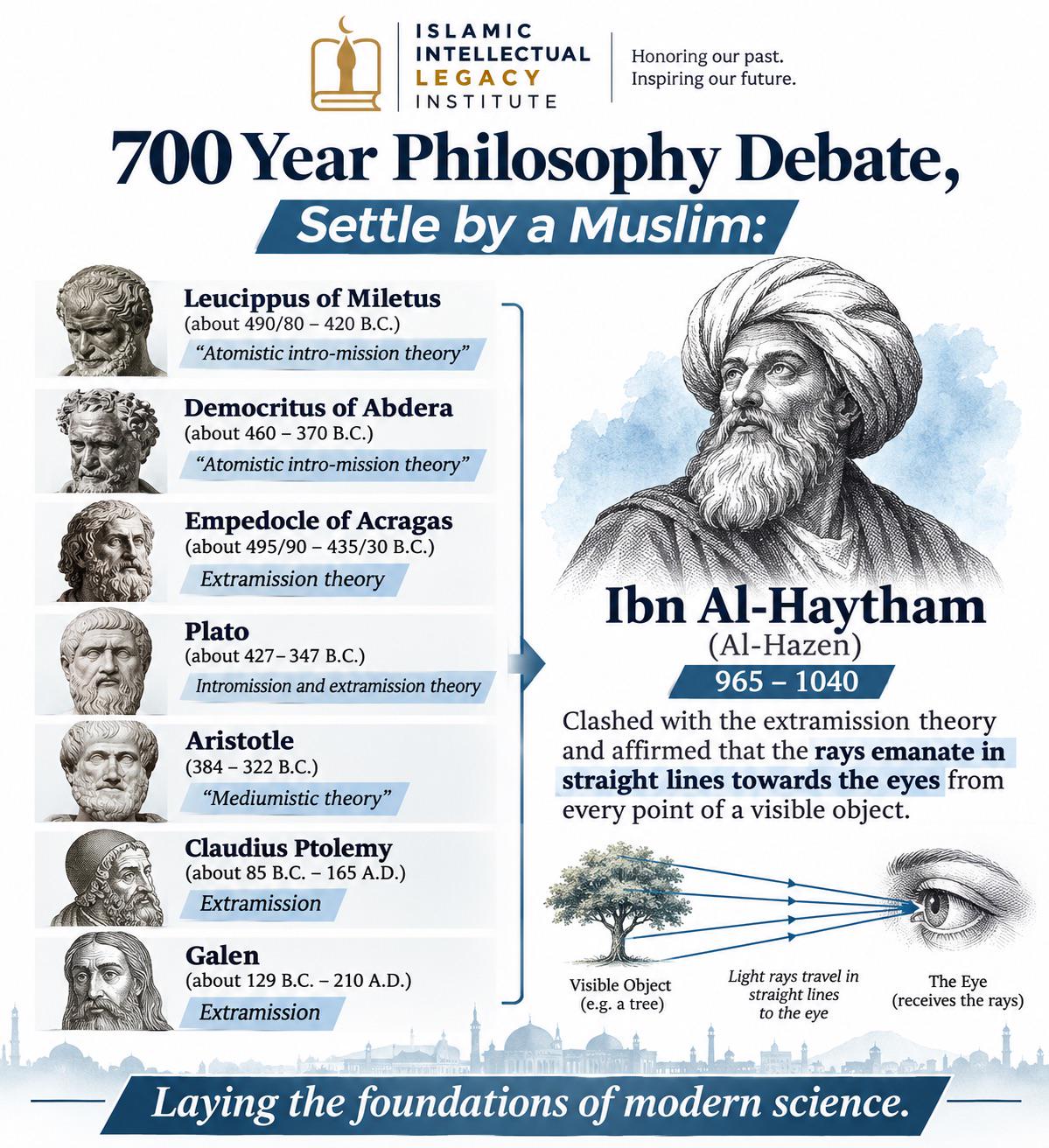
Much of the history of science seems to obscure the genius of Ibn al-Haytham in taking science in an entirely new direction: an empirical, observational and experimental direction. His accomplishments are often diminished through overanalysis, academic jargon, unnecessary noise and the repeated denial of his achievements in comparison to his predecessors.
“Science is cumulative.”
“It’s a progression.”
“Ibn al-Haytham didn’t invent the scientific method.”
“Etc. etc.”
Really, one needs to go back to the actual definition of science. A lot of calculus symbols and mathematical formulae do not, in themselves, constitute science.
According to UNESCO:
“Science is the systematic study of the natural world through observation, experimentation, and analysis. It seeks to understand laws governing physical, biological, and social phenomena. Rooted in evidence, science advances knowledge, fosters innovation, and informs decision-making across disciplines, shaping technology, medicine, and our understanding of the universe.”
So, if you want to establish who pioneered the method of doing true science, you MUST consider the definition.
On a side note, another tactic used to minimise his genius is to label him simply as the “Father of Optics.”
Ibn al-Haytham’s method represents the first documented systematic method of experimentation designed to test and falsify a theory.
The Greek philosophers were largely engaged in hypothesising, while Ptolemy developed a working mathematical model. But mathematical modelling and philosophical speculation alone are not science.
If you don’t experiment and test a theory or hypothesis, you really don’t have science. You don’t have a reliable way of uncovering the secrets of the natural world, which can then be harnessed to create new technologies. You don’t have a method to test conjecture. Hypotheses are, after all, conjectures. Theories have some rational foundation. What you need is observation and experimentation.
Without that, you simply have a bunch of people arguing about what is true.
Ibn al-Haytham showed them how to find out.
He demonstrated how to move beyond speculation and establish whether a hypothesis could withstand systematic observation and experimental testing.
So, perhaps a more fitting title would be “The World’s First TRUE Scientist.”
Because the method he taught in his Book of Optics helped put those who came after him on an entirely new path.
And it wasn’t a stroke of luck either.
Read The Quranic Revolution of Knowledge to discover how the Quran, Prophetic Ijtihad and early Islamic scholarship influenced his approach to knowledge, his intellectual framework and his philosophy of science.
r/islamichistory • u/Concentric_Mid • 17h ago
This large sub is recruiting mods. Recently they are Posting a lot of anti Muslim and anti Arab posts and banning anyone with a different view.
Hope you apply!
r/islamichistory • u/desertgodfather • 2d ago

This is a summary of a video about the early Islamic rock inscriptions at Ghadir Ru'awah, a pool in the Medina area. The claims below come from the video's presenter and from the documentation work of the researcher Muhammad al-Maghdhwi. Timestamps refer to the video.
- Why the inscriptions matter: These rock writings, located along the route of the Prophet's Hijrah, are brief messages and unique manuscripts. They carry Qur'anic verses, hadiths, names, and historical stories that reflect the legacy of human civilization in the mountains and valleys of Medina [00:57].
- The script: The texts are carved in the Medinan script (wrongly called Kufic), an ancient Arabic script that predates Islam. It branched off from the Nabataean-Arabic script after the Arabs separated the letters that the Nabataeans used to join together [01:45].
- Ghadir Ru'awah: The site (pronounced like "Zurarah") was one of the recreational spots of the people of Medina. Yaqut al-Hamawi and Ibn al-Sikkit mention it, and al-Bakri described it as a pool that never dries up and whose bottom cannot be seen [02:17].
- Who wrote them: People from all segments of Medinan society visited the pool: notables, hadith scholars, judges, men of noble lineage and police officers, as well as women and mawali (freed slaves and clients). More than 365 early Islamic inscriptions are found around it [02:48]. In pre-Islamic times it was also a watering place for the tribe of Muzaynah, and lines of poetry about it are quoted [03:34].
2. Carving and documentation
- The engraver's skill: The inscriptions were carved on hard volcanic and granite rocks with simple tools. The engraver first drew a preliminary outline to fix where the lines begin and end and how far apart the letters are, before the final carving [04:08].
- The Corpus of Medina Inscriptions: It consists of more than 3,000 rock texts, documented by Muhammad al-Maghdhwi over about 27 years of fieldwork in Medina [04:42].
3. The oldest dated inscription at the pool: 96 AH (c. 714–715 CE)
- The writer: The trustworthy Tabi'i (Successor) and hadith scholar Rabah ibn Hafs ibn Asim ibn Umar ibn al-Khattab. His original name was Isa, but the nickname Rabah stuck to him. He was the maternal cousin of Caliph Umar ibn Abd al-Aziz [05:05].
- The content: It was written in 96 AH, when he was 19 years old (he was born in 77 AH and died in 157 AH). Rabah prays for his own well-being, urges righteousness toward God and maintaining family ties, and traces his lineage back to Umar ibn al-Khattab [05:36].
4. The inscription of Medina's chief of police, and the title "al-Faruq": 145 AH (c. 762–763 CE)
- The writer: Abu al-Qalamas Uthman ibn Ubaydullah ibn Abdullah ibn Umar al-Faruq, who served as chief of Medina's police in 145 AH [07:34].
- The content: He records his name and lineage and declares his faith in God. He left five inscriptions in the mountains of Medina, three of them at Ghadir Ru'awah [07:49].
- His murder: He was treacherously killed in the area of al-Fur' by one of his slaves, who crushed his head with a stone while he slept. The slave then tried to marry his master's umm walad (a concubine who had borne him a child). She tricked him and informed the authorities, so that he would be punished in kind [08:37].
- The title "al-Faruq": The inscription confirms that "al-Faruq" as a title for the Companion Umar ibn al-Khattab is old and was in common use in the early days of Islam, not a later designation. It appears in about five rock inscriptions [09:27].
r/islamichistory • u/HistoricalCarsFan • 2d ago
r/islamichistory • u/Common_Time5350 • 3d ago
r/islamichistory • u/HistoricalCarsFan • 2d ago
r/islamichistory
•
u/HistoricalCarsFan
•
3d ago
r/islamichistory • u/Ok-Feature7895 • 2d ago
For instance, a question like "Did the reforms Abd Al-Malik Ibn Marawan make delay a potential fall of the Umayyad Caliphate?" or "Did the Islamic coinage and the building of the Dome of the Rock establish Abd Al-Malik's religous and political legitemacy?" something like that that has a lot of primary and secondary sources it would be nice to recieve some input.
r/islamichistory • u/Alarming_Stage5631 • 4d ago
r/islamichistory • u/HistoricalCarsFan • 4d ago

Credit for pictures
https://x.com/ax10zx/status/2122702808839496099?a=rQO9Ml29MRlaAvwYYmA&s=46
r/islamichistory • u/HistoricalCarsFan • 4d ago

The beginnings of an Islamic architecture in Iran are still almost impossible to identify properly. Remaining monuments are few, most of them are very uncertainly dated, and literary information is scanty or difficult to interpret. Only numerous and thorough archeological enterprises will alleviate this unfortunate state of affairs. In the meantime, three important assumptions underlie many of the interpretations given to the development of Islamic architecture in Iran. Though unproven, they all contain some element of likely truth; at the very least they are logical. One is that under Islam, many architectural techniques and purposes remained as they had been before in the two clearly identified centers of culture: the Sasanian empire in the west and especially the southwest and the Sogdian city states in the northeast.
The second is that Islam brought one new architectural function, the mosque, and a new form, the hypostyle hall, occasionally used for mosques; there is a so far inconclusive debate on whether most mosques tended to use the new hypostyle form or whether traditional pre Islamic sanctuaries (especially the čahārṭāq or single domed building open on four sides) were commonly transferred to the new faith. Finally, it is assumed that a number of pre Islamic monumental and official forms like the ayvān and the dome on squinches and decorative techniques like stucco were immediately adopted for Islamic secular buildings and through Islam spread all over the new Muslim world. Whether correct or not, these assumptions are only of limited help in understanding the first three centuries of Islamic architecture in Iran. It is only from the 4th/10th century onward that enough monuments and literary or epigraphical monuments remain to lead to more secure conclusions and more fruitful hypotheses.
Chronology. Iran did not develop unified, easily defined stylistic and technical tendencies until Shah ʿAbbās’s time. Two factors present throughout the first six or seven centuries of its known architectural development modify the drawing of general conclusions. One factor was regional distinctions: what may be true of Khorasan at one time is not necessarily valid for Fārs or Azarbaijan. There were notable instances of artists and motifs moving from one area to another, as with the architects and decorators from Shiraz who worked in Khorasan in the middle of the 9th/15th century, or with a certain type of brick decoration, or with the moqarnas, which seems to have migrated from Khorasan westward in the 5th/11th century. The second modifying factor was sociopolitical. Especially from the middle of the 5th/11th century, after the rule of the Great Saljuqs, there seems to have been two levels of architectural patronage: an “imperial” level of major princes and dynasties and a “local” one of urban notables. The phenomenon is most clearly definable in the 8th/14th century, when an Il khanid imperial tradition operated simultaneously with several local ones in the areas of Isfahan and Yazd, but it was present both earlier and later.
Keeping these two factors in mind, the following chronological ordering of Iranian Islamic architecture can be proposed on the basis of remaining monuments: Fourth/tenth—fifth/eleventh centuries. A period best known in Khorasan, Transoxania, and Afghanistan, its major monuments are the Samanid mausoleums of Bukhara and Tīm, the small mosque in Balḵ, the Samanid houses and palaces at Afrāsīāb, and the palaces of the Ghaznavids in Termeḏ, Ḡaznī, and Laškarī Bāzār. It was the time of the development of baked brick construction and decoration, of remarkable growth of stucco decoration, and of the first changes introduced into the squinches of more traditional architecture. It may be legitimate to call this period Samanid Ghaznavid, although eventually the architecture of the two dynasties should be definable separately, and Ghaznavid inspired architecture did continue well into the 6th/12th century, especially in Afghanistan. It is a period poorly known in western Iran except for major recent discoveries of Buyid monuments in Isfahan, which may have formed an entirely separate school.
Fifth/eleventh—early seventh/thirteenth centuries. This is the first period known in most provinces of Iran. Its most brilliant group of monuments is in Jibal (Isfahan, Zavāra, Ardestān, Barsīān). There are many local variants, major subgroups occurring in Azarbaijan in the later 6th/12th and early 7th/13th centuries (Marāḡa and Naḵjevān), and in Khorasan in the 6th/12th century (Rabāṭ Šaraf, Saraḵs, Bukhara, Marv, Dāya Ḵātūn). Most of the remaining architecture consists of mosques, mausoleums, minarets, and caravanserais. It was the time when the four ayvāns plan became truly ubiquitous, when dome construction and moqarnas acquired particularly logical architectonic characteristics, when complex geometry ruled over decoration and composition, when formal portals and tall minarets spread all over Iran, and especially when a most successful balance was reached between construction and decoration. Except in special cases like the mausoleum of Sanjar in Marv or the north dome of Isfahan’s Great Mosque, where imperial taste and patronage are clear, most of the monuments of this period have not yet been analyzed to separate imperial and local features. It is appropriate to call this era the Saljuq period, provided all its features are not necessarily attributed to the dynasty.
Eighth/fourteenth century. Because of the ravages of the Mongol invasion the 7th/13th century has left few traces, but with the consolidation of Il khanid rule at the end of the century one of the most fruitful periods of Iranian architecture began. Though apparently dominated by the great imperial monuments of Tabrīz and Solṭānīa, recent scholarship has shown that the era is probably more significant as the period in which the cities and even villages of western, southwestern, and central Iran (Isfahan, Naṭanz, Yazd, Dašt-e Lenjān, Kermān) acquired their quasi permanent architectural setting. The situation elsewhere in Iran is more difficult to assess properly, as only individual and somewhat isolated examples (Varāmīn, Darband, Bākū, Marand) have been identified. It is still too early to be able to define the stylistic characteristics of this century; it is possibly by regions that 8th/14th century style will eventually be most meaningful. Some innovations, however, are evident: particular concern for light in cupolas, alleviation of walls in selected areas, experimentation with vaults, color in decoration, many new techniques of ornament.
Ninth/fifteenth century. This Timurid century is easier to define. Its main creative centers were the dynastic ones in northeastern Iran (Herat, Samarkand, Mašhad, Turkestan, Anau, Tayābād, Kargerd), but its masterpieces are found in Tabrīz, Qom, Yazd, and Kermān as well. While the functions and purposes of architecture did not change much in this era, its techniques, styles, and especially mood did. Technically there occurred a new series of experiments with vault construction—almost the last such in Iran—leading to an almost total separation between exterior and interior effects of domes and to the logically brilliant, if at times overly complex, arrangement of ribs and of curved surfaces. Timurid architectural style concerned itself with the elaboration of interior proportions, with the composition of surface decoration, and especially with the uses of faience mosaics and multi colored tiles. As a result its mood is one of luxurious effects which are perhaps more secular than religious, more externally brilliant than directly inspiring. Yet it possesses a unique quality of almost magic attraction. Its colors, subtle compositions, and structurally compact monuments serve as focal points in the cities or villages where they are found.
Characteristic forms and purposes. The most common monuments of Iranian Islamic architecture are primarily religious: large congregational mosques, small private mosques, madrasas, ḵānaqās, mausoleums for holy men—often with elaborate attending institutions. Most of these functions are typical of all Islamic architectural traditions, although the development of large sanctuaries around the burial places of imams is a more specifically Iranian phenomenon. Also peculiarly Iranian is the existence of dynastic and personal mausoleums. From the Samanid one in Bukhara to Sanjar’s at Marv, Oljāytū’s in Solṭānīa, and Timur’s in Samarkand, major monuments were built to glorify a specific prince. As is apparent from the inscriptions on some of these mausoleums, they tended to reflect more than royal vainglory and often served as semi religious cultic centers.
Secular functions of Iranian architecture have not been preserved as well as religious ones. A large number of caravanserais remain, mostly from the 5th/11th and 6th/12th centuries. Palaces and fine houses are known primarily in the East, and much more for the 4th/10th to 6th/12th centuries than for later times, except for fragments of Timurid buildings. Baths, private houses, bazaars are very poorly known outside the excavations at Sīrāf, although later and better preserved examples (from Kāšān or Marv) may be taken as representative. The same is probably true of formal gardens. Largely fragmentary city walls, citadels, and military architecture remain almost everywhere, and a 4th/10th century bridge is still standing near Isfahan. For any further study of the typology of functions an essential source consists in waqf documents, the most notable examples being a 4th/10th century waqf for Samarkand, a 6th/12th century one inscribed on the walls of Qazvīn’s congregational mosque, the waqf nāma of Rašīd al dīn, and several waqfs dealing with Yazd.
It is probable that there was a distinctively Iranian density of architectural functions in some areas or at some times, but so far this can not be identified with certainty. Iranian originality is clearer when one turns to architectural forms, for regardless of the function of a monument, the same small number of formal units appears constantly at all times, in almost any setting, and in almost every area. Five of these are particularly notable: the dome, the ayvān, the court, the tower, and the wall.
The dome, majestic at Solṭānīa and Samarkand or infinitely varied in Isfahan, is one of the true glories of Islamic architecture in Iran. It can stand alone or be set in series and cover large spaces. It can be artificially heightened as in the mausoleum of Tamerlane or almost flat as in the small bays of the congregational mosque of Isfahan. Most significantly, it was the source of the most imaginative and exciting technical developments of Iranian architecture: the endless variations introduced into the pre Islamic squinch ending up with the moqarnas or intersecting ribs of late Timurid and especially Safavid monuments. A further peculiarity of the Iranian dome is that it was not used simply as a complete entity. It was also segmented: its parts (halves, thirds, quarters) became separate compositional units of their own.
The ayvān and the court are less original to Islamic Iran, since both have a long pre Islamic history in Iran and Iraq. Two notable things happened to them in Islamic times. One is that they both became widespread morphological elements throughout Iran. (There is still much uncertainty about the development of the ayvān in early Islamic times.) The second is that the court and from one to four ayvāns were transformed into the compositional and modular axes of most major buildings. The ways in which this actually happened have not yet been investigated adequately, but from the simple 6th/12th century mosque at Zavāra all the way to the spectacular early 9th/15th century one in Samarkand, these are the elements around which the monument is organized. In some of the earlier masterpieces (before the growth of axial portals) the court with its ayvāns formed the inner facade of most monuments.
There is still much debate about minarets, best understood simply as towers, the tall cylinders (at times polygons) which rise above so much of the Iranian landscape. Some did serve for the call to prayer, others were watchtowers or commemorative monuments, some were even tombs. Although some of them are squat and ungainly, most are tall and thin. They can be undecorated or, as in Bukhara or Mašhad, carry a most impressive ornament. They can stand alone, in pairs framing portals, or in groups serving to emphasize the main forms of as widely different monuments as the Solṭānīa mausoleum or the mosque of Bībī Ḵānom in Samarkand. The origin of the form is still obscure, as are the reasons why it acquired such a uniquely wide use.
The last morphological unit of Iranian architecture to emphasize is the wall. As such it is obviously not unique to Iran, but it acquired certain peculiar characteristics in Iran. There are several reasons for this: the limitations of brick as the main medium of construction; the lack of true column tradition; the absence of well developed means to light interiors. As a result the wall became one of the most elaborate elements in a monument. Grandiose and grandiloquent in the mosque of ʿAlī Shah in Tabrīz, it is pure design in the Gonbad-e Qābūs. In the mausoleum of the Samanids its construction and decoration became one, while in the Ḵārraqān mausoleums it supports an elaborate decoration. In Isfahan’s north dome it reflects the superstructure, but in Ḵārgerd or Oloḡ Beg’s madrasa in Samarkand it is articulated by extraordinary color designs. This variety of treatment applies not only to the wall’s surface, but also to its shape, for one of the peculiarities of Iranian architectural supports is that almost all of them (some early exceptions notwithstanding) tend to become segments of walls.
Further investigations will no doubt bring out additional morphological elements in Iranian architecture, but the important point is that there did not always exist a clear and consistent correlation between forms and functions. At times converging, they had very different histories.
Decoration and esthetic values. The techniques of architectural decoration found in Iranian Islamic architecture are quite varied: stucco, brick, terra cotta, faience mosaic, tiles, carved wood, in any combination. The history and stylistic definition of these techniques still remain to be written. This is also true of the designs and motifs used on them: writing, vegetal designs, geometry, much more rarely figural themes. At this stage of our knowledge we can only outline two broad questions about Iranian architectural decoration.
The first of these is whether there was an iconography of architectural decoration or whether much of it should be considered simply as ornament. The hypothesis is that most of it was not mere ornament, if one excepts obvious devices emphasizing for instance detail of construction. At times, as in palaces (usually only known through texts), there was a concrete iconography of decoration—illustrations of Persian epics, for instance, or, in mosques, precisely chosen Koranic references. Much more frequently decoration served to create a spiritual or sensuous mood, without concrete meanings necessarily attributed to any one motif. There is the mood of geometric patterning, which derives directly from Islamic concerns for mathematical theory and which is also an expression of a certain rational conception of divine and natural reality. Then there is the mood of luxuriance, brilliant flowers and pseudo gardens, festivals of colors, in which the beholder’s eye is lost; it is possible that this mood is a reflection of a paradisiac vision of another world, serving to suggest that the monument of architecture (especially religious) is an intimation of an esoteric reality. In secular buildings it may rather be wealth or pleasure which is thus suggested, but information for the period before 1500 is still too fragmentary. Much research is still needed before any interpretations are fully anchored.
The second question is perhaps more technical but quite important for history. It deals with schools of decorators and regional or chronological styles. Decorators moved a great deal throughout Iran, but we still do not know very well whether they carried with them original motifs and styles or whether they adapted themselves to whatever may have been required by patrons.
The last question about Iranian Islamic architecture is whether it possessed a unified esthetic outlook. Some writers have argued that a particularly Iranian sense of architectural and decorative values has permeated all Iranian architectural creation. Others have felt that the pre Safavid Islamic centuries of Iran were a time of interchange with surrounding areas, and that overall period styles best characterize these centuries. It is perhaps not possible to settle the debate, as both propositions may well be true. Brick architecture, the ayvān, color decoration, sensuous forms, geometry, are all very Iranian features, some of which go back to pre Islamic times, but their Islamic expression was perhaps much more culturally than ethnically definable.
r/islamichistory • u/Pale_Resolution1520 • 4d ago
Thanx
r/islamichistory • u/HistoricalCarsFan • 5d ago
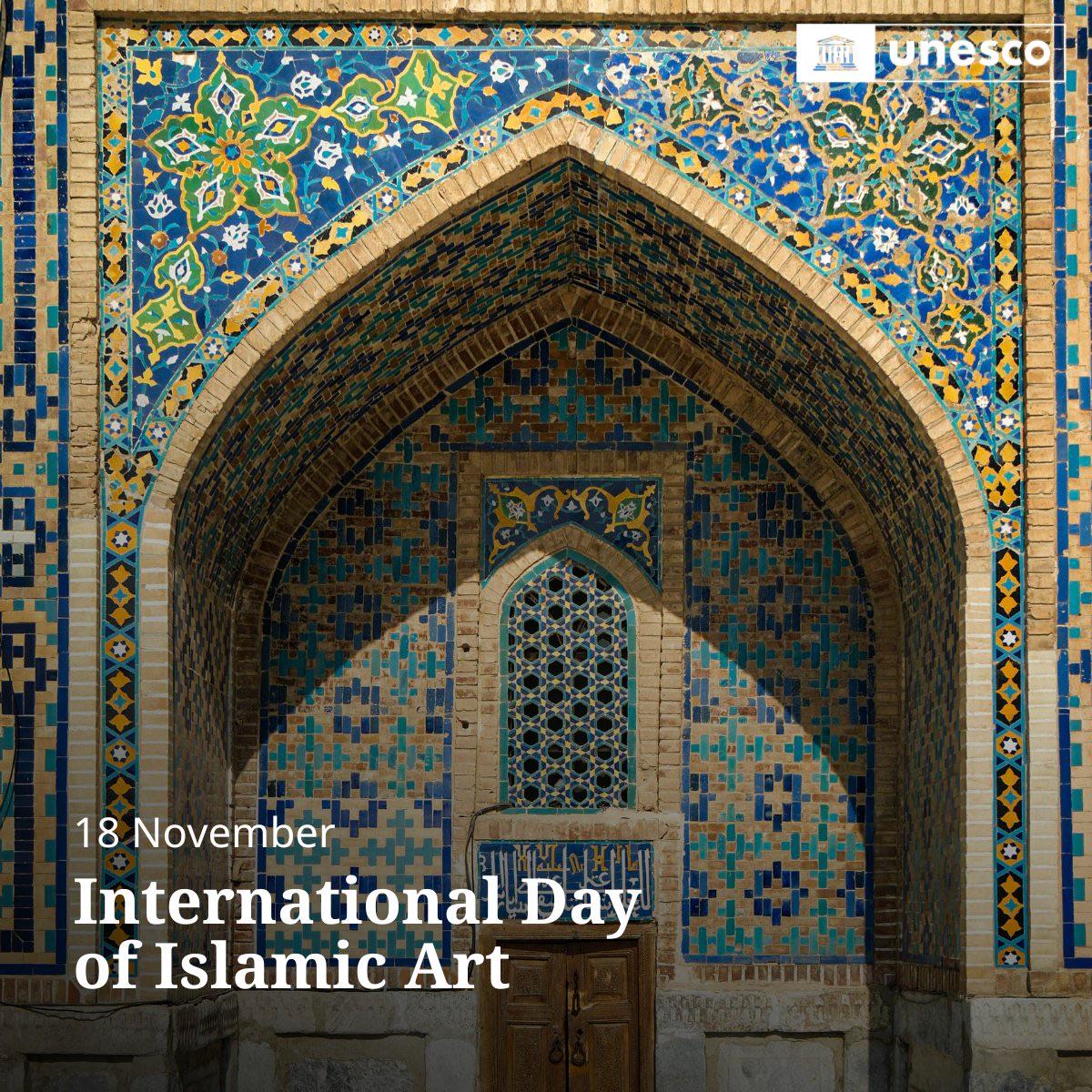
The International Day of Islamic Art was proclaimed at the 40th session of the UNESCO General Conference in 2019 and takes place every year on 18 November. It aims to raise awareness of past and contemporary artistic expressions of Islam, and the contribution of culture through Islamic Art to civilization.
The worldwide celebration of the International Day of Islamic Art not only encourages the appreciation of Islamic art, which has inspired other artistic movements, but also contributes to cultural diversity, freedom of expression, protection of cultural heritage and inter-cultural dialogue. Marking the Day is also a way to foster tolerance between peoples and support cultural rapprochement, both of which are possible through the power of art.
r/islamichistory • u/HistoricalCarsFan • 4d ago

Book overview
This Element reassesses early modern Mediterranean diplomacy by positioning the Grand Duchy of Tuscany at the centre of cross-confessional interactions with several Islamic powers between 1574 and 1610. It demonstrates how a small state shaped and used diplomacy to pursue commerce, security, and prestige in the Islamic Mediterranean, while remaining reliant on papal and Spanish Habsburg support. The argument rests on three case studies: Bongianni Gianfigliazzi's 1578 embassy in Ottoman Constantinople; Medici diplomacy in the Maghreb, facilitated by the Corsican agent Andrea Gaspari, embedded in both Algerian and Moroccan power networks; and the 1610 negotiations with Shah Abbas I's envoy concerning Persian captives in Livorno. Together, these episodes present diplomacy as performative, negotiated, and multi-actor, demonstrating that small polities actively shaped Mediterranean order in the late sixteenth and early seventeenth centuries.
r/islamichistory • u/HistoricalCarsFan • 5d ago
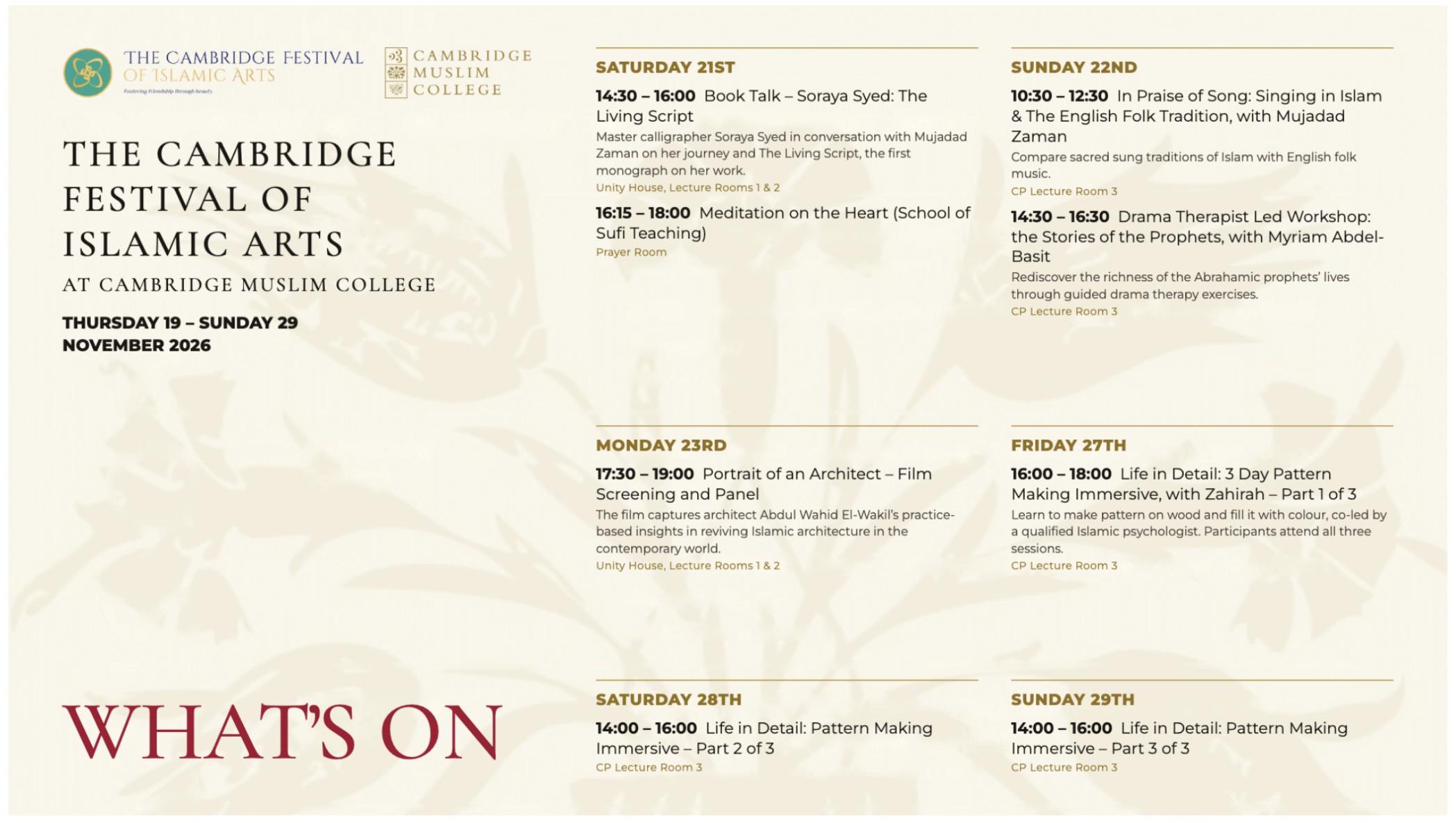
The Cambridge Festival of Islamic Arts runs this November with ten days of performances, exhibitions, lectures and workshops across Cambridge.
Celebrating the beauty of the Islamic arts and fostering friendship between people of different backgrounds, this year’s festival also marks fifty years since the landmark World of Islam Festival of 1976.
At Cambridge Muslim College, join us from 21 to 29 November for talks, workshops and screenings.
Sat 21 Nov: Book talk with master calligrapher Soraya Syed on The Living Script, followed by Meditation on the Heart with the School of Sufi Teaching.
Sun 22 Nov: In Praise of Song with Mujadad Zaman, comparing sacred Islamic and English folk traditions, then a drama therapist-led workshop on the Stories of the Prophets with Myriam Abdel-Basit.
Mon 23 Nov: Portrait of an Architect, a film screening and panel on architect Abdul Wahid El-Wakil’s work reviving Islamic architecture.
Fri 27 – Sun 29 Nov: Life in Detail, a three-day pattern-making immersive with Zahirah, co-led by a qualified Islamic psychologist.
For more information:
r/islamichistory • u/UnknownCarbon_12 • 5d ago

r/islamichistory • u/Real-Discipline-1493 • 4d ago

السلام علیکم! صوفی مشتاق باہو کی کتاب کلیات مشتاق باہو حصہ اول اب Internet Archive پر مفت دستیاب ہے۔ صوفیانہ کلام، نجیب باہو۔ پڑھ کر دعاؤں میں یاد رکھیں۔