r/KurdistanNews • • 1h ago

Başûr ☀️ Who wins from Baghdad's move to clip Kurdish autonomy

Thumbnail
middleeasteye.net
1 Upvotes

Experts debated whether Baghdad's decision was made with the agreement of Iran, which has called on the KRG to rein in Kurdish opposition groups, or the US which has lobbied regional states to consolidate federal power.

Tom Barrack, the US ambassador to Turkey and Middle East envoy, has been the main proponent of this view.


r/KurdistanNews • • 7h ago

Başûr ☀️ Kurds close ranks as Baghdad moves to seize oil, border control

Thumbnail
al-monitor.com
1 Upvotes

The KDP and the PUK set aside their bitter rivalries to oppose Prime Minister Ali al-Zaidi’s push to bring the Kurdistan Region’s oil fields and border crossings under Baghdad’s control.


r/KurdistanNews • • 10h ago

Başûr ☀️ Wladimir van Wilgenburg: "Crisis Erupts as Iraq Threatens to Take Over Kurdish-Controlled Oil Fields"

Thumbnail x.com
1 Upvotes

Wladimir van Wilgenburg explains the situation facing the Kurdistan Regional Government.


r/KurdistanNews • • 17h ago

Bakur ☀️ The PKK's jailed founder, Abdullah Ocalan, has moved into a newly built, house-style building inside the prison complex on Imrali island, where he has been held since 1999.

3 Upvotes

The PKK's jailed founder, Abdullah Ocalan, has moved into a newly built, house-style building inside the prison complex on Imrali island, where he has been held since 1999.

A delegation from the pro-Kurdish DEM Party that visited him on 22 November said it had observed that he had moved into the new quarters. It was the first confirmation of the move from people who had seen it.

The move carries symbolic weight for the peace process, since improving Ocalan's conditions of detention has been one of the PKK's demands. It falls well short of house arrest or conditional release, and DEM's Pervin Buldan has stressed that the new section is part of the prison and does not in itself change his status. But it may be the first step in a multi-stage process.

Ocalan is also expected to take on a formal role in the process. DEM says he wants to act as a "peace and politicisation coordinator", but he has not yet been given any official title or legal status. DEM co-chair Tuncer Bakirhan said on 17 November that Ocalan's working conditions had changed with the move and that his secretariat had been strengthened.

DEM gave no details of the building, and no official description has been published. Earlier Turkish and Kurdish media reports, citing politicians and unnamed sources, described an office, a meeting area, video-phone and internet access, and a library. Accounts differ even on its size: Devlet Bahceli, the government's nationalist ally, spoke of a 250-square-metre residence, while a pro-government journalist said it was a single-storey building.

The improvement in Ocalan's conditions might clear the way for further steps by the PKK and the Turkish government towards implementing the framework law passed by parliament in August, which would allow some PKK members to return to Turkey through deferred prosecutions and sentences. The law's provisions take effect only once Turkey's National Security Council confirms that the PKK has dissolved and disarmed. Turkish press reports say that confirmation will not come at the council's 27 November meeting and may slip to January.

The emerging regional peace process, which Ocalan's camp calls "democratic integration" and Ankara calls "Terror-free Turkey" (and increasingly a "terror-free region"), is helping to elevate Ocalan to the status of a regional power broker. For Ocalan and much of the pro-PKK Kurdish movement, the process offers a chance to convert an exhausted guerrilla war and a precarious autonomous pocket in Syria into de facto Kurdish unification and codified regional influence.

The elevation of Ocalan's status has practical as well as symbolic weight. If the Turkish parliament, the Kurdish-led Syrian Democratic Forces (SDF) and PKK-affiliated groups such as the Yazidi Sinjar Resistance Units (YBS) in Iraq and the Kurdistan Free Life Party (PJAK) in Iran all treat Imrali as the necessary address, then for the first time there would be a single recognised leadership centre for Kurds in Turkey and northern Syria, for pockets of Iraq and for one of the main Iranian Kurdish groups. Borders would remain on the map, but in terms of political gravity, a cross-border Kurdish space would begin to cohere under Ocalan's authority.

More on Ocalan’s re-emergence as the centre of gravity in Kurdish regional politics:

https://thenationalcontext.com/abdullah-ocalan-pkk-father-of-kurds-turkey-peace/

For Ankara, the process is a way to end a draining conflict on terms that strengthen its power. Increasingly important is the fear that Kurdish actors could become a permanent asset in an Israel-centred regional camp, especially in Syria, where Turkey cannot simply eliminate the SDF without risking a protracted and destabilising war. Nor can it indefinitely tolerate a PKK-derived army on its border that the US, and potentially Israel, can use as leverage. The path being explored instead is to change the SDF’s status and patronage by integrating its forces into the new Syrian army and security institutions; stripping out, on paper at least, the overt PKK command spine; and shifting its long-term horizon away from Washington and any Israeli security nexus, towards a Turkey-centred regional order.

More on how the Israel factor is driving Ankara and Ocalan to converge on a broader regional realignment:

https://thenationalcontext.com/the-turkey-israel-layer-of-the-pkk-peace-process1/

https://x.com/NatlContext/status/2124944505493234083


r/KurdistanNews • • 11h ago

Başûr ☀️ Mohammed A. Salih: Baghdad and Kurdistan: A New Confrontation Over Power and Autonomy

Thumbnail
eyeonkurdistan.substack.com
1 Upvotes

Baghdad's sweeping new decisions concerning the Kurdistan Region, the political calculations behind PM Zaidi's moves, and their implications for Kurdish autonomy and Iraqi federalism.

What comes next, and how far might this confrontation go? Two excerpts from the article:

“They raise a more fundamental question about the direction of Iraq's post-2003 political order: whether federalism will continue to function as a framework for accommodating competing national and political interests, or whether the distribution of powers will increasingly reflect the prevailing balance of political and coercive power.”

“At its core lies the Kurdish national question within the boundaries of Iraq, an issue that predates the establishment of the Iraqi state.”


r/KurdistanNews • • 18h ago

Bakur ☀️ Skulls found in Turkey’s Kurdish-majority region prompt calls to investigate links to ’90s disappearances

Thumbnail
stockholmcf.org
3 Upvotes

r/KurdistanNews • • 12h ago

Başûr ☀️ Drone attack hit Azadi and Jazhnikan camps in Kurdistan Region

1 Upvotes

Azadi Camp in Koya and the Jazhnikan (Cêjnîkan) refugee camp near Baharke were hit by drones on Tuesday, November 24, 2026. Both camps are in Iraq’s Kurdistan Region. Initial reports said no one was killed or injured in either attack.


r/KurdistanNews • • 17h ago

Bakur ☀️ Kurds resist mandatory conscription over cultural discrimination

Thumbnail
jpost.com
2 Upvotes

Kurdish activists are publicly refusing mandatory military service in Turkey, citing discrimination and attempts to erase their national identity.


r/KurdistanNews • • 14h ago

مەسعود بارزانی عێراق بە "بڕیاری سەرکێشانە" و "ماڵوێرانكەر" دژی هەرێمی كوردستان تۆمەتبار دەکات

Thumbnail
dengiamerika.com
1 Upvotes

مەسعود بارزانی، سەرۆکی پارتی دیموکراتی کوردستان، هۆشداری دا لە هەبوونی "هەڵچوونێکی ناشروشتی" لە لایەن عێراقەوە دژ بە هەرێمی کوردستان و بڕیارەکانی ڕۆژی سێشەممەی حکومەتی عێراقی بە نادەستوری و "سەرکێشانە" وەسف کرد.

بارزانی لە بەیاننامەیەکدا، ڕۆژی 24ـی یازدەی 2026، ڕایگەیاند، "ماوەیەكە لە ناوەندەكانی بڕیاری عێراقیدا جموجۆڵ و هەڵچوونێكی ناسرووشتی لەدژی هەرێمی كوردستان بەدی دەكرێت كە خۆی لە هەوڵدان بۆ پێشێلكردنی بنەماكانی فیدراڵییەت و دەستووری عێراق و پشتگوێخستنی مافەكانی گەلی كوردستان و خستنەڕووی بڕیار و بیرۆكەی ناتەندروست و سەركێشانە دەبینێتەوە."

سەرۆکی پارتی، بە ئاماژەکردن بە پشتیوانیی هەرێمی کوردستان لە حکومەتی نوێی عێراق بە سەرۆکایەتیی عەلی زەیدی، گوتی لە سەرەتای دەستبەکاربوونی حکومەتەکەیەوە، پشتیوانیی خۆیان بۆ سەرۆکوەزیران لە چارەسەرکردنی کێشەکان و ڕووبەڕووبوونەوەی گەندەڵی ڕاگەیاندووە و "بە کردەوەش هاوکارییان کردووە."

بەڵام بارزانی ناوەندەکانی بڕیاری عێراق تۆمەتبار دەکات بەوەی ئێستا هەڵمەتێکی "چەواشەکارانە" لە دژی هەرێمی کوردستان پەیڕەو دەکان و ڕۆژانە "تۆمەتی ناڕەوا" لە دژی هەرێم بڵاو دەکرێتەوە.

بارزانی گوتی، "ئێمە پێمانوایە چارەسەركردنی گرفتەكان بە هەڵمەتی نادروست و تۆمەتی بێ بنەما و بڕیاری تاكلایەنە ناكرێت. ئێمە چۆن هاوکاری سەرۆکوەزیرانی عێراق بووین لە بنبڕکردنی گەندەڵی، ئەوهایش هاوکار دەبین لە ڕێگریکردن لە کاری نایاسایی و دیاردەی قاچاخچێتی، بەڵام لە ڕێگەی یاسایی و دەستوورییەوە."

بەیاننامەکەی مەسعود بارزانی دوای ئەوە هات حکومەتی عێراق ئەمڕۆ سێشەممە زنجیرەیەک بڕیاری گرنگی بۆ کۆنتڕۆڵکردنی سەرجەم دەروازە سنوورییەکان و کێڵگە نەوتییەکان و دانانی خاڵی پشکنین لە دەروازەی پارێزگاکانی هەرێمی کوردستان دەرکرد. بڕیارەکانی حکومەتی ناوەندی عێراق لە پەیامێکی ڤیدیۆییدا لەلایەن سەباح نوعمان، وتەبێژی سەربازیی سەرۆکوەزیرانی عێراق، بڵاوکرانەوە.

بارزانی لە بەیاننامەکەیدا ئاماژەی بە ڕۆڵی هەرێمی کوردستان لە ڕووخاندنی ڕژێمی بەعس لە ساڵی 2003 و بنیادنانی عێراقی نوێ و داڕشتنی دەستووری عێراق کرد.

ئەو حکومڕانانی عێراقی بە جێبەجێنەکردنی دەستوور و پێشێلکردنی بنەماکانی هاوبەشی، هاوسەنگی و سازان تۆمەتبار کرد و گوتی ئەو بنەمایانە کلیلی ڕزگارکردنی عێراق لە قەیرانەکان و گەیشتن بە پێشکەوتن و ئاسوودەیین بۆ هەموو عێراقییەکان.

سەرۆکی پارتی هەروەها بە ئاماژە بە مێژووی خەباتی کورد و کارەساتەکانی ئەنفال، کیمیاباران، وێرانکردنی هەزاران گوند و گۆڕینی دیمۆگرافیی ناوچە کوردنشینەکان، جەختی کردەوە کە هەرێمی کوردستان بەرهەمی خەبات و قوربانیدانی سەد ساڵەی گەلی کوردستانە و خاوەنی مافە ڕەواکانی خۆیەتی.

بارزانی لە کۆتایی پەیامەکەیدا وتی، "پێویستە هەموو لایەكمان دەست بە بنەماكانی دەستوورەوە بگرین و لەو وڵاتەی بۆ ڕزگاربوونی لە دیكتاتۆریەت و گەیشتن بە ئازادی ڕەنجی زۆری بینیوە پێویستە عەقڵ حاكم بێت و هیچ كەسێک پشت بە میزاج و زانیاریی هەڵە و بڕیاری نادروست و ماڵوێرانكەر نەبەستێت."

جەختیش دەكاتەوە لەوەی هەرێمی كوردستانی عێراق "لە دەرئەنجامی خەبات و قوربانیدانی سەد ساڵەی گەلی كوردستان و بە خوێنی سەدان هەزار شەهید هاتۆتە كایەوە و خاوەن مافی ڕەوای خۆیەتی. هەرێمی كوردستان ناچێتە ژێر باری بڕیاری نادەستووری و سەپاندنی ئیرادەی هیچ كەس و لایەنێک."


r/KurdistanNews • • 14h ago

Başûr ☀️ Iraqi Prime Minister Ali al-Zaidi today issued a series of decisions on the Kurdistan Region's oilfields and border crossings. If implemented, they would significantly weaken the KRG's hand in its ongoing power struggle with Baghdad.

1 Upvotes

The most important decision hands the federal Ministry of Oil management of all ministry-owned oilfields in Diyala, Kirkuk, Salahaddin and Nineveh that are currently under KRG security control. These fields would be run directly by Baghdad, with no joint management with the KRG, which shows that Baghdad sees them as federal property. Federal forces are also to take control of these fields and monitor them with cameras. Baghdad will set up inspection points at the checkpoints leading into Erbil, Duhok and Suleimani to check petroleum products entering the Region. Bitumen and naphtha plants in the four provinces that sit outside federal security control are to be moved elsewhere within the same provinces within six months.

The clearest target is Khurmala, in Makhmour district, which Baghdad treats as part of Nineveh and which votes as part of Nineveh in federal elections. Khurmala is far more consequential than its low profile suggests. It is the Kurdistan Region's largest oilfield, producing around 100,000 barrels a day, which some estimates put at about 40% of the KRG's total oil output. It has long had a unique arrangement and is run by the KDP-linked KAR Group, with no foreign company involved. Losing it would cut deeply into the KRG's oil base. Sufaya, in Nineveh near the Syrian border, is also held by KDP forces and has no foreign operator. Some wells of Avana, part of the Kirkuk field, also remain on the KDP side, even though Baghdad retook most of it in 2017. At least one other field, Ain Sifni, is in Nineveh and under KRG security control, but it is unlikely to be covered because a foreign company, Hunt Oil, operates it and Baghdad has not claimed it as federal.

On borders, all of the Kurdistan Region's crossings are to be handed to federal authorities, although security at them would be shared between federal forces and the Peshmerga. Federal forces are also ordered to close all unofficial crossings on Iraq's borders. In practice, this covers most of the Kurdistan Region's crossings. Only four are officially recognised: Ibrahim Khalil with Turkey and Haji Omaran with Iran, both under KDP control, and Bashmakh and Parwezkhan with Iran, both under PUK control. Every other crossing is unofficial. The most important of these is Semalka on the Syrian border. It became the main gateway between the Kurdistan Region and the then SDF-held northeast of Syria, particularly during the Syrian government's assault on the area in January 2026.

The scope of the oil decision also points to a longer process. Just days ago, a Federal Board of Supreme Audit document showed that the North Oil Company claims fields well beyond the disputed territories. These include Khor Mor, the Region's largest gas field, in Suleimani, as well as Tawke in Duhok and Taq Taq in Erbil. Today's directive does not cover them, because they lie outside the four provinces. That suggests Baghdad may have wider ambitions and intends to pursue them in stages, starting with the fields it can most easily claim. The audit appears to lay the groundwork for bringing a far larger share of the Region's oil and gas under federal control later.

In a rare joint statement, the KDP and PUK, the Kurdistan Region's two ruling parties, rejected the decisions and said they would oppose any measure that goes beyond the constitution. What happens next is unclear. Baghdad could try to enforce the decisions through legal channels, use force, or apply financial pressure through the budget. Some see the directives as an attempt to renegotiate the KRG's share of the federal budget permanently and settle the issue once and for all.

More in-depth analysis: https://thenationalcontext.com/baghdad-targets-the-krgs-biggest-oilfield-and-border-crossings-and-khor-mor-could-follow/

https://x.com/NatlContext/status/2125277706614976579


r/KurdistanNews • • 14h ago

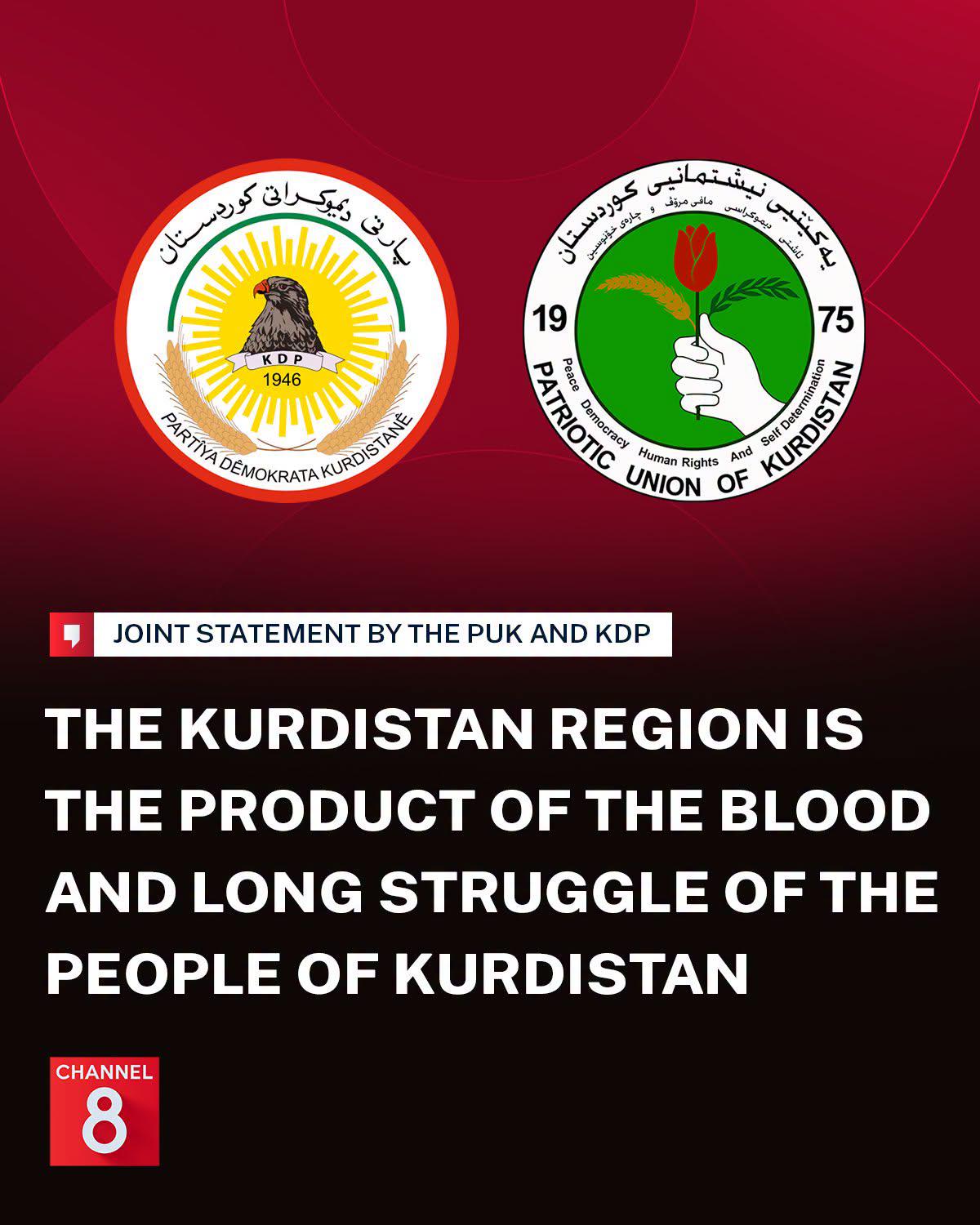
Başûr ☀️ PUK and KDP Issue Joint Statement Rejecting Measures Against Kurdistan Region Outside the Constitution

Post image
1 Upvotes

At a Glance

  • The Patriotic Union of Kurdistan and the Kurdistan Democratic Party issued a joint statement.
  • They said recent developments in Iraq came as a surprise to the people of the Kurdistan Region.
  • They called for the Constitution to serve as arbiter in any dispute with Baghdad.

The two main Kurdish parties, the Patriotic Union of Kurdistan (PUK) and the Kurdistan Democratic Party (KDP), issued a joint statement on November 24, 2026, responding to a statement by the Spokesperson for the Iraqi Armed Forces and to measures taken in Iraq over the past few days.

Key Statements and Focus Area

  • On Constitutional Rights: "The Kurdistan Region has not demanded anything beyond the rights enshrined in the Iraqi Constitution," and its constitutional rights have been violated throughout the past years.
  • On the Constitution as Arbiter: If there is any dispute between the Kurdistan Region and the Federal Government, "the Constitution must serve as the arbiter between them." Any measure or decision against the Region outside that framework is unconstitutional.
  • On Red Lines: The Kurdistan Region is "the product of the blood and long struggle of the people of Kurdistan," and violating its rights and achievements is "a red line."
  • Focus Area: The two parties' joint response to the statement by the Iraqi Armed Forces spokesperson and recent federal measures.

The statement described the spokesperson's remarks and the recent developments as unexpected and a source of great surprise for the people of the Kurdistan Region. It stressed that all parties must adhere to the Constitution.

The parties said they support every effort toward dialogue, transparency, and mutual understanding, but that unilateral decisions do not serve the security and stability of Iraq. The statement did not specify which remarks or measures it was referring to.

FYI

Prime Minister Ali Faleh al-Zaidi ordered dismissals, suspensions, and security and technical measures after reviewing a committee report on suspected oil smuggling involving the North Oil Company in Kirkuk, spokesperson Sabah al-Numan announced.

Among the directives affecting the Kurdistan Region, the caretaker government is to authorize oil and oil product exports only through the federal Oil Ministry; the Border Ports Commission is to take over all border crossings in the Region; the Oil Ministry is to manage oilfields in Diyala, Kirkuk, Saladin and Nineveh under the Region's security control; unofficial crossings and informal roads linking the Region with those provinces are to be closed, and inspection checkpoints with laboratories are to be set up at the entrances to Slemani, Erbil and Duhok.

The Federal Integrity Commission will investigate oil contracts, refinery deliveries, industrial licences and pipeline guard payments, with findings going to the Central Anti-Corruption Criminal Court.

https://www.channel8.com/english/news/cb01a304-1ae8-478c-a7f6-bd9db30a7eea


r/KurdistanNews • • 15h ago

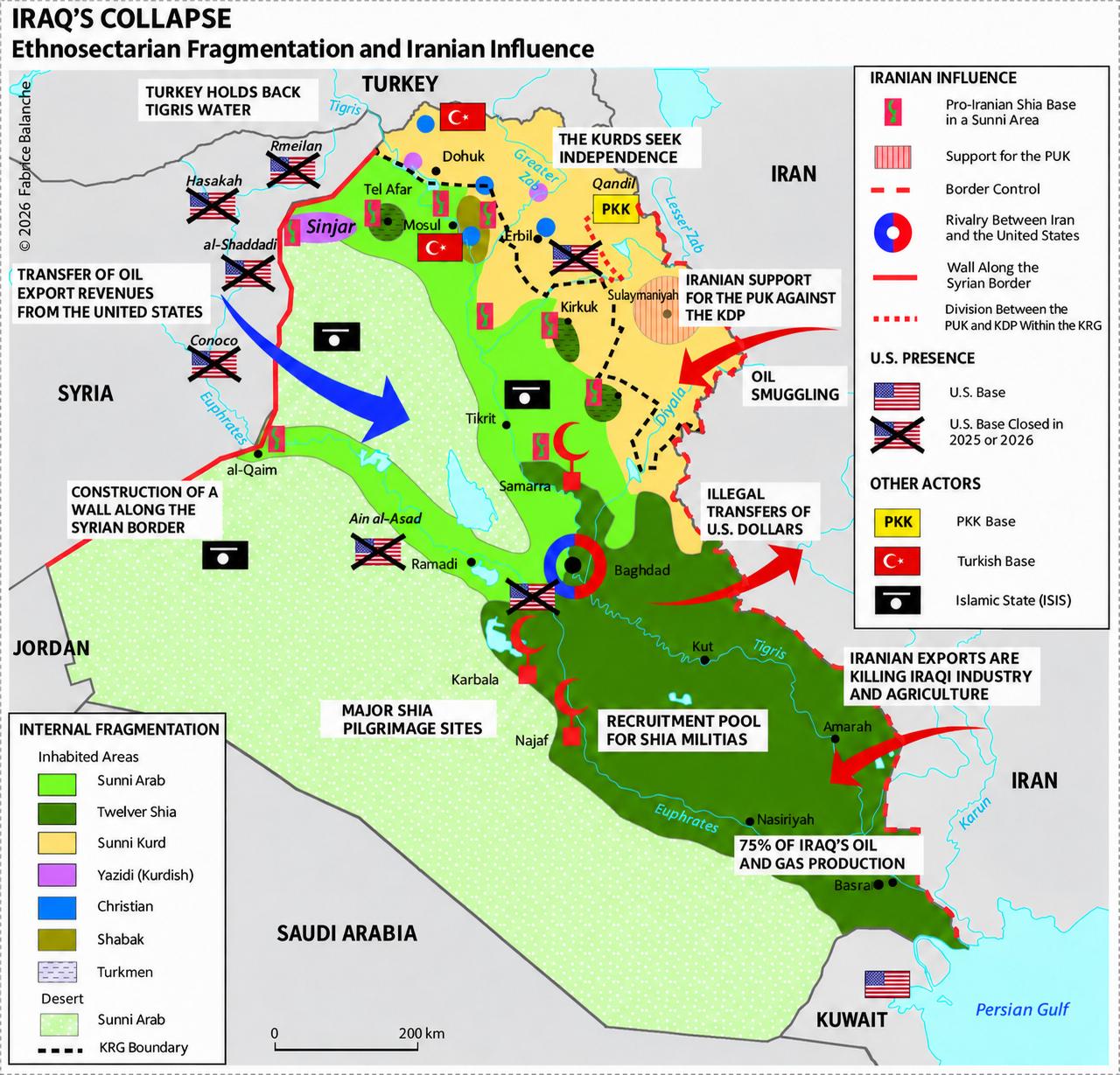
Başûr ☀️ Fabrice Balanche: "Iraq — Kurdish Autonomy Under Threat"

Post image
1 Upvotes

In January 2026, Western countries abandoned the Kurds of Syria. Today, Baghdad is threatening the autonomy of Iraq’s Kurds. Iraq’s prime minister has announced that he intends to take control of oil fields in disputed Kurdish-majority territories and of international border crossings within the territory administered by the Kurdistan Regional Government (KRG), in violation of the 2005 constitution. I described how Kurdish entities were being dismantled in my 2023 article “Iraq and Syria: Kurdish Autonomous Regions Under Threat”.

Iraq’s determination to dismantle the KRG by depriving it of its economic resources must be seen in the context of the conflict between the United States and Iran. Tehran fears that Iraqi Kurdistan could serve as a rear base for an uprising in Iranian Kurdistan. It is worth remembering that Iraq’s prime minister is beholden to Tehran, even as he tries to suggest otherwise by ordering the regular army to take over a Kataib Hezbollah base north of Baghdad. Western countries must defend the Kurds and see through Ali al-Zaidi’s pretext of restoring national sovereignty.

https://www.fabricebalanche.com/en/iraq/iraq-kurdish-autonomy-under-threat/


r/KurdistanNews • • 15h ago

بەغدا فەرمانی کۆنتڕۆڵکردنی دەروازە و کێڵگە نەوتییەکانی هەرێمی کوردستان دەردەکات و هەرێم سەرسوڕمان دەردەبڕێت

Thumbnail
dengiamerika.com
1 Upvotes

حکومەتی عێراق زنجیرەیەک بڕیاری گرنگی بۆ کۆنتڕۆڵکردنی سەرجەم دەروازە سنوورییەکان و کێڵگە نەوتییەکان و دانانی خاڵی پشکنین لە دەروازەی پارێزگاکانی هەرێمی کوردستان دەرکرد، لە بەرامبەردا دەستەڵاتدارانی هەرێمی کوردستان سەرسوڕمانی خۆیان نیشان دا و ڕایانگەیاند بڕیارەکان پێشێلکردنی دەستورن.

بریارەکانی حکومەتی ناوەندی عێراق لە پەیامێکی ڤیدیۆییدا لەلایەن سەباح نوعمان، وتەبێژی سەربازیی سەرۆکوەزیرانی عێراق، لە ڕۆژی سێشەممە، 24ـی یازدەی 2026، ڕاگەیاندران.

یەکێتی و پارتی، کە لەسەر بەڕێوەبردنی هەرێمی کوردستان لە ناکۆکییەکی قوڵدان، بۆ یەکەم جار دوای چەندین هەفتە لە ململانێی توند، بەیاننامەیەکی هاوبەشیان بڵاو کردەوە. تێیدا دەڵێن ڕێوشوێنەکان "بۆ هاووڵاتیانی هەرێمی کوردستان چاوەڕواننەکراو و جێگەی سەرسوڕمانێکی زۆرن."

بەپێی ڕاگەیاندراوەکەی وتەبێژی سەربازیی سەرۆکوەزیران عەلی زەیدی، بڕیارەکان سەبارەت بە هەرێمی کوردستان ئەم خاڵانە لەخۆ دەگرن:

1. ئاراستەکردنی سەرۆکایەتی حکومەتی هەرێمی کوردستان بۆ ئەوەی هیچ مۆڵەتێک بۆ هەناردەکردنی نەوتی خاو یان بەرهەمە نەوتییەکان نەدات، مەگەر لە ڕێگەی وەزارەتی نەوتی فیدراڵەوە بێت، بە مەبەستی ڕێگریکردن لە تێکەڵبوونی دەسەڵاتەکان.

2. 'دەستەی دەروازە سنوورییەکان'ـی عێراق کۆنترۆڵی هەموو دەروازە سنوورییەکانی هەرێمی کوردستانی عێراق بگرێتە دەست.

3. ئاراستەکردنی وەزارەتی نەوتی عێراق بۆ بەڕێوەبردنی هەموو کێڵگە نەوتییەکانی سەر بە وەزارەتەکە کە لە چوارچێوەی سنووری کارگێڕیی پارێزگاکانی دیالە، کەرکووک، سەلاحەدین و نەینەوادان، بەڵام لەژێر دەسەڵاتی ئاسایشی هەرێمی کوردستانی عێراقدان.

ڕێکارە ئەمنی و سەربازییەکان و کۆنترۆڵکردنی سنوورەکان:

1. 'فەرماندەیی هێزەکانی پاسەوانی سنوور' هەموو دەروازە نافەرمییەکانی سەر سنوورە نێودەوڵەتییەکانی عێراق لەگەڵ وڵاتانی دراوسێ دابخات، لەوانەش دەروازە نافەرمییەکانی هەرێمی کوردستانی عێراق.

2. ئاراستەکردنی وەزارەتی بەرگری عێراق بۆ سپاردنی ئەرک بە 'لیوای یەکەم و دووەمی بەرژەوەندیی هاوبەش'، بۆ داخستنی هەموو ئەو دەروازە نافەرمییانەی کە پارێزگاکانی دیالە، سەلاحەدین، کەرکووک و نەینەوا بە هەرێمی کوردستانی عێراقەوە دەبەستنەوە.

3. وەزارەتی ناوخۆی عێراق بەڕێوەبەرایەتیی پۆلیسی وزەی عێراق ئاراستە بکات بۆ پاراستنی هەموو کێڵگە نەوتییەکان و چاودێریکردنیان بە کامێرای چاودێری، لەوانەش ئەو کێڵگانەی لە چوارچێوەی سنووری کارگێڕیی حکومەتی فیدراڵدان، بەڵام لەژێر دەسەڵاتی ئاسایشی حکومەتی هەرێمی کوردستاندان.

ڕێکارە تەکنیکی، چاودێری و ئەندازیارییەکان:

1. دانانی میکانیزمێکی ڕوون بۆ ڕێکخستنی گواستنەوەی بەرهەمە نەوتییەکان لەنێوان پارێزگاکان و لە ڕێگەی دەروازە سنوورییەکانەوە، بە جۆرێک هەموو لایەنە پەیوەندیدارەکان پابەندی بن.

2. بەکارهێنانی تەکنەلۆژیای نوێ بۆ پاراستن و چاودێریکردنی بۆڕییەکانی گواستنەوەی نەوت و بیرە نەوتییەکان، لەوانەش دامەزراندنی سیستەمێکی دیجیتاڵی نیشتمانی بۆ چاودێریکردنی بۆڕییە نەوتییەکان و دەستنیشانکردنی حاڵەتەکانی قاچاخچێتی.

3. وەزارەتی نەوت پێوەری ئەلیکترۆنی لەسەر هەموو بیرە نەوتییە بەرهەمهێنەرەکانی سەرانسەری عێراق دابنێت.

4. تیمی ئەندازیاریی سەر بە نووسینگەی سەرۆکوەزیران شوێنی تایبەت لە خاڵەکانی پشکنینی سەر ڕێگاکانی چوونە ناو پارێزگاکانی سلێمانی، هەولێر و دهۆک ئامادە بکات، بۆ ئەوەی کارمەندانی وەزارەتی نەوت، پۆلیسی وزە و دەزگای ئاسایشی نیشتمانی عێراق تێیدا جێگیر بکرێن. هەروەها تاقیگە لەو خاڵانە دابمەزرێنرێن بۆ پشکنینی ئەو بەرهەمانەی دەگوازرێنەوە بۆ ئەو پارێزگایانە.

5ـ. ئاراستەکردنی وەزارەتی پیشەسازی و کانزاکانی عێراق بۆ گواستنەوەی هەموو کارگەکانی بەرهەمهێنانی قیری ئۆکسیدکراو و نەفتا، کە لە چوارچێوەی سنووری کارگێڕیی پارێزگاکانی دیالە، سەلاحەدین، کەرکووک و نەینەوادان، بەڵام لە دەرەوەی کۆنترۆڵی ئەمنیی حکومەتی فیدراڵن، بۆ شوێنی دیکە لە ناو هەمان پارێزگاکاندا، لە ماوەی شەش مانگدا.

لە یەکەمین کاردانەوەی فەرمیدا بەرامبەر ئەم هەنگاوانە، مەسرور بارزانی، سەرۆکوەزیرانی هەرێمی کوردستان، لە هەولێر بە ڕۆژنامەنووسانی ڕاگەیاند کە بڕیار و ڕاگەیەندراوەکەی حکومەتی عێراق ''جێگەی سەرسوڕمانن و بە هیچ شێوەیەک قبووڵکراو نین.'' جەختی کردەوە کە ''هیچ شتێکی دەرەوەی دەستوور قبووڵکراو نییە'' و ئەو هەنگاوانە بەبێ هەماهەنگی و پێچەوانەی گفتوگۆکانی ئەم دواییەی نێوان هەولێر و بەغدا دراون.

مەسرور بارزانی ئاماژەی بەوەش دا کە پاراستنی قەوارەی هەرێمی کوردستان لە سەرووی هەموو بەرژەوەندییە حزبییەکانەوەیە و گوتی، ''ئێمە ئامادەین ناکۆکییەکانمان وەلا بنێین و هەموومان ببین بە پێشمەرگە بۆ پاراستنی قەوارەی هەرێمی کوردستان.''

هەروەها یەکێتی و پارتی لە بەیاننامەیەکی هاوبەشدا ڕایانگەیاند، "ئێمە جەخت لەوە دەکەینەوە کە هەموو لایەک پێویستە پابەندی دەستوور بن و ئەگەر کێشەیەکیش لە نێوان هەرێمی کوردستان و حکومەتی فیدراڵیدا هەبێت، دەبێت دەستوور حەکەم بێت لەنێوانیان. جگە لە دەستوور هەر ڕێوشوێنێک و بڕیارێکی دیکە لە دژی هەرێمی کوردستان دژی دەستوورە."

لە ڕاگەیاندراوەکەدا پارتی و یەکێتی دەڵێن، "ئێمە پشتگیریی هەر هەوڵێک دەکەین بۆ دیالۆگ و شەفافیەت و لێکتێگەیشتن، لەهەمانکاتدا بڕیاری تاکلایەنە خزمەتی ئەمنیەت و سەقامگیریی عێراق ناکات."

هەروەها دەڵێن، "بۆ هەموو لایەک دەبێت ڕوون بێت کە هەرێمی کوردستان بەرهەمی خوێن و خەباتی دوورودرێژی گەلی کوردستانە و پێشێلکردنی ماف و دەستکەوتەکان هێڵی سوورن."

لە لایەکی دیکەوە، ئاوات شێخ جەناب، وەزیری دارایی و ئابووریی هەرێمی کوردستان هۆشداری دا کە مەترسییەکانی سەر هەرێمی کوردستان لە دوای ساڵی 2003ـەوە هێندەی ئێستا گەورە نەبوون و وتی ''هەڕەشەیەکی وجوودی '' و ''سیاسەتێکی بەرنامە بۆ داڕێژراو بۆ بچووککردنەوەی قەوارەی هەرێم" داڕێژراوە.

ناوبراو لە چاوپێکەوتنێکی کەناڵی ڕووداودا ئاماژەی بەوە دا کە لە ڕێگەی میدیا و کەسایەتییە سیاسییەکانی عێراقەوە هەوڵ دەدرێت قاچاخی نەوت لە بەسڕە و جورفولسەخر و دۆسیەی هێزە چەکدارەکان ببەسترێنەوە بە هەرێمی کوردستان و هێزی پێشمەرگەوە، هاوکات باس لە ناردنی سوپا بۆ سنوورەکان و دەرهێنانی بیرە نەوتییەکان دەکرێت لەگەڵ بەردەوامی پرۆسەی تەعریب و ڕاگواستن لە ناوچەکانی ماددەی 140.

لە ڕووی دارایی و بودجەشەوە، ئاوات شێخ جەناب وتی ڕەشنووسی ئێستای بودجەی عێراق ''زوڵمێکی زۆر لە کورد دەکات" و پێشبینی کرد کە ساڵی 2027 ساڵێکی قورس بێت بۆ هەرێمی کوردستان.


r/KurdistanNews • • 17h ago

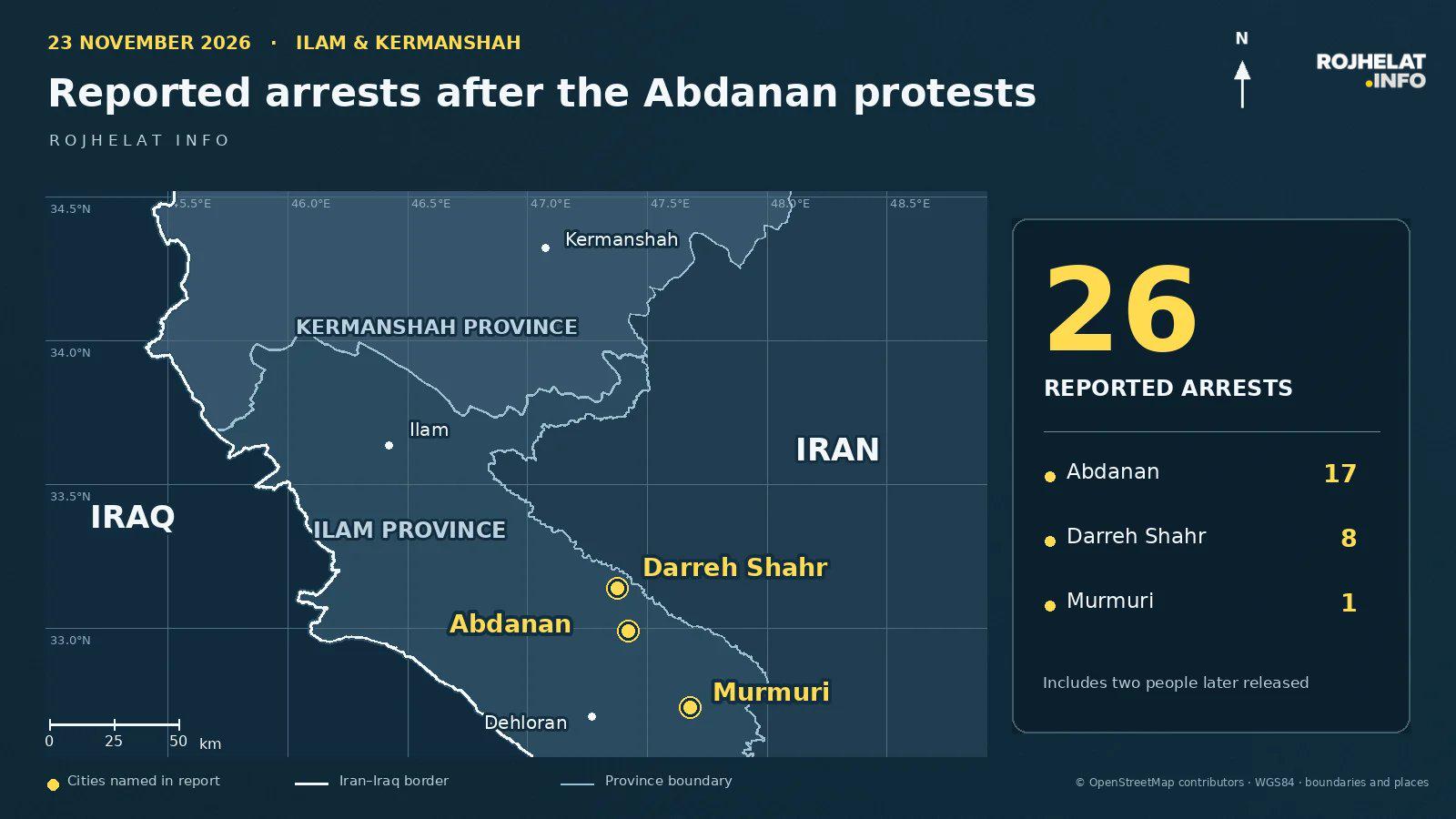
Rojhelat ☀️ At Least 26 Arrests Reported After Abdanan Bus Crash and Protests

Post image
1 Upvotes

At least 26 people have been arrested in Abdanan, Darreh Shahr, and Murmuri in the days following a deadly bus crash and the protests it sparked.

This figure brings together reports from human rights organizations: 17 arrests in Abdanan, 8 in Darreh Shahr, and one in Murmuri.

The bus was carrying workers from the Dehloran oil and gas project when it overturned on 14 November, killing 13 people. Three days later, residents of Abdanan gathered to demand answers about the crash and the safety of the roads used by workers.

Human rights organizations reported that security forces used tear gas against protesters and continued making arrests in the following days.

In Abdanan, the 17 people reported arrested are:
Sina Darvishi, Iraj Heydari, Saeed Abdollahi, Asghar Akbari, Armin Soleimani, Behnam Moradi, Peyman Karimzadeh, Shahram Javidaneh, Meysam Nazari, Mohammad Hossein Kaviani, Hossein Alizadeh, Hamidreza Shahmohammadi, Seyed Hamzeh Hashemi, Ali Hosseini, Shayan Mardani, Soroush Gilani, and Mohsen Bavir.

Darvishi, who is 15, and Bavir were released after several hours. Nazari, a healthcare worker at Abdanan’s Rasoul Akram Hospital, was reportedly arrested at work on 19 November. The figure of 17 counts everyone reported arrested; it does not mean all 17 remain in custody.

In Darreh Shahr, eight people were reported arrested:
Mohammad Mirzaei, Mohammad Amin Amraei, Mohammad Owlad, Arian Imani, Amir Garavand, Ali Vali, Hamidreza Mirzaei, and Erfan Esmaeili.

In Murmuri, Heydar Molaei was arrested on 20 November during a gathering in support of those detained in Abdanan. He was reportedly taken to an undisclosed location.

The whereabouts, possible charges, and legal status of many of those arrested remain unclear. Families are still seeking information about them.

https://x.com/RojhelatInfo_En/status/2124995893053026654


r/KurdistanNews • • 17h ago

Between negotiations and opposition: DEM Party’s strategic test

Thumbnail
bianet.org
1 Upvotes

The process the government relaunched in Oct 2024 to resolve the Kurdish issue—partly driven by the regional risks posed by the increasingly violent war in the Middle East—reached a concrete stage with the passage of the Framework Law by the Parliament in August.

This development has left the DEM Party facing a complex strategic equation at a critical juncture where two key dynamics intersect. The DEM Party is compelled to remain at the negotiating table with the ruling bloc to ensure the Kurdish peace process gains a lasting legal foundation. On the other hand, it faces the responsibility of representing the broad segments of society demanding democracy, the rule of law, equality, and freedom.

This dual position—setting aside Turkish nationalist political forces that cannot even tolerate the DEM Party’s very existence—has made the party the target of harsh criticism from both the mainstream opposition and socialist groups that have not severed their ties with Kemalism.

The party’s fundamental strategic challenge is how to reconcile its claim to be part of Turkey’s democratic opposition with its role as an active actor in negotiations aimed at resolving the Kurdish issue. Striking a balance between the political caution required by the peace process and the critical stance of the democratic opposition will be one of the defining debates of the coming period.

Negotiations and the risk of instrumentalization

Among the main criticisms directed at the DEM Party is the concern that its contacts with the ruling party could weaken its capacity for democratic opposition. Among the primary indicators of authoritarianism in Turkey are the appointment of government-appointed trustees in place of elected mayors, the use of the judiciary as a tool to pressure opposition politicians, the failure to implement decisions by the Constitutional Court and the European Court of Human Rights, bans on strikes, and control over the media.

In such an atmosphere, dialogue with the ruling party fosters mistrust within the opposition. According to those who take a critical view of the process, the government is using the peace process not only to resolve the Kurdish issue but also to strengthen its political hegemony, shape the constitutional order according to its own needs, and divide the opposition. In this context, the DEM Party’s position in the negotiation process could, even unintentionally, become part of the government’s political calculations.

In contrast, there is also an approach that does not view the resolution of the Kurdish issue as separate from Turkey’s democratization. According to this perspective, reflected in the DEM Party’s congress and party council discussions, the end of the conflict could mark a significant milestone not only for the Kurds but also in terms of paving the way for democratic politics across Turkey. The elimination of one of the sources of legitimacy for security-oriented policies could make it more difficult to justify authoritarian practices ranging from the appointment of trustees to bans on public demonstrations.

From this perspective, remaining at the negotiating table does not mean supporting the government’s policies. However, assuming that the peace process will automatically lead to democratization is also risky. In a scenario where negotiations are not backed by legal safeguards, limiting the process—as the government’s approach does—solely to the goal of “eliminating terrorism” could lead to the continuation of authoritarian governance practices even after the conflict has ended. For the DEM Party, the fundamental challenge is to avoid being pushed into a position where, while contributing to peace, it might end up delaying demands for democratization.

The opposition's dilemma regarding the Kurdish issue

On the other side of this strategic tension lies the stance of the main opposition. It appears that the YENİ Party is struggling to develop an inclusive perspective on resolving the Kurdish issue that enjoys strong social legitimacy. Differing stances on the parliamentary committee’s work and on ensuring legal safeguards for the process, along with the decision to withdraw from the Monitoring Commission, indicate that a common democratic ground has not been established with the DEM Party. Approaches shaped by nationalist sensitivities tend to view the resolution of the Kurdish issue as part of the process led by the ruling party. One possible consequence of this distant stance could be that political initiative in the resolution process becomes largely concentrated in the hands of the ruling party. Consequently, while the DEM Party negotiates with the ruling party, it may face the risk of a widening gap between itself and a significant segment of the opposition.

However, if the democratic resolution of the Kurdish issue is reduced solely to a negotiation point between the government and the Kurdish political movement, it may remain limited in terms of social legitimacy. The participation of Parliament, opposition parties, labor unions, and various segments of society is crucial for the sustainability of the solution. For this reason, the main opposition’s distance from the process, as well as the DEM Party’s capacity to develop political relationships that can bridge this gap, constitute an important dimension of the discussion.

The groundwork for pluralism and democratic opposition

A theoretical framework regarding the tension between negotiation and opposition can be found in Ernesto Laclau and Chantal Mouffe’s approaches to radical democracy and pluralism. According to this approach, a democratic counter-hegemony can be established when diverse social struggles converge on a common political ground while preserving their distinct characteristics. Mouffe’s conception of agonistic pluralism also emphasizes the expression of social conflicts within democratic politics rather than their suppression.

From Turkey’s perspective, a key dimension of this approach is the relationship between identity-based rights struggles and class-based demands. While the Kurds’ demands for equal citizenship and collective rights, the Alevis’ struggle for freedom of belief, women’s quest for equality, the ecological movements’ defense of nature, and workers’ economic demands stem from different experiences, they converge in the face of authoritarianism and inequality. Deepening poverty, precarious work, unemployment, and income inequality hold the potential to create a common ground for struggle among different social groups. Class politics can be viewed not as a replacement for identity-based struggles, but rather as a space for solidarity that can strengthen the connections between them.

In this regard, the DEM Party’s structure—which brings together a legacy of social struggle and diverse socialist traditions—offers a significant opportunity. However, the political realization of this opportunity appears to depend on the nature of the relationship the party establishes not only with its own base but also with the expectations of Turkey’s various social segments regarding democracy, freedom, and economic justice.

Is a politics possible where the negotiating table and the opposition do not exclude one another?

The DEM Party’s strategic dilemma is not merely a matter of choosing between negotiation and opposition. The real issue is whether a political relationship can be established in which negotiation does not replace democratic opposition, nor does opposition rule out the possibility of peace. Restricting criticism of the government out of concern that the peace process might be harmed could weaken the party’s visibility within the democratic opposition and its ties to social struggles. Conversely, an understanding of opposition that evaluates negotiations solely through the lens of the relationship with the government could also narrow the historical window of opportunity for resolving the Kurdish issue. Both approaches carry political costs.

Therefore, just as the success of the peace process is important, so is the democratic foundation upon which it proceeds. Conducting negotiations in a manner that is open to the participation of social opposition, grounded in legal safeguards, and linked to a perspective of democratization could influence both the sustainability of peace and Turkey’s prospects for democratization. The challenge facing the DEM Party is to maintain a relationship between these two political spheres that does not exclude one another but rather reinforces each other. As long as peace and democracy, and negotiations and opposition, are viewed as alternatives to one another, this tension will persist. However, bringing together diverse social demands on a common democratic ground can enable these two spheres to reinforce one another. It is difficult for an approach that does not view the resolution of the Kurdish issue—one of Turkey’s fundamental problems since the founding of the Republic—as an integral part of democratization to produce lasting democratic transformation. The heavy price paid over the past four decades also demonstrates that these two issues cannot be considered separately.


r/KurdistanNews • • 17h ago

Explainer: Why Baghdad ordered takeover of Kurdish border crossings, oilfields | The Jerusalem Post

Thumbnail
jpost.com
1 Upvotes

Less than a week after Iraq sent security forces into an area south of Baghdad, it appears to be setting its sights on the autonomous Kurdistan Region of northern Iraq.

Iraq has been seeking to centralize control and has been seeking to disarm Iranian-backed militias. However, Baghdad is also using this as an opportunity to go after other groups.

This has had mixed results. So far, many of the Iranian-backed militias have not disarmed. Now, Iraqi leaders may prefer to target the Kurdistan Regional Government.

Why would Baghdad seek to weaken KRG if Kurdistan is Iraq's most stable region?

The Kurdistan Region is also economically successful. However, Baghdad has long been jealous of this fact. It knows that Western countries partnered with the Kurds and that the US built a huge consulate in Erbil as the US shifted forces from other areas of Iraq. US forces left Iraq on September 30.

Masrour Barzani, Prime Minister of the Iraqi Kurdistan Regional Government, gives a press conference in the autonomous region's capital Arbil on June 25, 2025. (credit: SAFIN HAMID/AFP via Getty Images)

US influence diminishing, has complex relationship with Kurdistan

This lets Baghdad know that US influence may be diminished. While the US has always had a complex relationship with the Kurdistan Region, wanting it stable but also not too strong, the US presence in Iraq has always bolstered the KRG’s sense of autonomy. This is because the KRG’s autonomy is anchored in the Iraqi constitution that was passed after the 2003 US invasion.

What is happening now. Iraq’s Prime Minister Ali al-Zaidi has the backing of the Trump administration. He came to power in the spring of 2026 after months of uncertainty following Iraq's November 2025 election. He came to power vowing to disarm the Iranian-backed militias.

These militias are part of the state-backed paramilitary Popular Mobilization Forces, which includes around 100,000 fighters and dozens of brigades. The PMF brigades are often affiliated with various Shi’ite political parties.

One of these groups is Kataib Hezbollah. It had three brigades running an area called Jurf al-Sakhar south of Baghdad. Iraq’s prime minister ordered an investigation into oil smuggling at Jurf al-Sakhar.

On November 20, Baghdad ordered the army, federal police, and PMF to take over the area. Kataib Hezbollah is supposed to be replaced. Baghdad has vowed to disarm the militias by June 2027.

The goal is to place their weapons under state control. Some militias reject this. Others have accepted it. In addition, Iraq has secured a deal from Turkey to leave a base in Bashiqa near Mosul. It has also secured a deal from a Yazidi armed group in Sinjar to disarm and integrate into the Iraqi security forces.

With these “wins” secured on several issues, Iraq’s prime minister now appears to want to chip away at the KRG’s autonomy. The KRG has its own armed forces, the Peshmerga, and runs its own airports and borders.

It has also exported its own oil. However, Baghdad has been trying to weaken the KRG for years, denying it budgets, trying to prevent exports and imports, and also denying it air defenses. Iraq has attacked the KRG more than 1,000 times since February. A recent drone attack on the Khor Mor gas facility also cut off electricity to the KRG.

Meanwhile, the Kurdish PUK party has basically withdrawn from working with the other Kurdish KDP party in Erbil and threatened to split the KRG into two parts. This could aid Baghdad and let it prey on Kurdish divisions. It did the same thing back in 2017 after the Kurdish referendum.

Border crossings seized over trade, smuggling

The latest initiative by Baghdad appears to be to try to take control of border crossings in the Kurdish region and also use this as a way to investigate trade, such as oil exports.

Baghdad will frame this as an investigation into oil smuggling, similar to what happened in Jurf al-Sakhar. Baghdad will basically say it is treating the Kurds like everyone else.

Rudaw media in Erbil, the KRG capital, noted that “Kurdistan Region Prime Minister Masrour Barzani on Tuesday rejected Baghdad’s orders to take over the Region’s border crossings and manage oilfields under Kurdish security control in four disputed provinces, saying the decisions contradicted what federal officials had told him in recent talks.”

“We were dismayed by the statement issued today because it goes against the talks we have held with Baghdad’s authorities,” Barzani told reporters after speaking at the World Youth Summit in Erbil. He added, “There have been mixed messages. The delegations we have met have given us a different message that pointed towards resolving outstanding issues on the basis of the constitution,” Barzani said.

Masrour Barzani is seen as less flexible than Nechirvan Barzani, the president of the KRG. “PM Barzani’s remarks came hours after Iraqi Prime Minister Ali al-Zaidi ordered federal authorities to take over all border crossings in the Region and manage oil ministry fields under Kurdish security control in the disputed provinces of Kirkuk, Nineveh, Diyala and Salahaddin,” Rudaw noted.

Rumors in the KRG make it seem Iraq may seek to weaken and isolate the KRG and also reduce its borders.

Recent meetings between Kurdish officials and Baghdad may have hinted at how Iraq is moving to confront Erbil. Iraq wants to see its forces on the borders between the KRG and Turkey. With Turkey withdrawing from Bashiqa and with the PKK apparently closing some bases in the mountains of northern Iraq, there could be an opening for Iraq.


r/KurdistanNews • • 18h ago

Bakur ☀️ Peace process: Erdogan signals progress ahead of key talks

Thumbnail
theamargi.com
1 Upvotes

Turkey’s President Recep Tayyip Erdogan said nearly all caves and shelters in three areas of northern Iraq used by the Kurdistan Workers’ Party (PKK) had been evacuated, as Turkey prepares to assess the organization’s disarmament at a National Security Council (MGK) meeting on November 27.

Speaking after a Cabinet meeting on November 23, Erdogan said 14 more caves had been emptied in the Hakurk region over the weekend. He added that almost all caves in Hakurk, Zap and Metina had now been evacuated.

His remarks followed a report by the pro-government newspaper Türkiye Gazetesi, which said the government could postpone formal verification of the PKK’s disarmament until January rather than make a decision at Friday’s meeting.

The newspaper cited outstanding security assessments, including the evacuation of remaining positions in northern Iraq, the destruction of weapons and ammunition, and the status of fighters who had surrendered. It also identified positions in Gara and Hakurk as issues requiring further attention.

He also spoke at length about the opposition’s role in the process and the planned parliamentary Monitoring Commission. The speaker of parliament has completed consultations with political party groups, and invitations to commission members are expected to be sent this week.

Criticizing opposition parties over their approach to the initiative, Erdogan said democratic politics could not be conducted with “clenched fists.” He accused some political actors of trying to turn the process into a tool of political pressure and called on parties to engage in dialogue and negotiations.

He said the government wanted the process to move forward with the broadest possible political and social consensus, adding that both supporters and opponents would answer to the public for their positions.

Erdogan also said the initiative was not limited to security matters, pointing to broader issues including strengthening democratic politics, constitutional reform and social cohesion.

Although Erdogan’s remarks offered some reassurance about progress in the disarmament process, they did not clarify whether the MGK would formally verify the PKK’s disarmament on November 27 or whether the decision would be delayed for further assessments.

--

Serap Güneş is a freelance translator and writer based in Istanbul. She holds a PhD in International Relations and European Politics from Masaryk University, where her research focused on minority rights and EU–Turkey relations. Her work has appeared in both academic journals and independent media outlets.


r/KurdistanNews • • 18h ago

Bakur ☀️ Environmental destruction in Kurdistan, a tool of war and control

Thumbnail
theamargi.com
1 Upvotes

Besides guerrilla warfare and cross-border operations in Syria and Iraq, the Kurdish conflict in Turkey has also been fought on the environmental level. Since the 1980s, as the confrontation between Ankara and the PKK entered a more violent phase, deforestation, the destruction of landscapes tied to Kurdish identity and the control of natural resources have been deployed as military and political tools. 

In recent decades, several scholars and international observers have increasingly used the term “ecocide” to describe the extensive destruction or loss of ecosystems that threatens the physical and cultural survival of local populations. 

Although the term remains “contested”, as Pınar Dinç, associate professor in the Department of Political Science at Lund University, points out, “environmental destruction can become intertwined with projects that target particular communities and their ways of life and hence should be studied not only from environmental lenses.” This broader perspective is essential to understanding the social and political consequences of such practices.

It is therefore hardly surprising that environmental issues have been left out of the ongoing peace process between Turkey and the PKK. Turkey’s development history, closely intertwined with the Kurdish conflict, shows how environmental destruction has served both as a counterinsurgency strategy and as a means of controlling access to natural resources.

The destruction of the environment to control Kurdish populations and identities

Among scholars and journalists dealing with the Kurdish question, it is widely recognized that the destruction of the environment has been used as a counterinsurgency strategy by the Turkish army and security forces. Previous colonial powers, such as France and Britain, employed similar practices to prevent native populations from revolting and establish hierarchies in controlled territories. 

These strategies combine military objectives – such as destroying bushes and hills or building checkpoints on mountains and river crossings to prevent rebels from hiding and moving across the territory – with a form of identitarian engineering, transforming environments that are part of local populations’ cultural identities.

According to Nisan Alici, researcher at the University of Derby working on environmental issues and transitional justice, in Kurdistan environmental destruction threatens Kurdish identities, “because if you disconnect them from their locale, from the actual living environment, you basically displace them, you depopulate and dehumanize the areas, and you also disconnect them from the crops that they have been traditionally cultivating.” 

Especially during the 1990s, the Turkish army systematically destroyed the environment; both to prevent guerrilla forces from exploiting a territory, which knew in depth, and to force Kurdish civilians into areas easier to control. Amed (Diyarbakir), for instance, experienced significant population growth during that decade: forests were burned, plains were closed off for military reasons, and farmers were forced to seek a living in the city, where police operations, propaganda, and surveillance were easier to carry out.

Dinç explains that “village evacuations, forced displacement and the destruction of rural livelihoods were central components of the state’s security strategy, and they also created the condition for the economic and social marginalization of Kurdish communities.” 

The forced transformation of farmers into low-skilled industrial workers is recognized as one of the main causes of Kurdish poverty, reflecting broader colonial strategies. As Dinç has also demonstrated, “attacks on the environment may simultaneously undermine livelihoods, cultural heritage, territorial belonging and collective identity.” Environmental destruction, therefore, affects not only the material conditions of local communities, but also their relationship with their history and the territory they inhabit.

A clear example of this logic is Hasankeyf, one of the world’s oldest continuously inhabited settlements, located on the banks of the Tigris in the Kurdish regions. In 2020, the construction of the Ilisu Dam led to the flooding of much of the ancient settlement, with around 80% of the city lost beneath the rising water. Despite protests by local inhabitants and environmental activists, and the relocation of some major monuments, a significant part of the area’s cultural heritage was lost. 

“The Hasankeyf case demonstrates how environmental struggles are often inseparable from questions of memory, heritage, and identity. The opposition to the dam was never only about environmental protection. It was also about safeguarding cultural landscapes, historical continuity, and local forms of belonging that communities regarded as irreplaceable,” Dinç explains. 

Today, these strategies of environmental management and population control have not disappeared; they have simply changed shape. Alici argues that their nature has remained largely the same, while “the tools used by the State” have changed. 

The Turkish state increasingly combines security policies with mining projects and timber exploitation, making these processes more layered and difficult to study, verify, and denounce. 

Alici also points to the development of solar energy projects, often presented to local populations as an answer to their energy needs. Referring to a project in the surroundings of Amed, she describes how activists and local communities are trying to resist, but fears that “most of the 1900+ villages present in the area – a very green and rich area – will be destroyed by the project and the population moved.” Once again, the transformation of the landscape risks disconnecting Kurdish communities from the territories on which their livelihoods and identities are rooted.

Environmental destruction in Kurdish regions can therefore be understood as part of broader colonial and extractives strategies. Projects presented as opportunities for development and employment may instead concentrate economic benefits in the hands of companies and investors, while local populations bear much of the environmental and social costs. As Dinç explains, “the greatest economic benefits tend to be captured by companies and investors, with strong support from state institutions that facilitate access to land and resources, meanwhile local populations, by contrast, frequently bear the environmental and social costs while receiving limited and often precarious economic benefits, such as short-term employment opportunities.” In southeastern Turkey, these extractive practices intertwine with a longer history of population control and counterinsurgency, taking on a distinctly colonial character.

(Green) transitional justice and a shared future: perspectives on the issue

Despite the scenario analyzed above leaving little room for hope, it is worth mentioning the movements, protests, and potential solutions proposed by scholars and experts.

Opposition to exploitation and environmental destruction has been a defining feature of protests against Erdogan. Since 2013, these forms of protest have become a recurring element of Turkish politics. The demonstrations that began in Gezi Park, an area of Istanbul near Taksim Square that the government planned to demolish to build a car park, became a symbol of resistance for a broad range of political and social groups.

Dinç says, “Ecology is one of the three central pillars of democratic confederalism [the political philospophy developed by PKK founder Abdullah Ocalan], alongside grassroots democracy, and gender emancipation and hence plays a distinctive place in Kurdish thought and identity and activism.” 

In Turkey’s Kurdistan, recent years have seen the emergence of several environmental organizations, including the Mesopotamia Ecology Movement (MEH), which, according to Dinç, “Have played a key role in documenting environmental destruction, mobilizing local communities, organizing campaigns, and building connections between ecological concerns and broader struggles for democracy and rights.” 

As Alici notes, these organizations have also inspired initiatives such as the Mezopotamya Water Forum, which brought together “Kurdish organizations but also activists from abroad and even from Turkish organizations.” The forum, she explains, “organizes weekly workshops and forums in Amed (Diyarbakir) aiming at disseminating knowledge and strategies to the population even in collaboration with Turkish groups.”

However, as Alici admits, “Kurdish ecologist groups still face much ostracism even from other environmental groups. … Environmental issues in the Kurdish region, to the eyes of many [Turks], is inextricable from security concerns and there is a lack of trust.” 

Dinç echoes this view, explaining, that “environmental disasters and ecological destruction in the Kurdish regions often receive less public attention nationally than comparable developments elsewhere in Turkey. As a result, activists must contend not only with political pressure but also with broader patterns of public indifference and silence.” This lack of recognition further complicates environmental struggles, especially at a delicate moment in the peace process. As Alici puts it, “War might be over, for the moment, but environmental destruction is proceeding.”

In 2025, a month after the PKK held a ceremony to lay down its arms, Turkey’s parliament passed Law No. 7554, facilitating mining and development projects and raising concerns about environmental safeguards and the consequences for territories already affected by decades of conflict. 

It is significant that environmental issues remain largely absent from discussions between the PKK and Ankara. The conflict-affected regions are rich in natural resources, and new extraction projects risk reproducing existing forms of dispossession. By facilitating access to land and resources while leaving environmental protection and local communities’ claims outside the peace negotiations, the law risks reinforcing the very grievances that a lasting peace process should address. Nisan Alici, who conducted fieldwork in 2025 with her colleague Dr. Suanne M. Segovia-Tzompa, reports that local people welcome the peace process but fear its failure and are concerned that environmental issues are not being taken into consideration.

Both scholars point to a possible, if difficult, solution: green transitional justice. “Transitional justice has traditionally focused on addressing human rights violations such as killings, torture, disappearances and forced displacement following periods of conflict or authoritarian rule. Green transitional justice expands this framework by recognizing that environmental destruction can also be a legacy of conflict and political violence, with long-lasting consequences for communities and future generations,” Dinç explains.

She continues: “A green approach to transitional justice in the Kurdish context must recognize ecological destruction as a form of violence and dispossession, integrating environmental restoration and grassroots knowledge into broader processes of truth, reparation, and institutional reform. Peacebuilding cannot be sustainable unless it also addresses the ecological foundations of community life.”

Alici also refers to the Colombian peace process with the FARC as an example of green transitional justice: “The Colombian peace process with the FARC illustrates how transitional justice can address environmental destruction as part of conflict-related harm, recognizing nature’s rights and repairing the damage suffered by ecosystems and the rural and Indigenous communities that depend on them. Beyond restitution, this approach seeks to prevent future violence by addressing the structural conditions that enable dispossession and ecological exploitation. In Turkey, by contrast, the Kurdish question remains largely framed through security and state-led integration.”

--

Enrico Maria la Forgia is a PhD candidate in Social Sciences at the University of Padua and journalist specializing in the MENA region, with extensive fieldwork across Europe and the Middle East. His research focuses on state–civil society relations, political participation, and Islam in Europe. He has reported from countries including Turkey, Iraq, and Morocco, conducting interviews and producing in-depth analyses on migration, social movements, and minority politics. He also serves as Deputy Editor at Lo Spiegone, combining academic research with public-facing journalism.


r/KurdistanNews • • 18h ago

Başûr ☀️ Li Şengalê 3 gorên komî yên nû hatin dîtin

Thumbnail
rojnews.news
1 Upvotes

Three new graves were found near Girzerik, Geliyê Hecî and Kersê in Shengal, and Iraqi forensic teams are now on site. This brings the number of mass graves in Shengal to about 94.


r/KurdistanNews • • 18h ago

Başûr ☀️ پارتی و یەکێتی: پێشێلکردنی ماف و دەستکەوتەکانی هەرێمی کوردستان هێڵی سوورە

Thumbnail
rudaw.net
1 Upvotes

In a rare joint statement, the KDP and PUK called Baghdad's new measures unexpected. They said the constitution must arbitrate, and that violating the Region's rights is a red line.


r/KurdistanNews • • 18h ago

Rojhelat ☀️ Ilam Province: Security forces arrest at least 11 Kurds in Ilam Province

Thumbnail
kurdistanhumanrights.org
1 Upvotes

Iranian forces detained at least 11 Kurds in Abdanan and Darreh Shahr between 17 and 21 November, after the bus-crash protests. They were taken to undisclosed locations.


r/KurdistanNews • • 18h ago

Başûr ☀️ Iraq moves to take control of oilfields in Kurdish region, raising tensions

Thumbnail npasyria.com
1 Upvotes

Iraq’s Prime Minister Ali al-Zaidi ordered the federal Energy Ministry to manage oilfields in areas under Kurdish control, a move that could deepen tensions between Baghdad and the Kurdistan Region over control of natural resources and oil exports, Reuters reported on Tuesday.

The directive covers oilfields in Diyala, Kirkuk, Saladin and Nineveh governorates and follows an investigation into oil smuggling involving the state-run North Oil Company.

Three people familiar with the matter told Reuters that Khormala, the main oilfield under Kurdish security control, appeared to fall within the scope of the order.

However, Kurdish authorities are likely to resist any attempt by the federal government to take over the field, one of the sources said, citing longstanding disputes over control of the region’s oil resources.

Political analyst Hamza Mustafa said to Reuters that the absence of a federal oil and gas law could provide the Kurdistan Region with grounds to reject the directive, potentially triggering a political and constitutional dispute over its implementation.

In a statement, al-Zaidi’s office said the decision was based on the principle that national sovereignty was indivisible and that protecting Iraq’s resources required ending all forms of smuggling.

The prime minister also ordered the federal border authority to take control of all border crossings in the Kurdistan Region, which shares borders with Turkey, Iran and Syria. He further directed the Kurdistan Regional Government (KRG) to authorize crude oil and petroleum product exports only through the federal Oil Ministry.

The measures come amid a broader campaign against oil smuggling networks allegedly involving senior officials and the Iran-backed Kataib Hezbollah militia. The group has rejected the findings of an official investigation into the alleged network.

Al-Zaidi also removed the head of the border crossings authority and suspended the director general of the North Oil Company and his deputies pending further investigations.

Baghdad and Erbil have long disputed control over oil production and exports. Tensions escalated following the Kurdistan Region’s 2017 independence referendum, after which federal forces retook Kirkuk and other disputed territories.

A separate dispute over independent Kurdish oil exports previously halted pipeline shipments to Turkey for more than two years. The two sides agreed in September 2025 to resume the shipments.

The latest measures threaten to reopen longstanding disagreements over the Kurdistan Region’s authority to manage its natural resources and conduct independent oil exports.

By Jwan Shekaki


r/KurdistanNews • • 18h ago

Rojava ☀️ Qamishlo: Rising Bread Prices Add to the Burden on Struggling Families

Thumbnail
welattv.net
1 Upvotes

r/KurdistanNews • • 18h ago

Bakur ☀️ Selahettin Demirtas: Political repression can’t be an excuse to abandon peace efforts

Thumbnail
theamargi.com
1 Upvotes

Imprisoned former HDP co-chair Selahattin Demirtas has urged political actors and peace supporters in Turkey to stay committed to the peace process, warning against actions that could undermine its momentum.
His message comes after the New Party refused to appoint a representative to the monitoring commission, citing the government’s failure to deliver on democratization.
“Peace is not something you seek only when conditions are already peaceful,” Demirtas said on his X account, recalling decades of violence and repression, from burned villages and killings to mass arrests, party closures and police violence. “We did not abandon our defense of peace in prison cells, nor in the streets.”
Addressing those questioning why peace should still be pursued amid operations against them, he stressed that even seemingly small steps toward peace require enormous effort.
“Now that we are so close to disarmament and peace […] even achieving a seemingly small step in a peace process requires enormous effort.”


r/KurdistanNews • • 18h ago

Başûr ☀️ ‘Unacceptable’: PM Barzani rejects Iraqi moves to expand control in Kurdistan Region

Thumbnail
thenewregion.com
1 Upvotes

Kurdistan Region Prime Minister Masrour Barzani on Tuesday described as “unacceptable” a slew of directives by the Iraqi government regarding the Region, adding that the decision “contradicts” the contents of recent Erbil-Baghdad talks.

Iraqi Prime Minister Ali al-Zaidi on Tuesday directed Iraqi security forces to enter the Kurdistan Region and set up checkpoints across the Region’s provinces, and instructed Iraq’s Border Ports Authority to take control of the Region’s border crossings.