r/MotorBuzz • • 2d ago

Stellantis pulls the plug on nearly all factory racing, chasing $6.6 billion in savings
Post image
18 Upvotes

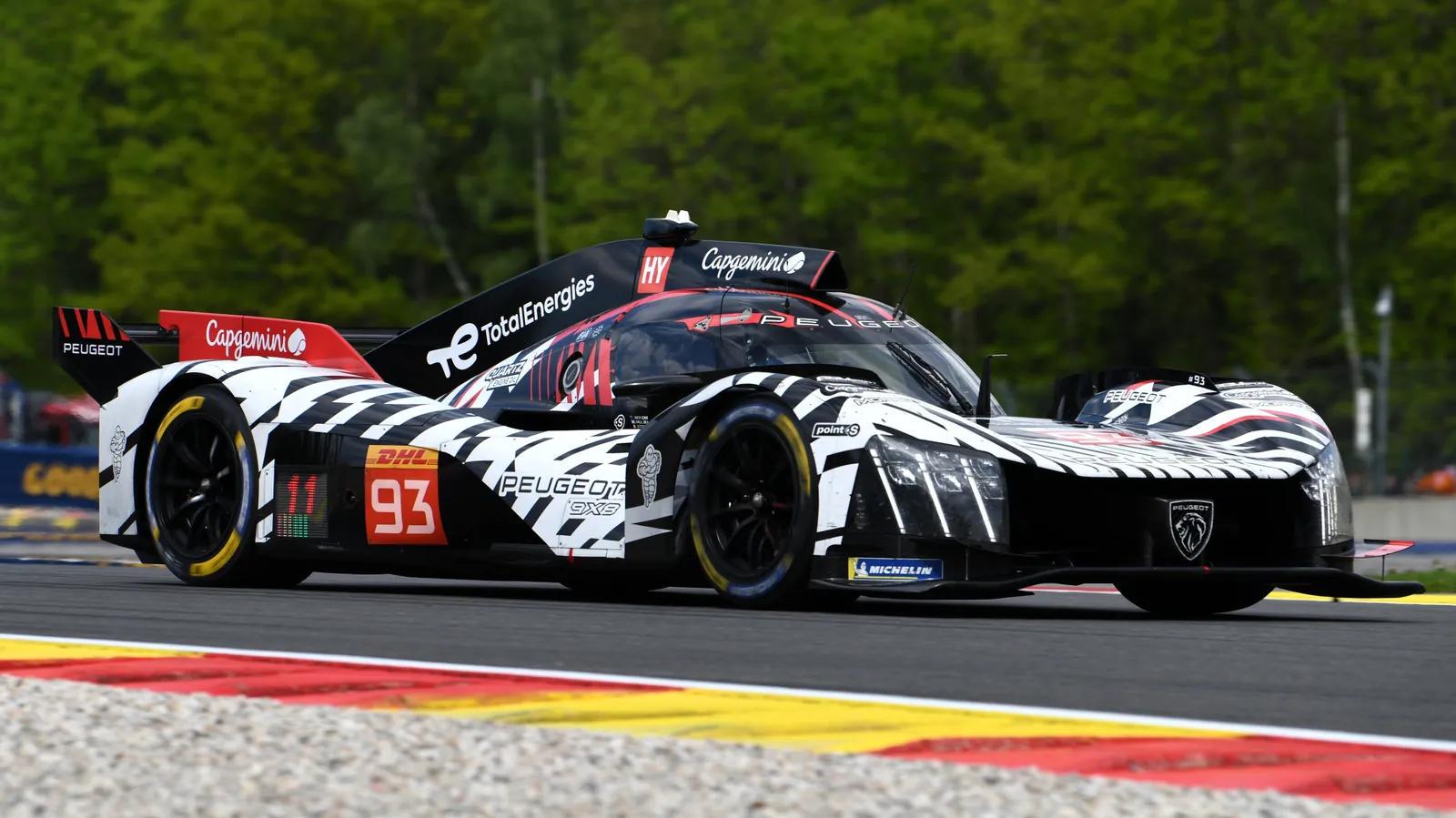
Peugeot's Le Mans programme is dead. Formula E gets one season then it's over. Only NASCAR survives the cull.

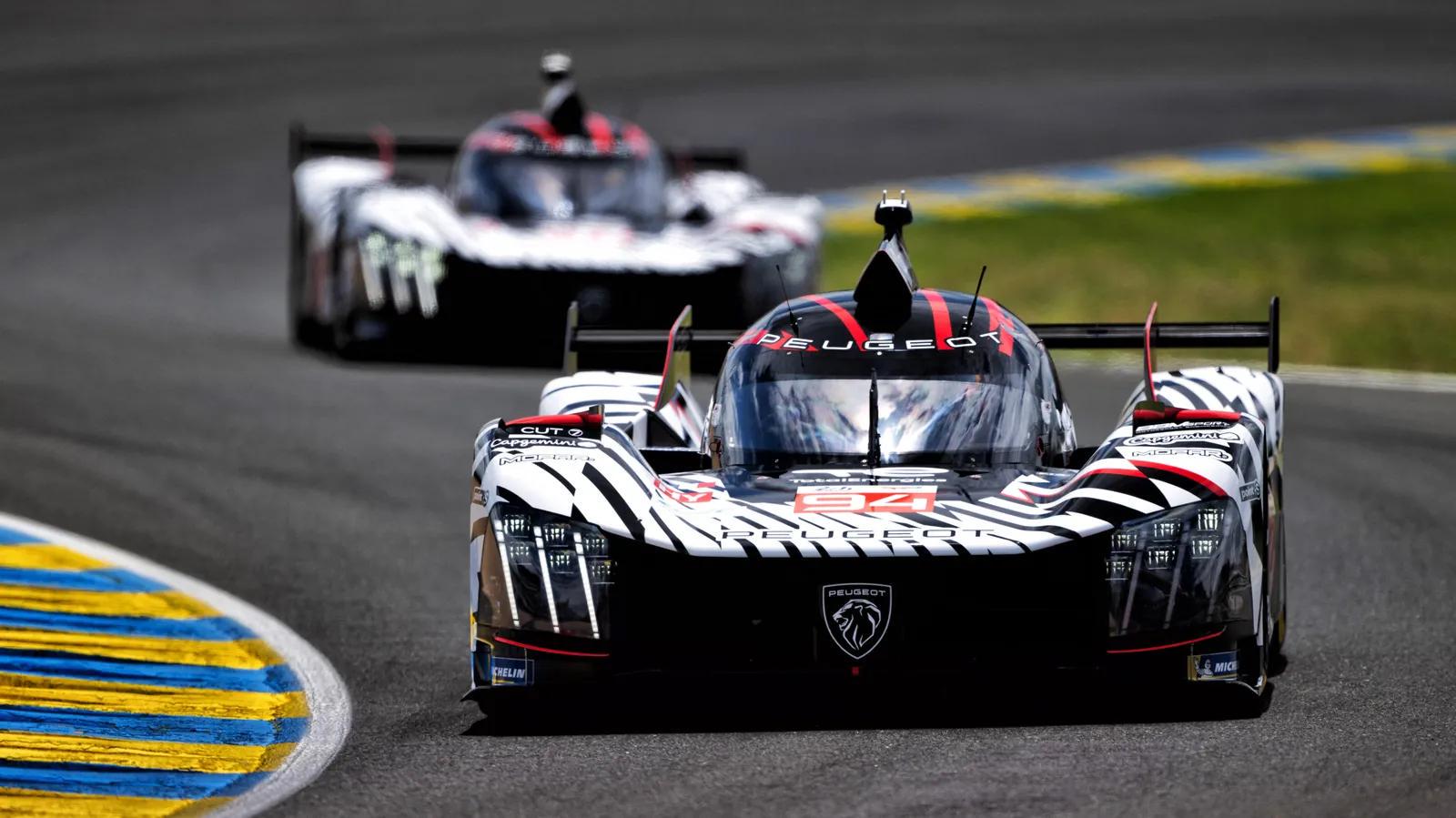
Stellantis confirmed on Monday it's shutting down nearly every factory motorsport programme it runs, including Peugeot's World Endurance Championship effort and both Formula E teams. CEO Antonio Filosa wants $6.6 billion in cost savings by 2028, and racing is apparently where he's starting.

The only thing that survived is NASCAR. Dodge and Ram programmes in North America keep going. Everything else is getting binned. The full scale of the financial damage became clear this week: Stellantis Posts First Annual Loss Since 2021. The Bill: €22 Billion.

Peugeot had an updated 9X8 prototype ready for next year's WEC season. Testing had already started. The car won't race. Five years in LMH, not a single race win, not a single Le Mans podium, and now it's over before the new car gets a chance to prove whether the redesign fixed anything.

With Alpine already gone, there will be no French manufacturer in the top class at the 2027 24 Hours of Le Mans. That's the first time that's happened in decades.

Formula E gets a stay of execution, sort of. Citroën and Opel will contest the upcoming Gen4 season with new 800-horsepower cars they developed together specifically for this debut campaign. Then the programme ends. One season with brand new machinery and that's it.

MotorBuzz covers everything motors | Auctions, motorsport, new launches, market values, odd stories and the occasional argument. Start at the homepage if you're new.

Lancia's WRC2 programme lasted exactly one season. The Ypsilon Rally2 HF Integrale ran its maiden year this year. Stellantis killed it anyway.

The company says it will continue customer racing programmes and redirect resources toward high-performance vehicle development. That's the line you always get when factory programmes get axed. Customer racing means privateer teams can still buy your cars and parts. It also means you're not paying for the engineering, the logistics, the travel, or the salaries.

Peugeot's WEC programme was expensive and unsuccessful, so that one makes a kind of brutal sense. But Formula E teams built entirely new cars for a new ruleset and won't even get to see if the investment pays off. That's the bit that stings.

Stellantis isn't alone in pulling back from motorsport under financial pressure, but the scale here is striking. Almost everything goes except the one market where racing still sells road cars in meaningful numbers. North America gets NASCAR. Everyone else gets customer support and memories.

The 9X8 that never raced stays in the garage. The Gen4 Formula E cars get one season. And Le Mans 2027 runs without a French factory entry for the first time in living memory.

Sources: Stellantis official announcement


r/MotorBuzz • • 2d ago

Pentagon asks Ford and GM to build drone parts because the military has run out of capacity

Post image
13 Upvotes

The Department of Defense is in talks with General Motors and Ford about supplying components for military drones after current manufacturers admitted they cannot keep up with orders.

The Pentagon has approached General Motors and Ford about manufacturing drone parts after admitting that existing suppliers cannot produce enough units to meet Department of Defense orders. The talks, first reported by the Wall Street Journal, involve automakers potentially supplying components to drone manufacturers rather than building complete aircraft themselves.

GM is considering whether to manufacture drone motors. The size in question is closer to what powers a riding lawn mower than anything you would find in a car.

That detail tells you everything about how this is being framed. This is not about retooling a Chevrolet plant to build Reaper drones. It is about whether the automotive supply chain, which exists at a scale military contractors cannot match, can be redirected to produce small electric motors and structural components. The assumption appears to be that if you can make millions of power window motors a year, you can probably make drone motors too.

Defense officials have also met with Ford and Canadian parts giant Magna International, among others. The response from automakers has been what the Journal describes as "mixed," which in diplomatic terms means some are interested and some are not. Another way the government could upend Ford and Magna's business: Trump's 50% Tariff Threat Could Shut Down Half the North American Car Industry

The underlying issue is straightforward. U.S. drone production has not scaled to match military demand. The Ukraine conflict demonstrated what happens when you need thousands of drones rather than dozens, and the Pentagon watched that lesson play out in real time. Now it wants domestic manufacturing capacity that can ramp quickly, and the only industrial base in the United States with that kind of volume capability is automotive.

MotorBuzz covers everything motors | Auctions, motorsport, new launches, market values, odd stories and the occasional argument. Start at the homepage if you're new.

Whether Ford or GM actually commit to this depends on factors that have nothing to do with patriotism. Military contracts come with overhead. They require separate production lines, security clearances, compliance regimes, and long certification processes. They also tend to be lucrative once you are inside the system, but getting there is expensive.

Auto companies are not exactly swimming in spare capacity right now. GM is trying to figure out what to do with several factories that currently build vehicles nobody is buying in the numbers projected. Ford is in the middle of a painful EV reckoning. Retooling part of that capacity for defense work might make sense if the contracts are big enough and the margins are there, but it is not an obvious yes.

The Trump administration has made it clear that hard military power is back as a priority, which means procurement budgets are likely to grow. That makes this more than a one-off ask. If the Pentagon is serious about domestic drone production at scale, it will need to offer terms that make it worth the automakers' time.

Magna is a more natural fit. It already supplies components to dozens of manufacturers and operates on a contract basis. Adding military drone parts to that mix is a smaller leap than it would be for a full-vehicle OEM. Ford and GM, on the other hand, would be doing this because someone asked them to, not because it fits neatly into their existing business model.

The alternative is that U.S. drone production stays where it is, undersupplied and unable to scale, while competitors figure out how to build thousands of units cheaply. The Pentagon clearly thinks that is unacceptable. Whether the automakers agree is another question.

GM has not confirmed it will take the contract. Neither has Ford. But the fact that the meetings are happening at all suggests the Department of Defense is not confident the current system can deliver what it needs.

Sources: Wall Street Journal


r/MotorBuzz • • 2d ago

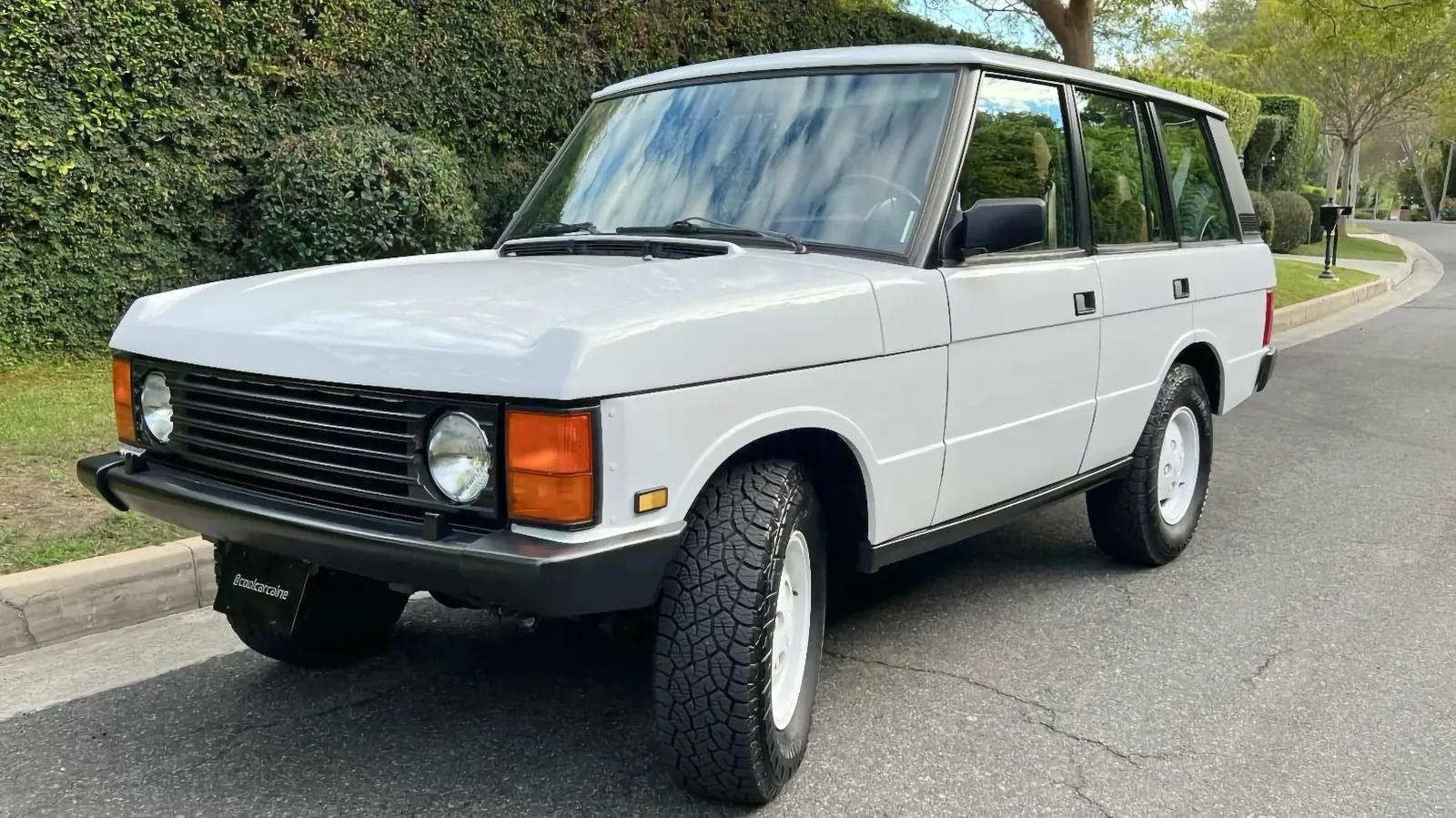
Someone Wants $28,850 for a 1989 Range Rover That Isn't Quite Restored

Post image
3 Upvotes

A white 1989 Range Rover with 83,232 miles and questionable restoration work is asking nearly thirty grand in Los Angeles. The price assumes you won't look too closely at the carpets.

A 1989 Range Rover listed on Craigslist in Los Angeles is asking $28,850. The seller calls it fully restored. The dyed leather and lumpy carpeting suggest otherwise.

Eighty-three thousand miles on the clock. White paint over white three-spoke alloys. All the badges removed except the ones on the wheel centres. The body's been drilled and capped at each corner outside the light clusters, which is exactly the sort of modification that makes you wonder what problem the seller was solving and whether they solved it properly.

Under the bonnet sits the 3.9-litre Lucas fuel-injected V8, the Rover engine that started life as a Buick all-aluminium unit decades earlier. Factory spec claims 178 horsepower and 298 pound-feet of torque, which was adequate in 1989 and feels quaint now. ZF four-speed automatic. Borg Warner two-speed transfer case. The mechanical spec that made the Range Rover competent in the dirt and tolerable on the road, assuming everything still works.

The interior tells a different story than the word "restored" implies. The driver's seat shows crazing in the side bolster where someone's tried to hide it with leather dye. The parking brake boot is torn. The carpeting looks like it was fitted by someone who'd never fitted carpeting before. These aren't deal-breakers on a thirty-five-year-old 4x4, but they are deal-qualifiers when the ask is nearly twenty-nine grand.

MotorBuzz covers everything motors | Auctions, motorsport, new launches, market values, odd stories and the occasional argument. Start at the homepage if you're new.

The Range Rover arrived in North America in 1987, sixteen years after its 1971 debut. Development started in 1957 under the internal code name Road Rover, which tells you how long Land Rover spent figuring out what a luxury off-roader should be. By the time the Eighties examples landed stateside, the concept was proven. The execution remained questionable.

These trucks spent the Nineties and Noughties in the depreciation basement. Mechanically fragile, electrically suspect, and expensive to fix when either system failed. You could pick one up for a few thousand and spend the next decade feeding it parts. Some people did exactly that and loved every minute. Most people bought a Toyota.

Now the market's shifted. Spectacular Range Rover Classics go for forty-three grand or more, roughly half again what this seller wants. Those examples deserve the money. Fully sorted mechanicals, interiors that don't look like someone attacked them with a staple gun and a bucket of dye, paint that wasn't applied in a mate's garage.

This one sits somewhere in the middle. Clean title. Presentable from ten feet. The kind of restoration work that probably cost someone real money but didn't quite get there. Whether twenty-eight and change is fair depends entirely on what you think you're buying. If it's a sorted driver that won't strand you, maybe. If it's a project dressed up as a finished truck, absolutely not.

The Porsche 928 lives in the same valuation purgatory. Once worthless, now climbing, with a wide gap between honest examples and ones tarted up for a quick sale. The difference is the 928 won't leak oil on your driveway while also leaking coolant into the footwell. The Range Rover might do both on the same Tuesday.

$28,850 for 83,232 miles and dyed leather in Los Angeles.

Sources: Craigslist Los Angeles


r/MotorBuzz • • 2d ago

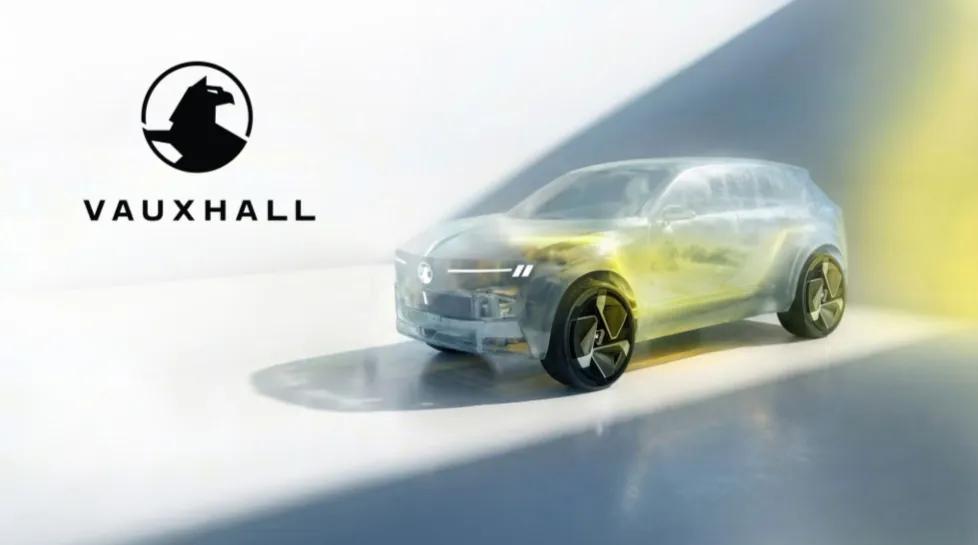
Vauxhall signs Chinese deal to build electric SUV nobody's asked for yet

Post image
1 Upvotes

Leapmotor partnership formalised for 2028 C-segment electric SUV built in Spain using Chinese components and British styling.

Vauxhall has signed a formal cooperation agreement with Chinese carmaker Leapmotor to develop a new electric SUV launching in 2028, with production scheduled for the Zaragoza plant in Spain alongside the Corsa.

The arrangement splits responsibilities in a way that's become familiar in these Sino-European joint ventures. Leapmotor provides the key components ... battery tech, motors, the fundamental platform. Vauxhall handles styling, interior design, chassis tuning, lighting and seating. That's the trade-off: Chinese electrification speed versus European brand identity and engineering nous. More on which manufacturers are expanding while others retreat: Hyundai and Genesis plan 41 new models for Europe while Ford and Vauxhall walk away

Florian Huettl, who runs Vauxhall and Opel, and Leapmotor's global CEO Zhu Jiangming put their names on the agreement last week. The resulting C-segment SUV will slot into Vauxhall's already cluttered SUV range, which currently includes the Mokka, Frontera and Grandland. Quite where it sits against those three, or why Vauxhall needs a fourth electric SUV when most brands are struggling to shift the two they've already got, hasn't been explained yet.

No name. No pricing. No technical specifications beyond the confirmation it'll use Leapmotor components and compete in the C-SUV market, which is code for Qashqai-sized.

The project is part of Stellantis's wider partnership with Leapmotor, itself a strand of the group's FaSTLAne 2030 growth strategy. That strategy, announced earlier this year, is Stellantis's answer to the uncomfortable fact that it's been slower to electrify than VW, slower than Renault, and significantly slower than the Chinese manufacturers now circling European showrooms with cheaper, faster-developed EVs.

MotorBuzz covers everything motors | Auctions, motorsport, new launches, market values, odd stories and the occasional argument. Start at the homepage if you're new.

Leapmotor isn't a household name in the UK yet, but it's gaining ground. The brand already sells the T03 city car and C10 SUV through Stellantis's European distribution network. It's one of several Chinese manufacturers that have worked out how to build electric cars quickly and cheaply while legacy European brands have spent the last five years arguing about software architecture and wondering why their EVs cost £45,000.

Building the new Vauxhall in Zaragoza is a smart move for Stellantis. It keeps production in Europe, which matters for tariffs and politics, and it utilises existing capacity at a plant that's already tooled for small cars. The Corsa is built there now, and while this new SUV will be larger, the operational logic is sound.

What's less clear is whether Vauxhall actually needs another SUV. The Mokka competes in the B-segment. The Frontera is slightly larger and aimed at families on a budget. The Grandland sits above both and costs Tiguan money. This new Leapmotor-based model will land somewhere between the Frontera and Grandland, which suggests either one of those two will be quietly retired by 2028, or Vauxhall is betting that the market for electric SUVs will expand enough to support four overlapping models.

That's optimistic. Electric car sales are growing, but not at the pace the industry forecast three years ago. Margins are thin. Buyers are price-sensitive. And Chinese brands are already undercutting European manufacturers on cost while matching or exceeding them on range and technology.

Vauxhall's approach ... take Chinese components, wrap them in familiar British design language, build them in Spain and sell them as Vauxhalls ... is a pragmatic compromise. It's faster and cheaper than developing everything in-house. Whether it results in a car people actually want to buy is a question that won't be answered until 2028.

The SUV, whatever it's eventually called, will be positioned as a volume seller in the C-segment, which means it'll be priced to compete with the Kia Niro EV, Hyundai Kona Electric, and VW ID.4. That's a crowded and competitive space. Vauxhall will need to get the pricing right, the range right, and the residuals right, or it'll end up as another electric also-ran with heavy discounting and fleet-only sales.

For now, all we know is that it's coming in 2028, it'll be built in Zaragoza, and it'll use Leapmotor's componentry under a Vauxhall-designed body.

Sources: Vauxhall, Leapmotor, Stellantis


r/MotorBuzz • • 2d ago

iCAUR lines up 40 UK dealers to sell its Defender lookalike before anyone's asked if that's legal

Post image
3 Upvotes

Chery's new SUV brand is planning a full UK rollout with parts hubs and product tailored at Millbrook while BYD's near-identical Ti7 sits in a Dutch courtroom.

iCAUR, a Chery subsidiary nobody outside China has heard of, is opening 40 UK dealerships in 2027 to sell the V27, a boxy hybrid SUV that looks almost exactly like a Land Rover Defender. Eight parts super hubs are going in at East Kilbride, Darlington, Huddersfield, Derby, Basingstoke, Exeter, Swansea and Basildon. The whole operation is being run by Mike Ma as managing director, with Andrew Winfield jumping ship from Honda to handle product.

The V27 is being fine-tuned for British buyers at Chery's new R&D site in Millbrook. It's a five-seater hybrid SUV with off-road capability and styling that features an upright stance, chunky wheelarches and proportions bearing more than a passing resemblance to JLR's cash cow. iCAUR is described as a dedicated SUV brand already sold in more than 40 markets, which makes the UK launch feel less pioneering and more like filling in a gap on the map. Another Chery brand is doing the opposite of the industry trend: Lepas wants 90 UK dealers by 2027 while everyone else is closing theirs

The timing is interesting.

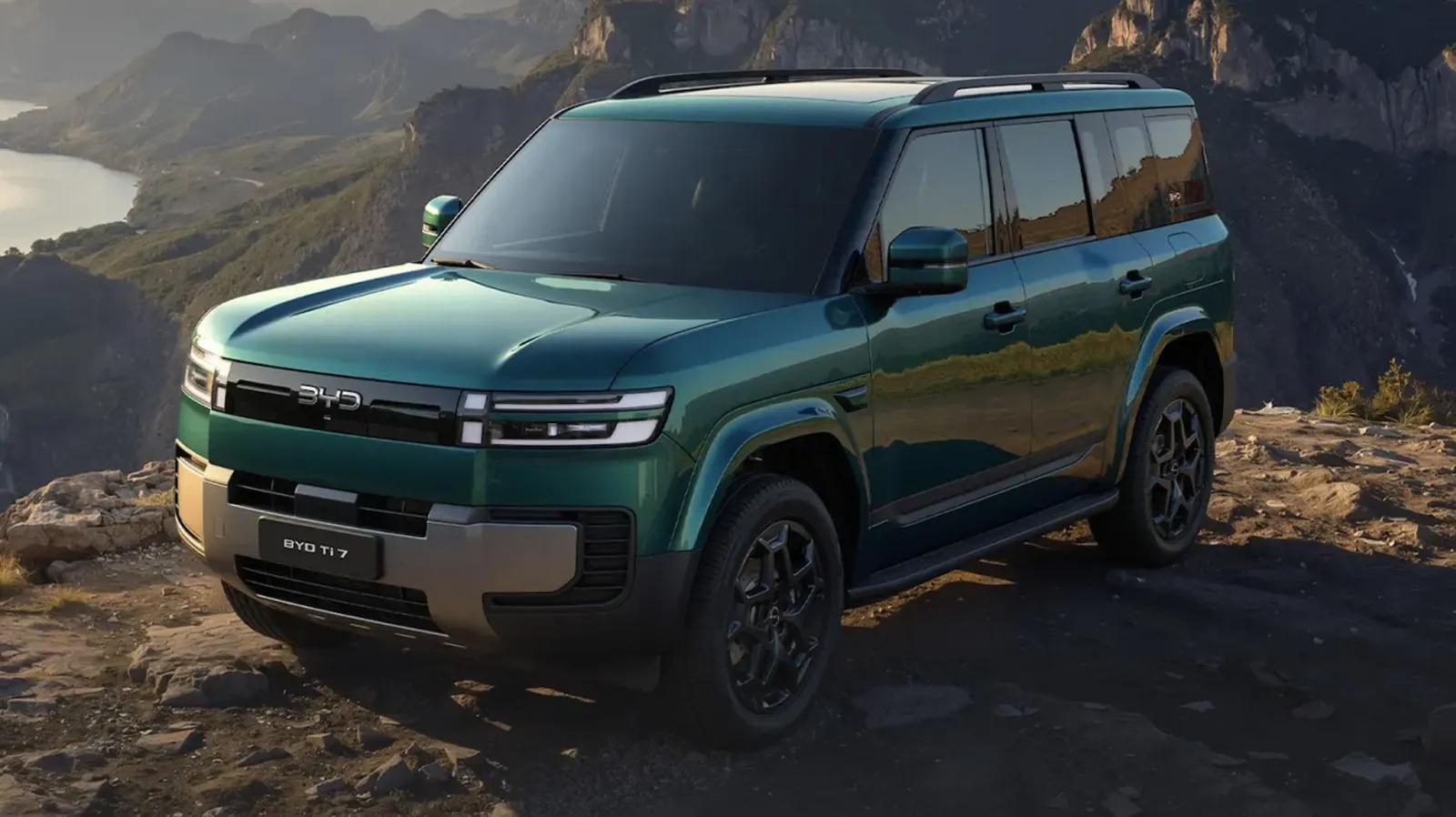
BYD is currently sitting in a Dutch court defending its Ti7 SUV against JLR's claim that it infringes registered EU design rights for the Defender. The court agreed and issued a temporary injunction preventing sale across the EU. BYD disputes the ruling and intends to appeal. The injunction doesn't affect the Ti7's planned UK launch, which creates the odd situation where a vehicle banned in Rotterdam can still be sold in Bristol. BYD is already fighting JLR over a different Defender lookalike: A Dutch judge says BYD's Ti7 is too much Defender. BYD says it drew it itself

MotorBuzz covers everything motors | Auctions, motorsport, new launches, market values, odd stories and the occasional argument. Start at the homepage if you're new.

iCAUR is part of Chery's expanding UK portfolio, sitting alongside Omoda, Jaecoo and Lepas. That's four brands from one manufacturer competing for dealer space and customer attention in a market that's already crowded with Chinese entrants. The logic appears to be volume through segmentation, throwing enough models at the wall to see what sticks. It worked in China. Whether it works here depends on whether British buyers want another SUV brand they've never heard of.

The dealership network is substantial. Forty outlets is not a tentative toe in the water. It's a full commitment requiring staff training, parts inventory, service capacity and warranty support. The eight super hubs suggest Chery is at least thinking about aftersales, which is where previous Chinese market entries have struggled. Parts availability has killed more ambitious UK launches than poor reviews ever did.

Winfield's move from Honda to iCAUR is worth noting. Product managers don't jump to unknown brands unless the money is very good or the opportunity is genuine. Honda has been bleeding talent for years as its UK operation shrinks and electrification stumbles. iCAUR gets someone who understands how British buyers spec cars and what they'll tolerate in terms of tech integration and ride quality.

The V27's design is the elephant in the room that nobody at iCAUR appears worried about. The Defender's shape is not an accident of engineering. It's a carefully managed asset that JLR has defended aggressively in multiple markets. BYD discovered this the expensive way. iCAUR might be gambling that JLR won't bother with a smaller player, or that by the time any legal action lands, the V27 will have established itself enough to justify a redesign.

Millbrook's involvement lends some credibility. Proving grounds don't take on projects unless there's serious engineering work happening. If the V27 is being genuinely tuned for British roads rather than just having its software switched to English, that's more effort than some Chinese brands have bothered with. Whether it translates into something people actually want to drive is another question entirely.

The hybrid powertrain makes sense for the UK market in 2027. Pure petrol is declining, full EV still makes fleet buyers nervous, and hybrids occupy the comfortable middle ground where range anxiety doesn't exist. If iCAUR has built a competent hybrid system with decent fuel economy and usable electric range, the V27 might find buyers who like the Defender's look but not its price.

Chery's broader strategy appears to be carpet-bombing the UK with SUVs until something catches. Omoda and Jaecoo are already here. Lepas is coming. iCAUR makes four. At some point the brands start cannibalising each other unless the differentiation is clear and the marketing is disciplined. Chinese manufacturers have struggled with both in Europe.

The 2027 launch date gives iCAUR time to watch how the BYD case plays out and adjust if necessary. It also gives JLR time to notice and decide whether it's worth another legal fight. The V27 is not identical to the Defender, but it's close enough that someone in Gaydon is probably already drafting a letter.

The parts super hubs in eight regional locations is the most encouraging sign that this isn't just a quick flip. Parts distribution is expensive and unglamorous, the kind of infrastructure you only build if you're planning to stay. Whether iCAUR lasts long enough to use them depends on how quickly the first buyers discover what ownership actually costs and whether the dealer network can handle the inevitable teething problems that come with any new brand.

The V27 will sell initially on price and looks. If it's significantly cheaper than a Defender and reliable enough not to embarrass its buyers, it might carve out a niche. If it's expensive, unreliable, or tied up in a design rights case, the 40 dealers will be selling something else by 2029.

Sources: Industry reports on iCAUR UK launch plans, JLR vs BYD legal proceedings, Chery subsidiary brand structure


r/MotorBuzz • • 2d ago

30,000 used Chinese cars now advertised in the UK and dealers are starting to notice

Post image
0 Upvotes

Stock from Chinese brands has jumped 10% in a single month. MG alone has 14,000 cars listed. Near-new values are already slipping.

More than 30,000 used Chinese cars are currently advertised for sale in the UK, according to data from Cazana. That figure only includes vehicles registered from 2022 onwards, sold through retail channels. It does not count wholesale or trade stock. The number rose 10% in October alone.

MG accounts for around 14,000 of those listings. The brand registered over 85,000 new cars in 2025 and is on course to exceed that this year. When you sell that many cars that quickly, a lot of them end up back on forecourts within a couple of years. Some of that is natural churn. Some of it is buyers who thought they wanted an electric SUV discovering they did not.

BYD's trajectory is even sharper. The brand sold just 1,600 cars in the UK in 2023. By 2025, that figure had hit 51,000. There are now close to 4,000 used BYDs listed from 22-plates onwards. That is a lot of nearly new metal competing with showroom cars that come with manufacturer finance and a fresh warranty. We looked at whether the takeover language is justified or panic: China On Track for 'Full-Scale Takeover' of Car Industry

Omoda and Jaecoo launched in the UK in 2024. By the end of October this year, they had recorded 99,494 combined new registrations, more than double the 48,000 they managed in 2025. There are now approximately 1,000 used Omodas and 1,800 Jaecoos advertised. For brands that did not exist here three years ago, that is a rapid accumulation of used stock. One dealer's forecourt struggle shows how rapid that accumulation has been: Chinese brand dealership in Watford blocks pavements with cars as forecourt runs out of space

Chery has registered around 37,000 new cars this year. Around 1,600 of them are already back on the market. Geely has close to 700 used vehicles listed. The pattern holds across the sector. Chinese brands are selling cars faster than the used market can absorb them without consequence.

MotorBuzz covers everything motors | Auctions, motorsport, new launches, market values, odd stories and the occasional argument. Start at the homepage if you're new.

Cazana analysed retail advertisements across ten brands: BYD, Changan, Chery, Geely, GWM, Jaecoo, MG, Omoda, Skywell and Xpeng. The focus was on vehicles registered on 22-plates or newer. The data shows volumes rising every month so far in 2026.

Retail values of 25-plate vehicles fell by approximately 0.5% during the first three weeks of November across MG, BYD, Changan, Chery and Jaecoo. That is not a collapse, but it is a signal. Around 6,000 MGs, 3,500 BYDs and 1,700 Jaecoos are advertised on 25-plates or newer. These are cars that left the showroom within the last eighteen months.

The problem for dealers is straightforward. A nearly new Chinese car competes directly with a brand new one, and the new one often wins because the finance is better and the warranty is longer. That squeezes margins on used stock. If you are sitting on a 24-plate BYD Seal with 8,000 miles, you are not competing with other used Seals. You are competing with a showroom Seal on a PCP deal that costs less per month.

MG returned to the UK market in 2007. It took years to build volume. The current wave of Chinese brands has collapsed that timeline. They have gone from zero to tens of thousands of registrations in two or three years. The used market has not caught up. It may not catch up at all if the new car volume keeps rising at this rate.

The 0.5% drop in November is mild. It could stabilise. Or it could be the start of a longer correction as the volume of nearly new Chinese stock continues to rise and buyers realise they can wait a few months and save several thousand pounds.

Sources: Cazana, UK new car registration data


r/MotorBuzz • • 2d ago

Used electric cars are selling in 24 days while dealers fight YouTube conspiracy theories about range

Post image
7 Upvotes

EVs are flying off forecourts faster than petrol or diesel, but customers are arriving convinced uphill driving will kill 80 miles of range in minutes.

Used electric cars sold in an average of 24 days in November. Petrol models took 31 days. Diesels took 36. That's according to Autotrader, and it represents a market reality that sits badly with the customer walking into James Baggott's dealership convinced a Nissan Leaf will lose 69 miles of range the moment it encounters an incline.

Baggott runs an independent dealership in Gosport, Hampshire. He's also the founder of Car Dealer magazine, which means he sees the used car market from both sides. EVs have become some of the fastest-selling stock on his forecourt. They also attract the most bewildering objections.

One customer was about to buy a Nissan Leaf when he watched a YouTube video claiming the car's range would drop from 80 miles to 11 miles when driving uphill. He nearly cancelled the purchase. The video existed. The physics did not.

Another customer, a woman in her late seventies, was looking for a small automatic around £7,000. Baggott suggested a Nissan Leaf. It fit the brief precisely. Her son talked her out of it. No specific reason given, just a general sense that electric cars were not for people like his mother. The car he vetoed had covered nearly 90,000 miles and still had 87 per cent battery health. It would have outlasted anything else in that price range by a decade.

The gap between what customers believe about EVs and what the cars actually do has become a problem with commercial consequences. Not for the market, which is moving used electric cars faster than anything else. For the customers, who are walking away from cheaper running costs and better reliability because someone on the internet told them the battery would catch fire in a Tesco car park.

MotorBuzz covers everything motors | Auctions, motorsport, new launches, market values, odd stories and the occasional argument. Start at the homepage if you're new.

Then there's the Peugeot e-208 owner who spent several years unaware his car could use public rapid chargers. He believed a journey from Leeds to Gosport would take 36 hours because he thought the car could only be charged at home. He had never removed the lower plastic cover on the charging port to reveal the CCS rapid-charging connection pins underneath. He'd been driving a car capable of adding 80 miles of range in twenty minutes and treating it like a milk float.

This is not a fringe problem. Craig Ford, sales and marketing director at MFL Direct, reports a massive increase in the number of independent dealers buying their first EVs. The cars are selling. Electric vehicles on MFL Direct's platform are achieving an average Autotrader Retail Rating of 80, which is strong. But the conversations happening on forecourts suggest a information environment so polluted with nonsense that customers are arriving pre-convinced their new car will strand them on the M6 or explode in their driveway.

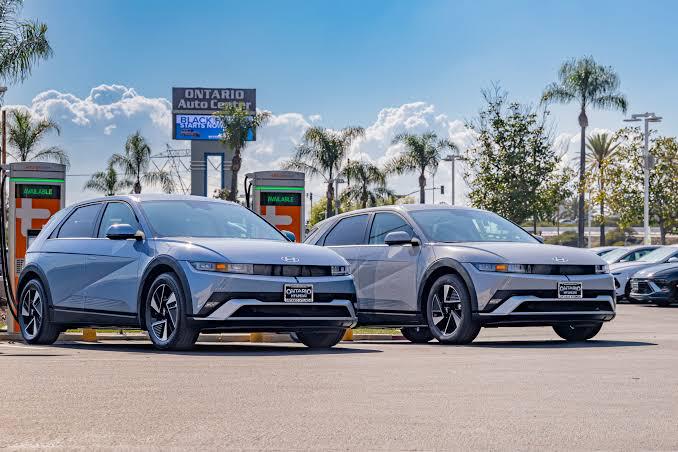
Electric and hybrid cars now account for nine of Britain's ten fastest-selling used models. The Hyundai Kona Electric tops the rankings at 17 days to sell. That's a week faster than the average EV, which is itself a week faster than petrol. The market has decided. A chunk of the customer base has not.

Some of this is generational caution. Some of it is the residue of early EV limitations that no longer apply. Some of it is active misinformation, often financially motivated, sometimes just algorithmically amplified confusion. The result is the same: people talking themselves out of a better deal because they've been told something that isn't true by someone who sounds confident.

The BVRLA now offers free EV training for dealers. That's helpful for the transaction itself, less so for the YouTube video the customer watched the night before. Baggott's customer with the solar panels, the one making £2,500 a year selling electricity back to the grid, bought the Leaf. She understood the numbers. She also understood that a car you can fuel at home for less than a tenner a week is not a risk, it's a hedge against everything else getting more expensive.

The woman in her seventies did not buy the car. Her son's vague unease outweighed the dealer's specific advice and the car's documented reliability. She's still looking for a small automatic around £7,000, except now the good ones are gone and what's left costs more to run and will need more repairs. The Nissan Leaf sold anyway. It took 24 days.

Sources: Autotrader, Car Dealer Magazine, MFL Direct, BVRLA


r/MotorBuzz • • 2d ago

Ferrari's Vegas Meltdown: Can You Pick a Number One? 1/2

1 Upvotes

r/MotorBuzz • • 2d ago

Tuning Tuesday: Gears, Grip and Garage Legends

1 Upvotes

Play the Pit Stop quiz on Reddit!


r/MotorBuzz • • 3d ago

Motorsports Monday: Wheel to Wheel and Wild Finishes

1 Upvotes

Play the Pit Stop quiz on Reddit!


r/MotorBuzz • • 3d ago

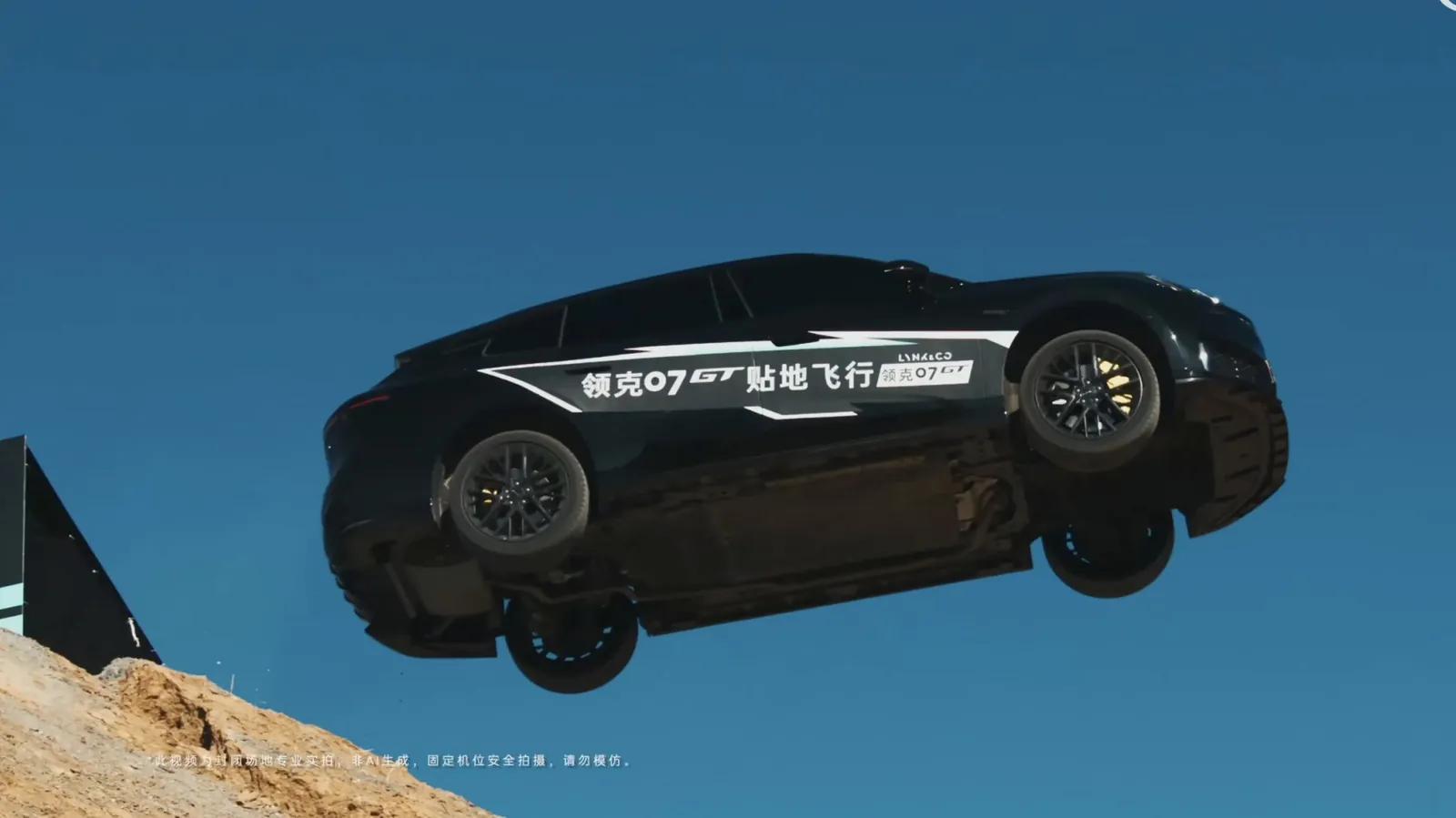
Geely Threw a Lynk & Co 07 GT Off a Cliff. That Is Not a Crash Test

Post image
2 Upvotes

A 530 hp plug-in wagon survived a 43 mph launch into a Chinese hillside, and the footage is magnificent. As evidence of safety, it is worth roughly nothing.

Geely drove a Lynk & Co 07 GT off a cliff at 43 mph (70 kph) in Zhangjiakou, China, watched it fly, land nose-first in the dirt, and tumble down the slope, then opened all four doors to show everything still worked.

It is tremendous video. I will say that first, because what follows is going to sound grumpy.

The car left a ramp, soared, hit the ground front end first, bounced, flipped several times and finished on its wheels. The side windows and windscreen appear to have stayed in one piece. The glass roof cracked but did not cave in. Geely says the side-curtain airbags held pressure for more than six seconds, which is the sort of detail that sounds precise and is mostly useful for a press release.

Six seconds is genuinely a relevant number, mind. Curtain bags that deflate early in a multiple roll are a real problem, and if these stayed inflated through a sequence like that, good. But it is a figure supplied by the company that staged the event, measured in conditions nobody else has been able to check, on a single car.

One car. One drop. One slope.

That is the whole problem with the stunt as a safety argument. A proper crash test is boring by design. Same speed, same barrier, same dummies, same angle, run again and again so one manufacturer's result can sit next to another's. The point is repeatability. A cliff in Zhangjiakou gives you the opposite: a unique tumble that nobody could reproduce even if they wanted to, including Geely. Had the car clipped a different rock on the second bounce, we would be discussing a different film.

And the 07 GT has not been independently crash-tested. That is the sentence that should sit under every share of this clip.

None of which means the car is flimsy. Surviving that sequence with the doors working and the glass mostly intact says something about the structure, and I would rather the roof had cracked and held than done the reverse. But what it says is narrow. It tells you the bodyshell coped with one very violent, very odd event. It does not tell you how the car behaves in an offset frontal hit at motorway speeds, or what a side impact from a pickup does to the cabin, which is how people actually get hurt. Nobody ordinarily drives off a cliff. Plenty of people get T-boned at a junction.

There is also what a camera cannot show. Dummies would have told us something about forces on occupants, and a tumble like this is brutal on the human body whatever the roof does. Open doors are lovely theatre. They are not a head injury criterion.

The car itself deserves a better advert than a drop. The 07 GT is the first wagon from Lynk & Co, a low-slung estate version of the regular 07, and it has just made its European debut in Paris ahead of a planned launch on the continent. Wagons are a hard sell almost everywhere, so a stylish one with a plug is a bold move, and bold moves in this market usually need noise around them.

Power comes from the brand's EM-P hybrid system: a turbocharged 1.5 litre four, two electric motors and a 28.3 kWh battery pack. Combined output is 530 hp and 564 lb-ft of torque. That is a lot of estate car. It is also a lot of battery to be flinging down a hillside, and the footage alone cannot say what the pack thought about the experience afterwards.

Got a motors question? Ask Mike anything | Buying advice, fault diagnosis, what something's worth. He's the bloke that's read everything.

The wider context is a Chinese industry that has worked out that spectacle travels faster than a spec sheet. BYD took the production car speed record in early November with the nearly 3,000 hp U9 Xtreme, hitting 312.66 mph (503.17 kph). Now a rival wagon goes airborne. Each stunt tries to top the last, and the audience for each is a potential European buyer who has never heard of the badge.

Fair enough as marketing. Lynk & Co is unfamiliar to most European drivers, and a clip that gets millions of views does more than another press trip to a car park in Lisbon. I would just like the dramatic stuff to arrive after the dull stuff, not instead of it. Publish the independent results, then fire the car off the cliff for fun.

Because the order matters to the buyer. A family choosing between this and a Volvo V60 or a Skoda Superb Estate wants to know how each performed in the same test on the same day. A cliff drop gives them a story to repeat at dinner. It gives them nothing to compare.

European pricing has not been announced either, so there is no way yet to judge whether that 530 hp is a bargain or a boast. Geely has had the attention for the stunt. Pricing and third party crash data are the bits that will decide whether anyone actually buys one.

For the record, the wreckage after the drop was a car sitting upright on its wheels in the dirt, with all four doors open.

Sources: Car Scoops report on the Lynk & Co 07 GT cliff drop; Inside China Auto (@InsideChinaAuto) post on X.


r/MotorBuzz • • 3d ago

Hyundai's 200 car N Vision 74 is dead, and the reason is the oldest one there is

Post image
93 Upvotes

Hyundai's design chief says the production N Vision 74 is off the table, which leaves Genesis to carry the group's supercar ambitions.

Hyundai was believed to be capping N Vision 74 production at 200 cars, and the number is now zero. Design Center boss Simon Loasby has told The Drive at the LA Auto Show that the production version is off the table, which is an awkward thing to admit about a car his team had already taken as far as a production clay model and finished exterior and interior work.

The concept appeared in 2022 as a homage to the 1974 Pony Coupe, the Giorgetto Giugiaro design that gave Hyundai its first real claim to being interesting. It had a hybrid hydrogen powertrain, which was a strange and slightly wonderful thing to put in a retro wedge. It looked like nothing else on sale and nothing else in development.

Then it got a second life. At the 2024 Investor Day conference, Hyundai let slip that it was going to build the thing, as a high performance EV. No launch event, no hashtag, just a line in a presentation. The hydrogen had quietly gone, but the promise of a production Hyundai halo car had arrived, and enthusiasts took it at face value.

Loasby's explanation is the business case. Judged purely on its own volumes and its own impact, he said, the car had no chance. Two hundred units is not a production run, it is a party favour, and for a company the size of Hyundai the engineering bill for a bespoke two door supercar does not get smaller just because the build list does.

There is a second half to his answer, and it is the only bit that stops this being a funeral. If the car were judged on what it does for the brand overall, he said, it would have a better chance. He was careful to add that nothing has been decided. Read that how you like. It is either a door left ajar or the polite phrasing of a door being closed.

I lean towards the second.

Got a motors question? Ask Mike anything | Buying advice, fault diagnosis, what something's worth. He's the bloke that's read everything.

The arithmetic was always unkind. To justify itself, a car like this would have to be priced at proper supercar money, and that raises the question Hyundai has never had to answer properly: how many people hand over that kind of cash for an electric Hyundai? The Ioniq 5 N is a marvellous thing and it earned its reputation at a price normal enthusiasts could contemplate. A halo is a different sort of ask. Buyers at that level are paying for heritage, and the badge on the nose is doing most of the talking.

Which is where Genesis comes in. The Magma GT concept, described as nearly production ready, runs a twin turbocharged V8 with up to 800 horsepower. That is not a nostalgic EV coupe with a story about 1974. It is a direct attempt at the Ferrari 296 GTB and McLaren 750S, and it has the advantage of sitting under a brand that was built to be expensive from day one.

It is also, quite plainly, the better home for the money. Genesis does not have to persuade anyone that a premium price is reasonable. Hyundai does, and has been trying for years, with the N cars doing much of the heavy lifting. Putting a six figure halo on the Hyundai side would have been a brave bet. Putting it on Genesis is simply sensible.

None of which makes the loss any less real. The N Vision 74 was the one concept in the group's recent history that people actually wanted to see on the road, not on a turntable. It had a story, a designer's name attached to its ancestor, and a shape that did not apologise. Cars with that sort of personality are rarely cancelled on merit. They are cancelled on spreadsheets, which is what happened here.

CarScoops, which broke the story, says it approached Hyundai for comment and has not reported a reply. Loasby's own words are probably all the confirmation that is going to arrive.

What survives is a few borrowed details on the new Hyundai Elantra.

Sources: CarScoops; The Drive (interview with Simon Loasby at the LA Auto Show); Hyundai Motor Group 2024 Investor Day conference.


r/MotorBuzz • • 3d ago

Stellantis wants €6 billion back, and the racing budget is first in the queue

Post image
4 Upvotes

A €300 million a year racing bill, 300 staff and a Lancia team that has just won a championship. Stellantis is reportedly about to pull the plug on all of it.

Stellantis spends around €300 million a year on racing, and French reports say it is about to stop. Le Figaro claims the decision will be taken this week at a meeting between the Works Council and representatives of Stellantis Motorsport, with the World Endurance Championship, Formula E and World Rally Championship programmes all on the list. Nothing is confirmed. Nobody at Stellantis has put their name to an announcement, and that silence is doing a lot of work.

The backdrop is ugly. Antonio Filosa, the chief executive, has set a target of saving €6 billion by 2028, and Stellantis lost €311 million in Europe across July, August and September. Set against that, the racing bill is roughly a twentieth of the annual ambition. Not the biggest line on the spreadsheet, but the easiest one to explain to a board. Cost-cutting is also reshaping the brand line-up, and one promised revival has quietly disappeared: Stellantis quietly kills the Lancia Delta comeback it promised for 2028

It is also the one that costs the most jobs per euro saved in goodwill. Stellantis Motorsport employs about 300 people across the three series.

Peugeot's position is the least defensible, and I say that as someone who rates the 9X8. The Le Mans Hypercar is one of the strangest and most inventive prototypes on the grid, a car that dispensed with a conventional rear wing and then spent several seasons learning why everyone else had one. It has also reportedly yet to win a WEC race. You can admire the engineering and still understand why a finance director looking at an eight figure annual spend for a podium here and there is reaching for the red pen.

Citroen in Formula E is a similar story with a different flavour. The series was sold to manufacturers as a showroom for electrification, and the showroom has been rather quiet.

Then there is Lancia, which complicates the tidy version of this story.

Lancia came back to rallying this year with the Ypsilon, running in WRC2, and the results were not a token gesture. It won Rally Croatia, reported as the marque's first WRC level victory in more than 30 years, then added Rally Islas Canarias and Rally Chile, and took the team championship. For a brand that Stellantis has quietly relegated to specialty status, to be managed by Fiat, that is a remarkable amount of return from a small outlay. Lancia's name is worth more in a rally stage than in most of its current marketing.

Which is the awkward bit. The new strategy puts 70% of future brand and product investment into Jeep, Ram, Peugeot, Fiat and Pro One, the commercial vehicle unit, the brands Stellantis believes have the highest potential for profitability. Chrysler, Dodge, Citroen, Opel and Alfa Romeo stay. DS and Lancia go under the Citroen and Fiat umbrellas. A racing programme at a brand being tidied into a corner is a hard thing to defend in a budget meeting, however many trophies it collects.

Got a motors question? Ask Mike anything | Buying advice, fault diagnosis, what something's worth. He's the bloke that's read everything.

The product plan behind it is enormous. More than 60 new vehicles and 50 refreshed models by 2030. Filosa clearly believes the money is better spent on metal in showrooms than on mechanics in a paddock, and he may be right about the arithmetic. Corporate racing programmes have always needed to justify themselves through sales, and that case has rarely been made convincingly. Ask most marketing departments what a Le Mans entry did for hatchback registrations and you get a long pause.

But the timing is hard to ignore. Dodge has just announced its return to NASCAR next year after 14 years away. Same group, same financial year, opposite instincts. Racing in America is apparently still a marketing tool. In Europe it has become a cost centre.

That split tells you where the group thinks its customers are, and which of them it expects to be watching. Jeep and Ram buyers care about American motorsport. A Peugeot 9X8 on the Mulsanne straight is mostly watched by people who already own a Peugeot, or by nobody at all.

The reported scale of the retreat is what stings. Le Figaro's reporting, as relayed by the motoring press, suggests Stellantis could leave motorsport in Europe altogether. Not a trim of the budget, not a pause on the weakest programme, but all of it. If that happens, a company that owns Peugeot, Citroen, Lancia, Alfa Romeo, Opel and DS, some of the richest racing heritage in the industry, will be absent from every top level series on the continent.

Staff at Stellantis Motorsport will know more by the end of the week than the rest of us. Whether anyone tells Lancia's rally team before or after it lifts the next trophy is another matter.

Opel, meanwhile, is still scheduled to join the Formula E grid in January.

Sources: Carscoops, reporting Le Figaro; Stellantis corporate strategy statements; PistonHeads reporting.


r/MotorBuzz • • 3d ago

A Dutch judge says BYD's Ti7 is too much Defender. BYD says it drew it itself

Post image
35 Upvotes

A Hague court has blocked the Ti7 from the EU market on JLR's complaint, though BYD never had firm plans to sell it there. The real consequences are quieter and arguably bigger.

BYD's Ti7 seven-seater has been on sale in China since last year, and a preliminary relief judge in The Hague has now ruled that it infringes Jaguar Land Rover's registered EU design for the Defender. The Ti7 is barred from sale across the EU.

The wording was blunt. "The characteristic and distinctive elements of the design are reflected in the BYD Ti7," the court said, according to Reuters.

Read the order's effective date and the whole thing looks faintly theatrical. The injunction takes effect a week after the ruling, a gap the court allowed because BYD, in Reuters' account, "currently has no concrete plans to place the Ti7 on the market in the EU." You can win an injunction against a car nobody is currently trying to import. JLR did.

Which is why the interesting part sits elsewhere. Until the underlying intellectual property case is settled, BYD cannot build the Ti7 at its new Hungarian factory either. That plant is due to start mass production of other models next year, and the Ti7 was not among them, so nothing is being derailed today. But a judge has now fenced off a corner of BYD's European manufacturing plans before the first car has rolled out, and that is a useful thing for a rival to have.

The shape of the case matters too. JLR went to court after BYD announced on its UK website that the Ti7 could be ordered, with customer deliveries starting in January 2027. The Dutch court has no jurisdiction over BYD's UK affiliate, so the British leg of that plan is untouched. Anyone expecting this ruling to stop a Ti7 appearing on a Surrey driveway should keep waiting.

Now the cars themselves. The Ti7 is not a one to one copy, and that is the uncomfortable bit for anyone who wants this to be simple. What it shares with the Defender is a boxy, flat-roof silhouette, upright proportions, a side-hinged tailgate, squared-off wheel arches, and a solid body-coloured panel behind the rear passenger door. That last one is the tell. It is a polarising feature on the Defender, a styling decision some owners still grumble about, and there is no packaging reason to repeat it on a different car unless you want people to recognise the reference.

Any one of those features is generic. Square wheel arches did not start in Solihull. Together, in this arrangement, a judge thought they added up to the same overall impression on an informed user, which is the test EU design law leans on. The ruling does not set out a general rule for where homage ends and copying begins, and summary proceedings were never going to.

Got a motors question? Ask Mike anything | Buying advice, fault diagnosis, what something's worth. He's the bloke that's read everything.

Here is what makes it rare. Large manufacturers almost never take each other to court over design rights in Europe, and an early ruling in a live case is rarer still. Legacy brands have complained about Chinese rivals borrowing their looks for years. Reuters notes that very little of it has been proven in a courtroom.

The closest precedent is old. In 2005, General Motors and Chery settled over the Chery QQ, which GM said was a copy of its Chevrolet Spark. A settlement is not a verdict, and twenty years of Chinese manufacturers growing from copyists into global exporters has not exactly been slowed by it. A court actually writing down that a design crossed the line is a different instrument entirely.

JLR's statement was suitably short: "We protect our intellectual property and take legal action when necessary." Fair enough. It is also a company with a very valuable, very recognisable shape, and a retro-modern design that sells at a premium is worth defending the moment someone starts selling a cheaper reading of it.

BYD, for its part, "strongly disagrees" and will appeal. It told the Wall Street Journal the Ti7 is "the result of BYD's own independent design work and infringes none of JLR's rights," and promised to "pursue every legal avenue to demonstrate that this decision is incorrect." That is a company with a large legal budget and a stake in making sure this does not become a template. If a boxy SUV with a side-hinged tailgate can be fenced off in the EU, a lot of drawing boards in Shenzhen just got a new checklist.

The appeal may well go BYD's way. Preliminary rulings get softened. But the Defender-shaped hole in BYD's European plans is there now, and the company has to argue its way out of it rather than simply launch.

BYD's UK website said the first customer deliveries would start in January 2027.

Sources: Reuters (court ruling details and quotes); Wall Street Journal (BYD statement); Jalopnik


r/MotorBuzz • • 3d ago

Four carmakers are suing New Jersey over a $375 million a year recall repair bill

Post image
30 Upvotes

Ford, Honda, Stellantis and Volkswagen say a New Jersey law hands dealers a blank cheque for recall and warranty work. The dealers will have a different view of who is being extortionate.

Ford, Honda, Stellantis and Volkswagen say New Jersey's new recall repair law will move more than $375 million a year from their accounts to franchised dealers, and they have filed a complaint in Trenton to stop it. That is the automakers' number, not the state's, and it is worth remembering who is doing the counting.

The law is the New Jersey Motor Vehicle Open Recall Notice and Fair Compensation Act. Former Governor Phil Murphy signed it in September 2025 and it took effect on April 1. The name is doing a lot of work. The first half sounds like consumer protection. The second half is where the money is.

The complaint, as reported by the Detroit Free Press, calls the law a "blank check" for dealers to set prices on warranty, recall and other repair work. It says the act stops the manufacturers avoiding "extortionate" results when they try to recover costs. Then comes the line the legal team clearly enjoyed writing: "In short, the act rewards dealers for charging their customers more."

Extortionate is a big word from companies that have spent a century dictating terms to the people who sell their cars.

That doesn't make them wrong about the mechanics, though, and some of the mechanics are hard to defend. Take the labour multiplier. The automakers say it lets a dealer bill for substantially more labour time than a technician actually works, calculated from samples of repair orders. If that is accurate, you are paying for hours that do not exist. The complaint says each manufacturer has received dozens of bills since April 1 demanding payment "for hours that no technician works", and that those bills exceed what comparable dealers charge and what retail customers pay.

Read that last part again. Higher than a retail customer pays. A recall repair is a job the manufacturer has to fund because it built something wrong, and the franchise system has just been told the invoice can be bigger than the one handed to a member of the public walking in off the street.

Parts are the second grievance. The automakers object to having to pay marked-up prices on parts the dealer received at a discount, or in some cases for free. They also object to a provision that stops them offering cheaper parts even when supply, demand or other conditions would justify the cut. A manufacturer that finds a way to make a replacement component for less is, under this reading, not allowed to pass that on.

Then there is the windfall argument. The carmakers say dealers get the extra money with no obligation to spend it on customer service or staff pay. It is a fair point, and also a slightly rich one, because no law has ever required a manufacturer to spend its savings on customers either.

Got a motors question? Ask Mike anything | Buying advice, fault diagnosis, what something's worth. He's the bloke that's read everything.

The legal case is a three-way pile of arguments. The automakers say the act violates the Commerce Clause and the Takings Clause of the US Constitution, that federal recall law preempts it, and that it breaches New Jersey's own constitution. Throwing everything at the wall is standard practice. Preemption is the one to watch, because recalls are a federal regime and a state telling manufacturers how to pay for them is exactly the sort of overlap judges get interested in.

What we have not seen is New Jersey's side laid out in any detail. The state's argument, and the dealers' case for why the old payment arrangements were inadequate, are missing from the material in front of us, which leaves the loudest voice in the room belonging to the party with $375 million at stake. Treat the headline figure accordingly.

Dealer associations and manufacturers have been scrapping over reimbursement for as long as franchise agreements have existed, and this is that scrap with a state legislature acting as referee and a federal court now asked to overrule the referee. Neither side is a charity.

The timing is awkward for the plaintiffs. In the same week, Honda and Toyota announced a recall of about 1.6 million vehicles over Takata airbag inflators that can rupture. That covers 810,592 Honda vehicles in the US and roughly 790,000 Toyotas worldwide, 314,000 of them in America. Defective Takata inflators have killed at least 28 people and injured more than 400 since 2009. No injuries or ruptures have been reported in this batch, and the replacement inflators are a precaution.

Over the past decade more than two dozen automakers have recalled 100 million vehicles worldwide, about 67 million in the US. Every one of those repairs ends up on a dealer's ramp with a technician and an invoice. The argument in Trenton is about what that invoice should look like, and carmakers fighting a bill for a job they created will not find much public sympathy while owners are still waiting on parts.

Toyota says its replacement inflators for the new recall should be ready by early 2027.

Sources: Detroit Free Press (complaint details and the $375 million figure); Jalopnik, The Morning Shift newsletter, 23 November edition (Takata recall figures and context).


r/MotorBuzz • • 3d ago

$22,000 for a Phoenix Yellow E46 M3 with 55,732 miles and an ad that says almost nothing

Post image
1 Upvotes

A 2006 BMW E46 M3 in Phoenix Yellow is on Craigslist in Boston for $22,000, with a Getrag six-speed manual, 55,732 miles on the clock and an ad that says 'Runs great' and then stops talking.

That is the entire maintenance history on offer.

Which is a shame, because the car itself is exactly the sort of thing the E46 M3 faithful go misty about. The 3.2 litre S54 straight six makes 333 horsepower and sings all the way to the redline in a way that modern turbocharged M cars have quietly stopped attempting. There is a proper manual gearbox, a clean title, and no electronic fog between your right foot and the rear axle. It is fast enough to be exciting and simple enough that you can still understand what it is doing. Newer M3s are quicker, heavier and far more clever. This one is the last that feels like it was built by people who wanted you to feel the road.

Phoenix Yellow helps. It is a colour that makes a 20 year old coupe look like it has somewhere to be, and it is rare enough that you will not park next to another one at the supermarket.

The photos are kind. Paint looks straight, with no obvious dings, scrapes or missing pieces. The front side markers appear to have been capped, a tweak so common among M3 owners it barely counts as a modification any more. The driver's seat bolster has the creasing and buffing you would expect from honest use, but the Alcantara wheel and leather shift knob look fresh, and the interior seems to be stock. It rolls on Style 163M cross spoke wheels. Tyre age and condition are not mentioned, which on a car with this sort of power is not a trivial omission.

Then there is the mileage. Just under 2,800 miles a year across 20 years is a car that was treated as an occasional toy, or a car that sat for long stretches. Those two things sound identical and are not. A garage queen with careful servicing is a gift. A garage queen that spent winters unused is a car with dried out rubber, tired fluids and a seller who is about to discover what stale fuel does to a weekend. The ad cannot tell you which one this is.

Neither can the pictures, and here the listing gets a bit odd. It sits under 'For Sale by Owner', yet the photography has the polish of a dealer. That could mean nothing. It could also mean a trade seller using a private heading, and those two sellers have very different obligations if the car turns out to be a lemon.

Got a motors question? Ask Mike anything | Buying advice, fault diagnosis, what something's worth. He's the bloke that's read everything.

The S54 is a glorious engine with a well documented appetite for rod bearings, and plenty of owners treat bearing inspection or replacement as a rite of passage rather than a surprise. The coupe is also known for rear subframe mounting trouble that is far better found by a specialist on a lift than by a buyer on a test drive. None of this is a reason to walk away. It is a reason to spend a few hundred dollars on a pre-purchase inspection by someone who works on these cars every week, and to treat a seller who objects to that as an answer in itself.

So, is $22,000 right?

Compare it with the alternative. That money gets you a lightly used Kia with some factory warranty left, which will be quiet, efficient and entirely forgettable. Nobody has ever described a warranty-backed crossover as the pinnacle of anything. The E46 M3 earns its place as one of the last near enough purely analogue performance cars, and it does not need to be the quickest or the most powerful in the M3 line to be the one people actually want to own. In the early 1970s the Datsun 510 was called the poor man's BMW. This is the BMW that people who can afford a bit more have been trying to hold onto ever since.

On the car as presented, the price is defensible. Low mileage, a manual, a rare colour, a clean title and a cabin that looks properly cared for add up to a fair ask for something this enjoyable. I would call it a Nice Price, with a condition attached that is bigger than the ad itself: the inspection report has to be good. If a specialist finds bearing noise, subframe cracking or a service history that is a blank page, $22,000 becomes optimistic very quickly, and the negotiation starts from the cost of putting it right.

The ad stays frustrating, because the owner has a car many people would drive to Boston to see and has not bothered to say a single useful thing about it. And that last line of the listing is the one that stuck with me. Prospective buyers, it says, 'Must provide own transportation.'


r/MotorBuzz • • 3d ago

65% of new car buyers would go back to their dealer. Used buyers are a harder sell

Post image
3 Upvotes

Cazoo asked 2,025 motorists why they return to a dealer. The answers are predictable, and the gaps between new and used buyers are the interesting part.

65% of new car buyers say they would return to the same retailer for their next purchase. For used car buyers it is 55%. That comes from a Cazoo survey of 2,025 motorists whose last vehicle came from a franchised dealer, an independent or a car supermarket, and the headline conclusion is that previous experience and trust drive loyalty. You could have written that sentence without commissioning a survey.

The detail is more useful. Previous buying experience was the top reason for returning: 53% of new buyers, 48% of used. Trust came second, at 42% and 45%. Used buyers rate trust almost level with experience, which tells you what they are protecting themselves against.

Then the other side of the ledger. 9% of new buyers say they will not go back. Among used buyers it is 18%, exactly double. More than a quarter of both groups have not decided at all, which is a polite way of saying the dealer is competing with a blank page.

The third reason splits the groups. 38% of new buyers cited their previous aftersales experience. Used buyers pointed to price and value for money, though Cazoo has not published a percentage for that one.

Servicing is where the gulf opens up. 68% of new car buyers went back to the selling dealer for servicing. For used buyers it is 36%. Lucy Tugby, Cazoo's chief marketing officer, describes new buyers as almost twice as likely to return for servicework, and the arithmetic holds.

Look at why new buyers go back, though. The biggest reason is servicing packages, at 55%, ahead of quality of service on 53% and trust in the work on 48%. A servicing plan sold alongside the car is not loyalty. It is a prepayment with a friendly name. Strip it out and the new car figure probably looks a lot closer to the used one, though the survey does not let us test that.

Used buyers behave differently. Trust in the work carried out is their top servicing factor at 51%, with packages and quality of service level on 47%. Nobody has locked them in, so they are choosing on whether they believe the invoice.

Got a motors question? Ask Mike anything | Buying advice, fault diagnosis, what something's worth. He's the bloke that's read everything.

Close to two thirds of used buyers do not return to the selling dealer for servicing, and the research does not say where they go. Some of that will be structural. Someone who bought from a car supermarket or a small independent may not have a workshop to return to. Some of it will be the independent garage down the road that charges less and has never tried to sell them a finance deal.

The source matters here. Cazoo is an online used car retailer, and this research follows its Honestly, Finally campaign, which is aimed at the frustration and distrust people feel when searching for a used car. Earlier Cazoo research found two thirds of consumers name hidden faults or undisclosed damage among their biggest worries, and more than half expect some kind of friction or negotiation tactic before they have even set foot on a forecourt. A study concluding that trust is what keeps used buyers coming back is, shall we say, on message.

That does not make the numbers wrong. A 10 point loyalty gap and a doubled rate of defection among used buyers are plausible, and they match what any dealer principal will tell you over a coffee. But the advice attached to them is thin. Tugby says dealers need processes in place to consistently deliver the best possible customer experience and build long term relationships. That is true in the way that restaurants should aim for good food is true.

Cazoo surveyed 2,025 people. It has not said how many of them bought new.


r/MotorBuzz • • 3d ago

Autotrader paid £200m for Vanarama. What has AI paid dealers?

Post image
0 Upvotes

The UK motor trade is spending on AI tools at speed, and the one thing missing from the sales pitch is a profit figure.

Autotrader's £200m purchase of Vanarama. A leasing business, a founder, a cheque. A few headlines along in the same weekly briefing from Car Dealer Magazine sits a question with no number attached at all: is AI actually making car dealers any more money?

That it needs asking tells you most of what you need to know.

The UK motor trade has taken to AI the way it takes to most things that arrive with a logo and a monthly fee. Quickly, loudly, and with a vendor on stage at every conference. Chatbots on dealer websites. Advert copy written in four seconds. Pricing tools. Software that promises to chase a lead at two in the morning so a human doesn't have to. Every one of them comes with a slide deck. Very few come with an audited result.

James Baggott's briefing, written for Car Dealer Magazine and free to read this week rather than sitting behind its usual £10 a month Substack subscription, describes the trade as treating AI as its shiny new toy. The excerpt offers no before and after, no dealer group saying we spent this and made that. That is the point being made, rather than a gap in the reporting. If the answer were obvious, nobody would be running it as a question.

Consider where a dealership actually makes its money. New car margins are thin and have been for years. The business lives on used stock, finance commission and the service department. So an AI tool that writes a listing in seconds saves a few minutes of somebody's day, and a few minutes only become profit if the person is redeployed onto something that sells cars or the role quietly disappears. Neither of those is a technology outcome. Both are management decisions, and management decisions are precisely the part the vendor's case study leaves out.

The costs, meanwhile, are easy to count. Every tool is a subscription, and subscriptions have a habit of piling up in a dealer's software stack without anyone ever going back to ask whether the third one still earns its place. Ten pounds here, a few hundred a month there. Nobody notices until the accountant does.

Then there's the customer. A chatbot that handles a finance enquiry badly doesn't show up as a line on any report. It shows up as someone who went to the dealer down the road. Lost sales are very hard to measure and very easy to blame on something else, which is convenient if you are the one selling the chatbot.

Got a motors question? Ask Mike anything | Buying advice, fault diagnosis, what something's worth. He's the bloke that's read everything.

Compare that with the Vanarama deal. Whatever you think of leasing, £200m is a verdict. Someone looked at the books, the customer base and the growth, and paid. The briefing also promises the founder explaining how long it took to tie the whole thing up, which is a useful reminder that real money moves slowly and arrives with lawyers. AI is sold on the opposite premise: instant, effortless, already working.

The rest of the edition is the sort of thing dealers can measure without a consultant. JLR losing 3,000 staff. Used EVs topping sales charts. Xpeng chasing a dealer target. Renault trying a pop-up shop. HPL expanding. OJ heading to Northern Ireland. Each of those has a headcount, a showroom or a sales figure behind it, and a bank manager who will ask about it.

None of this means AI is useless to a dealer. Plenty of it plausibly is useful, particularly the dull administrative jobs nobody wants to do. But plausible is not the same as proven, and the trade has a long record of buying expensive software on the strength of a good demo. Remember the lead management platforms, the reputation tools and the live video walkarounds. Some stuck. Many were quietly dropped when the renewal came round.

The sensible test is boring. Pick one tool, record what it cost, record what it changed in cars sold or hours saved, and check again after six months. Any vendor who objects to that is telling you something. Any dealer who can't do it is guessing, and guessing with a recurring direct debit.

The briefing is free this week. Normally, finding out what Baggott makes of it costs £10 a month, or £100 a year.

Sources: Car Dealer Magazine, Weekly briefing: Is AI actually making car dealers any more money? (CarDealerMagazine.co.uk)


r/MotorBuzz • • 3d ago

The Renault 17 TL made 90 hp, sold 92,000 and somehow got forgotten

Post image
19 Upvotes

A pillarless, frameless-door French coupe built by Chausson that Italy renamed out of superstition, and the rust spots to check before you buy one.

The Renault 17 TL put out 90 hp from a 1,565 cc engine, which was never going to frighten anyone in 1971. Over 92,000 were built by 1979 anyway, and that is a sales figure most forgotten coupes would sell a kidney for.

It appeared at the Paris Motor Show in October 1971 next to the Renault 15, and the two cars could hardly have been aimed at different people. The 15 was the sensible one, a five-door family car that did what it said. The 17 was a four-seat coupe with low, clean lines and no interest in your school run.

The shape came from Chausson, the coachbuilder, and the interesting part is what they left out. There is no central B-pillar. The doors have no frames. Wind the windows down and the whole side of the car opens into one long sweep of air, a trick plenty of expensive 1970s coupes managed and plenty of cheaper ones fudged. Renault built it at the Société des Usines Chausson plant in Maubeuge, which is not a place anyone puts on a pilgrimage list but probably should.

Underneath, it shared its platform with the 15. Front-wheel drive, engine mounted longitudinally. That layout gives you a long nose and, practically speaking, a motor you can actually reach. Owners describe access to the engine as relatively simple, and routine maintenance is correspondingly less miserable than on many contemporaries.

Italy got its own name. Seventeen is the unlucky number there, so Renault sold the car as the R177 and avoided the problem. It is a rare case of a manufacturer respecting a superstition rather than lecturing a country out of it, and the badge is a nice thing to find on an imported car.

The TL was the common one. The version people talk about with more reverence is the Gordini, which began as the TS and was renamed in 1975 with better equipment and more performance. If you are trying to tell them apart on a driveway, the factory codes settle it. The TL coupe is R1312 and the TL découvrable is R1322. The Gordini coupe is R1317 and the Gordini découvrable is R1327.

That word, découvrable, is Renault's term for the convertible. It is not quite a full cabriolet in the cheerful sense, and the French have always been precise about this sort of thing.

Got a motors question? Ask Mike anything | Buying advice, fault diagnosis, what something's worth. He's the bloke that's read everything.

The convertible is where you need to be careful. Roof seals and door frames are the known corrosion points on the découvrable, and a car that has lived under a leaking seal for a few winters will have been quietly dissolving where you cannot see it. Pull back the trim. Press along the door frames. A tidy paint finish tells you very little on a car of this age.

Authenticity matters more than people admit. Parts that look right and are not right erode the one thing a 17 has going for it, which is historical fidelity. Keep the car in its original configuration and resist the urge to improve it. Condition and correctness are where the value sits, and nobody has yet found a way to fake either one for long.

There is real paperwork to lean on. Renault's workshop manual M.R.156 from 1971 covers the TL specification, and the spare parts catalogue P.R.961, dated November 1974, lets you check what a given car should be wearing. Both are the sort of documents that settle arguments in car park conversations.

The Vriendenclub Renault 15/17 Nederland is worth finding if you take one on. It offers resources, links and restoration support, and a club that specific tends to know where the odd bits are hiding. For a car that never sold in the numbers of a Capri or a Mustang, that kind of community knowledge is the difference between a project and a pile.

I have a small grievance with how this car gets filed. It is treated as a footnote to the 15, or as the TL that stands behind the Gordini, when the shape is better than most of what Europe built in that decade at this price level. The Gordini badge gets the headlines, and fair enough. But the plain TL has the same pillarless profile and the same easy engine bay, and it is the one you will actually find.

The Gordini version had its moment of glory too. In 1974, a year before the badge was formally applied, Jean-Luc Thérier and Christian Delferier won the Press-on-Regardless rally in Michigan in one.


r/MotorBuzz • • 3d ago

Retromobile Goes to New York With 350 Cars and a $70 Ticket

Post image
7 Upvotes

Paris's best-known classic car show has crossed the Atlantic, and the first thing it needs to prove is that the name still works when the price goes up.

Retromobile's first New York edition put 350 cars inside the Javits Center and charged $70 to walk in.

The name carries real weight. In Paris it is a fixture that classic people build their winter around, and exporting it is a bet that the badge travels as well as the cars do.

Three hundred and fifty is a respectable number. It is not a staggering one, and a convention hall the size of the Javits can make a field of that size look thin if the floor plan is lazy. Count tells you nothing about quality. A hall of 350 genuinely interesting cars is a great day out. A hall of 350 cars with a handful of headline machines and a lot of dealer stock is a very expensive showroom visit.

Which is where the ticket comes in.

Seventy dollars is not an outrageous price for a major indoor show, and anyone who has bought a weekend pass to a big European event will not faint at it. But it sets expectations high. At that money you are not forgiving a patchy hall, a queue for the coffee or a car you can only photograph from behind a rope.

Compare it with what else the historic world offers. Switzerland's Lenzerheide Motor Classics gathers more than 200 historic vehicles along a 2.45 km route, so the cars are moving and you hear them. Auto-Renntage Frauenfeld, a round of the Swiss Slalom Championship run by ACS Thurgau, has offered free public access in designated areas in recent editions. Different events, different aims, and I would not pretend they are direct rivals. But they show what enthusiasts are used to getting for less, and what they will expect Retromobile to justify.

Static display under strip lighting has to work harder than a car on a hillside.

Got a motors question? Ask Mike anything | Buying advice, fault diagnosis, what something's worth. He's the bloke that's read everything.

The auction is the smartest part of the plan. Gooding Christie's sold Billy Joel's motorcycle collection at the show, and that is a sensible piece of programming. Joel is about as New York as a pop star gets, motorcycles bring in people who would never pay $70 to look at a Facel Vega, and a celebrity name gives the local press a reason to turn up. It is a hook with a story attached, which is more than most first-year shows manage.

I have not seen a hammer total I would trust, so I am not going to wave one around. Until the numbers are properly in, the sale is a headline rather than evidence. Strong results would tell you the New York crowd will spend. They would not tell you the crowd will come back for the cars on the floor.

That second point is the real test, and a debut edition cannot answer it. First years run on novelty and curiosity. The people who attend out of interest in the Paris reputation will form their verdict on one question: did this feel like Retromobile, or did it feel like a Retromobile sticker on a convention hall? Parisian regulars will be making the comparison whether the organisers want them to or not.

There is also the plain commercial problem of the American calendar. US enthusiasts are not short of places to look at old cars, and many of those shows have decades of ritual behind them. Retromobile is arriving as the outsider, which is an odd position for a brand with its history. It will need to give people something specific they cannot get elsewhere, rather than leaning on the idea that French taste is inherently superior. The Atlantic crossing alone is not a selling point.

None of this means it will fail. Plenty of imported events find their feet in year two, once the organisers have seen where the crowds actually stood and where they gave up. A first edition with 350 cars and a celebrity auction is a credible opening, not a shaky one.

But the arithmetic is simple enough. Frauenfeld's designated public areas have been free in recent editions. The Javits Center wants $70.


r/MotorBuzz • • 3d ago

He Paid $4,100 for a $140,000 Lucid Air. Now Lucid Wants It Back

Post image
0 Upvotes

A Massachusetts buyer got a six figure luxury EV for the price of a tired Corolla. The bill may be coming in a different form.

A Massachusetts man paid $4,100 for a Lucid Air with a $140,000 value, and he says Lucid now wants the car back.

That is a 97 percent discount. Nobody gets 97 percent off a luxury saloon because a salesman liked their face.

The details that would settle this have not been made public. The seller is unnamed, the terms of the sale are unclear, and Lucid's reason for asking is unconfirmed. Anyone telling you they know how this ends is guessing.

But the arithmetic narrows the options. A near new Air changes hands at a few percent of its value in a handful of ways. Heavy damage and a salvage history. A listing error that someone spotted and acted on faster than the seller could correct it. A title problem somewhere upstream. Or a seller who never had the right to sell it in the first place. Each of those produces a very different outcome for the man now holding the keys, and only one of them is his fault. Possibly none are.

A manufacturer asking for a car back is also a long way from a manufacturer being entitled to one. Carmakers cannot simply reclaim a vehicle from a private owner because the sale embarrassed them. They need a legal footing, such as a title defect, a theft somewhere in the chain, or fraud. Without one, a request is a request, and requests can be declined. With one, the $4,100 is probably the least of his worries.

Got a motors question? Ask Mike anything | Buying advice, fault diagnosis, what something's worth. He's the bloke that's read everything.

Which is where the dull advice that gets ignored at the point of purchase turns out to matter. Check the VIN. Check the title against it, and confirm the car's legal status and who actually owns it. Get any promise in writing in the final contract. Keep every message, email and record of anything agreed verbally. Standard US buying guidance says all of this, and it reads like homework until a company with a legal department turns up asking for your car.

The buyer's side of the story deserves scrutiny too. Paying $4,100 for a car that should cost thirty times that is the point at which a cautious person starts asking questions rather than reaching for a wallet. Whether he asked them, and what he was told, will matter far more than the price.

Lucid is not in an easy spot either. This is a company that has spent years persuading buyers that its cars belong next to the established German luxury marques. Chasing a private owner for a car he paid for, however little, is not a good look unless the company can show the sale was fundamentally wrong. If it can, fair enough. If it cannot, it has picked a fight with a customer, and an unusually well publicised one.

The gap between what the Air is worth and what he paid is $135,900.


r/MotorBuzz • • 3d ago

Bugatti Wants Its Name on a $650M Miami Tower, and Your Garage Is Apparently Included

Post image
5 Upvotes

A reported $650M, 60 storeys and a hypercar badge on the front door. Bugatti's Miami skyscraper is branding at a scale most carmakers never attempt.

Six hundred and fifty million dollars, divided by 60 floors, comes to roughly $10.8M a storey. That is the reported price of Bugatti's first US skyscraper, a residential tower in Miami, and it is a number that makes a €3.8M Tourbillon look like the sensible purchase.

Details are thin. No completion date has surfaced, and the build costs and the finer terms of the arrangement haven't been confirmed by anything we'd call a primary document. What is clear is the shape of it: a 60 storey block of flats in a city that already has more car-branded real estate than most countries have car dealerships.

Miami got there first, and in numbers. Porsche Design Tower in Sunny Isles Beach has stood for years, also 60 floors, and its party piece is a car lift that takes your vehicle up to a sky garage beside your front door. Aston Martin has its own 66 storey tower on Biscayne Bay. Bentley and Mercedes have both put names on Florida developments. Bugatti is turning up to a party where the guest list is already full of people it thinks it is better than.

And in fairness, it probably is better than them. That is the whole trick.

Bugatti sells scarcity. The company builds cars in tiny runs, prices them in the millions and has spent two decades cultivating the idea that a Veyron or Chiron was less a vehicle than a category of one. Applying that to a building is where it gets awkward, because a tower is, by definition, a repeatable thing. You can stack the same floorplan 60 times. You cannot do that and also whisper that nothing else like it exists.

The developer will say the apartments are the scarce part. Limited units, curated finishes, a Bugatti designer's hand on the lobby. We have heard that routine before, and the badge does most of the heavy lifting while the actual construction is done by the same contractors, the same glass suppliers and the same concrete as the tower next door.

Got a motors question? Ask Mike anything | Buying advice, fault diagnosis, what something's worth. He's the bloke that's read everything.

Bugatti has form here, to be fair. A Bugatti branded tower has already been put forward in Dubai, developed with Binghatti, which is a more natural home for this sort of thing. Dubai will buy anything with a gold finish and a hypercar attached. Miami is a tougher audience in one respect: it has seen the trick done and it has the comparison to hand.

The money question is the interesting one. $650M is not a licensing cheque. If that figure is the total development cost, then Bugatti is lending a name to someone else's balance sheet, and the risk sits with the people building it. The carmaker gets a fee and a billboard 60 storeys tall. The developer gets a premium per square foot that a plain glass box could never command.

That premium is the entire business model. Buyers at this level are not paying for floor area. They are paying for the right to say where they live, and a name that means 1,600 horsepower does that job better than a Scandinavian kitchen ever will.

There is a decent argument that it is smarter than it looks. Bugatti is not a volume company and cannot become one without wrecking itself. A hypercar maker has a finite number of customers and a finite number of cars it can honestly build. Property lets the badge scale without the product scaling, and it reaches people who will never get an allocation on a Tourbillon but can still afford a flat with the name over the door.

That is also the risk. Every tower, watch, yacht and fragrance carrying the name dilutes the thing that made it worth carrying. Ferrari understood this and spent years pruning its licensing deals back. Bugatti, which sits within the Bugatti Rimac setup, is heading the other direction.

What happens when the building is finished is the part nobody can bluff. A car is a car whether or not you like the badge. A tower will have a lobby, a management company, a service charge and a lift that either works or doesn't. Those are not Bugatti competencies, and the first resident stuck in a broken elevator will not care about the coachbuilt heritage.

The Porsche Design Tower, for the record, lets owners park a car in the apartment's own sky garage, a few steps from the sofa. Bugatti's tower will need to match that, and then explain why a W16 does it better.


r/MotorBuzz • • 6d ago

Waymo Switches Off Freeways After Construction Zones, Police Cruisers and Floods Expose the Gaps

Post image
4 Upvotes

A robotaxi tried to overtake two police cruisers, three more drove into roadworks, and California's DMV has called it an imminent hazard.

Almost 4,000 Waymo robotaxis were recalled across the US after one ended up swept into a creek in San Antonio, and now the company has suspended commercial freeway operations nationwide as well. The recall was about water. The freeway shutdown is about everything else the cars can't read.

On November 6, footage showed a white Jaguar I-Pace attempting to overtake two police cruisers on a San Francisco freeway. The officers had to swerve aggressively across its path to stop it.

Read that again. The police had to physically block a driverless car, at speed, to make it behave.

The day before, three Waymo vehicles drove into a construction zone. California's DMV then moved to ban driverless freeway operations in the state. Spokesperson Jonathan Groveman, quoted by AP, said: "The department determined that Waymo's driverless freeway operations pose an imminent hazard to public safety due to recurring incursions by its vehicles into active construction zones where construction workers, vehicles and equipment are present." Waymo's own safety data tells a different story, and here's what it means: Waymo says its robotaxis crash 95 percent less than you do

The word doing the damage there is recurring. Regulators do not reach for 'imminent hazard' over a one-off glitch. They reach for it when they believe the same failure will keep happening to people standing next to live traffic with a shovel.

It is still unclear whether paying passengers were aboard for either incident. Waymo hasn't made that easy to establish, and it changes the picture less than you might think. A car with nobody inside is still a two-tonne object driving at motorway speed towards a gang of workers.

Freeway service was only recently held up as evidence the technology had grown up. Cities are chaotic, the argument went, but freeways are structured, so conquering them was a sign of maturity. That logic always had a hole in it. Structure disappears the moment someone drops cones across a lane, or a patrol car sits half on the shoulder with its lights going. Temporary, improvised, human-directed situations are exactly where a system trained on patterns falls over. And they happen at 65 mph, where there is no time for the car to be politely confused.

Flooding made the week worse. Heavy rain caused flash floods around the San Francisco Bay Area, and footage showed one Waymo I-Pace parked in the middle of a flooded road, while another clip showed a Zeekr-built robotaxi stranded at an intersection. Waymo paused Bay Area service until conditions improved.

Which was the sensible call, and also one it has had practice at.

Join the conversation on r/motorbuzz | The community for people who love Motors.

In April, a Waymo drove onto a submerged road in San Antonio, Texas, and was swept into a creek. That incident led to the recall of almost 4,000 vehicles. In May, another drove into a flooded road in Atlanta and got stranded. Three flood incidents in one year, with a recall in the middle, suggests the fix was not a complete one. A human driver looks at standing water, sees the road surface has vanished, and does not need a software patch to decide against it.

None of this means the technology is a failure. Waymo runs a real service in real cities, and its city street operations carry on in Denver, Las Vegas and Dallas. That is more than most of its rivals can say. Tesla's robotaxi rollout has been slower than promised, which tells you how hard faultless autonomy actually is when the marketing deadlines run out.

But the pattern across these incidents is awkward for the industry's favourite claim. Robotaxis are not failing at driving, in the sense of lane keeping and following distances. They are failing at judgement: reading a police officer's intent, understanding that a coned-off lane means something, recognising that a puddle is a river. Those are the things that make driving hard for people too, except people tend to survive their mistakes in more ordinary ways. For more on how autonomy keeps colliding with real world roads, there's plenty more on gaukmotorbuzz.com.

There is one detail in Waymo's own response worth sitting on. The company says it is continuing highway testing on freeways, and the people doing it are trained human specialists sitting behind the wheel.


r/MotorBuzz • • 6d ago

Ford has put a 1901 punch bowl story on an 815 horsepower Mustang and called it heritage

Post image
7 Upvotes

The Mustang GTD 1901 celebrates a race Ford won two years before Ford existed, and the anniversary is doing most of the selling.

The Mustang GTD 1901 makes 815 horsepower, all of it sent to the rear wheels, and Ford would very much like you to talk about something else. Specifically a two-cylinder racer from 1901 that Henry Ford drove himself, in a year when there was no Ford Motor Company to put its name on the side.

That is the pitch. Red and black paint, a new stripe layout, and a 2028 model year number that sits oddly next to a date from the McKinley administration.

The original car was called Sweepstakes. Black body, white tyres, red-painted frame. Henry entered it against established drivers on October 10, 1901, won, and collected a glass punch bowl and $1,000. Adjusted for inflation that cash is well over $35,000, which is a respectable sum for an afternoon's work and rather more than the bowl was worth to anyone but a museum.

It was a proper gamble, too. Ford was a builder with something to prove and no reputation to protect, and he put himself in the seat rather than hiring someone braver. That part of the story is genuinely good. It needs no help. For more of Ford's real history, here are milestones that needed no embellishment: Ford Celebrating 120 Years of Automotive Excellence: Seven Iconic Moments in Ford's History

The GTD 1901 gives it help anyway. The body blends black and red rather than copying the original's split, the tyres stay black where the old car ran white, and the interior is trimmed in Mahogany Red leather and suede. The paddle shifters and the gear selector knob are made from recycled titanium taken from F-22 fighter jets. Magnesium wheels cut unsprung mass, which is the one item on the list that does something for the driving rather than the story.

The F-22 titanium is the detail Ford will lean on hardest, because it sounds like engineering. It is a gear knob. A very well sourced gear knob, but a gear knob. You will be touching it for roughly one second per shift and the rest of the time admiring the fact that it exists.

I have no objection to a manufacturer reaching into its past. Ford has an unusually rich one, and Henry's first race is a better origin story than most brands can scrape together. What irritates is the arithmetic. The car underneath is the Mustang GTD, which on the reported Nürburgring numbers is no quicker than a Chevrolet Corvette ZR1 that costs a great deal less. When the lap time cannot carry the argument, you reach for a punch bowl.

Scott Bartlett, Ford's manager of on-road racing and product marketing, has said that without Henry's risk on that October day in 1901, Ford would not be running the Mustang GT3 in Sweepstakes colours at Petit Le Mans on October 3, 2026. That is a fair line, and probably true in the loosest possible sense. It is also the sort of causal chain you could draw from almost any company's founding moment to almost any product it ships.

Join the conversation on r/motorbuzz | The community for people who love Motors.

The GT3 livery is the more honest use of the idea. A race car in historic colours, running at an actual race, in the actual month of the anniversary. It points at something being done rather than something being sold.

The road car is sold by application only. That means Ford decides who gets one, and the buyer gets to feel selected, which is a cheaper luxury to supply than horsepower. Ford has not said how many GTD 1901s it will build, and it has not put a price in the announcement either. Scarcity is not stated, only implied, and implication costs nothing.

There is a version of this that works. A limited run, a clear number, a price on the table, and a car that does something its siblings cannot. Special liveries have a long history of being the cheapest way to make a customer feel like a collector, and Ford is not the first to notice. Porsche and Ferrari run whole departments on it.

Still, credit where it is due. Plenty of brands would struggle to find a founder who personally raced a homemade car against professionals and won. Most heritage editions point to a badge, a logo redesign, or a boardroom decision. Ford can point to a man in a black machine with a red frame, trying to win a race he had every reason to lose.

That is why the GTD 1901 feels slightly smaller than the story behind it. The story is a bet. The car is a trim package with a very good provenance and an application form.

Henry Ford went home from that race with a glass punch bowl.


r/MotorBuzz • • 6d ago

Toyota Won't Sell Americans This $25,000 Truck, So a Thai Company Says It Will

Post image
1.9k Upvotes

Rok Trucks is taking $50 deposits on a rebadged Hilux Champ, and the hard part has not started yet.

Rok Trucks wants $24,950 for a Toyota Hilux Champ, and that figure already includes the 25 percent tax on imported light trucks. Sales tax comes on top. Toyota has nothing to do with it.

The Champ is the Hilux with the pretence stripped out. It sits on the IMV 0 platform, a budget derivative of the ladder frame chassis under the regular Hilux, and it is sold in Thailand as the Hilux Champ, in Indonesia as the Hilux Rangga, in the Philippines as the Tamaraw and in Peru as the Hilux Stout. Toyota has never offered it in North America. Rok Trucks intends to bring it in as the Base Rok, in three lengths (4,520 mm, 4,970 mm or 5,300 mm) at the same starting price, with a steel drop-side tray rated for a 1,000 kg payload fitted as standard.

Read that again if you like. A new truck with a proper chassis, a payload figure that means something, and a price that makes the Tacoma look like a luxury purchase.

The equipment list is short but not medieval. LED lights, air conditioning, electric windows, USB Type-C ports, cupholders, two airbags, forward collision warning, ABS, EBD and brake assist. An infotainment screen is an option, which tells you how seriously the base spec takes the twenty-first century. Fog lights, a roof rack, bed liners, aftermarket alloys and vinyl wraps are on the extras sheet too.

Underneath, Toyota offers the Champ with a 2.0 litre petrol making 137 hp, a 2.7 litre petrol making 164 hp, or a 2.4 litre turbodiesel making 148 hp. Rok says engine choice depends on market, and has not said which of those would reach American buyers. Standard is a five speed manual, with a six speed automatic for $1,100. Four wheel drive adds $2,800. Tick both boxes and you are at $28,850, which is still a lot less than most things with a pickup bed.

The detail that will interest American enthusiasts most is the one that separates this from the kei truck route. Rok says it will import the Base Rok as a regular truck, with no restriction on top speed. Anyone who has tried to put a tiny Japanese flatbed on a US road knows what that distinction is worth.

Join the conversation on r/motorbuzz | The community for people who love Motors.

Now the part the press materials hurry past.

The truck has to clear EPA emissions certification. It has to meet Federal Motor Vehicle Safety Standards. It has to go through local homologation and approval. Two airbags and a forward collision warning system are a fine start for a market where this truck was never designed to be sold, but a start is all they are. Crash testing, lighting, glazing and emissions hardware have ended plenty of cheerful import plans before the first container left port.

There are no delivery dates. More US details are promised for early 2027. In the meantime Rok is taking refundable reservations at $50, which is an inexpensive way to measure how many people will say they want a cheap truck. Saying and buying are different sports.

Rok is also an independent company. It is neither related to Toyota nor endorsed by it, and that matters more than the price. Toyota has sold the Champ in other markets for years and chosen not to bring it here. A third party importing a Toyota product, with Toyota watching, is a very different proposition from Toyota doing it. Warranty, parts supply and dealer support are all questions the Rok website does not yet answer in any detail.

The Base Rok is also only the opening act. Rok lists ten specialised variants, starting with the Rok Tipper at $32,900, then the Service Rok at $33,100 and the Rok Lift at $33,250. The Chilled Rok costs $36,600, the Pet Rok $39,550 and the Food Rok $40,200. Safari Rok is $40,600, Overland Rok $47,350 and the Baby G-Rok $49,500. The money is plainly in the conversions, which is where the margin lives on any cheap truck.

The company says the same truck is headed for the UK, Ireland, Canada, Australia and New Zealand too. That is a lot of regulatory paperwork for a firm of this size, and it explains why the price is bold and the timeline is vague.

The pitch makes sense on paper. American pickups have ballooned in price and size, and the cheap end of the market has been abandoned to the point where a $25,000 new truck feels like a rumour. The Blank Slate, an electric truck that also aims low on price, is the nearest thing to a rival. Rok is offering ladder frame simplicity and a diesel option, which will appeal to anyone who has spent a weekend cursing a touchscreen.

Whether any of it reaches a driveway depends on a lot of boring federal certification work. But the top of the range shows how confident Rok is about the idea. The Rok Camper costs $57,900, sleeps four, and comes with a toilet.