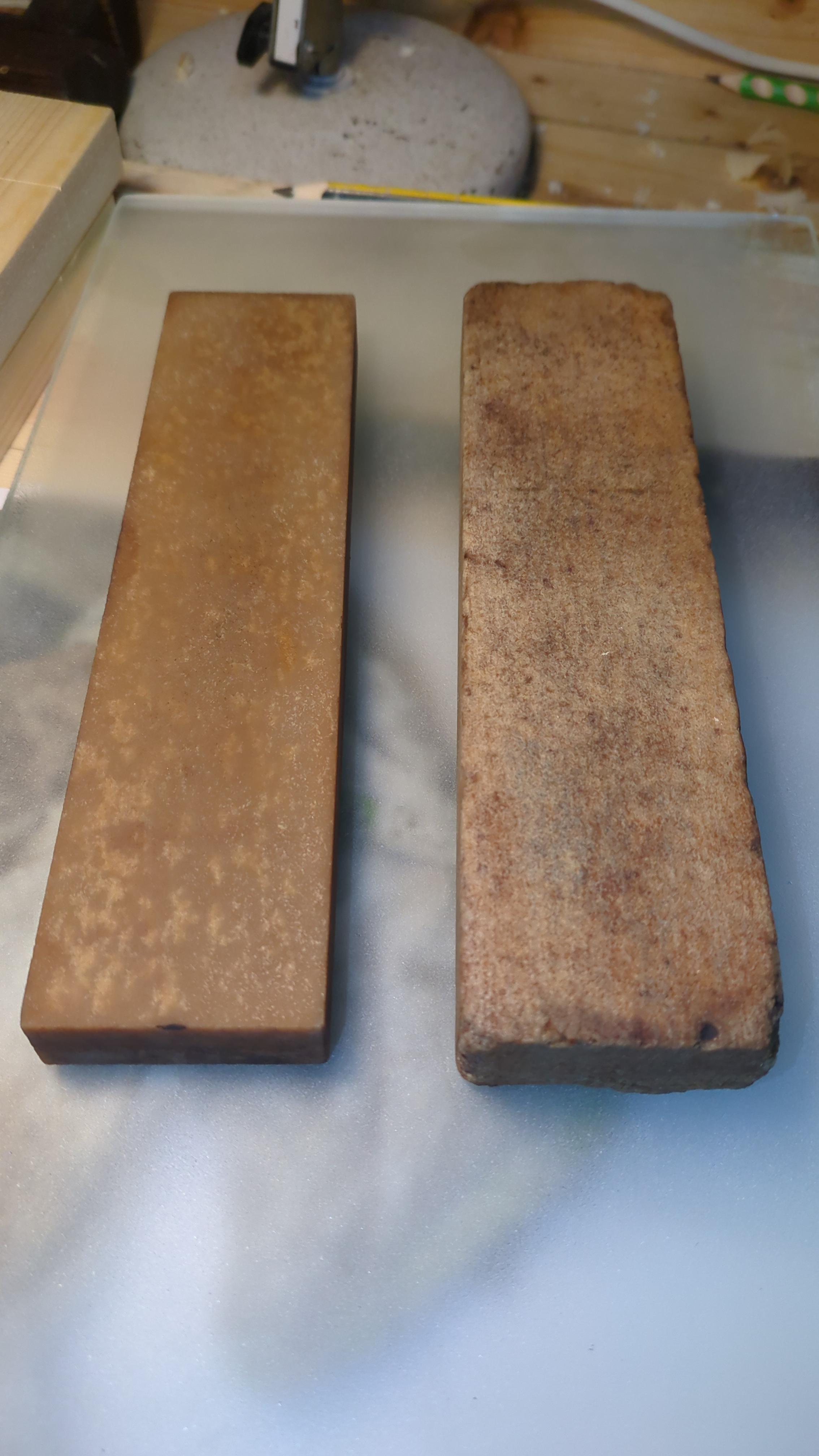
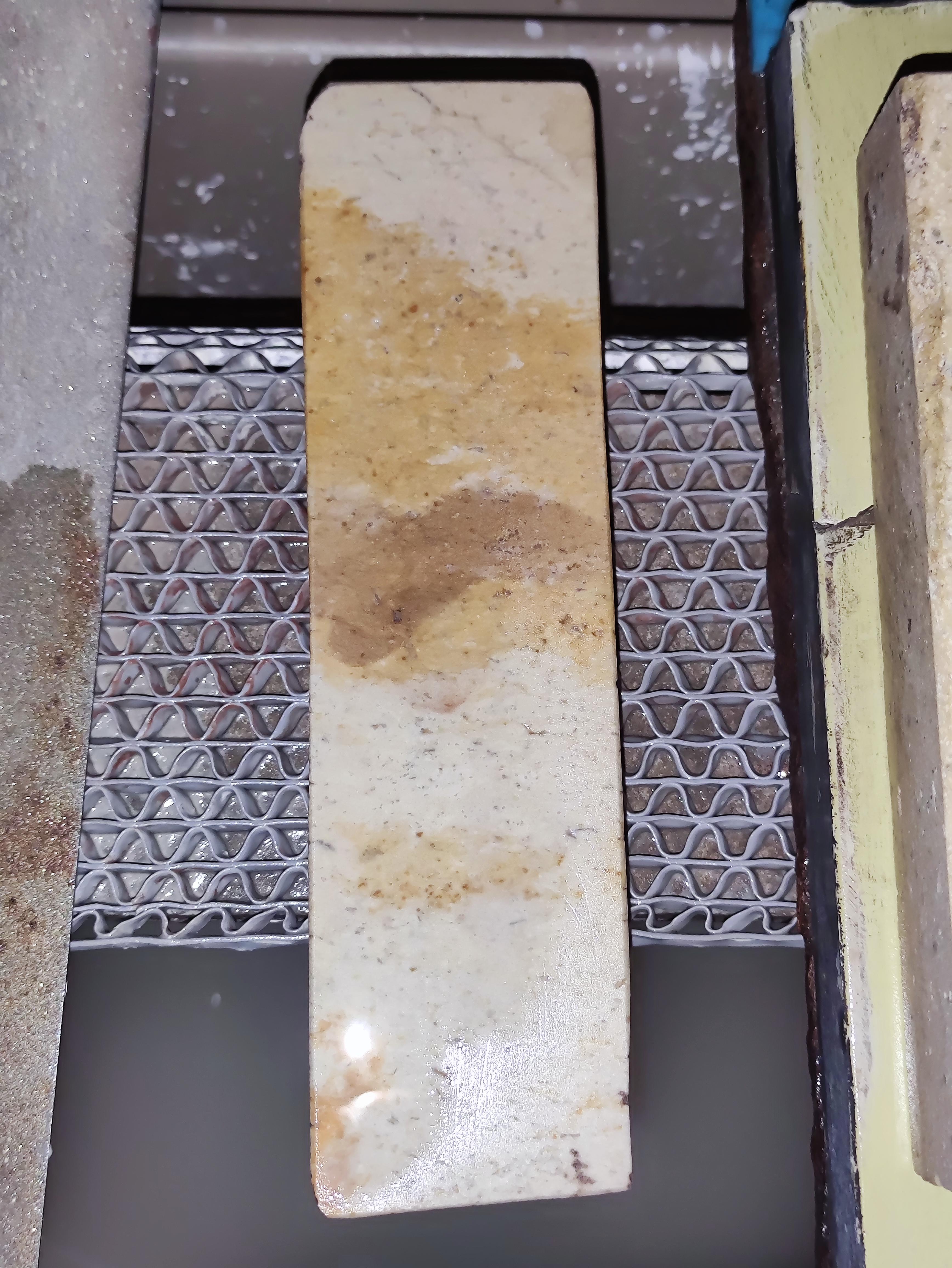
This is just a simple guide. Maybe the mods would be interested in adding it or something like it to the subreddit wiki, if it turns out to be useful
So you bought that unlabeled stone that looks funky, and you can't for the life of you figure out what it is. Before making a post, follow these steps:
also, please take your photos in bright natural light, showing the face (top side where you sharpen on), side, and features that are on the stone
1 Figure out the origin of the stone
This step isn't strictly necessary if your stone is one that has very distinct visuals, but helps.
Include in your post:
Seller origin (This usually isn't 100% to where the stone is from, but provides a useful hint)
Any boxes, labels that show the origin (usually if you have this, just google the label with image search and you'll probably find some forum post, solving your search)
2 Identify visual features in the stone
Look at the stone, and identify what it looks like. What you want to look out for is:
Are there layers to the stone?
Are there patterns in the stone?
Identify the colours to the stone. (This step might require degreasing of the stone, which is a whole topic by itself and deserves a whole write up, but I wont get into this here)
Is the stone coated with something? If so, what is it? Is it cashew lacquer (yellow tinge, transparent), urushi (deep red / black look, ultra hard coating), or something else?
3 How does the stone work?
This step is best done with a clad knife, like a kiridashi or a japanese kitchen knife. The soft steel combined with a hard steel allows for the general identification of many many stones.
How does the stone finish? Is it fine, coarse?
What is the finish type? Mirror finish, cloudy kasumi, or satin scratches? Are the scratches going in the direction of your strokes, or random?
If kasumi, what kind is it: dark on soft clad, bright, colour of the polish etc (advanced, it is not easy to identify this easily and requires some experience with many stones, particularly jnats)
Hardness of the stone: how does it feel to put steel to the stone? Does it feel like glass, or a rougher stone? Describe it in detail
Slurry behaviour: does it produce a mud? What is the mud like, does it refresh the surface? Does it polish, or hinder the finer polish? Does it produce it easily, or does it refuse to produce unless under certain conditions?
Oil or water?: Put a few drops of water on the surface of the stone, and document how it reacts. Does it bead, and slide around because of oil in the stone? Does it absorb the water strongly, or lightly retains it on the surface? Does it take a lot of water?
4 How does the stone lap
This is surprisingly quite revealing to the identify of stones, how it laps, what slurry it makes, and how long it takes.
Some stones can take quite literally 5 hours + for a not so drastic lapping, and some stones can take 30 seconds for a big lapping.
Pictures are very helpful of the lapping process for members to assist in identification
5 conclusion, and what to do with the info attained above?
This section i suspect will be very long going to make decent looking, but many many times with the posts I see here looking for help with finding out what stone they have, cross checking with info generally avail can easily produce a concrete identification.
American natural stones (ANATs)
Arkansas stones:
Quite hard across all the types, soft hard and true hard. Takes a very very long time to lap, and in use does not produce a slurry. Often feels glass hard, and smooth feedback. Soft arks often are a little porous.
Soft ark example 1: https://imgur.com/a/Ub7UlPK
Colour can vary on these, they can have yellow, black, orange, and more bits. They can also be pure white. They are porous, and feels mostly smooth with a little bite in use. Usually used with oil.
True hard ark example 1:https://imgur.com/a/KsHBgKx
True hard arks are extremely hard, feels like glass in use without much biting feedback, and take forever to lap. They can come in a variety of colours, such as black, translucent white, or with tinges of yellow, pink and other colours rarely. Used with oil.
Washita example 1:https://imgur.com/a/JuWcxwK
Washitas honestly deserve a whole writeup by itself, which I may do (and I'll hit up some of the crazy collectors in this reddit for help for sure!)
All the washita grades: https://imgur.com/a/jwmKqOt
Washitas generally have a mottled pattern look, feel hard (some can be borderline, feel softish but all will be solid feeling at the very least), and can come in a variety of colour. Do take note that the state of the stone taking in oil can DRASTICALLY affect the visuals. There is also the possibility of bleaching the stone with degreasers that make it look like certain types. The example here is just a typical, medium hard washita.
Washitas come in several types, and grades.
And for grades
- Lily white (often the more expensive type, and is graded to have zero surface defects) They appear white most of the time, and are rather clean looking with degreased. However, used stones can be having the visual of a very "butterscotch" look, and it can be very difficult to tell. Comes in both fine hard, and soft fast.
- no. 1 (the top user grade, there is not much diff in use tbh with LWs) Visually, they can look pretty much the same as LWs and RRs, depending on the degreasing condition. Comes in both fine hard, and soft fast.
- Rosey red (EXTREMELY RARE, and the most valuable.) Said to have a rosey vein pattern across the stones, but they can appear very similar to the other grades. Only comes in soft, fast.
- Lower grades (unlabelled, no.2) Often with surface defects, but for some reason they are pretty rare to find these days.
The grades are not able to be determined without having the info of the origin. In my opinion, the only concrete way to tell is with labels. If you stone is from pike, and has end labels it can only be a LW. There are also other brands that have these grades, but pike is the manufacturer, and the mines belong to them. They are all mined 50+ years ago, with 50 yr old examples being relatively new. There is also a modern run from the 2000s, but for this guide we will ignore that since they are ultra rare.
Slates:
I don't have any, so I am asking for help with this section!
Japanese Natural Stones (JNATs)
There are just too many visual features, but there are good guides out there which do well in describing and listing the features to identify your stone. I recommend looking at these resources:
https://naturalwhetstones.com/natural-whetstones/japanese-natural-stones-jnats/
https://www.tomonagura.com/jnats/jnat-gallery/
The identification of Japanese natural stones can be spotty, as the origins are often impossible to tell without the labels, or if they're not very obviously stones from a certain place (such as ohira renge suita having that certain look)
European stones:
Coticules example 1:https://imgur.com/a/4jwvQIO
This is a les lat hybrid, but coticules are usually a yellow soft stone on a slate backing, or if its a natural combo there will be a belgian blue below. The yellow part is usually soft, and makes a slurry. The sharpening feel varies from very gritty with a lot of slurry, to very smooth and glassy like with no slurry. They are used with both oil and water.
Thuringian: https://imgur.com/a/F100vAD
These are slates from Germany, and have a relatively plain look with the colour tinge. There are many types of colours, this example is a dark blue. Eschers in bigger sizes can cost a lot of coin. Even smaller ones like this have sold recently for some unreasonable money. Relatively hard feeling in use, and smooth. Some produce a slurry, carrying the stone colour, but not all. Produces a kasumi that is very similar to one from a hard asagi if comparing to Jnats.
I don't have much else for this section, but I would love to have some help from the european stone collectors.
Indonesian stones:
I'm pretty sure these are mudstones and slates for most types. Photos to come. Kind of resembles JNATs in use, but not really. I have not come across one in the finishing grit range, and I have a LOT of them.
DO NOT PAY CRAZY PRICES FOR ANY INDONESIAN STONE!!
Personal experience: I have bought 10kg of their top grade stones directly in person, and I spent below 50USD doing so. There are sellers that list them at crazy prices, and claim they are something they are not.
They are often called bogor stones, or nusantara stones.
Types:
Grey "ivory": Probably a slate, extremely hard and is in my opinion the pre finishing grit range, and not so useful for polishing. Does not auto slurry easily, and with a slurry it makes a finish I would say is similar to a mejiro nagura, but cuts way slower.
Red / beige stone: Can be soft to hard approaching 4.5+. Can be used for polishing for the softer ones, auto slurries. Makes a finish rougher than tsushima, finer than most aizu. Cuts medium speed. My personal pick if you wanted one from Indonesia, pretty neat stone for very cheap if you get the right sources.
Grey stone: Pretty soft, and slurries a lot. Feels a lot like a soft aoto, and is in the lower middle grit range. Roughness is similar to a very muddy and soft natsuya.
Sorry, I haven't taken pictures of my stones here will amend when I get the time.
That's it for now, but I will continuously update this with the help of members that choose to help. If you have some stones or some opinions you would like to add, please dm me!