r/Sikh
•
u/SatoruGojo232
•
57m ago
Discussion Guru Hargobind Sahib Ji,the sixth Sikh Guru, taught Sikhs to stand together, protect the vulnerable, and work for the well-being of each other.Are we living upto that teaching?Please look around ur relatives & community,find any sikh which needs support please come forward and hold his hand.
r/Sikh • u/OptiMatrix888 • 6h ago
Discussion A Deep Dive Into Shared Vocabulary between Sikhi and Hinduism
I often hear that Sikhi is essentially Hinduism because the Gurus speak of karma, maya, bhagti and mukti. As a Sikh, I think those connections are real and worth discussing. What I question is the leap from “the Gurus inherited this vocabulary” to “the Gurus taught the same theology.” Even Hindu traditions that accept the same scriptures use those words to reach very different conclusions.
1. Om, Ik Oankar and what it means to say reality is one
Take a question as basic as “What is my relationship to God?” Even within Vedanta, there are at least three answers.
- In Shankara’s Advaita, the deepest self, Atman, is ultimately identical with Brahman.
- In Madhva’s Dvaita, God and the individual soul remain distinct, even in liberation.
- In Ramanuja’s Vishishtadvaita, souls and the world are real, wholly dependent on Brahman and related to Brahman as a body is to its indwelling self.
All three can invoke Om. Hearing the word doesn’t tell you which answer a Hindu accepts. So why should hearing Oankar settle the question for a Sikh?
Guru Nanak Dev Ji opens Gurbani with ੴ (Ik Oankar), placing the numeral 1 before Oankar to affirm that the Divine is One. The Mool Mantar then describes this One, who pervades all creation, as Karta Purakh (Creator), Nirbhau (without fear), Nirvair (without enmity), Ajooni (beyond birth) and Saibhang (self-existent).
Gurbani speaks of that same One as nirgun and sargun, beyond attributes and manifest through them. There are real parallels with Vedanta here. Identifying Gurmat, the Guru’s teaching, with any one of those schools takes more than recognizing the opening word. (Angs 1, 290.)
2. When two people sing “Ram,” who do they mean?
Two people can sing the same name with complete sincerity. One may be addressing Rama, son of Dasharatha, whose incarnation is central to their devotion. Another may be invoking the One who pervades every being. Bhagat Kabir Ji explicitly asks us to distinguish between uses of “Ram.” The same question comes up with Krishna. (Ang 1374.)
- In the Bhagavad Gita, Krishna calls himself unborn and says he manifests by his own power. He tells Arjuna that whoever understands his divine birth and deeds comes to him, free from rebirth. (Gita 4.6, 4.9.)
- In Gurbani, Guru Arjan Sahib addresses the belief that Govind was born on the eighth lunar day. His answer is that Narayan, the Divine, is beyond birth and death. (Ang 1136.)
To the devotee in the Gita, the truth about Krishna’s divine birth is part of what frees them from rebirth. A Sikh singing Govind can be praising the very One whom Guru Arjan Sahib says is beyond birth. Counting the name would tell you nothing about that difference.
3. When Gurbani speaks of maya, is it saying the world is an illusion?
- In Shankara’s Advaita, the world of changing forms is mithya. Think of a clay pot. Reshape it into a bowl and the pot is gone, but the clay remains. The pot is real in everyday life. Its form has no independent, ultimate reality. Shankara uses that distinction to explain the world’s dependence on Brahman. (Chandogya Upanishad 6.1.4.)
- In Gurbani, Guru Nanak Sahib calls the worlds and their forms sach (true). Guru Angad Sahib describes this world as a room in which the True One dwells. When Guru Amar Das Ji explains maya in Anand Sahib, he identifies what happens to us through it. We grow attached and forget the Divine. (Angs 463, 921.)
I can treat something temporary as permanent, or something given to me as mine to possess forever. That is how I can be caught in maya while living in a creation the Guru calls true. The word alone doesn’t commit a Sikh to Shankara’s account of reality.
4. Karma and rebirth tell you there is a cycle. What actually frees you from it?
In Japji Sahib, Guru Nanak Sahib brings deeds and grace together in one line. Karmi aavai kapra, nadri mokh duaar (Deeds shape the physical body we receive, but the door to liberation opens through Divine Grace.)
The Bhagavad Gita (18.66) also speaks of grace, where Krishna promises deliverance to whoever takes refuge in him as an Avatar. In Japji Sahib, however, that Glance of Grace belongs to the One whom the Guru has just defined in the Mool Mantar as Ajooni (Unborn, beyond incarnation).
- What can deeds earn? A person can give to charity and spend the entire time thinking about what a generous person they are. The gift helps someone, but their Haumai, the habit of putting "I" and "mine" at the center, survives intact. That is why simply adding up good deeds gives an incomplete account of liberation.
- What can birth determine? The Manusmriti assigns “twice-born” status to the first three varnas (Manusmriti 10.4). Guru Amar Das Ji takes up those same four social classes and asks what makes one vessel higher than another when the Potter used the same clay for all. In that very shabad, he says our deeds bind us. Gurbani affirms karma and rejects spiritual rank by birth in the same passage (Ang 1128).
5. Can a person live free while working and raising a family?
Hindu scripture itself offers more than one answer about the place of renunciation. That makes the comparison with Gurbani worth drawing carefully.
- Leaving the household. The Jabala Upanishad allows a seeker to take up *sannyas* (renunciation) as soon as detachment arises. On Ang 140, Gurbani describes the irony of a renunciant who has put on saffron robes but still longs for food and clothes, he’s left home, but he’s taken his attachments with him.
- Remaining in the world. The Bhagavad Gita (3.20) holds up King Janaka as someone who attained perfection through action. There’s a genuine parallel in Gurbani. What stands out to me, however, is how ordinary Guru Arjan Sahib’s examples are on Ang 522: "Hasantian khelantian pehnantian khavantian vichhe hovai mukti" (amid laughing, playing, dressing, and eating, liberation can be attained).
For a Sikh householder, this is what Jivan Mukti (liberation while alive) looks like. Earning honestly by one's own labor, sharing those earnings, and doing seva (selfless service) are practical ways to live in keeping with Hukam (divine order) and loosen the grip of "I" and "mine" (Ang 1245). A Sikh can do that spiritual work in the very act of caring for a family.
6. What changes when someone wears a sacred thread or bathes at a shrine?
External rituals offer something comforting: a visible sign that you've fulfilled a duty. But Gurbani constantly pushes us to ask what those rites actually alter inside us.
- Janeu (Sacred Thread): Historically, it marked a caste-restricted initiation for upper-caste men. On Ang 471, Guru Nanak Sahib doesn't just decline the thread; he asks the priest for a thread whose cotton is compassion, whose yarn is contentment, whose knot is restraint, and whose twist is truth. A priest can tie cotton, but cotton rots, breaks, and burns at death. The internal virtues Guru Sahib names are permanent and they are equally open to everyone the traditional ceremony excluded.
- Tirath (Pilgrimage): While texts like the Mahabharata (Vana Parva) praise bathing in the Ganga for washing away sins, Guru Amar Das Ji notices a different psychological reality on Ang 116: a pilgrim travels to sacred waters and returns carrying more of the very ego (Haumai) they went to wash away. The trip itself becomes something to brag about. In that shabad, true inner cleansing comes not from physical water, but from remembering Naam (The Divine) and engaging in Seva (Seflless Service).
7. How does Gurbani describe the Guru’s teaching alongside the six Hindu schools?
A common claim online is that Sikhi is just a practical form of Vedanta or Samkhya. But rather than relying on modern debates, it helps to look at how Gurbani itself addresses the Khat Darshan, the six classical systems of Hindu philosophy, which include Vedanta's non-duality, Samkhya's dualism of consciousness and nature, and Mimamsa's Vedic ritual commands.
On Angs 360-361, Guru Amar Das Ji explicitly brings up these six schools. He acknowledges that they are widely followed, but he then describes Gur ka darshan (the Guru’s philosophical vision) as unfathomable and boundless (agam apara). The refrain makes his point clear: "Gur kai darsan mukat gat hoi" (Through the Guru’s vision, liberation is attained).
What matters here is who is drawing the boundary. It isn't a modern commentator trying to create artificial divisions; it is the Guru himself using the word darshan for both, explicitly distinguishing the six traditional systems from Gur ka darshan, and directing the seeker to the Guru for liberation.
Any argument that tries to subsume Gurmat inside Vedanta has to answer why Guru Amar Das Ji explicitly set his teachings apart from all six schools.
8. Who gets to decide what those words mean for a Sikh?
When the Yogis in Sidh Gosht ask Guru Nanak Sahib who his Guru is, he does not name a historical figure, a deity, or an ancient text. He answers: "Shabad Guru, surat dhun chela" (The Word is the Guru, and the consciousness attuned to it is the disciple, Ang 943). For Sikhs, that unmediated relationship continues today in Sri Guru Granth Sahib Ji, alongside the collective deliberation of the Guru Panth.
This brings us to the core issue: authority. Hearing echoes of the Upanishads in Gurbani is a great starting point for dialogue, resemblance between traditions is natural and worth exploring. But calling the Gurus "the living Vedas" begs the question: it assumes the very relationship being debated.
A Sikh can recognize wisdom in any sacred passage and even cite it to illustrate a point. But appreciating wisdom in another text is fundamentally different from accepting it as binding authority.
Recognizing shared 16th-century vocabulary across traditions shows a shared regional language, not a shared path.
Bhul Chuk Maaf 🙏
Waheguru Ji Ka Khalsa, Waheguru Ji Ki Fateh
r/Sikh • u/satnaamsinghbedi • 4h ago
Kirtan ਡਿਪ੍ਰੈਸ਼ਨ ਤੇ ਚਿੰਤਾ ਦਾ ਪੱਕਾ ਇਲਾਜ ਕੀ ਹੈ? ਵੱਡਾ ਭੇਤ! | Giani Sant Singh Maskeen
r/Sikh
•
u/calgary_wandrer
•
10h ago
Kirtan Why was I born into a family of low social class? - Bhagat Namdev ji
r/Sikh • u/singhtaranjit • 16h ago
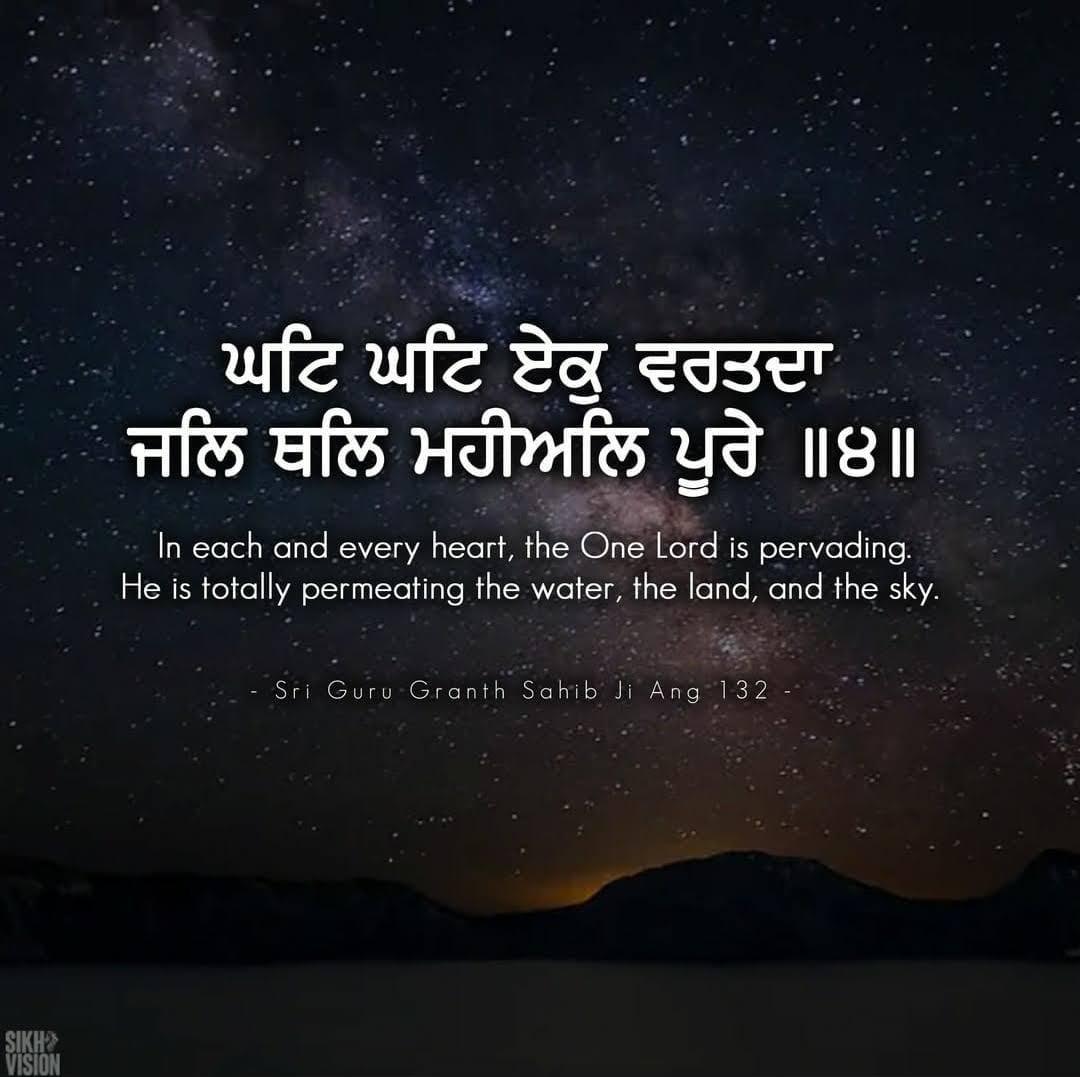
Gurbani ghaT ghaT ek varatadhaa jal thal maheeal poore ||4|| Guru Arjan Sahib Ji SGGS 📖 133
r/Sikh • u/ghostbusterdude51 • 12h ago
Question Confused about Rehit & Maryada for the Khalsa
I was reading Bhai Nand Lal ji's rehitnama and tankhianama, along with several other rehits like those of Bhai Daya singh ji (on the Basics of Sikhi's website).
While reading the tankhianama, I noticed that several of the rules had a punishment of going to hell. I would have believed and followed the tankhianama if it didn't mention the "going to hell" part several times. Didn't our Gurus teach through love and not scare us or threaten hell?
Which rehitnama is the most "authentic", or which one can be traced back to the Gurus?
I also feel like some things are often considered as rehit, but when looking through the lens of Gurbani, I get confused as to whether they are actually authentic. One example would be not eating food before doing path. If I'm correct, Bhai Kartar Singh Ji said that if a person eats food before doing their path, they get the joon of an animal (forgot the animal, ig it was a pig). I am aware that Asa di Var does say that eating food without remembering Waheguru isn't good, but there is no mention of getting the joon of an animal just for eating food before praying.
r/Sikh • u/Fun_Dragonfly_3822 • 16h ago
Other Salok, guru nanak sahib ji, ("je rat lagge kapre....) Ang 140
You say, If blood is spilled upon a cloth, The garment becomes impure. But those who drink the blood of men, How can their minds be pure? O Nanak, utter the Lord's Name, With a heart sincere, from mouth. Other displays of world are false deeds of doubt.
Bhul chuk maaf ji🙏
r/Sikh • u/ghostbusterdude51 • 12h ago
Question Kirpan rusting while in the scabbard
Whenever I take my kirpan(pesh kabaz) out of its scabbard, its tip is always rusted. Usually, I would have taken out the black foam and cleaned the rust off it, but that only works when the foam is not glued to the scabbard, which isn't the case for my current kirpan (I used to wear a taksali kirpan earlier).
I tried cleaning the foam using a baaz and cloth (didn't work). Any suggestions on how I can clean the inside of the scabbard, or replace it?
r/Sikh • u/satnaamsinghbedi • 18h ago
Kirtan Jo Jo Deesai So So Rogi - Bhai Balwinder Singh Ji Rangeela - Soulful Gurbani Kirtan 2026
r/Sikh • u/RSB_1952 • 20h ago
Discussion Please assist me with your opinions
Hi all, I want to ask how do you accept injustice like loss of hard earned money, family members against you, psychatric illness etc. Is it past karma related?
I find it very difficult to move on from any incident that has happened to me but if my mind accepts it as a result of bad past karma, I find it easy to let go. Also if we are responsible for bad and good results of our actions then what is the role of God in it. Why do we praise him for giving us good life, food etc if it is result of my karma. Please assist me as a layman as I am suffering in my mind. I have ocd, depression, anxiety etc.
r/Sikh • u/Hukumnama_Bot • 23h ago
Gurbani ੴ ਸਤਿਗੁਰ ਪ੍ਰਸਾਦਿ ॥ • Sri Darbar Sahib Hukamnama • November 21, 2026
ਸਲੋਕ ॥
Salok:
ਮਨ ਇਛਾ ਦਾਨ ਕਰਣੰ ਸਰਬਤ੍ਰ ਆਸਾ ਪੂਰਨਹ ॥
He grants our hearts' desires, and fulfills all our hopes.
ਖੰਡਣੰ ਕਲਿ ਕਲੇਸਹ ਪ੍ਰਭ ਸਿਮਰਿ ਨਾਨਕ ਨਹ ਦੂਰਣਹ ॥੧॥
He destroys pain and suffering; remember God in meditation, O Nanak - He is not far away. ||1||
ਹਭਿ ਰੰਗ ਮਾਣਹਿ ਜਿਸੁ ਸੰਗਿ ਤੈ ਸਿਉ ਲਾਈਐ ਨੇਹੁ ॥
Love Him, with whom you enjoy all pleasures.
ਸੋ ਸਹੁ ਬਿੰਦ ਨ ਵਿਸਰਉ ਨਾਨਕ ਜਿਨਿ ਸੁੰਦਰੁ ਰਚਿਆ ਦੇਹੁ ॥੨॥
Do not forget that Lord, even for an instant; O Nanak, He fashioned this beautiful body. ||2||
ਪਉੜੀ ॥
Pauree:
ਜੀਉ ਪ੍ਰਾਨ ਤਨੁ ਧਨੁ ਦੀਆ ਦੀਨੇ ਰਸ ਭੋਗ ॥
He gave you your soul, breath of life, body and wealth; He gave you pleasures to enjoy.
ਗ੍ਰਿਹ ਮੰਦਰ ਰਥ ਅਸੁ ਦੀਏ ਰਚਿ ਭਲੇ ਸੰਜੋਗ ॥
He gave you households, mansions, chariots and horses; He ordained your good destiny.
ਸੁਤ ਬਨਿਤਾ ਸਾਜਨ ਸੇਵਕ ਦੀਏ ਪ੍ਰਭ ਦੇਵਨ ਜੋਗ ॥
He gave you your children, spouse, friends and servants; God is the all-powerful Great Giver.
ਹਰਿ ਸਿਮਰਤ ਤਨੁ ਮਨੁ ਹਰਿਆ ਲਹਿ ਜਾਹਿ ਵਿਜੋਗ ॥
Meditating in remembrance on the Lord, the body and mind are rejuvenated, and sorrow departs.
ਸਾਧਸੰਗਿ ਹਰਿ ਗੁਣ ਰਮਹੁ ਬਿਨਸੇ ਸਭਿ ਰੋਗ ॥੩॥
In the Saadh Sangat, the Company of the Holy, chant the Praises of the Lord, and all your sickness shall vanish. ||3||
Guru Arjan Dev Ji • Raag Jaithsree • Ang 706
Saturday, November 21, 2026
Shanivaar, 8 Maghar, Nanakshahi 558
Waheguru Ji Ka Khalsa Waheguru Ji Ki Fateh, I am a Robot. Bleep Bloop.
Powered By GurbaniNow.
r/Sikh • u/Icy-Distribution4893 • 1d ago
Discussion Navdeep Bains picked as leader of the Ontario Liberal Party.
r/Sikh • u/JustMyPoint • 1d ago
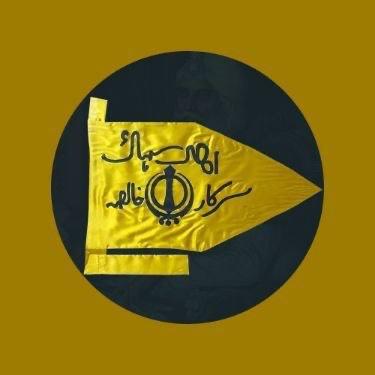
History Sorry to be the one to say it but this “historical” flag is 100% fake!
This flag was never used back during the Sikh Raaj. It first appears in a 1980 publication by the SGPC to commemorate Maharaja Ranjit Singh's 200th birth anniversary (which contains a note from Indira Gandhi).
So which flag was actually flown back then? It depends on the time period and there has always been a wide-diversity of Nishan Sahibs (also known as a Jhanda Sahib) flown by historical Sikhs. Originally, during the period of the Sikh gurus, they were simple white, yellow, and blue triangular-flags. There are references within gurbani to a white-flag being flown by Sri Guru Amar Das Ji. A surviving reference is the flag given to Rama and Tiloka by Guru Gobind Singh Ji, which is yellow and without any objects or figuratives decorating it. However, Nishan Sahibs became more decorated and elaborate as time went on into the Sikh confederacies and kingdoms. During the mid-to-late 18th century of the Misl-period, we see weapons adorning the design of flags, usually a talwar (sword) and dhal (shield) but also sometimes a chakkar (throwing-disk) and kattar (punch-dagger). Having individual weapons decorating the Nishan Sahib in this manner continued up until the 1960s at-least!
What about Maharaja Ranjit Singh's raaj and army? There has been a lot of misinformation spreading on this point, such as that a flag of Hanuman or Durga was flown. Actually, only some regiments used flags adorned with Indic deities. Other surviving flags are actually quite plain with a simple colour and border (such as the Sikh flags that recently surfaced from the collection of the late Lord Dalhousie that were auctioned in the U.K.). There was a plethora of different types of flags in-use. People refuse to acknowledge or accept nuance, sometimes to push propaganda or certain narratives.
However, during the insurgency years of the 1980s–1990s, a kesari (saffron) flag adorned with the modern Khanda symbol became popularized and standardized. Recently, the Akal Takht has passed a judgment to restore the original basant (yellow) and surmai (grey-blue) colour for the Nishan Sahib.
Watch this video by Harmilan Singh (Tawarikh-e-Punjab) for the history of the Nishan Sahib: https://www.youtube.com/watch?v=iRpjnWtX418
Discussion Sangat Ji,Free schools and universities for sikh children and youth.Free hospitals for elderly sikhs is a much bigger sewa than serving Bread pakore at Nagar Kirtan & road side Langars. Langar shld only be limited in Guru ghars for the needy.Stop being a Halwai and Dancing community. Watch and learn
r/Sikh • u/Fun_Dragonfly_3822 • 1d ago
Other Raag dhanasri, bhagat ravidaas jio ka (ang 694)
I give up , give up to flowing cause. For what cause do you not speak? (Pause)
Like me there is no forlorn, gracious is none like you; now what test is needed? With words of yours, my mind will please; Please give your serf- this completeness.(1)
For many births, i have been separated, Lord; This birth is dedicated to you. Says ravidaas, in your hope i live; There is being long since i seen your rendez vous.(2)
Bhul chuk maaf ji🙏
r/Sikh
•
u/calgary_wandrer
•
2d ago
Kirtan When Gurunanak Dev ji came, the whole world filled with joy
r/Sikh • u/JustMyPoint • 2d ago
History Documentary (in Hindi) of the Bhai Bahlo Darwaza of the Ram Rai Darbar in Dehradun, Uttarakhand, India. This site contains murals of the Sikh guru sahiban dating to c. 1707–1710, making them likely the oldest surviving wall-paintings of the gurus. This is an informative narration by Ajay Sharma.
Bhai Bahlo was a Sikh during the 17th century. As per lore, he was a talented brick-layer who assisted with the construction of the Sri Darbar Sahib in Amritsar Jio. Later, during the guruship of Sri Guru Har Rai Sahib Ji Maharaaj, he accompanied the young Baba Ram Rai to the Mughal court. Bhai Bahlo stayed with Ram Rai throughout his life (even after he was ex-communicated from the Sikh Panth for altering Guru Nanak's gurbani in Asa di Vaar to appease the Mughals), accompanying him to Dehradun, where Ram Rai established a dera (religious seat) through the assistance of Aurangzeb. Ram Rai became influenced by the Udasi sect, who had been influential in the area.
Interestingly, the first mural shown displays that influence: It depicts Sri Guru Nanak Dev Ji Maharaaj (white-beard), with Baba Ram Rai shown seated behind him, visually symbolizing that Ram Rai had accepted Guru Nanak Dev Ji's teachings. Despite Ram Rai and the first guru not living in the same time-period, in India at the time there was an artistic tradition of having yourself depicted with elders/ancestors (such as a patron in-frame of a historical scene). Despite not being related to Guru Nanak Dev Ji by blood, Ram Rai likely viewed him as his spiritual antecedent of some kind. To the left-flank, the two sons of the first guru are shown, namely Baba Sri Chand (founder of the Udasin Panth) and Baba Lakhmi Das as per the narrator (although I would argue that these two figures may actually be Bhai Bahlo himself and another associate of Ram Rai named Bhai Sangat Das). To the right-flank are depictions of Bhai Mardana Ji with his characteristic rabab and curiously Bhai Bala Ji (whose historical presence/authenticity is still debated) also playing an instrument. Furthermore, there are murals depicting Sri Guru Angad Dev Ji and Sri Guru Amar Das Ji together, plus individual paintings of the 4th–7th gurus, with portraits of the 8th–10th gurus conspicuously missing, which makes sense when considering Ram Rai's background and how the seventh guru chose Guru Har Krishan Sahib Ji to succeed him instead as the next guru.
These murals date to c. 1707–1710 and are actually inspired by a group of miniature paintings on-paper kept in the collection of the Mahant of the Ram Rai Darbar, almost all of which are dated to c. 1685, being commissioned by Ram Rai, who had grown an interest in art-patronage when he was attached to the Mughal court.
This clip is trimmed from the following documentary narrated by Ajay Sharma: Sharma, Ajay (5 March 2025). "Guru Ram Rai Darbar sahib: The Making of Dehradun | Full Documentary". YouTube (in Hindi). Doon Duniya. Retrieved 20 November 2026.
Scholarly references:
- Kamboj, B. P. (2003). "APPENDIX II: A NOTE ON THE MINIATURE PAINTINGS IN THE DARBAR'S COLLECTION". Early Wall Painting of Garhwal. Indus Publishing Company. ISBN 9788173871399.
- Randhawa, Mohinder Singh (1970). "Paintings of the Sikh Gurus in the Collection of Mahant of Gurudwara Ram Rai, Dehradun". Roopa-Lekha. XXXIX (1).
- Sharma, Kamayani (2022-11-12). "How did a gurudwara in Dehradun become the richest treasure of murals in the entire region?". Scroll.in. Retrieved 2026-11-20.
r/Sikh • u/No-Extent5797 • 2d ago
Discussion Is it strange that I’m particularly attracted to Sikh men who wear the dastar? I feel unhinged
I know it’s stupid but please hear me out
I don’t really know how to explain this, but I’ve developed a very particular attraction to Sikh men, especially those who wear the dastar. I once had a connection with a Sikh man who wore a dastar, and although things didn’t work out and he eventually left, the experience affected me quite deeply. I think I’ve subconsciously associated the dastar, the appearance and perhaps certain aspects of Sikh masculinity with him. Interestingly, he has since cut his hair and stopped wearing the dastar, but my attraction to those particular attributes hasn’t gone away. Every time I spot a man wearing the dastar I keep staring at him to get his attention it’s weird I don’t know what’s wrong with me, I know this is more a psychological issue and maybe it shouldn’t be posted here on this sub-Reddit but I long for a connection with someone who wears pagg I’d love to meet a handsome, tall, masculine Sikh man who is affectionate, protective, emotionally available and genuinely loving. Someone who makes me feel cherished, desired and pampered 😩 tbh I even long for some wild things but I prefer not saying that here. It’s more like one pagg wearing guy traumatised me I’m looking for another to heal the wounds
PS I’m expecting dms I’d like to connect and personally talk. But please don’t be creepy
r/Sikh • u/-rising_spirit- • 2d ago
News Indian Agent Nikhil Gupta Sentenced to 19.5 Years in Prison for Plot to Assassinate Sikh Activist Gurpatwant Singh Pannun in New York City
Nikhil Gupta was just sentenced to 19.5 years in prison for his role in the attempted assassination of an American Sikh-separatist activist in New York City -- here's what's new in the latest sentencing documents.