r/SpaceUnfiltered • • 1d ago

Aurora​ Intense aurora over Alaska! By Vincent Ledvina

310 Upvotes

"​This clip is not sped up, and I didn't do any editing besides a little bit of denoising. Gear used? Sony a7s iii + Tamron 35 mm f/1.4 SP shot wide open (of course) at 1/25 s, ISO 16,000. The motion is real, and it was so fast and intense. The location where this was filmed is near Fairbanks, Alaska. Date was in Feb 2024."

Credit Vincent Ledvina

​https://x.com/Vincent_Ledvina/status/2124369066404061394?a=bJidWB6aLHpGEM7IzIs&s=20​

https://x.com/Vincent_Ledvina/status/2124369065372238000?a=4XuHSPhl9m2tXr7ORT4&s=20


r/SpaceUnfiltered • • 18m ago

📰News Astronomers just discovered a rare triple star system 28 light-years away (266 trillion km), and they have ‘no clean explanation for how it got here’

Post image
3 Upvotes

Image

Observations of the Welopōʻai triple-star system, located 28 light-years from Earth. The image on the left shows the two components of the system: Welopōʻai A, a closely orbiting red dwarf and white dwarf pair, and Welopōʻai B, a second white dwarf located much farther away. The image on the right provides a close-up view of the inner pair, revealing the faint white dwarf companion (Ab) detected using the Gemini North telescope's ‘Alopeke instrument. The overlaid curves illustrate the stars' orbital paths.

Photo : Pan-STARRS1/STScI/MAST (left); International Gemini Observatory/NSF NOIRLab (right). Graphic compilation: Étienne Artigau and Heidi White (UdeM/IREx)

.

.

Astronomers have discovered an extraordinary stellar system just 28 light-years from Earth that challenges our understanding of how stars live, die and interact as they evolve.

Given the name Welopōʻai, this unusual triple-star system was discovered by an international team of scientists led by the Trottier Institute for Research on Exoplanets (IREx) at Université de Montréal.

They detail their discovery in a study published today in Astronomy & Astrophysics.

The system contains two white dwarfs, the extremely dense remnants of Sun-like stars that have exhausted their fuel, and a red dwarf, a star much dimmer than the Sun.

The scientists stumbled upon this remarkable configuration, unlike anything else known in the Sun’s neighbourhood, while searching for planets around the red dwarf.

“We were actually looking for planets,” explained IREx researcher Étienne Artigau, the study’s lead author. “Instead, we found something much more surprising.”

.

Variations in velocity detected

The discovery began with the SPectropolarimètre InfraROUge (SPIRou) instrument at the Canada-France-Hawaii Telescope on Maunakea, Hawaiʻi. SPIRou is designed to detect exoplanets by measuring the tiny changes in a star’s velocity caused by orbiting planets.

But one nearby red dwarf behaved differently: the scientists detected velocity variations of nearly 16 kilometres per second, more than a thousand times larger than expected. After several years of follow-up observations, the team established that the unseen companion had a mass greater than half that of the Sun.

“The unusual combination of high mass and very low brightness left only one plausible explanation: it was the remnant of a dead star,” explained Charles-Antoine Parent, an undergraduate student at Université Laval and co-author of the study. 

“The most likely explanation was a white dwarf, although a neutron star or even a black hole couldn't be ruled out.”

The Gemini reveals the hidden star

The team turned to the Gemini North telescope, also on Maunakea. 

Using high-resolution images from its ‘Alopeke instrument, they directly detected a faint companion: a white dwarf. A second, much more distant white dwarf was already known to be part of the system. 

A red dwarf and a white dwarf therefore orbit close to one another, while the second white dwarf orbits the pair. No comparable system is known within 100 light-years of Earth.

.

.

More

https://nouvelles.umontreal.ca/en/article/2026/11/18/astronomers-discover-remarkable-triple-star-system-just-28-light-years-from-earth

https://www.space.com/astronomy/stars/astronomers-discover-rare-triple-star-system-just-28-light-years-from-earth-and-they-have-no-idea-how-it-has-survived

Paper

https://www.aanda.org/articles/aa/full_html/2026/11/aa61214-26/aa61214-26.html


r/SpaceUnfiltered • • 22m ago

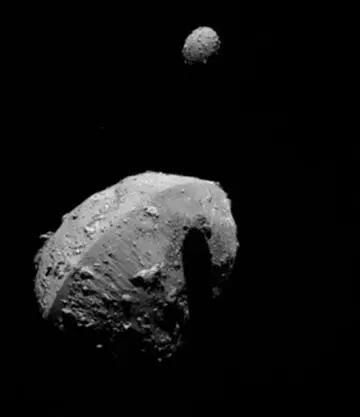
🛰️ Hera mission​ A solar eclipse in space: the 151-m Dimorphos asteroid, a kilometre away from its Didymos parent, casts a shadow down to the surface - seen by ESA's Hera mission for planetary defence

Post image
3 Upvotes

Image

Dimorphos moonlet casting shadow down to larger Didymos asteroid

.

A solar eclipse in deep space, shown in this early view of the Didymos binary asteroids from the European Space Agency’s Hera mission for planetary defence. The smaller Dimorphos moonlet is seen casting its shadow across part of its Didymos parent body, to blank out the Sun across the shaded stretch of rocky surface.

“Eclipses just like last summer’s total solar eclipse occur on asteroids as well, when they have a small moon like this one,” explains Patrick Michel, Hera Principal Investigator Patrick Michel, Director of Research at CNRS / Observatoire de la Côte d'Azur. “Didymos and Dimorphos are subject to the same celestial mechanics as Earth and the Moon, but at a much smaller scale and lower gravity environment.

.

“So in principle someone could be sitting on Didymos and have the same kind of eclipse experience – although in practice sitting there would be very difficult because its gravity is so low and it is spinning very fast!”

The scale of Dimorphos’s shadow onto Didymos is due to its proximity: the smaller moon orbits about a kilometre away from Didymos.

.

This low velocity is due to the low masses and gravities involved: the Dimorphos moonlet is just 151 m across, about the same size as the Great Pyramid of Giza, while the730-m diameterDidymos is a bit smaller than Dubai’s Burj Khalifa skyscraper. As a result Dimorphos has gravity about 40 000 times weaker than Earth's, while Dimorphos has about 200 000 times weaker gravity than Earth’s.

This image was acquired by Hera’s monochrome Asteroid Framing Camera, employed both for navigation and science imaging.

.

Hera’s first images to be unveiled

In 2022 the small moonlet of Didymos called Dimorphos was impacted by NASA’s DART spacecraft to shift its orbit around the larger body. Now the European Space Agency’s Hera mission has arrived to perform a close-up ‘crash scene investigation’ of the binary asteroid system, to gather vital data to turn this grand-scale experiment into a well understood and potentially repeatable planetary defence technique.

Join the Hera team on the evening of Wednesday 25 November as they share the first close-up images of this historic transformed space object.

.

Our Hera livestream starts from 19:45 CET on Wednesday 25 November. Follow the livestream onESA WebTVor theESA YouTube channel.

.

.

Source

https://www.esa.int/articles/about-us/directorates/operations/space-safety/hera/hera-s-didymos-asteroid-in-eclipse


r/SpaceUnfiltered • • 23h ago

🎥Timelapse Fifty million years ago, a white dwarf in NGC 1433 was obliterated in a thermonuclear explosion. That light just reached Earth.

146 Upvotes

Cropped version at the end​

​Video spans, Sep 7-Nov 18, 2026

A stellar explosion in the spiral galaxy NGC 1433, approximately 50 million light-years from Earth, has given astronomers rare opportunity to observe​ supernova while it is still brightening.

Unlike many supernova discoveries made after an explosion has begun fading, SN 2026ahvu was identified while its brightness was increasing.​

Credit Slooh

https://x.com/Slooh/status/2123854125368476067?a=x9heSrXtLCZu-lxbCBc&s=20​


r/SpaceUnfiltered • • 13h ago

☀️Solar activity Two relatively small active regions rotate into view on the Sun's north-eastern limb. Around 02:50z and 03:30z we can observe small filaments lifting off, producing two CMEs ('solar storms'). They will most likely pass way behind Earth's orbit. (22.11.26)

16 Upvotes

r/SpaceUnfiltered • • 15h ago

📸AstroPhotography Sun roll along the pyramid

Thumbnail
gallery
25 Upvotes

Credit: ​Wael Omar WO (not mine)

.

.

From his description:

"The concept behind this photograph was to create a carefully aligned composition in which the rising Sun appears to emerge from behind the “ Khafrah “ Pyramid and move along its edges, creating the visual impression of the Sun rolling over the monument.

However, my objective was not limited to achieving a striking alignment. I also wanted to reveal the Sun in a way that differs from conventional solar photography by capturing details of its hydrogen emissions.

For this purpose, I used a specialized Hydrogen-Alpha imaging setup , the MLastro spectroheligraph to observe the solar chromosphere, the dynamic atmospheric layer above the photosphere. Imaging at the H-alpha wavelength of 656.28 nm reveals solar structures associated with magnetic activity, including filaments, active regions, and prominences.

.

This wavelength is particularly fascinating because hydrogen is the primary fuel in the Sun's nuclear fusion process. Approximately 600 million tons of hydrogen are converted into helium every second, releasing the energy that powers our solar system.

Achieving the intended composition required careful planning and precise calculations. I selected an elevated shooting position on top of a mosque minaret to obtain the appropriate viewing angle and alignment with the Great Pyramid.

The imaging session began shortly before sunrise continuing through sunrise and shortly afterward.

The resulting footage captured the Sun emerging from behind the Pyramid and appearing to travel along its edges, while simultaneously revealing details of its hydrogen-alpha structures.

.

​Technical Details:

Several images 1/400 sec, iso 250, F9

Video 120Fbs , 2.2ms, Gain 124 by MLastro device.​"

.

.

Source

https://app.astrobin.com/i/14nse6


r/SpaceUnfiltered • • 14h ago

☀️Solar activity "We have a decent-sized coronal hole is beginning to line up with Earth. The fast wind flowing out may intercept Earth and drive some minor geomagnetic storms starting around Nov 26-27. Sporadic mid-latitude displays are possible."

Post image
16 Upvotes

r/SpaceUnfiltered • • 12h ago

📸AstroPhotography Beautiful - LMC - With and without NB filter

12 Upvotes

Credit u/McGrub27

From his original description:

"​Still baffles me how useful the L-Extreme has been for me, even with a stock camera.

Sony a7IV stock + Rokinon 135mm f2.8 Broadband: 103 × 120s = 3h 27m Narrowband: 163 × 120s = 5h 28m Star adventurer 2i, Optolong l-extreme 📍 Mimosa Rocks National Park, NSW, Australia

Stacked and processed in Pixinsight, finalized in Lightroom​"

.

Note: NB​= NarrowBand


r/SpaceUnfiltered • • 14h ago

☄️ Fireball​ Fireball around 2026/11/22 00:49:57. From Kawasaki City, via the south-facing camera.

12 Upvotes

the south-facing camera missed the end of the event.

​Credit n_mikan

https://x.com/n_mikan/status/2124342880181592407?a=VPDpwy3_r_fB7fzkfag&s=20


r/SpaceUnfiltered • • 1d ago

🔭Webb Galaxy cluster ABELL 2813 | NIRCam JWST Webb

Post image
73 Upvotes

PI: Seiji Fujimoto. Observed: 2025-11-14.

Filters: F090W F1152 F150W F200W F277W F356W F410M F444W

Title: Vast Exploration for Nascent, Unexplored Sources (VENUS)

Processed by Israel Velazquez

https://bsky.app/profile/ornlu.bsky.social/post/3n2uog3euic2e


r/SpaceUnfiltered • • 1d ago Heartwarming

☀️Solar activity Ballet of dancing plasma and coronal loops. Even without solar flares or eruptive events, there’s always something to see in the Sun's corona. (21.11.26)

124 Upvotes

(Active region 4577, south-western limb, SDO AIA 171 + 304)

Credit Marko Rummelsburg with Jhelioviewer program

https://x.com/doktornihil/status/2124331024532259240?a=geYIujjS36dDYtioeH8&s=20


r/SpaceUnfiltered • • 1d ago

🛰HiRISE​ A Patchy Outcrop of Light-Toned Materials (HiRISE Mars)

Post image
9 Upvotes

This observation targets patchy exposures of light-toned outcrops. These materials may be chloride bearing. Erosion appears to have cut through the entirety of the light-toned materials.

For some reason the website is an unaccessible​

https://uahirise.org/hipod/ESP_075874_1500

https://x.com/HiRISE/status/2124156085384728787?a=pFUu9FDJrkBMhwfG0Yo&s=20​


r/SpaceUnfiltered • • 1d ago

🔭Euclid Space Telescope Euclid & legacy surveys image of the galaxy ESO 251-39

Post image
10 Upvotes

Two interacting galaxies, a small on the upper left and a larger spiral with some dust rising towards the smaller galaxy. A few bright stars and a lot of small galaxies.

Processed by Melina Thévenot

https://bsky.app/profile/melina-iras07572.bsky.social/post/3n2vhmbl7xc2h


r/SpaceUnfiltered • • 14h ago

☄️ Fireball​ Very bright fireball from Kawasaki City

1 Upvotes

"Around 2026/11/22 00:49:57, a very bright fireball appeared! Captured it from its appearance to its disappearance. Filmed with a camera facing east from Kawasaki City."

Credit / text: n_mikan

https://x.com/n_mikan/status/2124337315812368832?a=Y0nYfw_BirlWSLqU07Q&s=20​


r/SpaceUnfiltered • • 1d ago

🛰HiRISE​ Cutting through History (HiRISE Mars)

Post image
6 Upvotes

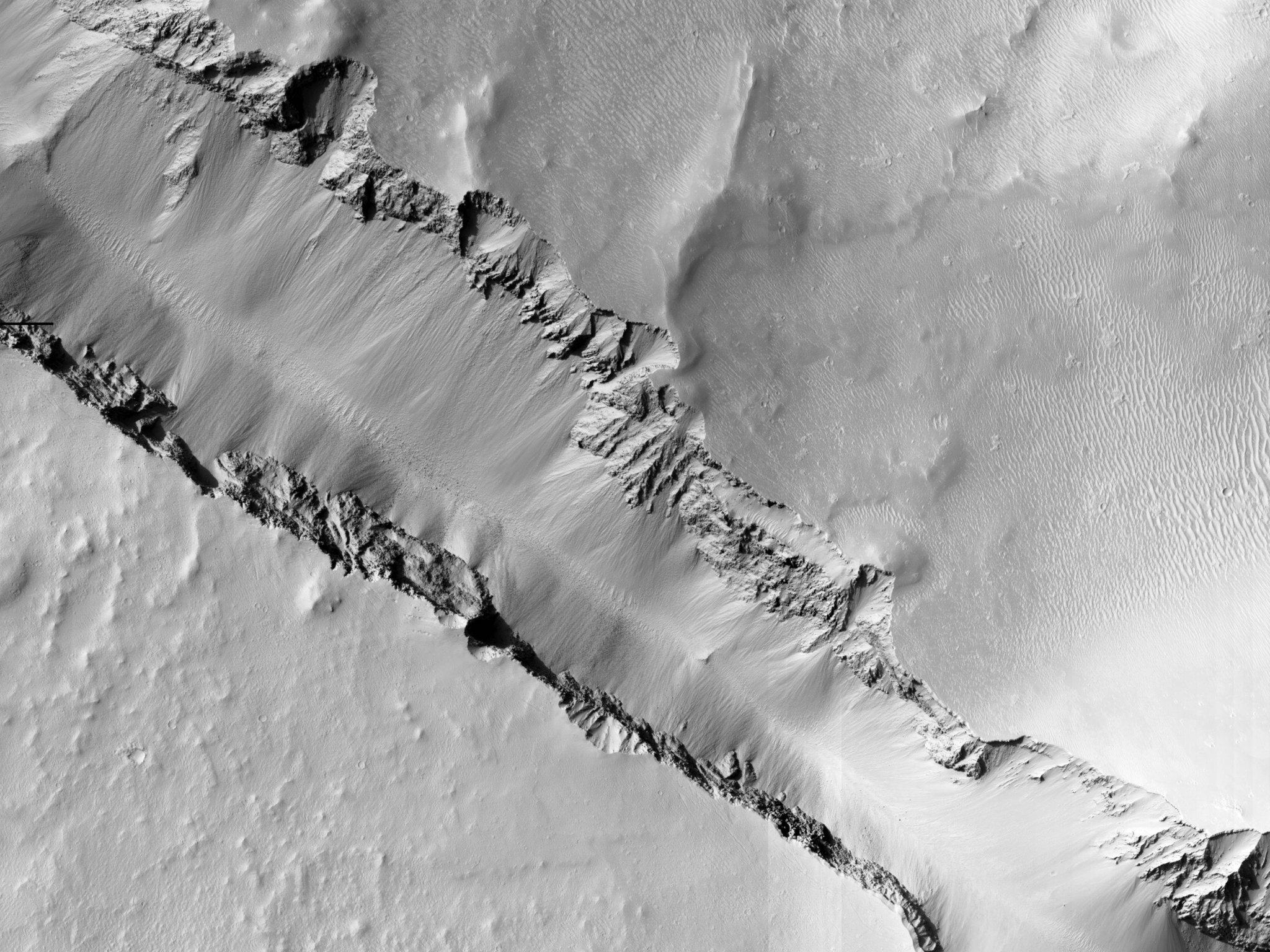
In this image, we see a portion of Cerberus Fossae cutting hills that predate volcanic flooding. There might be a be a nice stack of ancient lavas here.

https://uahirise.org/hipod/ESP_070929_1900 NASA/JPL-Caltech/University of Arizona

https://x.com/HiRISE/status/2124518404732121206?a=-AiThSB4OIkv83oliMY&s=20​


r/SpaceUnfiltered • • 23h ago

☄️ Fireball​ A camera facing north from Mount Fuji captured a fireball that appeared at 0:05:32 on November 23, 2026. Simultaneous observations from Mount Fuji and Hiratsuka confirmed that it was a fireball from the Northern Taurids meteor shower.

5 Upvotes

r/SpaceUnfiltered • • 23h ago

📰News Scientists Find Evidence of Primordial Water Hidden at The Edge of The Solar System

Post image
5 Upvotes

Image

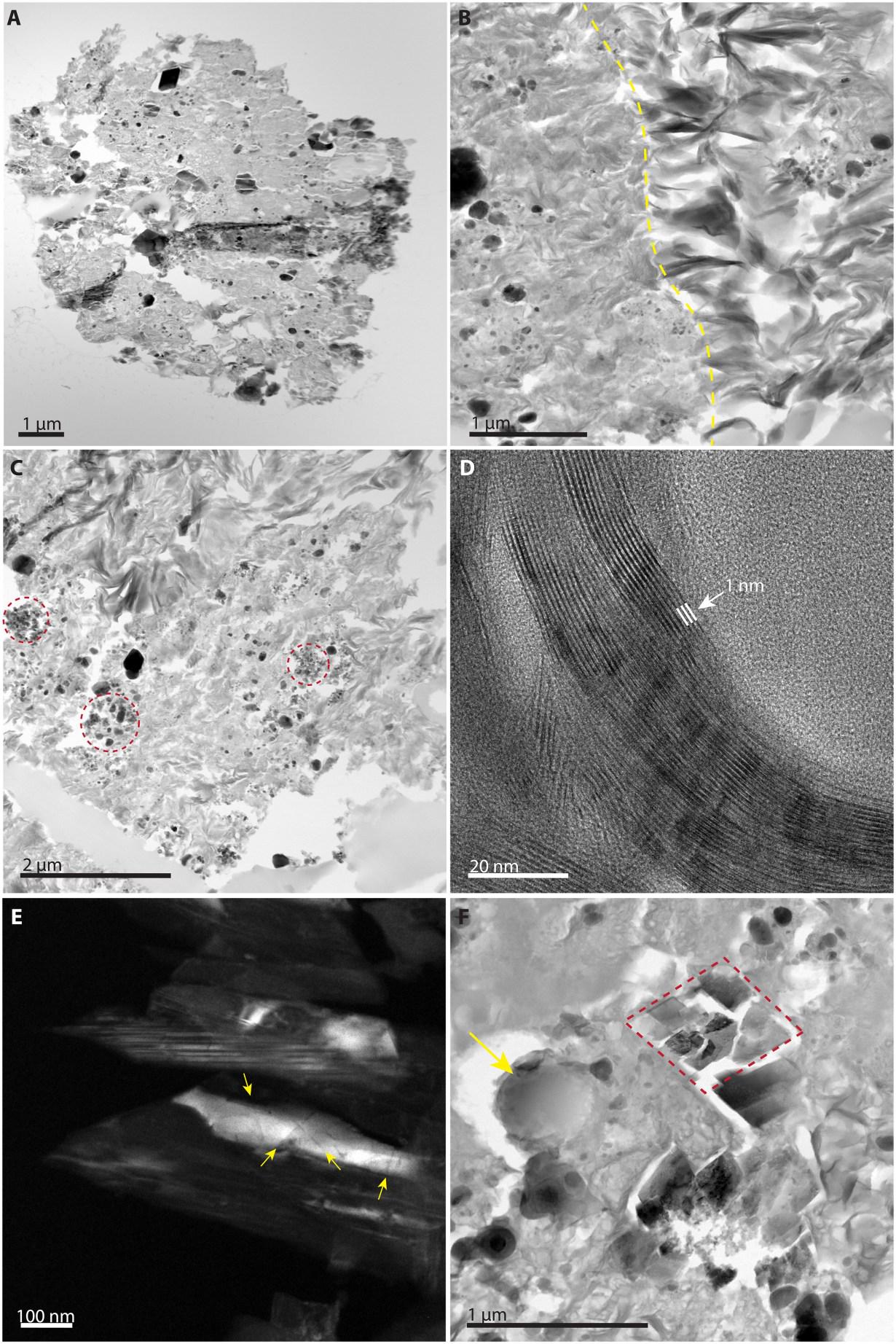
Description from paper:

The mineralogy of track-rich hydrated IDPs. (A) A bright-field (BF) scanning teM (SteM) image of a microtome thin section of idP l2079c35 showing a compact,low-porosity texture. the small dark grains are mineral grains, mainly sulfides and carbonates. (B) A BF SteM image showing the textural varieties of clay minerals in hy-drated idPs with coarse clays (right of dashed yellow line) and fine-grained clays with sulfide inclusions (left). (C) A BF SteM image showing a region of fine-grained clayswith three clusters of sulfide inclusions indicated by the red dashed circles. (D) A high-resolution teM (hRteM) image of a saponite crystal showing the characteristic 1-nmbasal spacing. (E) A dark-field teM image of an enstatite crystal in idP l2079c35 showing a high density of SeP tracks (yellow arrows) with a density of ∼5 × 10 10 /cm 2 .(F) A BF SteM image showing a rhombohedral crystal of ferroan magnesite (red dashed outline) and a carbon nanoglobule (yellow arrow)​​

.

​The Solar System is a soggy sort of place.

Although most of Earth's surface is covered in liquid water, it's a mere drop in the ocean compared to the entire volume contained in the Solar System – much of it locked away as ice in the moons of the giant planets.

The outer Solar System is icier still. Far from the warmth of the Sun, the estimated millions of icy objects that make up the Kuiper Belt beyond Neptune are thought to contain absolute scads of the stuff.

And now, scientists have found evidence that at least some of that distant water is of a kind singularly unlike the water we have here on Earth.

In a handful of dust grains that traveled to Earth from the Kuiper Belt, traces remain of long-lost water bearing the signature of primordial chemistry – suggesting that the water reservoir at the edge of the Solar System remained pristine, untouched by the changes unfolding closer to the Sun.

It is, according to a study led by planetary scientist Lindsay Keller of NASA's Johnson Space Center, "compelling evidence for the presence of a major heavy water reservoir beyond the orbits of the gas giant planets that was largely isolated from inner solar system materials."

.

The Kuiper Belt beyond Neptune's orbit at roughly 30 astronomical units from the Sun – 30 times the Earth-Sun distance – represents a somewhat challenging Solar System frontier.

Very few human-made craft have ventured into its cold, dark reaches.​

It takes years to get there; landing a probe or collecting samples to send to Earth would be so astronomically difficult and expensive that – so far at least – it's out of the question entirely.​

.

This is kind of a bummer, because the chunks of ice and rock hanging out in the Kuiper Belt are thought to be among the most unchanged remnants of the early Solar System since it all coalesced out of solar amniotic dust and gas some 4.5 billion years ago.

Luckily for us, though, not everything in the Kuiper Belt stays there.

We can't see it, but the Solar System is full of cosmic dust. An estimated 5,200 metric tons of the stuff rains down on Earth every year. And some of that dust has traveled a long, long way to get here.​

.

More https://www.sciencealert.com/breaking-scientists-find-evidence-of-primordial-water-hidden-at-the-edge-of-the-solar-system

https://science.nasa.gov/blogs/science-news/2026/11/18/nasa-scientists-find-clues-to-ancient-ice-beyond-neptune/

Paper https://www.science.org/doi/10.1126/sciadv.aeg1602


r/SpaceUnfiltered • • 23h ago

🔭Webb Nucleus of NGC 7766 with JWST NIRCam F150W. Only screenshot from SAO Image DS9. Zoomed-out image (right) shows the x-shaped that these galaxies tend to have. The x-shape is just the bar of the galaxy seen edge-on.

Thumbnail
gallery
4 Upvotes

r/SpaceUnfiltered • • 1d ago

🔭Webb galaxy group NGC 7435/6 with JWST NIRCam. NGC 7433 is outside the detector.

Post image
6 Upvotes

F356W and insert with F150W

A group of four galaxies. A large spiral galaxy with two arms on the right. One of the galaxies has an insert, showing the dust lane in the galaxy center (zoomed in image in the white frame).​

Processed by Melina Thévenot

https://bsky.app/profile/melina-iras07572.bsky.social/post/3n2ux6dxhn22o


r/SpaceUnfiltered • • 21h ago

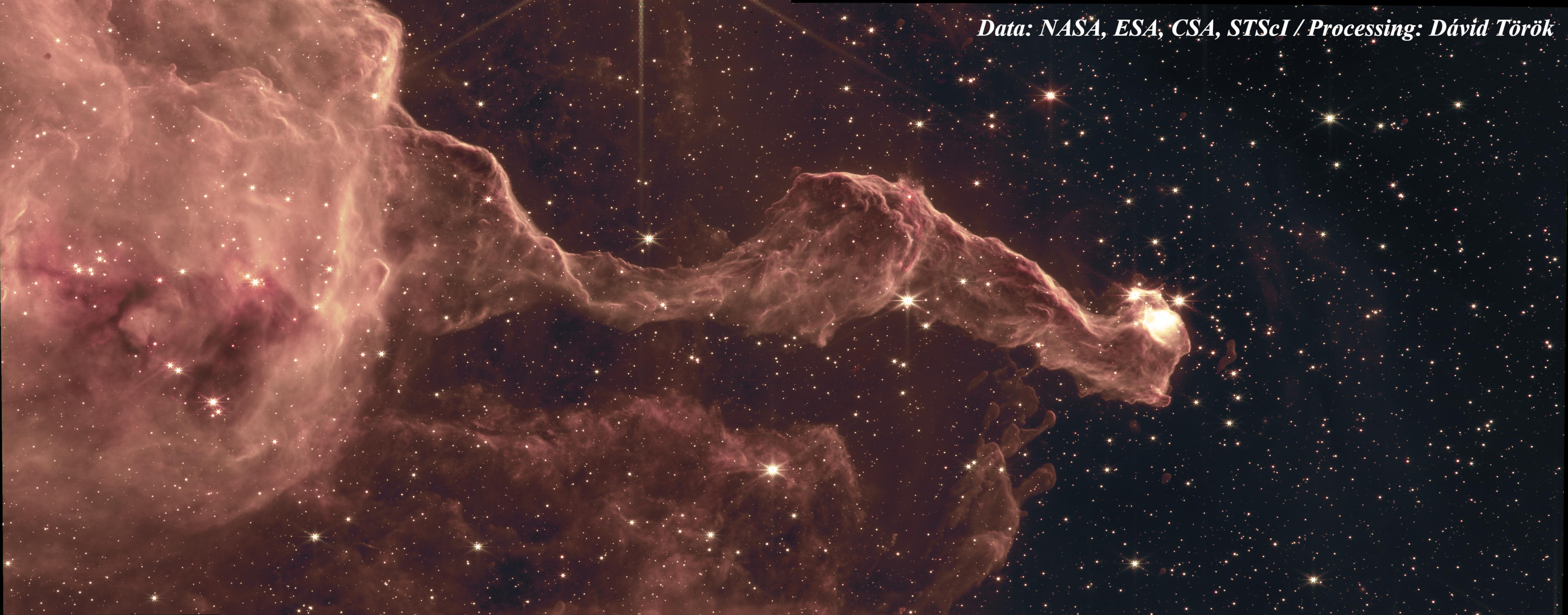
🔭Webb Cat's Head nebula, NIRcam long wavelength

Post image
2 Upvotes

r/SpaceUnfiltered • • 1d ago

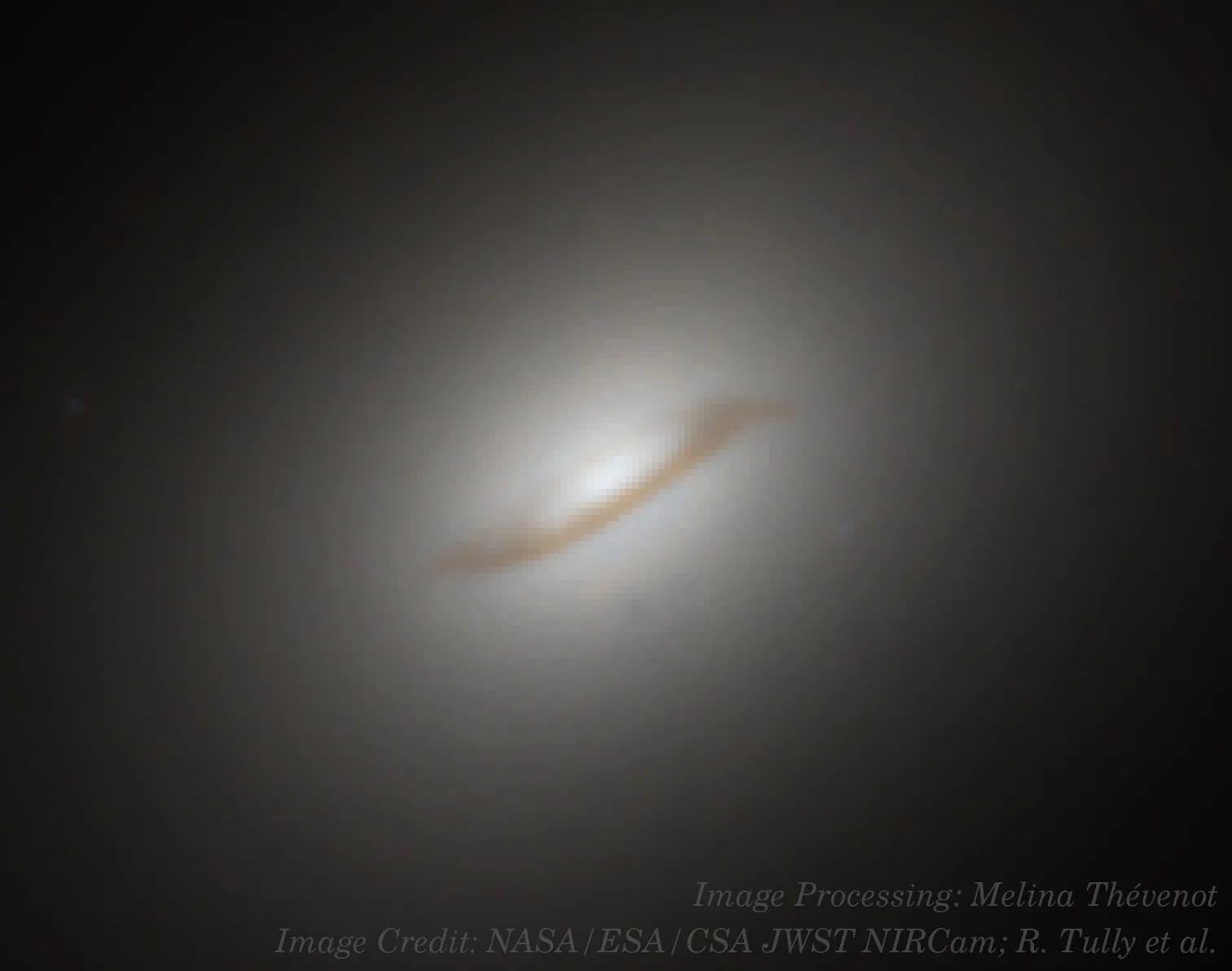
🔭Webb Nucleus of NGC 3158 (target name PGC 29822) with JWST NIRCam

Post image
4 Upvotes

F150W, F356W

A warped dust ring around the nucleus

Processed by Melina Thévenot

https://bsky.app/profile/melina-iras07572.bsky.social/post/3n2ux6dxhn22o


r/SpaceUnfiltered • • 1d ago

📸AstroPhotography i captured the Eskimo using a telescope from usa

Thumbnail gallery
4 Upvotes

r/SpaceUnfiltered • • 1d ago

☄️ Fireball​ A large fireball (a bright meteor) appeared at 12:50 a.m. on November 22nd. This footage was captured in Tokyo and is shown at actual speed. The constellation Orion is visible in the upper right, and Sirius can be seen below the point where the fireball first began to glow.

16 Upvotes

Toward end, it even appears to flare up brightly, as if exploding.

Credit KAGAYA

https://x.com/KAGAYA_11949/status/2124178460499431851?a=cbdr3wVcKQP5qXBfWhY&s=20​


r/SpaceUnfiltered • • 1d ago

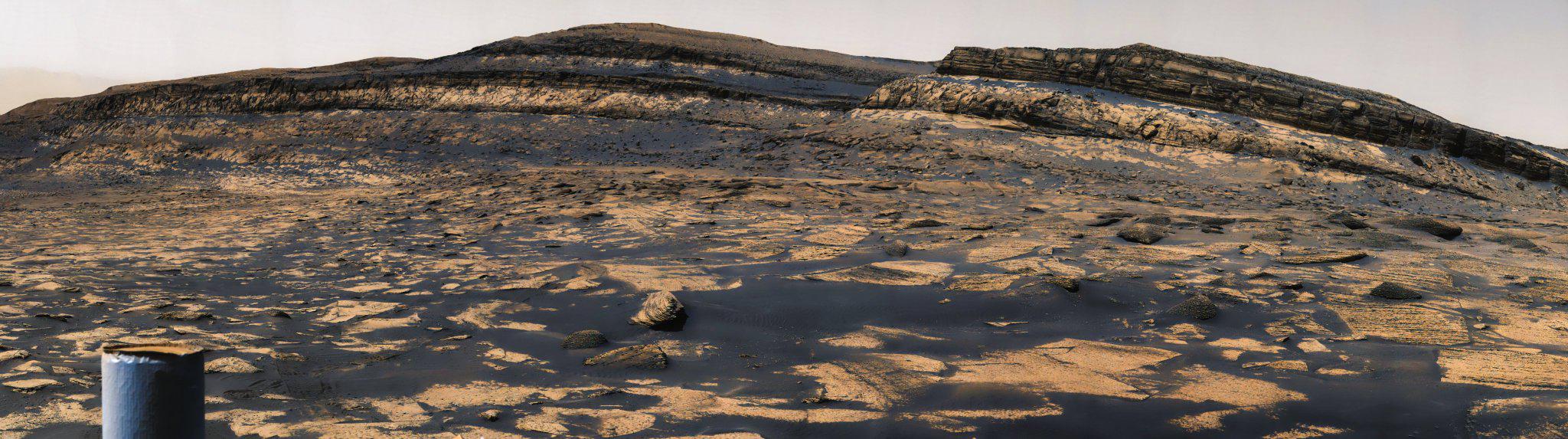
🤖Curiosity rover​ Layers of Mars. Mount Sharp, Gale crater, seen by Curiosity on sol 5077 — 17 Nov 2026. A 48-image Mastcam panorama with enhanced colour and contrast.

Post image
8 Upvotes

NASA/JPL-Caltech/MSSS/ChatGPT/Thomas Thomopoulos

https://bsky.app/profile/tthomopoulos.bsky.social/post/3n2tkghev7s2z


r/SpaceUnfiltered • • 2d ago

🛰️ Hera mission​ Awesome Stereo3D view of Didymos, captured by ESA's Hera spacecraft

Post image
72 Upvotes

Image

Stereo view of Didymos asteroid to look into infinity to see. This comes from images acquired by ESA's Hera spacecraft, produced by Sir Brian May and Claudia Manzoni from adjacent Asteroid Framing Camera images acquired by Jean-Baptiste Vincent of the German Aerospace Center, DLR. Sir Brian May explains: "The trick is to view this pair of images from a foot (30cm) or so away, and look "through" the screen to infinity, allowing the two images to float across each other. Where the two central pictures exactly overlap, you can gently adjust the FOCUS only of your eyes (not the convergence) to fuse the images into a single Three-Dimensional image."

Credit: ESA-HERA mission; stereo by Brian May/Claudia Manzoni, London Stereoscopic Company

.

Hera science team member, astrophysicist and Queen guitarist Sir Brian May has added an additional dimension to the ESA planetary defence mission’s early views of the Didymos asteroid system via stereoscopic imagery – revealing the dramatic features of this exotic body as never before.

.

Sir Brian May comments: “The Hera spacecraft acquired these two images on 06 November as it circled the Didymos system at a distance of 29.7 km with a resolution of 2.8 m per pixel, providing the perfect opportunity to create this stereoscopic image. Viewed in depth, the sharpness and smoothness of Didymos’s equatorial ridge is very apparent, compared with the rock-strewn surface of the rest of the asteroid.”

Hera principal investigator Patrick Michel, Director of Research at CNRS / Observatoire de la Côte d'Azur, adds: “Allowing us to observe in 3D with stereo pairs really makes us feel like we are there – even though these images come from 197 million km away. The result is both spectacular and scientifically meaningful.”

.

Sir Brian May produced this stereoscopic view of Didymos with his colleague Claudia Manzoni. It combines adjacent acquisitions of the asteroid taken a few moments apart using Hera’s main Asteroid Framing Camera instrument by the instrument’s principal investigator Jean-Baptiste Vincent of the German Aerospace Center, DLR.

The very slight changes between the two images mimic the way our two human eyes view the same objects from very slightly different angles to yield stereo vision. The challenge comes in aligning the two images in a manner that seems optically true to our eyes.​

.

The stereoscopic views can be seen using colour 3D glasses, a dedicated viewer or else with your own eyes through ‘free viewing’.

The 3D view can be seen using a pair of red and blue 3D glasses. The second version can be seen by crossing your eyes, while the third can be accessed by looking into infinity – or else via a dedicated viewer, such as the OWL stereoscope, designed by Sir Brian May and available from the London Stereoscopic Company.​

.

Daniel Pomarède

https://bsky.app/profile/pomarede.bsky.social/post/3n2t3ymr6ic2d

source

https://www.esa.int/articles/about-us/directorates/operations/space-safety/hera/sir-brian-may-adds-new-dimension-to-hera-asteroid