r/SpaceUnfiltered • • 19h ago

Aurora​ Intense aurora over Alaska! By Vincent Ledvina

251 Upvotes

"​This clip is not sped up, and I didn't do any editing besides a little bit of denoising. Gear used? Sony a7s iii + Tamron 35 mm f/1.4 SP shot wide open (of course) at 1/25 s, ISO 16,000. The motion is real, and it was so fast and intense. The location where this was filmed is near Fairbanks, Alaska. Date was in Feb 2024."

Credit Vincent Ledvina

​https://x.com/Vincent_Ledvina/status/2124369066404061394?a=bJidWB6aLHpGEM7IzIs&s=20​

https://x.com/Vincent_Ledvina/status/2124369065372238000?a=4XuHSPhl9m2tXr7ORT4&s=20


r/SpaceUnfiltered • • 17h ago

🎥Timelapse Fifty million years ago, a white dwarf in NGC 1433 was obliterated in a thermonuclear explosion. That light just reached Earth.

130 Upvotes

Cropped version at the end​

​Video spans, Sep 7-Nov 18, 2026

A stellar explosion in the spiral galaxy NGC 1433, approximately 50 million light-years from Earth, has given astronomers rare opportunity to observe​ supernova while it is still brightening.

Unlike many supernova discoveries made after an explosion has begun fading, SN 2026ahvu was identified while its brightness was increasing.​

Credit Slooh

https://x.com/Slooh/status/2123854125368476067?a=x9heSrXtLCZu-lxbCBc&s=20​


r/SpaceUnfiltered • • 19h ago

🔭Webb Galaxy cluster ABELL 2813 | NIRCam JWST Webb

Post image
68 Upvotes

PI: Seiji Fujimoto. Observed: 2025-11-14.

Filters: F090W F1152 F150W F200W F277W F356W F410M F444W

Title: Vast Exploration for Nascent, Unexplored Sources (VENUS)

Processed by Israel Velazquez

https://bsky.app/profile/ornlu.bsky.social/post/3n2uog3euic2e


r/SpaceUnfiltered • • 9h ago

📸AstroPhotography Sun roll along the pyramid

Thumbnail
gallery
19 Upvotes

Credit: ​Wael Omar WO (not mine)

.

.

From his description:

"The concept behind this photograph was to create a carefully aligned composition in which the rising Sun appears to emerge from behind the “ Khafrah “ Pyramid and move along its edges, creating the visual impression of the Sun rolling over the monument.

However, my objective was not limited to achieving a striking alignment. I also wanted to reveal the Sun in a way that differs from conventional solar photography by capturing details of its hydrogen emissions.

For this purpose, I used a specialized Hydrogen-Alpha imaging setup , the MLastro spectroheligraph to observe the solar chromosphere, the dynamic atmospheric layer above the photosphere. Imaging at the H-alpha wavelength of 656.28 nm reveals solar structures associated with magnetic activity, including filaments, active regions, and prominences.

.

This wavelength is particularly fascinating because hydrogen is the primary fuel in the Sun's nuclear fusion process. Approximately 600 million tons of hydrogen are converted into helium every second, releasing the energy that powers our solar system.

Achieving the intended composition required careful planning and precise calculations. I selected an elevated shooting position on top of a mosque minaret to obtain the appropriate viewing angle and alignment with the Great Pyramid.

The imaging session began shortly before sunrise continuing through sunrise and shortly afterward.

The resulting footage captured the Sun emerging from behind the Pyramid and appearing to travel along its edges, while simultaneously revealing details of its hydrogen-alpha structures.

.

​Technical Details:

Several images 1/400 sec, iso 250, F9

Video 120Fbs , 2.2ms, Gain 124 by MLastro device.​"

.

.

Source

https://app.astrobin.com/i/14nse6


r/SpaceUnfiltered • • 8h ago

☀️Solar activity "We have a decent-sized coronal hole is beginning to line up with Earth. The fast wind flowing out may intercept Earth and drive some minor geomagnetic storms starting around Nov 26-27. Sporadic mid-latitude displays are possible."

Post image
15 Upvotes

r/SpaceUnfiltered • • 7h ago

☀️Solar activity Two relatively small active regions rotate into view on the Sun's north-eastern limb. Around 02:50z and 03:30z we can observe small filaments lifting off, producing two CMEs ('solar storms'). They will most likely pass way behind Earth's orbit. (22.11.26)

14 Upvotes

r/SpaceUnfiltered • • 8h ago

☄️ Fireball​ Fireball around 2026/11/22 00:49:57. From Kawasaki City, via the south-facing camera.

11 Upvotes

the south-facing camera missed the end of the event.

​Credit n_mikan

https://x.com/n_mikan/status/2124342880181592407?a=VPDpwy3_r_fB7fzkfag&s=20


r/SpaceUnfiltered • • 7h ago

📸AstroPhotography Beautiful - LMC - With and without NB filter

10 Upvotes

Credit u/McGrub27

From his original description:

"​Still baffles me how useful the L-Extreme has been for me, even with a stock camera.

Sony a7IV stock + Rokinon 135mm f2.8 Broadband: 103 × 120s = 3h 27m Narrowband: 163 × 120s = 5h 28m Star adventurer 2i, Optolong l-extreme 📍 Mimosa Rocks National Park, NSW, Australia

Stacked and processed in Pixinsight, finalized in Lightroom​"

.

Note: NB​= NarrowBand


r/SpaceUnfiltered • • 20h ago

🔭Euclid Space Telescope Euclid & legacy surveys image of the galaxy ESO 251-39

Post image
10 Upvotes

Two interacting galaxies, a small on the upper left and a larger spiral with some dust rising towards the smaller galaxy. A few bright stars and a lot of small galaxies.

Processed by Melina Thévenot

https://bsky.app/profile/melina-iras07572.bsky.social/post/3n2vhmbl7xc2h


r/SpaceUnfiltered • • 18h ago

🛰HiRISE​ A Patchy Outcrop of Light-Toned Materials (HiRISE Mars)

Post image
7 Upvotes

This observation targets patchy exposures of light-toned outcrops. These materials may be chloride bearing. Erosion appears to have cut through the entirety of the light-toned materials.

For some reason the website is an unaccessible​

https://uahirise.org/hipod/ESP_075874_1500

https://x.com/HiRISE/status/2124156085384728787?a=pFUu9FDJrkBMhwfG0Yo&s=20​


r/SpaceUnfiltered • • 18h ago

🛰HiRISE​ Cutting through History (HiRISE Mars)

Post image
6 Upvotes

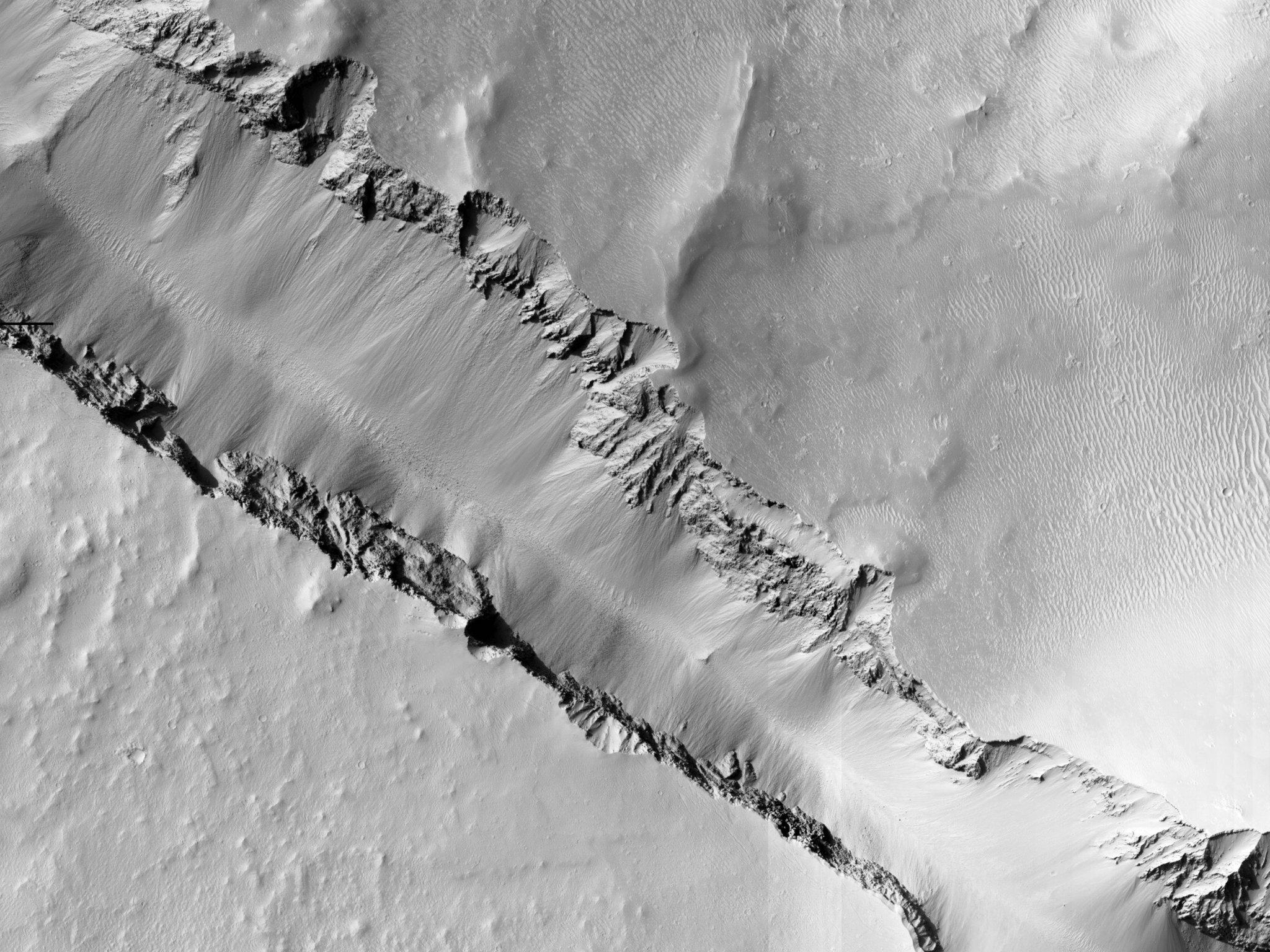
In this image, we see a portion of Cerberus Fossae cutting hills that predate volcanic flooding. There might be a be a nice stack of ancient lavas here.

https://uahirise.org/hipod/ESP_070929_1900 NASA/JPL-Caltech/University of Arizona

https://x.com/HiRISE/status/2124518404732121206?a=-AiThSB4OIkv83oliMY&s=20​


r/SpaceUnfiltered • • 20h ago

🔭Webb galaxy group NGC 7435/6 with JWST NIRCam. NGC 7433 is outside the detector.

Post image
6 Upvotes

F356W and insert with F150W

A group of four galaxies. A large spiral galaxy with two arms on the right. One of the galaxies has an insert, showing the dust lane in the galaxy center (zoomed in image in the white frame).​

Processed by Melina Thévenot

https://bsky.app/profile/melina-iras07572.bsky.social/post/3n2ux6dxhn22o


r/SpaceUnfiltered • • 17h ago

☄️ Fireball​ A camera facing north from Mount Fuji captured a fireball that appeared at 0:05:32 on November 23, 2026. Simultaneous observations from Mount Fuji and Hiratsuka confirmed that it was a fireball from the Northern Taurids meteor shower.

5 Upvotes

r/SpaceUnfiltered • • 18h ago

📰News Scientists Find Evidence of Primordial Water Hidden at The Edge of The Solar System

Post image
5 Upvotes

Image

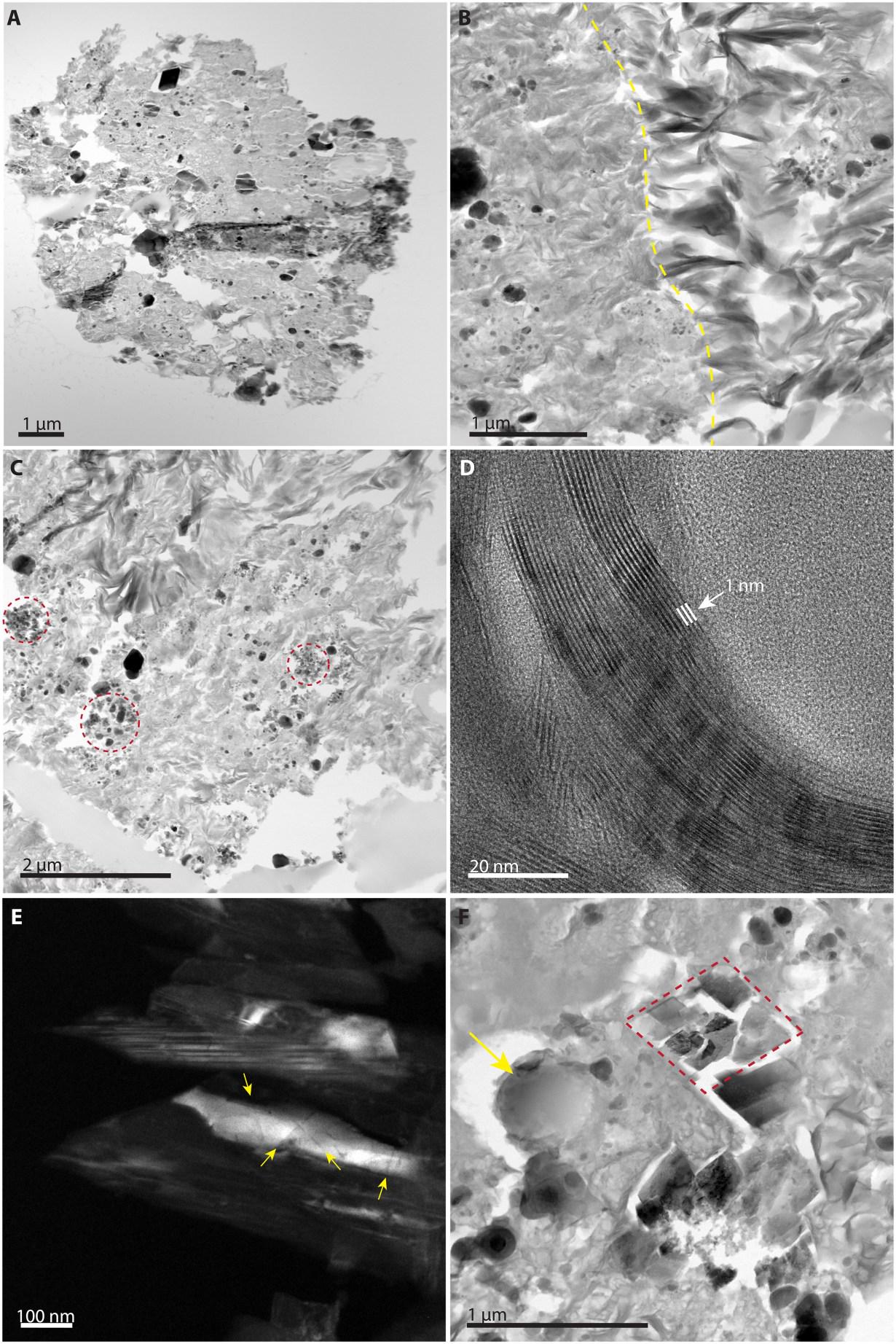
Description from paper:

The mineralogy of track-rich hydrated IDPs. (A) A bright-field (BF) scanning teM (SteM) image of a microtome thin section of idP l2079c35 showing a compact,low-porosity texture. the small dark grains are mineral grains, mainly sulfides and carbonates. (B) A BF SteM image showing the textural varieties of clay minerals in hy-drated idPs with coarse clays (right of dashed yellow line) and fine-grained clays with sulfide inclusions (left). (C) A BF SteM image showing a region of fine-grained clayswith three clusters of sulfide inclusions indicated by the red dashed circles. (D) A high-resolution teM (hRteM) image of a saponite crystal showing the characteristic 1-nmbasal spacing. (E) A dark-field teM image of an enstatite crystal in idP l2079c35 showing a high density of SeP tracks (yellow arrows) with a density of ∼5 × 10 10 /cm 2 .(F) A BF SteM image showing a rhombohedral crystal of ferroan magnesite (red dashed outline) and a carbon nanoglobule (yellow arrow)​​

.

​The Solar System is a soggy sort of place.

Although most of Earth's surface is covered in liquid water, it's a mere drop in the ocean compared to the entire volume contained in the Solar System – much of it locked away as ice in the moons of the giant planets.

The outer Solar System is icier still. Far from the warmth of the Sun, the estimated millions of icy objects that make up the Kuiper Belt beyond Neptune are thought to contain absolute scads of the stuff.

And now, scientists have found evidence that at least some of that distant water is of a kind singularly unlike the water we have here on Earth.

In a handful of dust grains that traveled to Earth from the Kuiper Belt, traces remain of long-lost water bearing the signature of primordial chemistry – suggesting that the water reservoir at the edge of the Solar System remained pristine, untouched by the changes unfolding closer to the Sun.

It is, according to a study led by planetary scientist Lindsay Keller of NASA's Johnson Space Center, "compelling evidence for the presence of a major heavy water reservoir beyond the orbits of the gas giant planets that was largely isolated from inner solar system materials."

.

The Kuiper Belt beyond Neptune's orbit at roughly 30 astronomical units from the Sun – 30 times the Earth-Sun distance – represents a somewhat challenging Solar System frontier.

Very few human-made craft have ventured into its cold, dark reaches.​

It takes years to get there; landing a probe or collecting samples to send to Earth would be so astronomically difficult and expensive that – so far at least – it's out of the question entirely.​

.

This is kind of a bummer, because the chunks of ice and rock hanging out in the Kuiper Belt are thought to be among the most unchanged remnants of the early Solar System since it all coalesced out of solar amniotic dust and gas some 4.5 billion years ago.

Luckily for us, though, not everything in the Kuiper Belt stays there.

We can't see it, but the Solar System is full of cosmic dust. An estimated 5,200 metric tons of the stuff rains down on Earth every year. And some of that dust has traveled a long, long way to get here.​

.

More https://www.sciencealert.com/breaking-scientists-find-evidence-of-primordial-water-hidden-at-the-edge-of-the-solar-system

https://science.nasa.gov/blogs/science-news/2026/11/18/nasa-scientists-find-clues-to-ancient-ice-beyond-neptune/

Paper https://www.science.org/doi/10.1126/sciadv.aeg1602


r/SpaceUnfiltered • • 20h ago

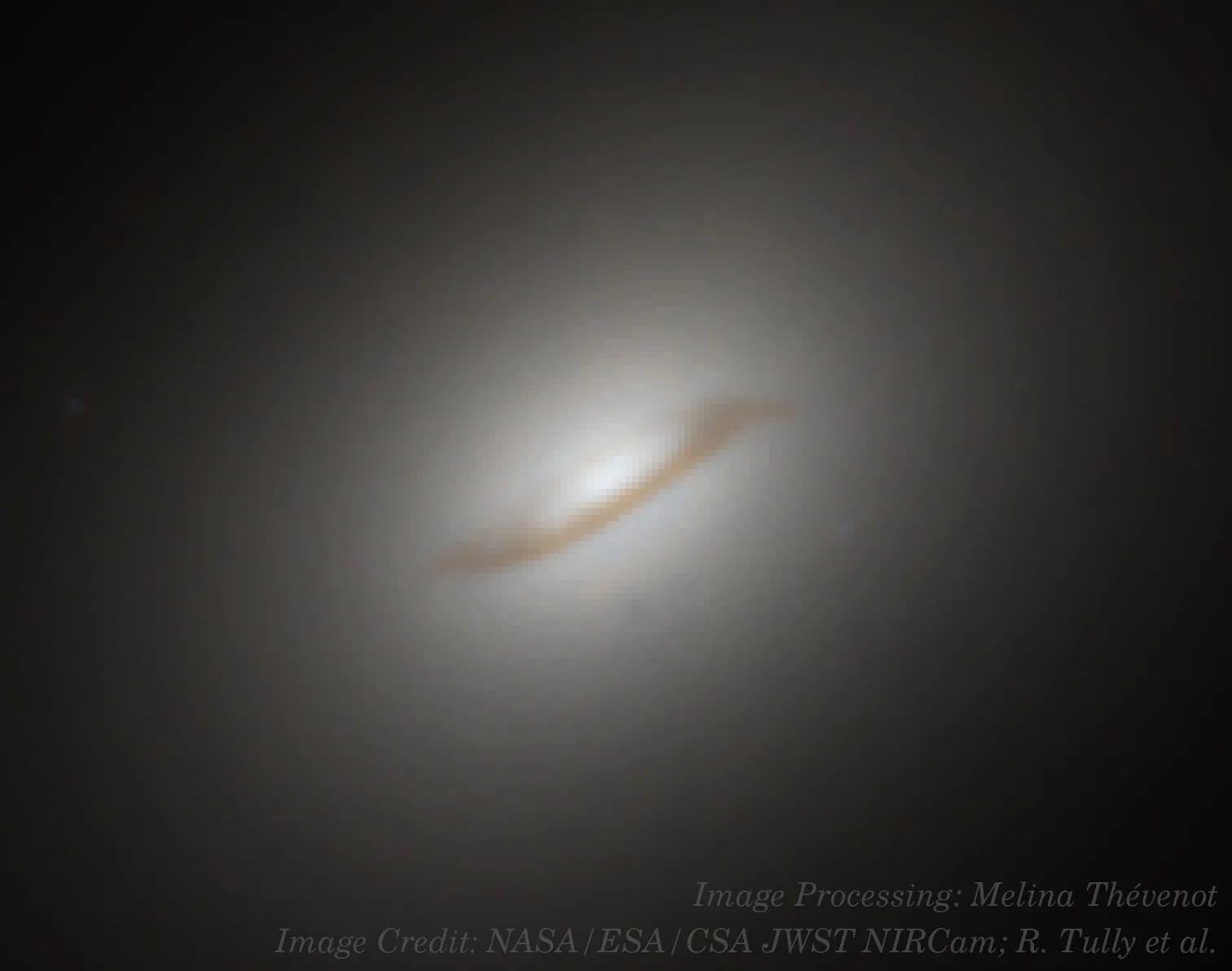
🔭Webb Nucleus of NGC 3158 (target name PGC 29822) with JWST NIRCam

Post image
4 Upvotes

F150W, F356W

A warped dust ring around the nucleus

Processed by Melina Thévenot

https://bsky.app/profile/melina-iras07572.bsky.social/post/3n2ux6dxhn22o


r/SpaceUnfiltered • • 17h ago

🔭Webb Nucleus of NGC 7766 with JWST NIRCam F150W. Only screenshot from SAO Image DS9. Zoomed-out image (right) shows the x-shaped that these galaxies tend to have. The x-shape is just the bar of the galaxy seen edge-on.

Thumbnail
gallery
3 Upvotes

r/SpaceUnfiltered • • 20h ago

📸AstroPhotography i captured the Eskimo using a telescope from usa

Thumbnail gallery
3 Upvotes

r/SpaceUnfiltered • • 16h ago

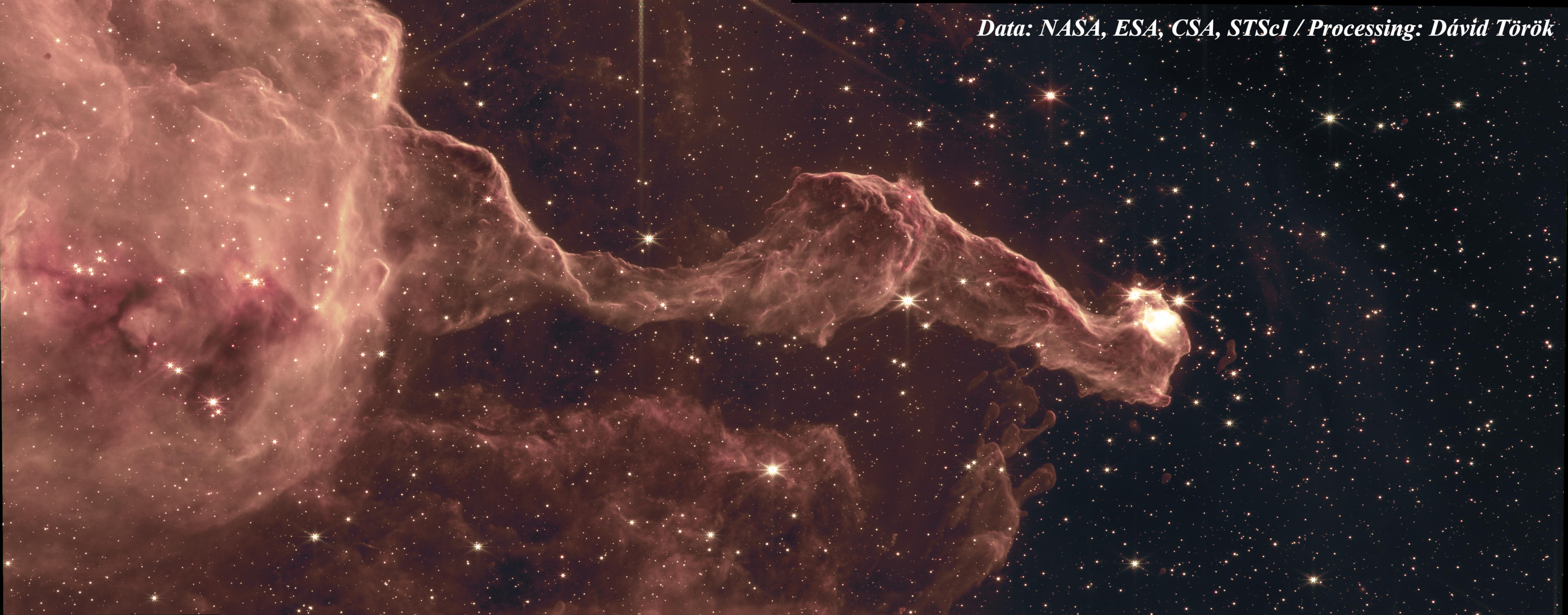
🔭Webb Cat's Head nebula, NIRcam long wavelength

Post image
2 Upvotes

r/SpaceUnfiltered • • 8h ago

☄️ Fireball​ Very bright fireball from Kawasaki City

1 Upvotes

"Around 2026/11/22 00:49:57, a very bright fireball appeared! Captured it from its appearance to its disappearance. Filmed with a camera facing east from Kawasaki City."

Credit / text: n_mikan

https://x.com/n_mikan/status/2124337315812368832?a=Y0nYfw_BirlWSLqU07Q&s=20​