This is written for both patients and doctors. It's shared for educational and research purposes, not as medical advice. I'm not a doctor, so bring anything here to your own clinician.
You'd think "What is UARS?" would have been the first post I ever wrote here. I've written about pieces of it before, but never a plain, "start here" answer. After about six years on Reddit, I think it says a lot that only now am I writing it. There has been a huge amount of confusion around this question over the years.
Some context. The previous creator of r/UARS, u/ciras (Illorum on Discord), ran the subreddit and a Discord server for about a year and a bit, but eventually stopped believing in UARS, and to some extent in sleep apnea itself. He privated the subreddit, leaving a message that UARS is diagnosed as OSA, and directed users to r/SleepApnea.
When I first entered the space, as a part of his community, the general understanding was that UARS = <5 AHI, and you do a WatchPAT, it says your pRDI is 5 or more, and "congratulations, you have UARS!", and it was also about RERAs, arousals, or something like that. That was my understanding, 5-6 years ago. I was diagnosed with mild to moderate OSA, so I always thought I had sleep apnea, they had UARS. Not really, but we'll get into that.
What I think is interesting is that he correctly saw that UARS had been largely folded into OSA. The way sleep studies are scored changed over time. Many of the breathing events that used to be labelled UARS, where breathing gets harder and wakes you up without big oxygen drops, now count toward the AHI under AASM 1A. Because of that, many of those same patients who would previously have been told "you have UARS" are now told "you have mild to moderate sleep apnea". Where I think he went wrong was concluding that sleep-disordered breathing is not important to treat. OSA/UARS is a real problem. And the "UARS patients" who are now diagnosed with OSA are, in many ways, distinct from the typical OSA population. If sleep doctors don't understand that, they'll have a much harder time understanding how to help them. That's what this post is about.
---
What UARS is, physiologically
Dr. Christian Guilleminault described UARS in the early 1990s. His patients were exhausted, had insomnia, brain fog and muscle discomfort, and were often mistaken for chronic fatigue syndrome or fibromyalgia. Yet they didn't meet the criteria for sleep apnea.
The way I think about it, to sleep well you have to relax, breathe, and sleep all at the same time. Falling asleep, especially into deeper sleep, means the muscles that hold the airway open lose some of their tone. That includes the muscles of the soft palate, tongue, hyoid and lateral pharyngeal walls (the upper airway dilator muscles), as well as the ones that keep the lips closed and the jaw forward.
In a healthy person with favorable anatomy, that’s generally fine. The airway stays open even when those muscles relax. In UARS patients, I think the anatomy is less forgiving, and how that manifests can differ from person to person. For example, for one it may be the soft palate falling back, for another the tongue, for another the hyoid dropping or the mouth falling open, and for many it’s probably a combination. Either way, the airway narrows. A narrower airway means more resistance. More resistance means more breathing effort, which means more negative pressure, which pulls the airway even narrower, and this makes it even harder to breathe.
So, what I suspect is that these patients end up in a constant struggle throughout the night: trying to stay asleep, relax as much as they can, and keep breathing, and they never quite manage to do all three particularly well. It probably gets worse the deeper they go, too, since the upper airway dilator muscles progressively relax the deeper the sleep becomes.
One of the things that seems to separate typical OSA from UARS patients, while both groups suffer from the same consequences of the upper airway dilator muscles relaxing, the way they respond to it varies. The UARS patient has either a regular/intact or a sensitive arousal response, whereas the typical OSA patient's response appears blunted, so the airway is allowed to collapse, they hold their breath, and you get the apneas, desaturations, and gasping that sleep studies are designed to catch.
Guilleminault found exactly this. In his UARS patients, increases in breathing effort or flow limitation triggered an arousal. In contrast, his OSA patients’ arousal response was “clearly delayed.” He also found that OSA patients had reduced sensation in the palate, while UARS patients tested the same as healthy controls, and he suggested this may be part of the reason. Some researchers think this loss of sensation develops over time, from years of snoring vibration, which could be one reason some patients become more OSA-like with age.
In a sense, the UARS patient’s alarm system works. But with a malformed craniofacial structure, they can’t safely let go of their neuromuscular tone during sleep (the muscles that keep the airway open, the lips closed and the jaw forward), and that keeps them from settling into restorative sleep.
I don't think this is always an intermittent event that a sleep study can traditionally count. I think it's often a more persistent, all-night stressor. Some of it may show up as say, arousal hypopneas under today's scoring rules, but much of it may not show up at all. If that's the case, sleep quality becomes reduced, the sleep debt builds, and the symptoms follow. It would also explain why someone can have a "mild" sleep study but symptoms that are anything but mild. And this isn’t unique to UARS. Even in OSA, the AHI correlates poorly with how sleepy or unwell people actually feel. In this case, that mismatch sometimes leads sleep physicians to conclude, "mild OSA doesn't fit, so it must be something else, like CFS or fibromyalgia." Which is really quite ironic, given that UARS was first described in patients being misdiagnosed with exactly that.
---
How scoring rules created, and then erased, UARS as a diagnosis
When UARS was first described, sleep studies weren't scored the way they are now. Thermistor airflow sensors and inconsistent hypopnea rules let these patients fall through the cracks. Then the rules changed back and forth:
1999: AASM "Chicago" criteria. A hypopnea could be scored with a >50% reduction in airflow, and ≥3% oxygen drop or an arousal.
2001 onward: Medicare (CMS) adopted ≥30% reduction in airflow, but 4% oxygen drop rule with no arousal criterion, and the 2007 AASM manual made 4% the recommended rule. Arousal-ending events were pushed out into the optional "RERA" category, which many labs didn't score at all.
2005: the international classification (ICSD-2) folded UARS into OSA.
2012 onward: the AASM recommended rule 1A became a ≥30% airflow drop for ≥10 seconds, with a ≥3% oxygen drop or an arousal. This closed the majority of the cracks, again.
2023: Downgraded the 4% rule from “acceptable” to “optional”.
CMS still requires the 4% rule, and most home sleep tests can't score EEG arousals at all. So depending on which rule your study used, the same night of sleep can produce a very different number.
A note on home tests: WatchPAT and ring-type devices estimate pRDI from autonomic signals like finger blood flow and heart rate, not airflow or EEG arousals. A high pRDI on its own means very little, so if it’s high, get an in-lab study.
A 2024 Mayo Clinic study (Tu et al., Sleep Medicine) rescored the same studies under both rules. Under 3%/arousal:
RERAs went from about 28% of the RDI to under 5%.
The AHI rose by about 8.6 events/hour on average.
The new 3% AHI matched or slightly exceeded the old 4% RDI.
More patients met OSA criteria.
Approximately 77% of RERAs on 4% hypopnea were scored as hypopneas under AASM 1A.
In other words, it is possible that many of the events that used to define UARS now count toward AHI when scored via AASM 1A. This is exactly what ciras may have somewhat correctly identified. The patients remained the same, but throughout the years the label changed based on how the sleep studies were scored.
---
Why "RERAs = UARS" doesn't work anymore
In the beginning, the argument in the UARS community went: “My AHI is under 5, but I have RERAs and symptoms, so I have UARS.” In 2023 I was pretty harsh on that logic, and that is still true. If your AHI is 3, it only takes two RERAs an hour to reach an RDI of 5. Loosely scored RERAs, and raw arousal counts, can flag a lot of people who are perfectly healthy. And the RERAs on a typical sleep study today aren’t the same thing Guilleminault was scoring. He measured breathing effort directly with esophageal pressure (Pes), and according to Dr. Kasey Li, who worked closely with him, few people are even aware exactly how he scored them. Over time, UARS, RERAs, etc. has been sort of diluted by both lack of Pes, as well as the addition of AASM 1A, which means the majority of UARS patients don't need to fight for a diagnosis, and so RERAs are not as necessary now as they were in the past.
---
So is UARS just OSA? No, and this is what sleep doctors miss
This is where ciras' line of thinking stopped, and where I think the most important part of this discussion begins.
There's a component of sleep-disordered breathing that contributes to symptoms but doesn't show up well on a sleep study: how well someone can relax, breathe, and sleep all at the same time.
As I described above, someone with this kind of anatomy may be under added stress all night, and the symptoms follow. This can happen in OSA too. The difference is that OSA involves repeated collapse, and repeated collapse is exactly what a sleep study counts. So OSA can produce a very high number. The persistent, all-night stress I’m describing doesn’t break neatly into events per hour, and the AHI was never designed to measure it.
The patient often gets passed from doctor to doctor like a game of hot potato, and nobody sits down and lets them tell their story.
Across roughly 100 recorded two-hour sessions, nearly every person who suspected they had UARS, around 99%, described what I’d consider a real medical problem, most often fatigue, brain fog, or something else. That doesn't mean it's always sleep-disordered breathing. Some of it won't be. But listening to them is how you work out what it is.
Some data collected as a part of that project:
About 60% of clients diagnosed with OSA who had usable sleep data looked "arousal-driven": a mild AHI, little desaturation, and an RDI well above the AHI. Many would likely have scored under 5 with the old 4% rule.
UARS respondents more often reported physical fatigue (80% vs 46% in OSA), cold or sweaty hands and feet (73% vs 38%), lips that don't close at rest (62% vs 23%), and bruxism or TMJ (93% vs 64%).
OSA respondents more often reported waking 2+ times a night (69% vs 31%), napping easily (86% vs 60%), and actual headaches (79% vs 60%).
Classic OSA signs (snoring, waking up gasping, dozing off unintentionally) were uncommon in both groups.
The "arousal-driven" OSA clients looked the most UARS-like of anyone: the most night wakings, trouble falling back asleep, vivid dreams, and CPAP failure.
That last group is the one I want people to pay attention to. On paper they have OSA. In practice they look, feel and respond to treatment much more like the patients Dr. Guilleminault was describing.
---
Treatment may differ even at the same AHI
Here's a stereotype. It's oversimplified, and I know it sometimes offends, but it makes the point.
The "typical" OSA patient is older and heavier, may or may not be craniofacially deficient, and often has a large tongue and a lot of soft tissue. They often tolerate CPAP well, and it helps.
The UARS-type patient is more likely to be younger and slimmer. In my opinion they're more craniofacially deficient, often in several ways at once, more like a set of various, random, and sometimes overlapping anatomical traits than neat phenotypes. They may have:
poor nasal breathing
lip incompetence and mouth breathing
low tongue posture
recessed or underdeveloped jaw(s)
a very small pharyngeal airway
It's more of a hard tissue problem than a soft tissue one. CPAP can still work, but it's often harder to tolerate the more severe the skeletal and nasal problems are.
Why isn't the craniofacial side better documented? Partly because of what we measure with. Standard tools like Steiner's analysis from 1953 were built for orthodontic tooth and jaw relationships. They weren't designed to assess the airway, plan jaw surgery, or evaluate transverse or vertical problems. If your ruler can't see the problem, you won't find it. I think this will become much clearer with the analysis method I've been working on.
---
For doctors: 4 questions to consider if you're unsure
Do the symptoms fit OSA or a UARS-type pattern? Look beyond sleepiness. Think arousal and wakefulness symptoms (frequent waking, trouble getting back to sleep), physical fatigue, brain fog, cold extremities, lip incompetence and mouth breathing (drooling on the pillow is a useful clue), and bruxism or TMJ. Expect less of the classic snoring, gasping and dozing. Also consider age: an 18-year-old may present differently than a 35-year-old. The underlying anatomy is usually rooted in genetics, like a recessed jaw or a narrow maxilla, and can be made worse during growth by things like nasal obstruction, allergies and mouth breathing. On the other hand, if the only symptom is brain fog, or even less than that, it lowers my confidence that this is sleep-disordered breathing. I’d usually expect some sleep-related symptoms, like unrefreshing sleep, sleeping 10-12 hours, sleeping 4-6 hours, waking up throughout the night, headaches, eye discomfort, etc.
Are they diagnosed with >5 AHI? If so, what's driving it? With 1A scoring, are most of the events arousal hypopneas? How much desaturation is there? How fragmented is their sleep? Mild OSA made up mostly of arousal hypopneas is often the old UARS patient under a new name. If the AHI is under 5, confidence is lower, but still hear them out. Some patients may collapse less, for example someone with an adequate lower jaw but a recessed upper jaw. To an untrained eye, they may appear totally normal.
Have they tried treatment, and how did it go? Did they tolerate PAP? If so, did it help? What pressure can they tolerate? Not tolerating PAP is not the same as PAP not working. Nasal and craniofacial problems can make PAP much harder to use. If they've had surgery, did it help, and was it done well?
Does anything stand out craniofacially? Look at the nose, palate width, lip seal, tongue position, jaws and pharyngeal airway. Conventional cephalometric norms weren't built for this, so a "normal ceph" doesn't mean normal anatomy. If nasion itself is recessed, nasion-based measures like SNA and SNB can look normal even when the whole face is set back relative to the base of the skull. More in
Ciras was right about one thing: that UARS now lives under the OSA umbrella. But that's where the story starts, not where it ends. Most of these patients are now diagnosed with mild to moderate OSA, yet their symptoms, anatomy and treatment don't line up 1:1 with typical OSA. If a doctor isn't trained to recognize that, these patients may present in an unexpected way. Understandable, but fixable.
Again, I'm not a doctor. These are my conclusions from years of studying this and talking to patients. If you have something to add or want to pick it apart, comment below.
What Upper Airway Resistance Syndrome (UARS) is, what causes it, and how it should be clinically diagnosed are currently matters of dispute. Regardless, similar to it's description here, the definition of UARS I will opt to use is that it is a sleep breathing disorder which is characterised by a narrow upper airway, which leads to:
Excessive airway resistance → therefore excessive respiratory effort → therefore excessive negative pressure in the upper airway (i.e. velocity of the air). This abnormal chronic respiratory effort leads to exhaustion, and the inability to enter deep, relaxing, restorative sleep.
Excessive negative pressure can also suck the soft tissues, such as the soft palate, tongue, nasal cavity, etc. inwards. In UARS patients, typically there is sufficient muscle tone to prevent sustained collapse, however that muscle tone must be maintained which also leads to the inability to enter deep, relaxing, restorative sleep. In my opinion, this "implosion effect" on the upper airway must be confirmed that it is present via esophageal pressure to accurately diagnose Upper Airway Resistance Syndrome. Just because something is anatomically narrow does not mean that this effect is occurring.
If there is an attempt to enter this relaxed state, there is a decrease in respiratory effort and muscle tone, this loss of muscle tone can result in further narrowing or collapse. Due to the excessive airway resistance or collapse this may result in awakenings or arousals, however the patient may not hold their breath for a sufficient amount of time for it to lead to an apnea, thus not meeting the diagnostic criteria for Obstructive Apnea.
The way to treat upper airway resistance therefore is to transform a narrow airway into a large airway. To do this it is important to understand what can cause an airway to be narrow.
I also want to mention that, treating UARS or any form of sleep apnea should be about enlarging the airway, improving the airway, reducing collapsibility, reducing negative pressure, airway resistance, etc. Just because someone has a recessed chin, doesn't mean that the cure is to give them a big chin, with genioplasty, BSSO, counterclockwise rotation, etc. It can reposition the tongue more forward yes, it may improve things cosmetically yes, but it is important to evaluate whether or not it is contributing to the breathing issue.
The anterior nasal aperture is typically measured at the widest point. So when you are referencing normative data, typically it is measured that way. Typically the most common shape for a nasal aperture is to be pear-shaped, but some like the above are more narrow at the bottom than they are at the top, which begs the question of how should it really be measured? The conclusion I have come to is that we must perform computational fluid dynamics (CFD) to simulate nasal airway resistance. Nasal aperture width is a poor substitute for what we are really trying to measure, which is airway resistance.
See normative data for males (female are 1-2 mm less, height is a factor):
Caucasian: 23.5 mm +/-1.5 mm
Asian: 24.3 mm +/- 2.3 mm
Indian: 24.9 mm +/-1.59 mm
African: 26.7 mm
Tentatively here is my list for gauging the severity (realistically, we don't really know how this works, but it's better to have this here than not at all, just because it may not be perfect.):
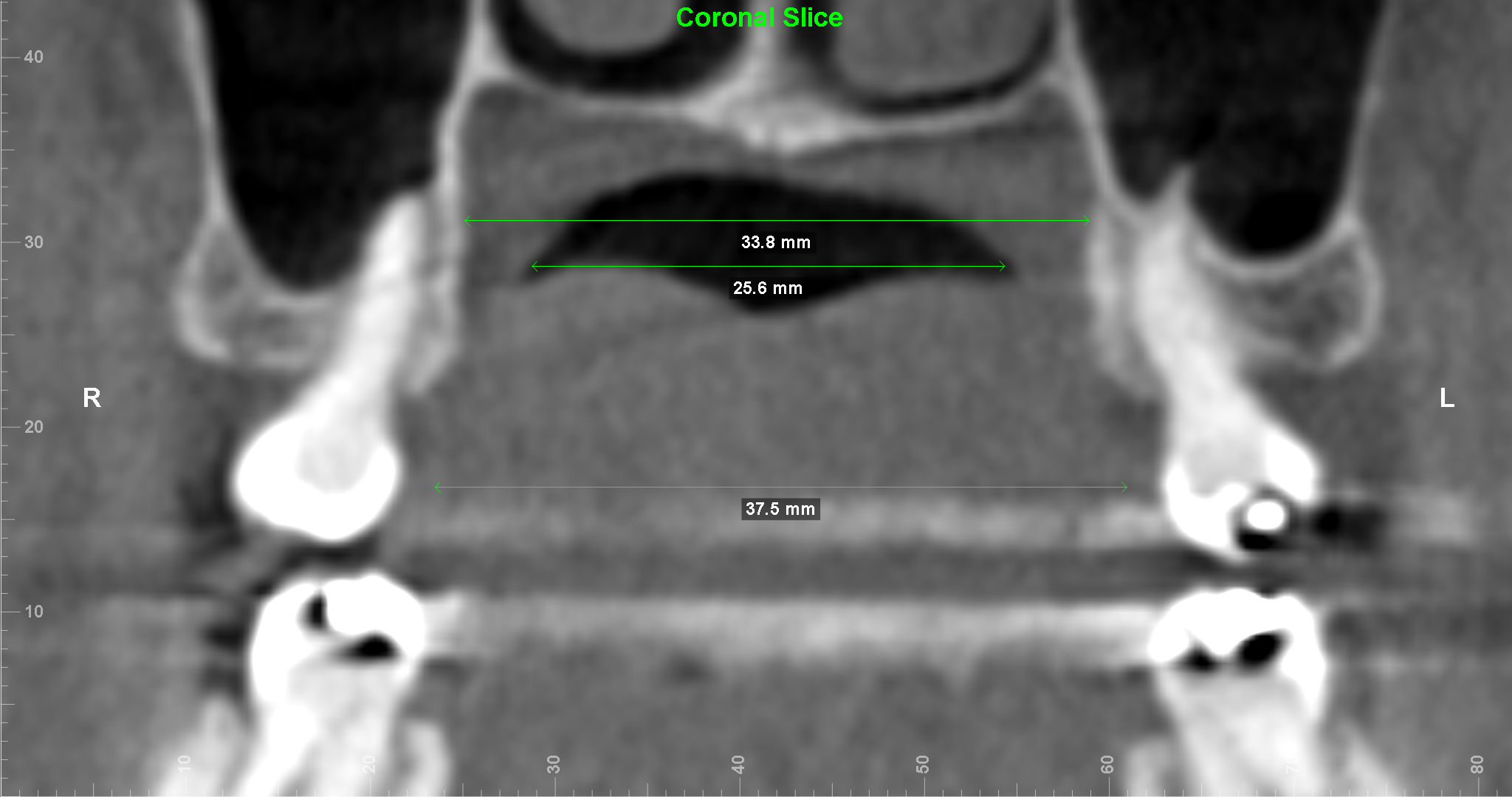
From left, right, to bottom left, Caucasian skull, Asian skull, and African skull.Plot graph showing average nasal aperture widths in children at different ages. For 5 year olds the average was 20 mm, 2 year olds 18 mm, and newborns 15 mm. This may give context to the degree of narrowness for a nasal aperture. It is difficult to say based on the size of the aperture itself, whether someone will benefit from having it expanded. Posterior nasal aperture. View of the sidewalls of the nasal cavity, situated in-between the anterior and posterior apertures. The sinuses and mid-face surround the nasal cavity. Normative measurements for intermolar-width (male), measured lingually between the first molars. For female (average height) subtract 2 mm. Credit to The Breathe Institute. I am curious how normative 38-42 mm is though, maybe 36-38 mm is also considered "normal", however "non ideal". In addition, consider transverse dental compensation (molar inclination) will play a role in this, if the molars are compensated then the skeletal deficiency is more severe. Molars ideally should be inclinated in an upright fashion.Low tongue posture and narrow arch, i.e. compromised tongue accessibility. CT slice behind the 2nd molars. Measuring the intermolar width (2nd molars), mucosal wall width, and alveolar bone width. We also want to measure tongue size/volume but that would require tissue segmentation. The literature suggests this abnormal tongue posture (which is abnormal in wake and sleep) reduces pharyngeal airway volume by retrodisplacing the tongue, and may increase tongue collapsibility as it cannot brace against the soft palate.
The surgery to expand the nasal aperture and nasal cavity is nasomaxillary expansion. The surgery itself could go by different names, but essentially there is a skeletal expansion, ideally parallel in pattern, and there is no LeFort 1 osteotomy. In adults this often will require surgery, otherwise there may be too much resistance from the mid-palatal and pterygomaxillary sutures to expand. Dr. Kasey Li performs this type of surgery for adults, which is referred to as EASE (Endoscopically-Assisted Surgical Expansion).
Hypothetically, the type of individual who would benefit from this type of treatment would be someone who:
Has a sleep breathing disorder, which is either caused or is associated with negative pressure being generated in the airway, which is causing the soft tissues of the throat to collapse or "suck inwards". This could manifest as holding breath / collapse (OSA), or excessive muscle tone and respiratory effort may be required to maintain the airway and oxygenation, which could lead to sleep disruption (UARS).
Abnormal nasomaxillary parameters, which lead to difficulty breathing through the nose and/or retrodisplaced tongue position, which leads to airway resistance, excessive muscle tone and respiratory effort. In theory, the negative pressure generated in the airway should decrease as the airway is expanded and resistance is reduced. If the negative pressure is decreased this can lead a decrease in force which acts to suck the soft tissues inwards, and so therefore ideally less muscle tone is then needed to hold the airway open. Subjectively, the mildly narrow and normal categories do not respond as well to this treatment than the more severe categories. It is unclear at what exact point it becomes a problem.
Abnormally narrow pharyngeal airway dimensions. Subjectively, I think this is most associated actually with steep occlusal plane and PNS recession than chin recession.
The pharyngeal airway is comprised of compliant soft tissue, due to this the airway dimensions are essentially a formula comprised of four variables.
Head posture.
Neck posture.
Tongue posture.
Tension of the muscle attachments to the face, as well as tongue space.
Because of this, clinicians have recognized that the dimensions can be highly influenced by the above three factors, and so that renders the results somewhat unclear in regards to utilizing it for diagnostic purposes.
However, most notably The Breathe Institute realized this issue and developed a revolutionary CBCT protocol in an attempt to resolve some of these issues (https://doi.org/10.1016/j.joms.2023.01.016). Their strategy was basically to account for the first three variables, ensure that the head posture is natural, ensure that the neck posture is natural, and ensure that the tongue posture is natural. What people need to understand is that when a patient is asleep, they are not chin tucking, their tongue is not back inside their throat (like when there is a bite block), because they need to breathe and so they will correct their posture before they fall asleep. The issue is when a patient still experiences an airway problem despite their efforts, their head posture is good, their neck posture is good, their tongue posture is good, and yet it is still narrow, that is when a patient will experience a problem. So when capturing a CBCT scan you need to ensure that these variables are respective of how they would be during sleep.
Given the fact that we can account for the first three variables, this means that it is possible to calculate pharyngeal airway resistance. This is absolutely key when trying to diagnose Upper Airway Resistance Syndrome. This is valuable evidence that can be used to substantiate that there is resistance, rather than simply some arousals during sleep which may or may not be associated with symptoms. For a patient to have Upper Airway Resistance Syndrome, there must be airway resistance.
Next, we need a reliable method to measure nasal airway resistance, via CFD (Computerized Fluid Dynamics), in order to measure Upper Airway Resistance directly. This way we can also measure the severity of UARS, as opposed to diagnosing all UARS as mild.
Severe maxillomandibular hypoplasia. Underdeveloped mandible, and corresponding maxilla with steep occlusal plane to maintain the bite.
Historically the method used to compare individual's craniofacial growth to normative data has been cephalometric analysis, however in recent times very few Oral Maxillofacial Surgeons use these rules for orthognathic surgical planning, due to their imprecision (ex. McLaughlin analysis).
In fact, no automated method yet exists which is precise enough to be used for orthognathic surgical planning. In my opinion one of the primary reasons orthognathic surgical planning cannot currently be automated is due to there being no method to acquire a consistent, precise orientation of the patient's face. By in large, orthognathic surgical planning is a manual process, and so therefore determining the degree of recession is also a manual process.
How that manual process works, depends on the surgeon, and maybe is fit for another post. One important thing to understand though, is that orthognathic surgical planning is about correcting bites, the airway, and achieving desirable aesthetics. When a surgeon decides on where to move the bones, they can either decide to perform a "sleep apnea MMA" type movement, of 10 mm for both jaws, like the studies, or they can try to do it based on what will achieve the best aesthetics. By in large, 10 mm for the upper jaw with no rotation is a very aggressive movement and in the vast majority of cases is not going to necessarily look good. So just because MMA is very successful based on the studies, doesn't necessarily mean you will see those type of results with an aesthetics-focused MMA. This also means that, if you have someone with a very deficient soft tissue nasion, mid-face, etc. the surgeon will be encouraged to limit the advancement for aesthetic reasons, irregardless of the actual raw length of your jaws (thyromental distance). Sometimes it's not just the jaws that didn't grow forward, but the entire face from top to bottom.
Thyromental distance in neutral position could be used to assess the airway, though maxillary hypoplasia, i.e. an underbite could cause the soft palate to be retrodisplaced or sit lower than it should, regardless of thyromental distance.
If there is a deficiency in thyromental distance, or there is a class 3 malocclusion, the surgery to increase/correct this is Maxillomandibular Advancement surgery, which ideally involves counterclockwise rotation with downgrafting (when applicable), and minimal genioplasty.
Before & After IMDO
There is also a belief that the width of the mandible has an influence on the airway. If you look at someone's throat (even the image below), basically the tongue rests in-between the mandible especially when mouth breathing. The width of the proximal segments basically determine the width of part of the airway. Traditional mandibular advancement utilizing BSSO doesn't have this same effect, as the anterior segment captures the lingual sides of this part of the mandible, the proximal segment does rotate outwards but only on the outside, so therefore the lingual width does not change. In addition, with this type of movement the 2nd or 3rd molars if captured along with the proximal segments, essentially could be "taken for a ride" as the proximal segment is rotated outwards, therefore you would experience a dramatic increase in intermolar width, in comparison to BSSO where this effect would not occur.
This type of distraction also has an advantage in that you are growing more alveolar bone, you are making more room for the teeth, and so you can retract the lower incisors without requiring extractions, you basically would have full control over the movements, you can theoretically position the mandible wherever you like, without being limited by the bite.
The main reason this technique is not very popular currently is that often the surgery is not very precise, in that surgeons may need to perform a BSSO after to basically place the anterior mandible exactly where they want it to be, i.e. the distraction did not place it where they wanted it to be so now they need to fix it. For example, typically the distractor does not allow for counterclockwise rotation, which the natural growth pattern of the mandible is forwards and CCW, so one could stipulate that this could be a bit of a design flaw. The second problem is that allegedly there are issues with bone fill or something of that nature with adults past a certain age. I'm not sure why this would be whereas every other dimension, maxillary expansion, mandibular expansion, limb lengthening, etc. these are fine but somehow advancement is not, I'm not sure if perhaps the 1 mm a day recommended turn rate is to blame. Largely this seems quite unexplored, even intermolar osteotomy for mandibular distraction does not appear to be the most popular historically.
I think that limitations in design of the KLS Martin mandibular distractor, may be to blame for difficulties with accuracy and requiring a BSSO. It would appear to me that the main features of this type of procedure would be to grow more alveolar bone, and widen the posterior mandible, so an intermolar osteotomy seems to be an obvious choice.
In addition, I believe that widening of the posterior mandible like with an IMDO that mirrors natural growth more in the three dimensions, would have a dramatic effect on airway resistance, negative pressure, and probably less so tongue and supine type collapse with stereotypical OSA. So even though studies may suggest BSSO is sufficient for OSA (which arguably isn't even true), one could especially argue that in terms of improving patient symptoms this might have a more dramatic effect than people would conventionally think, due to how historically sleep study diagnostic methodology favors the stereotypical patient.
Enlarged tonsils can also cause airway resistance by narrowing the airway, reducing airway volume, and impeding airflow.
Hi so I am pretty sure I have UARS or OSA but im not 100 percent sure, I am on a waiting list to see a sleep doctor and get a test done but the thing is the wiating list is 2 yrs long in the province I am in. Its also aroudn a yr to see an ENT but the symptoms and the difficulty with breathing is really getting to me and I would like to start a treatment plan or at least confirm what I have, so can an orthodontist or an oral surgeon confirm this for me I also have some skeletal bite issues as i have short face syndrome so I dont know if thats related to this but can anyone pls guide me on who I can go to? thankss
I'm not doing everything I should be doing to fix myself.
I have put on weight - about 15kg overweight from junk food.
Posture isn't the greatest from gaming.
Airway would get affected from that.
Nasal congestion due to allergies and nasal aperture being a factor - so my previous bad diet (lots of bad foods) wouldn't be helping that - causing inflammation and less room in nasal passages and airway in general due to more fat in airway. Fatty tongue, bigger soft palate etc.
- I've just seen an ortho I watch talk about our nose. And that what if our allergies aren't the problem for our bad nasal breathing and congestion, but it's more of a nasal airway space problem. I thought it was an interesting talk and idea.
I'm gonna write up a huge list of everything that can help UARS. I've just been lazy and occupied with numbing myself with gaming and food.
I broke up with a narcissistic ex gf so the gaming and junk food binge ramped up a tonne.
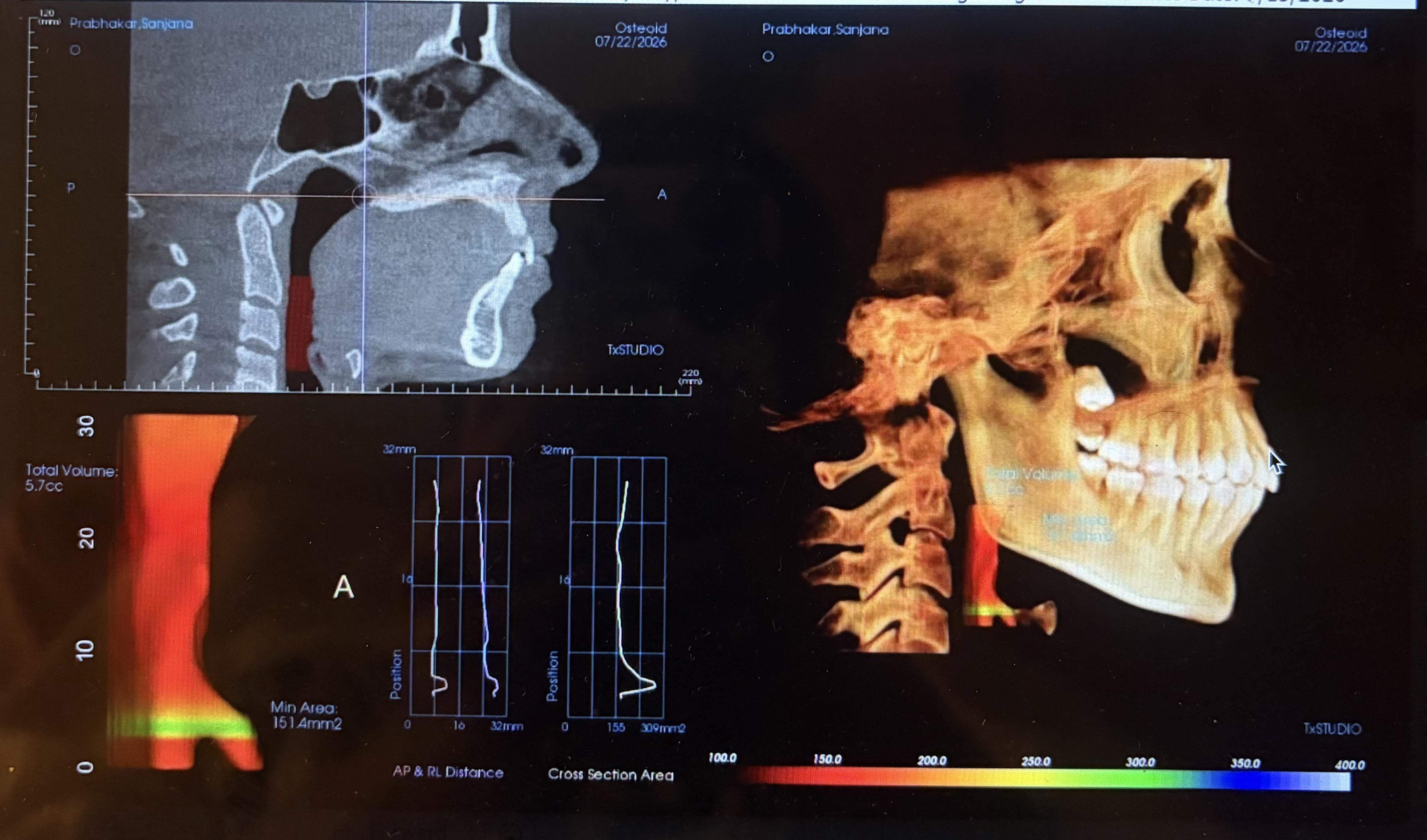
Hallo, I have an extremely narrow airway (total volume = 5.7cc) and was wondering how I can see if I have UARS. I’m hoping to get jaw surgery to help with the symptoms and was just needing some assistance as to who I should see. My symptoms include chronic fatigue, daytime sleepiness (even after 9 hours of sleep), brain fog, jaw clenching, venus pooling, ADHD, depression, receding chin, crooked nose, and deviated septum.
1 - is it possible to see sleep improvements with fme still being inside the mouth after expansion stops? I know Dr. Li typically leaves it in for six months after expansion stops. After that, I am looking into getting an MAD, but realize I won’t be able to get the fitting for that until after expansion?
2 - how much of an impact does FME have on the pharyngeal airway and the ability to stop so much tongue fall back into the throat? Have people experienced big impacts?
I believe the most famous custom MARPEs come from Partners Dental, but what are your thoughts on orthodontists using other labs from different countries, specifically for CUSTOM MARPE?
I'm curious! I use a bipap myself, though I am still functionally disabled from this condition, and will need more complex treatment. It has helped measurably though
The sleep lab i was refered to by my GP in Vancouver scored me AHI 15 (later 9), put me on CPAP and forgot about me. Its been a year and i feel the same brain fog, fatigue, memory issues, morning headaches and sleepiness ive had for 5 years now. They dont score RERAs / RDI and when i asked about UARS he said they 'didnt see anything in the data' - note he didnt say 'you dont have UARS' I since tried running my cpap data through airwaylab and Glasgow Index etc. I get GI from 1.8 to 2.4. The RERA index it gives is 16-18. Should i put any relevance to this and push for a follow up test for UARs? Or can this RERA value remain high but a legit RERA test shows low and these were just artifacts from teh machine itself?
Hello all, found this subreddit and hoping someone could take a few minutes to analyze my Lofta WatchPAT test results and how it relates to UARS. If my understanding is correct, my results indicate UARS, but it is grouped under sleep apnea now as a diagnosis.
Results: Moderate Obstructive Sleep Apnea (G47.33) - based on a pRDI= 27.3 and O2 nadir of 91% Physician Recommendations: Auto-CPAP set 4-20 cm H2O with heated humidity and mask/interface fitting (I removed everything else) AHI 3.4 hourly RDI 27.3 hourly O2 saturation min 91, mean 95, max 98, 29 events in 4-9% desaturation Pulse min 40, average 52, max 98 (I woke up overnight to use the bathroom in case that mattered) Hopefully that is everything relevant. I just have a webpage currently, not the full report. Please ask if you are looking for other data.
In particular, given these results, I am interested in understanding what sort of machine I should be looking at. My understanding from reading posts here is that BiPAP is preferred for UARS, but the physician recommendation is for Auto-CPAP. I haven't had the post-test call with Lofta yet to ask someone there questions. From my research, the ResMed AirSense 10 seems to be able to be flashed to support BiPAP but not the AirSense 11. If anyone could help clarify, I would greatly appreciate it.
I have an in-lab sleep study coming up. I’m doing it for insurance purposes so I can eventually get MMA surgery covered. If I can either get 5 ahi OR 10 eeg alpha arousals per hour on my in lab then I’m good to go. My numbers on previous watchpat studies have been .2 ahi with 14.0 RDI, and 1.7 AHI with 13.7 RDI. RDI nearly doubled during REM on both. My bottlenecks are poor nasal breathing and recessed jaw causing tongue collapse and a narrow airway overall.
I’ve seen many suggestions- sleep deprive yourself in the days leading up, have a drink, do a hard workout earlier in the day , take Benadryl, sleep on my back (obvious), try to sleep with my chin tucked during the study, etc.
My question is- what if anything is going to actually help me hit the me the metrics I mentioned?? Any kind of sedative seems like a bad move cause it could reduce REM and therefore greatly reduce my numbers.
Thanks for any and all input! It’s much appreciated.
I've noticed that aesthetically looking cheekbones are much more forward in protrusion. If the maxilla is brought forward with protrusion, would the zygomas/cheekbones also be brought forward?.
I washed my hose and now it is hissing , I know it’s the hose since I changed the mask and it was still hissing. I changed to another hose and this hissing stopped.
The Facegenics FMA is a facemask protraction device announced by Facegenics. However, no specific release date has been provided so far. Does anyone know when the Facegenics device is expected to be released? Unfortunately, it is not possible to contact Facegenics directly, as they do not respond to inquiries from patients.
Does anyone happen to know anything about the expected release date? Alternatively, if you are currently undergoing FME treatment, could you ask your provider to get in touch with Facegenics and about the expected release date?