Apparently, the Only Thing Stronger than the Historical Record of Collaboration is the Modern Commitment to Pretending it Never Happened
"Lost in Thursday’s kerfuffle over whether the United States Coast Guard would no longer consider the swastika as a symbol of hate was a far more troubling development in antisemitism. The new US ambassador to Poland, Thomas Rose, delivered a speech in which he absolves Poland, and by extension, the Polish people, of any responsibility whatsoever for the Holocaust.
This is a distortion that cannot be allowed to go unchallenged or unrefuted.
Addressing a conference on antisemitism in Warsaw organized by the International Association of Jewish Lawyers and Jurists, Rose declared categorically that Poland “has been burdened with the moral stain that was never its own, the persistent belief that Poland shares guilt for the barbaric crimes committed against it,” adding, for good measure, “It’s a grotesque falsehood and the equivalent of a blood libel against the Polish people and Polish nation.”
The reality is far more complex and far more nuanced than the simplistic and sanitized one-sided image put forward by Rose. While Poles and Poland did not perpetrate the Holocaust, those Poles who assisted the Germans in doing so must not be whitewashed out of history.
I do not write as a disinterested observer. My parents were Polish Jews who were incarcerated in the ghettos of their respective hometowns, Będzin and Sosnowiec, and then deported to Auschwitz, also in Poland, where virtually their entire families were murdered. In her memoir, my mother recalled that there were Poles and ethnic Germans (Volksdeutsche) who behaved altruistically and decently. “Many Poles, however,” she added pointedly, “were very happy about what was happening to the Jews.”
To be sure, as Rose correctly pointed out, “thousands of Poles died saving Jews.” He neglected to mention, however, that thousands of other Poles callously betrayed their Jewish compatriots and neighbors to the Germans or murdered them outright.
A basic history lesson, or at the very least a review of the relevant bidding, is in order.
It is true that the machinery for the implementation of the Nazi “Final Solution of the Jewish Question” was established by Germans, not Poles, in German-occupied Poland at places such as Auschwitz-Birkenau, Treblinka, and Majdanek. It is also true that more than 7,000 non-Jewish Poles, more than from any other Nazi-occupied country, have been recognized by Yad Vashem in Israel as Righteous Among the Nations, that is, men and women who risked or gave their lives to rescue or help Jews.
What Rose seems to overlook, however, is that these heroic and altruistic individuals made up an extremely small minority of the overall Polish population, probably around a quarter of 1%. In addition, the bravery and sacrifice of many other Christian Poles who hid or otherwise tried to save Jews were never formally recognized. Still, as the late historian Yehuda Bauer once noted caustically, “Even if we assume that the real figure [of righteous Poles] is 200,000, out of 21 million Poles, that’s only 1%. What about the other 99%?”
At the same time, let’s not lose sight- as Rose evidently did- of the many thousands of Poles who voluntarily and often quite viciously assisted the Germans in carrying out the annihilation of Polish Jewry by enthusiastically denouncing hidden Jews or handing them over to the Gestapo. Others blackmailed such hidden Jews, thereby making a horrific situation exponentially worse.
Others still profiteered callously from the removal of Jews to ghettos and their deportation to death and concentration camps. And there is nothing “historically false and morally scandalous,” to use Rose’s own words, in recalling that there were in fact Poles who killed tens of thousands of Jews, perhaps as many as hundreds of thousands, during the years of the Holocaust.
According to historians Barbara Engelking and Jan Grabowski in their ground-breaking work, “Night without End: The Fate of Jews in German-Occupied Poland,” two-thirds of the Jews who hid in the nine regions in Poland covered by this particular study did not survive World War II, either because they were killed by Poles, or because Poles handed them over to the Germans who proceeded to kill them. Elsewhere, Grabowski estimated that as many as 200,000 Jews were killed in Poland during the war by Poles, not Germans. Rose made no mention of these statistics.
Szmalcowniks, extortionists, and blackmailers preyed on Jews hiding outside ghetto walls
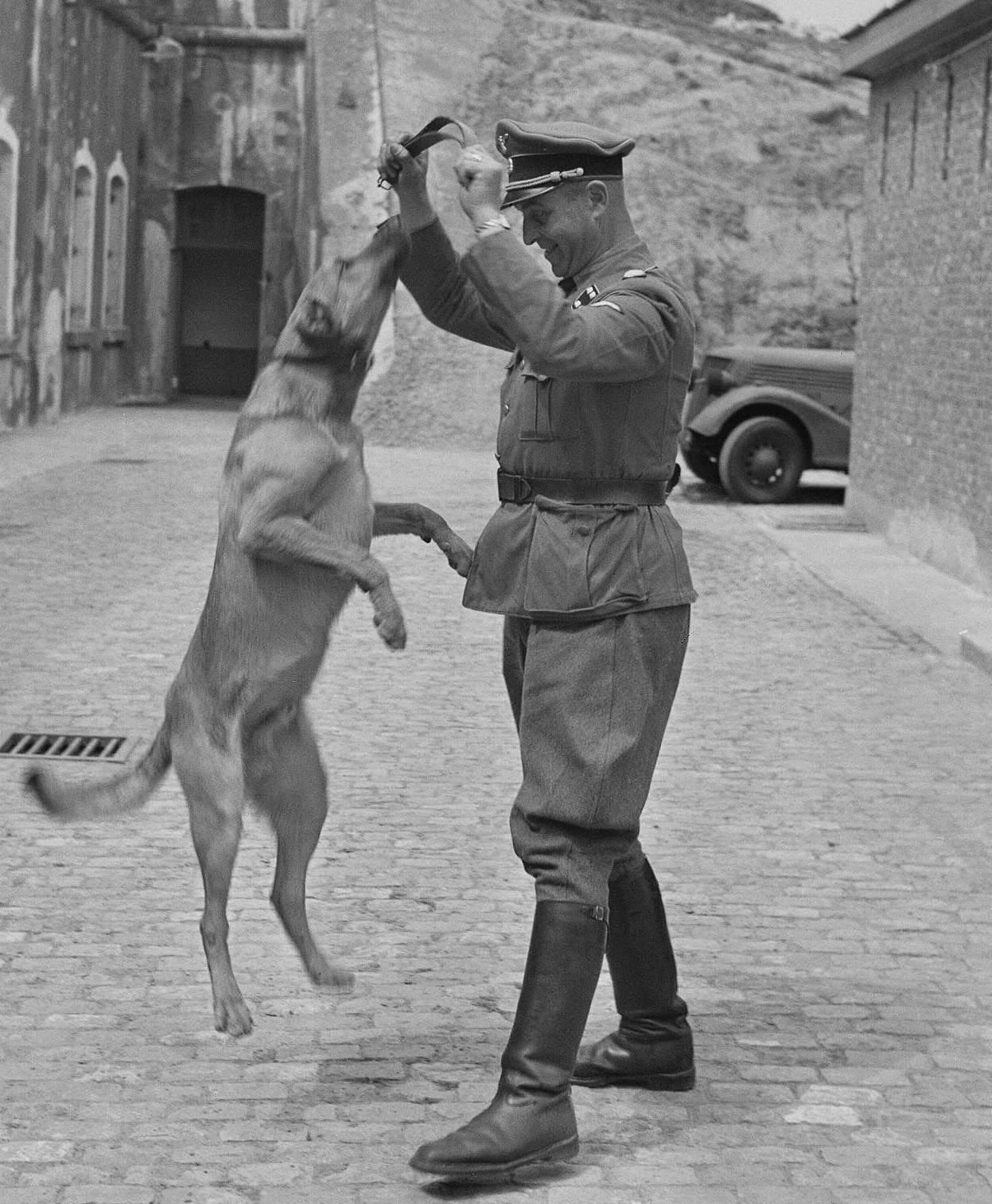
Rose also seems to ignore, or may be unaware of, the thousands of members of the Polish police, known as the “Blue Police” because of the color of their uniforms, who assisted the Germans in rounding up Jews, often rousted Jews out of their hiding places, and stole Jewish property as perks of their job.
“In the eyes of the Polish policemen, the Jews, or rather their goods, were a prized catch – not only during the Judenjagt [hunt for Jews] stage of the “Final Solution,” but even before, from the earliest months of the occupation when new German regulations marked Jews as people without rights,” Grabowski wrote in his book “Hunt for the Jews: Betrayal and Murder in German-Occupied Poland.”
And then there were the szmalcowniks, the extortionists, and blackmailers who preyed on Jews hiding outside ghetto walls. They added considerably to the terror confronted daily by those Polish Jews who had managed to avoid deportation to the death camps.
A further highlight in the litany of things Rose chose not to mention in his speech was the horrific 1941 slaughter of hundreds of Jews by Poles in the eastern Polish town of Jedwabne. And then there was the post-war 1946 pogrom in the city of Kielce in which a Polish mob killed 46 Jews who had managed to survive the Holocaust.
I am not suggesting that Poland or the Polish people should be tarred or stigmatized by the Poles who took part in the persecution and murder of Jews during, and even after, the Holocaust. But neither should the nefarious roles of these Poles be glossed over or overlooked altogether: They are every bit as much a critically important part of the historical record as the Polish Righteous Among the Nations.
Ambassador Rose was, of course, 100% on target when he said that the thousands of Polish Righteous Among the Nations “proved that even in their country’s bleakest night, multitudes of Poles chose conscience over fear and humanity over terror.”
What he should not have done, however, and what neither he nor anyone else should do in the future, is distort Holocaust history and Holocaust memory by turning a blind eye to the dark legacy of those thousands of Poles who did the exact opposite." https://www.jpost.com/diaspora/article-874770
Polish Guilt
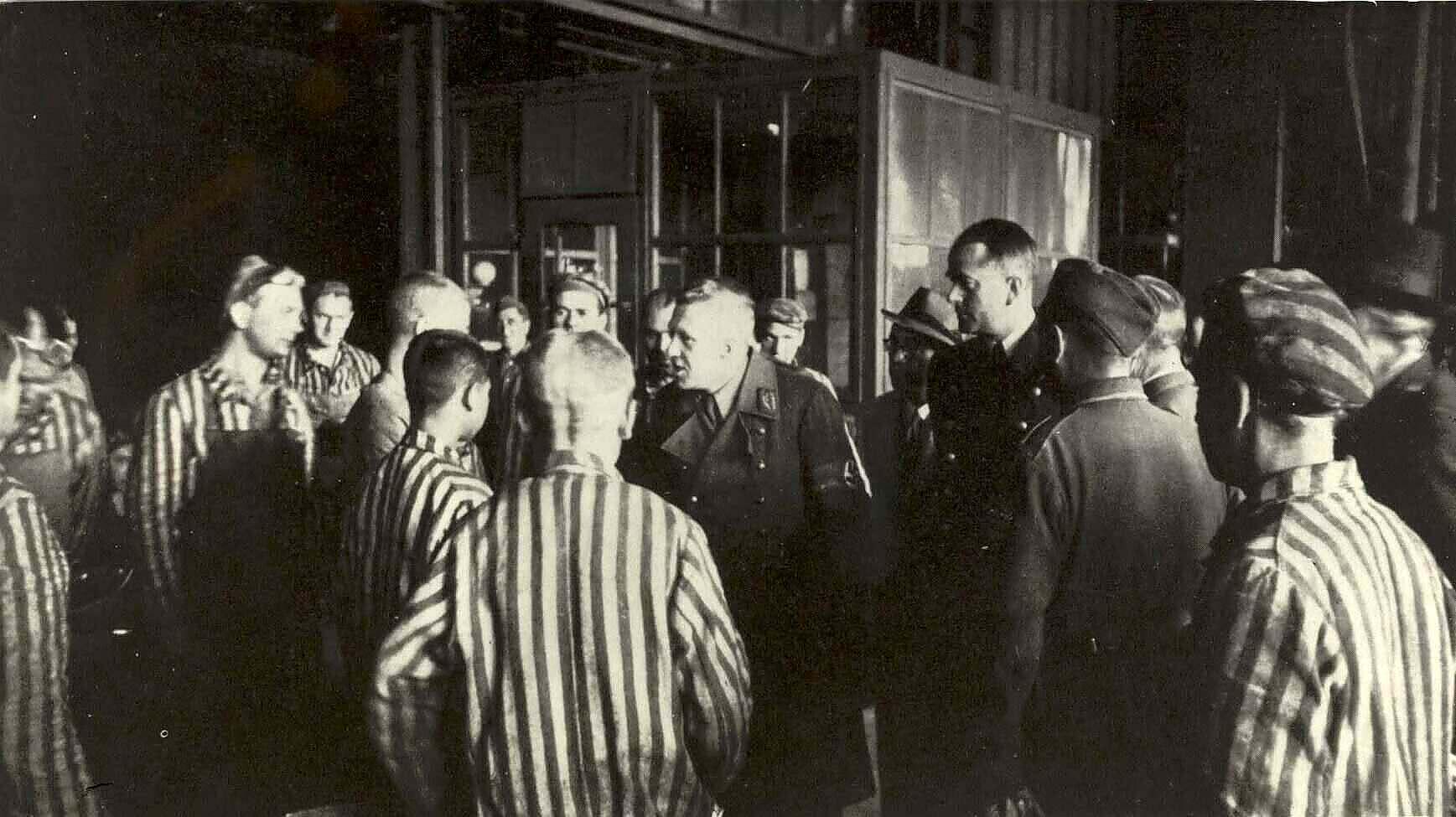
October 1939 – 1944: Rather than remaining entirely aloof from the occupation apparatus, approximately 16,000 members of the pre-war Polish police force were conscripted by the Germans into the "Blue Police." While some members aided the underground, the force routinely guarded ghetto perimeters, participated in deportations to extermination camps, and hunted down Jews hiding on the "Aryan" side.
October 1939 – 1945: Despite claims of universal solidarity, an active network of Polish blackmailers (szmalcownicy) systematically preyed on Jews attempting to pass as non-Jews. After stripping victims of their money and valuables, these extortionists frequently turned them over to the Gestapo or Blue Police for small bounties.
March 1941 Warsaw Easter Pogrom: Months before the Warsaw Ghetto was even sealed, Polish mobs—encouraged by German propaganda—spent days attacking Jewish residents, looting shops, and assaulting civilians across the city, demonstrating that anti-Jewish violence required little prompting from the occupiers.
Summer 1941 Łomża and Białystok Pogroms: Following the German invasion of the Soviet Union, local Polish residents in dozens of towns across northeastern Poland took advantage of the power vacuum to murder their Jewish neighbors, often with only passive oversight from German Einsatzgruppen units.
July 10, 1941 Jedwabne Massacre: In one of the most thoroughly documented instances of local agency, Polish residents of Jedwabne rounded up at least 340 Jewish neighbors, forced them into a barn, and burned them alive—an atrocity carried out by locals with German military police merely standing by as observers.
July 1941 Radziłów & Wąsosz Pogroms: Days prior to Jedwabne, local Polish mobs in neighboring towns similarly rounded up and murdered hundreds of Jewish men, women, and children using farm implements, firearms, and fire, contradicting narratives that such violence was strictly a German-executed affair.
1942 – 1944 "Hunt for the Jews": Following the liquidation of the ghettos, tens of thousands of Jews fled into the forests and countryside. Historians estimate that roughly 200,000 Jews died during this phase, with a significant portion betrayed, captured, or killed directly by local Polish villagers, volunteer fire brigades, and peasant patrols.
1942 – 1945 While the Polish Underground State officially condemned blackmailers, certain right-wing nationalist factions—most notably the National Armed Forces (Narodowe Siły Zbrojne, or NSZ)—actively hunted down and executed Jewish partisans and hidden survivors, viewing them as ideological enemies alongside Soviet forces.
1942 – 1945 Across occupied Poland, local residents widely seized, looted, or petitioned German authorities to take over businesses, apartments, and personal property left behind by deported Jews, creating a broad class of citizens with a direct financial stake in ensuring Jewish survivors never returned.
July 4, 1946 Kielce Pogrom: Even after the defeat of Nazi Germany, local police, soldiers, and civilians in Kielce murdered 42 Jewish Holocaust survivors—including women and children—based on a fabricated blood libel rumor, illustrating that lethal antisemitism persisted independently of German occupation.
Conclusion
To acknowledge that Poland suffered immensely under Nazi occupation—and that thousands of courageous Poles risked everything to save Jewish lives—does not grant a blanket absolution for the dark reality of widespread local complicity.
True historical integrity requires looking at the whole ledger, not just the chapters that flatter national pride. When modern diplomats and political revisionists dismiss documented pogroms, blackmail networks, and neighbor-on-neighbor betrayals as a "grotesque falsehood" or "blood libel," they are not defending Poland's honor; they are actively insulting the memory of the victims.
Scrubbing the perpetrators and profiteers from the narrative does not erase their crimes—it only compounds the original betrayal with a second, deliberate act of historical dishonesty. A nation's moral strength is measured not by its ability to deny its past sins, but by its courage to confront them without flinching. -W
1: On Duty - The Polish Blue & Criminal Police in the Holocaust, by Jan Grabowski - “Shortly after the occupation of Poland in the fall of 1939, the Germans created the Blue Police, consisting mainly of prewar Polish police officers.
Within a short time, this police force was responsible for enforcing many anti-Jewish regulations issued by the Nazis. Who were these policemen, and how did they transform from ordinary policemen to murderous executioners? And what was the role of the Germans in this horrifying picture? “
Jan Grabowski has been a courageous and acutely well-informed voice in the ‘history wars’ over the role of Poles under German occupation in the Holocaust. On Duty meticulously documents the increasing complicity of the Polish Blue and Criminal Police, as well as other seemingly innocuous organizations such as the construction service, firefighters, and village night guards, first in the enforcement of initial Nazi anti-Jewish policies, then in ghetto liquidation, and finally and most fatefully in the hunt for hidden and passing Jews.
Grabowski also demonstrates how, in the face of looming German defeat, many policemen established ties with the Polish underground to secure their future while still continuing to aid the German campaign to kill all surviving Polish Jews. Grabowski establishes beyond doubt that while Poles were victims of brutal German occupation, many were simultaneously victimizers of Polish Jews.” Christopher R. Browning, Frank Porter Graham Professor of History Emeritus” On Duty - The Polish Blue & Criminal Police in the Holocaust – Yad Vashem Online Store
Right: This WW2I photograph shows a joint raid and arrest conducted by German Ordnungspolizei (Order Police) and Polish Blue Police (Granatowa policja) in Kraków, German-occupied Poland, in early 1941.