r/ancienthistory • u/MedusaGazed • 2h ago
r/ancienthistory • • Jul 14 '22
Coin Posts Policy
After gathering user feedback and contemplating the issue, private collection coin posts are no longer suitable material for this community. Here are some reasons for doing so.
- The coin market encourages or funds the worst aspects of the antiquities market: looting and destruction of archaeological sites, organized crime, and terrorism.
- The coin posts frequently placed here have little to do with ancient history and have not encouraged the discussion of that ancient history; their primary purpose appears to be conspicuous consumption.
- There are other subreddits where coins can be displayed and discussed.
Thank you for abiding by this policy. Any such coin posts after this point (14 July 2022) will be taken down. Let me know if you have any questions by leaving a comment here or contacting me directly.
r/ancienthistory • u/donlucky8 • 19h ago
I made a free interactive map where you can learn about the great battles of history
banzaki.github.ioI've always loved history, and I never really knew where the big battles happened or what was going on around them. So I made this map to learn about them in a more visual way. You click a battle and read its story, in context.
👉 https://banzaki.github.io/great-battles/
It's completely free, no sign-up, no ads. I just had a lot of fun making it and wanted to share. Hope you enjoy it!
r/ancienthistory • u/followinghadrian • 7h ago
Roman Amphitheatres
r/ancienthistory • u/jimliang2026 • 6h ago
Three harvests for one armor: how the Peloponnesian War foreclosed Athenian citizenship
The Athenian citizen-soldier (hoplite) was not a professional army — he was a smallholder who could afford his own bronze panoply, commonly valued at roughly three years' harvest. The panoply was the franchise: land, armor, and citizenship were one package. Thucydides' war (431–404) dismantled the package from every side. Annual Spartan invasions burned the farms; the plague of 430 killed perhaps a third of the population, Pericles included; and returning veterans found their plots marked down by creditors. Land consolidated into estates; the yeoman class that staffed both the phalanx and the assembly ceased to exist.
Plato's line in the Republic lands harder after this read: every city is two cities, the poor and the rich, and the two never sit at the same table. A polis whose soldiers are landless men fighting for pay has already died institutionally — the assembly can keep meeting for sixty more years (as Athens did), but a body without a skeleton stands only as long as habit holds it.
The generalizable point: political rights rest on an economic floor. Remove the floor and the rights don't get abolished — they get priced out.
Discussion: Modern parallel, carefully: which current political rights still quietly presuppose an economic threshold (property, free time, armor of other kinds)? Is formal universality compatible with material foreclosure?
r/ancienthistory • u/Ok-Potential6187 • 3h ago
One of the maps of my Coloring book Empire in Ink! Check bio!
Coloring books for men were needed! Empire in Ink is the answer to those prayers. If you are a man who likes to color but hates mandalas, here is your alternative:
Empire in Ink is a history-based coloring book series focused so far on the Roman Empire. Complete missions and get historical context with every one of its 80 illustrations.
For more, check out empireinink.com. Cheers! No IA on its creation!
r/ancienthistory • u/DibsReddit • 1d ago
Why everyone gets Rome wrong! With Mary Beard
Had a great conversation with Mary Beard about ancient Rome. Check it out!
r/ancienthistory • u/SpiteFormer3165 • 14h ago
How did the OG Roman legionaries look like in the times of Augustus? Did they all have the same uniform and equipment like they got out of a factory assembly line like shown in movies?
reddit.comr/ancienthistory • u/deniz_aydiner • 1d ago
Phallus
One of the ancient symbols that might seem the most peculiar to us today is the phallus/penis symbol. It was a popular good-luck charm throughout the Roman Empire and was carried by the Roman army to distant provinces, such as Britain, where the local population had no tradition of phallus worship. These figures were typically carved onto functional structures such as millstones, bridges, and doorways; they served as good-luck symbols intended to protect an enterprise or trade from the evil eye. Indeed, more than 60 phalluses have been found along Hadrian’s Wall.
r/ancienthistory • u/Marher062 • 18h ago
Thoughts on Adam’s Synchronological Chart or Map of History?
Any thoughts on if this would be a good gift for someone interested in history along with biblical timeline? Has anyone ever actually seen this chart? I want to get it as a gift for my daughter.
r/ancienthistory • u/AtticaMiniatures • 2d ago
Iberian Celtic Chieftain, 1st Century BC
Among the warrior traditions of ancient Hispania was devotio, a solemn bond of loyalty in which warriors pledged their lives to their commander, even unto death.
The Greek historian Plutarch describes how, during the wars of the 1st century BC, Iberian warriors who had sworn such loyalty to the Roman general Sertorius carried him to safety after a defeat, refusing to abandon him even as the enemy closed in.
This remarkable tradition reveals a world in which the bond between a warrior and his leader could carry an almost sacred significance, extending far beyond ordinary military duty.
r/ancienthistory • u/platosfishtrap • 2d ago
Atheism was rare in ancient philosophy, but the Sisyphus fragment contains an argument that religion and the gods were made up to control people's thoughts and secret actions because the law cannot.
r/ancienthistory • u/jimliang2026 • 1d ago
From citizen to taxpayer: how the 643 years from Pericles to Caracalla hollowed out citizenship
We usually tell the fall of the Roman Republic as a story of great men — Gracchus, Marius, Sulla, Caesar, Augustus. The institutional reading is less romantic and more instructive: the republic died when the material basis of citizenship was dismantled, twice.
Greece first. Athenian citizenship rested on the citizen-soldier: a smallholder who could afford a bronze panoply (worth roughly three harvests) and therefore had land, family, and votes to defend. The Peloponnesian War (431–404 BCE) broke that class. Spartan invasions destroyed the farms; the plague of 430 killed a third of the city; returning veterans found their land priced by creditors. Plato's diagnosis (Republic): every city is in fact two cities — the city of the poor and the city of the rich — and the two never negotiate. A polis whose soldiers are landless is a polis that has already died; the corpse just keeps standing.
Rome repeats it. Expansion wars (Spain, the East) took smallholders abroad for years; latifundia swallowed their farms. Tiberius Gracchus (133 BCE) tried to redistribute public land — he was beaten to death by senators and thrown into the Tiber. In 107 BCE, Marius abolished the property qualification for military service: the landless enlisted, the state armed and paid them. The logic of the citizen-soldier — my land, my family, my votes, so I fight for Rome — inverted into its opposite: no land, no family stake, so my pay and my promised farm depend on the general. Loyalty moved from state to patron. The slave bodyguard, the march on Rome, the Rubicon — each civil war was the interest on privatized armies coming due.
The hollowing. Augustus (27 BCE) kept every republican word — senate, consuls, assemblies — while concentrating the substance in one pair of hands. By the third century the army auctioned the throne (Year of the Four Emperors, 69; roughly fifty claimants in fifty years). Diocletian's tetrarchy was not a solution but a diagnosis: the empire had outgrown single-point governance. And in 212, Caracalla granted citizenship to every free inhabitant — which reads as universalism only until you ask what the certificate still conferred: not the vote, not office, not the assembly. Only the tax liability. Public life contracted to the household; the forum became scenery. The rise of the redemption community in the same centuries was not a coincidence: when the political community can no longer provide belonging, something else will.
Discussion: The essay's closing claim: an empire is not a scaled-up polis but a different political species — participation versus administration. Where do you see the citizen-to-taxpayer conversion operating in modern states? And is exit (the essay's word) really the only rational response to a system that excludes you from participation?
r/ancienthistory • u/Other_Pick8787 • 3d ago
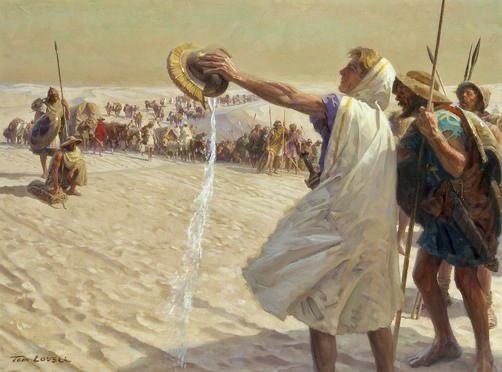
Alexander the Great pouring away his drinking water during the desert march, symbolising his refusal to drink while his soldiers had none. The Gedrosian Desert, 325 BC.
r/ancienthistory • u/kaliyasambha • 3d ago
One of the oldest pieces of writing on Earth is a beer ration record (Uruk period, c. 3300–3000 BC)
This clay tablet from southern Iraq records beer handed out to workers. The signs include a head eating from a bowl (the word "ration") and a tall pointed jar (beer). It's one of the earliest examples of writing, and it isn't a poem or a law, it's bookkeeping.
Writing in Mesopotamia seems to have started as accounting: tracking grain, beer and labour in a city of maybe 25,000–50,000 people.
Photo: Osama Shukir Muhammed Amin, CC BY-SA 4.0 (British Museum)
r/ancienthistory • u/Prior_Investment_352 • 2d ago
Why did Jews massacre Christians in Alexandria in 414 AD?
reddit.comr/ancienthistory • u/nima1980 • 2d ago
Thousands of years of Egyptian history, told through music and an interactive map
r/ancienthistory • u/kaliyasambha • 3d ago
One of the oldest pieces of writing on Earth is a beer ration record (Uruk period, c. 3300–3000 BC)
r/ancienthistory • u/penthesilea7 • 3d ago
The Antikythera Mechanism: Greece’s Amazing First Computer
Did you know the ancient Greeks created a machine that could predict solar and lunar eclipses over 2,000 years ago?
The Antikythera Mechanism is often called the world's first analogue computer!
Discover the fascinating story behind this incredible invention.
r/ancienthistory • u/Objective_Horror_793 • 2d ago
Anyone know any channels like Peter Pringle who make ancient love song reproductions?
reddit.comr/ancienthistory • u/Warlord1392 • 2d ago
How Much of 300 (2006) Is Historically True? 10 Famous Scenes Examined
Zack Snyder’s 300 is one of the most iconic war films ever made. Its portrayal of Leonidas and the 300 Spartans facing the massive Persian army at Thermopylae is unforgettable. But how much of what we see on screen actually happened?
I explored 10 famous scenes and compared them with the historical accounts:
Did only 300 Spartans defend Thermopylae?
Did Ephialtes really betray the Greeks?
Was Xerxes really a giant?
Was the Persian army as enormous as the movie suggests, and did it include wild beasts?
Did a Persian warning about arrows blotting out the sun really receive the reply, “Then we will fight in the shade”?
Did Leonidas really die refusing to retreat?
Did Spartans really throw Persian envoys into a well, inspiring the famous “This is Sparta!” scene?
Were the Persian Immortals real, and did they fight at Thermopylae?
Was the Oracle bribed by the Persians to mislead the Spartans?
Did Queen Gorgo really play a role in Spartan politics?
Some scenes are rooted in ancient accounts, while others are dramatic inventions or significant exaggerations.
Which of these 10 scenes do you think is historically true? And which do you think Hollywood completely made up?