r/ancienthistory • u/CupCharming4931 • 32m ago
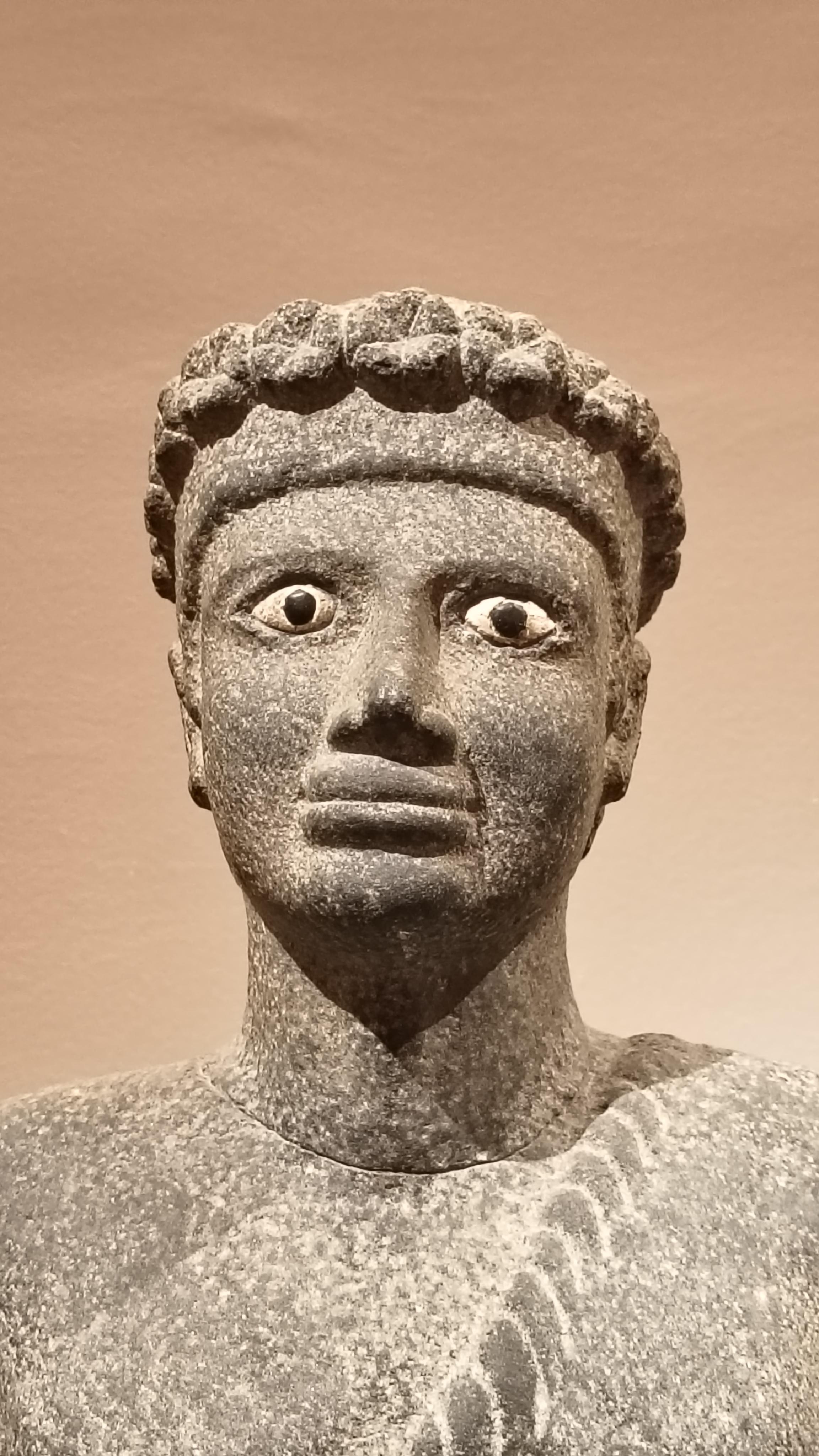
This Roman Sculpture still has its original eyes
5
Upvotes
r/ancienthistory • • Jul 14 '22
After gathering user feedback and contemplating the issue, private collection coin posts are no longer suitable material for this community. Here are some reasons for doing so.
Thank you for abiding by this policy. Any such coin posts after this point (14 July 2022) will be taken down. Let me know if you have any questions by leaving a comment here or contacting me directly.
r/ancienthistory • u/CupCharming4931 • 32m ago
r/ancienthistory • u/Slade-_-Wilson • 1d ago
r/ancienthistory • u/AtticaMiniatures • 2d ago

I recently finished painting this historical diorama depicting Queen Zenobia of Palmyra and her struggle against the Roman Empire in the 3rd century AD.
Zenobia was one of the most remarkable women of the ancient world, challenging the power of Rome and establishing an empire that stretched across much of the Roman East.
I wanted to capture the drama and spirit of her resistance through miniature art.
What do you think of this depiction of Zenobia?
r/ancienthistory • u/Extension-Beat7276 • 2d ago
Erik Hermans's “Classics Under the Caliphs: The Use of Ancient Thought in the First Global Classical Tradition” (2023) offers an important perspective on the history of classical reception. Its central argument is that the Arabic and Latin traditions should be understood as distinct yet interconnected classical traditions, and that the transmission of Greco-Roman learning had already acquired a genuinely global reach long before the expansion of Western Europe.
One of the most interesting aspects of Hermans's argument is that the Arabic classical tradition should not be understood simply as the product of importing an ancient foreign inheritance into the Islamic world. Rather, it emerged in a region where classical learning had already been deeply embedded since Hellenistic times. As Hermans puts it, “Classical learning did not need to be brought to West Asia after antiquity, because it had already existed in that region of the world since Hellenistic times. Therefore, the Arabic classical tradition started as a continuation of existing cultural practices in a new language.” The centres of learning in Iraq, Syria, the Levant and Egypt already possessed curricula since the hellenistic period, centred on subjects such as medicine and logic, drawing extensively upon Greek texts and commentaries. These traditions, often mediated through Syriac scholarship, continued under Arab rule. As Arabic gradually became a vehicle for intellectual and literary discourse, it inherited and transformed existing scholarly practices, eventually becoming the principal language through which an extraordinary corpus of classical learning was developed and disseminated. Hermans situates this development within the Abbasid translation movement, whose extraordinary diversity encompassed philosophy, mathematics, astronomy, medicine, geography, music, zoology and numerous other fields. The resulting Arabic intellectual tradition was not simply a repository of Greek knowledge, but a distinct tradition in which ancient thought was translated, interpreted and transformed.
Hermans also places this development within a much wider geographical framework. He opens his article with Heinrich Barth's nineteenth-century encounter with an Arabic-speaking scholar in Massenya, in present-day Chad, who possessed and studied Arabic manuscripts of Aristotle and Plato. This encounter illustrates a much wider phenomenon: classical learning had travelled far beyond the geographical boundaries of the Byzantine and Latin worlds, reaching intellectual communities across Africa and Asia through Arabic. Hermans also discusses the circulation of Aristotelian and Platonic learning in Timbuktu, the transmission of Arabic astronomical texts to China, and the extraordinary geographical reach of the Alexander Romance. In this sense, Hermans describes the Arabic and Latinate traditions as fraternal classical traditions, sharing an intellectual inheritance while developing along different historical trajectories.
While an enormous corpus of Greek philosophical and scientific literature became available in Arabic, Greek secular historiography and poetry followed a rather different trajectory. The Iliad, for instance, was not translated into Arabic in its entirety until Sulaymān al-Bustānī's celebrated translation of 1904, while complete translations of the major Greek tragedies belong to the much later Nahḍa. Hermans uses this asymmetry to explore the different intellectual priorities that shaped the Arabic reception of antiquity, particularly the relationship between the historical horizons of Abbasid scholarship and those of the Latinate tradition. This distinction between the two classical traditions is particularly productive, while interconnected, it establishes them as distinct and legitimate in their own ways. It also invites consideration of some additional dimensions of Arabic historical and literary reception.
Robert Hoyland's “Agapius of Manbiǧ, Qusṭā ibn Lūqā and the Graeco-Roman Past: The Beginnings of Christian Arabic and Muslim Historiography” (2021) reconstructs the routes through which knowledge of the Graeco-Roman past was transmitted by Christian communities living under Muslim rule. The process involved an earlier transmission from Greek into Syriac during the late Umayyad period, followed by the incorporation of Greek and Syriac historical material into Arabic during the early Abbasid period. Hoyland identifies al-Masʿūdī's use of the chronicles of Agapius of Manbij, Annianus and Abū Zakariyyā Denḥā in his accounts of Constantine and other Roman emperors. Al-Bīrūnī drew upon Christian authors in composing his account of Mani; Ḥamza al-Iṣfahānī consulted Greek-derived chronological works and a history of the Greeks compiled by the Christian bishop Ḥabīb ibn Bahrīz; and Ibn al-Qifṭī relied on Christian chronological scholarship in establishing the chronology of Galen. These examples illustrate an important feature of medieval Arabic historiography: classical historical material frequently travelled across confessional boundaries without necessarily resulting in the translation of entire classical historical works. Muslim historians could extract, adapt, and incorporate narratives from Christian Arabic sources about their Greco-Roman past into their own historical compositions. The resulting transmission was not simply the preservation of a foreign tradition, but an active process of historical reinterpretation.
A similar qualification can also be made concerning Greek poetry. Although complete translations of the major Greek epics and tragedies remained unavailable, their authors and verses were far from absent from Arabic intellectual culture. Marianna Zarantonello's doctoral thesis, The Arabic Reception of Pagan Greek Poetry and Poets in the ʿAbbāsid Period (2022), provides a particularly valuable investigation of this reception through philosophical translations, poetic quotations, biographies, gnomological collections and literary adaptations. Of the 282 poetic references examined in the Arabic versions of the Corpus Aristotelicum, 91 involve Homer, the Iliad, the Odyssey or quotations from Homeric verse. Homer consequently emerges as the most prominent Greek poet in the Arabic material examined, frequently appearing as an authority on poetry and as an exemplary figure in accounts of ancient Greek learning. The Arabic reception of Sophocles is equally interesting: the Arabic version of Aristotle's Rhetoric preserves a translated distich from Antigone (456–457), concerning the eternal and unwritten character of natural law. Greek poetic material thus circulated in Arabic intellectual culture well before the modern translations of the canonical literary works themselves.
Taken together, these perspectives demonstrate the variety of ways in which the Graeco-Roman past was transmitted and reinterpreted within the medieval Islamicate world. Philosophy and the sciences were certainly central to the translation movement, but historical narratives, comparative chronologies, poetic quotations and traditions of hellenic ancient wisdom also formed part of this broader intellectual inheritance. Thus, Hermans's broader argument offers a valuable framework for approaching this history: the Arabic classical tradition was neither a derivative extension of Byzantium nor merely an intermediary in the transmission of antiquity to Latin Europe. It was an intellectual tradition in its own right, with its own priorities, modes of reception and geographical reach. The additional work of scholars such as Hoyland and Zarantonello helps illuminate just how varied that reception could be, extending beyond the philosophical and scientific corpus to encompass the historical and literary worlds of antiquity.
Perhaps this is ultimately the significance of Fowden's observation. The history of classical antiquity did not end with the collapse of the western Roman Empire, nor did its subsequent history lead along a single route towards the Renaissance. Some of its most consequential afterlives unfolded in other corners of the mediterranean, across the intellectual landscapes of the medieval Islamicate world.
r/ancienthistory • u/followinghadrian • 2d ago

r/ancienthistory • u/AdagioUmbro • 2d ago

r/ancienthistory • u/ch0colatebabka • 2d ago
Per the title. Thank you in advance!
r/ancienthistory • u/MedusaGazed • 4d ago

r/ancienthistory • u/jimliang2026 • 3d ago

The Roman legionary before 107 BCE was a citizen-soldier with a stake: land, household, and franchise all anchored in Rome, so his service was self-interest rightly understood. Marius' reform — admitting the propertyless, with the state providing arms and pay — solved an immediate manpower crisis (the Jugurthine War) and dissolved that stake permanently. The new soldier had no land to return to; his material future consisted of pay and the general's promise of a retirement farm. The chain of loyalty was re-pointed: from the res publica to the commander.
The sequel is mechanical. Marius kept a bodyguard of slaves — a literally private army. Sulla marched his legions on Rome. Caesar crossed the Rubicon against orders. Each act was unthinkable under the old property-qualified system and routine under the new one, because the army's paymaster had changed. "The general may privatize the troops" is not a scandal but a four-character summary of the republic's institutional collapse: once force answers to a person rather than a polity, every succession dispute is settled by the legions.
The comparative lesson generalizes: when you change who pays the coercive class, you change whom the coercion serves — regardless of what the constitution says on paper.
Discussion: Modern parallels, stated as a question of mechanism not morality: in which institutions does pay structure quietly determine loyalty's addressee? Where have you seen "loyalty privatization" outside the military?
r/ancienthistory • u/donlucky8 • 4d ago
I've always loved history, and I never really knew where the big battles happened or what was going on around them. So I made this map to learn about them in a more visual way. You click a battle and read its story, in context.
👉 https://banzaki.github.io/great-battles/
It's completely free, no sign-up, no ads. I just had a lot of fun making it and wanted to share. Hope you enjoy it!
r/ancienthistory • u/followinghadrian • 4d ago

r/ancienthistory • u/Ok-Potential6187 • 4d ago

Coloring books for men were needed! Empire in Ink is the answer to those prayers. If you are a man who likes to color but hates mandalas, here is your alternative:
Empire in Ink is a history-based coloring book series focused so far on the Roman Empire. Complete missions and get historical context with every one of its 80 illustrations.
For more, check out empireinink.com. Cheers! No IA on its creation!
r/ancienthistory • u/jimliang2026 • 4d ago

The Athenian citizen-soldier (hoplite) was not a professional army — he was a smallholder who could afford his own bronze panoply, commonly valued at roughly three years' harvest. The panoply was the franchise: land, armor, and citizenship were one package. Thucydides' war (431–404) dismantled the package from every side. Annual Spartan invasions burned the farms; the plague of 430 killed perhaps a third of the population, Pericles included; and returning veterans found their plots marked down by creditors. Land consolidated into estates; the yeoman class that staffed both the phalanx and the assembly ceased to exist.
Plato's line in the Republic lands harder after this read: every city is two cities, the poor and the rich, and the two never sit at the same table. A polis whose soldiers are landless men fighting for pay has already died institutionally — the assembly can keep meeting for sixty more years (as Athens did), but a body without a skeleton stands only as long as habit holds it.
The generalizable point: political rights rest on an economic floor. Remove the floor and the rights don't get abolished — they get priced out.
Discussion: Modern parallel, carefully: which current political rights still quietly presuppose an economic threshold (property, free time, armor of other kinds)? Is formal universality compatible with material foreclosure?
r/ancienthistory • u/DibsReddit • 5d ago

Had a great conversation with Mary Beard about ancient Rome. Check it out!
r/ancienthistory • u/SpiteFormer3165 • 4d ago
r/ancienthistory • u/Marher062 • 4d ago
Any thoughts on if this would be a good gift for someone interested in history along with biblical timeline? Has anyone ever actually seen this chart? I want to get it as a gift for my daughter.
r/ancienthistory • u/deniz_aydiner • 5d ago

One of the ancient symbols that might seem the most peculiar to us today is the phallus/penis symbol. It was a popular good-luck charm throughout the Roman Empire and was carried by the Roman army to distant provinces, such as Britain, where the local population had no tradition of phallus worship. These figures were typically carved onto functional structures such as millstones, bridges, and doorways; they served as good-luck symbols intended to protect an enterprise or trade from the evil eye. Indeed, more than 60 phalluses have been found along Hadrian’s Wall.
r/ancienthistory • u/AtticaMiniatures • 6d ago

Among the warrior traditions of ancient Hispania was devotio, a solemn bond of loyalty in which warriors pledged their lives to their commander, even unto death.
The Greek historian Plutarch describes how, during the wars of the 1st century BC, Iberian warriors who had sworn such loyalty to the Roman general Sertorius carried him to safety after a defeat, refusing to abandon him even as the enemy closed in.
This remarkable tradition reveals a world in which the bond between a warrior and his leader could carry an almost sacred significance, extending far beyond ordinary military duty.
r/ancienthistory • u/platosfishtrap • 6d ago