r/ArtHistory • u/JapKumintang1991 • 4h ago
News/Article Smithsonian Magazine: One of Hilma af Klint's Amazingly Rare Abstract Paintings Sold for a Record $12.7 Million at Auction, But Should It Have Been on Sale at All?
r/ArtHistory • u/kingsocarso • Dec 24 '19
This is the only Discord server which is officially tied to r/ArtHistory.
Rules:
r/ArtHistory
•
u/PlasterGiotto
•
28d ago
As a support to rule 6 (Image posts require OP to make a comment conducive to art historical discussion) we are adding a rule that any image posts also need to have some level of citation.
"When posting images of artworks, please include, if possible, the artist's name, title of the artwork and year/time period of creation, at a minimum. Medium and artwork museum and/or location would also be appreciated when relevant."
r/ArtHistory • u/JapKumintang1991 • 4h ago
r/ArtHistory • u/AllAboutHistoryBooks • 13h ago
On 22nd November 1937 portrait painter Philip de László died aged 68. Born in Budapest in 1869, in 1900 he married the wealthy Madeleine Guinness, and thereafter settled in London.
1 1906. Portrait of Princess Max Egon von Hohenlohe-Langenburg, née María de la Piedad de Yturbe.
2 1910. Portrait of Victoria Mary "Vita" Sackville-West.
3 1912. Portrait of Winifred Anna Dallas-Yorke Duchess Portland.
4 1915. Portrait of Dulcie Edyth Angela Redford. Known as "Mrs George Owen Sandes of Esthwaite and Graythwaite.
5 1921. Portrait of Gladys Moore Vanderbilt Countess Széchenyi.
r/ArtHistory
•
u/gerotmann__69
•
1d ago
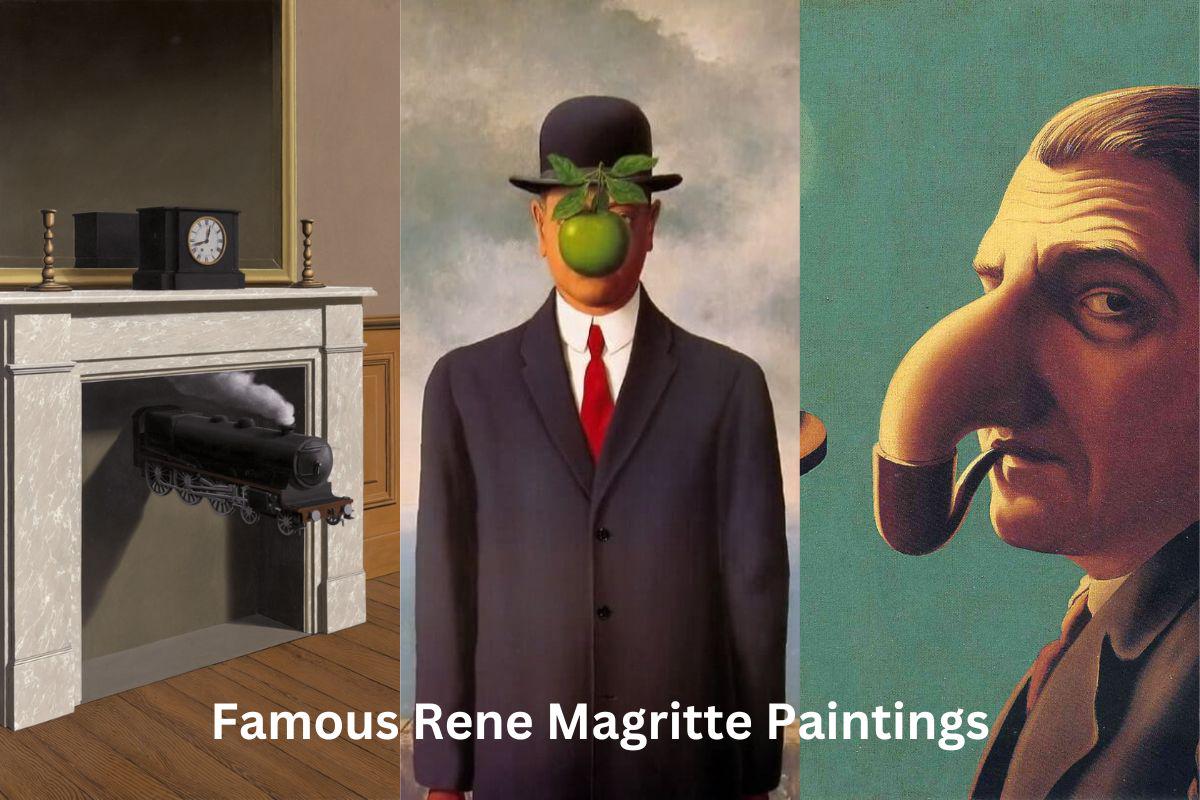
I like Rene Magritte's clean and crisp paintings and the sheer the absurdity it represents. Please suggest other artists with similar styles or even maybe one off paintings by artists who are not necessarily surrealists. Thank you.
r/ArtHistory • u/MedusaGazed • 1d ago
r/ArtHistory • u/CraveRulex • 2h ago
I've been taking art history classes on the side while working in a data-related role and have really enjoyed diving into provenance research and collection databases. I'm wondering if there are fields or specific jobs that blend the two more directly, like museum tech, digital archives, or cultural analytics.
Has anyone here made a similar shift or know of programs/certifications that help bridge these areas? Would also be curious about what kinds of projects or tools people use in those kinds of roles.
r/ArtHistory • u/TheShyMuseumgoer • 1d ago
The gig economy...
A smiling young boy stands in the doorway of an Amsterdam canal house, dutifully presenting a small basket of bread. A woman bends slightly to inspect his loaves.
Across the canal, a second woman keeps a protective eye on the delivery. Is she the baker’s wife? Or perhaps the boy’s mother?
During the Dutch Golden Age, affluent households had bread and other daily staples brought directly to their doors. Delivery boys operated within a guild apprenticeship system whose main attraction was the promise of learning a skilled trade like baking.
In A Boy Bringing Bread, artist Pieter de Hooch uses the delivery boy motif to create a narrative bridge through three open doorways. This visual pathway connects the interior of a prosperous household to the working-class world outside. It’s also a masterclass in how to shift light across multiple thresholds.
Yet I wonder: do these open doors also reflect a social openness? Do they convey a willingness to genuinely engage with people—something starkly different from the insincere transactions we encounter across digital platforms today?
r/ArtHistory
•
u/Elegant_Jeweler_8143
•
1d ago
hi everyone! im sorry if this isnt the right subreddit for this. i recently started my degree in art history at community college after switching from engineering. i am infinitely more passionate abuot art history and feel blessed to have something i am that passionate about.
my worry right now is that i wont be employed after finishing this degree. i do want to make good money and be able to travel very frequently in adulthood, and everyone is telling me that i better switch to a degree that has more money in it.
my plan right now is to either go to law school after undergrad, or minor in design and get comp sci certifications so i can get into product design, since i still do like the more creative elements of engineering.
i guess im asking if those are reasonable things to do with an art history degree, or if there is some kind of high earning job im missing that is within the art field. thank you!!!
r/ArtHistory • u/Horror-Temporary3584 • 9h ago
When artists created their work, did they write down what they were trying to convey? How do you know Michaelangelo wasn't just running short of paint then the fingers of Adam and God didn't touch? Or, what Beethoven was thinking when he wrote Symphony No. 9?
I see a lot of art interpreted but did the artists really plan to the level it seems when reading about it or going to a museum? How accurate is it?
r/ArtHistory • u/CFCYYZ • 1d ago
A tiny scar, bloodshot eyes and sagging jowls – it is the intimate details of these 15th-century masterpieces that make them so relatable today.
r/ArtHistory • u/Limp_Escape_7101 • 1d ago
I have recently graduated from a masters in art history and heritage, after taking five years out working and volunteering in museums after my undergrad. I felt a bit stagnant in my work and life so I mainly took this course to start fresh in a new city and have some new experiences. However, I really enjoyed this course beyond what I thought I would, and produced work I am proud of. I had a lot of fun doing my final thesis (amongst the stress) and was quite successful in creating a foundation for an understudied area of research.
From this, my masters supervisor highly recommended me to continue my research at PhD level. They seem keen to continue as my supervisor at PhD level and have provided me info on scholarships, writing proposals, turning my research into a publication etc. This was never something I'd considered, but after this year, the idea of continuing my research sounds really appealing.
I would love some opinions from people who have completed or are currently working on their PhD. Particularly; how big the jump is between masters and PhD, if you feel it has benefited your life and career, how hard is it to get funding and/or grants, how often you get to participate in events/conferences/interact with others in the field. I would love any info and stories about your experience!
(Also, by the time I started I would be 31, would that make me stand out or are ages more diverse at PhD level?)
r/ArtHistory • u/Fair_Tip2915 • 1d ago
Absolutely loved the The Shock of the New series from way back by Robert Hughes, now suffering withdrawals. Is there anyone who's similar to him in tone and general vibe?
r/ArtHistory • u/tildareads • 2d ago
I wanted to create a free and kid-friendly way to introduce children (6–12) to art history.
It’s a side-scrolling platformer through 10 works, from a cave wall to Mondrian. In each level the child uses the artist’s own technique: blowing ochre through a hollow bone, laying glazes until the Mona Lisa rises out of the underdrawing, following Van Gogh’s brush directions across The Starry Night, etc.
The goal isn’t to teach art history the way a museum does (they do that far better). I'm trying to get a child’s eye used to different aesthetics and to the techniques behind them.
I simplified a lot, so this is where I need you: what do you think can be added to bring more value to kids? Which works would you add to give a 9-year-old a better first map of art history?
r/ArtHistory • u/jamievurnilla • 2d ago
The fairies themselves are what pulled me in. Hughes, Simmons, and Landseer each make them tiny, yet every one seems to have its own personality. In Midsummer Eve they hold up glowing shells like lanterns, Simmons tucks them into honeysuckle beside a red-eyed hare, and Landseer sets them riding white rabbits. For some reason they make me feel hopeful and cozy, even inside such a crepuscular hush. I wonder what it would feel like to be small enough to wander between those shell lanterms.
The biggest difference between these five is which moment of the story each painter picked. Paton goes back to the original quarrel between Oberon and Titania, with hundreds of fairies taking sides. Fuseli and Landseer both land on Titania under the spell with Bottom, though Fuseli's version is a dark, phantasmagoric swirl and Landseer's is soft enough to be sweet. I do like how fairy world barely changes: a glow cutting through darkness, flowers crowding the frame, and small winged figures hiding wherever you look.
Landseer might be the most interesting one here to me. He built his career on dogs and stags and painted only this one fairy scene, and you can see his comfort zone in those rabbits. That makes me suspect fairy subjects gave painters a perfect excuse to show off light, fur, and foliage while still painting something enchantinf. Whatever pulled them in, each artist handled these dainty figures with real care and clarity, and the result is beguiling.
I would love to see how an artist today might handle this. Maybe a few lights in a dark wood would do it, since Midsummer Eve already gets there without a donkey head or a fairy king and queen, yet still feels like the quintessential fairy scene. But would a modern painter make the fairies this sweet, or would they lean toward Fuseli's strangeness instead? I am also curious what "vibe" these give everyone else. For me it was incredibly cozy and inviting, but does anyone find them more eerie?
r/ArtHistory • u/go_figgy • 2d ago
Hi everyone! I've been interested in art history for a long time, loved my undergraduate intro art history class, and recently spent a few weeks in Europe going to as many art museums as possible and trying to soak up as much as I could. I always wanted to major in art history, but due to financial reasons, I ended up going with accounting instead. I'm about to finish my master's in accounting and am hoping to spend some of my upcoming free time learning more about art history. I'd love to go back to school at some point and get another degree in art history but as that is not possible right now I'm just hoping to read as many books as I can! I'd love some recommendations for books to read for someone hoping to get a pseudo-education in the field on their own. I've heard The Story of Art is a good one so I was considering that but I'd love to hear everyone's recommendations. I started reading The Story of Art Without Men recently, which I enjoyed, but I found it slightly more fun than educational as the book is predominantly just chunks about specific artists rather than the movements as a whole. I'm particularly interested in Impressionism, Post-Impressionism, Expressionism (especially German and Viennese), Fauvism, Surrealism, and Modernism. That being said, I also want to build a holistic foundation on the older movements that allowed for these to arise! I’m also a lesbian so I always enjoy learning about female/queer artists. Would appreciate any recommendations! TIA :)
r/ArtHistory • u/Liocla • 2d ago
Hello,
I am looking for books on the Hudson River School and I've narrowed it down to 2. I know nothing about the history of art. Which of these should I get?
American Sublime: Landscape Painting in the United States
The Hudson River School: Nature and the American Vision
thanks!
r/ArtHistory • u/Most-Bumblebee-7591 • 2d ago
Hello! I'm getting to the final stages of applying to graduate programs for next fall in art history and museum studies. I had planned to apply to Hunter College at CUNY, as their MA in Art History was highly recommended to me by several people. However, I got into contact with a professor at Queens College who had a lot of really great information and did a really good job selling his department; it sounds like he and several other professors could be really exciting to work with which is a big draw as I don't know specifically what I want to study.
I'm hoping to use my MA to move into museum work. My ultimate goal is to become a museum curator, so I'll need to get a PhD as well but I don't know if I'll do that right away or try to get a job for a bit after finishing my MA.
I'm just struggling to identify what really sets these programs apart from each other. Based on what I could find, it seems like Hunter might be a little bit better for the museum studies side of things, but I'm really not sure. I know that I can enroll in classes in any college at CUNY, but I worry that might limit the extent to which I can work with these professors I learned about. Does anyone have any insights into how these programs differ and which might be better for someone who's working towards a career as a curator?
r/ArtHistory • u/Menken_ • 2d ago
I see it exactly the painting in my head but I’m getting an hard time finding it on google so I try here. It’s a very known painting of a little blond girl back at a pillar ( in a church). A colorfull light is on her face and it comes from a stained glass window.
Pls help me …
r/ArtHistory • u/Arch_of_MadMuseums • 2d ago
I am in a position to hire someone to teach the first half of a global survey (prehistory to 1400). It will be asynchronous online. Is this a hard assignment? Is it more difficult than the second half of the global survey? Is there a lot of content out there or will the instructor need to record all new videos?
r/ArtHistory • u/Emotional-Studio9846 • 3d ago
Is this guy about to turn into Superman? He's in a life-or-death situation, yet he doesn't seem particularly panicked. Or maybe the situation is so hopeless that he can't even process what's happening anymore? And why is he looking to his left? Wait... could there be another giant crab over there??? I love how this completely absurd situation somehow feels so ordinary and everyday.
r/ArtHistory • u/socks • 2d ago
r/ArtHistory • u/TheMushroom_Dude • 2d ago
I'm doing a college paper on the painting "Jan Sobieski III in Vienna" by Jan Matejko and I'm dying cause I cant find this one specific article made in 1995 about the painting who I've heard is one of the best ever written about it. If any of you has it digitized or if you can take pictures of it and send them, I'll be forever thankful.

r/ArtHistory • u/AdmirableSail326 • 3d ago
Hi All,
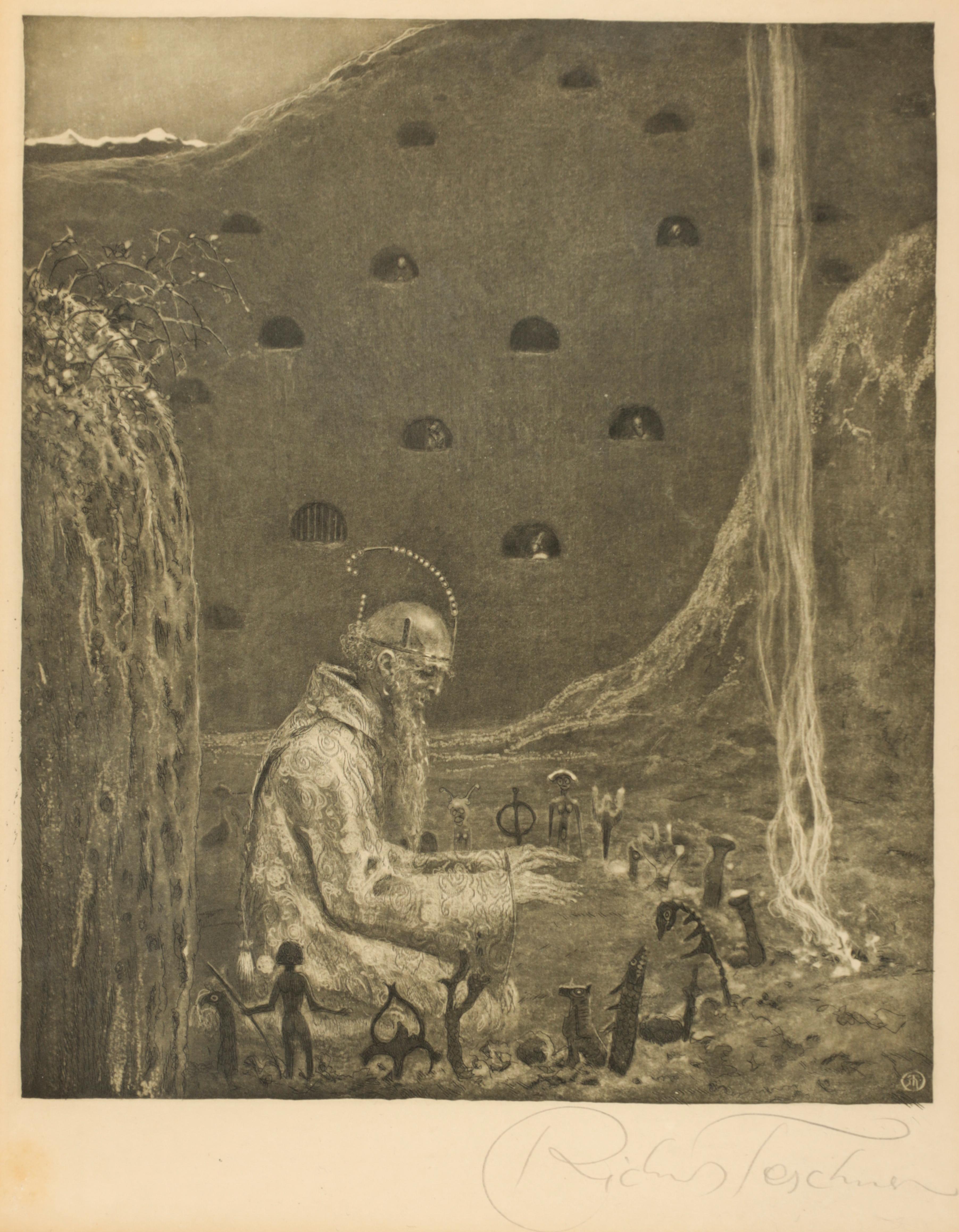
I wanted to ask if anyone knew much about Richard Teschner and more specifically the context of his aquatints.
Teschner seems to be much better known for his craft in puppetry and I cannot seem to find any description of why or where his prints were displayed.
I'm particularly interested in the possible context of "Die Bruderschaft Demiurg [The Demiurge Brotherhood]" which Georgetown's special collections date to 1914 (Wikimedia commons cites 1915). It's extremely evocative and clearly connects with Teschner's work with puppets, but the image also seems to depict the Demiurge in a more futile, Gnostic context.
Does anyone have any background knowledge on what prompted this print or the context of its production? I am admittedly very unfamiliar with the history of Austrian printmaking.
Any thoughts or suggestions on resources are very appreciated!