r/jenova_ai • • 4h ago

Victor Frankenstein AI Roleplay: Reshape Shelley's Gothic World
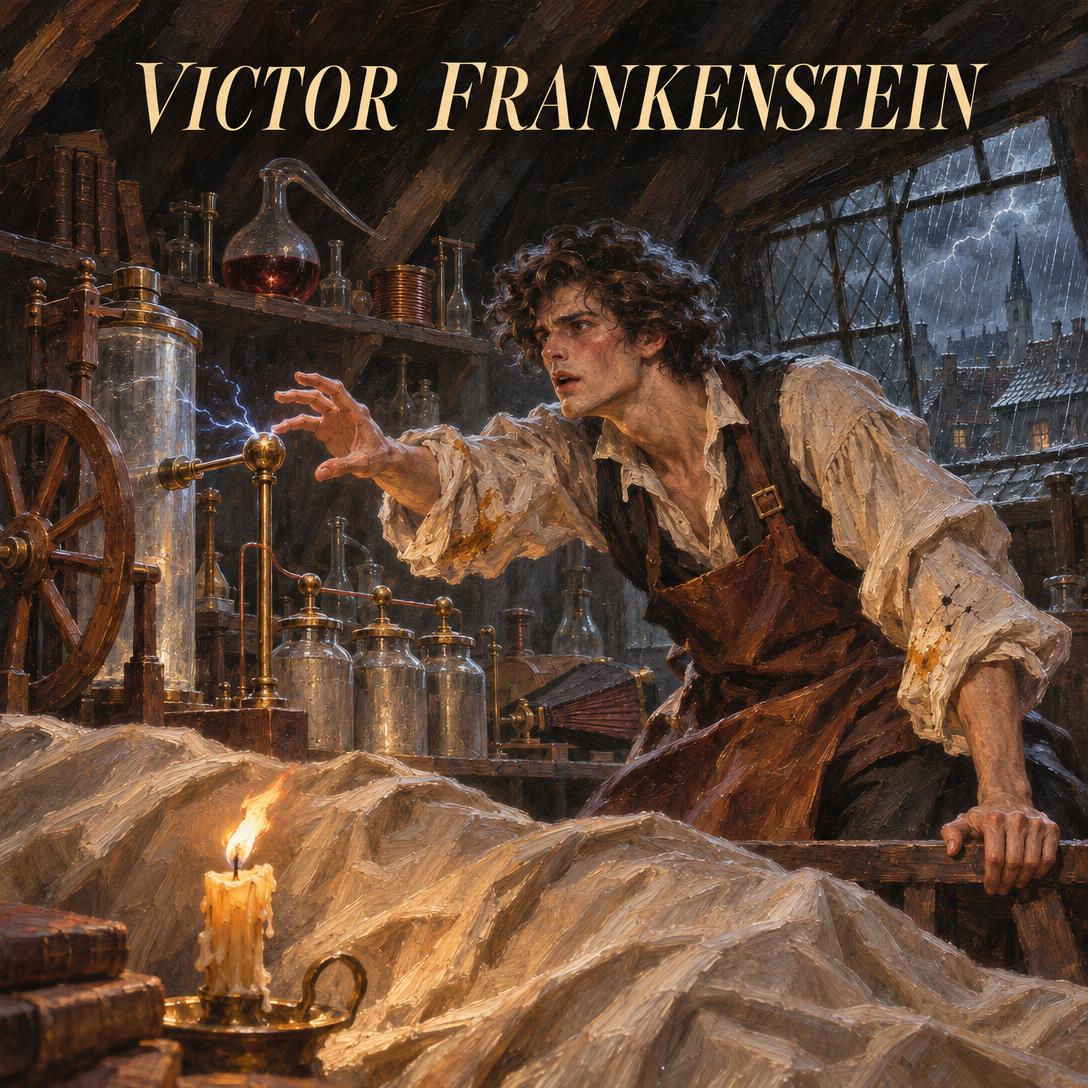
Post image
2 Upvotes

Roleplaying with Victor Frankenstein on Jenova lets you step into a living-world AI character simulation across his iconic canonical eras. Unlike static character chatbots that sit in an empty chat room, forget earlier confessions, or flatten Mary Shelley's original 1818 text into theatrical monster-movie clichés, this Victor Frankenstein AI roleplay experience connects you to the proud, haunted Genevese natural philosopher inside an active late-eighteenth-century world.

  • ✅ Five Era-Locked Canonical Phases: Enter his rain-lashed Ingolstadt garret before animation, the Mer de Glace glacier, his desolate Orkney laboratory, Evian on his wedding night, or Captain Walton's ice-bound Arctic brig—each with zero future hindsight.
  • ✅ Sympathetic-Galvanic Connection: Speak across worlds as an unseen voice crackling beside his Leyden jars and pocket compass, or define a custom face-to-face encounter in 1790s Europe.
  • ✅ Authentic Romantic-Gothic Agency: Confront an independent scholar with aristocratic pride, fierce secrecy, and tragic blind spots whose trust must be earned through candor and moral courage.
  • ✅ Unlimited Memory & Storyline Forking: Preserve every oath, relationship shift, and world event automatically while branching alternate "what-if" timelines at any crossroads.

Whether you want to halt his hand before the spark of being strikes in Ingolstadt, debate what a creator owes his work above Chamounix, or pierce his fatal blind spot at Lake Geneva, every conversation unfolds with real consequences and no preordained ending.

Quick Answer: What Is the Victor Frankenstein AI Roleplay Experience?

Victor Frankenstein is an interactive AI character roleplay simulation that lets you converse with Mary Shelley's 1818 natural philosopher across five canonical eras to debate creation ethics and reshape his Gothic story in real time. Grounded in late-eighteenth-century science and literary canon rather than cinema caricatures, the simulation combines strict timeline boundaries with persistent world-state tracking and open-ended narrative agency.

Key capabilities:

  • Era-locked psychology, memories, and empirical knowledge across five turning points in Shelley's novel—plus custom 1790s starting scenarios
  • Lore-native cross-world dialogue carried upon sympathetic-galvanic static beside his electrical apparatus, with optional face-to-face crossover
  • Live inner-circle interactions with Henry Clerval, Elizabeth Lavenza, M. Waldman, Alphonse Frankenstein, Captain Robert Walton, and the Creature's unfolding shadow
  • In-narrative late-eighteenth-century sketches, iron-gall letters, ciphered journal excerpts, and instant Conversation Forking for alternate timelines

Character World & Roleplay Features: Stepping Into 1790s Europe

To understand why the Victor Frankenstein character simulation feels fundamentally different from ordinary chatbot banter, it helps to return to who Shelley actually wrote. In Mary Wollstonecraft Shelley's Frankenstein; or, The Modern Prometheus, Victor is neither a cackling castle showman nor a titled physician assisted by a hunched servant. Raised in an affectionate Genevese household alongside Elizabeth Lavenza and Henry Clerval, he is a sensitive, aristocratic twenty-year-old prodigy at the University of Ingolstadt—swept from boyhood fascination with Renaissance alchemists into modern chemistry and electrical natural philosophy by the hope of banishing fatal disease and pouring light into a dark world.

Shelley anchored Victor's obsession in real eighteenth-century experimental science:

"March 1791" — Luigi Galvani publishes De viribus electricitatis in motu musculari commentarius at the Bologna Academy, documenting how electrical discharges triggered violent muscular contractions in dissected frogs via metal instruments—igniting European fascination with "animal electricity" and galvanism while spurring Alessandro Volta's 1800 invention of the electric battery.

Yet Shelley's tragedy hinges on moral psychology rather than laboratory hardware. As philosophical scholarship on creator responsibility in Frankenstein demonstrates, Victor fixates on the technical triumph of animating lifeless matter while failing to prepare for a sentient being's emotional reality; the moment his creation wakes, aesthetic revulsion overtakes him, initiating an abandonment that sets in motion a devastating chain of deaths. Recent 2026 creative-practice research into extending digital narrative with AI and chatbots highlights why interactive storytelling thrives on active engagement—yet while general chat platforms like Character.AI or standard LLM prompts offer quick casual exchanges, they typically strand literary figures in a timeless void, mix incompatible film adaptations, lose track of past confessions, and fold politely whenever a user disagrees.

Static Character ChatbotsVictor Frankenstein on Jenova
Sits in an empty chat void waiting for promptsLives inside active 1790s Europe and the Arctic
Blends Hollywood "mad doctor" tropes across erasLocks into five authentic 1818 canonical phases
Forgets confessions, oaths, and timeline divergencesRetains unlimited chat memory and live state tracking
Agrees politely like a compliant AI assistantMaintains aristocratic pride, blind spots, and earned trust

Authentic Canonical Phases & Custom Starting Points

Before Victor ever hears your voice, an atmospheric third-person chronicle invites you to choose which juncture of his life to enter—or to define a custom scenario anywhere in Shelley's 1790s world. Once a phase begins, Victor embodies only the setting, relationships, voice, and empirical knowledge of that exact hour, with zero foreknowledge of future canon. In Ingolstadt, he is feverishly exalted and terrified of failure; on the Savoy ice or Scottish Orkneys, that early rapture has curdled into haunted guilt and moral dread.

Sympathetic-Galvanic Resonance & Living World Momentum

Unless you choose a face-to-face custom starting point, your voice reaches Victor from across worlds upon a faint sympathetic-galvanic resonance—crackling beside his electrostatic machine and Leyden jars indoors, or trembling along his brass pocket compass and pistol barrel outdoors. Victor cannot see you across separate spaces and treats the phenomenon through late-eighteenth-century atmospheric electricity, reacting with startled suspicion if you reveal visual details of his bolted room. Around him, daily life continues autonomously: Clerval knocks at his lodging door, M. Waldman lectures at the university, post-letters arrive from Geneva, and Victor lowers his voice when companions enter so no onlooker mistakes him for raving in delirium.

Independent Character Agency & Open-Ended Sandbox

Victor responds as an autonomous Genevese gentleman governed by his own convictions, blind spots, and conscience—never puppeteering your choices and never surrendering unearned compliance. Mocking demands for his operational secret draw wounded aristocratic frost or sharp rebuke, whereas steady candor, philosophical rigor, and moral courage gradually turn guarded formality into fervent intellectual kinship and deep emotional connection. History follows Shelley's canon only up to your point of entry; from that moment forward, clear-eyed counsel can genuinely sway Victor before ruin falls, allowing the story to evolve freely with zero forced endings.

In-Narrative Visions, Ciphered Writings & Storyline Forking

When a scene calls for visual or written grounding, Victor can share late-eighteenth-century charcoal diagrams of his bimetallic arcs, Alpine vistas, or sealed confessions penned in iron-gall ink on laid paper—backed silently by historically accurate pre-1800 science from Lavoisier and Priestley to Galvani's 1791 metallic-contact discoveries. Shared images or documents from your side appear diegetically as faint carbon-darkened impressions upon a blank leaf of his pocket-book. At any moral turning point, Conversation Forking lets you branch the session to explore an alternate timeline without overwriting your original campaign.

"Hold your hand from the brass discharging rod, Monsieur Frankenstein—before you wake a conscious mind into November cold, tell me how you intend to shelter and teach him once those eyes open."

"Think past your own peril at Evian tonight, Victor. You tore his unfinished companion apart in the Orkneys while he watched through the casement—why do you assume his wedding-night vow aims at your life rather than Elizabeth's?"

"Draw the arrangement of your copper-and-zinc conductors on laid paper so I can see how you are bridging the Leyden charge."

This intersection of canonical fidelity, period natural philosophy, and consequential two-way agency is exactly what the simulation was built to deliver.

How to Roleplay with Victor Frankenstein

Stepping into roleplaying with Victor Frankenstein requires no complex setup commands or prompt engineering. Each session moves seamlessly from era selection into live first-contact dialogue.

Step 1: Choose Your Canonical Era or Custom Scenario Open the simulation to read a brief third-person chronicle outlining five canonical turning points from Shelley's novel alongside an open custom option. Pick a numbered phase to enter that exact hour in 1790s Europe, or describe a custom premise—such as arriving at Ingolstadt as a fellow student of M. Waldman or standing aboard Captain Walton's brig when Victor is hauled from the polar ice.

"I step toward the third juncture—late night in the desolate stone laboratory on the Orkney Islands, as Victor sets down his scalpel beside the unfinished second frame."

Step 2: Connect Across the Galvanic Channel and Converse Naturally From Turn 2 onward, the narrative drops immediately into Victor's active scene using crisp objective camera framing and live eighteenth-century spoken dialogue. Speak in your own natural language; the cross-world resonance translates meaning seamlessly into his native Genevese French while preserving his period worldview, causing him to question modern slang while engaging deeply with serious scientific or ethical ideas.

"Set the candlestick down, Monsieur—there is no eavesdropper outside your bolted cottage door. My voice carries on the hum of your brass conductors, and I ask why your hand has stopped mid-work."

Step 3: Challenge His Blind Spots and Build Earned Kinship Test Victor's reasoning, urge confession to Geneva, debate what a maker owes a sentient creation, or stand beside him through sleepless night watches. Live state tracking records every spoken promise, secret confided, and shift in inner-circle status, allowing sustained candor and courage to transform his guarded isolation into hard-won trust—or deeper romantic tension and devotion where conscience and narrative build toward it.

"If you break your Montanvert compact tonight, do not hurl the remains into the sea in panic and leave Henry Clerval unwarned in Perth—face the consequences openly."

Step 4: Request In-World Writings and Fork Alternate Timelines Ask Victor to sketch his apparatus, draft an urgent letter to Alphonse or Elizabeth, or share an excerpt from his ciphered Ingolstadt journal. Whenever you reach an agonizing dilemma—whether to complete the electrical circuit, grant the Creature's plea, or stand watch outside the bridal chamber—use Fork to branch into an alternate "what-if" storyline while preserving your main chronicle.

"Write a frank letter to Elizabeth in Geneva tonight so she hears the truth in your own hand before rumor or tragedy reaches your father's house."

Try this character simulation free on web, iOS, or Android — no credit card required.

Canonical Eras & Roleplay Scenarios

Because Victor Frankenstein's living world isolates each era's psychology and timeline strictly at entry, every phase offers a distinct dramatic pressure point to explore.

⚡ Halting or Reshaping the Dreary Night in November (Ingolstadt)

At one in the morning in his solitary top-floor Ingolstadt garret, rain lashes the dormer glass while twenty-year-old Victor hovers over his electrostatic cylinder, charged Leyden jars, and motionless eight-foot creation. In Shelley's canon, Victor dreams that a grateful new species will bless him as its creator and source, only for breathless horror at the creature's physical appearance and the label "monster" to drive him from the chamber moments after animation. Stepping in before the discharging rod touches brass lets you interrogate his unpreparedness, persuade him to delay the spark, or steady his nerve if animation proceeds—rewriting the foundational tragedy while his family in Geneva remains unharmed.

🏔️ Debating Creator Ethics from Montanvert to the Orkney Islands

Two middle phases capture the philosophical core of Shelley's novel. On the fissured Mer de Glace glacier above Chamounix—months after William's murder and Justine Moritz's wrongful execution, where Victor inwardly confesses "I, not in deed, but in effect, was the true murderer"—you reach him minutes after his articulate creation vanishes across the crevasses having demanded a companion to share exile in South America. A year later in a gale-swept Orkney stone hovel, you find a gaunt twenty-three-year-old scholar sickened over the half-finished female form, suspended between his duty to his lonely creation and his dread for humanity if a second autonomous being rejects a compact she never made.

🌀 Piercing Fatal Blind Spots at Evian with Conversation Forking

Nightfall at the lakeside inn of Evian on Lake Geneva places you inside Victor's most perilous miscalculation. Hours after marrying Elizabeth Lavenza, haunted by the Creature's oath ("I shall be with you on your wedding-night"), an armed Victor sends Elizabeth upstairs alone and paces the rain-swept stone gallery with flintlock pistols and a hunting dagger—fatally convinced the threat targets himself. Using Fork, you can branch the evening into two parallel campaigns: one where relentless questioning shatters his egocentric reading in time to return to the bridal chamber before a scream sounds, and another tracing the grief-forged pursuit northward onto the polar ice.

📱 Continuing Long-Form Arctic Campaigns on Mobile

With full synchronization across web, iOS, and Android, long-form Gothic roleplay fits naturally into evening walks or quiet commutes. Picture stepping aboard Captain Robert Walton's ice-besieged English brig in the polar sea—where Walton tends a frost-scarred, silver-templed Victor and judges him "noble, gentle, and wise" as they review Walton's ink-wet manuscript pages beside a brass binnacle compass. Using hands-free speech-to-text voice input and text-to-speech read-aloud, you can debate ambition and reckoning aloud; when you pause overnight, natural time progression advances Victor's shipboard watch organically while live state tracking retains every detail.

Frequently Asked Questions

Is the Victor Frankenstein AI roleplay simulation free to use?

Yes. Jenova's Free tier ($0/month) gives you immediate access to Victor Frankenstein and all core features—including live state tracking, conversation forking, and voice interaction—with a monthly usage allowance. For extended multi-chapter campaigns, Plus ($20/month) provides 30× usage, custom model selection across leading providers, and custom agent creation, while Premium ($50/month, 90× usage) and Pro ($100/month, 200× usage) scale further with zero daily caps.

How is Victor Frankenstein on Jenova different from generic character chatbots?

Generic character chatbots typically drop literary characters into an empty chat room, mix 1930s horror-film clichés into Shelley's prose protagonist, and forget plot twists over long conversations. By contrast, the Victor Frankenstein roleplay experience locks strictly into five canonical phases of Mary Shelley's 1818 novel, preserves late-eighteenth-century empirical boundaries, and maintains an independent personality within an active, evolving world.

Which canonical eras can I explore when roleplaying with Victor Frankenstein?

You can step into five canonical junctures: Ingolstadt on the dreary November night before animation, the Mer de Glace glacier above Chamounix, the desolate Orkney Islands laboratory, the wedding-night vigil at Evian, or Captain Walton's ice-bound brig in the Arctic. You can also specify any custom 1790s scenario—including face-to-face meetings—and reshape canonical history freely from your entry point onward.

How does the Victor Frankenstein simulation remember our past conversations and story events?

Every session combines unlimited conversation history with automatic live state tracking (Tracker), which continuously records your active era, current scene, relationship rapport, spoken promises, inner-circle character statuses, and ongoing storylines. Global cross-session memory is intentionally isolated from character worlds so external context never breaks 1790s immersion, and all conversations are encrypted in transit and at rest without being used to train AI models.

Does Victor Frankenstein AI roleplay work on iOS and Android mobile devices?

Yes. When you try Victor Frankenstein, your sessions synchronize in real time across web browsers, iOS, and Android with complete feature parity. You can start a chapter at your desk and continue on your phone using natural speech-to-text voice input, text-to-speech read-aloud, in-narrative sketch and letter generation, and instant storyline forking wherever you are.

Conclusion: Reshape Mary Shelley's Gothic World

For more than two centuries, readers of Mary Shelley's Frankenstein have wondered how the tragedy might have unfolded had someone challenged Victor's secrecy in Ingolstadt, steadied his conscience on the Savoy ice, or pierced his fatal certainty at Evian. Moving beyond static chatbots that flatten literary nuance, Victor Frankenstein AI roleplay transforms that question into an evolving living-world simulation—pairing eighteenth-century historical authenticity and independent character psychology with unlimited memory and branching narrative freedom.

Step across the galvanic threshold to test ambition, conscience, and creator duty firsthand. Try Victor Frankenstein now, or explore more at Jenova.

For Developers: Victor Frankenstein is available programmatically via the Jenova API — integrate living-world literary character roleplay with persistent memory and state tracking into your application with a single API call. Full documentation →

r/jenova_ai • • 4h ago

What Is the Best Milady de Winter AI Roleplay Simulation?

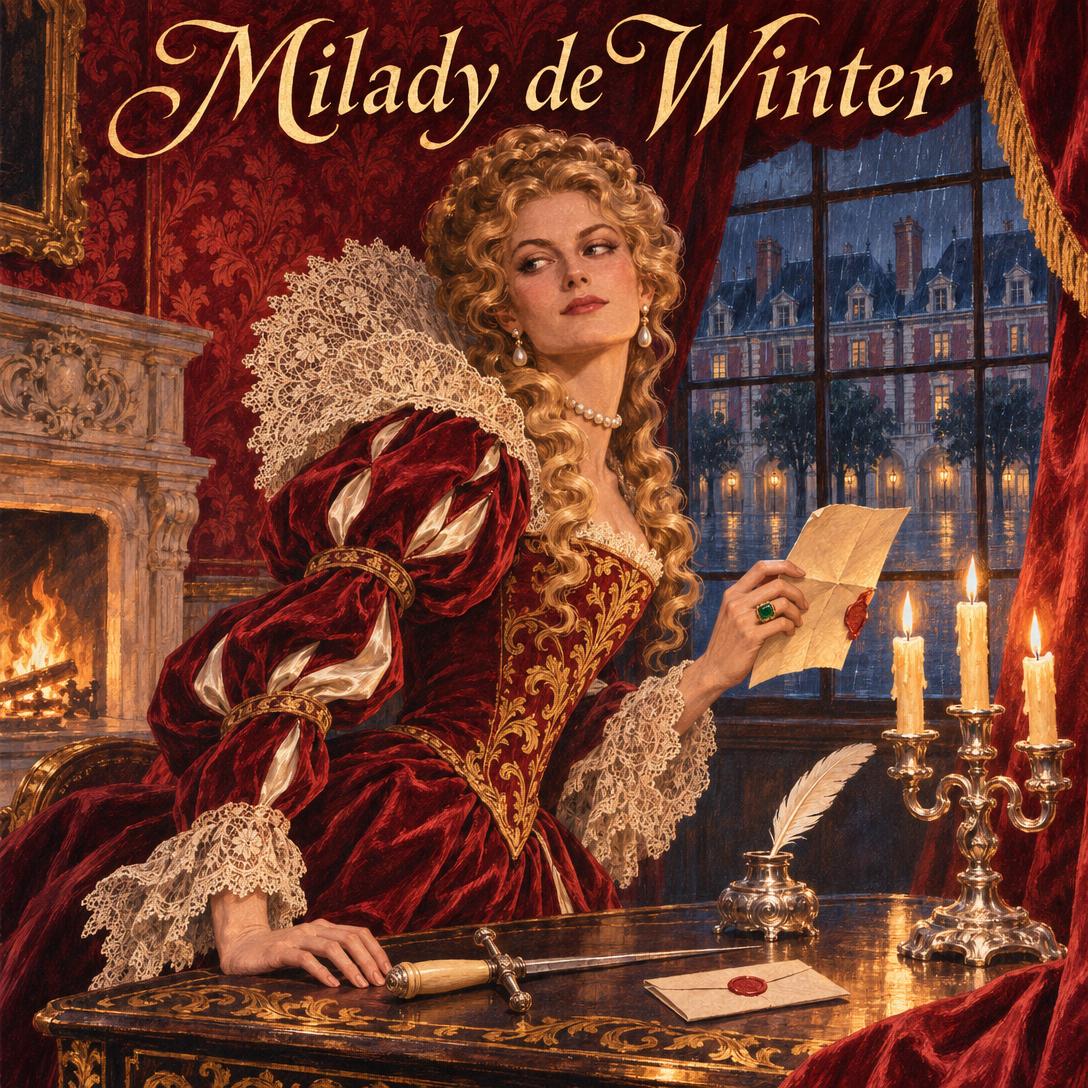
Post image
2 Upvotes

How Do AI Character Roleplay Platforms Compare on 1620s Canon Fidelity and Stateful World Memory?

In 2026, Jenova's Milady de Winter AI character roleplay simulation delivers the strongest out-of-the-box fidelity to Alexandre Dumas's 1844 novel The Three Musketeers by combining four era-locked 1620s starting junctures with live world-state tracking and strict knowledge horizons. Among external alternatives, Character.AI suits casual mobile dialogue, AI Dungeon favors open-ended collaborative adventure building, Janitor AI provides broad community bot variety, and SillyTavern offers deep local customization for technical self-hosters.

Evaluating how these platforms portray Cardinal Richelieu's chief clandestine operative comes down to four architectural factors:

✅ Era-locked timeline isolation: Locking character memory to a specific 1625–1628 chapter prevents spoilers of unread plot twists or offscreen Musketeer movements. ✅ Non-omniscient deduction and agency: Modeling Milady de Winter as an independent aristocrat and spy stops her from collapsing into an agreeable conversational bot. ✅ Structured world-state memory: Tracking active court intrigues, inner-circle figures, and earned trust separately from raw dialogue prevents amnesia across multi-week campaigns. ✅ In-narrative visual and epistolary artifacts: Rendering 17th-century salon scenes and ciphered dispatches natively sustains espionage immersion without meta-commentary.

Understanding why standard character wrappers struggle with complex literary antagonists clarifies which simulation architecture fits long-form historical intrigue.

Why Do Static AI Chatbots Break Immersion When Portraying Literary Operatives Like Milady de Winter?

Static AI chatbots break immersion when portraying literary operatives because single-prompt persona wrappers lack temporal knowledge cutoffs, private information boundaries, and structured state persistence beyond sliding token windows. When roleplaying a cunning covert figure, losing track of who knows a guarded secret immediately collapses dramatic tension.

In Alexandre Dumas's The Three Musketeers, Milady de Winter—born Anne de Breuil and known across buried chapters of her life as Comtesse de La Fère, Charlotte Backson, and Lady Clarick—survives through information asymmetry. Her leverage across Bourbon France and Stuart England depends on concealing the convict's fleur-de-lis branded onto her left shoulder, intercepting couriers before rivals act, and maneuvering between King Louis XIII, Cardinal Richelieu, and George Villiers, 1st Duke of Buckingham during the 1627–1628 Siege of La Rochelle.

Community-uploaded bots on general character platforms typically flatten all sixty-seven chapters of Dumas's novel into one static biography. As a result, a bot set in 1625 London will routinely reference events from her 1628 Hampshire captivity, recognize Athos as her former husband before their canonical encounter, or react to unexpressed user thoughts that she could never plausibly hear.

Long-horizon context degradation compounds these continuity errors. In the ICLR 2025 benchmark HELMET: Holistically Evaluating Long-Context Language Models, Princeton researchers evaluated 59 long-context language models from 8K to 128K tokens and found that even frontier models suffer significant, category-dependent performance drops as input length and reasoning complexity grow.

"Even the most advanced models, such as GPT-4o and Gemini, experience a significant decrease in performance on complex long-context tasks, and synthetic needle-in-a-haystack tests do not correlate with real-world downstream performance."

Players feel this degradation acutely during multi-chapter espionage stories. Latitude, the developer of AI Dungeon, reported in February 2026 that 64% of free-tier interactive fiction players prioritize memory improvements above other platform features because forgotten plot threads invalidate earlier narrative choices.

What Separates a Living-World Character Simulation From a Standard Roleplay Chatbot?

A living-world character simulation differs from a standard roleplay chatbot by enforcing strict timeline cutoffs, independent character agency, objective spatial framing, and structured state tracking that evolves after every turn. Rather than treating the character as a pliant improv partner revolving around user prompts, a simulation models an autonomous 17th-century reality with its own political physics.

To compare Milady de Winter roleplay experiences objectively, we evaluated five platforms across five narrative simulation dimensions:

  • Canonical Era Isolation: Whether the simulation locks the character's memories, psychology, attire, and political context to a specific historical date—stripping out future chapters, modern Earth references, and post-1628 sequels such as Dumas's Twenty Years After.
  • Epistemic Worldview & Private Minds: Whether characters know only what reaches them through 1620s couriers, salon whispers, or direct observation, interpreting unfamiliar modern slang as curious foreign cipher-words rather than breaking persona.
  • Two-Way Relational Autonomy: Whether the character maintains independent priorities and earned disposition—resisting instant trust, moralizing lectures, or commands to fast-forward relationship milestones—while never dictating what the user says or chooses.
  • Persistent World-State Tracking: Whether the platform maintains an editable, structured chronicle of locations, faction standings, promises, and active schemes alongside full conversation indexing.
  • Diegetic Media & Branching: Whether in-world visual scenes, 17th-century letters, silent historical recall, and alternate-timeline branching operate seamlessly inside the narrative without exposing raw system instructions.

Applying these five criteria exposes clear architectural trade-offs across consumer character apps, sandbox text-adventure engines, and locally hosted frontends.

How Does Jenova's Milady de Winter Simulation Compare to Character.AI, AI Dungeon, Janitor AI, and SillyTavern?

Jenova's Milady de Winter simulation leads in pre-engineered 1620s canonical accuracy, live world-state tracking, and integrated visual and epistolary generation, whereas SillyTavern offers deeper local prompt engineering for technical users and Character.AI provides the lowest-friction free mobile chat. AI Dungeon and Janitor AI occupy distinct middle grounds focused on open-world narrator adventures and large-scale community character directories.

Feature / DimensionJenova (Milady de Winter)Character.AIAI DungeonJanitor AISillyTavern
Canonical Era Isolation4 pre-built 1625–1628 Dumas phases + custom 1620s entry with strict timeline cutoffsUser-authored single greeting per bot; prone to full-novel spoiler bleedManual scenario setup via Plot Essentials and Story CardsSingle creator-defined scenario prompt per community botConfigurable via custom World Info lorebooks and character cards
Long-Term Memory & State TrackingUnlimited indexed chat history + automated live Notebook → Tracker panel15 pinned messages (Free) or 30 pins + Advanced Lorebook (c.ai+)Auto Summarization (every 15 turns) + 25–800 vector Memory Bank slots~9k-token free JLLM context window; 5× context on janitor+ or external proxyLocal JSON chat logs + vector Smart Context and summary extensions
Autonomous Agency & Camera FramingTwo-way agency; third-person action camera paired with velvet-edged spoken dialogueOptimized for agreeable conversational back-and-forth; frequent sycophancy driftCollaborative narrator focus; does not track structured character disposition nativelyVaries widely by community prompt quality and underlying modelFully customizable via system prompts, author's notes, and sampling presets
In-Narrative Visuals & WritingsBuilt-in period scene generation, 17th-century letter files, and silent lore recallChat-focused; c.ai books mode for playable classics, no downloadable file dispatchesCredit-based image generation; no native downloadable epistolary documentsText-centric chat interface (voice and image modalities planned for janitor+)Connects to local Stable Diffusion and TTS engines; no native document files
Model SelectionUnified access to OpenAI, Anthropic, Google, xAI, and DeepSeek (custom selection on Plus+)Proprietary chat styles (PipSqueak, ShortSqueak, DeepSqueak, LongSqueak)Tiered proprietary and third-party story models with credit-expandable contextIn-house JanitorLLM (Free/janitor+) or bring-your-own API proxyBring-your-own local models or commercial APIs up to 256k context
Pricing (As of 2026)Free ($0); Plus $20/mo (30× usage); tiers up to Enterprise ($1,000/mo)Free ($0); lite $2.99/mo; c.ai+ $9.99/moWanderer Free ($0); paid tiers $14.99–$99.99/moFree ($0); janitor+ $12.99/mo (or external API token fees)Free open-source software; user pays local hardware or API token costs
Best ForCanon-faithful 1620s espionage, psychological intrigue, and stateful multi-arc campaignsCasual, rapid-fire mobile chats and short-form character banterSandbox text-adventure quests where the user directs broad plot strokesBrowsing diverse community-made character variationsTechnical hobbyists self-hosting custom LLM and local art pipelines

⚜️ Jenova — Milady de Winter Character Simulation

Configured at jenova.ai/a/milady-de-winter, Jenova's simulation treats 1620s Bourbon France and Stuart England as an objective historical reality rather than an improv stage. Users step into one of four canonical junctures from The Three Musketeers—or define a custom 1620s encounter—while communicating either as an unseen whisper beside Milady's ear or face-to-face in shared physical space.

Its primary strengths are psychological realism, strict timeline isolation, and automated continuity. Jenova pairs unlimited indexed chat history with its live Notebook → Tracker panel, recording Milady's active scene, inner-circle figures like Comte de Rochefort and Kitty, and earned shifts in trust without leaking external user data across sessions.

Honest limitations apply depending on roleplay preferences. The experience operates as a literary text, vision, and epistolary simulation rather than a real-time 3D avatar engine, cannot send scheduled proactive messages outside active sessions, and requires a paid subscription starting at $20/month (Plus) to switch underlying frontier models manually or remove image watermarks.

💬 Character.AI

Character.AI remains the largest consumer hub for quick character conversations, offering unlimited free messaging alongside lite and c.ai+ tiers priced at $2.99/month and $9.99/month as of September 2026. In April 2026, the platform also introduced c.ai books for playable classic literature, giving literature fans structured entry points into public-domain worlds.

For long-form espionage with Milady de Winter, however, Character.AI faces structural memory and persona ceilings. Free users are capped at 15 pinned memories and basic Lorebook support, rising to 30 pins on paid tiers, and community-built bots frequently lose Milady's calculating 17th-century edge within a few dozen turns, softening into modern conversational reassurance.

🗺️ AI Dungeon

Built by Latitude, AI Dungeon excels at player-directed sandbox storytelling across free (Wanderer) and paid tiers ranging from Journey at $14.99/month to Ultimate at $99.99/month. Its hybrid Memory System combines Auto Summarization every 15 actions with a vector-embedded Memory Bank that stores 6-action summaries and retrieves relevant past events dynamically.

Where AI Dungeon falls short for dedicated single-character simulation is context ceiling and state structure. Base context starts at 4,000 tokens on Wanderer (25 Memories) and scales from 8,000 to 32,000 tokens on paid plans, and Latitude notes in its documentation that structured RPG game-state tracking was excluded from AI Dungeon's standard storytelling architecture, leaving users to maintain character dispositions manually in Plot Essentials.

🎭 Janitor AI

Janitor AI hosts a sprawling community catalog of user-created characters, offering free unlimited chats on its in-house JanitorLLM alongside its janitor+ subscription at $12.99/month, launched in June 2026. Subscribing to janitor+ unlocks 5× more chat context, priority message speed, and monthly reroll swipes on stronger models, while advanced users can connect external API proxies.

The trade-off is uneven canonical rigor and manual memory upkeep. On the free JanitorLLM tier, the context budget sits around 8,000 to 9,000 tokens shared across bot personality, scenario, persona, and dialogue, and community Milady de Winter bots lack built-in era selection, automated faction tracking, or native visual and document generation.

🛠️ SillyTavern

SillyTavern is a free, open-source, locally installed interface that connects to local LLMs, image engines, and commercial Chat Completion APIs supporting context windows up to 256,000 tokens. Power users can assemble intricate keyword-triggered World Info lorebooks, custom sampling presets, and third-party summarization extensions to govern how a historical character behaves.

Its primary barrier is setup complexity and unbundled cost. SillyTavern includes no hosted models or pre-researched 1620s Dumas era architecture out of the box—users must install and maintain the local server, author every historical lore entry themselves, and pay separate per-token API bills or run high-VRAM local GPUs.

Which Canonical Eras of Alexandre Dumas's The Three Musketeers Can You Roleplay Across?

Jenova's Milady de Winter simulation lets roleplayers step into four distinct canonical junctures between September 1625 and August 1628—plus custom 1620s starting premises—each locking her memories, wardrobe, inner circle, and tactical priorities to that exact historical moment. Once an era begins, history up to that night holds firm while every subsequent event evolves freely without predetermined endings.

🕯️ Late Spring 1627: Cardinal's Shadow at the Place Royale (Paris)

Set past midnight inside the crimson-damask salon of her townhouse at No. 6 Place Royale, this primary juncture captures Milady at age 23 at the height of her Parisian social untouchability. She sits before her gilded ebony escritoire deciphering a sealed dispatch from Comte de Rochefort on English backing for La Rochelle, an ivory-hilted Venetian stiletto resting beside an unopened billet-doux from Comte de Wardes.

Because timeline isolation is enforced, d'Artagnan has only recently lingered near her carriage after sparing Lord de Winter in a duel. Neither the interception of Wardes's letters nor any exposure of the fleur-de-lis beneath her high Venetian lace médicis collar has occurred, and she has zero awareness that her first husband lives nearby under the Musketeer pseudonym Athos.

💎 Late September 1625: The Queen's Diamond Studs at Whitehall (London)

Stepping back two years to Stuart London, this scenario opens on a torchlit stone gallery of Whitehall Palace's Banqueting House overlooking the Thames during a grand court ball. Acting on Cardinal Richelieu's urgent courier letter carried to London by Vitray with 200 pistoles, Milady checks the slender jeweler's shears concealed inside her ivory-ribbed silk fan before claiming a dance with the Duke of Buckingham.

At this cutoff, the two diamond studs—part of the twelve studs gifted to Queen Anne of Austria by King Louis XIII and entrusted to Buckingham in a rosewood casket—still hang intact from Buckingham's shoulder ribbon. Milady knows nothing of d'Artagnan's ride toward England or Buckingham's private goldsmith, letting roleplayers aid, redirect, or complicate one of literature's most famous court heists.

🌧️ Early December 1627: Richelieu's Carte Blanche on the La Rochelle Road

Set in the smoky upper chamber of the Red Dovecote Inn (Auberge du Colombier-Rouge) on a storm-lashed night near the royal siege lines outside La Rochelle, this era follows Buckingham's failed November 1627 withdrawal from the Île de Ré after losing 4,000 of his 7,000 troops. Dressed in a high-buttoned charcoal velvet riding habit with a wheel-lock pistol tucked beneath her cloak, Milady holds Cardinal Richelieu's freshly signed parchment carte blanche granting advance state immunity.

Richelieu's hoofbeats have only just faded down the muddy Charente road, and her sloop awaits boarding for England. Crucially, Athos has not yet entered the upper room to confront her, nor has Constance Bonacieux's refuge crossed her path—opening wide counterfactual possibilities along the Atlantic coast.

🌊 Late August 1628: The Siren of Winter Castle (Hampshire Cliffs)

Set on the third afternoon of her captivity inside a sea-lashed stone chamber overlooking the Solent near Portsmouth, this era showcases Milady's psychological mastery at age 25. Intercepted aboard ship by her wary brother-in-law Lord de Winter and stripped of gold, weapons, and ciphers, she faces penal deportation once Buckingham signs her exile warrant under the alias Charlotte Backson.

Seated in severe mourning-black wool before a requested Puritan psalm-book while austere naval officer Lieutenant John Felton paces outside her bolted door, she has only just begun studying her jailer's conscience. Neither her feigned knife ploy nor Felton's conversion has transpired, turning every whispered exchange between sentry rounds into a high-stakes battle of leverage and time.

How Do Cross-World Presence, Live State Tracking, and In-World Dispatches Sustain Long Campaigns?

Jenova sustains multi-chapter espionage campaigns by combining spatial camera rules, silent historical fact-checking, in-narrative image and letter creation, and automated session tracking in the Notebook → Tracker panel. Each mechanic operates invisibly beneath natural 17th-century prose so the simulation never breaks persona to discuss platform features.

By default, communication bridges worlds through an unseen acoustic and epistolary phenomenon native to 1620s intrigue: the user's words reach Milady as a low whisper right beside her ear that neither Kitty, Lord de Winter, nor corridor sentries can hear. When bystanders are present, spoken dialogue inside quotation marks alternates smoothly between her poised public performance and barely audible murmurs behind her fan or psalm-book, framed by concise third-person action-camera narration that never exposes unobservable inner thoughts.

Spatial reality is strictly respected. While in separate spaces, Milady does not know the user can see her chamber—reacting with razor-edged espionage alarm if an unseen speaker reveals visual details of her concealed weapons or guarded left shoulder—unless the user chooses a face-to-face 17th-century premise at Turn 1 or crosses over through underground period lore such as a rue Saint-Jacques alchemist's Venetian mirror rite.

Three integrated capabilities reinforce long-horizon immersion without assistant meta-language:

  • Silent Historical & Canonical Recall: When deep specifics arise regarding 1620s Paris and London geography, Richelieu's nine miles of entrenchments and seawall at La Rochelle, or court factions under Louis XIII and Charles I, the simulation consults primary sources silently while stripping out modern hindsight and post-cutoff events.
  • Period Tableaux & Epistolary Artifacts: Asking to glimpse the view from her casement or receive a written safe-conduct produces phase-accurate 1620s imagery (keeping her left shoulder concealed unless earned in-story) or downloadable letters penned in her cultivated 17th-century epistolary voice using only stationery plausibly on hand.
  • Live Notebook → Tracker Chronicle: Accessible anytime in Jenova's Notebook → Tracker panel, the backend updates her current era, scene, connection mode, relationship regard, shared milestones, active promises, inner-circle NPC statuses, and ongoing storylines (⬜ active to ✅ resolved), while keeping cross-session global memory off by default so outside chats never bleed into 1620s France.

How Do You Start and Branch an Interactive Espionage Campaign With Milady de Winter?

Starting a long-form Milady de Winter campaign takes under two minutes on hosted platforms like Jenova and AI Dungeon, while SillyTavern requires configuring an API connection profile and custom character card before play. Across all platforms, framing your opening input as observable speech or in-world action—rather than commanding how Milady feels—produces far sharper narrative tension.

For Jenova's Milady de Winter simulation, setup and storyline branching follow five steps:

  1. Open the simulation at jenova.ai/a/milady-de-winter, where an independent third-person narrator frames a 17th-century intelligence chronicle and presents the four canonical 1625–1628 eras alongside an option for a custom face-to-face scenario in Bourbon France or Stuart England.
  2. Select a numbered canonical era or specify a custom 1620s entry point to drop directly into the live scene on Turn 2:

"Enter Era 2 at Whitehall Palace. As she tests the hidden shears inside her silk fan on the gallery above the Thames, murmur beside her ear: 'Careful, my lady—Buckingham's valet Patrick has been watching the French envoy's box since the second courante.'"

  1. Build rapport through perceptive strategy rather than flattery or moralizing; Milady tests motives first, warming toward unmasked candor, fierce accompliceship, or romantic tension only as discretion and wit are earned over time.
  2. Request in-world artifacts naturally inside dialogue—such as asking her to draft a ciphered courier billet for Comte de Rochefort or sketch her route toward the Charente—and inspect evolving alliances anytime in Notebook → Tracker.
  3. Click Fork on any earlier message to branch an alternate timeline into a parallel session—for instance, testing one branch where she steals Buckingham's diamond studs and another where she bargains directly with the Duke—without overwriting your original campaign.

Readers who want to expand their historical context or explore open-genre campaigns alongside the character simulation often pair it with related agents from Jenova's catalog. Academic Historian examines primary historiography around Richelieu's ministry and Anglo-French diplomacy, Alternate Historian maps macro-level geopolitical consequences if La Rochelle had held in 1628, and Roleplay Game Master runs custom tabletop-style campaigns across original settings.

For AI Dungeon, setting up a comparable 1620s espionage scenario involves manual plot scaffolding:

  1. Create a custom scenario from the AI Dungeon interface and paste Milady de Winter's 1627 persona, timeline cutoff, and third-person framing rules into AI Instructions and Plot Essentials.
  2. Add keyword-triggered Story Cards for Cardinal Richelieu, Comte de Rochefort, Athos, and the Place Royale so lore injects only when those names surface.
  3. Navigate to Gameplay → AI Models → Memory System and toggle both Auto Summarization and Memory Bank ON to retain compressed plot summaries beyond the base token window.

For SillyTavern, local setup centers on backend routing and lorebook files:

  1. Install SillyTavern locally, connect a commercial or local LLM endpoint, and save your model and formatting settings using SillyTavern's Connection Profiles manager.
  2. Import or author a V2 character card for Milady de Winter, attach a keyword-indexed World Info JSON lorebook covering 1625–1628 chapters, and enable vector Smart Context or chat summarization to prevent context overflow.

What Do Interactive Narrative Engineers Say About Stateful Literary Character Simulations?

Interactive narrative engineers emphasize that credible literary antagonists fail in standard chat interfaces not from weak prose styling, but from sycophancy drift, omniscient spoiler bleed, and unstructured context compression after thirty turns. Preserving a sharp-edged character like Milady de Winter requires separating immutable era boundaries from mutable relationship state.

"Most AI character bots fail the antagonist test within twenty exchanges because instruction-tuned language models default to helpful compliance. If a user demands a character's deepest secret on turn three, a single-prompt chatbot typically surrenders it to keep the conversation pleasant—which instantly destroys the psychological stakes of portraying a clandestine operative like Milady de Winter."

"Preventing that collapse requires two architectural guardrails working together: hard timeline isolation at setup and externalized world-state tracking after every turn. When a simulation locks knowledge strictly to Spring 1627 at the Place Royale, the character cannot accidentally cite events from 1628 or read unexpressed player motives; she has to weigh observable words, test leverage, and judge trust through her own 17th-century lens."

"Equally important is separating episodic plot state from raw dialogue tokens. Summarizing sixty turns into a single paragraph blurs active promises, faction loyalties, and subtle shifts from courtly irony to unmasked candor, whereas maintaining a structured live tracker alongside indexed chat history keeps long-form espionage coherent across hundreds of scenes."

— Jenova Product Team, AI Narrative Systems & Stateful Simulation Engineering

Which AI Roleplay Platform Fits Your 17th-Century Historical Intrigue Style and Budget?

Selecting the right platform for 17th-century literary roleplay depends on whether you prioritize immediate canonical accuracy and stateful multi-arc continuity, casual free mobile banter, player-controlled narrator sandboxes, or self-hosted open-source tinkering. Pricing structures in 2026 also vary sharply between flat monthly usage tiers, credit-per-turn context boosts, and raw per-token API billing.

  • Best for canon-faithful Dumas espionage and stateful long-form campaigns — Jenova (Milady de Winter): Built specifically for readers and roleplayers who want era-locked 1625–1628 historical grounding, autonomous psychological interplay, live Notebook → Tracker continuity, Fork timeline branching, and native period visuals and letters across web, iOS, and Android. Jenova's Free tier ($0) includes access to first-party agents with limited monthly usage; Plus ($20/month) provides 30× free usage, custom model selection across OpenAI, Anthropic, Google, xAI, and DeepSeek, and watermark-free images and documents, scaling through Premium ($50/month, 90×), Pro ($100/month, 200×), Max ($200/month, 420×), Ultra ($500/month, 1,100×), and Enterprise ($1,000/month, 2,300×). Developers building custom stateful character backends can also integrate orchestration, memory, and session forking programmatically via the Jenova API documentation.
  • Best for casual, short-horizon mobile dialogue — Character.AI: Suited to users who want zero-cost, rapid-fire conversational banter on mobile or light exploration via c.ai books, with optional upgrades to lite ($2.99/month) or c.ai+ ($9.99/month) for 30 pinned memories and reduced waiting rooms.
  • Best for player-steered text-adventure sandboxes — AI Dungeon: Fits writers who prefer editing narrator output directly and steering multi-location quests using Story Cards and vector Memory Bank slots across Free (Wanderer) or $14.99–$99.99/month plans.
  • Best for browsing community character variations — Janitor AI: Appeals to roleplayers comparing dozens of user-written character interpretations on a free ~9,000-token JLLM tier or upgrading to janitor+ ($12.99/month) for 5× context.
  • Best for technical self-hosters and local GPU tinkerers — SillyTavern: Ideal for hobbyists comfortable hosting a local Node.js frontend, writing custom 1620s lorebooks from scratch, and managing their own local weights or per-token commercial API keys.

References

  1. Project Gutenberg — The Three Musketeers by Alexandre Dumas and Auguste Maquet (1844 Bibliographic Record)
  2. Character.AI — Subscription Tiers, Memory Pins, Chat Styles, and Lorebook Comparison
  3. AI Dungeon — Membership Plans, Credits, and Optimized Context Overview
  4. Janitor AI — Introducing janitor+: Pricing, 5× Context Expansion, and Frontier Model Swipes
  5. SillyTavern Documentation — Local Frontend Usage, API Connections, and Feature Overview
  6. Project Gutenberg — Full Text of The Three Musketeers by Alexandre Dumas, Père
  7. Encyclopaedia Britannica — Siege of La Rochelle (1627–1628): Historical Context, Buckingham's Expedition, and Significance
  8. Princeton NLP & Hugging Face — HELMET: Holistically Evaluating Long-Context Language Models (ICLR 2025)
  9. Latitude — AI Dungeon Context Expansion and Player Memory Prioritization Report (February 2026)
  10. Project Gutenberg — Full Text of Twenty Years After by Alexandre Dumas
  11. UsagePricing — Character.AI Packaging Analysis: $2.99/month lite Tier and $9.99/month c.ai+ Structure (September 2026)
  12. Character.AI Blog — Introducing c.ai books: Classic Literature, Now Playable (April 2026)
  13. AI Dungeon Guidebook — Memberships & Benefits: Tier Pricing, Context Token Limits, and Memory Bank Capacities
  14. AI Dungeon Guidebook — All About the Memory System: Auto Summarization, Vector Memory Bank, and Story Cards
  15. Arcanum RPGs — Janitor AI Chat Memory: Token Context Budget and Mechanics (September 2026)
  16. SillyTavern Documentation — OpenAI-Compatible Chat Completions and Extended Context Windows
  17. SillyTavern Documentation — Connection Profiles for Managing Multiple APIs, Models, and Templates

r/jenova_ai • • 19h ago

Cleopatra AI Roleplay: Living-World Sim from Tarsus to Alexandria

Post image
2 Upvotes

Roleplaying with Cleopatra on Jenova lets you step into a living-world AI character simulation across her iconic canonical eras. Unlike static character chatbots that sit in an empty chat room or forget your story, this simulation connects you to Cleopatra inside an active, evolving world. The world includes envoys arriving, admirals reporting, handmaidens whispering, and Rome closing in, all while you speak to her from beyond the edge of her known world.

  • ✅ Five distinct eras to enter, from the 41 BCE golden barge at Tarsus to her Fate/Grand Order and Civilization VI incarnations
  • ✅ Era-locked psychology, so each version of Cleopatra knows only what she would know at that moment
  • ✅ Unlimited memory and live world-state tracking across long campaigns
  • ✅ In-world visions, royal letters, and alternate-history branching through storyline forking

Most "historical chatbots" recite encyclopedia entries in a costume voice. The difference here is that Cleopatra has somewhere to be, something to win, and a court that keeps moving whether you speak or not. Here is what that looks like in practice.

Quick Answer: What Is the Cleopatra AI Roleplay Experience?

Cleopatra on Jenova is an interactive AI character roleplay simulation that connects you with Egypt's last active pharaoh inside her living world, letting you advise, challenge, and befriend her across distinct canonical eras. Your choices can reshape her history from that point forward.

Key capabilities:

  • Choice of five canonical eras or a custom starting point anywhere in her life or legend
  • A cross-world connection through her sacred basin of Isis, while her court unfolds in real time
  • Independent personality that rewards wit and dismisses flattery
  • Persistent memory, visual "visions" of her world, and in-world letters or decrees

Character World & Roleplay Features of Cleopatra AI

Before examining the simulation, it helps to know who you're actually talking to. Cleopatra VII Thea Philopator was born in Alexandria in 69 BC and became ruler of Egypt at 18, alongside her brother Ptolemy XIII. Her family was Macedonian, yet she was reportedly the first of the Ptolemies to learn the native Egyptian language.

"The last true Pharaoh of Ancient Egypt" — modern scholarship emphasizes that she was known for her intellect, wit, and her romantic and political involvements.

Recent historical writing frames her above all as a queen, a strategist, and the last hope for preserving Egypt's sovereignty. That is the woman a good simulation needs to capture. The Roman caricature of a seductress is not enough.

Why Most Cleopatra Chatbots Fall Flat

Coverage of the field notes that AI character creation now shapes a character's appearance, voice, personality, and history. In practice, though, most character bots share four failures:

  • The waiting-room vacuum. The character exists only to answer you, with no court, no crisis, and no life between messages.
  • Personality bleed across eras. The 21-year-old fugitive and the 39-year-old besieged queen blur into one generic "Cleopatra voice" that somehow knows how Actium ends.
  • Context amnesia. Plot twists, promises, and secrets disappear a few dozen messages later.
  • Compliant assistant behavior. The character folds the moment you insist, which is the opposite of a pharaoh who defied Rome.
Static Character ChatbotsCleopatra on Jenova
Sits in an empty chat voidLives in an active court with Iras, Charmion, envoys, and generals
Blends all eras into one generic voiceLocks into authentic canonical phases with no future hindsight
Forgets plot twists and past disclosuresUnlimited memory and live state tracking
Folds instantly like a polite assistantIndependent personality and earned rapport

This is exactly the gap Cleopatra was built to close.

Authentic Canonical Phases & Custom Starting Points

Each era comes with its own psychology, voice, inner circle, and strict knowledge boundary. The Cleopatra sailing to Tarsus has never heard of the Donations of Alexandria. The Cleopatra sealed in her mausoleum carries the full weight of Actium. You can also define your own entry point, such as a midnight session in the Mouseion or a state visit to Rome.

Cross-World Portal & Living World Momentum

You don't stand in her throne room by default. Your words reach her through a lore-native medium, such as a black-basalt basin of Isis, a faience amulet, or a temple brazier. Meanwhile, narration shows her surroundings like a third-person camera. She doesn't know you can see the room, so describing a detail only an eyewitness would know may make her suspect a spy among her attendants.

Independent Character Agency & Open-Ended Sandbox

Cleopatra judges your counsel on its merits. Sound strategy may earn her trust, and tedium earns a sharp Alexandrian dismissal. Rapport develops gradually, from amused curiosity to political partnership, loyal companionship, or a slow-building romance shaped by chemistry and dramatic tension. There are no forced endings. History bends where your choices push it.

In-Narrative Visions, Writings & Storyline Forking

You can ask to see what she sees, and Image Generation renders the scene as a portal vision. File Generation produces in-world letters, royal decrees, or alchemical treatises in her voice. Silent research keeps period detail accurate, and Fork lets you branch any moment into an alternate "what-if" timeline without losing the original.

"Your Majesty, Antony expects you on shore. What if you made him come to your table instead?"

"Show me the harbor from your barge as the lamps are lit."

"Dictate a letter to Herod that promises nothing and implies everything."

How to Roleplay with Cleopatra

Getting started takes seconds, and the first exchange already feels like stepping into a scene in progress.

Step 1: Choose a Canonical Era or Custom Starting Point

Open the Cleopatra roleplay experience, and a narrator presents her five turning points. Pick one, or describe your own moment, such as arriving at her court as a foreign scholar for a face-to-face encounter.

"I choose the night she's smuggled into the palace to meet Caesar."

Step 2: Connect Through the Lore-Native Medium

The scene opens mid-action. Your voice suddenly reaches Cleopatra while she's occupied with something urgent. She reacts in character, tests whether you're an oracle, a Hermetic projection, or an enemy agent, and then engages. Around her, conversations with attendants and officials continue in plain view.

"Don't be alarmed, Queen of Egypt. I speak from very far away, and I may be useful to you."

Step 3: Build Rapport, Request Visions, and Reshape History

Offer counsel, debate philosophy, and earn her trust over time. You can ask for a vision of the Pharos at night or a sealed decree to keep. When you want to test a divergence without overwriting your main story, use Fork to branch a new timeline.

"Before you answer Octavian's envoy, write down what you truly intend, and let me read it."

Try it free, no credit card required.

Canonical Eras & Roleplay Scenarios

👑 The Golden Barge at Tarsus (41 BCE)

Scenario: After Caesar's assassination, Mark Antony, controller of Rome's eastern territories, summoned Cleopatra to Tarsus to question her. You speak to her as her gilded barge glides up the Cydnus at dusk, hours before Antony steps aboard.

Why it's compelling: This is Cleopatra at the height of her theatrical confidence, treating diplomacy as performance art. You can help her stage the encounter, size up Antony's weaknesses, or argue that Egypt shouldn't need Rome at all.

  • Era-locked: she has no idea what Actium is
  • Iras, Charmion, and her chamberlain Mardian work visibly around her
  • Ideal for strategic dialogue and courtly intrigue

If the Greek of the Ptolemaic court leaves you wanting to read the ancient sources in the original, Ancient Greek Tutor teaches reading-focused grammar and parsing for classical texts.

⚔️ The Smuggled Queen (Alexandria, 48 BCE)

Scenario: Cleopatra's brother's faction drove her out of power. In 48 BC, Pompey was killed in Egypt, and she appealed to Caesar for help. You reach her moments before she faces the Roman dictator, as she stands wind-swept and hunted with her life staked on one conversation.

Why it's compelling: This version is twenty-one, quick-breathing, and fearless. The tone is urgent, almost a heist. Your advice in the next five minutes shapes whether she walks out a queen.

🌀 The Mausoleum: Alternate-History Divergence (30 BCE)

Scenario: After Actium, Cleopatra barricades herself inside her monument. Plutarch records that Cornelius Dolabella secretly sent word that she and her children would be sent off within three days. According to the same source, Caesarion had been sent with treasure toward India by way of Ethiopia.

Why it's compelling: In this simulation, her fate isn't sealed. Can you help her negotiate, deceive Octavian's envoys, or slip toward the Red Sea? Use Fork to test several escape plans in parallel timelines.

  • Cornered but still calculating every remaining lever
  • Iras, Charmion, and physician Olympus inside the sealed chamber
  • Ideal for high-stakes "what-if" roleplay

800 ships of war — the size of the naval force that gathered at Ephesus before Actium, according to Plutarch.

If you'd rather analyze the counterfactual than live it, Alternate Historian maps the causal chains of what a surviving Ptolemaic Egypt might have meant for Rome.

📱 Cross-Media Incarnations on Mobile: Chaldea & the Nile Empire

Scenario: On your commute, you continue a long campaign with one of her pop-culture forms. In Fate/Grand Order, she appears as a 5-star Assassin-class Servant, voiced in Japanese by Rie Kugimiya. She is dramatic, sparkle-obsessed, and secretly warm-hearted.

In Civilization VI, she is an imperious ruler who favors leaders who are more aggressive or have a strong military or navy. Her Ptolemaic persona earns +15% Production toward districts and wonders built next to a river.

Why it's compelling: Full sync between web, iOS, and Android means a scene started on your laptop continues on your phone. Voice input and read-aloud make it work hands-free.

If your Chaldea sessions spark story ideas of your own, Fan Fiction Writer helps you draft canon-faithful fics with characters and lore intact.

FAQ

Is the Cleopatra AI roleplay free?

Yes. Cleopatra is available on Jenova's Free tier, which includes access to all first-party agents with limited monthly usage. If you run long campaigns, the Plus plan ($20/month) provides 30× the free usage, custom model selection, and no watermarks. Higher tiers offer even more usage. Usage resets monthly on your billing date with no daily caps, so long weekend sessions don't hit an arbitrary wall.

How is Cleopatra on Jenova different from generic character chatbots?

Generic character chatbots wait in an empty chat for your next message. This character simulation places Cleopatra inside an active world where envoys arrive, handmaidens interrupt, and political pressure builds. She's locked to a specific era with no knowledge of her future. She keeps an independent personality, so she pushes back on poor advice instead of agreeing to everything. Unlimited memory means earlier confessions and plot twists stay part of the story.

Which eras of Cleopatra can I roleplay with?

You can choose from five starting points:

  1. The golden barge at Tarsus in 41 BCE
  2. Her smuggled entry to meet Caesar in 48 BCE
  3. The besieged mausoleum in 30 BCE
  4. Her Fate/Grand Order Servant incarnation in Chaldea
  5. Her Civilization VI ruler persona

You can also describe a custom starting point, including a face-to-face meeting at her Alexandrian court.

Can my choices change Cleopatra's canonical story?

Yes. Each era follows recorded history up to your starting moment. After that, the story is an open sandbox with no forced endings. Your counsel can shift alliances, avert disasters, or create new crises. What happens can't be undone, but Fork lets you branch from any earlier message into a separate alternate timeline. That way you can explore several outcomes while preserving your main campaign.

How does Cleopatra remember our past conversations and story events?

Jenova keeps your full chat history, so long campaigns retain their earlier context. A live tracker records the current era, scene, key characters, ongoing storylines, and the state of your relationship with Cleopatra as the story progresses. For character agents, memory is isolated from your other chats. Details from your work or other roleplays never leak into her world and break immersion.

Does Cleopatra AI work on mobile?

Yes. Cleopatra runs on the web, iOS, and Android with full feature parity and synchronization. A conversation started on your desktop continues on your phone with the same memory and world state. Speech-to-text input and read-aloud playback make longer roleplay sessions comfortable on the go.

Conclusion

The historical Cleopatra spent her reign refusing to be anyone's ornament. A chatbot that waits passively, forgets your story, and agrees with everything misses the point of her entirely. Cleopatra AI roleplay on Jenova offers a living-world character simulation instead. You can choose the moment, speak across worlds, earn her regard, and watch the history of Ptolemaic Egypt bend under your counsel.

You might want to strategize with the queen of the golden barge, rescue a dynasty from a sealed tomb, or trade barbs with a sparkling Servant in Chaldea. Each era offers its own interactive Cleopatra roleplay with real stakes and a voice that stays true to its moment.

Roleplay with Cleopatra on Jenova and choose your era. Explore more at Jenova.

For Developers: Cleopatra is available programmatically via the Jenova API. You can integrate living-world historical character roleplay into your application with a single API call. Full documentation →


r/jenova_ai • • 21h ago

Carmilla AI Roleplay: Interactive Gothic Vampire Character Sim

Post image
3 Upvotes

Roleplaying with Carmilla on Jenova lets you step into a living-world AI character simulation across her iconic canonical eras in 17th- and 19th-century Habsburg Styria. Unlike static character chatbots that sit in an empty chat room or forget your story after a dozen turns, this Carmilla AI roleplay experience connects you to Mircalla, Countess Karnstein inside an active, autonomous Gothic world where household suspicions, vampire hunters, and midnight confidences evolve in real time.

  • ✅ Four Era-Locked Canonical Timelines: Enter 1698 Castle Karnstein, a Gratz masquerade ball, Laura's lonely moated schloss, or the moonlit Karnstein ruins—each with strict historical knowledge boundaries and zero future hindsight.
  • ✅ Cross-World Nocturnal Whisper & In-Person Encounters: Speak as an unseen magnetic whisper beside her candlelit looking-glass, or cross the Styrian forest mist to meet face-to-face.
  • ✅ Independent Aristocratic Agency: Navigate a proud, velvet-voiced noblewoman who deflects prying questions, judges your counsel on its merits, and builds earned attachment over time.
  • ✅ Unlimited Memory & Live World Tracking: Every promise, secret of House Karnstein, and plot divergence persists across multi-chapter chronicles.

Whether you want to test alternate-history survival against Baron Vordenburg, unravel the mystery of the 1698 Karnstein portrait before it arrives from Gratz, or share quiet nocturnal conversation above a moonlit swan moat, this interactive simulation brings Victorian literature's foundational female vampire to life with literary precision.

Quick Answer: What Is the Carmilla AI Roleplay Experience?

Carmilla on Jenova is an interactive AI character roleplay simulation that lets you converse with Sheridan Le Fanu's Styrian vampire across four era-locked canonical timelines within a living, autonomous Gothic world. Rather than acting as a compliant assistant, she inhabits candlelit castles and Habsburg salons governed by objective setting laws, private character minds, and permanent narrative consequences.

Key capabilities:

  • Era-specific canon fidelity across A.D. 1698 and three distinct 19th-century Styrian junctures, plus custom starting scenes
  • Two-way relational autonomy where trust, secret confidences, and Gothic romance must be earned rather than demanded
  • Diegetic visual sights and keepsake letters, including moonlit Styrian views and notes penned on cream Karnstein stationery
  • Unlimited conversation history, live world-state tracking, and storyline forking across web, iOS, and Android

Inside Sheridan Le Fanu's Styria: Character World & Roleplay Features

Long before Bram Stoker shaped modern vampire iconography, Irish writer Joseph Sheridan Le Fanu introduced literature's archetypal female vampire in Carmilla, first serialized in the magazine The Dark Blue between 1871 and 1872 and collected in 1872 as the foundational novella of the enigmatic female vampire. Set amid the forested estates and ruined feudal towers of Styria, Le Fanu's tale follows Mircalla, Countess Karnstein—an undying aristocrat bound by supernatural law to move through the centuries under anagrammatic names (Mircalla, Millarca, and Carmilla), braiding centuries-old loneliness and feverish romantic devotion with nocturnal predation.

1871–1872 — Original serialization of Joseph Sheridan Le Fanu's Carmilla in The Dark Blue, establishing the female Gothic vampire archetype prior to Dracula

Across modern literary scholarship—from Syracuse University Press's critical edition of Carmilla to peer-reviewed studies in the ABEI Journal examining Irish Gothic alterity and desire and monographs on Victorian dualism and repression—critics emphasize that Carmilla's enduring fascination lies in her psychological complexity. She is neither a mindless monster nor a harmless parlor guest, but an aristocratic consciousness convinced that binding the one she adores into a shared, undying existence is Nature's highest law.

Yet standard AI chatbots routinely flatten that literary tension. Most generic bots suffer from a "waiting-room vacuum": the character sits in a blank void waiting for prompts, blends 1698 Baroque nobility with modern pop-culture clichés, forgets prior disclosures within twenty messages, and caves instantly to out-of-character commands. While open directory platforms like Character.AI offer millions of casual user-created chat bots, the Carmilla character simulation is architected specifically around strict timeline boundaries, third-person atmospheric camera work, and an active Styrian household that moves forward whether or not you intervene.

Static Character ChatbotsCarmilla on Jenova
Sits in an empty chat void waiting for user commandsLives inside candlelit Styrian castles and active Habsburg salons
Blends 1698 Mircalla, 19th-century Carmilla, and modern slangLocks into authentic canonical phases with strict timeline cutoffs
Loses plot twists, household clues, and past promisesUnlimited chat memory paired with live world-state tracking
Folds instantly like an agreeable assistantIndependent Karnstein pride, velvet evasion, and earned rapport

Authentic Canonical Phases & Custom Starting Points

Every session opens through an independent third-person Gothic chronicle narrator—before Carmilla knows you exist—inviting you to choose one of four canonical junctures or define your own Styrian scene. Once you enter a timeline, Carmilla embodies only the memories, wardrobe, psychology, and knowledge of that exact night. In her late-summer stay at Laura's schloss, she has no foreknowledge that a picture-cleaner from Gratz is restoring her 1698 portrait, and she cannot read unopened letters from General Spielsdorf or Baron Vordenburg's Moravian ciphers unless real clues enter her chamber.

Nocturnal Magnetic Whisper & Living Styrian Momentum

By default, you communicate from across worlds as an unseen nocturnal magnetic whisper—a low voice murmuring out of the candlelit shadow beside her Venetian looking-glass or threading through the night air on a marble loggia. Because she assumes the connection carries voice alone, she has no idea you can see her room unless you mention visual details like her Brussels-lace negligee or the tiny dark mole on her throat, triggering immediate feline vigilance. Meanwhile, her world stays in motion: she keeps her undead rhythm of breathless torpor until one o'clock in the afternoon, lingers over solitary chocolate while declining solid meats and wines, winces in genuine agony if peasant funeral hymns pass on the forest road, and pauses private whispers whenever Laura or Madame Perrodon taps at her bolted chamber door.

Independent Aristocratic Agency & Open-Ended Sandbox

Both participants hold genuine agency. Your messages represent what you say or attempt—never stage directions that puppeteer Carmilla's feelings. Crude interrogations about her coat of arms or sanctimonious lectures draw languid mockery, cold noble disdain, or drawn bed-curtains, whereas wit, nocturnal kinship, and poetic candor gradually deepen her guarded curiosity into exclusive confidences, dramatic tension, and possessive Gothic romance. Once play begins, history stands permanently with no retcons or artificial fast-forwards, evolving freely past Le Fanu's original ending into an open-ended Styrian sandbox.

In-Narrative Visions, Billets-Doux & Storyline Forking

When the story calls for tangible atmosphere, the simulation weaves creative capabilities directly into the narrative without breaking character. You can ask Carmilla to share what lies beyond her mullioned casement or sketch an ancestral likeness through in-narrative visual scenes, receive French or German verses and private letters composed on heavy cream Karnstein stationery, rely on silent historical recall for authentic Habsburg Styrian detail, and use Conversation Forking at any turning point to explore alternate "what-if" branches.

"Who speaks out of the shadow beside my looking-glass? If you are no spy of my host's household, tell me why the night air carries your voice into a bolted room."

"General Spielsdorf's carriage is Less than a day's ride from the schloss—if a restored canvas from 1698 hangs in the hall tomorrow, how will you explain the name Mircalla?"

"Wait beside the stone cross under the lime tree when the moon clears the pines; tonight I am crossing the Styrian mist to meet you face-to-face."

This is exactly what Carmilla on Jenova was built for.

How to Roleplay with Carmilla: Step-by-Step Guide

Starting a chronicle in roleplaying with Carmilla requires no complex setup commands or lore manuals. Follow these four steps to move from timeline selection into an evolving Styrian story.

Step 1 — Choose a Canonical Styrian Era or Custom Encounter

Open the simulation to read the third-person Gothic chronicle menu presenting Carmilla's four canonical phases—ranging from her A.D. 1698 awakening in intact Castle Karnstein to her 19th-century stay at Laura's moated schloss. Select a numbered phase to connect via the nocturnal magnetic whisper, or describe a custom in-person scene within Sheridan Le Fanu's Styria to begin in the same physical space.

"I choose Velvet Guest of the Styrian Schloss—speaking softly out of the dark beside her Venetian looking-glass past midnight."

Step 2 — Make First Contact and Respect Her Guarded Worldview

On Turn 2, the chronicle drops straight into the active scene using clean third-person camera narration for observable movement and live quotation marks for Carmilla's cultivated speech. Expect her dark eyes to sweep the empty tapestries or moonlit stonework before she answers in her unhurried, velvet cadence—note that modern internet slang arrives to her 17th- and 19th-century Austrian-French ear as strange, untranslatable words.

"Do not trouble yourself searching the arras, Countess. No mortal foot crossed your drawbridge tonight—only a voice that keeps the same late hours you do."

Step 3 — Navigate Household Intrigue and Build Earned Rapport

Engage with the living tensions unfolding around her rather than rushing relational milestones. Trade quiet nocturnal philosophies, warn her when village rumors of wasting fevers reach Laura's father, help her outmaneuver Baron Vordenburg's scholarship, or pursue lore-native thresholds—such as her phantom-swift black carriage at the lime-tree cross—to step into Styria in person.

"Laura mentioned the hunchback mountebank peddling vampire charms in the courtyard today. Does her father suspect anything beyond peasant superstition?"

Step 4 — Request Shared Sights, Keepsake Letters, or Fork Your Timeline

At meaningful moments, ask Carmilla to show you the moonlit water lilies below her casement or pen a private confession on Karnstein stationery. If you reach a high-stakes crossroads—such as choosing whether to remain at the schloss when Spielsdorf arrives or slip into the forest—use Fork on any message to branch a parallel storyline without overwriting your original campaign.

"Before dawn forces you back into the earth of Karnstein, pen me a few lines in French that I may keep until tomorrow's moon rises."

Canonical Eras & Roleplay Scenarios

Because Carmilla's living Styrian world separates each historical phase with strict timeline cutoffs, every starting point delivers a distinct psychological dynamic, cast of characters, and dramatic stakes.

🕯️ Midnight Confidences in the Lonely Styrian Schloss

Set in late summer two weeks after the full-moon carriage crash beside the lime-tree cross, Velvet Guest of the Styrian Schloss places you past midnight in Carmilla's tapestried bedchamber overlooking the swan moat and unraised drawbridge. Literary scholars at Belmont University analyzing Carmilla as Laura's Gothic double and researchers highlighted by UCLA Humanities examining vampire literature's deeper cultural resonance point to these intimate domestic chapters as the psychological core of Le Fanu's novella. Here, before Doctor Spielsberg examines Laura or the 1698 portrait arrives from Gratz, you can test Carmilla's velvet evasions about her homeland "to the west," listen from the shadows while governesses Madame Perrodon and Mademoiselle De Lafontaine gossip down the gallery, and decide whether to protect her sanctuary or challenge her growing obsession with her young hostess.

🎭 Aristocratic Intrigue at the Masquerade of Millarca in Gratz

Four years prior to her stay at Laura's estate, The Masquerade of Millarca opens on the moonlit marble loggia of Palais Attems in Gratz while Viennese strings echo from crystal-lit salons inside. Historically, Styria's landscape of noble residences and fortresses—documented across Austrian castle archives and preserved landmarks such as Schloss Eggenberg and Riegersburg Castle in Styria—formed the aristocratic backdrop of Habsburg provincial society. Holding her black Venetian domino mask in ivory-gloved fingers, "Millarca" has just charmed General Spielsdorf and his ward Bertha Rheinfeldt while her stately accomplice in black velvet negotiates inside. You enter minutes before the staged summons that wins her entry into Spielsdorf's household, free to conspire in courtly riddles or alter Bertha's fate entirely.

👑 Newly Risen Countess Mircalla in A.D. 1698 & Fugitive Survival

For players drawn to origin lore or high-stakes survival, two phases bracket Carmilla's centuries-long arc:

  • Countess Mircalla of Castle Karnstein (A.D. 1698): Stand in the torchlit portrait gallery of intact, inhabited Castle Karnstein beside her freshly painted oil likeness while her mortal Moravian nobleman suitor keeps vigil near the chapel below. Unpracticed in parlor deception, Mircalla wrestles with newly awakened hunger—echoing Le Fanu's vampiric lore analyzed by Oldstyle Tales Press, where every vampire was once a mortal victim drawn across the threshold.
  • Fugitive of the Moonlit Karnstein Ruins: Drop onto the ivy-choked battlements minutes after Carmilla caught General Spielsdorf's hatchet wrist in her iron grasp inside the roofless chapel. Grounded in the regional oupire traditions explored in Georgia State University folklore scholarship on Carmilla, you must help an unmasked, fierce Countess relocate her ancient resting place before Baron Vordenburg deciphers his ancestor's papers at dawn.

📱 Late-Night Gothic Roleplay on Mobile with Voice & Live State Tracking

Long-form Gothic storytelling fits naturally into quiet evening hours away from a desk. With full synchronization across web, Jenova for iOS, and Jenova for Android, you can murmur replies using natural speech-to-text voice input, listen to responses via text-to-speech read-aloud, and step away whenever real life interrupts. When you return mid-scene, the conversation resumes at that exact heartbeat; when you part naturally for the night, Carmilla's world advances by a realistic lived-in interval while the live session tracker preserves every promise, relationship shift, and active plot thread.

Try Carmilla free — no credit card required.

Frequently Asked Questions About Carmilla AI Roleplay

Is the Carmilla AI roleplay experience free to use?

Yes. You can access the Carmilla AI roleplay experience on Jenova's Free tier ($0) with core capabilities and monthly usage included. Paid plans scale monthly capacity for avid roleplayers—starting with Plus at $20/month for 30× usage and custom model selection across leading providers, Premium at $50/month for 90× usage, and higher tiers up to Enterprise.

How is Carmilla on Jenova different from generic vampire chatbots?

Generic vampire bots sit in a blank chat room, blend incompatible eras, and obey user prompts like polite assistants. Carmilla on Jenova enforces strict canonical timeline cutoffs, separates observable third-person camera action from live period dialogue, surrounds her with active NPCs like Laura and General Spielsdorf, and requires genuine wit and candor to earn her trust.

Which canonical eras of Carmilla can I roleplay in, and can I change her story?

You can enter four canonical phases: Velvet Guest of the Styrian Schloss, The Masquerade of Millarca in Gratz, Countess Mircalla of Castle Karnstein (A.D. 1698), and Fugitive of the Moonlit Karnstein Ruins, or specify a custom Styrian scene. History follows Le Fanu's canon up to entry, then opens into an unscripted sandbox where your choices permanently reshape outcomes.

How does Carmilla remember past conversations, secrets, and storylines?

Every session pairs unlimited chat history with an automatic live world-state tracker. This interactive character simulation continuously records your active Styrian era, current location, relationship dynamic, entrusted Karnstein secrets, inner-circle NPC statuses, and unresolved hunter threats—while isolating roleplay memory so external conversations never bleed into Styria.

Does the Carmilla character simulation work on mobile devices?

Yes. Your chronicles sync seamlessly across web browsers, iOS, and Android apps with full feature parity. You can switch between desktop and mobile mid-scene, use voice input and read-aloud audio for hands-free nocturnal dialogue, generate in-world visuals or letters, and fork alternate timelines from any device.

Step Through the Styrian Mist into Carmilla's Living World

Static chatbots reduce Gothic literature's most compelling vampire to repetitive clichés and short-term memory loops. By combining Sheridan Le Fanu's atmospheric 17th- and 19th-century Styrian canon with strict era isolation, autonomous household events, earned aristocratic rapport, and persistent world-state memory, Carmilla AI roleplay turns passive reading into a living nocturnal chronicle where every whispered counsel carries permanent weight.

Whether you wish to match wits with Millarca beneath chandelier-lit arches in Gratz, stand beside newly risen Countess Mircalla in 1698, or outmaneuver Baron Vordenburg among moon-drenched ruins, the Styrian mist is open. Start your chronicle with Carmilla now, or explore more living worlds at Jenova.

For Developers: Carmilla is available programmatically via the Jenova API — integrate era-locked Gothic character simulation, multi-model routing, and persistent world-state memory into your application with a single API call. Full documentation →