r/Presidentialpoll • u/thesmart_indian27 • 6h ago
Poll Should Kamala Harris run for president in 2028?
reddit.com
2
Upvotes
r/Presidentialpoll • u/OldKickinKinderhook • Oct 03 '25
This is a thread for all discussions of current politics and events. Please keep everything civil and related to the topic at hand.
r/Presidentialpoll • u/spartachilles • Feb 24 '25
An “alternate election series” is a format of interactive fiction popular on r/presidentialpoll. In these series, the creators make polls which users vote in to determine the course of elections in an alternate history timeline. These polls are accompanied by narratives regarding the events and political figures of the timeline, as affected by the choices of the voters.
This post sets out to create a list of the various alternate election series active on the subreddit along with a brief description of their premise. If you are a creator and your series is not listed here, please feel free to drop a comment for your series in a format similar to what you see here and I will be happy to add it to the compendium!
If these series interest you, we welcome you to join our dedicated Presidentialpoll Alternate Elections discord community here: https://discord.gg/CJE4UY9Kgj.
Peacock-Shah Alternate Elections
Description: In the longest-running alternate election series on r/presidentialpoll, political intrigue has defined American politics from the beginning, where an unstable party system has been shaped by larger-than-life figures and civilizational triumphs and tragedies.
Author: u/Peacock-Shah-III
Link Compendium: Part 1, Part 2, Part 3
A House Divided Alternate Elections
Description: In this election series, America descends into and emerges from cycles of political violence and instability that bring about fundamental questions about the role of government and military power in America and undermine the idea of American exceptionalism.
Author: u/spartachilles
Link Compendium: Part 1, Part 2, Part 3
The Swastika’s Shadow
Description: An election series starting in 1960 within a world where the British Army was destroyed at Dunkirk, resulting in a negotiated peace that keeps the US out of the war in Europe.
Author: u/History_Geek123
United Republic of America
Description: The United Republic of America series tracks an America transformed after the second American Revolution's success in 1793.
Author: u/Muted-Film2489
Washington’s Demise
Description: The Shot Heard around Columbia - On September 11th, 1777 General George Washington is killed by the British. Though initially falling to chaos the Continental Army rallied around Nathanael Greene who led the United States to victory. Greene serves as the first President from 1789-1801 and creates a large butterfly effect leading to a very different United States.
Author: u/Megalomanizac
Link Compendium: Part 1, Part 2
American Interflow
Description: An American introspective look on what if Washington never ran for president and if Napoleon accepted the Frankfurt Proposal, among many other changes applied.
Author: u/BruhEmperor
Years of Lead
Description: Years of Lead looks at an alternate timeline where Gerald Ford is assassinated in 1975 and how America deals with the chaos that follows.
Author: u/celtic1233
Reconstructed America
Description: Reconstructed America is a series where Reconstruction succeeded and the Democratic Party collapsed shortly after the Civil War, as well as the many butterflies that arise from it.
Author: u/TWAAsucks
Link Compendium: Part 1, Part 2, Part 3
Ordered Liberty
Description: Ordered Liberty is a series that follows an alternate timeline where, instead of Jefferson and Burr tying in 1800, Adams and Pinckney do, leading to the Federalists dominating politics rather than the Democratic-Republicans.
Author: u/CamicomChom
FDR Assassinated
Description: FDR Assassinated imagines a world where Giuseppe Zangara’s attempted assassination of President-elect Franklin D. Roosevelt succeeded.
Author: u/Leo_C2
The Breach
Description: Defying all expectations Eugene Debs becomes President in 1912. Follow the ramifications of a Socialist radical becoming the most powerful man in the US, at home and around the world.
Author: u/Sloaneer
Bull Moose Revolution
Description: In 1912 the Republicans nominate Theodore Roosevelt for President instead of William Howard Taft and go on to win the general election. The series explores the various effects caused by this change, from a more Progressive America to an earlier entry into WW1.
Author: u/BullMooseRevolution
Burning Dixie
Description: In 1863, Lincoln, Hamlin, and much of the presidential succession chain are killed in a carriage accident, sending the government into chaos and allowing the confederates to encircle the capital, giving them total victory over the Union, gaining everything they wanted, after which Dixie marches towards an uncertain future.
Author: u/OriceOlorix
A New Beginning
Description: This alternate timeline series goes through a timeline since the adoption of the U.S. Constitution and takes us throughout the young nation's journey, showing alternate presidencies and national conventions/primary results.
Author: u/Electronic-Chair-814
The Louisiana Timeline
Description: The Louisiana Timeline takes place in a world where the American Revolution fails, leading to Spain offering the Patriots their own country in the Louisiana Territory.
Author: u/PingPongProductions
The House of Liberty
Description: The House of Liberty paints a picture of a Parliamentary America. Presidents are Prime Ministers, Congress is a Parliament, and the 2 party system is more of a 5 party system. All of these shape a very different America. From new states and parties to unfought wars, The House of Liberty has it all.
Author: u/One-Community-3753
Second America
Description: In Second America, the GOP collapses in the ;60s, leading to many different Conservative factions.
Author: u/One-Community-3753
Sic Semper Tyrannis
The Booth conspiracy goes off as planned, leaving Abraham Lincoln, Andrew Johnson, William H. Seward and Ulysses Grant dead. The nation must move on without the leaders that would shape Reconstruction and beyond.
Author: u/TheOlderManandtheSea
The Glorious Revolution
This alternate election series, the only one set outside of the American continent, focuses on a parliamentary Spain where the revolution of 1868 is successful and a true constitutional republic is established. This series focuses on the different governments in Spain, and (hopefully) will continue until the 1920's.
Author: u/Wild-Yesterday-6666
r/Presidentialpoll • u/thesmart_indian27 • 6h ago
r/Presidentialpoll • u/Edmund_Jackson_Davis • 1d ago

Hi, you may or mayn't remember me, but that's probably fair, because well, I haven't done this in a good bit. I was the runner, essentially of Wallace Country. Now, if you remember Wallace Country, it was an alternate timeline where George C. Wallace II won in 1976. It was a very fun time for me but eventually, other things got in the way too much, and well... I stopped. A lot of people loved it, but I let them down, but, I am glad to announce that I have something, well an idea, in the works, and I'll present it shortly. Either way, stay safe folks, and be happy.
(Little hint, hint at the top.)
r/Presidentialpoll • u/Sloaneer • 1d ago
All the windows in the White House are open as the second and third presidents of the United States sit sipping Spanish wine. August in Maryland is warm and close, even late into the night, and it's all they can do to tempt a little breeze from Chesapeake Bay into their homes.
Gouverneur Morris knows of the challenge being posed to him at the nominating conference in New York by the young Quincy Adams. Given the significant distance and thus delay between Havre de Grace and New York City, Morris knows that whatever the result is, it has almost certainly happened by now. It's a strange situation, he considers, one's fate being sealed before one even knows about it. Like standing at the foot of a mountain while a boulder falls from the top. That was providence, he supposed.
Just then, Samson opens the door and steps in. He barely makes it through the words ‘Edward Phillip Livingston’ before the very man bursts into the room covered in sweat and dressed in riding clothes.
Gasping for breath, he fights to get the words out. “Adams…Adams is nominated. The Southerners walked out and- and Adams has a majority. Then- then Hamilton led his and your men out too. They're meeting again tomorrow morning to nominate you on a separate ticket!”
Morris nods thoughtfully and looks into his wine cup. From the adjacent armchair, John Jay rubs his chin thoughtfully. “A split, well and true. You could still win, Gouverneur. I don't expect all the ‘Whigs’ will embrace him. His policy barely even aligns with that of his own father's.”
Morris smiles at his old friend. Without speaking, he buckles his wooden leg back on and stands, gazing around the room. Finally, he shakes his head. “Thank you, John, but no. I heeded the public call, I served the nation, and kept it as strong and peaceable as I was able. Four years will be more than enough for me.” He turns towards Samson. “Samson, get a message out to New York. Whoever Hamilton and ‘my men’ want to hoist upon their shoulders, it won't be me.”
The next day, in a hastily hired out theatre in Manhattan, Alexander Hamilton will capture his audiences’ passions and be nominated for the presidency by the ‘True Federalists’. A week later, out of spite or pride or both, Henry Lee III and his peers will proclaim a Southern Federalist ticket to compete against Adams and Hamilton.
But tonight, two old friends will drink a Malaga and swap stories of their youth in peace.
r/Presidentialpoll • u/Sloaneer • 1d ago
The Radical Michael Leib takes a frontrunner position on the first day of the convention while Aaron Burr’s uncompromising ideal of the US’ Western Destiny has excited many layers of the Party. Finally, DeWitt Clinton’s moderation and involvement in the Erie Canal brings support from the section of the party open to moving beyond the Republican economic Orthodoxy.
Two men are withdrawing their names from consideration and supporting other candidates. Firstly, William H. Cabell is voicing support for Aaron Burr. Cabell knows the only hope for the longevity of slavery is expansion and he is willing to gamble support for a blatant abolitionist because he is certain America can’t expand West into French Louisiana without the support of the American planter settlers already in the Missouri area.
Next, George Clinton is withdrawing in support of his nephew, DeWitt. Though despairing at the idea of Federally organised and funded infrastructure projects, he sees DeWitt as the last sensible man with a chance to clinch the nomination, and naturally he holds respect and affection for a member of his family.
So, in Philadelphia, delegates must coalesce around the remaining three candidates.
r/Presidentialpoll • u/Begin_ThePurge • 1d ago

Cabinet
Vice President: Charles A. Towne
Secretary of State: Victor L. Berger
Secretary of the Treasury: Wharton Barker
Secretary of War: William A. Peffer
Attorney General: Henry Slobodin
Secretary of the Navy: Ignatius Donnelly
Postmaster General: John Lind
Secretary of the Interior: James H. Kyle
Secretary of Agriculture: Thomas E. Watson
Events
March 4, 1901: Eugene V. Debs is inaugurated as the 22nd President of the United States of America; Charles A. Towne is inaugurated as the 20th Vice President of the United States of America
March 5, 1901: President Debs nominates fellow socialist Victor L. Berger as Secretary of State who is confirmed only by an incredibly narrow margin and burning through much of Debs small political capital
March 7, 1901: Socialist Henry Slobobin is nominated as Attorney General and once again only narrowly approved after Vice President Towne casts a tie breaking vote. Not wishing to waste anymore political capital on appointments, Debs fills the rest of his cabinet with comparatively moderate Farmerite appointees
March 13, 1901: Associate Justice Benjamin Harrison dies from pneumonia at his home Indianapolis; President Debs nominates former North Carolina Governor Daniel Lindsay Russell as his successor and is approved thanks to crossover support from Southern Black Republicans
March 15, 1901: Failing to find a suitable alternative candidate, President Debs nominates Ignatius Donnelly for the role of Secretary of the Navy. Donnelly retains his leadership over the US Geographic and Geological Corps
April 1901: Socialist Representative Charles H. Kerr introduces the Mines and Minerals Control Bill which would nationalize all mineral and oil deposits along with their attendant mines. While reluctantly supported by Farmers alongside enthusiastic support from Laborite congressmen, Democratic-Republicans vote the bill down.
May 1, 1901: President Debs signs an executive order to create a national Labor Day to celebrate American workers and commemorate the Haymarket Riot. The constitutionality of this order is quickly challenged in court
May 1901: Congressman Frederic O. MacCarney introduces a constitutional amendment to guarantee the right to collective bargain and strike but it is quickly voted down
June 1901: Congressman Ben Hanford introduces the National Work Regulation Bill which would restrict working hours to 8 hours a day without cuts to wages, bans the use of child labor across all industries and mandates a maximum 5 day work week. The bill is overwhelming defeated following major defections from Farmerites when exceptions for farms on the child labor bans are not introduced
July 1901: Congressman Hanford introduces the Railroad Nationalization Bill to place the nation's railroads directly under the control of the Department of the Interior. The bill is defeated but President Debs signs an executive order nationalizing the railroads anyway and orders the US army to seize control of all tracks which refuse to cooperate
July 4 1901: President Debs nationalizes the United States's coal mines and orders the army to deputize any and all miners willing to aid in their nationalization. The order is immediately challenged in court
July 10 1901: The Supreme Court rules both of President Debs's executive orders as unconstitutional and orders the return of the all seized property back to its owners. The President refuses to compile
August 1901: Reports of top level Army officers preparing plans to disobey the President and remove him from office should the need arise reach the White House. Debs subsequently fires most of the US Army's general staff and promotes officers considered more loyal to the Socialist cause. Congress is outraged and begins holding official investigations into the nature of these firings
September 1901: In response to Congressional opposition, labor leader "Big" Bill Haywood organizes a general strike which grinds the nation to a halt. Public sympathy for the President and the strikers is incredibly low and clashes with police are frequent.
October 1901: President Debs signs an executive order legalizing all forms of labor striking including wildcat strikes while reports of Federal armories being raided by workers begin spreading in the national media. Debs is forced to reinstate most of the officers he fired
November 1901: President Debs signs an executive order creating the Federal Agriculture Price Authority to place price controls on foodstuffs despite the warnings of Secretary of Agriculture Thomas Watson. Congressman William Jennings Bryan formally denounces President Debs and much of Farmer-Labor's agrarian supporters defect to the Democratic-Republicans
December 1901: President Debs signs an executive order creating a national workers' insurance program paid for by a national income tax. The Supreme Court quickly rules an income tax is unconstitutional
February 1902: The House of Representatives finally introduces Articles of Impeachment for abuse of power against President Debs following the conclusion of their investigations and break down in negotiations between Congress and the White House. The House overwhelmingly votes to impeach the President and Eugene Debs becomes the first President to ever be impeached in US history.
February 24, 1902: Following a meeting with Bill Haywood, President Debs denounces his impeachment and travels to Chicago that same night before he can be formally removed from office by the Senate
March 1902: Surrounded by loyal followers and workers, President Debs declares himself still the legitimate President of the United States and announces a Second American Revolution. The Senate quickly votes to remove him from office but already striking workers across America seize control of numerous cities, mines and industrial sites in the name of the Debs government in Chicago.
r/Presidentialpoll • u/N8_Saber • 1d ago
With Ross Perot somehow in the lead and with Howard Baker close behind, many were expecting Pat Robertson and endorse Dole, however he has said that he intends to stay until Super Tuesday.
Ross Perot - Many are shocked to see billionaire donor Ross Perot running for the Republican Nomination, and many, including Ross Perot himself, don't take this campaign incredibly seriously. All Perot wants is some light concessions, including opposing any Free Trade agreements, and looking into Perot's pet project, the Vietnam War POW/MIA issue. However, on the off-chance that Perot somehow gets the nomination, it's clear he'll drop out, and might screw over the national Republican Party because of that. Only time will tell.
Howard Baker - The former Senator from Tennessee, his Senate seat became Al Gore, the Democratic Vice Presidential nominee's seat in 1984, when Howard Baker decided not to run, and instead to gear up for a run for President. Called "the Great Conciliator" for his frequent compromises with the Democrats, he would be a great pick for President, however he comes with a bit of baggage, as he had ran in 1980 previously, many Reaganites are not too fond of him. But, that might not matter, depending on Howard Baker's running mate.
Pat Robertson - A polarizing figure, even in the Republican Party, he had previously ran in 1984, giving George H.W. Bush a near scare. After Bush's landslide loss, Robertson feels even more vindicated, and is now more determined than ever to win the nomination and beat the Democrats. Like before, he holds surprisingly liberal views on the environment and on cannabis, although he seems to have distanced himself a bit from those views.
Bob Dole - Bob Dole is a pragmatic Senator, which appeals to the Moderates in the GOP, and yet still shows a strong Conservative side, with would appeal to the Reaganites and possibly even the Robertson supporters. Bob Dole shows no signs of giving up and throwing in the towel. And Bob Dole is determined to win the nomination and beat the Democrats!
Barry Goldwater Jr - Son of former Republican nominee, Barry Goldwater, many believe Goldwater Jr to be a nepotism pick. Those who say that would be dead wrong. Barry Goldwater Jr served 6 regular terms and was elected after a special election in the House, and was recently elected to serve a 6-year term for California's senate seat in 1986, beating Alan Cranston. Barry Goldwater Jr has a lot of credibility due to campaigning for Ronald Reagan, but the downside is his name. His father, Goldwater, lost in a landslide to Lyndon B. Johnson, and many think that nominating his son might give older voters a bad vibe due to Goldwater losing so poorly back then. Regardless, Barry Goldwater Jr is a strange candidate to many.
r/Presidentialpoll • u/Sloaneer • 3d ago
What should have been a smooth, perfunctory renomination of President Gouverneur Morris is turning into a controversy fraught squabble. Two men, with very different views, are trying to earnestly challenge Morris for nomination of the Federalist Party.
Gouverneur Morris has presided over a mixed bag of a term. On the plus side, he inaugurated several unprecedented infrastructure projects; including the Erie Canal and the National Road. He also managed to provide pensions for veterans of the Louisiana War and prosecuted a successful war against Tripolitania. On the negative side, his administration failed to implement the more ambitious economic plans of his party. The real crux of the matter, however, was his attempt at renewing the Jay Treaty, which included a provision surrendering certain Western land claims to benefit Northern interests.
John Quincy Adams’ sticking point is that land surrender. Adams’ has come to believe that the future of the American nation is her Western expansion. Beyond that, Adams is supportive of a wide expansion of suffrage and is a moderate keen to make common cause with Moderate Republicans. He is strongly supported by the faction of the Federalist Party led by his Father.
Lastly, we have Henry Lee the Third. Morris’ anti-slavery biases have enraged the Southern Wing of his party, who do not believe that industrialisation needs to be incompatible with the institution of slavery. ‘Light-Horse Harry’ Lee, a famous Revolutionary War hero, is making a stand to demand that the South not be left behind.
r/Presidentialpoll • u/Sloaneer • 3d ago
After Benjamin Bache’s agonisingly close loss in 1804, the rocky road that has been Gouverneur Morris’ Presidency, and their victory in the midterms, the Republicans are eyeing the 1808 election hungrily. After two decades of political sidelines and humiliation, the party is energised and confident at their ability to finally win that highest of offices.
Their one problem, of course, is deciding who the man will be to slay the dragon. To answer that question, delegates of the state Republican parties have gathered in Philadelphia for their second ever Nominating Convention. The candidates are as follows.
William H. Cabell - The Federalists aren’t the only party with a discontented Southern wing. Though Southern Federalists aren’t as displeased with the actions of their national organisation, they are concerned by the increasing dominance of abolitionism among their colleagues. Governor William H. Cabell, a Virginia planter, is running in the Presidential Convention to bring attention to Southern interests and make a stand for Southern values.
Michael Leib - A Pennsylvania Representative firmly on the Radical side of the Party who became Speaker of the House in 1807 off of the waves of radical sentiment in the party, he is Benjamin Franklin Bache’s ideological and political heir, promising to fulfil the promises of his campaign: universal manhood suffrage, freedom from the Bank, freedom from taxes. A democratic republic of equals.
Aaron Burr - After failing as the Republicans’ Presidential nominee in 1796, Aaron Burr spent some significant time in the political wilderness. However, riding off of the Republicans' newfound Radicalism, he made a return to the political arena as Mayor of New York City in 1807. Now, he portrays himself as a prophet before his time, supporting a widening of popular suffrage, including to certain groups of women and the abolition of slavery. Burr’s primary campaign slogan, though, is “Go West!”. Burr is notorious for supporting an aggressive settlement of the West over any obstacles, including French and Native polities.
George Clinton - Having been reelected to his old New York Senate seat in 1806, George Clinton seeks to return his Party to its agrarian, moderate roots. Though he isn’t necessarily opposed to abolition or an expansion of the franchise, he derides the growing radicalism of the Party. His vision for the Republicans is his vision for the American nation. A quiet, peaceful country of proud, respectable yeoman farmers and artisans who are allowed to go about their business unfettered by an overbearing central government.
Dewitt Clinton - Currently serving as the Senior Senator from New York (elected in 1802), Clinton’s appeal is similar to that of Samuel Smith’s in 1806. He is supportive of internal improvements like the national road and canals, serving as the ranking member and then Chairman of the Erie Canal Project committee and being instrumental in stopping the Republican controlled 10th Congress from stopping the project or from abruptly ending the National Bank’s charter. So, he portrays himself as a moderate who can attract the support of Federalist voters while delivering a Republican Government.
r/Presidentialpoll • u/Sloaneer • 3d ago

In a clear repudiation of President Morris’ administration the Republicans have narrowly taken control of both chambers of Congress! Primarily riding off Southern dissatisfaction with Morris’ anti-slavery positions and general outrage at his willing surrender of Western lands to advance Northern interests, the Republicans are set for a battle with the President over his foreign diplomacy and economic agenda.
1806
April - The ‘old’ 9th Congress began its last sitting. Their first duty was the confirmation of the controversial Rufus King who was previously appointed during a recess. Enough Federalists abstained to defeat his nomination which left the country without a Secretary of State.
May - After much deliberation the new Jay-King Treaty with Britain was voted down 11-15. Rufus King, still ambassador, was sent back to Britain to try again. Morris’ next choice for Secretary of State was skilled diplomat and anti-slavery Virginian William Short. He was confirmed 19-5.
June - One of Morris’ last initiatives was passed through Congress and signed into law. The Bill banned slavery in all Federal possessions, territories, and districts. Morris displayed unusual bipartisanship in this effort, he discussed it with prominent Republican abolitionists and requested Joseph Bradley Varnum introduce the legislation in the House. Unfortunately for abolitionists the Bill was mostly symbolic. The Bill managed to free less than 500 slaves (all in Havre de Grace, D.C.) at the Government's expense. Beyond that it had the affect of forbidding military officers from bringing enslaved servants with them during service in Federal Forts. The Bill also enraged Southern expansionists who still harboured desires of annexing territory from French Louisiana and spreading the peculiar institution.
July - Route 2 of the National Road was planned and had funds appropriated. The road would go from Havre de Grace, D.C. to Columbus, Ohio.
August - The Louisiana War Pension Act was passed into law, narrowly passing through Congress.
The Austro-Prussian War began.
The Holy Roman Emperor and his Imperial Diet promulgated the Reichsreformdeklarationvommai. Which was a series of reforms which would centralise, consolidate, and federalise the Holy Roman Empire into a more modern nation under greater control of the Emperor and the Imperial Diet. This was passed through a combination of force and bribery; uncooperative Princes were threatened with having their territory redistributed, and supportive Princes (especially those who lost their land from France’s conquests) were promised land from unfaithful princes and secularised Bishoprics. Many Princes were cooperative simply out of desire for reform or out of fear of the next French invasion.
Prussia had hitherto been content half in half out of the HRE. Clearly in charge of its own affairs but with a measure of influence inside of the Habsburg court. Now the Emperor was demanding all territory inside of the Empire submit to the ultimate authority of the Emperor, his council, and the Diet. The choice the Emperor offered Prussia was to either come fully into and under his rule or leave - without Brandenburg. Prussia chose neither. The Emperor chose War. Russia saw this as a fantastic opportunity to advance its aims in Ukraine and the Balkans at the expense of Austria, thus joining the war on the side of the Prussians.
The Ottoman Empire joined the Austrians in an attempt to halt her long, slow decline by taking territory in the Balkans and Caucuses from Russia.
Denmark joined the Austrians due to friction with the Prussians on her southern border.
Sweden joined the Austrians to check Russian hunger for Finland and Prussia's desire for Pomerania.
Finally, Britain joined Austria because it believed her to be the best bet for containing France and because Prussia had not joined the first two Coalitions.
For the first time since 1792 a great European War that had nothing to do with France burned across the continent.
September - As their final act the 9th Congress repassed the Industrial Development Omnibus Bill with bounties for Southern plantations to ensure Southern votes. President Morris followed through with his earlier threat and vetoed the Bill.
October - The 9th Congress went into winter recess for the last time.
In Britain, patriotic fervour and a recovering economy grants Henry Addington a second term as Prime Minister with a comfortable majority of both Old and New Tories, while the opposition is split between the Old Whigs and the Radicals.
November - Morris, having finally lost Congress, turned towards the ongoing Barbary War where he had final control. The blockade of Tripoli had been strangling the country's wealth and trade but the Pasha refused to give in. Morris assigned 3,000 more marines to the area to prepare for an invasion. With the marines, he sent James Cathcart to make secret contact with the Pasha's old rival - his brother Ahmed.
December - The Supreme Court deadlocked over the question of whether or not the Vice President had the authority to break ties over cabinet appointments. This de facto upheld the D.C. Circuit Court’s decision to affirm the VP's power, though the Court stresses no legal precedent can be drawn from this decision. President Morris called on the incoming 10th Congress to add another judge to the Supreme Court to avoid this situation in the future. Republicans and Southerners expressed scepticism over allowing Morris to appoint a new Supreme Justice.
1807
January - 6,000 marines, regular soldiers, and armed sailors land in Tripolitanian. Bombardments from the blockade laid low Tripoli’s walls and the blue jackets surged in. After 48 hours of fighting the old Pasha was imprisoned and Secretary of State Short and Consul Cathcart were negotiating surrender terms with the newly enshrined Pasha Ahmed Karamanli the Second.
February - The Treaty of Tripoli was signed and sent home for ratification. The Treaty provided for a prisoner and hostage exchange, a $50,000 cash indemnity awarded to the US, the right for the US to lease Farwa Island to build a naval base and coaling station for the purposes of power projection in the Mediterranean.
March - The new Congress elected in 1806 sits for the first time, they elect Michael Leib as Speaker. Their first act is to pass a non-binding concurrent resolution encouraging the President and State Legislatures to abolish property qualifications and move to allow “all men over the age of 21 in good standing with the law and community” to vote. The resolution was worded this way to acknowledge exceptions for the indigent, lunatics, debtors, imprisoned, and free africans (in the south).
April - The Republican Congress revised the Treaty of Tripoli, stripped out the provision for leasing Farwa Island, before it passed a resolution for ratification.
A Bill banning the International Slave Trade completey from the country was signed into law by President Morris, to take affect in January 1808.
May - A measure to end the Erie Canal project failed due to the influence of pro-canal New York Republicans led by Dewitt Clinton. That same month ground was broken and the construction of the canal began.
June - A measure to revoke the National Bank charter failed narrowly in the House due to moderate Republicans siding with the Federalists. Another measure was passed instructing the President to begin winding down the national debt and shortening the Bank’s charter to 20 years rather than 30. This measure was vetoed by President Morris.
July - The Tariff Act of 1807 was passed through Congress. It would have brought tariffs to trinket levels across the board but was vetoed by President Morris on the grounds that it would bring Government revenue below levels needed to operate (mostly because of its new infrastructure projects).
August - The Revised Tariff Act of 1807 was passed through Congress. This time, moderate Republicans convinced their party to only slightly revise tariffs and ensure that the Government would still have enough revenue to continue its operations. Despite this, Morris still vetoed the act, not seeing why he needed to allow any changes at all.
September - An Act to reorganise the Army and Navy by reducing the numbers of active soldiers, ships, and forts was passed through Congress but vetoed by President Morris.
October - The 10th Congress entered its winter recess.
The 10th Congress, once reassembled in March of 1808, would spend most of that year fighting with President Morris over tariffs and the Bank.
r/Presidentialpoll • u/duckowucko • 6d ago

198/394 Electoral Votes Needed to Win
(For some reason, I cannot edit the text of links)
Context; Hamilton's 3rd Term: https://www.reddit.com/r/Presidentialpoll/s/nu7LzTsVGt
Compendium Link: https://www.reddit.com/u/duckowucko/s/cXKWRii4yT

As Treasury Secretary, Thomas Corwin has aided in lowering the national debt by $170 Million. As a Senator, he spoke out against slavery; and is now campaigning to “begin a process of manumission or emancipation.” Corwin travels the expected swing states of New York, Illinois, Pennsylvania, as well as Franklin and his home of Ohio; campaigning on continuing to lower the national debt, consolidate wartime gains, and end the racial violence in the occupied states of Choctaw and South Carolina.
Due to his somewhat dark complexion, he has been dubbed “Black Tom” by many of his contemporaries; though this nickname has spread into the wider public, especially used by Constitutional Republicans, and some Conservatives, in an effort to discredit Corwin.
Running Mate:

Aiding the National Party by campaigning across New England, Senator Edward Everett is making great use of his ability and reputation of making excellent speeches. Aside from his charisma, Everett has a record of expanding education initiatives as Massachusetts Governor, as well as infrastructure funding as Congressman and Senator. Everett as a running mate is believed to express to the public that a Corwin Presidency would look into a national education initiative, especially in higher education, as first seen in Massachusetts and several states since.
The National Party runs on the legacy of the successful 3-term Presidency of James A. Hamilton, who doubled the size of the country after winning an impossible war against Great Britain alongside a rebellion out of what were the most populous slave states. Continuing to point to successes, the freeing of over a million slaves after the aforementioned rebellion (Patriot War), and the encouragement of expanding black suffrage are big points the party makes as for why they should be elected again. The Party's slogan for this election is “For a Union of States, for a Union of People.”

The radical, brash cousin of the late Henry Clay, Cassius Marcellus Clay leads the first national election for the new, yet popular, Democratic Party. Infamous for his controversial support of the late John Brown's actions in occupied Choctaw, as well as his several survived assassination attempts, Clay runs as an unapologetic abolitionist and supporter of freedmen rights as racial tensions escalate throughout the nation, especially within the occupied states of South Carolina and Choctaw. Clay has not disavowed the “Sumner Plan” of splitting Choctaw into two states, with one state made for the freedmen of Choctaw; nor has he shown restraint on how the South Carolina would be handled. Although, he has publicly campaigned against using force to emancipate slaves in the “loyal south” (Virginia, North Carolina, Tennessee, Arkansaw, Louisiana, Georgia, as well as the Texas Territory).
Besides slavery and civil rights, Senator Clay has disagreed with his fellow Democrats, who are in favor of selling off a portion of the national railroad system to private companies in order to help pay off the debt. He wishes to extend a hand toward Europe as a fellow world power, without compromising on the founders and John Sergeant's ideals of a nation separate from Europe.
Running Mate:
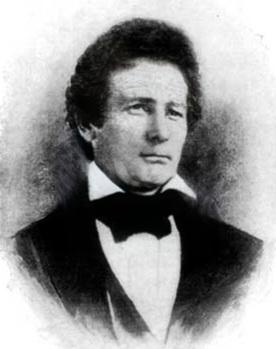
John J. Hardin is a talented political operator both within Illinois and within the Senate; along with the reputation of a brave war hero. Hardin was one of 9 men to receive (10 were nominated) the Medal of Honor (established 1848) for actions of immense valor on the battlefield, particularly for his command in liberating Baton Rouge, Louisiana during the Patriot War. He is a strong proponent of selling off a portion of the national rail system to private companies.
The Democratic Party actively campaigns for enforcing an end to racial violence in the occupied states of Choctaw and South Carolina, as well as expanding freedmen rights nationwide. While split heavily on how to do so, a stated goal of the party is the Abolition of Slavery. Coastal Democrats campaign on raising tariffs as allowed within the American System to aid in paying off the national debt. The party's slogan for this election is, “Free Soil, Free Men!”

One of the leading members of the new Conservative Party, John Bell has expressed the need to return to Constitutional adherence and the curbing of executive power. As time goes on and the issue of slavery becomes more of a poison to national politics, Senator Bell has come to see the writing on the wall, as a slave owner himself. While he pledges the usual of freeing his slaves upon election to the Presidency, he has proposed a plan for the nation to outgrow slavery in time for the hundred-year anniversary of the country's founding, in 1876. Outside of the Democratic Party, no other national politician has put forward a plan to end the controversial practice. Many of Bell's campaigners argue that Bell is the candidate needed to mend wounds caused throughout the years, and to unite the country once again.
Besides the issue of slavery, Senator Bell has talked much about supporting Congressional Investigations into President Hamilton's “Spoils System” where loyalists were given more power within the executive branch. He also proposes a “moratorium” on expanding the borders of the United States further, believing “The United States has much of the continent, the land we have gained since 1845 is untouched, and we must focus our efforts as a people to rebuild and reconcile after a devastating rebellion.”
Running Mate:

An unusual choice for a potential President of the Senate, but perhaps a well enough choice as running mate, Governor Stephen A. Douglas helps balance out Senator John Bell in the Conservative Party's first Presidential election, and appeal to the Constitutional Republican Party, who decided to endorse the Conservatives for President (though are not affiliated). Douglas has a long history of supporting populism but particularly for whites, which could signal that a “President Bell” would attempt to limit the expansion of black suffrage as it makes its way through the states.
The Conservative Party itself campaigns on returning to a more decent, less divided, less corrupt republic; placing blame on the Hamilton Administration and the President's victory for a third term. It also pushes Anti-Democratic Party propaganda throughout the north, painting Senator Cassius Clay as a flamboyant man of terror, comparing him to the estranged Emperor Napoleon Bonaparte. The Party's slogan this election is “Liberty for the Common Man.”

r/Presidentialpoll • u/Kapples14 • 6d ago
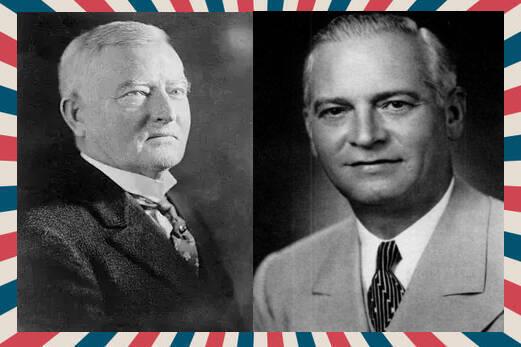
Background: In the first war-time election since 1864, Democrats now seek to defend the White House amidst great uncertainty. Liberal Democrats and unions have grown greater in opposition to President Garner's war effort due to his increased hostility towards organized labor and accusations of corruption in his war machine. Through the now-infamous Truman Committee, evidence has come to show favoritism towards corporate allies and unchecked financial mismanagement. These reports have heavily weakened American moral, an issue Garner has tried to remedy through firing multiple War Department staff and officials, but Garner's support has remained low.
On August 8, 1944, Garner would claim the nation's biggest war-time victory yet with the liberation of France. This helped to restore much of the lost faith in Garner, pushing him ahead as a bona fide wartime leader and frontrunner in the race after several weeks of trailing his Republican challenger. Dwight H. Green, a former attorney and sitting Illinois governor, has continually hit the campaign trail attacking Garner for jeopardizing the U.S. economy and war efforts. Green, joined by fellow Midwesterner John W. Bricker as his running mate, have focused their campaign on a free-market approach to promote unbiased production and combatting corruption in DC. Green has argued that if elected, he would be more effective at reshaping the military machine with experience building Illinois' portion of the industrial war effort.
Garner has painted his reelection as essential to maintaining the current war effort's successes, and that a massive change in administrative leadership and policy would leave the US and its troops vulnerable to attack from Axis threats. Green has pushed against this notion by pointing to the leadership shift of Winston Churchill and the monumental shift they have been able to push through his election as prime minister.
With the Truman Committee's findings exposing massive issues of mismanagement, corruption, and corporate favoritism, Garner has had to play a defensive position against the accusations by pointing to recent clear-outs in the War and Commerce departments to address the corruption. As for the matter of alleged favoritism, Garner has argued that government contracts were rewarded to companies with the best resources and industrial track record to provide war-era utilities. Green has pointed to the overspending, resource waste, and corruption to claim otherwise.
On labor, Green has argued for a non-interventionist position to allow businesses and unions to handle affairs themselves compared to the excessive federal overreach of Garner. Garner, however, has pointed to the dire situation of the war to reason why he has had to play a stricter role over labor disputes to ensure troops and allies are given their needed resources.
With the election underway, Garner must fight for his political career's very life to avoid him and the Democrats' power from being usurped by Republicans. The president's greatest tests will be convincing disaffected voters to retain their loyalties to the Democrats and to tie Garner's tenure with the protection of liberty across the world. Dwight Green, however, must finish the fight started by MacNider four years ago and bring enough Americans to his side to finally strike the Democrats out of DC. That effort is easier said than done now that the country is at the center of the greatest war seen in the modern era.
Candidates:
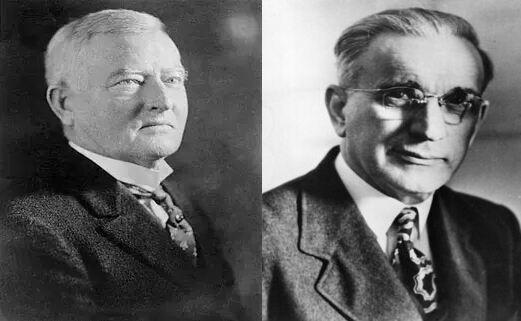
John Nance Garner: As the sitting president and notably more conservative successor to President Franklin D. Roosevelt, Garner has sought to position himself as a unifying war leader by pointing to the country's successes in the Pacific Theater, Germany, and the monumental French liberation. Garner has pledged to finish the war and ensure the survival of democracy, the rights of man, the free market, and holding Axis leaders accountable for their crimes against humanity. He has also pointed to recent economic growth that he argues will help lift the US out of the Great Depression and shift the US to a strong industrial state that will reclaim lost jobs and spur further economic growth. When asked about his visions for a post-war world, Garner has argued in favor of a larger global effort to crack down on authoritarian regimes with the eventual goal of global liberalization in both government and the international market.
Garner has faced repeated criticism for his crackdowns against labor unions he argued were jeopardizing the war effort, as well as favoritism of corporate allies whom were given massive federal checks in return for shifting their production schedules to war resources. While he has managed to weaken some of these attacks with administrative shakeups, the accusations still weigh heavily and have been a central theme of the election.
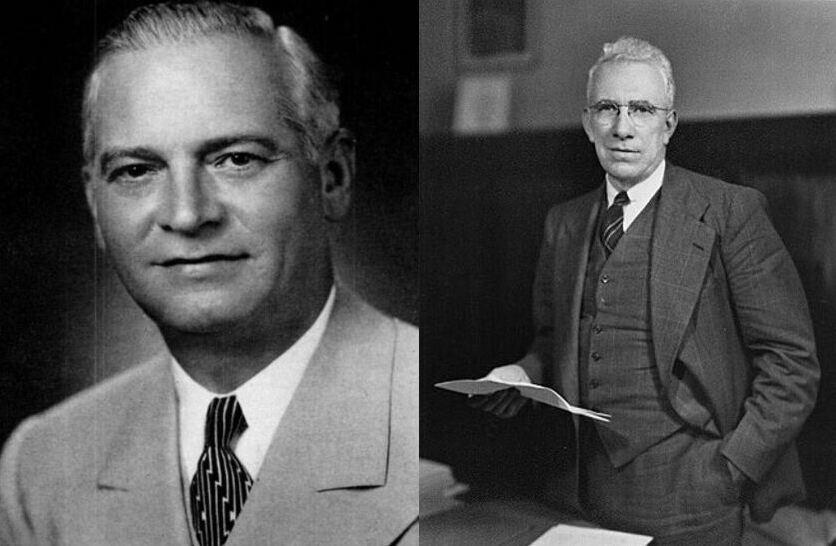
Dwight H. Green: Running on a campaign of pro-industry policies, anti-corruption, and neutrality towards labor unions, Green has fought for nearly two years to push against Garner's administration and its war policies. With years of experience fighting the corruption of the Chicago political machine and eventually building up Illinois' industries to aid in America's fight in WWII. As a self-described "conservative moderate", Green has pledged to set new legislation tightening regulations on war-time production plants and federal checks to cut out chances of fraud and waste.
In a post-war world, Green has supported notions made by Winston Churchill for a "United Nations" that would allow free states to cooperate on peace-keeping, democratic efforts to ensure future wars are prevented. Many in the Republicans have been frustrated with this interventionist shift and worry that the US would be put into a dangerous position with the country's current economic struggles.
Link to Poll: https://strawpoll.com/GPgVY1QPkna
r/Presidentialpoll • u/N8_Saber • 6d ago
After Pat Schroeder's cruise to the nomination, and the shock pick of Al Gore as her running mate, it's time for the Republicans to finally end the 12 years of Democratic reign.
Ross Perot - Many are shocked to see billionaire donor Ross Perot running for the Republican Nomination, and many, including Ross Perot himself, don't take this campaign incredibly seriously. All Perot wants is some light concessions, including opposing any Free Trade agreements, and looking into Perot's pet project, the Vietnam War POW/MIA issue. However, on the off-chance that Perot somehow gets the nomination, it's clear he'll drop out, and might screw over the national Republican Party because of that. Only time will tell.
Howard Baker - The former Senator from Tennessee, his Senate seat became Al Gore, the Democratic Vice Presidential nominee's seat in 1984, when Howard Baker decided not to run, and instead to gear up for a run for President. Called "the Great Conciliator" for his frequent compromises with the Democrats, he would be a great pick for President, however he comes with a bit of baggage, as he had ran in 1980 previously, many Reaganites are not too fond of him. But, that might not matter, depending on Howard Baker's running mate.
Pat Robertson - A polarizing figure, even in the Republican Party, he had previously ran in 1984, giving George H.W. Bush a near scare. After Bush's landslide loss, Robertson feels even more vindicated, and is now more determined than ever to win the nomination and beat the Democrats. Like before, he holds surprisingly liberal views on the environment and on cannabis, although he seems to have distanced himself a bit from those views.
Bob Dole - Bob Dole is a pragmatic Senator, which appeals to the Moderates in the GOP, and yet still shows a strong Conservative side, with would appeal to the Reaganites and possibly even the Robertson supporters. Bob Dole shows no signs of giving up and throwing in the towel. And Bob Dole is determined to win the nomination and beat the Democrats!
Barry Goldwater Jr - Son of former Republican nominee, Barry Goldwater, many believe Goldwater Jr to be a nepotism pick. Those who say that would be dead wrong. Barry Goldwater Jr served 6 regular terms and was elected after a special election in the House, and was recently elected to serve a 6-year term for California's senate seat in 1986, beating Alan Cranston. Barry Goldwater Jr has a lot of credibility due to campaigning for Ronald Reagan, but the downside is his name. His father, Goldwater, lost in a landslide to Lyndon B. Johnson, and many think that nominating his son might give older voters a bad vibe due to Goldwater losing so poorly back then. Regardless, Barry Goldwater Jr is a strange candidate to many.
r/Presidentialpoll • u/Sonicshriek • 8d ago
The 1842 Midterm elections are set to be a referendum on the Presidency of Henry Clay. His national bank, his bankruptcy act, his foreign policy, his handling of the Dorr rebellion, his Presidency is on trial and the American voter is the jury. His main supporters are the National Whigs with more hesitant backing from the Conservative or Cotton Whigs, while his chief opponents were the Jacksonian and Expansionist Democrats. The rest of his term will be shaped by the choices at the polls.

The largest faction in Congress and the one most associated with President Clay. The National Whigs have the best record to stand on: the majority of the Clayite goals were accomplished early on: a National Bank, infrastructure, land sales, and ground breaking bankruptcy law were all put into effect with great speed. They face two major obstacles: the ongoing economic issues and the ever increasing size of the government. The main obstacle of the party is national worries over this growth and controversy over the bankruptcy act.
The more conservative faction of the Whig party — sometimes dubbed the Cotton Whigs for their prominence in the South. They broadly support Clay’s policies but oppose his federal involvement in infrastructure and support a repeal of the Bankruptcy Act of 1841. Many are attracted to them as the “Hold the Line” Whigs who support Clay but oppose continued growth from then on. Many who personally reject Clay — most often for his handling of the Dorr Rebellion — but are unwilling to back the Democrats find themselves in this camp.
The party of Jackson had effectively held power in the United States for 12 years but rough losses in 1840 saw the government balloon to sizes unseen, the re-establishments of a National bank and disastrous bankruptcy law. The Jacksonians focus their campaigns across the country on stopping this before it’s too late. Critiques of Clay are heavily tied to their campaign intrinsically. Their biggest hurdle is many Americans blaming party leader Martin Van Buren for the Panic of 1837 that plagues the nation to this day.
In terms of domestic policy, the Expansionist Democrats are similar to the Jacksonian, attacking Clay’s fiscal policy but they differ in terms of foreign policy. The expansionists focus on the growth of the nation. Furious over the loss of land in Maine during the Bell-Ashburne Treaty, this group pushes for the purchase of Alta California, the annexation of Texas, the purchase of Cuba and total control of Oregon. They accuse the Clay Administration of cowardice and the champion of the “natural” growth of the United States.
r/Presidentialpoll • u/loulanshisui • 8d ago
r/Presidentialpoll • u/Begin_ThePurge • 9d ago
The Revolution of 1902
The republic is in its greatest crisis since the Civil War. Already impeached for abuse of power and certain of his conviction in the Senate, Eugene V. Debs instead chose to escape to Chicago where he declared the trial an attack against the people by the Capitalist class and call on all workers to rise up against their tyranny. With the aid of "Big" Bill Haywood and thousands of workers who remember his leadership during the Pullman Strike of '94, Debs seized control of Chicago City Hall and declared a Second American Revolution. From the heights of Chicago's great skyscrapers soon flew gigantic red banners as workers communes raided local police armories and overwhelmed the understaffed garrison at nearby Fort Sheridan. Before the US Army was able to take control of the telegraph lines, the Chicago Commune sent out a call to the workers of America to rise up in revolution. In West Virginia and Kentucky, the miners answered the call with fury against their bosses as they ripped up their company script and blockaded the railcars full of coal needed to heat people's homes and fuel the industry where they worked. Socialist Mayor Emil Seidel of Milwaukee deputized his city's unions to aid a revolutionary takeover. The two city communes have united as the nucleus of a new revolutionary American government.
In other areas it was less than successful. New York workers initially responded with the same revolutionary spirit as their Chicago comrades and seized control of Grand Central Station, the bridges leading into Manhattan island and the New York shipyards. As the New York state militia and US Coast Guard blockaded the city, New York Governor Theodore Roosevelt road onto the Brooklyn Bridge alone and defiant. The speech he gave to the striking workers would go down in American history as one of the nation's greatest. With his typical infectious optimism and sense of national pride, Teddy Roosevelt spoke honestly about the needs of the working man, the obligation the nation had to them for building their country, a promise to see that he would fight for them but also that Americans had to stay together to win a better future. The workers yielded to the Governor and he proceeded alone towards Gracie Mansion where the workers' leadership had set themselves up and over the course of 8 hours he negotiated the stand down of the unions peacefully and with minimal arrest.
In Pennsylvania it was far from peaceful. Governor Pennypacker unleashed the Pennsylvania state militia backed up by private strikebreakers paid for by the industrial bosses ready to get their mills and mines back. This brutal crackdown across the state cost the lives of many striking workers and gained the movement a lot of national sympathy. Such scenes of violence were repeated across the nation particularly in St. Louis where efforts to take control of another critical rail artery were thwarted by militia and city police who took no prisoners in defending the train yard. In Appalachia, state militia and strikers began an intense guerrilla war in the mountains with a personal brutality as bad or worse than the Civil War.
Now as the nation enters the first frosty weeks of November much of that initial sympathy is beginning to ebb away. Already many Americans are freezing in their homes as deliveries of coal have ground to a halt. If the mines aren't reopened soon many thousands could suffer greatly over the coming winter particularly in the labor movement's midwestern heartland. The food situation isn't much better and likely to get worse. Without the ability to transport their produce on railcars or send their livestock into the Union Stockyards for slaughter, farmers are faced with surpluses they'll have to destroy all while millions of Americans go hungry with what limited food they can get now incredibly expense. Nor are things better for those inside Chicago or Milwaukee as the US military has established a complete blockade of all supplies coming in or anyone trying to get out. Soon Federal troops will move in to end the Socialist revolution once and for all.
The Midterms
In the midst of this crisis, the Democratic-Republicans expect to to see their Congressional majorities increase dramatically. Farmer-Labor has effectively collapsed as enraged farmers abandon the party as their crops rot in their barns thanks to the radical socialists who have seized control of the leadership. Led in a mass exodus by Representative William Jennings Bryan, these pro-silver, populist agrarians have declared their support for the Democratic faction. William Randolph Hearst has led the non-Socialist contingent of the Laborites into the Democratic camp as well which has dramatically shifted the whole wing of the party to the left, fracturing the once reliable relationship between Republicans and Democrats. Indeed with the Farmer-Labor implosion, Republicans and Democrats are operating once against as de facto rival parties on a national level. Thomas E. Watson leads a rump faction of his party into the election prepared for a slaughter. Though President Charles A. Towne remains loyal to the Farmer-Labor brand he has stayed aloof of most decisions and promised to not run for his own term in 1904 so the party won't get much help from him. The major issues on everyone's mind is the swift end to the Socialist uprising, the rapid delivery of coal in time for winter and ensuring food reaches a starving populace.
r/Presidentialpoll • u/Sloaneer • 9d ago
Cabinet
VP: Benjamin Stoddert
State: John Quincy Adams (March-December, 1805), Rufus King
Treasury: Robert Morris
War: James Breckenridge (March-June, 1805), James Bayard Sr.
Attorney General: Jonathan Dayton
Navy: John Taylor Gilman
Commerce and Industry: Alexander Hamilton
1805
March - Gouverneur Morris was inaugurated by Chief Justice Marshall in Havre de Grace, D.C. At his inauguration, he made a speech on how industrial and infrastructural development would bind the country together and ensure social peace.
April - After the refusal of Morris’ government to pay an exorbitant tribute, the Pasha of Tripoli declared war on America and began commerce raiding. With authorisation from Congress, Morris sent a heavily armed squadron of 8 frigates and 2 schooners across the Atlantic (stopping off in friendly Britain) to destroy the Tripolitanian fleet.
April - At President Morris’ urging, the Treaty of Amiens was ratified by the Senate, 18 votes to 8. Only five Federalists cooperated with Morris' wishes.
May - The Department of Industry and Commerce was created at a cabinet level. The department would oversee industrial development, liaise with merchants, and monitor both internal and external trade. Alexander Hamilton was appointed as its first secretary. Vice President Stoddert broke the 13-13 tie in the Senate, and Republicans launched a suit against the federal government, claiming the Constitution did not provide the Vice President with that power.
June - The Omnibus Industrial Development Act passed the House but was voted down, narrowly, in the Senate. The Bill would have raised import tariffs on manufactured goods and certain raw materials and appropriated the money raised this way for industrial bounties to be provided to ironworks, potters, textile mills, shipyards, and mines. Morris threatened to veto a version of the Bill that had bounties for tobacco and cotton plantations and in response, Southern Federalist Senators John Howard and William Hindman absented themselves from the vote. The Bill failed at a vote of 11-13.
July - American forces under Commodore Richard Dale sank several enemy gun boats in the course of establishing a blockade of Tripoli.
August - National Road Act was signed into law, which provided appropriations and directions to construct Route 1 of a new National Road extending from Bangor, Massachusetts to Richmond, Virginia.
September - The Platt-Clinton Act was signed into law, which established a Special Joint Committee to plan a route for and organize the construction of a canal between Lake Erie and the Hudson River. Once more holding the Party hostage, Southern Federalists had rebelled to stall the Act in the House until money was separately appropriated for continuing the James and Kanawha Canal.
October - While Congress was out of session for the winter, Morris endeavoured to make progress on the foreign diplomacy front. Minister to France, Elbridge Gerry, was sent to negotiate with the Moreau-Sieyes government on the matter of uncompensated, seized American shipping. Secretary of State John Quincy Adams personally went to the UK to negotiate boundary disputes with the Addington Ministry.
November - Robert Fulton, who had returned from Europe to take advantage of an industrial bounty, launched the first commercially viable steamboat journey - which took passengers up the Hudson River to Albany and back.
December - John Quincy Adams resigned as Secretary of State. Though he didn't make any public statements on the matter, he was closely involved with negotiations over renewing the Jay Treaty at the time.
1806
January - Details of the new Treaty, named the Jay-King Treaty in honour of both the former President and the current Ambassador to the Court of St. James, are revealed. Ten years of preferential trade were agreed upon and the mutual non impressment of merchant sailors in time of war. The detail that stuck with the public, however, was the surrender of land in the Michigan Territory West of the Red River in exchange for a more preferential border in Massachusetts’ District of Maine. Republicans and Federalists like John Quincy Adams are outraged at the idea of surrendering western territory.
January - President Morris recess appointed Rufus King as Secretary of State for his good work on the Jay-King Treaty.
February - Negotiations with the French regarding shipping compensation fell through. French diplomats considered this a solved matter after the mutual ratification of the Treaty of Amiens.
March - Ahead of the midterm elections, peaceful marches organised by the Republican Party demanding universal manhood suffrage took place in Boston, New York, Baltimore, and Philadelphia
So, we get to the first milestone of Gouverner Morris’ presidency. A mixed bag of successes and failures. On the one hand, generational infrastructure in terms of roads and canals has been introduced, as well as bringing industrial development up to the level of the United States Cabinet. Morris’ personally intervened to get the Treaty of Amiens ratified, ensuring peace with France for the foreseeable future.
On the other hand, his administration has been unable to fulfil the extent of its ambitions. No industrial bounties, no new tariffs to fund them. He has also raised significant ire for trading away Western territory for Northern interests. Many see the West as the United States destiny.
Republicans seek control over both chambers of Congress to hold Morris to account over his actions. The demand for universal manhood suffrage is quickly becoming the majority position of the party as well as westward expansion and freedom from taxes and debts.
r/Presidentialpoll • u/duckowucko • 9d ago

Context [President Hamilton's 3rd Term]

Being an Anti-Slavery candidate from the slave state of Missouri, Edward Bates could very well be the needed olive branch to keep an increasingly polarized nation together. He freed the last of his slaves in 1851 and has since written many pamphlets in favor of rewriting the Missouri Constitution to abolish the practice over time. He also has personal experience in that field, having written drafts for the current Constitution of Missouri. Bates is notably strongly in favor of expanding black suffrage.

Having aided in the lowering of the national debt, as well as his notable anti-slavery views, Secretary Thomas Corwin seems like the natural evolution of the next National Party candidate after President Hamilton. Notably, and perhaps to his detriment within the party, Corwin has expressed a desire to pull back executive power that's increased under Hamilton; instead returning that power to Congress or to the States.
Meta:
Sorry for the short post on return from hiatus, everyone. I've been burnt out but have spent time planning for events and crises for future administrations to react to, so I'm excited to get into that ASAP!
r/Presidentialpoll • u/RWBIII_22 • 10d ago

It's January 6th, 1997, and, after a Presidential election spanning almost a year - from the first ballot cast in the Ohio Democratic Primary to the last ballot cast in the House in the contingent election for President - we finally know who the next President and Vice President will be. The results of the contingent elections in the House and Senate were cataclysmic, not just because they determined who will occupy the White House for the next four years and who will control the Senate for the next two, but because the internal divisions in one of the nation's major political parties finally came to a boiling point - internal divisions which threaten the historic party's existence into the 21st century.
Here's how it all went down:
Contingent Election for Vice President
We'll begin with the contingent election of the Vice President in the Senate, since it was settled relatively easily, with only one round of voting and a small amount of litigation.
On January 3rd, three days prior to the scheduled vote, Senate Minority Leader David Pryor met with the Democratic and Green Party Senators and members of the Wellstone campaign. In the meeting, the Democratic-Green alliance decided that their best chance of holding the Vice Presidency, and, in doing so, flipping the Senate, would be to unite behind third-place electoral vote finisher Doug La Follette. Later that same day, Green Party Vice Presidential candidate Mary Alice Herbert filed to withdraw from the race, citing "health issues". Dick Van Dyke's FEC quickly processed her withdrawal, and on January 6th, La Follette received the support of 45 of 48 Senate Democrats, as well as both Green Party Senators. Three Democrats: John Breaux, Ben Nelson, and Richard Shelby, crossed party lines and voted for Sam Nunn, but their votes were offset by four moderate Republicans who cast their votes for La Follette. Senators Liz Hager, Jay Rockefeller, Claudine Schneider, and Christine Todd Whitman all refused to vote for Nunn, citing his vocal opposition to gay rights. As a result, La Follette won the Vice Presidency 51-49.
Sam Nunn immediately challenged La Follette's victory in court, arguing that, since La Follette finished third in the electoral vote in the regular election and the 12th Amendment states that only the top two electoral vote-receiving candidates can be considered in a contingent election for Vice President, La Follette was an ineligible candidate. However, Supreme Court Justice Eleanor Holmes Norton issued an injunction, stating that since Mary Alice Herbert formally withdrew from the race prior to the contingent election, La Follette, as the third-place finisher was allowed to replace her as the second candidate. Therefore, the election of Doug La Follette as Vice President of the United States was constitutional. Nunn declined to contest the decision any further, citing the potential disruption that could be caused by the country going without a Vice President for several months while litigation ensued.

If the Vice Presidential selection process seemed chaotic, then the Contingent Election for President in the House was even more so. The House of Representatives required ten rounds of voting to choose a President. Here's a rundown of what happened in each round:
Pre-Round 1
Round 1:
Round 2:
Round 3:
Round 4:
Round 5:
Round 6:
Round 7:
Round 8:
Round 9:
Round 10:

After coming a few thousand votes away from victory in 1992, Ron Paul has been elected President of the United States in 1996. Yet, his victory is not as cataclysmic as the implosion of the Democratic Party. John Conyers's double bird is more than a memorable image immortalized in American history by C-SPAN - it's the beginning of the end of the Democratic Party as we know it. In the leadup to the Contingent election, Conyers made it very clear that if the Democrats couldn't unite around Wellstone, he saw no point in being a part of the Democratic Party anymore. While many Democrats, including liberals and moderates who voted with the Dick Van Dyke administration on 99% of their votes gave Wellstone their full support, many clung to Ann Richards even though she had no chance to win the Presidency after the first round of contingent election voting concluded. Worse, a handful of Democrats, including Forrest Campbell, a member of House Democratic leadership, actively chose the other side, handing the Presidency to Ron Paul rather than vote for a progressive. In fifteen days, Ron Paul is likely to sign a bill loosening the restrictions on creating new political parties. If that bill goes into law, Conyers, and much of the Democratic Party's progressive wing, are as good as gone.

r/Presidentialpoll • u/N8_Saber • 9d ago
After Pat Schroeder's easy cruise to the nomination, only having a few delegates vote for Cuomo and Jackson out of protest, she has to now pick a Vice President.
Already, Pat Schroeder has had the bright idea to pick a Southerner as her VP pick, hoping to keep the South in the Democrat's bloc.
Here are her choices.
Albert Gore Jr - A freshman Senator elected in 1984 from Tennesee and son of Former Senator Albert Gore Sr, he was previously a House Representative for Tennessee. He is considered a Moderate Democrat and was a Vietnam War Veteran. A few problems with Gore is his opposition to federal funding for abortion, as well as his pro-gun stances, which might hurt the liberal base. Another problem is that he's even younger than Pat Schroeder, which might make the ticket look inexperienced.
Dale Bumpers - A former Governor turned Senator of Arkansas, he is often called the "Northerners Favorite Southerner" and would help balance the ticket in a more liberal, maybe even a little populist direction. He won in a landslide in his Senate election in 1986, and many say he would be perfect for the role, including Pat Schroder herself. Only problem? He doesn't want the role. It might take a while and a ton of convincing in order for him to join the ticket, but it would serve the ticket a ton of good.
r/Presidentialpoll • u/Muhamed-james-wang • 9d ago
r/Presidentialpoll • u/Sloaneer • 10d ago

As the last presidential election result became widely known it seemed as if the American public let out a breath. By two electoral votes, and less than 3,000 individual votes, the Yankee Aristocrat Gouverneur Morris had triumphed over the fiery newsman Benjamin Bache. The result was so close, that the decider was a single New York State Legislature seat. Federalists celebrations seem tinged with a certain forced levity. ‘The Masses’ had come within an inch of having ‘their man’ in the White House and rather than dejected, as in elections past, the Republican Party seemed to become revitalised. They gained three seats in the Senate, tying the chamber once again, and nine in the House. Their demands for universal manhood suffrage were stronger than ever and seemed vindicated. After all, if New York had laxer property requirements it seems likely that Bache would have taken the state and the whole election.
Nonetheless, the Federalist Party had won the election. By inches or miles, they were continuing the Federalist dominance for four more years. Morris and his allies in Congress must begin to put their agenda into motion as best they can with such a modest popular mandate.
r/Presidentialpoll • u/Dr_Occisor • 10d ago
Part XXXVIII - One Country, One Movement, One Party
While Prime Minister James Ralston focused on the war effort, Progressive and Commonwealth party leaders began discussing the future of Canadian politics after the war in 1942. There was a fear among some that infighting between the two left-wing parties after the war would result in vote-splitting and lead to a Conservative majority government, which could then undo much of the accomplishments made under the Wood government.
Agnes Macphail, Minister of Transportation and a Progressive, was the first to suggest a merger, saying that a cross-party convention should be held to vote on the matter and lay out a party constitution. In truth, executives within the Commonwealth had been debating the idea of just joining the Progressives outright for years, as it seemed silly to separate the parties given their similarities. Despite his own apprehensions, Progressive Party President Alan Webster Neill agreed to host a convention to settle the matter. It was agreed by Neill, Coldwell, and Ralston that the convention would take place in Ottawa on April 18, 1943, so that government ministers would not need to travel far in the event of a wartime emergency. The eight provincial Premiers which aligned with the Progressives and Commonwealth, meanwhile, would listen into the proceedings on telephone as to not distract from their own wartime efforts.
Many on both sides, however, had their suspicions. Although both parties could be characterized as broadly left-wing and populist, the Progressives favoured free trade and tended to be socially conservative and religious, while the Commonwealth favoured protective tariffs and tended to be more moderate on social issues. The primary fear held by Progressives was that a merger, in combination with urban growth across Canada, would lead to the new party being dominated by the Commonwealth who would then prioritize urban interests over rural ones. Those in favour of the merger on the Commonwealth side, led by Hudson Premier Tommy Douglas, countered these concerns by saying that urban worker and rural farmer interests aligned much more than the Progressives thought, and the “abandonment” of farmers was not really a possibility.
One group that vehemently opposes the merger is the moderate ex-Liberal wing of the Progressives. Led by former Premier of Prince Edward Island Thane Campbell, the Liberals are wary of the Commonwealth’s economic policy, arguing Canada cannot afford to make itself an enemy of business or implement expensive social programs right after the war’s end. Going even further to the left, in Campbell’s opinion, will simply push moderates and the support of businesses to the Conservatives, which is disadvantageous to everyone.
The Proposals
On the day of the convention, three proposals were laid out to the delegates. The first was that the Progressives and Commonwealth should merge operations to form one party, a new name to be decided later. The second was that the parties should adopt the “Australian” model used by the United Australia and Country parties, wherein they would remain legally distinct with separate leaders but operate as one within parliament, with the candidate for Prime Minister being chosen directly by party members between the two leaders. The third was that the parties should do neither, and remain fully independent as they were now.