r/pwnhub • u/wiredmagazine • 10h ago
Database Leaks Expose 3.5 Billion Usernames, Passwords, and Documents

85
Upvotes
r/pwnhub • u/wiredmagazine • 10h ago
r/pwnhub • u/AutoModerator • 20h ago

r/pwnhub • u/_cybersecurity_ • 15h ago

r/pwnhub • u/_cybersecurity_ • 20h ago

Kat Traxler used 12 principles about trust in shared cloud platforms to guide AI-assisted bug hunting. She reports finding more than 90 cloud-specific issues across multiple providers.
Guest: Kat Traxler, Principal Security Researcher at Vectra AI
When: Monday, Nov 30, 2026 / 9 to 10 AM PT
What to ask about
Join the AMA
Leave a question in the Reddit thread before the AMA.
r/pwnhub • u/pwn-daily • 20h ago
Here are the top stories from PWN (r/pwnhub) today:
No description available.
The ARTEX AI hacking tool, which automates security breaches using LLMs, is being redistributed on GitHub by third parties despite the original author taking it down in October. Key Points: - ...
r/pwnhub • u/_cybersecurity_ • 2h ago
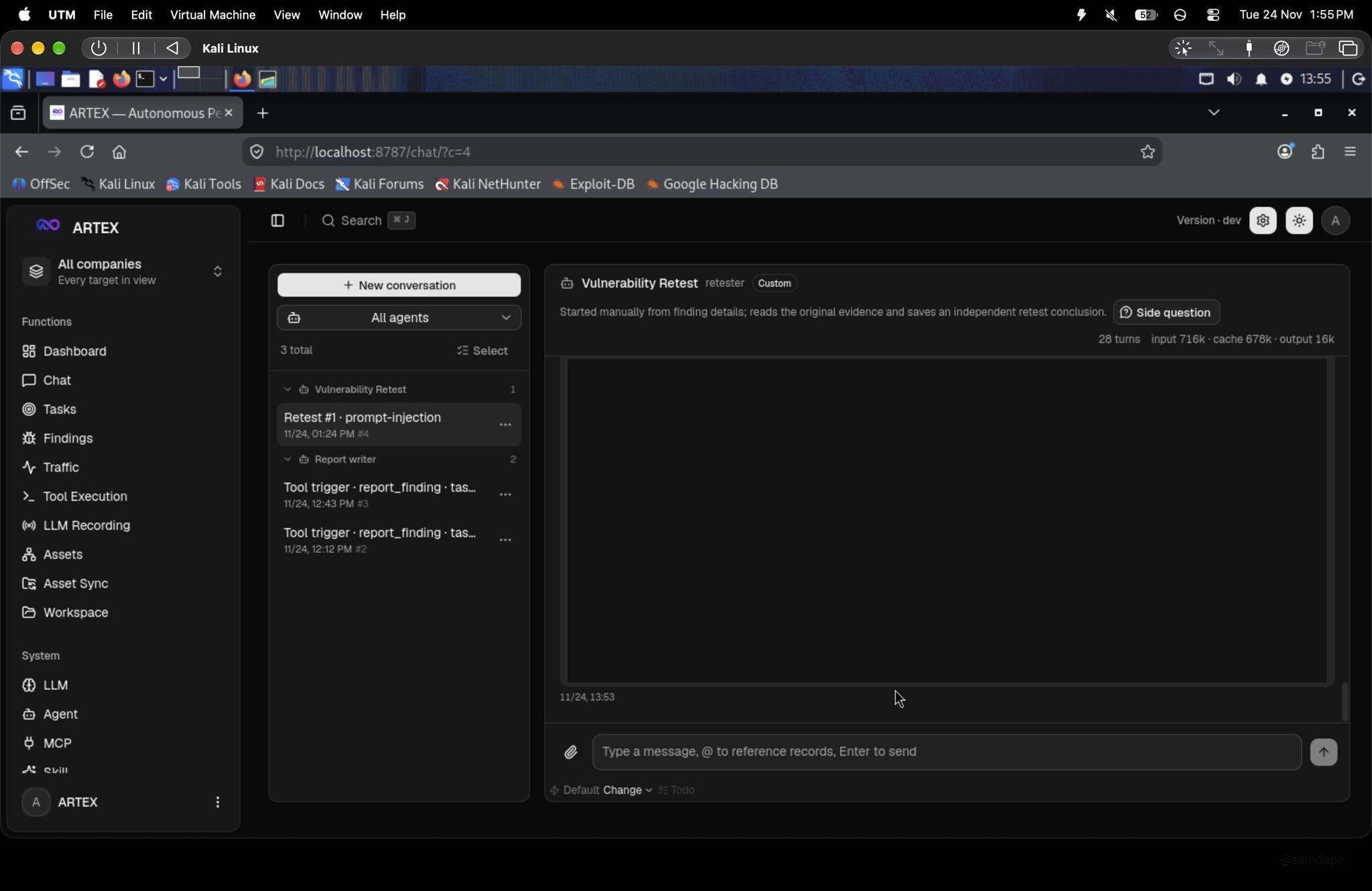
ARTEX is an open-source, AI-driven penetration testing framework that has recently caught the attention of the cybersecurity world.
Built in Go and released on GitHub, it acts as an orchestration harness that connects to large language models like Claude, DeepSeek, and ChatGPT to automate offensive security tasks.
Instead of relying purely on manual testing, ARTEX spawns autonomous AI sub-agents to handle network reconnaissance, vulnerability exploitation, privilege escalation, and lateral movement.
While designed to help security teams test their own defenses more efficiently, the tool carries significant risks. Cybersecurity agencies, including the FBI and CERT-EU, have issued warnings that threat actors are actively weaponizing ARTEX to automate attacks against energy, telecom, and government networks.
For defenders, ARTEX highlights a major shift in cybersecurity: AI is dramatically lowering the barrier to entry for complex, multi-stage attacks, making proactive monitoring and patch management more critical than ever.
Have you tried using it yet?
r/pwnhub • u/_cybersecurity_ • 3h ago
I've noticed a few interesting approaches to AI vulnerability discovery recently, all of which seem to share a common theme: changing where the agent starts its investigation.
Historical analysis: Rather than giving an agent the latest version of a codebase, researchers are feeding it historical versions, commit histories and previous vulnerabilities. Engineering mistakes tend to recur, and understanding how a codebase has evolved can help identify previously undiscovered vulnerabilities. Google's Big Sleep research is one example of using historical code changes as a starting point.
Patch diffing: We've also seen Anthropic's research demonstrating how quickly agents can reverse engineer vulnerabilities from newly released security patches. This isn't a new technique, but the speed and autonomy with which AI can do it has pretty significant implications for patch management.
Principle-driven discovery: In her recent article, A Security Constitution at Work, Kat Traxler takes a different approach. She gives the agent a set of principles describing how secure cloud infrastructure should behave, then has it examine public API documentation for violations of those principles.
Rather than looking for bad code, the agent is looking for missing security controls. Using this approach, she's submitted 109 vulnerabilities across three cloud providers in roughly three months, with 53 acknowledged as security issues and 45 still in triage or dispute.
What interests me about these approaches is that humans have historically developed investigative workflows around our own cognitive and time constraints. Starting with the latest version of a codebase is practical for a human because absorbing years of development history before beginning an investigation is extremely time-consuming.
AI doesn't necessarily have to inherit those constraints. It's particularly well suited to ingesting large amounts of historical and technical information and identifying correlations that humans might never have the time to discover.
I wonder how much of the next wave of improvements in agentic hacking will come from rethinking investigative methodologies rather than improving the models themselves.
Kat is doing an AMA with us, so if you're interested in her methodology, the Security Constitution or how she's built her agentic workflow, come along and ask her questions.
r/pwnhub • u/_cybersecurity_ • 23h ago
A lack of consensus among major tech providers on the shared responsibility model for AI agents leaves organizations to bear the risk of autonomous software errors and security breaches.
Key Points:
The current landscape for Agentic AI lacks a clear separation of duties similar to the established cloud security model. While cloud providers like AWS are responsible for infrastructure security, the responsibility for data actions typically falls to the customer. With AI agents, this line is blurred because agents act as non-deterministic intermediaries that send authenticated requests. If an agent makes a mistake or is compromised, it is unclear whether the fault lies with the model provider, the software harness, the protocol server, or the end user. Existing guidance from major players does not resolve this ambiguity, leaving a gap in accountability for autonomous actions.
This gap creates significant security risks, particularly when agents interact with multiple systems. For example, a coding agent might read a malicious instruction from a support ticket via an MCP server and push a change to GitHub using a developer's token. Because the agent acts under the user's credentials, the action appears to be the developer's, and standard security controls like branch protection may not apply if the user has admin permissions. Since no single vendor in the chain sees the entire workflow, organizations must take ownership of the agent's identity and permissions to ensure they can monitor and revoke access effectively.
How are you currently assigning ownership and permissions to your AI agents?
Learn More: Bleeping Computer
Want to stay updated on the latest cyber threats?
r/pwnhub • u/_cybersecurity_ • 23h ago
The FBI has issued a warning that the open source AI framework ARTEX is being used by hackers to conduct rapid, automated cyberattacks against critical industries worldwide.
Key Points:
ARTEX is an open source framework written in Go that allows users to connect large language models to create AI agents for various hacking tasks. Unlike traditional tools that require significant manual effort, ARTEX automates the workflow from initial reconnaissance to data exfiltration. The FBI highlights that this automation allows attacks to be executed at machine speed, meaning a single operator can set up the tool and let it run, potentially compromising a target in a matter of hours rather than days or weeks. This efficiency has made it a favorite among both state-sponsored and financially motivated hackers who are targeting high-value sectors such as defense, finance, and healthcare.
How should organizations adjust their security strategies to detect and defend against AI-driven hacking tools like ARTEX?
Learn More: 404 Media
Want to stay updated on the latest cyber threats?
r/pwnhub • u/_cybersecurity_ • 23h ago
A Peruvian call center manager was sentenced to eight years in prison for leading a multi-year fraud scheme that stole $15 million from over 30,000 Spanish-speaking Americans by impersonating government officials.
Key Points:
Carla Magaly Alcedo Mendoza, a 45-year-old call center operator from Lima, Peru, has been sentenced to eight years in federal prison for her role in a massive fraud ring. Between January 2013 and December 2018, she managed call centers that contacted Spanish-speaking Americans, initially offering free services or products. The operators then impersonated US government officials and lawyers, telling victims they were contractually obligated to pay large sums to receive these items. When victims hesitated, the scammers threatened them with court action, arrest, and immigration consequences to force payment.
The Department of Justice stated that the scheme defrauded more than 30,000 residents of the United States out of $15 million. Alcedo was arrested in March 2023 and extradited to the US in April 2025. She is the tenth defendant from Peru to be sentenced in this case, joining 14 other call center and distribution center owner-operators who have already been convicted. Acting US Attorney Yara Lorenzo Klukas noted that the criminals deliberately targeted Spanish-speaking communities using fear and intimidation to steal millions of dollars.
This sentencing comes amid a broader rise in impersonation scams in the US. The Federal Trade Commission warned in June 2026 that Americans lost $3.5 billion to impersonation scams in 2025, a figure that nearly tripled since 2020. Of that total, approximately $920 million was stolen by government impersonators. Additionally, the FBI reported in its 2025 Internet Crime Report that US victims lost nearly $21 billion to cyber-enabled crimes throughout the year.
How effective are current consumer protection measures against phone-based impersonation scams targeting non-English speaking communities?
Learn More: Bleeping Computer
Want to stay updated on the latest cyber threats?
r/pwnhub • u/VectorWireAI • 17h ago

r/pwnhub • u/_cybersecurity_ • 23h ago
The ARTEX AI hacking tool, which automates security breaches using LLMs, is being redistributed on GitHub by third parties despite the original author taking it down in October.
Key Points:
ARTEX has emerged as a significant threat in the cybersecurity landscape by integrating large language models into the hacking process. Instead of relying solely on manual effort, the tool deploys a network of AI subagents to handle specific aspects of an attack, such as identifying vulnerabilities and extracting data. This automation allows for a complete compromise of a target system in a matter of hours, drastically reducing the time attackers need to operate.
The situation has become complicated by the tool's availability. Although the original creator took ARTEX offline in October to limit its use by bad actors, the software has not disappeared. Several individuals are now hosting and distributing the tool on GitHub, maintaining its accessibility to the public. These distributors have stated that they are not removing the repository, indicating a continued push for the tool to remain in circulation despite the security concerns it raises.
Do you think open-sourcing powerful AI hacking tools creates more risk than benefit for the security community?
Learn More: 404 Media
Want to stay updated on the latest cyber threats?
r/pwnhub • u/_cybersecurity_ • 2h ago
Radware disclosed that attackers accessed an unsecured internal API, exposing customer contact details and cloud storage credentials for a subset of its enterprise clients.
Key Points:
Radware, a cybersecurity provider serving over 12,500 enterprise and telecom customers, identified a vulnerability in its internal Cloud WAF management API. The API was reachable from the public internet without requiring authentication, allowing an unauthorized party to access it on November 19, 2026. The company detected the breach ten hours after the initial access and immediately blocked the source IP address while revoking and replacing internal account credentials.
The incident potentially exposed customer contact details and, for a specific subset of clients, the credentials used to export logs to their own cloud storage environments, such as AWS S3, Azure Blob Storage, or SFTP. Radware has strongly advised these customers to rotate their exposed keys and check their cloud storage access logs for any unfamiliar activity since the date of the breach. The company noted that it has already received reports from customers regarding AWS alerts for unfamiliar IP addresses attempting to access their log-export buckets.
Despite the exposure of these credentials, Radware confirmed that the breach did not impact WAF traffic inspection, customer application traffic, or cloud DDoS services. The company is continuing its investigation to determine if the exposed keys were used without authorization, though it has found no evidence of changes to customer security policies or access to application traffic to date.
How often do you audit the permissions and exposure of your internal management APIs?
Learn More: Bleeping Computer
Want to stay updated on the latest cyber threats?
r/pwnhub • u/_cybersecurity_ • 2h ago
The ShinyHunters extortion gang has announced its return on a new data leak site, using historical PGP keys to verify its identity following a series of high-profile arrests of alleged members.
Key Points:
The ShinyHunters extortion gang has re-emerged after a period of silence that followed several arrests of individuals linked to the group. The gang, known for widespread data theft and extortion, had gone offline after its main representative stopped responding to media and its Telegram account was deleted. The new announcement on a Tor site claims the group is back and addresses the recent detentions of members, including a Dutch suspect and a Canadian executive, suggesting that some arrests were due to mistakes made by those individuals.
Learn More: Bleeping Computer
Want to stay updated on the latest cyber threats?
r/pwnhub • u/_cybersecurity_ • 2h ago
The European Commission has confirmed that attackers stole personal data from its EU Academy online learning platform following a cyberattack that began on October 22.
Key Points:
The European Commission, the EU's main executive body, confirmed that a cyberattack on its systems led to the theft of personal data from the EU Academy. The incident began on October 22 when hackers utilized the ARTEX AI-powered penetration testing framework to breach the network. This intrusion caused service disruptions that impacted the internal Sysper HR platform and the public-facing EU Academy, which is used for learning about EU policies and following online courses. While the Commission stated that there is no evidence of a data breach affecting all Commission staff, it confirmed that the EU Academy leak exposed user names and email addresses.
In response, the Commission temporarily took down several applications, most of which have since been restored. Public access to the EU Academy remains disabled as a precaution. The Commission has notified users of the incident and advised them to be suspicious of unsolicited emails or messages that could be part of phishing campaigns. The investigation is ongoing, and the Commission has not yet determined the specific threat actor responsible for the attack, nor has it received a ransom demand. This incident adds to a series of recent security breaches disclosed by the Commission, including a compromise of a mobile device management platform in February and a cloud environment breach in March attributed to the TeamPCP threat group.
How effective are AI-powered penetration testing tools in identifying vulnerabilities before they are exploited by attackers?
Learn More: Bleeping Computer
Want to stay updated on the latest cyber threats?
r/pwnhub • u/_cybersecurity_ • 2h ago
Threat actors have exploited multiple vulnerabilities to compromise Check Point security management servers in 22 organizations, with the campaign likely still active.
Key Points:
Threat intelligence firm GreyNoise has identified a persistent cyber campaign targeting Check Point security management servers. The attackers, tracked as GT13, compromised 24 servers across 22 organizations in 17 countries. The victims include government entities, financial services providers, and companies in the energy, transportation, mining, and manufacturing sectors. The campaign was active between October 17 and November 2, but researchers believe the threat actors still have access to the devices.
Have you seen similar patterns of lateral movement in your own network environments?
Learn More: Bleeping Computer
Want to stay updated on the latest cyber threats?
r/pwnhub • u/_cybersecurity_ • 2h ago
The rapid adoption of AI in software development is increasing hidden complexity in the software stack, prompting a strategic shift from counting vulnerabilities to prioritizing runtime exploitability and supply chain hardening.
Key Points:
As AI tools accelerate software development, the underlying complexity of the software stack has grown significantly. The application code visible to security teams is only a small fraction of what is shipped, with the majority consisting of operating systems, frameworks, and transitive dependencies. This hidden layer creates a security challenge where vulnerabilities multiply; a single flaw in a base image can affect every container built from it. Consequently, the focus is shifting from simply counting vulnerabilities to understanding which ones are actually relevant to the running environment. Traditional scanners often identify the presence of a vulnerable component without confirming if it is loaded, executing, or exposed, leading to a backlog of low-priority alerts that overwhelm engineering teams.
Learn More: Bleeping Computer
Want to stay updated on the latest cyber threats?
r/pwnhub • u/_cybersecurity_ • 2h ago
McDonald's Japan confirmed a data breach affecting its official smartphone app, exposing customer location data, IP addresses, and purchase history.
Key Points:
McDonald's Japan disclosed that threat actors gained access to the database supporting its official mobile application. The compromised records contain sensitive behavioral data, specifically mobile device location information, IP addresses, and product purchase history. While the company noted that direct identifiers such as names, contact details, and financial information were not part of the exposed dataset, the combination of location and purchase data can still provide a detailed profile of customer habits and movements.
The incident is part of a broader trend of cyberattacks targeting major Japanese corporations in 2024. Researchers have logged hundreds of incidents involving personal information theft or exposure across the country, with attackers increasingly probing websites and APIs for configuration and authentication weaknesses. McDonald's Japan stated that no service disruptions or misuse of the app were detected as a result of the breach, and the company is currently strengthening its security measures to prevent recurrence.
How concerned are you about location data being exposed in app breaches?
Learn More: Bleeping Computer
Want to stay updated on the latest cyber threats?
r/pwnhub • u/_cybersecurity_ • 2h ago
Three healthcare organizations have announced data breaches affecting patient records, with Colla Health confirming that over 336,000 individuals had sensitive data exfiltrated.
Key Points:
The most significant incident involves Colla Health, a provider of mental health services for cancer patients, which discovered that a previously unknown vulnerability in the open-source Metabase tool had been exploited. Although the software was updated to fix the flaw, forensic investigations revealed that patient data, including Social Security numbers and financial details, had already been taken. The company has notified affected individuals and provided 12 months of credit monitoring services.
Bausch Health Companies, a pharmaceutical manufacturer, also reported a breach after detecting unauthorized access to its network in late June 2026. The investigation confirmed that patient names and contact information were potentially viewed or exfiltrated during the seven-day window. While the total number of affected individuals has not been publicly disclosed, the breach was reported to the California Attorney General, indicating that more than 500 people are involved.
OPN Healthcare, which coordinates oncology care, identified suspicious activity in a single employee email account in early September 2026. The review found that sensitive medical and insurance information was briefly accessed, but the company stated there is no evidence that the data was copied or misused. No financial information or Social Security numbers were involved in this specific incident.
How do you think healthcare providers can better secure third-party applications like Metabase to prevent similar breaches?
Learn More: HIPAA Journal
Want to stay updated on the latest cyber threats?
r/pwnhub • u/_cybersecurity_ • 2h ago
Two healthcare revenue management firms, PayrHealth and MedCom Solutions, have announced data breaches that exposed sensitive patient information including names, Social Security numbers, and medical details.
Key Points:
PayrHealth, a Texas-based healthcare revenue management firm, discovered unauthorized network access on August 18, 2026. A forensic investigation confirmed that data was accessed for a limited period, with the review of compromised systems completed by August 26, 2026. The exposed data varies by individual but includes personal identifiers like Social Security numbers and dates of birth, as well as sensitive medical information such as diagnosis and treatment details. PayrHealth is offering 12 months of credit monitoring to affected individuals and has implemented additional technical safeguards to prevent future incidents.
How do you think third-party managed service providers should be held accountable for data breaches affecting their clients?
Learn More: HIPAA Journal
Want to stay updated on the latest cyber threats?
r/pwnhub • u/_cybersecurity_ • 2h ago
Check Point Research has identified Volant Manticore, a previously undocumented Iranian threat group linked to the Ministry of Intelligence and Security, which is actively targeting telecommunications, airlines, and healthcare sectors in Cyprus and Saudi Arabia.
Key Points:
Check Point Research has uncovered a new Iranian-nexus threat group named Volant Manticore, which is linked to Iran’s Ministry of Intelligence and Security. The group has been active since at least September 2025 and has primarily targeted Cyprus, a location of strategic interest due to its defensive and energy ties with Israel and Greece. The attackers focus on critical infrastructure, including telecommunications companies and airlines, using a novel backdoor called KuboShell. This backdoor is notable for using the InterPlanetary File System (IPFS) for its command-and-control channel, a technique that helps it evade traditional network monitoring by relying on a peer-to-peer file-sharing network rather than standard IP addresses.
Learn More: Check Point
Want to stay updated on the latest cyber threats?
r/pwnhub • u/_cybersecurity_ • 2h ago
Between July and September 2026, attackers deployed autonomous AI agents in over 10 global campaigns, using machine speed to compress traditional multi-day intrusions into mere hours across diverse sectors.
Key Points:
Palo Alto Networks Unit 42 has identified a shift in cyberattack dynamics where autonomous AI agents are being used to accelerate the intrusion process. In the observed campaigns, human operators provided initial access and high-level objectives, while AI agents took over the technical execution. This division of labor allowed attackers to operate at machine speed, with one agent executing approximately 800 unique commands in just 140 minutes and another executing over 8,000 commands in 12 days. This speed significantly reduces the window of opportunity for defenders to detect and respond to threats.
How are your teams currently detecting the specific behavioral fingerprints of AI-driven attacks, such as rapid command execution and structured output formats?
Learn More: Palo Alto Networks
Want to stay updated on the latest cyber threats?
r/pwnhub • u/Malwarebeasts • 2h ago

Remus deploys a malicious Chrome extension disguised as Google Sheets that leverages the victim's existing Gmail session, checks for unread messages every minute, and sends their contents to the attacker.
The particularly concerning part is that the extension can remain installed after the original malware executable exits.
While effective session revocation stops email collection, it does not remove the malicious extension. If victims sign back into Gmail through the same compromised browser, they can inadvertently restore the attacker's access.
The findings do not establish a Gmail zero-day, but they illustrate how infostealers are evolving beyond one-time credential and cookie theft into persistent email interception.
r/pwnhub • u/_clickfix_ • 2h ago

r/pwnhub • u/_cybersecurity_ • 3h ago
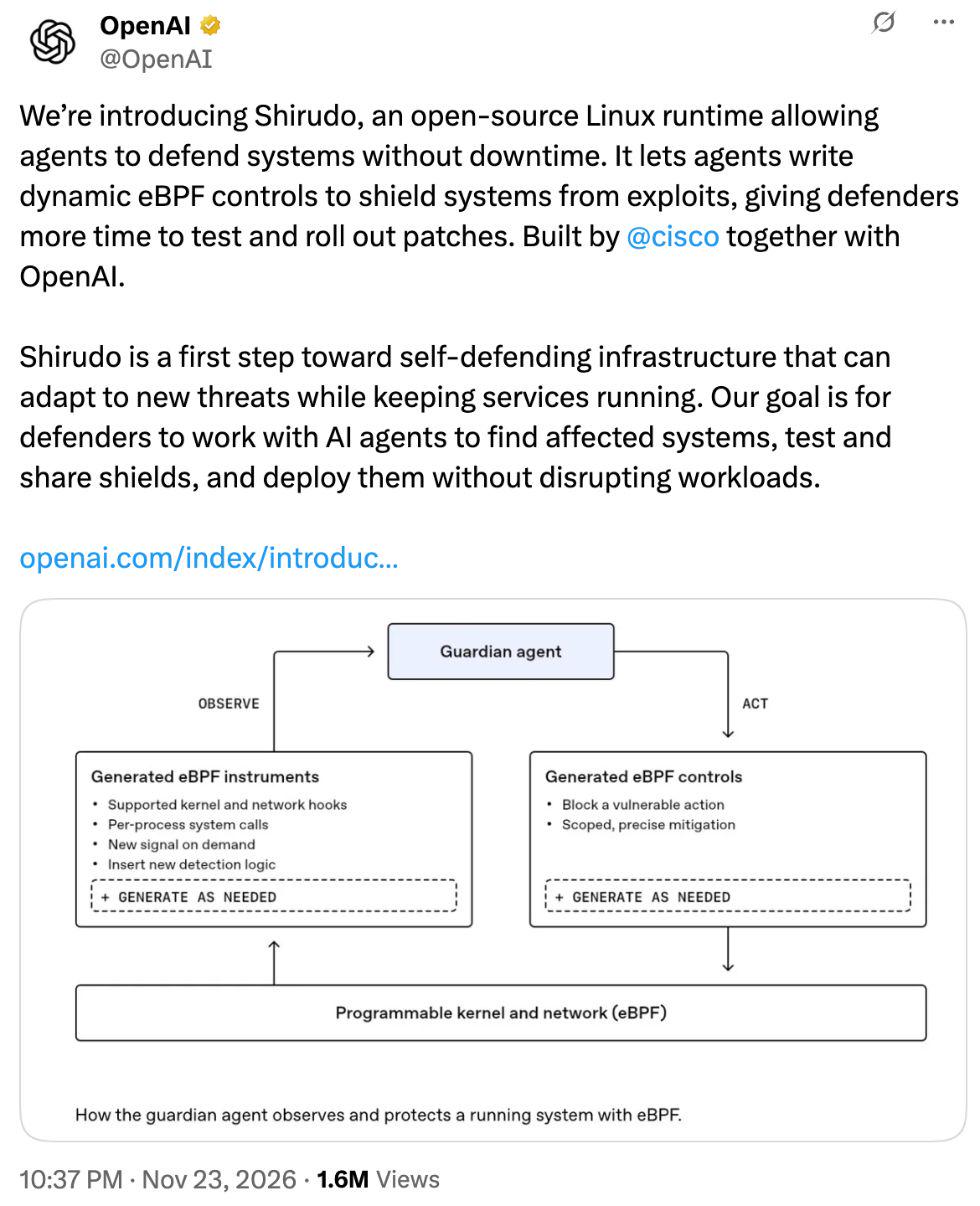
OpenAI and Cisco have introduced Shirudo, an open-source Linux runtime that enables AI agents to develop targeted security protections against exploits without requiring system restarts.
Using eBPF, agents can monitor system activity, generate security controls, and test temporary protections before deployment, with operators retaining control over what gets enforced.
In a controlled demonstration, a shield generated by Codex successfully blocked a Java4Shell exploit against a running Elasticsearch service without requiring a restart.
The goal is to close the window between vulnerability discovery and patch deployment, giving defenders more time to implement permanent fixes while keeping critical infrastructure operational.
Shirudo represents an early step toward self-defending infrastructure, where AI agents work alongside security teams to identify threats, validate mitigations, and protect running workloads.
Could agentic AI fundamentally change how organizations respond to newly discovered vulnerabilities?
Original announcement: https://openai.com/index/introducing-shirudo/