When mainline Linux recently marked the TI OMAP2420 for removal, I pulled an old Nokia N810 out of a drawer to see how far a 300-ish MHz ARM11 handheld with 128 MB of RAM could go.
The Nokia N810 is the kind of tech trash that's hard to throw away. What would it take to use the thing as a little Linux computer again?
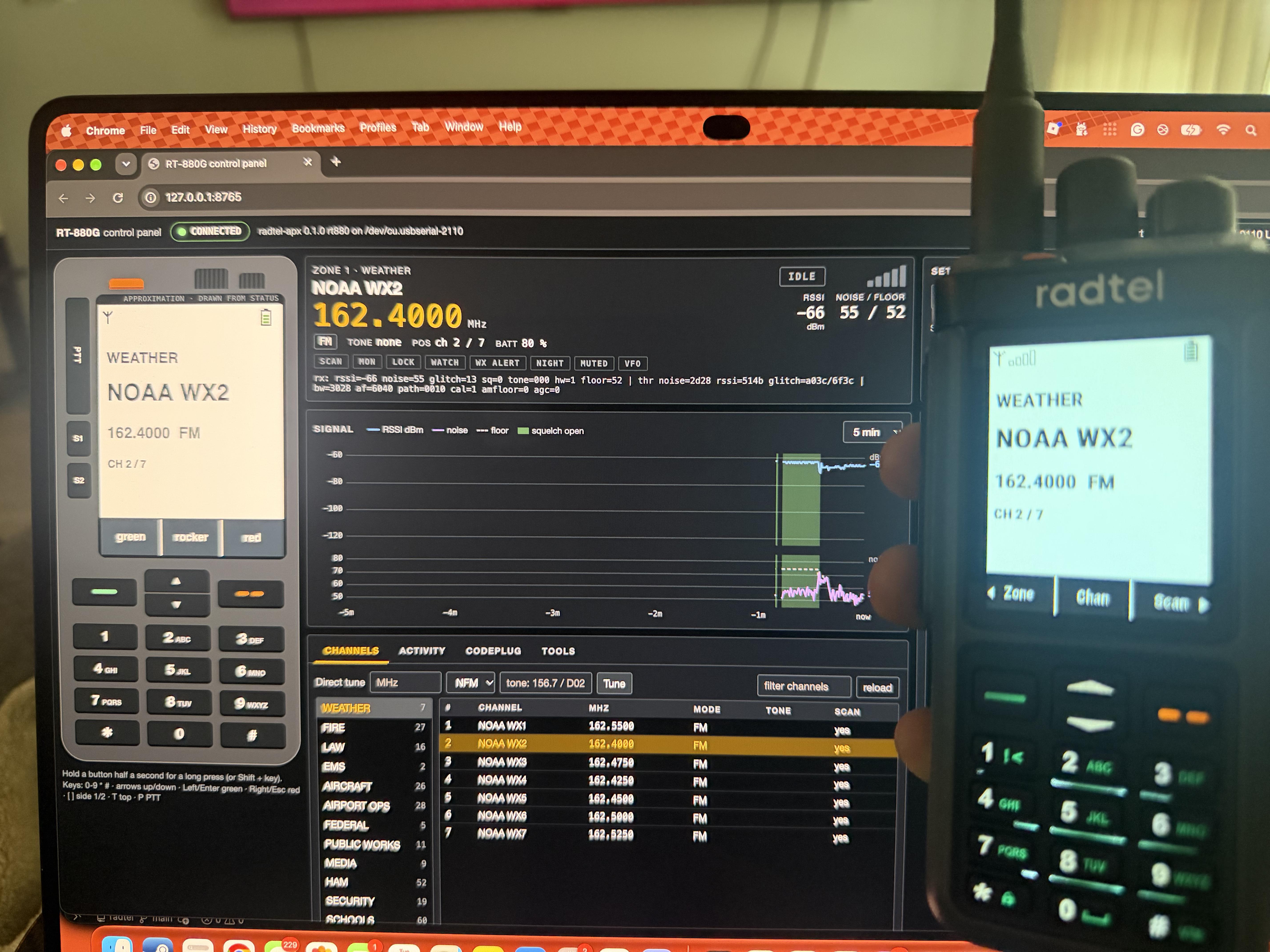
So, I built Pocket, a lightweight desktop and windowed TUI for the 800x480 display. It also runs services over SSH, so several terminal views can share one radio receiver. Paired over Bluetooth to a handheld radio, it decodes APRS and plots stations on offline maps while checking local elevation data for ridge obstructions and line-of-sight paths without cell service. For off-grid messaging, it runs a terminal LXMF client and offloads Reticulum to an external HTIT LoRa node, which took some surgery on microLXMF parsing and reconnect recovery to stay under the 128 MB ceiling (and I fixed a few LXMF vulns along the way too).
The biggest rabbit hole was graphics though. Nokia shipped the N810 without a driver for its PowerVR MBX GPU, so I studied a Nokia N95 firmware dump (same OMAP2420 silicon), reconstructed the GPU's command stream, and wrote a clean-room kernel driver and Mesa backend with a few different agents working together in tandem. Now it drives a terrain mesh at 70+ FPS and frees the CPU for packet and audio work, alongside getting the CPU stable at an overclocked 480 MHz.
My day job is a software engineer, been doing this for decades, but Claude makes me so irate! I loathe it, total trash.
Part of this was an excuse to tinker with various AI agents in a fun way without the stress of production systems or caring what the code looks like. Give an agent a kernel tree, a set of old board files and a boot log, and there's plenty for it to dig through. Software can't solve everything though, you can spend a long time reading code before you think to try a different piece of plastic, lol (mini as adapter issues)
Keeping the AI on rails while giving them collaborative control over shared hardware was a big part of the experiment.
I used AI agents across the kernel patches, Mesa work, and hardware bring-up, which only stayed productive because of a harness that treats "it works" as a claim requiring specific evidence. Host tests, VM builds, installs, running processes, reboot persistence, and physical or over-the-air observations are tracked as separate states, and the agents must declare which ones it actually verified. Any hardware action, like rebooting, flashing, loading a module, etc, is gated behind explicit authorization naming the target, operation, and recovery plan.
Performance claims have to state the hardware, clocks, workload, dimensions, duration, and statistics, keeping startup and paging separate from steady state and rendering separate from panel transfers. Active graphics experiments sit behind frozen checkpoints that agents can't touch.
Whenever an agent makes a mistake that reveals a needed constraint, and that becomes a new rule that goes straight into AGENTS.md.
The journal, kernel patches, and source are up at https://gordol.github.io/n810-revival/ and https://github.com/gordol/n810-revival.
If you want to try Pocket on a modern Linux or macOS box without hunting down 20-year-old Nokia hardware, clone the repo and run `make -C pocket n810` with Python 3.11+ and Make.
I'd love to hear from anyone building portable Linux field rigs, Bluetooth KISS setups, or Reticulum/LoRa terminals. Coming soon over the holidays will be CAT control and hf rig integration... and whatever other weird ideas I get.
For shits, I also got it running Symbian ARM apps natively (not emulation, but runtime syscall translation), and intend to do the same with Windows CE apps next.
Anyone else resurrecting old tech trash for fun?