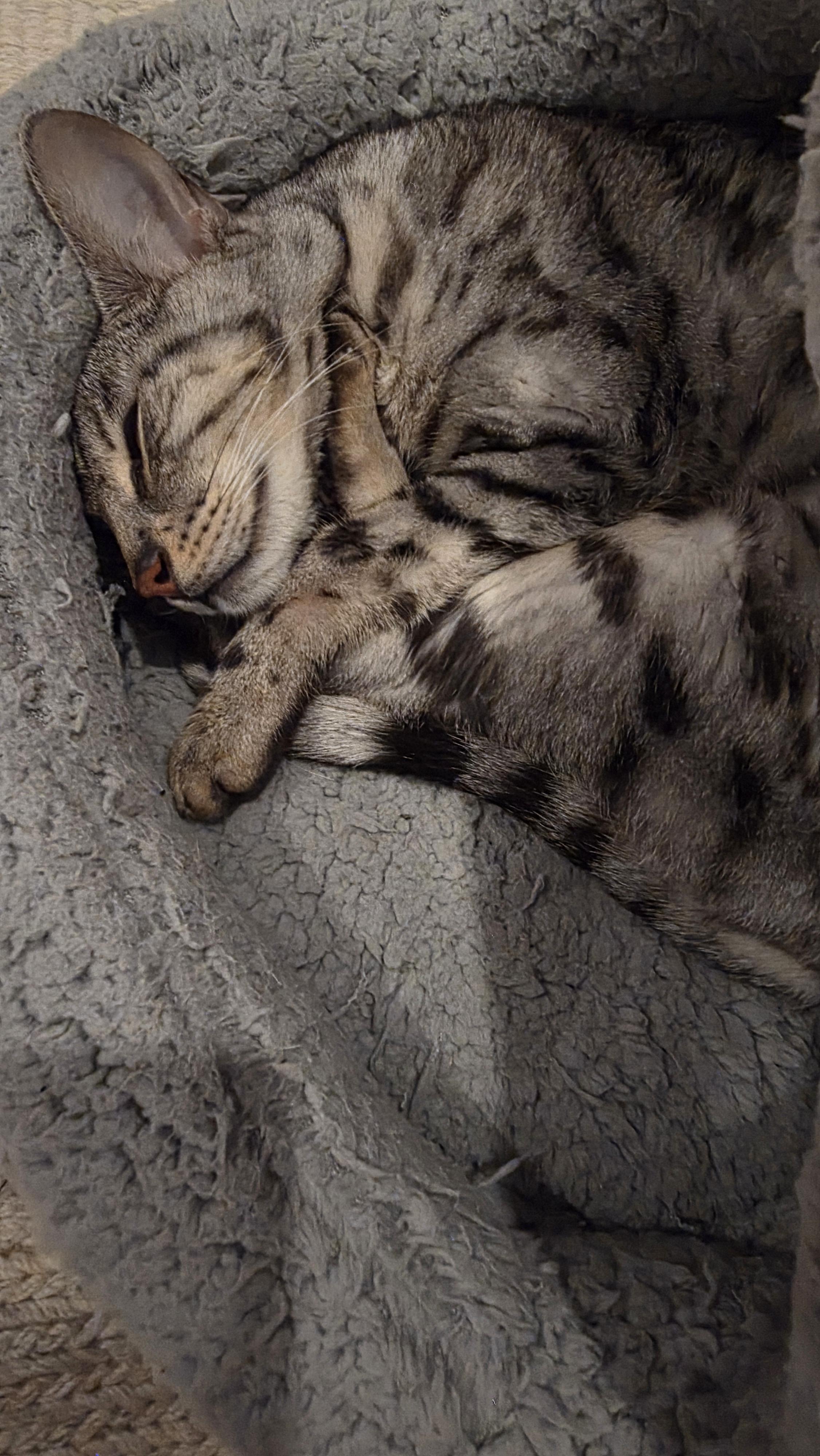
I’m looking for veterinary perspectives on my 5 month old, female, unspayed Ragdoll kitten. She weighs approximately 3.5 lbs (1.6 kg). Her symptoms began suddenly approximately 36 hours ago, and we have not yet received a definitive diagnosis.
We are currently at a standstill because we cannot determine whether her respiratory symptoms are primarily stemming from a pulmonary condition or a cardiac condition. Further diagnostic testing has not yet been performed, and we are hoping to get some additional veterinary perspectives on the findings and potential treatment options.
Clinical presentation
Sudden onset of rapid breathing approximately 36 hours ago.
Respiratory rate has been consistently around 80 breaths per minute, including at home.
One lower measurement was recorded at the veterinary clinic around the time Lasix was administered. This was an isolated reading and did not represent a sustained improvement.
She has become noticeably more withdrawn than usual and sometimes isolates herself.
She is not truly lethargic and remains interactive when approached.
Eating and drinking intermittently, but significantly less than her normal appetite.
Still willing to play and accept affection.
Otherwise presents relatively well clinically.
No coughing, sneezing or obvious upper respiratory symptoms.
Examination findings
Temperature: 38.1°C.
Heart rate: 120 bpm.
Respiratory rate: consistently approximately 80 breaths per minute.
No murmur or gallop detected on cardiac auscultation.
Pulse oximetry was not attempted because the veterinarian felt her darkly pigmented ears would prevent a reliable reading.
Background and exposure history
Fully vaccinated.
Exclusively indoor cat.
Has lived with us for over two months.
Lives with one other cat and one dog, neither of whom has shown any symptoms.
No exposure to animals or people outside the household, other than routine veterinary wellness visits.
No known recent contact with unfamiliar cats or other animals.
Thoracic radiograph findings
Moderate-to-severe diffuse bronchointerstitial to alveolar pulmonary pattern affecting all lung lobes, more pronounced in the mid-to-dorsal regions.
Mild generalized cardiomegaly, VHS 9.0 (reported reference normal <8.1).
Pulmonary vessels borderline effaced, limiting assessment.
No pleural effusion.
No enlarged intrathoracic lymph nodes or mediastinal abnormalities.
Radiologist’s differential:
Chronic lower airway disease, potentially infectious, irritant-related or allergic, with secondary bronchopneumonia.
Cardiogenic pulmonary edema/left-sided congestive heart failure.
The radiologist suggested empirical treatment for lower airway disease and pneumonia, with repeat thoracic radiographs to monitor response. An empirical diuretic trial was also suggested as a way to investigate possible cardiogenic pulmonary edema.
Emergency assessment and treatment
Examined by an emergency veterinarian.
Two rounds of furosemide administered.
Respiratory rate has remained consistently around 80 breaths per minute. There was one isolated lower measurement at the clinic around the time of Lasix administration, but no meaningful or sustained improvement.
The emergency veterinarian described her breathing as tachypnea rather than necessarily labored.
No confirmed cardiac diagnosis; no murmur or gallop heard on auscultation.
Received an injection of cefovecin (Convenia).
No take-home medication was prescribed.
Bronchodilator and inhaled steroid were declined by the emergency veterinarian because of concern about possible cardiac disease.
Bloodwork was not performed at the emergency clinic. The veterinarian advised that her regular veterinarian should perform it at the follow-up appointment tomorrow.
She was discharged home because the emergency clinic does not provide overnight hospitalization. There are no local veterinary facilities offering overnight hospitalization or oxygen therapy.
Questions for veterinary professionals
What would be your leading differential diagnoses given this radiographic pattern, sudden onset and clinical presentation?
Given that her respiratory rate has remained consistently around 80, with no sustained improvement following two rounds of furosemide, how much does this reduce suspicion of cardiogenic pulmonary edema?
Would you consider doxycycline or another antibiotic for possible Mycoplasma pneumonia or other lower respiratory infection, given that cefovecin does not cover Mycoplasma?
Would an inhaled corticosteroid or another treatment for airway inflammation be reasonable?
What bloodwork would you prioritize?
Is there anything in these findings that strongly suggests cardiomyopathy, or is the mild cardiomegaly insufficient to establish that?
Given her young age and sudden onset, what acute and potentially reversible pulmonary conditions would you prioritize investigating?
Are there other conservative treatment options worth considering while the underlying cause is being investigated?
Are there particular infectious or inflammatory conditions that could cause this presentation in an otherwise healthy, fully vaccinated indoor kitten?
Additional context
We are in a rural area with no 24hour emergency hospital or local oxygen capability. She has been discharged home without being stabilized, and we are following up with her regular veterinarian first thing tomorrow.
We are trying to pursue reasonable conservative treatment and targeted investigation. We would particularly appreciate input from veterinarians experienced in feline respiratory medicine or internal medicine.
Our primary concern is determining whether this could be an acute, reversible pulmonary condition rather than an underlying lifelong cardiac condition, and what reasonable diagnostic and treatment steps should be prioritized next.