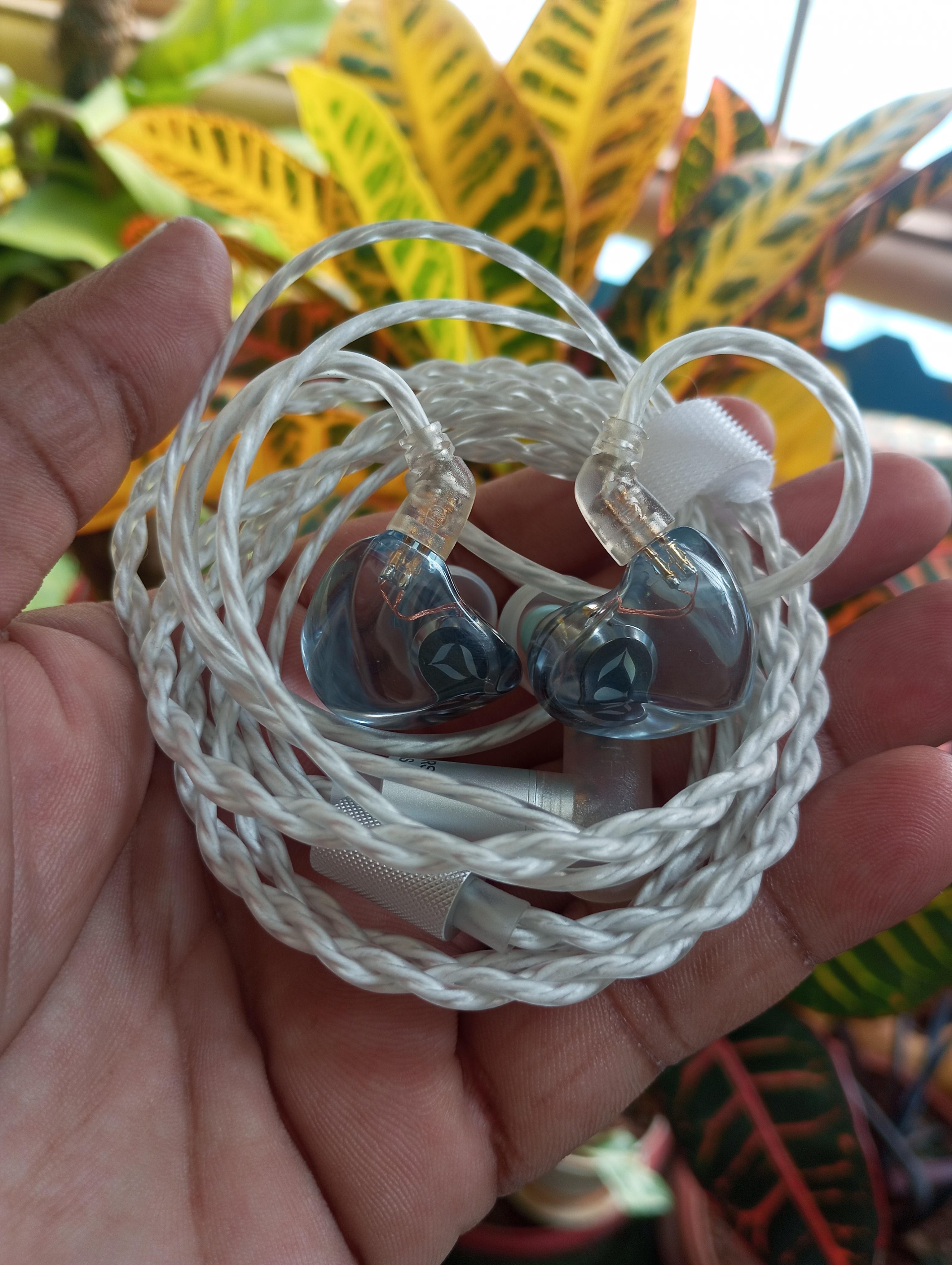
r/IemReviews • • 7h ago

📹Video Review(Must add short impressions) Celest x CVJ Iris unboxing & first impressions

5 Upvotes

Celest x CVJ Iris unboxing & first Impressions 

This Saturday I received the Celest x CVJ Iris.  Thank you Angelears audio store for it. I highly appreciate this support.

Well the box is eye catching. With whole wifu plastered all over it be it front or back. Honestly I am not into the whole wifu culture but hey at least this mascot is not in an inappropriate wardrobe for that full mark.

Inside the box you get usual suspects. Cable, IEM shells & ear tips but here the twist is that cable is modular with both terminations 3.5mm & 4.4mm & newly launched Oracle eartips. This was totally unexpected. The IEMs cost only 40 USD or slightly more depending on the store you buy from. There is wifu card included. 

On the sound front the low end is really nice. I am getting a rumble of the sub bass & impact of the mid bass. Mids feel clear & vocals are nicely balanced with respect to the other frequencies. The treble is detailed but not bright. The stage is unexpectedly good. This one is a nice warm fun tuned set. I am enjoying tapping my feet. 

Please take these findings with a grain of salt as these are initial impressions. Let's see how I feel in a few days once I run this through my sources.

Till then take care & enjoy the music. See you soon.


r/IemReviews • • 21h ago

Review📝 Thieaudio Monarch MKIV review: Vying for the crown!

Thumbnail
gallery
6 Upvotes

The first time I put on the Monarch MKIV, I had to check whether the rumble switch was on. The bass was considerably stronger than I expected. I was coming directly from Xenns Top Pro, my favorite IEM, and this thing had substantially more bass. The switch was off!

It took me a few songs to get accustomed to it. More bass, extraordinary resolution, natural vocals and some of the smoothest treble I've experienced. Yet there was something unusual about the presentation. Everything sounded so controlled and refined that I almost missed some excitement.

Monarch MKIV might be the most complete IEM I've experienced. It is also perhaps the most restrained.

I've compared it with everything from the $25 Tangzu Red Lion to Defiant, Patada, Arete 2, Astral, Top Pro, Symphonium Meteor, Archangel and several of my favorite headphones like HE1000 Unveiled, Aeon Core and Arya Stealth. At $1,149, this is a serious purchase, so the question isn't whether it sounds good. It's whether you actually need to spend this much.

Disclosure: Purchased with my own money. No sponsorship or affiliation. I spent more than a week with it and have spent more than 40 hours comparing it across everything I own to write this review. Hope you enjoy it!

As always, my ranking list covers 180+ audio products and 30+ ear tips, including music and gaming recommendations. Detailed reviews and comparisons are available through the link in my Reddit profile.

My sound preferences

My preferences are fairly consistent:

  • Strong, textured bass, but relatively controlled bass for competitive gaming
  • Natural vocals without excessive forwardness
  • Excellent clarity, separation, imaging and soundstage
  • Proper upper treble extension and air
  • Zero to low sibilance
  • Controlled overall energy without constant analytical listening
  • I enjoy treble extension. I just don't want upper mids, cymbals or sibilance becoming the focus
  • I'm particularly sensitive around 3 to 4kHz and 6 to 8kHz for IEMs and 7-9 kHz for headphones
  • I like almost all genres of music except death metal and reggae
  • I am not stuck on a single sound signature and enjoy variety

Bass: Wait, the rumble switch is off?

Bass is the star of the show. There's substantially more sub bass and mid bass than Top Pro, yet everything remains exceptionally clean. Kick drums hit hard, bass guitars have weight and electronic music delivers satisfying physical impact. There is absolutely no bloat, muddiness or bass bleed. Nothing.

What surprised me was the restraint. Even with all that bass, the rumble feels controlled. The slam is substantial, but notes don't linger unnecessarily or overwhelm the rest of the presentation. It's an interesting contrast with Penon Archangel and Deuce, which deliver a more physical, visceral experience.

My only question is why the bass doesn't feel quite as textured as Top Pro or Astral. Those sets seem to reveal a little more character in individual bass notes, despite having less overall quantity. I haven't quite figured out why, but it's something I repeatedly noticed when switching between them.

Rumble mode adds another 3dB across the sub bass shelf and approximately 2dB between 200 and 500Hz, according to Thieaudio. And yes, you can definitely hear it. There's more rumble, additional warmth and a satisfying skull massage. It still doesn't quite reach the physicality of Archangel or Deuce with its impedance adapter, but the difference is substantial. Surprisingly, the mids remain largely clean. Some instruments occasionally feel as though they've moved a step or two farther back, but there's remarkably little interference with vocals.

For me, standard mode already provides more than enough bass. Rumble mode is simply extra fun when the mood requires it.

Mids and vocals: Smooth as butter

This was my biggest concern before buying Monarch MKIV.

I've had mixed experiences with JM1 inspired tunings, particularly when pinna gain pushes female vocals too aggressively. Given my sensitivity around 3kHz, I was worried this might ruin an otherwise excellent IEM. It didn't.

Male and female vocals have excellent body, clarity and natural timbre without becoming shouty or excessively forward. There's a wonderful sense of separation, with the singer positioned in front of you while instruments spread around the presentation.

It's quite similar to what I enjoy about Top Pro and Astral, but with another layer of refinement. Nothing sounds forced, and I never feel the need to turn down the volume because a singer has suddenly become too aggressive. The impressive part is how Monarch maintains this clarity despite its substantial bass response. Everything has its own space, with no sense of instruments fighting for attention. For my preferences, the mids are absolutely spot on.

Treble and air: Almost too safe?

I had similar concerns about treble, particularly with the combination of Sonion balanced armatures and electrostatic drivers. Turns out I had nothing to worry about.

This is the smoothest treble presentation I've experienced from an IEM. No splashiness, no unpleasant peaks and no sibilance across my usual test library. I've listened to practically everything I could think of, gamed for hours and even fallen asleep wearing these things. Not recommended, by the way. My ears really hurt afterward.

The clarity is exceptional, with cymbals, strings and background details remaining distinct without becoming distracting. Everything just works.

So what's the catch? It's almost too safe.

Compared with Top Pro, Astral, Arete 2, Binary 1900 and even Patada, I miss that last bit of upper treble sparkle and air. Not because Monarch is congested. Its separation and clarity are immaculate. But the presentation is so smooth that it occasionally feels a little less exciting than I'd like.

This reminds me of Arya Unveiled compared with Arya Stealth. Arya Unveiled does virtually everything right, but I still prefer the additional air and openness of Stealth on certain recordings. I don't want more aggressive cymbals or energy around my sensitive frequencies. I simply want a little more upper treble air without sacrificing the incredible smoothness.

This is my only real complaint about the sound, and it can be easily fixed with a HSQ filter.

Gaming: The best IEM gaming experience I've had

I've tested plenty of IEMs for gaming, including Arete 2, Astral, Defiant and Top Pro. All are excellent in their own ways, but Monarch MKIV is the best gaming IEM I've experienced.

The resolution/clarity is extraordinary. I can hear every little detail, from footsteps and reloads to subtle environmental sounds that can easily disappear during chaotic firefights. More importantly, those sounds remain distinct and easy to identify.

The layering, separation and imaging are absolutely spot on. Directional accuracy is excellent, and distant cues are reproduced with remarkable precision. But the biggest difference compared with Astral, Arete 2 and Top Pro is the perception of soundstage. If you can perceive soundstage like I do you are in for a treat. It's always good to read this article about soundstage.

Monarch creates a genuinely holographic presentation that feels larger and more convincing than any other IEM I've used for gaming. There's more space around individual sounds, making positional information easier to interpret.

Even the substantial bass doesn't get in the way. Gunfire and explosions have proper impact, but footsteps and other subtle cues remain perfectly distinguishable. That incredibly smooth treble becomes a massive advantage too. No sharp peaks, no distracting sibilance and no need to lower the volume because something suddenly becomes unpleasant.

My most used gaming headphones are HE1000 Unveiled and Arya Stealth. Both offer enormous soundstage, excellent imaging and separation. Monarch gets surprisingly close in detail retrieval and positional performance. The one area where it still falls behind is the overall perception of space. A full size open back headphone can create a larger stage that even the best IEM struggles to replicate.

Monarch MKIV is now my gaming reference among IEMs.

Build, comfort and accessories

Build quality is exceptional. The metal shells feel premium, and the beautiful Stellashot design looks fantastic. This genuinely feels like an expensive piece of equipment.

The cable is another interesting topic. It's thick, almost like a rope, and I've seen plenty of criticism about it. Personally, I found it perfectly comfortable and had no issues using it. The modular terminations are also convenient.

Comfort is a little more complicated. These are large shells, and finding the right fit took some experimentation. Once seated properly, they're comfortable enough for extended listening and gaming, although I certainly wouldn't recommend sleeping with them. I tried that and regretted it. This is the largest shell I have used though. I have a Thieaudio Valhalla coming in and will be comparing this with that in a couple of weeks.

The included ear tips are serviceable, but nothing particularly special. I had to tip roll a bunch and settled with Tang Sincai Wide Bore with small size. This allows for pressure release and also seats the IEM so it remains comfortable for long hours.

The biggest disappointment is the carrying case. Seriously, what was Thieaudio thinking? It feels like something made from an empty toilet paper roll. Worse, it doesn't even comfortably accommodate the IEMs and their ridiculously thick cable. I ended up using my ZiiGaat Pellepod to store them. At $1,149, this is simply fleecing the customer. There is absolutely no excuse for providing such a poor carrying solution with an otherwise premium product.

Quick IEM comparisons

AFUL Dawn X ($1,299)

From memory, Dawn X had excellent stage, layering and separation, with impressive bass physicality and texture. However, I found some splashiness around 6 to 8kHz, and the fit wasn't ideal for me. Monarch feels smoother, more refined and less distracting overall. Dawn X was impressive, but even then I felt Top Pro delivered almost the same enjoyment for substantially less money. Hence, why I don't own it.

Penon Archangel ($799)

Archangel remains my benchmark for physical bass impact and texture. Monarch is more restrained, smoother and better suited to competitive gaming. Archangel is the more exciting basshead experience.

Symphonium Meteor ($680)

Both have wonderfully smooth treble and natural vocals. Meteor has exceptional BA bass texture, while Monarch delivers greater physical impact, resolution and soundstage. Meteor remains a fantastic relaxed listen.

Xenns Mangird Top Pro ($499)

Still my strongest overall recommendation. Monarch has more bass, greater refinement, smoother treble and a larger holographic stage for gaming. Top Pro retains better perceived bass texture and upper treble air. At $499, its value remains extraordinary. With discounts, I don't think you need to go beyond this.

Kiwi Ears Astral ($299)

Astral is more energetic, with excellent bass texture, resolution and upper treble sparkle. Monarch is smoother, more refined and considerably more effortless. It also delivers the better gaming experience. Around the 300$ mark, Astral remains my top pick for multi purpose use.

Fresh Reviews Arete 2 ($279)

Arete 2 remains a brilliant gaming IEM with excellent imaging and separation. Monarch takes things further with a larger perceived stage, better layering and greater overall resolution. Arete 2 is still remarkable at $279. I would say they share far more commonalities for gaming than anything else on this list.

Punch Audio Patada ($129)

Patada is warmer, rawer and considerably more energetic in the bass. Monarch offers far better refinement, separation and resolution. But for around $90 on sale, Patada remains one of the best value purchases I've made. Personally I think everyone should have this as the beater IEM.

Juzear Defiant Gamefidelity ($99)

Defiant provides clean separation, good imaging and enjoyable treble for under $100. Monarch is in another league technically, although Defiant actually has a little more of the upper treble air I enjoy. For pure gaming, this is still the benchmark under 100$.

Tangzu Red Lion ($25)

Red Lion is a reminder that good sound doesn't need to cost a fortune. It gets the fundamentals right for approximately $25. Monarch takes clarity, layering, bass control and technical performance to an entirely different level, as it should. Just add Penon Liqueur tips and don't use the USB-C cable version and you are golden for 25 bucks.

Comparisons with my headphones

Hifiman HE1000 Unveiled ($2,299)

Still my reference for resolution, soundstage, imaging and upper treble air. Monarch delivers an impressive amount of that refinement in an IEM, but cannot replicate the enormous sense of space. Yeah, it doesn't come close to this.

DCA Aeon Core ($899)

Both offer excellent layering, smooth treble and a clean presentation. Monarch delivers considerably more bass impact, while Aeon Core has the spacious character I enjoy from a good closed back headphone. For isolation both are great buys. Monarch handily beats it in bass and overall versatility of sound.

Hifiman Arya Stealth ($599)

My longtime competitive gaming reference. Its soundstage and positional accuracy remain exceptional, with more upper treble air than Monarch. However, Monarch has much smoother treble and a more substantial bass presentation. For gaming, Monarch doesn't beat it.

Audeze Maxwell 2 ($329)

Maxwell has wonderfully dense, physical planar bass and excellent gaming performance. Monarch offers greater clarity, separation and a more holographic presentation, although Maxwell remains a fantastic wireless gaming headset. I will be keeping both.

SIVGA Luan ($299)

One of my favorite dynamic headphones for tactile bass, natural vocals and airy treble. Luan is livelier, while Monarch is more controlled and refined. This is 1/4th the price of Monarch MKIV. Many people can stop here for headphones.

Price, value and conclusion

Should you buy Monarch MKIV? No.

Should you covet it? Absolutely yes.

At $1,149, Monarch MKIV is an extraordinary IEM. It delivers powerful, exceptionally clean bass, natural vocals, sublime treble and some of the best technical performance I've experienced. For gaming, it is now my absolute favorite IEM.

But do you actually need to spend this much money to experience immaculate audio? Absolutely not.

You can stop at Astral or Arete 2 around $300 and have an outstanding experience for both music and gaming. Spend a little more and get Top Pro, which remains the most solid recommendation I can give anyone.

Top Pro is still one of the most complete IEMs I've heard, with excellent bass texture, natural vocals, outstanding technicalities and enough upper treble air to keep things exciting. The fact that Monarch costs more than twice as much doesn't make it twice as enjoyable.

Monarch MKIV isn't something you need. It's something you buy because you want to experience just how far refinement, resolution and control can go.

It doesn't have the sheer bass physicality of Archangel, the excitement of Astral or quite the upper treble air of Top Pro. But it brings everything together with extraordinary coherence. My only real sound criticism is that the treble is almost too safe. Everything else is exceptional. The carrying case, on the other hand, is an embarrassment at this price.

If you're on a budget, buy Top Pro and don't look back. If you have the money and want something truly special, Monarch MKIV absolutely deserves your attention.

Overall score: 9/10.


r/IemReviews • • 6h ago

Review📝 CCZ Aura Max - A good try at Aura Maxxing

Thumbnail
gallery
3 Upvotes

Pros: Comfortable shell
Good low end and mids
No harsh treble peaks
Single DD goodness at a silly good price

Cons: Packaging is par for the price, I suppose
Lacking in layering separation and details
Treble seekers should steer clear
Imaging and staging are also less than what I'd like

Aura maxing (or auramaxxing) is internet slang for deliberately trying to maximize your "aura"—your perceived coolness, confidence, charisma, or personal presence.

On the desk today is the CCZ MC02 Aura Max courtesy Keephifi for review. Many thanks and gratefulness both for the opportunity to review an IEM called Aura Max (which in 2026 is just Alpha, No Cap) and, in addition providing the new Kbear 135 Silicone tips as well to try out.
Time to dive in!

Introduction
CCZ (as opposed to CCA) appears to be an in-house brand of keephifi and has been churning out interesting looking and sounding IEMs for a while now, the most expensive of them around $60 on the keephifi website, and the one I have in my possession clocks in at $18, making it a budget choice. But having only brushed past this brand in the past, I also see that they have a really nice waterproof case. That costs as much as this IEM so it’s not a part of the packaging. Alas.

Unboxing
The Aura Max turns up in a very simple cardboard box. The iems nestled into some moulded plastic with the cable and fairly standard silicone tips. The variant I got is a clear shell, 3.5mm non mic version. The aura had better max in the sound quality at this point. But this is a sub $20 product. We will not get a hard carry case and Dunu level tip options. So toning down the materialistic expectations would be wise. But it also comes in a black and blue hues.

Form Factor and specs
The MC02 is a single dynamic driver - PET, housed in a very pretty clear shell. The shell allows for the innards to be inspected at will and has an aluminium disc relief on the faceplate side that makes it look quite cool. The hated lip is much smaller and patented and is referred to as the earfins. To be fair, they are remarkably comfortable despite the fins and while still not sleep level comfortable, no complaints from the fit part.
The stock ear tips are the usual black silicone, and for the purpose of the review I used either Dunu Candy and the Kbear 135s. The cable has some memory and is made of OFC and it’s a 5N cable. It terminates with the 3.5mm jack at one end and some kind of cross between 2pin and qdc on the other. It works and works well at this point, there’s no need to stress about exactly which is standard 2pin or which is qdc - this one is a more squared off connector and called TPZ. The connection is secure and does not move. The cables’ terminations are also turned down for a more ergonomic fit. The cable has some memory and takes a day or two to get used to its little mind of its own.

Testing Gear
Sources - Shanling m5 ultra, Apos Gremlin, Fiio Qx13, Snowsky Disc
Eartips - Dunu Candy and kbear 135
Stock cable
Local files, and tidal

Sound

TLDR - nice punchy bass, reasonably clear mids, non fatiguing treble, can do with better layering and stage. Responds well to tip and cable rolling.

Bass
The single DD bass comes through with no bloat at all. The Sub bass is adequately rumbling and with a good source like the QX13 comes across with the required physical push that a good bass needs. Mid bass is also tight and punchy with a rapid decay. Angel by Massive Attack and Islands by The XX, both sound quite enjoyable on this set. On busier tracks with a lot happening at the low end like Anesthetize by Porcupine Tree, the Aura Max has less than max aura and loses the resolution.
Pop and EDM though are just a ton of fun. Don’t Start Now by Dua Lipa and Giorgio by Moroder by Daft Punk come across with their kicks and bass filling the space between my ears.

Mids
The mids are natural sounding with no untoward altered timbre. Vocals are pushed a little forward and male vocals like Don Henley’s on Hotel California by the Eagles and Hozier’s on Take Me To Church have weight and presence. All of the siblings who make up Girl Named Tom sound beautiful on their rendition of Helplessly Hoping, with the sister - Bekah Grace’s voice carrying the air and charm that comes across quite nicely. The layering and separation in the mids on tracks with few elements is acceptable but there is some muddying that happens soon as a lot starts happening. Orchestral music, jazz ensembles (like Snarky Puppy) sound less than ideal on this set, mostly because there’s so much going on.

Treble
The treble is very restrained and controlled on this set with almost no unexpected harshness and sibilance. My usual test is the crash at the beginning of Dreams by Fleetwood Mac and the Aura Max reproduces it with enough shimmer and air to be engaging without being harsh. This is also source dependent because the Gremlin and the M5 Ultra are warmer than the QX13 and Disc and that is noted in the treble response of this IEM.

Staging and Technicalities
The stage is average at best with decent imaging. It’s not the most detailed set, so while I get adequate left to right imaging, front to back is compressed. Layering and note separation, as mentioned, is fine for simpler music but falters on more complex tracks.

Final Thoughts
The CCZ Aura Max is a simple straightforward entry level IEM made for enjoying popular music. It works with pop, edm, bollywood, but not so much with Jazz Fusion or progressive rock. But it’s an easy start into the hobby or a great beater set.

Bonus thoughts - Kbear 135
These are super comfortable tips. The insertion bore is wider than the standard so makes it easy to slip onto wider nozzles but they are grippy enough with the nozzles of the Aura Max to not stay in my ear when the iem is taken out. The surface is smooth but not sticky, and I prefer that to the liquid silicone since I think the smooth surface allows for a little pressure relief. Kbear says the tips are wide bore and engineered to enhance the treble and stage and to a large extent, that is true with the Aura Max. When compared to the Candy Tips, bass was better on the Candy and the treble airier and the stage apparently a little wider with the Kbears. Having used the coffee tips in the past and quite enjoying them it is great to see this new offering and since it comes in 3 colours - black, blue and green, this goes into the oft rotated tip case.


r/IemReviews • • 15h ago

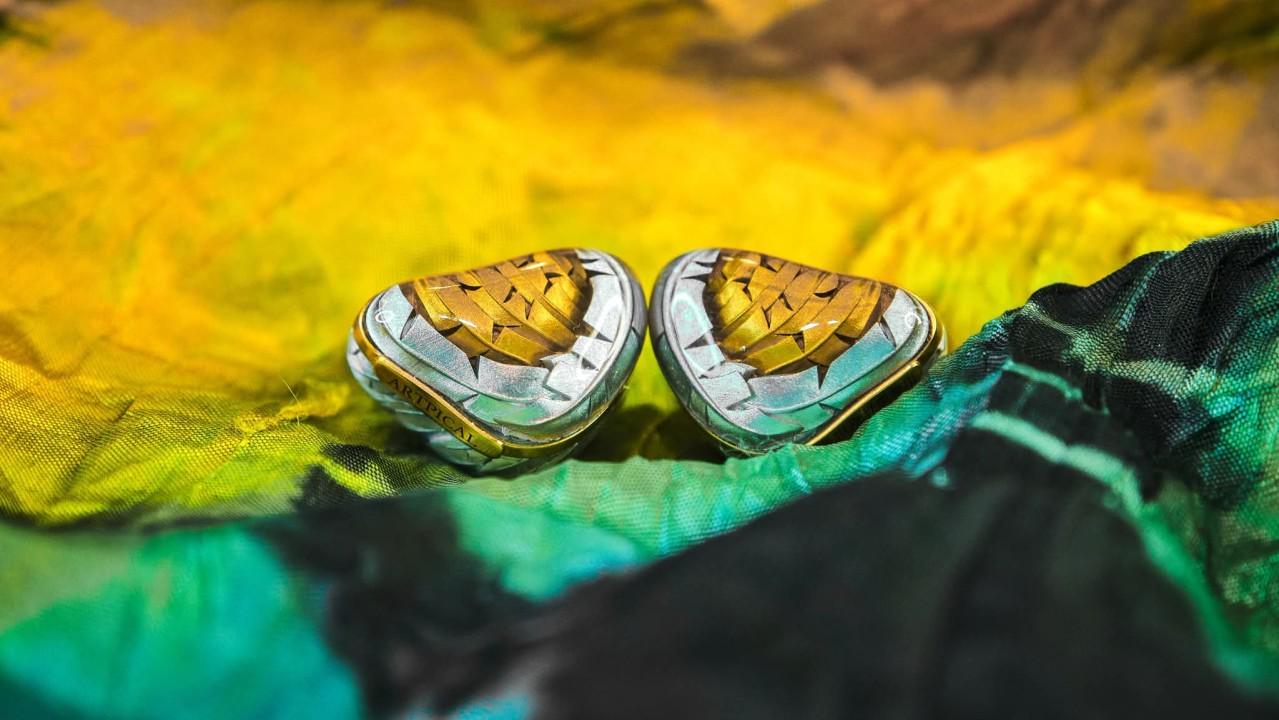
Article [ARTICLE] The Stories Behind Artpical Audio’s IEMs

Post image
7 Upvotes

Artpical Audio has been gaining popularity among audio enthusiasts. That inspired me to write about the company for Hi-Fi Hub’s “Brand Stories” series, where I introduce brands that are still relatively unknown internationally.

In 2026, Artpical introduced models priced at around US$150 and US$250, making its lineup of in-ear monitors (IEMs) more accessible. Even at these lower price points, the models offer a quality finish, a comfortable fit, and good sound.

Read the article below for a look at Artpical’s history, the philosophy behind its IEM designs, some listening impressions, and more.


r/IemReviews • • 23h ago

Impressions🗣️ Rolling with the D12: NiceHCK D12 Eartips Quick Impressions

Thumbnail
gallery
10 Upvotes

I don't really ask for much from my eartips. Just give me a comfortable fit, and a good seal, and make sure my ears don't hurt. That's pretty much it. 😅

I've tried quite a few different ones, but I always end up going back to my favorite sets.

NiceHCK recently sent me their new D12 eartips for review, so I figured I'd see how they compare to what I normally use.

Material: According to NiceHCK, the D12 uses Shin-Etsu silicone with a matte coating. It feels very similar to my Divinus Velvet Wide Bore. Same smooth, matte sort of texture. The D12 also has a thicker inner core compared to my SpinFit CP100, making it less flexible.

Storage Case: Also, can we talk about the included case? I LOVE IT. It has separate compartments for the tips, a translucent lid, and even a rubber gasket around the edges! It might actually be water-resistant, although I haven't tested it. Pretty neat for something that's just meant to store eartips.

Fit and Comfort: I initially tried S, which fit quite well, but MS fit even better. The seal is good, and I haven't experienced any irritation. They're just as comfortable as my CP100 and Velvet, although the D12 inserts a bit deeper than the latter, which I like.

Sound: Compared to my regular-bore CP100, I noticed more treble presence, with female vocals sounding clearer and more forward. Against the Velvet Wide Bore, though? Man, I kept swapping them back and forth, and I really couldn't hear much of a difference.

Durability: Unfortunately, I ran into a problem. While removing one of the D12 tips from my Moondrop May, the colored inner core separated from the silicone body. I removed it the same way I normally remove my other eartips, so that was quite a surprise.

I contacted NiceHCK about the issue, and they sent me a replacement MS pair after forwarding my feedback to their product department. The replacement feels more securely assembled, and I haven't experienced the same problem so far.

Price: At around $25 for the full set ($29.99 regular price), these are still more than I'd normally spend on eartips. And considering what happened to mine, I'm a bit concerned about durability.

Final Thoughts: Despite the issue, I genuinely like the D12. They're comfortable, fit my ears well, and sound pretty much identical to my Velvet Wide Bore. I've been using the replacement pair on my Moondrop May, and so far, no problems with the inner core coming apart. Hopefully, it stays that way!

Disclaimer: The NiceHCK D12 eartips were provided by NiceHCK for review, but all opinions are my own. I'm not an audiophile, and these are just my personal listening impressions.

#NiceHCK #D12 #Eartips #JReqTech


r/IemReviews • • 17h ago

Review📝 CVJ Tenhawk Review

Thumbnail
gallery
19 Upvotes

Hello, everyone! I'm Marcelo Dosec from Avaliasom, and today I'm sharing my impressions of the CVJ Tenhawk (轩卓 / Xuan Zhuo), a recent release from CVJ that was kindly sent to me by the folks at Sonether.

Moving away from the waifu theme, the Tenhawk goes for a more understated and poetic approach—described by the brand as "an ode to the color of paradise and the heart of the craftsman"—and retails for around $40 USD before taxes.


Build, Cable & Specifications

The box features an image of a black bird and includes a carrying pouch whose fabric changes appearance depending on how light hits it. The earphones themselves live up to the presentation:

  • Shell: Full-metal body with rounded contours (no sharp edges), a gravel-like textured faceplate, and a metal nozzle fitted with a fairly restrictive mesh filter.
  • Driver: 12 mm dynamic driver with a beryllium-plated diaphragm.
  • Cable: Supple silver-plated copper that resists tangling, featuring all-metal terminations and splitter (22.6 g / 1.20 m). Uses 0.78 mm 2-pin connectors and a modular plug system (my unit came with 3.5 mm and 4.4 mm plugs, with USB-C and inline-mic options also available).
SpecificationMeasurement
Length22.4 mm
Width18.7 mm
Depth (nozzle to faceplate)21.2 mm
Nozzle Diameter5.6 mm
Weight (per earpiece)13.5 g

Comfort & Isolation

The fit was great for my ears thanks to the ergonomic, edgeless shell. Because it is a vented design, there is zero ear pressure or occlusion. Insertion depth is shallow to medium with very good passive isolation. The only basic inclusion here is the single set of stock ear tips—they aren't uncomfortable, though they don't grip the ear canal skin particularly well.


Sound Performance (Music)

Sources used: Apple Dongle, Jcally AP6, Topping DX3 Pro+, iFi Hip-Dac 3, and FiiO K13 R2R.
(Note: Easy to drive from any source with no significant gains from power scaling. Since I listen at low volumes, my perception of bass and treble intensity may differ from higher-volume listeners).

The sound signature sits somewhere between warm-neutral and a warm U-shape:

  • Bass: Fast, well-defined, articulated, and punchy with plenty of physical impact. There is more weight in the mid-bass than in the sub-bass, though it still reaches deep. On "I Want You Back", the bassline comes through clearly without masking the kick drum; it shines on Apocalyptica's cellos, pairs great with EDM/Pop, and has enough speed for progressive metal.
  • Mids: Carries a healthy dose of warmth (a bit more than I personally prefer). Male vocals, acoustic guitars, and Maria GadĂş's textured voice gain rich body and note weight. For my taste, the midrange could use a little more clarity and air, though the trade-off is a very safe presentation against sibilance (passes Evanescence's "Hello" effortlessly).
  • Treble: Good cymbal attack (such as on "September in Montreal") and solid violin body, but the decay drops off early and lacks air for my treblehead preferences. Here's hoping for a "Tenhawk Pro" down the road with a Knowles BA for the upper treble.
  • Technicalities: Wide, holographic soundstage with very good imaging and commendable instrument separation. Layering and resolution are great for the $40 bracket, while micro-detail retrieval is simply good without standing out.

Best genres: Blues, Jazz, and hard-hitting EDM.


Gaming & Everyday Use

  • Daily Use: Very comfortable and sturdy for everyday wear, the gym, or stage monitoring (no exposed vents where sweat can easily seep in). For movies and work meetings, it delivers weighty explosions without drowning out dialogue or overlapping voices.
  • Competitive FPS (CS2): Good footstep cues, though elevated bass from explosions or deep voices can slightly mask them.
  • Battle Royale (PUBG): Commendable spatial awareness, accurately projecting gunfire and enemy footsteps, including verticality.
  • Open-World & Simulation: Great immersion in GTA VI (plugged straight into a PS5 controller), and thanks to its punchy low end, it is my favorite set under $40 for simulation games. (Tested on the Fosi SK02).

Comparisons ($40 Bracket)

  • vs. Dunu Titan X: The Tenhawk offers a more refined sound and better-textured bass, though it falls behind if your main priority is competitive gaming.
  • vs. Kiwi Ears Cadenza II & Cozoy D1: Evenly matched in build and technicalities; the difference comes down to tuning (more neutral on the Cadenza II/D1 vs. warmer on the Tenhawk). My personal pick is the Cadenza II for its treble extension, though choosing between the three is purely down to preference.

🏁 Conclusion

The CVJ Tenhawk is a compelling option if you're looking for a warmer, safer, and musical tuning around $40—likely to please the vast majority of listeners, save for the occasional picky treblehead like myself.


r/IemReviews • • 19m ago

Review📝 Dita is on the right track

Post image
2 Upvotes

Disclaimer - Project M2 iem was provided to me by DITA Audio in exchange for an honest review. You will see both praises and criticisms in the review. All my opinions are my own.

INTRODUCTION

• The DITA Audio Project M2 was launched in Summer 2026 at $329.

• The Project M2 is a single dynamic driver iem that utilizes a ported and tuned stainless steel acoustic chamber housing DITA's PM1.8Ti driver with an 8.3mm carbide coated titanium dome diaphragm paired with dual neodymium magnets and a twin baffle design.

BUILD AND COMFORT

• The semi custom resin shell is made using DITA's slow pour process in an "Icy Blue" transparent tint with a UV protective coating to prevent yellowing over time. I read all the comments regarding the yellowing issue with the original project M , but I'm happy to say DITA has listened and improved this with the M2. You can clearly see the polished stainless steel inner chassis and internal wiring through the shell.

• The resin shells is faceted in a way that makes it ergonomic to hold in the hand , I want DITA to add some texture on the facets to make it easier to grip the iem.

• I also love the fact DITA has applied their logo on the back of the DD , it signifies attention to detail and a way to combat negative space in the transparent shell.

• The Project M2 is lightweight and comfortable to wear for long listening sessions. The acoustic chamber is ported to relieve driver pressure. I faced no discomfort or pressure build up.

• The nozzle is metal with a standard lip and protective mesh filter to stop debris from entering the iem.

ACCESSORIES

• The stock cable is the 1.2m DITA "MOCCA" wire made with 16 Cardas Audio conductors in a flexible PVC jacket. It features a 0.78mm 2 pin connector with swappable 3.5mm single ended and 4.4mm balanced right angle connectors. The cable feels robust and well built with a matt texture finish. I noticed the larger than normal strain relief for the wire and the knurled finish in the splitter, this is how you know it's a boutique brand.

• Project M2 comes with a full set of Final E eartips (5 sizes), a pelican inspired hard protective carrying case, along with the official user manual / warranty card.

SONIC PERFORMANCE

Source used - Ibasso DC04 Ultra

Eartips used - Dunu candy and stock Final E

Power output required - the single DD is easy to power , anywhere between 30-60mw is enough to get to a hazardous volume.

TECHNICALITIES

• The soundstage is moderately wide.

• Detail retrieval is very good for a single DD, though it prioritizes musicality over clinical micro detail sharpness.

• Instrument separation is solid for the price. The single DD sounds coherent but can struggle a little with fast paced , complex compositions.

• Imaging is average, instruments are spaced quite close to eachother in the soundstage. I wouldn't recommend these for competitive FPS gaming, but for casual gaming, these are pretty good.

BASS

• The Project M2 has a slightly elevated bass shelf. The sub bass extends well with nice texture and depth, though it isn't a skull rattling rumble. The sub bass sounds more gritty than clean. I actually enjoyed this aspect of the iem.

• The mid bass has good punch and slam. Kick drums have satisfying weight and definition. I did check the graph to be sure and it did correlate with my real world experience. There is a slight bump in the mid bass compared to OG project M.

• Overall, the bass was one of highlights of this iem , while they not be certified basshead , the M2 has well extended sub bass with good amount of rumble and a mid bass that is plosive without getting overshadowed by the sub bass.

MIDS

• The mids are quite interesting on this set. The lower mids are tinted warm while the upper mids are accentuated.

• String instruments have great body and realistic timbre. Acoustic guitars sound lush and resonant without any metallic glare.

• Woodwind and brass instruments sound rich and well bodies with a touch of metalic brashness.

• Low pitched Male vocals sound really good while high pitched vocals can come off as a little thin and unnatural.

• Female vocals are the star here , they sound natural without coming off as thin or shouty. They clearly take centre stage in the mix.

TREBLE

• Cymbals have a natural shimmer and clean decay without sounding splashy or shrill.

• Female vocals with a higher frequency pitch are handled smoothly with zero sibilance. This was a big surprise coming from the original project M.

• Snare drums and string plucks have the crisp note with a hint of brightness.

• The Project M2 has smooth treble extension that avoids fatigue. There is enough air to keep the presentation open, though trebleheads looking for bright, aggressive sparkle might find it a touch relaxed. The stock Final E tips further blunt the air frequencies , hence I chose the dunu candy tips to get back the treble extension and bite.

• The transient response is natural and cohesive.

CONCLUSION

• I did not expect this from DITA because , to be honest , I did not like the original project M and even the prelude. They were typical bright iems. This new tuning ( kind of W shaped?) was a surprise for me in a good way. The M2 calms down the upper treble , maybe a little bit too much with final E tips , enhances female vocals and adds a much needed kick to the mid bass. The iem can come off as a little intense during complex tracks but it does stay coherent and calm most of the time. The overall tuning being slightly warm is a good idea and I hope DITA iterates on this in successive versions.

Tracks used -

• Killshot by Eminem

• GDFR by flo rida

• Another one bites the dust by queen

• Toxic by britney spears

• Winter , four seasons by vivaldi

• Mexico by vitamin string quartet

• When I'm down by Chris Cornell

• Show me how to live by Audioslave

• Angel of the morning by Juice newton

• Monomyth by Animals as leaders

• Fuel by Metallica

• Novocaine by Amber rubarth

• Hurt by Johnny Cash

• Take Five by Dave brubeck