r/IemReviews • • 7m ago

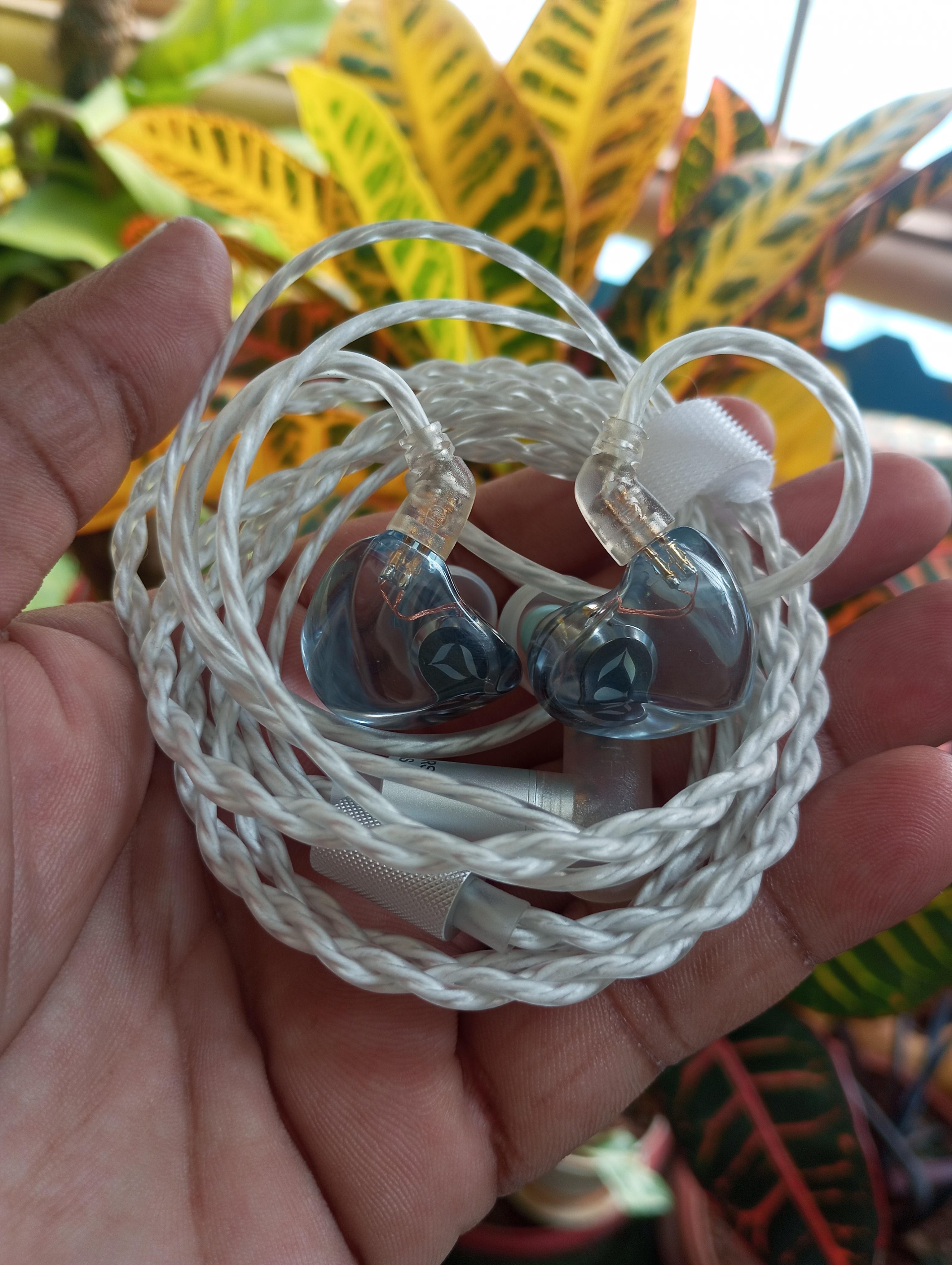
Review📝 Tangzu Wan'er S.G. II Red Lion Review: The Scarlet Pride

Thumbnail
gallery
1 Upvotes

INTRODUCTION

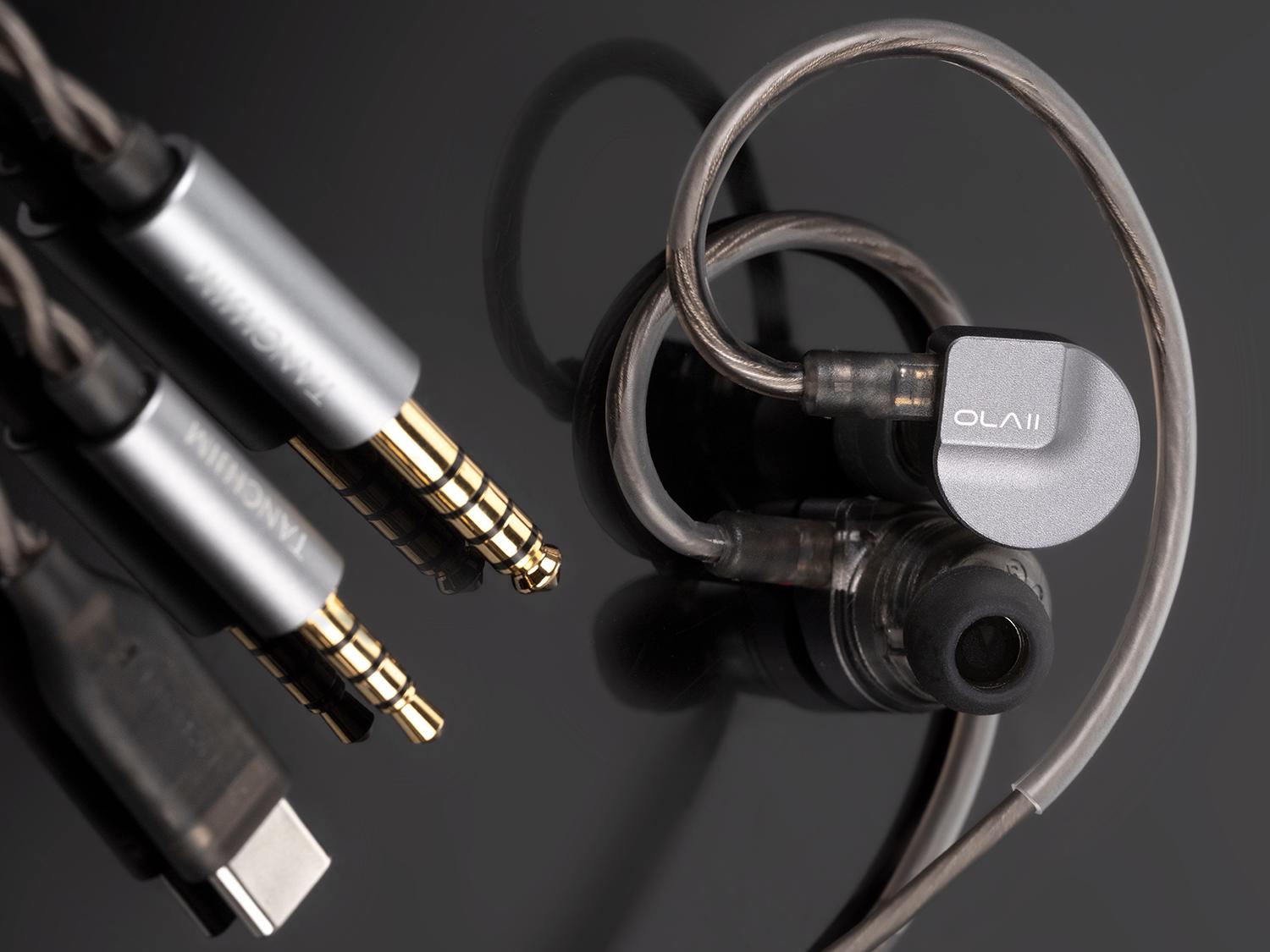
TANGZU has been in the chi-fi game for a while now. Founded in 2021, TANGZU is known for IEMs inspired by traditional Chinese culture and historical figures. They've had their share of hits and misses, but one lineup in particular has earned quite a reputation: the Wan'er series. I’ve owned a few Tangzu sets over the years, including the Shimin Li, Zetian Wu, Princess Changle, the original Wan'er S.G., and the Wan'er II (I have the black and red variants). Still, the Wan'er was once the undisputed king of the budget segment thanks to its unbeatable price-to-performance ratio.

The Wan'er lineup has seen many revision and honestly I wish they could kill the lineup already. It's like the Tin Audio T2 all over again with its many variants. But hey, at least you have many colors to choose from, they have the white, black, blue, jade, red, and I believe their latest was purple

But today we are going to review the Tangzu Wan'er Red Lion.

DISCLAIMER

  • I have no affiliation with TANGZU and have not received any monetary compensation during or after writing this review.
  • I bought this product with my own money.
  • Please keep in mind that the opinions expressed in this review are subjective and based on my personal experience with the unit. I encourage you to try the product yourself to form your own opinion.

INCLUSIONS

Unlike the regular variants, the Red Lion has a larger packaging and I believe this started with the Jade version. The Red Lion includes the following:

  • The IEMs
  • A 0.78 2-pin cable
  • 6 pair of eartips (three pairs of Tangzu Sancai wide-bore tips and three pairs of HE Sonic ear tips)
  • Storage pouch
  • Microfiber cleaning cloth

For a budget IEM, these package is hard to beat ngl. The cable is excellent and looks great thanks to its matte red finish. You also get six pairs of eartips that are genuinely better than what you’d find bundled with plenty of mid-rangers. One of my gripes is the storage pouch, which feels a bit too small.

BUILD QUALITY

The Wan'er SG (OG) has undeniably good sound and during the time of its release the only IEM that goes in par with the Wan'er would be the 7Hz Zero, that I still have to this day and that would've been the case for the OG Wan'er as well but where it suffered is the build quality. The OG literally suffered from faceplates and QDC connectors falling apart and this wasn't an isolated case, as I saw plenty of others online dealing with the exact same issue. Fast forward, the Wan'er II addressed these weak points well by switching to recessed 2-pin connectors. While the shells are still made of plastic/resin like the original, the overall construction feels much sturdier and doesn't fall apart easily. My gripe with the IEM itself is the larger than usual nozzles that makes replacing eartips a bit difficult.

The cables are also cool as it matches the overall aesthetic of the IEM. The eartips bundled with the Wan'er II are exceptional, even companies selling mid-range IEMs often fail to include quality eartips. But nothing would best the time where Kinera released Tyr bundled with Final eartips. While the IEM is mediocre, the eartips bundled with it are the star of the show, if you know, you know.

SOUND

The Wan'er II Red Lion has a U-shaped sound signature and delivers a livelier and fun sound compared to the other Wan'er II variants.

BASS: The Red Lion’s sub-bass is noticeably deep and rumbly. The sub-bass has good texture and weight but it doesn't have a seismic amount of power on it. The mid-bass is lean and lacks that snappy, tactile punch. For a bass-powerhouse I think budget-conscious bass heads would be able to appreciate the Red Lion.

MIDS: Stringed instruments sound natural and intimate on the Red Lion, the vocals, however, come across a little thin and laid-back.

HIGHS: The treble is smooth, forgiving, and non-fatiguing. The Red lion is perfect if you are treble-sensitive. However, the early roll-off means it lacks a bit of resolution, micro-detail, and sparkle. But hey, you came for the bass right?

Soundstage: Soundstage is average, there’s nothing particularly special going on here, and the stage mostly stays right inside your head. That said, it still offers enough breathing room that instruments rarely feel stacked on top of one another.

Imaging: Imaging is also average, instruments sit in a broad horizontal plane (left, right, center) rather than pinpoint spots, which is fine for casual listening but some elements soften and struggles in more complex tracks.

SOURCES USED:

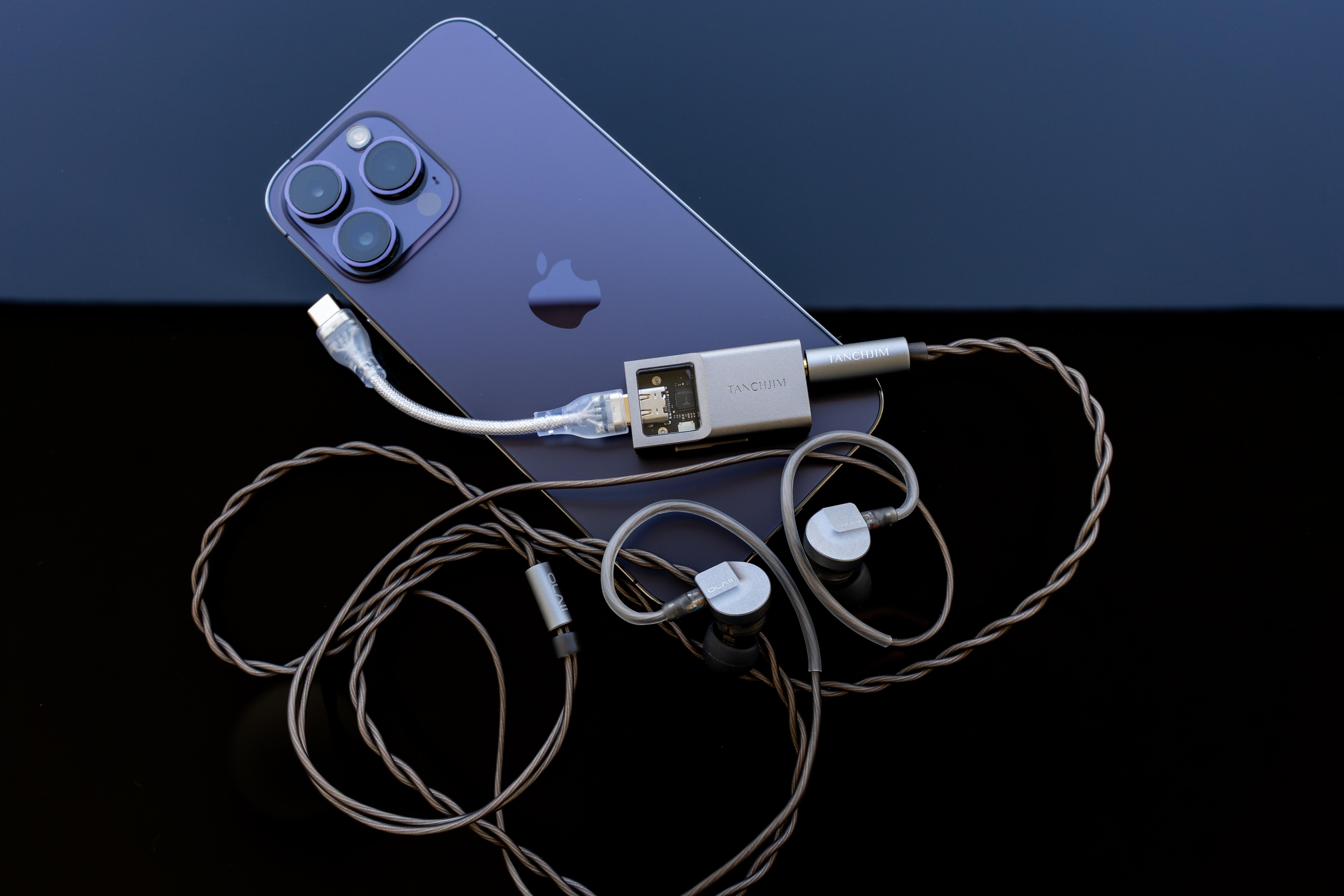
  • Apple dongle
  • Tempotec V1
  • Snowsky Echo Nano

PROS AND CONS

PROS

  • Great U-shaped sound
  • Good amount of bass
  • Intimate and natural sounding instruments
  • Treble is non-fatiguing
  • Great value for money
  • Eartips included are unbeatable even at the midrange level
  • Lightweight and comfortable

CONS

  • Vocals are a bit laid-back
  • Treble lacks resolution
  • Nozzles are a bit larger making it difficult to insert eartips
  • Not for trebleheads

CONCLUSION

The Wan'er S.G II remains the undisputed budget king under $20, with the Red Lion offering a bassier take on the standard version. You also have to consider how premium the accessories are for the price, between the sound quality and the inclusions, you're easily getting your money's worth.


r/IemReviews • • 46m ago

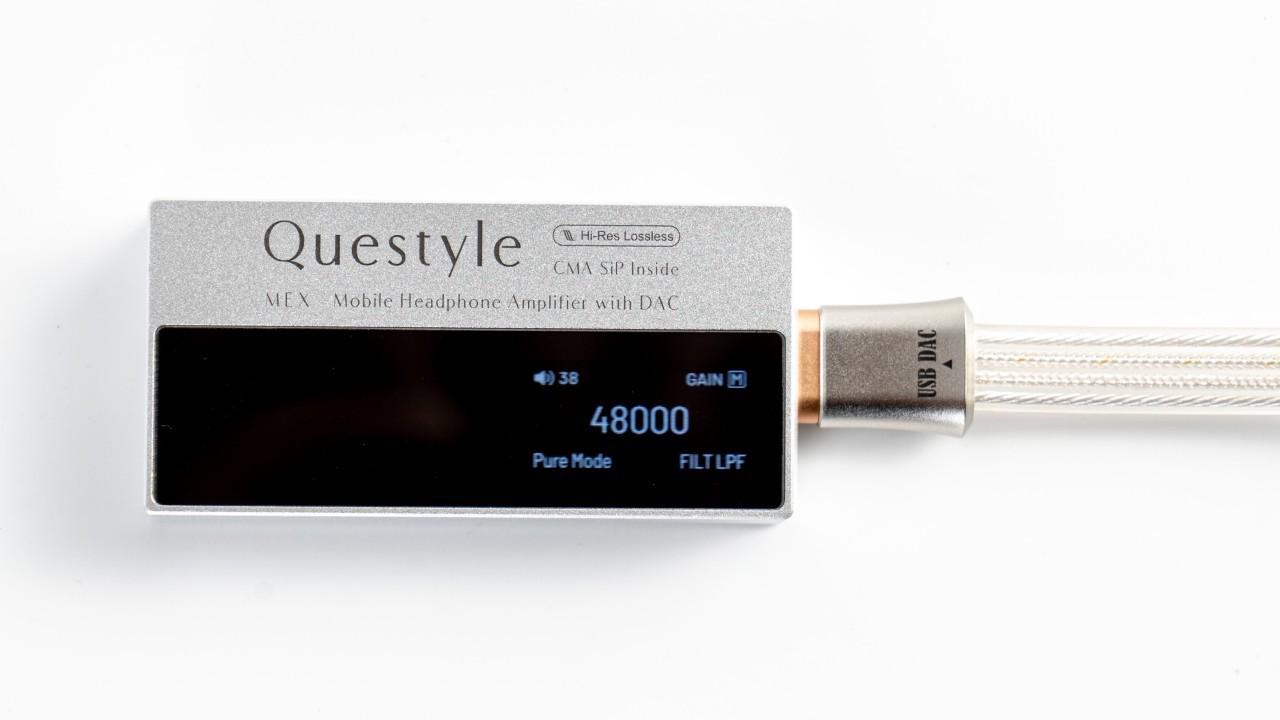
Audio news🎶 [NEWS] Questyle MEX Dongle DAC Launches at $199 With Parametric EQ

Post image
1 Upvotes

On November 17, Questyle launched the Questyle MEX, a portable DAC/amp with an aluminum alloy chassis and an OLED display. In line with market trends, the MEX adds a display, a feature absent from the M15i, and offers a parametric equalizer (PEQ) in the Questyle app. Check out all the details below.


r/IemReviews • • 5h ago

Review📝 KBEAR DarkJade: Black suits this cable too.

Thumbnail
gallery
5 Upvotes

Hello Community!

The KBEAR catalogue is very extensive, and I remain obsessed with continuing to personalise my IEMs in the best possible way, making sure everything matches. Let me introduce you to DarkJade.

Price: $29-€25

Link

Pros:

¡ Solid construction.

¡ Specifications usually found in more expensive products.

¡ Versatile for both indoor and outdoor use.

¡ Flexible; it is not a stiff cable that retains a fixed shape.

¡ Lightweight, does not cause the IEMs to become loose.

Cons:

¡ The plastic coating on the connector of the QDC model detracts slightly from its appearance.

¡ Lacks plastic protection at the Jack and QDC connection points to prevent the cable from peeling when repeatedly bent.

Things to consider:

¡ I do not believe in a cable's ability to modify sound unless it incorporates electronics, resistors or capacitors.

¡ My recent preference has been for thin cables for mobility outside the home and semi-rigid ones for desktop use.

Specifications:

¡ Upgrade cable for IEMs.

¡ Four-core braided construction.

¡ 252 strands of 6N OFC silver-plated copper.

¡ Available connectors: 0.78mm 2-Pin, QDC and MMCX.

¡ Available terminations: 3.5mm SE and 4.4mm BAL.

¡ Gold-plated connectors.

¡ 1.2m in length.

How is it built?

The KBEAR DarkJade is a cable that opts for an internal architecture that is considerably more elaborate and unusual than what we would normally find in its price range.

Inside, we find four cores containing a total of 252 individual conductors. The brand uses a combination of 6N OFC silver-plated copper and silver foil filaments, bringing together the properties of both materials within the same structure.

KBEAR also uses these silver foil filaments I mentioned above inside the product, and in commercial terms, the manufacturer claims that it is capable of maintaining the presence of the mids and low frequencies without excessively darkening the treble. A description that I would personally approach with caution, and I remain completely sceptical about it, but... who am I to judge this based solely on my ears?

In my opinion, what is truly interesting about this model is its physical construction and the fact that we can get a cable with this kind of architecture without having to make a particularly large investment.

Visually, its dark aesthetic is really striking. The combination of transparent black and the natural copper colour in the form of streaks gives it a certain exclusive personality.

To finish this section, the Jack termination, slider and splitter seem to be manufactured in line with the product's price positioning. They are made of metal alloy, nicely polished and finished, but do not expect anything premium. The cable soldering at the connection points is not protected by a rigid plastic sleeve, something I have already seen on other KBEAR models, which is a shame. I also regret that the QDC termination is entirely made of plastic, taking away some of the product's visual appeal.

Packaging and Quality of Life:

This product follows the philosophy we already know quite well from other accessories by the brand: simplicity and functionality above any unnecessary extras.

We are not looking at a product that aims to offer a particularly impressive unboxing experience. I hope KBEAR focuses on allocating all its resources towards delivering a good product.

But there is one aspect that I find particularly interesting and that deserves some attention, as I want to share it with you: the relationship between conductor density and ergonomics.

Normally, when we talk about cables with a more elaborate internal architecture, we may find ourselves dealing with bulkier, stiffer or heavier constructions, as I have already experienced first-hand. This is not always the case, but it is something worth keeping in mind, and this model manages to avoid those drawbacks typically associated with cables intended for more sedentary activities.

In this case, my impressions of the DarkJade are notably positive. I particularly appreciate its flexibility, how easy it is to handle and its reasonable resistance to tangling, with the braiding maintaining its structure firmly and never losing its proper and comfortable shape.

I have been able to take it with me both to the gym and running, and I barely felt it bothering me at any point. During desktop use, whether working or gaming, it also glided smoothly over the wooden surface of my desk or mousepad.

Final Conclusion and Personal Thoughts:

The KBEAR DarkJade strikes me as a very interesting option for those looking for a lightweight and manageable cable with a highly elaborate internal construction, usually found in other price ranges, but offered here at an affordable price. Its four cores, 252 conductors and combination of silver-plated copper with silver foil filaments provide specifications that I find quite attractive and not commonly seen.

It really is a fantastic cable, yes, but in its QDC version, the IEM connectors are made of basic plastic, slightly detracting from the appearance of a cable that is otherwise really attractive. Another aspect that is common to all versions is that the cable ends, both at the pin connections and at the Jack connection, lack protection against potential bending, which could cause the cable to fray.

If you have made it this far, thank you for reading.

More reviews on my blog.

Social media on my profile.

See you in the next review!

Disclaimer:

This cable was sent by KeepHifi. I sincerely appreciate the opportunity to try one of their products free of charge and the fact that no conditions were imposed on me when putting this review together.

Despite this, my priority is to be as impartial as possible within the subjectivity involved in reviewing an audio product. My opinion belongs to me alone, and I develop it based on the perception of my own ears. If you have a different opinion, it is equally valid. Please feel free to share it.


r/IemReviews • • 5h ago

Review📝 Punch Audio Patada: Bassy balance with MEMS drivers, affordable and well done!

Thumbnail
gallery
6 Upvotes

Disclaimer: 

First of all, thanks to Ribbon and Linsoul themselves for giving me this set for review. However, although I acknowledge that receiving this sample for "free" might influence how I talk about it, I am (first and foremost) a music lover and a consumer, just like you; therefore, I strive to be honest and sincere regarding my impressions and conclusions, thinking as a consumer and/or hobbyist before a brand. My actual biases are my musical and tuning preferences.

Introduction:

Punch Audio is a brand focused on making IEMs for the Basshead and/or bass-loving public, with previous launches like the Martilo and Portazo. Even within this segment of the audience, the brand has launched products that go beyond the simple focus on "heavy bass." In this instance, the Patada features a hybrid configuration: combining a dynamic driver with a MEMS driver. Sounds interesting, right? But how does it perform?

TL;DR: 

The Patada is a set made by Punch Audio; now, the Patada is a hybrid IEM with an interesting configuration of a 1 x 10 mm ceramic diaphragm dynamic driver + 1 MEMS driver per side, mainly with a serious focus on pleasing and satisfying the bass lovers among us, with some added balance. The Patada is a V-shaped tuned set with a very nice extension into the lower frequencies and some perks via the MEMS drivers.

The Patada is mostly a warm/neutral, bass-boosted IEM, with a pretty nice high-quality and quantity bass shelf that is the main focus of the set, a recessed yet well-placed lower midrange, nice warm and smooth upper midrange, a little bump in the lower treble to give some energy to female vocals and instruments, and a noticeable mid-treble peak to give some bite, with an upper treble rolling off smoothly, giving enough air and an open sound presentation.

The bass in the Patada is something that can be satisfying bassheads; but it’s more for overall bass lovers, it's absolutely well extended into the lower frequencies, with a huge and very tactile sub-bass feeling, it has a very punchy midbass, with more than decent potency, a very natural decay, and it’s incredibly clean and transparent (like a kick, fast and clean), yet bleeding into the lower midrange. Male vocals are noticeable recessed yet not so thin or veiled; a warm and pretty neutral and smooth upper midrange to have presence and noteweight, and a pretty non-offensive, yet decently energetic lower and mid treble, with impressive sibilance control, so this is a mid-to-high volume set to enjoy that “bassy balance”.

Noticeably, in the technicalities aspect, the Patada offers a smooth upper treble extension that rolls off at around 16 kHz, with a great airy and open sound, a soundstage that’s not completely expansive but not intimate as well, with decent width and depth, magnificent dynamics, very fast transient response (also thanks to the MEMS drivers), and separation and resolution punching above its weight. No matter its warm/neutral, bass-boosted timbre, the tuning is not a “true basshead”, but it is balanced and more musical than analytical, so it is perfect for the mere enjoyment of music, but also to use them in other scenarios, such as gaming.

The Patada can be a delight for bassheads at a pretty well-put-together price; this is not a kick in the nuts but a goal kick, definitely. And what do you get for the price you pay for the Patada? Decent accessories to use them out of the box, an interesting cable (braided, in fabric, which has a 3.5 mm single-ended jack), minimalistic yet great-looking shells, a very nice fit and seal, various sets of eartips, and a gorgeous, well-known, big-sized and overall functional carrying case, offering not only any Bassy Balanced IEM, but one of the best competitors in the price range.

Pros:

- More than decent subbass and mid-bass impact that doesn’t overpower the rest of the frequencies; it’s a bassy balanced IEM, yet it sounds warm and neutral, very fast, and clean

- Warm and neutral with bass-boosted timbre, a neutral and V-shaped midrange with good presence, clarity, and fantastic resolution via the MEMS driver per side, with recessed but well-placed vocals and instrumentals

- Clean, sparkly, and energetic but non-offensive treble; it’s well-resolved, with great sibilance control (6 and 10 kHz dips), with enough bite to balance that great bass. With a decently expansive soundstage, with enough width and depth

- A technical proficiency punching above its weight: great dynamics, very fast transient response, more than average separation, magnificent macro/microdetail retrieval (resolution)

- It’s easy to drive (104 dB sensitivity / 20 Ω impedance), so low-powered sources can drive it, yet it scales with quality/powerful sources

Cons:

- Cable is wrapped in fabric; it can produce transmitted vibrations when you are on the move. And it’s only 3.5 mm single-ended; I would like a modular cable like the other Punch Audio sets packaging

- Certain folks who love more air and a more extended upper treble can feel it lacking in that aspect

- As a V-shaped tuned set, male vocals can feel thin (in certain mixes)
- The upper treble is very smoothed and rolled off, so for certain folks it can lack a bit of energy in toms, hi-hats and cymbals

You can get a Punch Audio Patada for an MSRP of 135.00 USD (you can get it cheaper on sale or during Black Friday promotions, but in my humble opinion, at MSRP it is a pretty sweet offer). Buy it directly from the Linsoul official website: https://www.linsoul.com/products/punch-audio-patada, the Linsoul AliExpress official store, the Linsoul Amazon official store, and other online retailers.

Technical specifications:

- Driver Types: 
- 1 x 10 mm ceramic diaphragm Dynamic Driver (Bass)
- 1 x MEMS driver (Midrange and treble)
- Casing Material: medical-grade resin shell
- Sensitivity: 104 dB (@ 1 kHz)
- Impedance: 20 Ί
- Frequency range: 20 Hz – 45 kHz
- THD: 0.16% /1kHz
- Cable: High-purity OFC silver-plated, 4-core braided, fabric-wrapped, 2-pin connectors
- Jack connector: 3.5 mm single-ended
- Cable length: 1.2m Âą 0.2 m

What comes in the package?

¡ 2 x Patada earphones
¡ 1 x big square-shaped faux-leather carrying case
¡ 2 x types of eartips:
¡ 1 x set of foam eartips (SML)
¡ 1 x set of grey silicone standard bore eartips (SML)
¡ 1 x 4-core silver-plated, OFC, fabric-wrapped, braided cable with a 2-pin connector and a 3.5 mm single-ended jack

Its cable is ok; it’s not so slim, but it's well-built and flexible, matching the shells nicely. It has recessed 0.78 mm 2-pin connectors. It’s not so prone to tangles or to generating memory, but because it’s fabric-wrapped, it can produce transmitted vibrations, especially when on the move. It looks and feels premium.

The shells are made of medical-grade resin; their colour is completely shiny black, with a gorgeous faceplate showing a kind of smoke with the Punc Audio logo in each earpiece. It’s so well constructed; the housing is medium-sized and very well-weighted.

Talking about its ergonomics, the nozzles have enough height to accommodate the eartips, so this aspect is well done, and they fit me in long sessions without problem. The shells don’t seem prone to micro-scratches and fingerprints.

It has two vents to release pressure, one close to the nozzle and another bigger one close to the 2-pin connector, so you aren’t experiencing driver flex; it has a metallic nozzle that fits well in my ears (YMMV) (6.0 mm diameter), suited to mid-sized ears and maybe small-ear people.

How the Patada sounds:

The Patada, with a 10 mm ceramic diaphragm dynamic driver + MEMS driver, offers a V-shaped tuning.

For this review, after tip-rolling looking for a good fit and sound synergy, I used some Penon Liqueur orange eartips in M size, finding the best comfort, fit and seal for the Patada. The sources used were mainly Fosi K7, Tanchjim Space Pro, and NiceHCK Octave. I changed the stock cable for the cable included with the ZiiGaat Thunder. The graph is taken from the Precogvision squiglink page.

1. Frequency Profile:

- BASS:

The Patada’s main focus is here, delivering a very high-quality and quantity of bass, with a fantastic quantity of subbass that extends into the lower frequencies; it also has a magnifique midbass potency; it is so transparent, very fast, with a natural decay, and it’s magnificently resolving. The quantity is huge, but it’s not bloated or muddy at all; it is a goal kick, definitely. As a V-shaped tuned set, the midbass bleeds into the lower midrange.

- MIDRANGE:

The Patada lower midrange ‘suffers’ from some midbass bleeding; male vocals are recessed, yet don’t feel much thin or veiled. The overall midrange is kind of warm yet neutral, and has a great noteweight; and with the MEMS driver, more than average resolution and presence.

The frequency curve comes to 800 Hz and later advances into a warm pinna gain, with a fantastic transparency and a smooth as well tuned presence region with a peak at 2.8 to 3 kHz, later going into the lower treble; female vocals are not forward nor recessed, and at high volumes don’t get shouty or fatiguing.

- HIGH RANGE:

In the high frequencies, the Patada is clean and so crisp, sharp, and noticeably energetic yet non-offensive, it has that crystal clear bite form the MEMS drivers, balancing the rest of frequencies, with a nice bump in the 5 kHz region enhancing female vocals and instruments, a peak at 8 kHz to give that well-received energy, and, handling the sibilance almost perfectly with the expected 6 kHz and 10 kHz dips; it’s so resolving, and it’s not fatiguing in long sessions at mid-to-high volumes; and even at high volumes if you are treble tolerant.

- UPPER TREBLE:

In the Patada, the upper treble rolls off at 16 kHz, giving enough air and a more open sound.

2. Dynamics

In this aspect, the Patada is so well-tuned; thanks to the MEMS drivers, the music is displayed so gracefully, so the soft and loud sounds are distinguishable so flawlessly.

3. Transient Response

The Patada has a great dynamic driver inside, and the MEMS drivers are a well-received addition to the configuration, making a very fast transient response, even with busy or intricate/complex music and other audio content like games and videos.

4. Soundstage

The soundstage in the Patada is kind of expansive, and it has good width and depth.

5. Separation

The stereo separation in the Patada is a delight, and the layering of instruments is more than average as well.

6. Resolution

The Patada shows excellent technical competence; it presents macro and micro detail retrieval punching above its weight, yet it is more musical than analytical. With that warm yet neutral character, it’s perfect for music enjoyment but also for gaming and other audio content.

Closing thoughts and conclusions:

I see how the Patada enters the market as not just being a basshead IEM; Punch Audio made a bassy balance for all of us bass lovers and, with the use of those MEMS drivers, adds balance and technical perks to enjoy it not only for mere music enjoyment.

In a direct comparison, the ZiiGaat x Z Reviews Thunder is a warm, bass-boosted tuned IEM, more a “true Basshead” IEM than a balanced with great bass boost as the Patada I’m reviewing here. But, the Patada delivers a fun yet refined and clean sound, with a bass impact that remembers a goal kick rather than a kick in the jewels lol.

I would like the Patada upper-treble to roll off more lately, because some young folks can wish more treble extension for their games. And, because it is a V-shaped tuning, male vocals are noticeably recessed and sometimes sound thin; I would like less midbass bleeding into this portion of frequencies, and a more ‘flat’ midrange overall, but that’s my tuning tastes talking.

I’ll like the Patada to have more eartips options, and the foam eartips, idk, unless you are very treble sensitive, you don’t need to tame its excellent tuned high range of frequencies.

Here is where we talk about how easy it is to drive it. The Patada, with its 104 dB sensitivity and 20 ohms of impedance, is easy to drive, even with low-powered sources; but taking advantage of a cable with a 4.4 mm balanced jack, the use of a quality and more powerful source shows how well the Patada scales.

In the under 150 USD segment, the Patada has a sound profile, technical aspects and accessories that make it one of the best value propositions in its price range, and suits my preferences more than alright; it’s now one of my favourites from the brand.

Can I recommend it?
​
Absolutely yes. If you are a bass lover who also looks into some technical perks, and you prefer a warmer yet neutral and balanced tonality rather than just the bass kick, the Patada is perfect for you: It can work for bass-heavy music, but also work for other audio content and needs such as gaming, movies and videos, giving excellent value and performance for its price.

Once again, thanks to Linsoul for providing me with this IEM to test, enjoy, and finally give me the reasons to recommend it as a product that earned my appreciation and liking (suiting my tuning tastes so nicely). And thank you, dear reader, for checking out my review. Please have a happy listening!noticeably


r/IemReviews • • 8h ago

Review📝 Dita is on the right track

Post image
3 Upvotes

Disclaimer - Project M2 iem was provided to me by DITA Audio in exchange for an honest review. You will see both praises and criticisms in the review. All my opinions are my own.

INTRODUCTION

• The DITA Audio Project M2 was launched in Summer 2026 at $329.

• The Project M2 is a single dynamic driver iem that utilizes a ported and tuned stainless steel acoustic chamber housing DITA's PM1.8Ti driver with an 8.3mm carbide coated titanium dome diaphragm paired with dual neodymium magnets and a twin baffle design.

BUILD AND COMFORT

• The semi custom resin shell is made using DITA's slow pour process in an "Icy Blue" transparent tint with a UV protective coating to prevent yellowing over time. I read all the comments regarding the yellowing issue with the original project M , but I'm happy to say DITA has listened and improved this with the M2. You can clearly see the polished stainless steel inner chassis and internal wiring through the shell.

• The resin shells is faceted in a way that makes it ergonomic to hold in the hand , I want DITA to add some texture on the facets to make it easier to grip the iem.

• I also love the fact DITA has applied their logo on the back of the DD , it signifies attention to detail and a way to combat negative space in the transparent shell.

• The Project M2 is lightweight and comfortable to wear for long listening sessions. The acoustic chamber is ported to relieve driver pressure. I faced no discomfort or pressure build up.

• The nozzle is metal with a standard lip and protective mesh filter to stop debris from entering the iem.

ACCESSORIES

• The stock cable is the 1.2m DITA "MOCCA" wire made with 16 Cardas Audio conductors in a flexible PVC jacket. It features a 0.78mm 2 pin connector with swappable 3.5mm single ended and 4.4mm balanced right angle connectors. The cable feels robust and well built with a matt texture finish. I noticed the larger than normal strain relief for the wire and the knurled finish in the splitter, this is how you know it's a boutique brand.

• Project M2 comes with a full set of Final E eartips (5 sizes), a pelican inspired hard protective carrying case, along with the official user manual / warranty card.

SONIC PERFORMANCE

Source used - Ibasso DC04 Ultra

Eartips used - Dunu candy and stock Final E

Power output required - the single DD is easy to power , anywhere between 30-60mw is enough to get to a hazardous volume.

TECHNICALITIES

• The soundstage is moderately wide.

• Detail retrieval is very good for a single DD, though it prioritizes musicality over clinical micro detail sharpness.

• Instrument separation is solid for the price. The single DD sounds coherent but can struggle a little with fast paced , complex compositions.

• Imaging is average, instruments are spaced quite close to eachother in the soundstage. I wouldn't recommend these for competitive FPS gaming, but for casual gaming, these are pretty good.

BASS

• The Project M2 has a slightly elevated bass shelf. The sub bass extends well with nice texture and depth, though it isn't a skull rattling rumble. The sub bass sounds more gritty than clean. I actually enjoyed this aspect of the iem.

• The mid bass has good punch and slam. Kick drums have satisfying weight and definition. I did check the graph to be sure and it did correlate with my real world experience. There is a slight bump in the mid bass compared to OG project M.

• Overall, the bass was one of highlights of this iem , while they not be certified basshead , the M2 has well extended sub bass with good amount of rumble and a mid bass that is plosive without getting overshadowed by the sub bass.

MIDS

• The mids are quite interesting on this set. The lower mids are tinted warm while the upper mids are accentuated.

• String instruments have great body and realistic timbre. Acoustic guitars sound lush and resonant without any metallic glare.

• Woodwind and brass instruments sound rich and well bodies with a touch of metalic brashness.

• Low pitched Male vocals sound really good while high pitched vocals can come off as a little thin and unnatural.

• Female vocals are the star here , they sound natural without coming off as thin or shouty. They clearly take centre stage in the mix.

TREBLE

• Cymbals have a natural shimmer and clean decay without sounding splashy or shrill.

• Female vocals with a higher frequency pitch are handled smoothly with zero sibilance. This was a big surprise coming from the original project M.

• Snare drums and string plucks have the crisp note with a hint of brightness.

• The Project M2 has smooth treble extension that avoids fatigue. There is enough air to keep the presentation open, though trebleheads looking for bright, aggressive sparkle might find it a touch relaxed. The stock Final E tips further blunt the air frequencies , hence I chose the dunu candy tips to get back the treble extension and bite.

• The transient response is natural and cohesive.

CONCLUSION

• I did not expect this from DITA because , to be honest , I did not like the original project M and even the prelude. They were typical bright iems. This new tuning ( kind of W shaped?) was a surprise for me in a good way. The M2 calms down the upper treble , maybe a little bit too much with final E tips , enhances female vocals and adds a much needed kick to the mid bass. The iem can come off as a little intense during complex tracks but it does stay coherent and calm most of the time. The overall tuning being slightly warm is a good idea and I hope DITA iterates on this in successive versions.

Tracks used -

• Killshot by Eminem

• GDFR by flo rida

• Another one bites the dust by queen

• Toxic by britney spears

• Winter , four seasons by vivaldi

• Mexico by vitamin string quartet

• When I'm down by Chris Cornell

• Show me how to live by Audioslave

• Angel of the morning by Juice newton

• Monomyth by Animals as leaders

• Fuel by Metallica

• Novocaine by Amber rubarth

• Hurt by Johnny Cash

• Take Five by Dave brubeck


r/IemReviews • • 15h ago

Review📝 CCZ Aura Max - A good try at Aura Maxxing

Thumbnail
gallery
3 Upvotes

Pros: Comfortable shell
Good low end and mids
No harsh treble peaks
Single DD goodness at a silly good price

Cons: Packaging is par for the price, I suppose
Lacking in layering separation and details
Treble seekers should steer clear
Imaging and staging are also less than what I'd like

Aura maxing (or auramaxxing) is internet slang for deliberately trying to maximize your "aura"—your perceived coolness, confidence, charisma, or personal presence.

On the desk today is the CCZ MC02 Aura Max courtesy Keephifi for review. Many thanks and gratefulness both for the opportunity to review an IEM called Aura Max (which in 2026 is just Alpha, No Cap) and, in addition providing the new Kbear 135 Silicone tips as well to try out.
Time to dive in!

Introduction
CCZ (as opposed to CCA) appears to be an in-house brand of keephifi and has been churning out interesting looking and sounding IEMs for a while now, the most expensive of them around $60 on the keephifi website, and the one I have in my possession clocks in at $18, making it a budget choice. But having only brushed past this brand in the past, I also see that they have a really nice waterproof case. That costs as much as this IEM so it’s not a part of the packaging. Alas.

Unboxing
The Aura Max turns up in a very simple cardboard box. The iems nestled into some moulded plastic with the cable and fairly standard silicone tips. The variant I got is a clear shell, 3.5mm non mic version. The aura had better max in the sound quality at this point. But this is a sub $20 product. We will not get a hard carry case and Dunu level tip options. So toning down the materialistic expectations would be wise. But it also comes in a black and blue hues.

Form Factor and specs
The MC02 is a single dynamic driver - PET, housed in a very pretty clear shell. The shell allows for the innards to be inspected at will and has an aluminium disc relief on the faceplate side that makes it look quite cool. The hated lip is much smaller and patented and is referred to as the earfins. To be fair, they are remarkably comfortable despite the fins and while still not sleep level comfortable, no complaints from the fit part.
The stock ear tips are the usual black silicone, and for the purpose of the review I used either Dunu Candy and the Kbear 135s. The cable has some memory and is made of OFC and it’s a 5N cable. It terminates with the 3.5mm jack at one end and some kind of cross between 2pin and qdc on the other. It works and works well at this point, there’s no need to stress about exactly which is standard 2pin or which is qdc - this one is a more squared off connector and called TPZ. The connection is secure and does not move. The cables’ terminations are also turned down for a more ergonomic fit. The cable has some memory and takes a day or two to get used to its little mind of its own.

Testing Gear
Sources - Shanling m5 ultra, Apos Gremlin, Fiio Qx13, Snowsky Disc
Eartips - Dunu Candy and kbear 135
Stock cable
Local files, and tidal

Sound

TLDR - nice punchy bass, reasonably clear mids, non fatiguing treble, can do with better layering and stage. Responds well to tip and cable rolling.

Bass
The single DD bass comes through with no bloat at all. The Sub bass is adequately rumbling and with a good source like the QX13 comes across with the required physical push that a good bass needs. Mid bass is also tight and punchy with a rapid decay. Angel by Massive Attack and Islands by The XX, both sound quite enjoyable on this set. On busier tracks with a lot happening at the low end like Anesthetize by Porcupine Tree, the Aura Max has less than max aura and loses the resolution.
Pop and EDM though are just a ton of fun. Don’t Start Now by Dua Lipa and Giorgio by Moroder by Daft Punk come across with their kicks and bass filling the space between my ears.

Mids
The mids are natural sounding with no untoward altered timbre. Vocals are pushed a little forward and male vocals like Don Henley’s on Hotel California by the Eagles and Hozier’s on Take Me To Church have weight and presence. All of the siblings who make up Girl Named Tom sound beautiful on their rendition of Helplessly Hoping, with the sister - Bekah Grace’s voice carrying the air and charm that comes across quite nicely. The layering and separation in the mids on tracks with few elements is acceptable but there is some muddying that happens soon as a lot starts happening. Orchestral music, jazz ensembles (like Snarky Puppy) sound less than ideal on this set, mostly because there’s so much going on.

Treble
The treble is very restrained and controlled on this set with almost no unexpected harshness and sibilance. My usual test is the crash at the beginning of Dreams by Fleetwood Mac and the Aura Max reproduces it with enough shimmer and air to be engaging without being harsh. This is also source dependent because the Gremlin and the M5 Ultra are warmer than the QX13 and Disc and that is noted in the treble response of this IEM.

Staging and Technicalities
The stage is average at best with decent imaging. It’s not the most detailed set, so while I get adequate left to right imaging, front to back is compressed. Layering and note separation, as mentioned, is fine for simpler music but falters on more complex tracks.

Final Thoughts
The CCZ Aura Max is a simple straightforward entry level IEM made for enjoying popular music. It works with pop, edm, bollywood, but not so much with Jazz Fusion or progressive rock. But it’s an easy start into the hobby or a great beater set.

Bonus thoughts - Kbear 135
These are super comfortable tips. The insertion bore is wider than the standard so makes it easy to slip onto wider nozzles but they are grippy enough with the nozzles of the Aura Max to not stay in my ear when the iem is taken out. The surface is smooth but not sticky, and I prefer that to the liquid silicone since I think the smooth surface allows for a little pressure relief. Kbear says the tips are wide bore and engineered to enhance the treble and stage and to a large extent, that is true with the Aura Max. When compared to the Candy Tips, bass was better on the Candy and the treble airier and the stage apparently a little wider with the Kbears. Having used the coffee tips in the past and quite enjoying them it is great to see this new offering and since it comes in 3 colours - black, blue and green, this goes into the oft rotated tip case.


r/IemReviews • • 15h ago

📹Video Review(Must add short impressions) Celest x CVJ Iris unboxing & first impressions

9 Upvotes

Celest x CVJ Iris unboxing & first Impressions 

This Saturday I received the Celest x CVJ Iris.  Thank you Angelears audio store for it. I highly appreciate this support.

Well the box is eye catching. With whole wifu plastered all over it be it front or back. Honestly I am not into the whole wifu culture but hey at least this mascot is not in an inappropriate wardrobe for that full mark.

Inside the box you get usual suspects. Cable, IEM shells & ear tips but here the twist is that cable is modular with both terminations 3.5mm & 4.4mm & newly launched Oracle eartips. This was totally unexpected. The IEMs cost only 40 USD or slightly more depending on the store you buy from. There is wifu card included. 

On the sound front the low end is really nice. I am getting a rumble of the sub bass & impact of the mid bass. Mids feel clear & vocals are nicely balanced with respect to the other frequencies. The treble is detailed but not bright. The stage is unexpectedly good. This one is a nice warm fun tuned set. I am enjoying tapping my feet. 

Please take these findings with a grain of salt as these are initial impressions. Let's see how I feel in a few days once I run this through my sources.

Till then take care & enjoy the music. See you soon.


r/IemReviews • • 1d ago

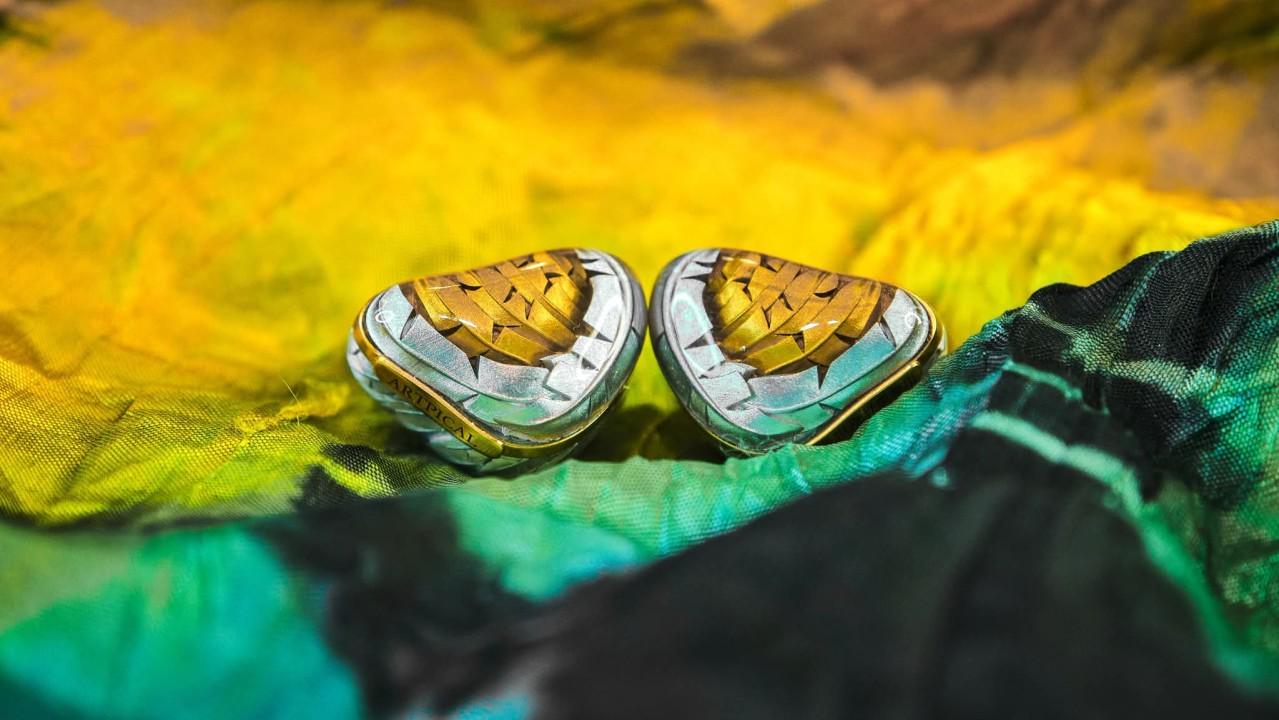
Article [ARTICLE] The Stories Behind Artpical Audio’s IEMs

Post image
8 Upvotes

Artpical Audio has been gaining popularity among audio enthusiasts. That inspired me to write about the company for Hi-Fi Hub’s “Brand Stories” series, where I introduce brands that are still relatively unknown internationally.

In 2026, Artpical introduced models priced at around US$150 and US$250, making its lineup of in-ear monitors (IEMs) more accessible. Even at these lower price points, the models offer a quality finish, a comfortable fit, and good sound.

Read the article below for a look at Artpical’s history, the philosophy behind its IEM designs, some listening impressions, and more.


r/IemReviews • • 1d ago

Review📝 CVJ Tenhawk Review

Thumbnail
gallery
22 Upvotes

Hello, everyone! I'm Marcelo Dosec from Avaliasom, and today I'm sharing my impressions of the CVJ Tenhawk (轩卓 / Xuan Zhuo), a recent release from CVJ that was kindly sent to me by the folks at Sonether.

Moving away from the waifu theme, the Tenhawk goes for a more understated and poetic approach—described by the brand as "an ode to the color of paradise and the heart of the craftsman"—and retails for around $40 USD before taxes.


Build, Cable & Specifications

The box features an image of a black bird and includes a carrying pouch whose fabric changes appearance depending on how light hits it. The earphones themselves live up to the presentation:

  • Shell: Full-metal body with rounded contours (no sharp edges), a gravel-like textured faceplate, and a metal nozzle fitted with a fairly restrictive mesh filter.
  • Driver: 12 mm dynamic driver with a beryllium-plated diaphragm.
  • Cable: Supple silver-plated copper that resists tangling, featuring all-metal terminations and splitter (22.6 g / 1.20 m). Uses 0.78 mm 2-pin connectors and a modular plug system (my unit came with 3.5 mm and 4.4 mm plugs, with USB-C and inline-mic options also available).
SpecificationMeasurement
Length22.4 mm
Width18.7 mm
Depth (nozzle to faceplate)21.2 mm
Nozzle Diameter5.6 mm
Weight (per earpiece)13.5 g

Comfort & Isolation

The fit was great for my ears thanks to the ergonomic, edgeless shell. Because it is a vented design, there is zero ear pressure or occlusion. Insertion depth is shallow to medium with very good passive isolation. The only basic inclusion here is the single set of stock ear tips—they aren't uncomfortable, though they don't grip the ear canal skin particularly well.


Sound Performance (Music)

Sources used: Apple Dongle, Jcally AP6, Topping DX3 Pro+, iFi Hip-Dac 3, and FiiO K13 R2R.
(Note: Easy to drive from any source with no significant gains from power scaling. Since I listen at low volumes, my perception of bass and treble intensity may differ from higher-volume listeners).

The sound signature sits somewhere between warm-neutral and a warm U-shape:

  • Bass: Fast, well-defined, articulated, and punchy with plenty of physical impact. There is more weight in the mid-bass than in the sub-bass, though it still reaches deep. On "I Want You Back", the bassline comes through clearly without masking the kick drum; it shines on Apocalyptica's cellos, pairs great with EDM/Pop, and has enough speed for progressive metal.
  • Mids: Carries a healthy dose of warmth (a bit more than I personally prefer). Male vocals, acoustic guitars, and Maria GadĂş's textured voice gain rich body and note weight. For my taste, the midrange could use a little more clarity and air, though the trade-off is a very safe presentation against sibilance (passes Evanescence's "Hello" effortlessly).
  • Treble: Good cymbal attack (such as on "September in Montreal") and solid violin body, but the decay drops off early and lacks air for my treblehead preferences. Here's hoping for a "Tenhawk Pro" down the road with a Knowles BA for the upper treble.
  • Technicalities: Wide, holographic soundstage with very good imaging and commendable instrument separation. Layering and resolution are great for the $40 bracket, while micro-detail retrieval is simply good without standing out.

Best genres: Blues, Jazz, and hard-hitting EDM.


Gaming & Everyday Use

  • Daily Use: Very comfortable and sturdy for everyday wear, the gym, or stage monitoring (no exposed vents where sweat can easily seep in). For movies and work meetings, it delivers weighty explosions without drowning out dialogue or overlapping voices.
  • Competitive FPS (CS2): Good footstep cues, though elevated bass from explosions or deep voices can slightly mask them.
  • Battle Royale (PUBG): Commendable spatial awareness, accurately projecting gunfire and enemy footsteps, including verticality.
  • Open-World & Simulation: Great immersion in GTA VI (plugged straight into a PS5 controller), and thanks to its punchy low end, it is my favorite set under $40 for simulation games. (Tested on the Fosi SK02).

Comparisons ($40 Bracket)

  • vs. Dunu Titan X: The Tenhawk offers a more refined sound and better-textured bass, though it falls behind if your main priority is competitive gaming.
  • vs. Kiwi Ears Cadenza II & Cozoy D1: Evenly matched in build and technicalities; the difference comes down to tuning (more neutral on the Cadenza II/D1 vs. warmer on the Tenhawk). My personal pick is the Cadenza II for its treble extension, though choosing between the three is purely down to preference.

🏁 Conclusion

The CVJ Tenhawk is a compelling option if you're looking for a warmer, safer, and musical tuning around $40—likely to please the vast majority of listeners, save for the occasional picky treblehead like myself.


r/IemReviews • • 1d ago

Review📝 Thieaudio Monarch MKIV review: Vying for the crown!

Thumbnail
gallery
7 Upvotes

The first time I put on the Monarch MKIV, I had to check whether the rumble switch was on. The bass was considerably stronger than I expected. I was coming directly from Xenns Top Pro, my favorite IEM, and this thing had substantially more bass. The switch was off!

It took me a few songs to get accustomed to it. More bass, extraordinary resolution, natural vocals and some of the smoothest treble I've experienced. Yet there was something unusual about the presentation. Everything sounded so controlled and refined that I almost missed some excitement.

Monarch MKIV might be the most complete IEM I've experienced. It is also perhaps the most restrained.

I've compared it with everything from the $25 Tangzu Red Lion to Defiant, Patada, Arete 2, Astral, Top Pro, Symphonium Meteor, Archangel and several of my favorite headphones like HE1000 Unveiled, Aeon Core and Arya Stealth. At $1,149, this is a serious purchase, so the question isn't whether it sounds good. It's whether you actually need to spend this much.

Disclosure: Purchased with my own money. No sponsorship or affiliation. I spent more than a week with it and have spent more than 40 hours comparing it across everything I own to write this review. Hope you enjoy it!

As always, my ranking list covers 180+ audio products and 30+ ear tips, including music and gaming recommendations. Detailed reviews and comparisons are available through the link in my Reddit profile.

My sound preferences

My preferences are fairly consistent:

  • Strong, textured bass, but relatively controlled bass for competitive gaming
  • Natural vocals without excessive forwardness
  • Excellent clarity, separation, imaging and soundstage
  • Proper upper treble extension and air
  • Zero to low sibilance
  • Controlled overall energy without constant analytical listening
  • I enjoy treble extension. I just don't want upper mids, cymbals or sibilance becoming the focus
  • I'm particularly sensitive around 3 to 4kHz and 6 to 8kHz for IEMs and 7-9 kHz for headphones
  • I like almost all genres of music except death metal and reggae
  • I am not stuck on a single sound signature and enjoy variety

Bass: Wait, the rumble switch is off?

Bass is the star of the show. There's substantially more sub bass and mid bass than Top Pro, yet everything remains exceptionally clean. Kick drums hit hard, bass guitars have weight and electronic music delivers satisfying physical impact. There is absolutely no bloat, muddiness or bass bleed. Nothing.

What surprised me was the restraint. Even with all that bass, the rumble feels controlled. The slam is substantial, but notes don't linger unnecessarily or overwhelm the rest of the presentation. It's an interesting contrast with Penon Archangel and Deuce, which deliver a more physical, visceral experience.

My only question is why the bass doesn't feel quite as textured as Top Pro or Astral. Those sets seem to reveal a little more character in individual bass notes, despite having less overall quantity. I haven't quite figured out why, but it's something I repeatedly noticed when switching between them.

Rumble mode adds another 3dB across the sub bass shelf and approximately 2dB between 200 and 500Hz, according to Thieaudio. And yes, you can definitely hear it. There's more rumble, additional warmth and a satisfying skull massage. It still doesn't quite reach the physicality of Archangel or Deuce with its impedance adapter, but the difference is substantial. Surprisingly, the mids remain largely clean. Some instruments occasionally feel as though they've moved a step or two farther back, but there's remarkably little interference with vocals.

For me, standard mode already provides more than enough bass. Rumble mode is simply extra fun when the mood requires it.

Mids and vocals: Smooth as butter

This was my biggest concern before buying Monarch MKIV.

I've had mixed experiences with JM1 inspired tunings, particularly when pinna gain pushes female vocals too aggressively. Given my sensitivity around 3kHz, I was worried this might ruin an otherwise excellent IEM. It didn't.

Male and female vocals have excellent body, clarity and natural timbre without becoming shouty or excessively forward. There's a wonderful sense of separation, with the singer positioned in front of you while instruments spread around the presentation.

It's quite similar to what I enjoy about Top Pro and Astral, but with another layer of refinement. Nothing sounds forced, and I never feel the need to turn down the volume because a singer has suddenly become too aggressive. The impressive part is how Monarch maintains this clarity despite its substantial bass response. Everything has its own space, with no sense of instruments fighting for attention. For my preferences, the mids are absolutely spot on.

Treble and air: Almost too safe?

I had similar concerns about treble, particularly with the combination of Sonion balanced armatures and electrostatic drivers. Turns out I had nothing to worry about.

This is the smoothest treble presentation I've experienced from an IEM. No splashiness, no unpleasant peaks and no sibilance across my usual test library. I've listened to practically everything I could think of, gamed for hours and even fallen asleep wearing these things. Not recommended, by the way. My ears really hurt afterward.

The clarity is exceptional, with cymbals, strings and background details remaining distinct without becoming distracting. Everything just works.

So what's the catch? It's almost too safe.

Compared with Top Pro, Astral, Arete 2, Binary 1900 and even Patada, I miss that last bit of upper treble sparkle and air. Not because Monarch is congested. Its separation and clarity are immaculate. But the presentation is so smooth that it occasionally feels a little less exciting than I'd like.

This reminds me of Arya Unveiled compared with Arya Stealth. Arya Unveiled does virtually everything right, but I still prefer the additional air and openness of Stealth on certain recordings. I don't want more aggressive cymbals or energy around my sensitive frequencies. I simply want a little more upper treble air without sacrificing the incredible smoothness.

This is my only real complaint about the sound, and it can be easily fixed with a HSQ filter.

Gaming: The best IEM gaming experience I've had

I've tested plenty of IEMs for gaming, including Arete 2, Astral, Defiant and Top Pro. All are excellent in their own ways, but Monarch MKIV is the best gaming IEM I've experienced.

The resolution/clarity is extraordinary. I can hear every little detail, from footsteps and reloads to subtle environmental sounds that can easily disappear during chaotic firefights. More importantly, those sounds remain distinct and easy to identify.

The layering, separation and imaging are absolutely spot on. Directional accuracy is excellent, and distant cues are reproduced with remarkable precision. But the biggest difference compared with Astral, Arete 2 and Top Pro is the perception of soundstage. If you can perceive soundstage like I do you are in for a treat. It's always good to read this article about soundstage.

Monarch creates a genuinely holographic presentation that feels larger and more convincing than any other IEM I've used for gaming. There's more space around individual sounds, making positional information easier to interpret.

Even the substantial bass doesn't get in the way. Gunfire and explosions have proper impact, but footsteps and other subtle cues remain perfectly distinguishable. That incredibly smooth treble becomes a massive advantage too. No sharp peaks, no distracting sibilance and no need to lower the volume because something suddenly becomes unpleasant.

My most used gaming headphones are HE1000 Unveiled and Arya Stealth. Both offer enormous soundstage, excellent imaging and separation. Monarch gets surprisingly close in detail retrieval and positional performance. The one area where it still falls behind is the overall perception of space. A full size open back headphone can create a larger stage that even the best IEM struggles to replicate.

Monarch MKIV is now my gaming reference among IEMs.

Build, comfort and accessories

Build quality is exceptional. The metal shells feel premium, and the beautiful Stellashot design looks fantastic. This genuinely feels like an expensive piece of equipment.

The cable is another interesting topic. It's thick, almost like a rope, and I've seen plenty of criticism about it. Personally, I found it perfectly comfortable and had no issues using it. The modular terminations are also convenient.

Comfort is a little more complicated. These are large shells, and finding the right fit took some experimentation. Once seated properly, they're comfortable enough for extended listening and gaming, although I certainly wouldn't recommend sleeping with them. I tried that and regretted it. This is the largest shell I have used though. I have a Thieaudio Valhalla coming in and will be comparing this with that in a couple of weeks.

The included ear tips are serviceable, but nothing particularly special. I had to tip roll a bunch and settled with Tang Sincai Wide Bore with small size. This allows for pressure release and also seats the IEM so it remains comfortable for long hours.

The biggest disappointment is the carrying case. Seriously, what was Thieaudio thinking? It feels like something made from an empty toilet paper roll. Worse, it doesn't even comfortably accommodate the IEMs and their ridiculously thick cable. I ended up using my ZiiGaat Pellepod to store them. At $1,149, this is simply fleecing the customer. There is absolutely no excuse for providing such a poor carrying solution with an otherwise premium product.

Quick IEM comparisons

AFUL Dawn X ($1,299)

From memory, Dawn X had excellent stage, layering and separation, with impressive bass physicality and texture. However, I found some splashiness around 6 to 8kHz, and the fit wasn't ideal for me. Monarch feels smoother, more refined and less distracting overall. Dawn X was impressive, but even then I felt Top Pro delivered almost the same enjoyment for substantially less money. Hence, why I don't own it.

Penon Archangel ($799)

Archangel remains my benchmark for physical bass impact and texture. Monarch is more restrained, smoother and better suited to competitive gaming. Archangel is the more exciting basshead experience.

Symphonium Meteor ($680)

Both have wonderfully smooth treble and natural vocals. Meteor has exceptional BA bass texture, while Monarch delivers greater physical impact, resolution and soundstage. Meteor remains a fantastic relaxed listen.

Xenns Mangird Top Pro ($499)

Still my strongest overall recommendation. Monarch has more bass, greater refinement, smoother treble and a larger holographic stage for gaming. Top Pro retains better perceived bass texture and upper treble air. At $499, its value remains extraordinary. With discounts, I don't think you need to go beyond this.

Kiwi Ears Astral ($299)

Astral is more energetic, with excellent bass texture, resolution and upper treble sparkle. Monarch is smoother, more refined and considerably more effortless. It also delivers the better gaming experience. Around the 300$ mark, Astral remains my top pick for multi purpose use.

Fresh Reviews Arete 2 ($279)

Arete 2 remains a brilliant gaming IEM with excellent imaging and separation. Monarch takes things further with a larger perceived stage, better layering and greater overall resolution. Arete 2 is still remarkable at $279. I would say they share far more commonalities for gaming than anything else on this list.

Punch Audio Patada ($129)

Patada is warmer, rawer and considerably more energetic in the bass. Monarch offers far better refinement, separation and resolution. But for around $90 on sale, Patada remains one of the best value purchases I've made. Personally I think everyone should have this as the beater IEM.

Juzear Defiant Gamefidelity ($99)

Defiant provides clean separation, good imaging and enjoyable treble for under $100. Monarch is in another league technically, although Defiant actually has a little more of the upper treble air I enjoy. For pure gaming, this is still the benchmark under 100$.

Tangzu Red Lion ($25)

Red Lion is a reminder that good sound doesn't need to cost a fortune. It gets the fundamentals right for approximately $25. Monarch takes clarity, layering, bass control and technical performance to an entirely different level, as it should. Just add Penon Liqueur tips and don't use the USB-C cable version and you are golden for 25 bucks.

Comparisons with my headphones

Hifiman HE1000 Unveiled ($2,299)

Still my reference for resolution, soundstage, imaging and upper treble air. Monarch delivers an impressive amount of that refinement in an IEM, but cannot replicate the enormous sense of space. Yeah, it doesn't come close to this.

DCA Aeon Core ($899)

Both offer excellent layering, smooth treble and a clean presentation. Monarch delivers considerably more bass impact, while Aeon Core has the spacious character I enjoy from a good closed back headphone. For isolation both are great buys. Monarch handily beats it in bass and overall versatility of sound.

Hifiman Arya Stealth ($599)

My longtime competitive gaming reference. Its soundstage and positional accuracy remain exceptional, with more upper treble air than Monarch. However, Monarch has much smoother treble and a more substantial bass presentation. For gaming, Monarch doesn't beat it.

Audeze Maxwell 2 ($329)

Maxwell has wonderfully dense, physical planar bass and excellent gaming performance. Monarch offers greater clarity, separation and a more holographic presentation, although Maxwell remains a fantastic wireless gaming headset. I will be keeping both.

SIVGA Luan ($299)

One of my favorite dynamic headphones for tactile bass, natural vocals and airy treble. Luan is livelier, while Monarch is more controlled and refined. This is 1/4th the price of Monarch MKIV. Many people can stop here for headphones.

Price, value and conclusion

Should you buy Monarch MKIV? No.

Should you covet it? Absolutely yes.

At $1,149, Monarch MKIV is an extraordinary IEM. It delivers powerful, exceptionally clean bass, natural vocals, sublime treble and some of the best technical performance I've experienced. For gaming, it is now my absolute favorite IEM.

But do you actually need to spend this much money to experience immaculate audio? Absolutely not.

You can stop at Astral or Arete 2 around $300 and have an outstanding experience for both music and gaming. Spend a little more and get Top Pro, which remains the most solid recommendation I can give anyone.

Top Pro is still one of the most complete IEMs I've heard, with excellent bass texture, natural vocals, outstanding technicalities and enough upper treble air to keep things exciting. The fact that Monarch costs more than twice as much doesn't make it twice as enjoyable.

Monarch MKIV isn't something you need. It's something you buy because you want to experience just how far refinement, resolution and control can go.

It doesn't have the sheer bass physicality of Archangel, the excitement of Astral or quite the upper treble air of Top Pro. But it brings everything together with extraordinary coherence. My only real sound criticism is that the treble is almost too safe. Everything else is exceptional. The carrying case, on the other hand, is an embarrassment at this price.

If you're on a budget, buy Top Pro and don't look back. If you have the money and want something truly special, Monarch MKIV absolutely deserves your attention.

Overall score: 9/10.


r/IemReviews • • 1d ago

Impressions🗣️ Rolling with the D12: NiceHCK D12 Eartips Quick Impressions

Thumbnail
gallery
13 Upvotes

I don't really ask for much from my eartips. Just give me a comfortable fit, and a good seal, and make sure my ears don't hurt. That's pretty much it. 😅

I've tried quite a few different ones, but I always end up going back to my favorite sets.

NiceHCK recently sent me their new D12 eartips for review, so I figured I'd see how they compare to what I normally use.

Material: According to NiceHCK, the D12 uses Shin-Etsu silicone with a matte coating. It feels very similar to my Divinus Velvet Wide Bore. Same smooth, matte sort of texture. The D12 also has a thicker inner core compared to my SpinFit CP100, making it less flexible.

Storage Case: Also, can we talk about the included case? I LOVE IT. It has separate compartments for the tips, a translucent lid, and even a rubber gasket around the edges! It might actually be water-resistant, although I haven't tested it. Pretty neat for something that's just meant to store eartips.

Fit and Comfort: I initially tried S, which fit quite well, but MS fit even better. The seal is good, and I haven't experienced any irritation. They're just as comfortable as my CP100 and Velvet, although the D12 inserts a bit deeper than the latter, which I like.

Sound: Compared to my regular-bore CP100, I noticed more treble presence, with female vocals sounding clearer and more forward. Against the Velvet Wide Bore, though? Man, I kept swapping them back and forth, and I really couldn't hear much of a difference.

Durability: Unfortunately, I ran into a problem. While removing one of the D12 tips from my Moondrop May, the colored inner core separated from the silicone body. I removed it the same way I normally remove my other eartips, so that was quite a surprise.

I contacted NiceHCK about the issue, and they sent me a replacement MS pair after forwarding my feedback to their product department. The replacement feels more securely assembled, and I haven't experienced the same problem so far.

Price: At around $25 for the full set ($29.99 regular price), these are still more than I'd normally spend on eartips. And considering what happened to mine, I'm a bit concerned about durability.

Final Thoughts: Despite the issue, I genuinely like the D12. They're comfortable, fit my ears well, and sound pretty much identical to my Velvet Wide Bore. I've been using the replacement pair on my Moondrop May, and so far, no problems with the inner core coming apart. Hopefully, it stays that way!

Disclaimer: The NiceHCK D12 eartips were provided by NiceHCK for review, but all opinions are my own. I'm not an audiophile, and these are just my personal listening impressions.

#NiceHCK #D12 #Eartips #JReqTech


r/IemReviews • • 2d ago

Review📝 Burson Audio Conductor Stellar MVP of AIO

Thumbnail
gallery
3 Upvotes

Burson Conductor Stellar MVP of AIO

Another week, another review. Today we have a well known Australian brand Burson & the product of today's review is Stellar.

A few years back around 2023 I had a demo of Burson conductor & I was completely sold on Burson as a brand. Sadly my FOMO has been making the dream of owning a Burson product difficult. Anyways I am always interested in their products. So, when my dear friend Sushii from SushiiFi asked me if I wanted to test the Burson Stellar I said yes gladly. 

Rest is history & now please read on to know what I feel about this model? Will it woo me or not? Please read on to know more. 

First of all I was not paid or compensated in any manner to write this review. The unit would revert back to the brand upon completion of the review. All opinions & thoughts are mine.

Please keep in mind my bias towards AKM & CS chips. I generally don't like ESS chip presentations. 

Now that all pleasantries have been exchanged let's get on with the meat & potatoes of the review.

Pros:

* All connectivity options you need under the Sun.

* All the outputs you would need 

* 8W class A goodness

* Dedicated IEM output

* Swappable OP AMPs 

* Smooth Volume wheel

* Nice display 

* Excellent Build Quality built to last. 

Cons:

* USB cable compatibility issues

What's inside the box?

Burson Stellar with stock OP AMP chips , V7 Vivid & classic OP AMP from Burson itself. I have used V7 both AMPs to write this review & not the stock NE5532 chips. Why? Because V7 Op AMPs add a nice little touch to the overall signature & Burson provides these OP AMPs chips as an upgrade over the base variant. 

There are tools like allen keys & screw drivers provided to open the chassis of the Stellar. You also get 3 XLR adapters to use all your gear be it  3.5mm & 4.4mm sets. 

There is a remote included in the box to control the Stellar. It can be used to change & control all settings on the Stellar. So, user convenience is well thought out.

Finally a power brick with two adapters is provided in the box. These adapters help in adapting the power brick to local power sockets.

The entire package is well thought out & complete if you ask me. All that you would need to get going is included in the box. Just would have loved to see a usb type c cable included in the box why? Well stellar is very picky about cables. I had a lot of struggle till my FiiO type c to type c cable clicked with it. This I think is very much an issue with stellar. So, if a compatible type c cable would solve this issue easily. This is a missed opportunity.

Physical form:

 Now the next question would be what is there in terms of physical controls & connection options on   the Unit? 

The entire unit is one solid aluminium block. It really is entirely made up of aluminium with no plastic anywhere on the entire unit. It's a really impressive & signature Burson build. All Burson products are built like this, like a tank. It inspires confidence. It will last forever. This is where you feel why they are priced like so & the price is worth it. 

Let's start with the front panel. The front is adorned with a display in the center flanked on the right side are two buttons & volume knob. On the left side you have a 3.5mm port with support for the microphone, 6.35mm port & balanced XLR port. 

Both sides of the Stellar are bare; they have baffles to dissipate heat.

This is very important as the Stellar is class A AMP. The top is again bare & it has to be as it opens up to give you access to the internals. The bottom is also acting as a heat sink and bass for the entire unit. There are 4 screws which can be unscrewed using provided allen keys. This makes it easy to remove the top panel. 

Coming to the back panel. This is the most important part of this AMP along with the front panel. The back side has all the connectivity options you would ever require. You have 5A 24V DC barrel jack port, bluetooth antenna, type c port, optical input, coax in for input & XLR & RCA for outputs. Also, the back panel has ventilation windows at the bottom. The entire chassis is utilised for optimal cooling. 

Internals:

This unit has ESS chip i.e. ES9039Pro. It has a silent power module 01/02 depending on the package you are going to purchase. This review unit has 02 modules. I replaced the stock OP AMPs of NE5532 with V7 Vivid Pro. 

Well this one has a secret trick up its sleeves, a dedicated IEM out module built in. This allows it to be used with IEMs & let me tell you it's fabulous. You can use its class A amplification to get max out of your IEMs alongside your HPs.

I have used many desktop amps and in them you mostly don't get the option for using it exclusively with IEMs. You can use them but experience is not optimal. But here on Stellar the dedicated IEM out is phenomenal. 

I can't describe how much joy this brought to me. For once I didn't have to move away from my desktop gear to portables just to listen to my IEMs & flatheads.

You can choose various filters & other options in each menu to shape sound to your liking. The options are just too many. If I start describing them in detail the review will turn into a thesis & don't intend to go that route. Already this review is quite lengthy. Just know that both HP out & IEM out have gain settings, filters & various other options to shape the sound. 

You have dedicated settings for each input be it USB, Optical, Coax, Bluetooth for both HPs & IEMs. Also you can use Stellar as a dedicated DAC or as DAC & Pre AMP connected to other Amplifiers. So, options on the table are plentiful. 

Stellar outputs 8W so enough to power anything thrown at it. I didn't have any issues with any gear I paired with it. Be it DD Hps or Planar HPs. My high impedance 600 ohms flatheads were singing on it. 

The volume wheel is very smooth & fun to use. There is volume memory. While switching the inputs volume resets to zero which is an excellent design feature.

Before I forget you don't need a remote you can control the unit using the two buttons & volume wheel. 

Being class A AMP it gets hot but never reaches the point that it starts radiating heat to you & makes you uncomfortable. Heat management is good. No thermal shut downs were observed. 

Sound impressions:

You can swap op amps to change the sound characteristics of the stellar. I used both vivid and classic to check the performance & their impact on the sound signature of the stellar.

Firstly the stellar sounds natural. the mids are clean. Doesn't lean bright. The stage expands. The class A effect is evident in the tuning. There is nice warmth to the overall signature. Vocals sound natural and nicely textured.  Both male & female vocals shine. There is note weight to them.But the overall effect will also depend on the partner paired with it. especially the bright tuned sets get nice warmth added and become more musical. I found that planar sets benefit from the tuning of Stellar more than DD sets. Not that they sound bad but the effect is noticeable more in the planars. 

Unless the paired set is extremely bright you won't get the sharpness in the output. Stellar nicely controls it. The low end becomes a bit impactful. But again this effect is more pronounced in sets with lean bass response more than other sets with better low end. 

Instruments sound great & natural. No off timber. 

Drums sound deep & impactful. Strings sound great, their rumble & buzz is on point. Percussion instruments sound natural. Cymbals shakers sound natural. 

The stage gets a boost thanks to the stellar. The open feeling. Out of the head feeling increases. 

You will get the details that won't be plastered to your face.

Please understand all these effects are observed more or less on all the partnered sets. Some get more of the effect while some don't get it that much.

Overall nice warm detailed tuning that doesn't get bright sharp. Natural musical tuning. It can be further tweaked via opamp swapping.

I liked the tuning of bluetooth & Usb mode over all the other modes. 

I know the tuning of optical & coax mostly is the same as other modes but for some reason they sound a bit brighter for me. 

I am an AKM fan and like the AKM velvet sound. After the AKM I like the CS chips. I don't have any ESS based sources as I don't prefer them due to their analytical nature. But the recent ESS releases like ES9039Q2M & ES9029SPRO have won me over. They don't have that typical ESS analytical nature. These chips sound very detailed yet  analogue. I am right now in love with the sound signature of Stellar.

I think I have covered as much as I can in this. If you still need any further clarification please reach out to me. 

Final Conclusion:

I think I have tortured all of you who are reading this review with this long read. So, now I will keep it sweet & simple. Yes I am absolutely in love with Stellar. Will I buy it? Absolutely. Do I recommend it? Absolutely. I think this one is the best all in one desktop gear one should buy if you have IEMs, flatheads & HPs in your collection like me. It makes life easy & above else the sweet class A amplification. The 8W output helps in powering anything you throw at it. Absolutely worthy product. 

Thank you for enduring with me till the end. Now go grab yourself a cup of coffee and let's get high on safe high i.e Music.

Burson Conductor Stellar MVP of AIO


r/IemReviews • • 2d ago

Review📝 ZiiGaat x Z-Reviews Thunder: A true Basshead IEM in Mid-Fi

Thumbnail
gallery
7 Upvotes

Disclaimer:

First of all, thanks to Ribbon and Linsoul themselves for giving me this set for review. However, although I acknowledge that receiving this sample for "free" might influence how I talk about it, I am (first and foremost) a music lover and a consumer, just like you; therefore, I strive to be honest and sincere regarding my impressions and conclusions, thinking as a consumer and/or hobbyist before a brand. My actual biases are my musical and tuning preferences.


Introduction:

Z-Reviews (Zeos) is a well-known reviewer whose main audience is on YouTube and already did various collaborations with different brands; this time, in collaboration with ZiiGaat they present the Thunder, an IEM pointed toward Basshead and other bass lovers. The Thunder is an IEM with a single DD configuration per earpiece (PEEK + DLC diaphragm), at a very affordable price; let’s see how they go in the benchmarks. 


TL;DR:

The x Z-Reviews Thunder is a set made by ZiiGaat, part of their recent IEMs like the Ember and Seraphim, also collaborations with different reviewers; now, the Thunder is an IEM made in collaboration with Zeos, a famous reviewer on YouTube, mainly with a serious focus on pleasing and satisfying the bassheads and bass lovers in all of us. Driven by a 10 mm PEEK + Graphite-coated diaphragm dynamic driver configuration, the Thunder is a V-shaped tuned set with a very nice extension into the lower frequencies.

The Thunder is mostly a warm, bass-boosted IEM, with a pretty nice high-quality and quantity bass shelf that is the main focus of the set, a slightly recessed yet smooth midrange, and a nice peak in the mid-treble to give some energy, with an upper treble rolling off early, giving a more closed and not so airy sound presentation.

The bass in the Thunder is something that can be satisfying bassheads; it's absolutely well extended into the lower frequencies, with a huge and very ‘thunderous’ and physical sub-bass sensation, it has a very punchy midbass, with a pretty decent potency, a very natural decay, and it’s incredibly clean and transparent, yet bleeding into the lower midrange. Male vocals are recessed yet well placed in the mix, not so thin or veiled; a warm and pretty organic upper midrange and a pretty smooth and non-offensive, yet energetic lower and mid treble, with great sibilance control, so you can get it at mid-to-high volumes without being tired.

In the overall technicalities, apart from the sound profile itself, the Thunder offers a relaxed upper treble extension that rolls off early, with a bit of air and a more closed sound, an intimate soundstage with decent width and depth, natural dynamics, fast transient response, and average but very decent separation and resolution. No matter its warm, bass-boosted timbre, the tuning is so nicely engaging, being more musical than analytical, that it is perfect for the mere enjoyment of music, a delight for bassheads at a pretty well-put-together price, definitely making a ‘thunderous’ impact.

And what do you get for the price you pay for the Thunder? Excellent accessories to use them out of the box, a matching cable (which is modular with a 3.5 mm single-ended and 4.4mm balanced jacks to pair the IEMs with your best sources), great-looking shells, nice fit and sealing, various sets of eartips, and a gorgeous, well-known, premium and overall functional carrying case, offering not only any Basshead IEM, but one of the best options themselves.


Pros:

- Great selection of eartips included, to use as-is

- More than decent subbass and mid-bass impact that doesn’t overpower the rest of the frequencies; it’s a true basshead IEM, yet it sounds warm, fast, and clean

- Warm with bass-boosted timbre, an organic and smoothed midrange with good presence, clarity, and average but fantastic resolution, with recessed but well-placed vocals and instrumentals

- Clean, sparkly, and smoothed treble; it’s well-resolved, with good sibilance control (6 and 10 kHz dips), with enough energy to not be dark at all. With an intimate yet wide and deep soundstage

- Very decent technical proficiency: great dynamics, fast transient response, average but good separation, excellent macro/microdetail retrieval (resolution)

- It’s easy to drive (102 dB sensitivity / 20 Ω impedance), yet it has a modular cable with a 4.4 mm balanced jack included, and scales with better sources 

Cons:

- Obtaining a good fit and seal is not that easy with those shorter nozzles (4.5 mm height), but your mileage may vary

- Certain folks who love air and an expansive soundstage can feel it lacking in that aspect

- As a V-shaped tuned set, male vocals can feel thin (in certain mixes)

- The upper treble is very smoothed and rolled off, so for certain folks it can lack a bit of energy in toms, hi-hats, and cymbals

You can get a ZiiGaat x Z-Reviews Thunder for an MSRP of 139.00 USD (You can get it cheaper on sale or in the actual black friday promotions, but in my humble opinion at MSRP it is a pretty sweet offer). Buy it directly from the ZiiGaat official website: https://www.ziigaat.com/products/ziigaat-x-z-reviews-thunder, the Linsoul official website: https://www.linsoul.com/products/ziigaat-x-z-reviews-thunder, the Linsoul AliExpress official store, the Linsoul Amazon official store, and other online retailers.


Technical specifications:

- Driver Type:
   - 1 x 10 mm PEEK+ DLC diaphragm Dynamic Driver
- Casing Material: medical-grade resin shell
- Sensitivity: 102 dB (@ 1 kHz)
- Impedance: 20 Ί
- Frequency range: 20 Hz – 25 kHz
- THD: 0.08%
- Cable: High-purity OFC silver-plated, 4-core braided, 2-pin connectors
- Jack connector: 3.5 mm single-ended and 4.4 mm balanced (modular)
- Cable length: 1.2m Âą 0.2 m

 What comes in the package?

¡ 2 x Thunder earphones
¡ 1 x User manual in different languages
¡ 1 x big rectangular faux-leather Carrying case
¡ 3 x types of eartips:
¡ 1 x pair of foam eartips
¡ 1 x set of clear liquid silicone standard bore eartips (SML)
¡ 1 x set of grey silicone standard bore eartips (SML)  
¡ 1 x 4-core silver-plated, OFC, braided cable with a 2-pin connector and a 3.5 mm single-ended and 4.4 mm balanced jacks (modular)

Its cable is pretty ok; it’s slim, well-built, and very flexible, matching the shells nicely. It has recessed 0.78 mm 2-pin connectors, and because it is modular, it comes with 3.5 mm single-ended and 4.4 mm balanced jacks. It’s not so prone to tangles or to generating memory, and it does not produce transmitted vibrations. It looks and feels premium.

The shells are made of medical-grade resin; their colour is completely shiny black, with a gorgeous faceplate showing a ray falling from the sky with the ZiiGaat logo in each earpiece. It’s so well constructed; the housing is medium-sized and very well-weighted.

Talking about its ergonomics, I ran into one issue with these: the nozzles are a bit short (4.5 mm height), leaving barely enough room for the eartips. As a result, I initially had to constantly readjust the earphones in my ears until I got used to the fit, but your mileage may vary. Fortunately, after that, they fit me in long sessions without problem. The shells don’t seem prone to micro-scratches and fingerprints.

It has two vents to release pressure, one close to the nozzle and other bigger close to the 2-pin connector so you aren’t experiencing driver flex; it has a nozzle that fits well in my ears (YMMV) (6.0 mm diameter), suited to the mid-sized ear person and maybe small-ear persons.


How the Thunder sounds:

The Thunder, with a 10 mm PEEK+ DLC diaphragm dynamic driver, offers a V-shaped tuning.

For this review, after tip-rolling looking for a good fit and sound synergy, I used the included gray silicone stock eartips in M size, finding the best comfort, and seal for the Thunder. The sources used were mainly Fosi K7, Tanchjim Space Pro, and NiceHCK Octave. Its stock cable matches the shells, so I’m not changing it. The graph is taken from the Audio Amigo squiglink page.

1. Frequency Profile:

 - BASS:

The Thunder’s main focus is in this portion of frequencies, offering a very high-quality and quantity of bass, with an outstanding quantity of subbass extension predominantly, yet having great midbass impact; it is transparent, pretty fast, with a natural decay, and magnificently resolving. The quantity is huge, but fortunately is not overpowering the rest of the frequencies, even with that incredible impact and weight; as a V-shaped tuned set, the midbass is bleeding significantly into the lower midrange.

- MIDRANGE:

The Thunder lower mids are presented with a significant midbass intrusion; male vocals are recessed, yet don’t feel much thin or veiled. The V-shaped tuning in this set still gives a pretty great midrange that is kind of warm yet has enough ‘organicism’, and it’s so pleasant and engaging, with a nice noteweight; and has an average but very decent resolution and presence.

The frequency curve comes to the 600 to 800 Hz region and later advances into a very smooth pinna gain, with a fantastic transparency and a smooth as well tuned presence region with a peak at 2.8 kHz, later going into the lower treble; female vocals are not forward nor recessed, and at high volumes don’t get shouty or fatiguing (in the majority of cases).

TREBLE:

In this segment of frequencies, the Thunder is clean and remarkably crisp, decently energetic, and fortunately non offensive, it has that smooth ‘basshead’ sound character for warm IEMs so is crisp and relaxed, but not dark at all, with the greater peak at 8 kHz to give that well-received energy to the mix, handling the sibilance and spicy perfectly with some 6 kHz and 10 kHz dips; it’s pretty resolving, yet it’s not fatiguing in long sessions at mid-to-high volumes; and even at high volumes (in most cases).

UPPER TREBLE:

In the Thunder, the upper treble rolls off early, giving a less airy, more closed sound.

2. Dynamics

In this aspect, the Thunder is so well-tuned; the music is displayed naturally, and the soft sounds and the louder ones are perfectly distinguishable.

3. Transient Response

The Thunder has a great dynamic driver inside, making a faster transient response, even with busy or intricate/complex music.

4. Soundstage

The soundstage in the Thunder is more intimate, yet it has good width and depth.

5. Separation

The stereo separation in the Thunder is more than average, and the layering of instruments is average but very decent as well.

6. Resolution

The Thunder shows a remarkable technical competence; it presents average macro and micro detail retrieval, yet it has a fantastic and engaging musicality rather than being analytical. With that smooth and warm character, it’s perfect for music enjoyment.


Closing thoughts and conclusions:

I see how the Thunder enters the market as more than just another basshead IEM; ZiiGaat, in collaboration with Z Reviews (ZEOS), not only makes a true basshead IEM, but one of the best choices for that kind of tuning.

The Thunder implements the concept of a warm, bass-boosted tuned IEM excellently, and delivers a fun yet refined sound, with a bass impact that reminds me of a real thunderous impact. I would like the Thunder’s upper-treble quantity to be higher, because my experience with them is satisfactory, but a more open and airy sound is more desirable, and honestly, I find it lacking in this aspect. And, because it is a V-shaped tuning, male vocals are noticeably recessed and sometimes sound thin; I would like less midbass bleeding into this portion of frequencies, and a more ‘flat’ midrange overall.

Also, I prefer larger nozzles to enjoy tip-rolling and use more aftermarket eartip options, I like the metal nozzles in the Thunder but more height is desired for having better fit, and ergonomics.

Here is where we talk about how easy it is to drive it. The Thunder, with its 102 dB sensitivity and 20 ohms of impedance, is easy to drive, even with low-powered sources; but taking advantage of the fact that the stock cable is modular and comes with a balanced 4.4mm jack, the use of a quality and more powerful source shows how well the Thunder scales.

In the under 150 USD segment, the Thunder has a sound profile, technical aspects, and accessories that make it a really great value proposition in this crowded market. I find it excellent as it is.


Can I recommend it? Absolutely yes. If you are a basshead and/or bass lover, looking for this kind of tuning: a true warm, bass-boosted sound profile, with a focus on an excellent and impactful bass, well-tuned warm, organic and smooth midrange, a sparkly and decently energetic yet smooth treble, a more musical than analytical character, yet having a pretty decent technical capacity that is in accord with its price segment, the Thunder is a true basshead IEM, a more than competitive option of good value and performance for its price, and one of the best options for this kind of tuning preference.

Once again, thanks to Linsoul for providing me with this IEM to test, enjoy, and finally give me the reasons to recommend it as a product that earned my appreciation and liking (even when I’m not a basshead, it’s so fun, engaging, and well-tuned that I like it A LOT). And thank you, dear reader, for checking my review. Please have a happy listening!


r/IemReviews • • 2d ago

Review📝 Punch Audio Patada review: Basshead fun that punches above its price

Thumbnail
gallery
9 Upvotes

About 30 years ago, I had a pair of speakers that weren't particularly impressive technically. But boy, were they fun. The bass made you want to keep listening. Punch Audio Patada reminded me of those speakers.

I've recently been comparing bass focused IEMs including FATfreq Deuce, Penon Archangel, Symphonium Meteor, Thieaudio Monarch MKIV and Kiwi Ears Astral.

At $135 retail, or approximately $90 after discounts, Patada is an interesting proposition.

This is a genuinely fun basshead IEM with technical performance that competes with considerably more expensive sets.

Score: 8.5/10.

Disclosure: Purchased with my own money for approximately $90.

As always, my ranking list covers 180+ audio products and 30+ ear tips, including music and gaming recommendations. Link in my Reddit profile.

Bass: The star of the show

There's a ton of sub bass here. Slightly less than Deuce and Archangel, but more than Astral, Defiant, Top Pro and Arete 2. The mid bass is also slightly more pronounced, giving kick drums additional body, bass guitars more weight and greater fullness. It's a warm, punchy and engaging presentation without becoming muddy.

I don't have Martilo handy anymore, but comparing Patada with Astral, Archangel, Monarch MKIV, Meteor and Deuce highlighted its distinct bass character. It's not the most textured or technically accomplished bass I've heard, but it's incredibly fun. The rumble that comes with sub bass is tasteful and mid bass has no bloat.

Tip rolling made a substantial difference. Moving from regular and wide bore tips to Final E narrow bore tips brought out the low end while improving the overall balance. Getting a good seal will give you proper sub-bass/bass rumble.

Mids and vocals

I've mentioned this in previous reviews. I prefer pinna gain that peaks below 3000Hz, and Patada delivers exactly that. It peaks around 2800Hz, quite similar to Astral. Martilo pushed closer to 3000Hz, which was approaching my tolerance limits. This is one reason I prefer Patada over Martilo, although others might feel differently. Other 300$ or more sets I have in the line up of course have the extra layer of clarity in vocals compared to this set. I would say it is quite comparable to Defiant in mids overall.

Patada initially sounded slightly raw in comparison. However, Final E tips smoothed out the mids considerably, bringing Patada surprisingly close to natural timbre I enjoy.

Treble and air

Patada doesn't quite have the treble extension or air of Astral or Defiant. Surprisingly, though, it never sounds congested. Instruments remain distinct, with good separation despite the substantial bass. I'd like to attribute this to the MEMS driver, but I don't know enough about its implementation to make that claim. The treble presentation is tasteful, especially with Final E tips. Wide bore tips occasionally made things a little hot for my preferences. In general it is quite a safe tuning.

Gaming: The biggest surprise

I expected this much bass to interfere with competitive gaming. It didn't. Competitive multiplayer was impressive. Footsteps were distinguishable, directional accuracy was good and locating enemies presented no issues. Soundstage is decent, with sufficient width and depth for distant cues. Separation holds up even during busy scenes.

In GTA 6, connecting Patada directly to my PlayStation controller created a wonderfully immersive experience. Music playing on the radio, birds in the background, people walking around and environmental details all remained clearly audible. The additional bass made everything more atmospheric without overwhelming subtle cues. The car engine roar was especially fun. Most importantly, there's no aggressive treble constantly distracting me.

For gaming, I'd put Patada in roughly the same territory as Defiant and Astral. That's quite an achievement for a basshead set.

Comfort and accessories

The shells are extremely comfortable, even during extended sessions. The fabric cable might not appeal to everyone, but I experienced no noticeable microphonics, even while lying down. The carrying case is excellent, spacious enough for the IEMs, with a separate net compartment for spare tips or a tiny DAC.

The cable terminates in 3.5mm without a microphone, which suits my PlayStation controller perfectly. Packaging is similar to Martilo. Plenty of tips are included, although I didn't test them.

Quick comparisons

Kiwi Ears Astral

Astral has better resolution, refinement and treble extension. Patada offers more bass and a warmer presentation. With Final E tips, the enjoyment gap becomes surprisingly small.

Penon Archangel

Archangel has greater sub bass physicality, better texture and superior technical performance. Patada captures some of that excitement at a fraction of the price.

Punch Audio Martilo

I no longer have Martilo for direct comparison. Based on memory, its upper mids were at the edge of my preferences and hence, I am rating Patada higher. I prefer Patada's smoother vocal presentation and bass character.

FATfreq Deuce

Deuce delivers greater sub bass rumble, especially with its impedance adapter. Patada has more mid bass body and a more balanced overall presentation. They are not directly comparable in my opinion.

Symphonium Meteor

Meteor has excellent BA bass texture, natural mids and smoother refinement. Patada offers greater physical impact and energy, although Meteor remains technically superior.

Juzear Defiant Gamefidelity

Defiant has excellent separation, restrained bass and good treble extension. Patada sounds livelier, with significantly more bass and slightly better perceived resolution to my ears. Depending on my mood I am now rating Patada over it.

Price, value and conclusion

At approximately $90, Patada is outstanding value. It delivers genuine basshead tuning without sacrificing imaging, separation or clarity. The next tier of bass focused IEMs I've auditioned sits around $300. Some offer better texture, resolution and treble extension, but the performance gap is considerably smaller than the price difference suggests.

Tip choice matters. Wide bore tips can make Patada slightly raw or hot. Final E tips brought everything into balance for me. Patada now replaces Juzear Defiant as my favorite recommendation under $100, assuming you can find it at the discounted price.

And for someone who keeps claiming he isn't a basshead, I'm certainly doing a terrible job of proving it!


r/IemReviews • • 2d ago

Review📝 Soundpeats Air6 Pro Review

Thumbnail
gallery
3 Upvotes

Air6 Pro Review Link:  https://mobileaudiophile.com/in-ear-earphones-iem-iems-reviews/soundpeats-air6-pro-review/

SOUNDPEATS AIR6 PRO REVIEW 🔥🔥🔥 

-$89 MSRP ($71 Early Bird Price) 

-11 mm DD

-Qualcomm QCC3091 SoC chipset 

-Loaded with well working features

I hope everyone is doing well and good. I'm just making this post to inform you all that I just published my full review of the Soundpeats Air6 Pro. The Air6 Pro is the latest Soundpeats in-ear “Air Series” true wireless set and arguably the best yet. To me it's pretty clear that the Air6 Pro cleans up all of the slightly rougher edges of the previous Air5 Pro+ (which was great in its own right). One thing that Soundpeats did was commit to a new style of tuning, a new path forward, and they called it.. Air Series Tuning Gen 2. Man I'm glad they did. The end result is a very fun and full-bodied bass region, deep, guttural and clean for its size. The treble is smoothed over, refined, less abrasive too. However, the biggest change comes in their commitment to the midrange and making sure that vocals are pronounced, rich, strong in clarity and strong in body, never glaring, always highly engaging. I enjoy this warmer portrayal of the spectrum and the immersive feel to my music. Of course, Soundpeats provides a huge number of ways to EQ this set and dial it in to my preferences. For the record, I like the default tuning best. 

Anyways, the Air6 Pro is packed with features, like every upper budget set from Soundpeats. They added in just about every awesome audio codec that you could want like LDAC, Aptx Adaptive, Aptx Lossless, and CC3 codec for use with LE Audio. Also, it  probably has the best ANC that they've added to an under $100 set and clearly the best Transparency Mode. Call quality is also a big step up in my opinion. Really there are many reasons why the Air6 Pro is a true upgrade from the rest of the Air Series. However, I cover that in my review and if any of you would like to learn more then feel free to check that out. For everyone else, take it easy and have a good one. 

🔥🔥🔥 Air6 Pro Pros 🔥🔥🔥 

-Price-to-performance. For the cost the Air6 Pro is very solid across the board

-Comfortable and ergonomic build. Great for long sessions 

-Design is always dope

-Great charging case with wireless charging, big battery, fast charging, and the perfect size

-Battery life on this set was a huge upgrade (11 hours per charge and 52 hours in total) 

-All controls are responsive, but not too responsive, no ghost touches

-Absolutely feature packed for the cost

-Excellent ANC. A very strong and versatile ANC for the cost and likely their best yet

-Particularly well done Transparency Mode. Very natural sounding

-No ANC weird pressure in the ear. If you know, you know

-Huge list of the best audio codecs. LDAC, Aptx, Aptx Adaptive, Aptx Lossless, CC3 for LE Audio, and many more. Truly awesome 

-Multi-point connectivity works like a charm

-Zero latency issues in my usage

-Wear Detection is a nice feature 

-The new Soundpeats App is fantastic in my opinion 

-The multitude of ways to EQ this set in the app is a huge plus. Also, the Air6 Pro takes very well to any EQ changes

-Clear and stable phone calls which actually is great for online meetings too

-Warm, full bodied and very engaging default sound tuning. A great starting canvas for listeners to dial in with EQ. I actually like the default sound the best

-Very much an organic timbre, good energy, smooth across the board 

-Big and robust bass presentation that is clean for its size, impactful, nice punch

-Midrange is delicious for a set of tws. Immersive, engaging, vocals have awesome presence, nothing wonky, no odd timbre, no glare, just good and cohesive sound

-The treble is non-offensive, never shrill or harsh, decent enough extension up top, always smoothly rendered, fairly nice technically too

-Good sound separation for instruments and vocals for a slightly warmer and smoother sound tuning

-Solid sound field dimensionality presenting elements of the sound field in a composed and controlled manner

-The default sound is very much a versatile tuning for many genres 

🥶🥶 Air6 Pro Cons 🥶🥶 

-Not a neutral tuning. Not everyone favors a warmer and smoother sound

-Default bass may be too much for some folks

-Some may consider the mid bass to be a hair loose from more succinct and snapper tuned sets down low

-Low volume listening isn't the most defined and dynamic. Subtly more congested 

-Some bass masking happens. The warmer/smoother sound loses some delicate details

-Analytical lovers, treble heads, and bassheads will all not enjoy the default sound

-The stock soundstage is not the widest or most cavernous that I've heard in the price segment 

-You cannot EQ while using Dolby Audio 

-Also, Dolby Audio is not my favorite way to hear music. Much better for movies & videos

-11-12 hour per charge battery life are best case claims. Actual usage with high volume listening, using ANC and LDAC enabled is shorter

-Wind noise comes through with ANC. Not terrible, but also worth mentioning as a con

-Call microphones do not completely attenuate busy backgrounds. Not the best for crowded environments. Much better in less chaotic scenarios

-Using the Soundpeats app requires an account setup. I don't care at all, but for some reason other people care a lot. IDK? Lol

-No other real “cons” in my opinion. This set is great for the cost


r/IemReviews • • 2d ago

Review📝 TANCHJIM SPACE II DAC Amp Review - Clean Power & Transparent Sound

Post image
8 Upvotes

Electro Audio World's Take:

We previously reviewed the SPACE Pro, which features dual CS43198 DAC chips.

My Space Pro Review : https://www.head-fi.org/showcase/tanchjim-space-pro.28993/reviews#review-43633

I believe the true success of a high quality audio source does not lie in completely transforming the sound of everything you plug into it. The best source is one that allows your IEMs to freely express their own inherent character, without imposing significant external coloration.

Built upon dual Cirrus Logic CS43131 DAC chips and TANCHJIM’s proprietary Clean Bridge architecture, the TANCHJIM SPACE II delivers a clean, transparent, and highly controlled presentation. It excels in clarity, definition, and composure, all without adding unnecessary warmth or extra bass.

With both balanced and single ended outputs, comprehensive app support, an integrated parametric equalizer (PEQ), and a variety of useful operating modes, the SPACE II offers performance that far exceeds its compact dimensions it is truly surprising how well it performs given its small size.

Design and Features

The SPACE II features a CNC machined aluminum chassis with a small transparent window that reveals part of its internal design you can even see the "bridge" chip, which bears the TANCHJIM branding. The device feels both robust and elegant, while remaining lightweight enough for convenient, everyday portable use.

The device offers both a 3.5mm unbalanced output and a 4.4mm balanced output, capable of delivering up to 2Vrms and 4Vrms, respectively. The maximum power output via the balanced connection is rated at 235mW into a 32ohm load a level of output comparable to that of many small digital audio players (DAPs). Furthermore, it supports PCM audio up to 32 bit , 384kHz and native DSD256 playback.

Another significant highlight is the companion app; TANCHJIM’s mobile application, in my view, deserves real praise. It features a ten band parametric equalizer that allows users to adjust frequency, gain, and Q factor, with the ability to save these settings directly to the device’s internal memory. This ensures that your custom EQ profile remains active regardless of the music app or playback device you are using.

In addition to this, the device includes five selectable digital audio filters, adjustable gain settings, and the choice between Class A/B and Class H operation modes. It also provides microphone support via the 3.5mm output.

The app and the extensive customization options make the SPACE II a highly attractive choice, especially for listeners who enjoy fine tuning their audio experience.

*** You can read the sound impressions and the full comparative review here.

Pros: 

Clean, transparent, and detailed sound
Very low noise floor
Excellent instrument separation and soundstaging
Dual CS43131 DAC architecture
3.5mm and 4.4mm outputs
Useful ten band PEQ with onboard profile storage
Adjustable gain and various digital filters
Lightweight and robust aluminum chassis

Cons: 

May not be the ideal choice for those seeking a warmer, more colored sound
Can sound a bit dry when paired with IEMs that already have a bright character
Output power is modest compared to more powerful dongle DACs
Lacks a display or a dedicated indicator light


r/IemReviews • • 2d ago

Review📝 TANCHJIM OLA II Review - A Small Hybrid with a Big Character

1 Upvotes

Electro Audio World’s Take :

I own two other IEMs from TANCHJIM the Fola and the Nora both of which I appreciate for their tonal balance, refined sound character, and focus on technical performance. The OLA II was provided to me by the manufacturer. It possesses a distinct character for its price point, while still maintaining the signature TANCHJIM sound. 

I wouldn’t call it a strictly neutral presentation. By utilizing a hybrid driver configuration, it combines a full bodied mid bass response with clear vocals and an impressive upper frequency range, resulting in a more energetic and engaging sound profile.

Within its compact housing, TANCHJIM has integrated a 10mm DMT5 dual magnet dynamic driver alongside a PURE Hi balanced armature driver in a coaxial hybrid arrangement. The result is an affordable IEM that offers far more than just a bass heavy tuning and in my opinion, they have succeeded in this regard.

After testing the OLA II with two different FiiO music players, I found that its greatest strength lies in its ability to balance musical enjoyment with satisfying technical performance. When my wife listened to it, we both noticed a slight sharpness in the upper frequencies a characteristic I attribute to the bright tuning of the balanced armature driver.

Design, Comfort and Build

The OLA II features a compact design, characterized by a transparent shell paired with a brushed, matte finish aluminum faceplate. Its minimalist aesthetic is quite attractive.

In my view, comfort is one of this IEM’s strongest attributes; the lightweight housing makes it feel almost imperceptible, even during long listening sessions. However, its design and the dimensions of its nozzle may not suit every ear shape. 

In my opinion, choosing the right ear tips is quite important, as the choice of tip can directly affect both the quantity of bass and the energy in the upper frequencies. (As the nozzle gets closer to the eardrum, the perception of bass also increases.)

At this price point, the inclusion of a detachable 0.78mm 2 pin cable is another positive feature; I found the cable itself to be of quite high quality.

Sound Performance

The OLA II has a sound signature that leans toward warm tones, with a slight V shape. The mid bass region carries a noticeable weight, which gives drums and bass guitars a satisfying, physical presence. 

That said, the sound is not overly dark or excessively warm. Energetic upper mids and an extended treble response ensure that the sound remains clear, preventing the overall presentation from becoming heavy or muddy.

*** You can read the sound impressions and the full comparative review here.

Pros: 

Enjoyable and energetic sound signature
Punchy mid bass with a satisfying physical impact
Clear and compelling vocal presentation
Extended and detailed treble (brightness varies depending on the source)
Strong imaging and instrument separation for the price point
Lightweight and comfortable design
High quality cable with various plug options
Excellent price to performance ratio

Cons: 

Mid bass can occasionally be too prominent
Treble may sound a bit sharp on brighter recordings
Soundstage depth is moderate
The design may not suit every user
Using Spinfit or Eletech Velvet ear tips instead of the ones included in the box yielded better results.


r/IemReviews • • 2d ago

Review📝 Tanchjim Space II - more space!

Thumbnail
gallery
6 Upvotes

Pros: Great form factor, aesthetics and unboxing
Decent cable
App works well, PEQ, community EQ profiles
Good clean sound - neutral to neutral bright
Powerful enough for most IEMs
Minimal power drain

Cons: Paint chipping is a potential problem for the black coloured variant that I got
Lack of LEDs for volume, gain, UAC 1/2
App still doesnt work on iOS
A case would have been nice

If there’s one company whose design language I really like, it’s Tanchjim. The anime themed Asano Tanch and the Bunny II’s edgy box colours aside, the cleanliness of their boxes and the minimalism in their designs is something to be really lauded. And this philosophy extends to most of their products.
I have in the past reviewed the Revo, Ola 2, Bunny 2, owned the Nora and due to some hidden conspiracy have in my possession the Soda, Fola and Kasier which I will have a go at soon enough. But today I have the Space 2. The somewhere between $75 (on sale on Linsoul as I write this) and $110 on Hifigo (and ~$95 on Conceptkart in India) balanced DAC that Tanchjim was kind enough to send over for a review. My impressions are my own, however, but let us open with the undeniable fact that Tanchjim has been doing fairly well in the manufacturing audio gear department. Their DMT driver has one of the best vocal presentations I’ve heard in a while, but today is a DAC. Time to dive right in!

Unboxing
The Space II comes in a grey cardboard box within a white sleeve that (alas) has no anime themed art but a picture of the actual DAC on the front. On opening the box, there’s a sleeve with some documentation and a foam cut out for the dac and a little cardboard box for the c-to-c cable and a usb C to A converter.
That's pretty much the entire unboxing. As always with Tanchjim - simple and minimalist.

The DAC
Structurally the DAC is machined aluminium and comes in 3 colours - blue, grey and black and I got the black, because of course. The little rectangular dac has a small acrylic or glass front to get a peek at the insides, and unlike the KD01 Pro or the Questyle, the internal architecture of the USB port seems different. The top and bottom have a usb c port, and 3.5 and 4.4mm jacks respectively and there’s volume knobs as well. No LEDS on this device, so ascertaining the volume level is pretty much a Hail Mary and while gain can be changed there’s no way of knowing on the device if it is low or high. So the rule of thumb is going to be to reduce the volume on the source and then ramp up to the desired amount. Which to be fair is how it’s supposed to be to save one’s hearing. And I suspect the black will take on scratches easily but I’m not about to try and find out.

The APP
The Tanchjim app works best on android and does not recognize the dac on iOS (it does do bluetooth on iOS) I have not tested it on Windows. The App allows for altering the Gain, PCM filters, DRE (Dynamic Range Enhacement), Game EQs, PEQ and online EQ options. It also allows for firmware upgrades though like most apps it’s not completely glitch free, but a restart and/or a reconnection fixes most issues. The Space 2 also allows for an inline mic and has an option on the app to change the gain. Tanchjim also insists on using the stock USB cable to ensure this functionality since all usb c cables are NOT the same.

Specs and insides
The Space 2 runs off of 2 CS43131 DAC chips. In addition Tanchjim has added on a chip that it calls the Clean Bridge/Pure Bridge that acts as a gatekeeper of the digital signal before it hits the DACs - apparently to clean the signal, reduce noise and latency. The dual CS43131 chips give an power output at 32 ohms of 125 mW via the 3.5mm jack and about 235 mW via the 4.4mm. And to be fair this is more than enough for almost all the iems I tested the DAC with. The Space 2 also has a DSP sitting within it that allows the Space to be controlled by the aforementioned App. Tanchjim has also worked on the power drainage and over a few hours of using with the phone, the overall battery drain was minimal/acceptable at low gain and 4.4 output.

Testing Equipment
Sources Mac Mini, Moto Edge60 Fusion, iPhone 17 Pro - Tidal and local Flac
IEMs - Softears Edge, Juzear Light Shuttle, Tachjim Fola, Sivga M260 buds, IE600
Low (and very rarely High) Gain, Default EQ/no EQ/NOS and DRE off - to see exactly what the DAC sounds like without embellishment

Sound
Overview - Neutral Bright or if there was a north-north-east style option of neutral-neutral-bright.

The Space 2 does what every good dac should do. Reproduce the music to the highest fidelity to the recording. Not saying the ones that add their own colouration to the music are bad, but sometimes (especially while reviewing or listening to certain genres of music) neutral is what one needs. The Space 2 allows every IEM to breathe and do what the engineers designed the sound to be. That being said when compared to some other dacs there is a more analytical bent to the music and the lack of a “fun” bass factor may not appeal to those looking for one. However, I would pick the IEMs for that quality than the DAC. Bass is exactly where it needs to be and changes in character depending on the earphones.
The midrange has clear details and note separation and does not have bloat from the bass even on tracks and iems that are low end heavy. There is a little emphasis on the higher mids and this can mean a tinge of sibilance with neutral or neutral bright IEMs.
This also makes some combinations of tracks and earphones sound overly analytical and dry and not as enjoyable as a more musical presentation. It can also get fatiguing and is unforgiving to poorly mastered music.
The stage per se does not change but the clarity separation to add to a sense of space in the music
This is a great DAC for testing gear due to its minimal colouration of the output, in its natural form.
There are filters and PEQ and if that works for you then this would be up there in the list of things you need to have in your coloration.

Comparisons
The DACs that I had tried and tested in the recent past that I can compare this to are likely the Devastator Pro from VE, Shanling UA1 ii, Kael KD01 Pro, Muse Hifi U3.
The Shanling UA1 ii is a little cheaper and has similar innards and power but has that little screen that is actually very useful. It sounds very similar except for perhaps a little less bright.
The Devastator Pro uses a variant of the ESS Sabre and has a more analog, though at 119mw it’s similar to the sound out the single ended, which is what it is in anycase. The form factor is of course different and the sound, while more analog than the Space 2, is closer to neutral than its elder sibling the Pro Max.
The Muse HiFi sounds maybe a little less bright but very similar for the most part. The power output is of course less than the Space 2 and the form factor may or may not work for most (T shaped).
The Kaei KD01 is a beast in the shape of a small dongle. Huge bass enhancement and crazy power that’s enhanced with the addition of a power supply that makes it more a desktop gadget than a pocketable dongle. But also it can warm my house in the months to come and Space 2 over a couple of hours on H mode barely warms up.

Final thoughts
The Tanchjim Space 2 seems to stick to Tanchjim’s philosophy of making really decent products that do their job without fuss. The app doesn’t need a sign in and allows for near infinite PEQ adjustments to an already nice DAC. I can fuss about LEDs and screens and maybe really wish the dac came with (at least) a silicone case but sticking in a magsafe holster would keep it safe enough for a long time.
There are more powerful dacs at this price point, if you are the kind to chase numbers but you also should not be running an HD600 off a dongle dac simply because you can. For all else the Space 2 is perfectly fine.


r/IemReviews • • 2d ago

Review📝 Quidelix-5k Plus

5 Upvotes

https://youtu.be/UW7LSl3s6K8

I wanted to post a little review about the Quidelix 5k+. I've reviewed the Quidelix 71 in the past on tour, this is a purchased unit.

Hey

It has a lot of improved features like the OLED display, Apx lossesless, 30 bands of EQ, increased 3.5 power, better battery and just a good overall experience makes this is as an easy win.

Physical controls are also updated with a new button.

Bluetooth 5.0 to 6.2!

Bigger Battery.

Included cable is nicer.

Unboxing experience is pretty bland.

But in short it powers my headphones, iems, is transparent, and what I really wanted from the brand. I dig it. Does it sound better? Sure, dacs are transparent and clean, this is defiantly that. I tried it on my hard to drive headphones and it was fine.

The only downsize is that there is no clip, and it is a big bigger and heavier. Passthrough charging would have been nice as well, but it's just a nice product overall.


r/IemReviews • • 2d ago

Review📝 Tanchjim KASIER: Beyond the single dynamic

Thumbnail
gallery
9 Upvotes

I had been looking forward to reviewing this model because, honestly, it has been sitting in my closet for several weeks waiting for its turn. It is the first Tanchjim I will review that is not composed of just 1DD, in this case it is accompanied by 4BA, making a total of 5 drivers per side. This brings it closer to other models from the brand that I have not been able to try, like the SODA, though in this case at a much more affordable price in comparison...

What I liked / What I didn't like

  • Clear vocals, especially female ones.
  • It has clean and fast bass.
  • Resolution and separation far exceed its price.
  • It has a design that follows the brand's line and remains great.
  • The cable is lightweight and memory-free.
  • The 2 sets of eartips create a clear difference for every taste.
  • There is a treble region that can get a bit sharp at high volumes.
  • Male vocals, while still clear, sound somewhat thin.
  • Although the cable has the termination I like, there is only a 4.4mm option.
  • It is not my case, but the shell might be large for small ears.

Specifications

  • Drivers: 1x 10mm dual-chamber DMT 5 dynamic + 2x PURE Mid BA + 2x PURE Hi BA (per side)
  • Crossover: 3-way, acoustic tubes + passive network
  • Impedance: 16 Ί Âą15%
  • Sensitivity: 121 dB/Vrms
  • THD: less than 0.5% @ 1 kHz, 94 dB
  • Frequency response: 8 Hz - 48 kHz
  • Shell: DLP-printed medical-grade resin, transparent window, aluminum faceplate
  • Connector: 2-pin 0.78 mm
  • Cable: Silver-plated Litz copper, 1.25 m, 4.4 mm balanced
  • Price: 129.99 $ / 132.99 €

My sources

At home I listened to it with the FiiO K9, plugged into its 4.4mm balanced output. For on the go, the Questyle M15i connected to my phone.

Unboxing and build

The box contents and presentation are once again a benchmark on how to do things right. The truth is that Tanchjim puts a lot of care into the unboxing experience, how everything fits together, and how it reveals itself to you. The simple fact that the documentation comes inside a dedicated compartment that you have to open to take it out is a minor detail, yet one you remember, since it is not something you see in other brands where the paperwork is just thrown at the bottom of the box. The box contents include the IEMs, the 4.4mm cable, the two sets of T500 Treble and T500 Bass eartips with their respective S, M, and L sizes, and a really nice, sturdy carrying case that is neither too big nor too compact.

Talking a bit more about the case, since it deserves a few extra words, it is white and has an unusual design compared to what usually comes with other brands. With a shape somewhat reminiscent of a watch box, it has a magnetic closure with a solid grip and is spacious inside both for the IEMs and if you want to add a dongle, as long as it is not a brick, of course. I don't think it will fit in a pocket because its size makes it a bit too bulky for that, and the white color might work against it in the long run regarding picking up dirt, but at least the first impression is very good.

Speaking of the IEMs, they are made of resin. The inner part facing the ear is transparent, and the faceplate is split in two, featuring a silver aluminum section with the brand logo on one side and the model name on the other. The other half is transparent again to show part of the IEM's interior, which undoubtedly gives it a very original touch and, as I mentioned, follows the design language of other models from the brand. Inside the nozzle, you can see the 3 sound tubes with their mesh where the frequencies are separated.

They weigh around 5g per earpiece, which is a very ergonomic weight, although they feel somewhat elongated and thick. For medium and large ears there should be no issue, but I feel that on smaller ears this design and size could take its toll. That is not my particular case, though it is something to keep in mind. Isolation is not the best, since it features a rather large vent located right below the 2-pin connector with a sort of metal grille. At home there is no problem, but outdoors with some wind I noticed that some noise sneaks in.

As for the cable, as I also mentioned, there is no 3.5mm option. For me this is not an issue at all since I use 4.4mm by default on my gear, and this happens to be the only option included this time, though I understand it could be a problem for some potential buyers who only use 3.5mm.

Sound

Bass

The sub-bass on these KASIER can be felt enough. In fact, I think this is the model from the brand where I have noticed it best, even though the pressure you feel in your ears is on the moderate side due to its ventilation grille, which keeps internal pressure lower than usual, or at least that is how I interpret it. The mid-bass, on the other hand, has good punch, although it follows more closely the line Tanchjim tries to maintain across the releases I have tested so far.

It is a fast bass, although it does leave some residual decay after hits and rumbles. It has an attack that comes in with speed, yet always keeps that extra lingering push that stops it from sounding dry. Some music styles appreciate this, though in many others it takes away part of the fun. Here it tries to please a bit of every genre, however, I noticed that in styles like metal and especially electronic music it could use a bit more slam behind the hits, which would make them even more enjoyable, though this comes down to personal taste.

Mids

I feel the mids are slightly recessed, something most noticeable on male vocals where they fall a bit short on presence or lack body, an effect that gradually balances out as vocals get higher-pitched. The same happens with certain instruments like guitars in their lower notes, where they lose some weight compared to higher notes.

Female vocals work quite well on this model, without being overly forward either, yet they sound cleaner and their overall texture comes across as more polished, with less of that veil noticeable on deeper voices. Instruments falling within this range also sound quite natural. This region is handled by BAs just like the treble, yet you do not hear the weird or metallic timbre found in other IEMs with lower-quality or poorly implemented BAs.

Treble

In the treble, both looking at the graph and without looking at it, you can notice that peak between 4 and 8kHz. There is quite a bit of energy in this region, which gives a boost to cymbals and part of the higher vocals, though I wouldn't call it aggressive. Furthermore, and now taking a look at the graph, past that peak I mentioned, it takes a big dip from 10kHz onwards to compensate for the peak, leaving sparkle with enough smoothness so it doesn't pierce or bother the ear at certain volumes, showing that the tuning in this range was well thought out.

I can say the same about sibilance. Partly due to what I just mentioned, it is controlled, although it did show up at very specific moments, only at volumes ranging from high to very high. I cannot specify the exact dB, but I would say above 80-85dB, though don't take that literally. If you listen at moderate or medium volumes, you can listen for hours without any fatigue whatsoever.

Eartips

Out of the two sets of provided eartips, I definitely stick with the T500 Bass. They seal better for me and add, as their name suggests, a bit more bass, which in turn slightly softens the energy peak in the treble. I would only choose the T500 Treble if you tolerate sibilance well at high volumes or listen to these IEMs at medium to medium-high volumes.

Soundstage

The soundstage this time around is medium-sized. It has plenty of width, and regarding depth it does not fall short, although it doesn't stand out as much as the width. You can feel it stretching far enough outside your head, yet it is not a holographic IEM like more expensive sets manage to achieve. On vocal-centric tracks, vocals separate more than properly from instruments across width and depth, with a more noticeable limitation on orchestral or busier instrument-heavy tracks, causing part of that stage scale to get lost.

Instrument Separation

I think this section is noteworthy and where special care was put in. Having a 3-way split all the way to the nozzle exit, you can perceive how bass, mids, and treble barely step on each other. It will also depend on the music genre and the quality of the recording and mix, but I can confirm that the separation on these KASIER punches well above its price.

Imaging

Imaging goes pretty much hand in hand with the soundstage. Everything is placed across the width, with vocals centered yet not glued to your head, and instruments well spread outward, also having a bit of space in front and behind, though to a lesser degree.

Comparisons

Against the Tanchjim NORA, which I described back in the day as neutral-warm, that one did include a modular cable despite costing slightly less than this KASIER. However, the NORA was a bit warmer in the mids while having noticeably less sub-bass, something that moved it a bit away from my preferences. It also fell shorter in air and resolution. For me, the KASIER is a more well-rounded IEM with a somewhat more open stage and better separation.

An established classic priced similarly is the Simgot Supermix 4. This Simgot still had a bit more sub-bass, with a midrange tuning quite similar to these KASIER, yet with less energy in the treble. That makes the Supermix 4 slightly more of an all-rounder, but for the price difference, the KASIER comes with a better set of accessories, a more interesting design in my view, and felt less boring to me than the Supermix 4 did back then...

The Juzear Nebula would also fall into this price bracket and somewhat within the philosophy of the other models. It has a slightly more pronounced and also faster sub-bass than the KASIER, and it also has more air than the KASIER from 10 to 20kHz, yet it lacks treble between 3 and 8kHz. This makes it beat the KASIER in detail, while falling a bit short on the energy needed for the treble to shine enough on many tracks.

You can check my full ranking of all the IEM reviewed so far on my profile (Reddit doesn't allow me to post the Drive link here)

Conclusion

This is without a doubt the best Tanchjim model I have tried, although I haven't tried many, I would say this is the fourth, yet it works great across most genres. If you use the 4.4mm cable you no longer rely on a modular connection, otherwise it could be a negative point you need to weigh. It offers a thoughtful presentation with quality extras across the eartips, the cable, and the case.

Purchase Link: LINSOUL

Disclaimer: This unit was sent by Tanchjim for review. 

My opinions are completely independent and have not been influenced by the brand or the store, maintaining objectivity based on my tests and personal listening sessions with my reference equipment.


r/IemReviews • • 3d ago

Review📝 Kiwi Ears Stardust, A 1DD+4BA Hybrid IEM with Warm, Smooth, and Fatigue-Free Sound Tuning for 65 Bucks

Thumbnail
gallery
0 Upvotes

Hi everyone, I’m back with a review of the Kiwi Ears Stardust IEM. I received this IEM from Nicole, who kindly provided it for review purposes. Thanks to Nicole and Kiwi Ears Team.

Here are my subjective impressions as an audio enthusiast. To summarize, here are the pros and cons:

(+)

  • Safe from sibilance and peaks, quite coherent. The tuning is fairly mature and balanced U-shaped, and in my opinion quite warm and smooth.
  • Very suitable for long listening sessions because the sound tuning is not fatiguing, quite an all-rounder for me as long as you do not listen to songs with aggressive genres.
  • The IEM shell is fairly light and ergonomic
  • It is very easy to drive.
  • The packaging and accessories provided are fairly proper for its price.
  • Suitable for those of you who are sensitive to treble.

 (-)

  • Build quality is rather average, though compared to competitors released this year some even offer build quality that is better than the Stardust.
  • The image of the faceplate looks like an aftermarket raised sticker and the resolution is not that good, making it look cheap compared to competitors at its price.
  • Not for bassheads or trebleheads, nor for those of you who listen to a lot of songs with aggressive genres such as hard rock and metal.

These impressions are based on my preference for a V-shaped bright sound signature. Please don't use these impressions as a reference, as every ear is different and I'm only sharing my personal experience. Always trust your own ears and audition if possible. If you find any mistakes, feel free to comment.

As usual, before I continue further, I will give a brief description of this Kiwi Ears Stardust. At first I thought this Stardust still had the sound DNA of its older sibling, the Kiwi Ears Astral, whose sound is quite fun for me with a fairly rumbly sub-bass and very extended upper treble, but in reality it does’nt. The Stardust is an IEM whose sound presentation is quite smooth, yet does not go so far as to feel boring. As for the price itself, in marketplaces it is around 65 bucks. Here are the specifications and accessories you will get:

  • Sensitivity: 107 dB
  • Frequency Response: 20Hz〜40kHz
  • Impedance: 13Ί
  • Driver: 10 mm PU with LCP DD + 4 Balanced Armature

As for the included accessories, they are as follows:

  • 1 pair of Kiwi Ears Stardust IEMs
  • Silver-plated copper detachable cable
  • 3 pairs of eartips in black and white
  • 1 User Manual
  • 1 carrying case

Unboxing and Physical Build

For the accessories provided with the Kiwi Ears Stardust, they are fairly adequate for its price, we get a carrying case whose design reminds me of the carrying case designs on Artti and Soratune. As for the eartips themselves, we get 3 pairs in black and white with different designs: the black ones are more rounded and longer, while the white ones are shorter and softer. I, myself, didn't suit either of them and chose NiceHCK C04 eartips for this review.

In terms of build quality, especially for the IEM shells, in my opinion they are average. Almost the entire body is made of resin plastic, while the part made of aluminum metal is only the rim surrounding the faceplate, and as for the faceplate itself, it looks very plain with a raised Kiwi Ears logo sticker that, when seen up close, looks like its resolution is not hi-res. Nevertheless, the fitting of the Stardust IEM on me is quite positive, its shape is fairly ergonomic in my ears, but if you using the stock eartips it will be less comfortable because the Stardust's nozzle is not long enough for my ears, though that can be worked around by changing eartips. Throughout using it I never felt any ear soreness at all, which means I am very comfortable with the design of this Kiwi Ears Stardust quite well.

Moving on to the cable, this cable is quite similar to the one on the Kiwi Ears Belle, made of silver-plated copper which is indeed fairly good, has no microphonics, and does not tangle easily either. As for the cable, the unit I received happens to have a 3.5mm jack, though Kiwi Ears also provides a connection with a mic and one terminated with a USB Type-C cable. The price difference itself is only 2–3 dollars for that option.

Here are my sound impressions. In my opinion, the sound signature is a mild U-shape with a sound that tends to lean toward warm. For this review, I used the  NiceHCK C04 eartips. For my source, I used a Topping DX5 II streaming Tidal with a single ended output at a volume of 25-27/100 on high gain.

Bass 

The bass leans slightly toward sub-bass, though the sub-bass itself in my opinion does not have very noticeable rumble, it is just kind of there but not visceral,though its extension is still fairly deep, only its quantity and quality are not satisfying enough for me. For mid-bass, the texture is fairly good, only the attack also does not feel impactful enough for me. Overall I feel the bass character of this PU+LCP driver is not overly technical, where its transient response is fairly fast, yet also not overly musical where the bass nature is fairly slow. The bass is fairly neat and controlled, though not tight and punchy, yet it does not feel weak either and is fairly clean.

Midrange

The female and male vocals are fairly forward yet do not feel shouty at all, they feel thick, and when I first tried this IEM it felt a bit strange compared to other IEMs. Vocals feel fairly relaxed with their position in front of the instruments, while sound separation still feels fairly clear and balanced, though sometimes I feel that because of this vocal thickness, on some songs the sound comes across as honky, especially when listening to male vocals with a thick and heavy character. Note attacks from guitars also sometimes feel less biting, and the same goes for female vocals, which in my opinion on the Stardust become too sweet so the emotion and dynamics are less conveyed.

Treble

The treble presentation on the Stardust feels quite smooth and safe, yet does not feel dark at all, although for me as a treblehead its treble comes across as somewhat rolled-off, yet I can still fairly enjoy that modest treble. Don’t expect that with the presence of 4 BAs here the sound will feel crispy and sparkling. The good news is that with this smooth treble you won’t feel any piercing or sibilance, and even the shimmer of cymbals here is only faintly audible.

Technicalities

In terms of soundstage, the Stardust feels fairly spacious, but not large, just average, with imaging that can be fairly imagined, though not what feels precise. Sound separation is also fairly good and it seems fairly helped by the addition of 4 BAs, yet even so its coherence is still very good, and because of its smooth character, for songs that require high dynamics and fast tempo it still feels overwhelmed and compressed. Technically speaking, the Stardust indeed seems tuned to prioritize the musical aspect, so if we talk about resolution, macrodynamics, and microdynamics, the Stardust is not adept in those areas, whereas in terms of timbre and tonality stardust is very good, it feels fairly warm and organic sounding.

Conclusion

So, is the Kiwi Ears Stardust worth owning? With priced around 65 bucks, I think if you are looking for an IEM with warm tuning, thick vocal coloration, and an inoffensive presentation, fairly fun then you can pick it up, however, if you prefer an IEM with high dynamic range, using the Stardust will most likely feel boring, even though for me personally the sound is not all that laid-back. Nevertheless, I think the Stardust can definitely be the right choice for those of you who enjoy listening to music for hours, thanks to its musical and smooth sound. That's all, fellas. Thank you for reading. Cheers.


r/IemReviews • • 3d ago

Review📝 Artti T10 + TRN Black Pearl Review: Because they're good match!

Thumbnail
gallery
9 Upvotes

Hello everyone, it is I, Smoke, and this is Artti T10 + TRN Black Pearl Review with TRN T2 Pro modular cable. I am doing this combined article because T10 is a hard to drive planar IEM and I believe it doesn't reach its full potential without a proper DAC amp. I previously used it with JM12 and JM6 Pro.

My main music listening consists of 3 different playlists:

  • Pop / Rock
  • Hard Rock / Power Metal
  • Country

I bought Artti T10 with my own money and have been using it since April as my daily driver and at first, I was impressed by sound quality that little earpiece can produce, it beat my HyperX Cloud 2 headset. But I was really blown away once TRN Black Pearl and TRN T2 Pro arrived which I also bought with my own money, I think in July/August, and I got to plug in 4.4mm.

Equipment used for testing: Windows PC with Artti T10, TRN Black Pearl, TRN T2 Pro, Spotify and YouTube.

“The Artti T10 boasts an impressive 14.2mm planar driver meticulously designed to deliver exceptional audio quality. Its ultra-thin diaphragm, coupled with dual magnets positioned parallel to it, creates a powerful magnetic flux and enables swift diaphragm movement. The result is a pristine and accurate sound performance with significantly reduced distortion.” - Artti

Artti T10 was released in September 2023. It comes with a very good stock cable, a set of ear tips that are nothing special, and very nice carrying hardcase.

The box contains: IEMs, cable, ear tips, and a hard carrying case. The stock cable is very good in my opinion, the ear tips not so much.

Sound:

I find Artti T10 to be a bright IEM. A little too bright for my taste, but I did not realize that until my Sivga Que arrived.

It has pretty strong mid-bass punch and overall satisfying sub-bass rumble. Lower mids are good but upper mids/lower treble are elevated and shouty for me.

Separation is amazing. It is so good that some slower songs sound disjointed and soulless because I was able to hear and follow everything separately, which very much ruined my immersion. I learned that this is mainly because of planar driver’s fast decay.

Vocals are great. They are loud and the center of attention in pretty much anything I listened to. Even heavy metal songs with screaming and a lot of noise had vocals more intelligible than any of my other IEMs and headsets. Overall, male vocals sound better than female vocals.

Male vocals are full and on point. Raspy voice stays raspy. Deep baritone is leaning on the bassy side. Female vocals can be piercing sometimes (Dolly Parton, Tarja Turunen, Anette Olzon).

Soundstage, big, amazing soundstage. I did not believe something small like that can give so much space in my mind. I played some recordings that have sounds move around and change distance from the microphone and it was quite spacious. No issues recognizing approximate range and direction of sounds. Positioning/imaging is excellent and quite on point.

Sound quality difference between 3.5mm and 4.4mm was not really noticeable, but the added volume was very welcome for additional tuning.

Sound with various DACs:

I did not use T10 without a DAC. With the JCally JM12 it was weak and somewhat plain. When I switched to JM6 Pro the sound was better and louder. Bass was noticeably stronger and punchier and micro details became much more present.

TRN Black Pearl brought noticeable improvement over JM6 Pro. It gave more rumble to sub-bass, and environmental sounds in open world games became more noticeable, which improved atmosphere in games, The 4.4mm termination was also a welcome addition for increased volume which gave me more room to better adjust volume between music and games. Basically what the JM6 Pro brought out, the Black Pearl enhanced it further.

Music:

No matter what genre I played it sounded good. It works much better with fast and busy songs than slower and more relaxed ones. Depending on genres I had to lower decibels in 1800-3500 Hz range and 6500-8000 Hz range.

I use T10 for hard rock and metal music, sometimes for EDM. If I actively listened to hip hop and rap, I’d be probably using T10 as well. Ever since the Sivga Que arrived, I do not use T10 for Pop/Rock and Country, especially if there aren’t many instruments.

Gaming:

This is what I would call a "gaming IEM". It fits with every genre and type of game. Separation, soundstage and imaging/positioning are great for tactical shooters and those more chaotic shooters like CoD multiplayer/warzone and Apex Legends. League of Legends team fights sound clean. It works well in open world RPGs (both single player and MMO) and I found T10 to be really good in games like Warframe and Far Cry 5 and 6.

This versatility for gaming comes from equalizer changes mainly but even default out of the box tuning will be good.

Note: It did not really pop for RPGs until I got TRN Black Pearl, added bass strength and some clarity made it somewhat more immersive. And overall i would not use T10 for everyday gaming without a DAC amp like Black Pearl.

Movies:

I did not watch a lot of movies and tv shows with T10. Unlike games, I did not like gunfire in movies, especially full-scale armed conflict. Everything was loud, piercing and fatiguing.

Explosions are actually good with strong boom and aftershock rumble, but if there are many chain explosions, like artillery combined with grenades on a battlefield it can become overwhelming on higher volume.

Dialogs are clean. Micro detail, added subtle sounds to accentuate objects and such are clean and very present, but sometimes short and sharp ones like metal cling or bell ring/triangle ding can be distracting.

Ear tips choice:

Stock ear tips are not satisfying for me and my recommendation is to get different ear tips. I personally use 3 different depending on what I’m doing:

  • Kiwi Ears Flex - Using them every day as all-round ear tips because there is no fatigue with them. They are decent in games and music alike. Besides no fatigue, they also nerf bass punch and cut off very high and sharp sounds.
  • Tri Clarion - Exclusively using them for games that require me to hear things with precision. I shortly tested them in Valorant and Apex Legends and they were good. World of Tanks sounds really spacious with Tri Clarion and it gives good feel about battlefield size because distant booms are really distant.
  • Dunu Candy - For a more “personal” feeling. It comes off as tighter soundstage and all instruments sound closer to each other, but bass punch is very much there, and that is fatiguing for me in some situations.
  • Divinus Velvet - Good option for added sub-bass which helps for immersive gaming. For music bass punch is not too strong but treble can be spicy.

About TRN Black Pearl:

“TRN Black Pearl has a built-in USB audio bridge chip CB5100 and dual low-power, high-performance DAC decoding CS43131*2 chip. The whole machine adopts multiple low-noise power chips. The combination of the three chips quickly improves the data processing capability, digital signal transmission, and high-resolution audio support, providing richer and more delicate sound details.” - TRN

It is very compact and portable DAC that supports 3.5mm and 4.4mm outputs. It has multi-functional buttons and 8 band PEQ (with firmware update it is expanded to 10 band). Comes with a short USB-C to USB-C cable. Is built well.

Thoughts on TRN Black Pearl:

I am very satisfied with the DAC amp. It met all my expectations, and more, for the price. It really helps with IEM switching because it has both 3.5mm and 4.4mm and is more than enough to drive all of the stuff I own.

Since I am using it on PC, I had to buy a longer USB cable which was no issue as long as that cable has data transfer.

I can’t say if it affects sound of IEMs because I do not have other DACs (besides JM12 and JM6 Pro) to meaningfully compare, but I can say that the sound is clear, has no humming or static noise, and no issues on max volume with any IEM I plugged in it.

Conclusion:

Artti T10 is a power hungry IEM and I can’t recommend it if you are not going to buy at least Jcally JM6 Pro equivalent or better DAC.

You could get by with stock ear tips but I highly recommend Kiwi Ears Flex, it is simply good improvement that removes fatigue and is very comfortable combination.

If you plan to use it for competitive shooters then I suggest a wide bore ear tips option, whatever suits you the best. I personally find Tri Clarion to be better than HE Sonic Galaxy and Tang Sancai wide bore.

If you decide to go for TRN Black Pearl or similar DAC amp, 3.5mm cable will be enough. The 4.4mm brings only more volume but no other sound improvements.

I mentioned before “a little too bright for my taste but I did not realize that until Sivga Que arrived” but the T10 is great for EQ. I went through at least dozen different EQ profiles that I found on the internet or attempted to do my own.

TRN Black Pearl is very convenient DAC, if you don’t need Bluetooth then it is a very good investment mainly because 2 outputs and its size.

Smoke Rating:

Artti T10: 8.5/10

Minus points because:

  • Planar hard to drive
  • Treble harsh with stock ear tips, recommend buying kiwi ears flex
  • Mid-bass punch too strong in some instances

TRN Black Pearl: 8/10

Minus points because:

  • Slightly shaky side buttons
  • Walkplay web app, it is not bad but will probably confuse a beginner and requires account.

r/IemReviews • • 3d ago

Review📝 EPZ TP65 Review: A dongle that could replace your desktop setup?

Thumbnail
gallery
2 Upvotes

I've been testing the EPZ TP65, a $129 portable DAC/amp, against devices ranging from the inexpensive Apple dongle to the $400 MUSEHiFi M7.

The TP65 packs dual Cirrus Logic DACs, 551mW balanced output, PEQ, microphone mute, 100 step volume control and 60W charging passthrough.

I've also tested it with DCA Aeon Core and Thieaudio Monarch MKIV to see how well that substantial power translates into actual performance.

My conclusion is simple.

It sounds good, but the features are what make it interesting.

Disclosure: This DAC/AMP was sent by EPZ for review. All thoughts are my own.

As always, you can find my impressions across 200+ different audio products, including headphones, IEMs, DAC/amps and accessories, through the link in my profile. It is accessible to everyone.

Hardware and design

SpecificationEPZ TP65
Price$129 MSRP
DACDual Cirrus Logic CS43198
AmplifierDual SGM8262
Outputs3.5mm and 4.4mm balanced
3.5mm output power151mW @ 32Ί
4.4mm output power551mW @ 32Ί
SNR≥130dB / ≥135dB
DecodingUp to 32bit/768kHz PCM
Volume100 steps
GainHigh / Low
Charging passthrough60W USB PD
Other featuresMic mute, LED indicator, PEQ, UAC 1.0
Weight27.52g

What makes the TP65 interesting is just how much functionality EPZ has managed to pack into it. You get dedicated gain controls, microphone mute, 100 step volume adjustment, an indicator light and PEQ support.

But the biggest win for me is the 60W charging passthrough. I can charge my iPhone 17 Pro Max while listening to music through the TP65. This works perfectly and solves one of my biggest frustrations with dongle DACs. Combined with the physical controls and balanced output, I can easily see this replacing a basic desktop DAC/amp.

Listening tests

In terms of sound, the TP65 is remarkably similar to TRN Black Pearl and Snowsky Melody. All three have a nice, clean and smooth presentation that I generally associate with the Cirrus Logic implementations I've enjoyed. Nothing sounds particularly aggressive or distracting. I don't hear a compelling reason to favor the TP65 over those much cheaper devices purely on sound quality.

More importantly, I wanted to see how well it drives my equipment.

Headphone / IEMTP65 results
Thieaudio Monarch MKIVAbsolutely fine. No issues with amplification or sound quality.
DCA Aeon CoreBass lacked impact and control compared to my desktop DAC/amp, even at maximum volume.

The Aeon Core was particularly interesting. While I could get reasonable volume, the bass lacked the impact I'm accustomed to. It also sounded slightly loose, with notes lingering longer than expected, which is quite unusual for a planar magnetic headphone. My desktop setup delivers noticeably better bass impact and control.

551mW sounds impressive on paper, but getting sufficient volume and getting satisfactory performance aren't necessarily the same thing. For context, in my previous NK1 Ultra testing, Arya Stealth worked well through the balanced outputs of Black Pearl, Melody and BTR17. Only the M7 satisfied me through 3.5mm. I haven't repeated that test with TP65.

A quick note on DAC chips

One question I often come across is whether differences in DAC sound come from the chips themselves or their implementation. I don't think there's a simple answer. I'm not an engineer, and my experience comes from listening rather than technical measurements.

However, after testing quite a few DAC/amps, I've noticed some patterns.

Cirrus Logic: Generally the smoothest and slightly warmest implementations to my ears. Snowsky Melody, TRN Black Pearl and TP65 are good examples.

AKM: Often a nice middle ground with good detail retrieval. AFUL Ember 01 and Fosi K7 are examples I've enjoyed.

ESS: A bit of a coin toss for me. I love the BTR17 implementation, but MUSEHiFi M7 in Delta Sigma mode and Topping DX5 II aren't to my preference. I find their upper frequencies a bit spicy.

Interestingly, I've disliked the Topping DX9, which uses AKM, and TRN TE Pro, which uses Cirrus Logic. That reinforces the point that implementation matters more than the chip manufacturer.

I've often listened to a DAC/amp, found it spicy, and subsequently discovered an ESS implementation. But clearly, that isn't a universal rule. These are my personal impressions from A/B comparisons under similar listening conditions. I haven't conducted controlled blind tests, so take them for what they are.

The competition

Here's the range of devices I've compared across my DAC reviews. N/A indicates a review unit.

DevicePrice paid vs. MSRPMain advantage
Apple dongle (EU)$3 vs. $9Tiny, inexpensive, sufficient for many IEMs
NICEHCK NK1 UltraN/A vs. $29.99Premium build, straightforward 3.5mm listening
MUSEHiFi U3N/A vs. $29.99Dual outputs and customizable EQ
Kiwi Ears Allegro Mini$15 vs. $20Compact design and dual outputs
Snowsky Melody$35 vs. $40Balanced output, PEQ and clean sound
TRN Black Pearl$22 vs. $30Balanced power, PEQ and excellent value
FiiO BTR17$105 vs. $199Bluetooth, PEQ and greater flexibility
EPZ TP65N/A vs. $129Charging passthrough, controls and balanced power
MUSEHiFi M7N/A vs. $399.99Tube mode and substantial amplification

The TP65's closest competition, in my opinion, is Black Pearl and Snowsky Melody. Both sound remarkably similar, offer balanced outputs and support PEQ. They're also substantially cheaper and have less power. The BTR17 is another interesting alternative, particularly if you want Bluetooth and a built in battery.

However, none of these offers the same combination of controls, power and 60W charging passthrough as the TP65. That's really what you're paying for.

Battery consumption and charging

This matters when running a dongle from my iPhone 17 Pro Max. In my previous testing, here is the approximate battery consumption across five songs.

DeviceBattery consumed
NICEHCK NK1 Ultra1%
Kiwi Ears Allegro Mini1%
FiiO BTR171%
MUSEHiFi U32%
Snowsky Melody2%
TRN Black Pearl3%
EPZ TP652%

These are approximate observations rather than controlled measurements. Being able to charge my iPhone while listening is genuinely useful, especially during longer listening sessions.

The real problem: Price

At $129, the TP65 is not particularly cheap.

Black Pearl costs $30 at retail, while Melody is $40. Both deliver excellent sound, balanced connectivity and PEQ. If all you want is a good sounding dongle for your IEMs, I don't see much reason to spend three or four times as much. But if you need charging passthrough, microphone mute, and precise volume adjustment; the TP65 becomes considerably more attractive. The question is whether those additional features are worth the premium to you.

Another issue is that for this money you can buy a desktop setup like Topping DX1 II or Schiit Fulla-E or something else from SMSL or other Chinese brands. But then carrying them around is not practical.

I do see this discounted for about 85$ for me at the time of writing so the MSRP vs. reality has a lot of savings built in due to BF sales.

Final thoughts

EPZ TP65 is a very capable DAC/amp in an increasingly competitive market.

It delivers a clean, enjoyable sound that I find remarkably similar to the much cheaper Black Pearl and Snowsky Melody. Having said that it adds additional features that are valuable plus looks quite nice with premium construction.

Would I buy it purely for sound quality? No. There are considerably cheaper alternatives that sound just as enjoyable to me.

Would I consider it as an everyday DAC/amp that could replace a basic desktop setup? Absolutely if this was the only thing I was going to use and not driving hard to drive headphones like Aeon Core.


r/IemReviews • • 3d ago

Impressions🗣️ Tangzu Yuan Li Remake

Thumbnail
gallery
7 Upvotes

Tangzu Yuan Li

Just received the Tangzu Yuan Li remake & it brought back a lot of memories of the 2022- 23. Back then Tforce aka today's Tangzu had launched Yuan Li their first ever model outside of PRC.

Those who were active in those days know about the trifecta of Harmon tuned IEMs Moondrop Aria, Tforce Yuan Li & Tin HiFi T3 plus. These were the reigning champs. I have Aria& T3 plus still with me I had given away my Yuan Li to a person close I regret it till date. It would have been great to compare them.

Naturally I was very excited when I heard Tangzu is bringing back the Yuan Li. So, at the very first opportunity I grabbed the Yuan Li. Build quality still is excellent. All metal build but this time there are nice decals on the shells. Cable is a nice SPC one with 4 cores. You get all the Tangzu ear tips inside the box. I think only the Tang sancai tips with brass core are missing. There is a nice leather case inside now that's thoughtful inclusion. I like how Tangzu has kept the experience premium.

Now on to the important topic i.e.Sound. Sub bass is present but little light on physical rumble. Mid bass is impactful but don't expect low end like basshead sets. It's a quick decay style bass. The impact ends quickly and doesn't linger. More geared towards neutral tuning.

Vocals are truly Tangzu like nice and balanced in comparison with other frequencies. Mids clarity is good. Treble is not harsh. Bit on the edge for treble sensitive. The stage is good for the price point. I think this one is leaning towards neutral tuning. Honestly a nice neutral set for the under 100 USD range.

These are very early impressions of the Yuan Li. I will put it through all my sources & various pairings.

I will be releasing my review soon. Till then take care and enjoy the music. See you soon.


r/IemReviews • • 3d ago

Review📝 KA13 - Portable DAC/Amp Review.

Post image
11 Upvotes

Hey guys, I've got my hands on the KA13. It was a bit of a unnecessary purchase for me mainly because I don't need that much power for my gear, as I use easy-to-drive IEMs. Either way, I wanted to share my experience on it for fun, so here we go.

DISCLAIMER - It's not one of those reviews where I'll tell if it's good for the price and how competitive it is against other DAC/Amps. It's more of a user experience thing.

Let's start with important infos to get an idea what we have:

Price Range - Retails around $95 to $65 varies between sellers.

DAC Chip - Dual Cirrus Logic CS43131 paired with Dual SGM8262 low-noise op-amps.

Supported Audio Formats - 32-bit/384kHz PCM and a native DSD256.

Sample rate indicator - RGB ambient light window (Blue for ≤48kHz, Yellow for >48kHz, and Green for DSD).

Power - ≥ 170mW + 170mW 32 Ohms (3.5mm ended) and ≥ 550mW + 550mW 32 Ohms (4.4mm balanced) for Desktop Mode

- > 50mW + 50mW 32 Ohms (3.5mm ended) and ≥170mW +170mW 32 Ohms (4.4mm balanced) for Non-Desktop.

Volume steps - 150 steps. FiiO music provides over 100 steps, where as the hardware provides 50 steps.

Alright, now that's already out of the way, let's talk about my experience.

Starting with build, it's overall solid. The material is made out of CNC - Machined aluminum alloy with an anodized finish. On hand, they feel premium and robust. The volume button and the D-mode slider avoids any issues where they would feel loose and clunky when pressed. It also has a glass panel on the front as a window to view the chips, and some more at the back of the device. On one hand, it supports the premium feel and it's nice to have look over the window. On the other hand, you're kinda dead if it falls to the floor or any hard surfaces, especially the back having the most glass.

Now, the sound quality on this is simply clean. Paired with sensitive IEMs/headphones (e.g. Letshuoer DZ4, FT1), there are no hissing or any special quirks for easy-to-power IEMs/headphones. Compared to something like my Honor x7c's DAC (Headphone Jack), the difference in sound quality is considerably small. Those difference being:

  • Better separation.
  • Wider perceived soundstage.
  • Better headroom and dynamics.
  • Leaner noteweight.

These differences are something that I find to be only conclusive if you really try to search for it. It's at a point where people might find it intangible or even somewhat of a placebo effect - especially in the first sitting. I think volume control also plays a large role in this too, which the ka13 provides a more granular control over it to find that sweet spot of a volume.

Software support is alright, it's nothing crazy really. Here's what they offer:

  • 5 Filters (Minimum Phase Fast Roll-off, Minimum Phase Slow Roll-off, Linear Phase Fast Roll-off, Linear Phase Slow Roll-off, Non-over Sampling.)
  • SPDIF Enable.
  • Indicator lights.

It's not much, but for me it's sufficient. Might be a major turn-off for those who wants EQ capabilities or fancy doodads — which I think is kinda standardized in this price range.

The KA13 handles heat decently, for my use case at least where I don't use the D-mode. After hours of use, it's fairly hot, similar to as if you've used your phone continuously for hours. I'd avoid bringing it to places where it's hot/warm to protect its life span.

As for battery consumption, I can expect roughly 6 hours and 40 minutes of continuous play when my phone's fully charged. The Honor x7c has a battery capacity of 6000 mAh. Though, it's unreliable to say that's how much you'd get with other devices with similar battery since battery health plays a role too.

Lastly, some quirks that I noticed during my listening sessions. At times when navigating through apps, control panel and transitioning from a song to another, it would have a brief moment of crackle and pause before replaying. I find the most annoying part when it would pause for around 2-3 seconds or more. Otherwise, I can tolerate minor inconveniences.

I've heard some people before complaining about volume jumps. Luckily for me, I am yet to experience that and FiiO might have already solved that with the newer models like this.

Anyways, that's it for this one. Thanks for reading!

Important note: Checked and yes, it's the latest firmware.