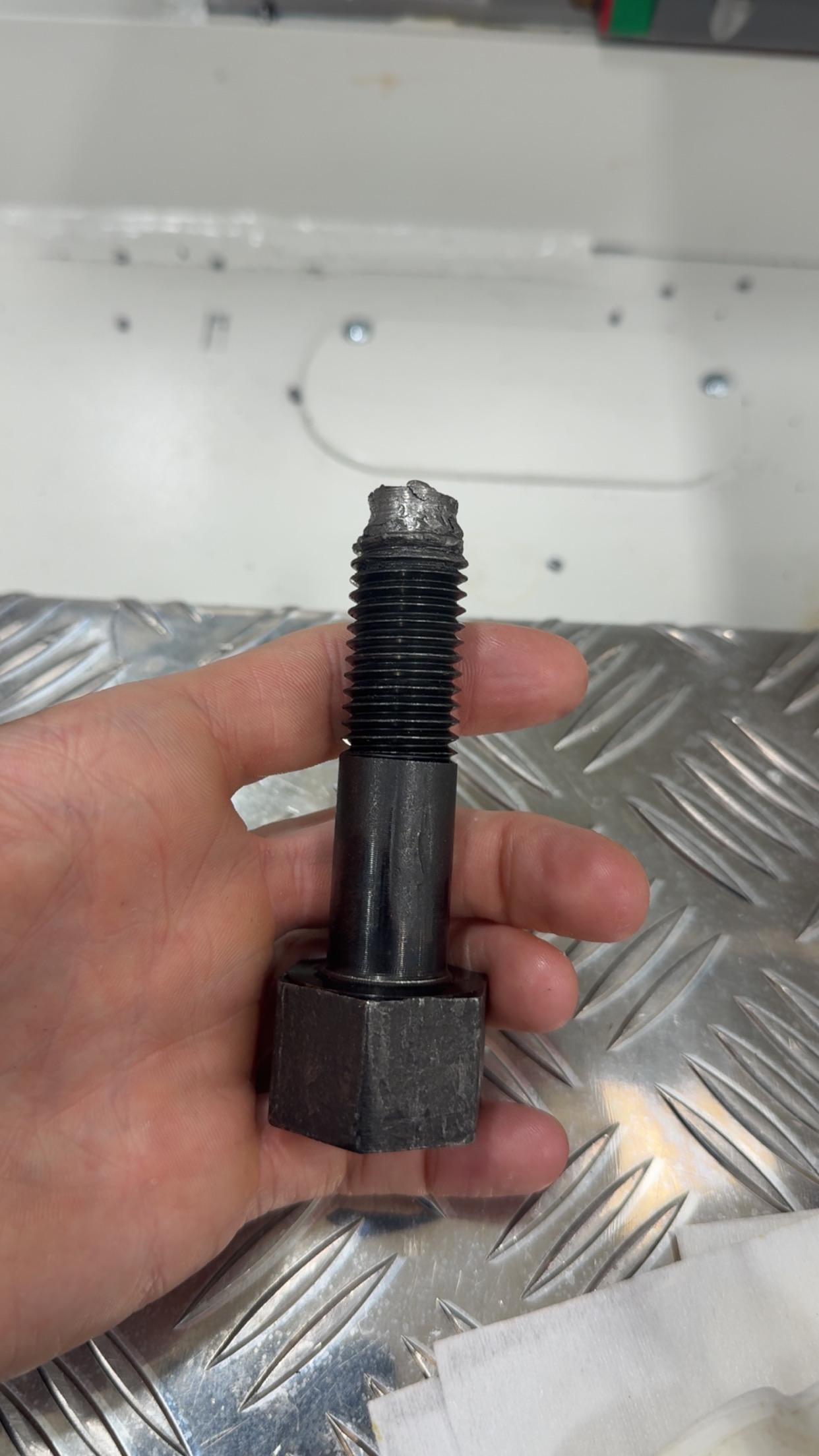
Got an issue issue with a valve gate that refuses to function, and I'm hoping someone might be able to point out something obvious we're missing.
A new customer just transferred a mold to our facility. 1+1 pick & place 2k mold with 4 hydraulically actuated valve gates. Gate 1 controls the hard shot. Gates 2 & 4 form a rim during the 2nd shot, and gate 3 forms the "boot" during the 2nd shot. They were running the mold right up to the point of transfer. Their press has integrated controls for the gates, and they run them at 500-600 psi. Every gate is its own hydraulic circuit - nothing else on them.
We don't have the integrated controls they do, so we rigged up two core pull units to control the gates. We also didn't have enough hoses with the style of fittings the mold came with, so we switched everything over from their 1/8" fittings to our 1/4".
Gates 1, 2, and 4 work fine. Gate 3 doesn't want to open. It usually opens the first 2-3 times after being hooked up, then stops afterwards. We've taken the mold and cylinder apart to check it out. We cleaned everything, checked the seals, and didn't find any points where it's binding. We replaced the seals on the cylinder just in case but it didn't help. We can actuate the pin by hand without issue, as well as with air at 100 psi. But when we hook up the hydraulics the issue returns. We tried putting bleeder valves in line to get out any air that might be in the system but that didn't help, either. Curiously, the valve works at lower pressures, until about 210 psi, after which the issue starts. That's with us testing the valve in isolation, with no resin in the system.
Incoe manufactured the system and have been helping us troubleshoot it, but so far to no avail. They're coming out tomorrow to see it and loan us one of their controllers (obviously hoping we'll buy it) if it helps. But any thoughts on what sort of issue would cause this, or possible fixes?
EDIT
Incoe sales rep came out and was stumped as well. Their technician has not been out. But after discussing it with our customer last week we agreed that if it works at 200 PSI (and it does), then we should just keep doing that, regardless of what they did in house. So in that regard this is now "resolved", but from an academic standpoint I'm still curious why the higher pressure caused the system to fail, and why it happened for us but not our customer.