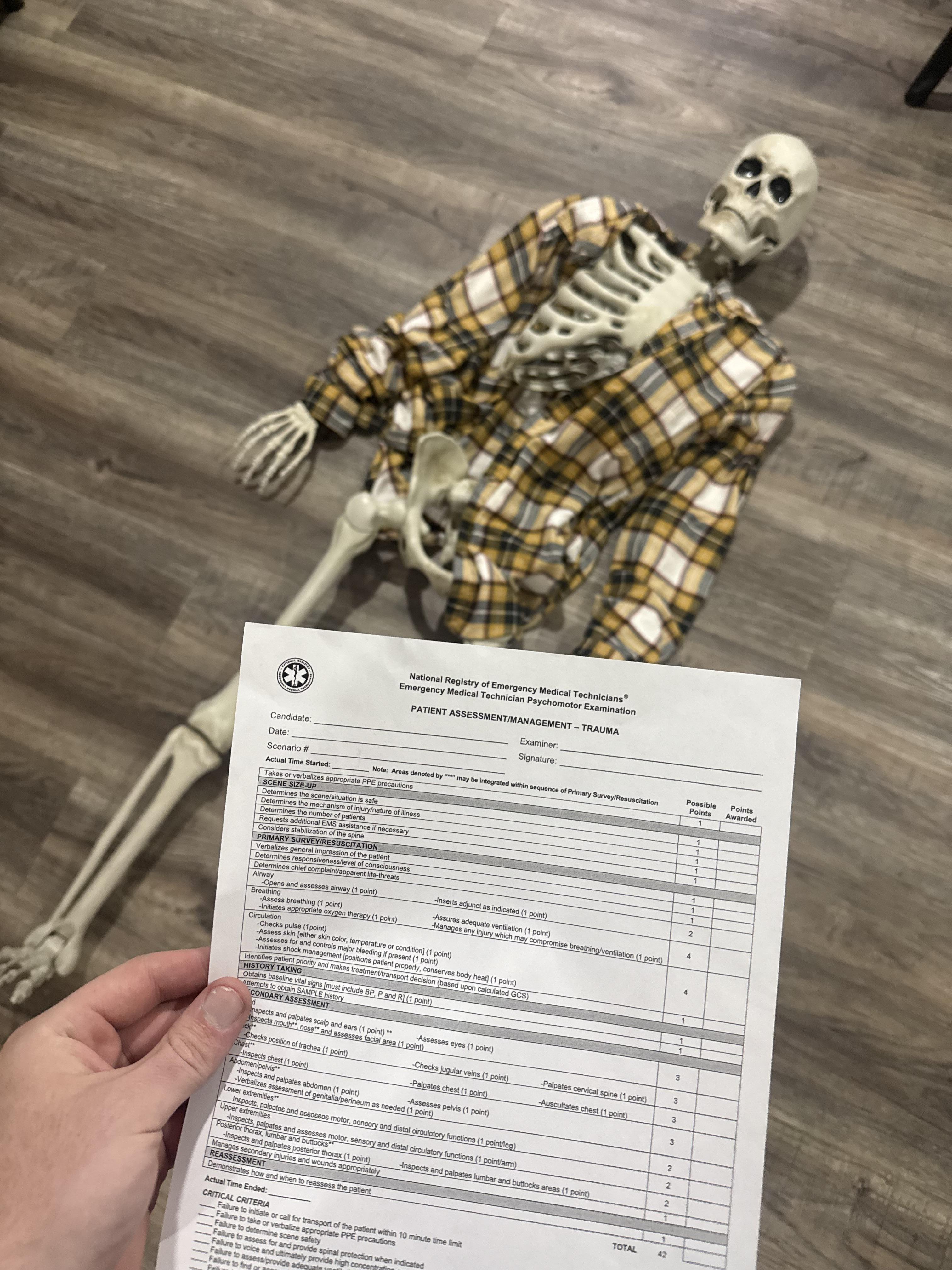
I’m a working EMT in paramedic school, and my handwritten drug cards were turning into a mess — half-finished doses, no pediatric line, and I kept mixing up look-alike concentrations.
I started running every card, homemade or otherwise, through the same three checks:
- Why we give it, in plain language — not just the class name.
- When we don’t: contraindications and the “hold up” notes, in the same spot on every card.
- Typical adult dose and route, labeled by indication when a drug has more than one use, plus a pediatric dose only when an established weight-based figure exists. If it isn’t established, I write “verify with local protocol,” not a number I guessed.
Two med-math moves I keep on a sticky note (study examples only — always use the concentration on the vial in your hand and your local protocol):
• Volume to draw = (dose you want) ÷ (concentration on the label).
Example: the vial is 10 mg in 2 mL, and you want 2 mg.
2 mg ÷ (10 mg / 2 mL) = 0.4 mL.
• Weight-based: mg needed = (mg/kg) × (patient weight in kg). Then convert that mg amount to mL with the formula above. Check the listed max on your protocol before you ever think about pushing it. Write the units down so they cancel; if the units don’t work out, the math isn’t done.
Ten mix-ups I keep seeing in class (memory hooks, not a protocol):
- Epi 1:10,000 vs 1:1,000 — more zeros means more dilute. 1:10,000 is 0.1 mg/mL; 1:1,000 is 1 mg/mL. Confirm the indication and the route before you confirm the number.
- D50 vs D10 (and D25) — know which concentration your system actually carries, especially for pediatric hypoglycemia. Many services have moved toward D10; don’t assume the bottle you memorized from a slide.
- Adenosine — first and repeat doses are easy to swap. It’s a rapid push with a flush, and a brief pause in the rhythm can be expected. Follow your ACLS/protocol card, not a rhyme you half-remember.
- Amiodarone in arrest vs a drip for a patient with a pulse — those are different pathways. Don’t borrow the arrest dose for a stable patient, or the other way around.
- Atropine — for symptomatic bradycardia in the right context, not a reflex for every slow heart rate. Know the situations where it doesn’t help.
- Naloxone — titrate when you can; some opioids last longer than the naloxone does. “Max dose and walk away” is a bad study habit.
- Nitroglycerin — the hold-ups matter as much as the dose: hypotension, recent ED/pulmonary hypertension meds, and right-sided / inferior MI caution. Check your protocol.
- Aspirin — usually chewed in the ACS pathway; still check contraindications instead of treating it as harmless because it’s familiar.
- Albuterol vs ipratropium — one is the common bronchodilator rescue; the other is the anticholinergic add-on. Don’t treat them as interchangeable.
- Fentanyl vs morphine — onset, duration, and stacking with other sedatives. Pick the one your protocol actually calls for and know why.
Non-negotiable: I do not treat study cards as a protocol. I check every number against the current textbook, the instructor, and local protocols / medical direction. Cards go stale. Systems differ.
This is a study aid, not medical advice, and it isn’t official NREMT material. Anything that sounds like an “exam hack” should still mean study smarter — not a cheat and not a leaked question. Nobody should treat a patient off a study card.
If you have a better field you always include (onset/duration, infusion rates, reconstitution), I’d like to hear it.