r/SpanishEmpire • u/elnovorealista2000 • 10h ago
Video The Conquest of New Spain – Bernal Díaz | Conquest Chronicle 2 of 2

9
Upvotes
r/SpanishEmpire • u/elnovorealista2000 • 10h ago
r/SpanishEmpire • u/elnovorealista2000 • 1d ago
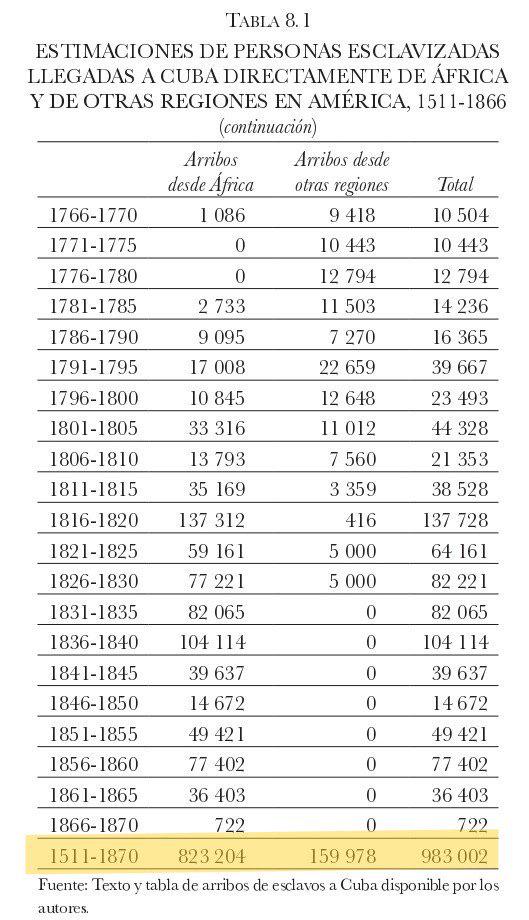
Bibliography:
- Eltis, D., & Felipe-González, J. (2026). The Rise and Fall of the Cuban Slave Trade: New Data, New Paradigms. In A. Borucki, D. Eltis, & D. Wheat (Eds.), De los galeones al altiplano: Las rutas del comercio esclavista en Hispanoamérica (Chapter 8), published by National Institute of Anthropology and History (INAH), Mexico.
Original edition:
- From the Galleons to the Highlands: Slave Trade Routes in the Spanish Americas, published by University of New Mexico Press in 2020.
r/SpanishEmpire • u/elnovorealista2000 • 1d ago
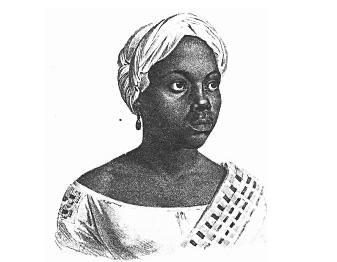
She was born near the Pacific-coast city of Guayaquil, then part of the Royal Audiencia of Quito, in the Kingdom of Peru. María Chiquinquirá was the daughter of an African woman named María Antonia, a slave belonging to the wealthy, powerful Cepeda family. Before María Chiquinquirá’s birth, María Antonia had become infected with leprosy. Expelled from the family house and abandoned, she died soon after María Chiquinquirá’s birth.
When she was five, the patriarch of the Cepeda family reclaimed María Chinquinquirá as a slave. She ended up in the home of one of the sons, Presbyter Cepeda, where she joined a large group of slaves who worked outside the house. In exchange for their autonomy they gave the master a certain daily wage. This custom, very common during the colonial period in Spanish America, was called jornal de esclavos (slaves’ daily wage), and in many cases it gave slaves the opportunity to be independent and accumulate some savings.
At some point, Díaz married a skilled tailor, José Espinosa, a freeborn pardo (black man) who lived in the same house. Together, they built a home and carried on a successful business. By the time their daughter María del Carmen was born, they were living “as free persons.” They lived as such until the presbyter suddenly reclaimed María del Carmen, now in her early teens, as a slave. By then, Díaz’s daughter was an educated young lady who had learned to read, write, and sew and the mother was determined to safeguard her daughter’s freedom. She begged the presbyter to desist in his demand or negotiate prices for their freedom. As a last resort, she decided to sue the powerful priest.
In May 1794, María Chinquinquirá acted as a free woman and brought various charges against the Cepeda family. The legal argument put forward by the attorney in charge of her case was that once the owners of María Antonia abandoned her, she had acquired compulsory manumission and was considered freeborn. The judges of the colonial city council of Guayaquil decided against María Chinquinquirá and her daughter. However, she appealed to the royal court in Quito. Unfortunately, the final outcome remains unknown. Still, the case set in motion an effort to articulate a narrative of her own and her daughter’s freedom based on witness testimony of those who knew them best.
Bibliography:
- Chaves, María Eugenia. Honor y libertad: Discursos y recursos en las estrategias de libertad de una mujer esclava. Gothenburg, Sweden: Department of History and Iberoamerican Institute, University of Gothenburg, 2001.
- Chaves, María Eugenia. “Slave Women’s Strategies for Freedom and the Late Spanish Colonial State.” In Hidden Histories of Gender and the State in Latin America, edited by Elizabeth Dore and Maxine Molyneux, pp. 108–126. Durham and London: Duke University Press, 2000.
- Hunefeldt, Christine. Paying the Price of Freedom: Family and Labor among Lima’s Slaves, 1800–1854. Berkeley: University of California Press, 1994.
- Johnson, Lyman, and Sonia Lipsett-Rivera. The Faces of Honor: Sex, Shame and Violence in Colonial Latin America. Albuquerque: New Mexico University Press, 1998.
- Maldonado, María Eugenia Chaves. "Díaz, María Chiquinquirá." Dictionary of Caribbean and Afro-Latin American Biography , edited by Ed. Franklin W. Knight. , edited by and Henry Louis Gates Jr.. . Oxford African American Studies Center, http://www.oxfordaasc.com/article/opr/t456/e648(accessed Thu Sep 05 12:40:53 EDT 2019).
- Townsend, Camilla. “‘Half my body free, the other half enslaved’: The Politics of the Slaves of Guayaquil at the End of the Colonial Era.” Colonial Latin American Review 1 (June 1998): 105–128
Author
María Eugenia Chaves Maldonado
Adapted by
James Almeida and Steven J. Niven
Contributing Institutions
- Hutchins Center for African & African American Research, Harvard University, Cambridge, MA.
- Oxford University Press (USA) African American Studies Center.
Published by
Enslaved: Peoples of the Historical Slave Trade (Enslaved.org)
r/SpanishEmpire • u/elnovorealista2000 • 1d ago
Seven years later, it would be named the "Pacific" by Magellan, after he traversed the strait that now bears his name during a Castilian expedition to the Moluccas.
Balboa named the gulf where they were located "San Miguel" (Saint Michael), as it was discovered on the feast day of Saint Michael the Archangel.
On September 29, he officially took possession of the "South Sea" for the Crown of Castile. Among those who witnessed the ceremony was Francisco Pizarro, who, years later, would lead the start of the conquest of Peru.
This discovery marked a significant milestone in the Spaniards' long search for a westward maritime route to Asia.
Source:
- The final segment of the 1963 Spanish film Los conquistadores del Pacífico ("The Conquistadors of the Pacific"—also known as Balboa), directed by José María Elorrieta and starring American actor Frank Latimore in the role of Balboa.
r/SpanishEmpire • u/elnovorealista2000 • 1d ago
r/SpanishEmpire • u/emperator_eggman • 2d ago

r/SpanishEmpire
•
u/elnovorealista2000
•
2d ago
r/SpanishEmpire • u/elnovorealista2000 • 2d ago

r/SpanishEmpire • u/elnovorealista2000 • 3d ago
r/SpanishEmpire • u/elnovorealista2000 • 5d ago

r/SpanishEmpire • u/elnovorealista2000 • 5d ago

r/SpanishEmpire • u/elnovorealista2000 • 5d ago

r/SpanishEmpire • u/Possible-Balance-932 • 5d ago
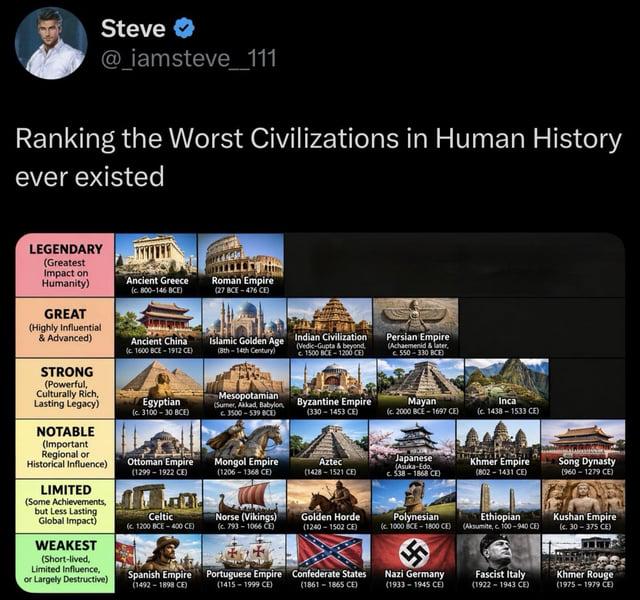
However, in my experience, that is indeed the prevailing perception outside of the *Hispanidad* (the Hispanic world).
The "Black Legend" has thoroughly poisoned the minds of people across the globe.
r/SpanishEmpire • u/elnovorealista2000 • 6d ago
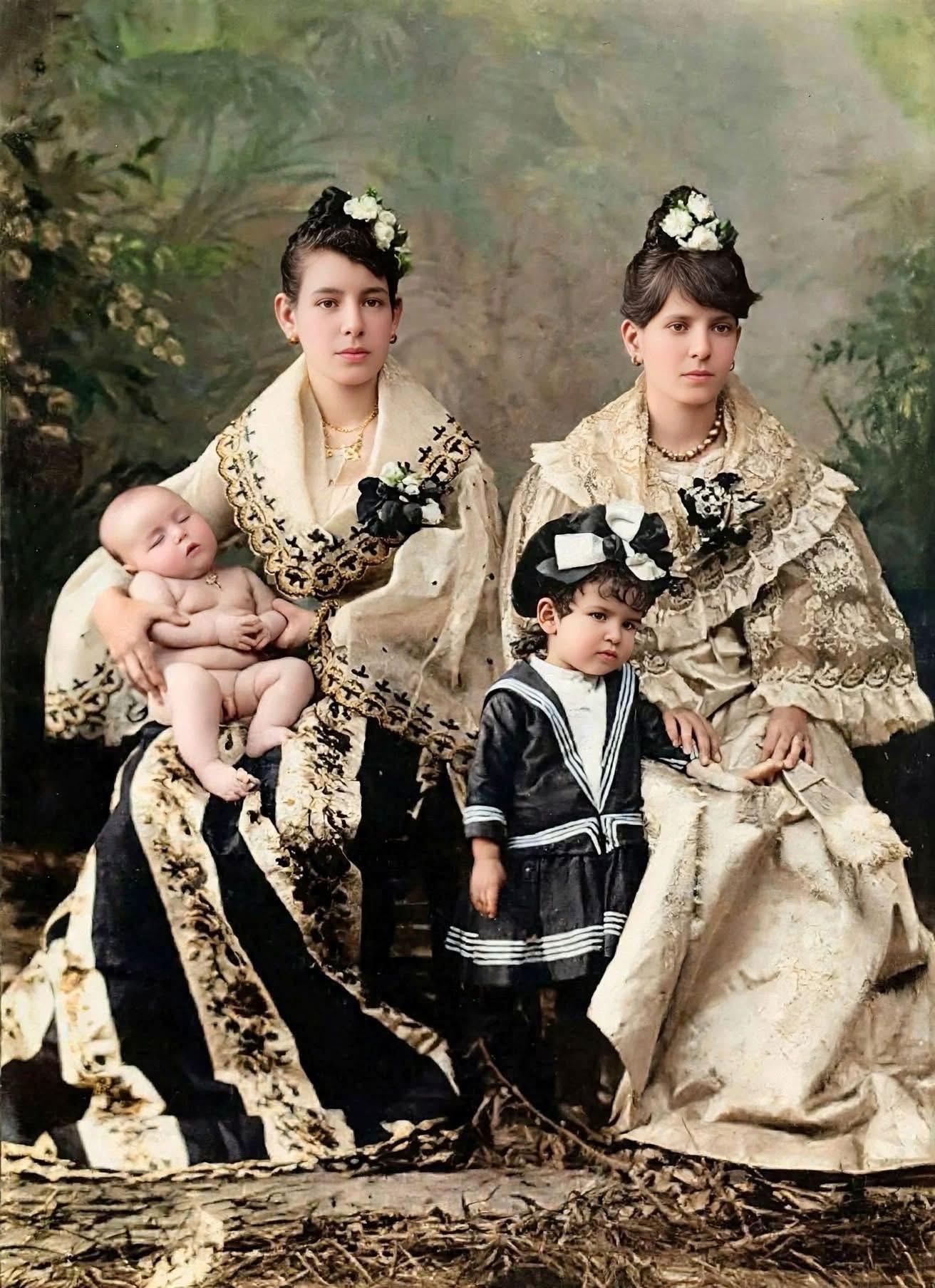
Key Details from the Image
• Attire: The women are wearing the traditional Filipino traje de mestiza (or Maria Clara gown), featuring elaborate pañuelo (fichu) and stiff pagoda sleeves made from native fabrics like piña or jusi.
• Children: The young toddler stands in a dark sailor-style outfit, while the infant is held unclothed, a common convention in certain 19th-century studio portraits.
• Photographer & Provenance: The photograph is attributed to Francisco van Kamp (or Van Kamp), a Dutch photographer who operated a prominent photo studio in Manila after taking over the practice of British photographer Albert Honiss.
r/SpanishEmpire • u/elnovorealista2000 • 7d ago

r/SpanishEmpire • u/elnovorealista2000 • 7d ago
r/SpanishEmpire • u/elnovorealista2000 • 8d ago

r/SpanishEmpire • u/elnovorealista2000 • 8d ago

Image: A historical engraving depicts a clash between Spanish conquistadors and Inca forces on the outskirts of the city of Cuzco (Prælium inter Hispanos & Indos commissum ad urbem Cuzco); it is taken from the work Americae pars sexta by Theodor de Bry (published around 1599).
This followed a series of clashes against Atahualpa’s army, during which Francisco Pizarro exploited pre-existing political divisions. Although numerous battles were fought between the Inca Empire and the Spanish-led coalition—which consisted primarily of native soldiers—it was the capture of Cuzco that led directly to the collapse of the Inca civilization and marked the end of the first phase of the Spanish conquest of the Tahuantinsuyo.
At Jaquijahuana, near the city of Cuzco, the Spaniards reached an agreement to install Manco Inca—a 20-year-old son of the Sapa Inca Huayna Cápac, arriving from Charcas—as the sovereign. The young prince first encountered the Spaniards in the hills of Vilcaconga, about thirty kilometers from Cuzco. He was accompanied only by a handful of loyal nobles who had managed to escape the bloodbath that Atahualpa’s forces had inflicted upon the Cuzco nobility during the Inca civil war; these nobles now offered their support to Pizarro.
Manco Inca was of particular interest to Pizarro and his men. As a potential legitimate ruler, he could rally all the subjects of the empire to his cause. He also represented the faction loyal to Huáscar and served as a natural rallying point for those Incas who opposed Quizquiz—who, at that time, remained the only potential enemy capable of challenging control over Cuzco. The young prince was thus reassured regarding the Spaniards' intentions toward him, and, with the promise of a future investiture, he set out to facilitate their advance toward the capital—which was then occupied by the forces of Quizquiz. In any event, the fugitive prince collaborated with the foreigners, and it was only because Manco Inca granted his permission that the Spaniards were able to enter Cuzco.
Manco Inca’s alignment with the Spaniards brought additional troops to Pizarro’s side. The Auqui (Inca Prince) had reported that Quizquiz might set fire to Cuzco; consequently, Pizarro dispatched Hernando de Soto, accompanied by 40 horsemen and Indian auxiliaries, to reconnoiter the area. Upon reaching Cuzco, he observed plumes of smoke rising from the rooftops. Seeing a multitude of enemies, he and his men chose to engage them, launching a fierce, instinctive charge that swept the accompanying Indian auxiliaries into the assault.
Their operation risked turning into a disaster because they had encountered Quizquiz’s elite troops. The mere mention of his name struck terror into the native allies fighting alongside the Spaniards; these allies huddled fearfully against the Spanish cavalry, hindering the horsemen’s movements just as Quizquiz launched his attack—an assault that left the Spaniards among the first to be wounded. Faced with this disadvantage, the Spaniards decided to retreat. Curiously, they were not pursued; they were allowed to escape. Why? Quizquiz, aware of the superiority of Spanish horses in open terrain and fearing a counterattack, chose to take up positions and let them flee—thereby missing the chance to secure a decisive victory. Fearing that Pizarro’s forces might defeat him, Quizquiz withdrew his men into the mountainous regions, where the rugged terrain would neutralize Hernando de Soto’s cavalry. He deemed street-by-street fighting indefensible and had no desire to be trapped in a siege with a predictable outcome.
Consequently, facing no obstacles, Pizarro entered Cuzco alongside Manco Inca, greeted by the cheers of the local population, who celebrated the defeat of Atahualpa—the usurper of the throne. The capture of the city proved simple; Pizarro encountered no resistance, as the supporters of Atahualpa had abandoned the territory, exhausted by a long campaign in a land far from their own. Furthermore, because Quizquiz had decimated the population of the imperial city, the surviving members of the panacas (royal lineages) came to view the Spaniards as “ambassadors” of the divine Wiracocha and as the saviors of the Tahuantinsuyo. Pizarro arrived with his men at the main plaza and, after inspecting its buildings, sent some of his foot soldiers to explore the Inca capital; he then took up residence in the palace of Casana, which had belonged to the Inca Huayna Cápac. Meanwhile, Diego de Almagro established himself in another palace located next to the first, and Gonzalo Pizarro took possession of the palace of Cora-Cora, a residence built by Túpac Yupanqui.
However, the initial excitement soon turned to discontent as the conquistadors violently breached the Incas' sacred monuments and sites, seizing a bounty that, according to Pizarro’s scribe, Francisco de Jerez, amounted to "580,000 pesos of gold and 215,000 marcos of silver." This caused the inhabitants of Cuzco to alter their perception of the Spaniards.
The following day, Pizarro installed Manco Inca as Sapa Inca, while simultaneously making him a vassal of the Spanish Crown. The Spaniards dubbed him Manco Cápac II, having learned that the first Sapa Inca was also named Manco (Manco Cápac). At Christmas—mistaking the Spaniards' gestures for genuine flattery—Manco Inca, now invested with the mascapaycha (the imperial fringe), naively accepted the "requirement" (requerimiento) protocol demanded by the King of Spain, thereby acknowledging the monarch as the supreme sovereign over his domains. He also ordered his army—some 5,000 soldiers under the command of his brother, Paullu Inca—to depart the city and accompany Hernando de Soto’s expeditions against Quizquiz.
Once settled in the capital of the Inca Empire, the Spaniards began their customary practices of transforming the conquered territories. Nevertheless, the situation demanded great caution; the territory was vast and heavily populated. For the most part, it remained unexplored and far from submissive, yet the structures of the empire dissolved rapidly. Two years later, Quizquiz was killed by his own followers; subsequently, Manco Inca fled Cuzco and attempted to reconquer the city with some 100,000 Incas, but ultimately failed after a ten-month siege.
r/SpanishEmpire • u/elnovorealista2000 • 9d ago

r/SpanishEmpire • u/Possible-Balance-932 • 10d ago

Following the development of a vaccine in 1796, King Charles IV of Spain—faced with a major smallpox epidemic across his American colonies—decided that the Spanish Crown would provide the vaccine to the colonial population free of charge.
In November 1803, an expedition set sail from A Coruña, Spain. After passing through the Canary Islands, Puerto Rico, and Venezuela, the group split into two teams. One team headed toward the South American continent (covering regions such as Colombia, Ecuador, and Peru), while the main contingent—led by Francisco Javier de Balmis—traveled through Mexico, crossed the Pacific Ocean, and delivered the vaccine to the Philippines, Macau, and Guangzhou, China.
Through this expedition, colonial residents and indigenous peoples received smallpox vaccinations at no cost. Furthermore, the expedition did more than just administer vaccines; it established local vaccination committees and trained medical personnel, leaving behind a sustainable public health infrastructure.
This initiative is recognized as the first global health campaign to overcome the limitations of medical technology at the time.
r/SpanishEmpire • u/Over-Willingness-933 • 10d ago

They arrived after killing the emperor. The Spanish were entranced by the beautiful city and used the city to build their churches.
r/SpanishEmpire • u/elnovorealista2000 • 12d ago
It is a common trope in popular historiography to blame the Bourbon Reforms for the collapse of the Catholic Monarchy (Spanish Empire) and to portray the Bourbon administration as a purely extractive apparatus. However, historical economic data from the 18th and early 19th centuries reveal a radically different reality. Charles III and his successors—with the notable exception of the disastrous Ferdinand VII—transformed Spanish America into one of the most prosperous and dynamic regions on the planet. Far from a narrative of decline, the Age of Enlightenment brought an unprecedented institutional, commercial, and manufacturing boom to the American continent.
Modern research in quantitative economic history reveals that, by around 1800, the GDP per capita of the Viceroyalty of New Spain or the Viceroyalty of Peru was higher than that of the United States and rivaled that of several Western European powers. Driven by Enlightenment-inspired policies, a proto-industrial network known as obrajes flourished. These textile workshops—located in cities such as Puebla, Querétaro, and Quito, as well as in what is now northern Argentina—clothed millions of people, producing goods that matched the quality of European manufactures and sustained a remarkably robust continental internal market. The major American capitals were not peripheral colonies, but rather scientific and cultural metropolises; they boasted some of the world’s most advanced shipyards, state-of-the-art mints, and schools of mining that left even Alexander von Humboldt in awe during his expedition. Furthermore, the Real de a Ocho (the Spanish silver dollar)—minted using silver processed in the Americas—became the world’s first global reserve currency, facilitating international trade from North America all the way to the Chinese Empire. The fundamental problem with the Bourbon Reforms was not that they impoverished the Americas; rather, the administration collected revenue so efficiently that it created intense political friction with local Criollo elites, who coveted total control over that immense wealth. The true catastrophe did not stem from the policies of Charles III or Charles IV, but from the Napoleonic invasion of 1808—which decapitated the state—and the subsequent, inept reign of Ferdinand VII, whose clumsiness destroyed any chance for an autonomous or federal transition within the empire. This triggered fifteen years of bloody civil war, which devastated the countryside, flooded mines, and completely severed traditional trade routes. As the continental bloc fragmented, the new republics—stifled by debts incurred from British banks to finance the wars—opened their markets on highly unequal terms. The massive influx of cheap English industrial goods ultimately destroyed the thriving native textile and artisanal sectors. Hispanic America did not emerge into independence from a state of destitution, but rather from the pinnacle of the global wealth of its era; its subsequent stagnation was the direct result of the political 'balkanization' and financial dependency that followed emancipation.
The major economic reforms of Charles III were rooted in Enlightenment pragmatism; they sought to liberalize trade, modernize production techniques, and dismantle antiquated monopolies in order to revitalize both the Iberian Peninsula and the American viceroyalties. The objective was not to stifle local economies, but rather to modernize colonial structures so that they could compete effectively against the British Empire.
The most revolutionary and impactful measure was the enactment of the 1778 Regulation on Free Trade (Reglamento de Libre Comercio). This law put an end to the rigid and obsolete monopoly that the ports of Cádiz and Seville had long held over trade with the Americas. From that point forward, thirteen Spanish ports and more than twenty American ports were authorized to trade directly with one another. This opening drastically reduced smuggling, lowered the cost of goods for consumers, and boosted both tax revenues and maritime traffic to levels never before seen in the empire—effectively debunking the myth that the Spanish prohibited the colonies from trading among themselves.
In the fiscal and productive spheres, Charles III transformed mining in the Americas by applying the latest scientific advancements of the era. The establishment of the Royal Mining Corps (Real Cuerpo de Minería) and the Mining Tribunal (Tribunal de Minería)—in both Mexico and Lima—facilitated the financing of mine modernization and the recruitment of European engineers to optimize silver extraction. To sustain this technical and commercial growth, the monarch promoted the "Economic Societies of Friends of the Country" (Sociedades Económicas de Amigos del País) and undertook a profound reform of the American mints, standardizing the purity of the Real de a Ocho (the "piece of eight") and cementing its status as the most reliable currency in global trade. Finally, his administration pursued an aggressive policy of local development and industrialization through the creation of "Royal Factories" (Reales Fábricas) and by providing protection for textile workshops (obrajes) and shipyards throughout the Americas. Coastal cities such as Havana and Guayaquil received significant investment for large-scale shipbuilding, utilizing local timber to construct some of the most robust ships of the line of that era. By reducing tariffs on raw materials and improving internal communication routes, the Bourbon reforms of this period succeeded in forging an interconnected, self-sufficient continental market that experienced its greatest era of financial prosperity.
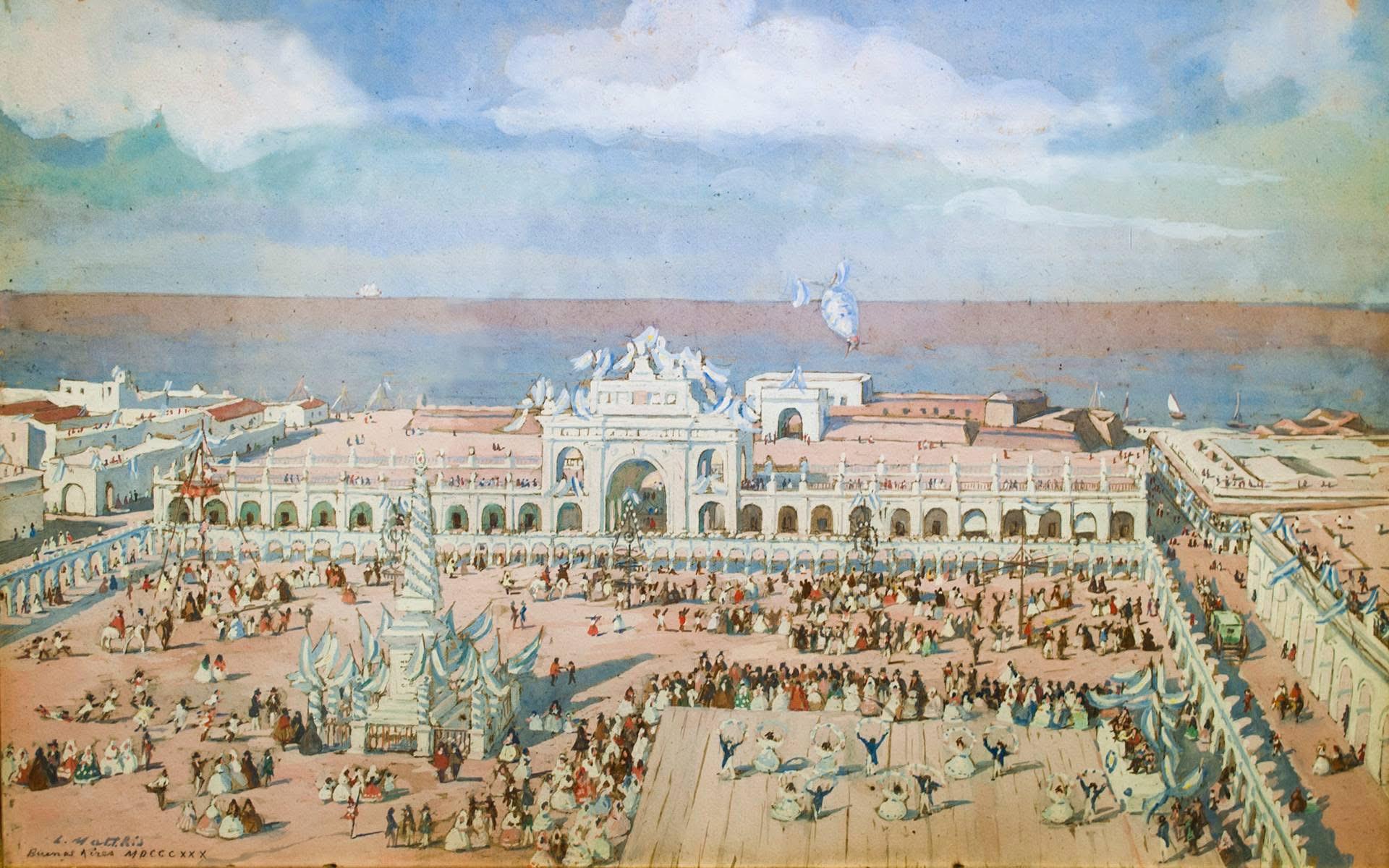
The Viceroyalty of the Río de la Plata and its capital, Buenos Aires, were undoubtedly the greatest beneficiaries of the economic reforms of Charles III, transforming in record time from a marginal, neglected corner of the empire into one of the wealthiest regions in the South Atlantic. Prior to these measures, the Spanish Crown forced Buenos Aires to obtain its supplies through an absurdly long overland route that crossed the Isthmus of Panama and descended through Upper Peru; this inflated the cost of legitimate goods and turned the Atlantic port into a hotbed of contraband trade with the British and Portuguese. A major turning point occurred in 1776, when Charles III made the bold political and economic decision to establish the Viceroyalty of the Río de la Plata, elevating Buenos Aires to the status of a viceregal capital. This move was immediately complemented by the 1778 Regulation on Free Trade, which authorized the port of Buenos Aires to engage in direct commerce with Spain and the rest of the Americas. By becoming legally integrated into global maritime routes, the city experienced an unprecedented demographic and commercial explosion, attracting a thriving class of merchants and enlightened bureaucrats. The brilliance of Charles III’s reform in this region lay in connecting the Atlantic port to the rich silver mines of Potosí, which were incorporated into the new viceroyalty. All the silver from Upper Peru—which had previously flowed toward Lima—began to be exported legally through the port of Buenos Aires, resulting in a massive influx of capital. At the same time, the reforms boosted the real economy of the interior provinces: the coastal region and the Pampas developed a thriving livestock industry—exporting hides and tasajo (dried, salted beef)—while the Argentine interior (including Mendoza, Córdoba, and Tucumán) flourished by supplying wine, textiles, carts, and mules to the burgeoning commercial axis connecting Potosí and Buenos Aires. Thanks to the economic vision of Charles III, Buenos Aires was transformed from a humble village of smugglers into a sophisticated commercial metropolis, featuring efficient customs operations, its own Consulado de Comercio (merchant guild/trade tribunal), and a level of wealth that laid the foundation for its future regional hegemony.
r/SpanishEmpire • u/elnovorealista2000 • 14d ago

Many of us are, in truth, unaware of just how legendary the battle at Lepanto was—a clash between the premier vessels of Christendom and the Dar al-Islam. La Real, the flagship of the Catholic Monarchy (the Spanish Empire), was engineered to be the most lethal ship of its kind. The galleys of Christendom were equipped with heavy, armed platforms, carrying tercios de mar—marines clad in armor and armed with arquebuses—to engage the Ottoman Janissaries.
What makes this battle so epic from a military standpoint is that it was not merely a duel between cannons. Although the galleass—a vessel type financed by Spain and built by the Republic of Venice, featuring broadside cannons—succeeded in destroying dozens of Ottoman galleys, the primary tactic remained the high-speed ramming of enemy ships. This would trigger a boarding action, descending into bloody, close-quarters carnage as each side fought to seize and destroy the opposing vessel—reminiscent of the ancient conflicts between Rome and Carthage.
Imagine over 500 ships advancing head-on in a perfect line, spanning kilometers across the sea. The bow-mounted cannons of the galleys could only be fired once before impact, as they were fixed in place and the resulting smoke would blind the gunners. Following this single, point-blank artillery volley, the galleys would ram one another at full speed. The sound of iron-clad rams shattering the timber of enemy ships—snapping hundreds of oars simultaneously—must have been deafening. The purpose of the collision was not necessarily to sink the enemy vessel; rather, the galley’s ram was designed to embed itself into the opposing ship, effectively serving as a boarding bridge. As the timbers creaked and locked together, boarding nets were cast, and the galley’s deck transformed into a trench.
Once the collision occurred, the scene descended into a brutal slaughter. The Spaniards, utilizing their arquebusiers at an absurdly close range, swept the decks of the Turkish galleys, while the elite of the Ottoman Empire unleashed a volley of arrows that darkened the sky. Following these initial projectiles, the conflict devolved into savage hand-to-hand combat; men scrambled over the bodies of the fallen to press forward, all the while accompanied by the cries of the rowers trapped below.
Miguel de Cervantes—who fought at Lepanto aboard the galley Marquesa, where he was struck by three arquebus shots, one of which rendered his left hand useless—would later describe the experience in Don Quixote as the most horrific and fascinating spectacle in the world. He remarked on the astonishing sight of soldiers—fully aware that a single misstep meant drowning in the sea, weighed down by their heavy armor—leaping onto the enemy’s prow with a total disregard for their own lives, driven solely by honor and the fervor of battle.
As if this were not epic enough—a pinnacle of the masculine martial ethos—the flagship of Christendom, La Real, and the flagship of the Dar al-Islam, Sultana, eventually clashed. La Real, the Christian flagship commanded by Don Juan of Austria, was a colossal galley painted in red and gold, adorned with intricate carvings, and carrying the elite of the Spanish Tercios. Opposing it was Sultana, the Ottoman flagship commanded by Ali Pasha; it was equally immense, distinguished by its sacred green banners—emblazoned with the name of Allah in gold thread—and defended by the Empire’s finest Janissaries.