r/SpanishEmpire • • 6h ago

Article The True Reasons Behind the Cholula Massacre

Post image
20 Upvotes

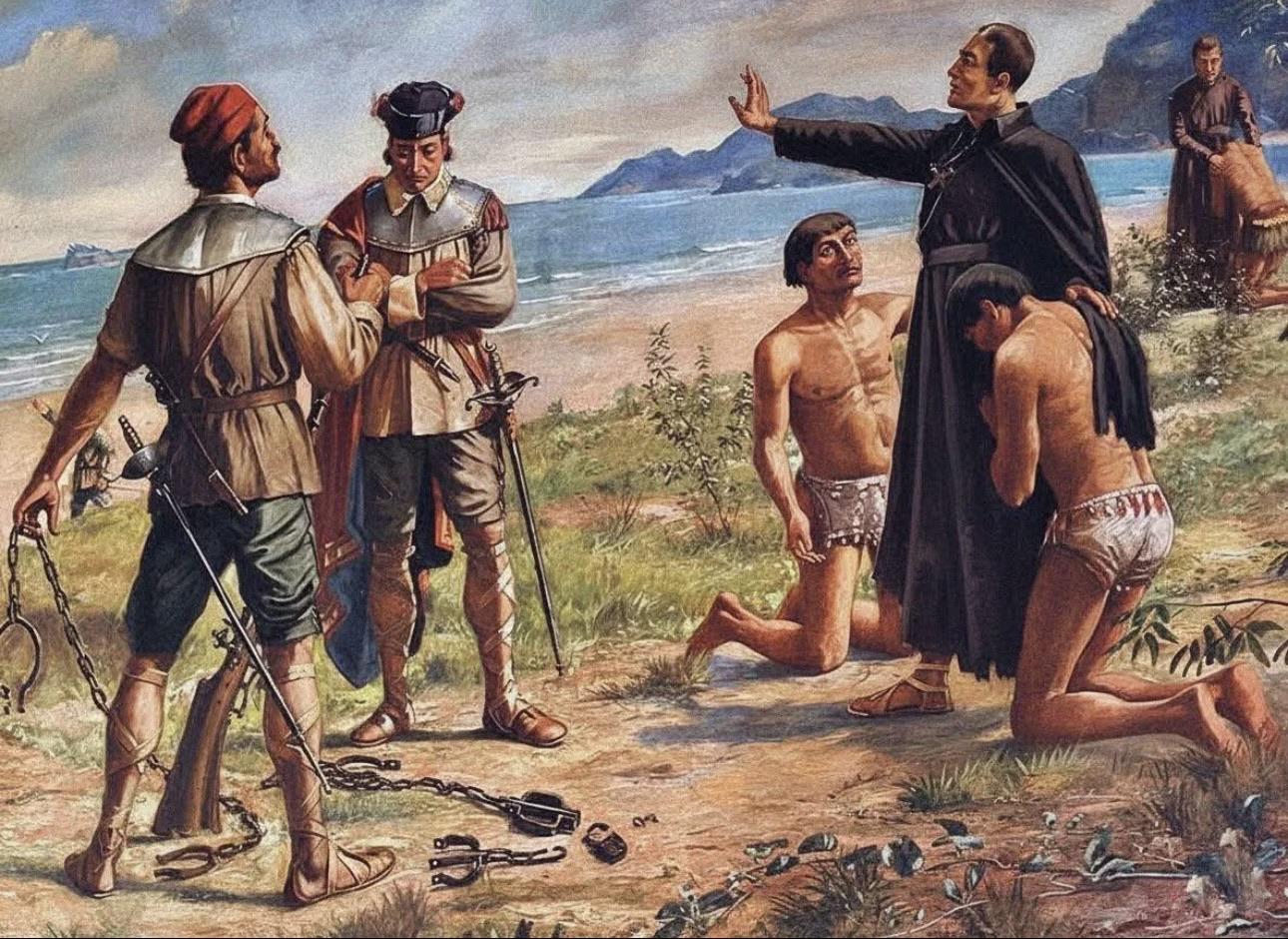
Image: La caída de Tenochtitlán by José Luis Pescador

The Cholula massacre of 1519 was a surprise attack in which the Spanish and their Tlaxcaltecan allies surrounded and slaughtered the leaders and inhabitants of the city of Cholula, despite having been welcomed there in peace.

Although Spanish chronicles justified the act by alleging a supposed Mexica ambush—a plot supposedly uncovered by Malinche—this is highly unlikely; had such an ambush existed, the confrontation would have unfolded as an open battle rather than a massacre of unarmed people.

A more compelling explanation, supported by the Florentine Codex and modern historiography, suggests that the Tlaxcaltecans—wary of the contacts between Cortés and Moctezuma—steered the Spaniards toward Cholula. This served a dual purpose: it tested the Spaniards' loyalty (following signs that they had become overly friendly with the Mexica) and allowed the Tlaxcaltecans to punish a city that had recently betrayed them to form an alliance with Tenochtitlan.

Further evidence for this is that Cholula did not lie on the most direct route to Tenochtitlan; it represented an unnecessary detour—unless one accounts for the Tlaxcaltecans' desire for revenge.

Today, scholars such as Matthew Restall, Ross Hassig, Federico Navarrete, and Isabel Bueno Bravo have dismantled the traditional myth, demonstrating that the attack was driven primarily by Mesoamerican political rivalries and Tlaxcala’s strategic interest in striking a key ally of Moctezuma. In fact, as early as the 16th century, there were those who understood this underlying context after investigating the events—such as the judge (oidor) Alonso de Zorita.

To conclude, I quote from the Florentine Codex:

Original:

«Los tlaxcaltecas y cholultecas no eran amigos, tenían entre sí discordia, y como los querían mal, dijeron mal de ellos a los españoles para que los maltratasen; dijéronles que eran sus enemigos y amigos de los mexicanos y valientes como ellos» (Sahagún, 2005, tomo IV, p. 37).

Translation:

"The Tlaxcalans and the Cholultecans were not friends; there was discord between them. Because they bore them ill will, they spoke poorly of them to the Spaniards so that the latter would mistreat them; they told the Spaniards that they were their enemies, allies of the Mexica, and just as valiant as they were" (Sahagún, 2005, Vol. IV, p. 37).

Sources:

- Alva Ixtlilxóchitl, F. de (1985). Obras históricas (Vol. II). Universidad Nacional Autónoma de México.

- Bueno Bravo, I. (2012). La guerra en el Imperio azteca: Expansión, ideología y arte. Editorial Complutense. (Note: check whether your copy is from Editorial Complutense or AACHE Ediciones).

- Clavijero, F. J. (2006). Historia antigua de México (Vol. III). Porrúa.

- Hassig, R. (2006). Mexico and the Spanish Conquest (2nd ed.). University of Oklahoma Press.

- Navarrete, F. (2019). ¿Quién conquistó México?. Debate.

- Restall, M. (2019). Cuando Moctezuma conoció a Cortés. Taurus.

- Sahagún, B. de (2005). Historia general de las cosas de Nueva España (Vol. IV). Porrúa.

- Zorita, A. de (2011). Relación de la Nueva España (Vol. II). Consejo Nacional para la Cultura y las Artes.


r/SpanishEmpire • • 5h ago

Video How Spain controlled half of Italy for 170 years (without conquering it)

Thumbnail
youtu.be
11 Upvotes

r/SpanishEmpire • • 5h ago

Article A colonial illustration, attributed to Felipe Guamán Poma de Ayala and taken from the Galvin Manuscript, depicts a Sapa Inca holding two crowned columns atop the Cerro Rico of Potosí, accompanied by the Latin inscription "Ego fulcio columnas eius"

Post image
10 Upvotes

What does it means?
The illustration shows the Sapa Inca (“el ynga”) embracing and supporting the crowned columns of the Catholic monarchy; the image suggests that Spain’s global power does not stand on its own, but rather relies on the legitimacy, territory, and mediation of the Andean elites.

The Latin phrase (“Ego fulcio columnas eius”)—taken from Psalm 75:3 of the Vulgate—translates to “I uphold its columns.” It serves as a direct political message to the Spanish Crown: without Andean silver and labor, the empire could not remain standing.

Source:

- Folio 142r (Book 4 of the history) of the Galvin Manuscript, originally titled Historia del origen y genealogía real de los reyes Incas del Perú (1590), published in 1946 in Madrid by the Consejo Superior de Investigaciones Científicas (Instituto Santo Toribio de Mogrovejo), with an introduction and notes by Constantino Bayle.


r/SpanishEmpire • • 14h ago

Image Spanish troops under the siege of Filipino revolutionaries at the town of Baler between July 1898 and June 1899 during the Philippine Revolution. Artwork by José Ferre-Clauzel.

Post image
51 Upvotes

r/SpanishEmpire • • 1d ago

Video The Conquest of New Spain – Bernal Díaz | Conquest Chronicle 2 of 2

Thumbnail
youtu.be
24 Upvotes

r/SpanishEmpire • • 1d ago

Video The Conquest of New Spain – Bernal Díaz | Conquest Chronicle 1 of 2

Thumbnail
youtu.be
10 Upvotes

r/SpanishEmpire • • 2d ago

Video On September 29, 1513, the Spanish conquistador Vasco Núñez de Balboa and his men became the first Europeans to sight the "Mar del Sur" (South Sea) —a name given by Balboa because it lay to the south of the isthmus of what is now Panama.

108 Upvotes

Seven years later, it would be named the "Pacific" by Magellan, after he traversed the strait that now bears his name during a Castilian expedition to the Moluccas.

Balboa named the gulf where they were located "San Miguel" (Saint Michael), as it was discovered on the feast day of Saint Michael the Archangel.

On September 29, he officially took possession of the "South Sea" for the Crown of Castile. Among those who witnessed the ceremony was Francisco Pizarro, who, years later, would lead the start of the conquest of Peru.

This discovery marked a significant milestone in the Spaniards' long search for a westward maritime route to Asia.

Source:

- The final segment of the 1963 Spanish film Los conquistadores del Pacífico ("The Conquistadors of the Pacific"—also known as Balboa), directed by José María Elorrieta and starring American actor Frank Latimore in the role of Balboa.


r/SpanishEmpire • • 2d ago

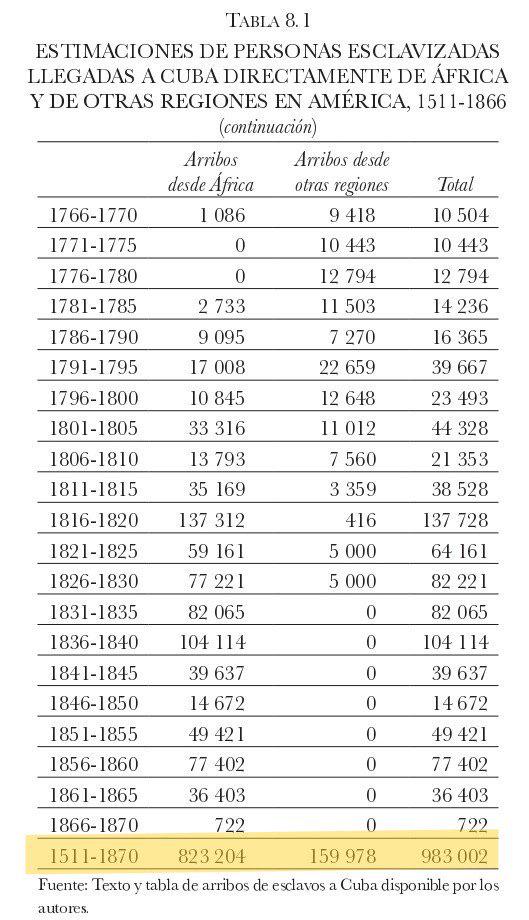
Image A chronological table of the number of enslaved Africans who arrived in Cuba reveals a total of 983,002 women, men, girls, and boys—792,775 of whom arrived during the 19th century. This is more than double the number that arrived in the United States throughout its entire history.

Post image
52 Upvotes

Bibliography:

- Eltis, D., & Felipe-González, J. (2026). The Rise and Fall of the Cuban Slave Trade: New Data, New Paradigms. In A. Borucki, D. Eltis, & D. Wheat (Eds.), De los galeones al altiplano: Las rutas del comercio esclavista en Hispanoamérica (Chapter 8), published by National Institute of Anthropology and History (INAH), Mexico.

Original edition:

- From the Galleons to the Highlands: Slave Trade Routes in the Spanish Americas, published by University of New Mexico Press in 2020.


r/SpanishEmpire • • 2d ago

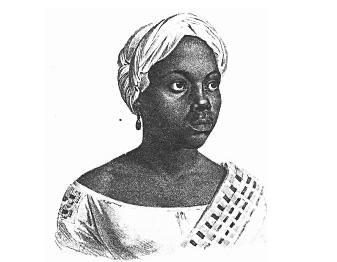
Article María Chiquinquirá Díaz was an enslaved woman and litigant for manumission in late colonial Guayaquil (in today’s Ecuador).

Post image
28 Upvotes

She was born near the Pacific-coast city of Guayaquil, then part of the Royal Audiencia of Quito, in the Kingdom of Peru. María Chiquinquirá was the daughter of an African woman named María Antonia, a slave belonging to the wealthy, powerful Cepeda family. Before María Chiquinquirá’s birth, María Antonia had become infected with leprosy. Expelled from the family house and abandoned, she died soon after María Chiquinquirá’s birth.

When she was five, the patriarch of the Cepeda family reclaimed María Chinquinquirá as a slave. She ended up in the home of one of the sons, Presbyter Cepeda, where she joined a large group of slaves who worked outside the house. In exchange for their autonomy they gave the master a certain daily wage. This custom, very common during the colonial period in Spanish America, was called jornal de esclavos (slaves’ daily wage), and in many cases it gave slaves the opportunity to be independent and accumulate some savings.

At some point, Díaz married a skilled tailor, José Espinosa, a freeborn pardo (black man) who lived in the same house. Together, they built a home and carried on a successful business. By the time their daughter María del Carmen was born, they were living “as free persons.” They lived as such until the presbyter suddenly reclaimed María del Carmen, now in her early teens, as a slave. By then, Díaz’s daughter was an educated young lady who had learned to read, write, and sew and the mother was determined to safeguard her daughter’s freedom. She begged the presbyter to desist in his demand or negotiate prices for their freedom. As a last resort, she decided to sue the powerful priest.

In May 1794, María Chinquinquirá acted as a free woman and brought various charges against the Cepeda family. The legal argument put forward by the attorney in charge of her case was that once the owners of María Antonia abandoned her, she had acquired compulsory manumission and was considered freeborn. The judges of the colonial city council of Guayaquil decided against María Chinquinquirá and her daughter. However, she appealed to the royal court in Quito. Unfortunately, the final outcome remains unknown. Still, the case set in motion an effort to articulate a narrative of her own and her daughter’s freedom based on witness testimony of those who knew them best.

View complete story (pdf)

Bibliography:

- Chaves, María Eugenia. Honor y libertad: Discursos y recursos en las estrategias de libertad de una mujer esclava. Gothenburg, Sweden: Department of History and Iberoamerican Institute, University of Gothenburg, 2001.

- Chaves, María Eugenia. “Slave Women’s Strategies for Freedom and the Late Spanish Colonial State.” In Hidden Histories of Gender and the State in Latin America, edited by Elizabeth Dore and Maxine Molyneux, pp. 108–126. Durham and London: Duke University Press, 2000.

- Hunefeldt, Christine. Paying the Price of Freedom: Family and Labor among Lima’s Slaves, 1800–1854. Berkeley: University of California Press, 1994.

- Johnson, Lyman, and Sonia Lipsett-Rivera. The Faces of Honor: Sex, Shame and Violence in Colonial Latin America. Albuquerque: New Mexico University Press, 1998.

- Maldonado, María Eugenia Chaves. "Díaz, María Chiquinquirá." Dictionary of Caribbean and Afro-Latin American Biography , edited by Ed. Franklin W. Knight. , edited by and Henry Louis Gates Jr.. . Oxford African American Studies Center, http://www.oxfordaasc.com/article/opr/t456/e648(accessed Thu Sep 05 12:40:53 EDT 2019).
 
- Townsend, Camilla. “‘Half my body free, the other half enslaved’: The Politics of the Slaves of Guayaquil at the End of the Colonial Era.” Colonial Latin American Review 1 (June 1998): 105–128

Author
María Eugenia Chaves Maldonado

Adapted by
James Almeida and Steven J. Niven

Contributing Institutions
- Hutchins Center for African & African American Research, Harvard University, Cambridge, MA.

- Oxford University Press (USA) African American Studies Center.

Published by
Enslaved: Peoples of the Historical Slave Trade (Enslaved.org)


r/SpanishEmpire • • 2d ago

Video Mexican historian and tenured researcher Martín Federico Ríos Saloma, of the UNAM’s Institute for Historical Research, discusses the incorporation of the Kingdoms of the Indies into the Catholic Monarchy (the Spanish Empire) on the basis of legal equality.

30 Upvotes

r/SpanishEmpire • • 4d ago

Article X-Rays Reveal a Hidden Spanish Dollar Beneath the 1776 Continental Dollar

Thumbnail
coinweek.com
60 Upvotes

r/SpanishEmpire • • 4d ago Heartwarming

Article In 1631, Father Juan Pérez de Bocanegra included the hymn "Hanaq Pachap Kusikuynin" (Joy of Heaven) in his work "Ritual Formulario"; it is considered by experts to be the first polyphonic composition printed in the Americas.

Thumbnail gallery
47 Upvotes

r/SpanishEmpire • • 4d ago

Article Jesus of Nazareth, the Mesoamerican Messiah

Thumbnail gallery
60 Upvotes

r/SpanishEmpire • • 3d ago

Video The Disastrous Voyage Of Commodore Anson - ft. Zepherus

Thumbnail
youtube.com
8 Upvotes

r/SpanishEmpire • • 6d ago

Article The Spanish Inquisition in the Canary Islands

Post image
29 Upvotes

r/SpanishEmpire • • 6d ago

Article Abraham Zacuto was a Jewish astronomer born in Salamanca around 1452. In 1492, the Catholic Monarchs issued the Alhambra Decree, ordering the Jews in their realms to either convert or leave. Zacuto departed from Castile and continued his work in Portugal.

Post image
17 Upvotes

r/SpanishEmpire • • 6d ago

Video The arrival of the Sephardim in the Americas

Thumbnail
youtu.be
9 Upvotes

r/SpanishEmpire • • 6d ago

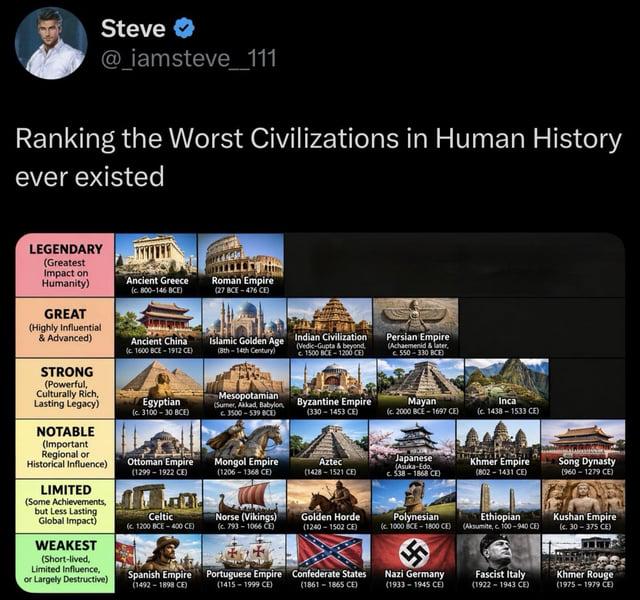
Image What kind of bizarre historical tier list is this?

Post image
129 Upvotes

However, in my experience, that is indeed the prevailing perception outside of the *Hispanidad* (the Hispanic world).

The "Black Legend" has thoroughly poisoned the minds of people across the globe.


r/SpanishEmpire • • 7d ago

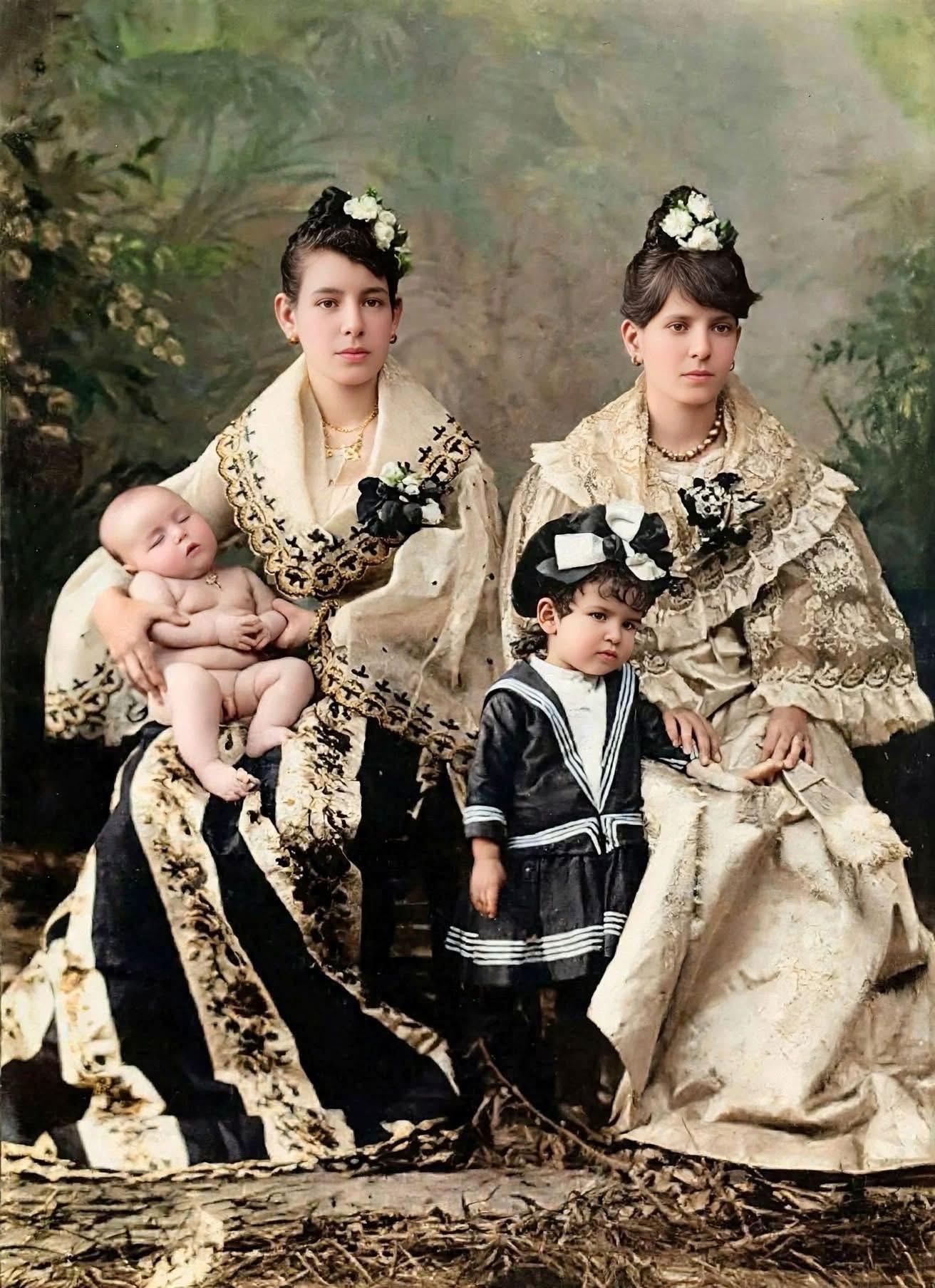
Article This historic late 19th-century studio photograph (circa 1885) depicts Insulares (Criollos born in the Philippines) and their children dressed in traditional colonial attire.

Post image
286 Upvotes

Key Details from the Image

• Attire: The women are wearing the traditional Filipino traje de mestiza (or Maria Clara gown), featuring elaborate pañuelo (fichu) and stiff pagoda sleeves made from native fabrics like piña or jusi.

• Children: The young toddler stands in a dark sailor-style outfit, while the infant is held unclothed, a common convention in certain 19th-century studio portraits.

• Photographer & Provenance: The photograph is attributed to Francisco van Kamp (or Van Kamp), a Dutch photographer who operated a prominent photo studio in Manila after taking over the practice of British photographer Albert Honiss.


r/SpanishEmpire • • 8d ago

Video Black Conquistadors: Africans in the Conquest of The Americas

Thumbnail
youtu.be
65 Upvotes

r/SpanishEmpire • • 8d ago

Article The Fight Against American Indian Slavery in Brazil

Post image
63 Upvotes

r/SpanishEmpire • • 9d ago

Article On November 15, 1533, the capture of Cuzco took place—a decisive event in the Conquest of Peru. Spanish troops, aided by Indian auxiliaries (from Central America) and a faction of the Inca nobility—specifically supporters of the Sapa Inca Huáscar—seized the capital of the Inca Empire.

Post image
102 Upvotes

Image: A historical engraving depicts a clash between Spanish conquistadors and Inca forces on the outskirts of the city of Cuzco (Prælium inter Hispanos & Indos commissum ad urbem Cuzco); it is taken from the work Americae pars sexta by Theodor de Bry (published around 1599).

This followed a series of clashes against Atahualpa’s army, during which Francisco Pizarro exploited pre-existing political divisions. Although numerous battles were fought between the Inca Empire and the Spanish-led coalition—which consisted primarily of native soldiers—it was the capture of Cuzco that led directly to the collapse of the Inca civilization and marked the end of the first phase of the Spanish conquest of the Tahuantinsuyo.

At Jaquijahuana, near the city of Cuzco, the Spaniards reached an agreement to install Manco Inca—a 20-year-old son of the Sapa Inca Huayna Cápac, arriving from Charcas—as the sovereign. The young prince first encountered the Spaniards in the hills of Vilcaconga, about thirty kilometers from Cuzco. He was accompanied only by a handful of loyal nobles who had managed to escape the bloodbath that Atahualpa’s forces had inflicted upon the Cuzco nobility during the Inca civil war; these nobles now offered their support to Pizarro.

Manco Inca was of particular interest to Pizarro and his men. As a potential legitimate ruler, he could rally all the subjects of the empire to his cause. He also represented the faction loyal to Huáscar and served as a natural rallying point for those Incas who opposed Quizquiz—who, at that time, remained the only potential enemy capable of challenging control over Cuzco. The young prince was thus reassured regarding the Spaniards' intentions toward him, and, with the promise of a future investiture, he set out to facilitate their advance toward the capital—which was then occupied by the forces of Quizquiz. In any event, the fugitive prince collaborated with the foreigners, and it was only because Manco Inca granted his permission that the Spaniards were able to enter Cuzco.

Manco Inca’s alignment with the Spaniards brought additional troops to Pizarro’s side. The Auqui (Inca Prince) had reported that Quizquiz might set fire to Cuzco; consequently, Pizarro dispatched Hernando de Soto, accompanied by 40 horsemen and Indian auxiliaries, to reconnoiter the area. Upon reaching Cuzco, he observed plumes of smoke rising from the rooftops. Seeing a multitude of enemies, he and his men chose to engage them, launching a fierce, instinctive charge that swept the accompanying Indian auxiliaries into the assault.

Their operation risked turning into a disaster because they had encountered Quizquiz’s elite troops. The mere mention of his name struck terror into the native allies fighting alongside the Spaniards; these allies huddled fearfully against the Spanish cavalry, hindering the horsemen’s movements just as Quizquiz launched his attack—an assault that left the Spaniards among the first to be wounded. Faced with this disadvantage, the Spaniards decided to retreat. Curiously, they were not pursued; they were allowed to escape. Why? Quizquiz, aware of the superiority of Spanish horses in open terrain and fearing a counterattack, chose to take up positions and let them flee—thereby missing the chance to secure a decisive victory. Fearing that Pizarro’s forces might defeat him, Quizquiz withdrew his men into the mountainous regions, where the rugged terrain would neutralize Hernando de Soto’s cavalry. He deemed street-by-street fighting indefensible and had no desire to be trapped in a siege with a predictable outcome.

Consequently, facing no obstacles, Pizarro entered Cuzco alongside Manco Inca, greeted by the cheers of the local population, who celebrated the defeat of Atahualpa—the usurper of the throne. The capture of the city proved simple; Pizarro encountered no resistance, as the supporters of Atahualpa had abandoned the territory, exhausted by a long campaign in a land far from their own. Furthermore, because Quizquiz had decimated the population of the imperial city, the surviving members of the panacas (royal lineages) came to view the Spaniards as “ambassadors” of the divine Wiracocha and as the saviors of the Tahuantinsuyo. Pizarro arrived with his men at the main plaza and, after inspecting its buildings, sent some of his foot soldiers to explore the Inca capital; he then took up residence in the palace of Casana, which had belonged to the Inca Huayna Cápac. Meanwhile, Diego de Almagro established himself in another palace located next to the first, and Gonzalo Pizarro took possession of the palace of Cora-Cora, a residence built by Túpac Yupanqui.

However, the initial excitement soon turned to discontent as the conquistadors violently breached the Incas' sacred monuments and sites, seizing a bounty that, according to Pizarro’s scribe, Francisco de Jerez, amounted to "580,000 pesos of gold and 215,000 marcos of silver." This caused the inhabitants of Cuzco to alter their perception of the Spaniards.

The following day, Pizarro installed Manco Inca as Sapa Inca, while simultaneously making him a vassal of the Spanish Crown. The Spaniards dubbed him Manco Cápac II, having learned that the first Sapa Inca was also named Manco (Manco Cápac). At Christmas—mistaking the Spaniards' gestures for genuine flattery—Manco Inca, now invested with the mascapaycha (the imperial fringe), naively accepted the "requirement" (requerimiento) protocol demanded by the King of Spain, thereby acknowledging the monarch as the supreme sovereign over his domains. He also ordered his army—some 5,000 soldiers under the command of his brother, Paullu Inca—to depart the city and accompany Hernando de Soto’s expeditions against Quizquiz.

Once settled in the capital of the Inca Empire, the Spaniards began their customary practices of transforming the conquered territories. Nevertheless, the situation demanded great caution; the territory was vast and heavily populated. For the most part, it remained unexplored and far from submissive, yet the structures of the empire dissolved rapidly. Two years later, Quizquiz was killed by his own followers; subsequently, Manco Inca fled Cuzco and attempted to reconquer the city with some 100,000 Incas, but ultimately failed after a ten-month siege.


r/SpanishEmpire • • 9d ago

Article The Casa de Pilatos, located in Lima, Peru, functioned as a clandestine synagogue until 1635 under the leadership of Rabbi Manuel Bautista Pérez, operating behind the facade of a lodging house for Portuguese crypto-Jewish miners and merchants.

Post image
29 Upvotes

r/SpanishEmpire • • 10d ago

Image A historical photograph from the J. Laurent & Co. studio, held by the National Museum of Anthropology, shows Filipinos—Igorots, Tinguians, Carolinians, and Negritos—along with water buffalo, in a recreated village set up in Madrid’s Retiro Park during the 1887 Great Exhibition of the Philippines.

Post image
55 Upvotes