r/WordsOfTheBuddha • • 10d ago

Community Sunday sharing: An open sharing thread

7 Upvotes

"If beings knew, as I know,
the results of giving & sharing,
they would not eat without having given,
nor would the stain of stinginess overcome their minds.

Even if it were their last bite,
their last mouthful,
they would not eat without having shared,
if there were someone to receive their gift."

- ITI 26

This is an open sharing thread. You're welcome to share challenge areas, what is inspiring you, and what is on your mind, a teaching you're reflecting on, an art piece, a photo, your state of mind, a book recommendation, a YT video link.


r/WordsOfTheBuddha • • 2h ago

Connected Discourse What does the Buddha actually teach (SN 22.2)

3 Upvotes

... and seeing what drawback and benefit does he teach it. Expecting inquisitive nobles, householders, and ascetics to press traveling bhikkhus with those very questions, Sāriputta walks them through a clear, grounded way to explain the Dhamma.
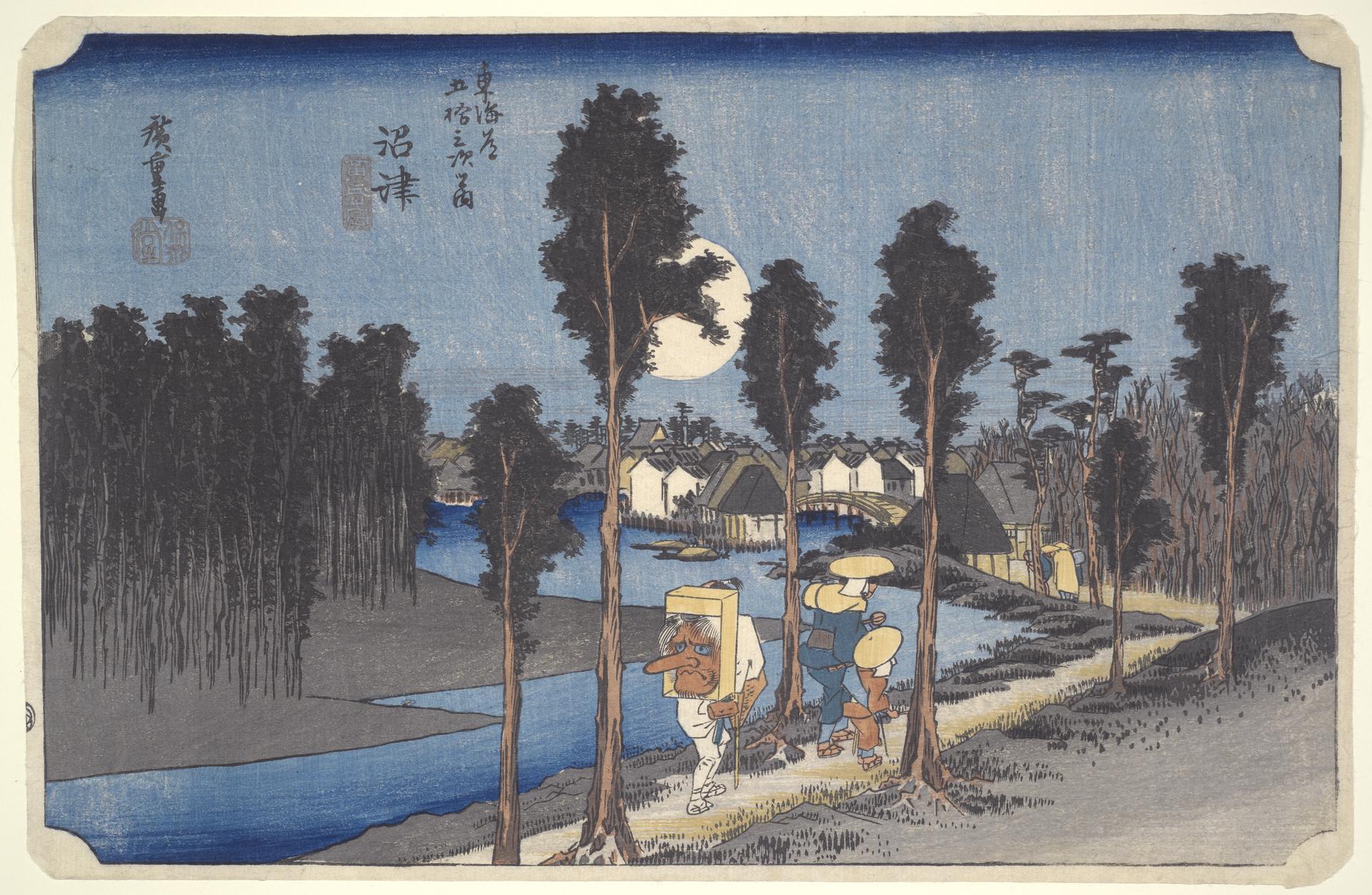
Dusk in Numazu, from the series Fifty-three Stations of the Tōkaidō, Utagawa Hiroshige, c. 1855

Thus have I heard—At one time, the Blessed One was dwelling among the Sakyans at a Sakyan market town named Devadaha.

Then several bhikkhus bound for the western lands went to the Blessed One, and after paying homage to him, they sat down to one side. Sitting to one side, those bhikkhus said to the Blessed One: “Venerable sir, we wish to go to the western lands and take up residence in the western lands.”

“Have you taken leave of Sāriputta, bhikkhus?”

“No, venerable sir, we have not taken leave of the venerable Sāriputta.”

“Take leave of Sāriputta, bhikkhus. Sāriputta, bhikkhus, is wise and helpful to the bhikkhus, his companions in the spiritual life.”

“Yes, venerable sir,” those bhikkhus replied to the Blessed One.

Now on that occasion, the venerable Sāriputta was seated not far from the Blessed One in a certain clump of golden shower trees. Then those bhikkhus, having delighted and rejoiced in the Blessed One’s words, rose from their seats, and after paying homage to the Blessed One, keeping him on their right, they approached the venerable Sāriputta. Having approached, they exchanged friendly greetings with the venerable Sāriputta.

After the exchange of a courteous and polite conversation, they sat down to one side. Seated to one side, those bhikkhus said this to the venerable Sāriputta: “Friend Sāriputta, we wish to go to the western lands and take up residence in the western lands. We have taken leave of the Teacher.”

“Friends, when a bhikkhu goes to foreign lands, there are those who will question him—learned nobles, learned brahmins, learned householders, and learned ascetics. For wise people, friends, are inquisitive: ‘What does your Teacher teach? What does he proclaim?’ I hope, venerable ones, that you have well heard, well grasped, well attended to, well sustained, and well penetrated the teachings with wisdom, so that when answering you will state what has been said by the Blessed One and not misrepresent the Blessed One with what is contrary to fact; that you will explain in accordance with the Dhamma, and that no reasonable consequence of your statement would afford grounds for criticism.”

“Even from far away, friend, we would come to venerable Sāriputta to learn the meaning of this statement. It would be good if venerable Sāriputta himself would clarify the meaning of this statement.”

“Then, friends, listen and pay close attention; I will speak.”

“Yes, friend,” those bhikkhus replied to the venerable Sāriputta. The venerable Sāriputta said this:

“Friends, when a bhikkhu goes to foreign lands, there are those who will question him—learned nobles, learned brahmins, learned householders, and learned ascetics. For wise people, friends, are inquisitive: ‘What does your Teacher teach? What does he proclaim?’ When questioned thus, friends, you should answer: ‘Friends, our Teacher teaches the removal of desire and attachment.’

Even when you answer thus, friends, there may still be those who question you further—learned nobles, learned brahmins, learned householders, and learned ascetics. For wise people, friends, are inquisitive: ‘Regarding what does your Teacher teach the removal of desire and attachment?’ When questioned thus, friends, you should answer: ‘Friends, our Teacher teaches the removal of desire and attachment toward form, toward feeling, toward perception, toward intentional constructs, and toward consciousness.’

Even when you answer thus, friends, there may still be those who question you further—learned nobles, learned brahmins, learned householders, and learned ascetics. For wise people, friends, are inquisitive: ‘Seeing what drawback does your Teacher teach the removal of desire and attachment toward form, feeling, perception, intentional constructs, and consciousness?’ When questioned thus, friends, you should answer: ‘Friends, for one who is not free from passion, desire, affection, thirst, fever, and craving for form, with the change and alteration of that form, there arise sorrow, lamentation, pain, displeasure, and despair. For feeling․․․ perception․․․ intentional constructs․․․ consciousness, for one who is not free from passion, desire, affection, thirst, fever, and craving, with the change and alteration of that consciousness, there arise sorrow, lamentation, pain, displeasure, and despair. It is seeing this drawback, friends, that our Teacher teaches the removal of desire and attachment toward form, feeling, perception, intentional constructs, and consciousness.’

Even when you answer thus, friends, there may still be those who question you further—learned nobles, learned brahmins, learned householders, and learned ascetics. For wise people, friends, are inquisitive: ‘Seeing what benefit does your Teacher teach the removal of desire and attachment toward form, feeling, perception, intentional constructs, and consciousness?’ When questioned thus, friends, you should answer: ‘Friends, for one who is free from passion, desire, affection, thirst, fever, and craving for form, with the change and alteration of that form, there do not arise sorrow, lamentation, pain, displeasure, and despair. For feeling․․․ perception․․․ intentional constructs․․․ consciousness, for one who is free from passion, desire, affection, thirst, fever, and craving, with the change and alteration of that consciousness, there do not arise sorrow, lamentation, pain, displeasure, and despair. It is seeing this benefit, friends, that our Teacher teaches the removal of desire and attachment toward form, feeling, perception, intentional constructs, and consciousness.’

Friends, if one who enters upon and dwells in unwholesome qualities were to dwell happily in this very life—without distress, without anguish, without fever—and after the breaking up of the body, after death, a good destination were to be expected, the Blessed One would not praise the abandoning of unwholesome qualities. But because, friends, one who enters upon and dwells in unwholesome qualities dwells in suffering in this very life—with distress, with anguish, with fever—and after the breaking up of the body, after death, a bad destination is to be expected, therefore the Blessed One praises the abandoning of unwholesome qualities.

And friends, if one who enters upon and dwells in wholesome qualities were to dwell in suffering in this very life—with distress, with anguish, with fever—and after the breaking up of the body, after death, a bad destination were to be expected, the Blessed One would not praise the acquisition of wholesome qualities. But because, friends, one who enters upon and dwells in wholesome qualities dwells happily in this very life—without distress, without anguish, without fever—and after the breaking up of the body, after death, a good destination is to be expected, therefore the Blessed One praises the acquisition of wholesome qualities.”

The venerable Sāriputta said this. The bhikkhus were delighted and pleased with venerable Sāriputta’s words.

---

Key Terms:

  • Sāriputta [sāriputta] ≈ foremost disciple of the Buddha in great wisdom
  • wise [paṇḍita] ≈ learned, astute, discerning
  • Dhamma [dhamma] ≈ teachings of the Buddha that point to the nature of reality, the ultimate truth
  • desire and attachment [chandarāga] ≈ desire-passion, sensual craving, intention of sensuality and lust
  • form [rūpa] ≈ materiality, material existence, experience of the material world, i.e. encompassing both one’s body and external objects, whether near or far, gross or subtle, deficient or refined; first of the five aggregates
  • feeling [vedanā] ≈ pleasant, neutral, or painful sensation, the experience felt on contact through eye, ear, nose, tongue, body, mind; second of the five aggregates
  • perception [saññā] ≈ The mental process of recognizing and giving meaning to experience. It marks sensory information by signs, labels, or associations drawn from memory and the field of contact. Perception shapes how one experiences the world; third of the five aggregates
  • intentional constructs [saṅkhārā] ≈ the constructive activity that shapes each moment of experience, expressed as bodily, verbal, and mental formations; the accumulated conditioning — patterns, tendencies, and habits — produced by prior action
  • consciousness [viññāṇa] ≈ quality of awareness — distinctive knowing that arises in dependence on the meeting of eye and form, ear and sound, nose and odor, tongue and taste, body and tangible object, mind and mind object
  • drawback [ādīnava] ≈ disadvantage, unsatisfactoriness, inadequacy, danger
  • fever [pariḷāha] ≈ mental torment, distress, strong desire, discomfort
  • benefit [ānisaṁsa] ≈ advantage, blessing, reward
  • unwholesome [akusala] ≈ unhealthy, unbeneficial, harmful
  • good destination [sugati] ≈ fortunate condition
  • bad destination [duggati] ≈ state of misery
  • wholesome [kusala] ≈ healthy, beneficial, useful

Related Teachings:


r/WordsOfTheBuddha • • 8h ago

DhammaPada Build your island

6 Upvotes

“By hard work and diligence,
by restraint and by self-control,
a smart person would build an island
that the floods cannot overflow.”

The Buddha, Dhammapada 25 (tr. Bhikkhu Sujato)

More real, cited Buddha quotes in the Own Island app: https://ownisland.vercel.app/q/dhp25


r/WordsOfTheBuddha • • 21h ago

Question Could Nicca Saññā Operate at a More Fundamental Level Than Attachment to Specific Things?

Thumbnail reddit.com
2 Upvotes

r/WordsOfTheBuddha • • 1d ago

Community The 37 Factors of Enlightenment – Part 2

Post image
3 Upvotes

r/WordsOfTheBuddha • • 1d ago

Community The 37 Factors of Enlightenment – Part 3

Post image
3 Upvotes

r/WordsOfTheBuddha • • 2d ago

Reflection Daily Quotes of Wisdom

Thumbnail gallery
2 Upvotes

r/WordsOfTheBuddha • • 2d ago

Numbered Discourse With the remainderless fading away and cessation of the six fields of contact, is there anything else? (AN 4.173)

8 Upvotes

Mahākoṭṭhika asks whether anything else remains when the six fields of contact fade and cease without remainder. Each way he puts it, Sāriputta tells him not to say so.

Then the venerable Mahākoṭṭhika approached the venerable Sāriputta. Having approached, he exchanged friendly greetings with the venerable Sāriputta. After the exchange of a courteous and polite conversation, he sat down to one side. Seated to one side, the venerable Mahākoṭṭhika said this to the venerable Sāriputta:

“Friend, with the remainderless fading away and cessation of the six fields of contact, is there anything else?”

“Do not say so, friend.”

“Friend, with the remainderless fading away and cessation of the six fields of contact, is there nothing else?”

“Do not say so, friend.”

“Friend, with the remainderless fading away and cessation of the six fields of contact, is there both something else and nothing else?”

“Do not say so, friend.”

“Friend, with the remainderless fading away and cessation of the six fields of contact, is there neither something else nor nothing else?”

“Do not say so, friend.”

“‘Friend, with the remainderless fading away and cessation of the six fields of contact, is there anything else?’ When asked thus, you say: ‘Do not say so, friend.’ ‘Friend, with the remainderless fading away and cessation of the six fields of contact, is there nothing else?’ When asked thus, you say: ‘Do not say so, friend.’ ‘Friend, with the remainderless fading away and cessation of the six fields of contact, is there both something else and nothing else?’ When asked thus, you say: ‘Do not say so, friend.’ ‘Friend, with the remainderless fading away and cessation of the six fields of contact, is there neither something else nor nothing else?’ When asked thus, you say: ‘Do not say so, friend.’ How then, friend, should the meaning of this statement be seen?”

“‘Friend, with the remainderless fading away and cessation of the six fields of contact, is there anything else?’ In saying this, one mentally proliferates that which cannot be conceptualized. ‘Friend, with the remainderless fading away and cessation of the six fields of contact, is there nothing else?’ In saying this, one mentally proliferates that which cannot be conceptualized. ‘Friend, with the remainderless fading away and cessation of the six fields of contact, is there both something else and nothing else?’ In saying this, one mentally proliferates that which cannot be conceptualized. ‘Friend, with the remainderless fading away and cessation of the six fields of contact, is there neither something else nor nothing else?’ In saying this, one mentally proliferates that which cannot be conceptualized. Friend, as far as the range of the six fields of contact extends, so far extends the range of mental proliferation; as far as the range of mental proliferation extends, so far extends the range of the six fields of contact. With the remainderless fading away and cessation of the six fields of contact, there is the cessation of mental proliferation, the stilling of mental proliferation.”

---

Key Terms:

  • Mahākoṭṭhika [Mahākoṭṭhika] ≈ foremost disciple of the Buddha in analytical understanding
  • Sāriputta [sāriputta] ≈ foremost disciple of the Buddha in great wisdom
  • remainderless fading away and cessation [asesavirāganirodha] ≈ complete fading away and ending
  • six fields of contact [phassāyatana] ≈ six fields of experience, six sense bases
  • mentally proliferates [papañceti] ≈ forms various opinions about
  • which cannot be conceptualized [appapañca] ≈ which cannot be conceptualized
  • mental proliferation [papañca] ≈ various opinions, endless conceptualization
  • stilling [vūpasama] ≈ calming, subsiding

Related Teachings:


r/WordsOfTheBuddha • • 2d ago

Community What qualities does the Buddha represent to you?

8 Upvotes

For me it is:

- Patience and tolerance

- Kindness and compassion

- Equanimity and wisdom

- Gratitude and contentment

- Care for others

- Peace

Keen to hear from you all 🙂🙏


r/WordsOfTheBuddha • • 3d ago

Inspired Utterances The glowworm shines only so long as the sun has not yet risen (Ud 6.10)

Post image
16 Upvotes

... The Buddha shares this inspired utterance after venerable Ānanda observes that the speculators receive honor and support only until perfectly Awakened Ones arise in the world.

Thus have I heard—At one time, the Blessed One was dwelling at Sāvatthi, in Jeta’s Grove, Anāthapiṇḍika’s Park. Then, the venerable Ānanda approached the Blessed One; having approached, he paid homage to the Blessed One and sat down to one side. Seated to one side, the venerable Ānanda said to the Blessed One:

“As long, venerable sir, as Tathāgatas, Arahants, perfectly Awakened Ones, do not arise in the world, wanderers of other sects are honored, respected, revered, worshipped, and esteemed. They are recipients of the four requisites: robes, alms food, lodging, and medicines. But when, venerable sir, Tathāgatas, Arahants, perfectly Awakened Ones, arise in the world, then wanderers of other sects are dishonored, disrespected, unrevered, unworshipped, and unesteemed. They are not recipients of the four requisites: robes, alms food, lodging, and medicines. Now, venerable sir, it is the Blessed One who is honored, respected, revered, worshipped, and esteemed. He is a recipient of the four requisites: robes, alms food, lodging, and medicines, and so is the Saṅgha of bhikkhus.”

“That is so, Ānanda. As long, Ānanda, as Tathāgatas, Arahants, perfectly Awakened Ones, do not arise in the world, wanderers of other sects are honored, respected, revered, worshipped, and esteemed. They are recipients of the four requisites: robes, alms food, lodging, and medicines. But when, Ānanda, Tathāgatas, Arahants, perfectly Awakened Ones, arise in the world, then wanderers of other sects are not honored, not respected, not revered, not worshipped, and not esteemed. They are not recipients of the four requisites: robes, alms food, lodging, and medicines. Now, it is the Tathāgata who is honored, respected, revered, worshipped, and esteemed. He is a recipient of the four requisites: robes, alms food, lodging, and medicines, and so is the Saṅgha of bhikkhus.”

Then, understanding the significance of this, the Blessed One at that time expressed this inspired utterance:

“The glowworm shines only so long
as the sun has not yet risen;
but when the radiant sun comes up,
its light is extinguished and it shines no more.

Likewise do the speculators shine
until the perfectly Awakened Ones arise in the world;
the speculators are not purified, nor are their disciples,
those of wrong view are not freed from suffering.”

---

Key Terms:

  • Saṅgha [saṅgha] ≈ The community of monks and nuns practicing in line with the Buddha’s teachings. In the broader sense, this is the community of disciples who have realized the noble path and fruition through the Buddha’s teachings
  • glowworm [kimi] ≈ firefly, a small nocturnal insect that emits a faint light
  • speculators [takkikā] ≈ logicians; lit. thinkers
  • ..suffering [dukkha] ≈ discomfort, unpleasantness, discontentment, dissatisfaction, stress, pain, disease, i.e. mild or intense suffering

Image: Fireflies at Ochanomizu, Kobayashi Kiyochika, c. 1880

Related Teachings:


r/WordsOfTheBuddha • • 4d ago

Numbered Discourse Six causes for the arising of kamma (AN 6.39)

10 Upvotes

The Buddha outlines six causes of kamma: unwholesome roots perpetuate to bad destinations, whereas wholesome roots foster good outcomes.

Lake Thun with Symmetric Reflection, Ferdinand Hodler, c. 1905

“There are these three causes for the arising of kamma. What three? 1.) Greed is a cause for the arising of kamma, 2.) aversion is a cause for the arising of kamma, 3.) delusion is a cause for the arising of kamma. Non-greed does not arise from greed; rather only greed arises from greed. Non-aversion does not arise from aversion; rather only aversion arises from aversion. Non-delusion does not arise from delusion; rather only delusion arises from delusion. Through kamma arisen from greed, kamma arisen from aversion, or kamma arisen from delusion, devas are not manifested, humans are not manifested, nor any other good destinations. Rather through kamma arisen from greed, kamma arisen from aversion, and kamma arisen from delusion, hell is manifested, the animal realm is manifested, the realm of afflicted spirits is manifested, or whatever other bad destinations there are. These are the three causes for the arising of kamma.

There are these three causes for the arising of kamma. What three? 1.) Non-greed is a cause for the arising of kamma, 2.) non-aversion is a cause for the arising of kamma, 3.) non-delusion is a cause for the arising of kamma. Greed does not arise from non-greed; rather only non-greed arises from non-greed. Aversion does not arise from non-aversion; rather only non-aversion arises from non-aversion. Delusion does not arise from non-delusion; rather only non-delusion arises from non-delusion. Through kamma arisen from non-greed, kamma arisen from non-aversion, or kamma arisen from non-delusion, hell is not manifested, the animal realm is not manifested, the realm of afflicted spirits is not manifested, nor any other bad destinations. Rather through kamma arisen from non-greed, kamma arisen from non-aversion, and kamma arisen from non-delusion, devas are manifested, humans are manifested, and whatever other good destinations there are. These are the three causes for the arising of kamma.”

---

Key Terms:

  • kamma [kamma] ≈ action, deed, doing, volitional act
  • Greed [lobha] ≈ a grasping mental quality of craving, possessiveness, or lustful wanting that clings to objects or experiences; it fuels attachment and obstructs renunciation and contentment
  • aversion [dosa] ≈ hatred, hostility, mental attitude of rejection, fault-finding, resentful disapproval
  • delusion [moha] ≈ illusion, misperception, erroneous belief, false idea, misapprehension; a fundamental distortion of reality that sustains confusion, clouds discernment, and fuels further doubt
  • Non-greed [alobha] ≈ the absence of greed, lack of craving or lustful wanting; contentment, renunciation
  • Non-aversion [adosa] ≈ the absence of aversion, ill will, or hostility; loving-kindness, goodwill, friendliness
  • Non-delusion [amoha] ≈ the absence of illusion, misapprehension, or distorted view; clear comprehension, understanding things as they really are
  • devas [deva] ≈ celestial beings, deities, gods
  • good destinations [sugati] ≈ fortunate realms of rebirth, happy destinations
  • hell [niraya] ≈ a place of intense suffering, lit. no good fortune
  • realm of afflicted spirits [pettivisaya] ≈ the domain of ghosts or departed spirits
  • bad destination [duggati] ≈ state of misery

Related Teachings:

  • What leads to further kamma and what leads to cessation of kamma (AN 3.111) - What are the causes for the arising of kamma? The Buddha explains that greed, aversion, and delusion are the roots of unwholesome kamma, leading to painful results, and leading to further kamma. In contrast, non-greed, non-aversion, and non-delusion are the roots of wholesome kamma, leading to pleasant results and to the cessation of kamma.
  • Three causes giving rise to kamma (AN 3.112) - What gives rise to kamma? The Buddha explains that the roots of kamma lie in how one relates to the past, future, and present. Through repeated reflections and mental re-examination, desire springs up and binds one to objects of attachment. But when one sees the consequences of those things clearly, one instead turns away from them, leading to kamma arising from complete penetration and wisdom.
  • The Realized One after death is profound, immeasurable, and hard to fathom (MN 72) - The wanderer Vacchagotta questions the Buddha about the eternity of the world, the life force, and the Tathāgata after death. The Buddha entirely avoids these speculative views, explaining that the Tathāgata is freed from reckoning. He illustrates this profound, immeasurable state of liberation using the simile of an extinguished fire.
  • A dhamma discussion on how to comprehend greed, aversion, and delusion

r/WordsOfTheBuddha • • 4d ago

Community Buddhism book in Hindi

Post image
2 Upvotes

Hello friends, for those who may be interested in learning Buddhism in Hindi, I have published a Hindi translation of David Roylance's book "Developing a Life Practice: The Path that Leads to Enlightenment" (Volume 1)

"जीवन अभ्यास का विकास: पथ जो ले जाता है निर्वाण की और" (खंड १)

Free Download - https://mailchi.mp/buddhadailywisdom/freebuddhabook-hindi
Amazon - https://www.amazon.in/%E0%A4%AC%E0%A5%81%E0%A4%A6%E0%A5%8D%E0%A4%A7-%E0%A4%95%E0%A5%87-%E0%A4%B6%E0%A4%AC%E0%A5%8D%E0%A4%A6-%E0%A4%85%E0%A4%AD%E0%A5%8D%E0%A4%AF%E0%A4%BE%E0%A4%B8-%E0%A4%A8%E0%A4%BF%E0%A4%B0%E0%A5%8D%E0%A4%B5%E0%A4%BE%E0%A4%A3-ebook/dp/B0H4RRT7XH/


r/WordsOfTheBuddha • • 5d ago

Numbered Discourse The Buddha contrasts doctors’ medicinal purgatives with the noble purgative of the tenfold path (AN 10.108)

6 Upvotes

... which purges wrong view through right view and wrong liberation through right liberation without fail, freeing beings from birth, aging, and death.

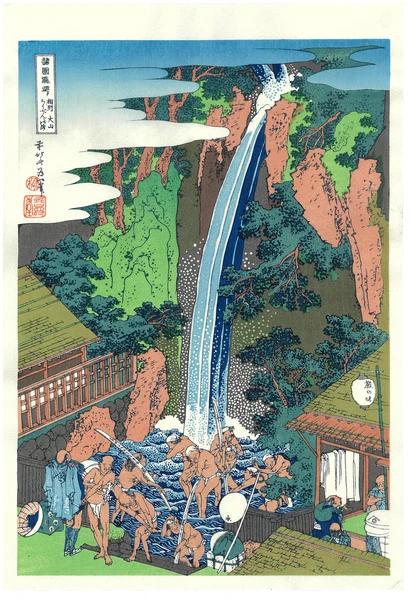
Pilgrims beneath the Roben Waterfall, Katsushika Hokusai, early 19th century

The Buddha contrasts doctors’ medicinal purgatives, which sometimes succeed and sometimes fail, with the noble purgative of the tenfold path, which purges wrong view through right view and wrong liberation through right liberation without fail, freeing beings from birth, aging, and death.

“Physicians give a purgative for dispelling afflictions originating from bile, for dispelling afflictions originating from phlegm, and for dispelling afflictions originating from wind. There is this purgative—I do not deny it. But this purgative sometimes succeeds and sometimes fails.

And I will teach a noble purgative that only succeeds and never fails—relying upon which beings subject to birth are freed from birth; beings subject to aging are freed from aging; beings subject to death are freed from death; beings subject to sorrow, lamentation, pain, displeasure, and despair are freed from sorrow, lamentation, pain, displeasure, and despair. Listen to this and pay close attention; I will speak.”

“Yes, venerable sir,” those bhikkhus replied to the Blessed One. The Blessed One said this:

“And what is that noble purgative that only succeeds and never fails—relying upon which beings subject to birth are freed from birth; beings subject to aging are freed from aging; beings subject to death are freed from death; beings subject to sorrow, lamentation, pain, displeasure, and despair are freed from sorrow, lamentation, pain, displeasure, and despair?

For one with right view, wrong view is purged; and the multitude of harmful, unwholesome qualities that arise due to wrong view, they too are purged for him. And due to right view, many wholesome qualities reach full development by cultivation.

For one with right intention, wrong intention is purged ... For one with right speech, wrong speech is purged ... For one with right action, wrong action is purged ... For one with right livelihood, wrong livelihood is purged ... For one with right effort, wrong effort is purged ... For one with right mindfulness, wrong mindfulness is purged ... For one with right collectedness, wrong collectedness is purged ... For one with right knowledge, wrong knowledge is purged ...

For one with right liberation, false liberation is purged; and the multitude of harmful, unwholesome qualities that arise due to false liberation, they too are purged for him. And due to right liberation, many wholesome qualities reach full development by cultivation. This is that noble purgative that only succeeds and never fails—relying upon which beings subject to birth are freed from birth ... are freed from sorrow, lamentation, pain, displeasure, and despair.”

---

The Buddha saw himself and his work to be similar to that of a healer, a physician, a field surgeon (MN 63, MN 75, MN 105, AN 8.85 as few other places he gives himself the title of bhisakka and sallakatta, lit. one who cuts the arrow). He did not see himself as a religious founder, philosopher, or as a spiritual teacher.

Key Terms:

  • purgative [virecana] ≈ laxative, purging treatment
  • right view [sammādiṭṭhi] ≈ view that is in line with the Dhamma - teachings of the Buddha that point to the nature of reality, the ultimate truth
  • wrong view [micchādiṭṭhi] ≈ a distorted perception, an untrue view, a false belief
  • harmful [pāpaka] ≈ injurious, bad, or evil. Encompasses the deceptively alluring that is ultimately detrimental or ruinous
  • full development by cultivation [bhāvanāpāripūri] ≈ maturity by development, fulfillment by meditation
  • wrong intention [micchāsaṅkappa] ≈ wrong notion, wrong idea
  • right collectedness [samādhi] ≈ stability of mind, stillness of mind, mental composure
  • right knowledge [sammāñāṇa] ≈ distinctive knowledge, insight
  • right liberation [sammāvimuttī] ≈ right release, right freedom

Related Teachings:


r/WordsOfTheBuddha • • 7d ago

DhammaPada For one seized by the Ender, there is no refuge among kin (DhP 286 - 289)

Thumbnail
gallery
21 Upvotes

286

‘Here I will dwell during the rains,
here during winter and summer;’
thus the immature person thinks,
not understanding the danger.

287

That person, besotted with sons and cattle [possessions],
with an attached mind;
like a great flood sweeps away a sleeping village,
death seizes and carries them away.

288

There are no sons for refuge,
nor father, nor even relatives;
for one seized by the Ender[1],
there is no refuge among kin.

289

Understanding the truth of this,
the wise one, restrained by ethical conduct,
should swiftly purify the path
leading to Nibbāna.

---

[1] The Ender: Antakena. A poetic epithet for Death, the one who brings all worldly things to an end.

Key Terms:

  • immature person [bāla] ≈ lacking in discernment or good sense, child-like in understanding
  • besotted with sons and cattle [puttapasusammatta] ≈ intoxicated by children and possessions
  • refuge [tāṇa] ≈ shelter, defense, protection
  • seized by [adhipanna] ≈ overpowered by
  • ethical conduct [sīla] ≈ virtue, moral integrity

Gallery: Ikkyū in Hell, c. 1457. Learn more: https://publicdomainreview.org/collection/ikkyu-in-hell/

Related Teachings:


r/WordsOfTheBuddha • • 8d ago

Middle Length Discourse How the Buddha conducts himself in daily activities (MN 91)

17 Upvotes

When the Brahmin Brahmāyu hears that a Buddha has arisen, he sends his student Uttara to shadow the Buddha for a period of seven months to observe his conduct.

Bronze figure of the walking Buddha, Thailand, Sukothai period, c. 14th century

Then, after the passage of seven months, the young brahmin Uttara set out on a walking tour in the Videha country toward Mithilā. Wandering by stages, he approached Mithilā and the brahmin Brahmāyu; having drawn near, he paid homage to the brahmin Brahmāyu and sat down to one side. While the young brahmin Uttara was seated to one side, the brahmin Brahmāyu said to him: “My dear Uttara, is the report that has circulated about that sir Gotama indeed so, and not otherwise? And is that sir Gotama truly such, and not otherwise?”

“The report that has circulated about that sir Gotama, sir, is indeed so, and not otherwise; and that sir Gotama is truly such, and not otherwise.

...

When walking, that sir Gotama steps out first with his right foot. He does not lift his foot too far, nor does he set his foot down too close; he walks neither too quickly nor too slowly; he walks without knocking knee against knee, and without knocking ankle against ankle. When walking, he neither raises his thighs up, nor bends them down, nor brings them inward, nor splays them outward. When that sir Gotama walks, only the lower part of his body moves, and he does not walk with bodily strain. When looking around, that sir Gotama turns to look with his entire body; he does not look straight up, nor does he look straight down; he does not walk looking about this way and that, but looks a yoke’s length before him; and beyond that, he has unobstructed knowledge and vision.

When entering indoors, he neither raises his body up, nor bends it down, nor leans it inward, nor tilts it outward.

He turns around neither too far from the seat nor too close to it; he does not sit down on the seat leaning on his hand, nor does he fling his body onto the seat. While seated indoors, he does not engage in fidgeting with his hands or fidgeting with his feet; he does not sit with knee crossed over knee, nor with ankle crossed over ankle, nor does he sit supporting his chin with his hand. While seated indoors, he does not fear, does not tremble, does not waver, and is not agitated. He is fearless, untrembling, unwavering, unagitated, and without trepidation. And while seated indoors, that sir Gotama is devoted to seclusion.

When receiving water for the alms bowl, he neither tips the bowl up, nor tips it down, nor tilts it inward, nor tilts it outward.

He receives neither too little nor too much water for the bowl. He does not wash the bowl making a sloshing sound, nor does he wash the bowl by twirling it around; he does not set the bowl down on the ground to wash his hands—when his hands are washed, the bowl is washed, and when the bowl is washed, his hands are washed. He pours out the water for the bowl neither too far nor too close, and without splashing it about. When receiving boiled rice, he neither tips the bowl up, nor tips it down, nor tilts it inward, nor tilts it outward. He receives neither too little nor too much boiled rice. Sir Gotama takes curry in suitable proportion, and does not exceed the mouthful of rice with curry. Sir Gotama turns the morsel over two or three times in his mouth before swallowing it, and no unchewed grain of rice enters his body, nor does any grain of rice remain in his mouth; only then does he bring another morsel to his lips. That sir Gotama partakes of food experiencing the taste, but not experiencing passion for the flavor.

That sir Gotama partakes of food endowed with eight factors: ‘[This food is] not for amusement, not for intoxication, not for putting on bulk, and not for the sake of physical appearance; but only for the support and maintenance of this body, for the ending of discomfort, and for assisting the spiritual life: thus I shall put an end to old feeling [of hunger] and shall not give rise to new feeling [from overeating], and I shall sustain life blamelessly and dwell at ease.’

When he has finished his meal and receives water for the bowl, he neither tips the bowl up, nor tips it down, nor tilts it inward, nor tilts it outward. He receives neither too little nor too much water for the bowl. He does not wash the bowl making a sloshing sound, nor does he wash the bowl by twirling it around; he does not set the bowl down on the ground to wash his hands—when his hands are washed, the bowl is washed, and when the bowl is washed, his hands are washed. He pours out the water for the bowl neither too far nor too close, and without splashing it about.

When he has finished his meal, he sets the bowl down on the ground neither too far away nor too close; and he is neither careless with the bowl, nor overly fussy over the bowl.

When he has finished his meal, he sits in silence for a moment, but he does not let the time for the blessing of appreciation pass by. When he has finished his meal, he expresses appreciation: he neither criticizes that meal nor longs for another meal; rather, he instructs, encourages, inspires, and gladdens that assembly purely with a talk on the Dhamma. Having instructed, encouraged, inspired, and gladdened that assembly with a talk on the Dhamma, he rises from his seat and departs.

He walks neither too quickly nor too slowly, and he does not walk as one anxious to get away.

On the body of that sir Gotama, his robe is worn neither pulled up too high nor hanging down too low, neither clinging tightly to the body nor billowing away from the body; nor does the wind blow the robe off the body of that sir Gotama; nor do dust and dirt adhere to the body of that sir Gotama.

Having gone to the park, he sits down on the prepared seat. Having sat down, he washes his feet; yet that sir Gotama does not dwell devoted to the practice of beautifying his feet. Having washed his feet, he sits down folding his legs crosswise, setting his body upright, and establishing mindfulness as his primary focal point. He does not intend for his own affliction, nor for the affliction of others, nor for the affliction of both; that sir Gotama sits intending solely for his own welfare, the welfare of others, the welfare of both, and the welfare of the whole world. Having gone to the park, he teaches the Dhamma to the assembly: he neither flatters that assembly nor disparages that assembly; rather, he instructs, encourages, inspires, and gladdens that assembly purely with a talk on the Dhamma.

The sound that issues forth from the mouth of that sir Gotama is endowed with eight qualities: it is distinct, intelligible, melodious, pleasant to hear, cohesive, undispersed, deep, and resonant. That sir Gotama makes his voice understood in accordance with the size of the assembly, and his voice does not carry outside the assembly. Having been instructed, encouraged, inspired, and gladdened by that sir Gotama with a talk on the Dhamma, they rise from their seats and depart, looking back at him alone, reluctant to leave.

We have seen that sir Gotama walking, sir; we have seen him standing; we have seen him entering indoors; we have seen him seated indoors in silence; we have seen him eating indoors; we have seen him seated in silence after his meal; we have seen him expressing appreciation after his meal; we have seen him going to the park; we have seen him seated in silence at the park; we have seen him at the park teaching the Dhamma to the assembly. Such and such is that sir Gotama, and even more than that!”

When this was said, the brahmin Brahmāyu rose from his seat, arranged his upper robe over one shoulder, raised his joined palms toward the Blessed One, and uttered this inspired exclamation three times:

“Homage to the Blessed One, the Arahant, the perfectly Awakened One!

Homage to the Blessed One, the Arahant, the perfectly Awakened One!

Homage to the Blessed One, the Arahant, the perfectly Awakened One!

Perhaps some time or other we might meet with that sir Gotama! Perhaps there might be some conversation with him!”

---

Key Terms:

  • yoke’s length [yugamatta] ≈ a distance of about two meters (four cubits) ahead
  • knowledge and vision [ñāṇadassana] ≈ direct understanding and clear perception
  • seclusion [viveka] ≈ inner solitude, mental detachment
  • passion [rāga] ≈ attachment, greed, infatuation
  • fussy [ativelānurakkhī] ≈ spending excessive time tending to it
  • blessing of appreciation [anumodana] ≈ discourse of thanksgiving and merit-sharing offered after a meal
  • anxious to get away [muccitukāma] ≈ eager to be rid of the company
  • as his primary focal point [parimukhaṁ] ≈ as first priority, directed towards the meditation object; lit. around the front
  • cohesive [bindu] ≈ compact, clear
  • undispersed [avisārī] ≈ not scattering outward

Related Teachings:

  • Six kinds of assemblies (AN 2.44, 2.47, 2.48) - Six assemblies are distinguished: one where practitioners are indulgent and careless, one where practitioners are not indulgent nor careless, one trained in empty talk, one trained in examining and questioning, one that values worldly things, and one that values the true Dhamma.
  • How should one who is an inquirer examine a teacher wrt their awakening (MN 47) - The Buddha provides a detailed and rigorous method for examining a Teacher. By discerning the teacher’s mental qualities, through prolonged observation, questioning, and learning directly, one gradually realizes a certain aspect of the teaching and builds unshakeable confidence in both the teacher and the teachings.
  • Buddha's gradual training guidelines for lay persons - Sekha sutta (MN 53) - When the Buddha inaugurates a new assembly hall for the Sakyans of Kapilavatthu, he asks the venerable Ānanda to teach the assembly. Ānanda outlines the comprehensive path of a disciple in training—detailing the perfection of virtue, sense restraint, moderation in eating, wakefulness, the seven good qualities, and the four jhānas—culminating in the breakthroughs of true knowledge.

r/WordsOfTheBuddha • • 9d ago

Sutta Treasure - Dhana Sutta (AN 7:6)

Thumbnail
youtu.be
7 Upvotes

r/WordsOfTheBuddha • • 9d ago

Reflection The Stone and the Oil: A Timeless Buddhist Lesson About Karma

Thumbnail
peacelilysite.com
9 Upvotes

r/WordsOfTheBuddha • • 9d ago

Reflection Four Friendly Facts

3 Upvotes

A friendly person is someone who can empathize with you. They can put themselves in your shoes and see things from your point of view. That is what the Buddha meant by “noble.” So I like to call the Four Noble Truths the Four Friendly Facts.


r/WordsOfTheBuddha • • 10d ago

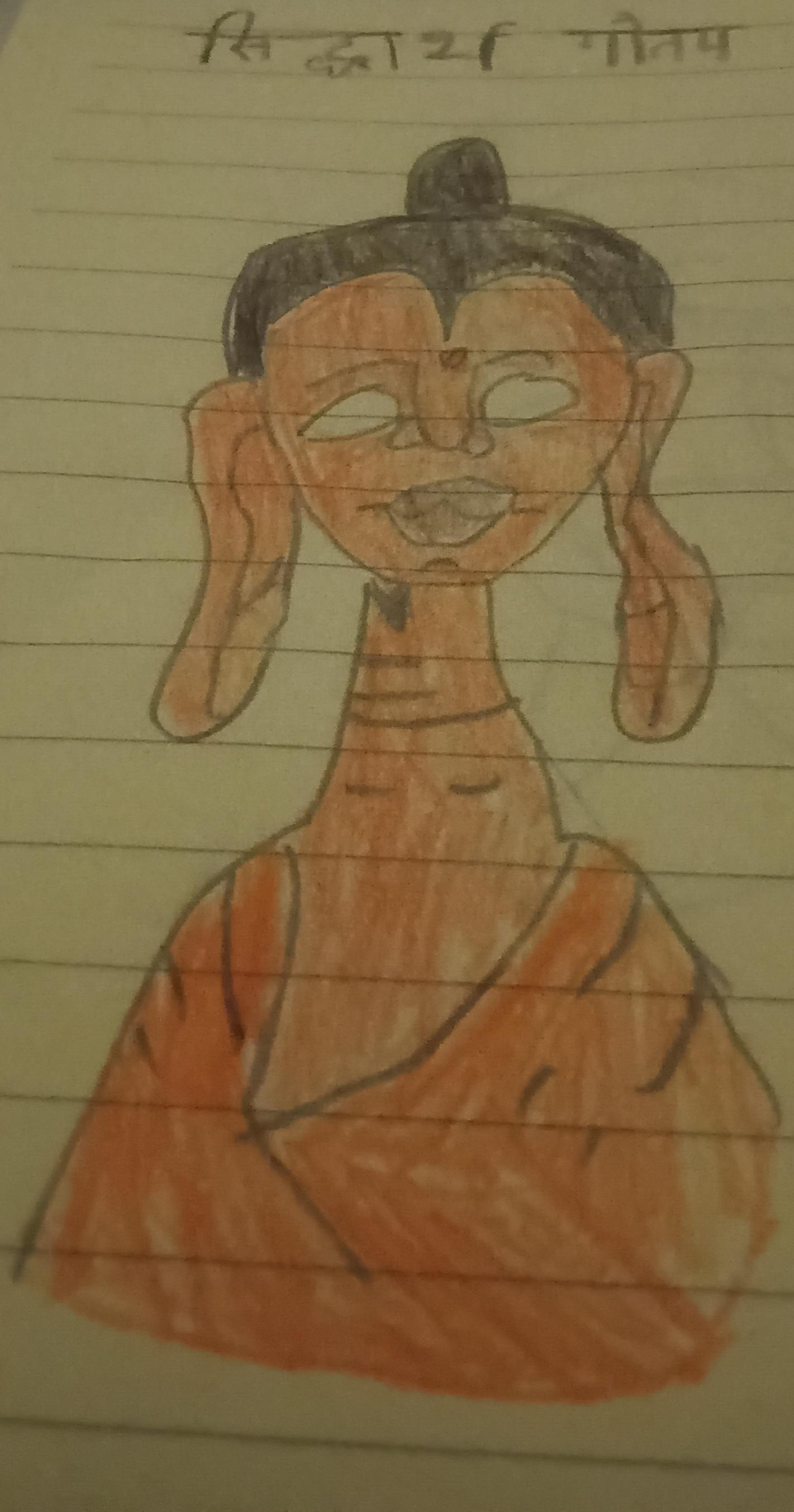
Reflection siddartha gautama ( the crown prince to the buddha )

Post image
11 Upvotes

r/WordsOfTheBuddha • • 11d ago

Reflection Do no harm and the happy loop

Thumbnail gallery
10 Upvotes

r/WordsOfTheBuddha • • 11d ago

Connected Discourse Using wooden pillows, dwelling with diligence and continuous effort (SN 20.8)

12 Upvotes
Rock-cut reclining Buddha at Isurumuniya Vihara in Anuradhapura, Sri Lanka

Thus have I heard—At one time, the Blessed One was dwelling at Vesāli, in the Great Forest, in the hall with the peaked roof. There the Blessed One addressed the bhikkhus: “Bhikkhus!”

“Venerable sir,” the bhikkhus replied. The Blessed One said this:

“At present, the Licchavīs dwell using wooden pillows, diligent and with continuous effort in their training. Therefore, King Ajātasattu of Magadha, son of Vedehi, finds no opportunity or foothold. But in the future, the Licchavīs will be delicate, with soft and tender hands and feet. They will sleep until sunrise on soft beds with cotton pillows. At that time, King Ajātasattu of Magadha, the son of Videhi, will find an opportunity and a foothold.

At present, the bhikkhus dwell using wooden pillows, diligent and with continuous effort in their striving. Therefore, Māra the Evil One finds no opportunity or foothold. But in the future, there will be bhikkhus who are delicate, with soft and tender hands and feet. They will sleep until sunrise on soft beds with cotton pillows. At that time, Māra the Evil One will find an opportunity and a foothold.

Therefore, you should train yourselves: ‘We will dwell using wooden pillows, diligent and with continuous effort in our striving.’ This is how you should train yourselves.”

---

Key Terms:

  • Vesāli [vesālī] ≈ capital of the Licchavīs
  • Great Forest [mahāvana] ≈ name of a forest outside Vesāli; lit. great forest
  • Licchavīs [licchavī] ≈ the Licchavīs were a republican clan of Vesāli, known for their unity and democratic governance. The Buddha often praised their diligence, using them as a model of collective strength, while warning against complacency
  • diligent [appamatta] ≈ doing one’s work or duty well, with alertness, carefulness and care
  • with continuous effort [ātāpī] ≈ ardent, zealous, with energy, with application; lit. burning
  • striving [padhāna] ≈ making effort, exerting
  • Evil One [pāpimant] ≈ profoundly immoral and wicked, having evil quality, epithet of Māra

Related Teachings:


r/WordsOfTheBuddha • • 12d ago

Discussion About Dhamma 人类与世界humanity and the world

6 Upvotes

中文版

世界不是依靠人类而存在,人类却依靠世界而生存。

水不因人类而流,太阳不因人类而升,大地不因人类而存在。

人类只是世界的一部分,却常常认为自己能够主宰世界。

我们利用自然创造科技,用智慧探索未知。

但是,我们是否忘记了,自己的一切生存条件,都来自这个世界?

科技让人类拥有改变世界的能力,佛法让人类学习认识自己的内心。

真正的智慧,不是征服自然,而是理解自然。

不是无限满足欲望,而是学会知足。

不是让世界服从人类,而是让人类学会与世界共存。

愿人类拥有科技的力量,也拥有尊重万物的智慧。

English Version

The world does not depend on humanity to exist. Humanity, however, depends on the world to survive.

Water flows without humanity. The sun rises without humanity. The Earth exists without humanity.

Humanity is only a part of this world, yet we sometimes believe we can control it.

Through science and technology, we explore the unknown and transform our lives.

But have we forgotten that everything we need to survive comes from this world?

Technology gives humanity the power to change the world. Buddhism teaches us to understand our own minds.

True wisdom is not about conquering nature, but understanding it.

It is not about endlessly satisfying our desires, but learning contentment.

It is not about making the world obey humanity, but learning to coexist with the world.

May humanity possess the power of technology and the wisdom to respect all living things.


r/WordsOfTheBuddha • • 12d ago

Numbered Discourse The happiness of blamelessness and the four kinds of happiness (AN 4.62)

Thumbnail
gallery
39 Upvotes

The Buddha explains the four kinds of happiness that are attainable by a lay person who enjoys sensual pleasures.

Then the householder Anāthapiṇḍika approached the Blessed One. Having drawn near and paid homage to the Blessed One, he sat down to one side. When Anāthapiṇḍika was seated to one side, the Blessed One addressed him thus:

“Householder, there are these four kinds of happiness that are attainable by a lay person who enjoys sensual pleasures, from time to time, and on appropriate occasions. What four? The happiness of ownership, the happiness of using wealth, the happiness of debtlessness, and the happiness of blamelessness.

1.) And what, householder, is the happiness of ownership? Here, householder, a clansman has acquired wealth through initiative and effort, built up by hard work, earned by sweat, lawfully and legitimately obtained. When he reflects, ‘I have acquired wealth through initiative and effort, built up by hard work, earned by sweat, lawfully and legitimately obtained,’ he attains happiness and pleasure. This is called the happiness of ownership, householder.

2.) And what, householder, is the happiness of using wealth? Here, householder, a clansman enjoys wealth acquired through initiative and effort, built up by hard work, earned by sweat, lawfully and legitimately obtained, and he does good deeds with it. When he reflects, ‘I enjoy wealth acquired through initiative and effort, built up by hard work, earned by sweat, lawfully and legitimately obtained, and I do good deeds with it,’ he attains happiness and pleasure. This is called the happiness of using wealth, householder.

3.) And what, householder, is the happiness of debtlessness? Here, householder, a clansman owes nothing to anyone, whether little or much. When he reflects, ‘I owe nothing to anyone, whether little or much,’ he attains happiness and pleasure. This is called the happiness of debtlessness, householder.

4.) And what, householder, is the happiness of blamelessness? Here, householder, a disciple of the Noble Ones is endowed with blameless bodily conduct, blameless verbal conduct, and blameless mental conduct. When he reflects, ‘I am endowed with blameless bodily conduct, blameless verbal conduct, and blameless mental conduct,’ he attains happiness and pleasure. This is called the happiness of blamelessness, householder.

These, householder, are the four kinds of happiness that are attainable by a lay person who enjoys sensual pleasures, from time to time, and on appropriate occasions.”

Having known the happiness of debtlessness,
and furthermore, the happiness of ownership;
a mortal enjoying the happiness of using wealth,
by that, sees clearly with wisdom.

While seeing things clearly, the wise one,
knows both kinds of happiness [1];
compared to the happiness of blamelessness,
these do not amount to even a sixteenth part.

---

Note: [1] The two kinds of happiness compared here are: the happiness of debtlessness, ownership, and the enjoyment of wealth as one kind, available to laypersons who enjoy sensual pleasures; and the happiness of being blameless as the second kind, available to laypersons who enjoy sensual pleasures and in addition are purified in ethical conduct, disciples of the Noble Ones.

Key Terms:

  • happiness [sukha] ≈ ease, comfort, pleasure, contentment
  • who enjoys sensual pleasures [kāmabhogī] ≈ who indulges in sensual gratification
  • happiness of ownership [atthisukha] ≈ pleasure of having
  • pleasure [somanassa] ≈ a positive state of mind; agreeable feeling born of mental contact, mental happiness
  • happiness of using wealth [bhogasukha] ≈ pleasure of enjoying wealth
  • happiness of debtlessness [ānaṇyasukha] ≈ pleasure of being debt-free
  • happiness of blamelessness [anavajjasukha] ≈ pleasure of being faultless
  • blameless [anavajja] ≈ irreproachable, faultless
  • sees clearly [vipassati] ≈ understands with insight

Image: Buddha Shakyamuni, Central Tibet, 12th Century

Related Teachings:


r/WordsOfTheBuddha • • 13d ago

Numbered Discourse Five drawbacks for a person who speaks much (AN 5.214)

Post image
24 Upvotes

“There are these five drawbacks for a person who speaks much. What five? They speak falsely, speak divisively, speak harshly, chatter frivolously, and upon the breaking up of the body, after death, they are reborn in a state of loss, in a bad destination, in a realm of downfall, in hell. These are the five drawbacks for a person who speaks much.

There are these five benefits for a person who speaks wisely. What five? They do not speak falsely, do not speak divisively, do not speak harshly, do not chatter frivolously, and upon the breaking up of the body, after death, they are reborn in a good destination, a heavenly world. These are the five benefits for a person who speaks wisely.”

---

Key Terms:

  • drawbacks [ādīnavā] ≈ dangers
  • speaks much [bahubhāṇī] ≈ is talkative, talks excessively
  • speak falsely [musā bhaṇati] ≈ lie, deliberately speak falsehood
  • speak divisively [pisuṇaṁ bhaṇati] ≈ speak slanderously to create division and sow discord
  • speak harshly [pharusaṁ bhaṇati] ≈ speak using rough words, rudely, or in an unkind manner
  • chatter frivolously [samphappalāpaṁ bhaṇati] ≈ engage in idle chatter, meaningless talk, or gossip
  • realm of downfall [vinipāta] ≈ realm of misery
  • hell [niraya] ≈ a place of intense suffering, lit. no good fortune
  • benefits [ānisaṁsā] ≈ advantages, blessings, rewards
  • speaks wisely [mantabhāṇī] ≈ speaks thoughtfully, with deliberation
  • heavenly world [sagga] ≈ a blissful realm, celestial world

Image: Two Crows on a Branch Overlooking Asakusa at Dawn, Kawanabe Kyosai, 1883

Related Teachings:


r/WordsOfTheBuddha • • 14d ago

Numbered Discourse How Venerable Nanda lives the pure spiritual life despite being strongly prone to lust (AN 8.9)

14 Upvotes

... through sense restraint, moderation in eating, wakefulness, and radical comprehension.

“Speaking rightly of Nanda, one would call him a ‘clansman.’ Speaking rightly of Nanda one would call him ‘strong.’ Speaking rightly of Nanda one would call him ‘graceful.’ Speaking rightly of Nanda one would call him ‘strongly prone to lust.’ How else could Nanda live the complete and perfectly pure spiritual life, unless he guards the doors of the sense faculties, observes moderation in eating, is devoted to wakefulness, and is endowed with radical comprehension[1]?

Here, this is how Nanda guards the doors of the sense faculties. If Nanda needs to look toward the eastern direction, having brought his whole mind to bear, Nanda looks toward the eastern direction, thinking: ‘While I am looking toward the eastern direction thus, harmful, unwholesome states of craving and distress might not stream in.’ Thus he is clearly aware in that regard.

If Nanda needs to look toward the western direction ... the northern direction ... the southern direction ... if he needs to look up ... to look down ... if he needs to survey the intermediate directions, having brought his whole mind to bear, Nanda surveys the intermediate direction, thinking: ‘While I am surveying the intermediate direction thus, harmful, unwholesome states of craving and distress might not stream in.’ Thus he is clearly aware in that regard. This is how Nanda guards the doors of the sense faculties.

Here, this is how Nanda observes moderation in eating. Here, Nanda consumes food after careful reflection: ‘[This food is] not for pleasure, not for indulgence, not for beautifying oneself, and not for the sake of physical appearance; but only for the support and maintenance of this body, to prevent harm, and as a support for the spiritual life. Thus I shall put an end to the old feeling [of hunger] and not give rise to a new feeling [from an excess of eating], and I shall sustain life blamelessly and dwell at ease.’ This is how Nanda observes moderation in eating.

Here, this is how Nanda is devoted to wakefulness. Here, during the day, Nanda practices walking meditation[2] and sitting [meditation], purifying the mind of obstructive states. During the first watch of the night, he practices walking meditation and sitting meditation, purifying the mind of obstructive states. During the middle watch of the night, he lies down on his right side in the lion’s posture, placing one foot on top of the other, mindful and clearly aware, having attended to the idea of rising up. During the last watch of the night, having risen up, he practices walking meditation and sitting meditation, purifying the mind of obstructive states. This is how Nanda is devoted to wakefulness.

Here, this is how Nanda is endowed with radical comprehension. Here, felt experiences arise known to Nanda, remain present known, and pass away known; perceptions arise known ... thoughts arise known, remain present known, and pass away known. This is how Nanda is endowed with radical comprehension.

How else could Nanda live the complete and perfectly pure spiritual life, unless he guards the doors of the sense faculties, observes moderation in eating, is devoted to wakefulness, and is endowed with radical comprehension?”

---

[1] Radical comprehension is the rendering used for satisampajañña. A traditional rendering for it should look like mindfulness and clear comprehension. However, the endpoint of this practice leads to complete comprehension of perception, feeling, and thoughts as they arise, persist, and fade away; and it arises dependent on frequent cultivation and making much of radical attention [yoniso-manasikāra], see AN 10.61. Hence, the choice of rendering satisampajañña as radical comprehension. For one endowed with radical comprehension, the practice of sense restraint becomes effortless.

[2] Walking meditation is to be done with continuous awareness, i.e. maintaining spatial focus on the meditation path so as to not drift off into the past or future, with senses directed inward, and mind not straying outward. See AN 7.61.

Key Terms:

  • Nanda [nanda] ≈ the Buddha’s half-brother and cousin, foremost disciple in guarding the doors of the sense faculties; read his story in Ud 3.2 - Nanda sutta
  • clansman [kulaputta] ≈ young gentleman, son of a good family
  • spiritual life [brahmacariya] ≈ a life of celibacy, contemplation, and ethical discipline lived for the sake of liberation; oriented toward inner development rather than sensual pleasures
  • guards the doors [guttadvāra] ≈ protects the mind with respect to; lit. guarded doors
  • wakefulness [jāgariya] ≈ lucidity, being awake, being alert
  • radical comprehension [satisampajañña] ≈ complete comprehension of the arising, persisting, and fading away of phenomena, structural comprehension, discerning mindfulness
  • unwholesome [akusala] ≈ unhealthy, unskillful, unbeneficial, or karmically unprofitable
  • craving and distress [abhijjhā + domanassa] ≈ greediness and dissatisfaction, wanting and unhappiness, craving and aversion
  • stream in [anvāssavati] ≈ flood in, overwhelm me
  • clearly aware [sampajāna] ≈ with attentiveness, with clear and full comprehension, intentional, deliberate, purposeful
  • obstructive [āvaraṇīya] ≈ hindering, impeding
  • watch [yāma] ≈ one eighth of the day; about three hours
  • felt experiences [vedanā] ≈ pleasant, neutral, or painful sensations, feelings felt on contact; second of the five aggregates

Related Teachings: