r/Dravidiology • • 8h ago

Two Sangam Era Poets Hailing From Ancient "Mysore".

17 Upvotes

Hey everyone,

I wanted to share a fascinating bit of history I came across while reading about the contributors to Sangam literature.

We usually associate Sangam (Koodal) poetry strictly with ancient Tamil-speaking territories - predominantly the regions what is now Tamil Nadu, Kerala, and Eezham. However, the literary corpus actually includes contributions from people living well beyond those borders - including a father whose official name is எருமை வெளியனார் - Erumai Veḷiyaṉār (Veḷiyaṉ of Erumai), and his son எருமை வெளியனார் மகனார் கடலானார் - Erumai Veḷiyaṉār Makaṉār Kaṭalāṉār (Kaṭalāṉ, son of Veḷiyaṉ of Erumai) both of their natives being Erumaiyur (Ancient Mysore).

What I find most intriguing about this is what it says about the cultural and linguistic landscape of South India over 2,000 years ago. It shows that Classical Tamil literary culture wasn't isolated within modern state boundaries.

  • The Father: Contributed 3 poems - Akanāṉūṟu (73), Puṟanāṉūṟu (273, 303)
  • The Son: Contributed 1 poem - Akanāṉūṟu (72)

There are two really interesting possibilities for who these poets were:

  1. Non-Ancient TN Tamils: They could have been Tamil speakers who are native to ancient Mysore region (them having an official name 'Erumai' renders it their native) who continuously learned Classical Tamil and kept the literary traditions alive.
  2. Local Non-Tamils: They might have been native inhabitants of the region who learned Classical Tamil and actively patronized and participated in its poetic culture.

Either way, it’s a great reminder of how alluring and prestigious Classical Tamil was in ancient world that a potential "foreign" father learnt it and also made his son learn it. It is also fascinating how interconnected ancient South India was, and how far the reach and prestige of Sangam literature extended beyond ancient Tamil Nadu.


r/Dravidiology • • 8h ago

Linguistics/𑀫𑁄𑀵𑀺𑀬𑀺𑀬𑁆 What is the Proto-Dravidian word for ōmbu (ஊம்பு)?

17 Upvotes

I am doing my PhD on LGBTQ+ practices in ancient South Indian culture. Part of the study involves tracing sexual words to their Proto-Dravidian forms. If anyone knows the PDr of ōmbu, please let me know.


r/Dravidiology • • 10h ago

Linguistics/𑀫𑁄𑀵𑀺𑀬𑀺𑀬𑁆 Fish Names Across Five Dravidian Languages: Malayalam, Tamil, Kannada, Telugu and Tulu

21 Upvotes

I've been compiling a comparative list of common fish and seafood names across five Dravidian languages: Malayalam, Tamil, Kannada, Telugu and Tulu.

The list focuses on commonly consumed and commercially important species, including regional names and variations. Names are given in their respective scripts, with Roman transliterations. Tulu names are presented in Roman transliteration.

1. Major Marine and Freshwater Fish

No.FishScientific nameMalayalamTamilKannadaTeluguTulu
1Indian Oil SardineSardinella longicepsമത്തി / ചാള (Mathi / Chaala)மத்தி (Mathi)ಭೂತಾಯಿ (Bhoothai)నూనా కావళ్ళు (Noona Kavallu)Boothai
2Indian MackerelRastrelliger kanagurtaഅയല (Ayala)கானாங்கெளுத்தி (Kaanang-keluthi)ಬಂಗಡೆ (Bangade)కనగుర్త / కన్నಂಗడత (Kanagurta / Kannangadatha)Bangude
3Seerfish / KingfishScomberomorus commersonനെയ്മീൻ / അയക്കൂറ (Neymeen / Ayakoora)வஞ்சிரம் (Vanjiram)ಅಂಜಲ್ (Anjal)కోనేము / వంజరము (Konemu / Vanjaramu)Anjal
4Little TunaEuthynnus affinisഉരുളൻ ചൂര (Urulan Choora)சூரலை / சூரி மீன் (Suralai / Choori Meen)ಕೆದರ್ / ಖೇದಾರು (Kedar / Khedaru)సూర (Soora)Kedar
5Yellowfin TunaThunnus albacaresകേര ചൂര (Kera Choora)மஞ்சள்தூவி சூரை (Manjalthoovi Soorai)ಗೆದರ್ (Gedar)రెక్క సూర (Rekka Soora)Kedar
6Silver PomfretPampus argenteusവെള്ള ആവോലി (Vella Avoli)வெள்ளை வவ்வால் (Vellai Vavval)ಮಾಂಜಿ (Manji)తెల్ల చందువ (Tella Chanduva)Maanji / Manji; Boldu Maanji
7Black PomfretParastromateus nigerകരുത്താവോലി (Karutha Avoli)கருப்பு வவ்வால் (Karuppu Vavval)ಕಪ್ಪು ಮಾಂಜಿ (Kappu Manji)నల్ల చందువ (Nalla Chanduva)Kappu Maanji
8Pearl SpotEtroplus suratensisകരിമീൻ (Karimeen)சேத்துக்கெண்டை / கரசார் (Sethukendai / Karassar)ಎಲಿಮೀನು (Elimeenu)దువ్వెన చేప (Duvvena Chepa)Irpe / Kari Meen
9AnchovyStolephorus spp.നത്തോലി / കൊഴുവ (Netholi / Kozhuva)நெத்திலி (Nethili)ಬೋಳಿಂಗೆ / ಕೊಳ್ಳತೂರು (Bolingei / Kollathuru)నెత్తళ్ళు (Nethallu)Kollatharu / Bolingir
10Threadfin Bream / Pink PerchNemipterus spp.കിളിമീൻ (Kilimeen)சங்கரா (Sankara)ರಾಣಿ ಮೀನು (Rani Meenu)గులివిందలు / ఎర్ర గులివిందలు (Gulivindalu / Yerra Gulivindalu)Madimal / Madmaal Meen
11Mangrove Red SnapperLutjanus argentimaculatusചെമ്പള്ളി / ചെംകലവ / മുറുമീൻ (Chempalli / Chemkalava / Murumeen)கருவாளை / கர்வா / செங்கண்ணி / செப்பிலி (Karuvalai / Karva / Chenganni / Cheppili)ಚೆಂಬಲಿ (Chembali)రంగు / తుండవ / కలివయ్య (Rangu / Thundava / Kaliviyya)Kyavaji / Themberi
12Barramundi / Asian SeabassLates calcariferനരിമീൻ / കാളാഞ്ചി (Narimeen / Kalanji)கொடுவா (Koduva)ಕೊಳಿಜಿ (Koliji)పాండు చేప (Pandu Chepa)Kulegg / Modavu
13BarracudaSphyraena spp.ചീലാഹൂ / തിണ്ട (Cheelahoo / Thinda)சீலா / ஊழா / கோலி (Sheela / Oozha / Goli)ಓಬಂಟೋಲ್ / ಕಂಡಾಯಿ (Obantol / Kandai)జెల్లో (Jello)Kandai / Kandayi, Sheela, Tonki
14SnakeheadChanna striataവരാൽ (Varaal)விரால் (Viral / Veral)ಕೊರವ / ಕುಚ್ಚು ಮೀನು (Korava / Kuchchu Meenu)కొర్ర మీను (Korra Meenu)Modenji
15CatfishVarious speciesകൂരി / കാരി (Koori / Kaari)கெளுத்தி (Keluthi)ಥೇಡೆ (Thede)జెలలు / వాలగ (Jelalu / Walaga)Thede / Mugudu
16SolefishCynoglossus macrostomusമാന്തൾ (Manthal)அரல் (Aral)ನಂಗು (Nangu)జెర్రీ పోటు (Jerree Potoo)Nang
17RibbonfishTrichiurus lepturusകാസിത്തളയൻ (Kasi Thalayan)சவாலை (Savalai)ಪಂಬೋಳೆ (Pambole)సవాలు / సవల్లూ (Savala / Savallu)Pambolu / Kadal Baale
18SharkVarious speciesസ്രാവ് (Sravu)சுறா (Sura)ತಾಟೆಮೀನು / ಶಾರ್ಕ್ ಮೀನು (Taate Meenu / Shark Meenu)సొరచేప (Sora Chepa)Thaate / Balyar
19StingrayDasyatis spp.തിരണ്ടി (Thirandi)திருக்கை (Thirukkai)ತೊರಕೆ (Thorake)టెంకీ (Tenkee)Thorake
20SwordfishXiphias gladiusതള മീൻ (Thala Meen)வாள் மீன் (Vaal Meen)ಕತ್ತಿ ಮೀನು (Katti Meenu)కత్తి చేప (Katti Chepa)Katti Meen

2. Shellfish and Cephalopods

No.SeafoodScientific name / groupMalayalamTamilKannadaTeluguTulu
1Prawns / ShrimpVarious speciesചെമ്മീൻ / കൊഞ്ച് (Chemmeen / Konju)இறால் (Eral)ಸೀಗಡಿ (Seegadi)రొయ్యలు (Royyalu)Yetti
2CrabVarious speciesഞണ്ട് (Njandu)நண்டு (Nandu)ಏಡಿ (Edi)పీత (Peetha)Jenji / Denji
3SquidLoligo duvauceliiകണവ / കൂന്തൽ (Kanava / Koonthal)கணவாய் (Kanavai)ಬೊಂಡಾಸ್ (Bondas)కణవ / కనవ చేప (Kanava / Kanava Chepa); కలిమిందలు (Kalimindalu); కోమటి సంచులు / కోడు సంచులు (Komati Sanchulu / Kodu Sanchulu)Bandase / Bondas

The accompanying Excel file contains the same comparative list, including scientific names, language-specific names and transliterations:

https://docs.google.com/spreadsheets/d/14ZPr5shxfw9CjMfrPzziqqJjzgXSlyFd/edit?usp=sharing&ouid=111388019247645378659&rtpof=true&sd=true

The names have been compiled from fisheries publications, dictionaries and regional vocabulary sources. Some species have multiple names depending on the region and local fishing community.

I'm sharing this list to invite contributions, particularly from native speakers of these five languages. Corrections to names, spellings and transliterations, along with additional regional names used by fishing communities and coastal markets, are welcome.

The objective is to build a useful comparative vocabulary of fish and seafood names across these five Dravidian languages.

Note on Tulu: Although the Tulu-Tigalari script has a Unicode encoding, its complete implementation and practical digital support for writing modern Tulu are not yet consistently available. Therefore, Tulu names are provided only in Roman letters, with their transliterated equivalents, rather than in Tulu script.


r/Dravidiology • • 12h ago

Water Craft/𑀫𑀭𑀓𑀓𑀮𑀫 A two-masted Tamil boat depicted on a coin of the Pallava king Narasimhavarman I (630–668 AD)

Post image
24 Upvotes

Bull facing the right with letters "Sri Bhara" in Tamil-Grantha language - above the bull.

Source: https://en.numista.com/296050


r/Dravidiology • • 1m ago

Original Research/𑀫𑀽𑀮 𑀆𑀭𑀸𑀬𑁆𑀘𑀺 Indus Script Read as Early Dravidian, with AI Assistance

Post image
1 Upvotes

r/Dravidiology • • 19h ago

History /𑀯𑀭𑀮𑀸𑀵𑁆𑀭𑀼 From South Asia's oldest mosques to shrines in Sumatra: The unacknowledged global footprint of Tamil Islam.

Thumbnail
travelsofsamwise.substack.com
22 Upvotes

Indeed Tamil Nadu actually has many of the oldest mosques in South Asia, as well as an entire Tamil-Arabic creole called Arwi. Many of the mosques here were patronised by Hindu kingdoms like the Pandyas to attract Arab trade networks, and Tamil Muslims would later help spread Islam across the Indian ocean. There are shrines across Malaysia, Singapore, Indonesia and Burma to this day devoted to Tamil Sufi saints. Yet this extraordinary heritage is little known in the rest of India, where Tamil Nadu is often characterised as a monolithic Hindu society that ‘resisted Muslim invasions'.

Equally extraordinary is the global reach of the Tamil Muslim world. As a result of modern national borders, Tamil Nadu’s connections with Kashmir or Delhi look somewhat obvious, whilst its connections with Sumatra look exotic. Yet as Sunil Amrith so wonderfully showed in Crossing the Bay of Bengal (one of my favourite books on South Asian history in general), the reverse was true for most of Tamil history.


r/Dravidiology • • 1d ago

Literature / 𑀧𑀸𑀦𑀽𑀮𑁆 Re: the origins of "orange" in Dravidian languages

28 Upvotes

I imagine many folks on this sub are familiar with the etymology of the English word "orange" which goes back to Tamil நாரங்காய் (nāraṅkāy) or நார்த்தங்காய் (nārttaṅkāy). First borrowed into Sanskrit as नाराङ्ग (nāraṅga), it traveled through Persian (نارنگ nāraṅg) and Arabic (نارنج nāranj) into Spanish (naranja) and Portuguese (laranja), and eventually into Old French as orenge, which gives us the English word “orange”.

Regarding this, I wanted to share an interesting passage from a Kannada kāvya I recently finished reading, known as the Bhikṣāṭana Carite (BC) of Guruliṅgavibhu, a Vīraśaiva poet from the 16th century CE. The scan quality isn't the best, but my file is the only one I found on archive.org. The passage below is 3.33, written in ṣatpadi (a well-known meter in Kannada, and widely believed to have been invented by the earlier Vīraśaiva poet Rāghavāṅka).

Bhikṣāṭana Carite 3.33

"Her sari with well-tucked pleats, reddish like an orange,
was a sunset cloud; her bright pearls, the stars;
and the small white mark [nāma] on her forehead, the moon.
Her eyes were water lilies bloomed with laughter;
her curls, the bees; appearing like the aged
woman of twilight, a beautiful woman appeared at the door."

What I find interesting about this verse is the poet's choice of words for the color “orange”: ಕಿತ್ತಿೞೆಗಾವಿ (kittiḻegāvi). This is a compound word that means “red/ochre like an orange”. The word ಕಿತ್ತಿೞೆ (kittiḻe) appears to be a scribal mistake for ಕಿತ್ತಿಳೆ (kittiḷe) or ಕಿತ್ತಳೆ (kittaḷe). This itself is a compound of ಕಿತ್ತು (kittu, “short” or “plucked”) and ಈಳೆ (īḷe, “orange/citrus”), the latter of which eventually became ಇಳೆ (iḷe). Perhaps as an overcorrection, the scribe seems to have written it as ಇೞೆ (iḻe), which is not a word but does distinguish it from ಇಳೆ as in “earth”, which is a loan from Sanskrit.

The commentator of the Prācīnaṭīku (“the ancient commentary”, see image below), or his scribe, has written ಇಳೆ (iḷe). While his identity and date are unknown, I suspect he is from the late 18th century CE or so, as his language resembles early modern Kannada. He is also fairly learned, as the editor M.A. Ramanujayyangarya notes, sometimes quoting from Dharmaśāstra and other Sanskrit sources in addition to a quite exhaustive gloss of the work. You can see the commentary on BC 3.33 below:

BC-Prācīnaṭīku 3.33

Our commentator in the PT explains Guruliṅgavibhu’s choice of words rather plainly: “A cloud is red at twilight, and in that way, the pleated sari the woman wore was ‘reddish like an orange’, which is to say red.” (sandhyākāladalli mugiyu kempāgihuedu, ā maryādeyalli ī strīyu niṟuviḍiduṭṭa kittiḷegāviya sīre kempāgiralāgi) This is not extremely clear, but it suggests some interesting things about how the color “orange” was perceived in the ancient world, particularly where the word “orange” originated.

The word ಕಿತ್ತಳೆ (kittaḷe) often refers to the sweet orange (Citrus x sinensis) in modern Kannada, though you will occasionally hear people use it to refer specifically to the bitter or sour orange (Citrus x aurantium) that is used in South Karnataka cooking. This is particularly in contrast to ಹೇರಳೆ (hēraḷe) or ಪೇರಳೆ (pēraḷe), originally ಪೇರೀಳೆ (pērīḷe), the "large orange", which is identified with the citron (Citrus medica) or pomelo (Citrus maxima), the latter of which is sometimes called ಚಕೋತ (cakōta).

The fact that the fruit was the point of reference for the color, especially in a region where it is native, is interesting to me. He does not use a Tamil cognate or borrow from Tamil to name the color, perhaps because நாரங்காய் (nāraṅkāy) was not originally borrowed for its color (for example, it is not unusual in Sanskrit to see "orange" rendered as sandhyārāga, "the color of sunset"). Moreover, the commentator, and even Guruliṅgavibhu himself, seem to understand it as a shade of red. This is why they use the words ಕೆಂಪು (kempu) and ಕಾವಿ (kāvi) respectively. However, the poet clearly felt the need to qualify it by using descriptors like ಕೆಮ್ಮುಗಿಲು (kemmugilu, "red cloud", translated as "sunset cloud" because of the phrase ಸಂಧ್ಯಾಕಾಲ sandhyākāla). ಕಾವಿ (kāvi) is a color associated with soil, especially red ochre, which approaches the color orange.

Hope this is interesting to folks, and please feel free to share your reflections or information you've gleaned from elsewhere on this topic!


r/Dravidiology • • 1d ago Mindblown

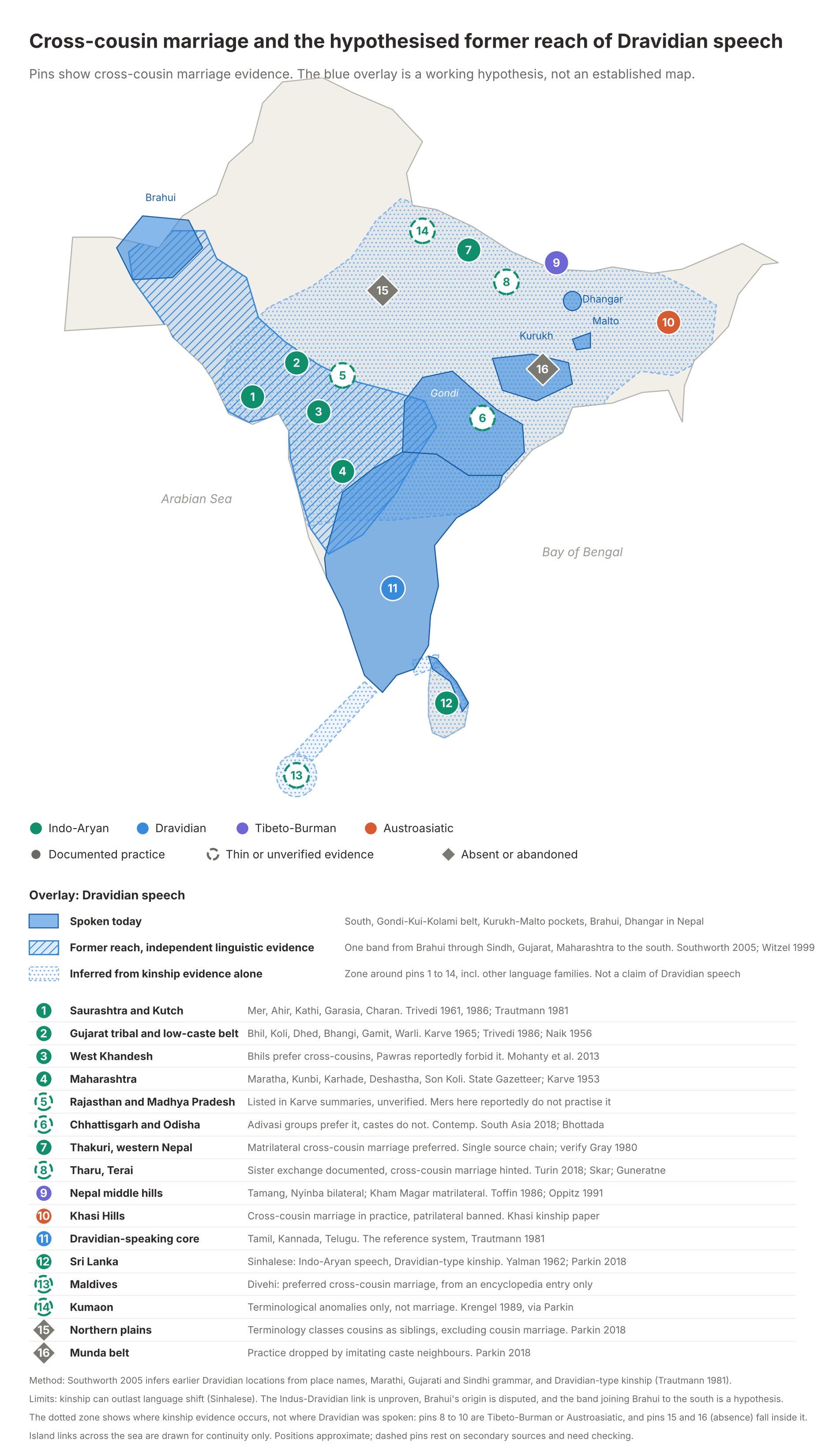
History /𑀯𑀭𑀮𑀸𑀵𑁆𑀭𑀼 How much of South Asia specifically India was once Dravidian? The answer is in who marries(d) whom

Post image
38 Upvotes

r/Dravidiology • • 1d ago

Archeology/𑀢𑀼𑀵𑀸 Keezhadi may be world's first site to have water recycling system — alongside evidence of indigo dyeing and high-value fabric exports to European countries.

Thumbnail
gallery
135 Upvotes

r/Dravidiology • • 2d ago

Culture/𑀆𑀝𑀼 My mother shared this photo which she refers as "Karthi suthuradhu". In rural Tamil Nadu, this is how fireworks were made for Karthigai Deepam. The green is from palm tree. The white packet is the powder that is ignited. You catch the rope and keep rotating it to create fire spirals in air.

Post image
31 Upvotes

r/Dravidiology • • 2d ago

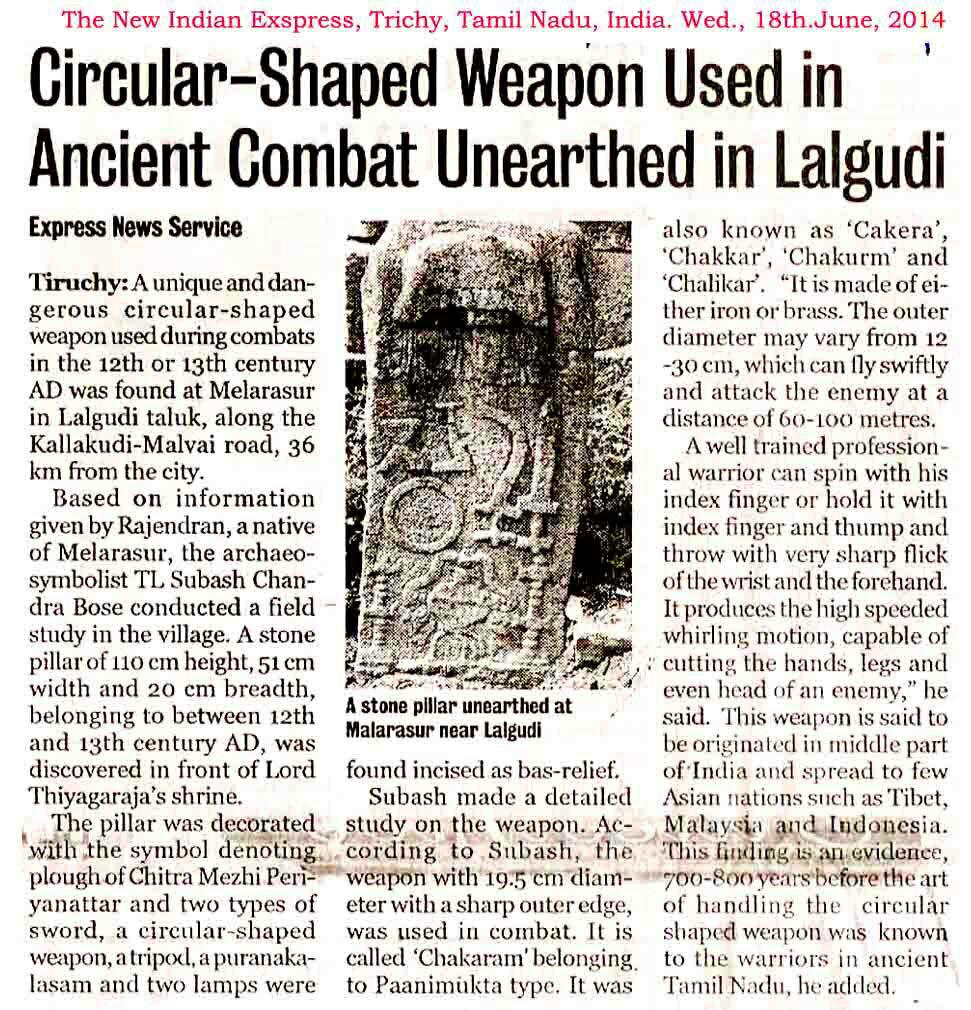
Ancient Weapons/𑀧𑀮𑀸 𑀆𑀬𑀼𑀢𑀫 Archaeologists found a 12th-century "Thikiri" (Ancient Tamil circular-shaped throwing weapon) carved into a stone pillar | Lalgudi, Trichy, Tamil Nadu

Post image
32 Upvotes

According to other Tamil archeologists this weapon is also known as சக்கரம்/ திகிரி/ வளையம்/ எறிவளையம்/ வளை/ பாறாவளை/ நேமி / பரிதி/ வலயம்/ ஆழி/ ஒளிவட்டம் / படைவட்டம்/ சுழல்படை (Cakkaram/ tikiri/ vaḷaiyam/ eṟivaḷaiyam/ vaḷai/ pāṟāvaḷai/ nēmi/ pariti/ valayam/ āḻi/ oḷivaṭṭam/ paṭaivaṭṭam/ cuḻalpaṭai resp.).

Tamil poems from the second century BC record it as thikiri (திகிரி). It's known in other languages as chakram (https://en.wikipedia.org/wiki/Chakram)


r/Dravidiology • • 1d ago

Linguistics/𑀫𑁄𑀵𑀺𑀬𑀺𑀬𑁆 Tamil alternation of /v/ and /g/

16 Upvotes

Has any work been done on understanding the Tamil alternation of /v/ and /g/ in specific contexts?

[Below I use k in the written Tamil examples and g in the spoken ones but of course, in the intervocalic contexts they exist in, they're identified in Tamil].

  1. cikappu vs. civappu is a known alternation even in written.
  2. Written tuvaiyal is rendered togayal in spoken.
  3. Written pākal + kāy > pākaṟkāy is rendered pāvakkāy in spoken.
  4. Written nāval + paḻam > nāvaṟpaḻam is rendered nāgappaḻam in spoken.

Does this phenomenon exist outside Tamil? Do we know what contexts this is viable? TIA.


r/Dravidiology • • 2d ago

Genetics/𑀫𑀭𑀧𑀺𑀬𑀮𑁆 Reconstructing the population history of the largest tribe of India: the Dravidian speaking Gond (2017)

Thumbnail academia.edu
10 Upvotes

Abstract

The Gond comprise the largest tribal group of India with a population exceeding 12 million. Linguistically, the Gond belong to the Gondi–Manda subgroup of the South Central branch of the Dravidian language family. Ethnographers, anthropologists and linguists entertain mutually incompatible hypotheses on their origin. Genetic studies of these people have thus far suffered from the low resolution of the genetic data or the limited number of samples. Therefore, to gain a more comprehensive view on ancient ancestry and genetic affinities of the Gond with the neighbouring populations speaking Indo-European, Dravidian and Austroasiatic languages, we have studied four geographically distinct groups of Gond using high-resolution data. All the Gond groups share a common ancestry with a certain degree of isolation and differentiation. Our allele frequency and haplotype-based analyses reveal that the Gond share substantial genetic ancestry with the Indian Austroasiatic (ie, Munda) groups, rather than with the other Dravidian groups to whom they are most closely related linguistically.


r/Dravidiology • • 2d ago

Discussion /𑀧𑁂𑀘𑀼 𑀯𑀸𑀘𑀼 Why is tamil the only major Dravidian language with nasalised vowels?

17 Upvotes

Telugu, kannada, Malayalam and Tulu all lack nasalised vowels while tamil has them?

Ex. /avã/ he , /paɻõ/ or /paɭõ/ or /palõ/ fruit, /karuppã/ blacky etc.

It is also clear that the

/am/ in old version of the word Tamil changed to /õ/

While the other words ending with m and n just made the last vowel nasalised.

Why did this not happen in any other major Dravidian languages?

Even Malayalam which is known to be very nasal containing double velar and palatal nasal consonants doesn't have this.


r/Dravidiology • • 2d ago

Question/𑀓𑁂𑀵𑁆 Does anyone know whats going on?

Thumbnail
gallery
22 Upvotes

r/Dravidiology • • 2d ago

Culture/𑀆𑀝𑀼 Dravidian folk dance forms like Karakattam and Poikkaal Kuthirai in Myanmar's Buddhist festival.

101 Upvotes

Karakattam - It is an ancient folk dance of Tamil Nadu usually dedicated to goddess Mariamman.

Poikkaal Kuthirai Aattam - It is a type of dance performed with a dummy horse having a gap inside so that a person can fit into it to perform the dance.

The local Burmese people have embraced a lot of cultural practices from the Tamil population who have been living in Myanmar for more than 150 years now.


r/Dravidiology • • 2d ago Bravo

Kinship/𑀓𑀼𑀝𑀼𑀫𑁆𑀧𑀫𑁆 The Mer of Saurashtra: Dravidian Kinship, Megalithic Burials and the Vēḷir Migration Tradition

Thumbnail
gallery
21 Upvotes

The Mer (Maher) of Saurashtra speak an Indo-Aryan language, but their kinship system is Dravidian in structure (Trivedi 1961; Trautmann 1981). Their traditional marriage rules match those of Tamil, Kannada and Telugu communities. Put that next to the megalithic burials found in neighbouring Kutch (Kumaran) and the old Tamil tradition that the Vēḷir chiefs came from Tuvarai, usually identified with Dvārakā in Gujarat (Puṟanāṉūṟu 201; Ramanathan 1969), and western India starts to look like a missing piece in the Dravidian story.

The Mer live mainly around Porbandar, the Barda Hills and nearby parts of Saurashtra. Anthropologist Harshad R. Trivedi studied them in The Mers of Saurashtra (1961) and returned to them in a 1986 follow-up focused on social change and cross-cousin marriage (Trivedi 1986). He found bilateral cross-cousin marriage, the core feature of Dravidian kinship. Your father’s brother’s children and your mother’s sister’s children are parallel cousins: they count as siblings and you can’t marry them. Your father’s sister’s children and your mother’s brother’s children are cross-cousins, and they are the preferred marriage partners. Most Gujarati Hindu communities forbid cousin marriage outright, which makes the Mer stand out (Trivedi 1986).

Thomas R. Trautmann analysed Mer kinship terms and showed that they sort relatives the same way Tamil does (Trautmann 1979: 157–166; Trautmann 1981). The Mer use four key terms. Māmā covers the mother’s brother, the father’s sister’s husband and the father-in-law. Fuī covers the father’s sister, the mother’s brother’s wife and the mother-in-law. Kākā covers the father’s brother and the mother’s sister’s husband. Māsī covers the mother’s sister and the father’s brother’s wife. This is the Dravidian pattern, where your uncle and your father-in-law can be the same category of person. Tamil works the same way: māmaṉ is both maternal uncle and father-in-law, and attai is both paternal aunt and mother-in-law. Kannada māva and atte do the same (Trautmann 1981). The Mer words are Indo-Aryan, but the system behind them is Dravidian, which shows Dravidian kinship reaching well beyond today’s Dravidian-speaking areas.

The Mer aren’t alone in Gujarat. Cross-cousin marriage has also been recorded among Ahirs, Kathis, Garasias, Gadhavi Charans, Kolis, Bhils, Dheds, and some Bhangi, Gamit and Warli groups. The Mer are simply the best documented, thanks to Trivedi and Trautmann.

Archaeologist R. N. Kumaran recorded twenty Iron Age and megalithic sites in Kutch, just north of Saurashtra: Avisar Mora, Baravad, Goliya I and II, Hajipir, Janganiya, Kulai, Maniyargadh, Motiber, Mudrai, Nagara, Navavas, Poana, Poina, Ringaivadi, Sanghi Rasta, Sukhapur, Thumdi, Vadsar and Zadva Rasta II (Kumaran). Most are in western Kutch, around Abdasa, Nakhatrana, Khirsara and Sanghi–Vadsar. They include dolmens, stone cists, cairn circles, menhirs and chamber tombs, mostly built from local limestone. Maniyargadh has dolmens, cairn circles and a chamber tomb; Goliya II has eight cists; Poina has eight menhirs in a line beside cairn circles (Kumaran). These are the same kinds of monuments found across the Deccan and the south, in Karnataka, Telangana, Andhra Pradesh and Tamil Nadu, in regions long associated with Dravidian speakers. The Kutch sites still need excavation and dating before anyone can say how they relate to the southern tradition.

Caṅkam Tamil literature links the Vēḷir chiefs to Tuvarai. In Puṟanāṉūṟu 201, the poet Kapilar approaches the Vēḷir chief Iruṅkōvēḷ, seeking husbands for the daughters of Vēḷ Pāri, and praises him as the heir of forty-nine generations of rulers of Tuvarai. Ramanathan notes that the old gloss calls the city “Tuvarāpati,” and that Iruṅkōvēḷ was clearly no longer ruling there in Kapilar’s time (Ramanathan 1969). Allowing about twenty-one years per generation and dating Kapilar to around A.D. 100, Rākavaiyaṅkār placed the arrival of the Vēḷir in Tamil Nadu around the tenth century B.C. (cited in Ramanathan 1969, n. 18), roughly the start of the Iron Age megalithic period in the south. The medieval commentator Nacciṉārkkiṉiyar, writing on the Tolkāppiyam, gives a fuller version: eighteen kings and eighteen Vēḷir families came south from Dvārakā, cleared forests, founded settlements and set up ruling lines in Tamilakam. Eighteen is a stock number in such stories, so it shouldn’t be read literally. Iravatham Mahadevan treated the tradition as a memory of real population movement from northwest India into the south (Mahadevan 2009).

Each piece on its own proves little. Together they point the same way: a Dravidian kinship system still alive among Indo-Aryan speakers in Saurashtra (Trivedi 1961, 1986; Trautmann 1981), southern-style megaliths in Kutch next door (Kumaran), and a Tamil tradition naming Dvārakā as the Vēḷir homeland (Puṟanāṉūṟu 201; Ramanathan 1969). That makes Saurashtra and Kutch worth a much closer look in the history of contact between western India and the Dravidian south.

References

Kumaran, R. N. “Iron Age Burials and Other Explorations in District Kachchh, Gujarat.” In Cultural Heritage and Archaeology: Ajoy Kumar Sinha Commemoration Volume.

Mahadevan, Iravatham. 2009. “Akatti: Agastya and the Indus Civilisation.” Proceedings of the Tamil Nadu History Congress.

Nacciṉārkkiṉiyar. Commentary on the Tolkāppiyam.

Puṟanāṉūṟu 201. Kapilar, addressed to Iruṅkōvēḷ.

Ramanathan, P. 1969. “Iruṅkoveḷ and the Koṭṭai Veḷāḷar: The Possible Origins of a Closed Community.” Bulletin of the School of Oriental and African Studies 32(2): 323–343. https://doi.org/10.1017/S0041977X00055324

Trautmann, Thomas R. 1979. “Dravidian Kinship.” In Aryan and Non-Aryan in India, 157–166.

Trautmann, Thomas R. 1981. Dravidian Kinship. Cambridge: Cambridge University Press.

Trivedi, Harshad R. 1961. The Mers of Saurashtra: An Exposition of Their Social Structure and Organisation.

Trivedi, Harshad R. 1986. The Mers of Saurashtra Revisited and Studied in the Light of Socio-Cultural Change and Cross-Cousin Marriage. New Delhi: Concept Publishing Company.​​​​​​​​​​​​​​​​

N.B :Used AI to check grammar and create flow, and create summary inforgraphics but the idea is mine based on academic sources.


r/Dravidiology • • 2d ago

Archeology/𑀢𑀼𑀵𑀸 3,000-year-old Megalithic stone circles and traces of ancient settlements found in a forest near Vandavasi, Tamil Nadu.

Post image
34 Upvotes

It has come to light that more than 50 stone circles dating back roughly 3,000 years exist near the village of Keezhnandiyambadi, close to Vandavasi.

Large stones have been planted upright in a circular formation with an empty center. Between 7 and 9 stones are set up along the perimeter of a circle. In some stone circles, the stones are scattered here and there.The circular perimeter measures up to about 150 cm.

In a few places, small brick-like stones and dark granite stones have been stacked in a circular mound.

Funerary monuments of this type can be considered to belong to the Megalithic period, around 3,000 years ago. In addition, traces of ancient settlements and water bodies are also visible.

Therefore, the Archaeology Department needs to conduct a proper excavation of these archaeologically significant Keezhnandiyambadi stone circles.

Fun fact : The Battle of Wandiwash that was fought between British and French as a part of the Carnatic wars happened in this town.

More on Megalithic burial tradition

Article


r/Dravidiology • • 2d ago

Question/𑀓𑁂𑀵𑁆 What's origin and story of Pili Kola of Kapu which is held once in 2 years?

8 Upvotes

r/Dravidiology • • 3d ago

Guardian Deity/𑀓𑀸𑀢𑁆 𑀅𑀬𑀺𑀁 Chola-period stone sculpture of guardian deity Ayyanar found in Tamil Nadu's Perambalur.

Post image
74 Upvotes

A rare Ayyanar stone sculpture dating back to the 11th-12th century CE, belonging to the later Chola period, was recently found in an agricultural field at Poolambadi village in Perambalur district.

The sculpture, measuring 68 cm in height and 51 cm in width, was found by history enthusiast Dr M Selvapandian in an agricultural field on the southern side of the Arumbavur-Poolambadi road during a field study in Poolambadi village, Veppanthattai taluk.

The deity is shown in a seated posture, holding a weapon in his right hand, while his left hand is positioned in a traditional gesture. The sculpture features matted hair, palm-leaf earrings, necklaces, a sacred thread and anklets, but its face and body are damaged due to neglect.

Speaking to TNIE, Dr M Selvapandian said, “The sculptures suggest that an Ayyanar temple existed here around 1,000 years ago before falling into ruins and the land being converted into farmland.”

A smaller female sculpture was found nearby. “The nearby female sculpture could belong to a royal woman who helped establish the temple,” he said, and added that the female sculpture’s worshipping posture also suggests that it is unlikely to be a deity. Such standalone female sculptures are rare, and a corresponding male sculpture might have existed.

Source


r/Dravidiology • • 3d ago

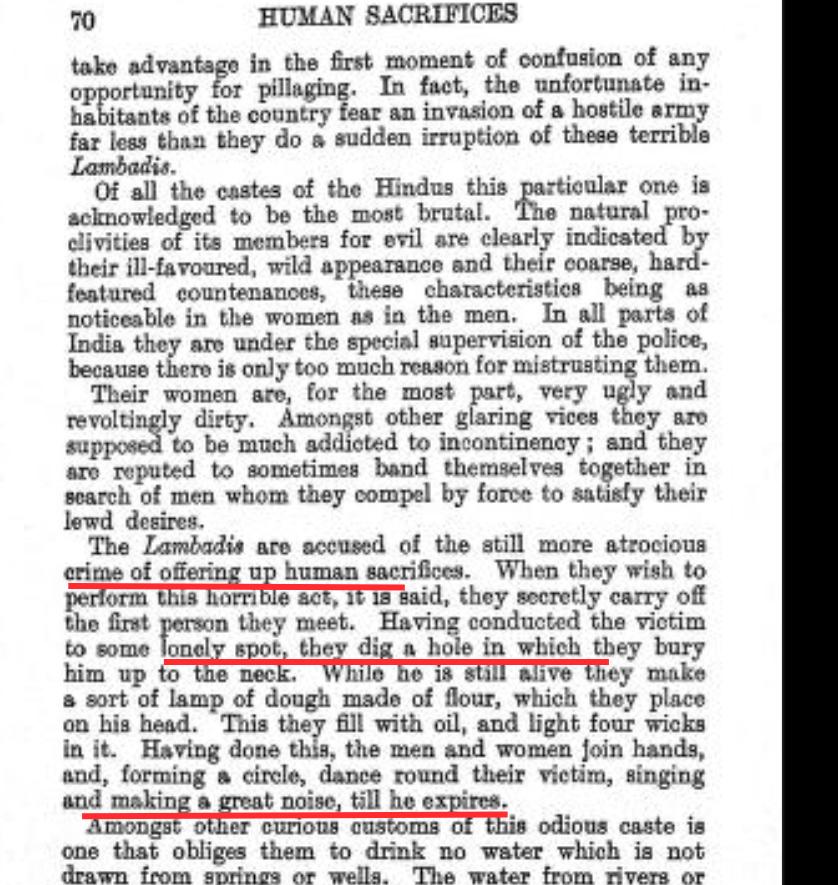
History /𑀯𑀭𑀮𑀸𑀵𑁆𑀭𑀼 Human Sacrifice Rituals Among the Lambadis: An Account by a French Missionary in South India

Post image
19 Upvotes

A disturbing account appears in the writings of the French Christian missionary Abbé J. A. Dubois, in his observations of Indian castes, customs and communities. The allegations presented here should be treated with caution as they are recorded in a colonial-era missionary account and should not be taken as established facts or as a representation of the a community.

The Lambadis, whom he described as "travelling communities whose sudden arrival was greatly feared by the inhabitants of the regions they traversed", were accused of taking advantage of confusion and disorder to engage in plundering. They were also placed under special police supervision in different parts of India.

One of the most extraordinary allegations concerns human sacrifice. He states that when the Lambadis wished to perform this ritual, they would secretly seize the first person they encountered and take the victim to an isolated location.

The victim was allegedly buried alive in a pit up to the neck. A lamp-like structure made from flour dough was then placed on the victim's head, filled with oil and fitted with four burning wicks.

The men and women would then join hands, form a circle around the victim, and dance and sing until the person died.

Source: Abbé J. A. Dubois, Hindu Manners, Customs and Ceremonies, section "Human Sacrifices"


r/Dravidiology • • 3d ago

Kinship/𑀓𑀼𑀝𑀼𑀫𑁆𑀧𑀫𑁆 Marathi Kinship Vocabulary, Cross - Cousin Marriage and the Dravidian Influence

Thumbnail
gallery
34 Upvotes

Marathi is an Indo-Aryan language, but Maharashtra lies between the North and South Indian kinship systems. Most Marathi kinship words are Dravidian with some being Indo-Aryan. Its marriage rules follow the Dravidian pattern.

Irawati Karve, in Kinship Organization in India (1953), divided India into northern, central and southern kinship zones. She placed Maharashtra in the central zone, with (some) northern-type words and southern-type marriage rules. Franklin Southworth later argued that Marathi grammar and vocabulary contain Dravidian substrate features.

Marathi Kinship Terms and Their Dravidian Parallels

Marathi ātyā (आत्या), father’s sister, compares with Tamil attai (அத்தை), Kannada atte (ಅತ್ತೆ) and Telugu atta (అత్త). In Dravidian languages the word also means mother-in-law, because a father’s sister’s daughter is a possible bride. Marathi ātyā means only father’s sister.

Marathi māmā (मामा), maternal uncle, matches Tamil māmaṉ, Kannada māva and Telugu māma. Krishnamurti reconstructs Proto-Dravidian māma, meaning both mother’s brother and father’s sister’s husband. In a cross-cousin system, both men are possible fathers-in-law. Hindi and other northern languages also use māmā, which suggests early borrowing from Dravidian.

Marathi akkā (अक्का), elder sister, matches Tamil and Kannada akka. It is used mainly in southern Maharashtra and as a respectful name for older women. Standard Marathi uses tāī (ताई) which is also derived from Dravidian.

Marathi aṇṇā (अण्णा), used for an elder brother, father or senior man, matches Tamil aṇṇā and Kannada aṇṇa. It is common in names and titles across Maharashtra.

Marathi appā (अप्पा), used for father or an older man, matches Tamil and Kannada appā. Its use in the same regions as akkā and aṇṇā points to Kannada contact.

Cousin Terms

Marathi names cousins with compounds. Cultabhāū (चुलतभाऊ) is the father’s brother’s son and māvasbhāū (मावसभाऊ) is the mother’s sister’s son. These are parallel cousins. Māmebhāū (मामेभाऊ) is the mother’s brother’s son and ātebhāū (आतेभाऊ) is the father’s sister’s son. These are cross-cousins. Marathi divides cousins the same way Dravidian kinship does, and both cross-cousin terms are built on Dravidian roots, māmā and ātyā.

Cross-Cousin Marriage in Maharashtra

North Indian Hindu custom forbids marriage between any cousins, and often between villages or clans already linked by marriage. Maharashtra does not follow this rule.

Karve recorded that many Maharashtrian communities, including Marathas and Deshastha Brahmins, allowed and often preferred marriage with the mother’s brother’s daughter, called māmācī mulgī. Marriage with the father’s sister’s daughter was accepted in some groups and disapproved in others.

Parallel cousins could not marry. A cultabhāū or māvasbhāū was treated as a brother.

When a man married his māmā’s daughter, the māmā became his father-in-law (sāsrā) and the māmī his mother-in-law. Tamil, Kannada and Telugu kinship have the same overlap.

Karve also recorded marriage between a man and his elder sister’s daughter in some communities near the Karnataka border. This custom is common in Tamil Nadu, Karnataka and Andhra Pradesh and rare in the rest of Indo-Aryan India.

Comparison With Sinhala

Sinhala borrowed both the words and the structure of Dravidian kinship. Marathi also kept Dravidian terms along with Indo-Aryan words but took on the Dravidian marriage structure. Its Dravidian terms, ātyā, māmā, akkā, aṇṇā and appā, cover the relatives that matter most in cross-cousin marriage. Akkā, aṇṇā and appā are most common in southern Maharashtra, where contact with Kannada and Telugu speakers has lasted longest.

Marriage rules varied by caste, region and period. Not every Maharashtrian community practised cross-cousin marriage, and urban practice has changed over the last century.

Conclusion

Marathi kinship uses mostly Dravidian and Indo-Aryan words but follows Dravidian structure. Its cousin terms separate cross and parallel cousins, and unlike North India, its marriage rules allow cross-cousin marriage. A few Dravidian loans, mainly ātyā and māmā, show contact with Kannada and Telugu.

References

Burrow, Thomas, and Murray B. Emeneau. 1984. A Dravidian Etymological Dictionary. 2nd ed. Oxford University Press.

Karve, Irawati. 1953. Kinship Organization in India. Poona: Deccan College. 2nd ed. 1965, Bombay: Asia Publishing House.

Krishnamurti, Bhadriraju. 2003. The Dravidian Languages. Cambridge University Press, pp. 10, 530.

Southworth, Franklin C. 1971. “Detecting Prior Creolization: An Analysis of the Historical Origins of Marathi.” In Pidginization and Creolization of Languages, ed. Dell Hymes, 255–273. Cambridge University Press.

Southworth, Franklin C. 2005. Linguistic Archaeology of South Asia. London: RoutledgeCurzon.

Trautmann, Thomas R. 1981. Dravidian Kinship. Cambridge University Press.​​​​​​​​​​​​​​​​


r/Dravidiology • • 3d ago

Water Craft/𑀫𑀭𑀓𑀓𑀮𑀫 Traditional wooden boats on the coast of Murraveli Beach, Trincomalee, Eelam | June 25, 1984

Thumbnail
gallery
15 Upvotes
  • Image info for slide 3: The current name of Murraveli Beach is Samudragama (a Sinhala-colonized name). Across the bay, the walls of Fort Frederick stand opposite the Gokanna Rajamaha Vihara, a Buddhist temple (image inserted by the original author).

Image credits: Rick Horn, 1984 via Flickr

--------------------------------------------------------------------------------------------

Two types of small boats, known locally as "Vallam" in Tamil, can be seen on this beach: those with outriggers and those without. Although the general term persists, the specific historical names for these distinct vessels have been lost over time.


r/Dravidiology • • 3d ago

Off Topic/ 𑀧𑀼𑀵𑀸 𑀧𑁄𑀭𑀼𑀵𑁆 Andaman & Nicobar - The curious case of two wave migration and what happened to their respective languages.

Post image
23 Upvotes

Andaman :

Migration : Genomic studies (such as Narasimhan et al., 2019 and Chaubey & Endicott) show that indigenous Andamanese groups (Onge, Jarawa, Great Andamanese, Sentinelese) share deep ancestry with AASI (Ancient Ancestral South Indians). Specifically, they belong to the basal "Eastern Eurasian" lineage (carrying haplogroups like mtDNA M31/M32 and Y-DNA D-M174) that split from mainland AASI-related populations roughly 45,000–55,000 years ago during the early coastal dispersal out of Africa, remaining almost completely isolated afterward.

Languages : Most of the Andamanese languages went extinct over time, except for a few like Jarawa (fewer than 500 speakers) and Onge (around 100 speakers). This is because the Andamanese were mobile hunter-gatherers, and a large proportion of them were wiped out once the British established the penal colony at Port Blair in 1858. Just as in the Americas and Australia, the colonialists introduced diseases (such as measles and influenza) to the Indigenous population, who had been isolated for 50,000 years. Today, Hindi serves as the lingua franca alongside other Indian languages in the Andaman Islands.

Nicobar :

Migration : The Nicobarese represent a much later Neolithic/early Metal Age dispersal from Mainland Southeast Asia, roughly 2000–1000 BCE. Linguistically, Nicobarese languages form a primary branch of the Austroasiatic family (distantly related to Mon, Khmer, Vietnamese, and mainland Indian Munda languages). Genetically, Nicobarese carry high levels of East/Southeast Asian Neolithic ancestry (Y-DNA O-M95, the classic Austroasiatic marker) mixed with a smaller fraction of older AASI/Onge-like substrate ancestry, suggesting they either absorbed an earlier hunter-gatherer population on the islands or mixed with mainland groups before crossing over.

Languages : Nicobarese (especially Car Nicobarese) is actively spoken today by tens of thousands of people, alongside Hindi and English. Unlike the Andamanese, who were isolated for 50,000 years, the Nicobarese people lived on islands sitting directly along the ancient Bay of Bengal maritime trade routes (linking South Asia and Southeast Asia); as a result, they had already been exposed to Old World diseases and possessed partial immunity. Although Europeans (the Danish, Austrians, and British) did take over the islands, their impact on the Indigenous population was not as catastrophic as it was in the Andaman Islands.

Comparing Andaman with Australia and Nicobar with New Zealand :

The analogy works to an extent, as Australia's first-ever settlers were the Aboriginal Australians, who were part of the same Out of Africa wave as the AASI and Andamanese peoples who began migrating 50,000 years before present (YBP). The British set up their penal colonies in Australia just as they did in Port Blair, and the Aboriginal population experienced a 90% collapse because they had no immunity to European diseases.

Just as the Nicobarese had later migrants, the Polynesian Māori arrived in waves in New Zealand by 1250–1300 CE. In New Zealand, the British negotiated through chiefs (culminating in the Treaty of Waitangi, however contested); in Nicobar, the British governed lightly through existing village headmen (captains). Both populations rapidly adopted missionary literacy in the Latin script and Christianity (e.g., Māori literacy in the 1830s; Bishop John Richardson and Car Nicobarese literacy in the early 20th century), using new institutions to preserve language and collective identity.


r/Dravidiology • • 3d ago

History /𑀯𑀭𑀮𑀸𑀵𑁆𑀭𑀼 Slippers, Palanquins and Bloodshed: The Forgotten Caste Rivalries of South India

Thumbnail
gallery
22 Upvotes

The Right-Hand (Valangai) and Left-Hand (Idangai) factions were two broad caste groupings in South India, comprising numerous communities with competing claims to social and ceremonial privileges.

The Left-Hand faction included the Vaishyas or trading communities, the Panchalas or artisan communities, and some of the lower Sudra castes. The Chuchlers (leather-workers) were regarded as one of its chief supporting groups.

The Right-Hand faction comprised most of the higher Sudra castes, with the Pariahs as its chief supporters. The Brahmins, Rajahs and several other Sudra communities generally remained neutral and were often chosen as arbitrators when disputes arose.

The rivalry between these two factions became a perpetual source of riots and animosity. Their disagreements frequently revolved around claims to exclusive privileges, which were often poorly defined and recognised by neither side as belonging exclusively to the other.

The privileges over which they fought might appear surprisingly ordinary today. They included:

The right to wear slippers during public appearances. The right to ride horses or travel in palanquins during marriage processions. The privilege of being accompanied by armed retainers on certain occasions. The right to have trumpets sounded ahead of a procession. The use of particular musical instruments during public ceremonies. The right to carry flags of specific colours or designs.

Even the privilege of wearing particular flowers in turbans during public ceremonies.

Yet these disagreements were far from peaceful. When one faction believed the other had violated its customary rights, disturbances could spread across large territories and eventually end in bloody conflicts. The hostility could become so intense that even military intervention was sometimes insufficient to restore order.

On some occasions, rioters reportedly stood their ground against several discharges of artillery without showing any sign of submission. Even when armed forces succeeded in restoring peace, it was often temporary. At the first opportunity, the factions were ready to renew their conflicts.

The Pariahs were particularly prominent in these confrontations. They were regarded as the chief supporters of the Right-Hand faction, and were frequently the ones who caused the greatest disturbances and damage during disputes between the two groups.

Dubois also recounts an incident he personally witnessed involving a dispute between the Pariahs and the Chuchlers (leather-workers). The dispute arose when a Chuchler appeared at a public ceremony wearing red flowers in his turban, a privilege that the Pariahs claimed belonged exclusively to the Right-Hand faction.

The disagreement became so serious that there were fears of widespread violence throughout the district. Many peaceful inhabitants began abandoning their villages and moving their belongings to places of safety, anticipating serious consequences. The situation was eventually brought under control when prominent inhabitants of the district intervened as mediators and settled the dispute through diplomacy and conciliation.

Another interesting observation concerns the origins of these divisions. Dubois considers the Right-Hand and Left-Hand distinction a relatively modern institution. He notes that it was not mentioned in the ancient books of the country and that he had been told the division was unknown in Northern India.

These rivalries reveal how deeply questions of caste identity, social precedence, public recognition and traditional privileges could shape community relations. What might appear to be a minor ceremonial disagreement could become a district-wide disturbance, with people risking their lives rather than surrendering what they considered their customary rights.

Source: Abbé J. A. Dubois, Hindu Manners, Customs and Ceremonies (1905 edition)