Are you looking for feedback or information on your salary or career? Then you've come to the right thread. If your questions are anything like the following example questions, then ask away:
Am I underpaid?
Is my offered salary market value?
How do I break into [industry]?
Will I be pigeonholed if I work as a [job title]?
What graduate degree should I pursue?
Message the mods for suggestions, comments, or feedback.
I would like to thank you everyone for participating in the annual 2026 ME Salary survey. Total respondents was a little over 600, so less than last year, but about 589 US responses.
Here are the main results. It took about 2 hours to "clean" the data manually. Afterwards, I basically used Gemini to create the graphs + tables, since last time it literally took me about 7 hours to do everything manually on Excel last time and there were still questions. The key points and takeaways from the data is a combination of AI and editing the information to be more readable (still took 4 hours). In addition, I wouldn't worry about math too much, since Gemini basically just used python code to decipher the edited CSV file.
Industry:
Industry
Number of Respondents
Manufacturing
175 (29.7%)
Aerospace/Defense
173 (29.4%)
Technology (FANG, AI, Robotics, etc.)
54 (9.2%)
MEP (HVAC, Construction, etc.)
38 (6.5%)
Utilities (Power, Renewables, etc.)
35 (5.9%)
Pharmaceutical & Medical Devices
31 (5.3%)
Oil and Gas
28 (4.8%)
Consumer Goods
15 (2.5%)
Government
11 (1.9%)
There were some other industries like nuclear, logistics, and etc. but the few data points aren't included in the table for brevity. The data was included in the total set though
A majority of the mechanical engineers trends will use the Aerospace/Defense and Manufacturing data since there is the most data that is available
Salary and Year of Experience:
*Note: Total Compensation/Salary = Base Salary + Bonus + RSU + Base Salary * 401k Match
If you want to look at one graph and table to explain the progression track here it is:
YOE Range
Median Base (Unadj)
Median Total (Unadj)
Median Base (COL Adj)
Median Total (COL Adj)
Count
0-1 Year
$87,000
$96,036
$81,699
$87,368
43
2 Years
$84,000
$91,046
$84,615
$90,909
71
3 Years
$94,550
$105,965
$94,082
$102,289
62
4-5 Years
$104,000
$119,770
$94,881
$107,762
116
6-8 Years
$120,000
$136,800
$112,500
$127,911
119
9-12 Years
$125,500
$146,985
$123,444
$142,555
96
13-20 Years
$157,290
$181,840
$144,254
$171,731
64
20+ Years
$196,500
$211,426
$163,399
$191,042
15
Key Takeaways:
The "Benefit Gap": The space between the solid lines (Total Compensation) and the dashed lines (Base Salary) represents the added value from annual bonuses and employer 401k matching. For a mid-career engineer (6-8 years), this extra value is roughly $16,800 on average.
Late Career Leverage: As engineers gain seniority (13+ years), the gap between base salary and total compensation grows significantly, suggesting that bonuses and incentive programs make up a larger portion of the package for senior-level and leadership roles.
Purchasing Power: The COL Adjusted lines (Orange) consistently track below the un-adjusted lines (Blue), highlighting that high-paying mechanical engineering roles are frequently located in markets where the dollar doesn't stretch as far as the national average.
Education:
Majority of the respondents are at max a bachelor degree holder. However, there is still a significant number of master's students
Now about the age old question: does having a Master's degree lead to higher future salary?
Short Answer: In general, the answer is yes if there is a chance to specialize. It is explained in the table below:
Industry
Career Stage
Education
Median Total (Unadj)
Median Total (COL Adj)
Count
Aerospace & Defense
0-3 Years
Bachelors
$96,664
$95,201
44
Masters
$116,600
$108,316
15
4-7 Years
Bachelors
$125,410
$110,659
39
Masters
$173,000
$148,432
9
8-15 Years
Bachelors
$161,750
$140,202
33
Masters
$154,905
$149,658
16
15+ Years
Bachelors
$207,080
$187,505
7
Masters
$211,426
$207,872
5
Manufacturing
0-3 Years
Bachelors
$88,220
$93,452
52
Masters
$93,740
$91,850
6
4-7 Years
Bachelors
$108,992
$106,701
45
Masters
$129,800
$128,407
12
8-15 Years
Bachelors
$135,425
$142,440
44
Masters
$136,298
$129,984
8
15+ Years
Bachelors
$182,650
$187,127
5
Now you can see that for manufacturing, the benefits is not as prominent, while it is evident in aerospace. This makes sense, since Aerospace have very high specialization salary, for instance: hypersonic or eVtol which pays a ton for total compensation based on years of experience.
Answer: if your company pays for your masters, do it, but it doesn't seem that beneficial near the end of your career.
Internships & Coops:
Key Insights:
The "Experienced" Majority: A combined 85% of respondents completed at least one internship or co-op. This underscores how critical early-career work experience has become for landing a full-time role in mechanical engineering.
Co-op Advantage: The 20% of respondents with "3+ Internships" often represent those in formal co-op programs (where students rotate between school and work over several years). These candidates typically command higher starting salaries shown in the table below:
Industry
0-1 Internship
2+ Internships
New Grad Premium
Aerospace & Defense
$82,000
$91,500
+$9,500
Manufacturing
$74,000
$82,000
+$8,000
MedTech
$80,500
$89,000
+$8,500
Certifications:
Here is the graph of a major certifications from the survey:
We always see a question on whether certifications are worth it:
Aerospace & Defense: Certification vs. Total Compensation
Experience
Education
Has Cert?
Median Unadj. Total
Median Adj. Total
Count
0-3 Years
Bachelors
No
$97,900
$95,426
41
Yes
$95,040
$64,653
3
4-7 Years
Bachelors
No
$125,315
$106,672
36
Yes
$128,580
$138,258
3
8-15 Years
Bachelors
No
$159,660
$139,839
31
Yes
$280,425
$177,895
2
Masters
No
$151,410
$142,043
13
Yes
$209,658
$216,142
3
Manufacturing: Certification vs. Total Compensation
Experience
Education
Has Cert?
Median Unadj. Total
Median Adj. Total
Count
0-3 Years
Bachelors
No
$88,020
$91,944
43
Yes
$90,450
$99,746
9
4-7 Years
Bachelors
No
$108,805
$106,615
36
Yes
$108,992
$106,701
9
8-15 Years
Bachelors
No
$135,000
$136,541
31
Yes
$136,000
$151,111
13
Masters
No
$152,212
$122,728
6
Yes
$134,815
$141,636
2
Key Findings:
High-Experience Premium in Aerospace: The most dramatic impact of certification appears in the mid-to-late career in Aerospace & Defense (8–15 years). Engineers with a Bachelors and a certification earn a median total compensation significantly higher than those without. Even among Masters holders in this range, certified engineers have a median total comp of $209k vs $151k for non-certified.
Manufacturing Stability: In the Manufacturing industry, certifications (often Six Sigma or FE/PE) lead to a very modest increase in un-adjusted base pay, but a more noticeable improvement in COL-adjusted pay. This suggests that certified engineers in Manufacturing may have more flexibility to find high-paying roles in lower-cost-of-living areas.
The "Entry-Level Paradox": For junior engineers (0–3 years), having a certification (likely the FE) does not immediately result in a salary premium. In fact, in Aerospace, the un-adjusted median for those with certifications was slightly lower, possibly because those engineers are still in entry-level rotation programs where pay is standardized regardless of credentials.
Masters + Certification: For those who already have a Masters, adding a certification provides a significant late-career boost (as seen in the 8–15 year group in Aerospace).
Answer: Certification can be worth it for select industries. PE is known for civil to open doors and increase pay.
Job Titles:
Job Role Category
Number of Respondents
Percentage
Mechanical Engineer (General)
229
38.9%
Design Engineer
97
16.5%
Project & Systems Engineer
59
10.0%
Management & Leadership
55
9.3%
Manufacturing & Process Engineer
54
9.2%
Specialized (Thermal, Stress, R&D)
34
5.8%
Other / Misc
61
10.4%
Key Insights:
General vs. Specialized: Nearly 40% of respondents identify with the broad title of "Mechanical Engineer," which often includes generalists or those in mid-level positions.
The Design Dominance:Design Engineering is the second largest single group, reflecting the high demand for CAD-based design and product development across aerospace, tech, and manufacturing industries.
Transition to Leadership: About 9% of respondents hold titles in Management & Leadership (Manager, Director, VP), which led to a higher salary
Project and Systems focus:1 in 10 engineers focuses on Project or Systems Engineering, highlighting the importance of multidisciplinary coordination and technical management in modern engineering projects.
The Specialty Niche: The "Specialized" category includes highly technical roles like Thermal Analysis, FEA, Simulation, and Research & Development, which often require higher educational levels or deep domain expertise.
Salary Grade vs. Salary:
Grade Level
Industry
Median Annual Salary
Typical Experience (YOE)
Sample Count
Level 1 (Entry)
Aerospace & Defense
$88,400
1.0 year
39
Manufacturing
$80,250
2.0 years
39
Level 2 (Mid)
Aerospace & Defense
$102,273
3.8 years
48
Manufacturing
$95,000
5.0 years
71
Level 3 (Senior)
Aerospace & Defense
$130,000
8.0 years
57
Manufacturing
$119,600
9.0 years
50
Level 4 (Lead/Manager)
Aerospace & Defense
$170,500
11.0 years
22
Manufacturing
$136,000
11.0 years
11
Level 5+ (Principal/Director)
Aerospace & Defense
$206,000
20.0 years
9
Manufacturing
$136,500
14.0 years
4
Efficiency of Experience: In Aerospace, engineers tend to reach Level 2 and Level 3 roughly 1–1.2 years faster than those in Manufacturing, while also earning more.
The Level 4 Ceiling: In Manufacturing, the salary jump from Grade 3 to Grade 4 is roughly $16k, whereas in Aerospace, that same promotion yields a massive $40k jump in median base salary.
Which Industry Pays the Most?
Major Caveat: at 16+ YOE, the data points are only a couple, which skews the data upward.
Based on the comprehensive US survey data, the Technology (FANG, Robotics, AI, Consumer Electronics) industry emerges as the highest-paying sector for mechanical engineers when considering total compensation (Base Salary + Annual Bonus + 401k Match).
Tech Compensation Package:
Years of Experience
Avg. Total Comp (Unadjusted)
Avg. Total Comp (Adjusted for COL)
Number of Respondents
0-2 YOE (Entry)
$117,316
$100,292
7
3-5 YOE (Junior)
$180,854
$138,040
17
6-10 YOE (Mid-Level)
$182,773
$134,543
14
11-15 YOE (Senior)
$259,993
$220,256
11
16+ YOE (Principal)
$244,775
$177,043
5
The Oil and Gas industry stands out as the second most lucrative sectors for mechanical engineers, particularly as they reach senior and principal levels. While Tech offers the highest overall unadjusted compensation, Oil and Gas actually offers the highest Cost of Living (COL) Adjusted compensation, meaning your real purchasing power in this industry is the highest among all major sectors.
Years of Experience
Avg. Total Comp (Unadjusted)
Avg. Total Comp (COL Adjusted)
Number of Respondents
0-2 YOE
$95,864
$83,178
5
3-5 YOE
$117,289
$111,155
7
6-10 YOE
$138,959
$139,773
7
11-15 YOE
$204,097
$219,757
6
16+ YOE
$408,040
$399,276
3
Overtime Pay:
Industry Trends: Overtime pay is slightly more common in Manufacturing (where production deadlines are rigid) and Consulting/EPC (where hours are billable to clients) compared to R&D or Aerospace.
Work Hours:
Work Hours Category
Number of Respondents
Percentage
Exactly 40 Hours
337
57.2%
41-45 Hours
146
24.8%
46-50 Hours
49
8.3%
<40 Hours
50
8.5%
>50 Hours
7
1.2%
Key Observations:
The "40-Hour" Standard: Over half of the engineers surveyed manage to stick to a strict 40-hour week, which is a positive sign for work-life balance in the profession.
Moderate Overtime: Roughly a quarter of engineers work an extra 1 to 5 hours a week (41-45 hours total), often representing "straight time" or expected professional dedication without formal overtime pay.
The High-Hours Exception: Only a small fraction (under 10%) report working more than 45 hours consistently. This is significantly lower than in fields like investment banking or high-tier management consulting, suggesting a relatively stable lifestyle for most US mechanical engineers.
Flexibility: About 8.5% of respondents work fewer than 40 hours, which often aligns with part-time roles, senior consultants, or companies with flexible "9/80" schedules where some weeks are shorter.
401k Summary:
Match Rate Range
Count of Responses
Percentage
4% - 5%
211
35.8%
1% - 3%
125
21.2%
6% - 7%
120
20.4%
8% - 10%
65
11.0%
No Match (0%)
56
9.5%
> 10% / Other
12
2.0%
Key Takeaways:
The Industry Standard: A 4–5% match is clearly the most common benefit, covering over a third of the surveyed population.
High-Tier Benefits: Roughly 13% of engineers receive a match of 8% or higher, which often indicates highly competitive benefit packages in specialized industries.
Retirement Security: The low percentage of "No Match" responses (under 10%) highlights that retirement contributions are a standard and expected part of total compensation in the US mechanical engineering market.
Remote Work Distribution:
Remote Category
Number of Respondents
Percentage
Fully In-Person (0%)
248
42.1%
Mostly In-Person (1-39%)
163
27.7%
Hybrid (40-60%)
118
20.0%
Fully Remote (100%)
38
6.5%
Mostly Remote (61-99%)
22
3.7%
Key Insights:
The "Hands-On" Requirement: Over 40% of mechanical engineers are required to be in the office or on-site 100% of the time. This is significantly higher than other engineering fields like Software or Data Science.
The Hybrid Standard: Roughly 48% of the workforce has some form of hybrid flexibility (ranging from 1% to 60% remote). Many companies now allow 1–2 days of remote work for documentation, CAD modeling, or administrative tasks.
Fully Remote is Rare: Only 6.5% of mechanical engineers work fully remotely. These roles are typically in specialized areas like pure Simulation/FEA, Project Management, or Sales Engineering where physical hardware access is not required daily.
The Hybrid Middle Ground: The 40–60% range (often 2–3 days per week) is a common "sweet spot" for engineering firms trying to balance teamwork/lab time with employee flexibility.
Paid Time Off (Days):
*Note: one issue is many jobs had unlimited sick time, which I just added 10 days. Next time I will edit the form to separate the sick days so it makes more sense.
PTO Category (Includes Sick Days)
Number of Respondents
Percentage
0–10 days
30
5.2%
11–15 days
112
19.5%
16–20 days
160
27.9%
21–25 days
100
17.4%
26–30 days
61
10.6%
31+ days
32
5.6%
Unlimited
78
13.6%
Key Insights:
The " 3 - 5 Week" Benchmark: The majority of mechanical engineers (over 45%) receive between 16 and 25 days of PTO.
The Rise of Unlimited PTO: About 13.6% of respondents now have "Unlimited" PTO.
Generous Packages: Roughly 16% of engineers receive more than 30 days of PTO, which is often a hallmark of high-seniority roles, government/defense positions, or companies that reward long tenure.
The Lean End: Only about 5% of respondents are on the low end with 10 days or fewer, suggesting that a minimum of two weeks of PTO is a standard baseline for the industry.
Now some of you might have questions regarding years of experience and PTO:
Average PTO by Experience (Fixed PTO)
Experience Level
Average PTO Days (per year)
Typical Range (25th-75th Percentile)
0–2 Years
16.9
10–15 days
3–5 Years
19.6
15–20 days
6–10 Years
21.1
20 days
11–15 Years
24.5
20–25 days
16+ Years
26.5
25–30+ days
Analysis of the Trend:
The "Standard Jump": Many engineers start with 15 days (3 weeks) and see their first significant "tenure bump" to 20 days (4 weeks) after reaching the 5-year mark.
Senior Perks: By the time an engineer hits 15+ years of experience, a 5-week (25-day) or 6-week (30-day) PTO package becomes the new baseline.
Job Hopping Factor: The data suggests that while tenure within a single company increases PTO, "job hopping" every 3–5 years also allows engineers to negotiate higher starting PTO tiers at their new employers, effectively "skipping" the long wait for tenure-based increases.
Health Insurance:
Satisfaction Level
Number of Respondents
Percentage
Free / Excellent
38
6.5%
Good (Low Premium/High Coverage)
211
36.3%
Average
288
49.5%
Poor (High Premium/Low Coverage)
41
7.0%
Other / Misc
4
0.7%
Key Insights:
The "Standard" Plan: Almost 50% of engineers describe their insurance as "Average," highlighting that standard employer-sponsored health insurance is common but not particularly outstanding in terms of premiums or coverage levels.
Competitive Benefits: Over 42% of respondents fall into the "Good" or "Free" categories. The 6.5% who receive "Free/Excellent" coverage likely work for highly competitive tech firms, established defense contractors, or companies that use premium benefits as a retention tool.
Under-Served Minority: Roughly 7% of the engineering workforce feels their health insurance is "Poor," usually characterized by high out-of-pocket costs and high monthly premiums.
Biggest Cons for Mechanical Engineering:
Category
Typical Concerns Mentioned
Workload & Hours (112 mentions)
High pressure, tight deadlines, long hours, and poor work-life balance. Many mentioned "start-up energy" even in established firms.
Salary & Compensation (73 mentions)
Low raises (2–3%), "salary plateauing" early in the career, and the absence of stock options or significant bonuses compared to tech.
Remote Work Limits (47 mentions)
Frequent requirements to be in the office or on the manufacturing floor with "no remote option" or "No WFH" (Work From Home) policies.
Career Growth (35 mentions)
Concerns about "pigeon-holing," slow internal promotion tracks, and becoming "stagnant" in one technical area.
Competitive base pay, annual bonuses, and strong 401k matching programs.
Work-Life Balance (75 mentions)
Flexible schedules, reasonable working hours (standard 40h), and generous PTO.
Culture & People (70 mentions)
Great teammates, supportive management, and a collaborative "team-first" environment.
Interesting Work (65 mentions)
Designing "cool" products, working on challenging technical problems, and having a clear mission.
Job Stability (28 mentions)
Long-term security, consistent demand for the role, and the stability of established firms.
Remote/Hybrid (27 mentions)
The ability to work from home part-time or have flexible geographic location.
Direct Insights from Engineers:
On Work Quality:"The actual work we do is really interesting, fun, and rewarding. Getting to see a design go from CAD to a physical product is the best part."
On Culture:"Great coworkers and a team environment where people actually mentor you instead of just giving you tasks."
On Flexibility:"Remote flexibility and a management team that trusts you to get your work done without micromanaging your hours."
On Compensation:"The total compensation package—including the 401k match and the annual bonus—makes the technical pressure worth it."
Now for Improvements on Suggestions on the Survey:
Regarding the COL instructions: totally my fault, sorry for not catching it. All of you were able to figure it out, but changed instructions from 0 - 2, so it makes a lot more sense now.
Adding a column for manager and IC: totally good suggestion, already added to new survey for 2027
Regarding adding gender or age: I will not add this into the survey just to make it more anonymous. I really do not see the value in this data, and I recommend just using government data to find the data.
Regarding the health insurance question: I have implemented the change on making it have three questions: annual premium, annual deductible, person coverage. I really did not want to make this part too complicated with max out of pocket and copay and etc. I think the premium, coverage and deductible is acceptable amount.
Edited the salary section to organize the % 401k match, salary, bonus, RSU to be in the same section making it easier, but separated the questions.
Comparison from the 2024, 2025 and 2026 Reddit Survey Results will be in another post, since this post is getting insanely long. Again, any other improvements or suggestions, please just comment below.
TDLR: Just check the 1st salary graph if you want the main results.
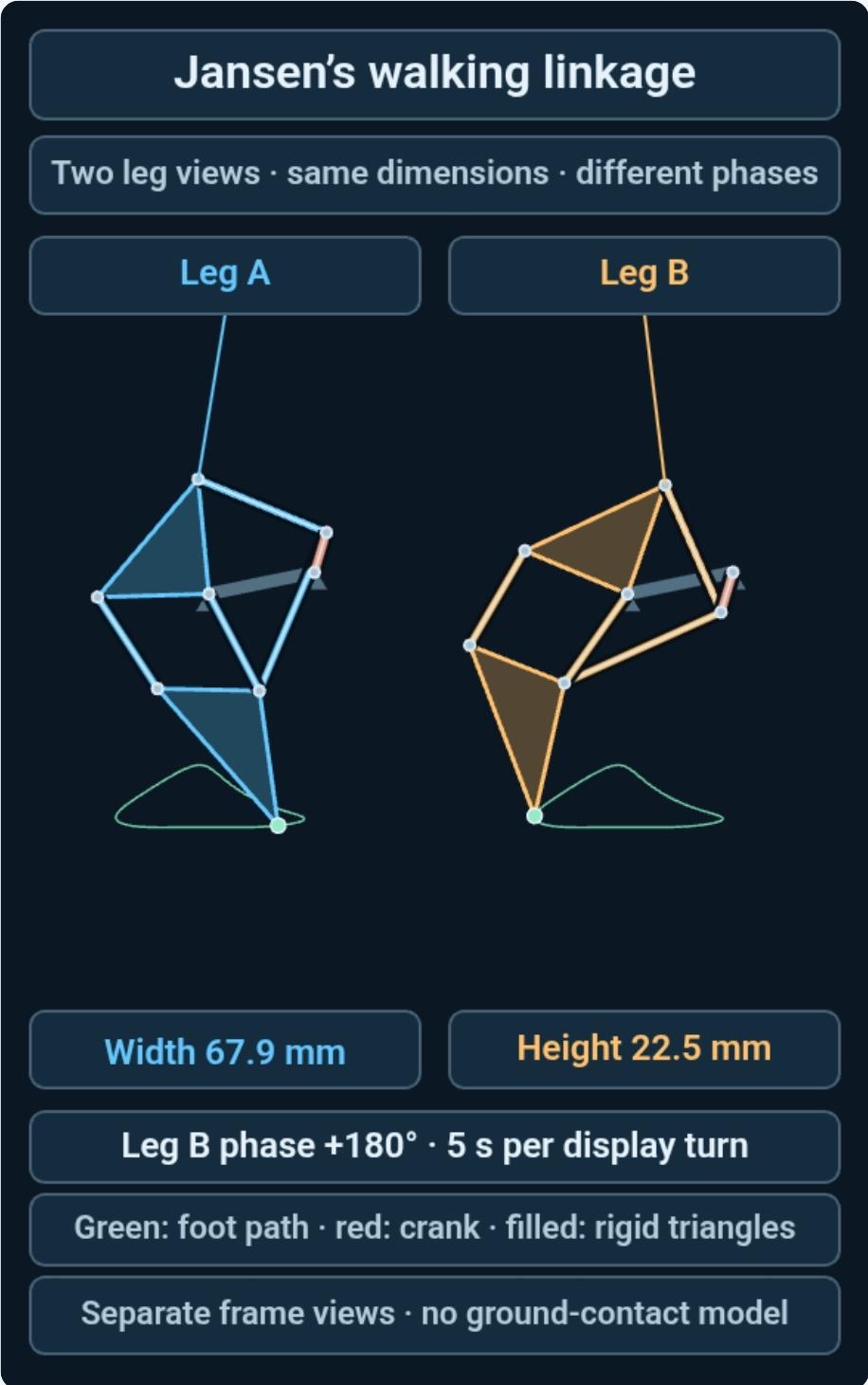
Hello i guys i Have been working on a jansen windbot as part of a challenge in my university, but I've run into a big problem, my jansen bot is supposed to have maximum dimensions of 20×30×50 cms and it has to have a minimum step height of 5 cms, but for the life of me I cant figure out how to make the legs fit in the 20cm max dimensions while also increasing the step height from the standard 2.25 cms to atleast 5cms, if anyone has a suggestion please let me know
P.s. I'm new to this sub-reddit and reddit overall if this is not a topic i can discuss here please tell me where i can place this question, thank you so much
**Can I include my work-related engineering activities as projects on my resume?** Hi everyone, I’m a Mechanical Engineering graduate with almost 3 years of experience in the electronics manufacturing industry, currently working as a Product/Process Engineer. I’m updating my resume and wondering whether I should include a separate projects section or just include everything under my work experience. Here are some examples of the work I’ve been involved in: **1. New Product Introduction (NPI) and Process Transfer** Transferring manufacturing processes from a supplier to our manufacturing facility. Preparing manufacturing layouts, equipment and fixture requirements. Conducting DOE to establish suitable process parameters. **2. Welding Process Improvement** Investigating inconsistent welding force and product quality issues. Conducting load cell testing, pneumatic pressure verification and welding parameter trials. Working with equipment suppliers on machine modifications and improvement verification. **3. Wire Tension and Gripper Improvement** Investigating wire tension fluctuations and gripper slippage. Evaluating gripper surface modifications. Conducting mechanical testing to verify improvements. **4. Power Supply Unit Process Optimisation** Conducting DOE for dispensing, UV curing, potting, PCB cleaning and depaneling processes. Optimising vacuum process parameters to reduce air bubble defects. **5. Robotic Screwing and MES Data Validation** Collecting and analysing torque measurement data. Standardising measurement units between machine logs and MES. Performing statistical analysis and process monitoring. **6. Selective Soldering Process Improvement** Troubleshooting soldering defects and optimising process parameters. Implementing Kaizen improvements. Participating in root cause analysis and 8D investigations. These are activities I have worked on as part of my job, rather than independent projects that I have completed entirely on my own. Would it be appropriate to include these under a separate “Engineering Projects” section on my resume, or would it be better to include them under my professional experience? How do experienced engineers normally present this type of work on their resumes without making the resume too lengthy or repetitive?
After finishing my mechanical engineering degree, I got a job at a mid-sized company. There are multiple reasons why I absolutely hate it there, while at the same time, I can't quit.
I have been at this job for over a year, with only some student job experience beforehand. There was basically zero onboarding, and from day one, the amount of work just kept increasing. After more than a year of working there, I feel like I haven't learned anything, and I'm still completely in the dark.
Another problem is that the projects are often not related to mechanical engineering, so I don't even have the theoretical knowledge required to work on them.
Then there is the fact that, until a few years ago, there were basically no engineers at this company. Only some people in management had degrees. Every project was simply handled by the most experienced workers. Then the company was acquired by a large global corporation, which decided that projects now needed to be managed by engineers.
So here I am, coming straight out of university with no professional experience, working at a company where people have been doing 70 hour shifts at the ball crushing factory. And now they've been told that they are no longer qualified to do their own jobs. So, as you can imagine, I am absolutely hated at work.
When working on projects, I have to collaborate with people from various departments, and most of them actively undermine my work. A lot of people won't even speak to me. I constantly feel like I'm being made fun of.
My boss is actually pretty nice, apart from the fact that he keeps giving me work that I have absolutely no idea how to do. It's almost as if it doesn't even matter to him that the projects are failing.
There is one other engineer in my department who is somewhat part of the more experienced workforce. He doesn't really talk to me either, but I can tell that he also hates his job. Then there is another engineering position in the company where people have been quitting constantly. I think I've survived longer in that position than anyone else before me.
On top of all these problems, I don't think I even like project management. It's all about communication and soft skills, which is absolutely not what I studied engineering for.
Now, the problem is that I can't find another job. The job market for mechanical engineers in Germany is absolutely cooked. When I got this job, there were still plenty of positions listed, but you would get ghosted 99% of the time. Now I can't even find jobs that I actually want to apply for. I send maybe one or two applications per month, already knowing that I probably won't hear back.
I have a return offer from RTX in DFW for $80k/year on a 9/80 schedule, plus 5k relocation.
I also have a verbal offer from Tesla in Brookshire for around $90k base plus $10k/year in RSUs over four years, so about $100k in total comp. (No relocation bonus).
Additional context, I went to school in Houston, so I’m familiar with the area and have friends there. I interned with RTX and enjoyed the work and the team. My girlfriend will be in DFW for grad school, and I’d be closer to family there too.
I’m leaning RTX because of the location and schedule, but the Tesla work sounds more interesting and it’s hard to pass up the extra pay. I’m also unsure exactly what the hours at Tesla would actually look like, but I imagine more than 40 hour weeks. Both roles are for manufacturing engineering.
What would you choose as a new grad? What has better growth potential and long term prospects?
We use SolidWorks PDM and it is fine for files and revisions. It stops being fine when the BOM has to leave it. Today someone opens each assembly and retypes the structure into our ERP about 300 lines and most of a day. Im comparing Duro, Aras and Propel on whether they read the PDM structure directly. Configurations are the part I cannot judge because every length variant is one. Do yours come across as one part or many?
Hi guys, I’m in an automobile design field right now, but I want to switch from design to FEA. Is there anyone who has gone through this transition or knows what’s helpful for the same. Please guide me through.
Courses, projects, whatever would help, I’m ready to take them up, learn and switch.
I applied for a lot of research groups and only landed a materials science research group (which is paid). I would be working on magnets which is basically a lot of materials science stuff which I'm interested in but would this research help with landing a design internship?
If not should i stay with this research group or try to find a new one after a semester?
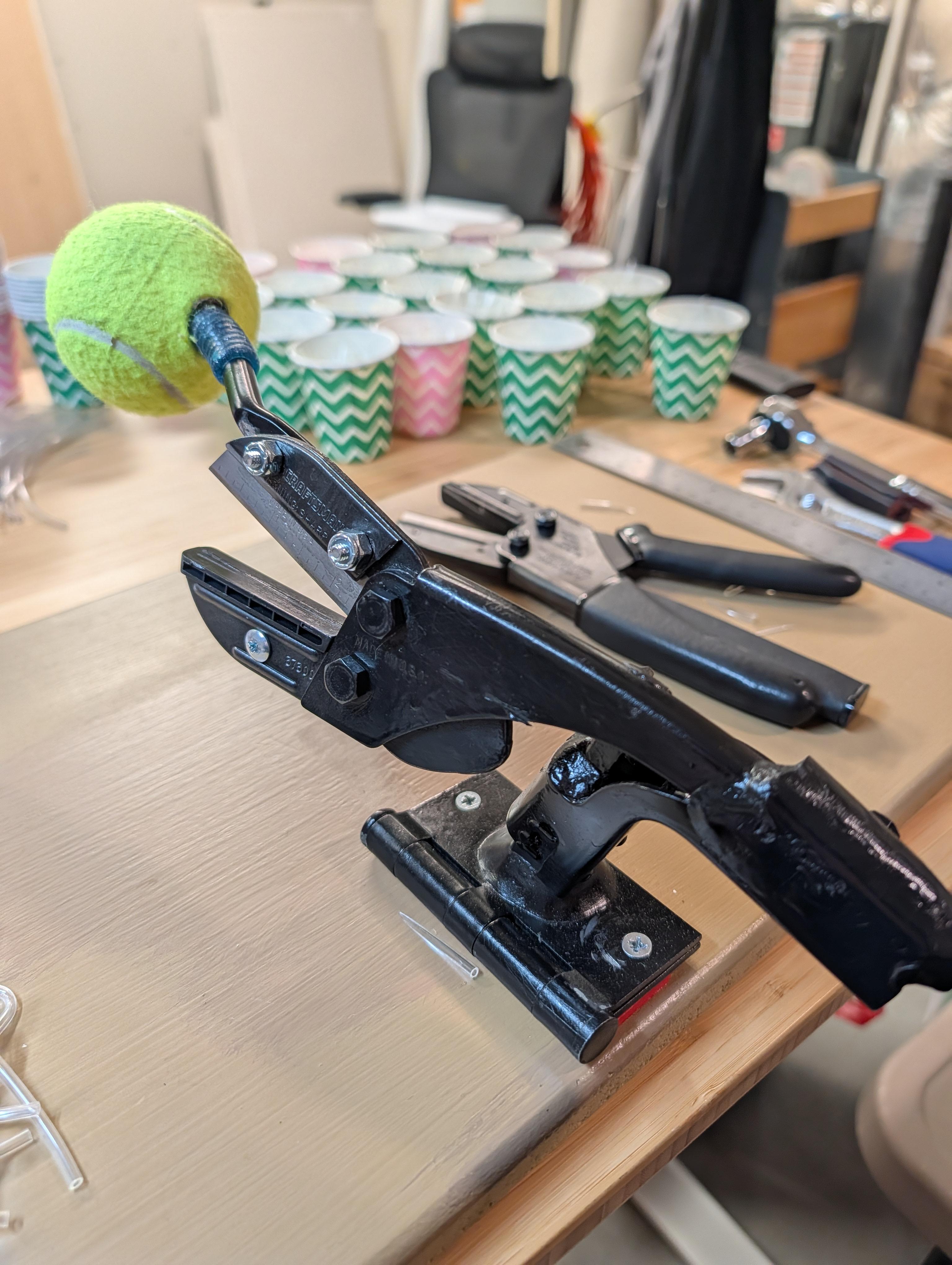
This may be too close to "design this for me" - but where is the best place to hire one of y'all to help with a project in my small business? I'm beyond my pay grade and need someone with more than my two brain cells to help with design and implementation of a plastic tube cutting device.
If you're great with fixture and tooling design, small production machines, or simple pneumatic automation, I'd love to hear from you.
Edit: More Context -
I am far from an engineer so it is encouraging to hear this may be possible...
I designed and 3D printed a jig that gets a consistent cut each time. However, some of the tubing is too tough for the razor to chop through. I've done some slice testing, and its better but not great.
Additionally, doing one tube at a time is very time consuming. Surely there is a way to do multiple at once.
I have a handful of ideas, but going from something on paper into a prototype and eventually production is where I am hung up.
I can do 1 every 6 seconds, so any solution needs to outpace that.
I graduated with a BSc. in Mechanical engineering, with a concentration in Industrial engineering from a foreign university that isn't accredited in the U.S.
I was just wondering how competitive the market is right now, especially for someone that is willing to work remote?
And if there is no way I could land an entry level job, would it be any better if I worked for a few years onsite and then attempted to work remote in the U.S?
I know the job market is terrible for everyone right now, but is supply chain like programming terrible or is it a bit better?
Also since I haven't really picked what I would do for my career yet what would you recommend? Do I keep going after supply chain or do I try and get into manufacturing or some more technical stuff? Note that working remote is kinda a huge priority right now.
I don't know what kind of nut and bolt or Pin to use here.
The purpose of the bent sheet, or C shaped channel here is to conect a frame to the main Frame. but I want it to experience only tension and compression. we want it to reduce the vibrations without transfering a moment to the main structure.
my first idea was to use partially threaded bolts and self locking nuts like we always do. But now I'm doubting that if we tighten the bolts too much it's not a two force member anymore, and If we leave the nuts loose they will just back-off and fall. the whole thing is on a machine that moves and rotates.
I don't want to use anything too rare or expensive, something common. what do you think? this is how it was done in the previous structures I found in the company.
P. S. Now that I'm thinking about it, it will transfer some moment anyway the joint has only one degree of freedom, and other moments are transferred. But anyway... What happens witg the bolt in this case?
I just got a job at an aerospace company working with microelectronics the beginning of this month. I graduated with a mech engineer degree last Dec and this is my first job. The company is located near Northridge, CA. The position title is associate engineer.
I'm wondering how long I should stay, or if I should stay because I'm not exactly satisfied with the pay. The pay is 52000 before taxes, but I know it's better than nothing. When should I start looking to move if I decide to go somewhere else? Also where should I look? Any advice is appreciated, thank you
Hi all, is it just me or the market is SUPER bad?? My resume is good (I believe) I’ve been to career counselors, my professors, LinkedIn, handshake, every place u can imagine I’ve applied. Rejection after rejection. I’m a junior meche and I’m having 0 luck. This time last year I’ve landed 3 interviews (still rejected) but I’ve gotten NONE so far. I’m so stressed abt this, the semester is so overwhelming and everyone is getting internships/full time offers and I’ve gotten nothing. Help 😭😭 What do I do if I don’t land an internship??? Project ideas ? Forgot to mention- I am in my schools rocket propulsion lab, thats where I get my hands on experience and knowledge. Im interested in working with rockets/aero so i know half of the jobs im applying for is a long shot , but the description of the job posts are identical to what ive done/qualify for. Theyre probably looking for someone with more experience but how do we get experience if no one is hiring lol.
For context I am applying to another company, similar role in the same industry. They are requesting a 30 min presentation on a topic of my choice as long as nothing confidential is shared.
The only experience I have for this role is from my current role. Is it ok if I present an RCA case from my current company, keeping everything confidential? It will be obvious it is coming from my current company, but I would anonymize everything else and keep it as high level as possible.
I've been working on this four bar linkage the past week, mainly trying to dial in the clearances in the 2 positions. I've managed to get that dialled in, and all the pivots are along a central line. Now, my next step is seeing if I can scale this up or down to for different bed sizes and then also create a final mechanism out of steel instead of the plywood prototype. This is my first time doing something like this, and to be honest, I got lucky with a lot of the maths 😅 does anyone smarter than me know how i could approach scaling this geometry? Thanks.