r/musictheory • • 8h ago

General Question What is the best way to remember what the sharps and flats are for key signatures?

15 Upvotes

I’m getting good at identifying the key signatures based off of HOW MANY sharps and flats are in the key signatures but how do I know which notes are sharps or flats within a key signature when writing them out or scales? I’m using Artusi and practicing for a final exam


r/musictheory • • 8h ago

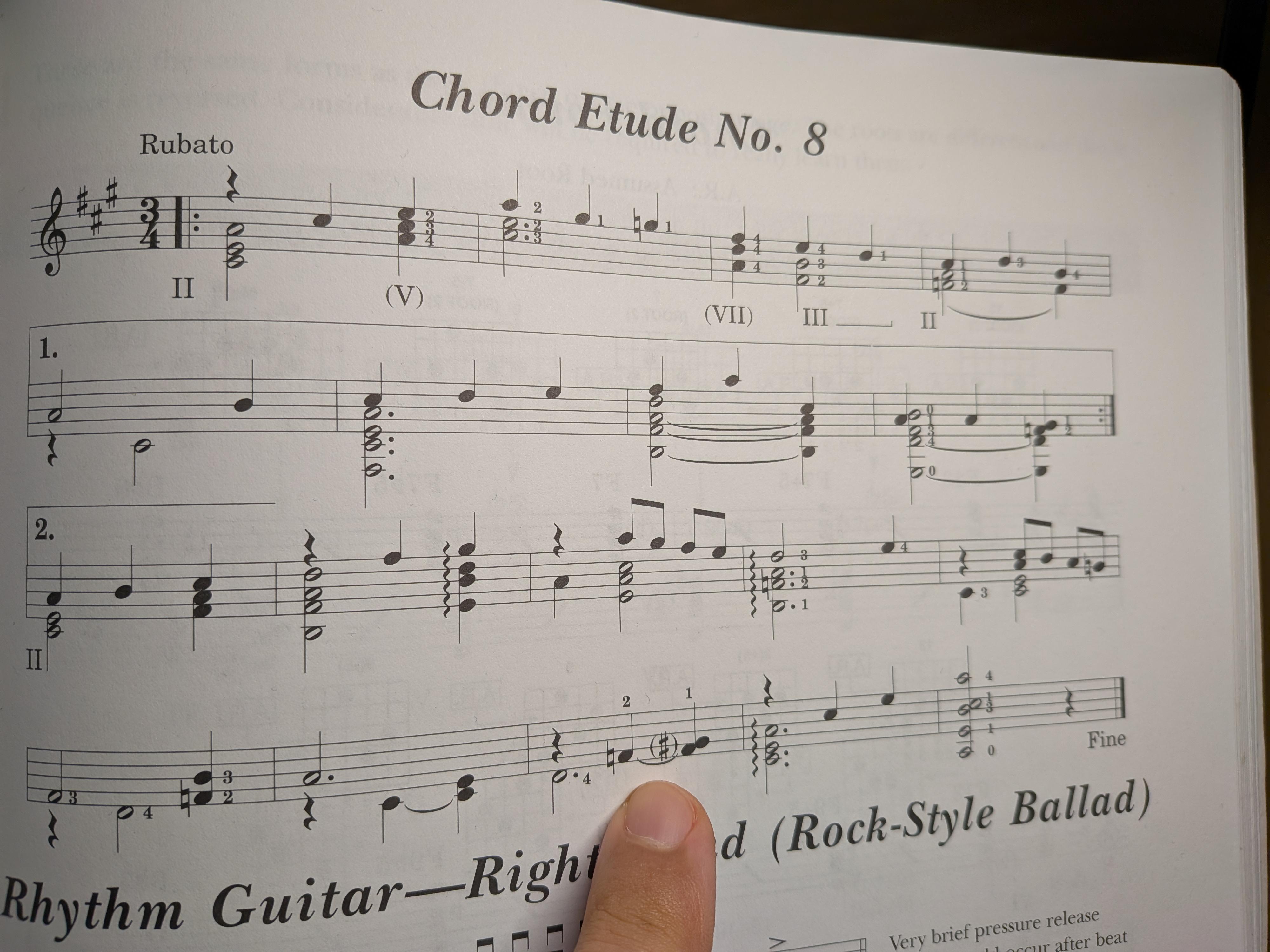
Notation Question Sharp in parentheses (guitar, William Leavitt method)

Post image
11 Upvotes

Hello people,

I am currently practising William Leavitt guitar method volume 2 and I can't wrap my head around the sharp in parentheses over my finger.

Played as it is it's just a diminished chord (D-F-Gshap) but I'm not sure why the book is putting a reminder that the G is sharp ? Is my G now double sharp ?

Thank you for your help !


r/musictheory • • 12h ago

General Question I am so bad at rhythm. Help me

19 Upvotes

I find it really super hard to read and like execute/clap out rhythms. Also, I have no idea how to write rhythms. And if you say something like "just feel it and you'll get it" let me have you know that I don't feel it or get it. Pls give me tips and exercises to improve. Like I don't get how drummers do it. My respects to them.


r/musictheory • • 16h ago

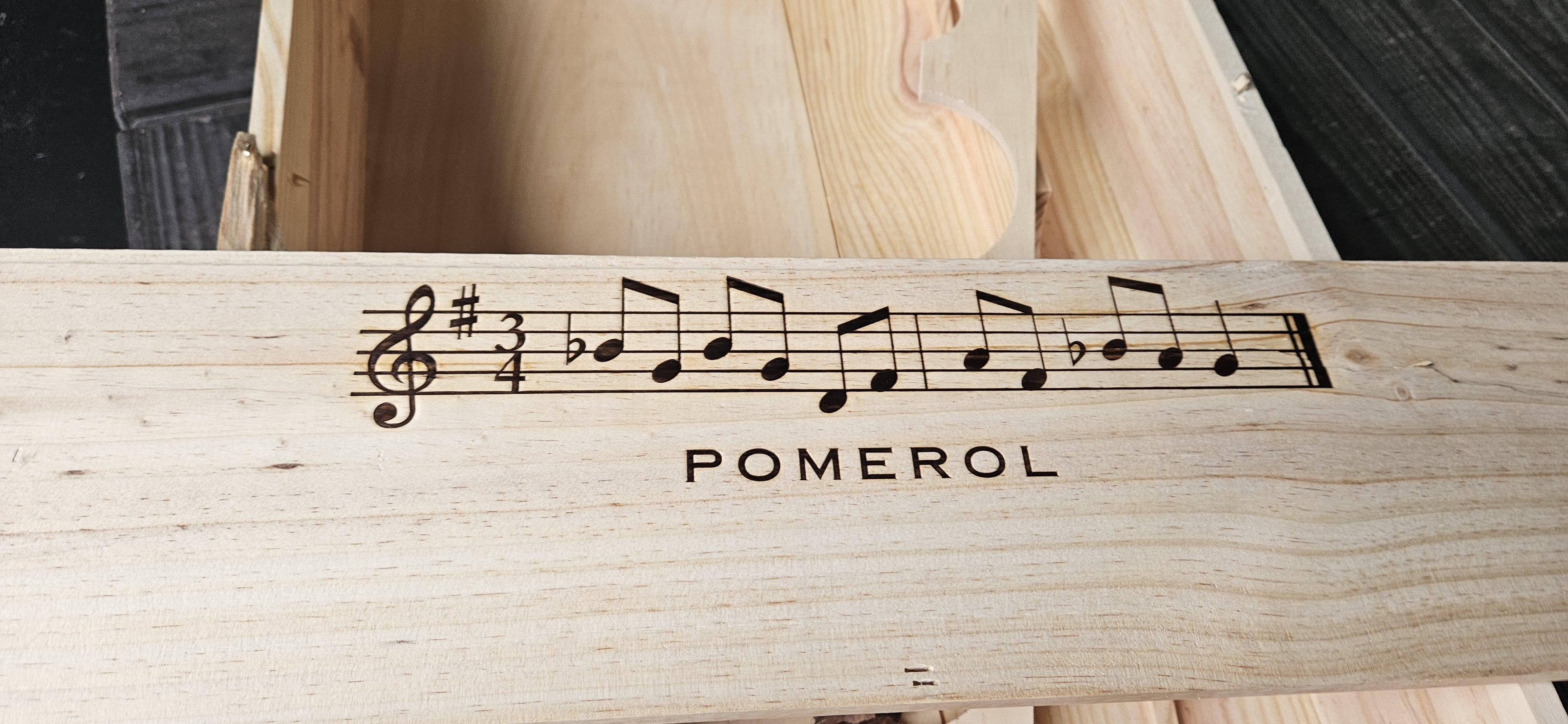
Discussion Nice wine, but rough around the music theory...

Post image
55 Upvotes

These guys put sheet music on their branding, but I'm not sure they really knew what they were doing. Could be wrong but this sounds like it should be in G harmonic minor to me and play like (i-V-i) with an accidental on the F. I know it's short, but 3 4 time seems ambitious too when you're resolving on the 3 of the second measure. It all seems silly.


r/musictheory • • 17h ago

Answered Help Identifying Unusual Key - Psychedelic Rock/Country

Thumbnail
open.spotify.com
4 Upvotes

Heya, I'm trying to identify what the key is for this tune (Invisible Ink by Leon III) 😄

I'm not looking for/expecting it to be a neat answer, but instead just working out the logic behind it in order to apply it to my own writing!

As far as I can tell with the root notes, the song seems to be riding on C# with occasional drops to B throughout the verses, with a move to E in the chorus.

It all sounds simple, but I'm unable to tell if the C# is major, minor or just a power chord. I'm leaning on it being C# major, but in that case it implies the song is just in E major with a borrowed major VI.

Is that the simplest interpretation of this song?


r/musictheory • • 18h ago

General Question Could anyone figure out what key this piece is in?

Thumbnail
youtu.be
1 Upvotes

I tried to figure out myself based on the melody at 2:02 but I basically don't know anything about music theory so any help would be greatly appreciated


r/musictheory • • 1d ago

Answered What time signature is the song I wrote in?

Thumbnail
youtube.com
0 Upvotes

Hey guys, i wrote this guitar chord progression the other day and before I put record it into a daw i wanted to know what time signature i should set it to. So ive played it to 4/4 and it fits when the progression loops after 8 beats but it also works with 3/4 at a higher bpm. It sort of has a waltzy feel to it so im not really sure how to count it to where it makes sense within the daw. Any help would be appreciated, thanks!


r/musictheory • • 1d ago

Songwriting Question Can someone help me with the key of this song?

1 Upvotes

I have trouble finding out keys for music. Can someone help me figure this one out?


r/musictheory • • 1d ago

Answered Armenian modes?

Thumbnail
youtu.be
29 Upvotes

Hi everyone,

I recently watched this interview with Tigran Hamasyan and there is one part that I couldn't understand (min 12:48).

(I'm still a beginner in terms of music theory and not a native English speaker, btw)

What does he mean when he said that there is 'no tonic equivalent' in Armenia?

When he said modal music, does he mean this https://en.wikipedia.org/wiki/Mode_(music)#Modern_diatonic_modes ?

Also, what is the minimum number of notes that a scale should have to be considered a scale?

Lastly, going back to him mentioning 'there is no tonic equivalent in Armenia', that gives me the impression that there are other schools of thought about music theory. Is that true? Or is it just another way of explaining the same thing?

Thanks


r/musictheory • • 1d ago

General Question V-IV6 deceptive cadences?

4 Upvotes

I've found several examples of what sound like deceptive cadences that go from V to IV6 instead of the usual vi/VI. Would you consider this a kind of deceptive cadence or not? I could hardly find anything about this topic anywhere, and most of the examples I've found are from Mozart. Would you know any other examples? I feel like Bach might have one but I can't remember.

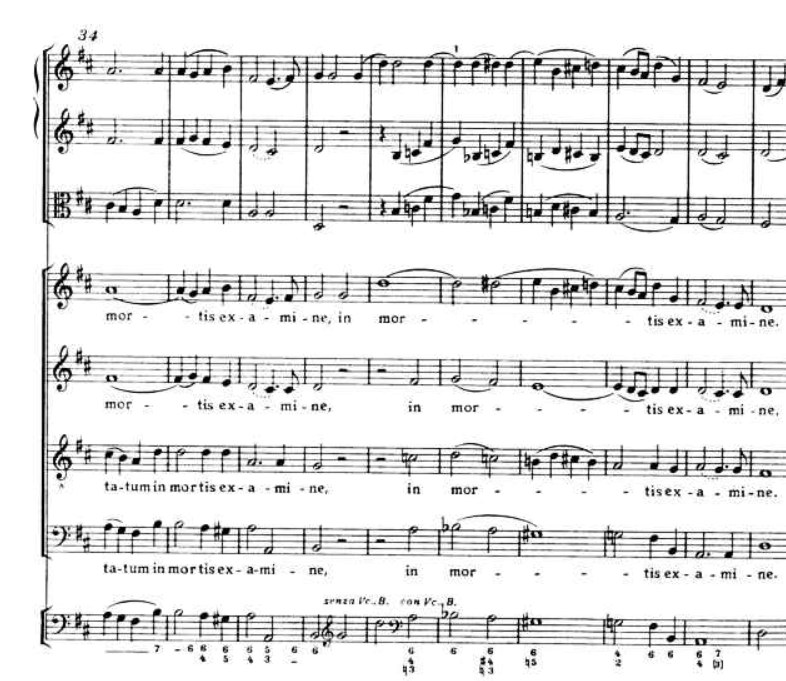
Mozart - Piano Quartet No. 1, K. 478 - II. Andante, m. 15-16
Mozart - Ave Verum Corpus, K. 618 - m. 36-37
Mozart - La clemenza di Tito, K. 621 - Ah perdona primo affetto - m. 21-22
Mozart - The Magic Flute, K. 620 - March - m. 25-26
Brahms - String Quartet No. 2 - I. Allegro non troppo - m. 320-321

r/musictheory • • 1d ago

General Question Overwhelmed

2 Upvotes

Im very interested in music theory and have just finished getting somewhat fluent in all of the notes on the fretboard, I would say I have a basic understanding of it but im starting to get very overwhelmed and I am unsure on where to go next, I understand there isnt a correct path but I feel very overwhelmed with all the information and feel that every video is teaching something new and frankly its confusing me. Any guidance on some concrete things that I can try and focus on to gain better understanding of theory. (mainly interested in jazz) and sorry that I am struggling to be more specifc on what I am confused about


r/musictheory • • 1d ago

General Question Your Ways To Learn and Read (Music)

5 Upvotes

Being quite frustrated about not being able to read sheet music to support my kid with learning the music theory, I have decided to start that journey myself.

The theory book I got started with suggesting to memorize treble cleff on the musical staff EFGABCDEF as Every Good Burger Deserves Fries for lines and FACE for spaces.

Is there any trick/method/approach that you have found to be very useful or maybe even have yourself come up with to achieve abovementioned? Maybe if you see Emajsus7 whatever chord as some bent old tree or whatever comes to your mind.

That's rather to average folk who got nevertheless very versed in learning and understanding music theory and reading sheet music.

In case you are considered to be a musical savant, what's your way of seeing/feeling/hearing the (sheet) music or understanding the theory?


r/musictheory • • 2d ago

General Question Question about classical melodic minor

Post image
11 Upvotes

Greetings, I have a question about classical melodic minor I was hoping someone could help me with. I know that classical melodic minor ascends in melodic then descends in natural, but how do you define which points a melody is ascending and descending? I know, a dumb question, but if you look at bach’s Bourree in Em, there are multiple points where the melody seems to descend in melodic. For example the whole first bar in the high voice descends until the 3 from G to D#, but since it’s descending and landing on a melodic minor note, is it decided that the ascent starts on the 3rd beat (d#) where it lands? Is it strong beats where an ascent is started (1/3, on beats, or 8th notes in a 16th note pattern)?


r/musictheory • • 2d ago

Songwriting Question I'm Conflicted

0 Upvotes

I made a track that I'm very happy with, which I have not done in a while, but there's something I'm conflicted about, and that's the last chord of the track. At the end of the track, it plays the following chords: Cmin (i), Fmaj (IV), and G7 b9 (V). I'm mainly conflicted about the last chord, not because it makes the track end unresolved (I like that personally cuz the track is about a prison escape and I see it as uncertainty about whether the prisoners successfully made it out or not), but more because of the dissonant quality of the chord. I personally like its more unique flavor, but it is quite a spicy chord that not everyone is gonna vibe with. Should I keep it in, or just use a normal G7 or a Gmaj?


r/musictheory • • 2d ago

Songwriting Question How do I write music?

0 Upvotes

Like I can do practically anything on guitar, bass, drums, keyboard, and ukulele but it’s difficult for me to combine everything and like build up a song. The best way I can describe it is I know what goes into a cake and I have all the ingredients for the cake but I’m not sure how to mix everything to make the cake, do I add flour then eggs and mix then add sugar and butter or do I add just a small amount of butter then mix with the egg and sugar and pour the flour after? There’s so many different combinations that are bad but a few that are good. I just don’t know what goes into making the good combinations. Idk if that makes sense.


r/musictheory • • 2d ago

General Question Hola alguien ha experimentado con escalas simétricas?(O secuencias continúas de intervalos)

0 Upvotes

Hola soy nuevo en esto y por esto pregunto si alguien aquí ha experimentado con escalas que se basen en repetir exactamente el mismo salto intervalo consecutivamente hasta repetir la nota inicial y bueno como les ha ido y como suenan lol


r/musictheory • • 2d ago

Notation Question Maximum legibility notation for syncopated rhythms and dotted notes

5 Upvotes

Hey, I'm wondering if there is some sort of "style guide" or "best practice" regarding when to split up a note using a tie if it is syncopated or dotted. I want to achieve the best possible legibility and clearness. I know some rules and I have some intuition, but there are still some unclear cases.

Do you know of any comprehensive guide regarding these kinds of notation issues?

I have provided some examples below where I wrote the same rhythm twice using different notations. I know some of them might seem nitpicky, but if diminished to a 16th-note rhythm or when written on a small page, it might make a difference.

1 (I mean this one is still kinda obvious because it's legible with the half note)
2
3
4
5
6
7
8

r/musictheory • • 2d ago

General Question Anyone have a Bone Conduction Hearing aid?

17 Upvotes

Apologies, not a music theory question, but since you're all musicians and humans, and no one has responded from other groups I've tried, maybe some of you have had some experience with this. Take it down, mods, if you must.

I've been nearly deaf in one ear for most of my life due to a cyst removed in my teens, and canal reconstruction that did not go perfectly. I've just upgraded to a better insurance plan, and my current doctor is suggesting the Osia bone conduction implant. Still have to find out if I can really afford it though.

It's basically a new version of the cochlear implant hearing aid, to my understanding. but it doesn't deal with nerves like some cochlear implants, I have an undamaged hearing nerve, it just sends the vibrations through the skull bone.

I'm wondering if anyone has this or a similar BAHA device? If so you could describe what the quality of the sound is like, through the bone conduction? Do you keep it on when listening to music or practicing? How did it change your relationship to music?

It will help a lot with social situations that I really struggle with, that's the big plus. But my profession is music, and I'm just curious how it has affected others. Really any thoughts you can share will be helpful. Thank you.


r/musictheory • • 2d ago

General Question Fractional Notes

0 Upvotes

(This is my first time posting here, so I've added a personal intro at the end)

There is an idea I ran into at some point, and I'd like to ask if this is something new, or if it already exists in the literature, and if so, my general question is what is this idea called?

Throughout this post we're working with numbers to represent notes (see "Pitch Classes and Mod-Twelve Notation" in the "What is set theory?" FAQ). For example, if C is 0, then D is 2, and F is 5.

Summary of the idea

In addition to notes as integers like 2, we consider fractions; fractions-over-two like like (3 + 1/2); and fractions-over-seven like (3 + 3/7).

These "fractional notes" are not microtonal to represent the pitches outside of the twelve tone equal temperament system. Instead...

Fractional notes are used to represent minor vs major flavours, and diatonic modes.

For example, if 0 is C, then (0 + 1/2) represents "C Major" and (0 + 0/2) represents "C Minor", whereas (0 + 2/7) represents "C Ionian" and (0 - 1/7) represents "C Aeolian".

Where does this idea come from?

One thing we can do is to consider an arithmetic series; pick a "root", and a "step", and then keep adding them; (root), (root + step), (root + step + step), (root + step + step + step), ...

We can get the circle of fifths in this way by choosing the step to be 7 (the fifth interval).

We can get diminished chords over our root by choosing the step to be 3.

We can get augmented chords over our root by choosing the step to be 4.

Wouldn't it be nice to be able to get major and minor chords too in this way? The problem is that such chords are built with both major thirds (+4) and minor third (+3) intervals, usually alternated (e.g. both major 9ths and minor 9ths alternate between major and minor third intervals).

The idea then is to let both the root and the step be "fractional notes", and then we round the fraction to get the number we want (where N + 1/2 rounds down to N).

For example, we get:

  • Major chords: root = (N + 1/2), step = (3 + 1/2).
  • Minor chords: root = (N + 0/2), step = (3 + 1/2).
  • Circle of thirds: step = (3 + 1/2)

We also get the diatonic modes with step = (12 / 7) = (2 - 2/7);

Locrian:    root = (N - 3/7)
Phrigian:   root = (N - 2/7)
Aeolian:    root = (N - 1/7)
Dorian:     root = (N - 0/7)
Mixolydian: root = (N + 1/7)
Ionian:     root = (N + 2/7)
Lydian:     root = (N + 3/7)

Example

Let's say 0 is C, and we want to build D Major. Db is 1, and D is 2. Major is (N + 1/2). So D Major is (2 + 1/2).

So we take our "third interval" which is (3 + 1/2) as our step and get

(2 + 1/2)  ->  2 -> D
(6 + 0/2)  ->  6 -> F#
(9 + 1/2)  ->  9 -> A
(13 + 0/2) -> 11 -> C#
(16 + 1/2) -> 16 -> E

which is our D (major triad), Dmaj7 and Dmaj9 chords, depending on how many steps we add. If we'd started instead with (2 + 1/2), we'd get Dmin, Dmin7 and Dmin9.

If you want D7 the dominant seventh chord you can start with D Mixolydian (2 + 1/7), and add a slightly different "third" (3 + 3/7).

Fractional Intervals

The main use of fractional notes is that where integers can let us talk about the intervals between notes, now fractional notes allow us to talk about "intervals between chords" and "intervals between modes".

For example, (+1/7) is "brightening the mode by one step", which just "sharpens one note"; for example when going from C Ionian (0 + 2/7) to C Lydian (0 + 3/7), but also when going from C Lydian (0 + 3/7) to C♯ Locrian (1 - 3/7), after all, all we do when going from C Lydian to C♯ Locrian is "sharpen the root".

Intervals with fractions over 2 can be used to analyse chord progressions that rely mostly on minor and major 9ths, and more generally harmony and chord progressions that are a mixture of diatonic and chromatic.

We can also consider some very similar but subtly different fractional intervals; (+3 + 1/2) is our "true third", which is what we get by splitting our "true fifth" (+7 + 0/2) in two, but if we continue doing it we escape the scale we're in and start going over the circle of thirds, just like keeping adding "true fifths" escapes from the scale along the circle of fifths.

On the other hand, (12 / 7) = (+2 - 2/7) is the diatonic tone; for example going from C Ionian, to D Dorian, to E Phrigian, etc. Doing it twice gets us the "diatonic third" (+3 + 3/7) which is very close to the "true third" (3.43 vs 3.50), but which stays within the same scale; and if you do it twice you get the "diatonic fifth" (7 - 1/7), very close to the true fifth (6.86 vs 7.00) but which stays within the same scale (instead of escaping into the circle of fifths) and accounts for the tritone present in the diatonic modes.

This can also help us consider the intervals that are "present within a diatonic scale" and those that "bring us out of a diatonic scale".

(+ 1/2) for example is never present if we stay in the same scale, but is a very smooth transition because we have many shared notes, this is the difference between Cmin7 and Cmaj7 (shared root and fifth), or between Cmin9 and Bmaj9 (shared third and seventh).

(+1 + 0/2) shares no notes, but the voice leading is very smooth, this is a chromatic step.

(+1 + 1/2) and (+2 + 0/2) are both present in the diatonic scale but alternate with each other, so a chord progression that keeps doing (+2 + 0/2) feels both tonal and atonal because it's the kind of step we recognise from the diatonic scale, but done in a way that feels like we're changing/scale mode every bar.

Outside the 12 tone equal temperament

This idea in theory should work in any "equal division of the octave" (EDO), the only thing that changes is the modulo you're working with, and maybe the denominators of the fractions that are interesting to consider.

Here I also considered "fractions over 2" for minor-major and "fractions over 7" for diatonic modes, but in theory other fraction types might also be interesting, maybe "fractions over 5" can give us pentatonic scales?

Outside of 12 EDO, for example in N EDO, "fractions over K" can help creating K-note scales; the step between two notes in the scale is N/K. (like for 7-note scales in 12 tone equal temperament we used 12/7 = (2 - 2/7)). You just gotta choose the right K to get your "fifth" equivalent in your scale.

Intro

My background is in Mathematics rather than Music Theory, but I've always had an interest in Music Theory, mostly through watching videos and experimentation.

I'm new to this sub, but I've read the rules and hopefully I did not overlook anything important.

When I play music I enjoy improvisation, so the music theory I gravitate towards is one that facilitates improvisation over composition, transcription or analysis.

This makes the music theory I think about more "prescriptive" (telling you what to do) than "descriptive" (describing what has been done).

Not as self-promotion, but to add some context, I'm also the solo dev of a rhythm game that uses (rules-based, manually coded, no AI/LLM involved) procedurally generated music, so I have some practical experience in music theory. This game was originally designed to try to capture the feeling of improvisation, which is why it uses procedurally generated music and lets players add "grace notes", instead of relying on pre-existing music as is standard among rhythm games.

This project had me working with "notes as numbers" a lot, which is where I found the pattern that alternating +3 and +4 just like adding +3.5.

Finally, in my musical education at some point I stopped learning and practicing different scales, and focused all my efforts on B minor, which let me learn all the ins and outs of that scale, and how chords from outside that scale relate to that scale; this does mean modulation is somewhat of a blind spot for me.
r/musictheory • • 2d ago

General Question How to make diminished triads sound happy?

0 Upvotes

My question is in the title

I seem to have discovered one way of doing so:

Playing the major triad that's only 1 semitone below right before a diminished triad seems to do that, take the chorus of Smash Mouth for example:
https://www.hooktheory.com/theorytab/view/smash-mouth/all-star#chorus

(Sorry if the flair is wrong)


r/musictheory • • 3d ago

Directed to FAQs/Search ABRSM GRADE 5 MUSİC THEORY

2 Upvotes

So i am going to attend ABRSM grade 5 music theory as i mentioned but i am curious of how it processes i have read some articles and learned some things from my teacher like how we do it online and such but i don't really know how it really works out and i also studied 2020,2024 and 2025 grade 5 practice papers and i always got passing notes but because it is a lot of money in my country i don't want to risk wasting 130 pounds i am curious if there is a type of question i need to study other than the practice papers examples such as instead founding the minot clefs do they ask like the major clefs?


r/musictheory • • 3d ago

Answered A little theory help to start me on minor keys.

3 Upvotes

So I took theory many years ago and we focused much more on major keys. And even there a forget a lot. But we all know I IV V and then vi play nicely. V7 works particularly well because the 7 of V is 4 of I, so resolved to 3 nicely (I hope).

I’m looking into minor keys, and I am trying to figure what works there. Let’s start here. Do i iv v work similarly? I know that leaves VI and VII as major chords, and am looking for the main interplay leading to resolution in a minor key.

I’ve had trouble getting the intuition here from AI. Can someone jump start me with some basic progressions and which chords work best together?


r/musictheory • • 3d ago

Discussion Maj7(add8)

0 Upvotes

I’d like to argue, albeit with my limited understanding of music theory, that an “add8” suffix (an octave at the top of a chord) should be used when relevant.
Roast me! Or opine; as you please.

From what I understand, a chord’s name derives from the relationship between the root and it’s accompanying notes.

  • C5, for example, is made up of C and its 5th. Fabulous. 10/10, straightforward, love it.
  • G7(13,b9) G, the major 3rd and the 7th needed to make it a 7 chord, and on top, a 13th and a b9. Nice.
  • Am7 is the same: A, its minor 3rd and its minor 7th.

Except that it’s not the same.
See, without a 5th, Am7 is still called Am7.
Even though the chord sounds significantly different when omitting, it’s still called Am7, and not Am7(no5)

Which brings me to Emaj7(add8)
E, its 5th, its major 3rd, its major 7th, and on top:
another E. Traditionally, this would still be deemed an Emaj7 chord. The octave makes no change to the name.

But holy hell does it sound different…
Especially when you put more emphasis on the high E

So now why is it that the we don’t take into account the added harmonic quality of this minor 2nd interval, if the sound is so drastically changed by it?

I guess sometimes chords’ names don’t directly reflect what they sound like? That’s disappointing.

Also, for the record, I’m not taking alternate voicings or inversions into account.

Edit: Dear lord, how I love the internet, and all the little people it puts inside my phone. Thank you little people from the internet, inside my phone, for helping me better understand my theoretical ignorance. You’ve (mostly) helped me a bunch, much obliged (,^,)


r/musictheory • • 3d ago

General Question Need help.

1 Upvotes

I am composing a nocturne fanatasia on the piano. I need to move from a section mostlyA augmented and A major chords to Bb minor, Ab major etc (basically the chords of Db major scale). Please help me so I can do this smoothly and elegantly.