r/motorcycles • u/pilotrvt51 • 16h ago
So it was cold outside and there was a great spot inside the house !!!!

400
Upvotes
r/motorcycles • u/pilotrvt51 • 16h ago
r/motorcycles • u/Ashamed_Committee_81 • 15h ago
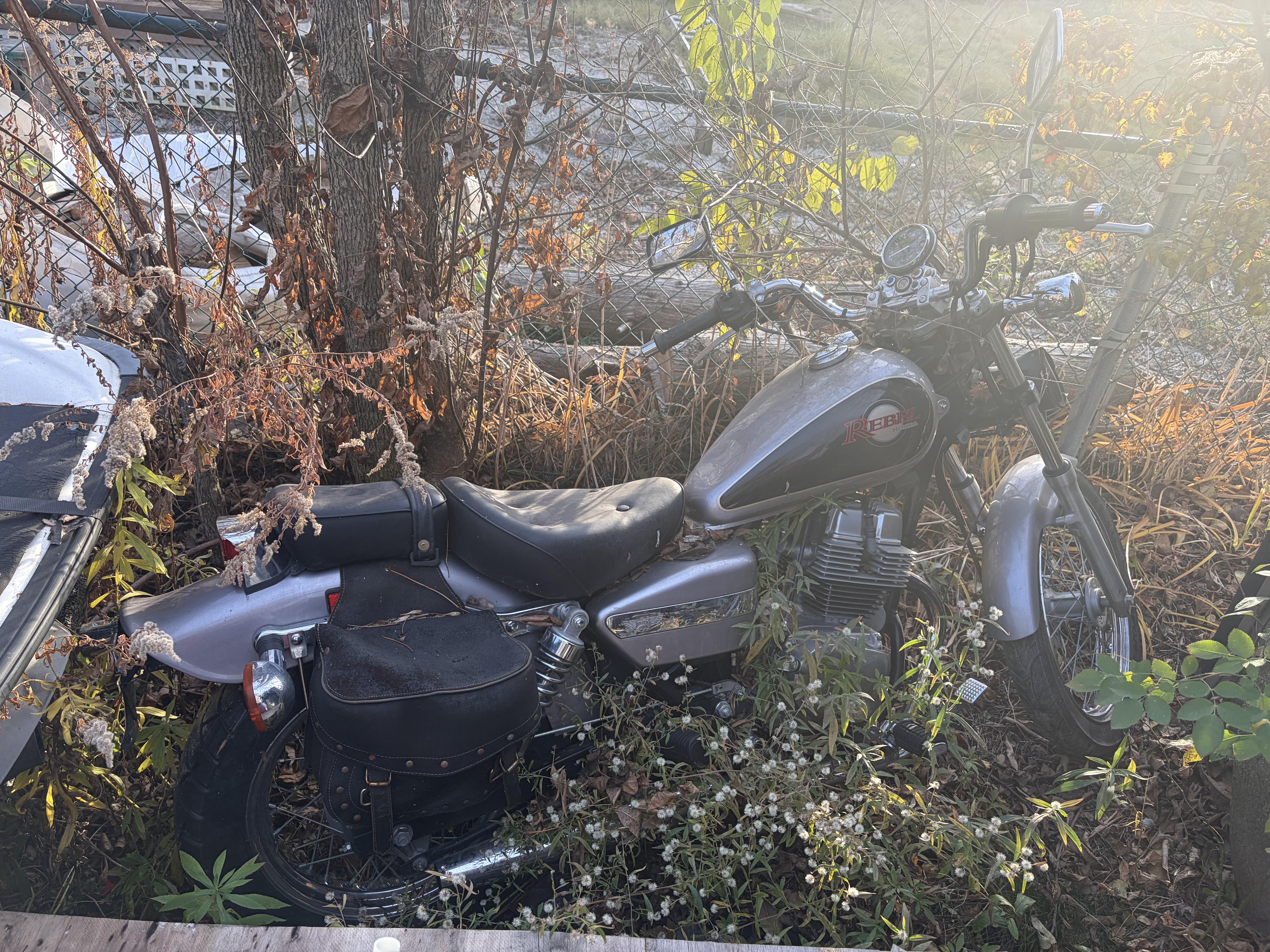
The title got my original post taken down.
A friend of mine has had this motorcycle sitting outside for well over a year. It originally belonged to his dad, and was previously involved in an accident when someone lost control going around a turn in a residential neighbourhood.
From what I’ve been told, it needs a replacement cylinder head and battery, and that’s all his dad believes it needs. His dad is pretty handy with motorcycles and had intended to get around to fixing it but never did.
Unfortunately, neither my friend nor I know much about motorcycles, so we’re going off what we’ve been told.
He’s offered to sell it to me for around $200, although there’s a chance I could get it for free since I’ve been working with them at their company and they may just give it to me instead of paying me.
I’ve always wanted to learn how to ride, and owning a motorcycle has been a dream of mine. I’m just trying to figure out what I should be looking out for before taking it on. We aren’t even sure what year or model it is, but I can probably get more information from his dad if needed.
r/motorcycles • u/thejacka_ • 12h ago
I am 27, I got my license not even 1 year ago last march. My first bike was a CB300R, I started small and learned to be really good at slow speeds and learned a lot of discipline and humility being on a smaller bike. I loved this bike and the only reason I got rid of it was due to my first accident in which I was deemed not at fault.
Accident #1: I was approaching an intersection where all the lights in all directions flash red. It was a busy intersection, when it was my turn, I doubled checked both ways on the sides and in front of me, I then applied a decent amount of throttle to get out of the intersection, in which I was just about to exit. Due to my lean and instruction to look where you want to go, my eyes were already focused way down the street I was turning into, when all of a sudden, I noticed a car pulled out in front of me from the other side of the intersection. We collided, no injuries but the bike was deemed total due to the seals leaking.
Accident #2: About a month later I upgrade to a ZX6R, I had this bike only 2 months. I could not believe how much power and acceleration this thing has, it is unbelievable. I knew I had to contain myself and I did, I know not to pull so hard especially on the streets. Well, coming home today, living in busy California where lane splitting is legal, I was splitting lanes on the highway for about 30 mins due to heavy traffic around 45 mph. I finally came close to my exist, where I noticed a gap, I downshifted and switched lanes but did not see a blacked-out car that was fully stopped. I rear ended them going about 30 mph and I flew. No major injuries.
I will say that both times I had full gear on, and I will say besides the helmet, the boots have really saved my ankles both times.
But that brings me here, laying in my bed, considering giving up one of the best things I have discovered in my life. My ZX6R is not totaled. I still have it, but now I am thinking about selling it. Do you guys think I should give up riding or should I keep trying to be more careful. This is my first ever at fault accident so maybe this feeling of messing up is new to me but idk guys. I'm just lost.
r/motorcycles • u/New_Temperature2797 • 14h ago

Just wanted to share this photo of my dad (top photo) and me on the same '99 Road King 11 years apart. Bike's been with us for over 20 years now and is still going strong (apart from a Primary leak that'll be fixed soon, hopefully). Gotta love family bikes, man.
r/motorcycles • u/duskie3 • 1d ago
r/motorcycles • u/Daniel-cfs-sufferer • 19h ago

Just a couple of pics for those interested !
r/motorcycles • u/Dan-F9 • 22h ago

As if last week's descent into the labyrinth of motorcycle fatality statistics in North America wasn't enough to burn me out, this week's reprise surely will. I could have taken a break, but I obviously thought it would be infinitely wiser to double down and start researching airbag stats...
So here we go again, metaphorical chalk at the ready.
There's no debating that putting airbags into cars was a good idea. To the point where no one would bat an eye in selecting the "airbag feature" if it were an optional perk at the dealership.
Motorcyclists, however, have only recently started wearing airbags. And it's not like we're anywhere close to 100% adoption. Speaking from personal experience alone, I've talked to riders who insist that it should be mandatory, and others who simply respond with sayings like "Stop trying to kill the fun, man."
Except, my sometimes analytical brain (especially on Mondays) refuses to reduce the issue to hearsay and personal preference. So, the aim is to take this deployable inflatable cushion and examine how much less likely you are to die in a motorcycle accident if you're wearing one.
I am under no illusions, even before starting the research, I suspected the answer would be considerably less definitive than I'd like. My hypothesis is that linking how effective airbags protect us from injuries to how much we can actually demonstrate that they prevent deaths will be somewhat speculative.
Whether it's possible or not remains to be seen, but we'll at the very least present the most up to date information on the subject today, in the hopes that the data itself is at the very least informative and helpful in the development of safe riding practices.
Before we get to airbags, it's important to understand which injuries they're intended to prevent. I feel like "reddit_user_69" is yelling at their screen right now: "Isn't it obvious, you moron?" Maybe, but we should still make the distinction and establish what we're trying to prevent.
See, the situation is complex. When someone dies in a motorcycle collision, the cause is rarely as straightforward as a broken bone. Traumatic brain injuries are among the most serious consequences of motorcycle crashes, but damage to the chest and abdomen can be equally devastating (think blood vessel rupture, internal bleeding, all that jazz).
According to a 2024 systematic review of motorcycle injuries, thoracic trauma is a major contributor to severe and fatal motorcycle injuries. And a more recent investigation gives us some interesting numbers:
This 2025 study published in Traffic Injury Prevention examined 2,499 motorcycle collisions involving passenger vehicles, using German crash data collected between 1999 and 2023.
The researchers examined injury severity across different parts of the body.
Among fatally injured riders:
| Body region | Share of the most severe injuries |
|---|---|
| Thorax (chest) | 45% |
| Head | 38% |
These percentages describe the body regions sustaining the most severe injuries among fatal cases in this particular dataset. They aren't necessarily the sole causes of death, and the sample includes approximately 30 fatalities. Still, the implications merit a comment or two.
The chest appears prominently among the most severely injured body regions in fatal motorcycle crashes. And unlike our skulls, which benefit from decades of helmet development, our torsos generally rely on protective clothing and whatever material happens to occupy the space between our ribs and the approaching obstacle.
That's where airbags come in.
Captain Obvious, back at it again. But it's still important to mention that it depends on the design, as a motorcycle airbag can cover the chest, back, shoulders and portions of the abdomen. Some even provide neck or hip coverage.
The principle is simple enough: absorb and distribute impact forces before they reach the body.
Imagine landing chest-first against the side of a car. Without an airbag, the impact is transmitted through your clothing and ribcage. With a properly inflated airbag, some of that energy can be absorbed by the pressurized cushion.
So, why state all of this? Because even if the attenuated force exists, it's localized. We can't say that an airbag can reliably prevent every internal injury. It offers no direct protection to the head, and most designs leave much of the lower body exposed.
Nor can it eliminate the consequences of a sufficiently violent collision.
The real question, then, is how much protection the airbag provides under different crash conditions. Fortunately, researchers in France have spent considerable time throwing things at them.
One of the most useful investigations is the French EFFIGAM study, completed in 2017.
Researchers examined airbag performance using laboratory experiments, numerical simulations and motorcycle crashes. The findings were encouraging, although they also revealed some important weaknesses.
In laboratory testing, the airbag systems generally absorbed more impact energy than conventional back protectors while covering a larger portion of the body. Great news.
However, protection was limited by the amount of energy the airbag could absorb. In some tests, performance deteriorated considerably beyond impacts of approximately 50 joules, particularly with lower-pressure systems.
That number describes the energy delivered in a particular laboratory test. It shouldn't be confused with the kinetic energy of an entire motorcycle collision.
The researchers also found that serious torso injuries could occur despite airbag protection.
In some of their experimental scenarios, impacts at 40 km/h were already sufficient to produce serious injuries.
Again, that's not a universal speed limit beyond which airbags become useless. Crash geometry and the nature of the impact matter enormously.
Here's another finding. Airbags performed better in certain falls followed by sliding than in direct collisions against rigid obstacles.
I mean, makes sense. A rider sliding along the pavement may experience several impacts over a relatively extended period. An inflated airbag can cushion contact with the ground.
But if your chest meets a concrete barrier at speed, the available distance and time to absorb energy become much smaller. The difference matters because no two motorcycle crashes unfold in quite the same way.
The effectiveness of an airbag depends partly on what you hit, how you hit it and whether the system has inflated before that happens. Which brings us to another problem: timing.
Cool band name. So, an airbag has to recognize that something has gone wrong, activate its inflation mechanism and reach a useful pressure before impact.
That entire sequence can take place in a fraction of a second.
In the EFFIGAM tests, the tether-operated systems took approximately 110–150 milliseconds to trigger, with inflation taking additional time.
The motorcycle-mounted electronic systems tested could detect a collision in approximately 20 milliseconds and inflate substantially faster.
The difference was significant enough that some tether-operated systems had insufficient time to inflate fully before the rider struck the obstacle.
However, these results concern specific systems tested around a decade ago. They shouldn't be interpreted as universal performance figures for every modern tethered or electronically activated airbag. Today's equipment has evolved considerably.
Still, the essential problem remains unchanged: even the best airbag offers limited protection if it arrives after the impact. And milliseconds have an annoying habit of becoming extremely important when you're airborne.
Crash testing can tell us how effectively a particular airbag absorbs impact energy. But the real question is what happens when motorcyclists actually crash.
For that, we need considerably more data.
A 2025 study published in the Journal of Safety Research examined 69,350 users of motorized two-wheelers involved in reported traffic crashes in France between 2019 and 2022.
The researchers wanted to determine whether wearing an airbag was associated with a lower probability of dying in a collision.
Only 578 of the crash-involved riders were recorded as wearing airbags, representing approximately 0.83% of the study population.
Here are the results:
| Outcome | Airbag users | Non-users |
|---|---|---|
| Share of crash-involved riders who died | 4.7% | 3.8% |
At first glance, the riders wearing airbags had a higher fatality rate.
But don't go throwing your life vest into the nearest dumpster just yet. The airbag users differed considerably from the other riders.
They tended to be older, rode larger motorcycles and were more likely to crash on rural roads with higher speed limits. These factors can independently influence crash severity.
So the researchers adjusted their calculations to account for several differences between the groups. The result changed.
The researchers reported an adjusted odds ratio of 0.80 for fatality among airbag users.
In simpler terms, wearing an airbag was associated with approximately 20% lower odds of death after accounting for the variables included in their model.
But here's the catch: the result wasn't statistically significant.
The researchers reported a 95% confidence interval ranging from 0.53 to 1.21. That interval includes a substantial protective effect, no difference and even the possibility of increased odds.
Consequently, the study couldn't establish that airbags reduced fatalities.
The results are compatible with a protective effect, but the evidence is too uncertain to quantify it confidently. The researchers themselves highlighted the relatively small number of airbag users as a limitation.
Also, several authors reported financial or employment relationships with airbag manufacturer In&motion. That doesn't invalidate the results, but it's worth keeping in mind when evaluating the research.
So... here's what we're left with. Laboratory testing supports the protective capabilities of motorcycle airbags, but this large observational study couldn't establish a statistically significant survival benefit.
Fortunately, newer research examines an outcome we can measure more directly: injuries to the torso.
A newer study, currently listed for a February 2027 issue of Safety Science, examined airbag effectiveness using two datasets of riders involved in real-world crashes.
Rather than simply asking whether riders wore airbags, the researchers focused on cases in which the airbag actually inflated.
They compared those riders with crash-involved motorcyclists whose airbags hadn't inflated or who weren't using an airbag.
The results were considerably more encouraging.
| Study comparison | Associated reduction in chest and abdominal injury risk |
|---|---|
| Internal comparison (764 riders) | 50% |
| External comparison (853 riders) | 37% |
These were adjusted associations, accounting for measured differences between the rider groups.
The findings suggest that a properly deployed airbag can substantially reduce the risk of thoracic and abdominal injuries.
However, the results for serious chest and abdominal injuries were inconclusive.
The authors also acknowledged possible biases in the different study populations and limitations in the available crash data. Still, this is meaningful evidence for a change.
We now have real-world observations associating inflated motorcycle airbags with considerably fewer injuries to the regions they're specifically designed to protect.
What we still can't do is translate those percentages directly into lives saved.
Professional motorcycle racing offers another useful perspective.
In 2025, MotoAmerica expanded its airbag-suit requirement to all racing classes.
A 2026 study published in Injury Prevention compared crashes from the 2024 and 2025 seasons.
The researchers examined 877 crashes in total.
| Measurement | 2024 | 2025 |
|---|---|---|
| Recorded crashes | 498 | 379 |
| Airbag-suit use | 60% | 67% |
| Crashes resulting in injury | 16% | 8% |
| Crashes requiring ambulance transport | 9% | 5% |
The proportion of crashes producing injuries fell by half, while ambulance transports also decreased.
The study additionally reported that the proportion of higher-risk crashes increased in 2025.
However, the interpretation matters. The researchers compared two racing seasons during which protective-equipment requirements changed. Airbag use increased, but other factors may have contributed to the decline in injuries.
The study doesn't establish that airbags alone caused the improvement, although their increased adoption makes them an obvious candidate.
This is where things get complicated for anyone considering purchasing one.
Motorcycle airbags differ in their activation systems, protective coverage and inflation characteristics. They also differ in how they're worn.
Some are integrated into jackets or racing suits. Others are standalone vests intended to be worn over or beneath conventional motorcycle clothing.
But the most important distinction may be how they recognize an accident.
The simplest systems use a cable attached to the motorcycle. When the rider separates from the bike with sufficient force, the tether activates a gas cartridge that inflates the airbag.
Simple: No battery to charge. No complex crash-detection software.
The system responds to a physical event: the rider separating from the motorcycle. But that reality alone creates a potential weakness.
In some collisions, the rider may strike an obstacle before separating sufficiently from the motorcycle to trigger the tether.
However, modern tether systems differ in their activation force, inflation characteristics and protective design. Testing one system tells us relatively little about every other model.
Electronic systems generally use accelerometers, gyroscopes and crash-detection algorithms to recognize potentially dangerous movements. Some are fully self-contained within the garment. Others use sensors installed on the motorcycle.
They can potentially initiate inflation before the rider separates from the machine. But electronic systems introduce their own considerations.
They require functioning electronics and a reliable power source. Their effectiveness also depends on the situations their algorithms are designed to recognize.
An airbag programmed to detect a particular kind of crash may respond differently to another.
Some systems also have distinct operating modes for road and track use, not to mention subscriptions where they can fail if you forgot to update your credit card number...
The evidence suggests that early detection and inflation can be particularly valuable.
But it would be premature to declare every electronic airbag superior to every mechanical system. If we're evaluating a particular airbag, the useful questions concern its tested impact protection, deployment performance and coverage.
We should also consider whether it protects the regions most likely to be injured in the type of riding we do. A racing airbag designed primarily for high-speed falls may prioritize different protection than a touring vest intended for varied road collisions.
Here we are, finally arriving at the question that started this whole discussion.
How much less likely are you to die if you're wearing an airbag?
Let's look at the data we actually have.
The 2025 French study estimated approximately 20% lower odds of death among crash-involved riders wearing airbags after statistical adjustment, although the result was inconclusive.
The newer torso-injury study found associations with 37–50% fewer chest and abdominal injuries when an airbag inflated.
And the MotoAmerica study observed substantial reductions in injuries following changes to protective-equipment requirements.
Encouraging results, all measuring different outcomes.
| Evidence | What it tells us |
|---|---|
| French fatality study | Estimated lower odds of death, without statistical significance |
| French torso-injury study | Significant associations with fewer chest and abdominal injuries |
| MotoAmerica study | Fewer injuries across two seasons with increased protective-equipment use |
| EFFIGAM crash testing | Airbags can absorb impact energy, but effectiveness depends on crash conditions |
We've established that motorcycle airbags can significantly reduce certain torso injuries. But how much might that translate into a reduction in fatalities?
Let's attempt a rough calculation.
The German crash study found that 45% of the most severe injuries among fatally injured motorcyclists involved the thorax. Meanwhile, the more recent French research associated inflated airbags with 37–50% fewer chest and abdominal injuries.
Suppose approximately 40% of motorcycle fatalities involve torso injuries that an airbag could potentially influence. Now, let's conservatively assume that an inflated airbag could prevent death in 35% of those cases.
That gives us:
0.40 × 0.35 = 0.14, or a 14% reduction in overall motorcycle fatalities.
Round that to 15%, and we have a working estimate.
Interestingly, the 2025 French fatality study estimated 20% lower odds of death among airbag users after statistical adjustment, although the result wasn't statistically significant.
Taking these findings together, a hypothetical 10–20% reduction in motorcycle fatality risk seems like a reasonable range to explore, with approximately 15% as our central estimate.
Returning to our previous North American analysis, where motorcycling carried roughly 27 times the passenger-car fatality rate per mile, a 15% reduction would theoretically bring that figure down to approximately 23 times.
Of course, this assumes everything else remains equal. At this point and with the current data available, our model is speculative. The 35% reduction in fatal torso injuries is an assumption informed by research on injuries of varying severity, rather than a measured effect on fatalities. The proportion of deaths potentially preventable by airbags is also uncertain. These studies involve different populations and outcomes, so our 10–20% range should be understood as an illustrative scenario.
Based on the available evidence, I'd say there's a reasonable chance it could.
Our hypothetical model suggests a 15% reduction in motorcycle fatalities, which is hardly insignificant when considering the consequences. And that's before accounting for the reductions in injuries that might otherwise leave a rider hospitalized or permanently disabled.
Motorcycle airbags are still relatively young technology, and the research is catching up with their adoption. As more riders begin wearing them, we'll hopefully get a clearer picture of their effectiveness.
For my part, I think the evidence makes a compelling case for wearing one. The potential reduction in fatality risk is not to be scoffed at, and the protection against torso injuries is increasingly well supported.
—
Author's note: Wearing an airbag yet another choice you make, among a plethora of others. The decision and levels of protection you're willing to invest in are all up to you. My only hope is that I relayed what we know at the current time with some degree of exactitude.
I invite experts in the field to comment, correct, add and update any piece of info, so that this, alongside other statistical articles, can become a point of reference for the community.
To all of you who read this far down, thank you! ~DanF9
Featured image sourced from the NESR archives.
r/motorcycles • u/-Wolf_ODonnell_16- • 54m ago
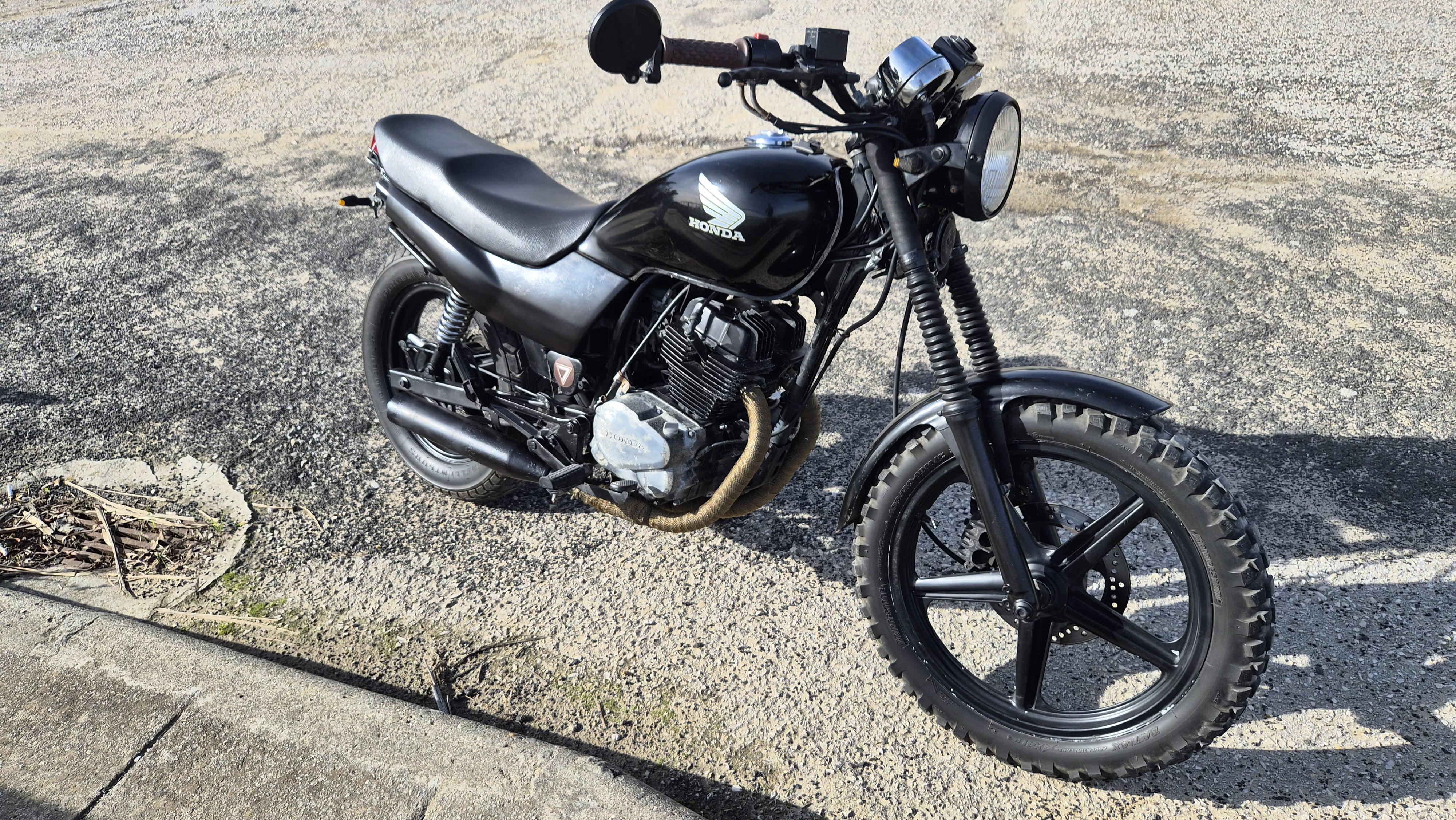
I bought this cb250 nighthawk for pretty cheap as a winter and city beater and the previous owner did some styling mods to it which included a Bridgestone Battlecross AX41 front tire and a Pirelli MT60RS rear.
The Pirelli seams fine but this Brigstone feels wandering and loose. I have no experience with offroad tires so can I corner like I can with normal street tires, just a bit less aggressive?
It really takes some confidence away from the corners, my other bikes all have Michelin roads or sports and those seem to grip plenty regardless of lean angle.
Should I keep these or switch to something else? I don't plan on doing any meaningful trails. If I switched it might be for a Continental Contistreet.
I also haven't ridden a bike under 200kg in a while haha so it might be that.
r/motorcycles • u/Traditional_Belt9379 • 6h ago
Hi everyone, 19M here with a year and a half of driving a car experience but I've never had a motorcycle nor have I been on one. I plan to take the MSF course and purchase every single bit of gear possible.
I'm 5'7, and I'm not really sure whether a CBR500 is too big or too small. I plan on using it strictly to get to work and college, as my current car which belongs to my dad is super bad on gas and I can't really afford a car at the moment. I need something reliable and the CBR500 seems like just enough for me. Sorry if my post sucks, I'm not sure how to ask for advice lmao
r/motorcycles • u/rock-glimber • 38m ago
I'm thinking about adding a tracker to my bike but I don't really want to have to recharge it if I can avoid it, even if it's only a couple times a year. I'd like to hide it really well so it might not be easy to remove.
I read there are trackers with backup batteries but it seems they don't last very long and are quite expensive.
I don't really want one that relies on battery power as it will slowly drain it.
So I thought about simply using a battery powered device like monimoto and keep it plugged to a hidden USB-C outlet I'd run somewhere on switched power. That way it charges when the bike is on and runs on internal battery when its off.
It seems Monimoto 9 will still works when charging but not sure if it's recommending and if anyone is running this setup?
r/motorcycles • u/Doube1323 • 21h ago
Well fellas its been a fun almost 10 years. Riding since I was 16 on a honda xr 125cc, grew up tinkering on em. Got myself a f700gs 4 years ago. Heading to work on a main road (speedlimit 100 km/h) doing 80 in the slow lane because the fast lane was bumper to bumper traffic. Guy turns into my lane within the same second that he put his indicator on, didn't think to check my lane. Hit basically a stationary car at 80, flew over the bars, skid on my face for a few metres. Thank the lord for gear. Somehow only walked away with a broken wrist, foot and dislocated shoulder. Bike was written off (insured thankfully). But I won't be getting a replacement. Got a partner to look after/build a life with, so priorities/responsibilities have shifted. One day I'll get one again. But for now I'll stick to being a cager (eww) and dealing with traffic the old fashioned way. I'll miss my bike and going for 2 hour rides along the coast. But for now I am content. Keep it real peeps.
r/motorcycles • u/Emotional_Price2442 • 2h ago
Bike will warm up no issue but when I’m on highway/ open road it drops to just above C. I ordered a thermostat and replaced with coolant flush/ new coolant but that doesn’t seem to fix the issue, any ideas?
r/motorcycles • u/Upbeat_Youth1942 • 13h ago

My 6th bike, cb500f. Always fun to see the strips slowly get smaller as I get more comfy on the bike. Plan to get q5as in the spring. Any recs?
r/motorcycles • u/Suspicious-Sympathy5 • 6h ago
This Strongman 13 Bikers jacket is from 2000 and the 2 chest pieces degraded. They say it's polyurethane. Now I have not rode a single motorcycle but I have bushings from my car made of like-material so I know it's going to be a job. How do I remove this black, mulch-looking tar from the armour lining and save this valuable, beautiful jacket??
r/motorcycles • u/RenouxMarais • 9h ago
Hi guys.
Im a relatively tall person (1.9m) and looking to buy my first bike. Im specifically looking at an Adventurer/Dakar type bike and I am buying it second hand. I have been looking at perhaps getting a 2005-2008 BMW GS650 or 2017 G310GS. I have also been looking at older gen KTM and Honda Transalp (Both around the 2005-2008 year models). I usually buy cars and know what to look for but what advice can I get from the community on these bikes? What are some good KM's on the clock that I should look for or what is safe for a bike? When I go for the test drive what are some things to take note of?
Thanks guys.
r/motorcycles • u/Binjimen-Victor • 1d ago

r/motorcycles • u/asunak222 • 1d ago
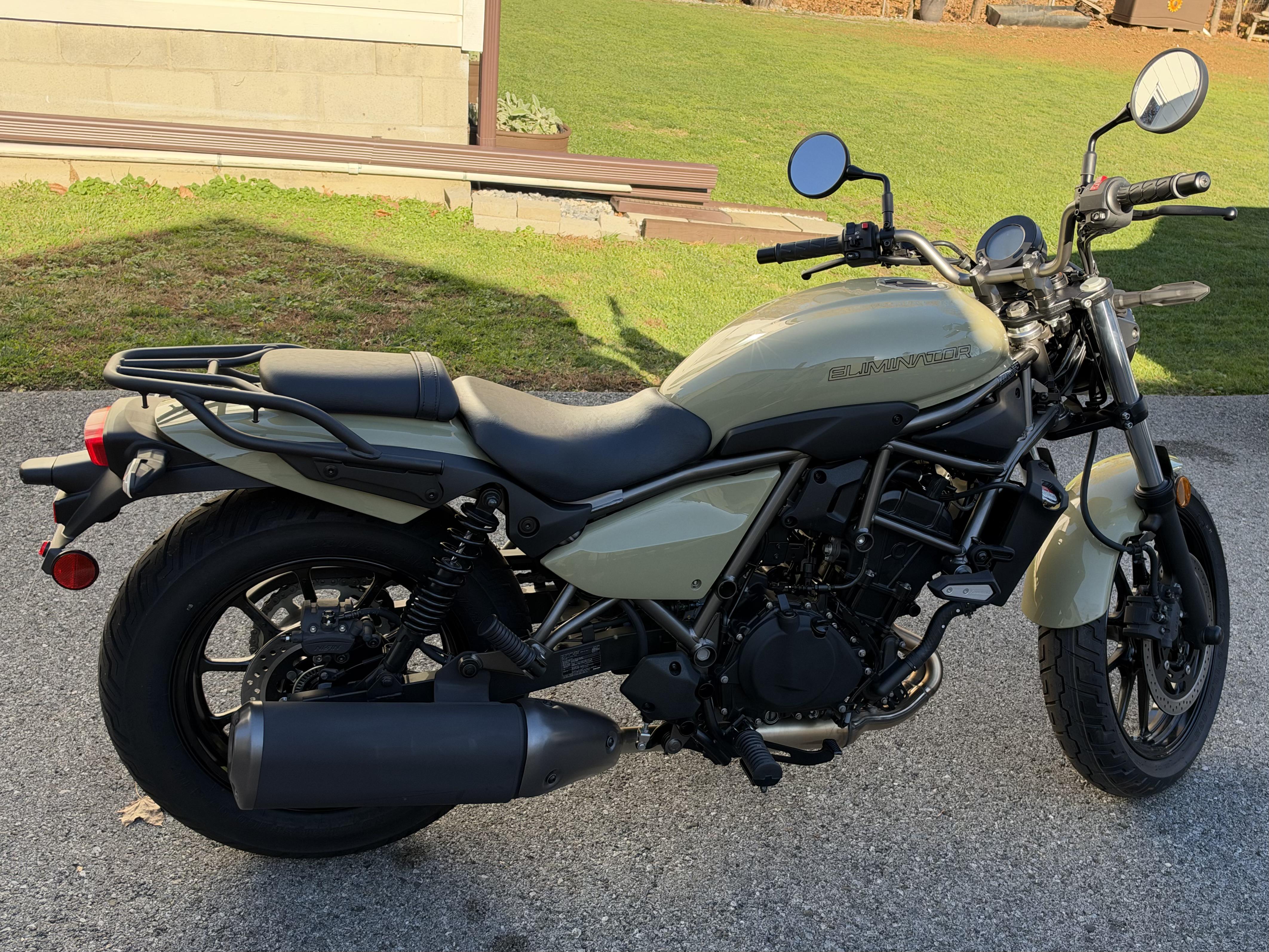
I (32 year old male) recently got my motorcycle license (took a motorcycle class) and just got my first bike, a 2025 Kawasaki Eliminator. I had frame sliders, a tail rack, and a radiator guard installed. Any good recommendations for a newer rider or just things or accessories people think are good to have/know? I mainly plan on cruising around locally near me (avoiding highways) and just practicing in some parking lots throughout this fall/winter.
r/motorcycles • u/crash-test-idiots • 1d ago

r/motorcycles • u/ramtingxf • 1d ago
Had incidents happen to me more frequently than I'd like to admit, all on a shitty low powerd bike too but surprisingly enough that little thing could still put me in the ICU.
Wasn't even being that reckless in either one of my accidents.
I feel like a failure at riding, only started bout 1.5 year ago.
Anyways, i was just curious to hear about y'all's stories.
r/motorcycles • u/Own_Group_4481 • 16h ago
I am 16 years old and I am looking to get my first road legal motorcycle. I have ridden dirtbikes for about 3 years and have ridden full sized dirtbikes (250cc, 450cc etc) for about a year and most of that was on the road up until I was old enough to get my licenses.
I currently have my m2 license meaning I am completely unrestricted other than driving under the influence. I have completed a riders safety course and got 100% on it. Basically what I am trying to say is I can comfortably ride powerful bikes on the road without tipping or whisky throttling them and I have some basic knowledge on how drivers in my area behave on the road.
I was originally looking at a drz400s but my dad made a good point of there are very limited trails around and to get anywhere you pretty much have to take the highways where I live and people commonly cruise at 130 kph and he thinks it would be dangerous to drive on a highway where a dump trunk has more capability than you so he says it would be a smarter move to get something in the middleweight class. My personal favourite in the middleweights is the T7 as it’s the most capable offroad for when I want to do that while still being comfortable on the highways and have the passing power for when I need it.
r/motorcycles • u/ZaseHD • 1d ago

I had my first slide today. I am still a fairly fresh rider but certainly not a super young and reckless one. I had rode dirt bikes and things growing up and when I turned 26 I got this as my first fun bike to ride on the road. I always thought I was being cautious and smart with it and In the 1200 miles I never dropped it or came close to an accident.
Here is where I went wrong. Last week, I had gone to a coffee shop and came out to a flat rear tire. I quickly had it replaced and this past week I didn’t ride at all due to the cold weather. This was the first time taking it out. I was going less than a mile to gas station and looking back I definitely was confident and not as aware and corrective for being on a fresh shiny tire as I should have been. Not even wearing that good of protective gear. And on the first turn out of my neighborhood it just went. I slide about 10-15 feet. I’m figuring it was combo of leaning to much, too much throttle and a cold tire. Along with it still being shiny that was all it took. The turn felt natural for my regular tire and feel like it would have been fine but this time it wasn’t.
Now I got road rash down my leg and bruising, with a sore hip. To all new riders and existing riders just make sure you are always aware and never just trust yourself whether you changed anything on your bikes or just road conditions as we get into winter. Let me be good reminder to always stay vigilant and aware no matter the distance of your ride.
I also found this piece in the road. Anyone tell me where it goes on my bike?
r/motorcycles • u/FLPI22 • 1d ago

New to me 2022 Cfmoto Papio 125. 103 miles and not a scratch. Next season is going to be awesome.
r/motorcycles • u/Fireslayr • 13h ago
Hi all, longtime lurker, first time poster. Long story short, bought a Rebel 500 earlier this year and I LOVE it. Just wish it had a bit more juice for the freeway, which I'm taking much more often thanks to my job. Went to look at the rebel 1000, bit its got all this extra crap that i really dont jive with.
I dont want ride modes, tft touch dashes, ABS, etc. I just want a liter engine on a frame with a basic dash (basic led/lcd is alright) and buttons for light controls... MAYBE a usb charging port. Im finding that its near impossible once you get to the beefier bikes to find something like that, and i assumed Harley or RE would have something, but nope! Like, I know I dont have to use them if the bike came with them, but that's just one more thing to break.
Anybody know of anything that fits the bill? Similar ride and styling, without the frills. Im open to any brand.
r/motorcycles • u/Maple_Scones • 23h ago

I’m taking motorcycle class later this week and I need to bring my own helmet. I’m likely going to buy a cheap one to start and then buy a nicer one once I actually get my license / bike. Safety is my biggest concern but I also don’t want to break the bank on a 2k helmet.
I’m really struggling with just how many options there are, and the difference between a $1k helmet and a $100 helmet that both meet ECE 22.06.
From reading other posts on this subreddit I’ve gathered that the three most important things are:
Beyond those three factors I’m not sure what I should be looking for in a helmet. What the benefits of paying more for a helmet is. And some brand recommendations / avoids.
Same with all other protective equipment especially armor.
For reference when it comes to riding style I am trying to avoid going on highways and am mostly looking for relaxed backroad cruising. At least for now.